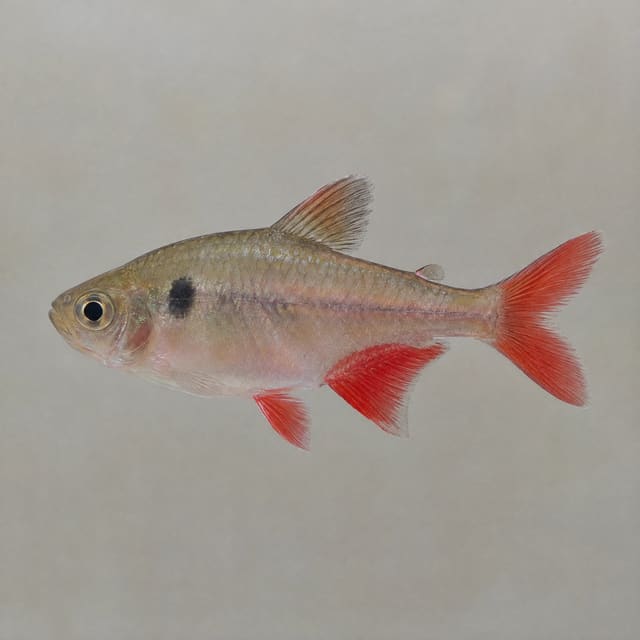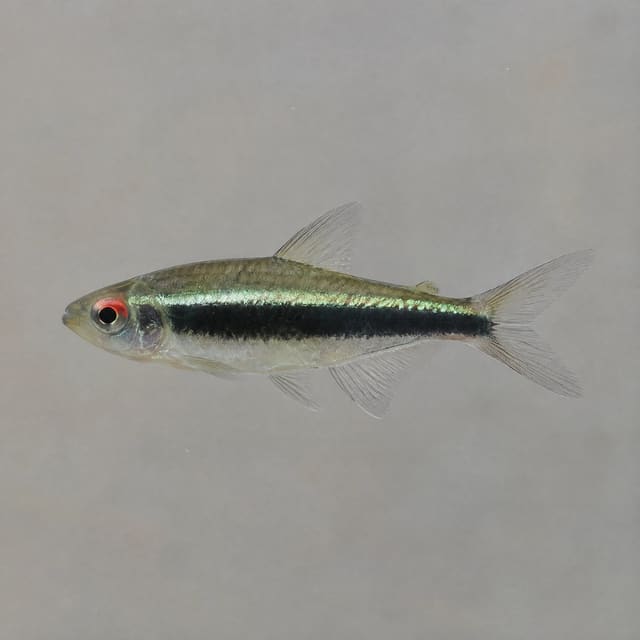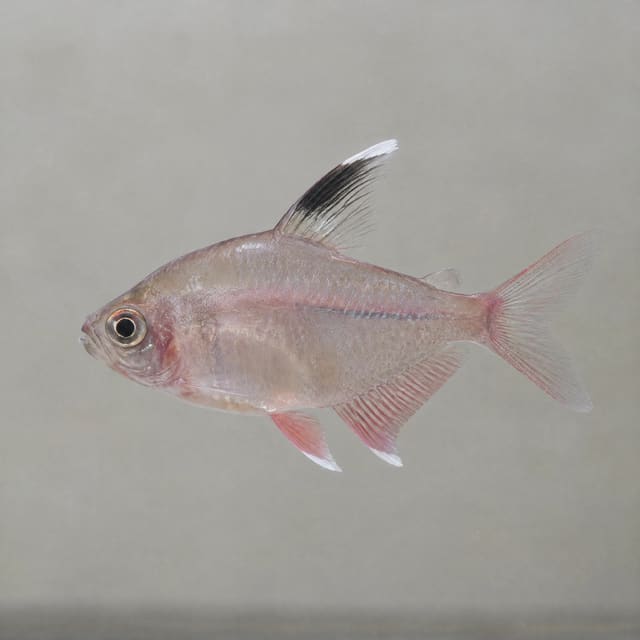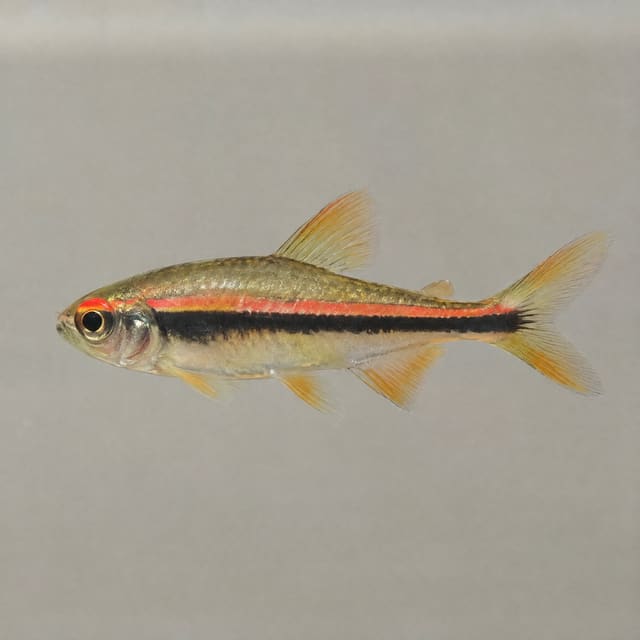
Red-Line Tetra (Hyphessobrycon amapaensis)
23–28°C · pH 5–7 · 54L
£7.99
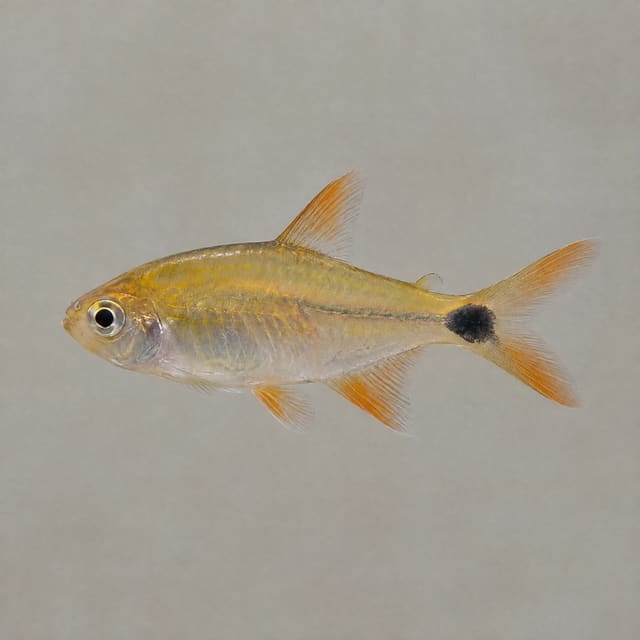
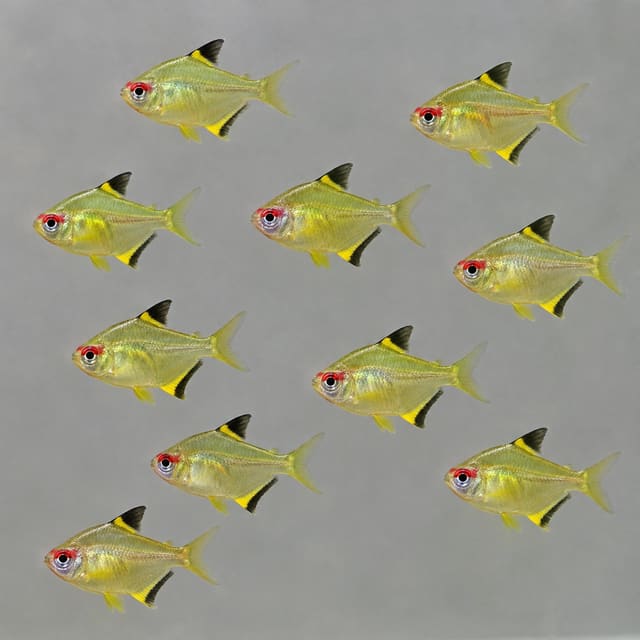
The Kitty Tetra (Hyphessobrycon heliacus) is a small golden tetra from central Brazil with yellow-orange to red fins, a red-topped eye and a dark spot at the base of the tail. It grows to about 2.8 cm standard length and suits a calm, planted community tank of 45 litres or more with other small, peaceful fish. Sold individually as one live fish.
Hyphessobrycon heliacus
Quantity discounts are pricing offers, not a group-size recommendation. Check the full care guidance and your existing animals before choosing a quantity.
Minimum of 2 per order.
The Kitty Tetra (Hyphessobrycon heliacus) is a small golden tetra from central Brazil with yellow-orange to red fins, a red-topped eye and a dark spot at the base of the tail. It grows to about 2.8 cm standard length and suits a calm, planted community tank of 45 litres or more with other small, peaceful fish. Sold individually as one live fish.
Read the full care guidance when planning conditions for your aquarium.
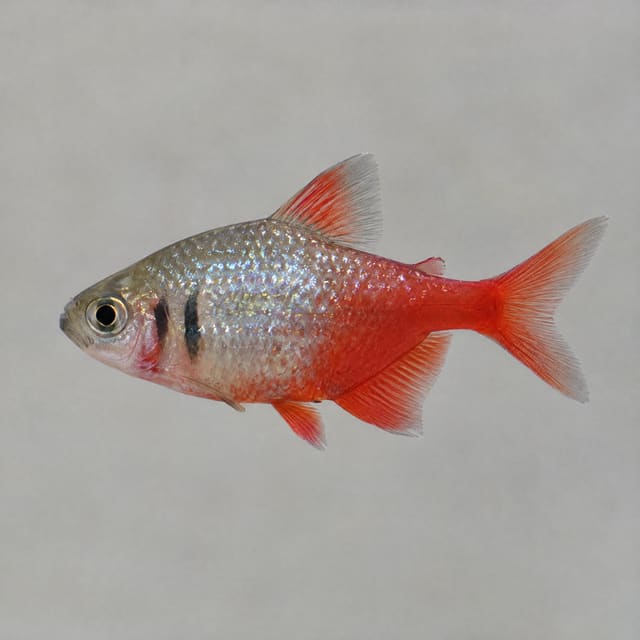
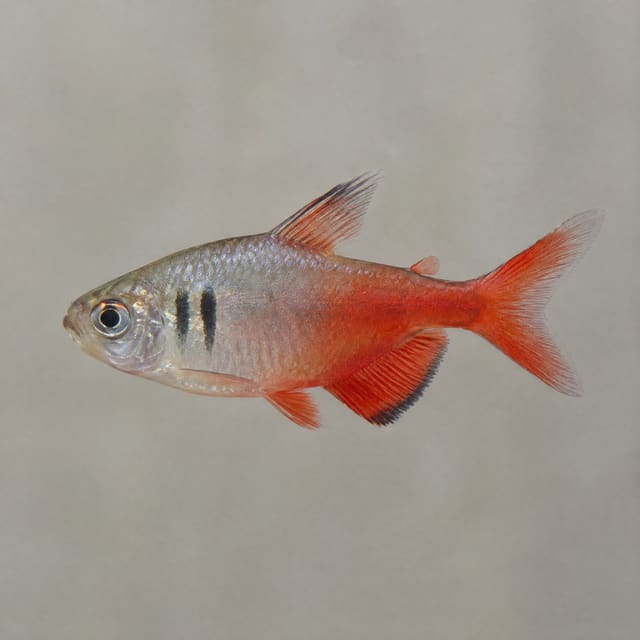
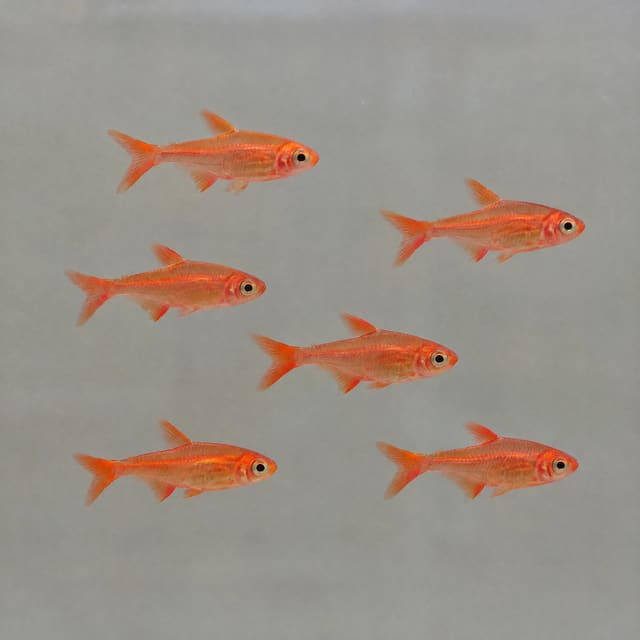
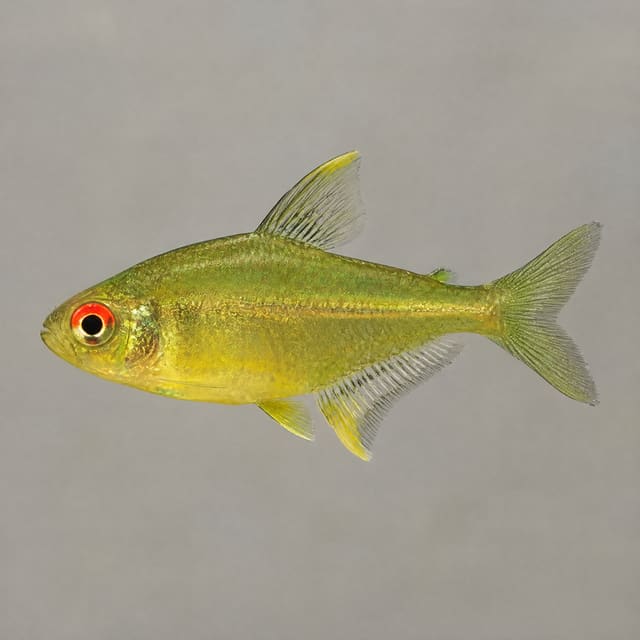
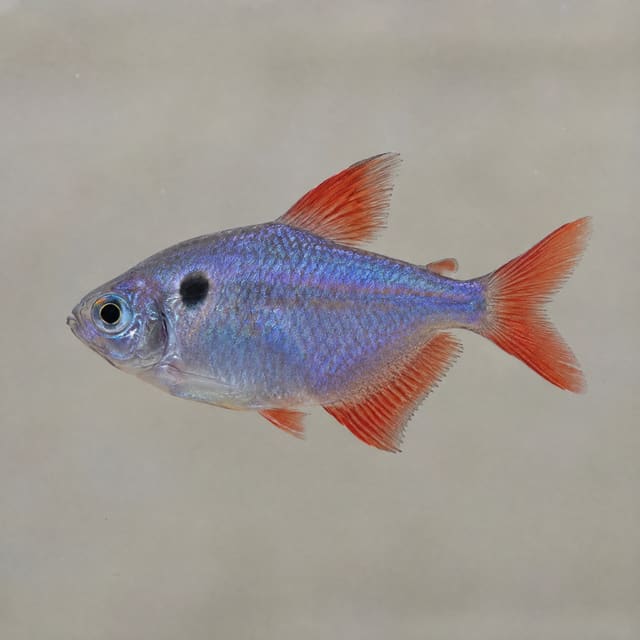
The Kitty Tetra, Hyphessobrycon heliacus, is a small golden tetra from central Brazil that suits a peaceful, planted community tank. The body is golden-yellow, the fins are washed with yellow-orange to red, the top of the eye is bright red and a large dark spot sits on the base of the tail. In a planted tank a group of Kitty Tetras glows against green leaves like a handful of gold coins.
The scientific name says the same thing: German Wikipedia explains that heliacus comes from the Greek helios, the sun, after the bright yellow colour. Adults stay small. FishBase gives a maximum of 2.8 cm standard length, so even full-grown fish are only a little over 3 cm including the tail, which makes the Kitty Tetra a good choice for smaller community aquariums with gentle tank mates.
Mature males are worth watching for. FishBase notes that they develop long, fine points on the dorsal and pelvic fins, which makes a mature group look quite different from a tank of young fish. Those fins are also one reason this tetra should never share a tank with fin-nipping fish.
| Suits | Not suited to |
|---|---|
| A planted community tank of 45 litres or more | A bare tank with nowhere to shelter |
| A group of eight or more Kitty Tetras | One or two fish kept on their own |
| Small, peaceful companions such as Ember Tetras and pygmy corydoras | Fin-nippers such as Serpae Tetras and Tiger Barbs |
| Stable, mature water at 22–27°C | A newly set-up tank that has not finished cycling |
| Fine foods: crushed flake, micro granules, daphnia and cyclops | Large pellets meant for bigger fish |
See our full range of tetras for sale, the South American tetra category and the Hyphessobrycon tetra page, where the Kitty Tetra sits with its relatives. If you are planning a smaller set-up, our fish for nano tanks collection lists other small species.
The Kitty Tetra was known to fishkeepers under its trade name before scientists caught up with it. Moreira, Landim and Costa formally described it in 2002 from the upper Rio Tapajós basin, and FishBase now places it in the family Acestrorhamphidae, the American tetras, subfamily Hyphessobryconinae. Older books and care sheets list Hyphessobrycon under Characidae, so you will see both family names in print.
German Wikipedia, drawing on the original description, gives the identification marks: a golden-yellow body, yellow-orange to red fins, the upper third of the iris red, and a large dark spot on the tail base that reaches into the tail fin, with two yellow spots just behind it. FishBase adds that live fish show chevron-shaped marks along the middle of the body. The tail is forked, with the lower lobe slightly longer than the upper.
The closest look-alike in our range is the Saratetra, Hyphessobrycon elachys. The two are very similar in shape, but the Saratetra is silvery, while the Kitty Tetra is golden and has a zigzag line running along the horizontal midline of the body. That zigzag line is the feature German Wikipedia gives for separating the species.
| Feature | Kitty Tetra (H. heliacus) | Saratetra (H. elachys) |
|---|---|---|
| Body colour | Golden-yellow | Silvery |
| Midline | Zigzag line along the middle of the body | No zigzag line |
| Where it is sold here | This page | Its own page in our Hyphessobrycon range |
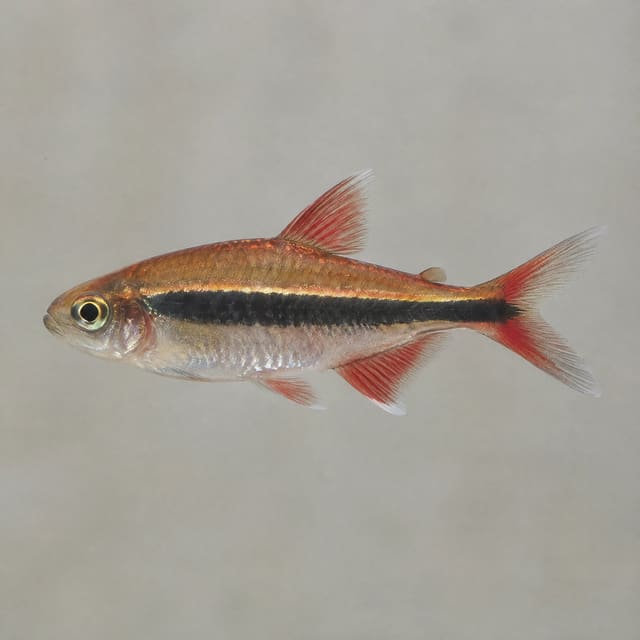
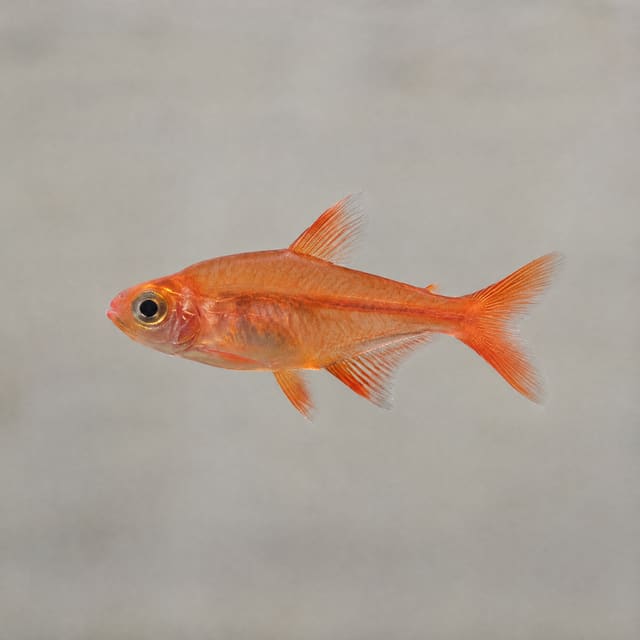
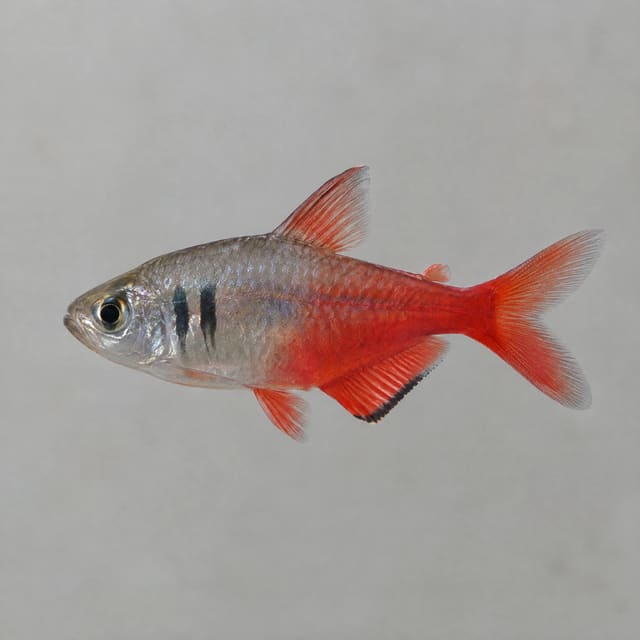
One purchase quantity supplies one live Kitty Tetra in our Small size grade. Order the whole group you want in one go so the fish settle together. The photographs show the species and its colour pattern, not the individual fish you will receive; the depth of gold, the amount of red in the fins and the length of the male fins vary from fish to fish and with age.
Sex is not chosen. Young males and females look alike, and the longer fins of the males only appear as they mature, so a group bought together will normally include both. Read our delivery days and live arrival terms before ordering, and have the aquarium cycled, heated and tested before the fish arrive.
At 2.8 cm standard length the Kitty Tetra needs less space than most tetras, but it still needs room to swim as a group. OATA advises buying the largest tank you reasonably can, and at least 45 litres for a small shoal of smaller tetra species; larger tanks hold their temperature and water quality more steadily. We have found no published minimum tank size for this species specifically, so 45 litres is the floor, and a 60 cm tank gives a group of eight to twelve the room to shoal properly.
FishBase records the Kitty Tetra only from the Teles Pires River in the upper Tapajós basin of central Brazil. German Wikipedia describes the rivers there as fast-flowing with gravel beds, but the fish were collected only in the calm margins, among dense vegetation over muddy bottoms. That is the habitat to copy: still or gently moving water, plenty of plants and soft, dark ground.
A dark, fine substrate, clumps of fine-leaved and stem plants, a few pieces of wood and some floating plants to soften the light all help the group settle and bring out the gold. Our aquarium plants range and our live plants for beginners guide will help you choose easy species.
| Zone | What to put there | Why it helps |
|---|---|---|
| Back and sides | Dense stem plants and fine-leaved plants | Copies the vegetated margins the species lives in |
| Front centre | Open water over dark sand | Room for the group to swim and display |
| Surface | A few floating plants | Softer light and a calmer group |
| Filter outlet | Spread the return or use a spray bar | Gentle flow, like the calm margins rather than the main river |
FishBase gives no water values for Hyphessobrycon heliacus, and none of the other sources we checked publishes a species-specific range. We therefore use OATA’s general guide for tetras, which is designed for fish in the UK trade, and recommend keeping conditions stable within it rather than chasing extremes.
| Value | OATA range for tetras | How to manage it |
|---|---|---|
| Temperature | 22–27°C | A heater with a thermostat, checked daily |
| pH | 6.5–8.0 | Keep it steady; avoid sudden swings |
| General hardness | 4–12 dGH (soft to medium) | Mix in reverse-osmosis water if your tap is harder |
| Carbonate hardness | 3–10 dKH | Provides a buffer that keeps pH stable |
| Ammonia and nitrite | 0 mg/l | A mature filter and weekly water changes |
| Nitrate | No more than 20 mg/l above tap water | Regular water changes and careful feeding |
UK tap water ranges from soft to very hard depending on where you live, and your water company publishes the hardness for your postcode. Compare your readings with the fish using our water matcher, and see our water chemistry guide for what each test means.
Temperature, pH and hardness describe the water the fish prefer; ammonia, nitrite and nitrate tell you whether the tank is clean. OATA warns that even small amounts of ammonia or nitrite stress tetras and can lead to disease, so test both kinds of value every week, and more often in the first month.
OATA calls a filter essential and recommends a 25% water change every week, with solid waste siphoned from the substrate. Small tetras from calm margins do not need a strong current, so choose a filter rated for your tank but spread its outflow. A sponge filter or an outlet aimed at the glass keeps the water moving without pushing the fish around. Our guide to aquarium filtration compares the options.
OATA describes tetras as omnivores and recommends a good-quality flake or granule as the staple, with small live or frozen foods such as daphnia as extras, fed once a day in amounts the fish finish within a few minutes. The Kitty Tetra has a small mouth, so choose fine foods: crushed flake, micro granules such as Pro Defence XXS, and small frozen foods such as frozen cyclops.
| Day | Food | How much |
|---|---|---|
| Most days | Crushed flake or micro granules | What the group clears in about two minutes |
| Two or three days a week | Frozen cyclops or frozen daphnia, thawed in tank water | A small piece for a group of ten |
| Occasionally | Live daphnia | A few at a time, so all are eaten |
Add Kitty Tetras only to a tank whose filter is mature; our guide to the aquarium nitrogen cycle explains how to check. OATA warns that stocking too many fish too quickly causes “new tank syndrome”, when ammonia and nitrite rise faster than the filter bacteria can cope.
Use OATA’s floating bag method: lights off, float the unopened bag for about 10 minutes, add small amounts of tank water to the bag over up to 20 minutes, then net or pour the fish in with as little bag water as possible. Our guide to acclimatising new fish walks through each step.
OATA advises keeping small tetras away from fish large enough to eat them, warns that boisterous larger tetras such as the Buenos Aires Tetra may nip timid or long-finned fish, and says tetras do best with fish of similar size and temperament. With adult males carrying long, fine fins, the Kitty Tetra belongs with small, calm species. Run any planned combination through our tank mates checker.
| Suits | Avoid |
|---|---|
| Small tetras such as the Ember Tetra | The Serpae Tetra and other fin-nipping tetras |
| Small rasboras such as the Dwarf Rasbora | The Tiger Barb and other boisterous barbs |
| Pygmy Corydoras on the bottom | Angelfish and other fish large enough to eat a 3 cm tetra |
| Otocinclus such as the Zebra Oto | Fast, greedy feeders that leave small fish hungry |
| Calm golden tetras such as the Lemon Tetra | Fewer than five Kitty Tetras |
A healthy group of Kitty Tetras swims together in midwater, feeds readily and holds its fins open. OATA lists the changes that point to a problem and advises testing the water first whenever something looks wrong.
| If you see | Do this |
|---|---|
| Fish hanging at the surface or sitting on the bottom | Test ammonia, nitrite and temperature straight away |
| Faded gold or darker colour than usual | Test the water and look for recent changes or a bully |
| Clamped fins, flicking or shimmying | Test the water and watch closely for white spots |
| White spots like grains of salt | Follow our white spot treatment guide for the whole tank |
| Torn fins on the males | Identify the fin-nipper and rehome it |
| Thin fish or loss of appetite | Check that food is small enough and reaching every fish |
We have found no published breeding account for the Kitty Tetra, so treat any attempt as an experiment. OATA’s general notes for tetras apply: breeding at home is possible but unlikely to succeed in a community tank; heavy feeding with live or frozen food and a slight drop in temperature, mimicking the rainy season, can trigger spawning; most species scatter eggs over plants, leaf litter or the substrate, the eggs hatch within a couple of days and the fry appear a few days later.
OATA reminds keepers that releasing aquarium animals or plants into the wild is illegal and usually fatal to the fish, and that any survivors may harm native wildlife. Dispose of old water and substrate through the drain or household waste.
The Kitty Tetra is Hyphessobrycon heliacus, a small golden tetra from the upper Rio Tapajós basin in Brazil. It was sold under the name Kitty Tetra before scientists described it in 2002, and the name has stuck.
FishBase gives a maximum of 2.8 cm standard length, measured from the snout to the base of the tail. With the tail fin added, adults are a little over 3 cm long, which makes it one of the smaller tetras we sell.
Mature males have longer dorsal and pelvic fins than females, drawn out into fine points, and thickened rays in the anal fin. Young fish look alike, so buy a group and the sexes become clear as they mature.
OATA advises at least five of any tetra and at least 45 litres for a small shoal of small species. We suggest eight or more Kitty Tetras so the group feels secure and shows its colour, in a planted tank with a base of around 60 cm.
No published care sheet gives species-specific values, so we work to OATA’s general tetra range: 22–27°C, pH 6.5–8.0 and 4–12 dGH, with zero ammonia and nitrite. Stable, well-filtered water matters more than an exact figure.
No. The Saratetra, Hyphessobrycon elachys, is a very similar but silvery fish. The Kitty Tetra is golden-yellow and has a zigzag line along the middle of its body, the feature scientists use to tell the two apart.
Small foods that fit a small mouth: fine flake or micro granules as the staple, plus frozen or live daphnia and cyclops a few times a week. Feed once a day and only what the group finishes within a few minutes.
Other small, peaceful fish such as Ember Tetras, small rasboras, pygmy corydoras and otocinclus. Avoid fin-nippers such as Serpae Tetras and Tiger Barbs, and any fish big enough to swallow a 3 cm tetra.
No reviews for this item yet. Bought one? Honest reviews only, good or bad.
What customers say about ordering from us
Easy website plenty of info on fish your buying great to pick a time slot
TRACEY DURRANT · 7 Oct 2026
Got some lovely fish thank you
Kevin Mackie · 7 Oct 2026
Reviews of our shop, collected by Judge.me, an independent third-party review collector. Newest first.
Moved by UK carriers licensed to handle live animals
Hand-packed with oxygen bags, poly box, heat pack
Email photos the same day; an optional unboxing video helps us review problems faster — claim terms apply
Klarna & PayPal Pay in 3 at checkout