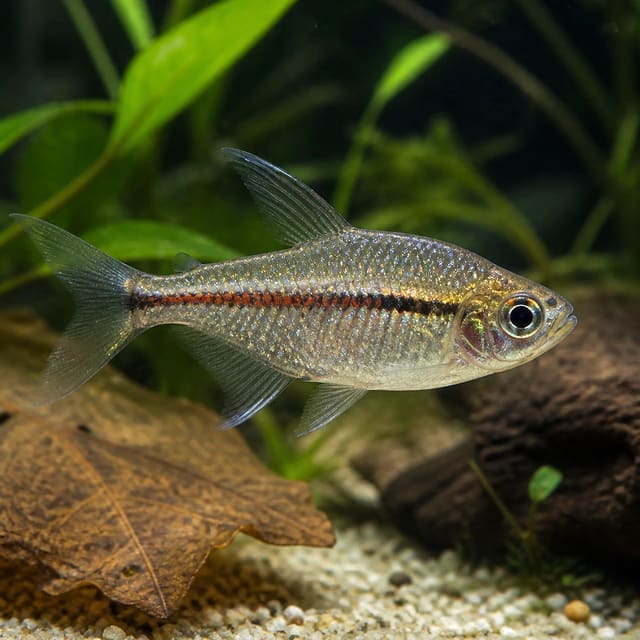
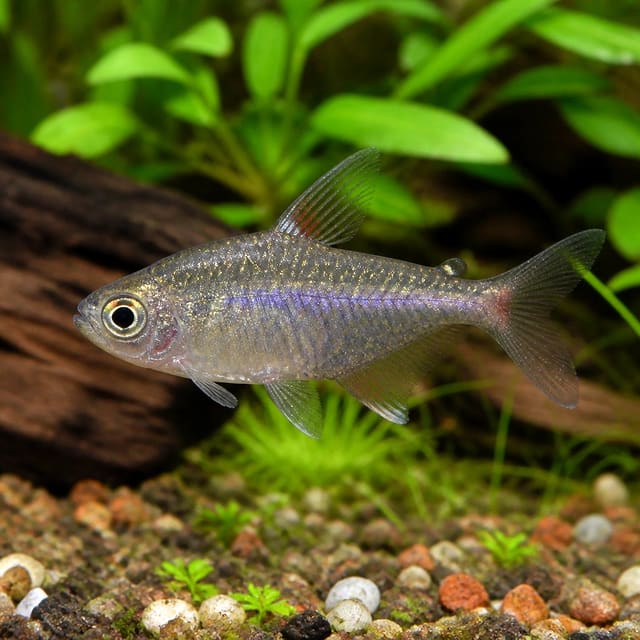
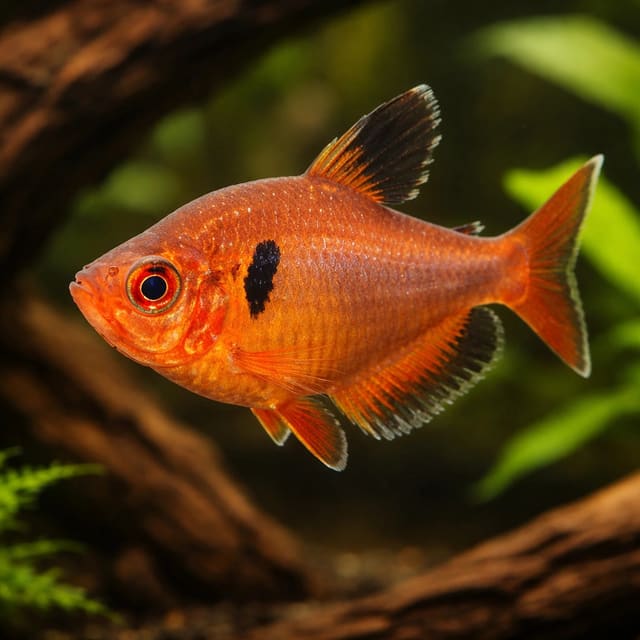
Moderate
Neon Tetra (Paracheirodon innesi)
21–25°C · pH 5–7
£2.99

The Flame Tetra (Hyphessobrycon flammeus) is a freshwater American tetra from streams and coastal rivers in south-eastern Brazil, with a recorded maximum of 2.6 cm. It suits peaceful planted communities; keep at least 8–10, with the FishBase, Seriously Fish and OATA overlap giving 22–26°C and pH 6.5–7.5. Sold individually in 2,5 cm and over 3 cm sizes.
Adult size is the maximum length this species reaches at full maturity (scientific sources). The livestock you receive will be younger and smaller — pick a size above for the actual shipping size. Product-photo provenance and any image-specific limitations are stated on the listing.
Hyphessobrycon flammeus
Shoaling fish: kept in a group they feel safer, stay calmer and show their best colour.
Minimum of 2 per order.
The Flame Tetra (Hyphessobrycon flammeus) is a freshwater American tetra from streams and coastal rivers in south-eastern Brazil, with a recorded maximum of 2.6 cm. It suits peaceful planted communities; keep at least 8–10, with the FishBase, Seriously Fish and OATA overlap giving 22–26°C and pH 6.5–7.5. Sold individually in 2,5 cm and over 3 cm sizes.
Adult size is the maximum length this species reaches at full maturity (scientific sources). The livestock you receive will be younger and smaller — pick a size above for the actual shipping size. Product-photo provenance and any image-specific limitations are stated on the listing.
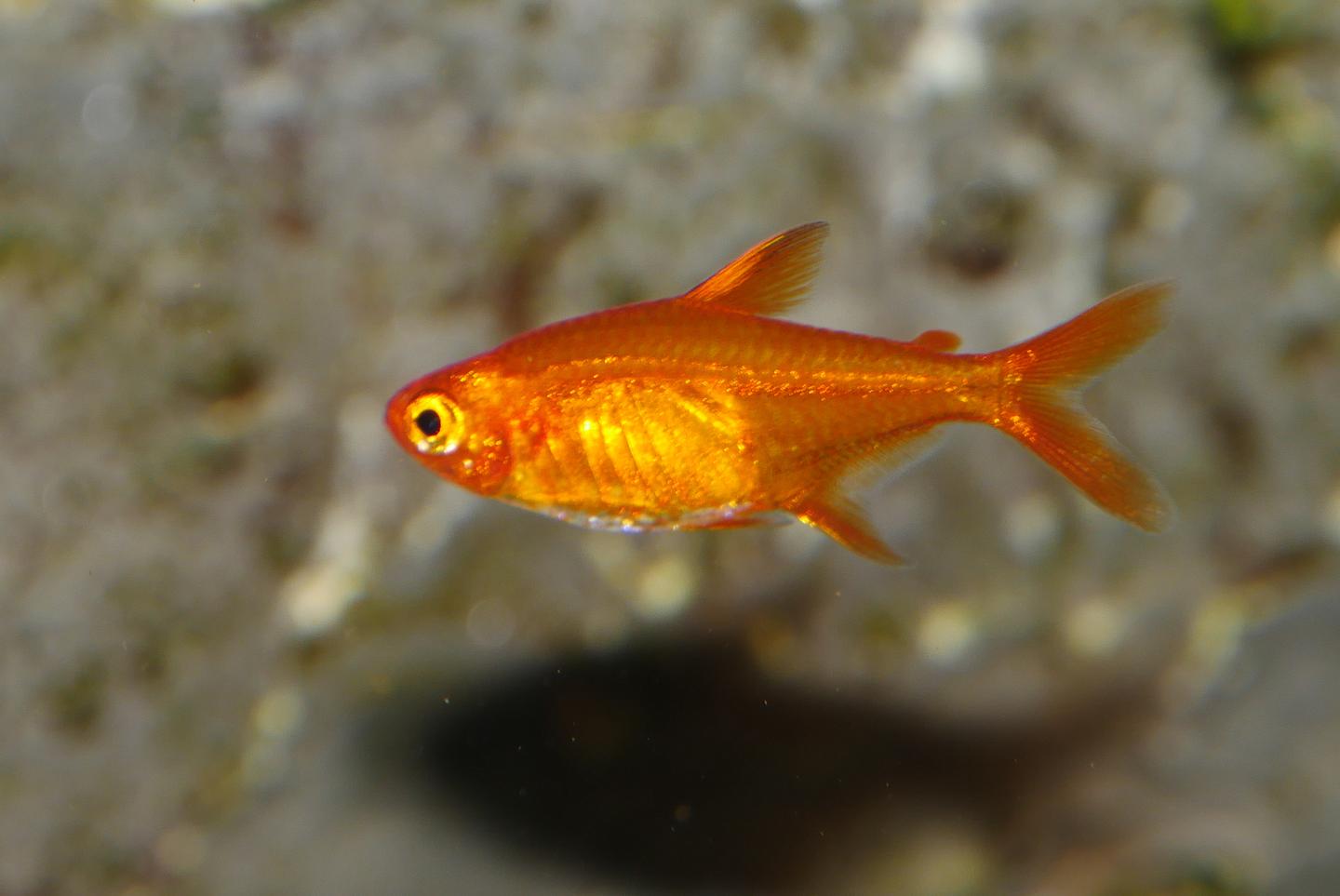
Ember tetras are very small Brazilian social fish, with a maximum recorded length of 2.0 cm excluding the tail. Keep them only in a fully cycled, stable aquarium. We recommend a group of at least 10 and about 45 litres with a 45 × 30 cm footprint rather than using a litres-per-fish formula.
Maintain these water conditions for optimal health and vibrant colors
The Flame Tetra (Hyphessobrycon flammeus), also called the Fire Tetra, Rio Tetra or Von Rio Tetra, is a small freshwater member of the American tetra family Acestrorhamphidae. It comes from streams and coastal river systems in south-eastern Brazil, including drainages around Rio de Janeiro, Guanabara Bay, the middle Paraíba do Sul, the Guandu and the upper Tietê. FishBase records a maximum of 2.6 cm standard length. This peaceful, social fish suits keepers prepared to provide a mature aquarium, a proper group and compatible community animals.
Its natural habitat is small, slow-flowing streams with clear or dark-brown water. Forest shade, vegetation, sandy bottoms and slow flow shape that habitat. In the aquarium, these details translate into a well-furnished layout with plants, shaded areas and open swimming room rather than a bare, brightly lit container.
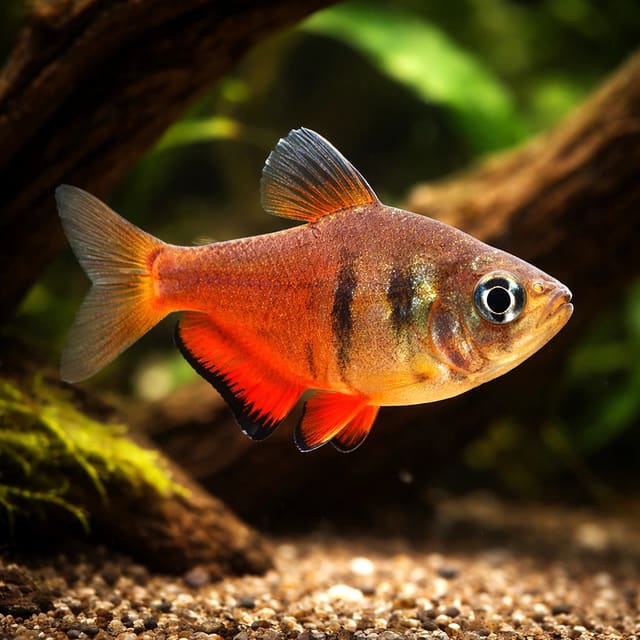
The reddish body pattern includes two vertically elongated dark shoulder spots behind the gill area. Colour intensity varies with the individual, ornamental form, surroundings and condition. A dark substrate, planting and subdued lighting give the fish secure areas while making its warm tones easier to appreciate.
This is a good choice for a keeper who wants a modest-sized shoal rather than one solitary centrepiece fish. Seriously Fish describes the species as very peaceful and recommends a well-researched community aquarium. Its small adult size does not remove the need for horizontal swimming room: the group, not one individual, determines the practical space requirement.
Plan around stable water, restrained feeding and regular maintenance. Those habits matter more than chasing intense colour or trying to make the fish school tightly throughout the day.
One purchase supplies one Flame Tetra. Use the live size selector to choose either 2,5 cm or > 3 cm. The size you select is the size supplied, not the adult size. Dispatch labels describe the fish sent from the shop, while the recorded adult figure used for long-term planning is 2.6 cm standard length.
Sex is guaranteed only when the selected option explicitly states male or female. This Flame Tetra listing has no sex-guaranteed option. Build the group around the number of fish and the aquarium’s capacity rather than trying to select a sex from size, colour or an image.
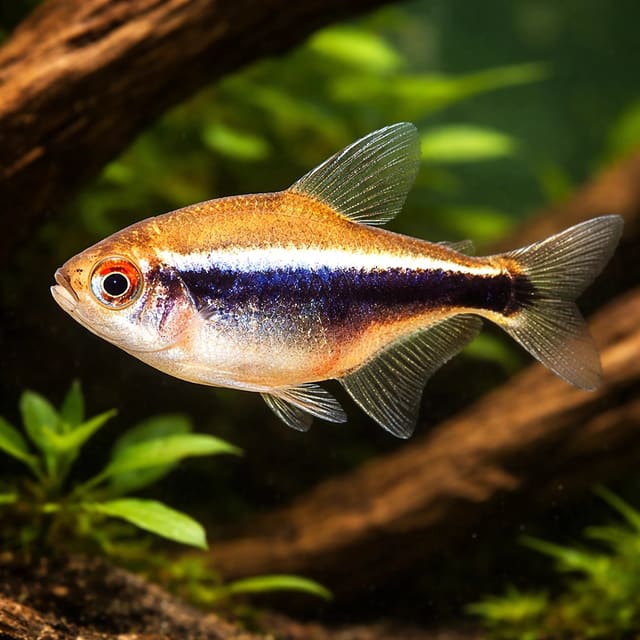
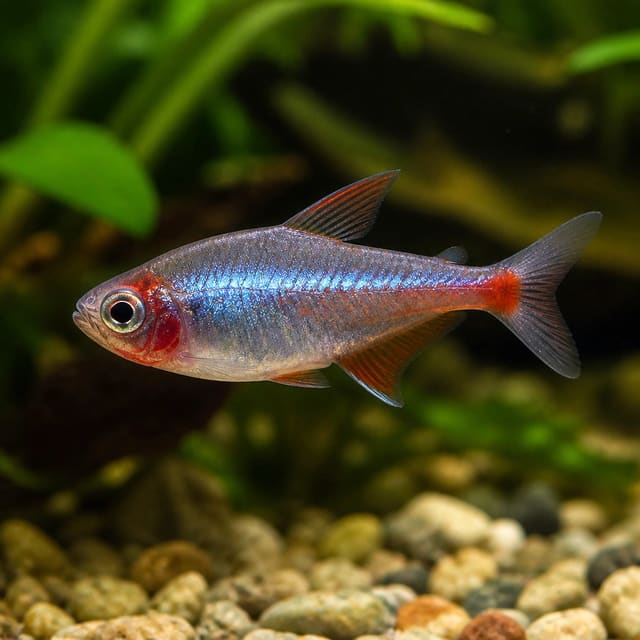
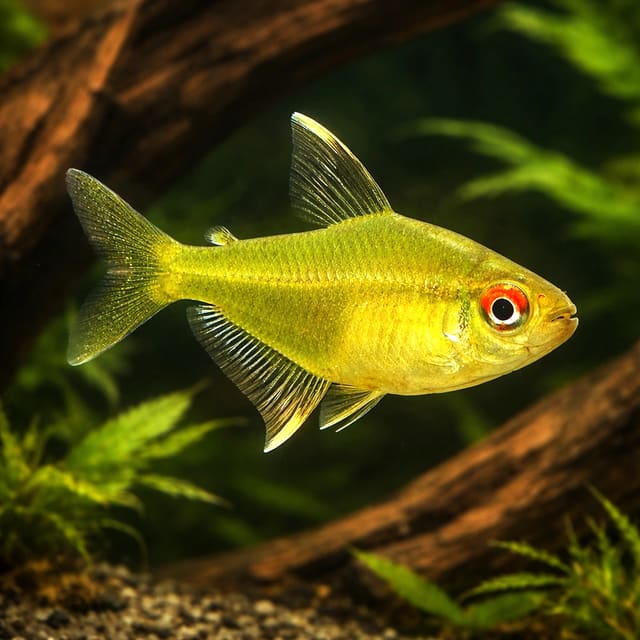
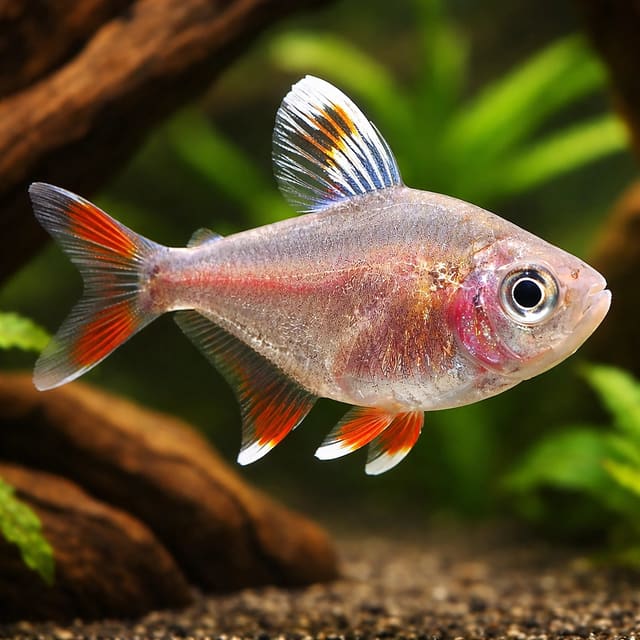
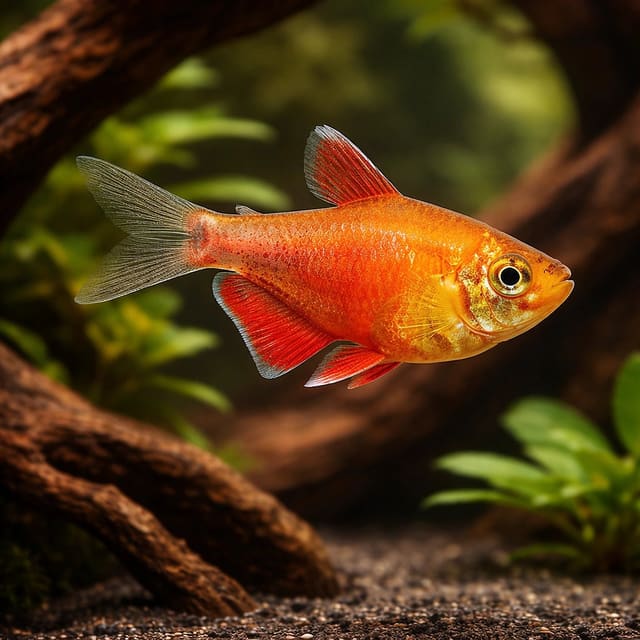
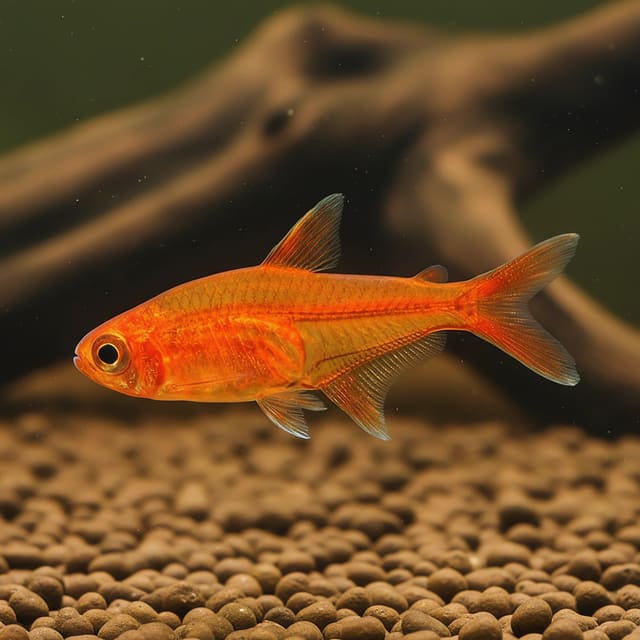
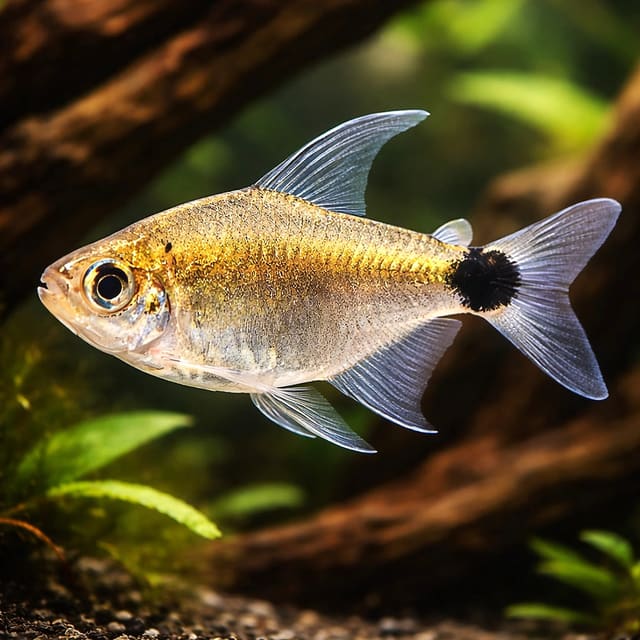
The gallery images are representative illustrations of this type of animal, not photographs of the animal supplied, so pattern and colours can differ from the live animal. In particular, use the written identification rather than an illustration as your guide to the species’ characteristic shoulder markings.
Seriously Fish recommends a group of at least 8–10 because the species shows more interesting behaviour and better colour when maintained in numbers. One fish is supplied per purchase, so set the purchase quantity according to the group you intend to keep and any Flame Tetras already in the aquarium.
Check the aquarium’s dimensions, mature filtration and existing livestock before adding the group. A small body does not mean a tiny aquarium is suitable: the fish need room to swim, interact and move away from brief social chasing.
Keep Flame Tetras in a mature freshwater aquarium with a base of at least 60 × 30 cm or an equivalent footprint, corresponding to approximately 54 litres. Plan for at least 8–10 fish. For routine water, use the overlap of FishBase, Seriously Fish and OATA values: 22–26°C, pH 6.5–7.5 and 5–12 dGH. Check the aquarium against all three before choosing a size.
| Suits | Not suited to |
|---|---|
| Peaceful, well-researched community aquariums | Unfiltered or biologically immature aquariums |
| Groups of at least 8–10 Flame Tetras | Solitary keeping or very small groups |
| At least a 60 × 30 cm base or equivalent | Containers without adequate swimming length |
| Planted layouts with shade and open water | Bright, bare layouts without cover |
| Peaceful animals of comparable size | Predatory fish large enough to eat small tetras |
Before adding fish, mature the filter, keep ammonia and nitrite at zero, test the water at least once a week and feed only what the group eats within a few minutes. Experienced keepers can use the same fundamentals to build a larger planted community, but the additional livestock must still fit the aquarium’s footprint, filtration and water conditions.
If this social, planted-community format appeals to you, you can also browse the current tetra collection. Compare each species on its own adult size, group requirement and water range rather than assuming every tetra needs identical care.
Use 2.6 cm standard length, the maximum FishBase records, as the adult planning figure.
Even at this modest size, a Flame Tetra is a social swimmer that needs space for a group. Seriously Fish says an aquarium with a base of at least 60 × 30 cm, or an equivalent footprint, should be the smallest considered and associates that footprint with approximately 54 litres.
Choose an aquarium that preserves swimming length and front-to-back room. A tall, narrow vessel may hold a similar number of litres but does not automatically provide the same useful footprint. Plants, wood and equipment also occupy physical space, so consider the remaining open water after furnishing the aquarium.
| Planning question | Decision |
|---|---|
| Is the base at least 60 × 30 cm? | If not, choose an equivalent footprint before planning filtration and the group. |
| Will at least 8–10 fish fit after décor? | Leave clear swimming routes as well as planted shelter. |
| Are other fish already present? | Count their adult size and waste load before adding the tetra group. |
| Is the aquarium tall but short? | Do not trade away the required horizontal base merely for extra height. |
Around 54 litres is a minimum reference for this species, not an automatic capacity for every proposed community. More fish, larger companions or bulky décor may require more space. The filter must also be capable of handling the combined waste from all animals after they reach adult size.
Review the plan whenever stocking changes. Adding several small fish at once still increases feeding and waste, and the biological filter needs time and capacity to respond.
Keep Flame Tetras at 22–26°C, pH 6.5–7.5 and 5–12 dGH. This routine range is the overlap of the species-level aquarium values from Seriously Fish, the environmental values recorded by FishBase and OATA’s group guidance for tetras. OATA also gives 3–10°dKH for carbonate hardness.
The underlying ranges differ slightly. Seriously Fish gives 20–26°C, pH 5.5–7.5 and 1–12 dGH for aquarium care. FishBase records 22–28°C, pH 5.8–7.8 and 5–25 dH. OATA gives 22–27°C, pH 6.5–8.0 and 4–12 dGH for the wider tetra and pencilfish group. Using 22–26°C, pH 6.5–7.5 and 5–12 dGH keeps the aquarium inside every named range.
Measure the aquarium and tap water rather than estimating from location or appearance. Our water chemistry guide explains what the main readings mean, and the water matcher lets you compare measured values with the target range.
Keep ammonia and nitrite at zero mg per litre. OATA says nitrate should not exceed 20 mg per litre above the normal tap-water level. These waste readings describe the filter’s performance and maintenance load; they are not substitutes for temperature, pH and hardness checks.
A stable reading within the target band is preferable to repeated attempts to force a precise midpoint. Record results from the same testing method each week so trends become visible before the fish show distress.
Use a well-established biological filter and confirm zero ammonia and zero nitrite before introducing Flame Tetras. The RSPCA explains that filtration supports beneficial bacteria which convert toxic ammonia into nitrite and then into the safer nitrate. A filter is therefore life-support equipment, not simply a way to make the water look clear.
Seriously Fish gives a turnover of four to five times the aquarium volume per hour for an aquarium of around 54 litres. That equates to a filter rating of approximately 215–270 litres per hour. Actual flow inside a furnished aquarium can be reduced by media, pipework and blockages, so observe whether the fish can swim normally without being driven continuously across the tank.
If this is your first aquarium, follow our first tropical aquarium guide before arranging the fish. Clear water alone cannot show whether a biological filter is ready.
Change 25% of the water at least once each week. Treat replacement tap water with a conditioner that removes chlorine or chloramine, and use a siphon to remove settled solid waste where needed. Test ammonia, nitrite and nitrate at least weekly, and record the results.
Check the filter for blocked inlets, restricted outlets and accumulated debris. If media needs cleaning, rinse filter media in water removed from the aquarium, never under the tap.
A sudden rise in ammonia or nitrite, falling flow or accumulating food signals that the balance between fish, feeding and filtration has changed. Reduce the source of waste, restore filter function and delay further livestock additions until readings return to zero.
Furnish the aquarium with live plants, a dark substrate, shaded areas and open water for group movement. Seriously Fish notes that décor is not especially critical, but the Flame Tetra tends to show better colour in a well-furnished aquarium with live plants and dark substrate. The species seems to do best under relatively dim lighting, and floating vegetation is also appreciated.
A natural-looking arrangement can include soft sand, wood and dried leaf litter. Decomposing leaves encourage microbial colonies that can provide a secondary food source for fry, while the tannins and other chemicals they release help to simulate natural conditions. Leaves may be allowed to break down or be removed and replaced every few weeks.
Do not fill every part of the 60 × 30 cm footprint with hardscape. View the finished aquarium from the side as well as the front: fish should be able to pass behind and around the décor without entering a narrow dead end. Preserve both planted shelter and open areas where the shoal can move together.
If the entire group remains hidden, check brightness, exposed areas, water quality and activity from other livestock. If the fish struggle against the outlet, redirect or diffuse the flow while maintaining adequate turnover. If one individual is repeatedly trapped in a corner, review group size, community pressure and the position of cover.
Make one controlled change at a time. Moving every plant and ornament together removes familiar cover and makes it harder to identify which adjustment improved the fish’s behaviour.
Feed a quality flake or small granule as the routine aquarium food, supported by appropriately sized live or frozen foods. The Flame Tetra is omnivorous: FishBase records small insects, worms and plants in its wild diet, while Seriously Fish also lists small invertebrates, crustaceans, filamentous algae and organic detritus.
Useful supplementary foods named for this species include bloodworm, mosquito larvae, Daphnia and Moina. Match every item to the fish’s small mouth, and vary the menu rather than relying on one food indefinitely.
OATA recommends feeding tetras once a day and giving only what they can eat within a few minutes. Start with a restrained amount, watch the whole group and stop before food accumulates on the substrate. This method adjusts the portion to the actual number of fish without using an arbitrary pinch size.
| What you see | What to do |
|---|---|
| Food remains after a few minutes | Remove the excess and reduce the next portion. |
| One fish misses every feeding | Check social pressure, health, food size and where the food enters. |
| Fish take food but spit it out | Try a smaller particle and confirm the food is appropriate. |
| Interest in food suddenly falls | Test water quality and review behaviour, breathing and appearance. |
| Ammonia or nitrite rises | Stop adding livestock, reduce waste and restore biological filtration. |
Overfeeding leaves organic material for the filter to process and can raise harmful waste levels. More food is not a substitute for a varied diet, and uneaten food does not benefit fish once it has settled beyond their reach.
Watch from more than one angle during feeding. A quick group response can conceal an individual that hangs back, struggles to swallow or is displaced repeatedly. Keeping the food within a compact feeding period makes these differences easier to notice.
Store dried food according to its packaging and avoid allowing aquarium water into the container. For frozen food, offer a controlled, suitably sized portion so fragments do not disappear into the substrate or filter before the fish eat them.
Observe swimming, colour, breathing, body condition, fins, scales and feeding every day. OATA advises watching for fish hanging at the surface, sitting on the bottom, swimming erratically, hiding more than usual, changing colour, breathing unusually fast or slowly, losing interest in food, or developing white spots, fluffy growths, damaged fins, missing scales, bumps or ulcers.
If ammonia or nitrite is detectable, treat the water-quality problem as urgent. Restore filter function, remove accumulated waste and avoid increasing the biological load. A health change involving only one fish still warrants a full water test because fish can respond differently to the same conditions.
Do not choose medication solely from one visible sign. White marks, altered breathing or faded colour can have different causes, and an unsuitable treatment adds another stressor. Contact us for guidance when a change persists, the fish stops feeding, breathing becomes laboured or physical damage appears.
FishBase describes Flame Tetras forming relatively numerous schools with competitive interactions among alpha males. Brief chasing can therefore occur within the social group. Persistent isolation, continual pursuit, torn fins or an individual unable to feed is different from a short interaction and calls for a review of group size, space, cover, companions and water quality.
A weekly written record makes gradual changes easier to detect. Include test results, maintenance, feeding observations and any livestock additions rather than relying on memory.
Have the mature aquarium ready before the fish travels. OATA’s tetra guidance supports checking for zero ammonia and zero nitrite, while the FishBase, Seriously Fish and OATA overlap gives a routine target of 22–26°C, pH 6.5–7.5 and 5–12 dGH. Check that the planned group and existing livestock fit the aquarium.
Flame Tetras are hand-bagged in pure oxygen and placed in an insulated poly box, with a heat pack when the weather calls for it. A licensed live-animal courier carries the parcel. Read the current delivery and Live Arrival Guarantee policy before the delivery date.
OATA advises adding fish slowly so the mature filter’s bacterial population can adjust as feeding and waste increase. Apply that principle to the whole stocking plan: avoid combining the new tetra group with several unrelated livestock additions at the same time.
| Checkpoint | Action |
|---|---|
| Before arrival | Test the aquarium, check equipment and preserve open swimming space. |
| First day | Float the bag for 20–30 minutes, release the fish without the bag water and observe swimming and breathing. |
| First week | Test ammonia and nitrite closely and watch each fish during feeding. |
| First month | Change 25% of the water at least once a week and review the group’s use of space. |
During the first week, look at the group before feeding, during feeding and after the room returns to its normal routine. This reveals whether every fish reaches food and whether one position in the aquarium is being avoided because of current, brightness or another animal.
If ammonia or nitrite rises above zero, focus on water quality and filtration rather than adding more fish. If one Flame Tetra remains isolated, check the total group number, physical condition, cover and community behaviour. Keep the observations factual so a developing pattern is easier to distinguish from a brief settling response.
Choose peaceful animals of similar size whose adult dimensions, temperature, pH, hardness and feeding behaviour fit the aquarium. Seriously Fish recommends similarly sized characids, hatchetfishes in the family Gasteropelecidae, pencilfishes in Lebiasinidae, smaller callichthyid or loricariid catfishes, and non-predatory small-to-medium-sized cichlids.
These are useful kinds to investigate, not automatic approvals for every species in each family. Compare the exact adult size, water range, temperament and space requirement of the proposed animal before mixing it with Flame Tetras.
OATA’s wider tetra advice says small species should not be kept with fish large enough to eat them and that tetras mix best with animals of similar size and temperament. Apply the predation rule even when a larger fish is described as generally peaceful; a small animal may still be treated as prey.
| Candidate | Decision to make |
|---|---|
| Similarly sized peaceful tetra | Compare its own group size, adult size and water range. |
| Small catfish from a named compatible family | Check footprint, substrate, diet and full adult load. |
| Non-predatory small or medium cichlid | Check territorial behaviour and space for both species. |
| Substantially larger fish | Reject it if the Flame Tetra could be eaten. |
Compatibility remains conditional because behaviour and stocking pressure change with species, aquarium dimensions and group structure. Before buying any companion, note the aquarium dimensions, measured water values, filter details and every animal already present, and check each candidate against all five points.
Plan for at least 8–10 Flame Tetras. Seriously Fish recommends a group of at least this size because the species shows more interesting behaviour and better colour when kept in numbers.
The offer does not guarantee sex, so build the group around number, space and behaviour rather than an assumed sex ratio. Do not identify sex from dispatch size, an illustration or colour intensity.
Short pursuits or changes in position can occur within the group. Continual chasing, repeated fin damage, one fish being prevented from feeding or an individual remaining isolated requires action. Test water quality first, then review the group number, swimming room, cover and every companion.
Do not expect the fish to remain in a compact formation every minute. Schooling intensity can change with perceived risk, feeding, layout and interactions. The useful measure is whether the group can move normally, feed without continual exclusion and use both shelter and open water.
A community containing several shoaling species must provide a suitable number for each one. Combining a few individuals from many species does not create one interchangeable shoal. Calculate each species separately, then check the total adult load against the aquarium’s footprint and filtration.
Introduce further livestock only after the Flame Tetra group is feeding normally and water tests remain stable. This makes it easier to recognise which change caused a shift in behaviour or waste readings.
FishBase records a maximum of 2.6 cm standard length for the Flame Tetra. Plan its aquarium around that adult figure and the space required by a social group, not around the dispatch size.
Use an aquarium with a base of at least 60 × 30 cm or an equivalent footprint, corresponding to approximately 54 litres. More livestock or bulky décor may require a larger aquarium.
Keep at least 8–10 Flame Tetras together. Seriously Fish recommends a group of at least this size because the species shows more interesting behaviour and better colour when kept in numbers.
Plan it for a prepared keeper: mature the filter before the fish arrive, keep ammonia and nitrite at zero, and test the water and change 25% of it at least once a week.
Feed quality flake or small granules once daily, with varied live or frozen foods such as Daphnia, Moina, mosquito larvae or bloodworm. Give only what the group finishes within a few minutes.
Keep it at 22–26°C and pH 6.5–7.5, with hardness of 5–12 dGH. This is the overlap of FishBase and Seriously Fish values with OATA’s tetra guidance.
This fish is regarded as very peaceful, although brief social chasing can occur within the group. Keep at least 8–10 with adequate swimming room and investigate persistent pursuit, exclusion or fin damage.
Consider similarly sized characids, hatchetfishes, pencilfishes, smaller callichthyid or loricariid catfishes, and non-predatory small-to-medium-sized cichlids. Check each proposed species for matching water, adult size, temperament and space.
Start one continuous video before opening, with the parcel still sealed and the outer box visible. Be home to receive the parcel, open and inspect it on the same day, and keep filming as you open it and show the fish still inside the sealed bag. It is hand-bagged in pure oxygen, placed in an insulated poly box, given a heat pack when the weather calls for it and carried by a licensed live-animal courier. Float the bag for 20–30 minutes, then release the fish without pouring bag water into the aquarium. If anything has gone wrong, contact us the same day with your order number and the video.
No reviews for this item yet. Bought one? Honest reviews only, good or bad.
What customers say about ordering from us
I have a small group of long finned mountain minnows. So was delighted to be able to order ten of this variety to increase the genetics in my tank . The ones I recieved are healthy but it’s to early to give a verdict on wether they are of a long finned type since they are small currently.
Gordon Walker · 23 Sept 2026
100% success travel and "installation". Pleased with quality of purchase. The Siamese fighter a bit "shy" so have not yet seen him at his best yet but looking good. Happy customer. GG
George E Garratt · 21 Sept 2026
Reviews of our shop, collected by Judge.me, an independent third-party review collector. Newest first.