
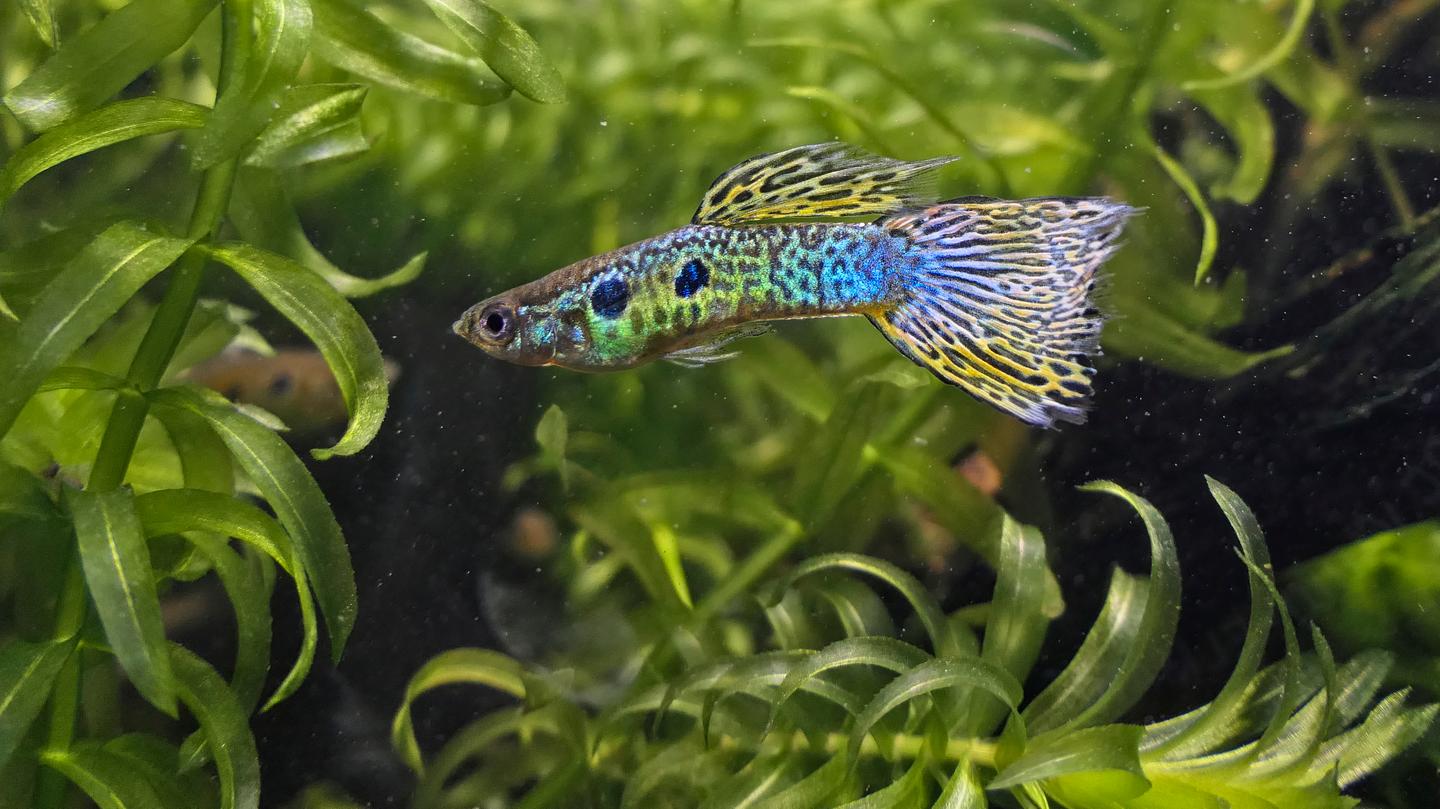
Guppy Care Guide: Poecilia reticulata

Waterfalls in Trinidad separate guppy populations exposed to different predators, helping scientists measure rapid biological change. At home, the practical lesson is direct: use a mature filtered aquarium at least 60 cm long, a deliberately planned social group, tested 22–28°C water and a fry or separation plan—not a fish-per-litre formula.
Peer-reviewed guppy research reviewOur routine display range is 22–28°C. OATA's combined guppy-and-molly sheet gives pH 7–8, 8–18 dGH, at least three fish and 45 L for a small group of the smaller livebearers; FishBase's secondary aquarium note gives a 60 cm minimum length and a group of five or more. Tropical Fish Co therefore uses a more conservative 60 cm aquarium and 5+ group policy where sex mix, filtration, test results and other livestock allow.
Live stock
Guppy for sale — see live stock & today’s prices
Guppy care starts with a mature filtered aquarium, stable tested water, a deliberate social and sex plan, open swimming room, cover and a response plan for fry, chasing or illness. Research in Trinidad shows why one “ideal” number is misleading: predator communities separated by waterfalls are associated with measurable population differences in life history, behaviour, morphology and physiology[7].
Tropical Fish Co sells guppies, so our commercial interest is explicit. Current stock, price, sex and sale unit belong on the live Guppy shop; this guide keeps care evidence separate from changing availability. A representative collection image or order quantity does not promise a particular pattern, sex or balanced group unless the exact listing says so.
Is a guppy right for your aquarium?
Guppies can suit a prepared beginner, but “easy” must not be confused with “safe in an uncycled bowl.” OATA's combined guppy-and-molly sheet advises at least 45 litres for a small group of the smaller livebearers and at least three fish[3]. FishBase's secondary aquarium field suggests at least 60 cm length and a group of five or more[2].
Tropical Fish Co therefore uses a conservative house screen: a mature, filtered aquarium at least 60 cm long for one small guppy group, with five or more fish where the sex plan, water tests, filtration and other livestock allow. This is a disclosed store policy, not an experimental welfare threshold.
| A reasonable starting plan | Reconsider or change the plan |
|---|---|
| Aquarium is at least 60 cm long, fully cycled and tested | Container selected only by litres, with no usable-length check |
| Social group and sex plan chosen before purchase | One fish alone, or a mixed group with no fry plan |
| Zero detectable ammonia and nitrite; stable suitable water | “Hardy fish” used as a reason to cycle with livestock |
| Open swimming space plus monitored cover and sight breaks | Dense decor that blocks swimming or hides persistent aggression |
| Complete staple food and safe compatible variety | One treat food or an unmeasured “as much as they eat” routine |
| Separation, quarantine and rehoming options exist | No response if chasing, disease signs or fry appear |
Origin, identity and the name “guppy”
The accepted name is Poecilia reticulata (Peters, 1859), with the type locality recorded as the Guayre River at Caracas[1]. The familiar common name survives from Girardinus guppii, a later name now treated as a synonym.
FishBase records a native distribution in Venezuela, Barbados, Trinidad, northern Brazil and the Guianas, with introductions far beyond that range[2]. Genetic work identifies eastern Venezuela and western Trinidad as a likely centre of origin, not a proven single birthplace for every lineage[6].
FishBase records a maximum 6 cm standard length for females and 5 cm for male or unsexed fish. Standard length excludes the tail fin; domestic finnage varies, so a dramatic tail should not be added to a body-length number without saying what was measured.
Tank size: answer the aquarium, not only the litres
Searches often ask how many guppies fit in 20, 25, 50, 60 or 90 litres. A responsible answer needs the internal length and footprint, mature filtration, water test results, sex mix, existing animals, cover, feeding and the behaviour of the actual group. Nominal volume alone cannot measure any of those.
| Label on the aquarium | How we screen it |
|---|---|
| 20–25 litres | Usually shorter than our 60 cm adult-group policy; do not assume it is a permanent guppy group tank |
| 45–50 litres | Reaches OATA's combined-sheet litre floor only; it must still meet the length, filtration, water and social checks |
| Around 60 litres | A common candidate if it is at least 60 cm long; five can be a conservative starting group, not an automatic maximum |
| 90 litres or more | More water can add stability and options, but it does not create a fixed 8–10-fish entitlement or remove the fry plan |
For a 60-litre question, the practical answer is: check that the aquarium is at least about 60 cm long, dedicate enough of it to the group, and start conservatively rather than filling a calculated maximum. A mixed-sex group, tank mates or weak biological filtration can make the same 60-litre label unsuitable. Persistent pursuit, hiding, missed feeding or fin damage means the plan needs intervention, not another fish.
Use the tank-volume calculator to confirm actual water volume after measuring the internal dimensions, but do not turn its result into a fish-per-litre stocking rule.
Water, cycling and routine checks
For a clear UK care range, this page uses 22–28°C from current RSPCA guppy guidance[4] and pH 7–8 with 8–18 dGH from OATA's combined guppy-and-molly sheet[3]. FishBase's broader ecological occurrence values describe where the species has been recorded; they are not automatically captive targets.
OATA advises zero ammonia and nitrite and nitrate no more than 20 mg/L above the tap-water level[3]. Verify cycling with repeated water tests rather than elapsed weeks. Dechlorinate new tap water correctly, match changes gradually and confirm temperature with an independent aquarium thermometer.
UK tap water is not one chemistry. Supplies can differ between regions and can be blended or changed by the supplier. Check a current water-company report and test the source used for the aquarium. Guppies can occur in brackish water, but that is not evidence that routine aquarium salt is required; do not add salt or minerals without a measured purpose and a compatibility check for every animal and plant.
Aquarium layout, plants and flow
Provide usable horizontal swimming room, a secure cover, open water and areas where fish can move out of another's line of sight. OATA recommends plants with open swimming space and gentler flow for long-finned fish[3]. Flow should not pin, exhaust or prevent normal swimming, and an intake should not endanger small fish or fry.
Physical enrichment is not a magic fix. A 2025 guppy experiment found improvements in several behavioural and cortisol measures but also more biting under high enrichment[12]. Use structure, observe the result and change the layout if one fish is still trapped or excluded.
Dense cover can increase fry survival. That can be desirable in a deliberately managed breeding setup, but it also increases the need for space, filtration and responsible rehoming. Plants do not replace a population plan.
Social group, males and females
Controlled studies support guppy shoaling and familiarity preferences, but they do not establish one magic home-aquarium number[9]. OATA's floor is three; our more conservative policy is five or more where capacity and sex planning allow.
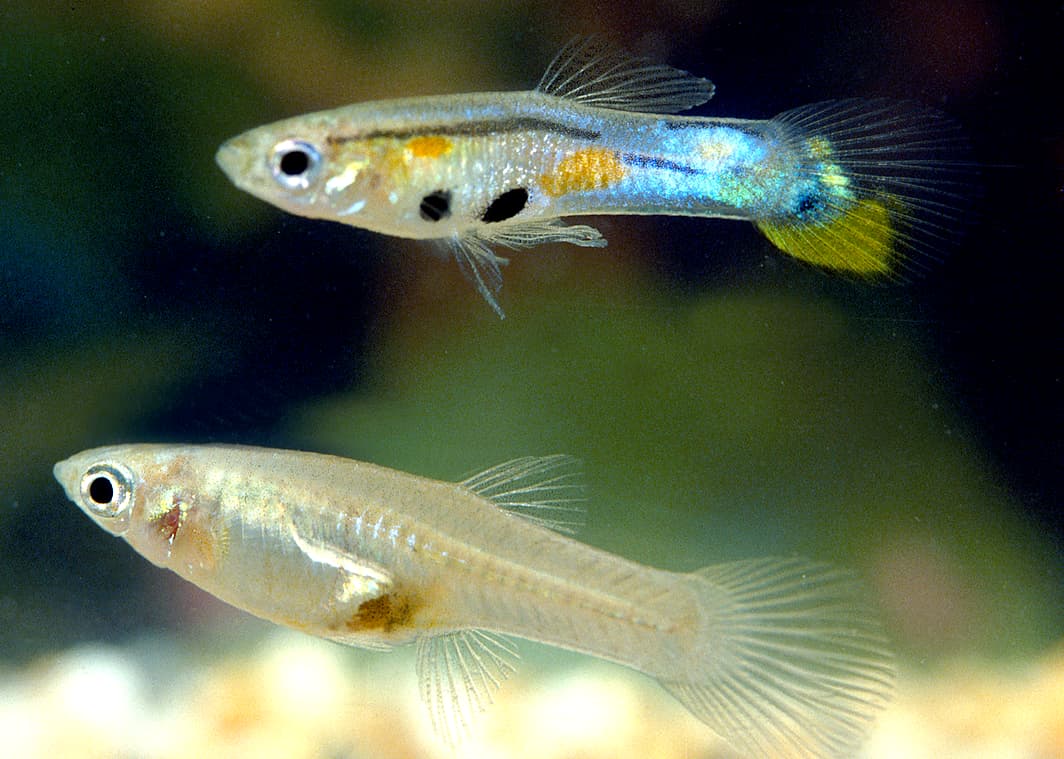
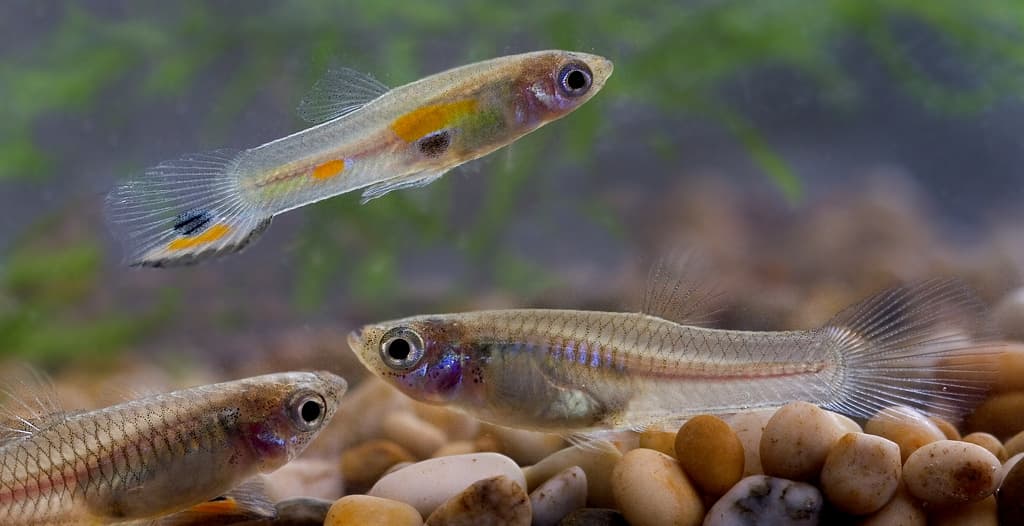
For mature fish, anal-fin shape is more reliable than colour alone. A male has a narrow modified anal fin called a gonopodium; OATA describes the female's anal fin as broader and triangular[3]. Males are usually smaller and more conspicuous, but domestic females can be colourful. A rounded abdomen or dark area is not proof of pregnancy.
| Group plan | What it solves | What still needs monitoring |
|---|---|---|
| Male-only | Avoids new mixed-sex mating | Display and chasing can still become persistent; long fins can be damaged |
| Female-only | Avoids new mating inside the group | A female may have stored sperm from an earlier mating; individuals can still compete |
| Mixed sex | Allows natural courtship and possible fry | OATA suggests two females per male, but no ratio guarantees low pressure or manageable reproduction |
Peer-reviewed work shows that male harassment can alter female habitat use[10]. Use sight breaks and space, watch feeding and body condition, and keep a cycled separation option. Do not dismiss repeated pursuit, cornering, hiding or damage as harmless because guppies are sold as “peaceful.”
Feeding without a rigid clock
Use an appropriately sized, nutritionally complete omnivore flake or granule as the staple. Add safe compatible algal and invertebrate variety rather than relying on one treat food. Portion for the actual group, check that every fish can feed and remove uneaten food before it degrades water quality.
Wild guppy diets vary between sites and can include invertebrates, detritus, diatoms and filamentous algae[8]. That is useful ecological context, not an instruction to collect detritus or copy a wild diet at home. Use biosecure aquarium foods, store them correctly and avoid one universal “times per day” claim for every age, food and filtration system.
Fry need food sized for their mouths and especially close water-quality monitoring. Before deliberately raising a brood, get welfare-focused advice for the actual nursery, food and filtration rather than copying a fixed maturity or growth timetable.
Tank mates: use a compatibility screen
No species name guarantees compatibility. Before adding another animal, check:
- overlapping temperature, pH and hardness rather than the edge of two ranges;
- adult size and whether either animal can swallow or injure the other;
- fin-nipping, territorial, courtship and feeding-competition risk;
- the aquarium's usable footprint after both social groups are included;
- whether every animal can reach food and refuge; and
- a ready separation plan if observed behaviour changes.
Some platies, mollies or corydoras may pass those checks in an appropriately sized aquarium, but exact species and adult needs matter. “Adult invertebrates” is too broad to be a promise, and small shrimp or young may be eaten. A betta–guppy mix is not a sensible default because display, territorial and long-fin interactions vary by individual; a larger planted aquarium still cannot guarantee safety.
Use the tank-mate checker as a question prompt, not a guarantee, and verify every suggested animal against its own reviewed care source.
Reproduction and population planning
Guppies are livebearers. Peer-reviewed work documents female sperm storage for several months[11], so removing males—or buying a female-only group—does not prove that fry cannot appear after purchase.
Before mixing sexes, decide how young fish would be housed, fed and responsibly rehomed. Do not promise one gestation length, brood count or monthly schedule: timing and output vary, and an individual may have mated before sale. The exact listing, not a generic guide, must confirm any stated sex or sale unit.
Predation by adults or tank mates is not a population-control or welfare plan. A nursery should be a separate biosecure system with biologically supported filtration, suitable temperature and repeated testing that maintains zero detectable ammonia and nitrite. A small uncycled container or confinement of a female is not a safe shortcut.
Health, quarantine and when to seek help
A settled guppy should swim steadily, breathe regularly, hold open undamaged fins, maintain a normal body profile and feed consistently. Hiding, clamped fins, surface gasping, unusual balance, spots, wounds or sudden appetite change are warning signs—not a diagnosis[5].
Test ammonia, nitrite, nitrate, pH and temperature immediately; inspect the filter, heater, recent maintenance, food, new arrivals and social behaviour; and record the signs with dates or photographs. Isolate safely where appropriate and use OATA's UK fish-vet directory[14]. Do not choose salt, heat or medication from one symptom.
Use a separate quarantine system with dedicated equipment, biologically supported filtration and testing. The MSD Veterinary Manual recommends at least 30 days, with longer isolation where indicated[13]. It is a professional US veterinary source; this page does not reproduce its drug doses. In the UK, use lawful labelled products and veterinary direction[15].
Guppy strains and Endler's livebearer
Moscow, Cobra, Snakeskin, Tuxedo, Mosaic, Delta, Sword and other trade labels describe selected colour or fin appearance. They are not separate species and do not guarantee pedigree, sex, health, temperament, lifespan or breeding outcome. Tail standards distinguish top, bottom and double swords, lyre and needle forms; a seller should not collapse them into one inaccurate “central-ray sword” definition.
Endler's livebearer, Poecilia wingei, was formally described as a distinct species[16] and is currently listed as valid in Eschmeyer's Catalog of Fishes[17]. Laboratory research confirms reciprocal P. reticulata × P. wingei hybridisation through F1 and F2 generations[18]. That supports possibility, not claims that “most UK Endlers are hybrids” or that one hobby class system proves purity.
If preserving a documented line matters, house the lines separately and do not represent hybrid descendants as pure examples of either parent species. Use our Endler care guide for that distinct species; this Guppy page will not compete for its deeper care terms.
Buying, delivery and arrival
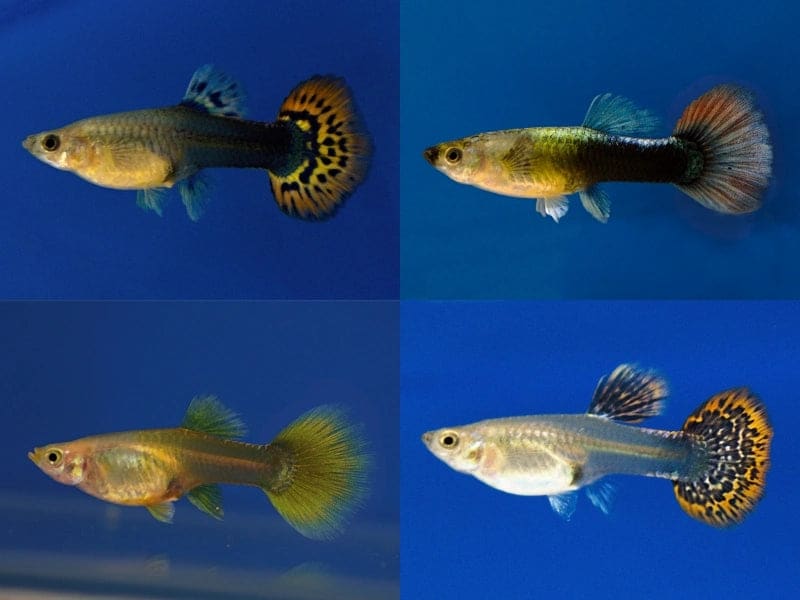
Use the current Guppy listings to confirm exact price, availability, sex, strain label, size and sale unit. Product cards change with the catalogue. A quantity of two or three is not necessarily a pair, trio or balanced group, and a representative collection image is not proof that every fish will have the same pattern.
Prepare and test the mature aquarium before dispatch. The delivery page is the current source of truth for postcode coverage, dispatch timing, protective packing, Live Arrival Guarantee terms and arrival instructions. Follow the supplied directions rather than a fixed acclimation timer copied from a general article; the appropriate method depends on the animals, journey and water.
Observe arrivals quietly for swimming, breathing, fins and balance. If condition or behaviour causes concern, follow the current reporting instructions promptly and test the aquarium. Do not assume continuing distress is merely normal transit stress.
Never release aquarium life or water outdoors
Guppies have been introduced far beyond their native range. Research questions their effectiveness for mosquito control and documents biodiversity and ecosystem risks[19]. Never release guppies, fry, plants, snails, pathogens or aquarium water outdoors or into a surface-water drain, pond or natural waterway. Rehome livestock responsibly and dispose of water and substrate so organisms cannot reach natural watercourses, following OATA care guidance[3] and UK wildlife-release guidance[20].
Guppy sex and wild-type variation
Frequently asked questions
Shop current Poecilia reticulata
Female Guppy Mix (Poecilia reticulata) – 2.5–7cm & XL Size Grades
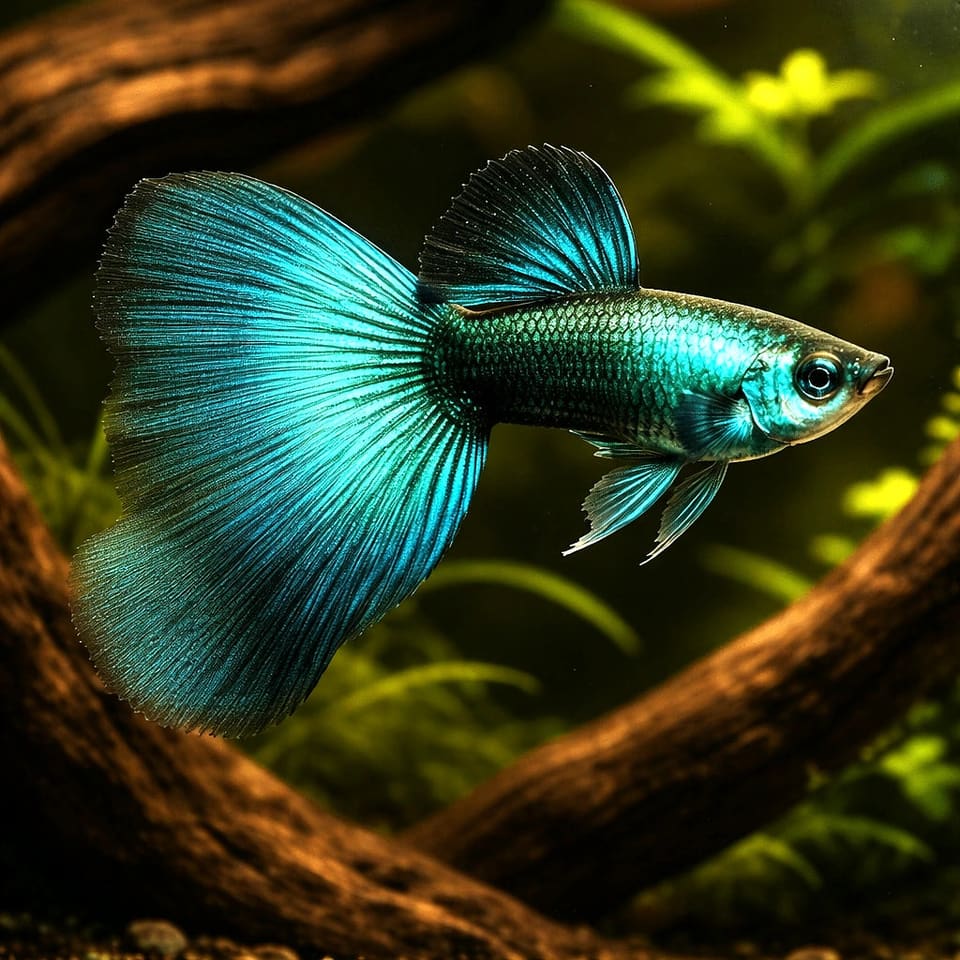
Blue Moscow Male Guppy (Poecilia reticulata)
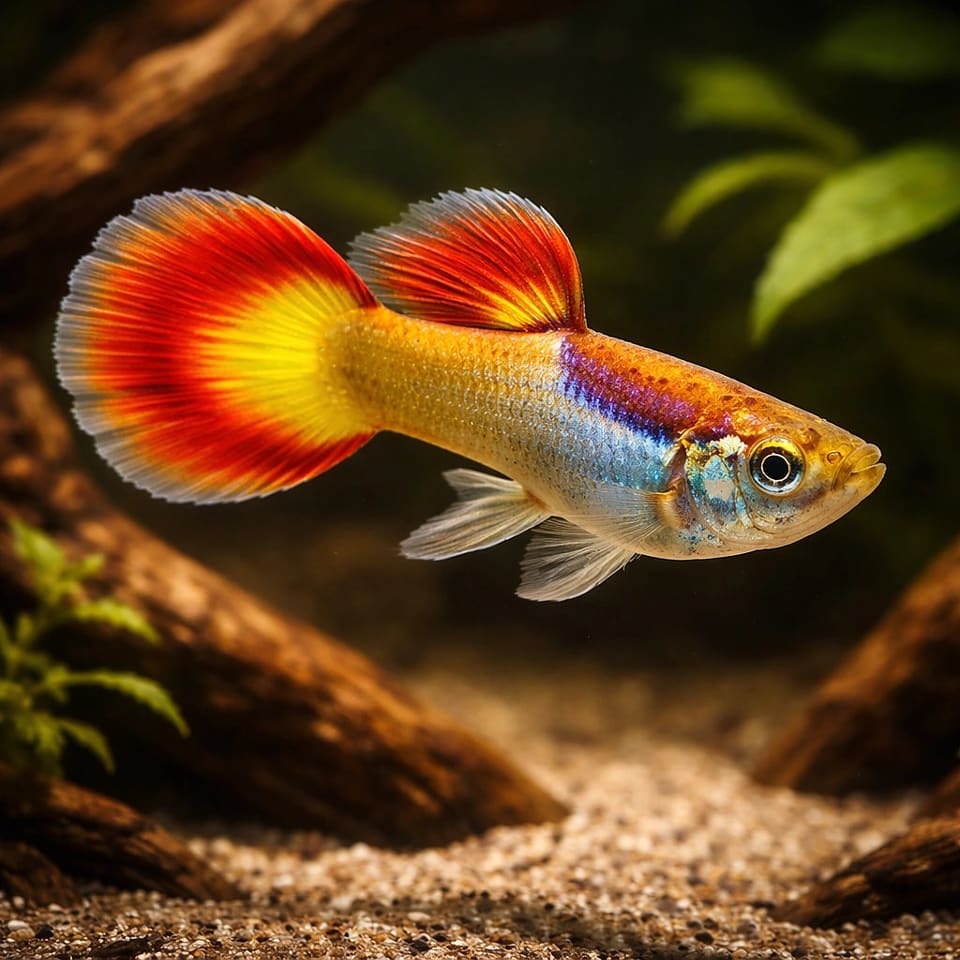
Yellow Mix Male Guppy (Poecilia reticulata)
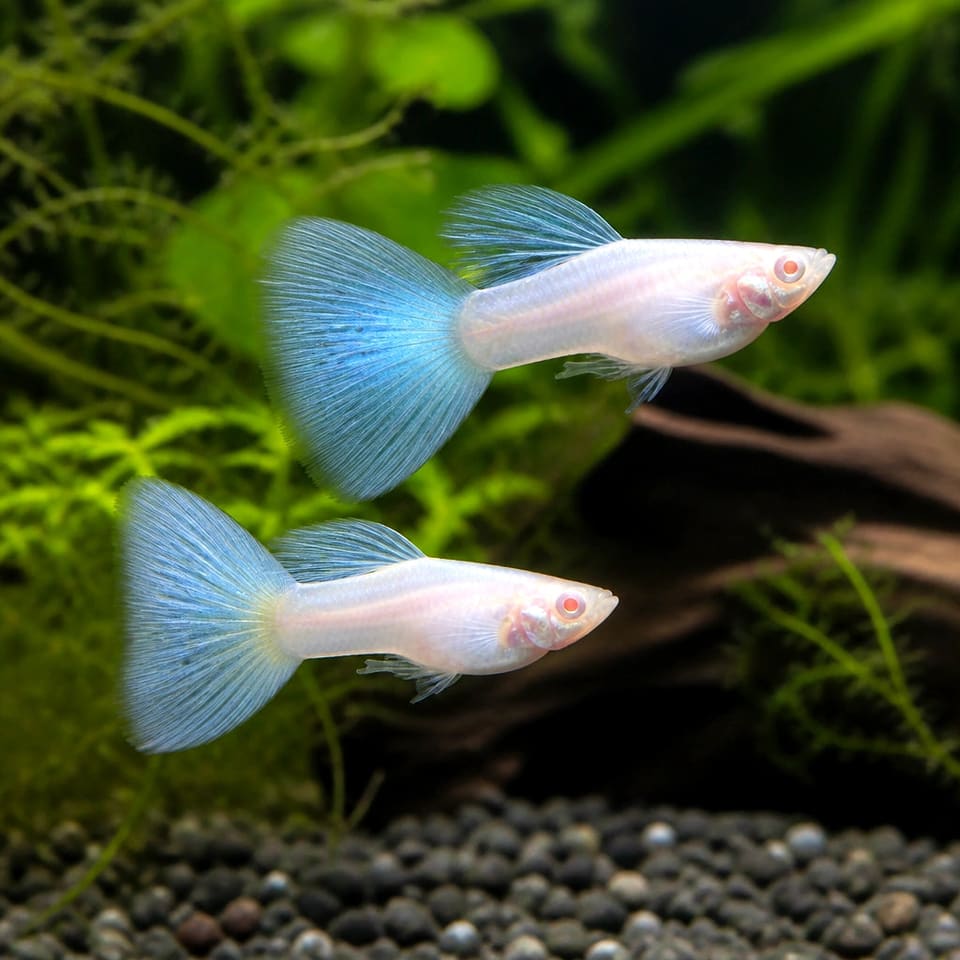
Albino Sky Blue Guppy Pair (Poecilia reticulata)
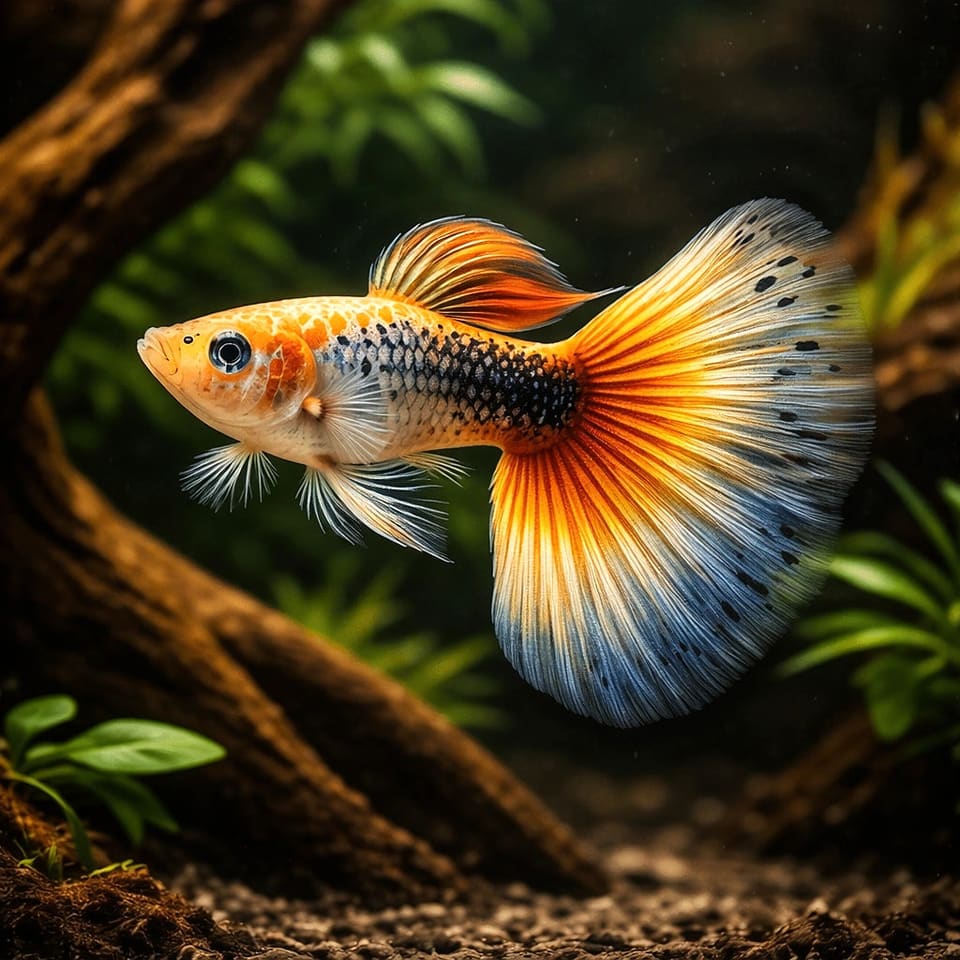
Male Guppy (Poecilia reticulata) — Mixed Colours
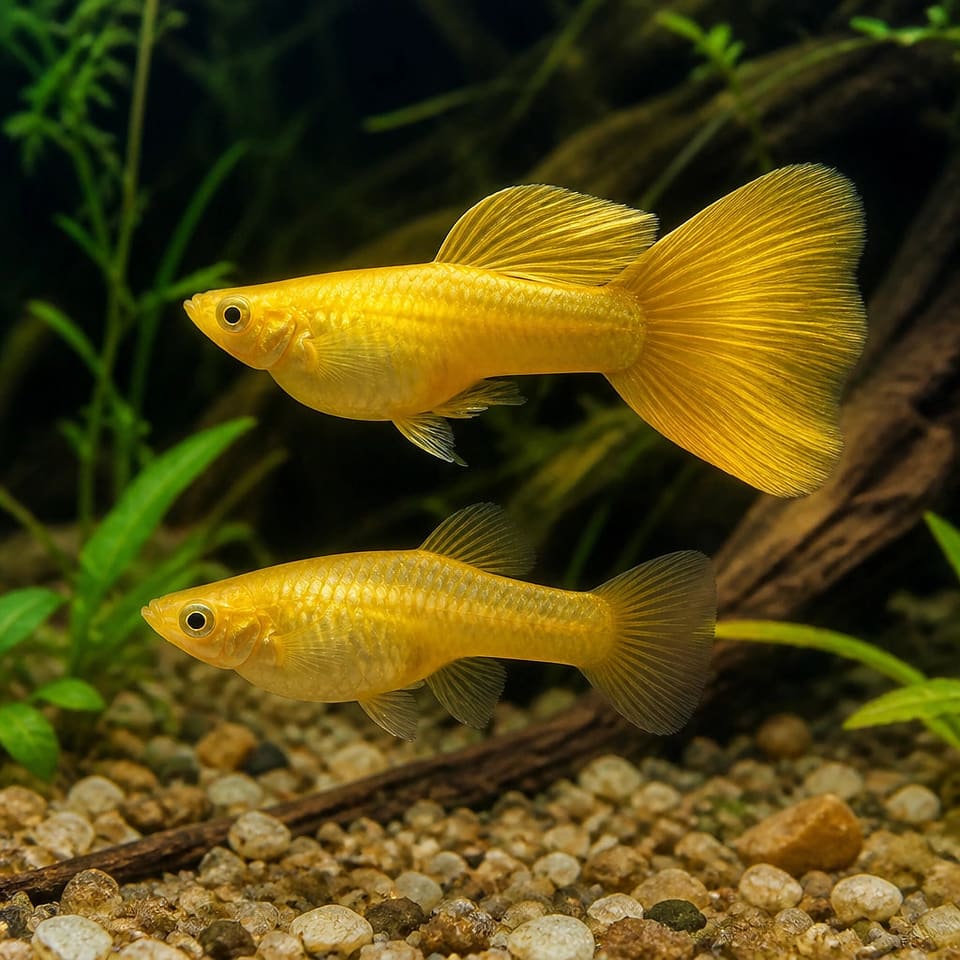
Full Gold 24K Guppy Pair (Poecilia reticulata)
Shop Guppy & related
From this care guide straight into our UK live-fish catalogue.
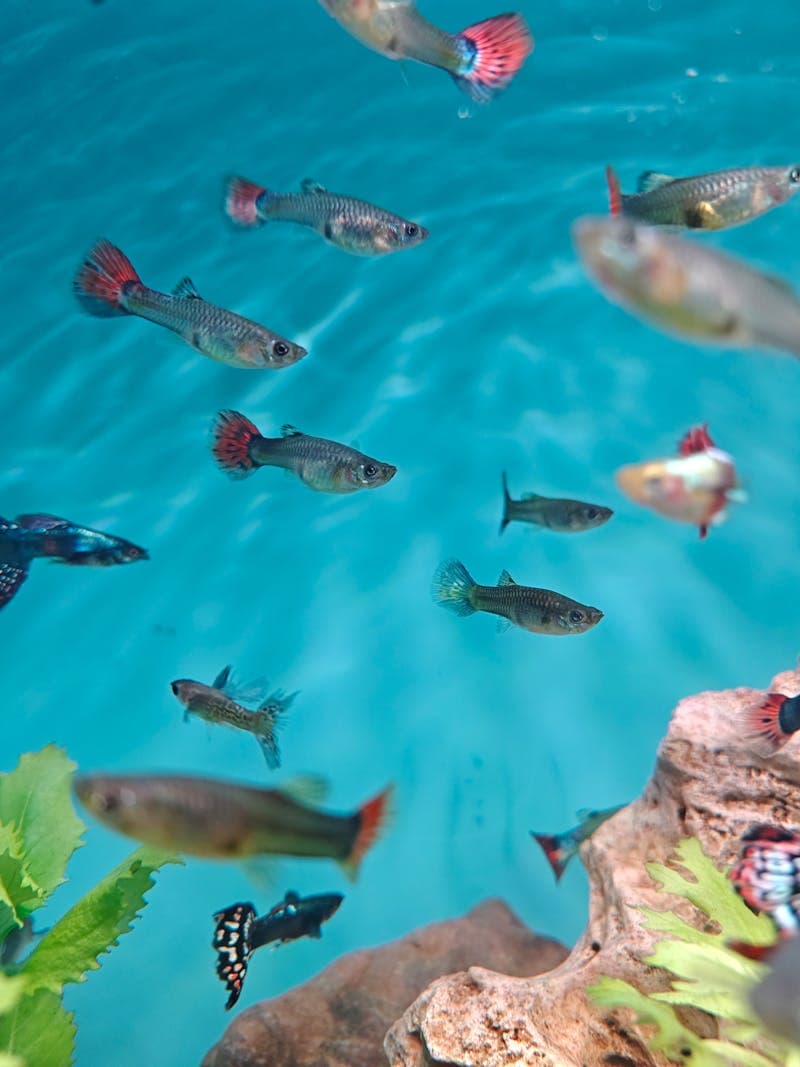
Livebearers
Livebearer fish for sale UK — Guppies, Mollies, Platies, Swordtails, Endlers, Limias. Easy-breeding community favourites.
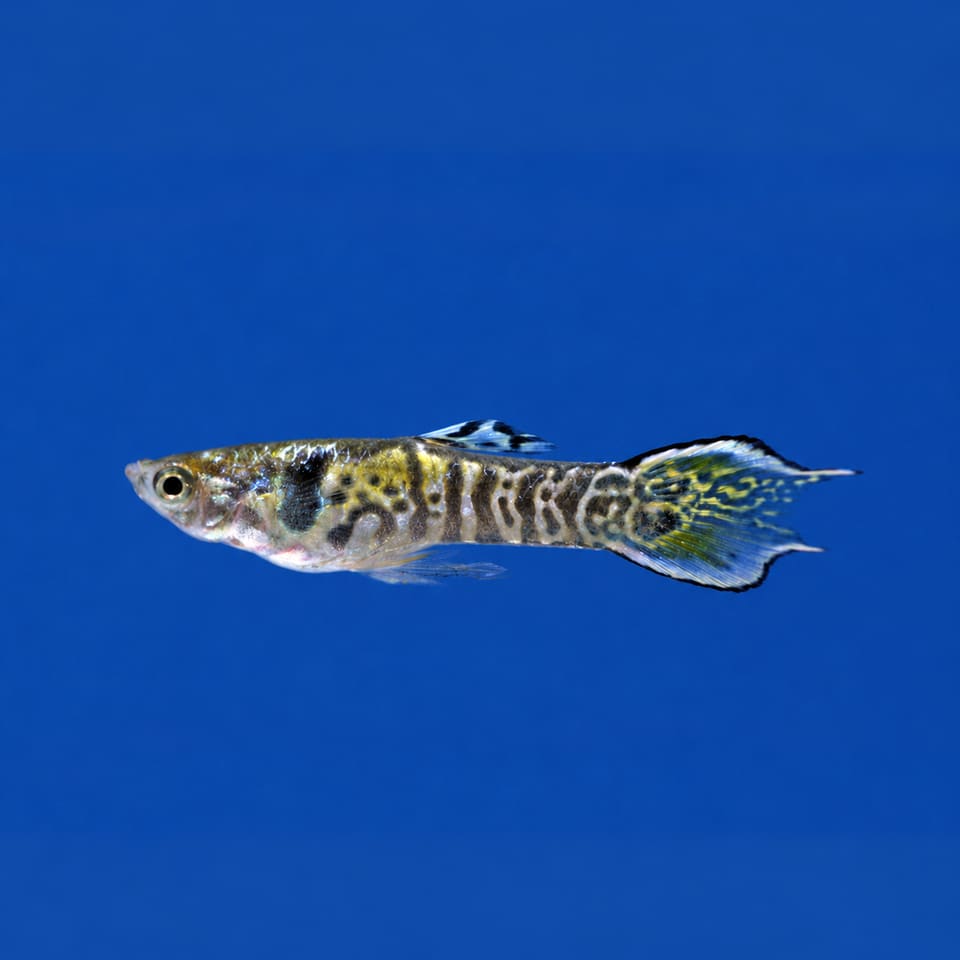
Endler Guppy
Wild-type and selectively bred Endler guppies (Poecilia wingei) for nano and planted tanks — small and peaceful. Males, females and trios, size stated.
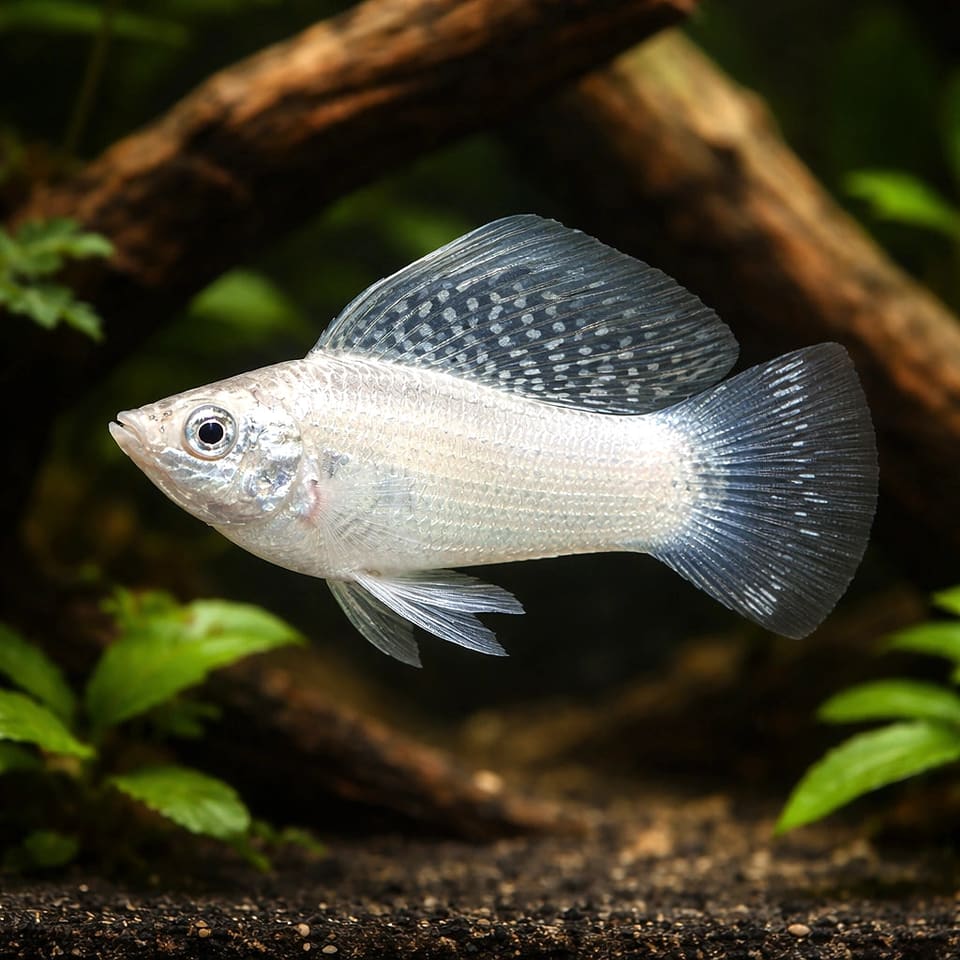
Molly Fish
Black, gold, marble and sailfin mollies, plus balloon and lyretail forms: peaceful livebearers that prefer harder water. Price, size and sex on every listing.
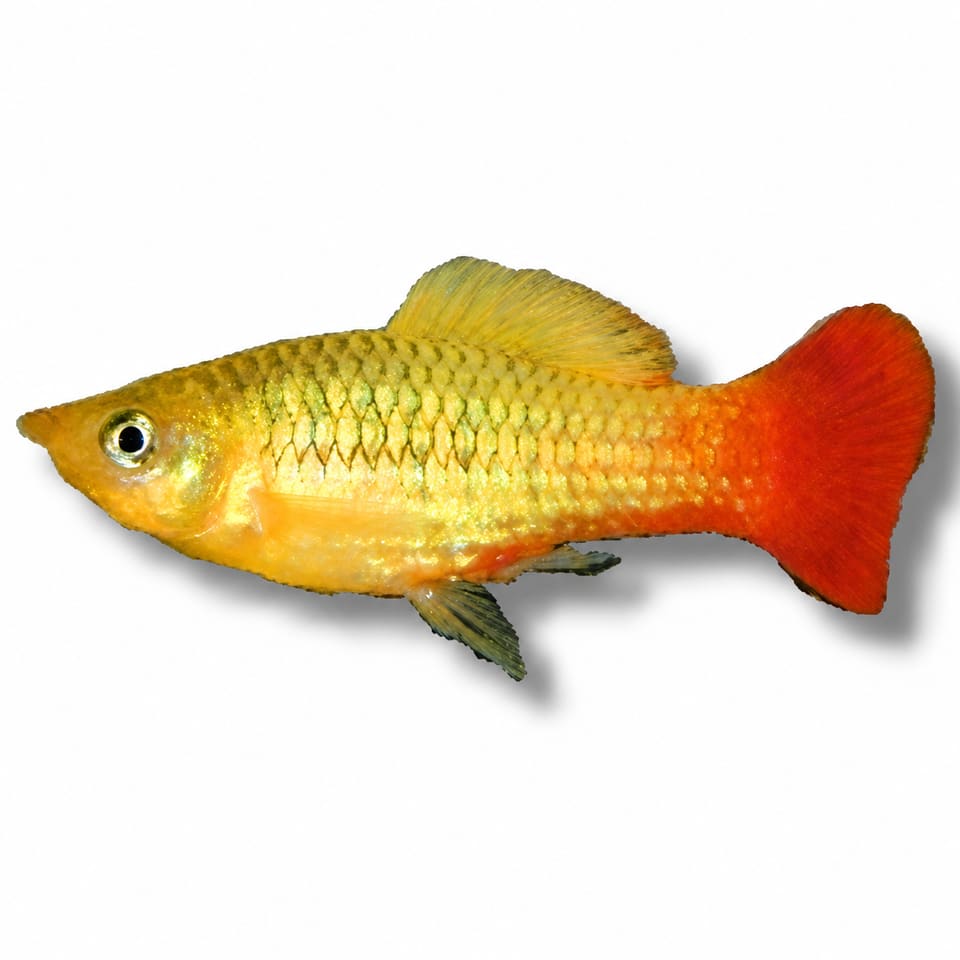
Platy Fish
Sunset, Mickey Mouse and Wagtail platies (Xiphophorus maculatus) — the easiest livebearer for a first community tank, happy at 20–28 °C. Singly or in trios.
Sources & further reading
Material factual claims cite the sources below; store policy and cautious inference are labelled in the article. Sources are grouped by type so you can judge their weight at a glance.
Peer-reviewed study (11)
- [6]Alexander, H. J., Taylor, J. S., Wu, S. S.-T. & Breden, F. (2006). Parallel evolution and vicariance in the guppy (Poecilia reticulata) over multiple spatial and temporal scales. Evolution. DOI: 10.1111/j.0014-3820.2006.tb01870.x. View source
Drainage-linked lineages and likely centre of origin; 'likely' is not treated as a definitive pinpoint.
- [7]Reznick, D. N. & Travis, J. (2019). Experimental studies of evolution and eco-evo dynamics in guppies (Poecilia reticulata). Annual Review of Ecology, Evolution, and Systematics. DOI: 10.1146/annurev-ecolsys-110218-024926. View source
Review of Trinidad predator regimes and replicated differences in life history, behaviour, morphology and physiology; not an aquarium-care minimum.
- [8]Zandonà, E. et al. (2011). Diet quality and prey selectivity correlate with life histories and predation regime in Trinidadian guppies. Functional Ecology. DOI: 10.1111/j.1365-2435.2011.01865.x. View source
Site-variable wild diet; wild ingestion is ecological context, not a household feeding schedule.
- [9]Lachlan, R. F., Crooks, L. & Laland, K. N. (1998). Who follows whom? Shoaling preferences and social learning of foraging information in guppies. Animal Behaviour. DOI: 10.1006/anbe.1998.0760. View source
Controlled evidence of shoaling preferences and social learning; it does not establish one captive minimum group.
- [10]Darden, S. K. & Croft, D. P. (2008). Male harassment drives females to alter habitat use and leads to segregation of the sexes. Biology Letters. DOI: 10.1098/rsbl.2008.0308. View source
Supports monitoring courtship pressure and access to refuge; not proof that one sex ratio guarantees welfare.
- [11]Cardozo, G., Devigili, A., Antonelli, P. & Pilastro, A. (2020). Female sperm storage mediates post-copulatory costs and benefits of ejaculate anticipatory plasticity in the guppy. Journal of Evolutionary Biology. DOI: 10.1111/jeb.13673. View source
Supports sperm storage lasting several months; not a promise of brood size or timing.
- [12]Manenti, I. et al. (2025). Effect of different levels of environmental enrichment on the welfare of guppy (Poecilia reticulata). Frontiers in Fish Science. DOI: 10.3389/frish.2025.1581493. View source
A 15-tank experiment found several welfare benefits but also more biting under high enrichment; it does not prove one universal decor recipe.
- [16]Poeser, F. N., Kempkes, M. & Isbrücker, I. J. H. (2005). Description of Poecilia (Acanthophacelus) wingei n. sp. from the Paría Peninsula, Venezuela. Contributions to Zoology. View source
Formal description supporting P. wingei as a species distinct from P. reticulata.
- [18]Vila-Pouca, C., De Waele, H. & Kotrschal, A. (2022). The effect of experimental hybridization on cognition and brain anatomy: Limited phenotypic variation and transgression in Poeciliidae. Evolution. DOI: 10.1111/evo.14644. View source
Laboratory reciprocal P. reticulata × P. wingei F1/F2 hybridisation; not evidence of UK-market prevalence.
- [19]El-Sabaawi, R. W. et al. (2016). Biodiversity and ecosystem risks arising from using guppies to control mosquitoes. Biology Letters. DOI: 10.1098/rsbl.2016.0590. View source
Evidence of ecological risk and weak mosquito-control efficacy; supports the no-release warning.
- [21]Deacon, A. E., Shimadzu, H., Dornelas, M., Ramnarine, I. W. & Magurran, A. E. (2015). From species to communities: the signature of recreational use on a tropical river ecosystem. Ecology and Evolution. DOI: 10.1002/ece3.1800. View source
Peer-reviewed provenance for the visible male/female photographic comparison; not a household care minimum.
Scientific database (3)
- [1]Fricke, R., Eschmeyer, W. N. & Van der Laan, R. (eds.). Eschmeyer's Catalog of Fishes: Poecilia reticulata. California Academy of Sciences. View source
Accepted name, authorship and type locality; dynamic database checked 14 August 2026.
- [2]Froese, R. & Pauly, D. (eds.). FishBase: Poecilia reticulata. FishBase. View source
Identity, family, native distribution, size records, ecology, diet summary and conservation record. Ecological ranges are not presented as captive prescriptions; aquarium fields are secondary care notes. Checked 14 August 2026.
- [17]Fricke, R., Eschmeyer, W. N. & Van der Laan, R. (eds.). Eschmeyer's Catalog of Fishes: Poecilia wingei. California Academy of Sciences. View source
Current valid-status record for Poecilia wingei; dynamic database checked 14 August 2026.
Veterinary reference (1)
- [13]MSD Veterinary Manual. Management of aquarium fish. MSD Veterinary Manual. View source
Professional US veterinary guidance on water-quality-led diagnosis, biosecure quarantine and at least 30 days' isolation. Drug and dose sections are not reproduced for UK shoppers.
Animal-welfare charity (2)
- [4]Royal Society for the Prevention of Cruelty to Animals. Creating the ideal environment for your fish. RSPCA. View source
Current UK welfare guidance on test-verified cycling, filtration, heaters, independent thermometers and guppy temperature.
- [5]Royal Society for the Prevention of Cruelty to Animals. Fish health and welfare. RSPCA. View source
Current UK welfare guidance on normal and concerning signs, water-quality checks and veterinary escalation.
Trade-body guidance (2)
- [3]Ornamental Aquatic Trade Association. How to look after guppies and mollies. OATA. View source
UK trade-body care sheet endorsed by a veterinary professional. It combines guppies and mollies and is not a primary aquarium-capacity trial.
- [14]Ornamental Aquatic Trade Association. Find a fish vet. OATA. View source
UK fish-vet directory for qualified diagnosis and treatment advice.
Government / regulatory (2)
- [15]Veterinary Medicines Directorate. Exemption from authorisation for medicines for small pet animals. GOV.UK. View source
UK legal context for small-pet medicines; not a diagnosis or dosing source.
- [20]Department for Environment, Food & Rural Affairs. Guidance on preventing the release into the wild of certain plants and animals. GOV.UK. View source
UK legal and environmental context; never release aquarium livestock, plants or water outdoors.
Spotted something that needs a fix?
Fishkeeping moves fast and we want every guide spot-on. If you think something here is wrong, out of date, or could be clearer, tell us — our team reads every message and updates the page.
Suggest an edit
Tropical Fish Co Editorial Team
Evidence-led aquarium editorial team
The Tropical Fish Co editorial team compiles care guidance from the sources cited on each page, separates published evidence from practical husbandry policy, and checks retail links against the current catalogue. First-hand experience is included only when a named contributor and the observation have been verified.
Keep exploring
Shop related
- Livebearers
Livebearer fish for sale UK — Guppies, Mollies, Platies, Swordtails, Endlers, Limias. Easy-breeding community favourites.
- Endler Guppy
Wild-type and selectively bred Endler guppies (Poecilia wingei) for nano and planted tanks — small and peaceful. Males, females and trios, size stated.
- Molly Fish
Black, gold, marble and sailfin mollies, plus balloon and lyretail forms: peaceful livebearers that prefer harder water. Price, size and sex on every listing.
- Platy Fish
Sunset, Mickey Mouse and Wagtail platies (Xiphophorus maculatus) — the easiest livebearer for a first community tank, happy at 20–28 °C. Singly or in trios.
Care guides
- Platy Fish Care: Tank Size, Temperature & Types
Platy fish care for UK keepers: compare platy types, tank size, temperature, water, lifespan, groups, male vs female, pregnancy and tank mates.
- Molly Fish Care: Tank Size, Temperature & Types
Molly fish care for UK keepers: compare common and sailfin types, tank sizes, temperature, hard-water needs, groups, feeding and tank mates.
- Corydoras Care Guide: Choose the Right Cory Catfish
Corydoras care for UK aquariums: compare popular cory catfish by adult size and temperature, then check tank, group, substrate, food and tank mates.
Related care guides
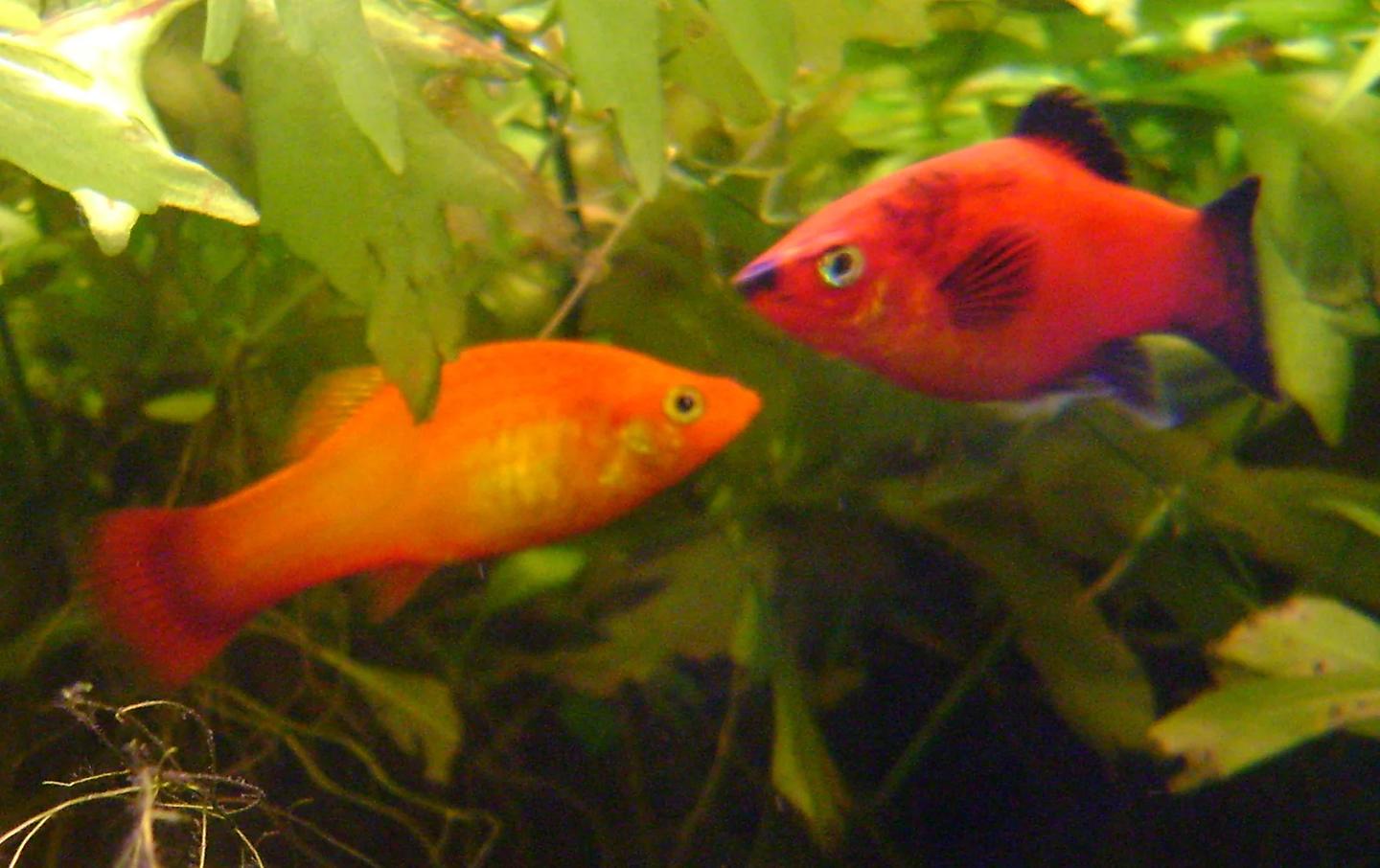
Platy Fish Care: Tank Size, Temperature & Types
Platy is a trade name used for Xiphophorus maculatus, X. variatus and domestic forms. Start with at least three in a mature aquarium of at least 45 litres, verify the exact fish and measured water, and plan extra capacity before mixing sexes.
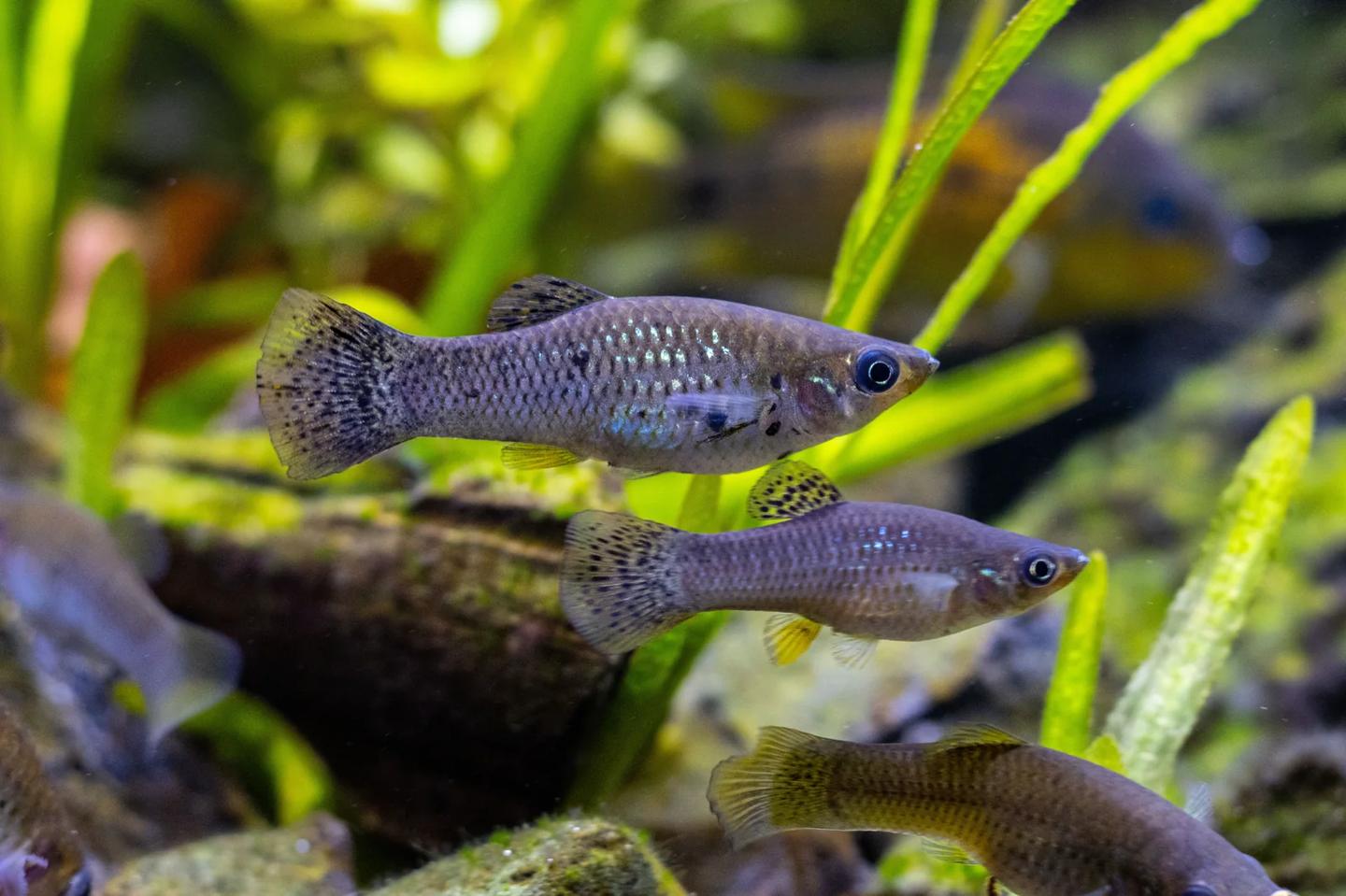
Molly Fish Care: Tank Size, Temperature & Types
Mollies are social livebearers sold under a broad trade name. Identify the species or domestic form first; plan at least 45 litres for a small group of smaller mollies or 80 litres for sailfins, then verify adult size, water, sex ratio and the complete community.
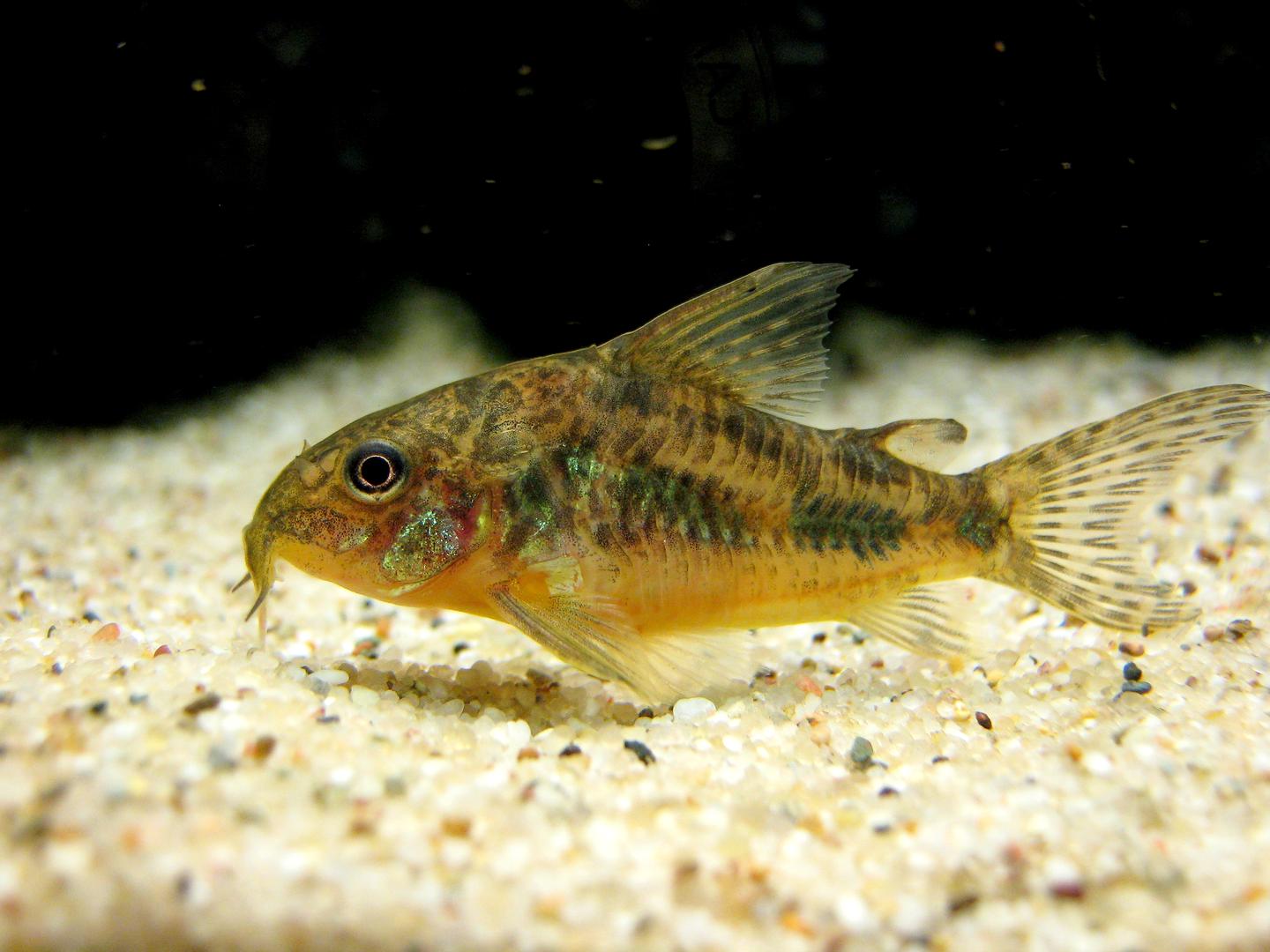
Corydoras Care Guide: Choose the Right Cory Catfish
Identify the exact cory catfish before choosing care. Our starting policy for many common medium species is six compatible conspecifics, a mature 60 x 30 cm aquarium of about 60 litres, smooth fine sand and measured species-appropriate water.