
Nerite Snail Care Guide: Species, Eggs & Feeding

The name ‘nerite snail’ can hide several genera, and shell pattern alone may not identify the animal you are buying.
Peer-reviewed ornamental-mollusc identity studyOnly our tank and care screens are displayed. A mature, covered 20 L aquarium is our conservative starting policy for one identified common small tropical nerite—not a biological minimum or a stocking formula. Exact water, adult size and food needs remain taxon-specific.
Live stock
Nerite Snails for sale — see live stock & today’s prices
Good nerite snail care begins with an identity question: which neritid is it? “Nerite snail” is a retail umbrella used for animals from several genera, and an ornamental-trade study found conflicts among shell-based identification, DNA matches and database names[7]. One universal temperature, adult size, lifecycle or feeding promise would therefore be misleading.
Tropical Fish Co sells live invertebrates, so our commercial interest is explicit. Use the live Nerite snail shop for current product names, sale units, prices and availability. The shop owns changing stock information; this guide contains no hardcoded product card, SKU, price or availability claim.
- Ask for the scientific name and measured holding water; shell colour alone is not enough.
- Use a mature, covered aquarium with tested water and established food-bearing surfaces.
- Stock from available grazing area, stability and companions—not a snail-per-litre formula.
- Many commonly traded tropical nerites may lay capsules but do not normally establish a freshwater population; that is not universal across Neritidae.
- Treat copper-containing medicines as a serious invertebrate risk and check the exact current label.
What does “nerite snail” mean?
Neritidae is a family, not a single aquarium species. Current taxonomic records accept names such as Vittina natalensis, Vittina waigiensis, Vittina turrita, Clithon corona, Clithon diadema and Vitta usnea[1][2][3][4][5][6]. The familiar name Neritina natalensis is now treated as an unaccepted earlier combination of Vittina natalensis.
Trade labels remain useful search language, but they are not diagnoses:
| Label seen in UK shops | What it may describe | What to verify before care decisions |
|---|---|---|
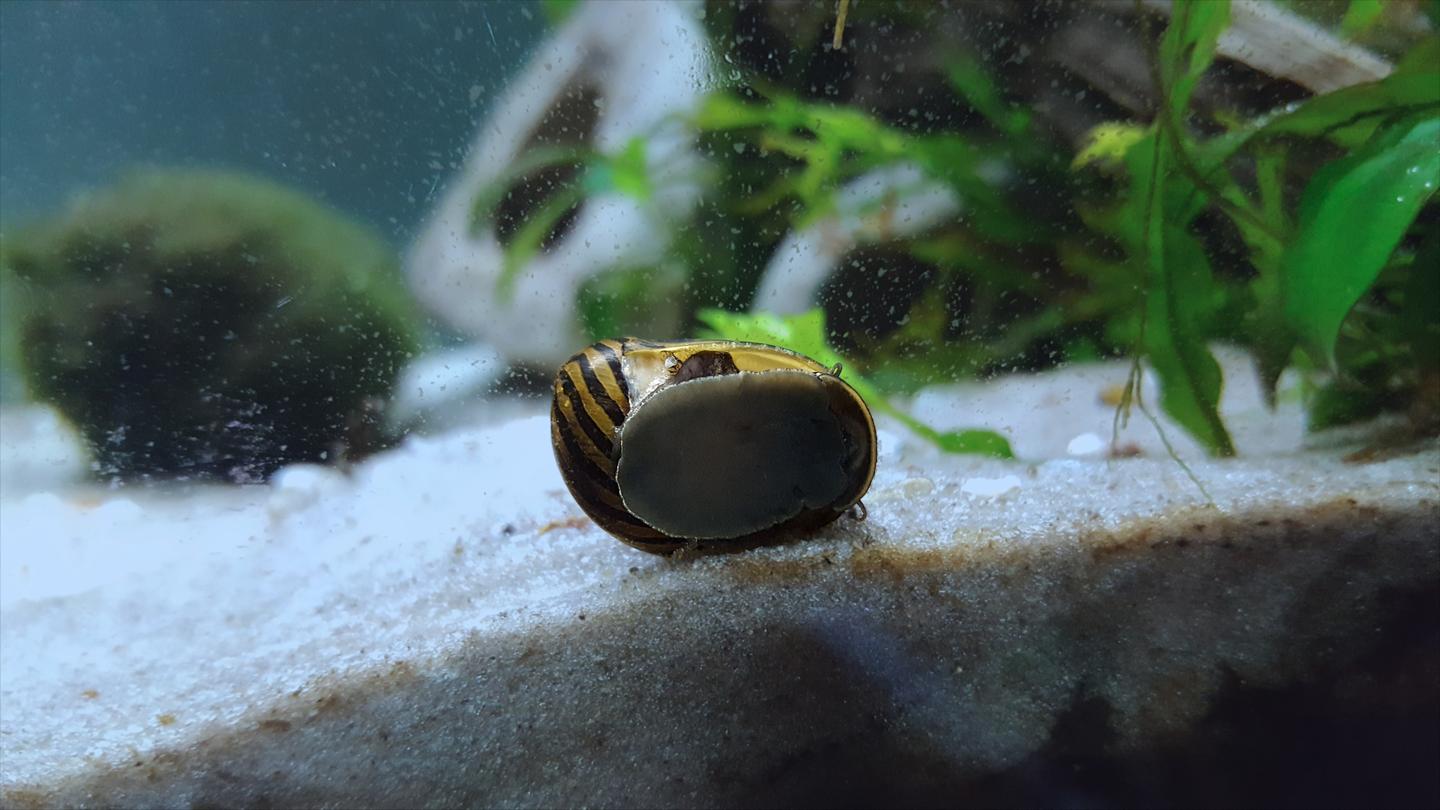
| Zebra or tiger nerite | A striped or banded shell form sold under several historical names | Accepted scientific name, source record and adult size; pattern alone cannot settle identity |
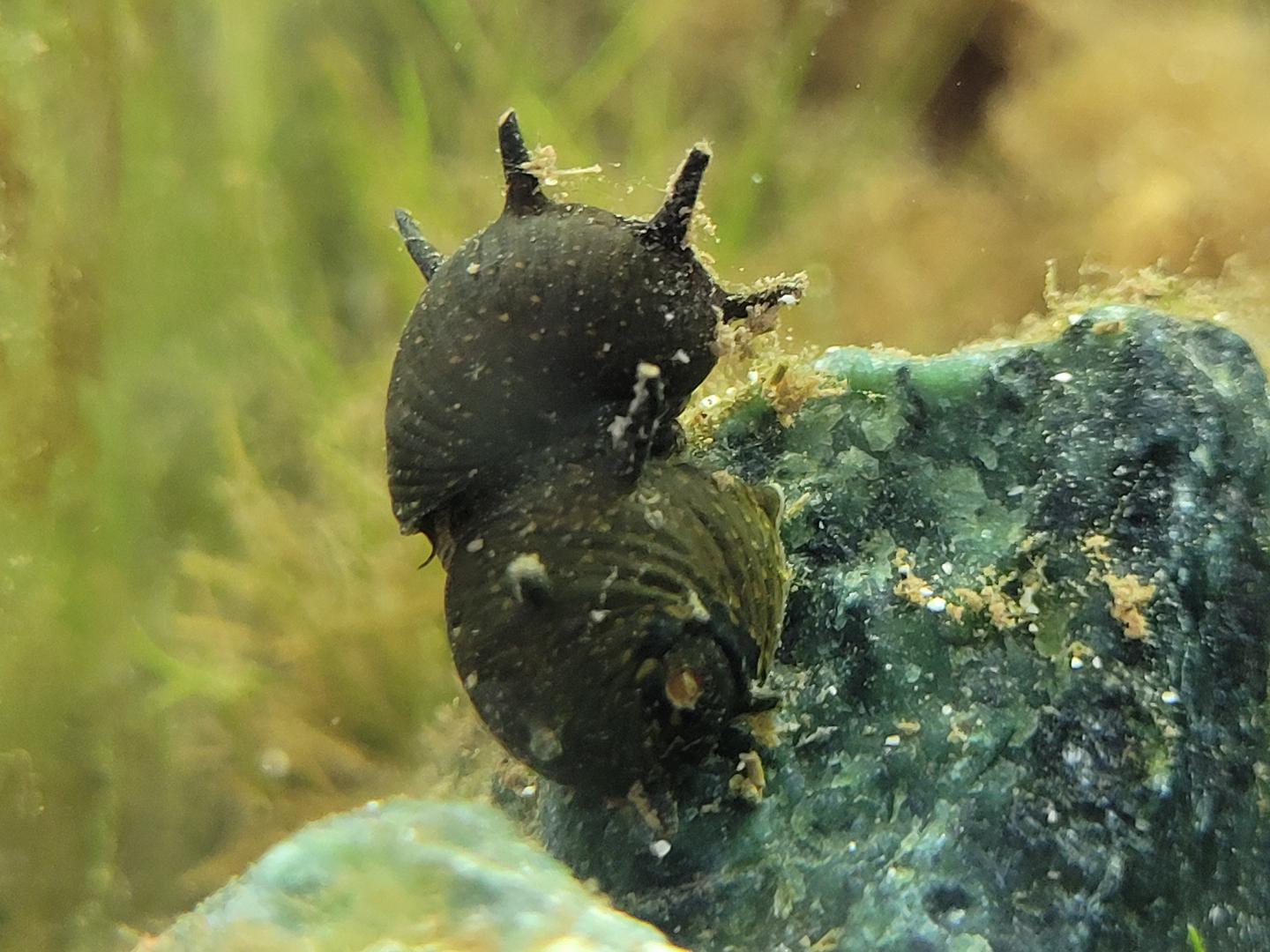
| Horned nerite | Often a Clithon species; the gallery documents one source-labelled C. corona | Exact species, horned shell condition and current water; do not assume every horned form is C. corona |
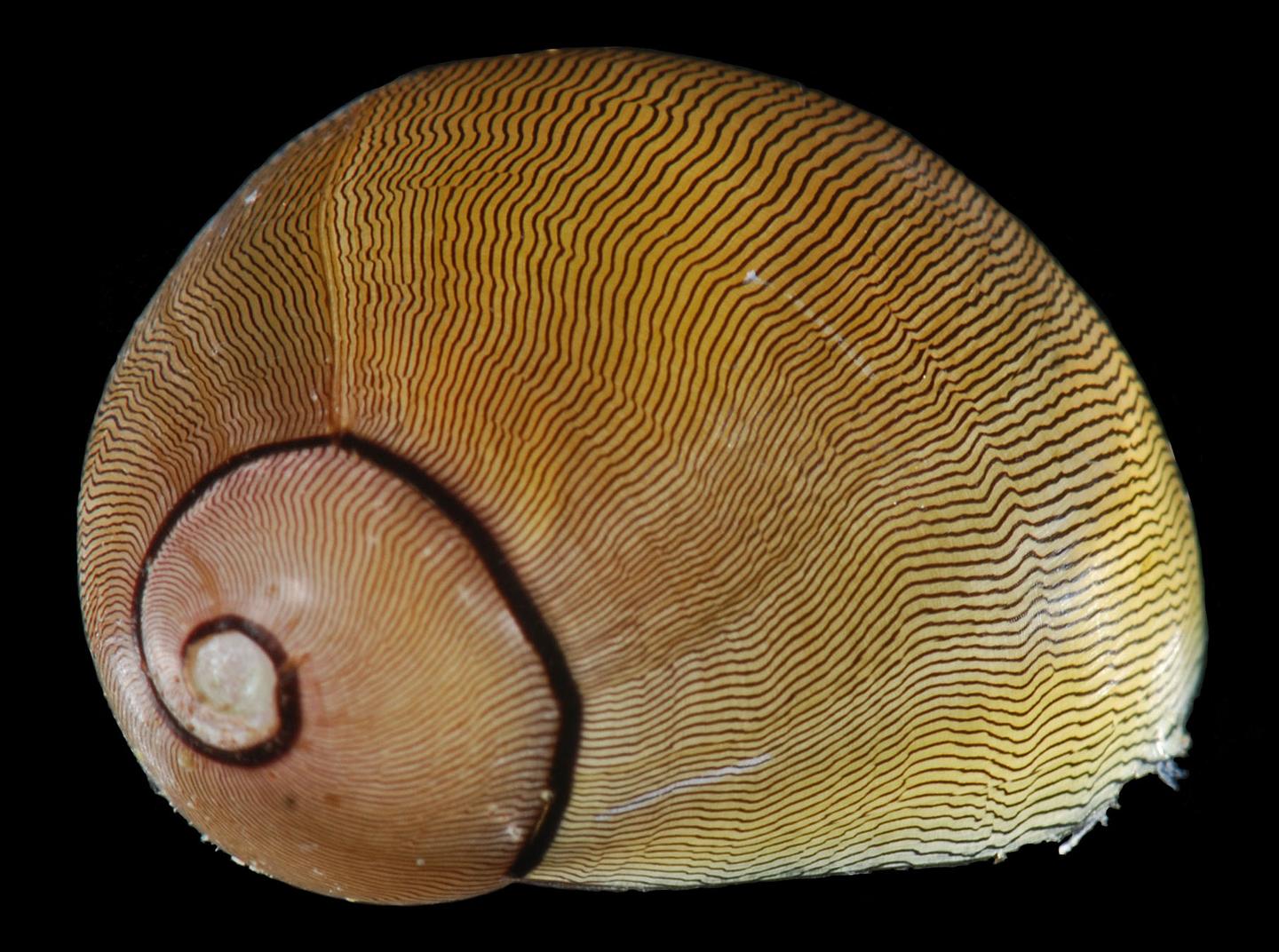
| Racer or red racer | A trade label often associated with patterned Vittina; the gallery shows source-labelled V. waigiensis shells | Batch identity and source; not every red or patterned shell is the same species |
| Olive or black nerite | A broad colour label; scientific work on Vitta usnea does not identify an unrelated UK batch | Scientific name, whether the photograph is representative, and current holding conditions |
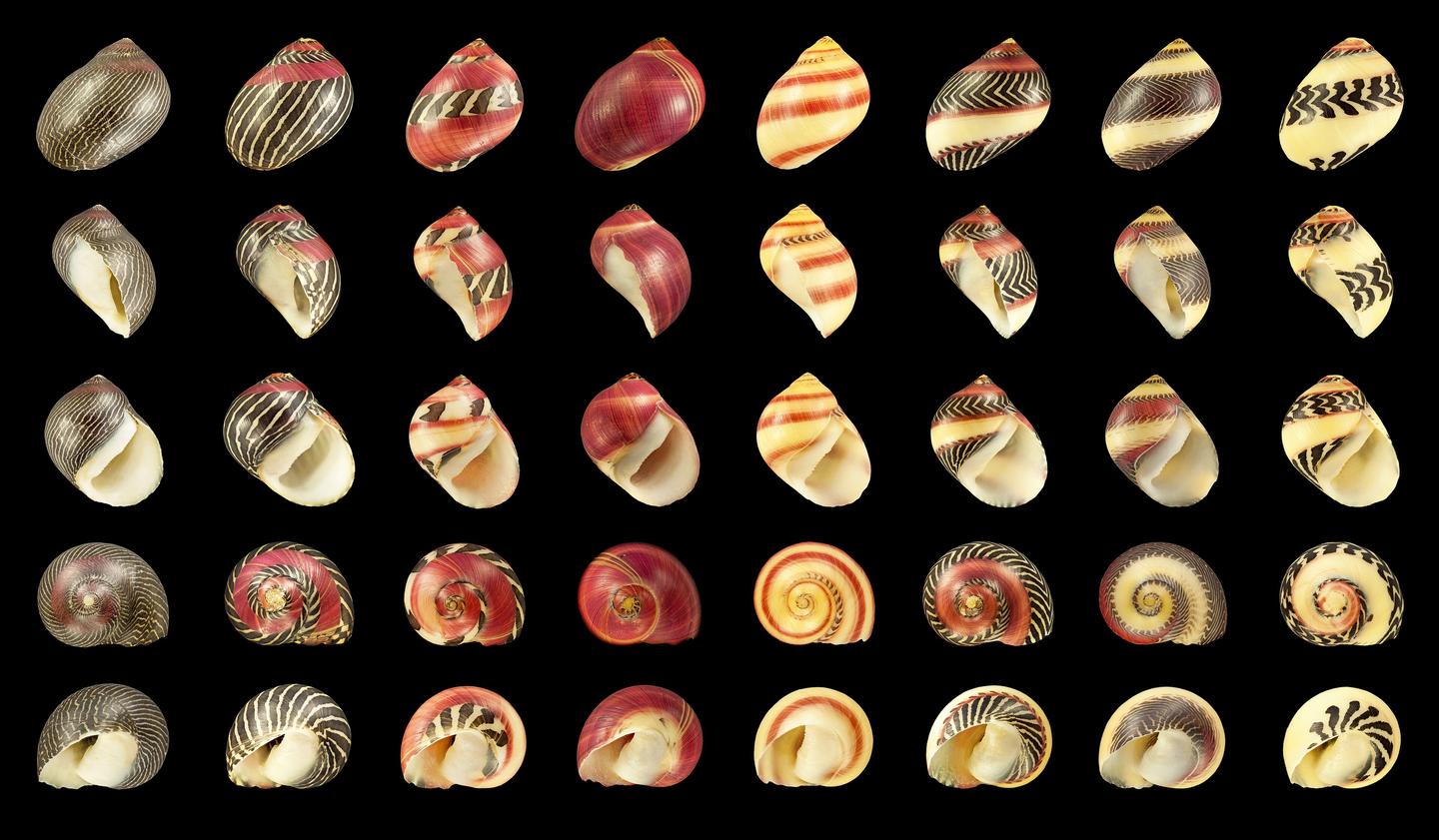
Even within one source-labelled species, shell colour and pattern can vary substantially. Use the product's documented identity, not a colour chart, to choose water, adult-size and lifecycle guidance. If a seller can supply only “nerite snail,” treat all exact-species claims as unresolved.
Is a nerite snail right for your aquarium?
Nerites are chosen because many are small, non-predatory surface grazers and because self-sustaining populations of commonly sold tropical forms are generally unlikely in an ordinary freshwater community aquarium. Those are useful tendencies, not a cleaning contract or a universal biological rule.
The important disadvantages are easy to overlook:
- a female may cement pale egg capsules to glass, wood, rock or equipment;
- a newly set up or meticulously clean tank may not grow enough suitable food;
- prepared-food acceptance differs among species and individuals;
- they can climb above the waterline and escape through small gaps;
- loaches, puffers, cichlids, assassin snails and even “peaceful” fish must be assessed individually for predation or picking; and
- a trade name may conceal the species and origin needed for confident care.
That makes the correct question “can this identified snail feed and remain safe in this aquarium?” rather than “will one clean my glass?” Compare other grazers such as Amano shrimp and otocinclus by their own social, dietary and water needs; none is a substitute for maintenance.
Tank setup, maturity and stocking
Use a biologically established aquarium with a fitted cover, protected filter intakes, oxygenated water and enough hard surfaces for attached growth. “Mature” should be demonstrated by tested water and established grazing, not a calendar promise. Royal Veterinary College guidance explains why ammonia and nitrite control depends on a functioning nitrogen cycle and continued testing[22].
Our conservative starting screen for one identified common small tropical nerite is a mature 20-litre aquarium. This is Tropical Fish Co policy, not a scientifically discovered minimum. A larger system may be necessary where the species grows larger, the aquarium is new, the water is difficult to stabilise, other grazers compete, or fish can harass the snail.
There is no defensible “one nerite per 20 litres” rule. Use this sequence instead:
- Confirm the exact taxon, expected adult size and retailer's current holding water.
- Verify that ammonia and nitrite remain non-detectable on an appropriate test and maintenance controls nitrate and waste.
- Look for established biofilm or periphyton on more than one accessible surface.
- Add one snail only after screening every companion and closing escape gaps.
- Watch actual feeding and body condition before considering another grazer.
Do not increase lighting simply to manufacture algae. Excess light can create a different aquarium problem without producing the food an individual will use. Build a stable system first; the first tropical tank guide covers cycling and routine maintenance.
Food, algae and aquarium plants
Research on Vittina turrita shows radular grazing on food spread across a hard surface, while experiments on the species now accepted as Vitta usnea found that periphyton quality and quantity changed feeding and absorption[15][16]. The responsible description is predominantly surface grazer, not “algae-eating machine.”
Many aquarium nerites graze biofilm, diatoms and some attached microalgae. No reviewed source supports a promise that an unidentified trade nerite will clear hair algae, black beard algae, cyanobacteria or every green film. A before-and-after clean patch can show that one individual grazed one surface; it does not prove diet completeness or future performance.
Prepared-food acceptance also varies. The V. turrita study used algae paste as an experimental feeding protocol, not a universal nutrition trial. Offer only a species-appropriate product in a form the animal can reach, then confirm that it actually feeds. An untouched wafer is pollution, not starvation insurance.
Reviewed feeding evidence supports hard-surface and periphyton grazing, but it does not prove that an unidentified animal is plant-safe. Films on leaves, damaged tissue, food shortage and uncertain identity can complicate what a keeper sees. Inspect the surface before attributing every mark to the snail.
Neritids are not necessarily exclusive herbivores. Experiments found facultative consumption of other neritids' hard egg capsules by some Clithon and Vittina individuals[11]. That observation does not turn capsules into a recommended food; it simply rules out an absolute “algae only” claim.
Egg capsules, breeding and sexing
Many tropical freshwater-stream neritids are amphidromous: adults live in fresh or estuarine water while larvae use downstream marine or brackish environments before juveniles return[9][10]. For many commonly traded tropical taxa, successful juvenile recruitment is therefore not expected in an ordinary freshwater aquarium—even though a female may lay capsules.
Do not turn that tendency into “nerites cannot breed in freshwater.” Laboratory work on Clithon diadema found different salinity requirements across reproductive stages[13], while the river nerite Theodoxus fluviatilis develops directly inside capsules and emerges as crawling juveniles[14]. Neritidae contains more than one lifecycle.
Each pale dot is a capsule, not necessarily one egg. Capsule form, development and hatching are species-specific; research published for an animal identified in that paper as Neritina zebra must not be copied onto every animal sold as a zebra nerite[12].
Sexing an unidentified shop animal visually is unreliable. Do not rely on a shell pattern, foot-colour patch or a promise that buying “males only” will prevent capsules. If capsules are unacceptable, choose a different animal rather than depending on uncertain retail sexing. For removal, use a scraper safe for the exact glass, acrylic or décor, avoid chemicals, and expect some cemented marks to be difficult to remove.
Water chemistry and shell condition
There is no single published temperature, pH, GH or KH range for everything sold as a nerite snail. A field census supports an East African estuarine context and an approximately 20 mm shell height for V. natalensis, but it is not an aquarium tolerance trial[8]. Other species come from different systems and reach different sizes.
Ask the seller for the accepted scientific name and measured holding temperature, pH, GH and KH. Test the destination aquarium and avoid sudden change. UK tap water is not uniformly hard or soft: the Drinking Water Inspectorate says hardness follows local geology and recommends obtaining an accurate local result from the water company[21]. A postcode stereotype is not a measurement.
Stable mineral availability and non-corrosive water matter to a calcareous shell, but shell wear is not a one-step diagnosis. A field study in another neritid linked shell calcium-to-tissue patterns with several environmental factors; it does not establish a universal GH, calcium dose or pH cure[17]. Do not add crushed coral, cuttlebone or buffer from a regional assumption. Measure first, consider every inhabitant, and change chemistry only through a controlled plan.
Check ammonia, nitrite, nitrate, temperature, pH, GH and KH when activity or shell appearance changes. Merck's aquatic guidance stresses that water-quality factors and toxicants interact and species sensitivity varies[24]. Loss of adhesion, repeated falling, failure to close the operculum, damaged tissue or persistent inactivity are warning signs, not diagnoses.
Tank mates, escape prevention and safety
Nerites do not hunt fish or shrimp, but that does not make every pairing safe. Screen the exact companion for adult mouth size, snail predation, shell picking, water overlap, food competition and behaviour. Separate immediately if the snail is repeatedly bitten, pulled from the shell or prevented from feeding.
Assassin snails are experimentally supported gastropod predators, although one study did not test every nerite pairing[20]. Treat that as a precaution against mixing them, not a guarantee about every individual. Similar caution applies to puffers and mollusc-eating loaches; a common name cannot settle the risk.
Shrimp and nerites can compete for the same films. The shrimp-keeping guide explains why a mixed invertebrate aquarium still needs enough food and mineral stability for every occupant. “Peaceful” does not mean competition-free.
Use a fitted lid and close cable, airline and filter gaps. Some neritids naturally cross water boundaries, but repeated climbing is not proof that water is safe or unsafe. Test the aquarium, check oxygenation and harassment, and inspect the cover rather than relying on a claimed number of hours the snail can survive outside water.
Arrival, health and medicines
Prepare the mature aquarium before dispatch and follow the seller's current arrival instructions. In England, statutory retail guidance requires appropriate acclimatisation and avoidance of sudden environmental changes, but it does not prescribe one universal drip rate for every animal[28]. Compare delivery and destination conditions, minimise unnecessary time in fouled shipping water, and do not add bag water to the aquarium.
A separate mature observation setup with dedicated wet equipment can reduce cross-contamination, but a bare uncycled cup can create water-quality and food problems. No reviewed nerite source establishes a universal one-week quarantine. Use a plan appropriate to documented origin, shipment and health, and seek qualified advice for concerning signs.
Copper can be highly toxic to aquatic invertebrates. Do not dose a copper-containing medicine with snails present unless the exact current label explicitly permits that exact use. “Copper-free” does not prove every other active, excipient or dose is safe.
Controlled research confirms copper toxicity in a freshwater gastropod, but its numerical results are not safe-dose limits for Neritidae[18]. Field research in T. fluviatilis also shows that contaminant mixtures can alter snail life-history traits without supplying an aquarium treatment threshold[19].
Check the complete product label, active ingredients, dose, contraindications and disposal instructions. Merck advises exact copper measurement and testing in fish treatment while warning of extreme invertebrate toxicity[23]; UK medicine exemptions remain product-specific[26]. When uncertain, ask an aquatics/exotics-capable practice through the RCVS service[27]. Do not rely on a fixed number of carbon days or a generic “conditioner removes it” recipe.
Responsible buying checklist
Check current Nerite snail availability only after the aquarium passes the care screen. Before ordering, confirm:
- the accepted scientific name, or that identity remains unresolved;
- the exact sale unit and whether the photograph is representative;
- current holding temperature, pH, GH and KH;
- documented collection or breeding origin when available;
- expected adult size for that taxon;
- a mature, covered destination with enough established grazing surface;
- compatible fish, shrimp, snails and medicines; and
- current delivery, guarantee and problem-reporting instructions.
This page separates published evidence from Tropical Fish Co policy and contains no invented keeper story or stock promise. If you find a factual problem, use the guide's correction link so the exact claim and source can be reviewed.
Never release a snail, egg capsule, aquarium plant or aquarium water into the wild. GOV.UK guidance explains that legal controls cover invertebrates and the release or escape of non-resident animals[25]. If you cannot continue care, arrange responsible rehoming through a reputable retailer, aquarium society or experienced keeper.
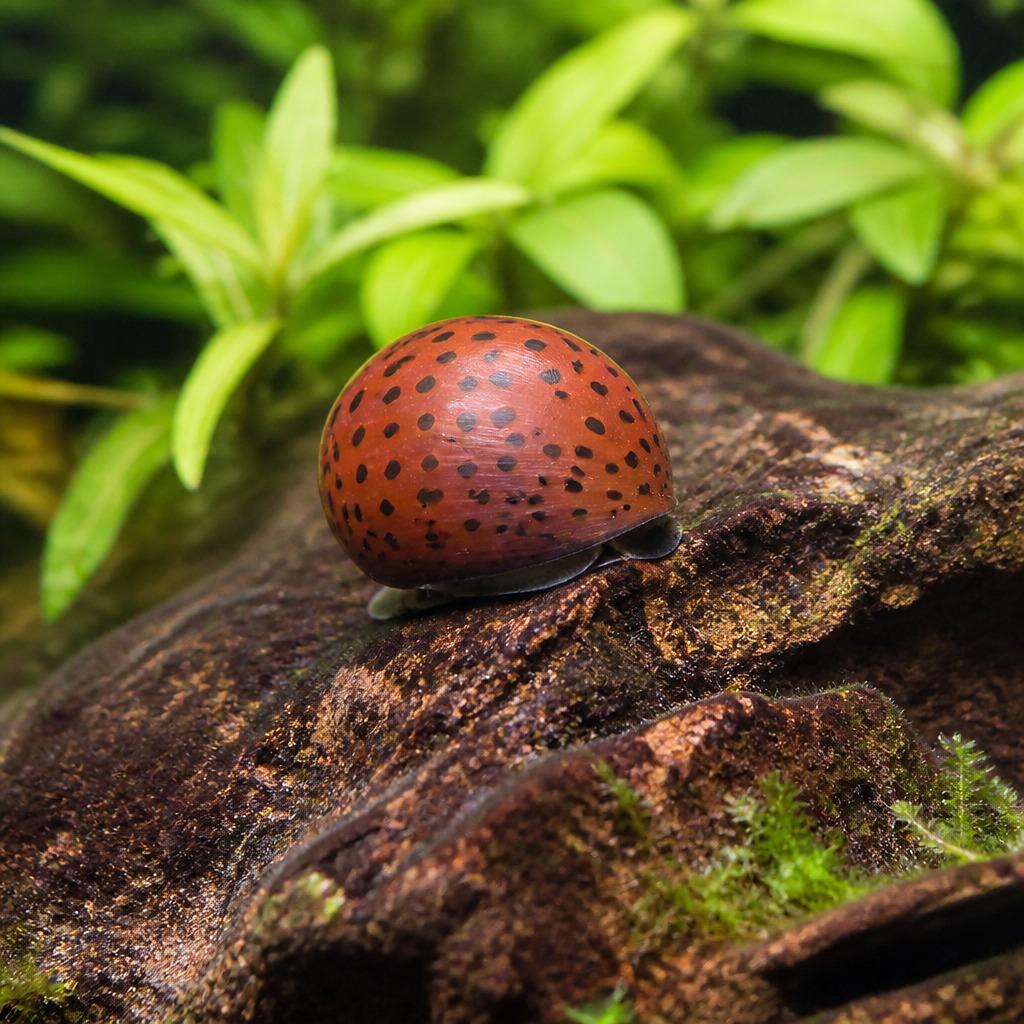
Representative nerites and documented shell variation
Frequently asked questions
Shop Nerite Snails & related
From this care guide straight into our UK live-fish catalogue.
Sources & further reading
Material factual claims cite the sources below; store policy and cautious inference are labelled in the article. Sources are grouped by type so you can judge their weight at a glance.
Peer-reviewed study (14)
- [7]Ng, T. H. et al. (2016). Molluscs for Sale: Assessment of Freshwater Gastropods and Bivalves in the Ornamental Pet Trade. PLOS ONE. DOI: 10.1371/journal.pone.0161130. View source
- [8]Perissinotto, R., Miranda, N., Raw, J. & Peer, N. (2014). Biodiversity census of Lake St Lucia, iSimangaliso Wetland Park (South Africa): Gastropod molluscs. ZooKeys. DOI: 10.3897/zookeys.440.7803. View source
- [9]Abdou, A., Keith, P. & Galzin, R. (2015). Freshwater neritids (Mollusca: Gastropoda) of tropical islands: amphidromy as a life cycle, a review. Revue d’écologie. DOI: 10.3406/revec.2015.1799. View source
- [10]Crandall, E. D., Taffel, J. R. & Barber, P. H. (2009). High gene flow due to pelagic larval dispersal among South Pacific archipelagos in two amphidromous gastropods (Neritomorpha: Neritidae). Heredity. DOI: 10.1038/hdy.2009.138. View source
- [11]Kano, Y. & Fukumori, H. (2010). Predation on hardest molluscan eggs by confamilial snails (Neritidae) and its potential significance in egg-laying site selection. Journal of Molluscan Studies. DOI: 10.1093/mollus/eyq018. View source
- [12]Barroso, C. X. & Matthews-Cascon, H. (2009). Spawning and intra-capsular development of Neritina zebra (Bruguière, 1792) (Mollusca: Gastropoda: Neritidae) under laboratory conditions. Invertebrate Reproduction & Development. DOI: 10.1080/07924259.2009.9652299. View source
- [13]Huang, H.-T. et al. (2024). Development of an artificial propagation and breeding method for the beehorn snail (Clithon diadema). Aquaculture Reports. DOI: 10.1016/j.aqrep.2024.102145. View source
- [14]Güler, M., Çoban, D. & Kırım, B. (2018). An Observation on Intracapsular and Post-Embryonic Phases of River Nerite (Theodoxus fluviatilis). Journal of Aquaculture Engineering and Fisheries Research. DOI: 10.3153/JAEFR18005. View source
- [15]Krings, W., Hempel, C., Siemers, L., Neiber, M. T. & Gorb, S. N. (2021). Feeding experiments on Vittina turrita (Mollusca, Gastropoda, Neritidae) reveal tooth contact areas and bent radular shape during foraging. Scientific Reports. DOI: 10.1038/s41598-021-88953-7. View source
- [16]Lane, J. M. (1991). The effect of variation in quality and quantity of periphyton on feeding rate and absorption efficiencies of the snail Neritina reclivata (Say). Journal of Experimental Marine Biology and Ecology. DOI: 10.1016/0022-0981(91)90110-I. View source
- [17]Chatterjee, A., Jain, M., Singha Roy, U. & Mukhopadhyay, S. K. (2008). Limnochemical Factors Influencing the Seasonal Population Density, Secondary Production, and Calcium-to-Tissue Ratio in the Freshwater Limpet Septaria lineata. Turkish Journal of Zoology. View source
- [18]Brix, K. V., Esbaugh, A. J. & Grosell, M. (2011). The toxicity and physiological effects of copper on the freshwater pulmonate snail, Lymnaea stagnalis. Comparative Biochemistry and Physiology Part C. DOI: 10.1016/j.cbpc.2011.06.004. View source
- [19]Bighiu, M. A., Gorokhova, E., Almroth, B. C. & Wiklund, A.-K. E. (2017). Metal contamination in harbours impacts life-history traits and metallothionein levels in snails. PLOS ONE. DOI: 10.1371/journal.pone.0180157. View source
- [20]Berkhout, B. W. & Morozov, A. (2022). Assassin snails (Anentome helena) as a biological model for exploring the effects of individual specialisation within generalist predators. PLOS ONE. DOI: 10.1371/journal.pone.0264996. View source
Scientific database (6)
- [1]MolluscaBase editors (2026). MolluscaBase: Vittina natalensis (Reeve, 1855). World Register of Marine Species. View source
- [2]MolluscaBase editors (2026). MolluscaBase: Vittina waigiensis (Lesson, 1831). World Register of Marine Species. View source
- [3]MolluscaBase editors (2026). MolluscaBase: Vittina turrita (Gmelin, 1791). World Register of Marine Species. View source
- [4]MolluscaBase editors (2026). MolluscaBase: Clithon corona (Linnaeus, 1758). World Register of Marine Species. View source
- [5]MolluscaBase editors (2026). MolluscaBase: Clithon diadema (Récluz, 1841). World Register of Marine Species. View source
- [6]MolluscaBase editors (2026). MolluscaBase: Vitta usnea (Röding, 1798). World Register of Marine Species. View source
Veterinary reference (4)
- [22]Royal Veterinary College, Beaumont Sainsbury Animal Hospital Exotics Service (2024). The Aquarium Nitrogen Cycle. Royal Veterinary College. View source
- [23]Petty, B. D., Francis-Floyd, R. & Yanong, R. P. E. (2024). Management of Aquarium Fish. Merck Veterinary Manual. View source
- [24]Francis-Floyd, R., Yanong, R. P. E. & Petty, B. D. (2024). Environmental Diseases of Aquatic Animals in Aquatic Systems. Merck Veterinary Manual. View source
- [27]
Government / regulatory (4)
- [21]
- [25]Department for Environment, Food & Rural Affairs and Welsh Assembly Government (2011). Guidance on section 14 of the Wildlife and Countryside Act. GOV.UK. View source
- [26]Veterinary Medicines Directorate (2026). Exemption from authorisation for medicines for small pet animals. GOV.UK. View source
- [28]Department for Environment, Food & Rural Affairs (2026). Selling animals as pets licensing: statutory guidance for local authorities. GOV.UK. View source
Spotted something that needs a fix?
Fishkeeping moves fast and we want every guide spot-on. If you think something here is wrong, out of date, or could be clearer, tell us — our team reads every message and updates the page.
Suggest an edit
Tropical Fish Co Editorial Team
Evidence-led aquarium editorial team
The Tropical Fish Co editorial team compiles care guidance from the sources cited on each page, separates published evidence from practical husbandry policy, and checks retail links against the current catalogue. First-hand experience is included only when a named contributor and the observation have been verified.
Keep exploring
Care guides
- How to Set Up a Tropical Fish Tank: 10 Safe Steps
Set up a tropical fish tank in 10 evidence-led steps: choose the tank, install filter and heater, cycle safely, test the water and add fish carefully.
- Aquarium Water Parameters: What to Test and Why
Learn which freshwater aquarium water parameters to test, how to read ammonia, nitrite, nitrate, pH, GH and KH, and when a result needs action.
- Freshwater Shrimp Care: Set Up Your First Tank
Shrimp keeping in the UK: choose an identified freshwater shrimp, test your water, mature the filter, and plan feeding, cover and tank mates safely.
Related care guides
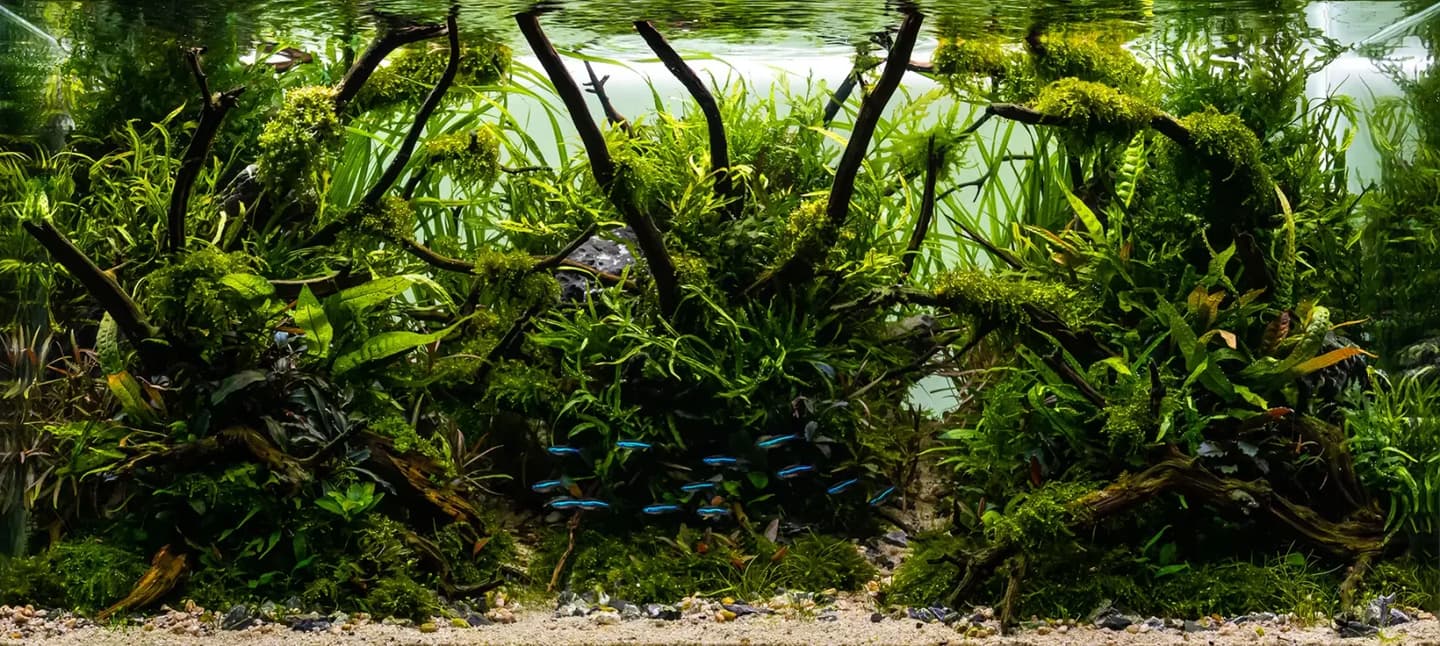
How to Set Up a Tropical Fish Tank: 10 Safe Steps
Choose the intended fish before the aquarium, place the tank on a suitable level support, install a filter and thermostatic heater, condition and test the water, then complete a fishless cycle. Add fish only after the chosen maturation process reaches its defined endpoint and repeated tests show zero ammonia and zero nitrite; elapsed days alone do not prove readiness.
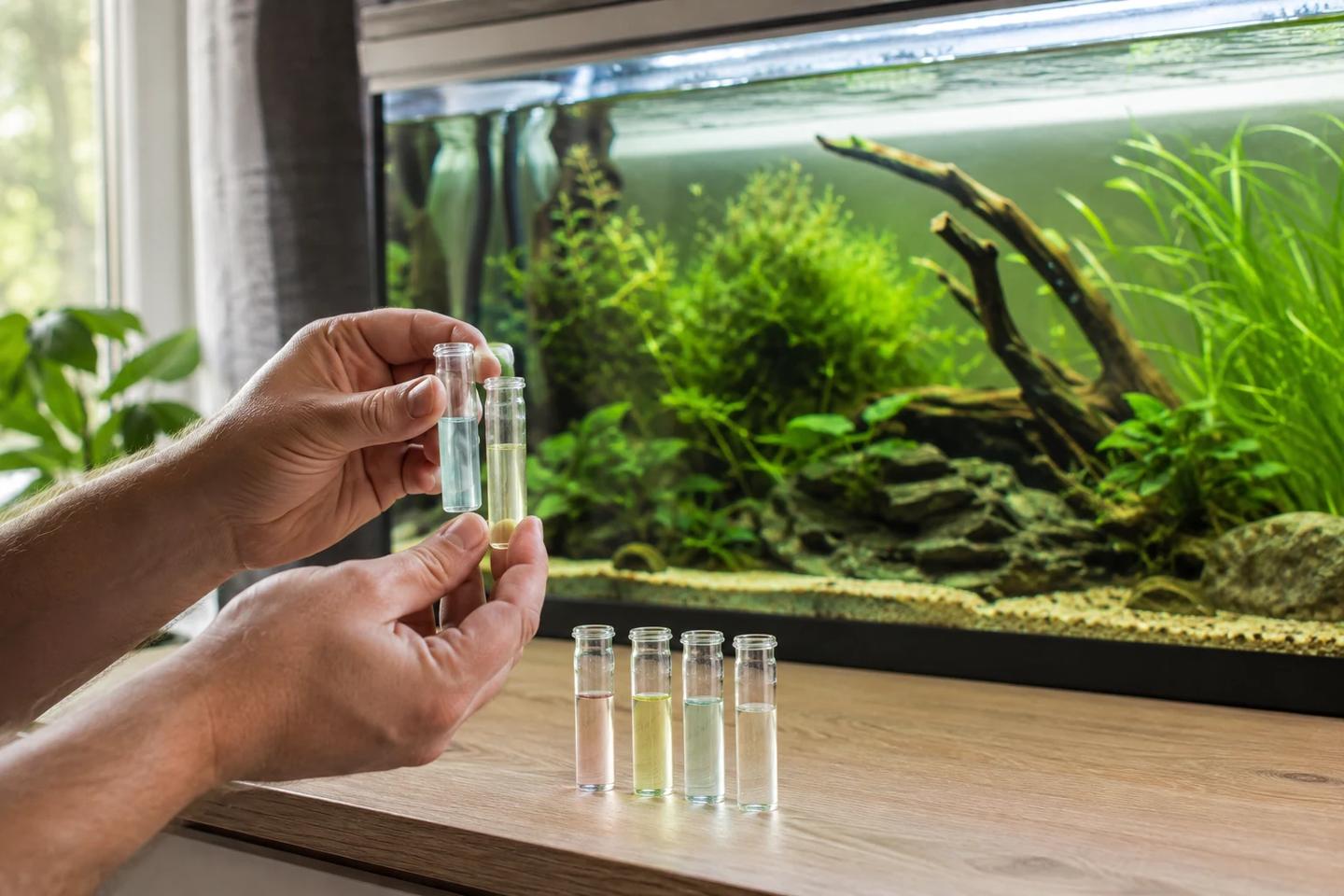
Aquarium Water Parameters: What to Test and Why
There is no universal set of perfect freshwater aquarium parameters. Identify the animals, learn what the test and unit actually report, establish your local source-water baseline, and compare repeat measurements. In an established aquarium, a confirmed ammonia or nitrite detection needs investigation; pH, GH, KH, temperature and nitrate decisions depend on the species, life stage and whole system.
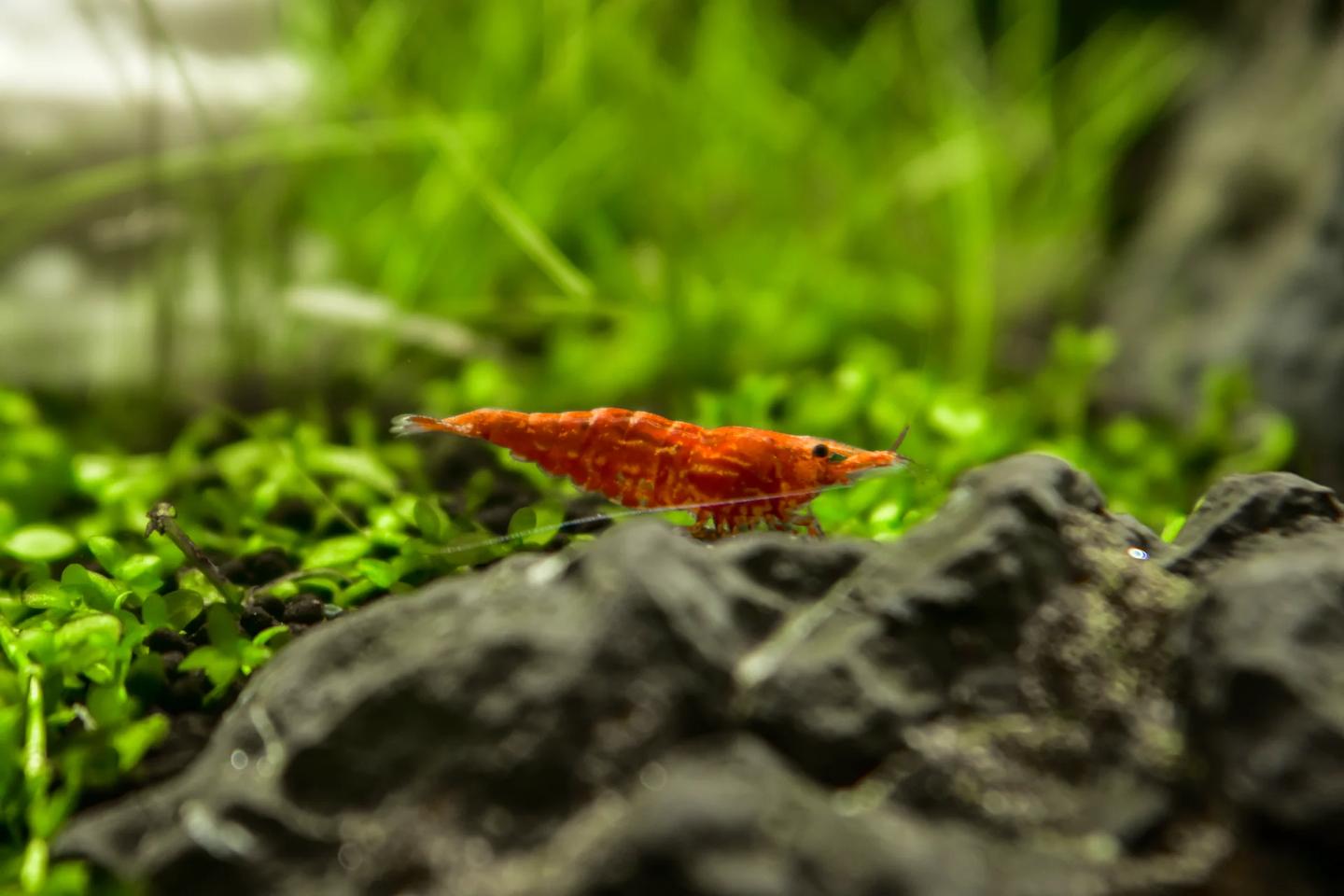
Freshwater Shrimp Care: Set Up Your First Tank
Choose an identified shrimp before copying care numbers. A mature, filtered 20-litre aquarium is our cautious starting policy for a small group from a source-documented Neocaridina davidi trade line—not a biological minimum or per-litre formula. Test your actual tap and tank water, protect the filter inlet, provide established grazing surfaces, and treat tank mates, medicines and breeding as species-specific decisions.