
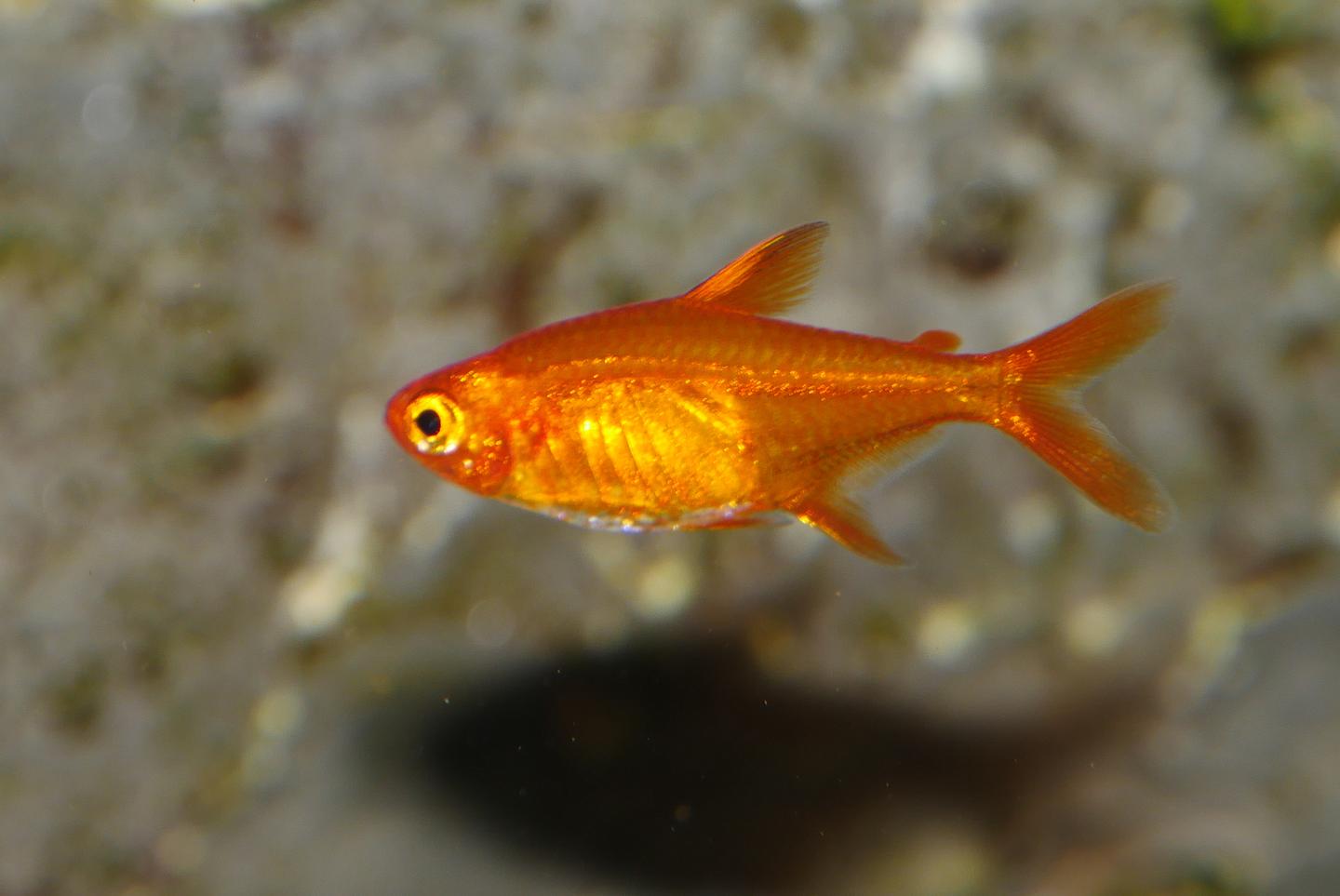
Ember Tetra Care Guide: Hyphessobrycon amandae

FishBase records a maximum length of only 2.0 cm standard length—measured to the base of the tail, not the tail tip. Tiny size does not make a tiny, unstable tank suitable.
FishBase species recordAquarium values are labelled husbandry guidance or Tropical Fish Co policy: 24-27 °C routine target; pH 5.0-7.0 and 1-10 dGH from species-focused hobby guidance; about 45 L and a group of 10+ are our conservative policy.
Live stock
Tetras for sale — see live stock & today’s prices
If you are deciding whether to buy this species, first check the care requirements below. Then see current Ember Tetra availability. Availability and price can change; this guide remains the informational page.
- Use a fully cycled, stable aquarium with zero detectable ammonia and nitrite.
- We recommend about 45 litres and a 45 × 30 cm footprint, not a litres-per-fish rule.
- Keep a social group of at least 10 as our conservative welfare policy.
- We recommend 24–27 °C for routine care; this is a disclosed husbandry policy, not a measured wild-habitat range.
- Do not call them shrimp-safe: adults may coexist, but shrimplets remain at risk.
Is an Ember tetra right for your aquarium?
| A reasonable match | Reconsider or change the setup |
|---|---|
| Mature, cycled aquarium with stable test results | New or uncycled aquarium |
| Around 45 litres with useful horizontal swimming space | 19-litre/5-gallon tank or a tall tank with little footprint |
| A planned group of 10 or more | One fish, a pair or a token group |
| Peaceful, similarly sized companions | Large, predatory, territorial or very boisterous fish |
| Appropriately small complete foods | Food that repeatedly cannot fit in the fish's mouth |
| Measured source and tank water | Chasing a pH number with unmeasured chemical or RO recipes |
These are decision checks, not a universal stocking calculator. The same volume can behave very differently depending on its footprint, filtration, maintenance, planting and other inhabitants.
Identity, origin and the Amanda Bleher story
The accepted scientific name is Hyphessobrycon amandae Géry & Uj, 1987. Eschmeyer's current catalogue places it in Acestrorhamphidae, subfamily Hyphessobryconinae; older aquarium books and pages may still show the traditional family Characidae.[1][2]
The species is known from Brazil's Araguaia River basin. Its type locality—the place attached to the original scientific description—is Rio das Mortes in Mato Grosso.[1][3] The original description appeared in Tropical Fish Hobbyist 35(5), pages 58–61 and 65; it was not published in the journal incorrectly cited by some aquarium pages.[4]
One often-repeated story also needs a careful distinction: the fish honours Amanda Flora Hilda Bleher. Her son, Heiko Bleher, collected the holotype. Amanda was not the collector being described in that sentence.[3]
The authoritative records support the accepted name, present family, Araguaia-basin distribution, type locality and 2.0 cm maximum standard length. FishBase also lists 24–28 °C, but its cited source is an aquarium atlas rather than a field-temperature study. The databases do not provide a species-specific lifespan, minimum group, aquarium volume, pH, hardness, diet schedule or breeding timetable. Those care numbers must therefore be labelled as husbandry guidance rather than field science.
Tank size and group needs
Ember tetras are social fish. OATA's UK trade-body sheet is deliberately general: it says tetras should be kept in groups of at least five and that more is better. The species-focused Seriously Fish profile recommends 8–10 specimens.[5][6] Tropical Fish Co uses 10 or more as a conservative store policy, not as a number proven by a controlled Ember tetra study.
For space, OATA recommends at least 45 litres for a small shoal of a smaller tetra, while Seriously Fish gives a 45 × 30 cm base footprint.[5][6] We use those together: about 45 litres with that footprint is a clearer starting point than the old 30-litre claim.
There is no defensible “three litres per fish” rule. Adding fish changes waste production, oxygen demand, feeding competition and social behaviour; litres alone do not describe any of those. If other fish or shrimp share the aquarium, assess their adult needs separately rather than squeezing them into the Ember calculation.
Water parameters: use ranges without chasing numbers
FishBase lists 24–28 °C for H. amandae, citing Baensch & Riehl's 1995 aquarium atlas rather than a wild-temperature study.[3] OATA's broader captive-bred tetra sheet gives 22–27 °C, while Seriously Fish lists 20–28 °C for this species.[5][6] Tropical Fish Co uses 24–27 °C as a cautious routine recommendation that overlaps those husbandry sources. It is not presented as a measured natural-habitat range. Use a reliable heater where room temperature cannot hold it, and avoid sudden changes.
For pH and hardness, the evidence is less neat. FishBase supplies no species-specific values. Seriously Fish gives pH 5.0–7.0 and hardness 18–179 ppm (roughly 1–10 °dGH), while OATA's general captive-bred tetra range is broader and more alkaline.[6][5] This difference is exactly why a page should not promise that every Ember tetra “thrives in hard UK tap water”.
Ask the seller what water the fish are currently held in, test your tap and aquarium water, and plan gradual acclimation to stable conditions. If your source water is outside the supplier's workable range, get species-appropriate advice. Do not use a fixed 50/50 RO-and-tap recipe: without measuring GH, KH, pH and conductivity, the same ratio produces different water in every postcode. Pure RO also requires appropriate remineralisation.
Before adding livestock, confirm zero ammonia and zero nitrite and a stable temperature. OATA describes water-quality test kits as a necessity, not an optional extra.[5] A fish's reputation for being “hardy” never makes an immature aquarium safe.
Layout, plants and filtration
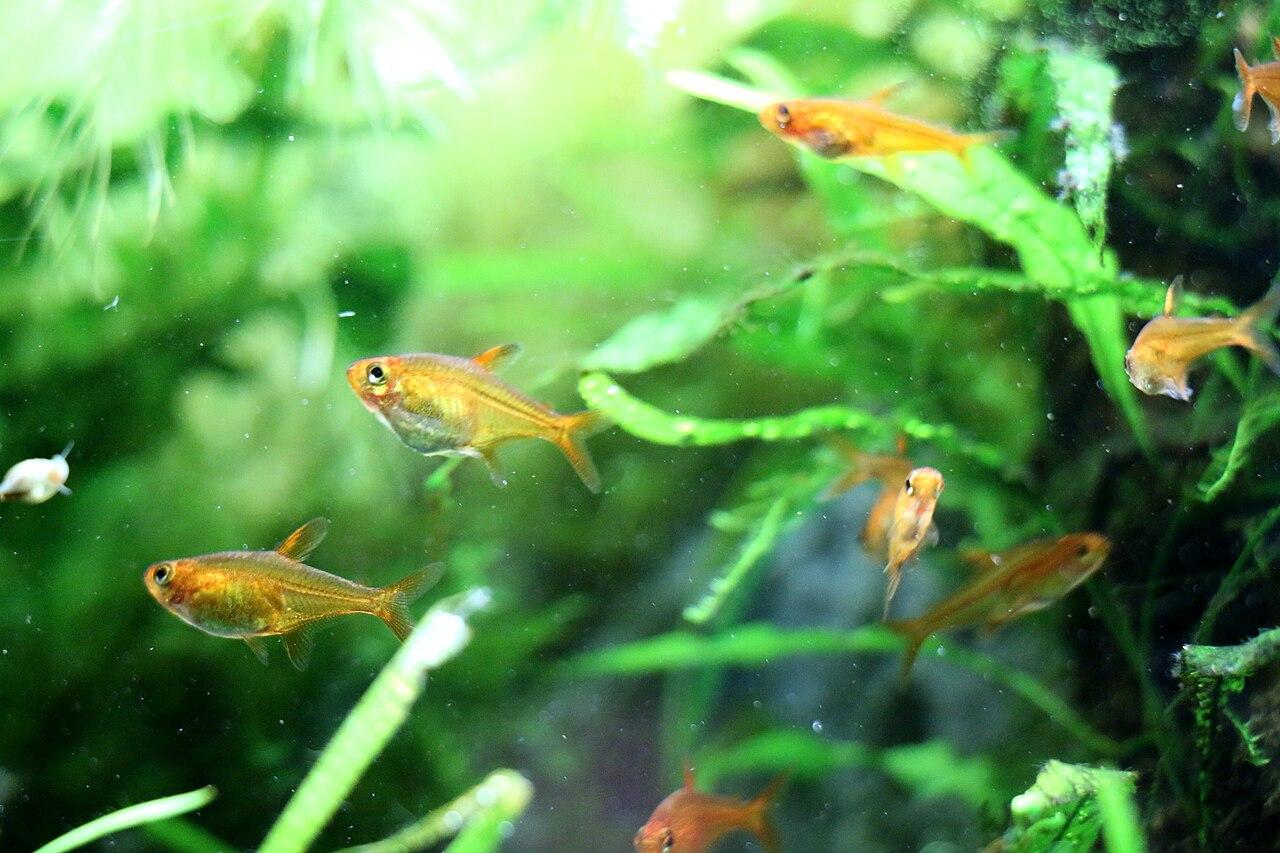
Provide open horizontal swimming space as well as planted or structured cover. A dark background and shaded areas can make the fish easier to see and may help a nervous group settle, but colour intensity is not a reliable health test by itself. Lighting, surroundings, diet, genetics, stress and camera processing can all change how orange a fish looks.
Flow should allow the group to hold position and feed without being pushed continually across the aquarium. That does not mean stagnant water: filtration and surface movement still need to support oxygen and waste processing. Cover filter intakes where a very small fish could be trapped, and keep a secure lid.
Avoid claims that tannins are a treatment or that one substrate is medically necessary. Leaves, wood and botanicals can be aesthetic or habitat choices, but they also change water chemistry and add organic material. Add them deliberately and keep testing.
Feeding very small fish
OATA describes tetras generally as omnivorous and recommends a suitable complete flake or granule, with appropriately sized live or frozen foods as variety.[5] For Ember tetras, particle size is the practical issue: offer food small enough to take without repeated spitting or prolonged struggle.
A sensible routine is:
- Use an appropriately sized complete food as the nutritional base.
- Offer small live or frozen foods such as suitably sized daphnia as variety.
- Feed only an amount the group consumes promptly.
- Watch shy individuals and feeding competition, not just the quickest fish.
- Remove persistent uneaten food and review portion size.
There is no evidence here for claims that one frozen food changes colour “within days”, that Ember tetras have the smallest mouth of any common tetra, or that every standard flake is unusable. Judge the food in front of the fish.
Tank mates and shrimp: compatibility is conditional
Choose companions with compatible temperature and water needs that are not large enough to eat an Ember tetra. Similar size and peaceful behaviour are better starting filters than a fixed “perfect tank mates” list. Also consider feeding speed: a quiet small fish can lose condition without being physically attacked.
Potential companions often discussed include other small peaceful tetras, small rasboras and appropriately kept small Corydoradinae. Each has its own minimum group, tank footprint and feeding needs. Read the Neon Tetra care guide, Cardinal Tetra care guide or Corydoras guide before combining species.
Shrimp compatibility needs the clearest caveat. Adult shrimp are often kept with small tetras, but no small fish is guaranteed shrimp-safe. Ember tetras may eat shrimplets, compete for small foods or keep vulnerable shrimp hidden. Dense planting can reduce exposure; it cannot guarantee survival. If breeding shrimp is the priority, a shrimp-only setup removes the fish-predation variable.
Health: recognise problems without inventing treatment
Watch the whole group during a daily check. Concerning changes include persistent gasping, loss of balance, unusual isolation, clamped fins, visible spots or lesions, rapid breathing, failure to feed, or several fish changing behaviour together.
Start with facts:
- Test ammonia, nitrite, nitrate, temperature and any other parameters relevant to the setup.
- Check equipment, recent additions, maintenance changes and possible contamination.
- Photograph the signs and note when they began.
- Separate or quarantine only with a prepared, welfare-appropriate plan.
- Ask a specialist aquatic retailer or fish vet for diagnosis where signs persist or worsen.
The RSPCA advises checking water quality first and contacting a specialist fish vet for diagnosis and treatment.[7] Do not automatically raise the temperature to 30 °C or use “half-dose” medicine. The University of Florida's ich guidance explains that temperature changes the parasite's lifecycle, only a particular free-swimming stage is susceptible, and treatment choice depends on the fish, water and system.[8] Use only an appropriate authorised product exactly as its label directs unless a qualified professional instructs otherwise.
What is actually known about breeding?
Artificial propagation of H. amandae has been achieved; Taiwan's official Fisheries Research Institute records that outcome.[9] Its public page does not provide the precise clutch size, hatch time, pH, tank volume and fry-growth schedule previously stated here.
OATA's general tetra guidance says the group includes egg scatterers, that adults may eat eggs, and that a separate setup and dedicated fry food may be needed.[5] That is useful context, but it is not a species-specific breeding protocol. Until a legitimate original protocol or a signed breeder record is available, exact “20–40 eggs” and “24–36 hours” claims do not belong in this guide.
Buying and acclimation questions
Before ordering, compare the supplier's holding-water range with your tested aquarium and confirm that the aquarium is mature. Look for fish swimming normally as a group, breathing without obvious distress and showing no visible lesions. Colour alone is unreliable after capture, transport or a change in lighting.
Check the live Ember Tetra product page for current availability and sale-unit information. On arrival, follow the seller's current livestock acclimation instructions rather than a generic timed recipe: bag water, shipping duration, temperature and the seller's process all affect the safest method.
We do not describe Ember tetras as foolproof, completely shrimp-safe, guaranteed to tolerate hard tap water, suitable for an uncycled tank, or treatable with a universal heat/half-dose recipe. Those phrases may attract clicks, but they are not accurate enough for an animal-care page.
How to use the ranges on this page
The database-backed facts are deliberately narrow. Aquarium recommendations combine OATA's UK industry welfare guidance, species-focused Seriously Fish guidance and a conservative Tropical Fish Co policy. Where those sources differ, the difference is shown rather than hidden.
That approach is less tidy than publishing one magical number, but it is more useful: measure your water, plan for the adult group, preserve swimming footprint, and choose stability over constant adjustment. If a source, photograph or care recommendation here appears wrong, use the Suggest an edit link below. The correction email is read as editorial feedback; it is not counted as a lead or purchase.
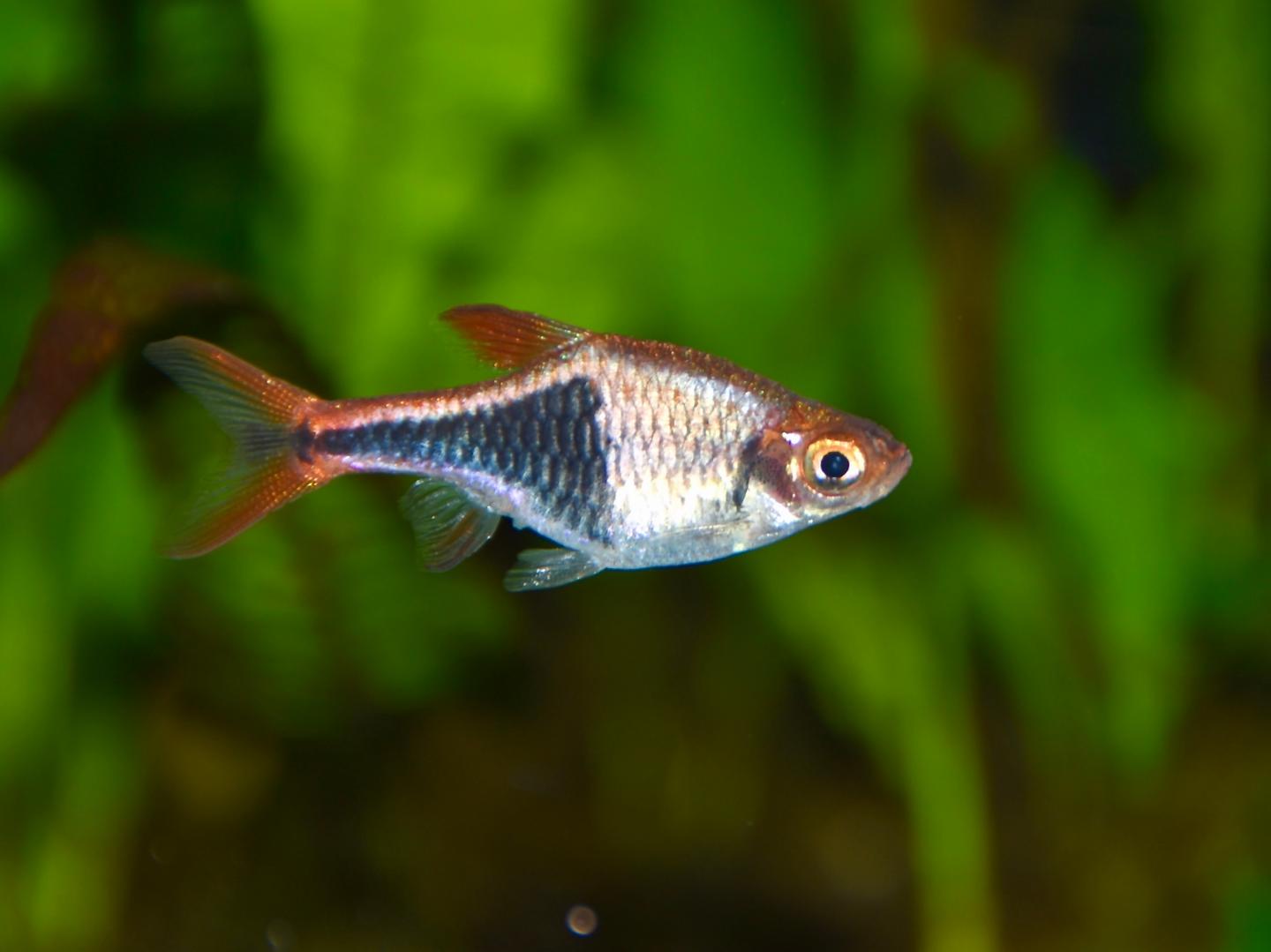
Ember tetras in a planted aquarium
Frequently asked questions
Shop everything in this guide
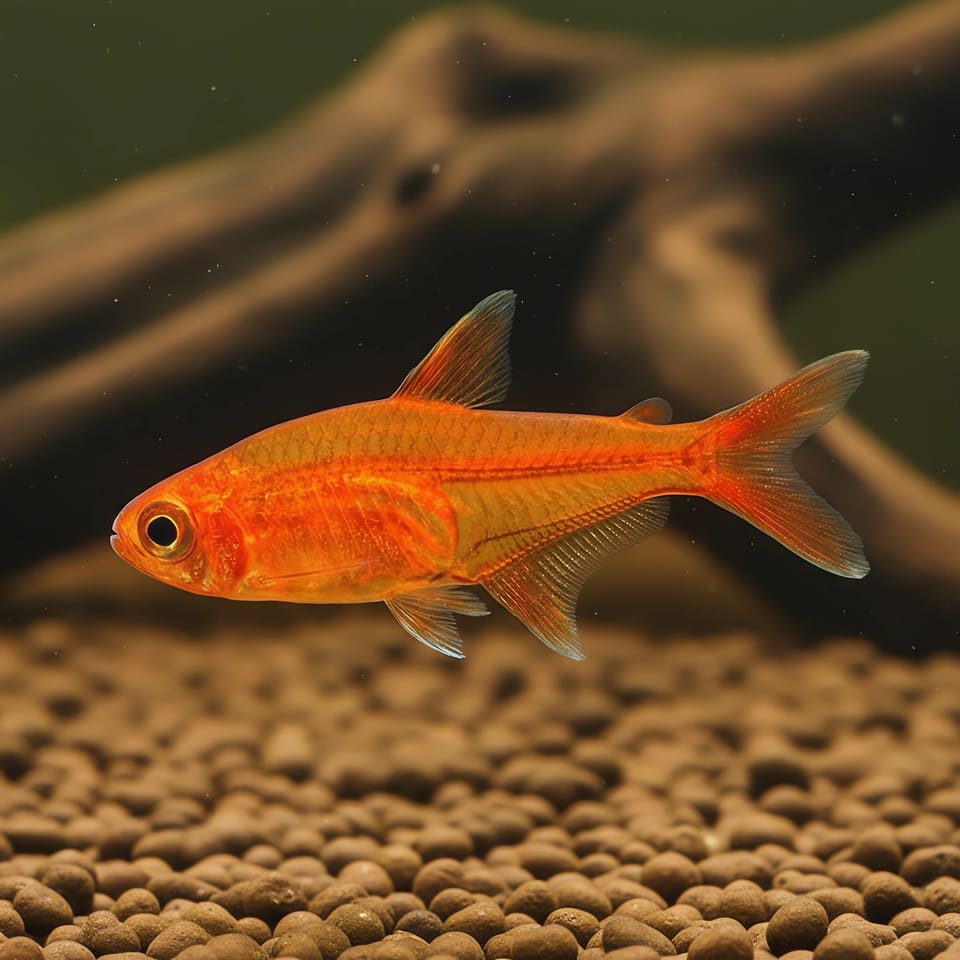
Ember Tetra (Hyphessobrycon amandae)
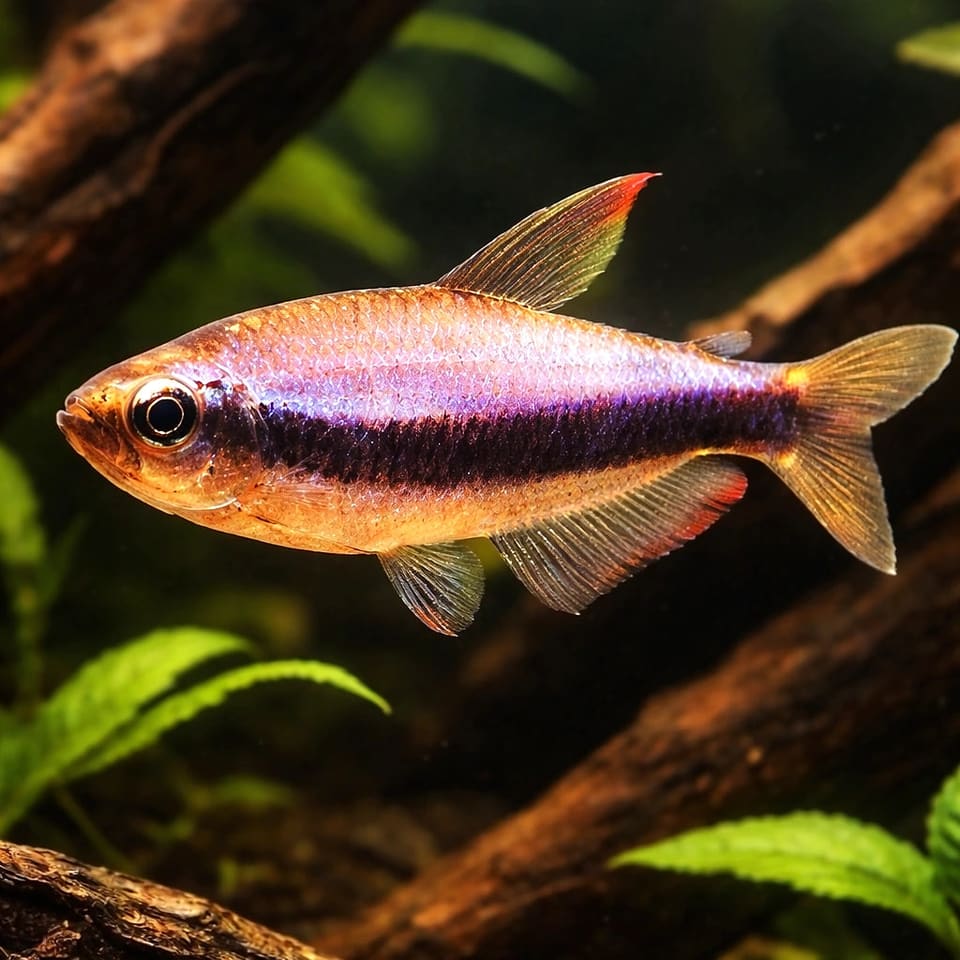
Royal Tetra (Inpaichthys kerri)
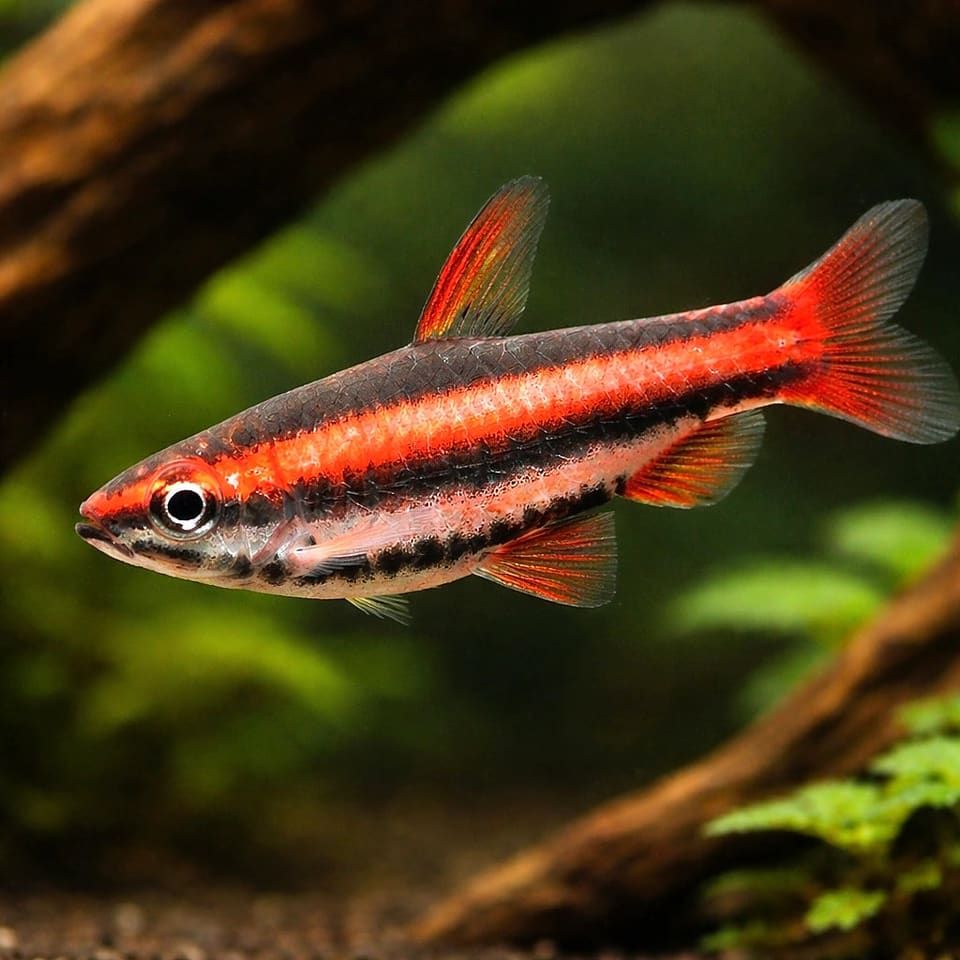
Purple Pencilfish (Nannostomus rubrocaudatus)
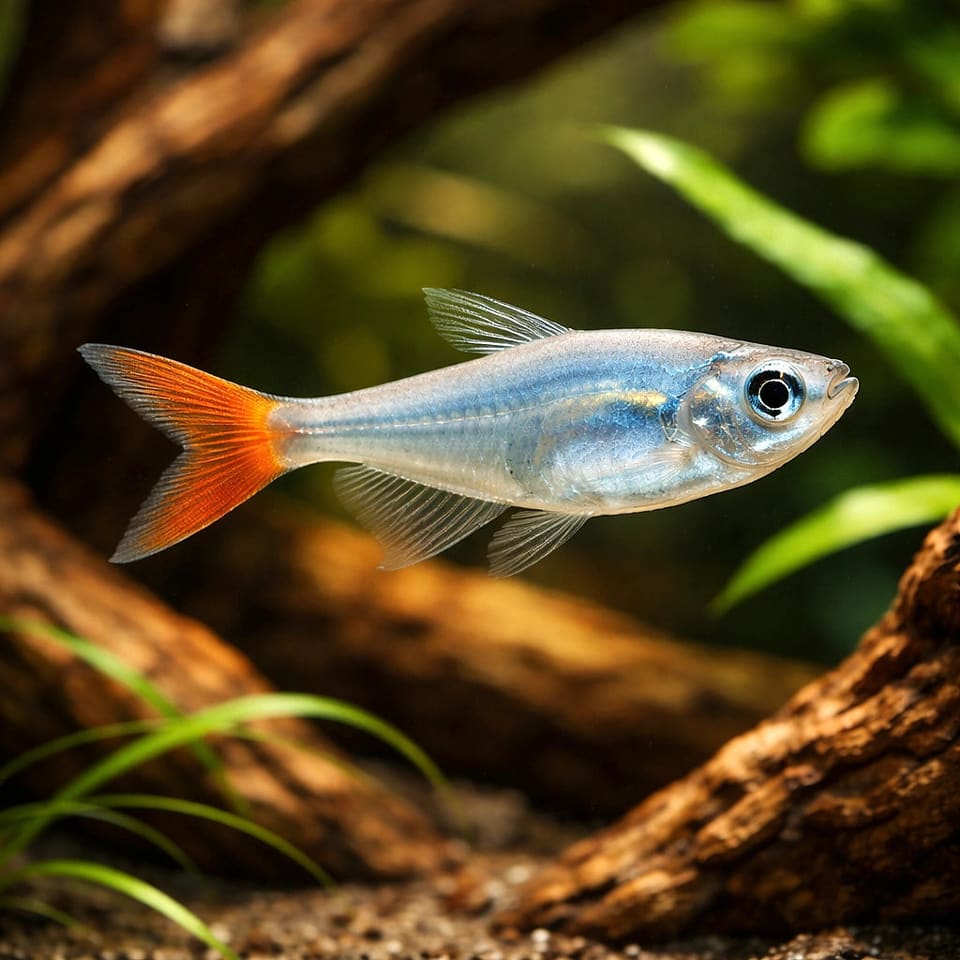
Glass Bloodfin Tetra (Prionobrama filigera)
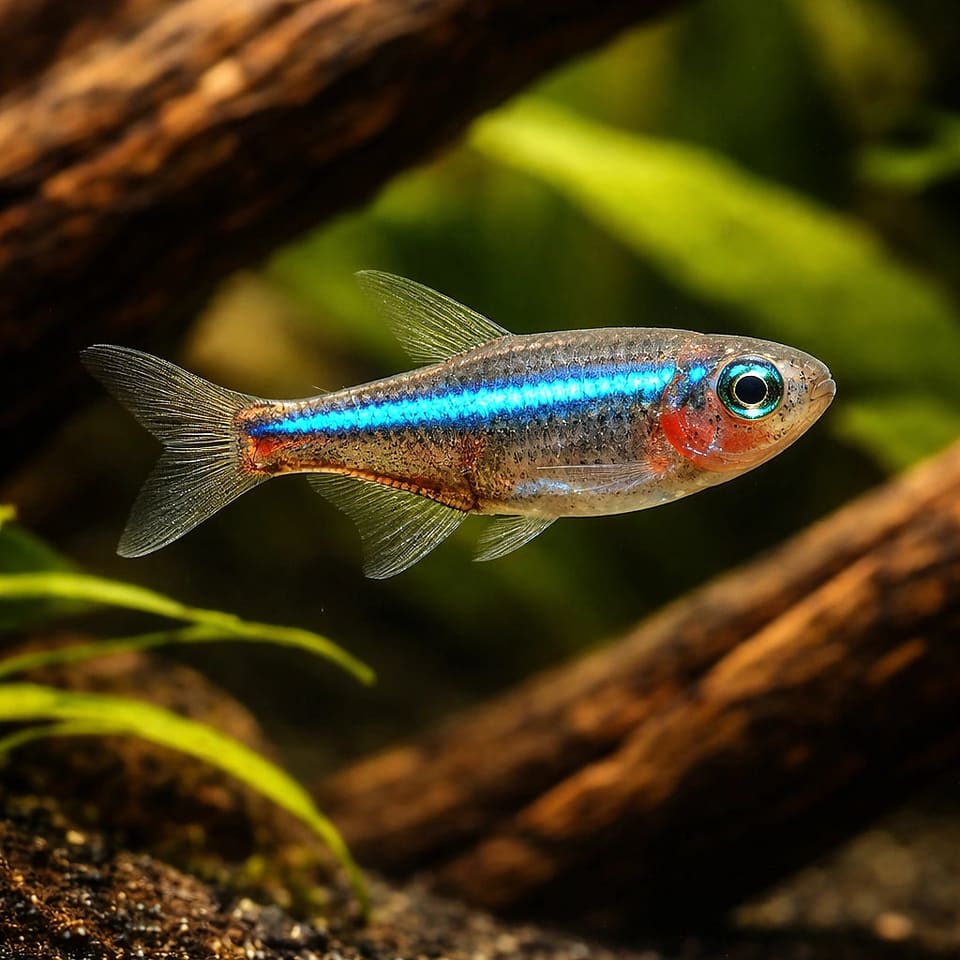
Green Neon Tetra (Paracheirodon simulans)
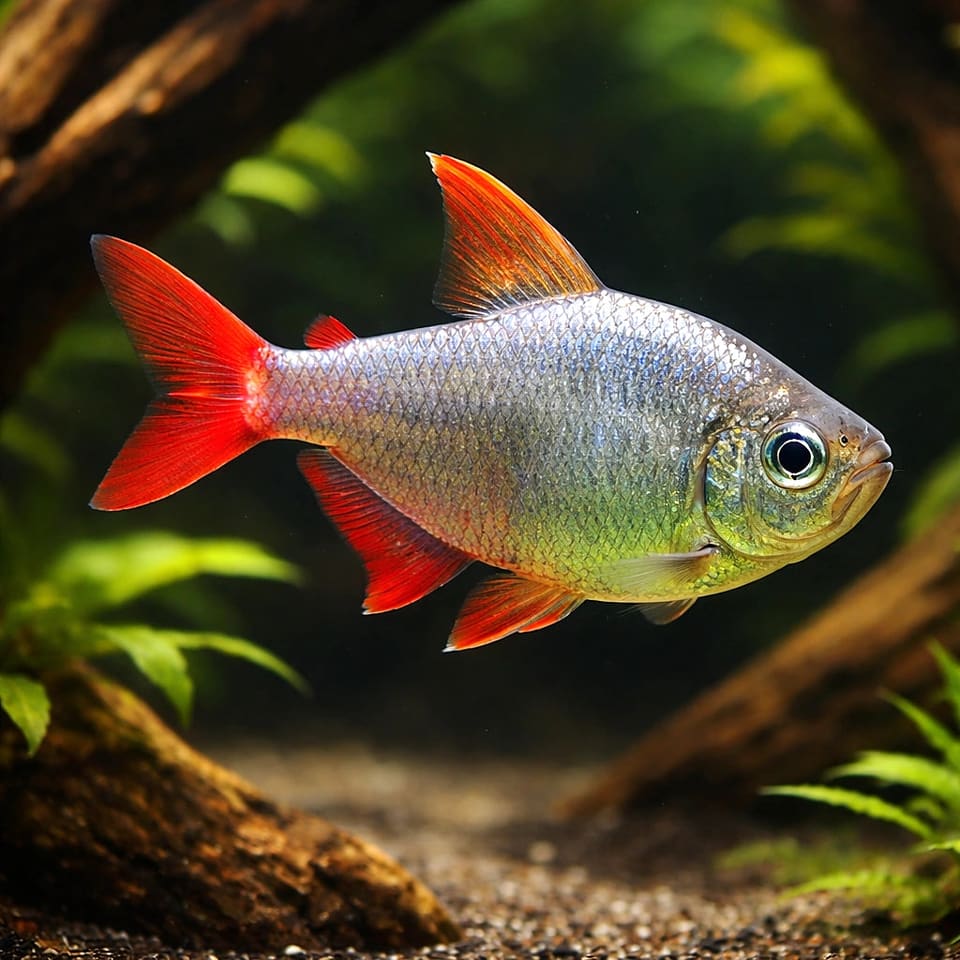
Red-Blue Colombian Tetra (Hyphessobrycon columbianus)
Shop Tetras & related
From this care guide straight into our UK live-fish catalogue.
African Cichlids
Explore African cichlids and compare their adult needs, supplied sizes and current prices. Distinguish Rift Lake species from riverine fish before choosing.
South American Cichlids
South American Cichlids for sale UK — Apistogramma, Rams, Oscars, Severums, Geophagus, Pikes, Discus and Angelfish.
Catfish & Plecos
Corydoras, Bristlenose, L-number plecos, Synodontis and Otocinclus for clean-up and character — supplied and adult size on each listing so the tank fits.
Livebearers
Livebearer fish for sale UK — Guppies, Mollies, Platies, Swordtails, Endlers, Limias. Easy-breeding community favourites.
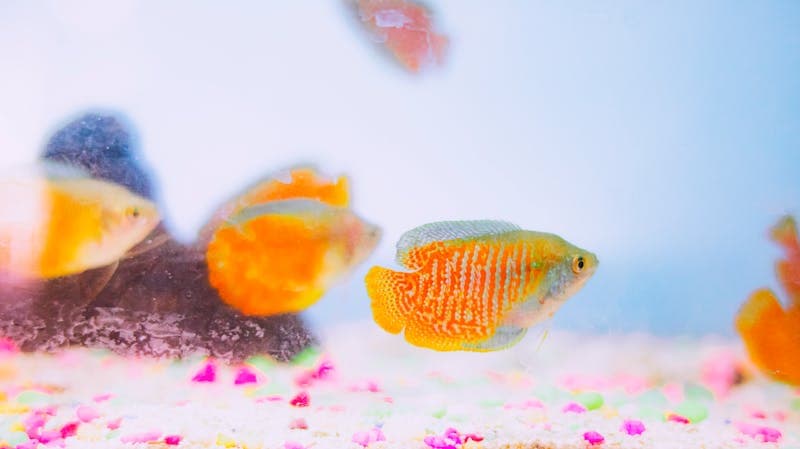
Gouramis & Labyrinth Fish
Gouramis and labyrinth fish for sale UK — Pearl, Dwarf, Honey, Kissing, Giant and rare species. Peaceful surface-breathers.
Rasboras & Danios
Harlequin, Chili, Galaxy, Zebra and Celestial rasboras and danios for planted and nano tanks — peaceful shoalers for UK tap water, priced in groups.

Barbs
Aquarium barbs for sale UK — Cherry, Tiger, Rosy, Denison, Gold, Odessa. Hardy community fish, perfect for beginners.
Sources & further reading
Material factual claims cite the sources below; store policy and cautious inference are labelled in the article. Sources are grouped by type so you can judge their weight at a glance.
Peer-reviewed study (1)
- [2]Melo, B. F. et al. (2024). Phylogenomics of Characidae, a hyper-diverse Neotropical freshwater fish lineage, with a phylogenetic classification including four families (Teleostei: Characiformes). Zoological Journal of the Linnean Society. DOI: 10.1093/zoolinnean/zlae101. View source
Supports the current family-level classification.
Scientific database (3)
- [1]Fricke, R., Eschmeyer, W. N. & Van der Laan, R. (eds.). Eschmeyer's Catalog of Fishes: Hyphessobrycon amandae. California Academy of Sciences. View source
Current name, family, type locality and original-description record.
- [3]Froese, R. & Pauly, D. (eds.). FishBase: Hyphessobrycon amandae. FishBase. View source
Distribution, maximum recorded standard length, conservation record and a 24-28 °C aquarium range traced to Baensch & Riehl (1995), not a field-temperature study.
- [4]GBIF Secretariat. GBIF Backbone Taxonomy: Hyphessobrycon amandae. Global Biodiversity Information Facility. View source
Accepted name and original-description citation.
Conservation authority (1)
- [7]Royal Society for the Prevention of Cruelty to Animals. Fish health and welfare. RSPCA. View source
Water-quality-first response and specialist fish-vet guidance.
Hobbyist reference (2)
- [5]Ornamental Aquatic Trade Association (2022). How to look after tetras and pencilfish. OATA. View source
UK trade-body care guidance; explicitly general rather than species-specific.
- [6]Seriously Fish editorial team. Hyphessobrycon amandae. Seriously Fish. View source
Species-focused aquarium husbandry guidance, not primary field research.
Government / regulatory (2)
- [8]Francis-Floyd, R., Yanong, R. P. E. & Pouder, D. B. (2026). Ichthyophthirius multifiliis (White Spot) Infections in Fish. University of Florida. DOI: 10.32473/EDIS-fa006-1991. View source
Explains why temperature and treatment cannot be reduced to a universal recipe.
- [9]Fisheries Research Institute, Taiwan (2023). Establishment of breeding technology of cardinal tetra (Paracheirodon axelrodi). Ministry of Agriculture, Taiwan. View source
The English abstract records H. amandae as a previously completed breeding result; it does not publish an Ember tetra step-by-step protocol.
Spotted something that needs a fix?
Fishkeeping moves fast and we want every guide spot-on. If you think something here is wrong, out of date, or could be clearer, tell us — our team reads every message and updates the page.
Suggest an edit
Tropical Fish Co Editorial Team
Evidence-led aquarium editorial team
The Tropical Fish Co editorial team compiles care guidance from the sources cited on each page, separates published evidence from practical husbandry policy, and checks retail links against the current catalogue. First-hand experience is included only when a named contributor and the observation have been verified.
Keep exploring
Shop related
- African Cichlids
Explore African cichlids and compare their adult needs, supplied sizes and current prices. Distinguish Rift Lake species from riverine fish before choosing.
- South American Cichlids
South American Cichlids for sale UK — Apistogramma, Rams, Oscars, Severums, Geophagus, Pikes, Discus and Angelfish.
- Catfish & Plecos
Corydoras, Bristlenose, L-number plecos, Synodontis and Otocinclus for clean-up and character — supplied and adult size on each listing so the tank fits.
- Livebearers
Livebearer fish for sale UK — Guppies, Mollies, Platies, Swordtails, Endlers, Limias. Easy-breeding community favourites.
Care guides
- Neon Tetra Care Guide
Neon tetra care for UK aquariums: check 60 cm tank length, group size, heater, water, tank mates, feeding and mature-tank needs before buying.
- Cardinal Tetra Care Guide
Keep cardinal tetras thriving in UK water: check tank size, group size, tank mates, temperature and cardinal vs neon differences before you buy.
- Harlequin Rasbora Care Guide
Harlequin rasbora care for UK aquariums: check 60 cm tank length, group size, 5 cm adult size, water, tank mates and lookalike species before buying.
Related care guides
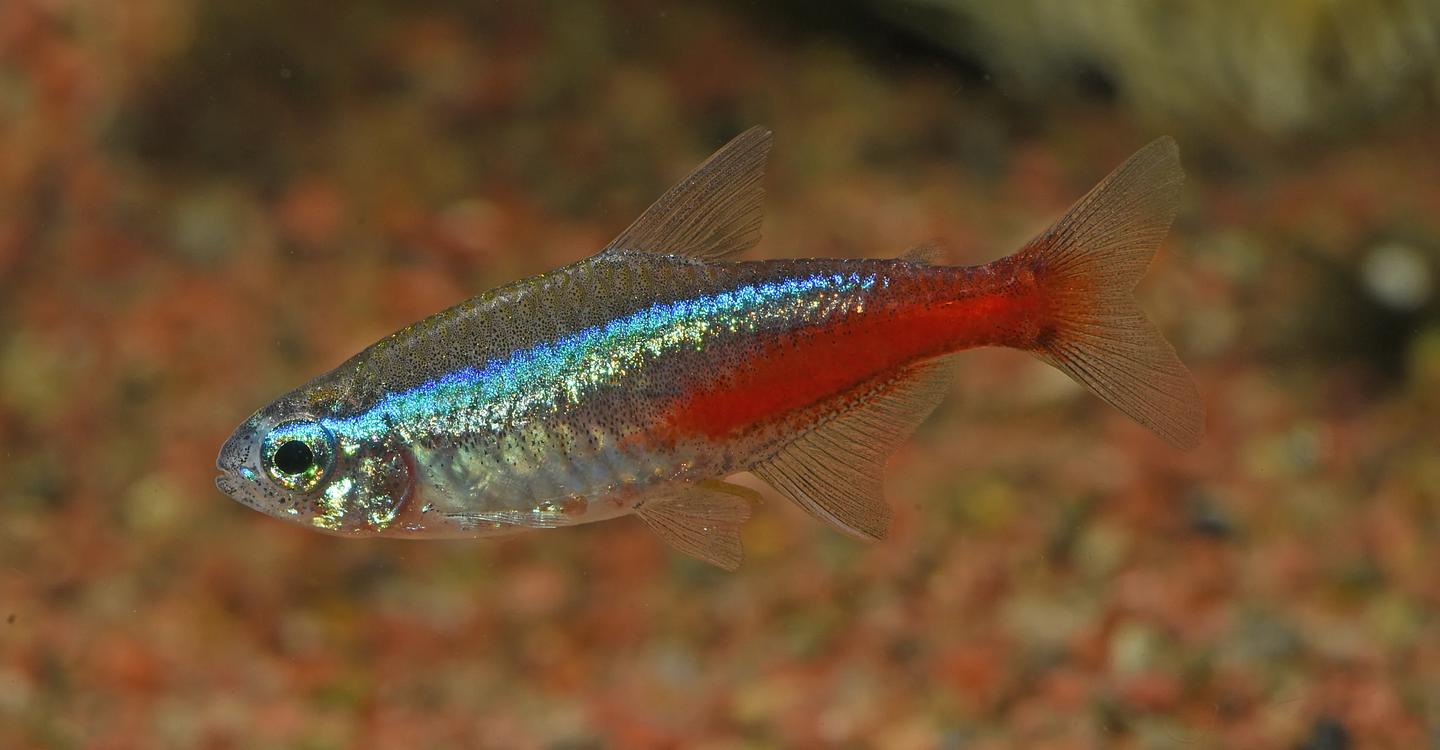
Neon Tetra Care Guide
Start here: use a mature, filtered aquarium at least 60 cm long. FishBase and OATA compile groups of five or more; our conservative planning screen starts at eight, then checks usable volume, water, filtration and every adult tank mate.
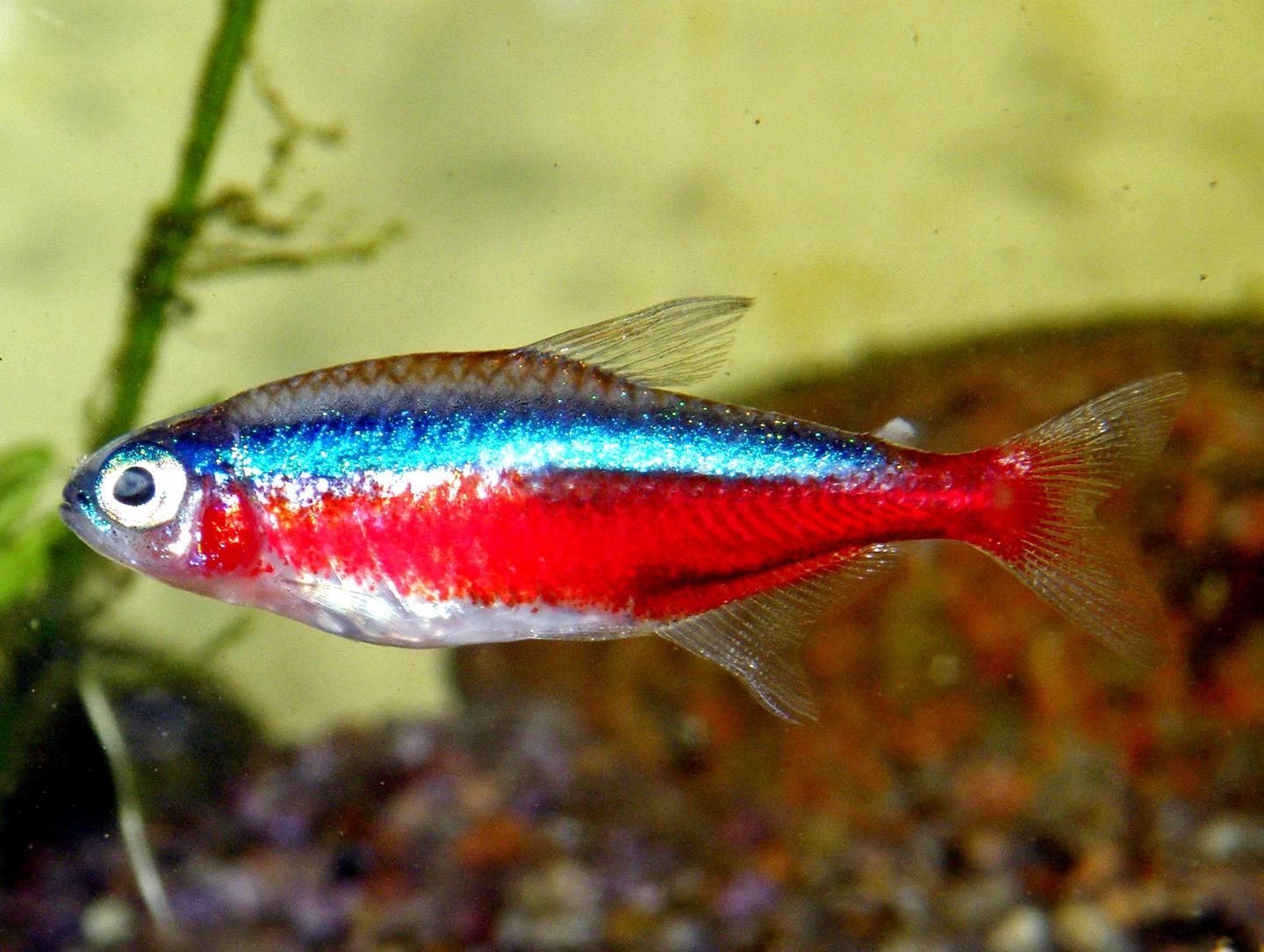
Cardinal Tetra Care Guide
Cardinal tetras are small, social blackwater fish, but they need more than a small volume of water. Our conservative starting policy is a mature, filtered aquarium at least 60 cm long and about 60 litres, a group of 10 or more, a routine target of 24-27 °C, and water chosen from measured supplier and home values rather than a fixed UK tap-water recipe.
Harlequin Rasbora Care Guide
Our conservative starting policy is a mature, filtered aquarium at least 60 cm long and about 60 litres, eight or more fish, and measured water screened against 22-25 °C, pH 5-7 and 5-12 dGH.