
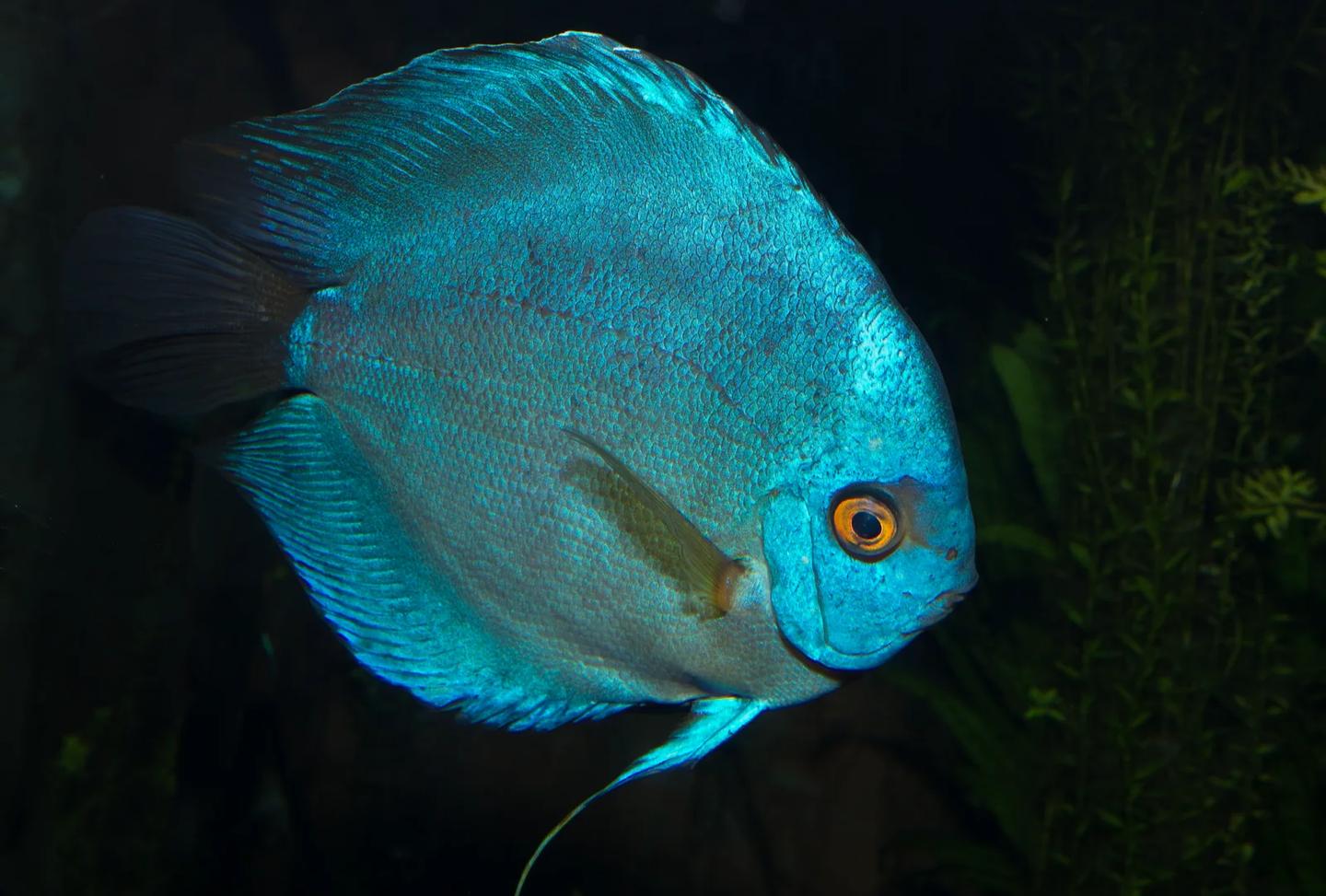
Discus Fish Care: Tank, Water & Group Guide

Discus are social Amazonian cichlids with specialised aquarium needs. OATA advises at least five fish, except an established breeding pair, and about 50 litres per adult—roughly 300 litres for six adults. Use that as a planning floor, then check usable dimensions, filtration, source water and the actual fish.
Quick facts
- Scientific name
- Symphysodon spp.
- Family
- Cichlidae
- Origin
- Amazon basin, South America
- Max size
- 20 cm
- Diet
- Complete discus food with suitable variety; avoid overfeeding
- Temperament
- Min. group
- 5+
- Temperature
- 26–30 °C
- pH
- 6–7.5
- Hardness
- 4–12 dGH
- Min. tank
- 300 litres
- Care level
- Advanced
Live stock
Discus Fish for sale — see live stock & today’s prices
Discus need a mature, warm aquarium, stable tested water, a deliberate social plan and daily observation. For six adults, OATA's UK care sheet gives about 300 litres as a starting point and advises a group of at least five, except an established breeding pair[5]. Those figures are planning floors, not permission to ignore tank dimensions, filtration, individual behaviour or companions.
They do not automatically need pure RO water, and they do not all share one wild-species or strain identity. Ask what the actual fish is, what water it is currently kept in and what it eats before trying to reproduce suitable conditions at home.
- Plan roughly 300 litres for six adults, then check usable length, width and height.
- Keep at least five unless you already have a compatible established breeding pair.
- Use 26–30°C, pH 6.0–7.5 and 4–12°dH as OATA's captive-care screen, not targets to chase.
- Cycle by test results, then test ammonia, nitrite, nitrate, temperature, pH and hardness regularly.
- Buy fish that are full-bodied, alert and feeding, and prepare quarantine or separation before arrival.
Current stock, sale size and price belong to the live catalogue rather than this care guide. After the care screen, use the South American cichlid shop to check what is actually available.
What makes discus care more demanding?
Discus combine several needs that interact: warm water, a sizeable social group, high food observation, low tolerance for neglected water quality and enough open space for deep-bodied adults. OATA therefore describes them as having specialised requirements[5].
The challenge is not a secret trick or a compulsory brand of equipment. It is consistency. A keeper should already be comfortable with fishless cycling, weekly testing, conditioned replacement water, filter maintenance and noticing when one fish is not eating. The RSPCA advises fishless cycling because a filter must establish bacteria that process toxic waste; elapsed time alone does not prove readiness[6].
If ammonia or nitrite control, temperature matching or a regular maintenance routine is still uncertain, begin with the first tropical tank guide and return to discus later.
What does “discus” identify?
Discus are cichlids in the genus Symphysodon. Current FishBase output lists three accepted species, while nomenclatural and genetic work has changed how names are applied[2][1]. The aquarium trade also contains many captive colour forms and hybrids.
That makes a colour-led label such as blue, red, pigeon or snakeskin useful for appearance but insufficient for biological provenance. Do not infer a wild species, river locality, hardiness, adult size or water history from colour alone. Ask the seller for:
- the scientific or most precise trade identity they can support;
- captive-bred, wild-origin or unknown provenance;
- current approximate size and sale unit;
- current temperature, pH, GH and KH;
- food accepted consistently; and
- whether the fish have been kept together and for how long.
FishBase records different measured maxima for accepted Symphysodon species and distinguishes standard length from total length[3][4]. OATA's practical adult-care sheet uses up to 20 cm across. These are different evidence types, so this guide does not pretend one number predicts every captive fish.
Plan the adult group and aquarium together
OATA advises groups of at least five and approximately 50 litres per adult, giving about 300 litres for six adults[5]. Use the complete adult group—not the juvenile sale size—to plan the aquarium.
| Decision | Evidence-led starting point | What the number does not decide |
|---|---|---|
| Social group | At least five; an established breeding pair is a specific exception | Whether unfamiliar individuals will form a stable hierarchy |
| Adult volume | About 50 litres per adult; roughly 300 litres for six | Usable footprint, height, filter capacity or companion load |
| Temperature | 26–30°C | The exact stable value for fish from a particular source |
| Water | pH 6.0–7.5; 4–12°dH; 3–10°dKH | Whether rapid movement within the range is safe |
| Nitrogen waste | Ammonia and nitrite 0 mg/L; nitrate not above 20 mg/L in OATA's care sheet | How often your aquarium needs maintenance to stay there |
Litres alone cannot show whether a deep-bodied adult can turn comfortably, whether five fish can avoid one another, or whether a filter can process the real feeding load. Provide open swimming space plus cover and visual breaks; keep structures stable and avoid creating a narrow trap for a subordinate fish. Have a suitable divider or separate mature aquarium available before hierarchy or breeding behaviour changes.
Build a stable water plan, not a perfect number
OATA's captive-care range is 26–30°C, pH 6.0–7.5, 4–12°dH and 3–10°dKH. It also notes that tank-bred fish can tolerate harder water than wild counterparts and advises matching the conditions in which the fish are currently kept[5].
This means “all UK discus need RO” is not a safe rule. The Drinking Water Inspectorate explains that hardness varies with local geology and that consumers should use their own supplier's information[9]. Test the water you will actually use, then decide whether conditioning, a reproducible tap/RO mix or remineralised RO is justified. Never use unmineralised RO as a guess, and do not chase pH with repeated chemical corrections.
Use this sequence:
- Read the current water-company report for context.
- Test source water and the established aquarium for pH, GH and KH.
- Ask for the seller's measured holding-water values.
- Choose a stable value inside an evidence-supported range that you can reproduce.
- Match replacement water for temperature and relevant chemistry before a water change.
Warm water holds less dissolved oxygen than cooler water. Maintain reliable heating, visible surface movement and sensible flow without forcing the fish to fight a powerful current. Check temperature with a separate thermometer rather than trusting the heater dial alone.
Filtration, layout and maintenance
A mature biological filter is essential. The Royal Veterinary College explains how ammonia becomes nitrite and then nitrate, and why new tanks, overfeeding or damaged filter bacteria can create harmful spikes[8]. Clear water is not proof of safe water.
OATA recommends at least a weekly 50% partial water change for discus, weekly testing and cleaning filter media in removed tank water rather than chlorinated tap water[5]. The aquarium's actual test results, feeding load and fish condition determine whether more intervention is needed; a calendar never replaces measurements.
A practical layout provides:
- enough open space for the group to move together;
- planted, wood or other shaded cover without sharp edges;
- a substrate and cleaning plan that does not trap uneaten food;
- a day/night light cycle without intense glare; and
- access to inspect every fish at feeding and quiet times.
Bare-bottom, planted and lightly furnished systems can all be managed well or badly. Choose the layout you can keep clean while preserving cover and normal movement, rather than copying a breeder or display tank without understanding its maintenance.
Feed every fish, not just the group
OATA describes discus as generally carnivorous and recommends a specialised complete dried food at least daily, with appropriate live or frozen foods as variety. It suggests two or three small feeds across the day and warns that uneaten food degrades water quality[5].
Use a complete food suitable for the fishes' mouth size as the nutritional base. Introduce changes gradually, observe that every individual eats, and remove leftovers. A dominant fish eating enthusiastically does not prove the whole group is receiving enough.
Plain beef heart is not a complete diet. A small controlled study compared a very low-calcium/phosphorus plain beef-heart diet with commercial discus feed but did not reproduce hole-in-the-head lesions over 16 weeks[13]. That study neither proves beef heart causes the disease nor makes an unbalanced single-ingredient diet appropriate. Avoid turning a debated association into a diagnosis or treatment claim.
Choose tank mates by overlap, not by list
OATA names medium tetras, some Corydoras, plecos and dwarf cichlids as broad companion categories[5]. That is a shortlist for further checking, not a promise that every species or individual in those categories will work.
For each proposed companion, verify:
- adult size and mouth size;
- a genuinely overlapping stable temperature and water range;
- feeding speed and whether timid discus can still eat;
- social group and floor-space requirements;
- territorial or breeding behaviour;
- waste and oxygen demand; and
- a safe separation route.
The cardinal tetra guide, Corydoras guide, bristlenose pleco guide and cichlid planning guide provide starting points for exact research. Do not call one Corydoras species the only safe option, use another fish as a “water-quality indicator”, or assume algae eaters will clean the aquarium for you.
Shrimp, fry, snails and small fish may be eaten or harassed. Compatibility can change at maturity or spawning, so an apparently calm first week is not proof of permanent safety.
How to choose healthy discus
OATA advises looking for clear eyes, intact skin and fins, steady breathing, appropriate swimming, full body condition and a visible feeding response[5]. Ask the seller to show the fish eating. Do not buy from a tank where another fish appears sick simply because your selected fish looks better.
Body shape and colour can vary with lineage, age, lighting and stress. Judge changes against the individual rather than treating darker colour, a single faeces observation or one photograph as a diagnosis.
Current price, size and availability change. This guide therefore does not publish a fixed price table or claim a particular strain is always in stock. On a live listing, verify the number of fish included, approximate dispatch size, source label, current price and delivery terms before checkout.
Acclimation, quarantine and the first week
Prepare the destination before dispatch: a cycled aquarium, stable matched water, a tested heater, suitable cover and a separation plan. OATA recommends a gentler drip acclimation for discus while preventing the container from cooling, followed by netting the fish into the aquarium and discarding transport water[5]. Follow the seller's current arrival instructions because bag time and source/destination chemistry affect the safe method.
New fish can carry disease without obvious signs. Keep arrivals separate from established stock when a suitable mature quarantine system and competent protocol are available. Quarantine duration depends on source, observations, the systems involved and professional advice; a fixed number of days does not guarantee a disease-free fish.
During the first week, record:
- temperature and water tests;
- breathing rate and balance;
- whether every fish eats;
- injuries, clamped fins, rubbing or abnormal mucus;
- hiding or repeated exclusion by another fish; and
- waste appearance as one observation, not a standalone diagnosis.
Do not dismiss gasping, loss of balance, injury or persistent refusal to eat as normal settling-in.
Health problems: observe, test, escalate
Darkening, hiding, poor appetite, rapid breathing, weight loss, skin changes or unusual waste can have multiple causes. First confirm temperature, ammonia, nitrite, nitrate and relevant water chemistry, then observe the whole group. The RSPCA likewise treats behaviour, breathing and appetite changes as warning signs rather than diagnoses[7].
Do not diagnose “discus plague”, internal parasites or hole-in-the-head from one symptom. Do not rotate metronidazole, levamisole or other medicines prophylactically, and do not raise temperature as a generic cure. In the UK, aquarium medicines have specific regulatory and label conditions; use a product only for the supported problem and exactly as directed[11].
Seek a fish-experienced veterinary professional or competent specialist promptly when a fish cannot feed, is gasping, loses balance, has progressive lesions or deteriorates despite corrected water. Current licensed-seller guidance also requires close monitoring, biosecurity and competent or veterinary advice when disease or abnormal behaviour is identified[10].
Breeding and mucus-feeding fry
Discus form pairs and lay eggs on a surface. OATA notes that juveniles raised together may later pair, that sex is difficult to determine outside breeding condition, and that a separate breeding setup can be needed[5]. Buying an arbitrary male and female label does not guarantee compatibility.
Their most distinctive parental behaviour begins after fry become free-swimming: both parents provide skin mucus on which fry feed. Direct research recorded changing parental turns, mucus composition and a transition towards weaning around the third week[12]. That is a better-supported description than a rigid “10–14 day” rule.
Breeding adds demands: pair aggression, egg and fry care, specialised feeding, water stability, a grow-out aquarium and long-term homes. Do not induce spawning until those resources are ready. A photograph of adults and fry would still not prove sex, parentage or a universal breeding recipe.
Before you buy discus
Write down the answers before choosing by colour:
- Can the aquarium support the complete adult group, approximately 300 litres for six as the OATA starting point?
- Are usable dimensions, filtration, oxygen exchange and cover suitable?
- Is the aquarium cycled by test results, with ammonia and nitrite at zero?
- Can you reproduce the seller's stable temperature and water without abrupt changes?
- What exact identity, provenance, sale unit, current size and accepted food are supported?
- Will you be able to observe every fish eating each day?
- Are quarantine, separation and rehoming options ready?
- Have you checked current delivery, arrival and Live Arrival Guarantee terms?
If any answer is missing, pause the purchase. The cost of the fish is only one part of the commitment; stable heating, testing, conditioning, food and mature backup capacity continue for years.
How this guide was checked
FishBase and Eschmeyer's Catalog support genus identity, accepted-name and measurement boundaries. OATA supplies the primary UK captive-care benchmarks. RSPCA and RVC support aquarium cycling, testing and welfare principles; DWI supports only the local-water statement; GOV.UK supplies current seller and medicine context. Peer-reviewed studies support the mucus-feeding account and the uncertainty around simplistic hole-in-the-head claims.
Owned UK-mobile Search Console data showed impressions without clicks for the previous page, while a narrow current UK-mobile SERP check showed an AI Overview, People Also Ask questions and an image block. Those observations guided a direct tank, water and group answer; they do not guarantee a ranking, click or sale.
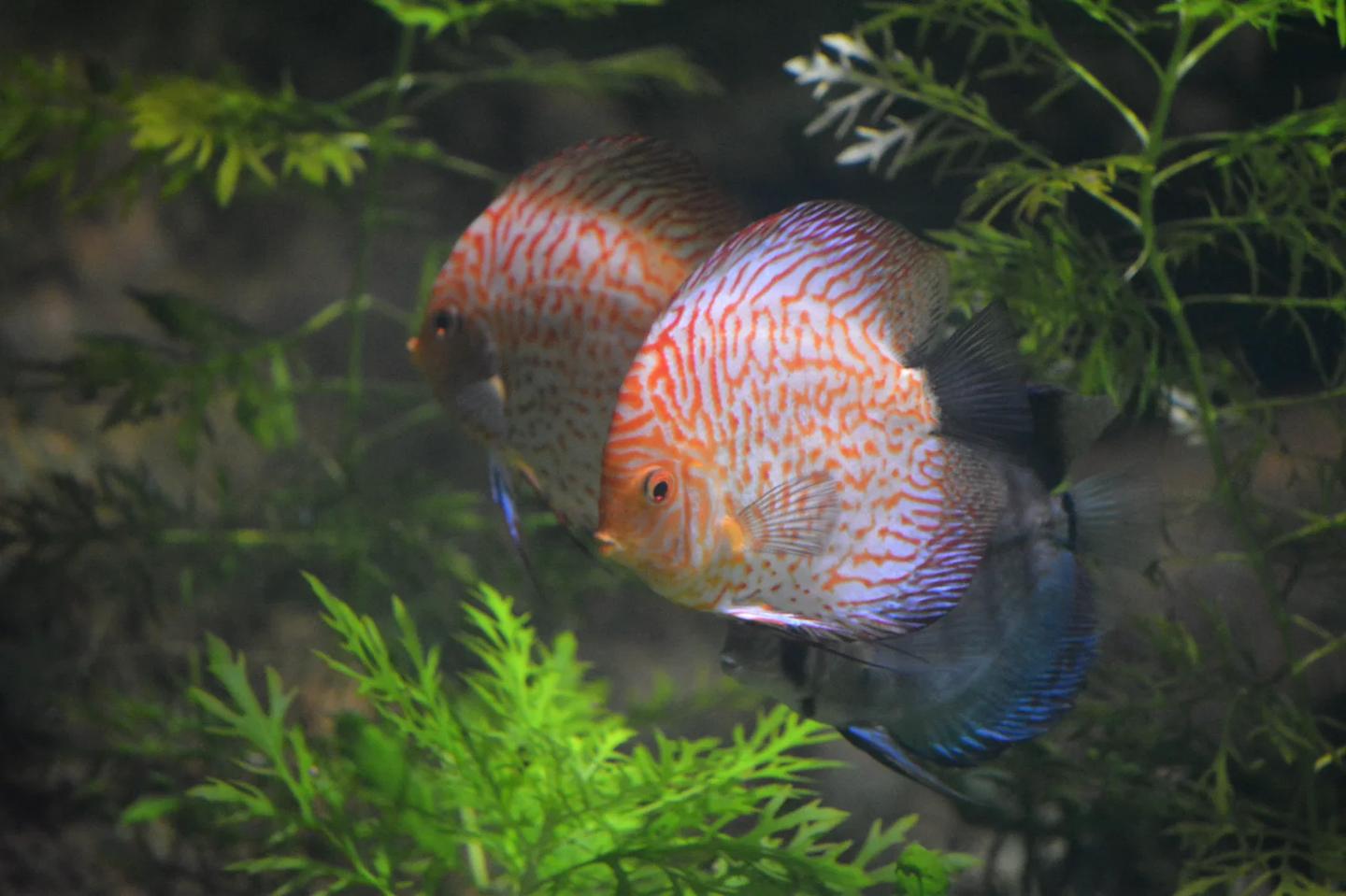
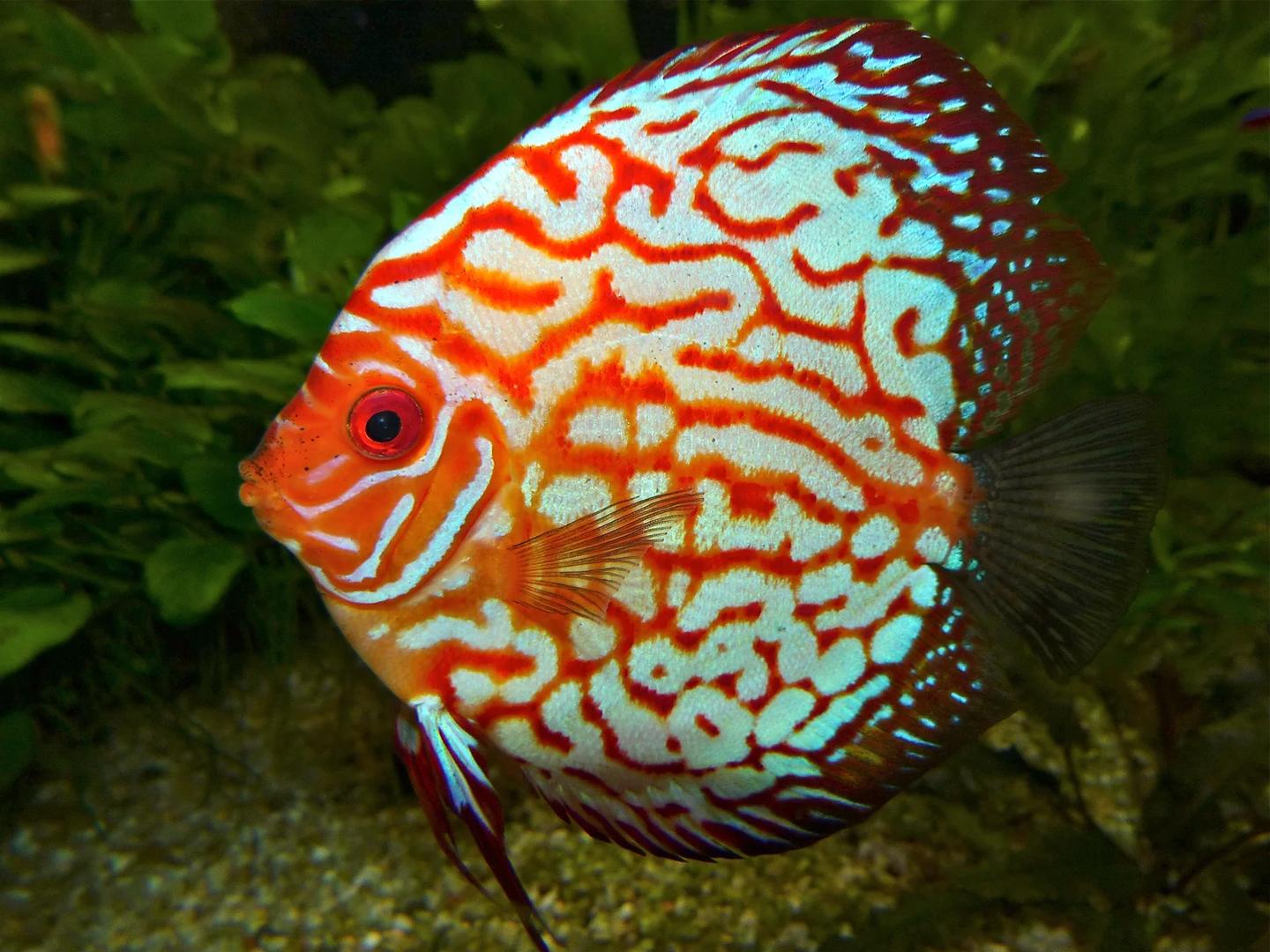
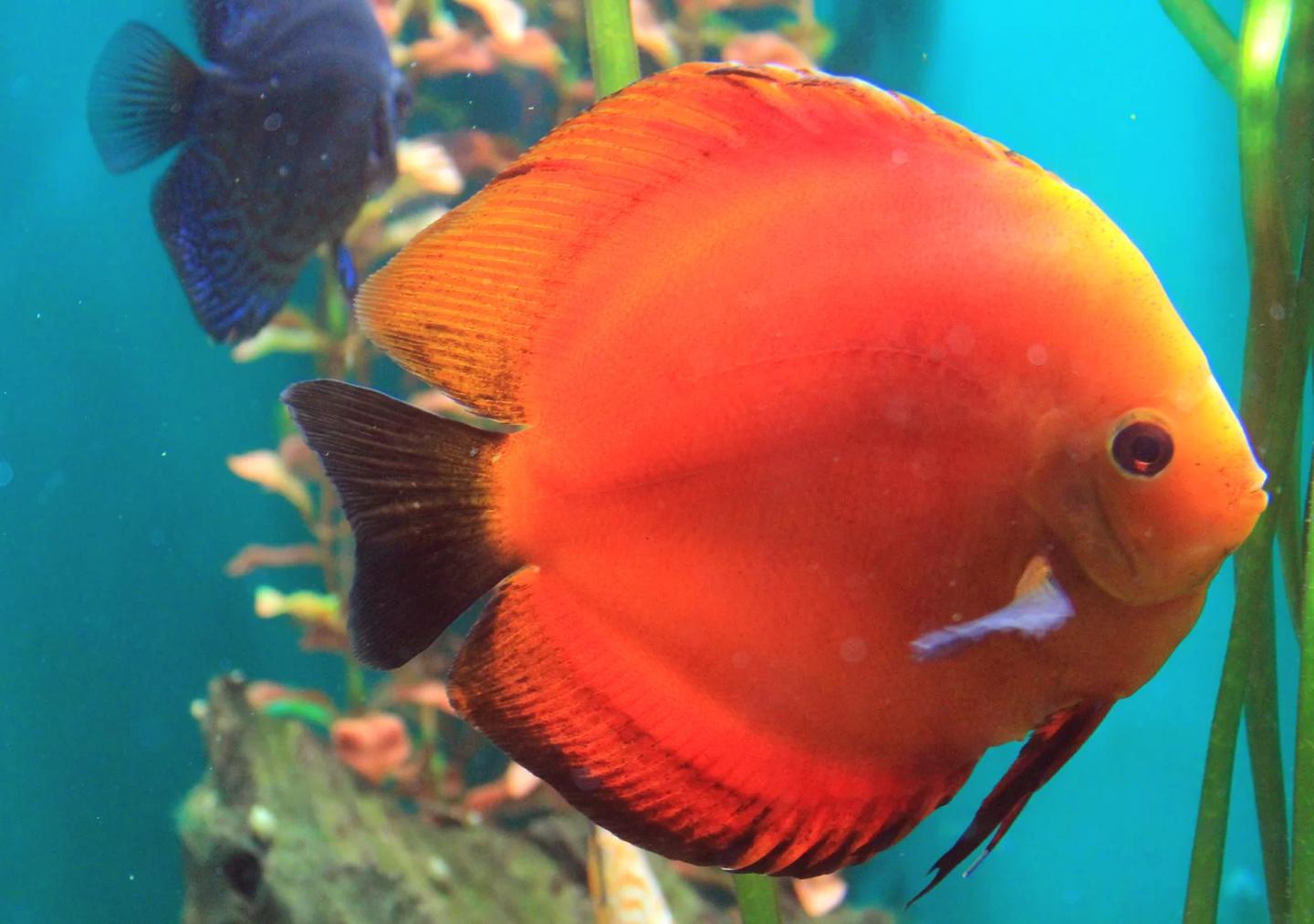
All four photographs are distinct, source-labelled captive discus images with creator, licence, fixed revision and literal captions. None proves husbandry, compatibility, health or stock. If a source, image or recommendation appears wrong, use the visible Suggest an edit route. Editorial feedback, email and forms are not leads or ecommerce conversions; add-to-cart, checkout, purchase and revenue remain separate outcomes.
Discus shape, social context and captive colour
Frequently asked questions
Shop everything in this guide
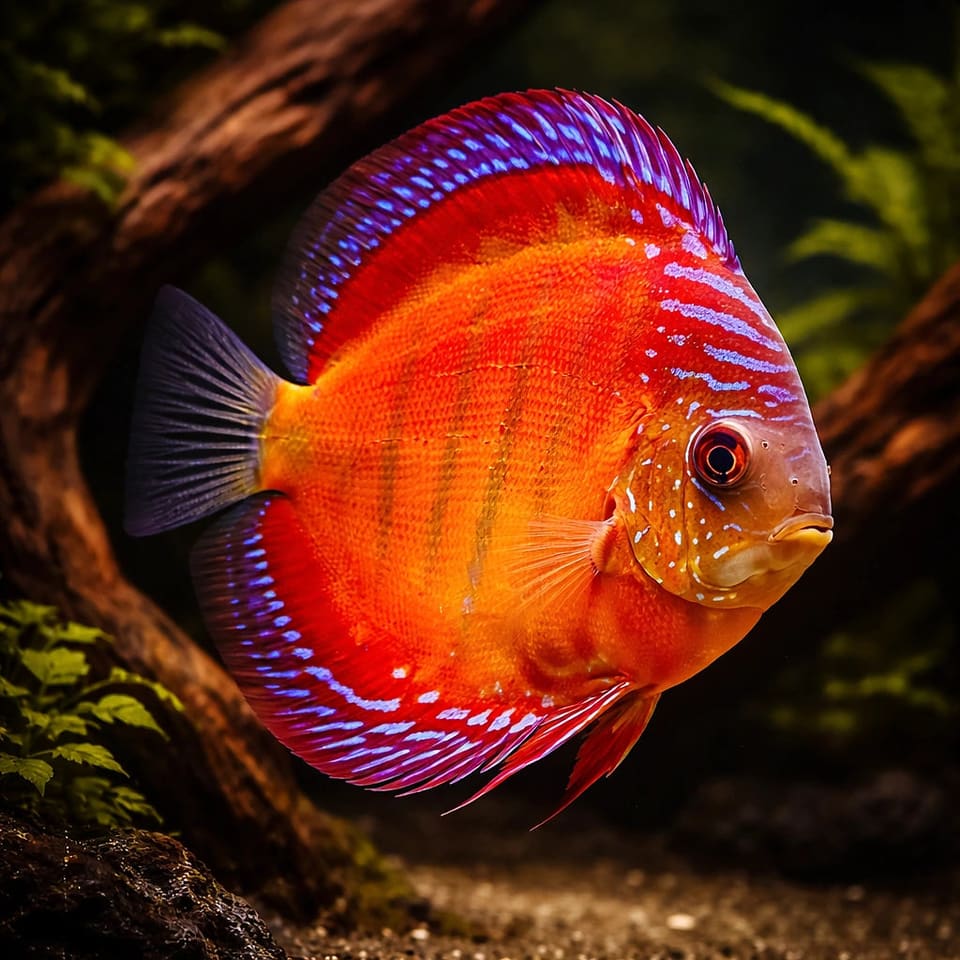
Red Alenquer Discus (Symphysodon spp.)
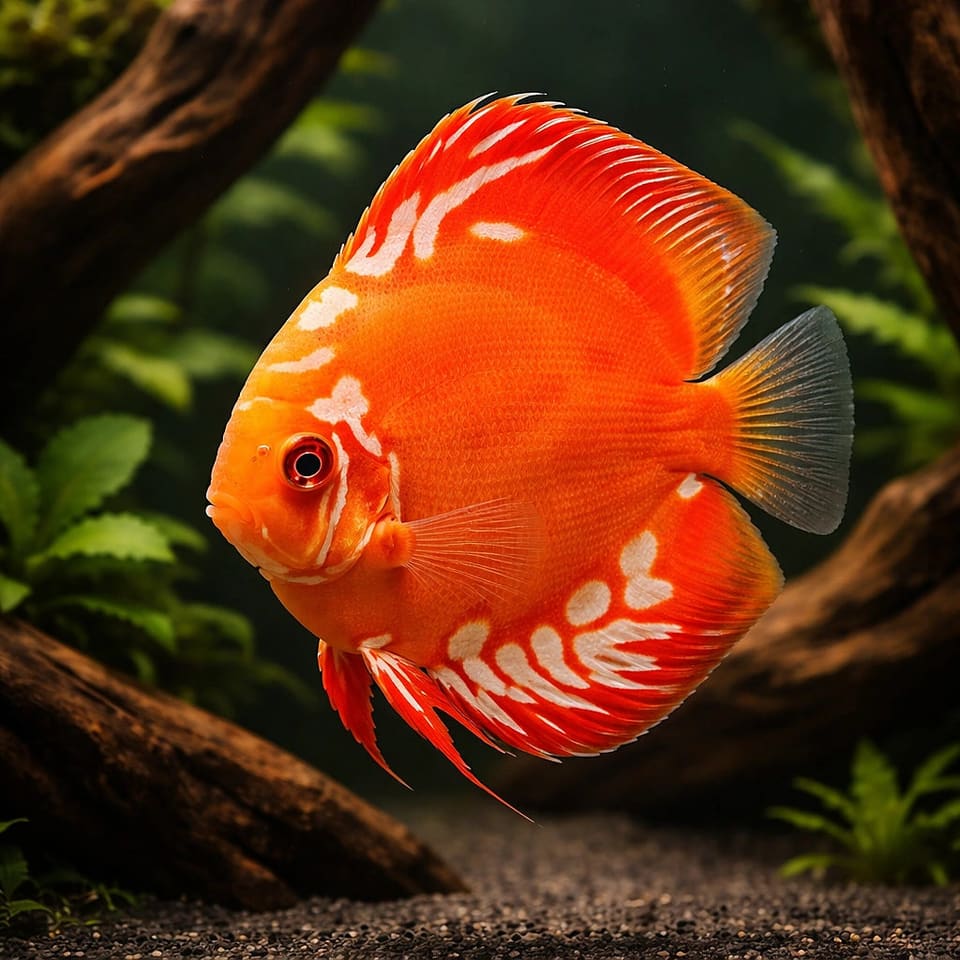
Red Marlboro Discus (domestic Symphysodon strain)
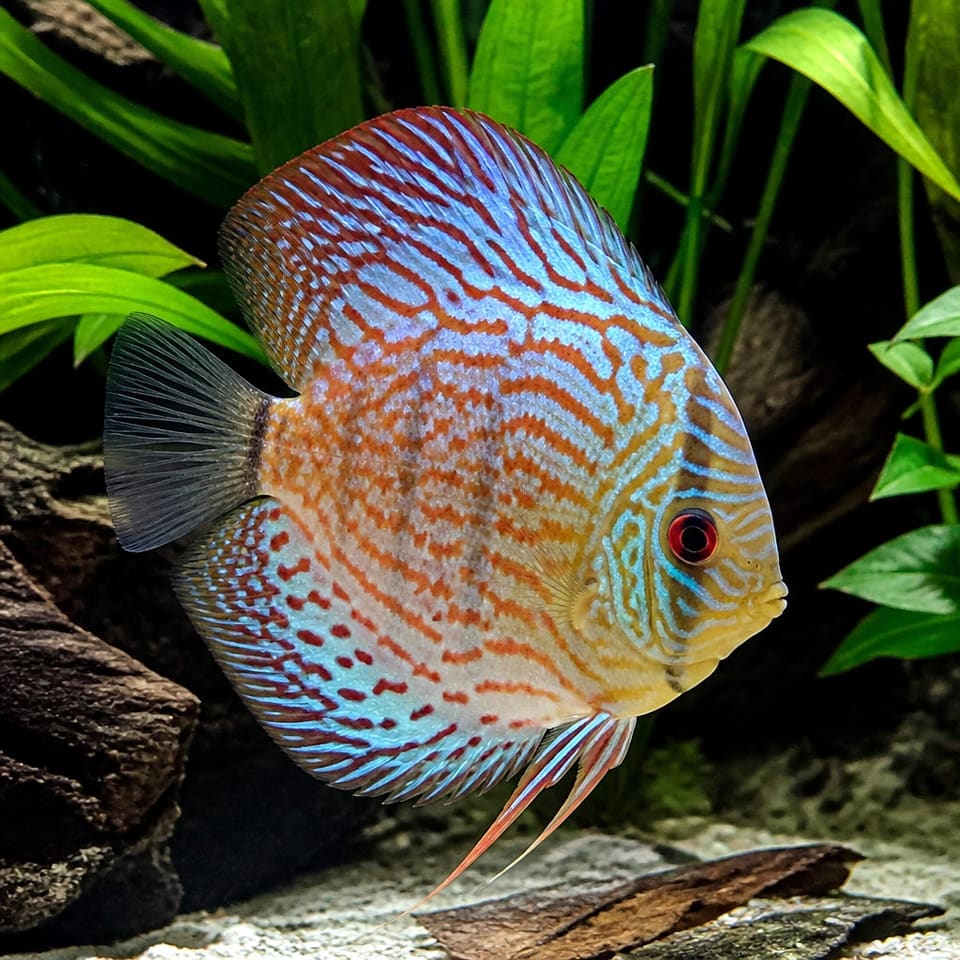
Assorted Juvenile Discus (Symphysodon mix)
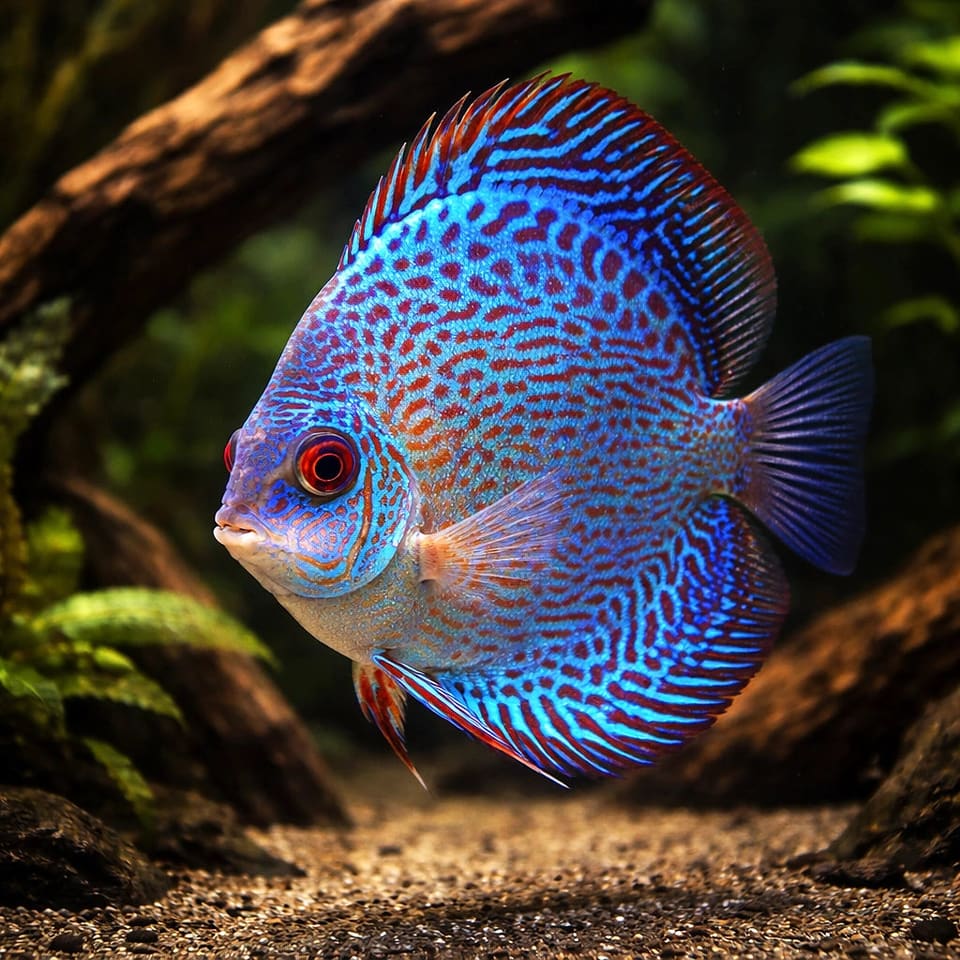
Blue Snakeskin Discus (Symphysodon spp.) – Multiple Size Grades
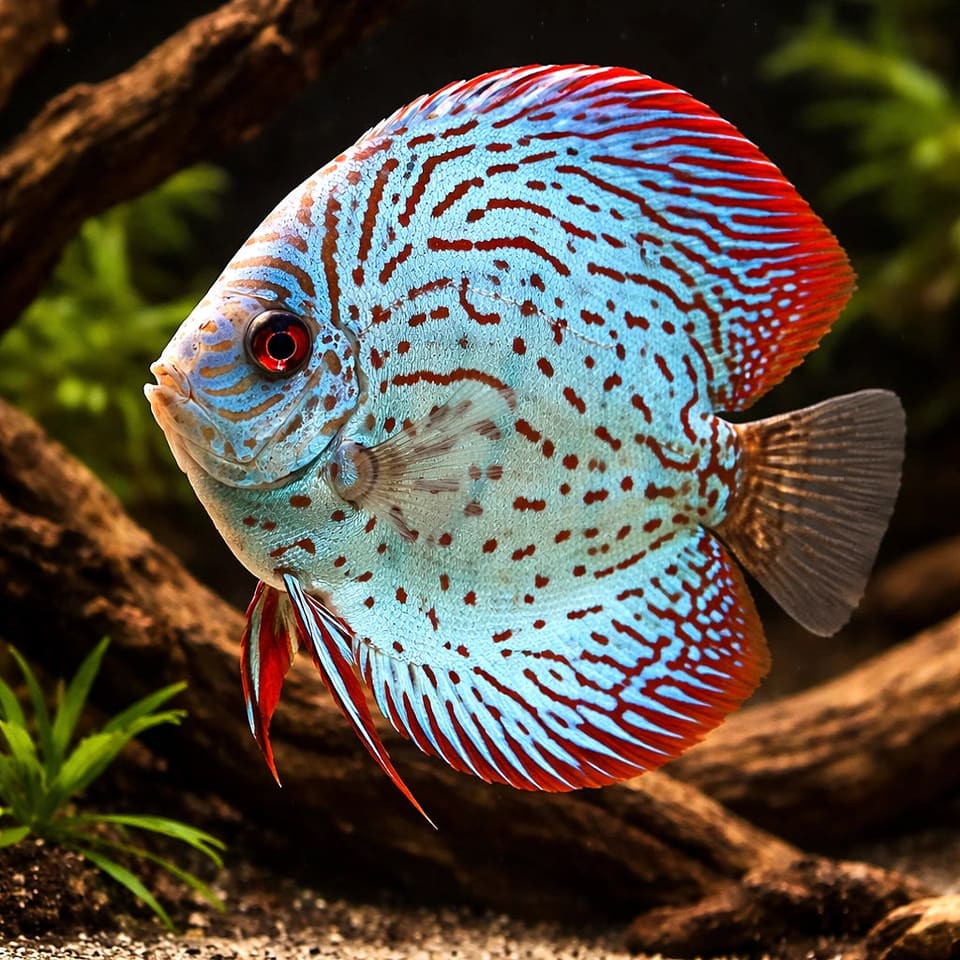
Brilliant Turquoise (Symphysodon aequifasciatus) — Domestic Strain
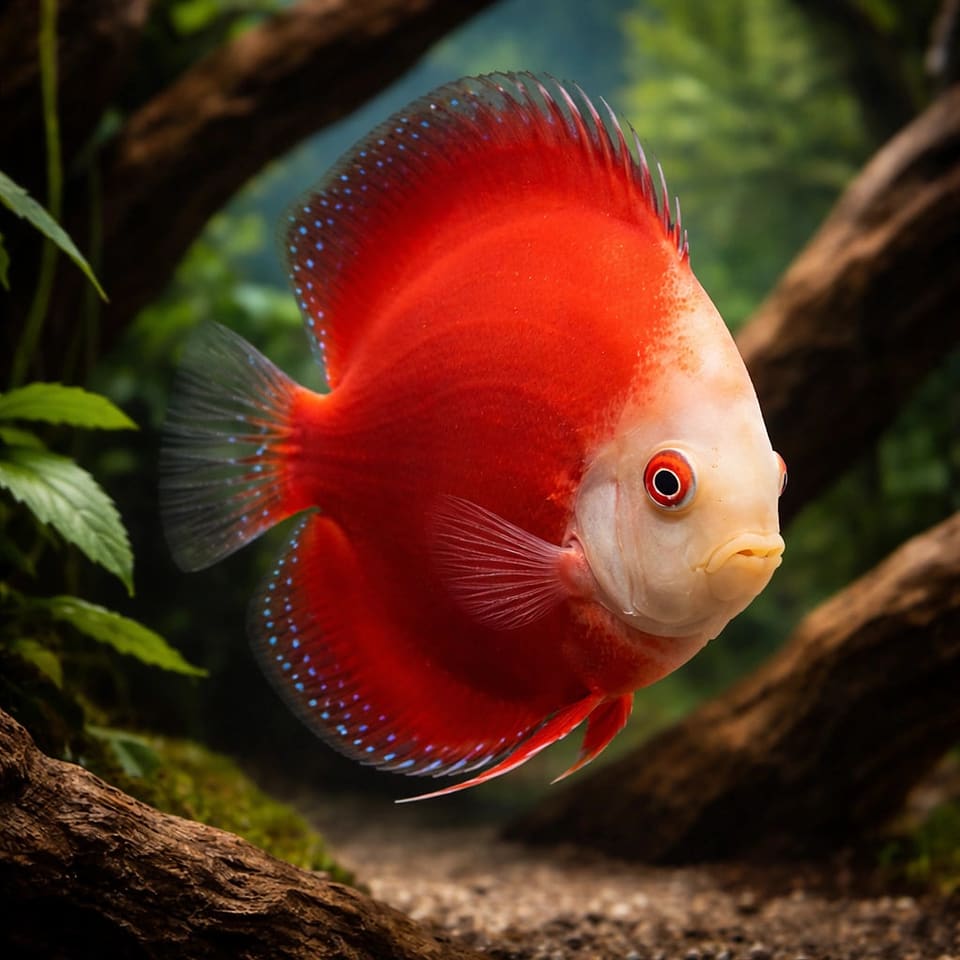
Super Red Melon Discus (Symphysodon spp.)
Shop Discus Fish & related
From this care guide straight into our UK live-fish catalogue.
Sources & further reading
Material factual claims cite the sources below; store policy and cautious inference are labelled in the article. Sources are grouped by type so you can judge their weight at a glance.
Peer-reviewed study (2)
- [12]Buckley, J., Maunder, R. J., Foey, A., Pearce, J., Val, A. L. & Sloman, K. A. (2010). Biparental mucus feeding: a unique example of parental care in an Amazonian cichlid. Journal of Experimental Biology. DOI: 10.1242/jeb.042929. View source
Direct research on biparental mucus provisioning and the transition towards weaning.
- [13]Amesberger-Freitag, A., Tichy, A., El-Matbouli, M. & Lewisch, E. (2019). Hole-in-the-head disease in discus fish: Is it a consequence of a dietary Ca/P imbalance?. Journal of Fish Diseases. DOI: 10.1111/jfd.13023. View source
A small controlled feeding study that did not reproduce HITH; used to reject simplistic cause-and-treatment claims.
Scientific database (4)
- [1]Fricke, R., Eschmeyer, W. N. & Van der Laan, R. (eds.). Eschmeyer's Catalog of Fishes. California Academy of Sciences. View source
Current nomenclatural authority; used for accepted-name boundaries, not aquarium husbandry.
- [2]Froese, R. & Pauly, D. (eds.). FishBase: species in the genus Symphysodon. FishBase. View source
Current genus list and measurement conventions; ornamental colour labels are not treated as wild-species proof.
- [3]Froese, R. & Pauly, D. (eds.). FishBase: Symphysodon aequifasciatus. FishBase. View source
Identity, distribution, habitat, reported size, temperature and social context.
- [4]Froese, R. & Pauly, D. (eds.). FishBase: Symphysodon discus. FishBase. View source
Identity, distribution, measurement, diet and reproductive context.
Veterinary reference (1)
- [8]Royal Veterinary College (2024). Aquarium health: nitrogen cycle. Royal Veterinary College. View source
Cycling, ammonia/nitrite harm, overfeeding risk and partial-water-change principles.
Animal-welfare charity (2)
- [6]Royal Society for the Prevention of Cruelty to Animals. Choosing an aquarium for pet fish. RSPCA. View source
Fishless cycling, filtration, testing, temperature matching and general aquarium-welfare principles.
- [7]Royal Society for the Prevention of Cruelty to Animals. Fish health and welfare. RSPCA. View source
Observable health-warning signs and the need to investigate water quality rather than diagnose from one sign.
Trade-body guidance (1)
- [5]Ornamental Aquatic Trade Association. How to look after discus. OATA. View source
UK species-care benchmark for adult group, volume, water, maintenance, feeding, acclimation, health observations and broad companion categories.
Government / regulatory (3)
- [9]Drinking Water Inspectorate. Water hardness / hard water. Drinking Water Inspectorate. View source
Local geology and water-company reporting; not evidence for a blanket north/south aquarium-water claim.
- [10]Department for Environment, Food & Rural Affairs (2026). Selling animals as pets licensing: statutory guidance for local authorities. GOV.UK. View source
Current UK seller context for stable water, acclimatisation, observation, diet, biosecurity and competent escalation.
- [11]Veterinary Medicines Directorate (2026). Exemption from authorisation for medicines for small pet animals. GOV.UK. View source
Current regulatory context; supports reading labels and avoiding improvised drug schedules, not a product recommendation.
Spotted something that needs a fix?
Fishkeeping moves fast and we want every guide spot-on. If you think something here is wrong, out of date, or could be clearer, tell us — our team reads every message and updates the page.
Suggest an edit
Tropical Fish Co Editorial Team
Evidence-led aquarium editorial team
The Tropical Fish Co editorial team compiles care guidance from the sources cited on each page, separates published evidence from practical husbandry policy, and checks retail links against the current catalogue. First-hand experience is included only when a named contributor and the observation have been verified.
Keep exploring
Shop related
Care guides
- Cichlids: Types, Care & Tank Planning
Compare African lake, South American and Central American cichlids by adult size, water, social behaviour and aquarium footprint before choosing.
- Aquarium Water Parameters: What to Test and Why
Learn which freshwater aquarium water parameters to test, how to read ammonia, nitrite, nitrate, pH, GH and KH, and when a result needs action.
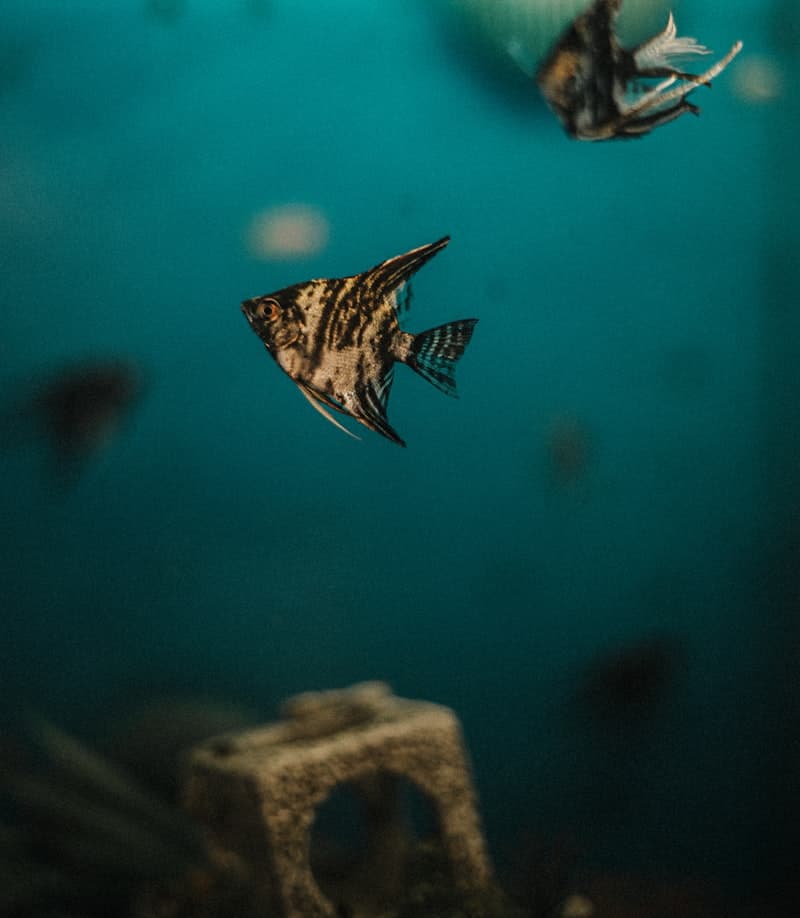
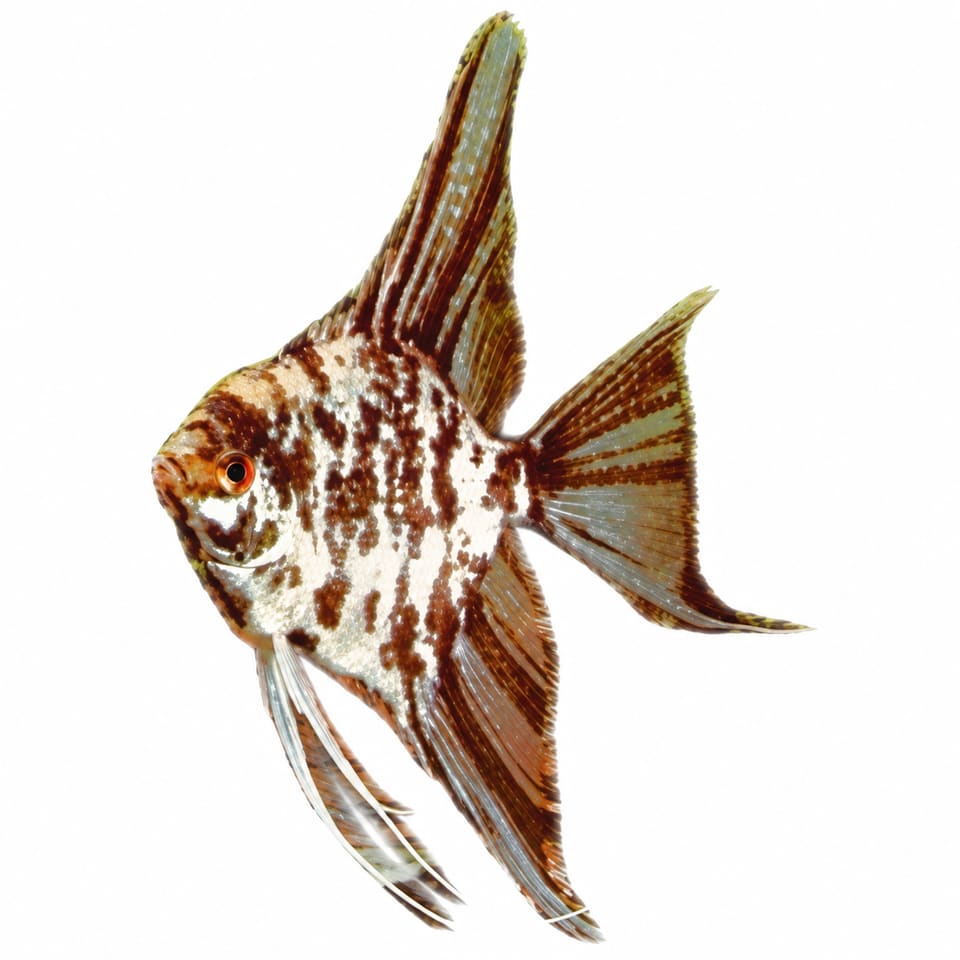
- Freshwater Angelfish Care: Pterophyllum scalare
Evidence-checked UK angelfish care: adult size and height, tank planning, pair or group needs, water, feeding, tank mates, health and breeding.
Related care guides
Cichlids: Types, Care & Tank Planning
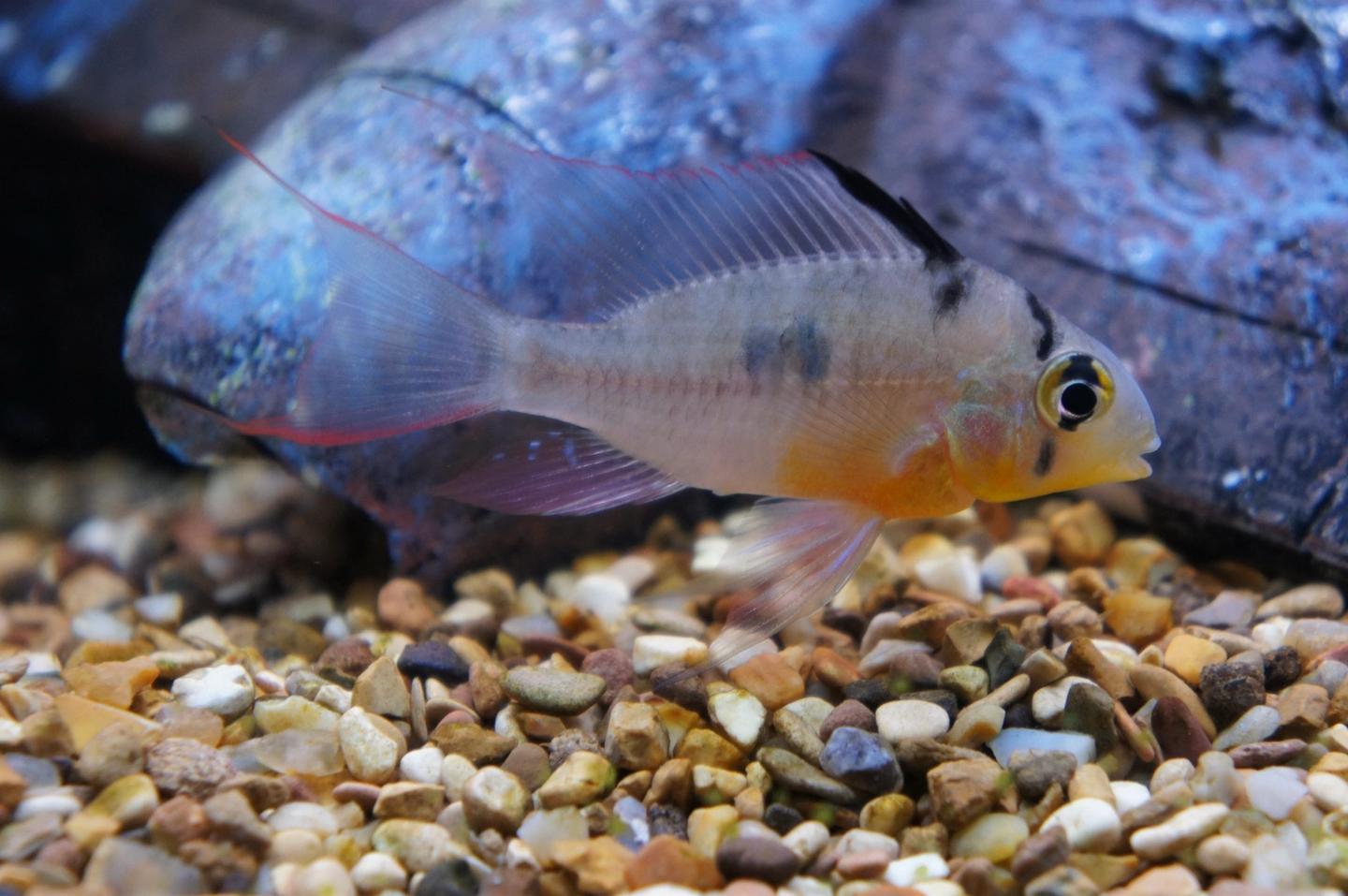
Cichlids are a family of roughly 1,800 accepted species, not one care type. Before buying, identify the exact species and source, then compare adult measurement, usable tank dimensions, social system, territory, tested water, diet and an exit plan. No family-wide minimum tank, water range or tank-mate list is safe.
Aquarium Water Parameters: What to Test and Why
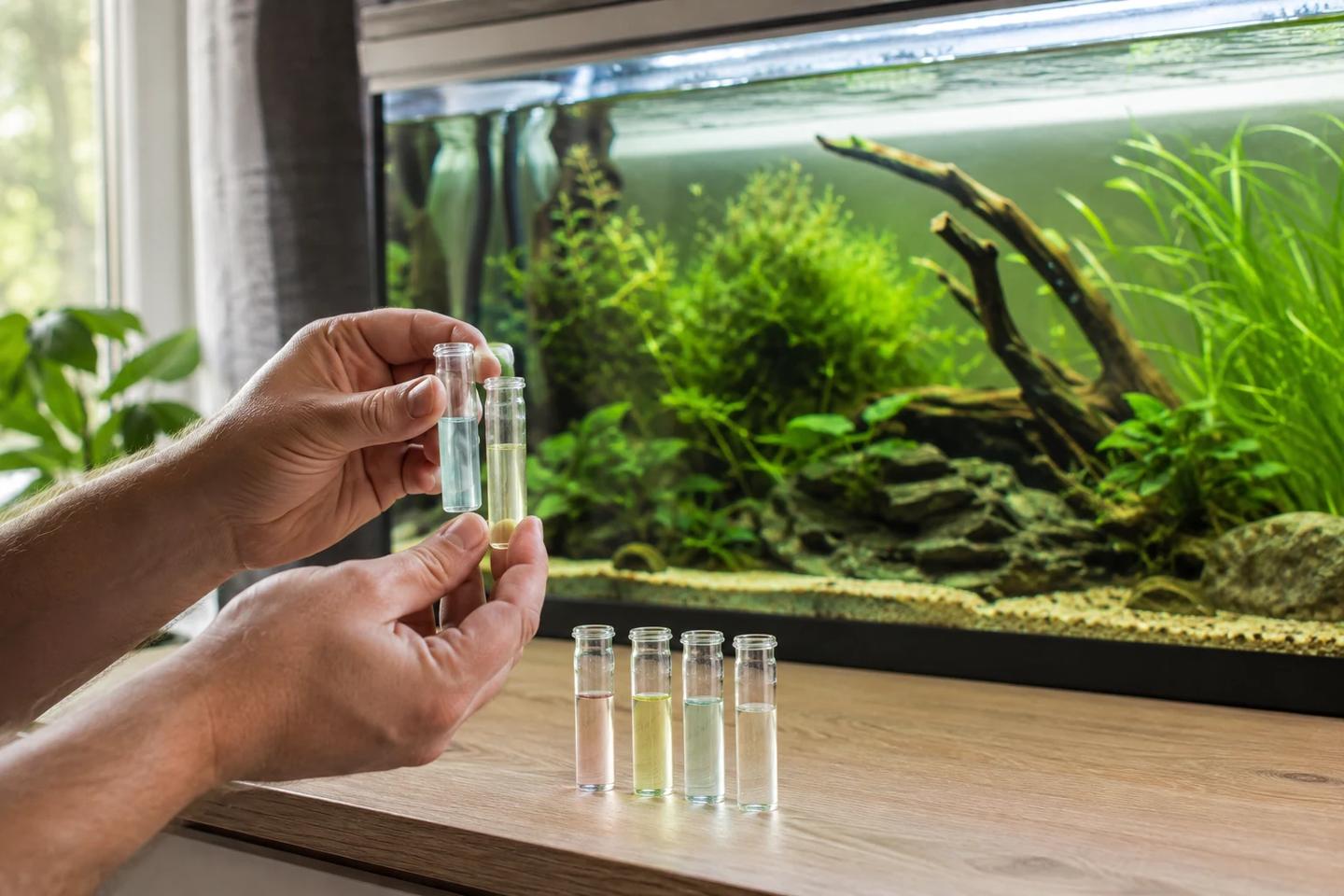
There is no universal set of perfect freshwater aquarium parameters. Identify the animals, learn what the test and unit actually report, establish your local source-water baseline, and compare repeat measurements. In an established aquarium, a confirmed ammonia or nitrite detection needs investigation; pH, GH, KH, temperature and nitrate decisions depend on the species, life stage and whole system.
Freshwater Angelfish Care: Pterophyllum scalare
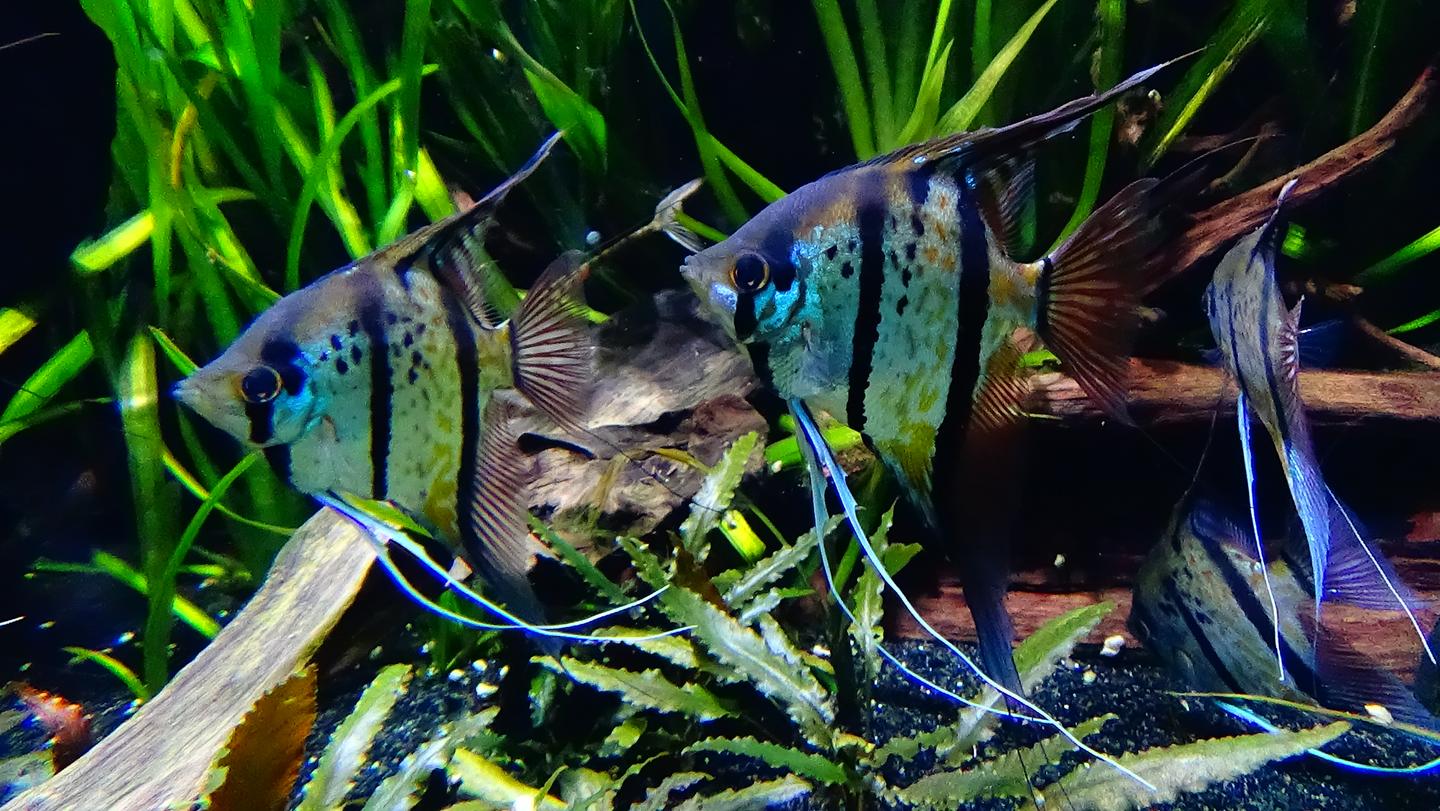
Freshwater angelfish are tall South American cichlids, not small community fish. OATA gives 120 litres as an industry floor for a compatible pair and says the aquarium must be sufficiently tall. We prefer planning around roughly 200 litres, a 100 × 40 cm footprint and about 50 cm height for an adult pair, with more space and an exit plan for a group.