
Bristlenose Pleco Care Guide: Size, Tank and Lifespan

For one typical common bristlenose, start with a mature, filtered aquarium of at least 90 litres, useful floor area, wood and cover. OATA reports about 15 cm adult length, 22-27°C, pH 6-8 and 4-12 dGH. Confirm the exact trade identity before applying species-level claims.
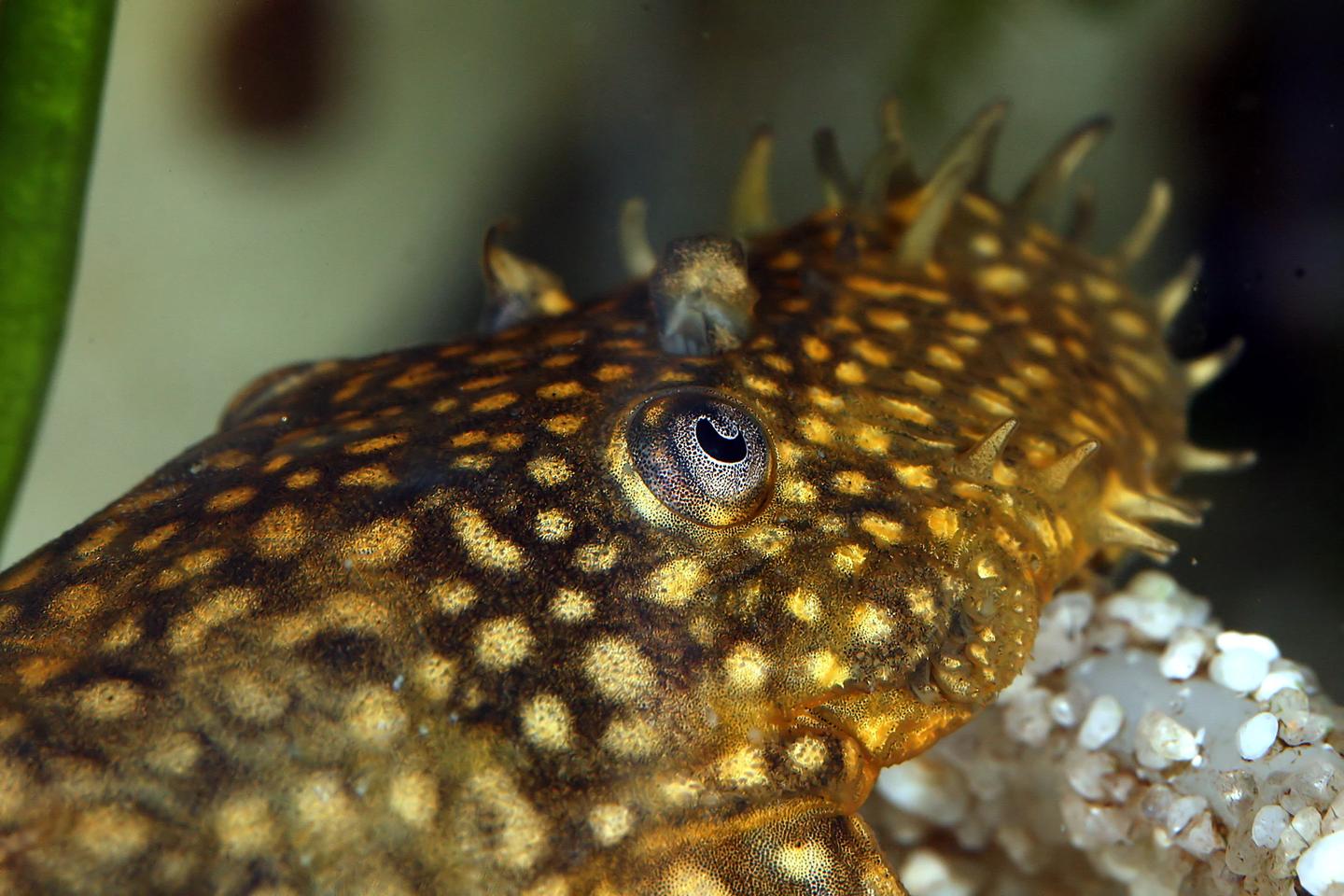
The familiar bristles may do more than distinguish mature males: a field-and-aquarium study proposed that they mimic larvae, but its authors explicitly said the idea still needed experimental testing.
Read the Ancistrus spawning studyThe 90-litre figure is Tropical Fish Co's cautious starting screen for one typical adult, not a controlled biological threshold. Footprint, filtration, mature water quality, cover, adult tank mates and the exact Ancistrus identity still determine suitability.
Live stock
Bristlenose Pleco for sale — see live stock & today’s prices
For one typical common bristlenose, start with a mature, filtered aquarium of at least 90 litres, useful floor area, wood and cover. Use 22-27°C, pH 6-8 and 4-12 dGH as the OATA UK starting range, with ammonia and nitrite at zero[4]. The 90-litre figure is our cautious purchase screen, not a scientific cliff: adult tank mates, footprint, filtration, water stability and the exact Ancistrus identity still decide whether a setup is suitable.
“Bristlenose pleco” is a useful trade name, not always an exact species certificate. Ancistrus cirrhosus is a valid species from the Paraná basin, but research found several distinct Ancistrus lineages in that basin and specialist aquarium references treat the common captive bristlenose identity cautiously[1][3][5]. Unless provenance is documented, Ancistrus sp. or Ancistrus cf. cirrhosus is more honest than claiming every brown, albino or longfin fish is verified A. cirrhosus.
If your aquarium is ready and you are shopping rather than researching, use the current Bristlenose Pleco shop hub. Current size, colour form, sex, price and availability belong to the live shop—not to this evergreen guide.
- Adult size: plan for about 15 cm adult length, not the juvenile sale size
- Tank: at least 90 litres for one typical adult, with useful floor area
- Water: 22-27°C, pH 6-8, 4-12 dGH; ammonia and nitrite at zero
- Setup: mature filter, cover, at least one aquarium-safe piece of wood and accessible food
- Social plan: one male per group is the cautious default; no tank mate is guaranteed safe
- Identity: confirm Ancistrus and the exact variety instead of relying on “pleco” alone
First identify the fish, then apply the care advice
The genus Ancistrus belongs to Loricariidae, the armoured catfish family[1]. The ventral mouth, bony plates and adult male's conspicuous snout tentacles help distinguish a bristlenose from many larger fish sold loosely as “common plecos”. However, colour, spots or bristle size alone cannot establish an exact species or wild locality.
That boundary matters because published numbers can use different fish and measurement conventions. OATA's practical UK care guidance describes bristlenose catfish growing to about 15 cm, but does not say how that length was measured. FishBase records 9.1 cm standard length for true A. cirrhosus; standard length stops before the tail fin[4][2]. The difference may reflect measurement convention, uncertain trade identity or both, so the figures cannot be compared as though they describe one guaranteed shop lineage on identical terms.
Ask the seller for the scientific label, current body length, expected adult length and any known lineage. If the answer is only “a pleco”, do not assume it stays small.
Tank size: why 90 litres is a starting screen
No selected controlled study establishes one universal minimum tank volume for every common-bristlenose lineage. This page therefore uses 90 litres as a cautious editorial minimum for one typical adult, combining the approximately 15 cm adult size in UK guidance with the need for mature filtration, usable bottom area, cover and stable water.
Capacity is only the first gate:
| Check | Better decision | Why litres alone are not enough |
|---|---|---|
| Footprint | Choose useful horizontal floor area around wood and refuges | A tall narrow tank can have volume but little bottom territory |
| Filtration | Size and maintain the filter for the whole adult community | A bristlenose adds waste; it does not remove it |
| Maturity | Fishless-cycle before purchase and verify zero ammonia and nitrite | Clear water is not proof of biological readiness |
| Cover | Provide shaded refuges and at least one suitable piece of wood | OATA describes the fish as secretive and recommends both |
| Social plan | Start with one; usually keep one male per group | More volume cannot guarantee compatible individuals |
Choose more capacity for multiple bristlenose, a busy community or a layout that reduces usable space. Never treat 90 litres as permission to add a fish to an already full aquarium.
Stocking Calculator
Check if your tank can support this species at a healthy bioload.
Open tool →Water and maintenance for a UK aquarium
OATA reports 22-27°C, pH 6-8, 4-12 dGH and 3-10 dKH for bristlenose catfish, with ammonia and nitrite at zero and nitrate no more than 20 mg/L above the normal tap-water level[4]. These are care ranges, not a reason to force rapid chemical changes.
| Measure | Starting range | Practical action |
|---|---|---|
| Temperature | 22-27°C | Use a thermostatic heater and separate thermometer; avoid rapid swings |
| pH | 6-8 | Compare the aquarium with the seller's established water before changing it |
| General hardness | 4-12 dGH | Test the aquarium; “UK tap water” is not one chemistry |
| Ammonia | 0 mg/L | Any detected result needs immediate investigation |
| Nitrite | 0 mg/L | Any detected result needs immediate investigation |
| Nitrate | No more than 20 mg/L above tap | Record both tap and aquarium values rather than quoting the tank alone |
Fishless-cycle the filter before adding livestock. The RSPCA recommends adding fish only after ammonia and nitrite have risen during cycling and returned to zero[9]. Treat replacement tap water for chlorine or chloramine, test weekly and record the results. OATA recommends a weekly 25% partial water change as general algae-eater guidance, but the actual response should follow measured water quality and the aquarium's load[4].
Water Parameter Matcher
Enter your tap water readings to see if this species will thrive.
Open tool →Wood: important habitat, not a proven digestion claim
Provide at least one aquarium-safe piece of wood. OATA recommends wood for bristlenose cover and grazing, and it adds complex surfaces where algae and biofilm can develop[4].
The internet often turns that sensible setup advice into a stronger claim: “bristlenose must digest wood fibre or they will die.” The frequently cited 2009 digestive study tested Panaque, Hypostomus and Pterygoplichthys—not Ancistrus—and found that the studied loricariids did not efficiently digest wood[8]. It cannot prove a cellulose-digestion requirement for bristlenose plecos.
The useful decision is simple: include untreated aquarium-safe wood because it provides cover and grazing surface. Do not use an untested digestive story to justify untreated outdoor timber, wood with uncertain chemicals or a diet that lacks complete prepared food.
The previous guide called wood “mandatory for digestion” and linked the claim to research on other loricariid genera. The corrected guide keeps the practical recommendation—wood for cover and grazing—but removes the false claim that the cited study proves Ancistrus digests wood fibre.
Feeding: algae is not a complete ration
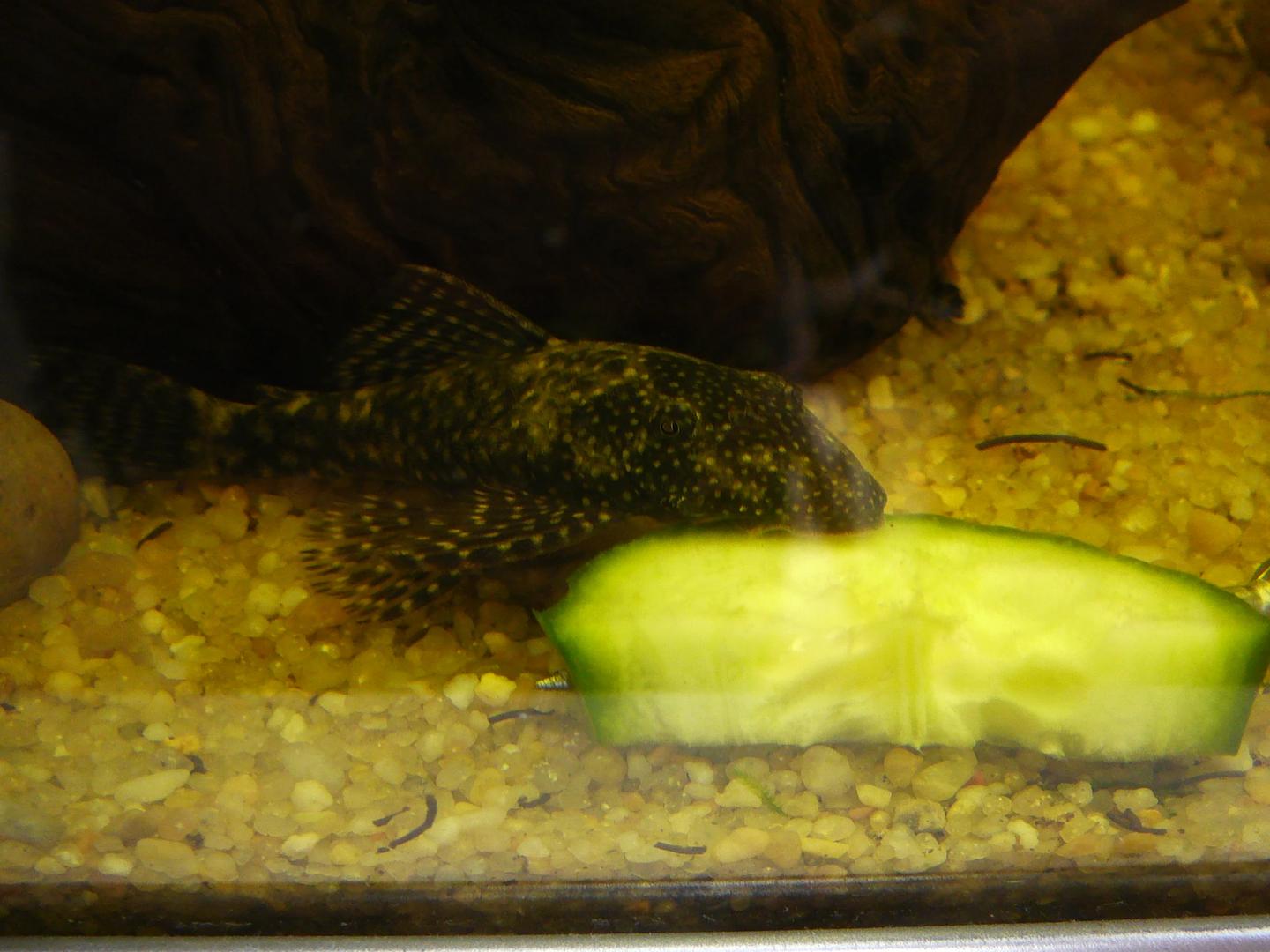
OATA is explicit that algae-eating fish do not replace aquarium maintenance and still need supplementary prepared foods, such as algae-based wafers or flakes, plus suitable fresh vegetables[4]. Start with a complete, appropriately sized prepared food and follow its directions. Use well-washed vegetables as variety, not as the whole diet.
Feed where the bristlenose can actually reach the food. In a community tank, watch whether faster fish take it first. Remove uneaten fresh food before it deteriorates, and track the individual's appetite and body condition over time. A visually “clean” aquarium can contain too little natural forage; visible algae can coexist with nutritional imbalance.
Do not buy a bristlenose as a maintenance tool. Persistent algae calls for a review of lighting, nutrients, stocking and cleaning. Adding a fish may change what grows on surfaces, but it also adds biological load.
Sexing, bristles and breeding
OATA says males can be distinguished by bristles on the end of the nose and that a male and female may breed when a suitable cave or crevice is present[4]. Mature males usually show the most developed branched tentacles; juveniles and lightly bristled individuals can be harder to sex, so a sale photograph is not a guarantee.
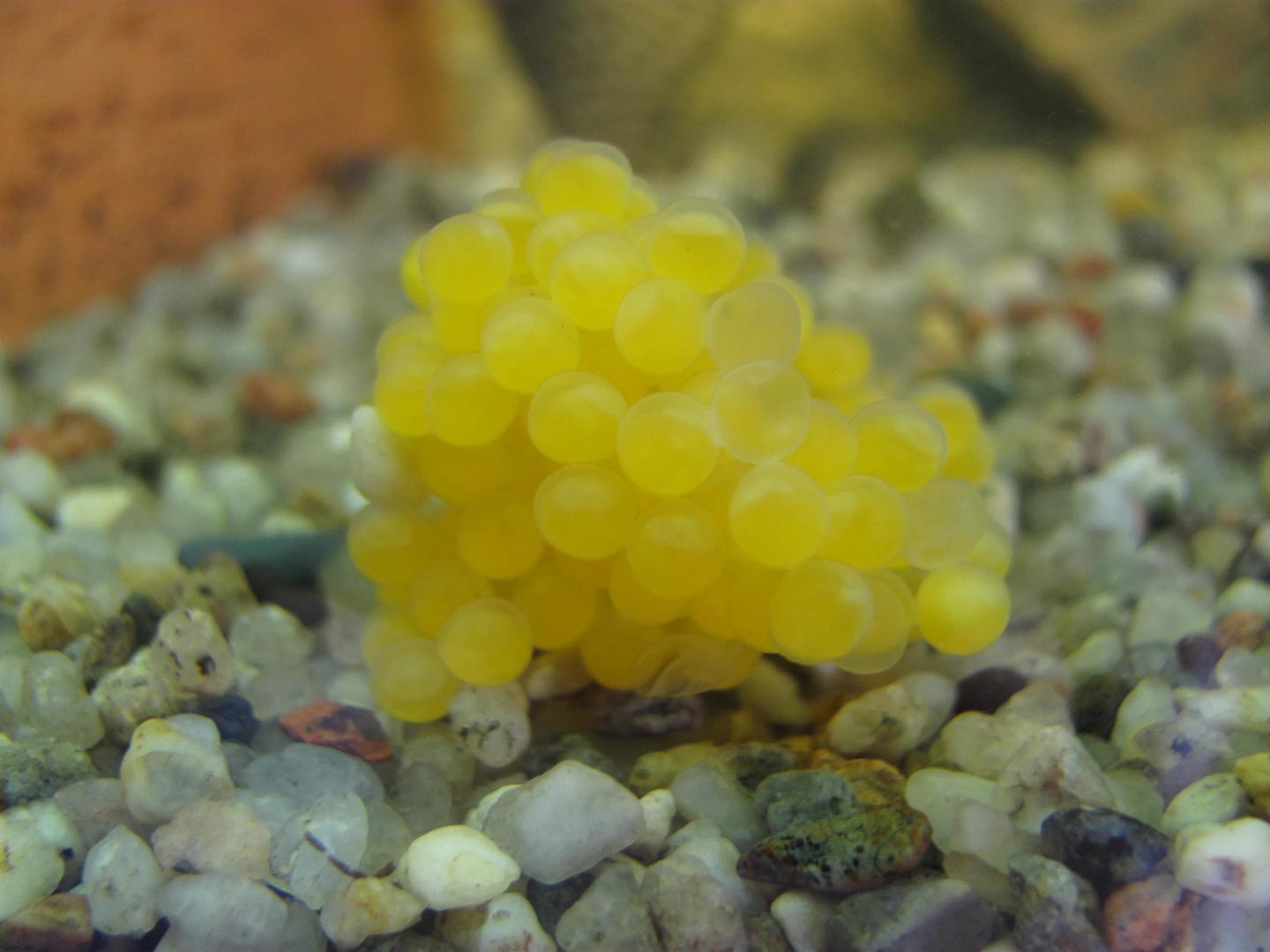
Published work describes Ancistrus as cavity spawners in which the male guards eggs and larvae. A laboratory study of verified A. cirrhosus described a clustered mass of yellowish, spherical, adhesive eggs; that species-specific observation does not identify every trade bristlenose or prescribe clutch handling[7]. Sabaj, Armbruster and Page also proposed a striking possibility: the male's tentacles may mimic clustered larvae and influence female choice. The authors explicitly called larval mimicry a hypothesis requiring experimental investigation[6]. It is an interesting idea, not a settled fact.
This guide deliberately does not prescribe a cold-water shock, fixed temperature drop, repeated spawning interval or a clutch size. Evidence from one species or one aquarium cannot safely become a universal breeding recipe. If an unexpected clutch appears, protect water quality and seek species-specific guidance before moving eggs or changing conditions.
Tank mates and the one-male default
OATA says bristlenose can be kept alone, in pairs or small groups, but that it is usually best to have only one male per group[4]. Use that as the cautious default. Multiple fish need extra capacity, more than one refuge, feeding access and a ready separation option.
Compatibility is a screening process, not a list of guaranteed-safe species:
- compare the full adult temperature and water ranges;
- account for every animal's adult size and waste, not its shop size;
- avoid fish likely to attack, swallow or repeatedly displace the bristlenose;
- check bottom-space and food competition with other catfish;
- protect caves from animals that can trap or injure one another;
- assume eggs, fry and very small invertebrates may be vulnerable;
- keep a cycled separation option ready if behaviour changes.
Peaceful mid-water community fish may use a different zone, but that does not make every individual compatible. Read the Neon Tetra guide, Honey Gourami guide or broader Pleco guide for the other side of a proposed combination, then compare the exact animals.
Bristlenose versus a common pleco
“Pleco” is not one species. It is used loosely for several loricariid catfishes with very different adult sizes. OATA places bristlenose at about 15 cm, while fish sold under a common-pleco label may belong to larger genera[4].
Before purchase, require an exact scientific label or enough traceable information to verify the likely adult size. Do not select from a small juvenile photograph. If the identity remains uncertain, pause the purchase rather than assuming the fish will fit a 90-litre aquarium for life.
The dedicated Common Pleco guide covers the larger-fish decision. It is not interchangeable with this Ancistrus guide.
How long do bristlenose plecos live?
This is the largest current Search Console question for the guide, but the selected authoritative species record and UK care sheet do not establish one dependable home-aquarium lifespan for the mixed or uncertain Ancistrus lines sold as common bristlenose. Popular ranges online frequently omit primary evidence, mix species or repeat keeper reports without known age at purchase.
That uncertainty is more useful than a false promise. Treat a bristlenose as a long-term animal, ask what the seller knows about its age and identity, and plan for future moves, holidays, equipment replacement and veterinary help. A number copied from another site is not a warranty for one fish.
Health: test the system before choosing a medicine
Reduced appetite, rapid breathing, unusual hiding, loss of condition, colour change, damaged fins or poor grip are warning signs, not diagnoses. OATA advises testing water and seeking experienced guidance; the veterinary evidence similarly prioritises aquarium history, water analysis, quarantine and diagnosis before targeted treatment[4][10].
Use this order:
- Check temperature, equipment operation and oxygenation.
- Test ammonia, nitrite, nitrate and pH; compare with recent records.
- Review additions, maintenance, feeding and any chemical changes.
- Isolate safely when disease spread or aggression is plausible and a suitable cycled tank is available.
- Follow the exact authorised product label or qualified veterinary advice—never an invented half-dose rule.
- Use OATA's fish-vet directory for severe, persistent or unexplained signs[11].
White marks, swelling, damaged fins or hiding can have several causes. Catfish sensitivity is not a licence to guess a half dose, combine products or raise temperature. Preserve the aquarium's biological filtration, check the whole system and obtain diagnosis-led advice.
Before you buy
The Animal Welfare Act 2006 protects vertebrates, and GOV.UK summarises the keeper's duty to provide a suitable environment, diet, normal-behaviour opportunity, appropriate social housing and protection from pain, injury, suffering and disease[12]. Turn that duty into a practical gate:
- the seller can distinguish Ancistrus from a larger common pleco and explain any known lineage;
- the aquarium provides at least 90 litres for one typical adult and useful floor area;
- the filter is mature, with ammonia and nitrite confirmed at zero;
- temperature, pH and hardness overlap with the fish's established water;
- aquarium-safe wood and shaded refuges are already installed;
- complete prepared food and suitable supplementary foods are ready;
- the entire adult community fits the tank and one male per group is the starting plan;
- a separation and quarantine option exists;
- a responsible person can maintain the aquarium during travel;
- the commitment remains workable even if the fish lives much longer than an online estimate.
When every item passes, use the live Bristlenose Pleco shop hub for current choices. None of the editorial photographs promises that the illustrated fish or form is available now.
Evidence limits and correction policy
This page intentionally separates the uncertain common trade identity from verified facts about true A. cirrhosus. The 90-litre minimum is Tropical Fish Co's cautious welfare screen, not a controlled threshold. The selected evidence does not justify a universal lifespan, a guaranteed tank mate, a fixed breeding trigger, an exact home-treatment dose or the claim that Ancistrus must digest wood.
If you find a source-based correction, send it through our contact page with the exact passage and reference. Editorial feedback is never counted as a lead or purchase; completed ecommerce purchases and revenue remain the final commercial outcomes.
Bristlenose feeding and reproduction evidence
Frequently asked questions
Shop Bristlenose Pleco & related
From this care guide straight into our UK live-fish catalogue.
Catfish & Plecos
Corydoras, Bristlenose, L-number plecos, Synodontis and Otocinclus for clean-up and character — supplied and adult size on each listing so the tank fits.
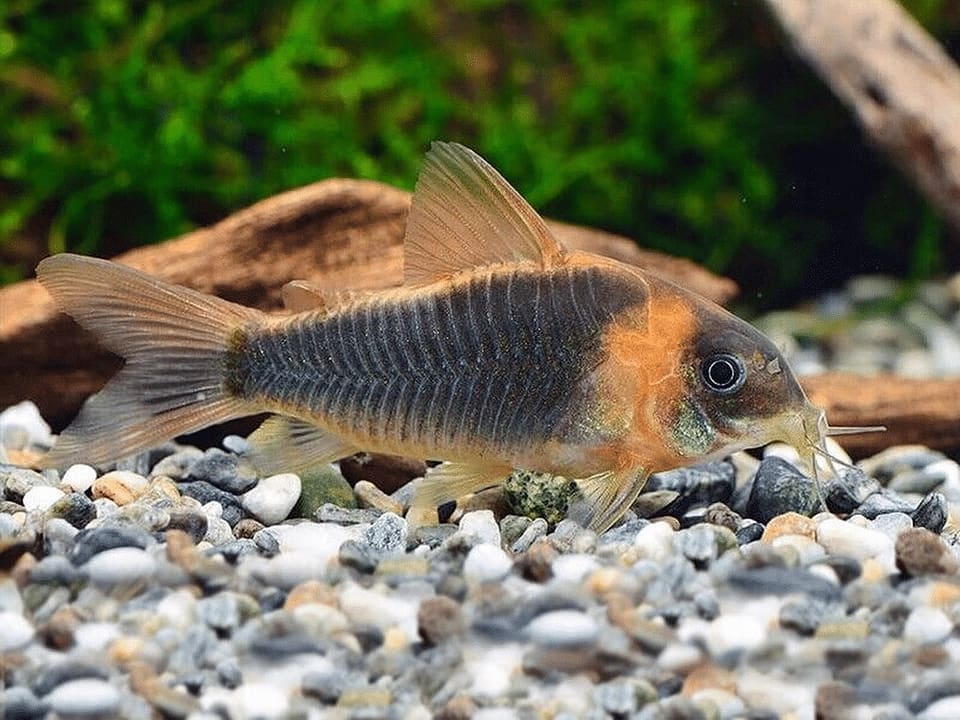
Corydoras
Shop current Corydoras catfish listings in the UK. Compare scientific identity, size and sale unit, with price and availability shown per product.
Sources & further reading
Material factual claims cite the sources below; store policy and cautious inference are labelled in the article. Sources are grouped by type so you can judge their weight at a glance.
Peer-reviewed study (4)
- [3]Prizon, A. C. et al. (2017). Hidden Diversity in the Populations of the Armored Catfish Ancistrus Kner, 1854 (Loricariidae, Hypostominae) from the Paraná River Basin Revealed by Molecular and Cytogenetic Data. Frontiers in Genetics 8:185. DOI: 10.3389/fgene.2017.00185. View source
Found five evolutionary lineages among 144 Paraná-basin specimens and supports caution about applying one species label across visually variable Ancistrus.
- [6]Sabaj, M. H.; Armbruster, J. W. & Page, L. M. (1999). Spawning in Ancistrus (Siluriformes: Loricariidae) with comments on the evolution of snout tentacles as a novel reproductive strategy: larval mimicry. Ichthyological Exploration of Freshwaters 10(3):217-229. View source
Field and aquarium observations of cavity spawning and male care; larval mimicry is the authors' hypothesis, not an established function.
- [7]Kim, D. H. (2020). Ultrastructure of the fertilized egg envelopes in Ancistrus cirrhosus, Loricariidae, Teleostei. Applied Microscopy 50:13. DOI: 10.1186/s42649-020-00034-7. View source
Laboratory study of fertilised egg-envelope structure and appearance in A. cirrhosus; it is not a home breeding recipe or evidence that an unidentified trade fish is this species.
- [8]German, D. P. (2009). Inside the guts of wood-eating catfishes: can they digest wood?. Journal of Comparative Physiology B 179:1011-1023. DOI: 10.1007/s00360-009-0381-1. View source
Comparative digestive study of Panaque, Hypostomus and Pterygoplichthys—not Ancistrus. It does not prove a cellulose-digestion requirement for bristlenose plecos.
Scientific database (1)
- [2]Froese, R. & Pauly, D. (eds.). Ancistrus cirrhosus. FishBase. View source
Compiled record for true A. cirrhosus: Paraná distribution, 9.1 cm maximum standard length, freshwater habitat and algae-eating ecology; FishBase itself warns that taxonomic references need care.
Veterinary reference (1)
- [10]MSD Veterinary Manual. Management of aquarium fish. MSD Veterinary Manual. View source
Veterinary reference for water-quality-led investigation, history, diagnosis, quarantine and targeted treatment; not a remote diagnosis for one fish.
Animal-welfare charity (1)
- [9]Royal Society for the Prevention of Cruelty to Animals. Choosing an aquarium for pet fish. RSPCA. View source
UK welfare guidance for fishless cycling, filtration, testing, heating and stable aquarium preparation.
Trade-body guidance (2)
- [4]Ornamental Aquatic Trade Association. How to look after tropical algae eaters. OATA. View source
UK, vet-endorsed husbandry guidance for adult size, water, social arrangement, wood and cover, supplementary feeding, maintenance, acclimation and warning signs.
- [11]Ornamental Aquatic Trade Association. Find a fish vet. OATA. View source
UK route for locating fish-health help; it is not a diagnosis service.
Government / regulatory (1)
- [12]Department for Environment, Food & Rural Affairs. Animal welfare. GOV.UK. View source
Confirms that the Animal Welfare Act 2006 protects vertebrates and summarises the keeper's duty of care.
Reference source (1)
- [1]Fricke, R.; Eschmeyer, W. N. & Van der Laan, R. (eds.). Catalog of Fishes: Ancistrus cirrhosus. California Academy of Sciences. View source
Current taxonomic status, family and published distribution for true A. cirrhosus; not proof that an unidentified retail bristlenose is this species.
Reference source (1)
- [5]Seriously Fish editorial team. Ancistrus cf. cirrhosus — Common Bristlenose Catfish. Seriously Fish. View source
Specialist secondary discussion of the uncertain identity and captive provenance of the common aquarium bristlenose; husbandry claims are not treated as primary science.
Spotted something that needs a fix?
Fishkeeping moves fast and we want every guide spot-on. If you think something here is wrong, out of date, or could be clearer, tell us — our team reads every message and updates the page.
Suggest an edit
Tropical Fish Co Editorial Team
Evidence-led aquarium editorial team
The Tropical Fish Co editorial team compiles care guidance from the sources cited on each page, separates published evidence from practical husbandry policy, and checks retail links against the current catalogue. First-hand experience is included only when a named contributor and the observation have been verified.
Keep exploring
Shop related
- Catfish & Plecos
Corydoras, Bristlenose, L-number plecos, Synodontis and Otocinclus for clean-up and character — supplied and adult size on each listing so the tank fits.
- Corydoras
Shop current Corydoras catfish listings in the UK. Compare scientific identity, size and sale unit, with price and availability shown per product.
Care guides
- Otocinclus Catfish Care: Tank Size, Food & Groups
Otocinclus catfish care for UK tanks: compare tank size, 22–25°C water, group planning, grazing foods, algae limits, tank mates and buying checks.
- Pleco Fish Guide: Types, Adult Size, Food & Tank Planning
Pleco fish guide for UK keepers: compare types, adult sizes, diets, tank planning, water and buying checks before choosing a suckermouth catfish.
- Celestial Pearl Danio Care Guide: Tank, Group and Water
Celestial pearl danio care for UK aquariums: 45 × 30 cm footprint, 20–26°C water, group behaviour, food, shrimp risk, sexing and breeding.
Related care guides
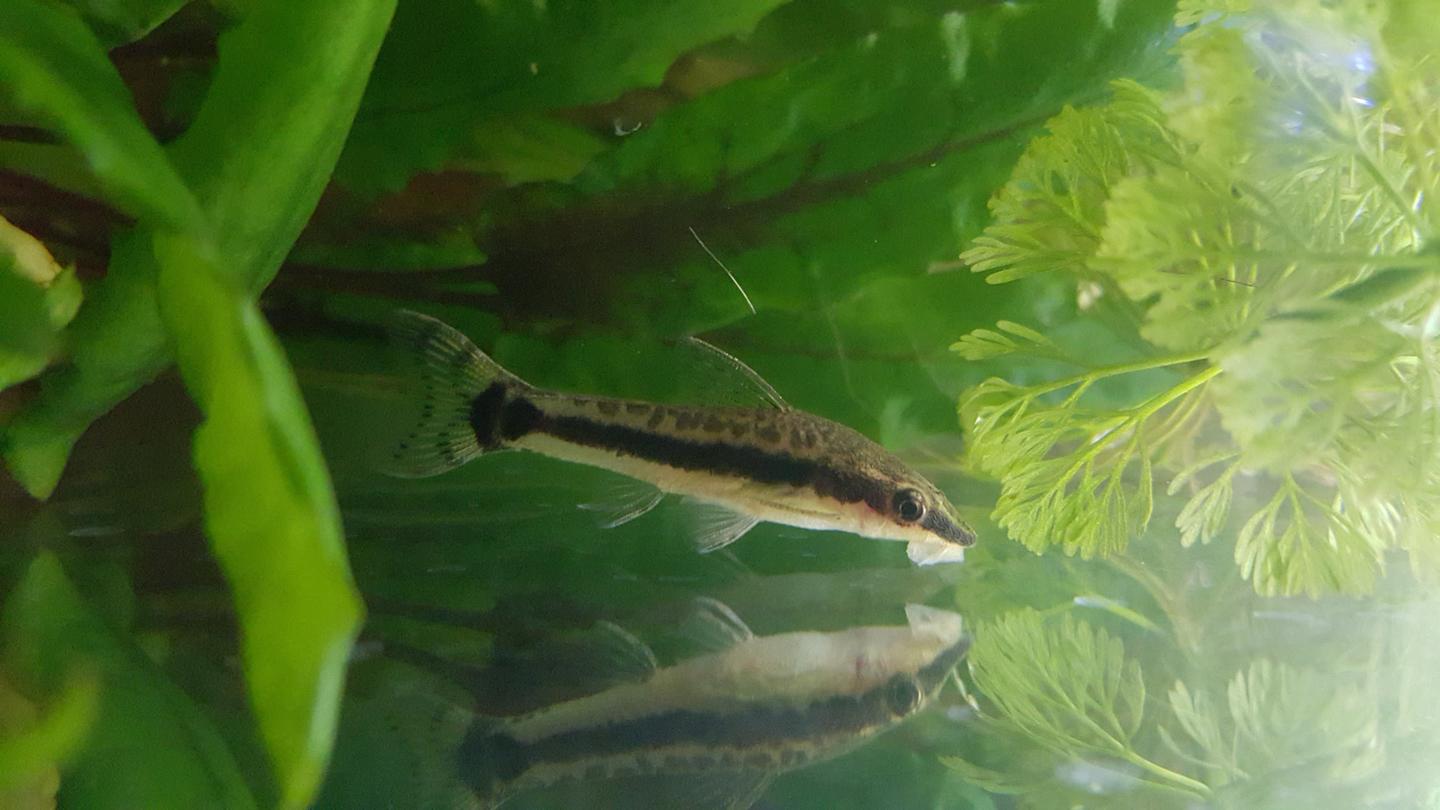
Otocinclus Catfish Care: Tank Size, Food & Groups
Otocinclus are small South American loricariid catfish, not disposable algae cleaners. Confirm the supplied species where possible; start with a mature, stable aquarium with ample grazing surfaces; plan a compatible social group; and provide suitable food even when algae is visible.
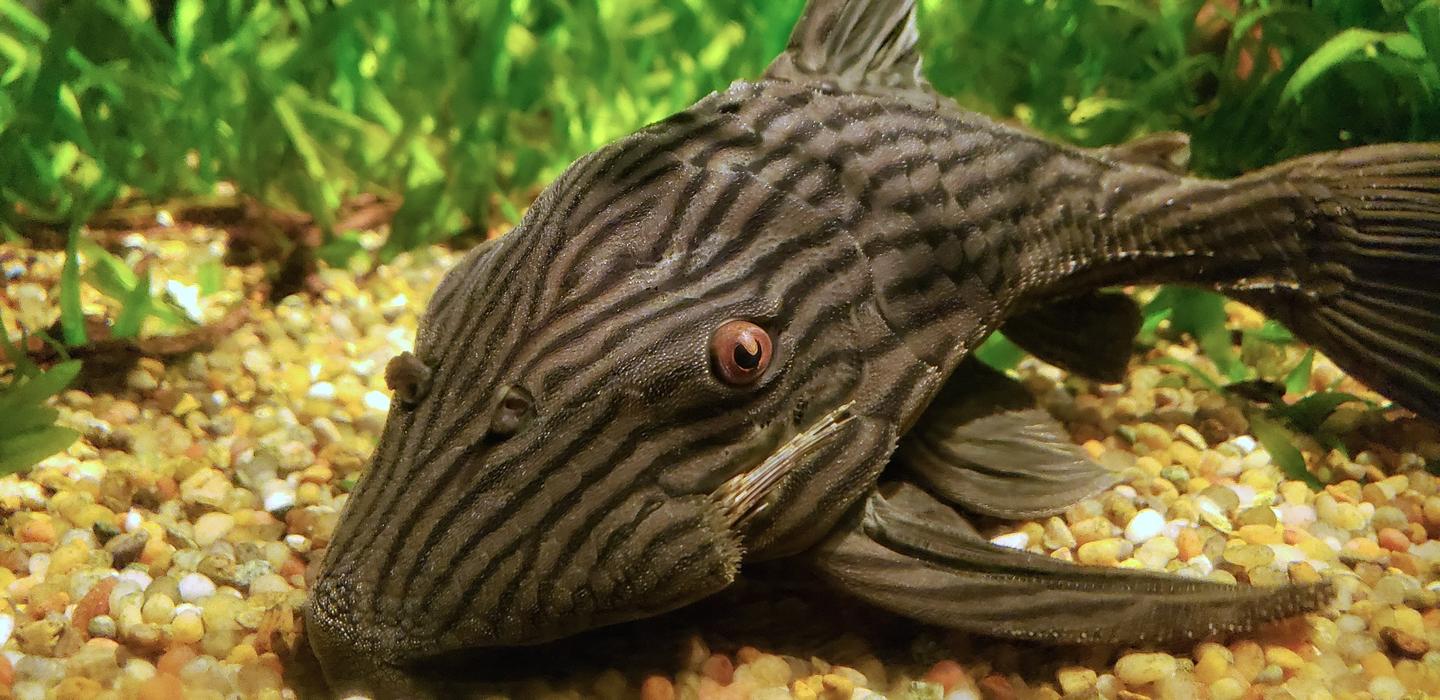
Pleco Fish Guide: Types, Adult Size, Food & Tank Planning
‘Pleco’ is a loose aquarium-trade label, not one species or one care sheet. Before buying, confirm the scientific name or defensible L-number, adult size and measurement method, required footprint, temperature and water, diet, social plan and source. No universal pleco tank size, menu or algae result is honest.
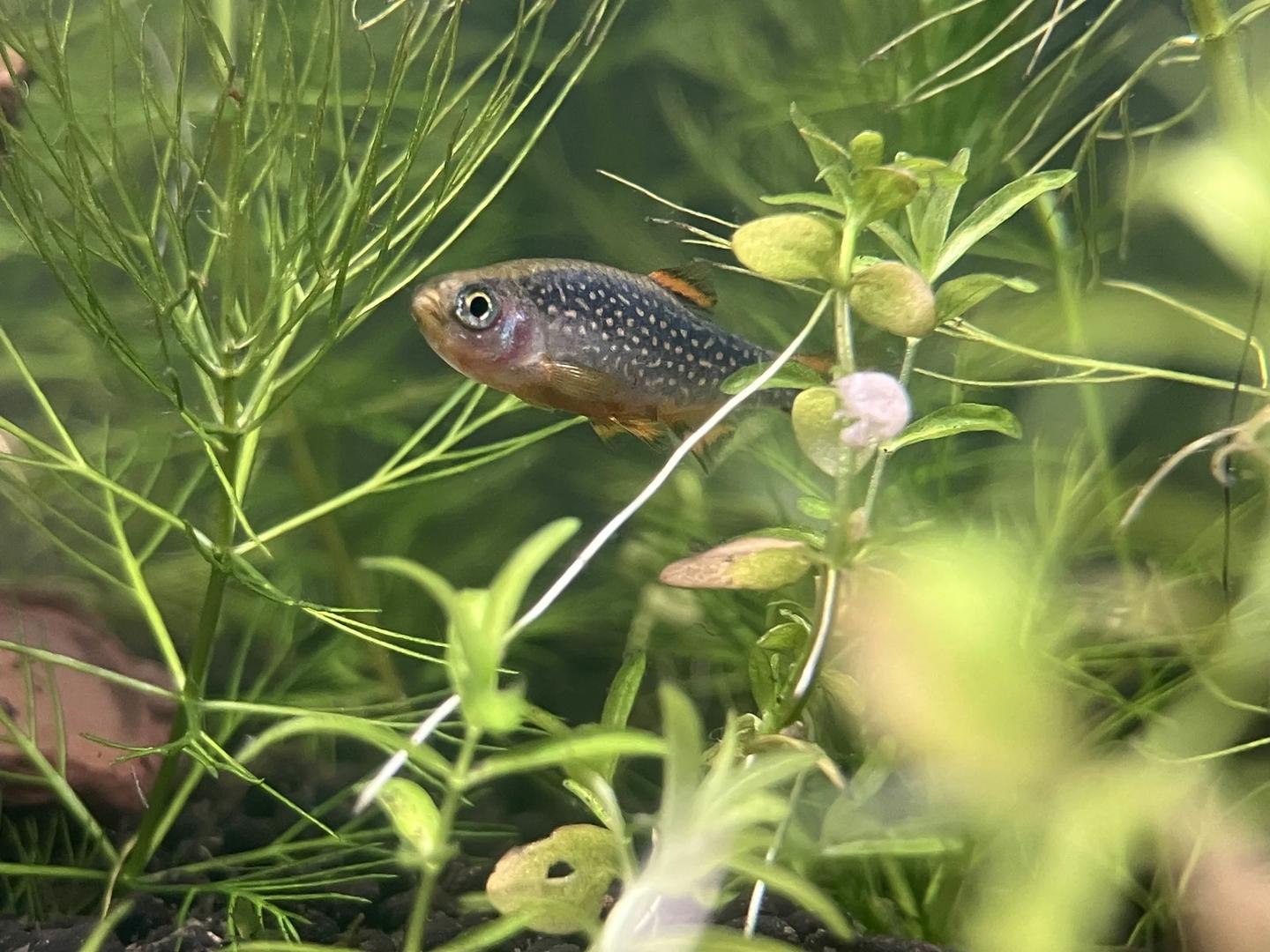
Celestial Pearl Danio Care Guide: Tank, Group and Water
Plan a mature, densely planted aquarium with at least a 45 × 30 cm base for a social group. Use 20–26°C, pH 6.5–7.5 and 5–15 dGH as published screening ranges, then hold a stable value inside the overlap for every animal in the tank.