L333 Maze Zebra Pleco (Hypancistrus sp.) – CB Porto de Mos
22–27°C · pH 6–8
£48.99

One live, unsexed L393 Cheese Creek Bristlenose juvenile in the supplier's 3.5-4 cm dispatch grade. Exact sex, origin, generation and adult pattern are not guaranteed.
Adult size is the maximum length this species reaches at full maturity (scientific sources). The livestock you receive will be younger and smaller. Product-photo provenance and any image-specific limitations are stated on the listing.
Ancistrus sp. (L393)
One live, unsexed L393 Cheese Creek Bristlenose juvenile in the supplier's 3.5-4 cm dispatch grade. Exact sex, origin, generation and adult pattern are not guaranteed.
Adult size is the maximum length this species reaches at full maturity (scientific sources). The livestock you receive will be younger and smaller. Product-photo provenance and any image-specific limitations are stated on the listing.
For one typical common bristlenose, start with a mature, filtered aquarium of at least 90 litres, useful floor area, wood and cover. OATA reports about 15 cm adult length, 22-27°C, pH 6-8 and 4-12 dGH. Confirm the exact trade identity before applying species-level claims.
Maintain these water conditions for optimal health and vibrant colors
L393 Cheese Creek Bristlenose, Ancistrus sp. (L393), is an undescribed loricariid catfish identified in the aquarium trade by its L-number. This listing is for one unsexed juvenile per unit in the supplier's 3.5-4 cm dispatch grade. It is not a pair, adult or guaranteed male, and the L-number should remain attached to the fish because “Ancistrus sp.” alone covers many different forms.
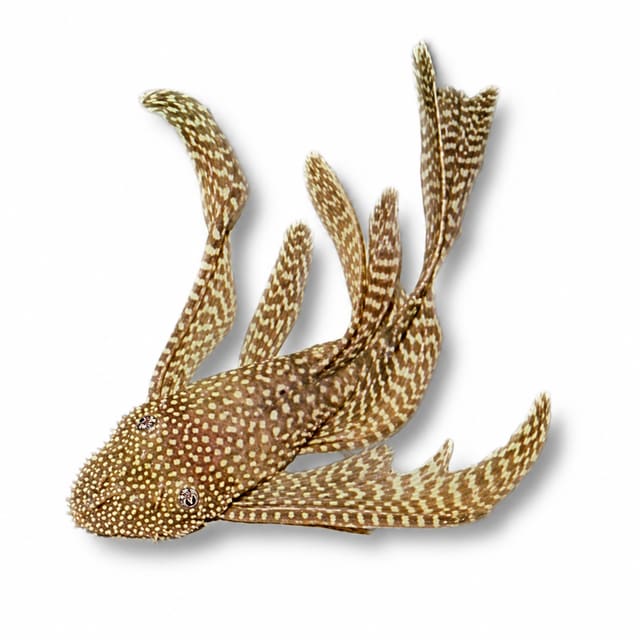
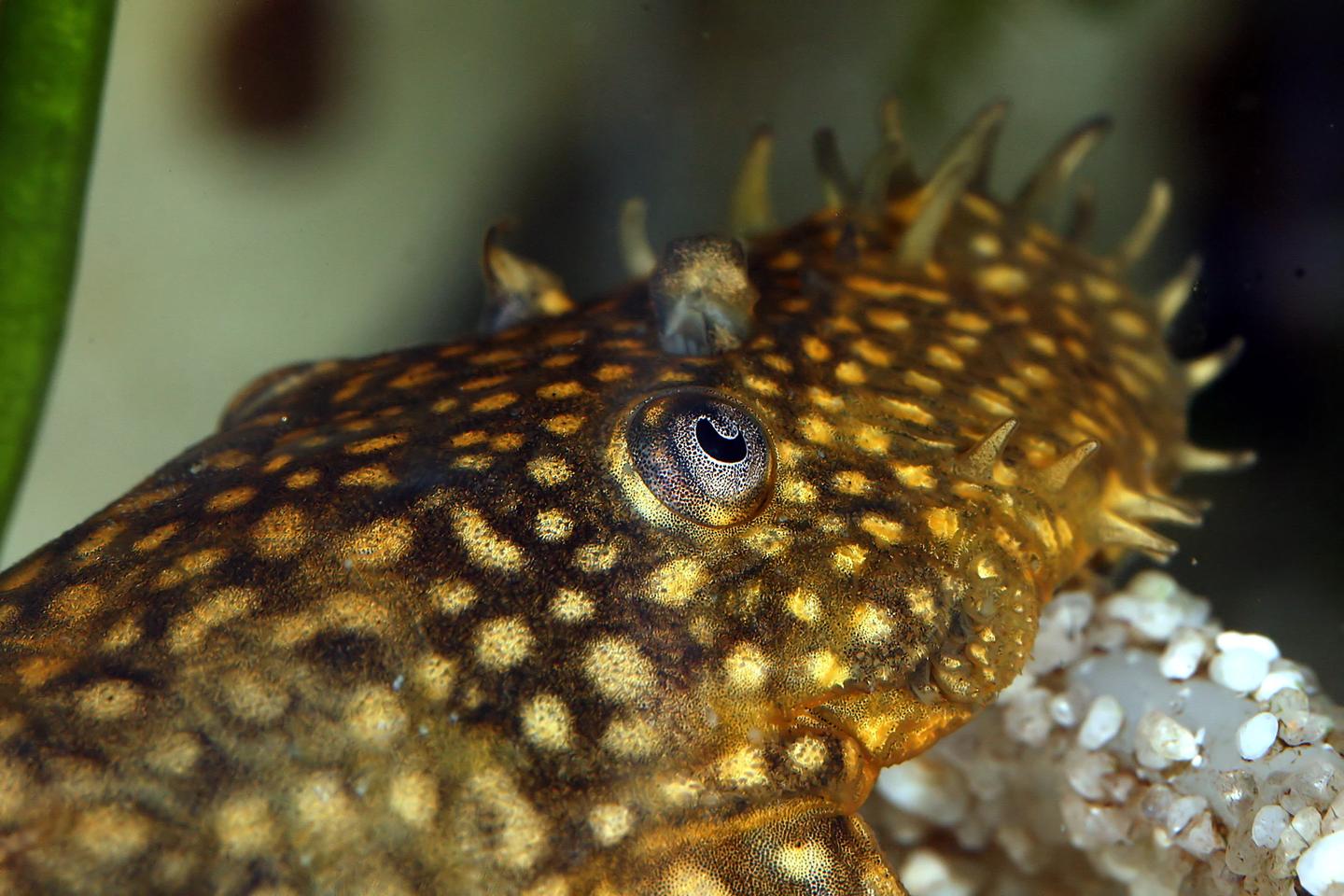
Specialist references describe a healthy L393 as orange-brown with fine dark reticulation, reddish-brown eyes and a potential pale tip on the upper caudal lobe in juveniles. The single current gallery image is a text-generated illustration of a generic pale-spotted bristlenose, so it is preserved but must not be used as an exact identification or colour reference. Plan care from the L393 identity, dispatch grade and evidence below rather than from that illustration.
Each quantity added to the basket represents one live L393 juvenile in the supplier's 3.5-4 cm grade. Quantity two means two unsexed juveniles; it does not create a compatible pair. Exact measured length varies within the commercial band, and a small fish may not yet show adult bristles, mature colour or established social behaviour.
| Product fact | Included | Not promised |
|---|---|---|
| Quantity | One juvenile per unit | A pair, trio or group |
| Dispatch size | Supplier grade of 3.5-4 cm | Adult size or exact millimetre measurement |
| Identity | Ancistrus sp. (L393) | A formal binomial species name |
| Sex | Unsexed juvenile | Male, female or future breeding role |
| Appearance | Natural individual and age variation | An exact match to the illustrative image |
The supplier's trade packing figure is not the retail quantity. The live buy box controls current price and stock; this description does not hardcode commerce values that may change. If a confirmed sex, lineage or same-fish photograph is essential, contact us before ordering rather than assuming it from a juvenile listing.
L-numbers are aquarium-trade identifiers used for loricariid catfish that have not been formally described or that need a stable hobby identity before taxonomy is resolved. L393 is not a SKU and it is not a complete scientific name. It is the essential identity code that separates this fish from common captive bristlenose strains and from other undescribed Ancistrus.
PlanetCatfish and specialist Ancistrus databases retain the fish as Ancistrus sp. (L393). The careful title therefore combines L393, Cheese Creek Bristlenose and Ancistrus sp. without inventing a species epithet. If a future formal description changes the accepted name, the L-number will remain useful for tracing older references and stock records.
Cheese Creek is the established English hobby name associated with L393. It appears in specialist databases and stock records, although the exact origin of the English phrase is less important than the L-number itself. Use the common name as a bridge for shoppers, not as a substitute for Ancistrus sp. (L393).
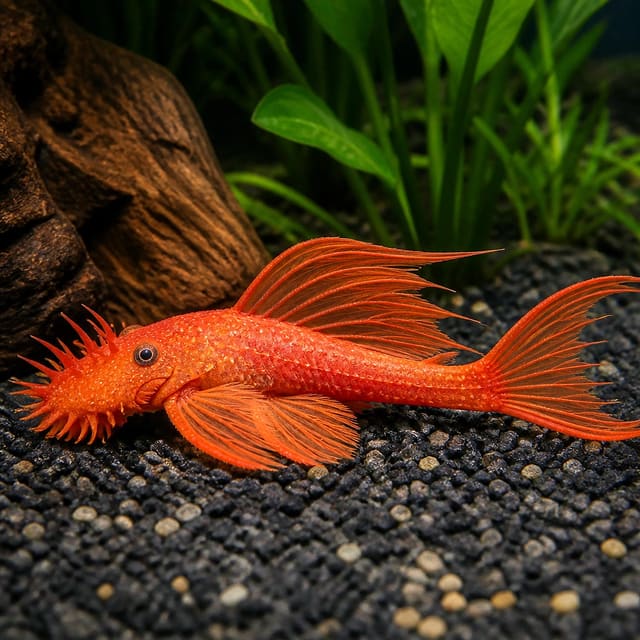
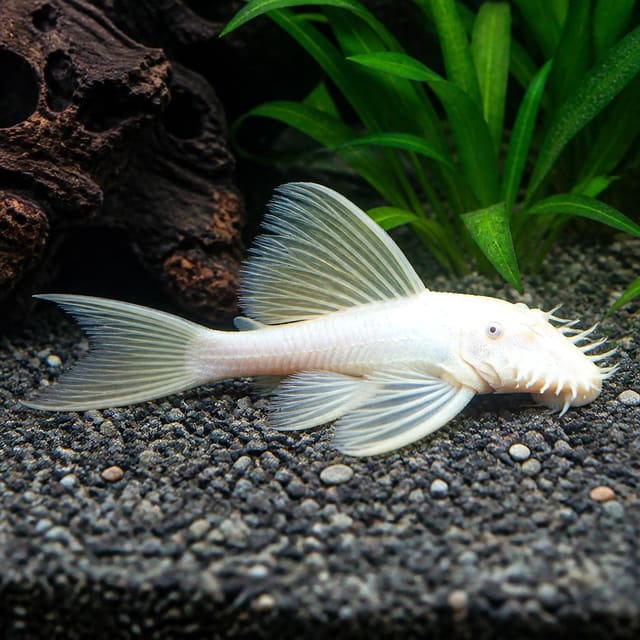
Generic terms such as pleco, bristlenose and algae eater cover many fishes with different sizes and diets. This is not a common bristlenose colour morph and should not be merged mentally with albino, super-red or long-fin strains. Its value lies in the distinct L393 lineage and reticulate adult presentation.
Specialist descriptions place mature size around 10-12 cm. Healthy fish can show an orange-brown ground colour with fine dark reticulation and reddish-brown eyes. Fright colour can reduce or blur the pattern, so a newly arrived juvenile may look paler or more uniform while settling. Juveniles may show a lighter marking at the upper caudal-fin tip.
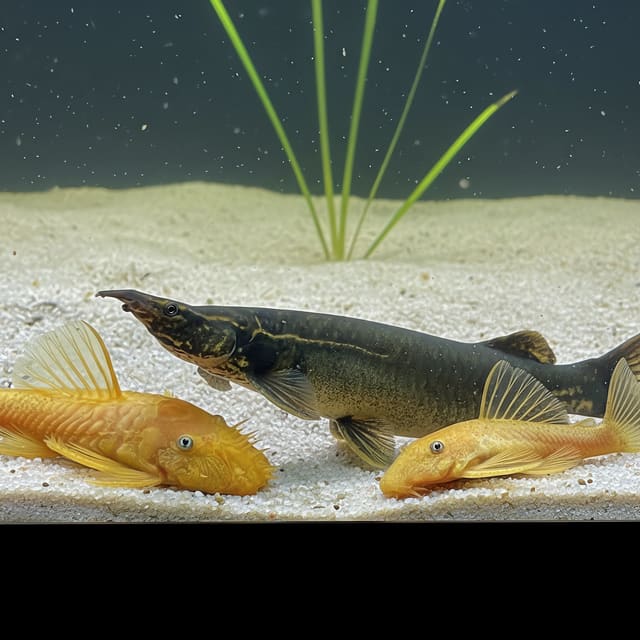
Adult males in the genus usually develop more extensive tentacles on the snout and head, while females tend to carry fewer and shorter tentacles near the margin. At 3.5-4 cm, sexing from bristles is unreliable. The original L393 presentation may also have included an adult male belonging to a different, plainer species, which is another reason not to promise sex or adult appearance from one juvenile image.
| Juvenile sale grade | 3.5-4 cm, immature and unsexed |
|---|---|
| Adult reference length | Approximately 10-12 cm |
| Healthy colour reference | Orange-brown with fine dark reticulation |
| Eye reference | Reddish-brown |
| Stress effect | Pattern can fade or become less distinct |
| Sexing limit | Juvenile bristle development does not guarantee sex |
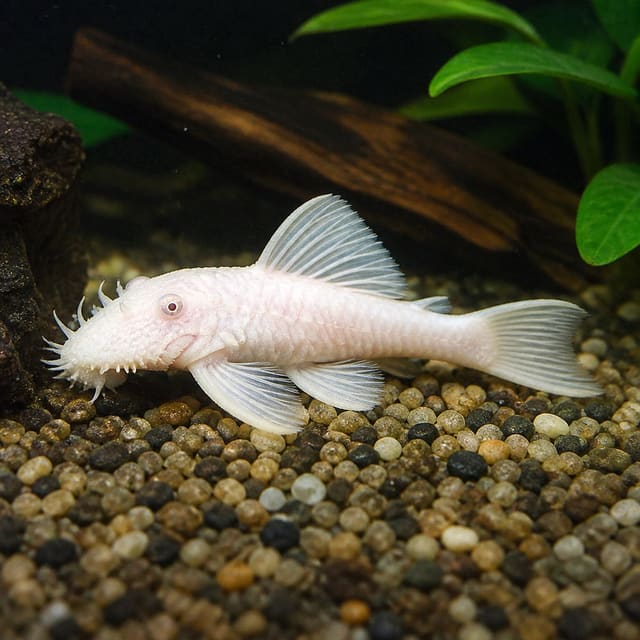
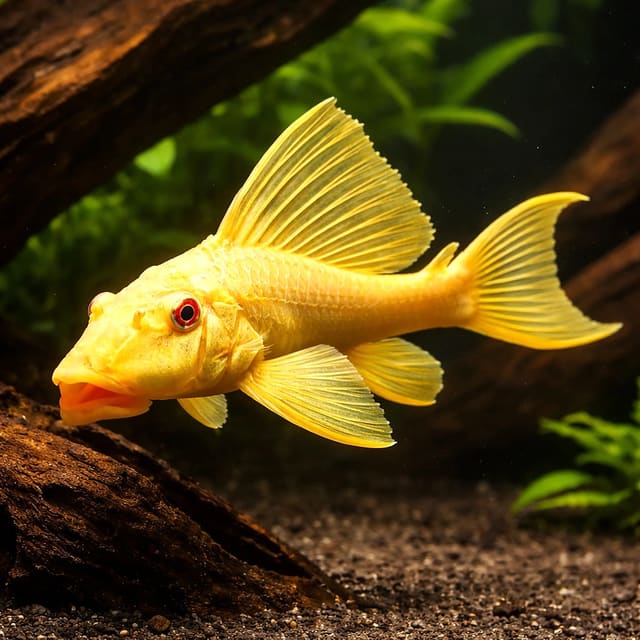
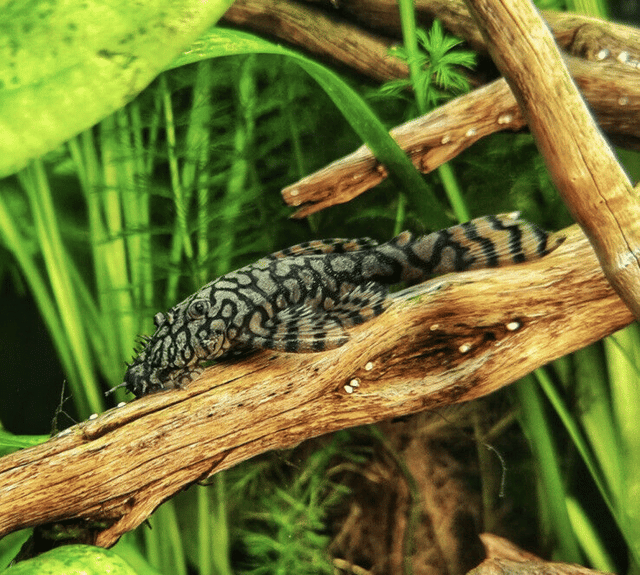
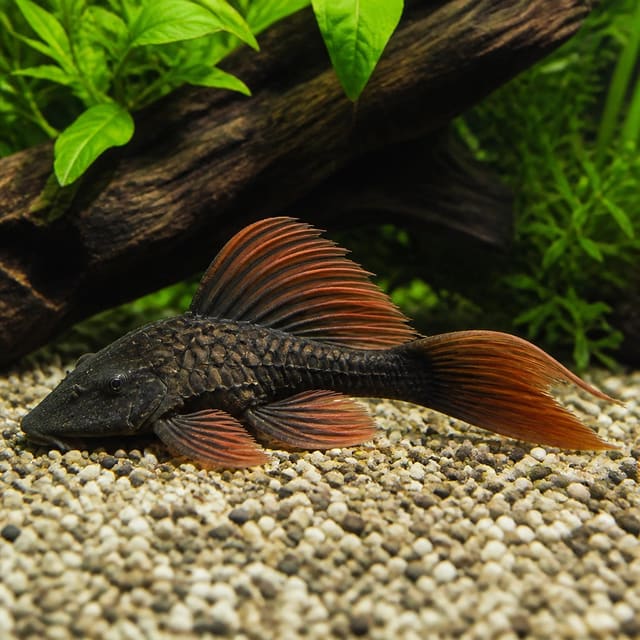
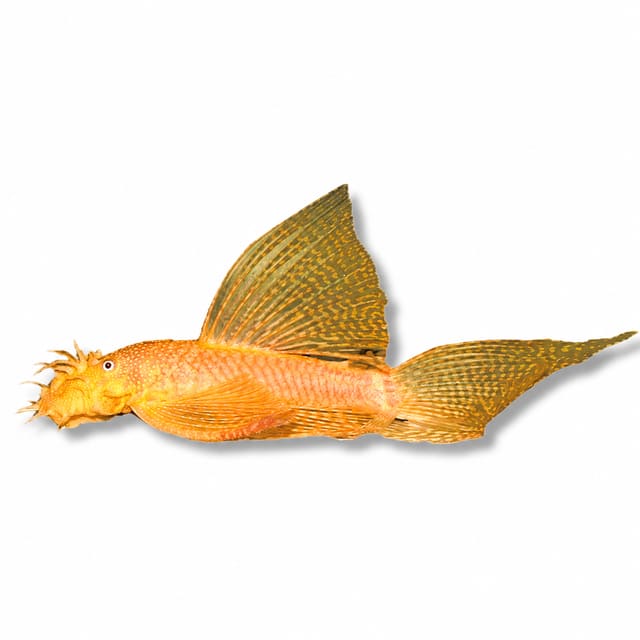
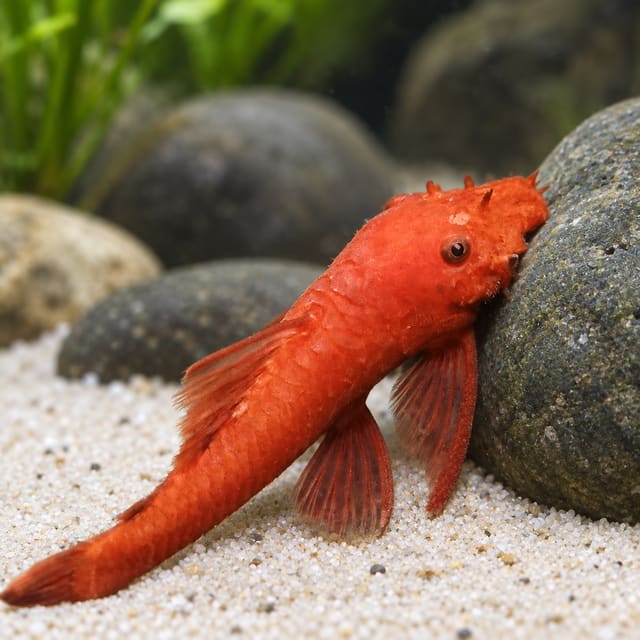
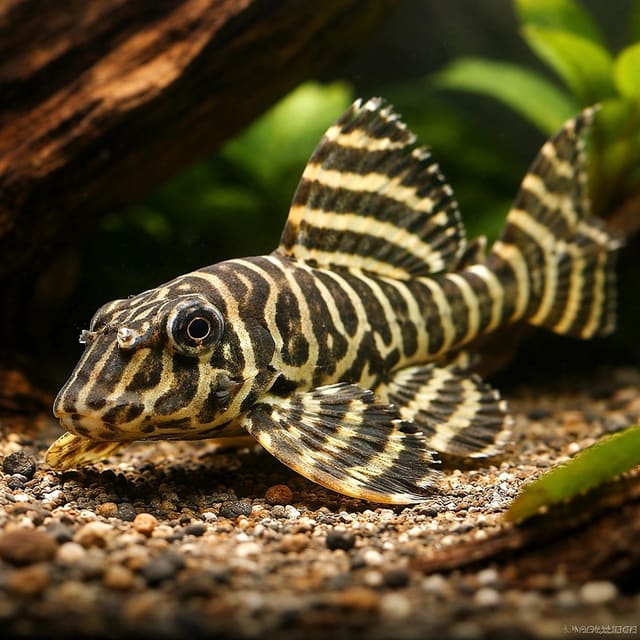
No product photograph is available for this listing. The current READY Shopify image was generated from text alone and shows a dark, heavily pale-spotted bristlenose on wood. It does not reliably show the specialist orange-brown, fine-reticulate L393 presentation. The image is retained to protect the existing gallery, but its alt and caption context must state that it is illustrative.
Do not use the image to sex the fish, confirm L393 pattern, judge the exact dispatched individual or compare body condition. Written identity limits remain authoritative until trustworthy product photography exists.
The gallery fish is a generic bristlenose illustration, not the exact L393 juvenile being sold. Natural colour, reticulation, bristle development and body shape may differ.
Specialist L-number references associate L393 with the Rio Madre de Dios drainage in Peru. That regional identity is useful for understanding a warm, oxygenated South American river fish. Our stock records do not state the collection locality of the individual, whether it is wild-caught, captive-bred or a particular filial generation.
Do not turn the regional reference into an unsupported provenance claim. Aquarium stock may descend from imported lines without the seller holding collection documentation. The page can responsibly say that L393 is associated with the Madre de Dios drainage while separately stating that this individual fish's source generation is not supplied.
Plan for roughly 10-12 cm rather than the old unsupported 15 cm figure. Even a compact loricariid needs more room than its body length suggests because it uses caves, wood and bottom territory. A 4 cm juvenile may look suitable for a small tank, but buying against sale size creates future crowding.
Growth depends on water quality, temperature, diet, genetics and competition. Do not force rapid growth with rich protein. A steadily growing fish with a rounded but not swollen abdomen, intact fins and reliable grazing behaviour is a better goal than maximum size in minimum time.
Specialist references recommend an aquarium at least 80 cm long. For one adult, roughly 100 litres or larger with a useful footprint is a cautious baseline. This is not a universal stocking licence: heavy wood, multiple bottom fish, breeding caves or high community load can require substantially more space and filtration.
Prioritise length and floor area over height. The fish needs access to food, shaded retreats and a route that does not force it through another bottom-dweller's cave territory. Count actual water volume after hardscape. A tall tank with a narrow base may have the right litre figure but poor territorial design.
| Planning factor | Why it matters | Better choice |
|---|---|---|
| Adult size | 10-12 cm fish needs more than juvenile space | Buy for adult footprint from the start |
| Tank length | Separates caves and feeding areas | At least 80 cm for one adult baseline |
| Wood and caves | Displace water and divide territory | Calculate finished volume and usable routes |
| Other bottom fish | Compete for floor, shelter and food | Increase footprint and cave count |
| Community bioload | Loricariids produce substantial waste | Size filtration for the complete stock |
Use 24-28 C and pH 6-8 as the practical L393 reference range. Ancistrus.at also gives conductivity below 450 uS/cm. Stable water within that envelope is more valuable than chasing one perfect number. Match current holding water gradually and avoid large changes in conductivity or temperature during acclimation and maintenance.
| Parameter | Working guide | Management priority |
|---|---|---|
| Temperature | 24-28 C | Stable and well oxygenated |
| pH | 6-8 | Avoid abrupt correction |
| Conductivity | Below 450 uS/cm specialist reference | Use trends and holding-water context |
| Ammonia | 0 | Any detectable result needs immediate action |
| Nitrite | 0 | Any detectable result is unsafe |
| Nitrate | Kept consistently low | Control through feeding, stocking and water changes |
Test source water before changing hardness or conductivity. Do not copy a breeding recipe into a general community without understanding it. A stable, clean aquarium near the middle of the range is safer than repeated chemical adjustments that create daily swings.
Loricariids benefit from strong biological filtration and good gas exchange. Use surface movement, clean mechanical media and enough circulation to prevent waste accumulating behind wood and under caves. Flow can be moderate rather than forceful at every shelter; the fish needs calm resting positions as well as oxygenated water.
Filter ratings are measured under ideal conditions and fall as media loads. Judge performance from water tests, debris accumulation and fish respiration. A mature pre-filter sponge can protect a juvenile from strong intakes and add grazing surface. Keep emergency aeration available for warm weather or power interruptions.
Fine sand or smooth rounded gravel protects the abdomen, mouth and fins while the fish rests and feeds. Avoid sharp crushed substrate under caves. Leave enough open substrate to inspect waste and body condition; a completely sealed maze of wood can hide problems until they become serious.
Secure rocks and wood before adding the fish. A heavy piece should not shift if the Ancistrus pushes underneath. Create routes around hardscape rather than dead ends where a fish can be trapped by a territorial neighbour.
Driftwood is useful because it creates shaded structure and matures into a biofilm-rich surface. L393 may rasp the wood and surrounding growth, but that does not prove it depends nutritionally on wood in the same way as specialised wood-eating loricariids. Provide wood as habitat, not as a substitute for complete food.
Use aquarium-safe pieces that cannot collapse or trap the fish. Arrange at least one route behind or under the wood without forcing every bottom fish into the same opening. Boil or soak new pieces as appropriate and monitor any major change in water colour or chemistry.
Provide at least two snug retreats for one fish, with additional caves for every other similar bottom-dweller. A cave should be large enough for entry and turning but close enough to provide security. Different orientations help the fish choose flow, light and privacy.
Adult males can guard a preferred cave, especially in breeding condition. A generally peaceful fish can still exclude another pleco from shelter or food. Spread caves across the footprint with broken sight lines instead of stacking them in one contested corner.
The biological filter must process ammonia before livestock arrives. Confirm zero ammonia and nitrite with reliable tests; clear water alone does not prove readiness. A mature aquarium also offers seasoned wood, microbial films and stable feeding surfaces that help a small Ancistrus settle.
Do not use the juvenile as an algae solution for a new tank. If the aquarium has not completed its cycle or the keeper cannot explain its test results, delay the order. The aquarium care planner can organise testing and maintenance, but it cannot replace interpretation.
L393 is a grazing omnivore with a plant-led aquarium diet. Biofilm, soft algae and organic material are part of natural foraging, but the fish still needs complete prepared food. Use a quality sinking loricariid staple with meaningful plant ingredients, supplemented with suitable vegetables and measured protein.
This is not a strict herbivore and not a carnivorous Hypancistrus-style feeder. Too much rich animal food can unbalance the diet and pollute the tank; algae alone can leave the fish undernourished once easy surfaces are clean. Feed for body condition, growth and waste control rather than using a slogan.
Offer food after lights dim or near an occupied shelter. Use a small sinking wafer or pellet portion, then confirm the juvenile reaches it. Midwater fish and other catfish can remove food before a shy pleco emerges. Spread feeding points when there is competition.
| Food role | Practical choice | Limit |
|---|---|---|
| Staple | Complete sinking loricariid food with plant ingredients | Use a portion the fish can reach and finish |
| Vegetable variety | Small softened courgette, pumpkin or green bean portion | Remove before it fouls |
| Natural grazing | Mature wood, stone and biofilm | Not a complete diet |
| Protein variety | Small species-appropriate sinking or frozen portion | Occasional and measured, not the daily base |
| Avoid | Large rotting vegetables and uncontrolled rich food | Prevents waste and digestive imbalance |
There is no universal “one wafer” dose because wafer diameters, energy density and tank competition vary. A healthy juvenile should have a gently rounded abdomen, not a pinched or distended one. Remove leftovers and adjust the next portion from what actually happened.
The fish may graze soft algae and biofilm, but it cannot guarantee removal of hair algae, black beard algae, cyanobacteria or every film on the glass. It also cannot correct excess light, nutrient imbalance or overfeeding. Buying an L393 solely as a cleaning tool undervalues the fish and risks starvation when algae changes.
Choose it because you want a specific Cheese Creek Bristlenose and are prepared to feed it. Use manual cleaning and husbandry for algae management. Browse the bristlenose pleco collection to compare stock, but no listed fish replaces maintenance.
A well-fed L393 can work in a planted aquarium. Tough rooted plants and epiphytes attached to wood usually suit the layout. A hungry fish may rasp soft, damaged or decaying leaves, so perfect plant safety should not be guaranteed. Protect delicate aquascapes through adequate feeding and observation.
Leave gaps around roots and hardscape where waste can be siphoned. Dense planting can improve security but should not block all bottom routes or hide the fish completely during health checks. Avoid pesticide-contaminated plants and treatments unsafe for catfish.
L393 is generally peaceful and spends much of its time attached to wood, stone, glass or a cave entrance. A juvenile may hide after transport and become more visible at dusk. With stable conditions and several shelters, some individuals learn to feed openly during the day.
Peaceful does not mean non-territorial. The fish can defend a preferred cave from another pleco. Short displays and displacement may be manageable; repeated trapping, torn fins, loss of food access or a fish confined to one corner requires intervention.
Choose peaceful midwater fish with overlapping 24-28 C, pH 6-8 requirements. Small tetras, rasboras and other calm community fish can work when their adult size and temperament are suitable. Bottom-dwelling companions need extra scrutiny because they compete for the same caves, floor area and sinking food.
Avoid large predators, highly aggressive cichlids and fish that repeatedly bite fins or invade caves. Do not mix fish simply because shops group them as algae grazers: otocinclus and different plecos have different social, space and dietary needs. Compatibility is an aquarium-level decision, not a product-category shortcut.
| Companion type | Starting assessment | What to verify |
|---|---|---|
| Peaceful midwater fish | Often suitable | Water, adult size and feeding speed |
| Corydoras | Possible in a larger footprint | Floor space and sinking-food access |
| Other Ancistrus | Caution | Cave count, sex and territorial behaviour |
| Large aggressive cichlids | Avoid | Injury and water mismatch |
| Very small shrimp young | Uncertain | Any bottom-feeding fish may investigate edible young |
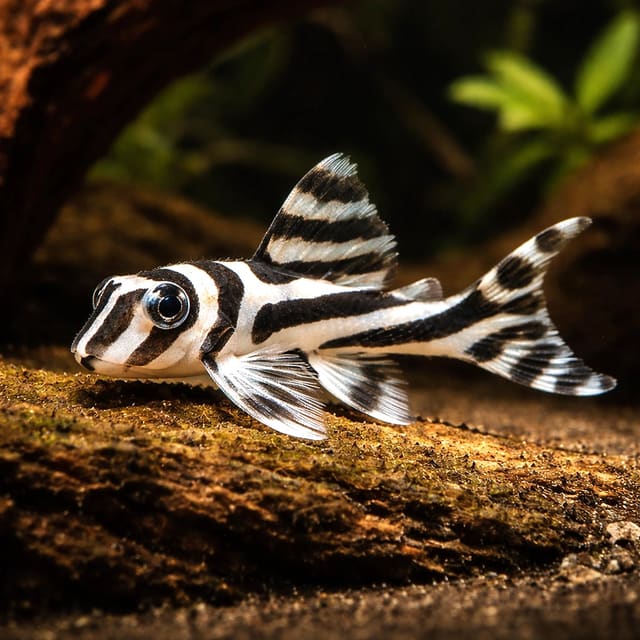
Related products are comparisons rather than automatic companions. L59 Yellow Spot Ancistrus and Super Red Long Fin Bristlenose share the genus but can compete directly. L333 Hypancistrus and L134 Peckoltia have different feeding and territorial requirements.
One L393 can be kept alone and does not need a shoal. More than one can work in a larger, carefully structured aquarium, but order quantity cannot control sex. Two juveniles may mature into territorial males, and a supposed pair can still be incompatible.
Provide more caves than fish, spread feeding points and keep a divider, spare mature aquarium or rehoming plan. Do not wait for a subordinate fish to become thin or injured before acting. Mixed-line breeding also creates identity problems if similar Ancistrus are kept together.
Adult Ancistrus males usually develop more extensive head tentacles, while females tend to carry shorter growth around the snout edge. Juveniles in this sale grade may not show dependable differences. Body shape and early bristles are not a guarantee.
If confirmed sex is required, ask about the current stock before ordering; availability may still make selection impossible. Do not buy two small fish and advertise them later as a pair without observing mature sex and compatible behaviour.
Ancistrus are cave spawners, with a male typically guarding eggs and young in a chosen cavity. That genus-level behaviour does not make every L393 juvenile easy to breed. The product is unsexed, and the supplier gives no pair or generation information.
Successful breeding needs mature compatible adults, appropriate caves, excellent water, deliberate conditioning and a plan for juveniles. Preserve L393 identity by avoiding crosses with common or other L-number Ancistrus. Fry from uncertain parentage should not be sold as pure Cheese Creek stock.
A settled juvenile should attach strongly, breathe steadily, move between shelters and show a feeding response. The abdomen should not be pinched or swollen. Fins should be intact and eyes clear. Colour alone is not a health test because stress can fade the reticulate pattern.
| Sign | Possible causes | First response |
|---|---|---|
| Rapid breathing | Low oxygen, ammonia, nitrite, gill irritation or illness | Test water and increase safe aeration |
| Pinched abdomen | Food competition, poor intake or disease | Observe direct feeding and seek diagnosis |
| Constant cave exclusion | Territorial pressure | Add separation and redesign territories |
| Faded pattern | Stress colour, environment or illness | Check the complete behaviour and water picture |
| Frayed fins or sores | Conflict, abrasion or infection | Remove the cause and obtain specialist advice |
Do not medicate from one symptom. Scaleless and loricariid catfish can react differently to treatments. Check active ingredients, dose only with appropriate advice and fix environmental causes alongside any treatment.
A separate cycled aquarium lets you confirm feeding, faeces, respiration and skin condition without exposing an established collection. Match temperature and chemistry, use dedicated equipment and provide a proper shelter rather than a bare stressful box.
The length should follow your established biosecurity plan and any professional advice. Do not automatically medicate every new fish. Observation and water quality come first, with targeted treatment only when justified.
Finish and test the aquarium before dispatch. Make sure somebody can receive the parcel and review the current live-fish delivery information. Delivery days, postcode coverage and guarantee evidence requirements can change, so the live policy is authoritative.
Eligible orders are covered by the published Live Arrival Guarantee when its conditions are followed. Open and inspect the parcel promptly, document any concern exactly as required and keep the fish away from extreme room temperatures during preparation.
Follow the supplied instructions and use the acclimation timer to keep the process deliberate. Compare bag and aquarium conditions and avoid an unnecessarily long procedure. Do not add shipping water to the display unless the supplied method requires it.
Release the juvenile near a sheltered surface with lights low. It may hide initially. Offer a small sinking food portion after it has settled, placing it where the fish can feed without crossing a dominant tank mate's territory.
Use regular water changes sized to actual nitrate and waste production. Match replacement temperature and chemistry, use dechlorinator correctly and siphon food debris under wood and around caves. Avoid dismantling every shelter and filter component at once.
Keep a log of temperature, pH, conductivity where relevant, ammonia, nitrite, nitrate and feeding response. Record growth and body condition with occasional photographs. Trends reveal gradual decline more reliably than memory.
| Feature | L393 Cheese Creek | Common colour-form Ancistrus | Hypancistrus or Peckoltia L-number |
|---|---|---|---|
| Identity | Undescribed Ancistrus with L393 code | Often captive colour/fin strain | Different genus and feeding ecology |
| Adult reference | Approximately 10-12 cm | Varies by line | Varies by L-number |
| Diet | Plant-led grazing omnivore | Often broadly similar Ancistrus diet | May require more protein or another balance |
| Appearance | Orange-brown, fine dark reticulation | Albino, red, long-fin or common patterns | Species-specific bands, spots or lines |
| Breeding records | Keep lineage pure and labelled L393 | Strain identity may be more flexible | Never assume Ancistrus breeding behaviour |
Choose L393 when the Cheese Creek lineage matters to you and you accept that the sale fish is a small unsexed juvenile. Choose a common captive strain when colour or fin type is the main goal. Choose another L-number only after researching its adult size, diet and territorial needs separately.
A small juvenile needs the same long-term water quality as an adult but can be less confident at feeding time and more vulnerable to strong intakes, large tank mates and inaccessible food. Use a protected filter intake, narrow juvenile-appropriate shelter and a feeding position you can observe. Do not put the fish into a tiny temporary aquarium simply because it arrives small; stable adult-scale water volume is an advantage from the start.
As the body fills out, review cave dimensions, food particle size and territorial pressure. A shelter that is secure at 4 cm may become too tight, while an oversized open cave may never feel safe to the juvenile. Replace or add caves gradually without removing every familiar refuge in one maintenance session. Continue checking that the abdomen remains gently rounded and that new fin growth is clean.
Adult bristle development may clarify sex, but colour and pattern can also change with maturity, mood and background. Keep dated photographs under similar lighting rather than relying on memory. Those records help distinguish normal maturation from chronic fading, weight loss or fin damage, and they provide better lineage evidence than a generic product illustration.
During the first evening, the juvenile may stay attached inside a cave or behind wood and show little interest in food. Keep lights low and resist moving the shelter. By the next few nights, look for changed grazing marks, waste and a missing measured food portion as indirect evidence of activity. A red torch or dim room lighting can help observation without forcing the fish into bright display light.
Within the first week, confirm direct feeding at least once and inspect breathing, abdomen and fins. Persistent hiding by itself is not proof of illness, but hiding combined with rapid respiration, a pinched belly or cave exclusion needs action. Test water before adding medication. If another fish is guarding the only food route, change the social layout rather than simply adding more food that will decay.
Over the following weeks, activity should become predictable. Some individuals remain crepuscular throughout life; that is compatible with good welfare when they feed and maintain condition. The goal is not to train the fish to sit in the open for photographs. A secure animal that chooses cover can be healthier than a stressed one exposed because the aquarium lacks shelter.
The first mistake is buying the word pleco rather than the exact identity. Common plecos, Panaque, Hypancistrus, Peckoltia and Ancistrus can differ greatly in adult size and food. Keep the L393 code in your records and do not replace its care with advice for whichever spotted catfish appears first in search.
The second mistake is counting on algae as the diet. A new aquarium may have visible brown film but poor biological maturity, while an established clean tank may offer little natural forage. Complete food is required in both situations. The third mistake is adding several bottom fish because the midwater looks empty. Floor territory, not open upper water, determines whether caves and feeding points are crowded.
Another common error is assuming two juveniles will become a pair. Sex is not guaranteed, and mature males can contest caves. Finally, avoid changing the public handle or stripping the L-number for a broader keyword. This product already ranks for its exact niche identity; clearer content should strengthen that relevance without sacrificing route continuity or turning an undescribed fish into a generic algae eater.
Tropical Fish Co presents this animal under its recognised L393 and Cheese Creek Bristlenose identity, with Ancistrus sp. retained wherever the species is unresolved. The dispatch grade, retail quantity, image limitation and source-based care range are stated plainly so you can compare the fish with the aquarium you actually maintain.
The buy box shows current live price and stock for one juvenile. Eligible orders receive the published Live Arrival Guarantee, and first-time customers can check current WELCOME10 terms for 10% off an eligible first order. Checkout and policy pages control eligibility.
Product quantity and 3.5-4 cm dispatch grade come from our stock records. Identity, appearance, adult size, water and locality context come from specialist L-number references. The page keeps those facts separate from individual origin and sex claims that the supplier does not support.
Sources support a trade identity and care envelope, not a formal species name, confirmed generation or guarantee that a juvenile will match one reference photograph. Those limits are part of accurate L-number retailing.
One live juvenile is included per unit. Quantity two gives two unsexed fish, not a breeding pair.
The supplier dispatch grade is 3.5-4 cm. Exact length varies naturally within that band.
No. It is an L-number identity for an undescribed Ancistrus. The correct current listing is Ancistrus sp. (L393).
It is the established hobby common name for L393, not a separate formal species.
Specialist references associate it with the Rio Madre de Dios drainage in Peru. The supplier does not state the individual fish's collection locality or generation.
Specialist references give approximately 10-12 cm. Plan the aquarium for adult size, not the 3.5-4 cm sale grade.
Use an aquarium at least 80 cm long and roughly 100 litres or larger as a cautious one-adult baseline. Multiple bottom fish can require more.
A practical reference is 24-28 C, pH 6-8 and conductivity below 450 uS/cm, with zero ammonia and nitrite.
No. It grazes biofilm and some soft algae but needs complete food and does not replace aquarium maintenance.
Use a complete sinking loricariid staple with plant ingredients, suitable vegetables, natural grazing surfaces and measured protein variety.
Wood is strongly useful as shelter and a grazing surface. It does not replace a complete diet or prove that this species must digest wood.
Potentially, in a larger aquarium with separate caves and feeding points. Similar bottom fish can become territorial and compete for food.
No. At 3.5-4 cm the fish is sold unsexed, and juvenile bristle development is not a guarantee.
No. It is a text-generated generic bristlenose illustration, not the dispatched juvenile or a reliable L393 identification photo.
Ancistrus are cave spawners, but breeding needs mature compatible adults and suitable conditions. This product is not a pair or breeding guarantee.
Eligible orders are covered by the Live Arrival Guarantee when the current delivery and evidence requirements are followed.
No reviews for this item yet. Bought one? Honest reviews only, good or bad.
What customers say about ordering from us
I have a small group of long finned mountain minnows. So was delighted to be able to order ten of this variety to increase the genetics in my tank . The ones I recieved are healthy but it’s to early to give a verdict on wether they are of a long finned type since they are small currently.
Gordon Walker · 23 Sept 2026
100% success travel and "installation". Pleased with quality of purchase. The Siamese fighter a bit "shy" so have not yet seen him at his best yet but looking good. Happy customer. GG
George E Garratt · 21 Sept 2026
Reviews of our shop, collected by Judge.me, an independent third-party review collector. Newest first.