
Honey Gourami Care Guide

Start with a mature, filtered aquarium at least 60 cm long. Published size records disagree, and broad group guidance is not Honey-Gourami-specific, so verify Trichogaster chuna, the seller's adult-size advice and any claimed sexes before choosing one fish or a group.
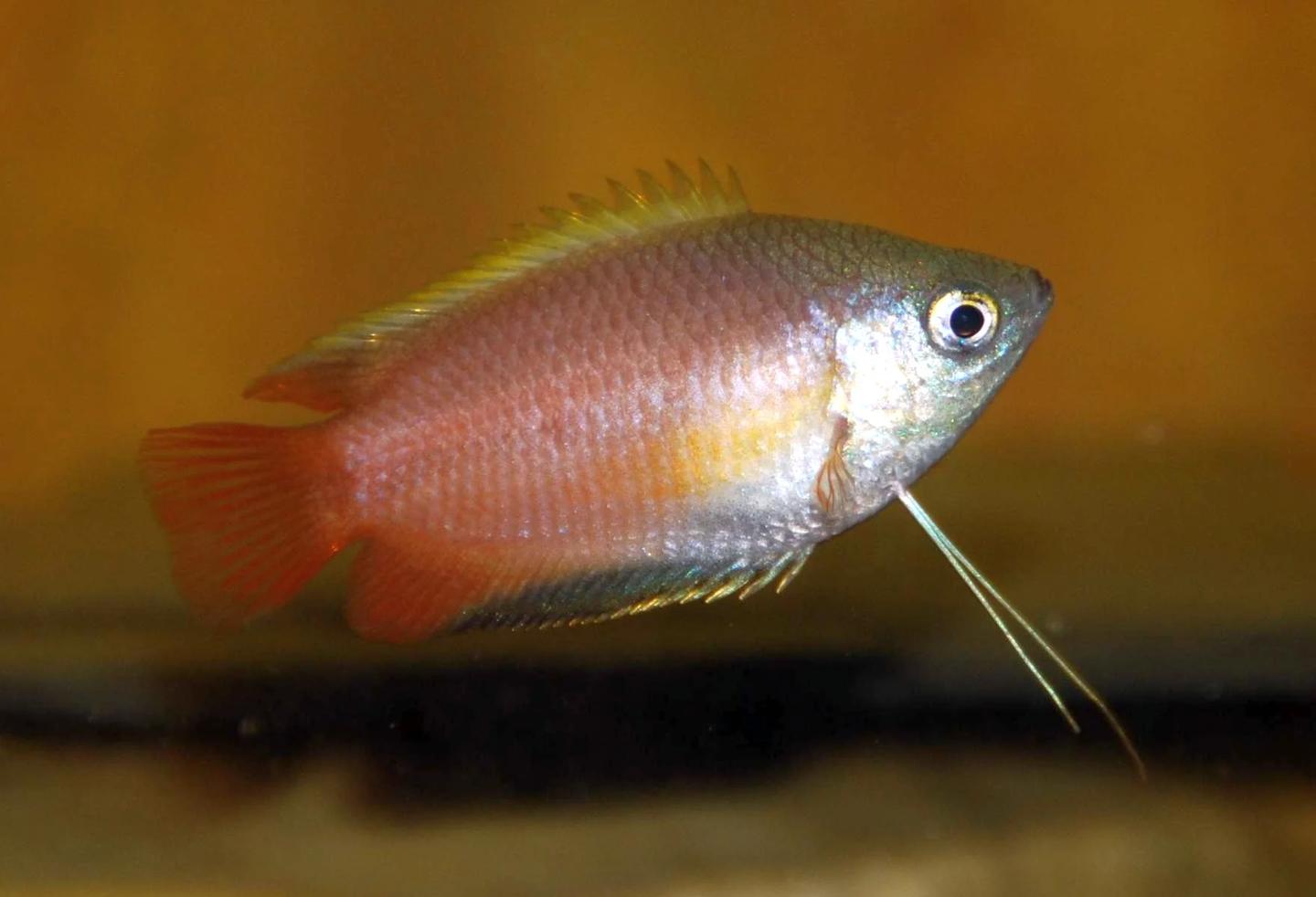
In a laboratory study, Honey Gouramis learned to associate a novel sound from another gourami species with a chemical alarm cue; when the sound was replayed later, the conditioned fish froze.
Read the peer-reviewed Honey Gourami behaviour studyFishBase compiles 22-28°C, pH 6-8, 5-19 dGH and a 60 cm aquarium-length minimum. OATA's broader guidance for gouramis is not a Honey-Gourami-specific trial. The page therefore avoids a universal litre or group claim and asks keepers to verify identity, seller water, claimed sexes and the whole adult community.
Live stock
Gouramis & Labyrinth Fish for sale — see live stock & today’s prices
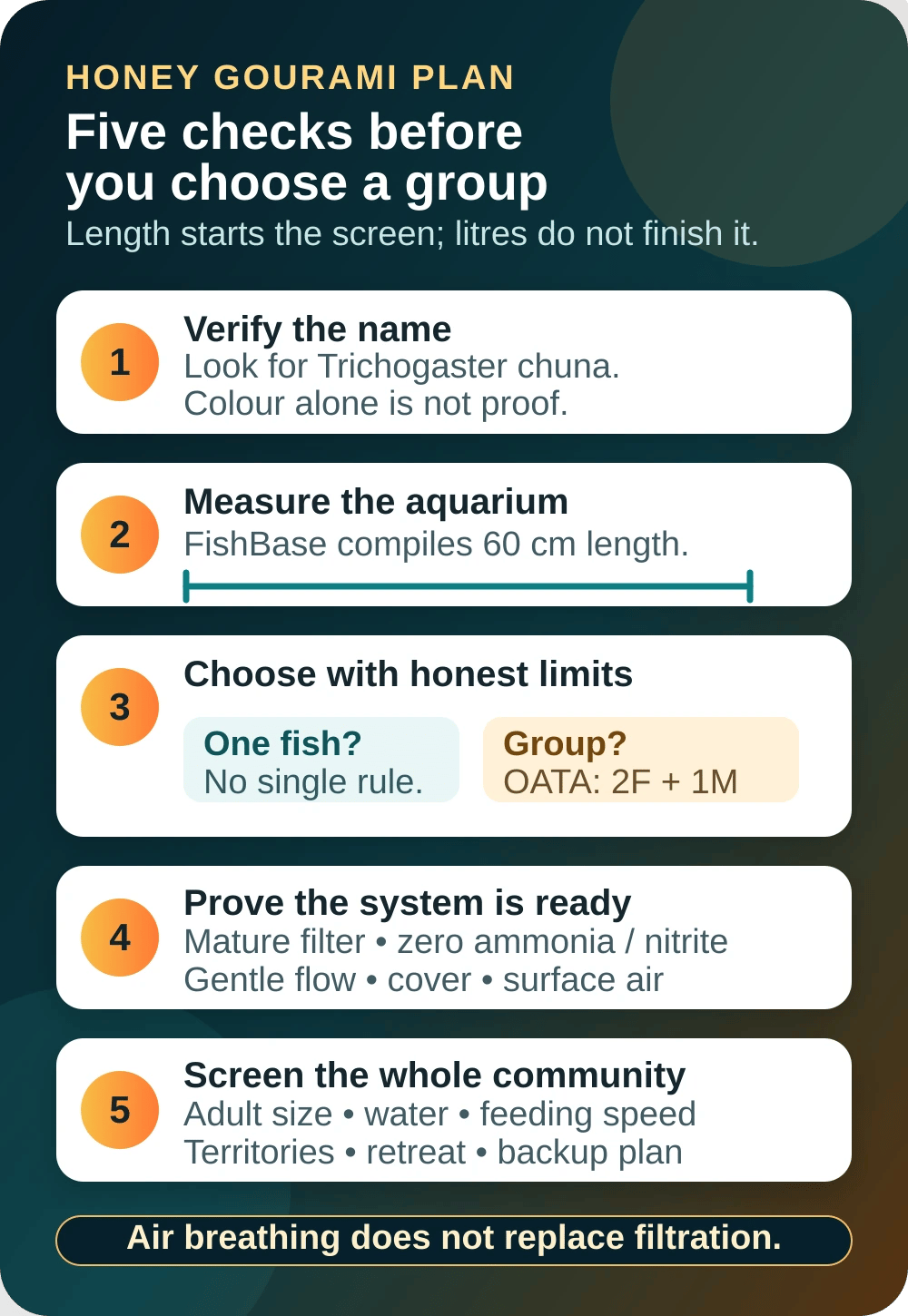
The practical starting answer is: use a mature, filtered aquarium at least 60 cm long, verify that the fish is Trichogaster chuna, and choose the social arrangement only after checking the claimed sexes, usable water, cover, territories and every adult tank mate. FishBase compiles the 60 cm length; it does not provide a Honey-Gourami-specific group minimum[3].
OATA's broader guidance for gouramis suggests at least three fish with two females for each male. That is useful UK planning context, but it is not a controlled T. chuna trial and cannot make a trio safe in every aquarium[7]. The evidence selected for this guide also does not prove that one Honey Gourami is always ideal or always harmful.
If you are ready to shop rather than research, use the separate Gouramis and Labyrinth Fish shop hub. This care guide does not imply that a photographed colour form, a particular sex or any pack size is currently available.
- Identity: ask for Trichogaster chuna, not only “honey”, “gold”, “red” or “sunset”
- Tank: start at 60 cm long; litres alone do not settle suitability
- Group: OATA's broad screen is 2 females to 1 male, but sexing and territory must be checked
- Water: stable, tested and matched gradually to the source fish
- System: mature filter, zero ammonia, zero nitrite, gentle current, cover and surface-air access
A small fish that can learn a warning sound
Honey Gouramis are not simply decorative “centrepiece” fish. In a laboratory study, researchers paired a chemical alarm cue from the species with a vocalisation from another gourami. When that sound was replayed later without the chemical cue, conditioned fish froze, while controls did not[1].
That is evidence of learned risk association in the study setting—not proof that a filter hum, television or normal room sound is harmful. It does support a more careful way to read behaviour: a sudden change in activity can be meaningful, but it never diagnoses the cause on its own.
Name, range and trade identity
The current Catalog of Fishes accepts Trichogaster chuna (Hamilton, 1822) in Osphronemidae, subfamily Trichogastrinae. It records South Asian distribution in India, Nepal and Bangladesh and a type locality at Goalpara, Assam[2]. Older sources and image labels may use Colisa chuna; the Catalog also treats sota as a synonym.
Retail colour words are not taxonomic names. “Sunset”, “red”, “gold” or “honey dwarf gourami” can be applied inconsistently, and colour may vary with sex, age, condition, lighting and captive line. A genetics paper established that colouration in Honey Gourami has a studied sex-limited component, but it does not turn one colour cue into a universal sexing test[5].
Before buying, ask the seller to put the scientific name and expected adult size in writing. Use several visible characters and provenance together. A product title or bright photograph cannot prove species, sex, health or adult size.
Honey Gourami tank size: why 60 cm matters
FishBase compiles 60 cm as the minimum aquarium size for T. chuna; the entry is a tank length, not a litre figure[3]. The old version of this page converted the decision into fixed single, pair and group litre rules without adequate species evidence. Those rules have been removed.
Measure in this order:
- Confirm the aquarium's internal length is at least 60 cm.
- Calculate real usable water after substrate, wood, rock and the air gap.
- Prove the biological filter is mature for the planned load.
- Choose one fish or a social group only after verifying likely sexes and retreat space.
- Add every adult tank mate and its group requirement to the plan.
OATA broadly suggests at least 45 litres for a small group of smaller gouramis, while the RSPCA explains that larger volumes are generally more stable and that footprint, surface area, filtration and maintenance all affect water quality[7][8]. Neither source makes “45 litres” a species-specific permission slip. A short nominal 45-litre tank and a longer lightly stocked aquarium are not equivalent.
Common planning mistake: using a litre label before checking length, identity and the whole community. Start with the documented 60 cm footprint, then use actual dimensions, usable volume, filter capacity, territory and adult stocking to decide whether the aquarium needs to be larger.
Stocking Calculator
Check if your tank can support this species at a healthy bioload.
Open tool →One Honey Gourami, a pair or a group?
There is no controlled Honey-Gourami-specific group minimum in the selected sources. OATA gives broad gourami guidance: keep at least three, using two females for each male to reduce pressure on females or other inhabitants[7]. Treat that as a starting question for the seller, not a guarantee.
| Choice | What the evidence supports | What still has to be checked |
|---|---|---|
| One fish | The selected sources do not prove solitary housing is always harmful or ideal | Full tank footprint, enrichment, normal feeding and behaviour over time |
| A pair | No selected source proves a pair is automatically the safest arrangement | Reliable sexing, persistent courtship or chasing, retreat space and separation plan |
| A small group | OATA broadly suggests three with two females per male | Species identity, sex accuracy, tank larger than the starting screen, territories and total load |
| Multiple males | Male bubble-nest guarding creates a foreseeable territorial context | Substantial space, broken sight lines, close observation and a ready separation option |
Do not keep more fish simply to hit a number if the aquarium cannot support them. Do not buy a “pair” unless the seller explains how sex was determined and what happens if the identification is wrong. Whatever arrangement you choose, persistent chasing, exclusion from food or a fish confined to one corner means the plan must change.
Adult size: the published numbers disagree
This is the most important uncertainty the old page hid. FishBase currently lists a maximum of 13.7 cm total length, tied to a cited length-weight reference[3]. A controlled aquaculture study, however, reported broodfish after raising at about 47.5 mm for males and 49.11 mm for females[4].
Those figures are not interchangeable: one is a database maximum total-length record and the other describes broodfish in a particular study. The disagreement could reflect different samples, measurement contexts or an identity problem; this page does not pretend to resolve it. It does mean that the familiar “always 5 cm” line is too confident.
Ask the retailer:
- Is the fish confirmed as Trichogaster chuna?
- What is its current length and measurement method?
- What adult length is expected for this exact source line?
- Could the product be a thick-lipped or other gourami sold under a colour name?
Plan the aquarium from the 60 cm species screen and the complete community, not by squeezing a marketing maximum into a fish-per-litre formula.
Water, temperature and UK tap-water decisions
FishBase compiles 22-28°C, pH 6-8 and 5-19 dGH for T. chuna[3]. OATA's broader gourami guidance gives 20-28°C, pH 6-8, 4-12 dGH and 3-10 dKH, while explicitly telling keepers to check species-specific requirements[7].
| Evidence | Temperature | pH | General hardness | How to use it |
|---|---|---|---|---|
| FishBase species profile | 22-28°C | 6-8 | 5-19 dGH | Species compilation, not a tolerance experiment |
| OATA gourami guidance | 20-28°C | 6-8 | 4-12 dGH | UK group guidance, not specific to every T. chuna line |
| Your source fish and aquarium | measured | measured | measured | Compare before any gradual change |
Do not force a fish rapidly from the seller's water to a preferred number. Ask for the current holding temperature and, where possible, pH and hardness; test your source water and aquarium; then favour a stable shared band for every species.
UK water hardness varies with geology and supply. The Drinking Water Inspectorate points consumers to their local supplier for source-water information, but that report is not the result inside an aquarium[10]. A domestic ion-exchange softener also does not automatically create suitable aquarium water, and this guide does not prescribe a fixed tap-to-RO ratio[11]. Use our water chemistry guide to interpret pH, GH and KH without treating one UK region as uniform.
Do they need a heater in the UK?
They need stable water in the appropriate shared range. Because many UK rooms cannot hold that range all year, a thermostatic aquarium heater and a separate thermometer are normally the dependable setup. Follow the equipment maker's sizing and placement instructions and measure the water rather than guessing from room temperature[8].
Water Parameter Matcher
Enter your tap water readings to see if this species will thrive.
Open tool →Filtration, air breathing, cover and flow
FishBase describes T. chuna as a facultative air-breather and records pools, ditches, inundated fields, ponds, beels, rivers and vegetated lakes[3]. Air breathing is normal for a gourami—but it does not make dirty, unfiltered or poorly oxygenated water acceptable.
OATA states this boundary directly: the labyrinth organ allows atmospheric breathing, yet gouramis do not require less care than other fish. Its guidance still requires a filter, zero ammonia, zero nitrite, cover, a gentle current for smaller species and access to air above the surface[7].
Build the layout around functions rather than decorative rules:
- keep an open route to the surface;
- provide planted or inert cover and visual breaks;
- leave usable horizontal swimming and feeding space;
- diffuse a strong filter return without stopping oxygen exchange;
- use a secure, ventilated cover appropriate to the equipment;
- avoid sharp decor around the elongated sensory pelvic-fin rays.
Floating plants can provide shade and structure, but no selected source makes one plant species mandatory. Keep enough open surface for breathing and gas exchange. Likewise, dark substrate, tannins and a particular light level are design choices—not guaranteed ways to create colour or cure hiding.
The aquarium is ready when its biological filtration is established for the planned load and tests show zero ammonia and zero nitrite. A fixed number of elapsed weeks is not proof. The RSPCA recommends fishless cycling; our first tropical tank guide explains the broader planning sequence[8].
Feeding: complete food first
OATA describes gouramis broadly as omnivorous and recommends a good-quality flake, granule or pellet, with small live or frozen foods as variety. It also warns that uneaten food breaks down and pollutes the water[7].
A peer-reviewed nutrition experiment tested formulated protein and lipid combinations in aquarium-reared Honey Gouramis[6]. The practical lesson is not to copy laboratory percentages at home; it is that a formulated diet can be evaluated as a complete nutritional base. Bloodworm, daphnia, brine shrimp or another treat alone should not be advertised as complete.
Choose particles the fish can take comfortably, offer a measured amount, and watch whether every individual actually feeds. Slow or cautious fish can lose out beside very fast tank mates even when food is abundant. Reduce recurring excess rather than adding an animal as a “clean-up” solution.
Tank mates: a screening process, not a safe list
OATA says Honey Gouramis can work in community aquariums, while advising keepers to avoid fish that may eat them or nip their fins and to consider temperament carefully[7]. That is not a compatibility guarantee.
For every candidate, compare:
- adult—not shop—body and mouth size;
- temperature, pH and hardness overlap;
- activity and feeding speed;
- swimming zone and surface access;
- group or territory requirements;
- fin-nipping, chasing and predatory risk;
- the aquarium's real footprint and usable volume.
Calm Corydoras, Harlequin Rasboras, Ember Tetras or Neon Tetras may be candidates only after those checks. A Betta is not a dependable default because both fish use overlapping upper areas and individual territorial behaviour is unpredictable.
No fish is guaranteed shrimp-safe. Adult Amano Shrimp may present less bite-sized risk than shrimplets, but size and individual behaviour still matter. If Cherry Shrimp reproduction is the goal, keep a protected separate colony rather than promising that dense planting will save a fixed percentage.
Colour and sex: useful clues, never a guarantee
OATA's group-wide guidance says male gouramis are usually brighter and have more elaborate finnage. Frankel's Honey Gourami genetics paper supports a sex-limited component to colouration[7][5]. Neither source supports a rigid online checklist that will sex every juvenile, stressed animal or captive colour form correctly.
Use colour and fin shape as provisional clues. Ask how the retailer sexed the fish, whether the animals are mature enough to assess, and whether a replacement social plan is possible if the claim proves wrong. Do not infer health from brightness: lighting, camera exposure and temporary behavioural state can all change appearance.
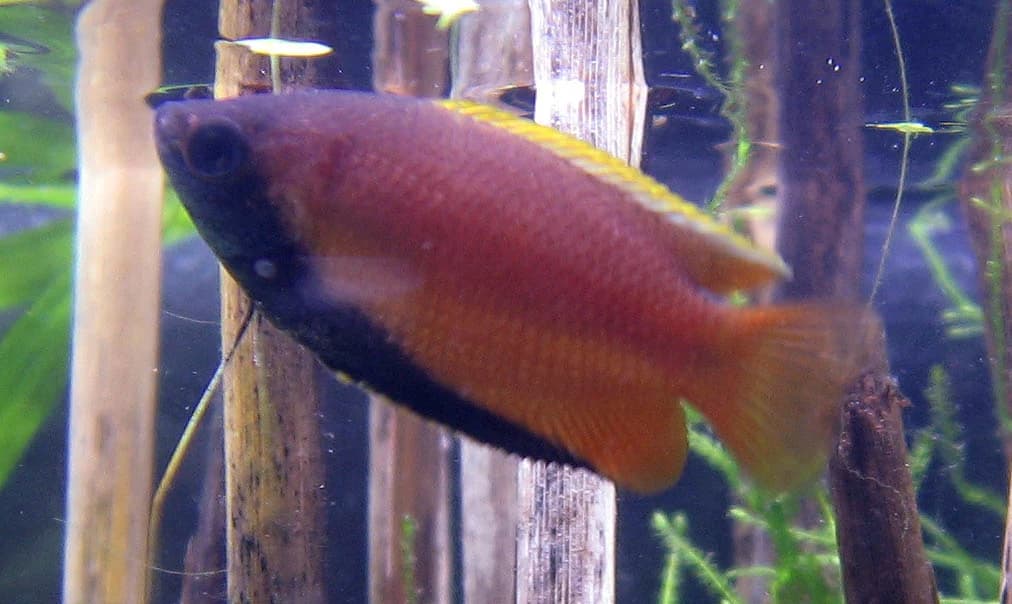
The gallery photographs on this page are source-labelled aquarium images, not museum vouchers or pictures of current Tropical Fish Co stock. Their captions preserve that limit so image search does not turn a photograph into an inventory, sex or locality claim.
Bubble nests and breeding limits
FishBase records that the male guards the bubble nest[3]. The 2021 aquaculture paper studied breeding substrate, embryonic development and seed production under controlled conditions, and OATA describes gourami breeding as a specialist project more likely to succeed in a dedicated setup than in a community aquarium[4][7].
This guide intentionally does not provide a fixed temperature, egg count, hatch deadline, drug treatment or fry-feeding recipe. Outcomes depend on broodfish identity and condition, water, setup, microbial environment and live-food capability. A nest also creates a territorial area that can change how a previously calm community behaves.
Before attempting breeding, prepare a dedicated rearing system, suitable first foods, water-quality control and a destination for the offspring. Do not reduce filtration in a way that leaves ammonia, nitrite or oxygen exchange unmanaged.
Hiding, colour loss and signs of illness
Hiding, darker or paler colour, reduced appetite, clamped fins, unusual swimming, surface position or a change in breathing can occur for many reasons. Normal air-gulping in a labyrinth fish further means that one trip to the surface is not a diagnosis.
Use an evidence-first check:
- Confirm temperature with a separate thermometer.
- Test ammonia and nitrite, then review nitrate, pH and hardness in context.
- Check flow, oxygen exchange, recent cleaning, new livestock and equipment changes.
- Compare the fish with its own normal pattern and with the rest of the aquarium.
- Separate incoming or unwell animals safely when appropriate and seek qualified help.
The RSPCA recommends checking water quality first and contacting a specialist fish vet when diagnosis or treatment help is needed. The MSD Veterinary Manual treats environment, water quality and biosecurity as core parts of aquarium-fish management[9][12]. Do not use blanket salt, heat, antibacterial or parasite medication from one symptom. UK keepers can use OATA's fish-vet directory to look for appropriate veterinary support[13].
This page makes no claim that Honey Gouramis are immune to diseases reported in other gouramis. It also does not use a disease comparison to market one species as a “safer” purchase.
Arrival and the first week
Prepare the mature aquarium before collection or delivery. Ask the actual seller for their current acclimation instructions because journey duration, bag chemistry, packing method and source water vary. OATA's broad method dims the lights, temperature-equalises the closed bag, introduces aquarium water gradually and minimises transport water entering the display[7].
There is no universal acclimation timer that this page can safely prescribe. Record the seller's water information, minimise disturbance, observe feeding and behaviour, and test the aquarium rather than assuming clear water is safe. Biosecure separation of incoming fish can reduce the chance that a problem reaches an established community, but quarantine design and duration should match the animals and qualified advice[12].
What to verify before buying
- the written scientific name is Trichogaster chuna;
- the current and expected adult size are explained;
- any claimed sex or group composition has a stated basis;
- the source temperature, pH and hardness are available where possible;
- your aquarium is at least 60 cm long and biologically mature;
- ammonia and nitrite test at zero;
- every adult tank mate passes the water, size, temperament and feeding screen;
- there is a safe separation plan if chasing or exclusion develops;
- the seller's current collection, delivery and live-arrival terms are read on the commercial page.
Current stock, price, pack size and delivery terms belong on the Gouramis and Labyrinth Fish shop hub, not in a static care claim. A truthful care guide should help a reader decide not to buy when identity, tank length, water or social planning is unresolved.
Honey Gourami identity and aquarium planning
Frequently asked questions
Shop Gouramis & Labyrinth Fish & related
From this care guide straight into our UK live-fish catalogue.
Tetras
Compare tetras and related characins, from Ember and Cardinal Tetras to specialist larger fish. Check adult needs, current sizes, prices and sale units.
African Cichlids
Explore African cichlids and compare their adult needs, supplied sizes and current prices. Distinguish Rift Lake species from riverine fish before choosing.
South American Cichlids
Explore Apistogramma, rams, angelfish, discus, acaras and Oscars. Compare adult space, water, temperament and the exact fish or pair offered.
Catfish & Plecos
Browse Corydoras, Bristlenose, Otocinclus, Synodontis and L-number plecos. Compare feeding, adult space, supplied size and sale units.
Livebearers
Explore guppies, Endlers, mollies, platies, swordtails and goodeids. Compare adult space, water, stated sex and sale units before choosing your group.
Rasboras & Danios
Rasboras, danios and White Cloud Mountain Minnows. Compare adult space, temperature and group needs, then check each individual or pack offer.

Barbs
Cherry, Tiger, Rosy and Denison barbs sit alongside larger Tinfoil and Bala offers. Choose for adult space, behaviour and the intended group.
Sources & further reading
Material factual claims cite the sources below; store policy and cautious inference are labelled in the article. Sources are grouped by type so you can judge their weight at a glance.
Peer-reviewed study (4)
- [1]Seigel, A. R.; DeVriendt, I. G.; Strand, M. C.; Shastri, A. & Wisenden, B. D. (2022). Association of predation risk with a heterospecific vocalization by an anabantoid fish. Journal of Fish Biology. DOI: 10.1111/jfb.14965. View source
Laboratory alarm-cue learning study in Honey Gouramis; not an aquarium noise threshold or health test.
- [4]Swain, S. K.; Ail, S. K. S.; Jena, S. K.; Bairwa, M. K. & Sahoo, S. N. (2021). Preference of breeding substratum, embryonic development and seed production of honey gourami, Trichogaster chuna (Hamilton, 1822) — an indigenous ornamental fish in demand. Aquaculture. DOI: 10.1016/j.aquaculture.2021.736874. View source
Controlled aquaculture breeding study used narrowly for broodfish measurements and breeding context, not a universal home protocol.
- [5]Frankel, J. S. (2008). Monogenic control of sex-limited colouration in the honey gourami, Trichogaster chuna. Journal of Genetics. DOI: 10.1007/s12041-008-0042-2. View source
Narrow genetics evidence for sex-limited colouration; not a visual guarantee for sexing every retail fish.
- [6]Sukumaran, M.; Vijayagopal, P.; Chakraborty, K. & Chan, D. P. S. (2018). Evaluation of gross protein and lipid requirements in formulated feed for honey gourami, Trichogaster chuna (Hamilton 1822). Journal of the World Aquaculture Society. View source
Controlled formulated-feed study; it does not create a consumer percentage recipe or make one treat food complete.
Scientific database (2)
- [2]Fricke, R., Eschmeyer, W. N. & Van der Laan, R. (eds.). Eschmeyer's Catalog of Fishes: Trichogaster chuna. California Academy of Sciences. View source
Current accepted name, family, subfamily, distribution and type-locality context; not aquarium-care evidence.
- [3]Froese, R. & Pauly, D. (eds.). FishBase: Trichogaster chuna. FishBase. View source
Species profile and secondary aquarium compilation; water values and 60 cm length are references, not controlled tolerance or stocking trials.
Veterinary reference (1)
- [12]Barbara D. Petty; Ruth Francis-Floyd; Roy P. E. Yanong. Management of Aquarium Fish. MSD Veterinary Manual. View source
Veterinary reference for water-quality-led investigation and biosecure separation of incoming fish.
Animal-welfare charity (2)
- [8]Royal Society for the Prevention of Cruelty to Animals. Choosing an aquarium for pet fish. RSPCA. View source
UK welfare guidance on space, biological filtration, fishless cycling, testing and stable conditions.
- [9]Royal Society for the Prevention of Cruelty to Animals. Pet fish health. RSPCA. View source
General warning signs and escalation guidance; not a species diagnosis or medicine recipe.
Trade-body guidance (2)
- [7]Ornamental Aquatic Trade Association (2022). How to look after gouramis and paradise fish. OATA. View source
UK broad-group guidance; species-specific needs and current retailer advice still take priority.
- [13]Ornamental Aquatic Trade Association. Find a fish vet. OATA. View source
UK route for seeking appropriate veterinary help; it is not a diagnosis service.
Government / regulatory (2)
- [10]Drinking Water Inspectorate. Water Hardness / Hard Water. Drinking Water Inspectorate. View source
UK supply hardness varies with geology and source; supplier figures do not replace aquarium testing.
- [11]Drinking Water Inspectorate. Domestic water filters and softeners. UK Drinking Water Inspectorate. View source
Domestic treatment can change water composition; ion-exchange-softened water is not automatically suitable aquarium water.
Spotted something that needs a fix?
Fishkeeping moves fast and we want every guide spot-on. If you think something here is wrong, out of date, or could be clearer, tell us — our team reads every message and updates the page.
Suggest an edit
Tropical Fish Co Editorial Team
Evidence-led aquarium editorial team
The Tropical Fish Co editorial team compiles care guidance from the sources cited on each page, separates published evidence from practical husbandry policy, and checks retail links against the current catalogue. First-hand experience is included only when a named contributor and the observation have been verified.
Keep exploring
Shop related
- Tetras
Compare tetras and related characins, from Ember and Cardinal Tetras to specialist larger fish. Check adult needs, current sizes, prices and sale units.
- African Cichlids
Explore African cichlids and compare their adult needs, supplied sizes and current prices. Distinguish Rift Lake species from riverine fish before choosing.
- South American Cichlids
Explore Apistogramma, rams, angelfish, discus, acaras and Oscars. Compare adult space, water, temperament and the exact fish or pair offered.
- Catfish & Plecos
Browse Corydoras, Bristlenose, Otocinclus, Synodontis and L-number plecos. Compare feeding, adult space, supplied size and sale units.
Care guides
- Betta Fish Care Guide: Siamese Fighting Fish
Betta fish care for UK homes: plan a 20-litre heated, filtered, furnished tank. Check water, feeding and Siamese fighting fish welfare before buying.
- Otocinclus Catfish Care: Tank Size, Food & Groups
Otocinclus catfish care for UK tanks: compare tank size, 22–25°C water, group planning, grazing foods, algae limits, tank mates and buying checks.
- Pleco Fish Guide: Types, Adult Size, Food & Tank Planning
Pleco fish guide for UK keepers: compare types, adult sizes, diets, tank planning, water and buying checks before choosing a suckermouth catfish.
Related care guides
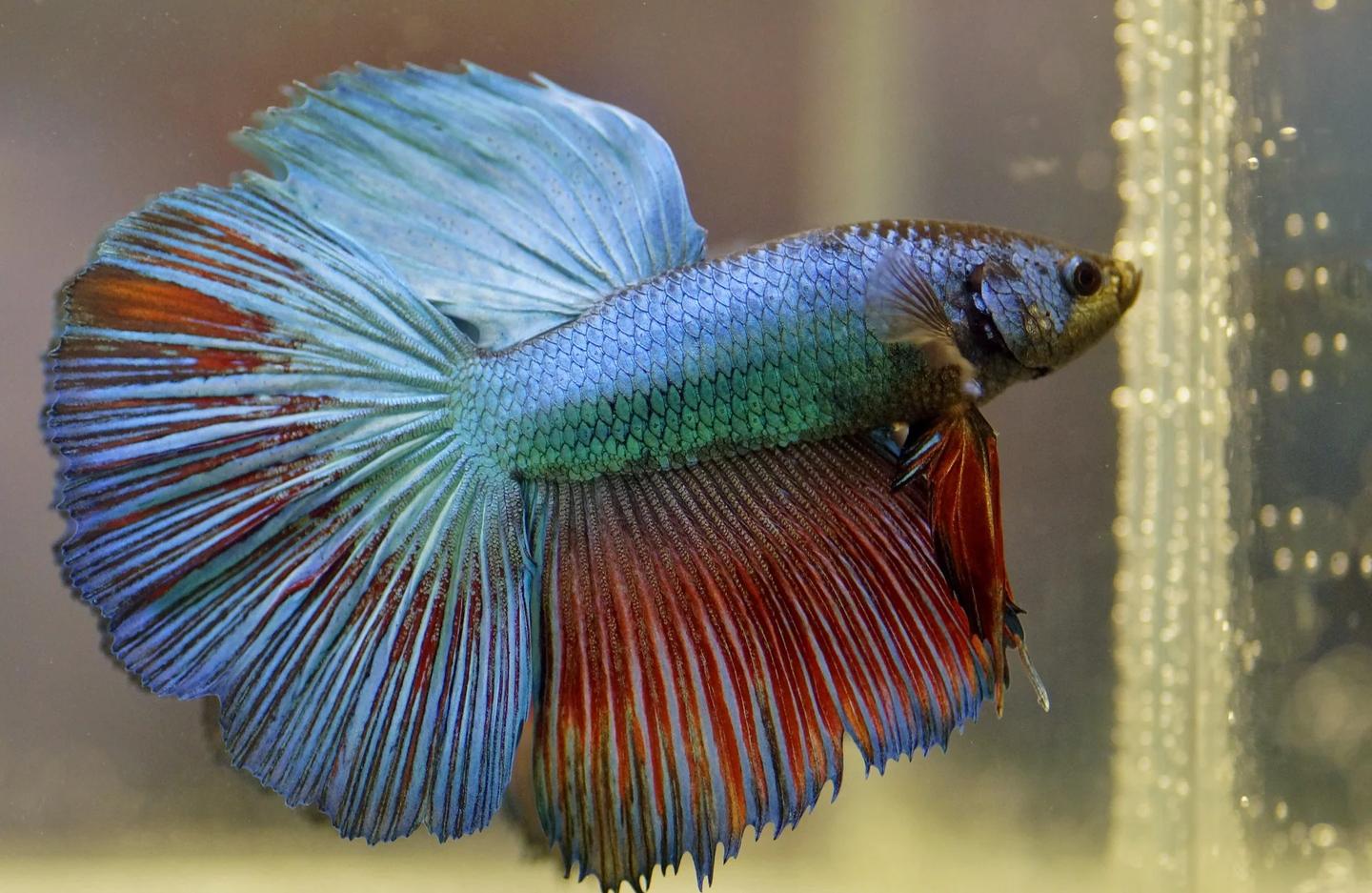
Betta Fish Care Guide: Siamese Fighting Fish
For one typical domestic Betta splendens, start with at least 20 litres, a mature filter, thermostatic heater, separate thermometer, gentle flow, a secure lid with surface access, and plants or refuges. Keep one male per aquarium.
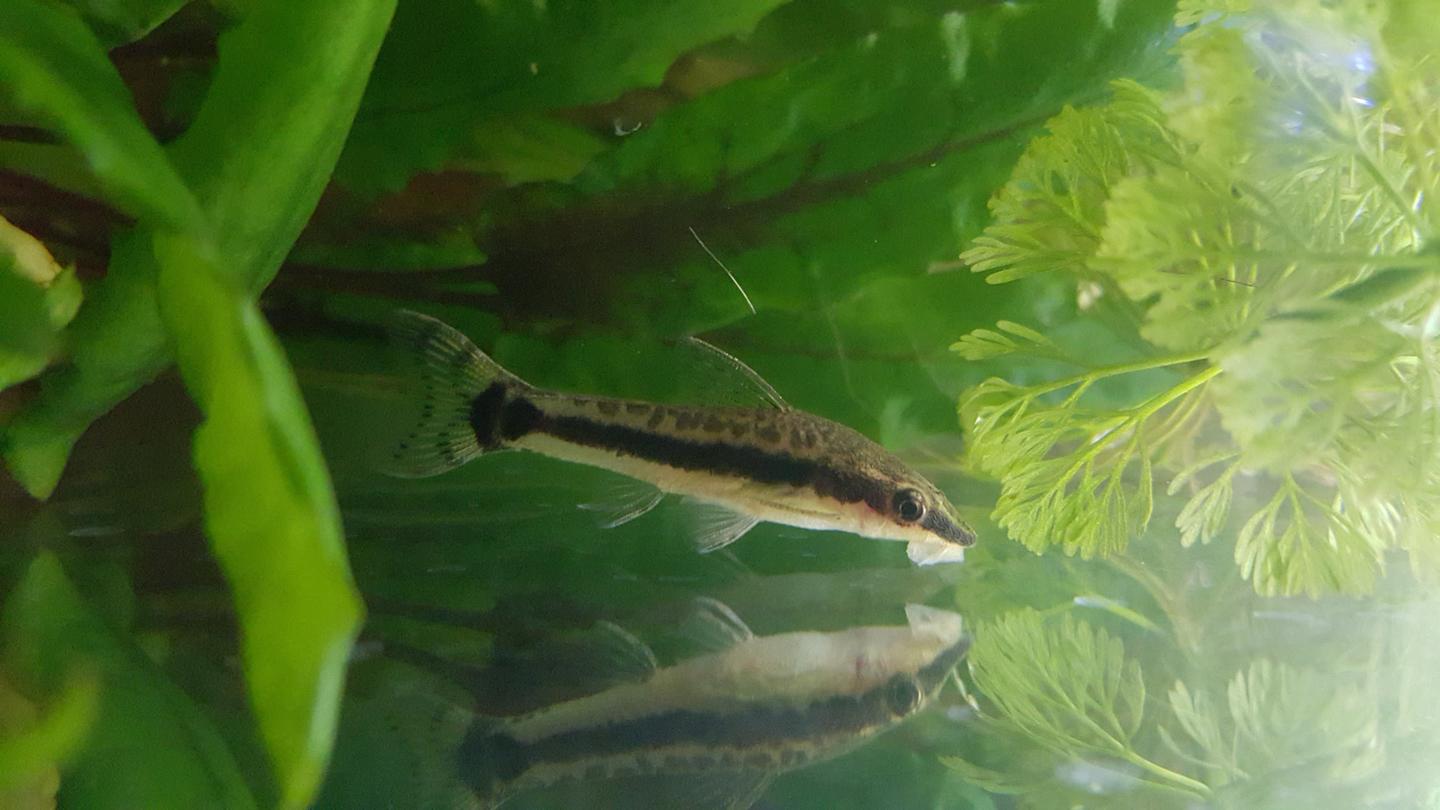
Otocinclus Catfish Care: Tank Size, Food & Groups
Otocinclus are small South American loricariid catfish, not disposable algae cleaners. Confirm the supplied species where possible; start with a mature, stable aquarium with ample grazing surfaces; plan a compatible social group; and provide suitable food even when algae is visible.
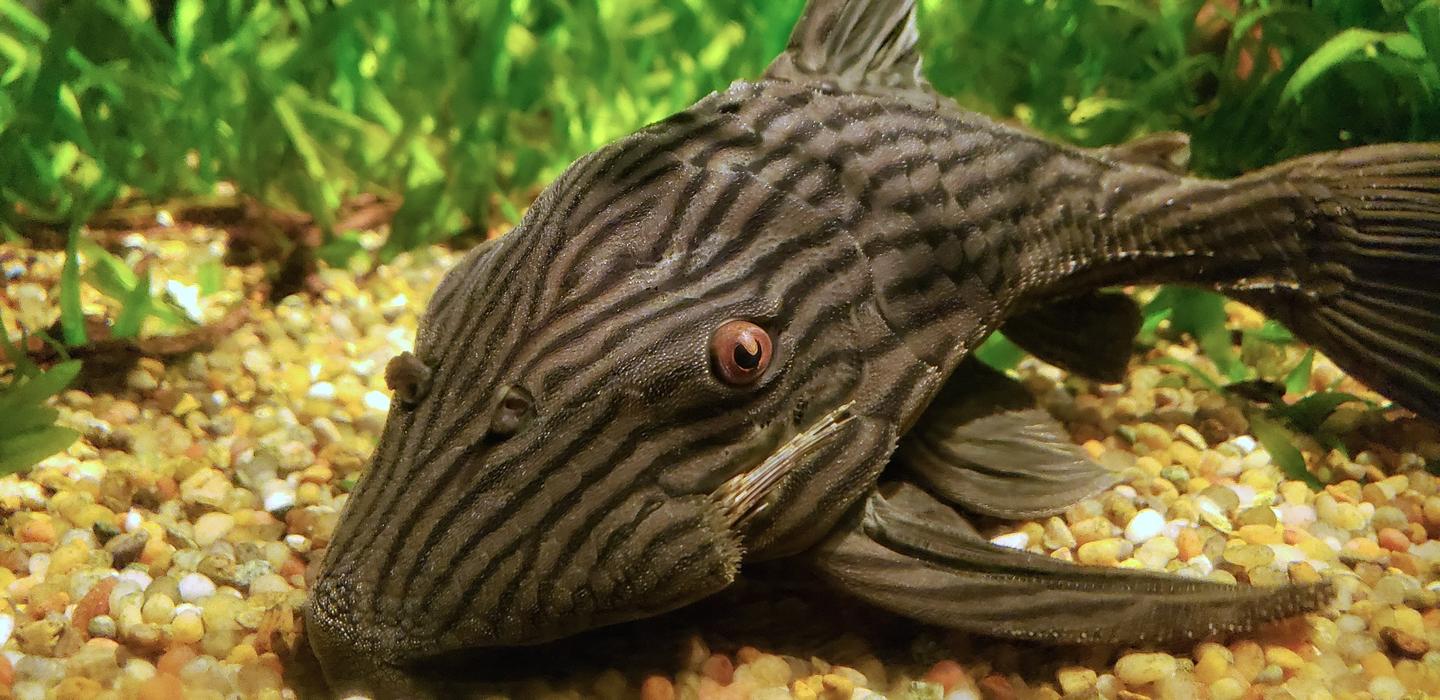
Pleco Fish Guide: Types, Adult Size, Food & Tank Planning
‘Pleco’ is a loose aquarium-trade label, not one species or one care sheet. Before buying, confirm the scientific name or defensible L-number, adult size and measurement method, required footprint, temperature and water, diet, social plan and source. No universal pleco tank size, menu or algae result is honest.