
Freshwater Shrimp Care: Set Up Your First Tank

Freshwater shrimp do not share one care sheet: a 2026 review found major species-specific knowledge gaps across the ornamental trade.
Peer-reviewed ornamental-shrimp reviewChoose an identified shrimp before copying care numbers. A mature, filtered 20-litre aquarium is our cautious starting policy for a small group from a source-documented Neocaridina davidi trade line—not a biological minimum or per-litre formula. Test your actual tap and tank water, protect the filter inlet, provide established grazing surfaces, and treat tank mates, medicines and breeding as species-specific decisions.
Live stock
Shrimps & Crustaceans for sale — see live stock & today’s prices
Shrimp keeping starts with a name and a water test—not a stocking calculator. “Freshwater shrimp” covers animals with different adult sizes, feeding modes and life cycles. Even the genus Caridina is too broad to carry one care range. A recent review of ornamental-shrimp physiology warns that many general protocols are built across knowledge gaps rather than species-specific evidence[4].
This page owns the broad first-tank decision: choose an animal, mature the aquarium, measure the water, feed it and manage risk. For exact care, use the cherry shrimp guide or Amano shrimp guide. To compare colours, grades and specialist types before buying, use the freshwater shrimp comparison. Current availability and prices belong to the live shrimp and crustacean shop.
Retail disclosure: Tropical Fish Co sells aquarium shrimp. Changing stock and prices stay in the live shop; they are not evidence for care.
Ask for the scientific or documented trade name, adult size, feeding mode, whether the animals are captive bred, and the seller's measured holding-water temperature, pH, GH and KH. If the answer is only “Caridina,” “algae eater” or “assorted,” pause: those labels are not enough to choose safe care.
Choose the shrimp before the aquarium settings
Use this as a routing table, not a universal parameter chart.
| What the seller calls it | Identity boundary | First decision | Detailed owner |
|---|---|---|---|
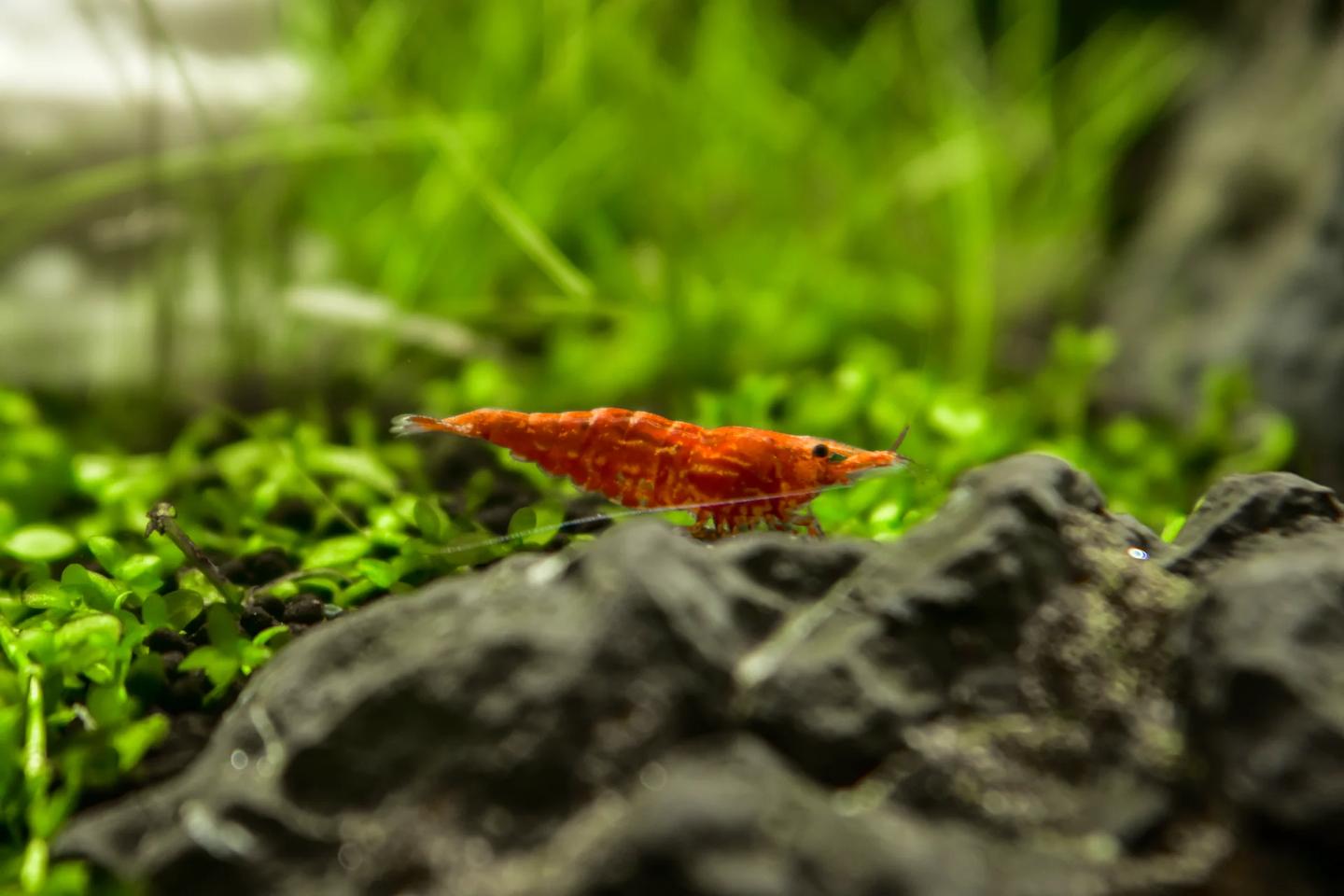
| Red cherry, blue dream, yellow or another Neocaridina colour line | Commonly sold as Neocaridina davidi; current catalogues retain that name, but a photograph and colour cannot verify every line[2] | Match the seller's measured water to your tested source water; protect young shrimp from predation | Cherry shrimp care |
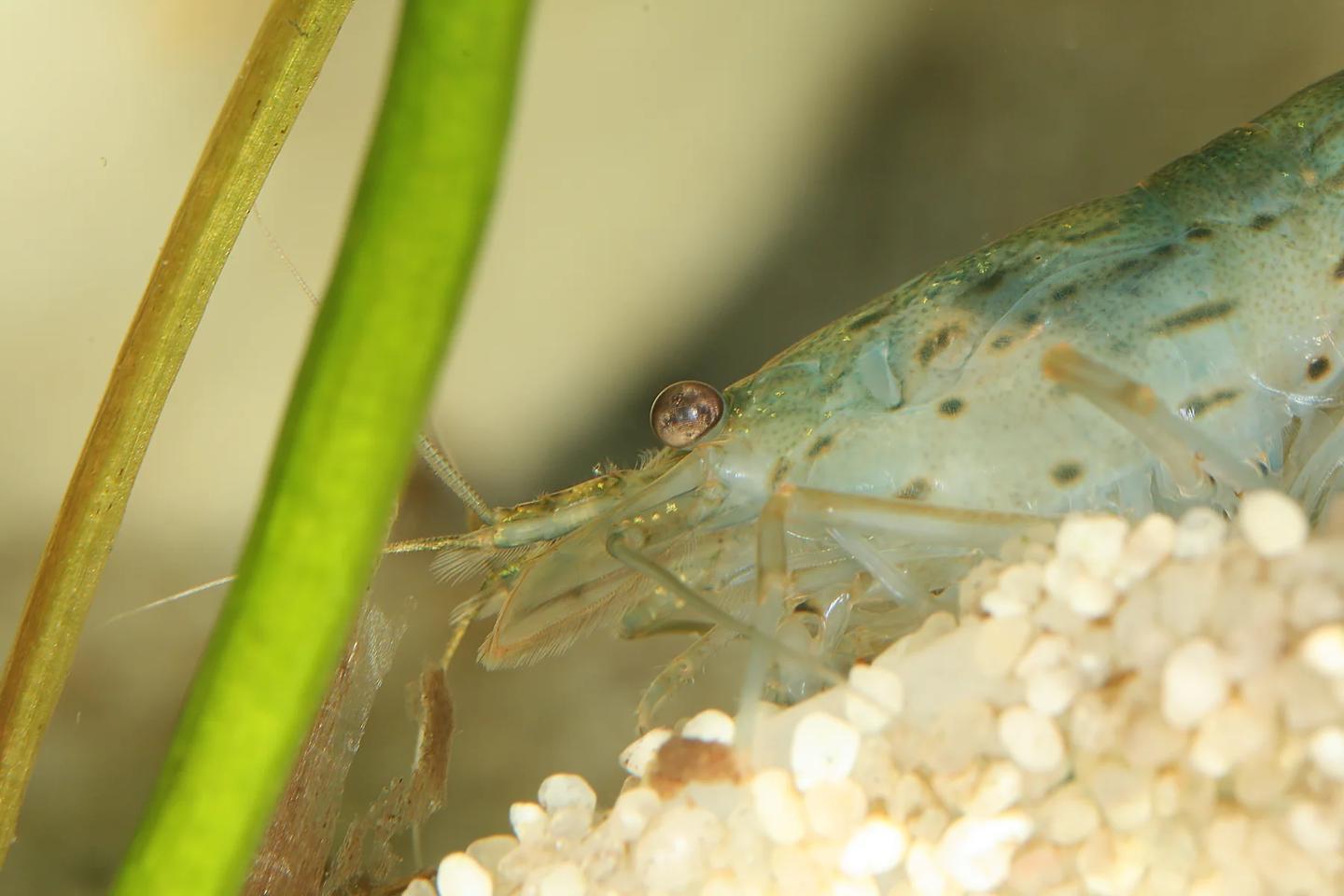
| Amano shrimp | Accepted as Caridina multidentata; C. japonica is an older synonym[1] | Confirm the documented adult size rather than copying dwarf-Neocaridina assumptions; do not buy it as a guaranteed algae solution | Amano shrimp care |
| Crystal, bee or Taiwan-bee line | The trade includes named lines, related taxa and hybrids. Caridina logemanni is one documented bee shrimp, not a name for every line[3] | Obtain the exact line and holding-water values before choosing water preparation or substrate | Compare shrimp types |
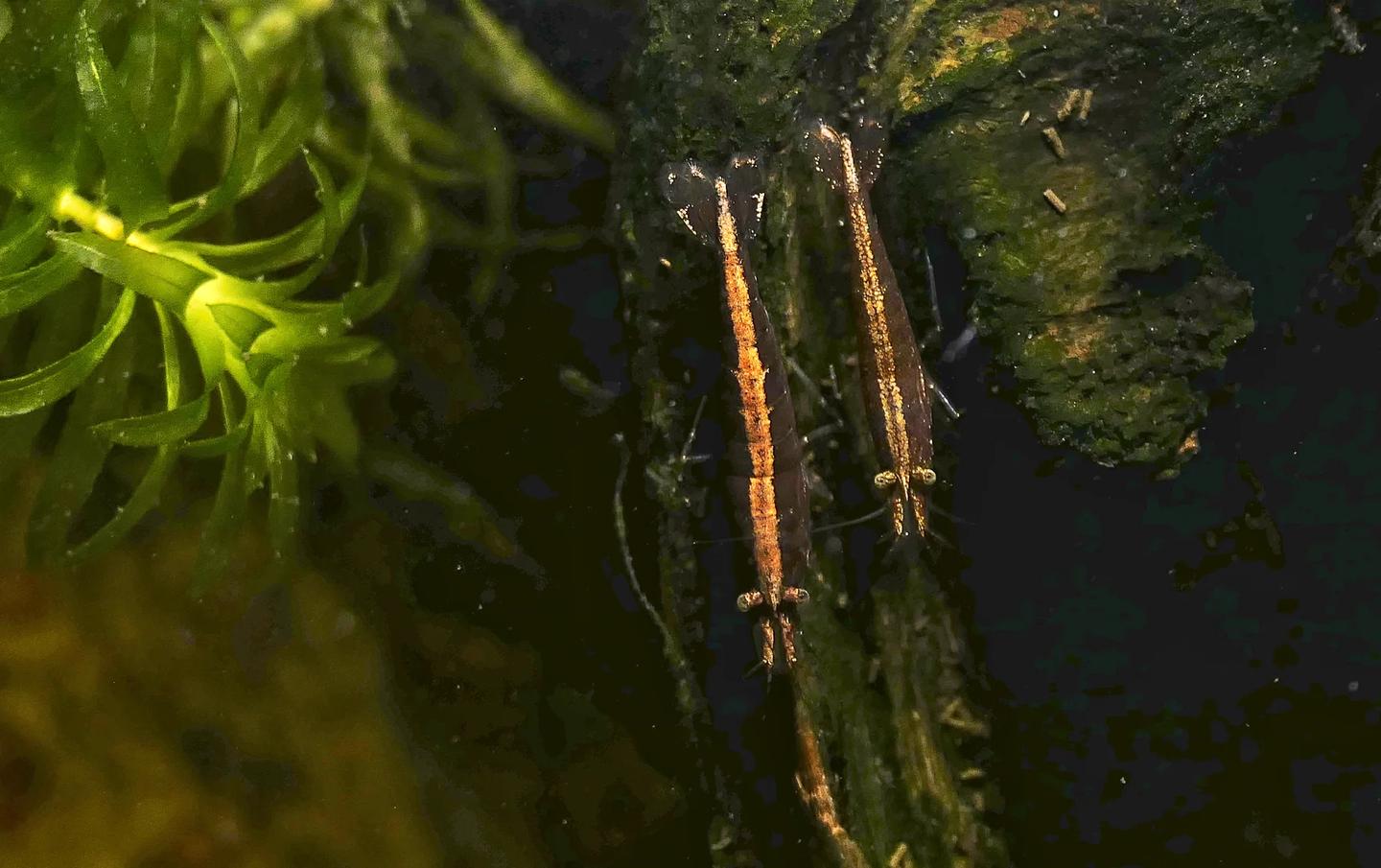
| Bamboo or fan shrimp | Atyopsis contains named species whose separation can require diagnostic characters that a sales photograph does not show[15] | Treat “bamboo shrimp” as an incomplete identity; obtain a documented name and adult-size evidence before choosing specialist care | Compare shrimp types |
The word “beginner” describes a decision with fewer conflicts, not an animal that tolerates neglect. A locally bred Neocaridina line already living in water close to yours can be a practical first choice. A visually similar imported line held in very different water may not be.
Build a stable first shrimp tank
For a first small group from a source-documented Neocaridina davidi trade line, Tropical Fish Co uses a mature, filtered aquarium of at least 20 litres as a cautious starting policy. That is not a biological minimum, a permanent capacity or permission to add one shrimp per litre. Larger water volume usually gives a beginner more time to notice change, while footprint, filtration, food-bearing surface, cover and maintenance remain important.
Set up in this order:
- Choose the identified shrimp and obtain its holding-water values. Do this before buying substrate, minerals or livestock.
- Cycle the filter fully. Use a test method you understand; do not add shrimp while ammonia or nitrite is detectable on that method. A calendar date alone does not prove biological filtration[18].
- Allow grazing surfaces to mature. Plants, wood, rock, filter media and aquarium glass can develop microbial films. Controlled Neocaridina culture research found biofilm relevant to growth and reproduction, but it does not make a new tank safe overnight[9].
- Protect the filter intake. A fine sponge or purpose-made guard should prevent small shrimp from entering without choking flow. Inspect and rinse it in removed aquarium water when debris restricts it.
- Provide shelter at shrimp scale. Fine-leaved plants, mosses, leaf litter known to be aquarium-safe and textured hardscape create grazing and refuge. Rinse or quarantine new additions according to their source; pesticide residues are a plausible risk, but one symptom does not diagnose a chemical.
- Create gas exchange. A working filter return can be enough; an air pump is not a universal requirement. Warm water, weak surface movement, decay, heavy feeding and more animal biomass increase oxygen risk, so respond to the actual system rather than the equipment label[4].
- Keep a cover and a maintenance route. Leave access to inspect the filter, remove food and test water without dismantling the habitat.
The filter processes the aquarium's waste without a detectable ammonia or nitrite result on your test method; temperature and pH are not swinging between checks; plants and hardscape have established surfaces; and you can explain what changed in the last week. “Four weeks old” or clear-looking water is not enough by itself.
Match UK water to the identified shrimp
Do not choose shrimp from a UK postcode stereotype. The Drinking Water Inspectorate says hardness varies with geology and can vary locally within a mapped area; it recommends asking the water company for an accurate supply result[16]. Then test the water that actually reaches the aquarium. Building plumbing, blending, season, treatment and domestic equipment can change what you receive.
Record these before purchase and after any unexplained change:
| Check | What it can tell you | What it cannot tell you alone |
|---|---|---|
| Temperature | Current thermal condition and change between source, transport and tank | A universal optimum for all shrimp |
| pH | Acidity/alkalinity at the time of the test | Mineral content, stability or species identity |
| GH and KH | Useful measures of hardness and buffering | The concentration of every ion or an automatic mineral dose |
| Conductivity or a TDS meter | A repeatable trend when the same meter and method are used | Which dissolved substances are present or whether the water is safe |
| Ammonia and nitrite | Whether toxic nitrogenous waste is detectable on the chosen method | Why it appeared or the only action to take |
| Nitrate trend | A maintenance and biological-load clue | A stand-alone welfare score |
If a household ion-exchange softener is involved, do not assume “soft” means suitable. These systems commonly replace calcium and magnesium with sodium[17]. Test an appropriate unsoftened supply or a deliberately prepared source instead of adding minerals by guesswork.
High temperature deserves particular caution. In one controlled N. davidi experiment, female condition and egg quality changed with temperature[10]. That study does not create one number for every shrimp, but it does refute the idea that anything producing rapid breeding must be ideal long-term care.
Copper and medicines: a real risk, not one magic number
Remove the old rule that “0.01 ppm is lethal” or that all medicine behaves the same. Copper toxicity depends on the shrimp, copper form, exposure time and water chemistry. An acute C. multidentata study reported a very different result from a study on juvenile Macrobrachium nipponense under other conditions[5][6]. There is no single aquarium threshold established as safe for every shrimp, copper compound and water chemistry.
Before adding any medicine, fertiliser, algaecide, plant treatment or water conditioner:
- read the exact current label and active ingredients;
- confirm that the manufacturer expressly addresses the invertebrate and use in question;
- use the Veterinary Medicines Directorate database for current authorised-product particulars where applicable[21];
- move an animal only when a separate, cycled and closely matched system is safer than leaving it in place;
- never copy a dose, treatment duration or “carbon clearance” period from another species or product.
Feed shrimp; do not employ them as cleaners
Freshwater shrimp graze films and particles, but that does not make them a substitute for maintenance. A tank can look algae-rich to a person and still lack a nutritionally complete, accessible food supply. Amano shrimp may graze some algae, yet no group size can be promised to clear a particular aquarium.
Use a conservative feeding loop:
- Watch where every animal can feed and whether fish take the food first.
- Offer a complete food labelled for the identified shrimp in a portion the group consumes without prolonged decay.
- Treat mature biofilm, safe leaf material and compatible plant surfaces as useful grazing, not proof that supplemental food is unnecessary.
- Remove persistent excess and adjust the next portion; do not react with a rigid daily schedule.
- Track body condition, moulting, activity, water results and population age together. One failed moult does not prove a calcium, protein or GH diagnosis.
Do not convert a short culture experiment into a permanent stocking rule. A 90-day N. davidi study tested juveniles at 2.5, 5 and 10 per litre and found density-related growth differences[13]. It did not prove that those densities are sustainable for mixed-age adults, breeding colonies or home aquariums.
Ten or twenty shrimp may be a purchase quantity, but neither is a universal welfare threshold or breeding guarantee. Sex ratio, maturity, lineage, transport survival, food, cover, water, predation and chance all affect the outcome. Choose a group with the seller using the exact animal and tank—not a per-litre formula.
Tank mates: design for predation risk
“Peaceful fish” and “shrimp-safe fish” are not guarantees. A fish that does not injure an adult may still consume newly hatched or small shrimp. Field work on an introduced N. davidi population found very low recruitment and identified fish predation as a plausible contributor[12]. That observation does not predict every aquarium, but it supports a precautionary rule: species-only housing gives the lowest predation risk.
Before mixing shrimp with fish, ask:
- Can the fish reach the shrimp or its newly hatched young?
- Are there dense, shrimp-scale refuges that fish cannot enter?
- Will the shrimp still receive food after fish feed?
- Do temperature, current and water chemistry suit each exact species?
- Can you separate animals if hunting, starvation or stress appears?
Avoid mouth-size cut-offs. Feeding state, hunting behaviour, habitat and shrimp life stage matter as much as body length. Snails and other shrimp may avoid direct predation yet still compete for films and prepared food. The nerite snail guide explains that “peaceful” does not mean competition-free.
Arrival, observation and health triage
General UK trade guidance favours gradual, condition-led acclimation rather than one timer for every animal[18]. Before opening the bag, confirm that the receiving tank is ready and record the animal, water temperature and visible condition. Compare reliable measurements from the transport or seller's holding water with the aquarium, then align materially different conditions gradually using a clean process appropriate to the species and journey. Do not turn “one drop per second for 90 minutes” into a safety guarantee.
Where feasible, use a separate, cycled observation aquarium with dedicated net, siphon and tools. A study of 900 commercially sourced N. davidi found frequent epibionts with source-related differences[14]. That does not mean every shrimp is infected; it supports inspection, separation and source records. UK aquatic-biosecurity guidance also supports isolation and dedicated equipment as risk controls[20].
Mortality is a signal to document and investigate—not an expected percentage. Photograph the animal and setup, record timing and recent changes, test temperature, ammonia, nitrite and relevant water measures, check equipment and product labels, contact the seller with the evidence, and seek an aquatic-experienced veterinary professional when the cause or treatment is uncertain.
For a sudden decline, avoid reflex recipes such as a fixed 70% water change, a mineral dose, copper remover or broad medication. The safest response depends on the measured cause, the animals' condition and whether replacement water can be closely matched. If there is a clear water-quality emergency, restore safe conditions without replacing one shock with another. English retail guidance requires species-appropriate water monitoring and expert advice where treatment is uncertain; it is a useful welfare boundary, not a home-treatment prescription[19].
Breeding without promises
Published work supports direct or abbreviated post-hatching development in the studied N. davidi, so young emerge as recognisable shrimp rather than passing through the marine larval strategy seen in Amano shrimp[8]. Controlled culture also shows that food environment, sex, density and temperature influence outcomes[9][13]. Therefore:
- do not promise that a starter group will become 100 animals in a year;
- do not use reproduction as the only evidence of good welfare;
- do not assume colour lines, bee lines or hybrids share one genetic outcome;
- protect newly hatched shrimp from filter intakes and predators;
- record source, colour line and introductions if lineage matters to you.
Lifespan is equally conditional. One field study estimated roughly 10–15 months for its N. davidi population[11]; another comparison found field and laboratory longevity differed[12]. Neither justifies a universal “1.5–2 years in every tank” promise.
Amano shrimp need a separate lifecycle explanation. Adults are freshwater animals, while a controlled study reared C. multidentata larvae through development at salinities from 17 to 34 ppt in tested temperature combinations[7]. That is evidence of amphidromous larval biology—not a complete home-breeding recipe and not a reason to add salt to the adult aquarium.
Never release aquarium shrimp in the UK
Do not put aquarium shrimp, eggs, plants or associated water into a garden pond, stream, river, canal or surface-water drain. Non-native animals can establish, move pathogens or affect local ecosystems. England and Wales publish specific rules for invasive non-native animals[22], while the GB Non-native Species Secretariat's pet code gives the broader prevention principle: pets and associated material must not reach the wild[23].
If you can no longer keep shrimp:
- ask the original seller whether responsible return is possible;
- rehome them to a prepared keeper with the exact identity and health history;
- keep transport water and equipment contained;
- ask the relevant environmental authority or a suitable professional if the species or disposal route is uncertain.
Your first-tank go/no-go check
Add shrimp only when every answer is “yes”:
- I have an exact scientific or documented trade identity, not just “assorted shrimp.”
- I know the seller's measured holding-water temperature, pH, GH and KH.
- My filtered aquarium is cycled by test results and has established grazing surfaces.
- My actual source and tank water are measured; I am not relying on a regional stereotype.
- The filter intake is protected and gas exchange is appropriate.
- Food, shelter and maintenance access are planned for the full group.
- I have assessed predation at the smallest life stage, not only the adult.
- Every medicine, fertiliser and treatment has been checked by exact current label.
- I have an observation, seller-contact and isolation plan if an animal declines.
- I have a responsible no-release and rehoming plan.
If one answer is “no,” delay the purchase. The best first shrimp tank is not the one with the most exact-looking numbers; it is the one where the animal, evidence and measured system agree.
Freshwater shrimp that need different decisions
Frequently asked questions
Sources & further reading
Material factual claims cite the sources below; store policy and cautious inference are labelled in the article. Sources are grouped by type so you can judge their weight at a glance.
Peer-reviewed study (13)
- [3]Klotz, W. & von Rintelen, T. (2014). To ‘bee’ or not to be—on some ornamental shrimp from Guangdong Province, Southern China and Hong Kong SAR, with descriptions of three new species. Zootaxa 3889(2). DOI: 10.11646/zootaxa.3889.2.1. View source
- [4]Holroyd, S. C., Spicer, J. I., Ellis, R. P. & Turner, L. M. (2026). An ecophysiological approach to improving health outcomes of ornamental shrimp during aquarium trade and transportation. Conservation Physiology 14. DOI: 10.1093/conphys/coag046. View source
- [5]Ravaux, J. et al. (2025). Habitat selection and copper toxicity in the freshwater amphidromous shrimp Caridina multidentata Stimpson, 1860 (Decapoda: Caridea: Atyidae). Journal of Crustacean Biology 45(2). DOI: 10.1093/jcbiol/ruaf020. View source
- [6]Yang, J.-L. (2014). Comparative acute toxicity of gallium(III), antimony(III), indium(III), cadmium(II), and copper(II) on freshwater swamp shrimp (Macrobrachium nipponense). Biological Research 47. DOI: 10.1186/0717-6287-47-13. View source
- [7]Kondo, S., Hamasaki, K. & Dan, S. (2021). Larval performance of three amphidromous shrimp species in the genus Caridina (Decapoda: Caridea: Atyidae) under different temperature and salinity conditions. Crustacean Research 50. DOI: 10.18353/crustacea.50.0_41. View source
- [8]Pantaleão, J. A. F. et al. (2017). Post-hatching development of the ornamental ‘Red Cherry Shrimp’ Neocaridina davidi (Bouvier, 1904) (Crustacea, Caridea, Atyidae) under laboratorial conditions. Aquaculture Research 48(2). DOI: 10.1111/are.12903. View source
- [9]Viau, V. E. et al. (2020). Breeding and life cycle of the ornamental freshwater shrimp Neocaridina davidi in a biofilm-based culture system. Aquaculture Research 51. DOI: 10.1111/are.14733. View source
- [10]Baliña, S., Temperoni, B., López Greco, L. S. & Tropea, C. (2018). Losing Reproduction: Effect of High Temperature on Female Biochemical Composition and Egg Quality in a Freshwater Crustacean with Direct Development, the Red Cherry Shrimp, Neocaridina davidi (Decapoda, Atyidae). The Biological Bulletin 234. DOI: 10.1086/698266. View source
- [11]Mitsugi, M. & Suzuki, H. (2018). Life history of an invasive freshwater shrimp Neocaridina davidi (Bouvier, 1904), (Decapoda: Caridea: Atyidae) in the Tomoe River, the Boso Peninsula, eastern Japan. Crustacean Research 47. DOI: 10.18353/crustacea.47.0_9. View source
- [12]Schoolmann, G. & Arndt, H. (2018). Population dynamics of the invasive freshwater shrimp Neocaridina davidi in the thermally polluted Gillbach stream (North Rhine-Westphalia, Germany). Limnologica 71. DOI: 10.1016/j.limno.2018.05.001. View source
- [13]Vazquez, N. D. et al. (2017). Density and gender segregation effects in the culture of the caridean ornamental red cherry shrimp Neocaridina davidi Bouvier, 1904 (Caridea: Atyidae). Journal of Crustacean Biology 37. DOI: 10.1093/jcbiol/rux051. View source
- [14]Maciaszek, R. et al. (2023). Epibiont Cohabitation in Freshwater Shrimp Neocaridina davidi with the Description of Two Species New to Science, Cladogonium kumaki sp. nov. and Monodiscus kumaki sp. nov., and Redescription of Scutariella japonica and Holtodrilus truncatus. Animals 13(10). DOI: 10.3390/ani13101616. View source
- [15]Chace, F. A. Jr. (1983). The Atya-like shrimps of the Indo-Pacific region (Decapoda: Atyidae). Smithsonian Contributions to Zoology 384. DOI: 10.5479/si.00810282.384. View source
Scientific database (2)
- [1]DecaNet editors. Caridina multidentata Stimpson, 1860. DecaNet (accessed through World Register of Marine Species). View source
- [2]Catalogue of Life. Neocaridina davidi (Bouvier, 1904). Catalogue of Life 2026-07-17 XR (accessed via GBIF). View source
Trade-body guidance (1)
- [18]Ornamental Aquatic Trade Association (2025). How to set up and look after a freshwater tank / aquarium. OATA. View source
Government / regulatory (7)
- [16]Drinking Water Inspectorate (2022). Water Hardness / Hard Water. Drinking Water Inspectorate. View source
- [17]Drinking Water Inspectorate (2025). Domestic water filters and softeners. Drinking Water Inspectorate. View source
- [19]Department for Environment, Food & Rural Affairs (2022). Selling animals as pets licensing: statutory guidance for local authorities. GOV.UK. View source
- [20]Centre for Environment, Fisheries and Aquaculture Science (2023). Biosecurity Measure Plans - Information and Templates. GOV.UK. View source
- [21]Veterinary Medicines Directorate. Product Information Database. Veterinary Medicines Directorate. View source
- [22]Department for Environment, Food & Rural Affairs (2020). Invasive non-native (alien) animal species: rules in England and Wales. GOV.UK. View source
- [23]Ornamental Aquatic Trade Association (2014). Helping to prevent the spread of invasive non-native species: Pet Code of Practice. GB Non-native Species Secretariat. View source
Spotted something that needs a fix?
Fishkeeping moves fast and we want every guide spot-on. If you think something here is wrong, out of date, or could be clearer, tell us — our team reads every message and updates the page.
Suggest an edit
Tropical Fish Co Editorial Team
Evidence-led aquarium editorial team
The Tropical Fish Co editorial team compiles care guidance from the sources cited on each page, separates published evidence from practical husbandry policy, and checks retail links against the current catalogue. First-hand experience is included only when a named contributor and the observation have been verified.
Keep exploring
Care guides
- Cherry Shrimp Care Guide
Cherry shrimp care for UK aquariums: plan a mature 20L-plus tank, test your water, protect shrimplets and understand feeding, moulting and breeding.
- Amano Shrimp Care Guide
Amano shrimp care for UK aquariums: plan a mature 20L-plus tank, group, stable water, feeding, algae limits, tank mates, moulting and breeding.
- Nerite Snail Care Guide: Species, Eggs & Feeding
Nerite snail care for UK aquariums: identify species, plan mature grazing surfaces, understand egg capsules, prevent escapes and screen tank-mate risks.
Related care guides
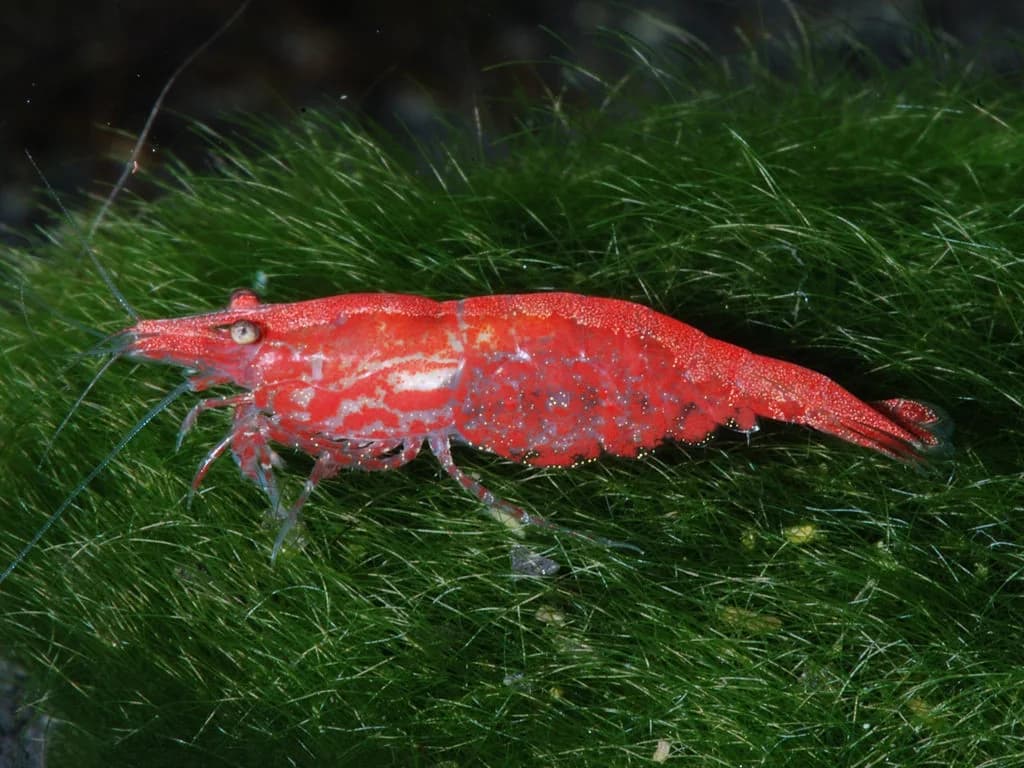
Cherry Shrimp Care Guide
Use a mature, filtered aquarium and measured water—not a shrimp-per-litre rule. Tropical Fish Co uses 20 litres as a cautious starting policy for a small Cherry Shrimp group, above OATA's general 10-litre screen for small shrimp. Provide established grazing surfaces, cover and a protected filter inlet. No fish is guaranteed shrimplet-safe, and breeding should never be promised.
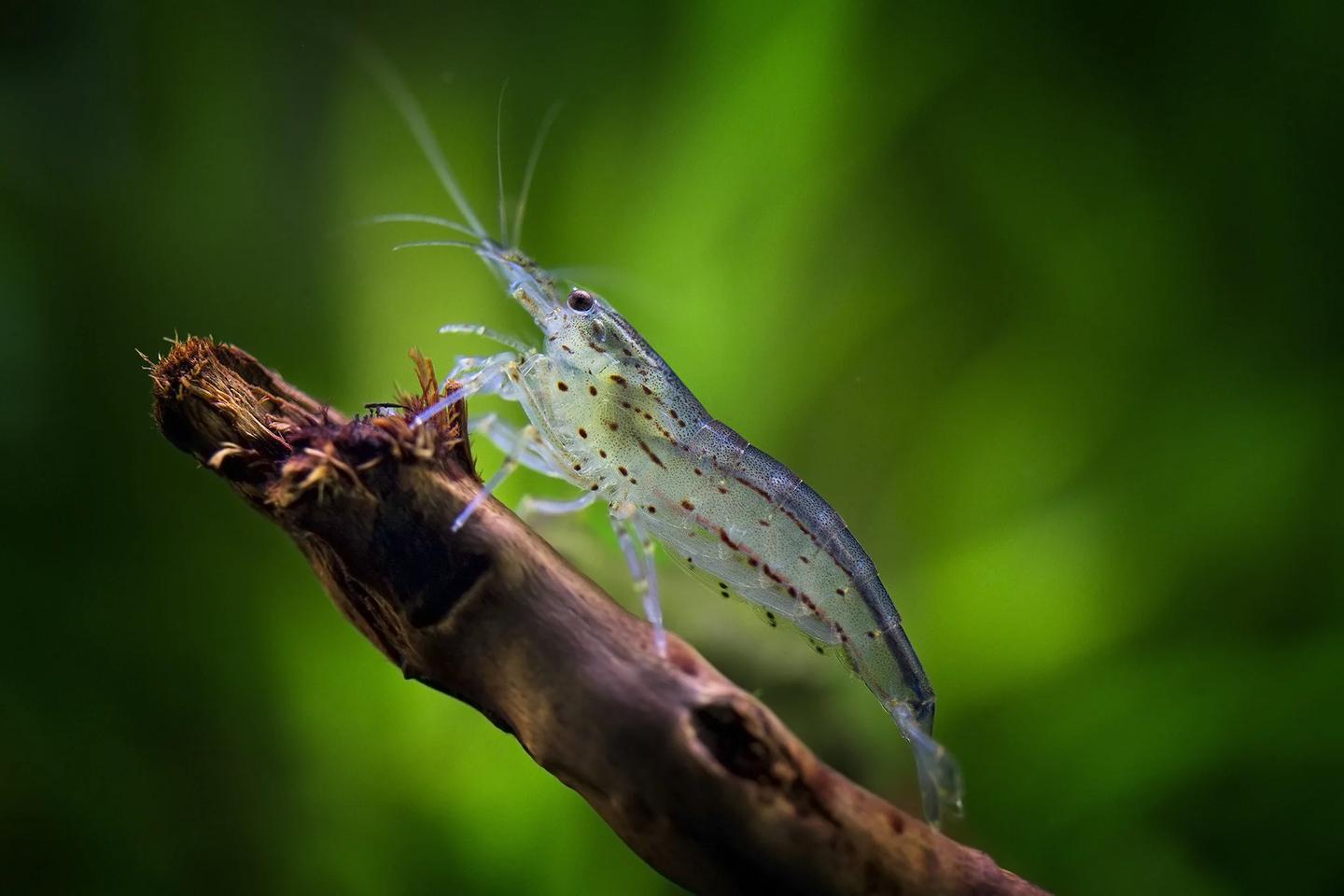
Amano Shrimp Care Guide
Start with a mature, filtered aquarium. OATA's broad UK guidance suggests approximately 20 litres for Amano Shrimp and at least five for social shrimp, with a larger aquarium when fish are present. Treat those as cautious planning screens—not biological minima or a per-litre formula. Match the complete adult community, test your water, protect the filter inlet and never buy them as a guaranteed algae cure.
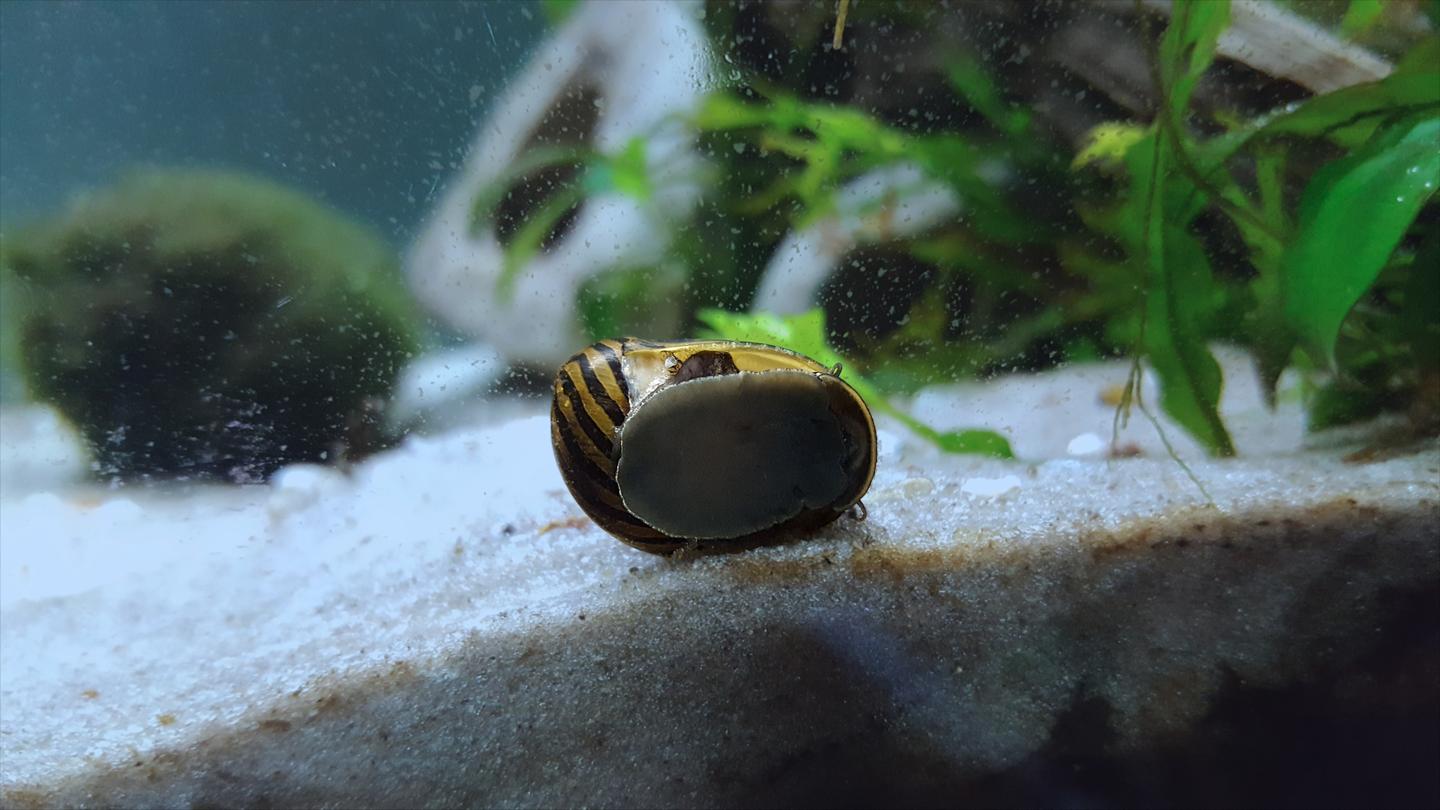
Nerite Snail Care Guide: Species, Eggs & Feeding
Nerite snail is a trade umbrella, not one species. Confirm the supplied taxon and holding water, use a mature covered aquarium with established grazing surfaces, stock from food availability rather than a litre formula, and treat egg capsules, medicines and tank mates as species-specific decisions.