
Pleco Fish Guide: Types, Adult Size, Food & Tank Planning

One shop word points into a catfish family with 1,085 currently valid species—so ‘pleco’ alone is not enough information to choose a tank, food or tank mates.
Current Catalog of Fishes family countNo universal pleco care card is shown. OATA's 22–27°C, pH 6–8 and 4–18 dGH values are only a broad freshwater-catfish screen, not tolerances for every loricariid. No tank or group minimum is displayed because identity must come first.
Live stock
Catfish & Plecos for sale — see live stock & today’s prices
“Pleco” is not one fish. It is a shop word used for many suckermouth armoured catfishes, and the current Catalog of Fishes recognises 1,085 valid species in 117 valid genera within Loricariidae[1]. That is why a universal pleco tank size, water range or feeding recipe can sound useful while being unsafe.
Before buying, ask for the scientific name or defensible L-number, an adult-size source and the seller's maintained water. Then plan the aquarium around that identified fish—not the juvenile in the photograph. If the seller can offer only “pleco”, pause the purchase until adult size and care can be established.
- Identity: scientific name or defensible L-number, not only “pleco” or “algae eater”
- Adult size: value, source and whether it is standard length or total length
- Space: useful tank length and width after wood, rocks and shelters
- Water: measured temperature, pH and hardness for your source water and aquarium
- Food: a species-appropriate prepared diet that every fish can reach
- Social plan: territory, sex where known, separate shelters and a backup separation option
- Source: captive-bred or wild-caught only when the consignment record supports it
What does “pleco” identify?
“Pleco”, “plec” and “plecostomus” are useful search and trade terms, not a scientific identity. They normally point to Loricariidae, a very large family of Neotropical freshwater catfishes. Their armoured plates and ventral oral disc create a recognisable family resemblance, but similar body plans do not make adult size, diet, water or behaviour interchangeable.
The true Hypostomus plecostomus is one valid species[5]. A retail fish labelled “common pleco” may instead be a Pterygoplichthys or another large loricariid. Orfinger and Goodding describe Pterygoplichthys as a taxonomically confusing aquarium-traded genus with successful invasive populations around the world[11]. A common name, low price or spotted juvenile pattern is not enough to distinguish those possibilities.
Ask the retailer to write the supplied identity on the receipt or listing. An L-number can narrow the search, but it is not automatically a formal species name and must match the fish and lineage being sold. Clear side, dorsal and mouth photographs can support specialist review; they are not a substitute for provenance.
Pleco types: compare identity before appearance
The table is a comparison aid, not a universal shopping list. Published length types differ: standard length (SL) excludes the tail fin, while total length (TL) includes it. Do not compare the numbers as though the measurement methods were identical.
| Source-labelled example | Published size evidence | What the example proves | What it does not prove |
|---|---|---|---|
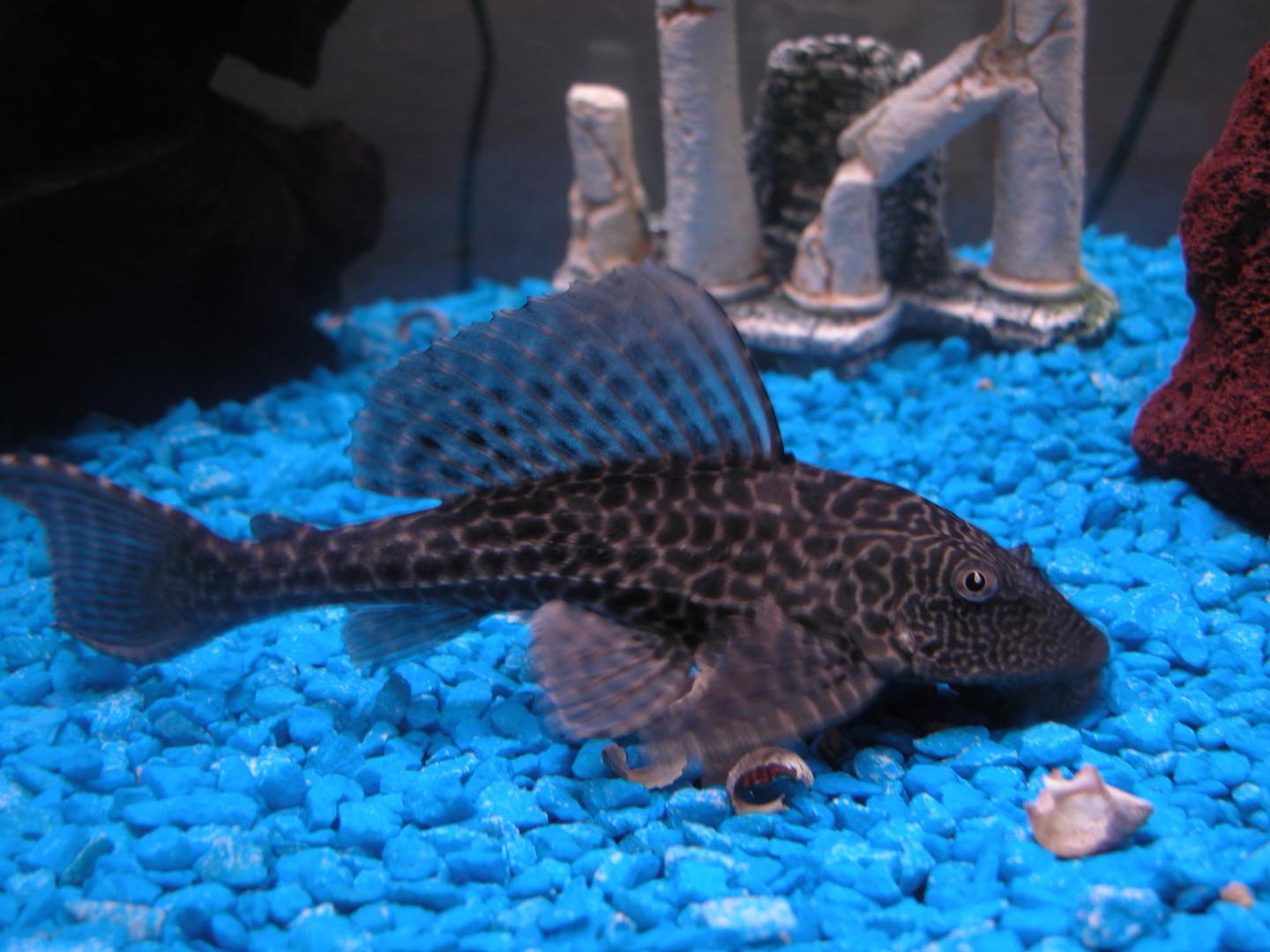
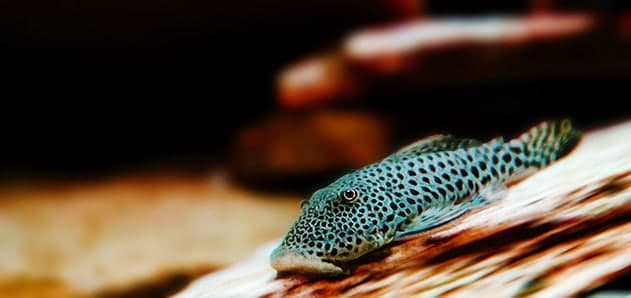
| Amazon sailfin, Pterygoplichthys pardalis | 57.8 cm TL | Some cheap juvenile “common plecos” can become very large | Every spotted pleco is P. pardalis |
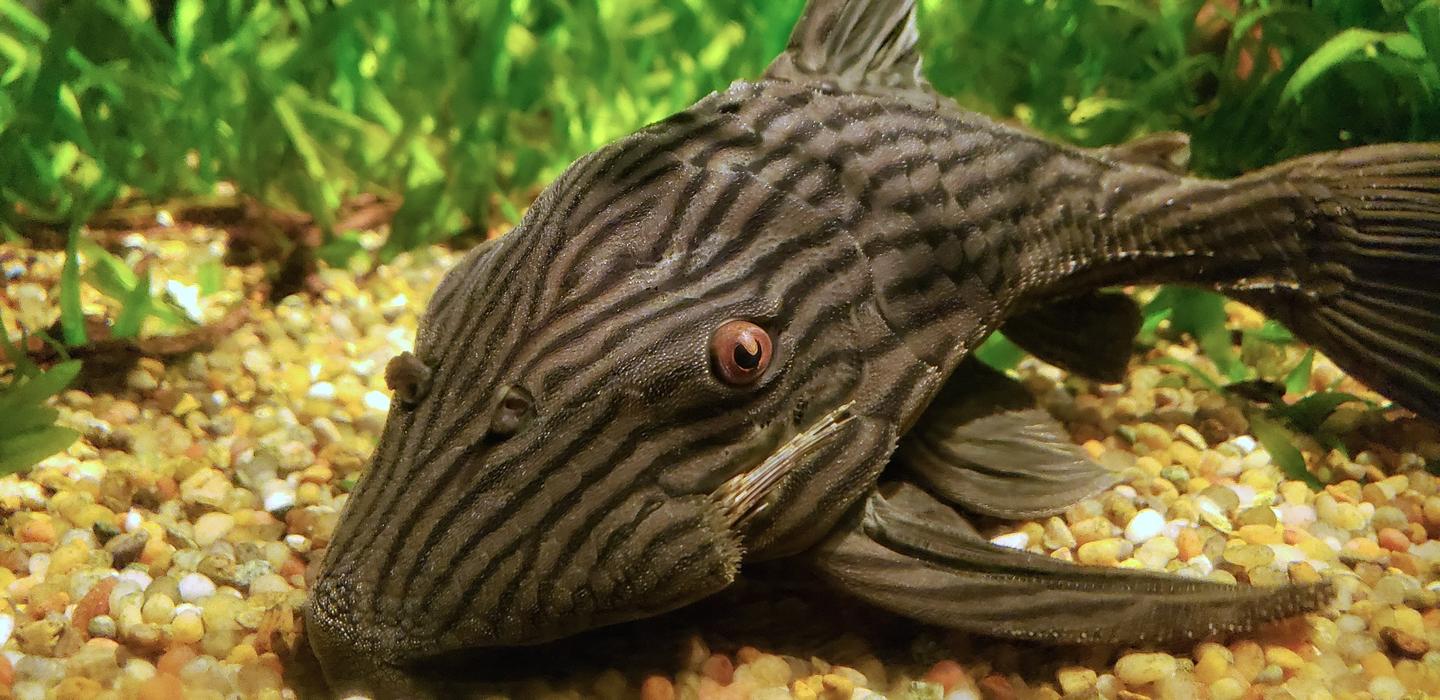
| Royal panaque, Panaque nigrolineatus | 43 cm SL | Royal-type plecos need a large-fish plan | All L190-type labels have identical identity or care |
| Clown panaque, Panaqolus maccus | 8.8 cm SL | A named smaller species exists | Every striped clown label is P. maccus or nano-suitable |
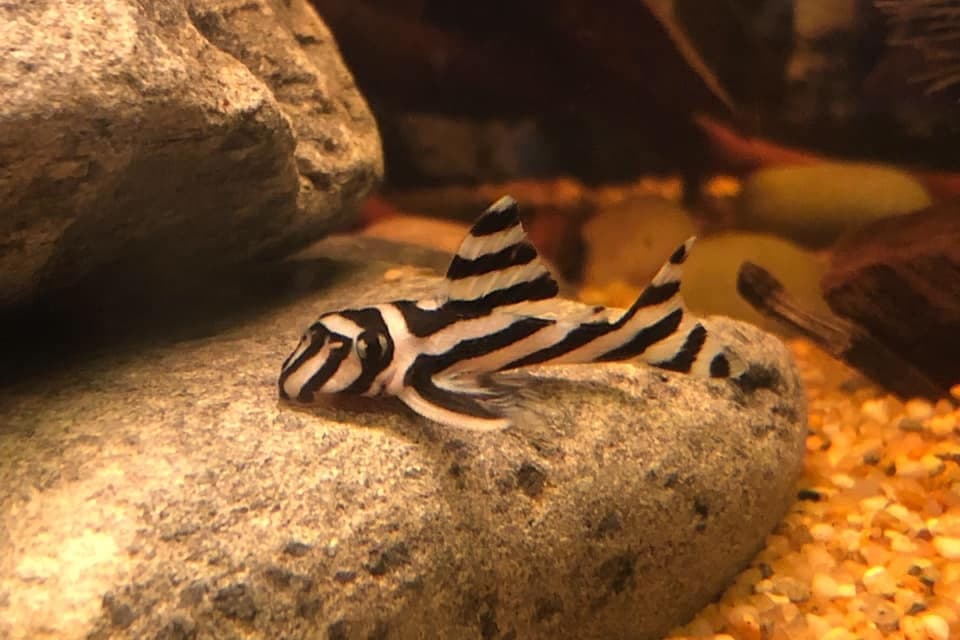
| Zebra pleco, Hypancistrus zebra | 7 cm TL | Small adult length can coexist with specialist needs | Any black-and-white L-number is L046 |
| Bristlenose, Ancistrus trade forms | Confirm exact lineage | A separate, commonly sold smaller group | “Bristlenose” and “common pleco” are synonyms |
| Chaetostoma trade labels | Confirm exact species | Another distinct genus may be sold as rubber-lip or bulldog | One photograph establishes species, temperature or adult size |
The size records come from named-species FishBase entries for P. pardalis, P. nigrolineatus, P. maccus and H. zebra[4][7][6][8]. They are evidence for those names and measurement conventions, not values to paste onto an unidentified fish.
For the popular smaller group, use the dedicated Bristlenose Pleco care guide. The Bristlenose size and types guide owns the full-grown size, sex and colour-form intent; this broad guide should not duplicate it.
Adult size: plan for the fish after the sale photo
Fish are usually sold young. A five-centimetre photograph therefore describes a moment, not the adult commitment. The 57.8 cm TL record for P. pardalis illustrates why “it fits today” is an unsafe test[4]. The RSPCA likewise advises choosing an aquarium around how large the fish will grow and explains that footprint, oxygen, filtration and water stability all matter[12].
Before choosing a tank, record:
- the exact taxon the evidence covers;
- the largest defensible adult figure, not an average selected to fit the tank;
- SL, TL or another stated measurement convention;
- adult body depth, fin extension and turning room;
- likely waste load and feeding amount;
- whether more than one territorial bottom fish will share the footprint.
The separate Common Pleco UK page owns detailed common/sailfin adult-size intent. Its advice should never be borrowed to identify a fish from appearance alone.
Pleco tank size: no one litre number fits the group
OATA recommends at least 80 litres for smaller pleco species in its broad freshwater-catfish sheet, while also telling readers to seek species-specific advice[2]. That is a broad floor for a category, not permission to place any pleco in 80 litres. Large Pterygoplichthys and Panaque, active high-flow specialists, territorial pairs and heavily stocked communities can require radically different footprints and systems.
Use this order:
| Decision | Verify | Why litres alone fail |
|---|---|---|
| Identity | Species, lineage or defensible L-number | The trade name spans radically different adults |
| Footprint | Internal length and width after hardscape | A tall tank can have poor turning and territory space |
| Waste | Adult feeding and the full community | A filter label does not prove mature biological capacity |
| Shelter | Stable, body-sized refuges with safe exits | One cave cannot resolve every territorial conflict |
| Oxygen | Surface movement and circulation through occupied areas | Warm, crowded water can have less oxygen |
| Backup | A realistic separation or rehoming route | Compatibility can change with maturity |
Measure internal dimensions, then subtract displacement by substrate, wood, rocks, equipment and the air gap. Use the tank-volume tool only to estimate water; it cannot identify the fish or approve the stocking plan.
Tank Volume Calculator
Enter length, width, and height to get your real water volume in litres.
Open tool →Water temperature and UK tap water
OATA's general catfish range is 22–27°C, pH 6–8 and 4–18 dGH, with ammonia and nitrite at zero[2]. Those values are displayed on this page only as a broad screening range. FishBase, for example, compiles 23–28°C for P. pardalis and 23–26°C for H. zebra[4][8]. The named species and evidence must decide the final plan.
Ask for the supplier's current temperature, pH and conductivity or hardness where available. Measure the aquarium and source water with suitable tests. The Drinking Water Inspectorate directs UK consumers to their supplying water company for local hardness information[14]; regional stereotypes such as “all London water is X” are too crude for a fish decision.
Stability matters, but stability does not make an unsuitable value suitable. Avoid repeatedly adding acids, buffers or mineral products just to hit a generic online number. If the fish genuinely requires water far from your supply, design and monitor that system before purchase.
Water Parameter Matcher
Enter your tap water readings to see if this species will thrive.
Open tool →Filtration, oxygen, cover and substrate
Use a fully cycled filter whose mature capacity matches the complete adult community. The RSPCA defines the biological goal through water testing: ammonia and nitrite must return to and remain at zero before fish are added[12]. A calendar date, “oversized” label or clear-looking water does not prove that outcome.
Choose stable wood, rock or manufactured refuges with no sharp edges or trapping gaps. Each territorial fish may need a separate shelter, but the number and form depend on species and sex. Leave enough open footprint for turning and feeding. Protect intakes where entrapment is possible without restricting flow below the system's needs.
Substrate advice is also context-dependent. Smooth sand or rounded material can make feeding and waste observation easier, while a bare quarantine base has a different purpose. Do not make a family-wide claim that one grain size is biologically mandatory.
Watch the occupied zone: laboured breathing, repeated surface visits outside the known behaviour of the exact species, persistent hiding, displacement from food or rising ammonia/nitrite require investigation. Equipment specifications are inputs, not welfare outcomes.
What do plecos eat?
Loricariid diets are diverse. Lujan, Winemiller and Armbruster found meaningful trophic variation across the family, including differences in dietary protein and specialised wood-associated lineages[9]. That evidence rejects the idea that every sucker-mouthed catfish can live on the same wafer, cucumber slice or aquarium film.
Build the feeding plan from the exact fish:
- use a complete prepared food appropriate to its documented feeding ecology;
- offer supplementary plant or animal foods only when species evidence supports them;
- place food where the fish can reach it after lights or competitors are considered;
- observe the abdomen and feeding response of every individual;
- remove deteriorating leftovers before they damage water quality;
- adjust the amount when fish size, group, temperature or companions change.
For an uncertain retail fish, ask what it is currently eating and request evidence of feeding. A rounded, species-appropriate body condition and steady feeding response are more useful than a promise that the fish “will eat anything”.
Do plecos eat algae?
Some plecos graze some attached algae and biofilm, but no reviewed source promises that one fish will remove a named algae or clean a complete aquarium. OATA explicitly says algae-eating fish are not substitutes for regular maintenance or appropriate stocking and that they still need supplementary prepared food[3].
If algae is the reason for the purchase, diagnose the aquarium first:
- identify the growth rather than calling every film algae;
- review light duration and intensity;
- test source and aquarium water where relevant;
- inspect feeding, waste, plant health and maintenance;
- correct the system cause before adding another animal.
A pleco adds respiration, food and waste. It cannot reduce bioload. The Otocinclus guide and Siamese algae eater guide describe different animals with their own limits; neither is a cleaning appliance.
Does every pleco need wood?
Wood can be valuable hardscape, shelter, a grazing surface and a source of wood-associated material. OATA recommends wood for bristlenose cover and grazing and says clown plecos require it as part of their husbandry[3]. That does not justify the stronger claim that every loricariid must digest lignin or cellulose.
German compared selected Panaque, Hypostomus and Pterygoplichthys and found that the studied wood-eating catfishes did not efficiently digest wood like true mammalian or insect xylivores[10]. The study did not test all 1,085 valid species and did not test common aquarium Ancistrus as a universal proxy.
The responsible rule is species-specific: provide aquarium-safe wood when the identified fish's evidence and welfare plan call for it, but never present wood as a complete ration. Keep enough open footprint, make the structure stable and avoid pieces with trapping gaps or unsafe contamination.
Tank mates, territory and keeping more than one
“Peaceful” is not a guarantee. A pleco may ignore mid-water fish yet compete strongly with another bottom-dweller for a cave or feeding site. Species, sex, maturity, body size, mouth size, water overlap, shelter and feeding speed all change the risk.
Use the Corydoras guide for a separate bottom-dwelling group rather than assuming all catfish combine safely. Before mixing any animals, check:
- adult size and predation or rasping risk;
- overlapping temperature, pH and hardness;
- whether each fish has an appropriate refuge;
- whether every fish can reach the correct food;
- night-time behaviour, not only daytime observations;
- a practical way to separate animals if behaviour changes.
Shrimp, snails, eggs and fry cannot be promised complete safety. Two males of a territorial species may conflict even in a tank that meets a generic litre figure. Do not add a pair for breeding or a group for display until the exact social evidence and backup capacity are in place.
Choosing a healthy pleco and checking a listing
The listing should state the scientific name or an honest uncertainty, current sale-size convention, source type when documented and clear photographs representative of the fish. It should separate current price, stock and delivery terms from evergreen care content. An L-number, colour name or “captive bred” claim needs traceable supplier evidence.
Before purchase, look for steady breathing, intact skin and fins, responsive attachment or swimming and a body condition appropriate to the species. A deeply concave abdomen, unexplained wounds, clamped fins, laboured breathing or sick fish sharing the system are reasons to pause. OATA recommends checking eyes, fins, skin, behaviour, breathing and condition before buying[3].
Ask five direct questions:
- What exact name arrived on the consignment?
- What is the largest evidence-based adult size and measurement type?
- What temperature and water is this batch currently kept in?
- What prepared food has this individual been seen eating?
- If identity or sex is uncertain, will the listing say so plainly?
Do not infer sex, age, origin or health from one photograph. Current Tropical Fish Co availability belongs on the live Pleco and Catfish shop hub, where it can change without rewriting this guide.
Arrival, health and treatment boundaries
Use the current seller's written arrival instructions for the exact consignment. Transport duration, bag chemistry, temperature and the difference between supplier and aquarium water affect the transfer decision. There is no universal safe number of minutes, drops per second or bag-water additions.
After release, observe breathing, posture, attachment, refuge use and feeding. Test ammonia, nitrite and temperature promptly if behaviour changes. Record recent additions, maintenance, water values and foods before seeking advice.
Avoid universal salt, heat, copper, antibiotic or “half-dose for scaleless fish” recipes. Loricariids are not one treatment category, and a product safe for one aquarium can harm another animal or delay a correct diagnosis. Use an aquatic-experienced veterinary professional when severe breathing difficulty, wounds, repeated losses or unexplained decline continue.
Lifespan, breeding, conservation and responsible rehoming
No single lifespan is published here because the broad trade label spans many species and the selected evidence does not support one family-wide number. Age at purchase may also be unknown. Treat the decision as a long-term commitment and find evidence for the exact fish rather than choosing the shortest uncited estimate.
Breeding plans are species-specific. Cave choice, sexing, social structure, water, egg care and fry feeding cannot be copied from bristlenose to every pleco. A swollen abdomen does not prove a fish is carrying eggs and can indicate a health problem.
Conservation and trade status also differ. FishBase currently shows H. zebra as Critically Endangered and in CITES Appendix II, while the other examples on this page have different assessments and trade contexts[8]. Ask for legal, documented provenance where a protected or specialist species is offered; this guide does not certify a current seller's stock.
Never release or allow an aquarium animal to escape. GOV.UK explains that the Wildlife and Countryside Act bans release of animals that are not resident or regular visitors in Great Britain[13]. If a fish can no longer be housed, contact the retailer, a reputable specialist rehoming network or an appropriate aquarium facility before the situation becomes urgent.
Pleco care, current stock and editorial method
This page was rebuilt because owned UK-mobile Search Console data showed page-one visibility without clicks: 196 Web impressions and 658 Image impressions in the latest 28-day window, both with zero clicks. URL Inspection passed—submitted and indexed, mobile crawl, successful fetch and matching user/Google canonical—so the evidence points to weak search presentation and content trust, not an indexing block.
A cost-controlled UK mobile search check found “pleco fish” results dominated by a mix of species pages, care guides and shops, with People Also Ask questions about suitability, aggression and adult size. UK keyword estimates support keeping pleco and pleco fish prominent. Search demand shaped the title and answer order; it did not justify a false universal care sheet.
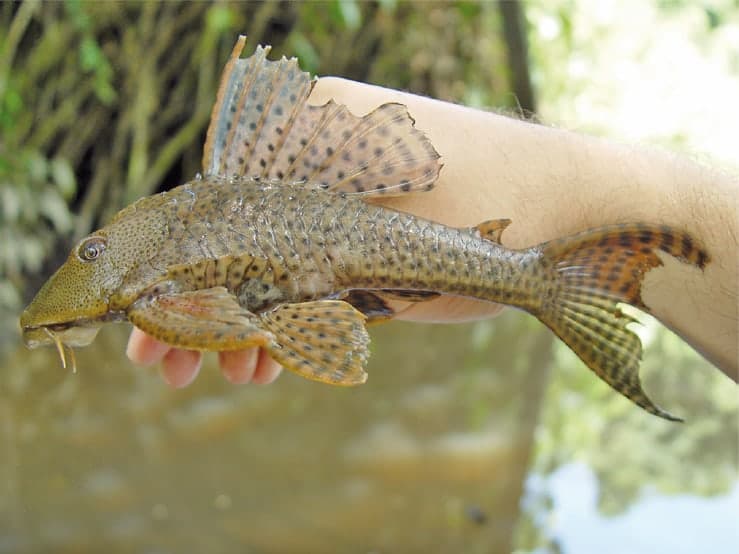
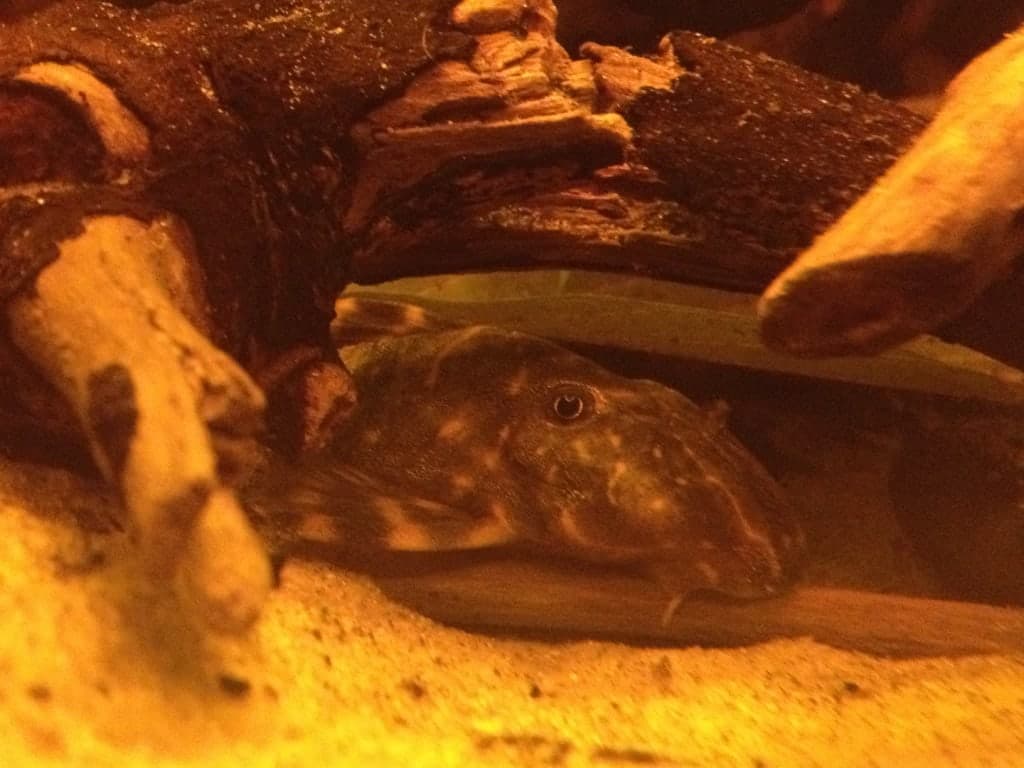
The editorial team checked current taxonomy, named-species databases, peer-reviewed trophic and digestive research, UK trade-body guidance, UK animal-welfare advice and government release rules. Six real photographs show six different pleco labels with literal alt text, fixed source revisions, visible credit, reusable rights and identity limits. None is presented as current shop stock.
The guide remains informational. Current products, prices, sale sizes, availability and checkout belong on the Pleco and Catfish shop hub. Purchases and revenue are final ecommerce outcomes; add-to-cart and checkout are diagnostic funnel actions. Forms, email, correction messages, feedback and newsletters are not leads or ecommerce conversions.
If a source, identity or image caption appears wrong, use the visible Suggest an edit route. Corrections improve the guide; submitting one does not become a sale or lead.
Pleco types: six labels, six different fish
Frequently asked questions
Shop Catfish & Plecos & related
From this care guide straight into our UK live-fish catalogue.
Tetras
Premium Tetras for sale UK — Cardinal, Ember, Black Neon, Rummy Nose, Serpae, Diamond, Glowlight and more. Peaceful community schoolers.
African Cichlids
Explore African cichlids and compare their adult needs, supplied sizes and current prices. Distinguish Rift Lake species from riverine fish before choosing.
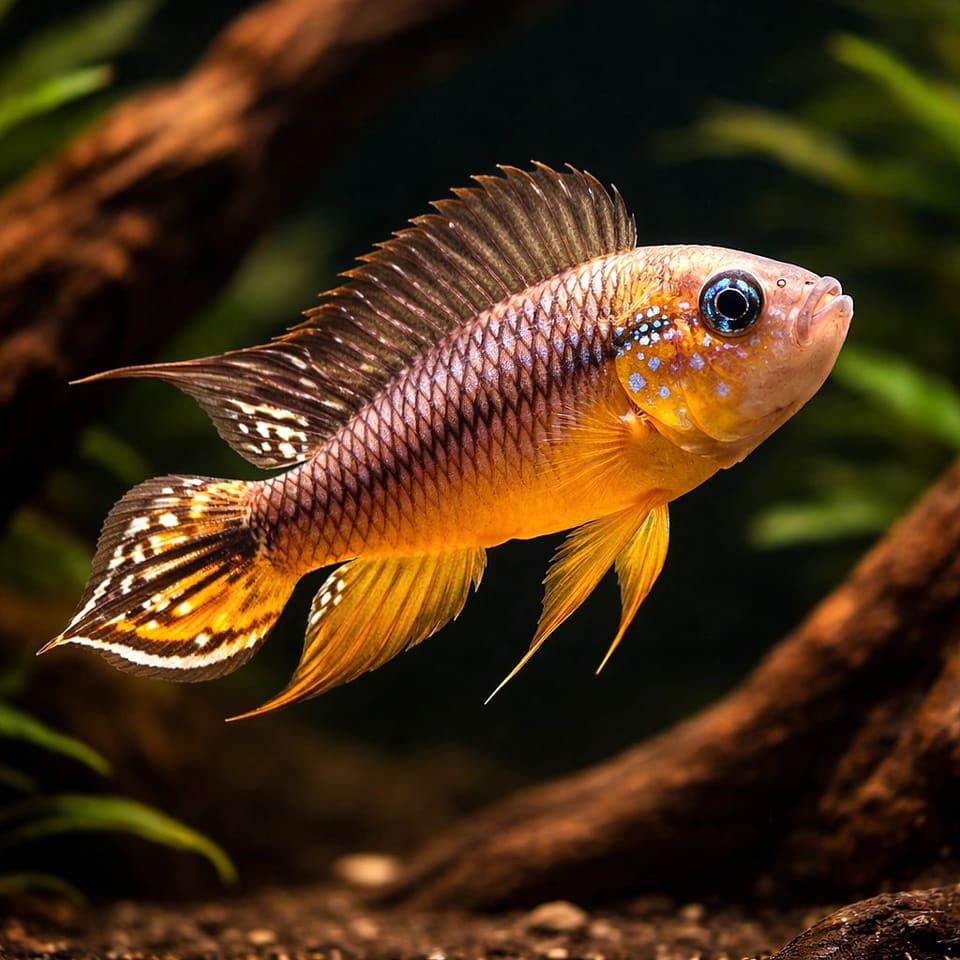
South American Cichlids
South American Cichlids for sale UK — Apistogramma, Rams, Oscars, Severums, Geophagus, Pikes, Discus and Angelfish.
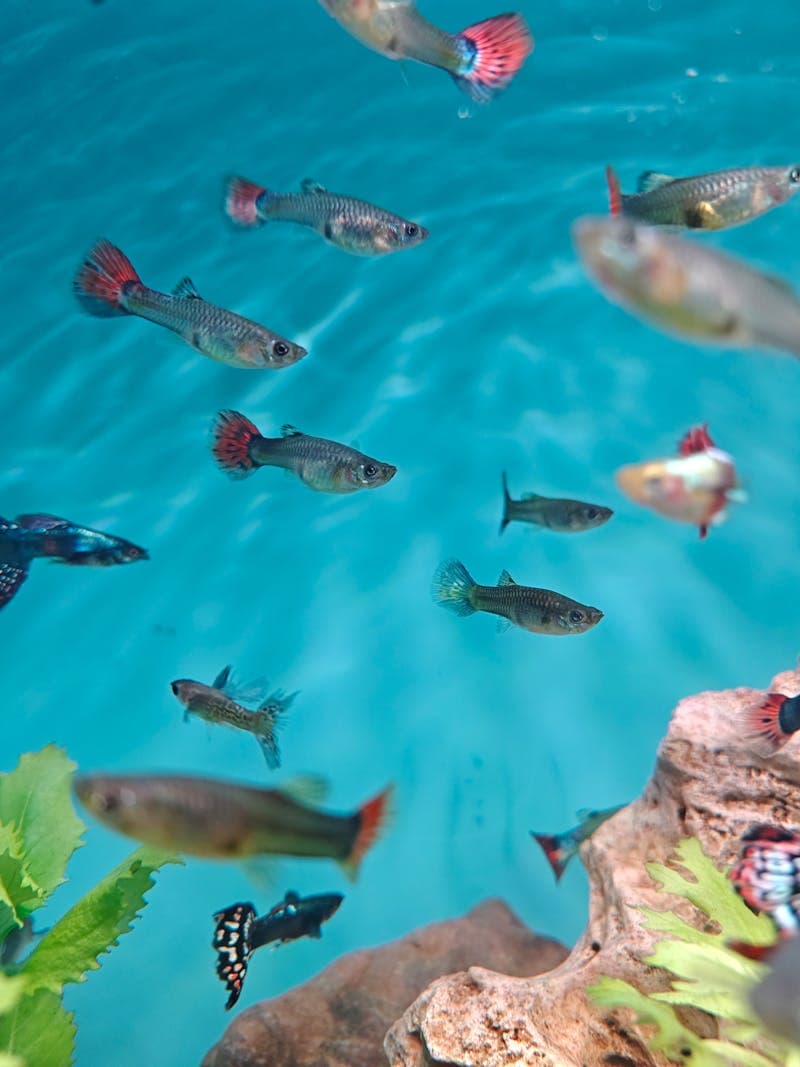
Livebearers
Livebearer fish for sale UK — Guppies, Mollies, Platies, Swordtails, Endlers, Limias. Easy-breeding community favourites.
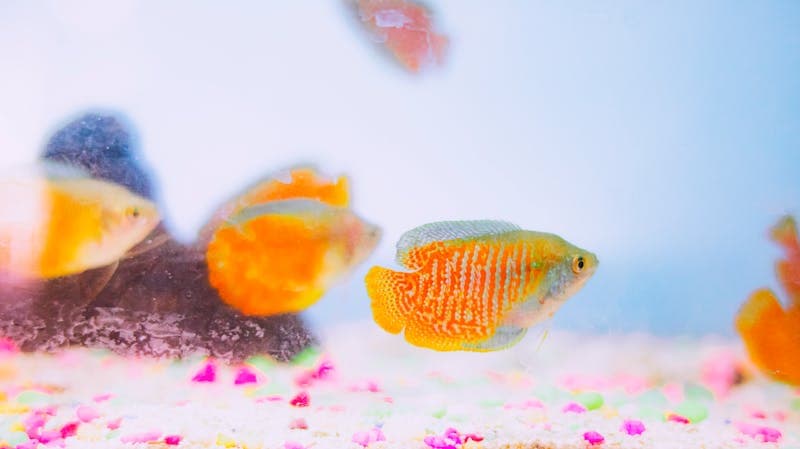
Gouramis & Labyrinth Fish
Gouramis and labyrinth fish for sale UK — Pearl, Dwarf, Honey, Kissing, Giant and rare species. Peaceful surface-breathers.
Rasboras & Danios
Harlequin, Chili, Galaxy, Zebra and Celestial rasboras and danios for planted and nano tanks — peaceful shoalers for UK tap water, priced in groups.

Barbs
Aquarium barbs for sale UK — Cherry, Tiger, Rosy, Denison, Gold, Odessa. Hardy community fish, perfect for beginners.
Sources & further reading
Material factual claims cite the sources below; store policy and cautious inference are labelled in the article. Sources are grouped by type so you can judge their weight at a glance.
Peer-reviewed study (3)
- [9]Lujan, N. K.; Winemiller, K. O. & Armbruster, J. W. (2012). Trophic diversity in the evolution and community assembly of loricariid catfishes. BMC Evolutionary Biology 12:124. DOI: 10.1186/1471-2148-12-124. View source
Demonstrates substantial trophic variation within Loricariidae; it does not establish one aquarium menu for the family.
- [10]German, D. P. (2009). Inside the guts of wood-eating catfishes: can they digest wood?. Journal of Comparative Physiology B 179:1011–1023. DOI: 10.1007/s00360-009-0381-1. View source
Comparative digestive study of selected Panaque, Hypostomus and Pterygoplichthys; it found inefficient wood digestion and does not support a universal wood-fibre claim.
- [11]Orfinger, A. B. & Goodding, D. D. (2018). The global invasion of the suckermouth armored catfish genus Pterygoplichthys. Zoological Studies 57:7. DOI: 10.6620/ZS.2018.57-07. View source
Documents the taxonomically confusing, aquarium-traded Pterygoplichthys group and global invasion records.
Scientific database (5)
- [4]Froese, R. & Pauly, D. (eds.) (2026). Pterygoplichthys pardalis — Amazon sailfin catfish. FishBase. View source
Species record for 57.8 cm maximum total length, Amazon distribution and 23–28°C compiled temperature range.
- [5]Froese, R. & Pauly, D. (eds.) (2026). Hypostomus plecostomus — suckermouth catfish. FishBase. View source
Named-species record used to separate true H. plecostomus from an unverified ‘common pleco’ trade label.
- [6]Froese, R. & Pauly, D. (eds.) (2026). Panaqolus maccus — clown panaque. FishBase. View source
Species record for 8.8 cm maximum standard length and Venezuelan Apuré and Caroni basin distribution.
- [7]Froese, R. & Pauly, D. (eds.) (2026). Panaque nigrolineatus — royal panaque. FishBase. View source
Species record for 43 cm maximum standard length and Orinoco/Amazon distribution.
- [8]Froese, R. & Pauly, D. (eds.) (2026). Hypancistrus zebra — zebra pleco. FishBase. View source
Species record for 7 cm maximum total length, Brazil distribution, 23–26°C compiled range and current CR/CITES context.
Animal-welfare charity (1)
- [12]Royal Society for the Prevention of Cruelty to Animals (2026). Choosing an aquarium for pet fish. RSPCA. View source
UK welfare guidance for adult-size planning, fishless cycling, filtration, oxygen, testing and stable aquarium conditions.
Trade-body guidance (2)
- [2]Ornamental Aquatic Trade Association (2026). How to look after freshwater catfish. OATA. View source
UK, vet-endorsed broad catfish guidance; it explicitly directs readers to species-specific requirements.
- [3]Ornamental Aquatic Trade Association (2026). How to look after tropical algae eaters. OATA. View source
UK guidance on algae limits, supplementary feeding, bristlenose and clown pleco differences, cover, wood, water and buying checks.
Government / regulatory (2)
- [13]Department for Environment, Food & Rural Affairs (2025). Invasive non-native animal species: rules in England and Wales. GOV.UK. View source
Explains the Wildlife and Countryside Act ban on releasing animals not resident or regular visitors in Great Britain.
- [14]Drinking Water Inspectorate (2026). What is hard water?. UK Government. View source
Directs consumers to the supplying water company for local hardness information.
Reference source (1)
- [1]Fricke, R.; Eschmeyer, W. N. & Van der Laan, R. (eds.) (2026). Eschmeyer's Catalog of Fishes: genera and species by family. California Academy of Sciences. View source
Current family count: 117 valid genera and 1,085 valid Loricariidae species in the 13 August 2026 edition.
Spotted something that needs a fix?
Fishkeeping moves fast and we want every guide spot-on. If you think something here is wrong, out of date, or could be clearer, tell us — our team reads every message and updates the page.
Suggest an edit
Tropical Fish Co Editorial Team
Evidence-led aquarium editorial team
The Tropical Fish Co editorial team compiles care guidance from the sources cited on each page, separates published evidence from practical husbandry policy, and checks retail links against the current catalogue. First-hand experience is included only when a named contributor and the observation have been verified.
Keep exploring
Shop related
- Tetras
Premium Tetras for sale UK — Cardinal, Ember, Black Neon, Rummy Nose, Serpae, Diamond, Glowlight and more. Peaceful community schoolers.
- African Cichlids
Explore African cichlids and compare their adult needs, supplied sizes and current prices. Distinguish Rift Lake species from riverine fish before choosing.
- South American Cichlids
South American Cichlids for sale UK — Apistogramma, Rams, Oscars, Severums, Geophagus, Pikes, Discus and Angelfish.
- Livebearers
Livebearer fish for sale UK — Guppies, Mollies, Platies, Swordtails, Endlers, Limias. Easy-breeding community favourites.
Care guides
- Otocinclus Catfish Care: Tank Size, Food & Groups
Otocinclus catfish care for UK tanks: compare tank size, 22–25°C water, group planning, grazing foods, algae limits, tank mates and buying checks.
- Bristlenose Pleco Care Guide: Size, Tank and Lifespan
Bristlenose pleco care for UK tanks: adult size, 90-litre starting point, 22-27°C water, food, wood, sexing and the truth about lifespan.
- Celestial Pearl Danio Care Guide: Tank, Group and Water
Celestial pearl danio care for UK aquariums: 45 × 30 cm footprint, 20–26°C water, group behaviour, food, shrimp risk, sexing and breeding.
Related care guides
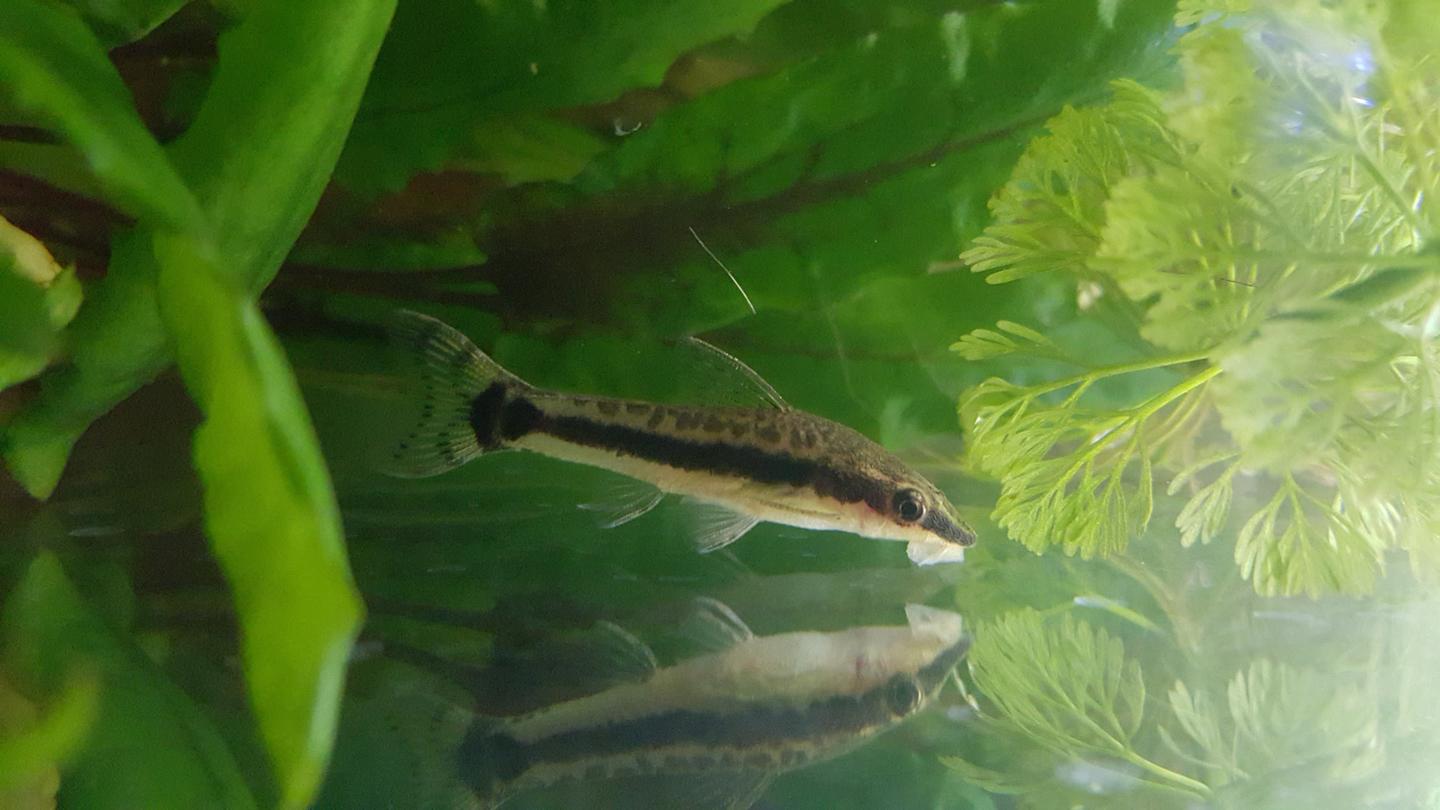
Otocinclus Catfish Care: Tank Size, Food & Groups
Otocinclus are small South American loricariid catfish, not disposable algae cleaners. Confirm the supplied species where possible; start with a mature, stable aquarium with ample grazing surfaces; plan a compatible social group; and provide suitable food even when algae is visible.
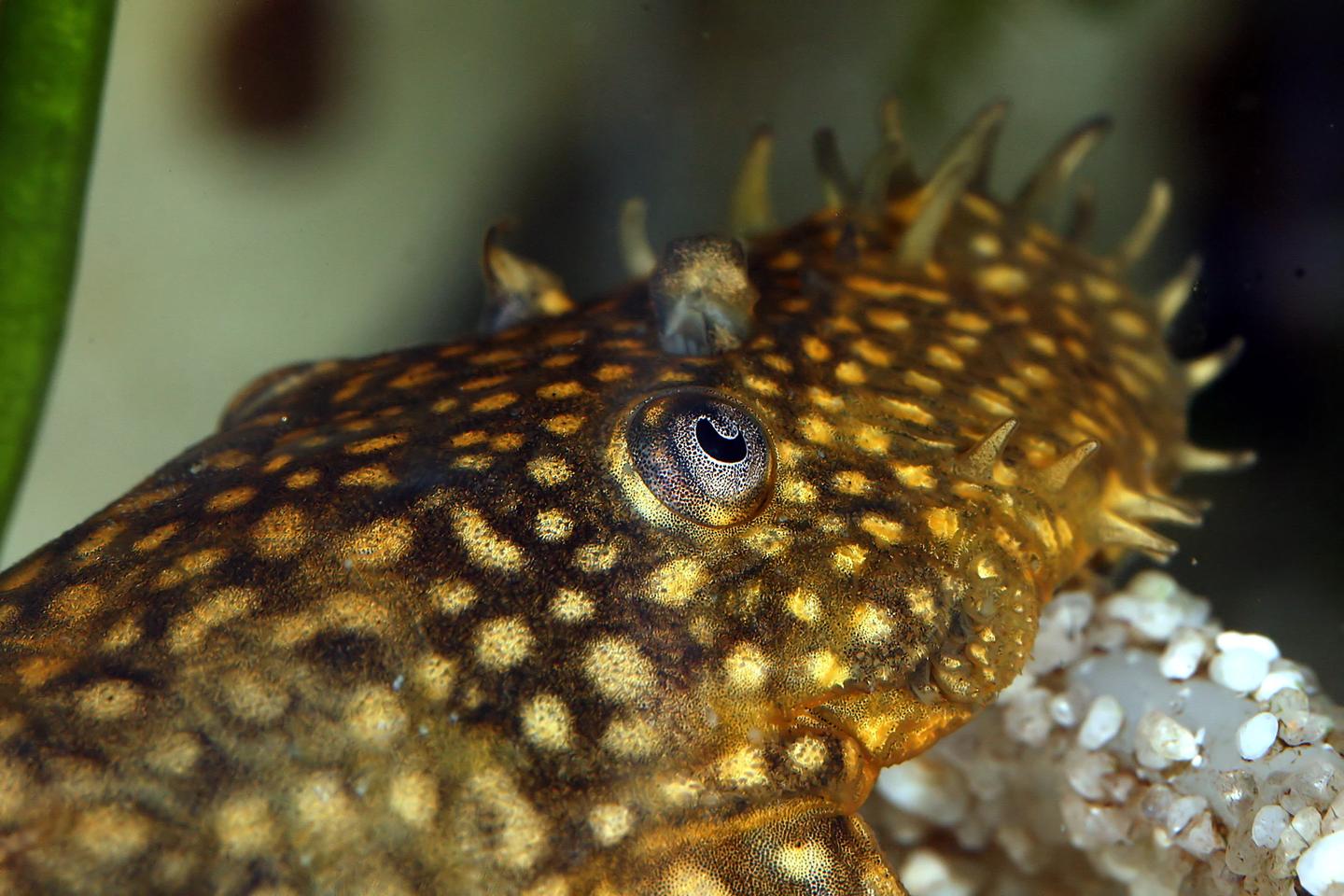
Bristlenose Pleco Care Guide: Size, Tank and Lifespan
For one typical common bristlenose, start with a mature, filtered aquarium of at least 90 litres, useful floor area, wood and cover. OATA reports about 15 cm adult length, 22-27°C, pH 6-8 and 4-12 dGH. Confirm the exact trade identity before applying species-level claims.
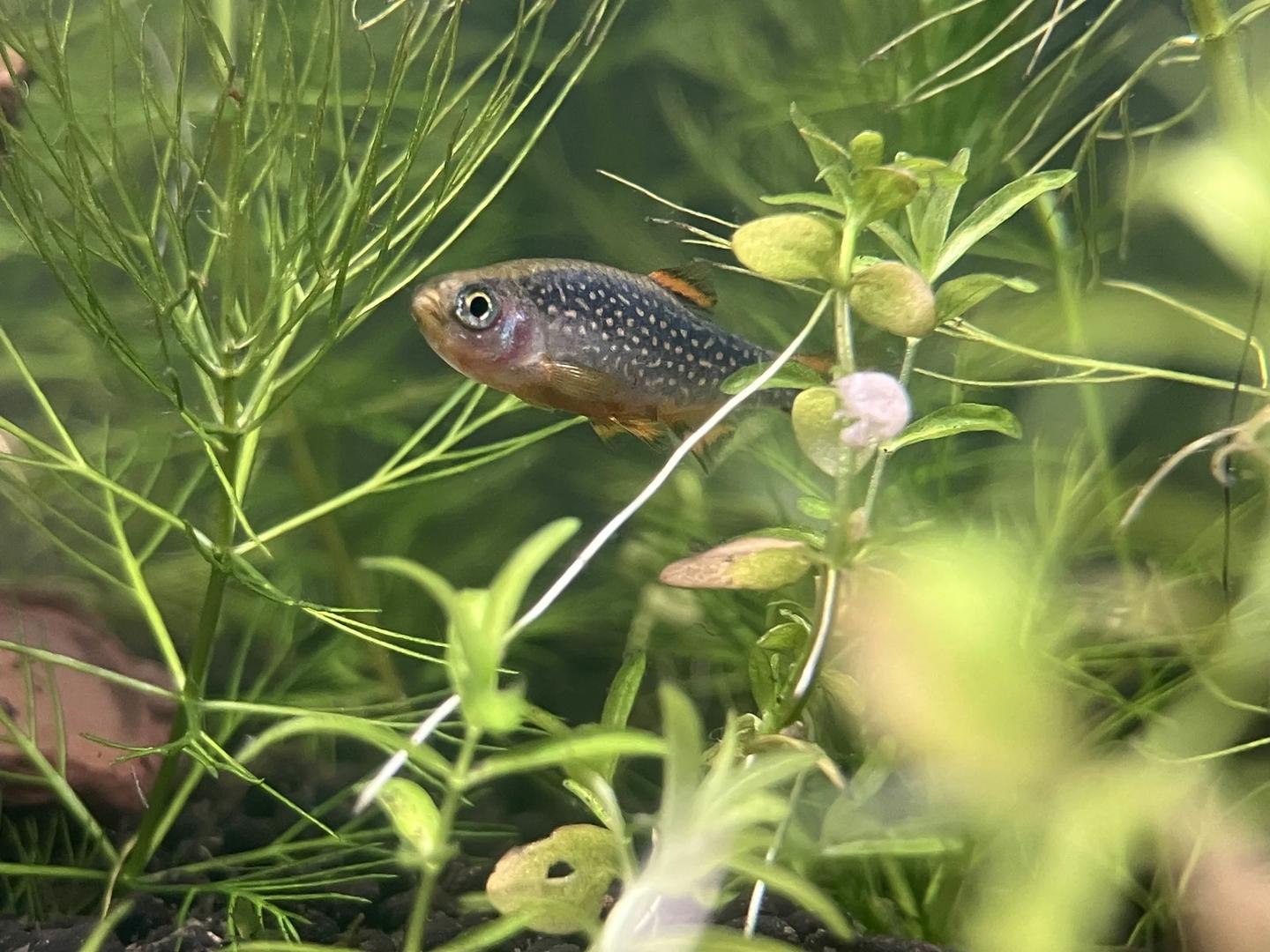
Celestial Pearl Danio Care Guide: Tank, Group and Water
Plan a mature, densely planted aquarium with at least a 45 × 30 cm base for a social group. Use 20–26°C, pH 6.5–7.5 and 5–15 dGH as published screening ranges, then hold a stable value inside the overlap for every animal in the tank.