
Platy Fish Care: Tank Size, Temperature & Types

Platy is a trade name used for Xiphophorus maculatus, X. variatus and domestic forms. Start with at least three in a mature aquarium of at least 45 litres, verify the exact fish and measured water, and plan extra capacity before mixing sexes.
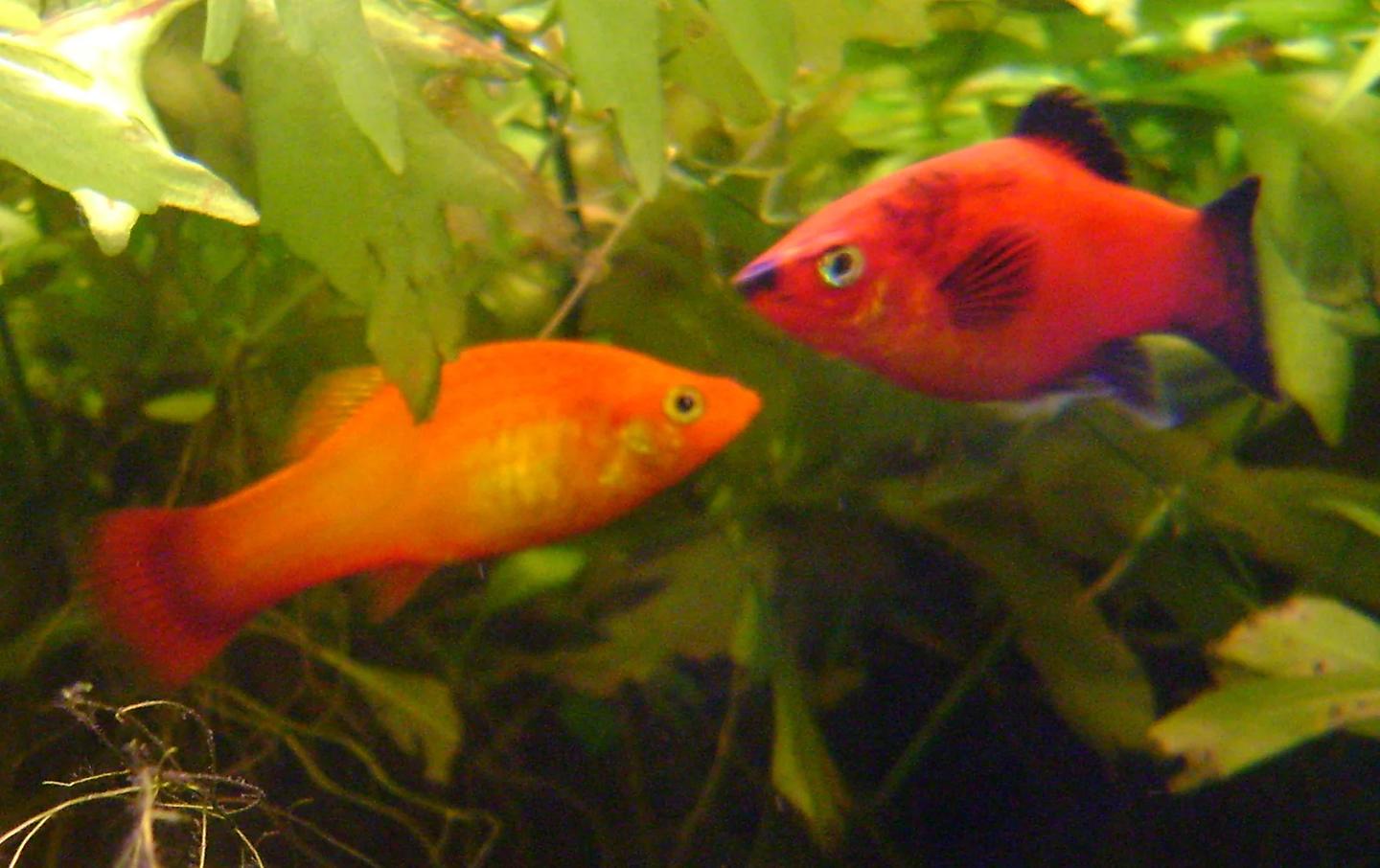
OATA gives at least 45 litres for a small group, at least three fish and two females per male as broad starting guidance. The FishBase X. maculatus hardness range is 9–19 dGH, so identify the fish and use measured overlap rather than stretching one generic range.
Live stock
Platy Fish for sale — see live stock & today’s prices
Start with the name, not the colour. “Platy fish” can mean the southern platyfish Xiphophorus maculatus, the variable platyfish X. variatus, or a domestic form whose ancestry is not fully documented. They are small, social livebearers, but a red, wagtail or Mickey Mouse label does not by itself tell you the species, adult size, sex or water history.
For a small group, OATA gives a 45-litre starting floor, at least three fish, 17–27°C, pH 7.0–8.0 and 4–12 dGH[5]. Those are broad UK care-sheet values, not a fish-per-litre formula. The exact identity, adult group, aquarium footprint, measured water, filtration, tank mates and risk of fry can all require more space.
- Identity: ask whether the fish is X. maculatus, X. variatus or a domestic form with uncertain ancestry.
- Group: start with at least three; OATA suggests two females per male when sexes are mixed.
- Aquarium: at least 45 litres for a small group, then size for the complete adult community and possible young.
- Water: use measured overlap, not “UK tap water” as a result; ammonia and nitrite must remain at zero.
- Temperature: 17–27°C is broad OATA guidance; X. maculatus has a narrower 18–25°C FishBase record.
- Food: offer a complete tropical staple plus appropriately sized plant and animal variety.
- Breeding: a female may produce later broods after separation because platies can store sperm.
What is a platy fish?
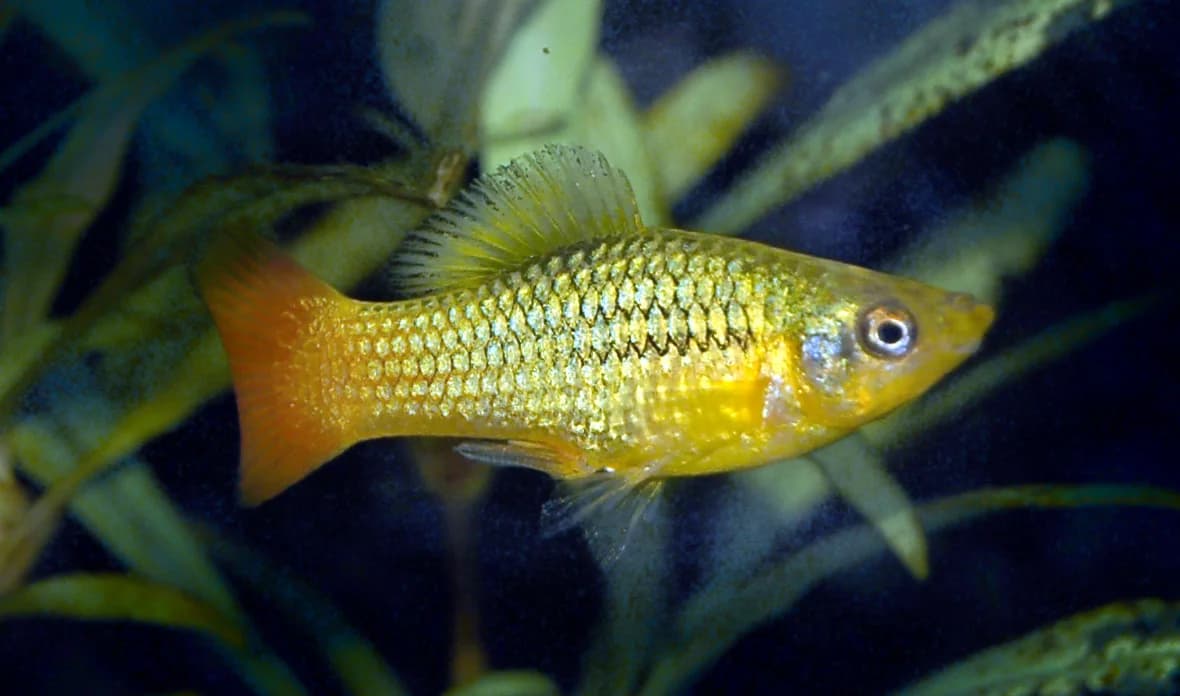
The Catalog of Fishes accepts Xiphophorus maculatus and X. variatus as separate species in the family Poeciliidae, and FishBase maintains a separate variable-platyfish record[1][2][4]. They belong to the same genus as swordtails, but a trade name should not be stretched into a precise scientific identification.
| Common label | Defensible identity | What the label does not prove |
|---|---|---|
| Southern or common platy | Often X. maculatus | Pure ancestry, sex, age or adult size of the actual fish |
| Variatus or variable platy | Often X. variatus | That every similarly coloured fish is X. variatus |
| Wagtail, tuxedo, red, blue or calico | A domestic colour or pattern | Species, parentage, water or temperament |
| Mickey Mouse platy | A tail-base pattern | Species, sex, pregnancy or current availability |
FishBase reports wild X. maculatus from warm springs, canals and slow-moving vegetated water, with plant matter and small animal foods recorded in its diet[3]. That ecological record helps explain the fish; it is not a ready-made aquarium stocking recipe.
Platy fish types and size
OATA gives 6–8 cm as a broad adult size for platies[5]. FishBase is more specific for X. maculatus: up to 4 cm total length for male or unsexed fish and 6 cm for females[3]. These values describe source records, not the guaranteed endpoint of every domestic line.
Domestic names describe visible traits:
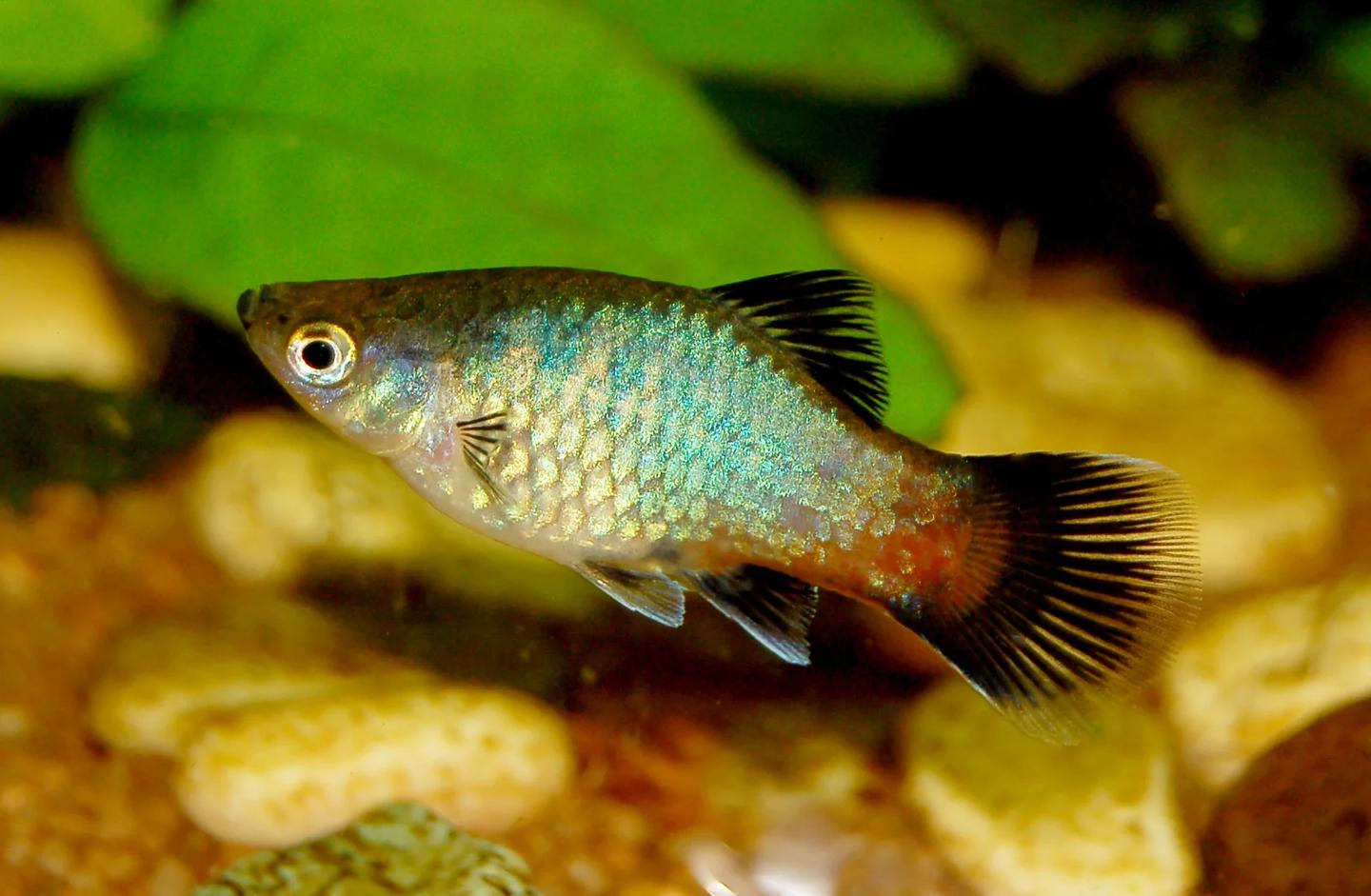
- Wagtail usually means dark or black fins against a coloured body.
- Tuxedo usually means a dark rear body area.
- Mickey Mouse refers to a tail-base marking.
- Sunset, sunburst, red, gold and blue describe colour rather than species.
- Hi-fin and pintail describe fin form rather than a separate care category.
Different patterns can often share an aquarium when the actual fish have compatible adult needs. Do not conclude that all commercial platies are one species, or that two colour forms will produce predictable young. If species or ancestry matters, retain the seller's exact label and ask for its basis.
Platy fish tank size
OATA recommends at least 45 litres for a small group of platies[5]. Treat that as a purchase floor, not a capacity guarantee. A 45-litre aquarium cannot automatically hold every combination of three platies, other livebearers and future fry.
Check these decisions together:
| Decision | What to verify | Unsafe shortcut |
|---|---|---|
| Adult identity | Species or domestic form and largest defensible adult size | Sizing for the juvenile sale photo |
| Social plan | At least three, sex ratio, pursuit and feeding access | Assuming “peaceful” means no chasing |
| Footprint | Usable horizontal room after substrate, plants and equipment | Treating a tall tank like a long tank |
| Water | Measured source and destination temperature, pH and hardness | Assuming every UK postcode matches |
| Capacity | Full adult community, oxygen, filtration and maintenance | A universal fish-per-litre calculation |
| Reproduction | Space or separation plan if sexes may be mixed | Treating fry as zero extra load |
The advertised aquarium volume is usually its empty gross volume. Measure internal length, width and operating water depth to understand the real water volume and swimming footprint.
Tank Volume Calculator
Enter length, width, and height to get your real water volume in litres.
Open tool →The RSPCA advises choosing more space than a minimum and explains that filtration, water, temperature and maintenance affect stocking[9]. A larger, longer aquarium usually gives a group more room to avoid pursuit and makes rapid water changes less likely.
How many platies should be kept together?
OATA suggests at least three and, when males and females are mixed, two females for each male[5]. Use that as a starting arrangement, not a promise that harassment will stop.
Watch the fish rather than trusting the ratio alone:
- Can every fish reach food?
- Can a pursued fish leave the other's line of sight and rest?
- Are fins intact and swimming normal?
- Does one fish spend most of its time hiding, cornered or at the surface?
- Are ammonia, nitrite, temperature and oxygen stable at the complete load?
An all-female group removes ongoing male mating pressure, but it cannot guarantee there will be no fry if females were housed with males before sale. An all-male group is also not automatically peaceful. Provide broken sightlines and a mature separation option, then change the arrangement if one fish cannot rest or feed.
Temperature, pH and hardness for UK water
OATA's broad platy and swordtail guidance is 17–27°C, pH 7.0–8.0 and 4–12 dGH, with zero ammonia and zero nitrite[5]. FishBase gives X. maculatus 18–25°C, pH 7.0–8.0 and 9–19 dGH[3].
The difference matters. It does not mean one source is an excuse to choose whichever extreme is convenient. It means identity and provenance should be verified, then the aquarium should be held stably inside the evidence-backed overlap for every animal. For an X. maculatus-led plan, 18–25°C, pH 7–8 and the overlapping 9–12 dGH are a cautious place to discuss with the seller—not a universal prescription for every domestic platy.
UK tap water is not one chemistry. The Drinking Water Inspectorate directs customers to their water company for local hardness information and notes that broad maps cannot show every local variation[10]. Test the aquarium itself because substrate, rocks, top-ups and maintenance can change the result.
Water Parameter Matcher
Enter your tap water readings to see if this species will thrive.
Open tool →Do platy fish need a heater?
They need a stable verified temperature. In many UK homes, a thermostatic heater and separate thermometer are the safest way to prevent winter or overnight drops. An unheated aquarium is suitable only when the room and water reliably remain within the chosen range throughout the year. A heater is not permission to ignore maximum temperature, oxygen or equipment failure.
Do not chase pH with rapid chemical adjustments or add hardness products from a generic article. First compare the seller's measured holding water with your mature aquarium and consider every inhabitant.
Filtration, cycling and layout
Platies should enter a mature filtered aquarium, not be used to cycle one. The RSPCA recommends fishless cycling and adding fish only after the ammonia and nitrite rise associated with cycling has returned to zero[9]. OATA likewise warns against stocking faster than the biological filter can support[5].
A useful layout includes:
- an open horizontal swimming area;
- plants or safe decor that break long sightlines;
- a lid with safe gaps around cables and pipework;
- surface movement and oxygen without forcing fish into strong current everywhere;
- protected filter intakes if fry may be present;
- access for testing, debris removal and water changes.
Plants can provide refuge, but they do not correct crowding, poor water or continuous pursuit. Check the whole aquarium at feeding and resting times rather than judging welfare from one active moment.
What do platy fish eat?
OATA describes platies as omnivores and recommends good-quality flake or granules with suitable live or frozen foods as variety[5]. FishBase records worms, crustaceans, insects and plant matter for wild X. maculatus[3].
Use feeding to check the group:
- Offer an appropriately sized complete tropical staple.
- Add suitable plant and animal variety without displacing the complete food.
- Spread food over more than one area if a dominant fish blocks access.
- Confirm each fish eats; a lively group can hide one declining individual.
- Remove persistent leftovers and adjust from body condition and water tests.
Avoid fixed “two minutes” or “two pinches” rules as though fish count, food density and pellet size never change. Overfeeding can degrade water, but one missed meal, hollow body or poor appetite may also signal competition, stress or illness that deserves investigation.
Platy fish tank mates
Platies are commonly described as peaceful community fish. Compatibility still has to be demonstrated in the real aquarium. Match adult size, temperature, hardness, activity, fin shape, feeding, sex ratio and total capacity before combining species.
| Candidate | Why it may fit | What still needs checking |
|---|---|---|
| Mollies | Some smaller forms share broad hard-water preferences | Molly identity, adult size, activity and extra room |
| Guppies | Broad OATA care ranges can overlap | Fin attention, fry, feeding and the complete adult load |
| Other platy forms | Similar activity may work | Species, sex ratio, pursuit and reproduction |
| Other medium-hard-water community fish | Chemistry may overlap | Adult temperament, speed, feeding layer and minimum group |
| Shrimp, fry or very small fish | May share some water ranges | Opportunistic predation cannot be ruled out |
The tool is a comparison aid, not a guarantee. Avoid choosing a soft-water species only because it appears on a generic “peaceful tank mates” list, and do not assume that sharing a genus with swordtails makes every mixed group suitable for a 45-litre tank.
Platy or Molly: which is a better fit?
Neither fish is universally “better.” OATA gives the same 45-litre small-group floor for platies and smaller mollies, but at least 80 litres for sailfin mollies[5][8]. A platy can therefore be the more practical starting comparison when the aquarium cannot support the adult size and swimming room of a sailfin, but the decision still depends on the exact fish.
| Question | Platy starting point | Molly starting point |
|---|---|---|
| Identity | X. maculatus, X. variatus or domestic form | Common-type, sailfin, Yucatan sailfin or uncertain domestic form |
| OATA small-group floor | 45 litres | 45 litres for smaller mollies; 80 litres for sailfins |
| Adult planning | Broad 6–8 cm OATA guidance | Species and body form vary more widely |
| Best reason to choose | Verified fit with water, space and group | Verified fit with water, larger adult form and group |
Read the Molly Fish care guide before comparing a named molly offer. Do not compare juvenile sale photos or assume that two hard-water livebearers have identical adult space, sex-ratio or feeding needs.
Male vs female platy fish
For mature fish, inspect the anal fin rather than relying on colour or belly shape. OATA describes the male's narrow modified anal fin as a gonopodium; the female has a broader fan-shaped anal fin[5].
| Feature | Mature male | Mature female | Important limit |
|---|---|---|---|
| Anal fin | Narrow gonopodium | Broader fan shape | Juveniles may not be confidently sexed from a sales photo |
| Body | Often slimmer | Often deeper-bodied | Feeding, strain and health also affect shape |
| Colour | May be bright | May also be bright | Colour is not a reliable sex test |
| Abdomen | Usually less rounded | May be rounded | Roundness alone does not prove pregnancy |
Ask the seller to confirm the actual fish shortly before dispatch. If sex cannot be verified, plan the group and capacity around uncertainty rather than promising an exact ratio.
Pregnant platy fish, birth and fry
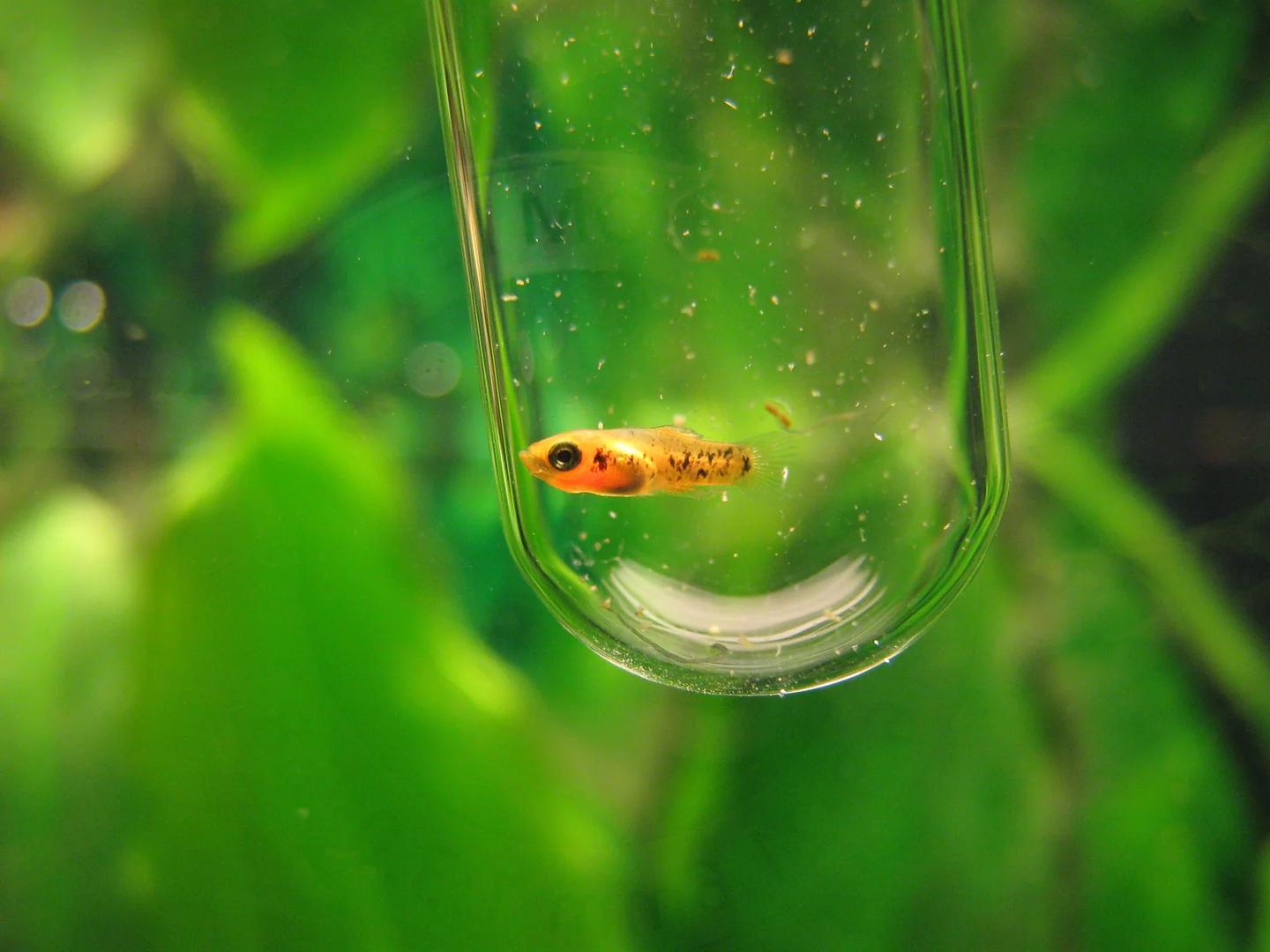
Platies are livebearers: females give birth to free-swimming young. OATA gives a broad 20–80 fry and roughly four weeks as care-sheet guidance[5]. Those numbers are not a diagnosis, delivery date or brood-size guarantee.
Research on X. maculatus found viable sperm stored in the female reproductive tract for several months[6]. A study involving X. variatus also reported substantial variation in time between broods rather than one dependable interval[7]. A female may therefore produce later young after males are removed, but a round abdomen does not prove she is pregnant.
If young are possible, plan before they arrive:
- mature filtered capacity as fry grow;
- fine plant cover and a guarded filter intake;
- appropriately sized complete food;
- more frequent observation of water quality and feeding access;
- a lawful, humane separation or rehoming plan.
Do not rely on adult predation as a precise population-control method or assume a local shop will accept homebred fish. Avoid repeatedly moving a heavily rounded female or confining her in a tiny breeding trap without a clear welfare reason.
Platy fish lifespan
OATA says platies may live several years when kept in good conditions[5]. The reviewed scientific and UK care sources do not support one exact 2-, 3- or 5-year guarantee for every platy sold under a broad trade name.
Age at purchase is often unknown. Species or strain, inherited health, previous care, chronic social pressure, water stability, nutrition and disease exposure all affect the outcome. Use “several years” for long-term planning, and treat exact lifespan numbers in snippets as estimates unless their population and method are shown.
Health: symptoms are not diagnoses
White spots, clamped fins, gasping, rocking, weight loss, swelling, isolation and loss of appetite are observations—not one-step diagnoses. Temperature, oxygen, water chemistry, transport, injury, social stress and infection can overlap.
Respond in order:
- Test ammonia, nitrite, nitrate, pH, hardness and temperature.
- Check surface movement, filter flow, recent maintenance, new animals and pursuit.
- Compare source and destination water for the actual fish.
- Isolate only in a suitable mature system when aggression or disease risk justifies it.
- Seek an experienced aquatic professional or veterinary diagnosis when signs persist, worsen, or include gasping, injury, loss of balance or refusal to feed.
Do not raise temperature, add salt or select a medicine merely from a symptom name. Read the product label, account for invertebrates and other species, and never combine treatments without qualified guidance. OATA recommends testing water and seeking expert help when fish show abnormal behaviour, breathing, appearance or appetite[5].
Buying platy fish in the UK
Before payment or dispatch, ask:
| Ask the seller | Why it matters |
|---|---|
| What species or domestic form is this, and how certain is the label? | Colour and pattern do not prove taxonomy. |
| What adult size should I plan for? | Juvenile sale size is not adult capacity. |
| What are the measured holding temperature, pH and GH/KH? | Safe matching begins with real source and destination water. |
| Is the actual fish confidently sexed, and have females shared water with males? | Group planning and later fry depend on it. |
| What is the sale unit and current body size? | Photo count, “pair” and pack size must not be assumed. |
| What current arrival instructions and welfare support apply? | Journey and bag conditions vary. |
The Platy Fish shop owns current stock, price, sale size, sex options and availability. This care guide deliberately does not hard-code those changing facts. The delivery page is the current source for postcode coverage, dispatch and Live Arrival Guarantee terms.
Prepare and test the mature aquarium before ordering. Follow the seller's current arrival instructions and compare source with destination water rather than applying one fixed timer to every journey. Current GOV.UK seller guidance requires species-appropriate conditions, useful acclimatisation information and welfare-led stocking decisions[11]. Our new-fish acclimation guide explains the decision points.
Evidence limits and editorial method
This page uses Catalog of Fishes for accepted names, FishBase for labelled species records, OATA for broad UK aquarium guidance, the Drinking Water Inspectorate and RSPCA for UK water and welfare context, and primary research only for its narrow findings on sperm storage and reproductive variation.
No source proves that every domestic colour form is one species, every UK tap suits platies, one ratio prevents harassment, a rounded fish is pregnant, one brood interval applies to every female, one tank-mate list guarantees safety or an exact lifespan applies to every purchased fish. Those claims have been removed rather than rewritten to sound more certain.
Tropical Fish Co sells some animals discussed here. Commercial stock is kept on the shop page, separate from the care answer. If you spot an error, use the correction link below so the claim and source can be reviewed. Correction forms and email are not leads or ecommerce conversions; only shopping actions such as add-to-cart, checkout and purchase are commerce outcomes.
Platy species, domestic colour and early life
Frequently asked questions
Sources & further reading
Material factual claims cite the sources below; store policy and cautious inference are labelled in the article. Sources are grouped by type so you can judge their weight at a glance.
Peer-reviewed study (2)
- [6]Potter, H. & Kramer, C. R. (2000). Ultrastructural observations on sperm storage in the ovary of the platyfish, Xiphophorus maculatus (Teleostei: Poeciliidae): the role of the duct epithelium. Journal of Morphology. View source
Direct anatomical evidence of viable sperm storage for several months; not proof that every purchased female is carrying young.
- [7]Yang, H., Cuevas-Uribe, R., Savage, M. G., Walter, R. B. & Tiersch, T. R. (2012). Sperm cryopreservation in live-bearing Xiphophorus fishes: offspring production from Xiphophorus variatus and strategies for establishment of sperm repositories. Zebrafish. View source
Artificial-insemination study and husbandry context reporting variation in intervals between early Xiphophorus broods; not a fixed home-aquarium timetable or brood-size promise.
Scientific database (4)
- [1]Fricke, R., Eschmeyer, W. N. & Van der Laan, R. (eds.) (2026). Eschmeyer's Catalog of Fishes: Xiphophorus maculatus. California Academy of Sciences. View source
Current accepted name, family and native distribution; not an identification key for domestic colour forms.
- [2]Fricke, R., Eschmeyer, W. N. & Van der Laan, R. (eds.) (2026). Eschmeyer's Catalog of Fishes: Xiphophorus variatus. California Academy of Sciences. View source
Current accepted variable-platyfish name and distribution; it does not establish the identity of a retail strain.
- [3]Froese, R. & Pauly, D. (eds.) (2026). FishBase species summary: Xiphophorus maculatus. FishBase. View source
Species-level size, environmental range, habitat and food records; not a domestic-strain, aquarium-capacity or lifespan guarantee.
- [4]Froese, R. & Pauly, D. (eds.) (2026). FishBase species summary: Xiphophorus variatus. FishBase. View source
Species-level record for the variable platyfish; not proof that a colour-named shop fish is pure X. variatus.
Animal-welfare charity (1)
- [9]Royal Society for the Prevention of Cruelty to Animals. Choosing an aquarium for pet fish. RSPCA. View source
UK welfare guidance for space, biological filtration, fishless cycling, heating, water testing and stable conditions.
Trade-body guidance (2)
- [5]Ornamental Aquatic Trade Association (2026). How to look after platies and swordtails. OATA. View source
Broad UK aquarium guidance for size, water, group, sexing, setup, feeding, health and reproduction; not a controlled species trial or capacity formula.
- [8]Ornamental Aquatic Trade Association (2026). How to look after guppies and mollies. OATA. View source
Broad UK size and aquarium-floor comparison for smaller mollies and sailfins; not a reason to treat every domestic molly as one species.
Government / regulatory (2)
- [10]Drinking Water Inspectorate. Water Hardness / Hard Water. Drinking Water Inspectorate. View source
Official explanation of hardness and local UK variation; it does not prove that every UK tap suits every platy.
- [11]Department for Environment, Food & Rural Affairs (2026). Selling animals as pets licensing: statutory guidance for local authorities. GOV.UK. View source
Current licensed-seller context for species-appropriate water, acclimatisation information, records and welfare-led stocking.
Spotted something that needs a fix?
Fishkeeping moves fast and we want every guide spot-on. If you think something here is wrong, out of date, or could be clearer, tell us — our team reads every message and updates the page.
Suggest an edit
Tropical Fish Co Editorial Team
Evidence-led aquarium editorial team
The Tropical Fish Co editorial team compiles care guidance from the sources cited on each page, separates published evidence from practical husbandry policy, and checks retail links against the current catalogue. First-hand experience is included only when a named contributor and the observation have been verified.
Keep exploring
Care guides
- Molly Fish Care: Tank Size, Temperature & Types
Molly fish care for UK keepers: compare common and sailfin types, tank sizes, temperature, hard-water needs, groups, feeding and tank mates.
- Guppy Care Guide: Poecilia reticulata
Evidence-checked guppy care for UK aquariums: tank size, social and sex planning, water, feeding, tank mates, health, breeding and buying.
- Aquarium Water Parameters: What to Test and Why
Learn which freshwater aquarium water parameters to test, how to read ammonia, nitrite, nitrate, pH, GH and KH, and when a result needs action.
Related care guides
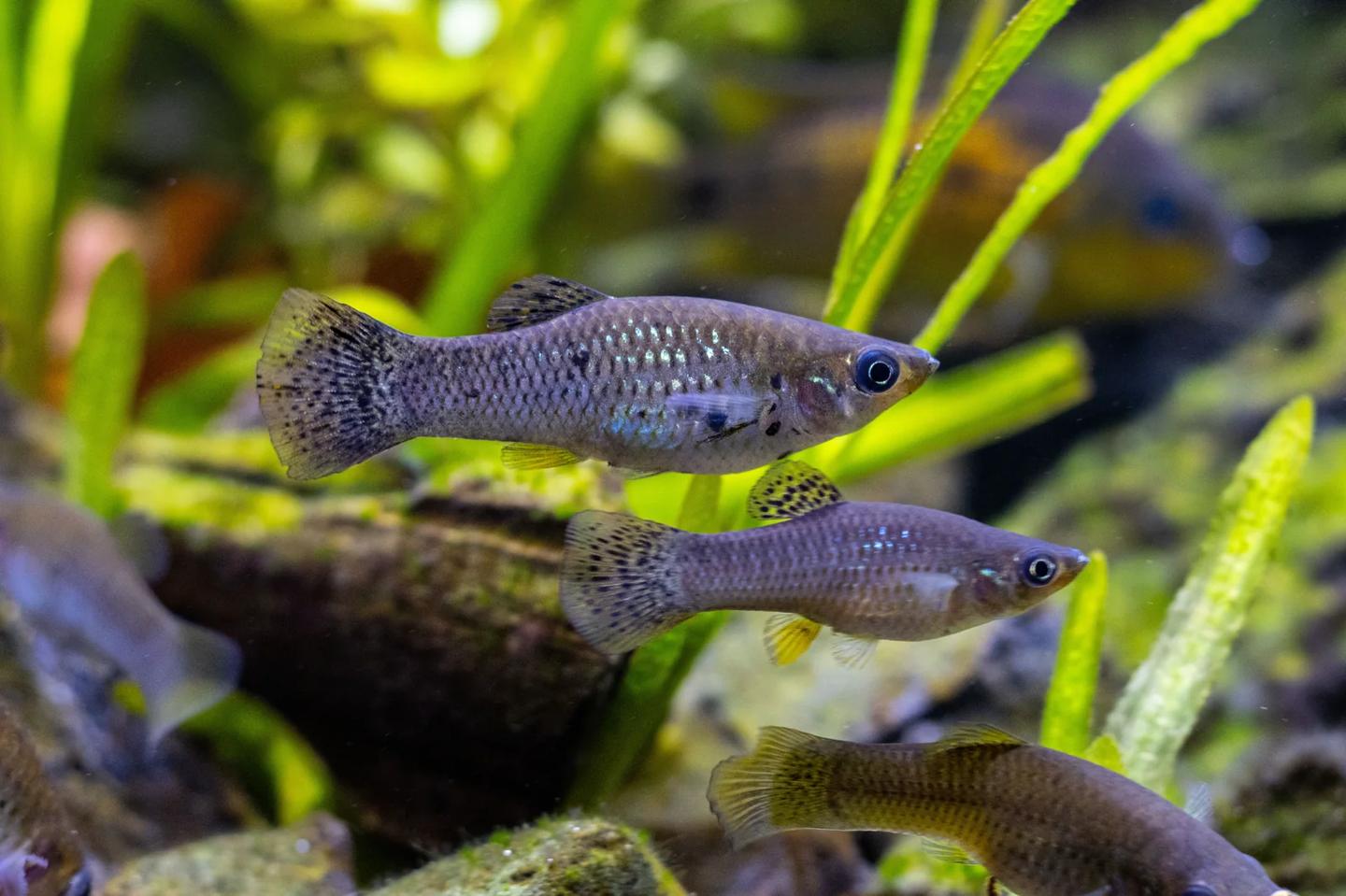
Molly Fish Care: Tank Size, Temperature & Types
Mollies are social livebearers sold under a broad trade name. Identify the species or domestic form first; plan at least 45 litres for a small group of smaller mollies or 80 litres for sailfins, then verify adult size, water, sex ratio and the complete community.
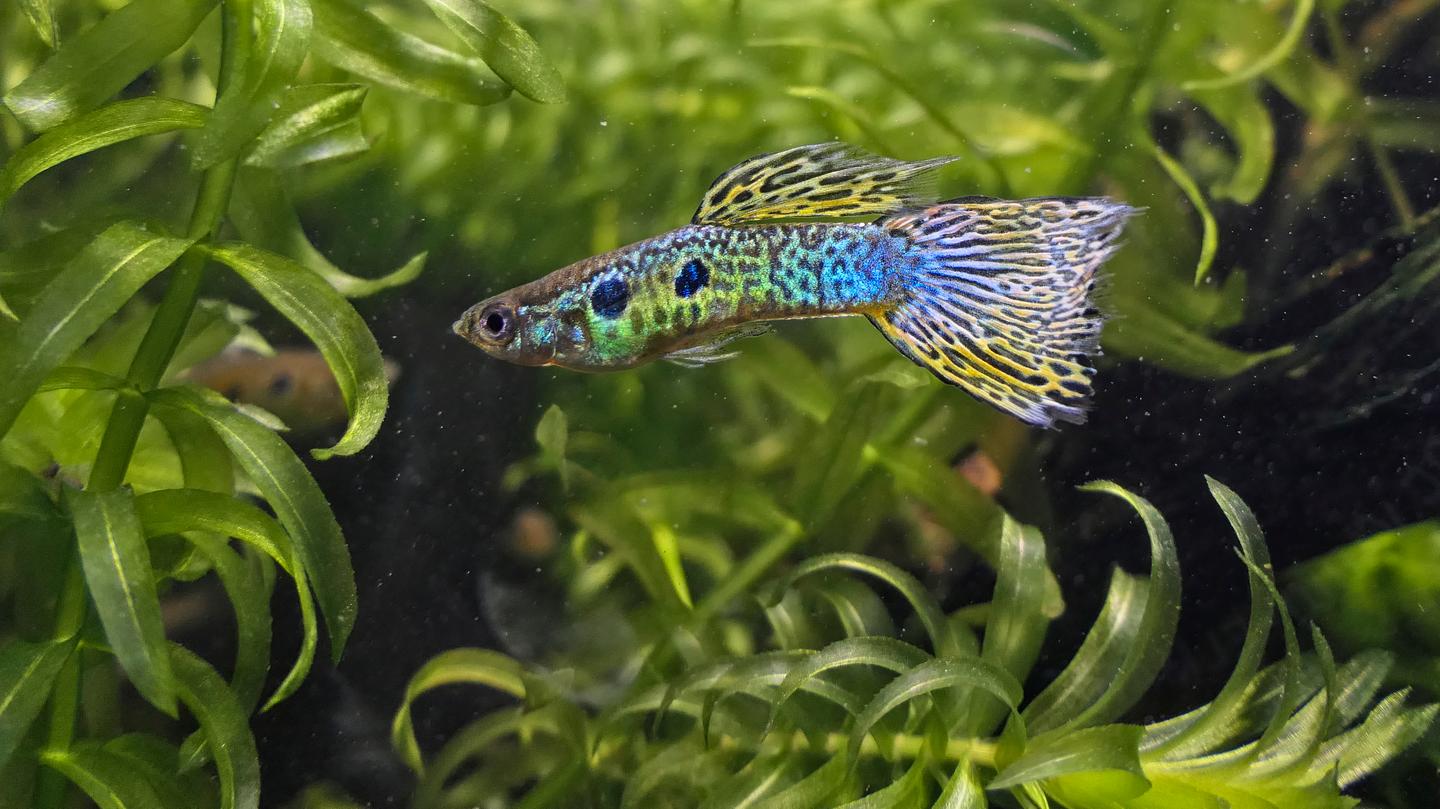
Guppy Care Guide: Poecilia reticulata
Guppies are social livebearers suited to a prepared beginner, not a fish-per-litre formula. Use a mature filtered aquarium, tested neutral-to-alkaline mineral-bearing water, deliberate sex and population planning, open swimming room, cover and a separation option.
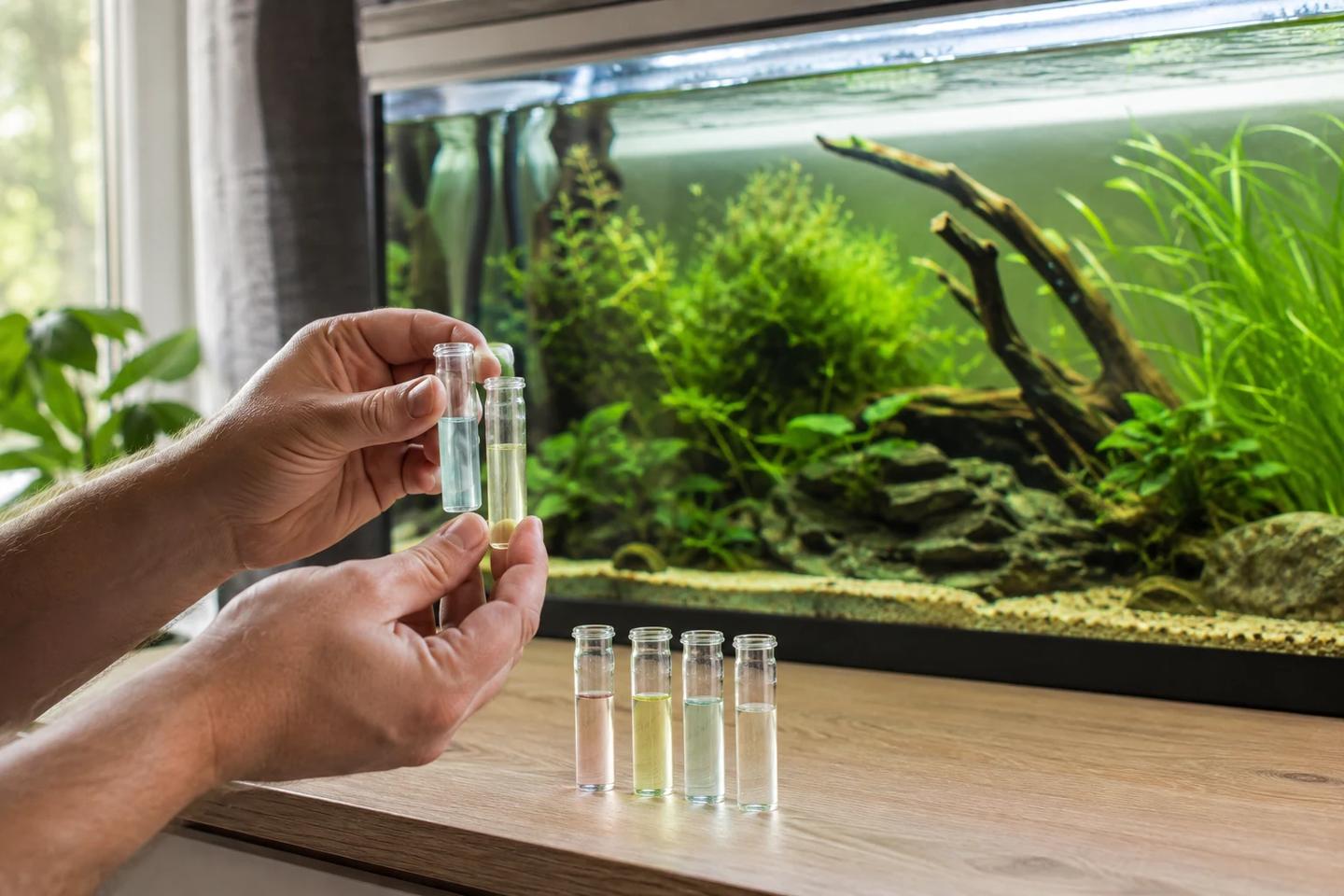
Aquarium Water Parameters: What to Test and Why
There is no universal set of perfect freshwater aquarium parameters. Identify the animals, learn what the test and unit actually report, establish your local source-water baseline, and compare repeat measurements. In an established aquarium, a confirmed ammonia or nitrite detection needs investigation; pH, GH, KH, temperature and nitrate decisions depend on the species, life stage and whole system.