
Fish Tank Nitrogen Cycle: A Test-Led UK Guide

The fish tank nitrogen cycle is the processing of nitrogenous waste through a living biofilter. Do it without fish: run the complete system, use one documented aquarium-safe ammonia-source method, and test with that method's stated units and timing. A tank is not ready because a week has passed or the water looks clear; it is ready only when repeated results show that the biofilter handles the planned challenge without detectable ammonia or nitrite, followed by cautious stocking and continued checks.
A fish tank does not become biologically ready because it has stood for a day, a week or a month. Cycling means establishing and testing the living biofilter that processes nitrogenous waste. The safest route is to do that work before fish, shrimp or snails are present.
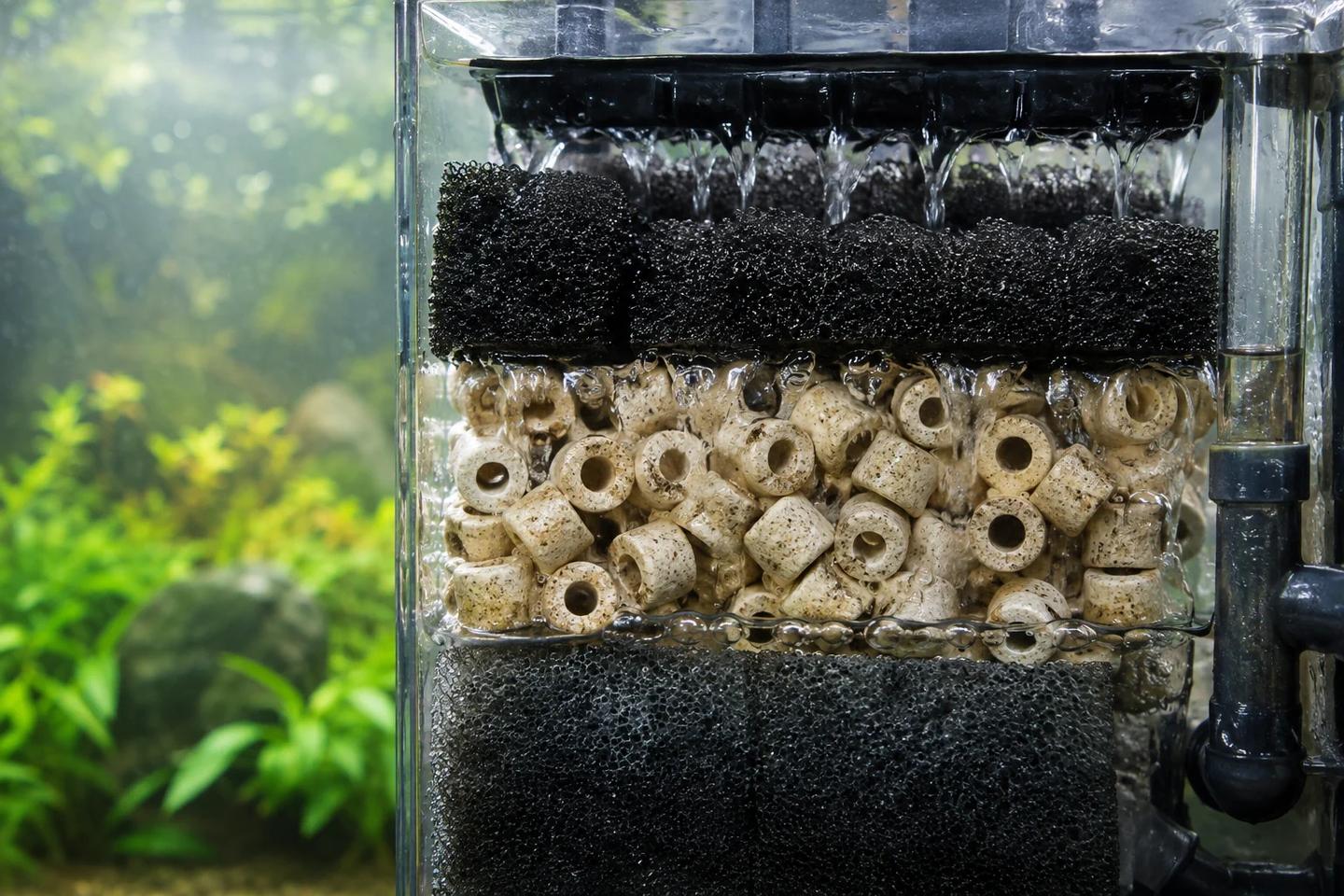
- Run the complete aquarium with its filter and intended media.
- Use one documented fishless method and an aquarium-safe ammonia source; do not combine household dosing recipes.
- Record the exact test name, analyte, unit, time and result for ammonia and nitrite.
- The tank is ready only when repeat tests show that the biofilter handles the method's defined challenge without detectable ammonia or nitrite.
- Add animals cautiously and test again. A completed test is evidence of capacity under those conditions, not a permanent guarantee.
If fish are already gasping, hanging at the surface, collapsing, showing unusual gill colour, or several animals change at once, go to Fish are already in the tank. This guide supports first response; it does not diagnose or prescribe treatment.
What is the fish tank nitrogen cycle?
Food, faeces, urine, damaged plants and dead material add nitrogenous compounds to aquarium water. In a working biofilter, attached communities of microorganisms transform some of that waste through oxidation:
| Stage | What is happening | What the keeper can measure | What the result cannot prove alone |
|---|---|---|---|
| Waste enters | Fish metabolism or decomposing organic matter contributes ammonia or ammonium | A kit-specific ammonia result | The source, toxicity or biofilter capacity without context |
| Ammonia oxidation | Ammonia-oxidising microorganisms produce nitrite | Ammonia trend and later nitrite | Which microbial group is present in your filter |
| Nitrite oxidation | Nitrite-oxidising microorganisms produce nitrate | Nitrite trend and later nitrate | That the tank can process a fresh waste challenge |
| Nitrogen leaves or is stored | Plants assimilate nitrogen; partial water changes export it; other processes vary by system | Nitrate trend, plant growth and maintenance record | A universal safe nitrate value for every animal |
The Royal Veterinary College describes the aquarium as a closed system in which waste can accumulate, and places nitrifying microorganisms mainly in the filter and substrate.[2] OATA likewise explains why oxygenated filter surfaces and continuing water flow matter.[3] The useful mental model is therefore not “old water becomes safe”. It is a complete, running system develops measurable processing capacity.
Ammonia is not one context-free number
Many hobby tests report total ammonia nitrogen or another combined measure rather than un-ionised NH3 alone. The balance between un-ionised ammonia and ammonium changes with pH and temperature, and animals differ in sensitivity.[5] Before interpreting any result, copy the analyte and unit exactly from the test instructions. Do not import a toxicity threshold from a different test, species or temperature.
The two-species story is too simple
Older diagrams often assign ammonia oxidation to Nitrosomonas and nitrite oxidation to Nitrobacter. Aquarium studies do not support using those two names as a universal description. Hovanec and DeLong found that familiar cultured ammonia oxidisers were not the dominant organisms in the systems sampled;[6] later work associated Nitrospira-like organisms with nitrite oxidation,[7] and Sauder and colleagues found ammonia-oxidising archaea important in many established freshwater biofilters studied.[8]
That research improves the explanation, but it does not let a photograph, cloudiness or home test identify the microorganisms in one filter. For the keeper, measured function matters more than guessing a genus.
Fishless cycling
Fishless cycling supplies a controlled nitrogen source while the aquarium has no animals in it. RSPCA guidance strongly recommends this welfare-led approach and advises adding fish only after ammonia and nitrite have risen and returned to zero.[1]
Before you begin
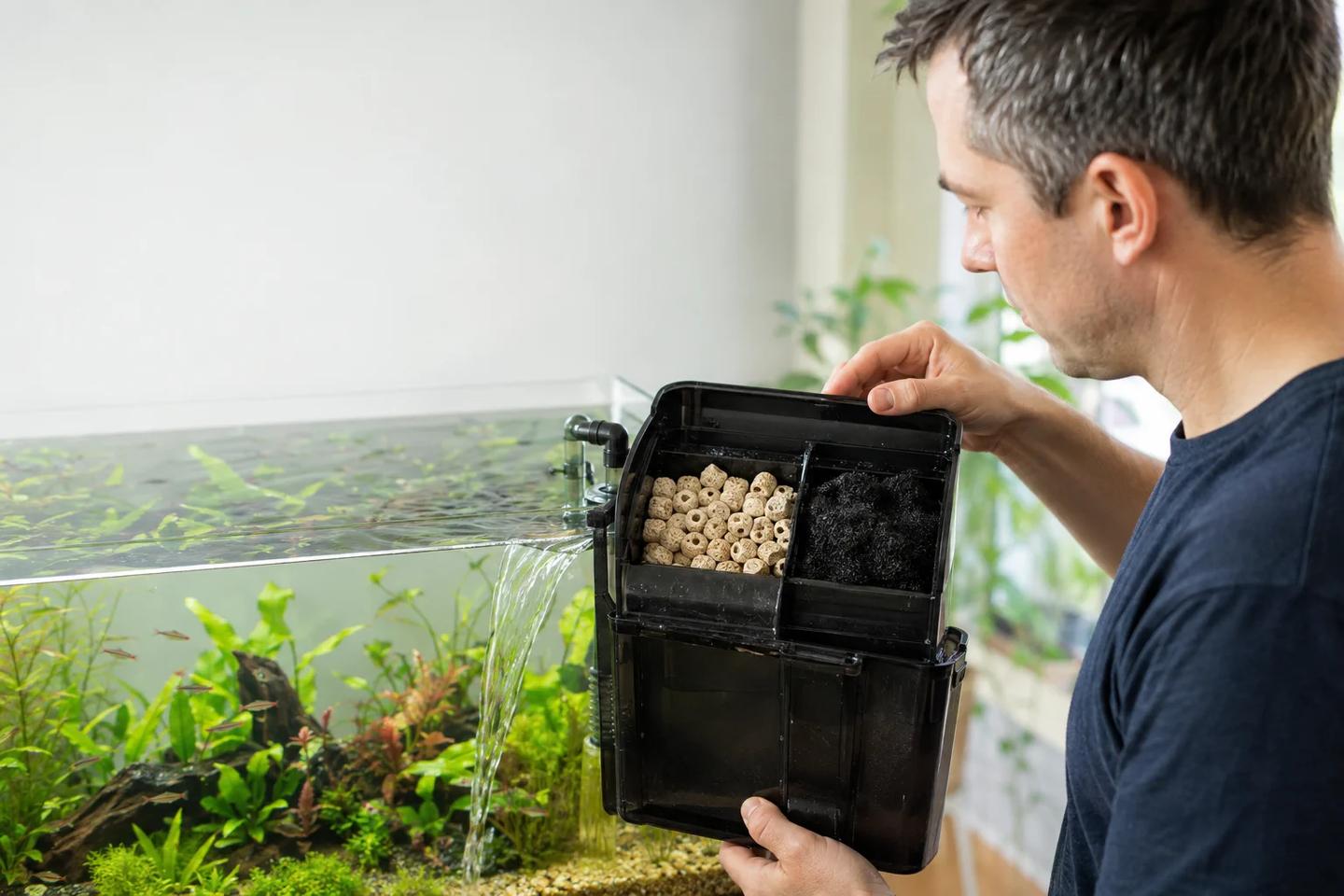
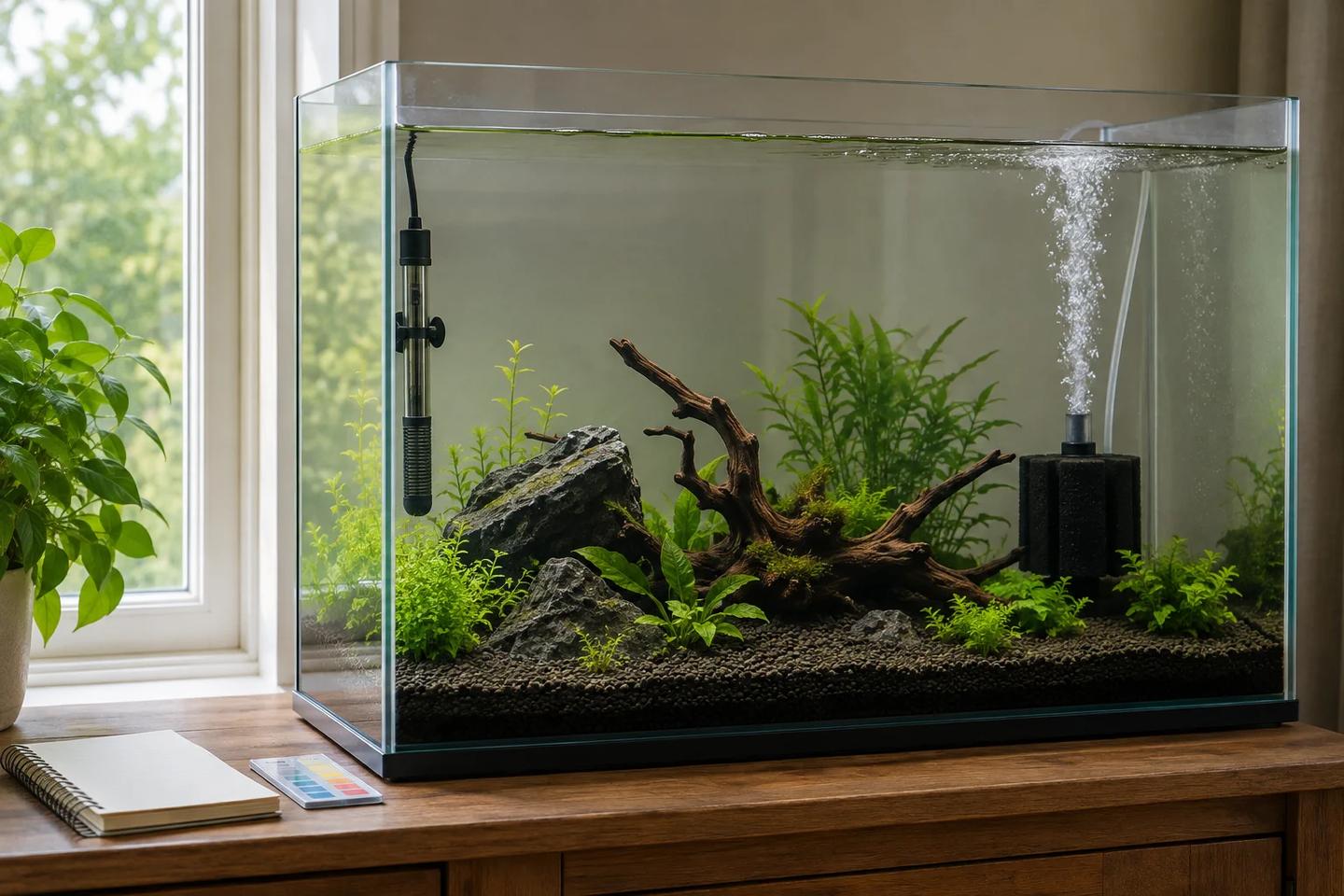
- Finish the physical setup. Run the intended filter, media, heater where required, substrate and decor. Confirm circulation and surface movement.
- Prepare source water correctly. Identify the actual disinfectant and follow an appropriate current conditioner label. Do not rely on standing water for a fixed time.
- Choose one method. Use a purpose-made aquarium ammonium product with full instructions, or another documented fishless method from a competent welfare source. Do not blend target doses and timings from different systems.
- Choose suitable tests. Check that the range, analyte, unit, expiry, storage and timing can answer the method's questions. Strips are not automatically invalid and liquids are not automatically accurate.
- Create a log. Record baseline source and aquarium results before adding the nitrogen source.
Cycle Tracker
Log your daily ammonia, nitrite, and nitrate to track the nitrogen cycle.
Open tool →The test-led sequence
| Step | Action | Evidence to record | Decision |
|---|---|---|---|
| Baseline | Test source and aquarium water using the instructions | Date, time, analyte, unit, pH, temperature and result | Resolve a surprising starting result before dosing |
| Challenge | Add only the chosen aquarium-safe source at its documented amount | Product or method, lot or expiry where relevant, actual amount and time | Never estimate concentration from unverified household drops |
| Observe | Test at the method's stated intervals | Ammonia, nitrite and, where useful, nitrate trends | Continue without animals while ammonia or nitrite remains detectable |
| Confirm | Repeat the defined challenge when the method instructs | Starting result, interval and end result | A single zero before a challenge is not a capacity test |
| Verify | Repeat enough to rule out timing or reading error | Consecutive valid ammonia and nitrite results | Proceed only when both meet the method's readiness rule |
| Prepare | Complete any final water preparation the method requires | Replacement-water treatment, temperature and post-change results | Preserve wet, oxygenated media and recheck before stocking |
| Stock cautiously | Add a conservative first group suitable for the completed setup | Species, number, feeding, behaviour and follow-up tests | Stop and investigate any ammonia or nitrite detection |
This avoids two dangerous shortcuts: “the bottle says fast, so I do not need to test” and “a fixed number of days has passed, so the tank is ready.” MSD Veterinary Manual notes that biofilter establishment can take up to eight weeks, while RSPCA describes at least weeks rather than a one-day process.[4][1] Neither duration is a guarantee; the defined challenge and repeat results are the finish line.
How do you know the tank is cycled?
A useful readiness claim answers all of these questions:
- What nitrogen source and method were used?
- What exact challenge was applied, according to which instructions?
- Which tests, analytes and units were used?
- How long after the challenge were results read?
- Were both ammonia and nitrite non-detectable at the method's defined interval?
- Was the result repeated, with valid controls and unexpired reagents?
- Did a large water change, heavy plant uptake or another intervention remove the challenge instead of the filter processing it?
No individual sign below is enough:
- Clear water: dissolved ammonia or nitrite may be invisible.
- Cloudy water that cleared: many organisms and particles can cause cloudiness; it is not a named biofilter test.
- Nitrate present: it may come from source water, fertiliser or earlier activity, and plants or water changes may lower it.
- A bottled starter was added: viability and instructions vary, and the aquarium still needs verification.
- The tank has run for a month: time does not reveal current processing capacity.
When the test is passed, avoid assuming the aquarium can accept every planned animal at once. The challenge only describes what this system processed under the recorded conditions. Add an appropriate first group cautiously, feed conservatively, watch behaviour and repeat testing. Our first tropical tank guide owns the broader setup and stocking sequence; this page owns the biofilter proof.
How to read common cycling patterns
The familiar “ammonia rises, then nitrite, then nitrate” curve is useful teaching shorthand, not a compulsory shape. Plants, mature media, source water, test limits and maintenance can change what you see.
| Pattern | Plausible explanations to check | Safer next step |
|---|---|---|
| Ammonia is unchanged | Inactive or immature biofilter, low flow or oxygen, unsuitable pH or temperature, incorrect dose, or test error | Confirm equipment and method; repeat the test correctly before changing several variables |
| Ammonia falls; nitrite rises | Ammonia oxidation is measurable while nitrite processing is not yet keeping pace | Keep animals out; continue the chosen method and monitor both values |
| Nitrite remains above the test range | The result may be high, diluted incorrectly or affected by the method | Stop guessing; follow the test's range instructions or obtain a suitable confirmatory test |
| Both read zero before any challenge | No waste was added, plants assimilated it, or the test missed it | Apply the method's defined challenge; a resting zero is not a capacity result |
| Nitrate never appears | Early cycle, plant uptake, water changes, source variation, test technique or reporting-unit issue | Check the nitrate method, but decide readiness from the full challenge response |
| Readings rose after seeming complete | Stocking or feeding increase, dead material, flow loss, media disturbance, medicine or source-water change | Protect animals, restore verified filtration and investigate the exact change |
| pH has fallen during the process | Nitrification can consume alkalinity; low-buffer water may change more readily | Confirm pH and alkalinity, compare source water, and make measured rather than abrupt corrections |
Our aquarium water-parameters guide explains analytes, units, pH, GH and KH in more depth. Use it when the obstacle is interpreting a result rather than understanding the cycle itself.
Water Parameter Matcher
Enter your tap water readings to see if this species will thrive.
Open tool →Fish are already in the tank
Fish-in cycling can expose animals to ammonia or nitrite. RSPCA recommends fishless cycling, and MSD describes cycling with fish as potentially inhumane.[1][4] If animals are already present, the task changes from “speed up the cycle” to protect welfare while the cause is measured.
- Test ammonia, nitrite, pH and temperature immediately, using the correct units and instructions.
- Check whether one or several animals are affected, how they are breathing, and whether the filter, air supply or heater has stopped.
- Increase safe surface movement or aeration if oxygen or flow may be compromised.
- Stop adding animals. Remove visible dead organic material without dismantling the biofilter.
- Make appropriately conditioned, temperature-compatible partial water changes guided by confirmed results, then retest. Avoid a fixed internet percentage when the source water, species and result are unknown.
- Feed conservatively only if appropriate for the species and situation; do not prescribe a universal multi-day fast.
- Use conditioners, starters or medicines only within their current label and species instructions. Do not improvise a “five-times” dose or assume a product makes toxic exposure harmless.
- Contact an aquatics-capable vet or experienced specialist promptly for breathing distress, collapse, repeated toxic-nitrogen readings, several affected fish or uncertainty.
A confirmed ammonia or nitrite detection in an established aquarium, or abnormal breathing in a new one, needs investigation now. The appropriate response depends on the analyte, unit, pH, temperature, species and source water; this page cannot safely prescribe one chemical dose for every tank.
Mature media, bottled bacteria and plants
Mature filter media
Wet media from a healthy, disease-free established system can transfer an active microbial community. RSPCA includes this as an option.[1] Use a trusted source, keep the media wet and oxygenated during a prompt transfer, and do not remove enough to destabilise the donor aquarium. The receiving tank still needs the same recorded challenge: “mature” is a history, not proof of present capacity.
Bottled starters
Products differ in organism, storage, shelf life and method. A bottle can support a process but cannot replace it. Check expiry and storage, follow the exact label, and do not infer that one brand contains the two textbook genera. Aquarium microbiology is more diverse than that claim suggests.[6][8]
Live plants
Growing plants can assimilate nitrogen and established plant surfaces may carry microorganisms. That can flatten or hide the classic test curve. It does not justify adding a full stock without evidence. Use a challenge appropriate to the chosen method and watch the aquarium after each stocking change.
UK tap water and chlorine or chloramine
Do not assign water chemistry by “north”, “south” or county. Supply zones and sources can change, and drinking-water compliance does not describe the aquarium after conditioning and biological use.
- Find the responsible company by postcode using Water UK's supplier service.[10]
- Obtain the current local quality report and check supplier notices.
- Ask whether the residual disinfectant at the property is free or combined chlorine if the report is unclear. The Drinking Water Inspectorate explains that both forms are used; it does not say that most UK supplies use chloramine.[9]
- Test the actual tap where practical and record the date, pH, hardness or alkalinity, nitrate and any relevant disinfectant result.
- Choose an aquarium water treatment whose current label covers the measured supply and follow that label exactly.
Standing water for a day is not a universal preparation method. Neither is buying the strongest-sounding conditioner. The correct decision starts with the real supply and a relevant product instruction.
Protect the biofilter after cycling
Nitrifying communities depend on wet surfaces, water flow, oxygen and a continuing substrate supply. Protect those conditions:
- Keep the filter running continuously unless maintenance or safety requires it to stop.
- During a power interruption, prioritise safe aeration and preserve established media wet without leaving it sealed and oxygen-starved for an assumed “safe” duration.
- Clean only enough to restore flow, following the filter manufacturer's instructions; avoid sterilising or replacing all established media together.
- Do not declare tap water universally fatal to media or old tank water universally safe. Disinfectant, temperature, exposure, debris and the goal of cleaning all matter.
- If media must be replaced, preserve part of the established community where safe and compatible rather than changing everything at once.
- After flow loss, medicine, deep cleaning, a dead animal, a large stocking change or unexplained distress, test ammonia and nitrite again.
There is no biological reason that a routine partial water change and a careful filter check must always occur on different days. What matters is avoiding a large, simultaneous loss of stable conditions and verifying the result afterward.
A mobile cycle log you can copy
Keep each entry short enough to complete beside the tank:
| Field | Example format—not a target |
|---|---|
| Date and time | 06 Sep, 19:30 |
| Aquarium / filter | Tank name; filter and media in use |
| Source or aquarium | Tap before treatment / prepared water / aquarium |
| Temperature and pH | Value, unit, instrument or kit |
| Ammonia | Exact analyte, value, unit and test |
| Nitrite | Exact analyte, value, unit and test |
| Nitrate | Exact analyte, value, unit and test if used |
| Action | Source added, water changed, media moved or no action |
| Challenge time | Time and documented method step |
| Follow-up | Result after the method's stated interval |
| Context | Power loss, plant change, feeding, maintenance or stocking |
Photograph the test beside its instructions under neutral light if colour judgement is difficult, but keep the written value and timing too. A photo without the analyte, unit and interval is weak evidence.
The safe finish line
The nitrogen cycle is not a one-off badge. It is a working relationship between animals, feeding, plants, attached microorganisms, water chemistry, flow, oxygen and maintenance.
Before the first fish goes in, you should be able to show:
- a complete running system;
- an aquarium-safe, documented fishless method;
- a readable sequence of ammonia and nitrite results;
- repeated non-detectable results after the method's defined challenge;
- appropriately prepared source water;
- a cautious stocking plan and follow-up test schedule; and
- a response plan for filter failure or an unexpected detection.
That evidence is more useful than a promised four-week timeline, a brand name or a crystal-clear photograph. It gives the fish a tested biofilter—and gives you a baseline for recognising change later.
Related guides
- Set up your first tropical aquarium — the complete equipment, setup and early-stocking journey
- Understand aquarium water parameters — ammonia units, nitrite, nitrate, pH, GH, KH and source-water interpretation
- Choose beginner-friendly tropical fish — shortlist species only after the aquarium and water are suitable
- Acclimate new fish — plan the move after the biofilter is verified
- Check tropical fish temperature — understand heater and temperature decisions without a universal setting
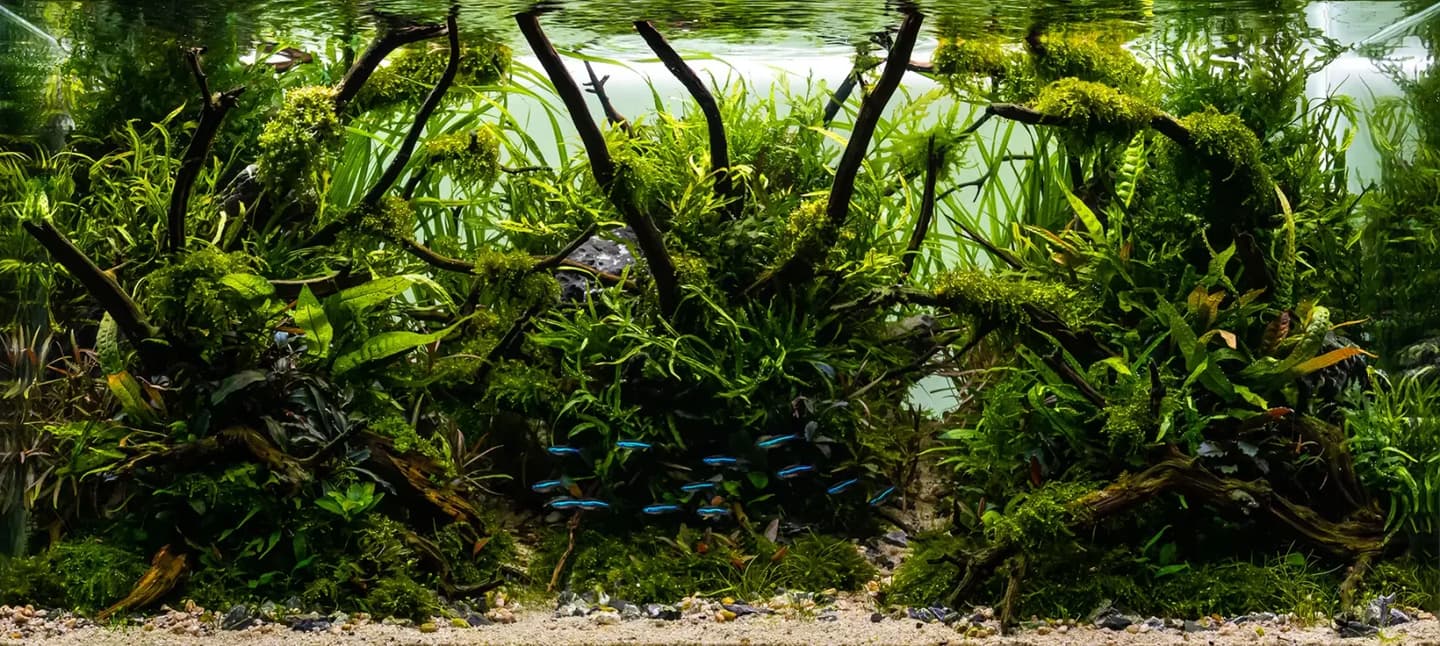
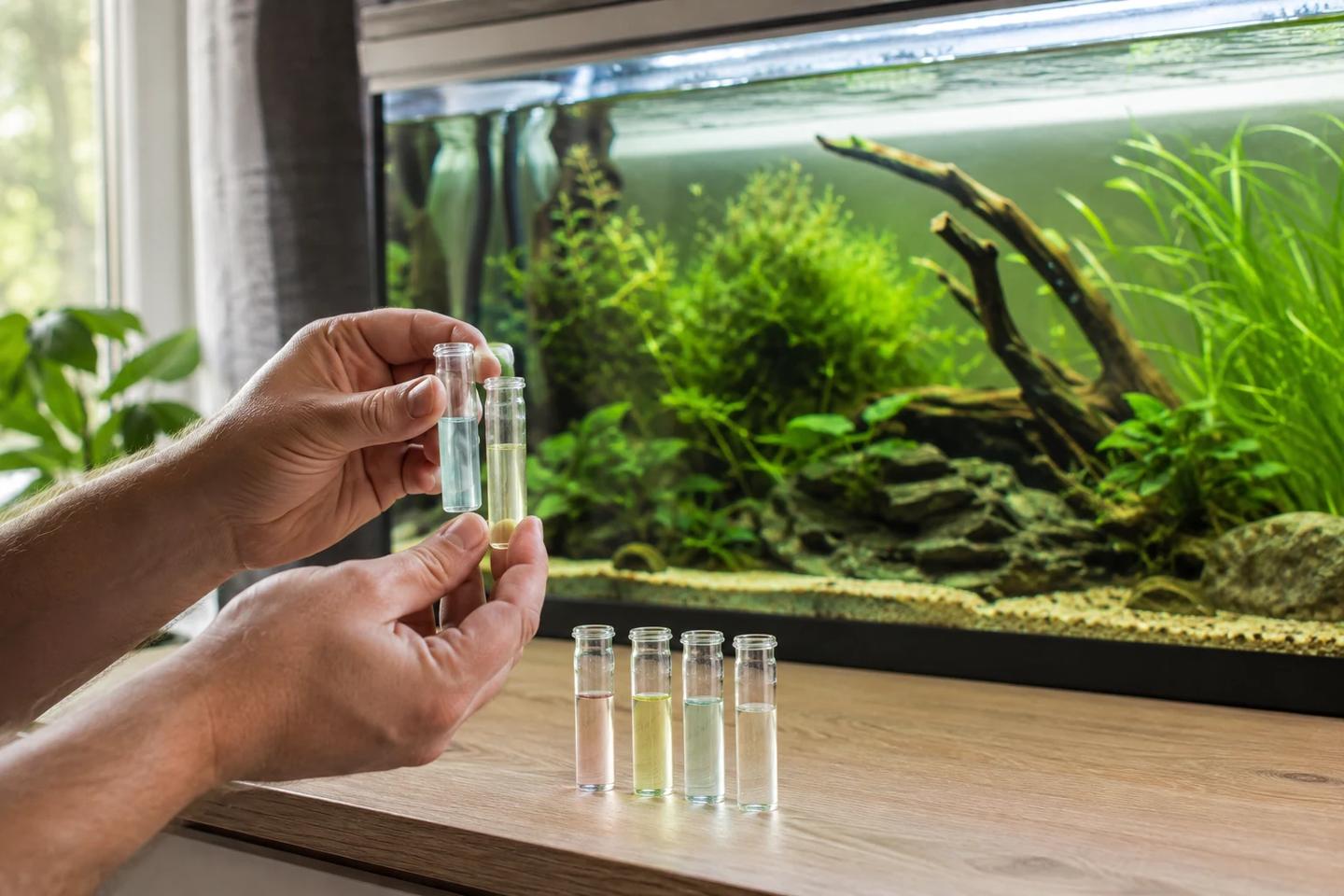
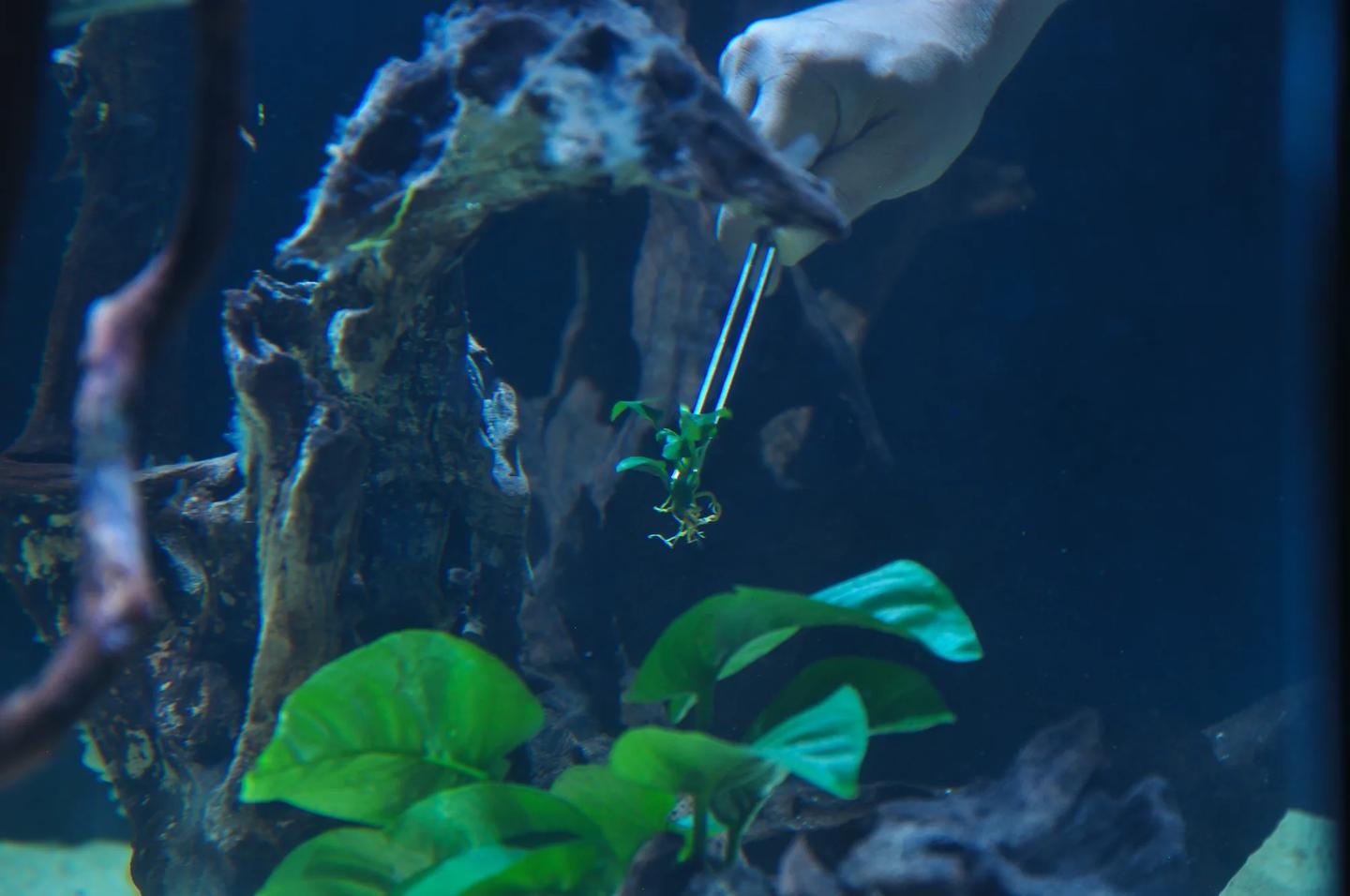
See the biofilter and a fishless cycling setup
Frequently asked questions
Browse our UK live-fish range
From this article straight into the catalogue.
Beginner Fish
The best tropical fish for beginners UK — hand-picked easy-care species that thrive with minimal fuss. Perfect starter community tank candidates.
Community Tank Fish
Peaceful tetras, rasboras, corydoras, platies and gouramis chosen to live together — temperament, adult size and water range per listing so the mix works.
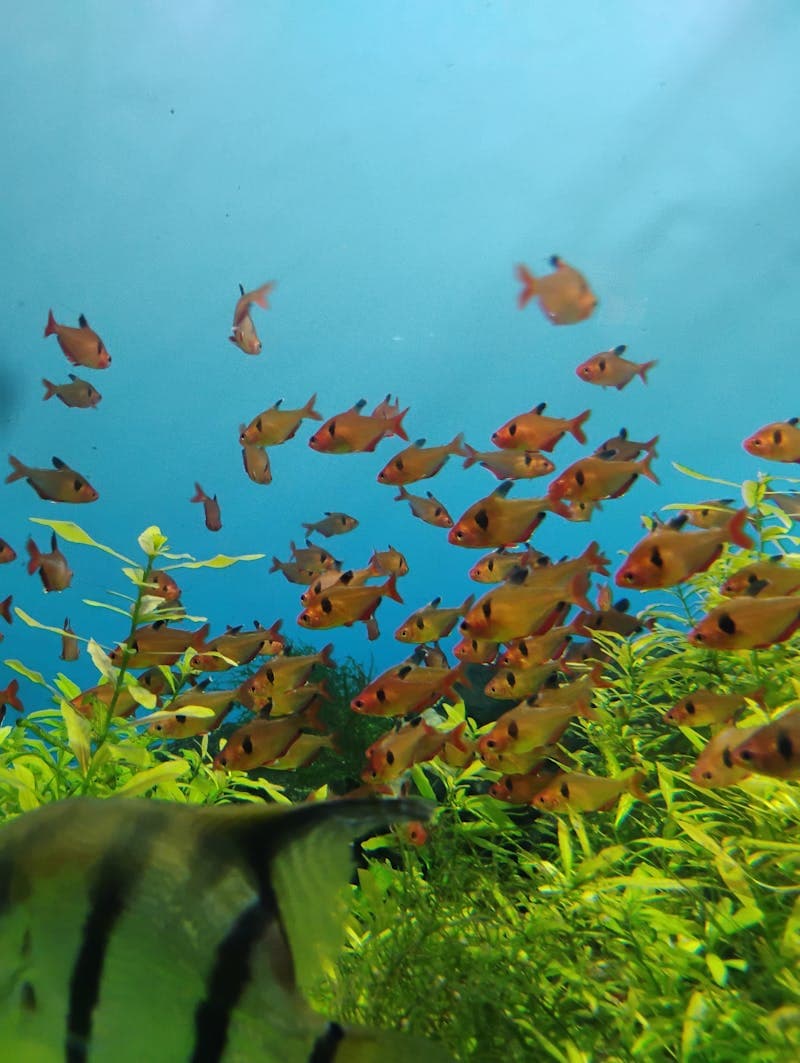
Tetras
Premium Tetras for sale UK — Cardinal, Ember, Black Neon, Rummy Nose, Serpae, Diamond, Glowlight and more. Peaceful community schoolers.
Betta Fish
Halfmoon, plakat, koi, giant and wild-type Betta splendens, males and females, tail type and size stated per listing. Bagged singly, live arrival covered.
Guppy
Fancy guppies bred for colour — Moscow, Cobra, Dumbo ear and Endler lines as males, females or pairs. Hardy in UK tap water; live arrival guarantee.
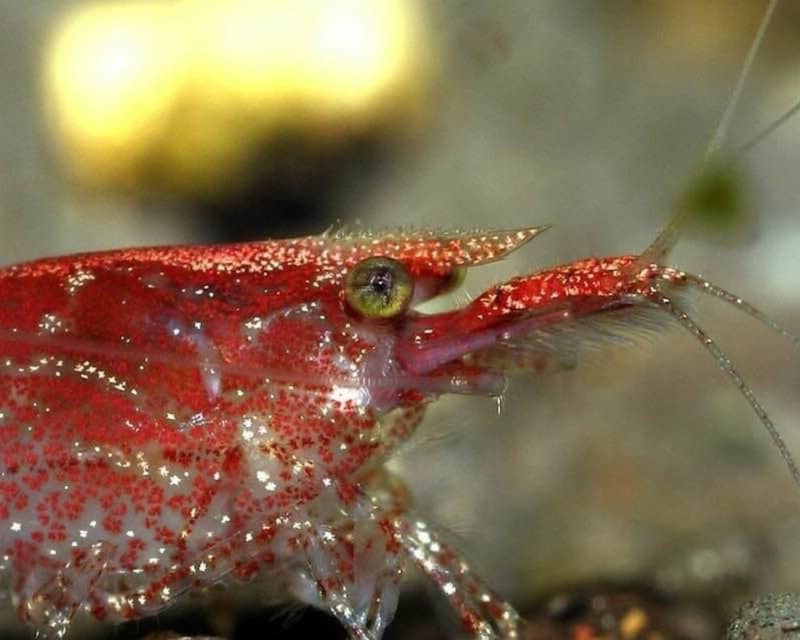
Cherry Shrimp
Red, blue, yellow, black and Rili cherry shrimp (Neocaridina) graded per listing, with mature-tank and water guidance so a new colony settles and breeds.
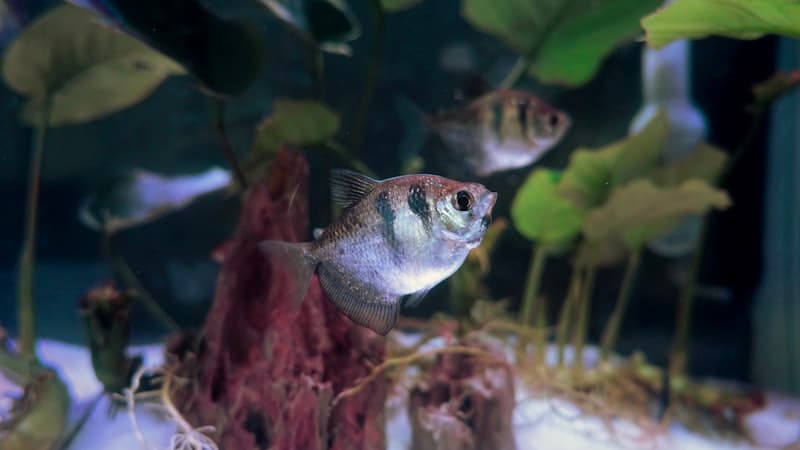
Corydoras
Shop current Corydoras catfish listings in the UK. Compare scientific identity, size and sale unit, with price and availability shown per product.
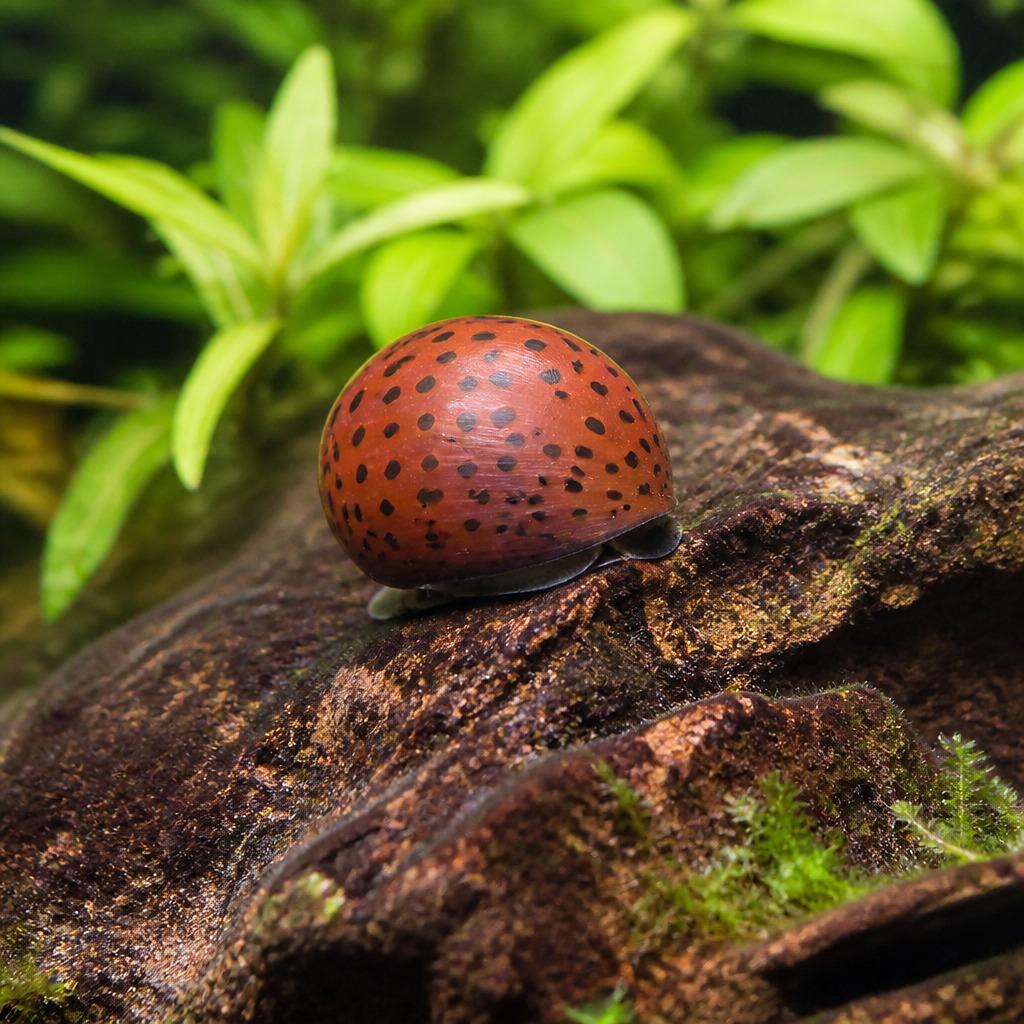
Freshwater Snails
Shop freshwater aquarium snails in the UK. Compare current species, adult size, water needs, diet, breeding risk, compatibility, prices and availability.
Sources & further reading
Material factual claims cite the sources below; store policy and cautious inference are labelled in the article. Sources are grouped by type so you can judge their weight at a glance.
Peer-reviewed study (3)
- [6]Hovanec, T. A. & DeLong, E. F. (1996). Comparative analysis of nitrifying bacteria associated with freshwater and marine aquaria. Applied and Environmental Microbiology 62(8), 2888–2896. DOI: 10.1128/AEM.62.8.2888-2896.1996. View source
Primary aquarium-biofilter research challenging the old assumption that familiar cultured Nitrosomonas-like organisms dominate ammonia oxidation in every aquarium. It does not identify the microbes in a reader's filter.
- [7]Hovanec, T. A., Taylor, L. T., Blakis, A. & DeLong, E. F. (1998). Nitrospira-like bacteria associated with nitrite oxidation in freshwater aquaria. Applied and Environmental Microbiology 64(1), 258–264. DOI: 10.1128/AEM.64.1.258-264.1998. View source
Primary evidence for Nitrospira-like nitrite oxidisers in the freshwater aquarium systems studied; not proof that one genus acts alone in every aquarium.
- [8]Sauder, L. A. et al. (2011). Aquarium nitrification revisited: Thaumarchaeota are the dominant ammonia oxidizers in freshwater aquarium biofilters. PLOS ONE 6(8), e23281. DOI: 10.1371/journal.pone.0023281. View source
Study of sampled freshwater and marine biofilters showing that ammonia-oxidising archaea can be important and were dominant in many established freshwater filters studied. It is not a home test for microbial identity.
University extension (1)
- [5]Francis-Floyd, R., Watson, C., Petty, D. & Pouder, D. B. (2022). Ammonia in Aquatic Systems. University of Florida IFAS Extension. DOI: 10.32473/edis-fa031-2022. View source
Scientific explanation of total ammonia, un-ionised ammonia and ammonium, including the influence of pH and temperature. Aquaculture examples are not copied into a universal home-aquarium threshold.
Veterinary reference (2)
- [2]Royal Veterinary College Exotics Service (2024). Aquarium Health: The Nitrogen Cycle. Royal Veterinary College. View source
Veterinary overview of waste accumulation, ammonia and nitrite toxicity, nitrifying microorganisms in the filter and substrate, nitrate management and partial water changes. Its simplified chemistry is not converted into universal toxicity thresholds.
- [4]Petty, B. D., Francis-Floyd, R. & Yanong, R. P. E. (2022). Management of Aquarium Fish. MSD Veterinary Manual. View source
Veterinary reference for fishless cycling, new-tank syndrome, complete water assessment and the fact that biofilter establishment can take up to eight weeks. It does not make eight weeks a readiness guarantee.
Animal-welfare charity (1)
- [1]Royal Society for the Prevention of Cruelty to Animals. Creating a Good Environment for Fish. RSPCA. View source
UK welfare guidance for fishless cycling, filtration, dechlorination, repeated ammonia and nitrite testing, disease-free mature media and adding fish only after both values rise and return to zero. Its minimum timing is not treated as a guaranteed completion date.
Trade-body guidance (2)
- [3]Ornamental Aquatic Trade Association. How to test water quality in your freshwater tank aquarium. OATA. View source
UK practical source for the roles of ammonia, nitrite, nitrate, oxygenated biofilter surfaces and partial water changes. It supports monitoring but not a brand ranking or household-ammonia recipe.
- [10]Water UK. Find your supplier. Water UK. View source
Postcode route to the responsible UK water supplier; it is not an aquarium-care or dosing source.
Government / regulatory (1)
- [9]Drinking Water Inspectorate. Chlorine. Drinking Water Inspectorate. View source
Explains that residual disinfectant can be free or combined chlorine and that supply practice varies. It does not support the old claim that most UK suppliers use chloramine.
Spotted something that needs a fix?
Fishkeeping moves fast and we want every guide spot-on. If you think something here is wrong, out of date, or could be clearer, tell us — our team reads every message and updates the page.
Suggest an edit
Tropical Fish Co Editorial Team
Evidence-led aquarium editorial team
The Tropical Fish Co editorial team compiles care guidance from the sources cited on each page, separates published evidence from practical husbandry policy, and checks retail links against the current catalogue. First-hand experience is included only when a named contributor and the observation have been verified.
Related care guides
How to Set Up a Tropical Fish Tank: 10 Safe Steps
Choose the intended fish before the aquarium, place the tank on a suitable level support, install a filter and thermostatic heater, condition and test the water, then complete a fishless cycle. Add fish only after the chosen maturation process reaches its defined endpoint and repeated tests show zero ammonia and zero nitrite; elapsed days alone do not prove readiness.
Aquarium Water Parameters: What to Test and Why
There is no universal set of perfect freshwater aquarium parameters. Identify the animals, learn what the test and unit actually report, establish your local source-water baseline, and compare repeat measurements. In an established aquarium, a confirmed ammonia or nitrite detection needs investigation; pH, GH, KH, temperature and nitrate decisions depend on the species, life stage and whole system.
Live Aquarium Plants for Beginners: 7 Easy Picks
For a first low-tech planted aquarium, start with one or two correctly labelled lower-demand species, match their mature size to the tank, keep the rhizomes of Java fern and Anubias above the substrate, and change only one lighting or feeding variable at a time.