
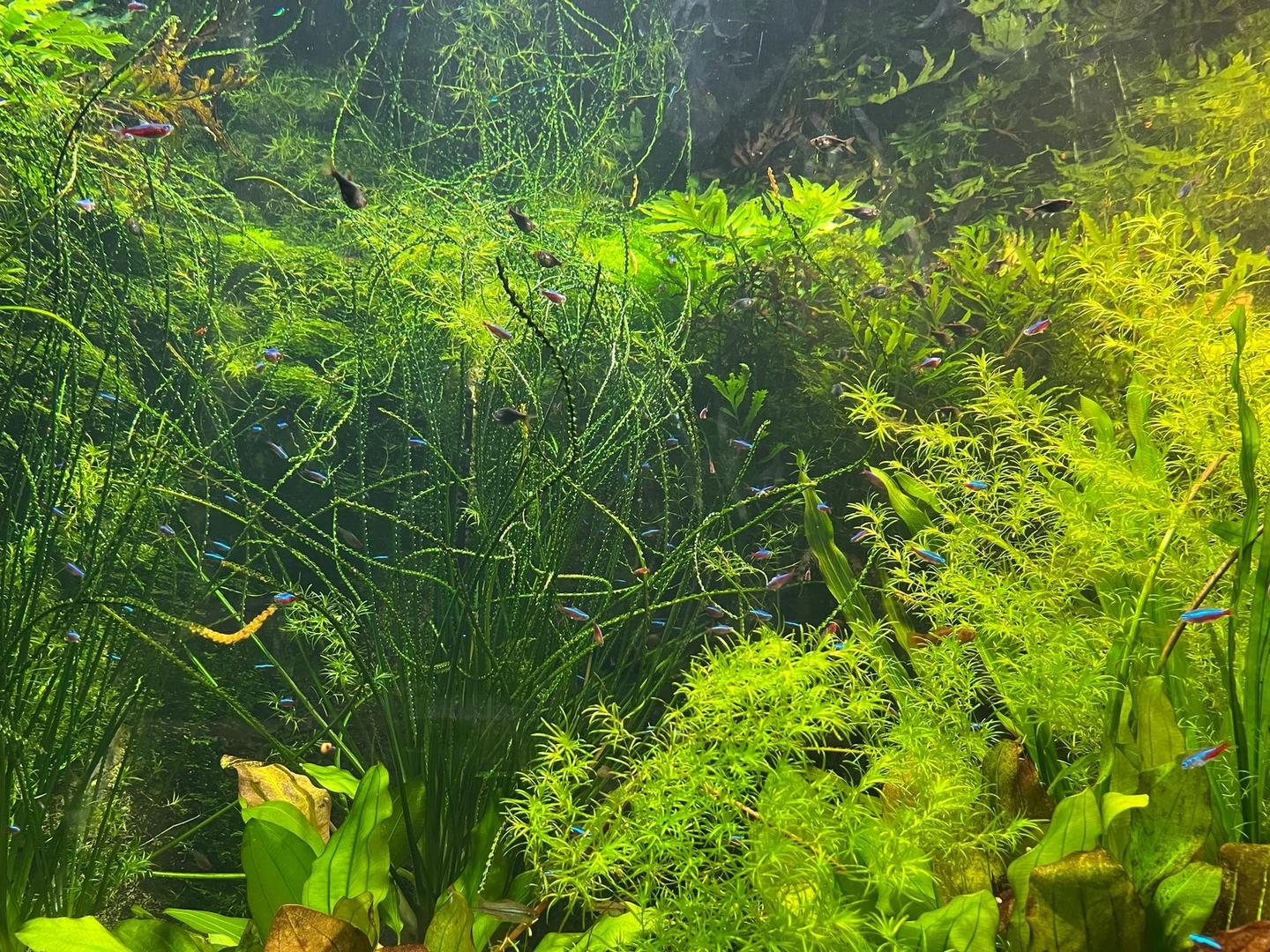
Best Tropical Fish for Beginners UK: 5 Picks

No universal easiest tropical fish exists. Start with aquarium dimensions and measured tap-water pH and hardness, then choose one complete social group: guppies or platies where GH fits their cited range, neon tetras for soft water, cherry barbs for a compatible middle range, or bronze corys where the bottom footprint and substrate fit. Cycle and test before buying.
The best first tropical fish is not the one described online as “indestructible.” It is the one whose full social group fits your aquarium, measured water and long-term care. UK tap water is not one chemistry: hardness depends on the supply source, and the value reported by a water company still needs checking against the water that reaches your aquarium[1].
This guide compares five sensible candidates: guppy, platy, neon tetra, cherry barb and bronze cory. It does not recommend putting all five into one tank. OATA explicitly says there is no exact universal fish count because adult size, species needs, chemistry and compatibility differ[4].
Retail disclosure: Tropical Fish Co sells live fish. This article owns the care decision; the live tropical fish shop owns current stock, sale units and prices. A product being available does not mean it fits your aquarium.
- No recent ammonia, nitrite, pH, GH/KH and temperature test results? Test first. Do not choose from appearance alone.
- Neutral-to-alkaline water with measured GH in range? Compare guppies and platies, then make a sex and population plan.
- Soft water and at least 60 cm of swimming length? Compare one proper neon tetra group.
- Middle-range water, open swimming room and a secure lid? Compare one cherry barb group.
- At least 80 litres, enough floor area and smooth substrate? Compare one bronze cory group as fish in their own right, not as cleaners.
- Tank not cycled or measurements do not fit? The right first fish today is no fish.
Compare the five choices
These figures are screening references, not tested tolerance limits or a promise of compatibility. “SL” means standard length, which excludes the tail fin; “TL” means total length, which includes it; “°dH” means degrees of general hardness. The group and tank column separates published source floors from Tropical Fish Co's more cautious starting policy.
| Choice | FishBase recorded maximum | Water screen from the cited sources | Social group and starting space |
|---|---|---|---|
| Guppy (Poecilia reticulata) | 5.0 cm SL male/unsexed; 6.0 cm SL female | OATA: 20-28 °C, pH 7-8, 8-18 °dH | FishBase: 5+ and 60 cm minimum aquarium length; use that as the starting screen |
| Platy (Xiphophorus maculatus) | 4.0 cm TL male/unsexed; 6.0 cm TL female | OATA: 17-27 °C, pH 7-8, 4-12 °dH | OATA: 3+ and at least 45 L; our cautious beginner screen is about 60 L with useful swimming length |
| Neon tetra (Paracheirodon innesi) | 2.5 cm SL | FishBase: 20-26 °C, pH 5-7, 1-2 °dH | FishBase: 5+ and 60 cm; our starting policy is 8+ where total capacity allows |
| Cherry barb (Rohanella titteya) | 5.0 cm TL | FishBase: 23-27 °C, pH 6-8, 5-19 °dH | FishBase: 5+ and 60 cm; our starting policy is 6+ where total capacity allows |
| Bronze cory (Osteogaster aenea) | 7.5 cm SL | FishBase: 25-28 °C, pH 6-8, 5-19 °dH; OATA's combined bronze/peppered guide: 17-27 °C, pH 6-8, 4-12 °dH | FishBase: 5+ and 60 cm; our cautious policy is 6 bronze corys of the same verified species and at least 80 L with suitable floor area |
FishBase environmental ranges combine ecological records and compiled aquarium notes; OATA care sheets are practical trade-body guidance rather than controlled capacity trials. Compare both with the retailer's current measured holding water, your repeated tank results and the exact fish being offered. Do not chase a target by making sudden chemical changes.
1. Guppy: where measured GH fits
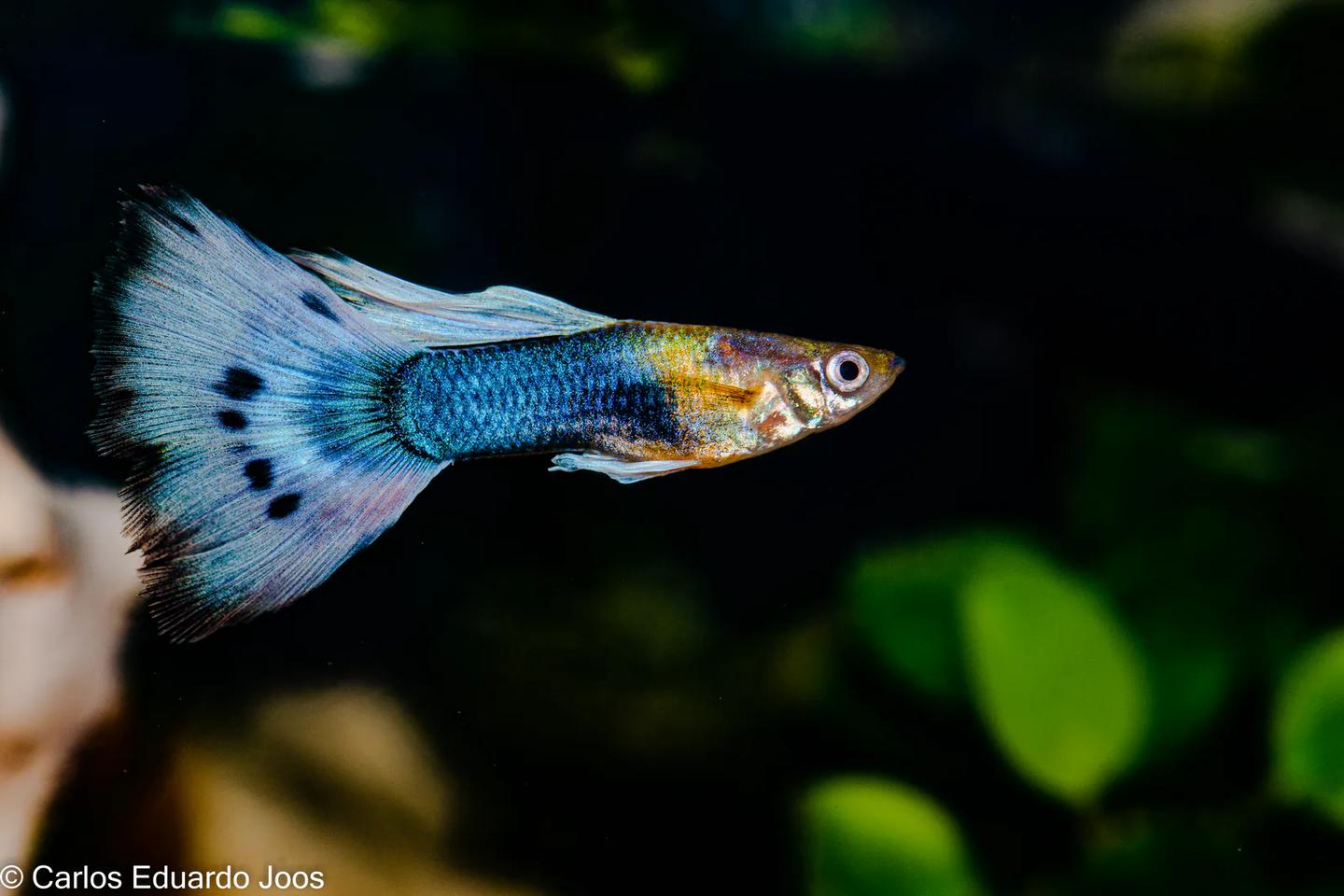
Guppies can be a good first choice when measured water is neutral to alkaline and GH falls within the cited screen. OATA's combined guppy-and-molly sheet gives 20-28 °C, pH 7-8 and 8-18 °dH, while FishBase records a 60 cm aquarium length and a group of five or more as secondary aquarium guidance[6][5].
The beginner advantage is not immunity to poor water. It is a clear decision path: provide mature filtration, a proper group, gentle swimming space for long-finned domestic forms and food every fish can reach. The guppy care guide covers sex, social behaviour and domestic variation in more depth.
The catch is population planning. Guppies are livebearers. If males and females are kept together, fry are a foreseeable outcome; if a same-sex group is considered, social behaviour still needs monitoring. Decide before purchase whether you have the space and a responsible rehoming plan. Never rely on other fish eating fry as population control.
2. Platy: a livebearer with a different water screen
Platies are another practical candidate for measured neutral-to-alkaline water. OATA gives 17-27 °C, pH 7-8, 4-12 °dH, a group of at least three, at least 45 litres for a small group and a general adult planning size of 6-8 cm[8]. FishBase separately records females up to 6 cm total length and gives 60 cm as its aquarium-length note[7]. For a first setup, plan capacity around OATA's conservative 8 cm figure and about 60 litres with useful horizontal room rather than treating 45 litres as a target.
If sexes are mixed, OATA suggests two females for each male to reduce persistent attention; this is guidance, not a guarantee that one ratio prevents stress. Mixed groups can also produce fry. Check sex, sale unit and adult capacity before checkout, and provide planted or artificial cover without removing open swimming room. The platy care guide should be checked before buying.
Guppies and platies overlap in some water, but that does not mean a new aquarium needs both. One complete livebearer group is easier to observe and leaves more capacity than two token groups.
3. Neon tetra: a soft-water choice, not a tiny-tank shortcut
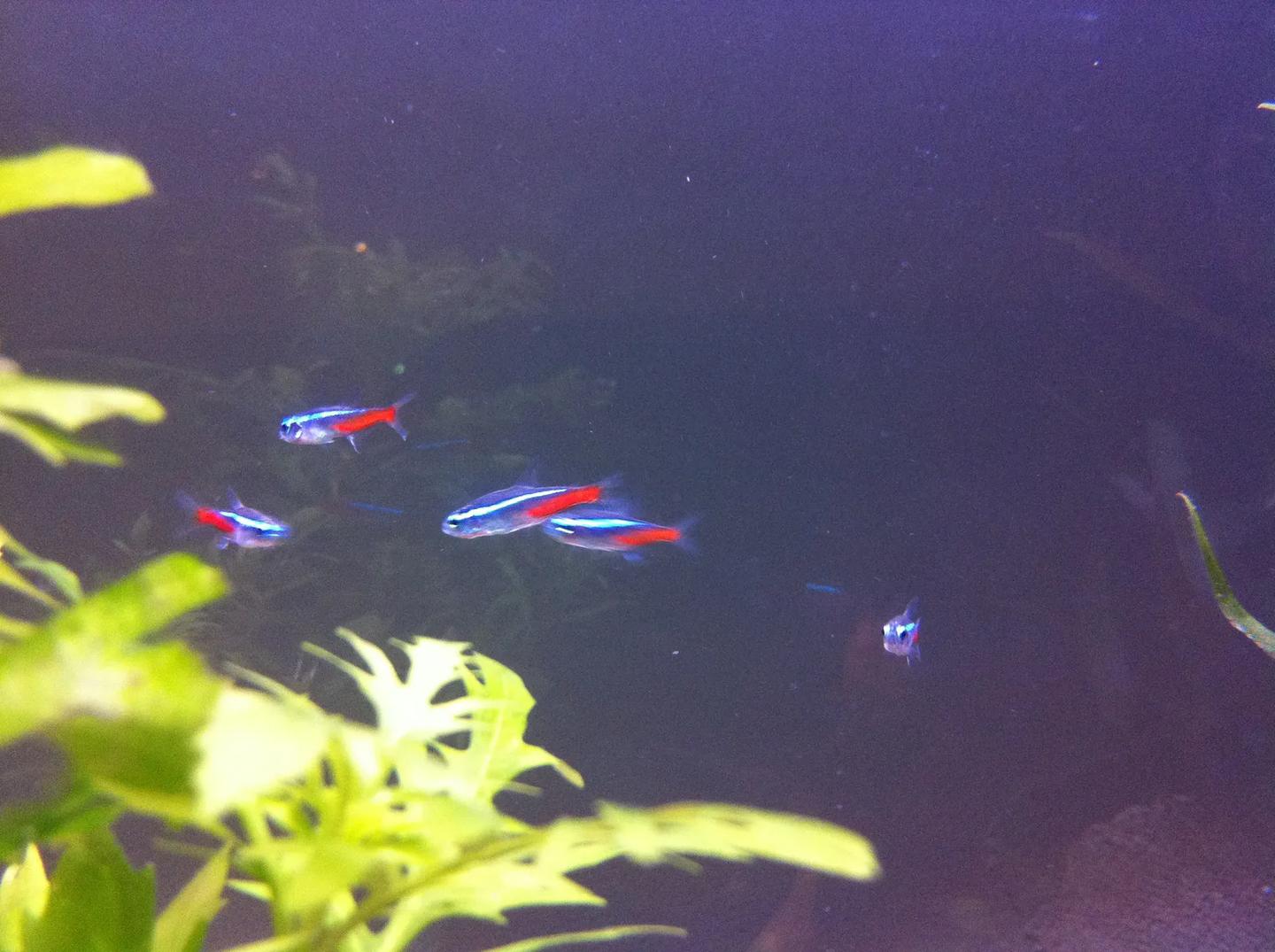
Neon tetras are small, but FishBase records a 60 cm aquarium length and a social group rather than a nano-tank exemption. Its species page gives 20-26 °C, pH 5-7 and 1-2 °dH, and records a 2.5 cm maximum standard length[9]. OATA's broader tetra sheet says these fish should be kept in a shoal and warns that small tetras must not be housed with fish large enough to eat them[10].
Our cautious starting policy is one group of at least eight in a mature aquarium at least 60 cm long, provided the measured water and total capacity fit. A controlled study found better behavioural welfare measures in larger neon tetra groups, but it does not establish eight as a universal biological threshold[11]. More fish require more space and filtration; reducing the group to squeeze into a smaller aquarium is not the solution.
Neons are therefore not the automatic answer for hard alkaline tap water, even though “tetra” appears on beginner lists. Check the retailer's holding water and read the neon tetra care guide. If matching the source would require abrupt or unstable water manipulation, choose a fish that fits the water you can maintain consistently.
4. Cherry barb: a peaceful barb still needing a proper group
The cherry barb is now placed in the genus Rohanella; older shop labels and FishBase may still show Puntius titteya[12]. Confirm that exact identity, because “barb” covers fishes with very different adult sizes and behaviour.
FishBase records 5 cm total length, 23-27 °C, pH 6-8, 5-19 °dH, a group of five or more and a 60 cm aquarium[13]. OATA identifies cherry barbs among the smaller barbs that can generally mix with peaceful species, but its same guide warns that other barbs may be boisterous or fin-nipping[14]. A common name for the wider group is not a compatibility guarantee.
Our beginner screen is at least six cherry barbs, with cover, an open swimming area and a secure lid where total capacity allows. Observe feeding access and chasing rather than assuming the word “peaceful” means conflict is impossible.
5. Bronze cory: a social bottom fish, never a cleaner
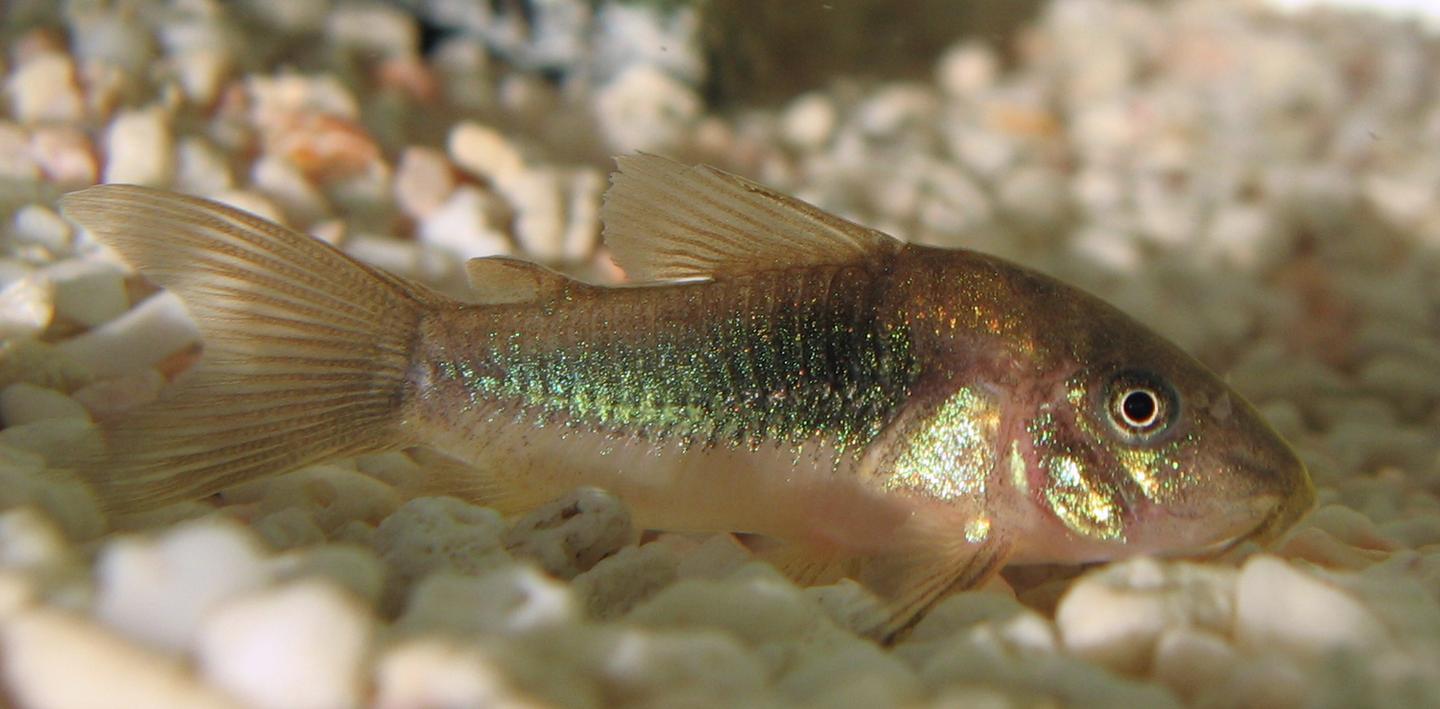
The familiar bronze cory is currently Osteogaster aenea, although retailers may still use Corydoras aeneus. That change follows a major revision of the Corydoradinae[15]. Identity matters because “corydoras” is a trade umbrella, not one universal care sheet.
FishBase records 7.5 cm maximum standard length, a group of five or more, 60 cm aquarium length and a species-level environmental range of 25-28 °C, pH 6-8 and 5-19 °dH[16]. OATA's combined bronze-and-peppered guide gives 17-27 °C, pH 6-8 and 4-12 °dH[18]. Do not average those ranges or copy a peppered-cory temperature to bronze corys: compare the exact fish, current holding water and conditions you can keep stable.
OATA's broader catfish guide recommends at least five social corys, at least 80 litres for a group of smaller catfish, fine sand or smooth fine gravel, and suitable sinking food[17]. Our cautious starting policy is six bronze corys of the same verified species in at least 80 litres where the floor area and total capacity allow.
Corys do not live on faeces or make leftover food harmless. They add to the aquarium's biological load and need a complete diet delivered where each individual can feed. The corydoras guide explains the current names and why care must be chosen species by species.
The stocking gate: pass every check before buying
Use this as a go/no-go checklist. A calendar date or clear-looking water does not replace the measurements.
- Identify the fish. Record the scientific or documented trade name, dispatch size, expected adult size, sale unit and sex where relevant.
- Measure the aquarium. Record usable length, width and real water volume after substrate and decor—not just the number printed on the box.
- Test source and tank water. Record temperature, pH, GH, KH, ammonia, nitrite and nitrate. Ask the retailer for current holding-water measurements.
- Verify the filter is mature. Use a documented fishless cycling method. Before any purchase, both ammonia and nitrite must read 0 mg/L, and temperature and chemistry must be stable[4][2].
- Fit the complete first group. Do not use a lone shoaling fish to “test” the aquarium and do not divide the minimum groups of several species across one small tank.
- Account for adult demand. Include every current inhabitant, the new group's adult size, swimming and floor area, feeding access, filtration and a separation plan. Do not use centimetres-per-litre.
- Add one planned group, then reassess. OATA advises increasing fish numbers gradually because the filter's bacterial population must respond to more waste and feeding[4]. Test more frequently after an addition and do not add the next group while ammonia or nitrite is detectable.
- Observe the animals. Changes in breathing, swimming, appetite, colour, condition or hiding warrant a water check and appropriate advice; they are signs to investigate, not diagnoses[3].
The temperature columns have some overlap, but the full water screens, social groups and space demands do not. In particular, the FishBase hardness record for neon tetras does not match a blanket “all UK tap water” claim. Choose one focal group first. A later companion is a new evidence check, not the next item on a list.
Why the old shortcuts fail
“Hardy fish can finish the cycle”
No beginner fish should be exposed to ammonia or nitrite as a filter test. OATA's freshwater guidance says both should be zero before new fish are introduced[4].
“UK tap water suits all community fish”
Hardness varies with the water source, and pH alone does not describe mineral content. Use the supplier report as context, then test the water you actually use[1].
“One centimetre of fish per litre”
A length formula cannot represent body mass, activity, social needs, floor area, territorial behaviour or filtration. OATA explicitly declines to give one exact stocking number for all aquariums[4].
“Bottom fish eat the waste”
Bronze corys need direct feeding and produce waste themselves. A bristlenose pleco is also an optional later resident, not algae-control equipment. If one is considered, check its species care guide, adult footprint, food, shelter and waste load first.
Before you use the shop
When the stocking gate is complete, compare the live listing with your written plan. The listing should let you verify identity, sale unit, approximate dispatch size, current stock and any sex or variant label. Ask for measured holding water if it is not shown. If the answer changes the fit, pause the order rather than forcing the aquarium to match.
Browse current tropical fish availability only after those checks. Prices and stock can change; the husbandry decision should not.
How this guide was checked
The species names and size records come from current taxonomic work and FishBase. Practical aquarium screens come from species pages and OATA's UK care sheets. DWI supports the UK water context, while RSPCA guidance supplies the wider welfare framework. The reference list below links to the exact pages and papers used. Where sources do not establish a universal biological minimum, this guide labels a number as source guidance or Tropical Fish Co policy rather than presenting it as settled science.
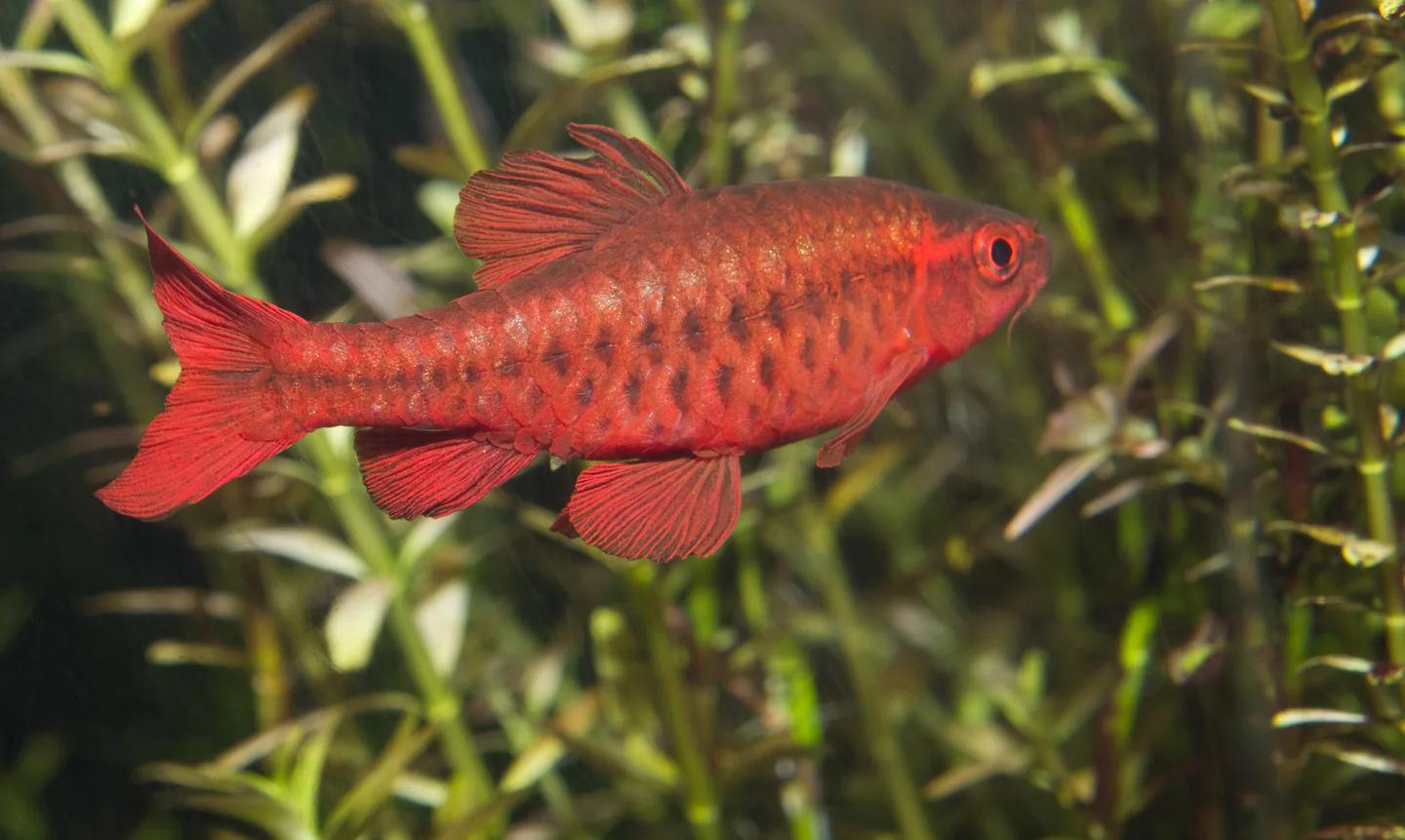
Four fish from the beginner shortlist
Frequently asked questions
Browse our UK live-fish range
From this article straight into the catalogue.
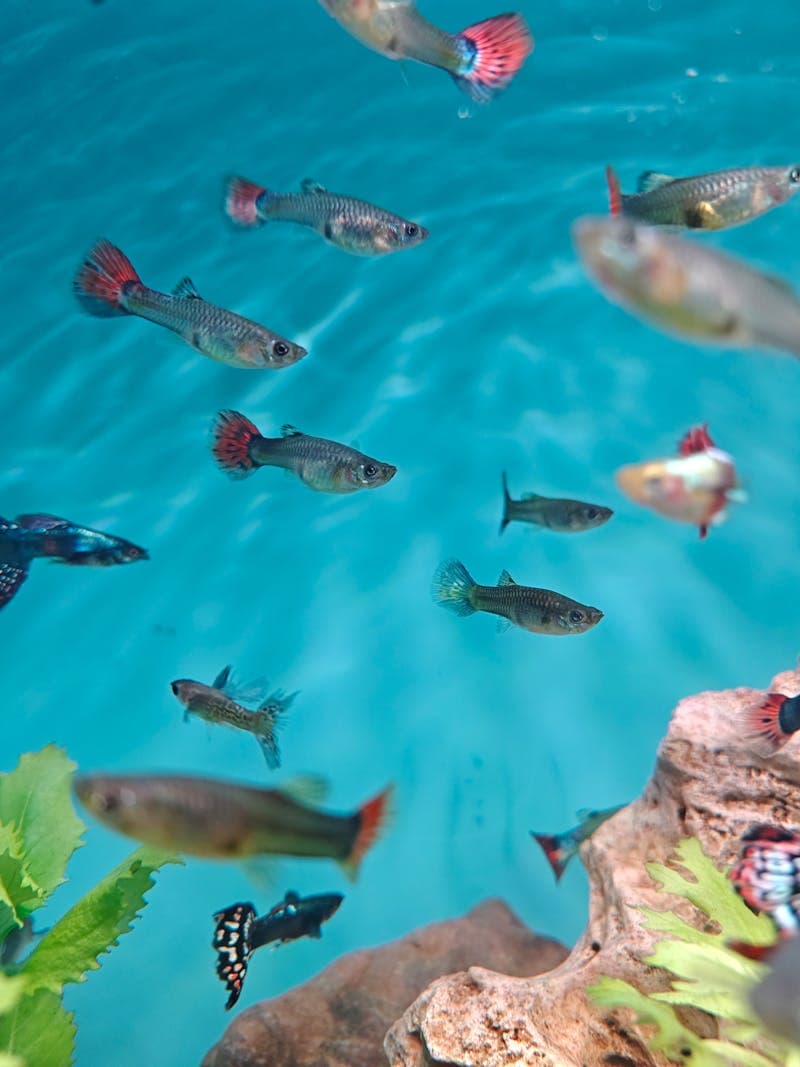
Beginner Fish
The best tropical fish for beginners UK — hand-picked easy-care species that thrive with minimal fuss. Perfect starter community tank candidates.
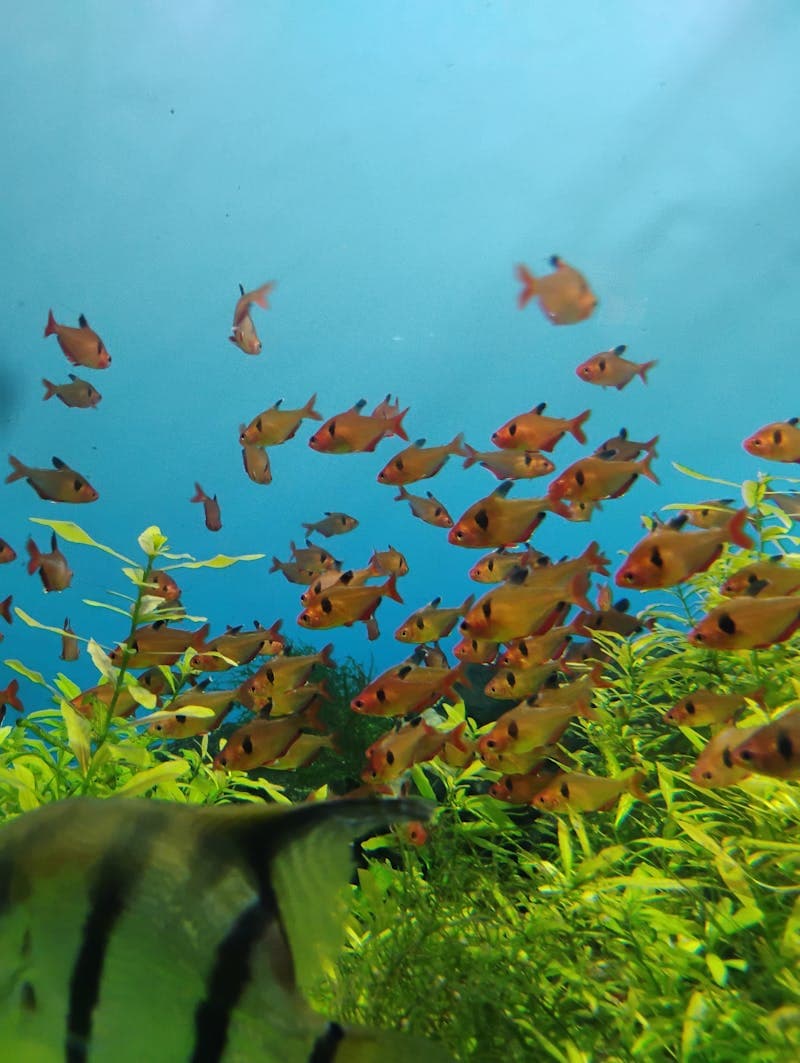
Community Tank Fish
Peaceful tetras, rasboras, corydoras, platies and gouramis chosen to live together — temperament, adult size and water range per listing so the mix works.
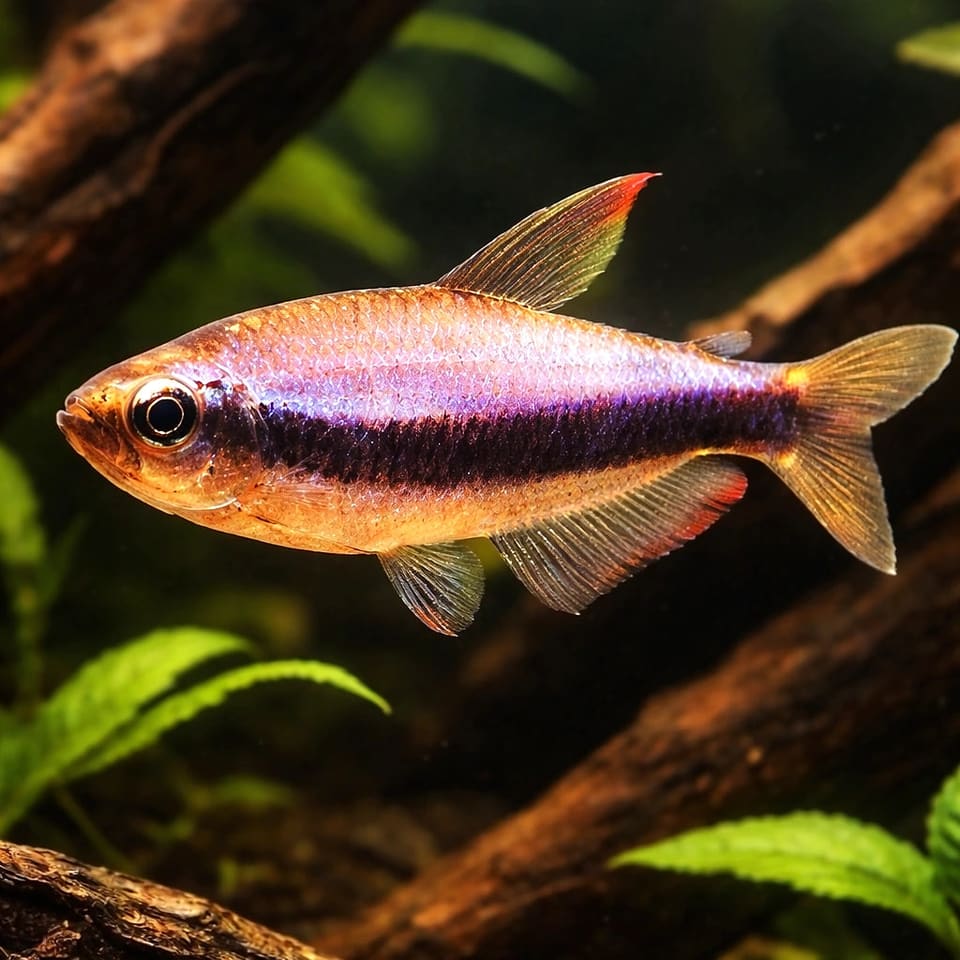
Tetras
Premium Tetras for sale UK — Cardinal, Ember, Black Neon, Rummy Nose, Serpae, Diamond, Glowlight and more. Peaceful community schoolers.
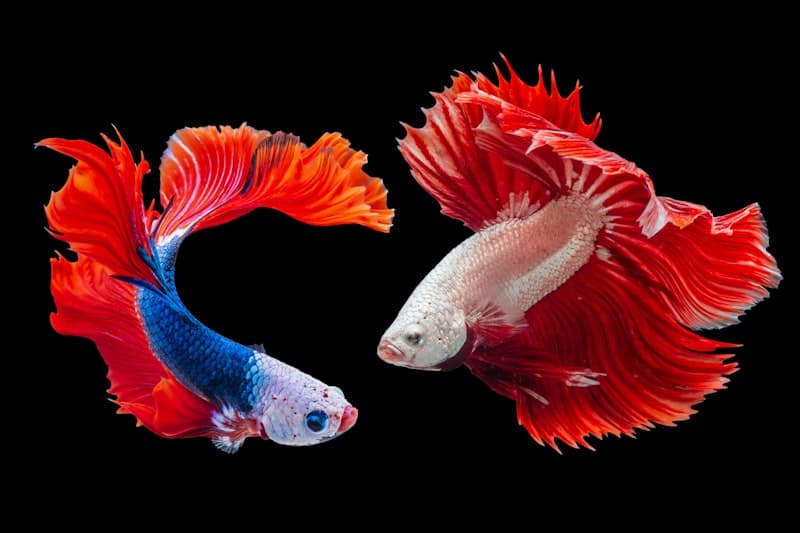
Betta Fish
Halfmoon, plakat, koi, giant and wild-type Betta splendens, males and females, tail type and size stated per listing. Bagged singly, live arrival covered.
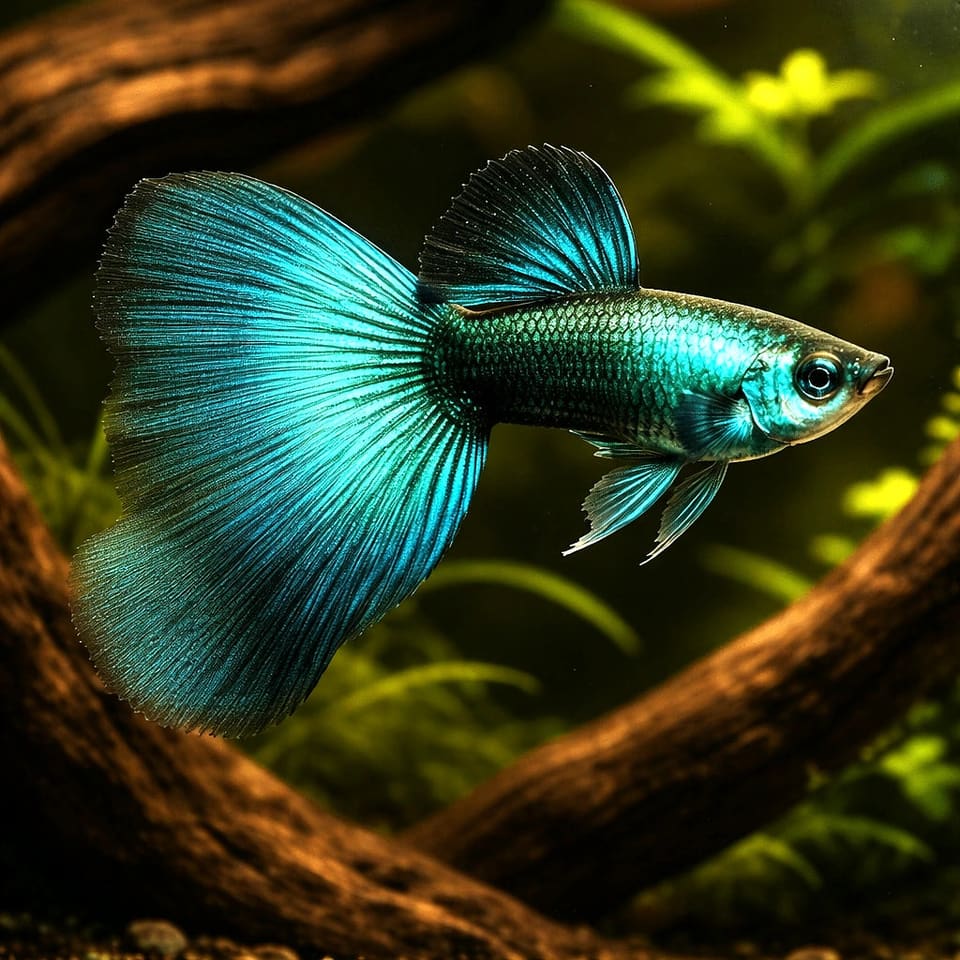
Guppy
Fancy guppies bred for colour — Moscow, Cobra, Dumbo ear and Endler lines as males, females or pairs. Hardy in UK tap water; live arrival guarantee.
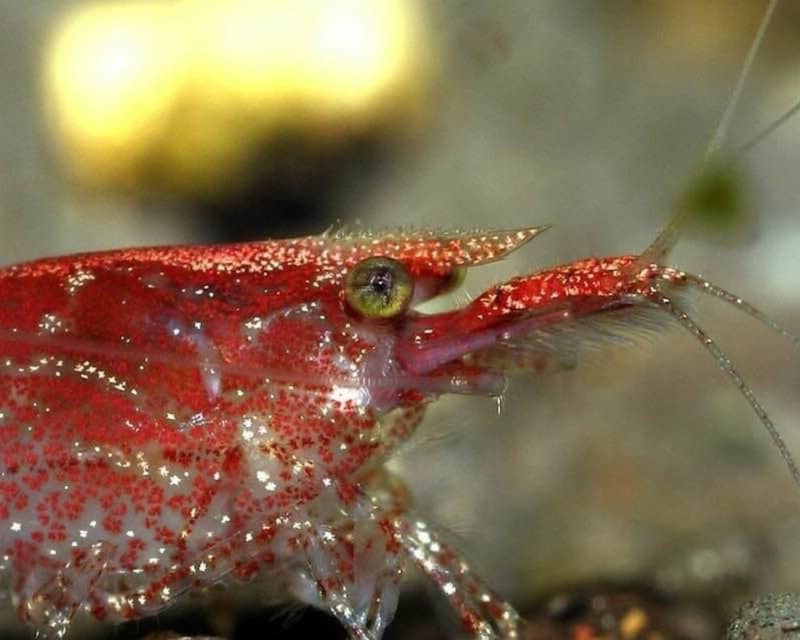
Cherry Shrimp
Red, blue, yellow, black and Rili cherry shrimp (Neocaridina) graded per listing, with mature-tank and water guidance so a new colony settles and breeds.
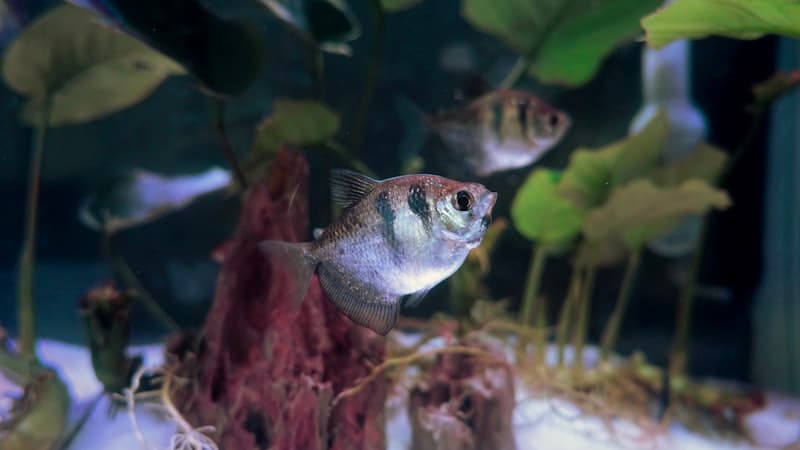
Corydoras
Shop current Corydoras catfish listings in the UK. Compare scientific identity, size and sale unit, with price and availability shown per product.
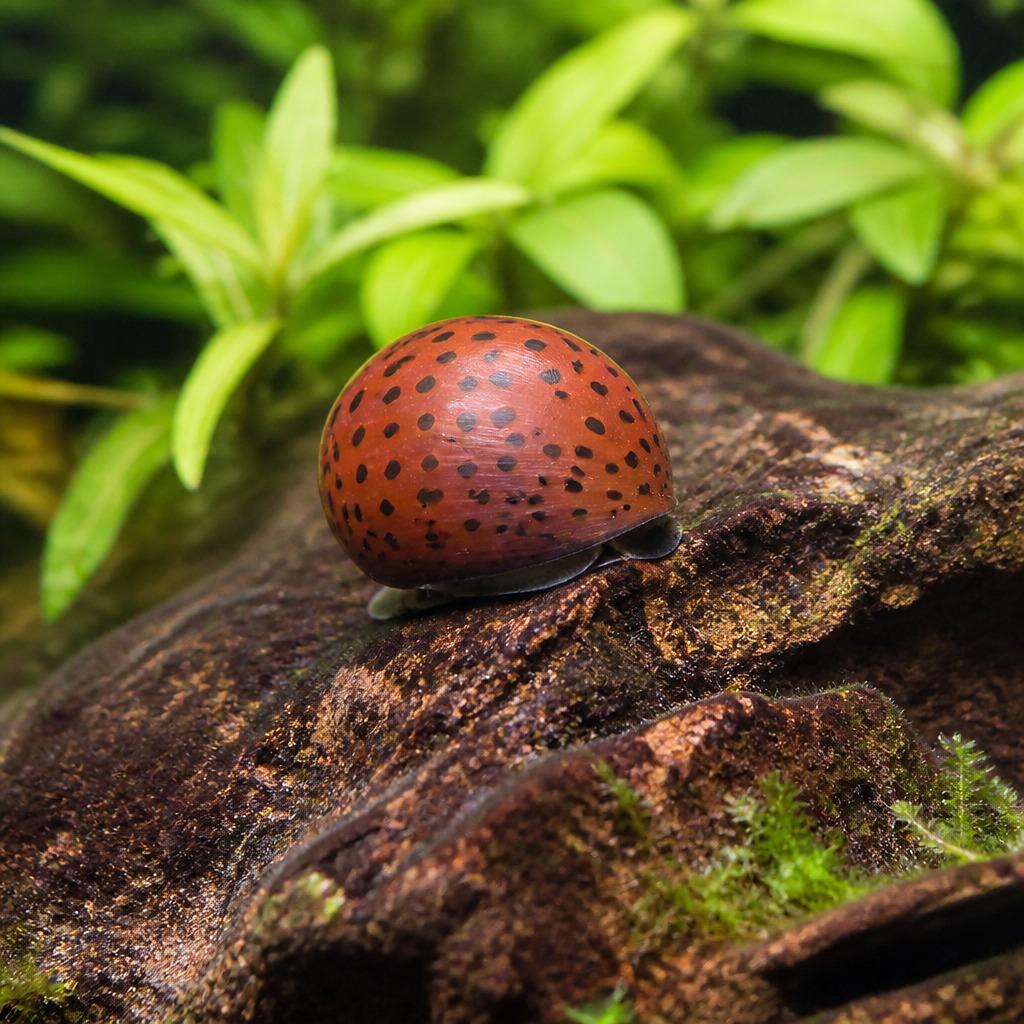
Freshwater Snails
Shop freshwater aquarium snails in the UK. Compare current species, adult size, water needs, diet, breeding risk, compatibility, prices and availability.
Sources & further reading
Material factual claims cite the sources below; store policy and cautious inference are labelled in the article. Sources are grouped by type so you can judge their weight at a glance.
Peer-reviewed study (3)
- [11]Saxby, A., Adams, L., Snellgrove, D., Wilson, R. W. & Sloman, K. A. (2010). The effect of group size on the behaviour and welfare of four fish species commonly kept in home aquaria. Applied Animal Behaviour Science 125(3-4), 195-205. DOI: 10.1016/j.applanim.2010.04.008. View source
Larger neon tetra groups showed behavioural welfare benefits; the study does not establish eight as a universal biological minimum.
- [12]Sudasinghe, H., Rüber, L. & Meegaskumbura, M. (2023). Molecular phylogeny and systematics of the South Asian freshwater-fish genus Puntius (Teleostei: Cyprinidae). Zoologica Scripta 52(6). DOI: 10.1111/zsc.12618. View source
Establishes Rohanella for the cherry barb, formerly placed in Puntius.
- [15]Dias, A. C. et al. (2024). Phylogenomic analyses in the complex Neotropical subfamily Corydoradinae (Siluriformes: Callichthyidae) with a new classification based on morphological and molecular data. Zoological Journal of the Linnean Society. DOI: 10.1093/zoolinnean/zlae053. View source
Supports the current placement of the bronze cory in Osteogaster rather than Corydoras sensu stricto.
Scientific database (5)
- [5]Froese, R. & Pauly, D. (eds.). FishBase: Poecilia reticulata. FishBase. View source
Identity, size records, environmental range and secondary aquarium group and length guidance.
- [7]Froese, R. & Pauly, D. (eds.). FishBase: Xiphophorus maculatus. FishBase. View source
Identity, size records, environmental range and secondary aquarium-length guidance.
- [9]Froese, R. & Pauly, D. (eds.). FishBase: Paracheirodon innesi. FishBase. View source
Identity, maximum standard length, environmental range and secondary group and aquarium-length guidance.
- [13]Froese, R. & Pauly, D. (eds.). FishBase: Puntius titteya (cherry barb). FishBase. View source
Size, environmental range, diet and secondary aquarium group and length guidance under the former combination Puntius titteya.
- [16]Froese, R. & Pauly, D. (eds.). FishBase: Osteogaster aenea (bronze corydoras). FishBase. View source
Current identity, maximum standard length and environmental range.
Animal-welfare charity (2)
- [2]Royal Society for the Prevention of Cruelty to Animals. Choosing an aquarium for pet fish. RSPCA. View source
UK welfare guidance on aquarium size, mature biological filtration, heating, water testing and environmental needs.
- [3]Royal Society for the Prevention of Cruelty to Animals. Pet fish health. RSPCA. View source
UK welfare guidance on observation, water-quality checks and professional help for health concerns.
Trade-body guidance (7)
- [4]Ornamental Aquatic Trade Association. How to set up and look after a freshwater tank / aquarium. OATA. View source
UK trade-body guidance on cycling, testing, adult-size capacity, gradual stocking and why no exact universal fish count exists.
- [6]Ornamental Aquatic Trade Association. How to look after guppies and mollies. OATA. View source
UK care guidance for guppy water, social grouping, aquarium preparation and population planning.
- [8]Ornamental Aquatic Trade Association. How to look after platies and swordtails. OATA. View source
UK care guidance for platy water, group composition, aquarium size and likely breeding.
- [10]Ornamental Aquatic Trade Association. How to look after tetras and pencilfish. OATA. View source
UK group-level guidance on social stocking, aquarium space and compatibility; species-specific requirements still take priority.
- [14]Ornamental Aquatic Trade Association. How to look after barbs. OATA. View source
UK group-level guidance distinguishing smaller peaceful cherry barbs from more boisterous or fin-nipping barbs.
- [17]Ornamental Aquatic Trade Association. How to look after freshwater catfish. OATA. View source
UK guidance on Corydoradinae social groups, aquarium floor, suitable substrate and direct feeding.
- [18]Ornamental Aquatic Trade Association. How to pick and look after fish in unheated aquariums / tanks. OATA. View source
Contains a combined bronze-and-peppered cory screen; it must not be presented as proof that the two species have identical requirements.
Government / regulatory (1)
- [1]Drinking Water Inspectorate. Water hardness / hard water. Drinking Water Inspectorate. View source
UK drinking-water hardness varies by water source; a national assumption cannot replace a local report and aquarium test.
Spotted something that needs a fix?
Fishkeeping moves fast and we want every guide spot-on. If you think something here is wrong, out of date, or could be clearer, tell us — our team reads every message and updates the page.
Suggest an edit
Tropical Fish Co Editorial Team
Evidence-led aquarium editorial team
The Tropical Fish Co editorial team compiles care guidance from the sources cited on each page, separates published evidence from practical husbandry policy, and checks retail links against the current catalogue. First-hand experience is included only when a named contributor and the observation have been verified.
Related care guides
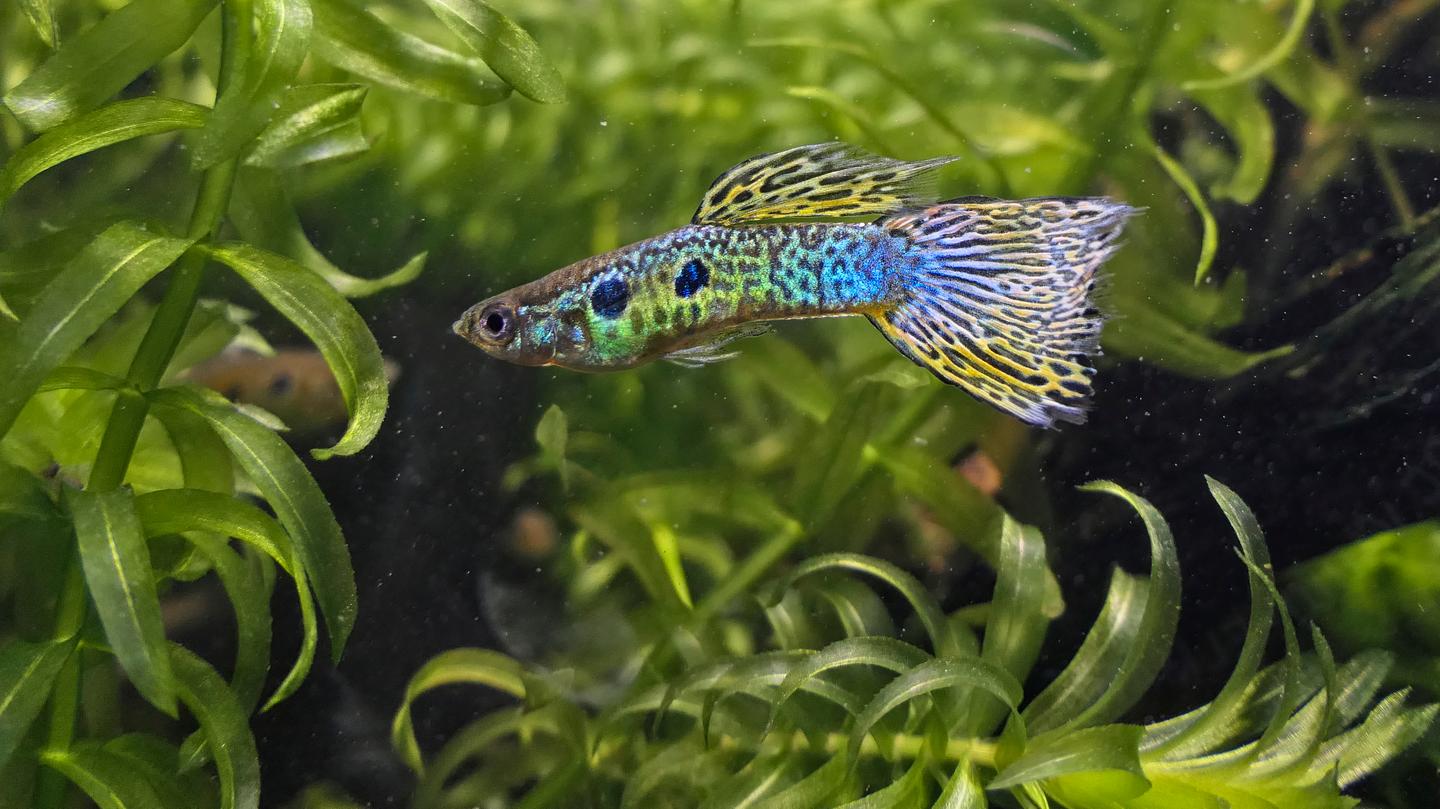
Guppy Care Guide: Poecilia reticulata
Guppies are social livebearers suited to a prepared beginner, not a fish-per-litre formula. Use a mature filtered aquarium, tested neutral-to-alkaline mineral-bearing water, deliberate sex and population planning, open swimming room, cover and a separation option.
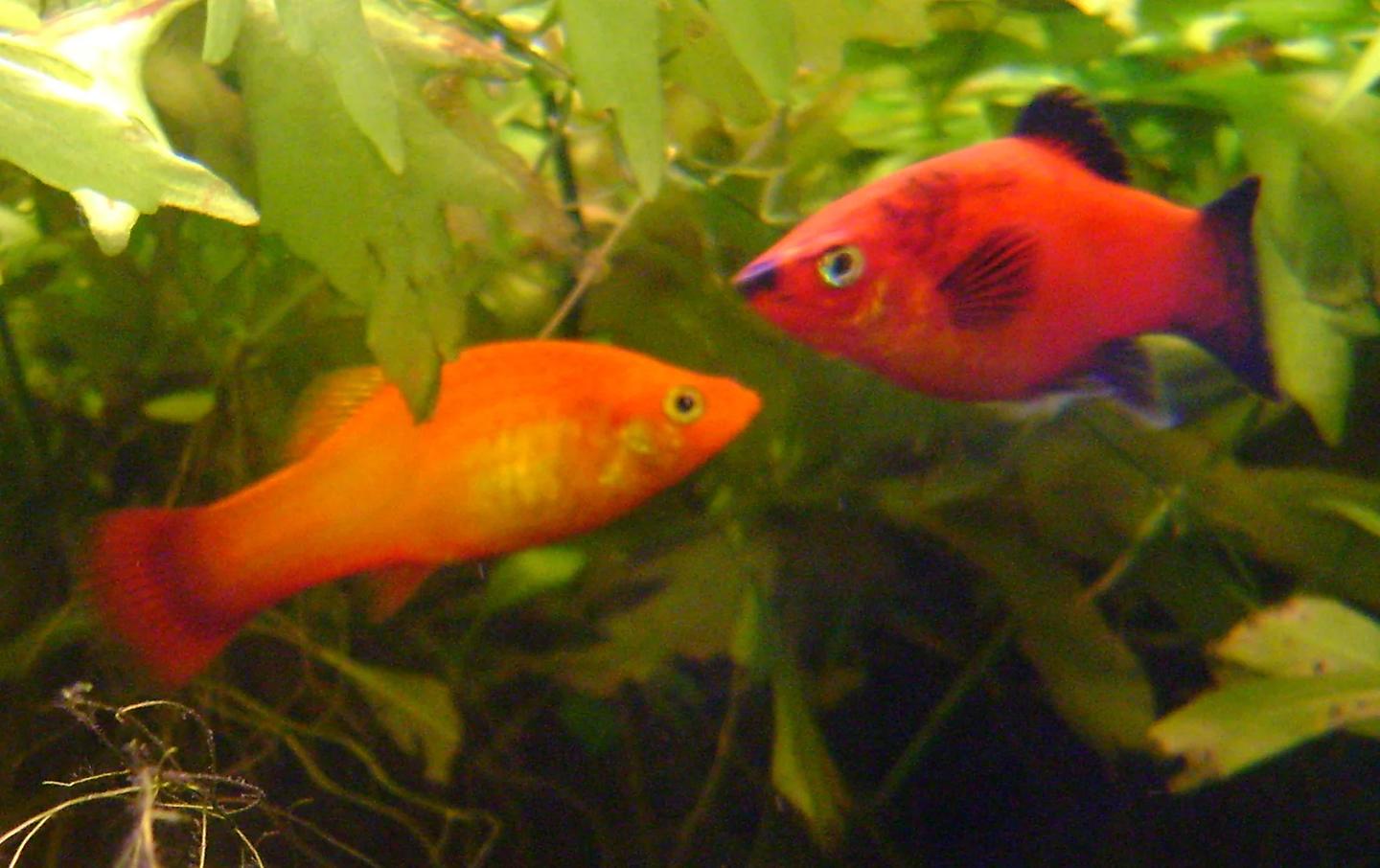
Platy Fish Care: Tank Size, Temperature & Types
Platy is a trade name used for Xiphophorus maculatus, X. variatus and domestic forms. Start with at least three in a mature aquarium of at least 45 litres, verify the exact fish and measured water, and plan extra capacity before mixing sexes.
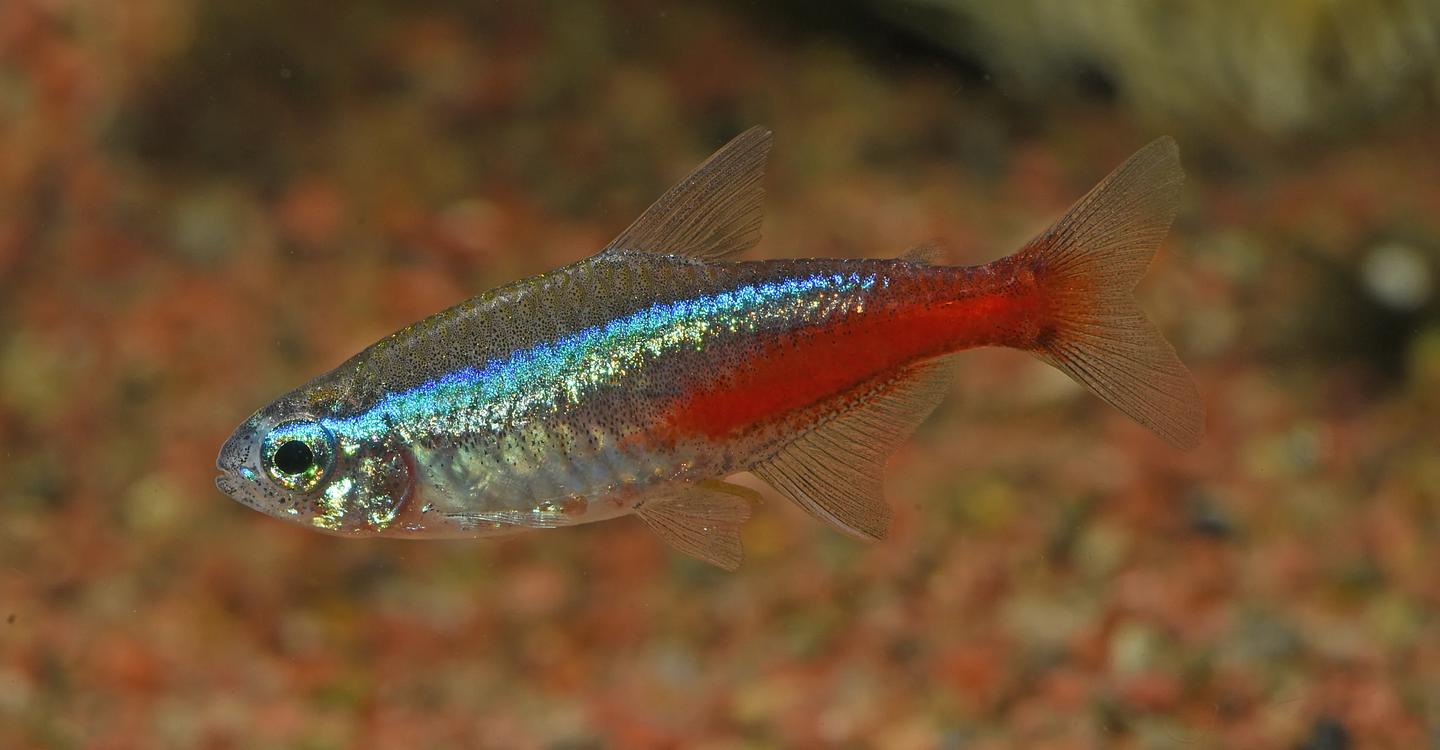
Neon Tetra Care Guide
Start here: use a mature, filtered aquarium at least 60 cm long. FishBase and OATA compile groups of five or more; our conservative planning screen starts at eight, then checks usable volume, water, filtration and every adult tank mate.