
Live Aquarium Plants for Beginners: 7 Easy Picks

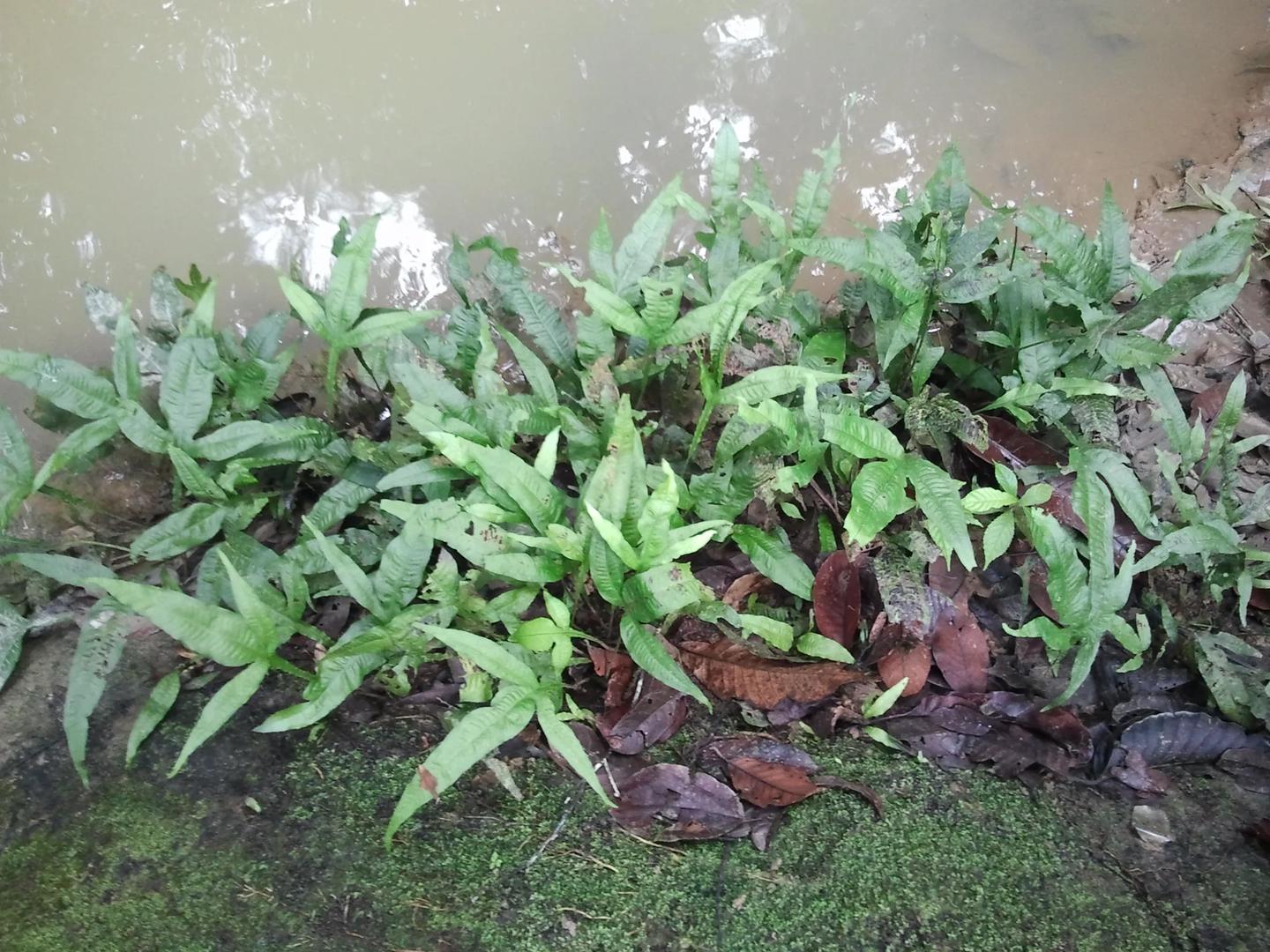
The dark dots under mature Java fern leaves are often sporangia—the fern's reproductive structures—not automatically disease or algae.
Tropica Java fern profileLive stock
Aquarium Plants for sale — see live stock & today’s prices
The easiest route into live aquarium plants is not to copy a show aquascape. Start with a few correctly labelled plants that fit your tank: Java fern or Anubias on wood or stone, a rooted Cryptocoryne in the substrate, and Java moss only where you can keep it contained. Add a faster plant such as water sprite or hornwort only if you have room to manage it.
That answer is deliberately narrower than the old “buy a bundle and hope” approach. A beginner plant must fit the actual light, water, layout and adult fish—not merely survive in somebody else's aquarium.
- On wood or stone: Java fern and Anubias; keep each rhizome exposed.
- In the substrate: Cryptocoryne wendtii or a suitably sized Vallisneria.
- For texture: a thin, secured patch of Java moss.
- For faster growth: water sprite or hornwort, if the tank has the space and flow.
- Lighting: use a timer and make one measured change at a time.
- CO2: injected CO2 is not a prerequisite for the lower-demand core plants.
Why add live plants—and what they cannot do
The RSPCA describes aquarium plants as enrichment that can provide shade and shelter, while stressing that the layout must vary with the fish[1]. Plants produce oxygen during photosynthesis and continue to respire when the light is off; University of Florida extension guidance describes this day-night oxygen cycle in ponds or tanks with plants and algae[3].
That makes planted cover useful for many fish, but not universally appropriate in the same form. An open-water swimmer, a bottom-sifting fish and a territorial fish may need different amounts and positions of cover. Start with the species' behaviour and leave usable swimming and feeding space.
Live plants are also not a substitute for:
- a fully cycled, appropriately sized aquarium;
- a mature filter and adequate surface gas exchange;
- water testing and suitable maintenance;
- matching fish to measured temperature, pH and hardness;
- diagnosing ammonia, nitrite, disease or oxygen problems.
The RSPCA's aquarium guidance treats filtration, surface oxygen exchange and water testing as separate essentials[2].
If fish gasp, clamp their fins or behave abnormally, treat that as a husbandry or health problem—not a prompt to buy more plants. Begin with the nitrogen-cycle guide and water-chemistry guide, then seek an aquatic veterinarian when illness is suspected.
Seven beginner plants, with honest limits
Kew currently accepts Microsorum pteropus, Anubias barteri, Cryptocoryne wendtii, Vallisneria spiralis and Ceratopteris thalictroides as botanical names[5][6][7][8][9]. Nursery labels may also contain cultivar, variety or older trade names. Keep the seller's full label; a photograph or common name alone may not establish exact identity.
| Plant sold as | Best use | Planting method | Important limit |
|---|---|---|---|
| Java fern (Microsorum pteropus) | Slow, structured cover on hardscape | Fix the rhizome to wood or stone | Do not bury the rhizome; varieties differ in size |
| Anubias (Anubias barteri and cultivars) | Compact, slow-growing hardscape plant | Fix to wood or stone with the rhizome exposed | Slow leaves can collect algae; “nana” labels vary |
| Cryptocoryne wendtii | Rooted midground rosette | Plant roots in substrate and leave the crown clear | New leaves may differ after submersion |
| Java moss (sold as Taxiphyllum barbieri) | Fine texture on hardscape | Secure a thin layer, then trim and collect fragments | Loose fragments travel through the tank |
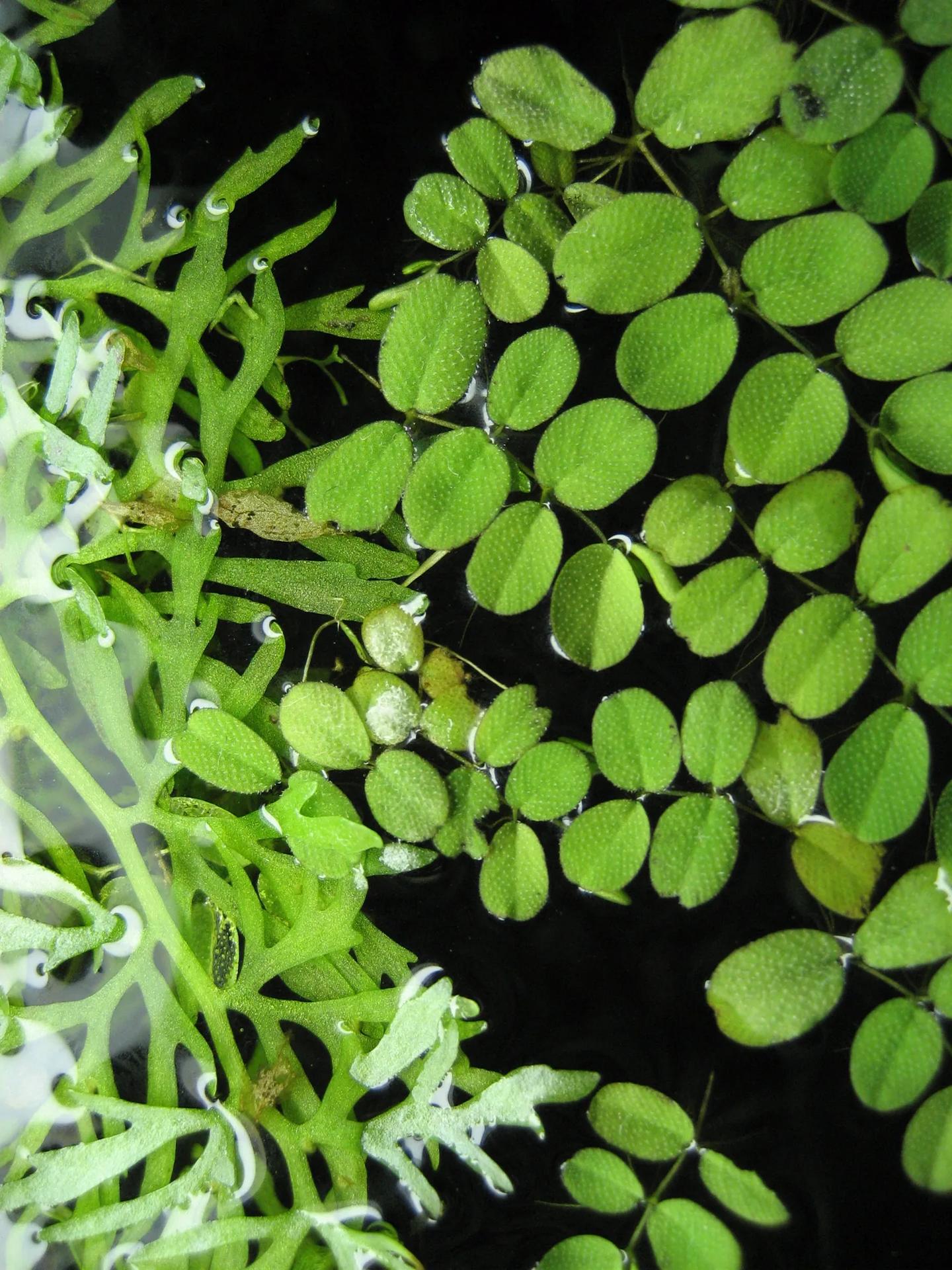
| Water sprite (Ceratopteris thalictroides) | Faster, finely divided growth | Grow rooted or floating according to supplier directions | Faster growth means more trimming and space |
| Hornwort (Ceratophyllum demersum) | Fast floating cover without a rooted base | Float or anchor without pretending it has true roots | It can shade plants below and shed fragments |
| Vallisneria | Tall background ribbons | Plant roots while keeping the crown above substrate | Runners spread and long leaves can shade the surface |
This is a shortlist, not a compatibility guarantee. Grower profiles classify Java fern, Anubias, C. wendtii and Java moss as low-light or low-CO2-demand choices, but each has a different growth form and mature footprint[10][11][12][13].
1. Java fern: attach, do not bury
Java fern is useful when you have plain sand or gravel because it can grow on aquarium-safe wood or stone. The specialist grower profile places it at roughly 15–30 cm and says the rhizome should not be covered[10]. Cultivars can differ, so buy by the labelled form and available space rather than by the common name alone.
Fix it gently with cotton thread or a low-breaking-strain line until roots grip. Check the tie during maintenance and remove it if it constricts the rhizome. Dark dots arranged beneath an older leaf may be sporangia; they are not automatically a reason to medicate the tank or discard the plant.
2. Anubias: slow structure for shaded positions
Anubias barteri is the accepted species name in Kew's current backbone, while “nana” remains common nursery language[6]. The Tropica profile describes its nursery form as slow-growing and recommends stone or wood, again keeping the rhizome unburied[11].
Slow growth is low maintenance, not zero maintenance. Dust or algae can remain on long-lived leaves. Place the plant where you can inspect it and avoid pushing it directly beneath the brightest part of a lamp unless its condition supports that choice.
3. Cryptocoryne wendtii: a rooted midground option
This is a rosette rather than an epiphyte. Plant the roots in the substrate without burying the crown. The labelled cultivar matters: the grower profile for “Green” describes a broad possible height and rosette spread, so one shop pot is not automatically a foreground plant[12].
Some Cryptocoryne leaves deteriorate after a move or change in conditions. Do not call every translucent leaf “normal melt”: confirm the crown is correctly planted, remove clearly decaying material, check water quality and compare new growth with the supplier's description.
4. Java moss: useful only when contained
Java moss can cover wood and stone and create fine structure. Tropica recommends securing it with cotton thread or line until it gains a hold[13]. A thin layer is easier to keep clean than a dense wad.
Trim it outside the tank when practical, capture fragments and dispose of them with household waste according to local guidance. Never rinse trimmings into a sink, drain, pond or watercourse.
5. Water sprite: faster growth with a bigger maintenance bill
Water sprite has finely divided leaves and can be grown rooted or floating. The specialist profile calls it a faster plant and notes that it may form surface leaves in an open aquarium[16]. That makes it useful for early plant mass, but it can also occupy light and surface area quickly.
Use it only where the filter intake remains clear, fish can reach feeding areas, and you are willing to thin it. “Fast-growing” is not the same as “fits every small tank”.
6. Hornwort: flexible floating cover
Hornwort is sold as an easy floating plant and does not need a planted substrate[17]. Its main beginner advantage is reversibility: a portion can be thinned without uprooting a rosette.
Its main disadvantage is the same. Loose growth can move, collect debris and shade plants below. Keep it away from intakes and remove fragments during each water change.
7. Vallisneria: choose by height, not just difficulty
Vallisneria forms runners and ribbon-like leaves. Tropica places V. spiralis “Tiger” in its easy category but says it can exceed 60 cm and shade plants in shallower aquariums[15]. It is therefore a background choice for a tank with suitable height and maintenance access, not a universal nano plant.
Buy the label before you buy the look
A useful plant label should give the botanical name or nursery cultivar, intended placement, mature size, light category and any preparation instructions. Avoid an unlabelled “aquatic plant” bundle: some attractive terrestrial or marginal plants cannot live permanently submerged.
Before purchase:
- Write down the tank's dimensions, not only its litres. Use the tank-volume calculator if the real water volume is unclear.
- Record the lamp model, timer period and whether daylight reaches the glass.
- Measure the aquarium's current temperature, pH and hardness.
- Check the plant's mature height and spread against open swimming space.
- Ask for the exact label and any treatment or preparation instructions.
- Inspect for damaged tissue and unwanted hitchhikers without treating every snail as proof of danger.
- Confirm that the plant is legal to buy and keep where you live.
A plant bundle is not a plan. Combining one rhizome plant, one rooted rosette and one fast floating plant gives you three different planting and maintenance jobs. Label them before removing pots or packaging so you do not bury the wrong structure.
Plant rhizomes, rosettes, moss and floaters differently
Rhizome plants
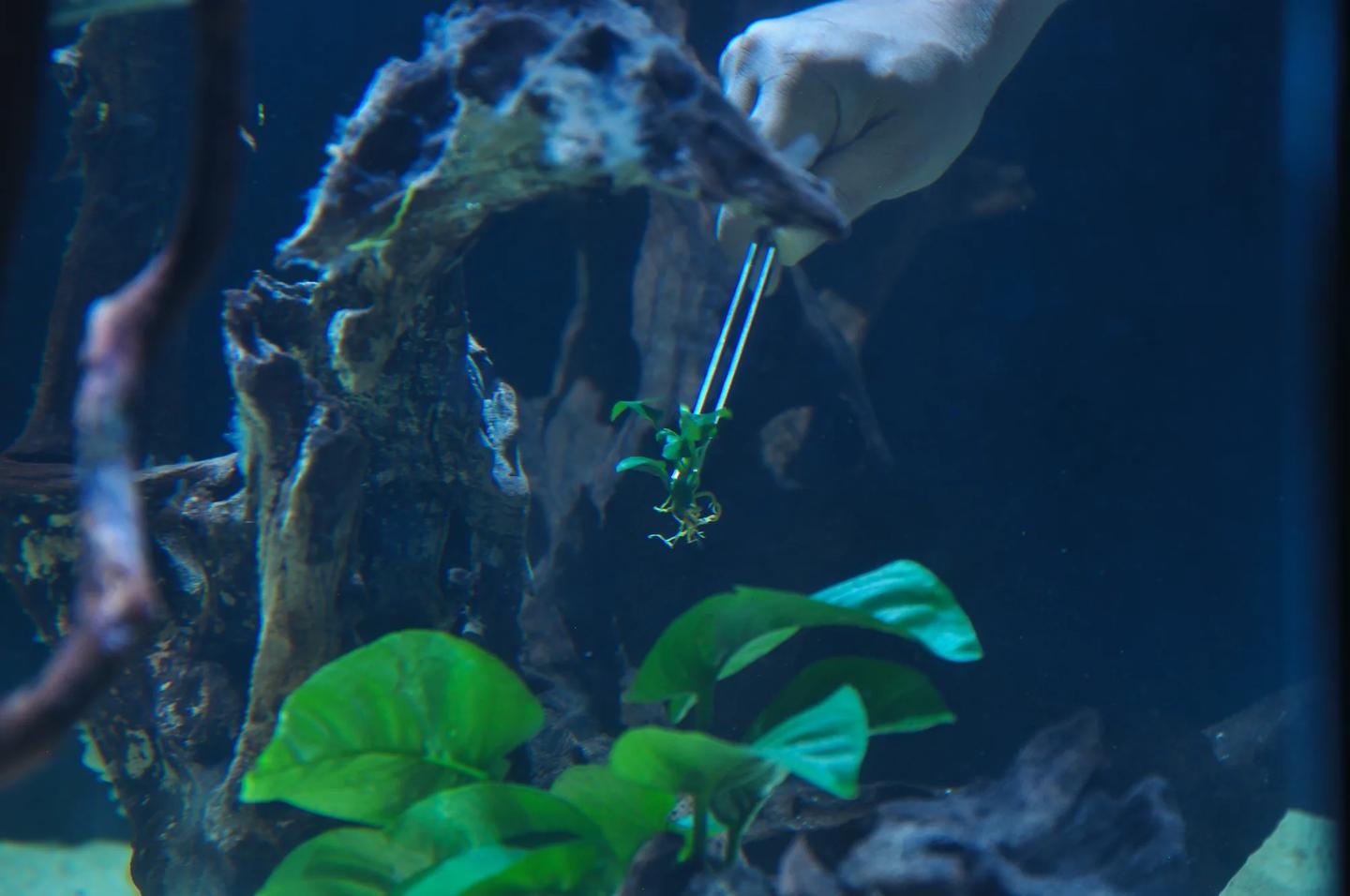
Java fern and Anubias have a horizontal rhizome from which leaves and roots emerge. Position that rhizome on aquarium-safe wood or stone and leave it exposed. Roots may grow around the hardscape or into the substrate; that does not make the rhizome a root.
Rooted rosettes
For Cryptocoryne and Vallisneria, remove the retail pot and growing medium as directed, separate only where the plant has distinct healthy crowns, place the roots into the substrate and keep the crown clear. Do not bury leaves to make a loose plant stay down.
Moss
Spread a small portion thinly rather than compressing a ball. Secure it so fragments do not enter the filter. Trim before the inner layer becomes inaccessible to flow and cleaning.
Floating plants
Leave enough uncovered surface for feeding, equipment and gas exchange. A floating plant that blocks an overflow or blankets all light is no longer a low-maintenance solution.
Lighting: begin with a repeatable baseline
“Low light” is a supplier category, not one universal number of lumens per litre. The light reaching a leaf changes with lamp output, lens, tank depth, tannins, floating cover and placement. Practical Fishkeeping identifies Anubias, Java fern and Cryptocoryne as beginner-friendly options under basic aquarium lighting, but that does not prove every bundled lamp suits every cultivar or tank depth[18].
Our conservative low-tech starting method is:
- place the lamp on a timer for one continuous six-hour period;
- photograph the same plants from the same angle once a week;
- record new growth, damaged leaves and visible algae;
- wait about two weeks before changing the photoperiod, unless livestock welfare requires immediate action;
- change only one lighting variable at a time.
Do not respond to weak growth by simultaneously extending the day, increasing fertiliser and adding carbon. That destroys the evidence needed to learn which input mattered.
CO2 and fertiliser: no blind dosing
The four core plants here are sold by a specialist grower as having low CO2 demand[10][11][12][13]. That makes a non-injected setup a reasonable beginner baseline; it does not mean carbon or nutrients are irrelevant.
Fertiliser depends on the plant's growth form, substrate, source water, stocking and product formulation. If you use one:
- calculate from the aquarium's actual water volume;
- follow the exact aquarium-product label;
- do not combine products with overlapping ingredients without understanding the total;
- keep a dated dosing record;
- stop treating leaf colour alone as a laboratory diagnosis.
Pressurised CO2 adds equipment and a livestock-safety dependency. It belongs in a separate, monitored plan—not as a casual fix for a plant that may simply be incorrectly planted.
New leaves, old leaves and “plant melt”
Many commercial aquarium plants can grow with foliage above water. Tropica explains that emersed-grown plants may develop different leaf shapes or colours when they adapt to submerged conditions[14]. Some fully aquatic plants are instead cultivated underwater.
That means leaf loss after planting has several possible explanations:
- replacement of emersed foliage;
- physical damage during transport or planting;
- a buried or injured rhizome or crown;
- unsuitable light, temperature or water chemistry;
- nutrient or carbon limitation;
- local decay trapped in a dense clump;
- a plant that was never suitable for permanent submersion.
Look for evidence before acting. Photograph the base, check that it is planted correctly, remove loose decaying material, test the aquarium and compare any new leaf with the supplier's plant profile. Do not promise that a bare crown will recover in a fixed number of weeks.
Algae: diagnose before adding animals
Algae on a new layout does not prove that the tank has “too many nutrients” or “too little CO2”. Record the light period, feeding, water-change routine, plant growth and test results. Clean accessible surfaces manually, correct an obvious maintenance problem, then adjust one relevant input.
Fish, shrimp and snails are animals with complete care needs, not equipment. Do not add an Otocinclus, Amano shrimp or Nerite snail merely to solve algae. First verify mature tank conditions, group needs, diet, compatibility and containment; the algae-control guide explains the diagnostic sequence.
UK biosecurity and disposal
Current rules restrict listed invasive non-native plants in England and Wales. Government guidance warns that tiny aquatic-plant fragments can spread and that dumping plants in the wild may be an offence[4]. Lists and legal duties can change, so check the live government page rather than relying on an old blog list.
For every aquarium plant:
- never release it into a pond, stream, canal or other wild water;
- never pour plant fragments or aquarium water into an outdoor drain or watercourse;
- collect trimmings in a sealed bag for the appropriate household-waste route;
- follow local-authority instructions when a listed invasive species is suspected;
- clean nets, buckets and tools before they are used with another aquarium.
UK buyer check: a legal shop sale does not remove your biosecurity responsibility. Keep the plant label, check the current government list, and contain every trimming and fragment.
A first-week planting sequence
Before planting
Confirm the aquarium is suitable for the fish plan, note the measured water and photograph the unplanted layout. Rinse or prepare each plant according to its own label. Keep species separated.
On planting day
Place hardscape plants first, then rooted plants, then a small amount of moss or floating cover. Keep intakes, heater flow, feeding areas and the front viewing/maintenance zone accessible.
During the first week
Run the same timed photoperiod each day. Remove detached leaves and fragments. Check that rhizomes and crowns remain exposed, and observe fish respiration and access to food. Test water on the schedule appropriate to the aquarium's maturity; plants do not make an uncycled aquarium safe.
After two weeks
Compare photographs. New growth is more useful than an isolated old leaf. If a change is needed, alter one input, write it down and compare again.
Troubleshooting by evidence
| What you see | Check first | Avoid assuming |
|---|---|---|
| Rhizome turning soft | Whether it was buried, constricted or damaged | That fertiliser will repair rot |
| Older emersed-looking leaves declining | Correct planting and presence of healthy new submerged growth | That every case is harmless “melt” |
| Tall, sparse new growth | Plant identity, lamp, shading and tank depth | That longer lighting alone is the answer |
| Algae on slow leaves | Photoperiod, placement, cleaning and new plant growth | That an algae-eating animal is treatment |
| Yellow or pale growth | Which leaves are affected, source water, substrate and product history | A single nutrient deficiency from colour alone |
| Floating plants collecting at one end | Surface flow, intake protection and usable feeding area | That more floating cover is always better |
| Fish gathering at the surface | Oxygen exchange, temperature, stocking and water quality | That daytime plant oxygenation makes the tank safe |
The simplest reliable version
For many first community aquariums, a restrained layout is enough: attach one correctly labelled Java fern and one Anubias to hardscape, plant a suitably sized Cryptocoryne, start with a repeatable light period, and watch for new growth before adding complexity. Use Java moss, water sprite, hornwort or Vallisneria only where their maintenance pattern solves a real layout need.
That approach is less dramatic than a shopping list, but it protects the fish, gives each plant the right planting method and leaves you with evidence when something changes. For the aquarium itself—not just the plants—continue with setting up a first tropical tank.
References and scope
This guide separates current botanical identity, animal-welfare guidance, UK legal guidance and specialist grower practice. Kew is used for accepted plant names and native ranges; it is not an aquarium-care trial. RSPCA sources support enrichment and oxygen caveats; they do not declare every fish compatible with every planted layout. Tropica, Practical Fishkeeping and INJAF are specialist practice sources, not independent comparative trials[19][20].
The photographs are documentary illustrations with the limits stated in their captions. None proves that a visible plant is the exact retail item a reader will receive.
How beginner aquarium plants grow
Frequently asked questions
Shop Aquarium Plants & related
From this care guide straight into our UK live-fish catalogue.
Tetras
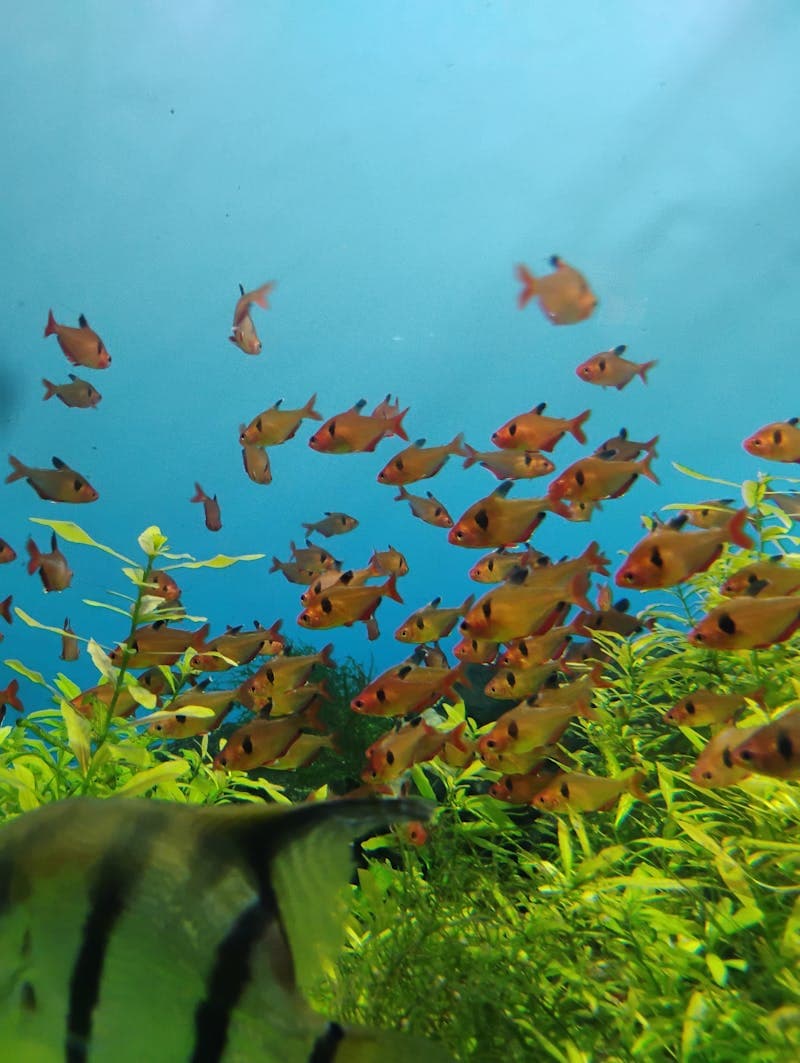
Premium Tetras for sale UK — Cardinal, Ember, Black Neon, Rummy Nose, Serpae, Diamond, Glowlight and more. Peaceful community schoolers.
African Cichlids
Malawi mbuna, peacocks and haps plus Tanganyika Tropheus and Frontosa — mostly juveniles, supplied size on every listing. Hard-water advice included.
South American Cichlids
South American Cichlids for sale UK — Apistogramma, Rams, Oscars, Severums, Geophagus, Pikes, Discus and Angelfish.
Catfish & Plecos
Corydoras, Bristlenose, L-number plecos, Synodontis and Otocinclus for clean-up and character — supplied and adult size on each listing so the tank fits.
Livebearers
Livebearer fish for sale UK — Guppies, Mollies, Platies, Swordtails, Endlers, Limias. Easy-breeding community favourites.
Gouramis & Labyrinth Fish
Gouramis and labyrinth fish for sale UK — Pearl, Dwarf, Honey, Kissing, Giant and rare species. Peaceful surface-breathers.
Rasboras & Danios
Harlequin, Chili, Galaxy, Zebra and Celestial rasboras and danios for planted and nano tanks — peaceful shoalers for UK tap water, priced in groups.
Sources & further reading
Material factual claims cite the sources below; store policy and cautious inference are labelled in the article. Sources are grouped by type so you can judge their weight at a glance.
Scientific database (5)
- [5]Royal Botanic Gardens, Kew (2026). Plants of the World Online: Microsorum pteropus. Royal Botanic Gardens, Kew. View source
- [6]Royal Botanic Gardens, Kew (2026). Plants of the World Online: Anubias barteri. Royal Botanic Gardens, Kew. View source
- [7]Royal Botanic Gardens, Kew (2026). Plants of the World Online: Cryptocoryne wendtii. Royal Botanic Gardens, Kew. View source
- [8]Royal Botanic Gardens, Kew (2026). Plants of the World Online: Vallisneria spiralis. Royal Botanic Gardens, Kew. View source
- [9]Royal Botanic Gardens, Kew (2026). Plants of the World Online: Ceratopteris thalictroides. Royal Botanic Gardens, Kew. View source
University extension (1)
- [3]Francis-Floyd, R. (2021). Dissolved Oxygen for Fish Production. University of Florida IFAS Extension. DOI: 10.32473/edis-fa002-1992. View source
Animal-welfare charity (2)
- [1]Royal Society for the Prevention of Cruelty to Animals. Understanding pet fish behaviour and needs. RSPCA. View source
- [2]Royal Society for the Prevention of Cruelty to Animals. Choosing an aquarium for pet fish. RSPCA. View source
Government / regulatory (1)
- [4]Department for Environment, Food & Rural Affairs and Animal and Plant Health Agency (2024). Invasive non-native (alien) plant species: rules in England and Wales. GOV.UK. View source
Reference source (8)
- [10]
- [11]
- [12]
- [13]
- [14]Andersen, T. (2015). About emerse production of aquarium plants. Tropica Aquarium Plants. View source
- [15]
- [16]
- [17]Tropica Aquarium Plants. Mosses and floating plants for aquarium. Tropica Aquarium Plants. View source
Reference source (2)
- [18]Practical Fishkeeping editorial team. The beginner's checklist for your first aquarium. Practical Fishkeeping. View source
- [19]Practical Fishkeeping editorial team. The beginner's guide to growing healthy aquarium plants. Practical Fishkeeping. View source
Reference source (1)
- [20]
Spotted something that needs a fix?
Fishkeeping moves fast and we want every guide spot-on. If you think something here is wrong, out of date, or could be clearer, tell us — our team reads every message and updates the page.
Suggest an edit
Tropical Fish Co Editorial Team
Evidence-led aquarium editorial team
The Tropical Fish Co editorial team compiles care guidance from the sources cited on each page, separates published evidence from practical husbandry policy, and checks retail links against the current catalogue. First-hand experience is included only when a named contributor and the observation have been verified.
Keep exploring
Shop related
- Tetras
Premium Tetras for sale UK — Cardinal, Ember, Black Neon, Rummy Nose, Serpae, Diamond, Glowlight and more. Peaceful community schoolers.
- African Cichlids
Malawi mbuna, peacocks and haps plus Tanganyika Tropheus and Frontosa — mostly juveniles, supplied size on every listing. Hard-water advice included.
- South American Cichlids
South American Cichlids for sale UK — Apistogramma, Rams, Oscars, Severums, Geophagus, Pikes, Discus and Angelfish.
- Catfish & Plecos
Corydoras, Bristlenose, L-number plecos, Synodontis and Otocinclus for clean-up and character — supplied and adult size on each listing so the tank fits.