
Betta Fish Care Guide: Siamese Fighting Fish

For one typical domestic Betta splendens, start with at least 20 litres, a mature filter, thermostatic heater, separate thermometer, gentle flow, a secure lid with surface access, and plants or refuges. Keep one male per aquarium.
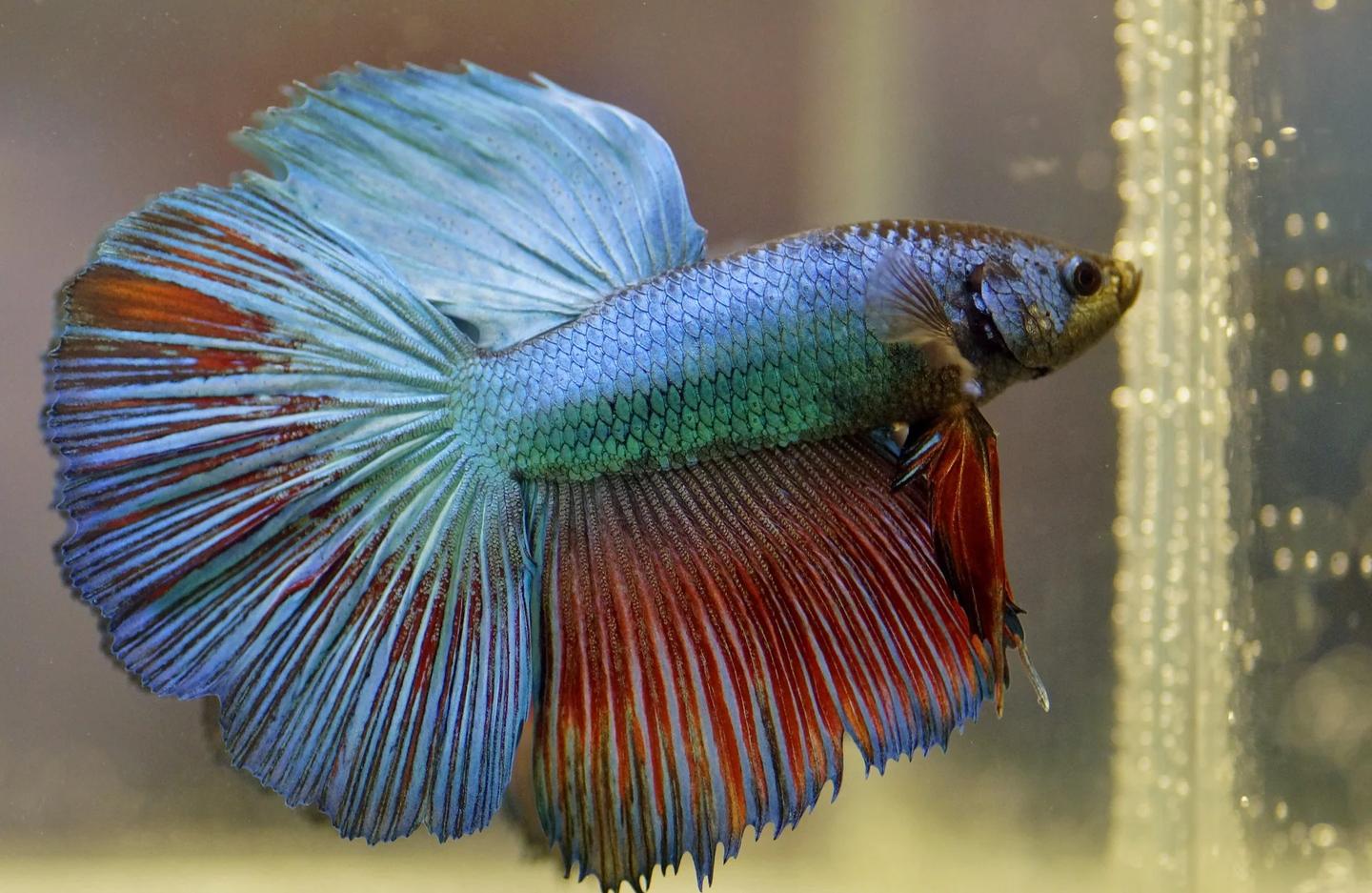
In a 2024 welfare experiment, Bettas showed more abnormal behaviour in a barren 19.3-litre tank than in the same-size furnished tank: good care is not only a litre number.
Read the peer-reviewed tank and furnishing studyOATA recommends at least 20 litres for one male and reports 20-28°C, pH 6-8 and 4-12 dGH for tank-reared Bettas. Tropical Fish Co uses 26-28°C as its practical target for a typical domestic Betta splendens; see the dedicated temperature guide for the evidence and exceptions. The IUCN status applies to assessed wild Betta splendens, not automatically to domestic shop lines.
Live stock
Betta Fish for sale — see live stock & today’s prices
For one typical domestic Betta splendens, the practical starting setup is at least 20 litres, heated, filtered, covered and furnished. Cycle the filter before the fish arrives, keep the flow gentle, leave clear access to the surface, and plan on housing one male by himself. OATA's UK care sheet gives the 20-litre minimum; two recent peer-reviewed studies independently show why tiny or barren containers are a poor welfare target[3][4][5].
The fish most UK shoppers mean by “Betta” or “Siamese fighting fish” is Betta splendens Regan, 1910, in the family Osphronemidae[1]. “Japanese fighting fish” appears in search language, but it is not a statement of origin: scientific sources place the wild species in central Thailand and the lower Mekong, while domestic forms have a complex breeding history[2][6].
If your aquarium is ready and you are shopping rather than researching, check the current Betta range. Availability, exact strain, sex, size and price belong to the live shop hub—not to this evergreen care guide.
- Space: at least 20 litres for one male; larger is easier to keep stable
- Equipment: mature filter, thermostatic heater, separate thermometer and secure lid
- Furnishing: plants, shade and refuges with no sharp or rough fin hazards
- Water: test it; ammonia and nitrite must be zero
- Social plan: one male per aquarium; no tank mate is guaranteed safe
Why a furnished 20-litre tank is the starting point
“Bettas live in puddles” is not a housing standard. A labyrinth organ lets the fish take atmospheric air at the surface, but OATA explicitly warns that this does not remove the need for an appropriate aquarium and filtration[3].
The strongest useful evidence is more precise than an argument about anecdotes:
| Evidence | What was compared | What it supports | What it does not prove |
|---|---|---|---|
| OATA UK care guidance | Domestic aquarium husbandry | At least 20 L for one male, with a filter, heater, plants/refuges and gentle current | One perfect tank for every domestic form |
| Clark-Shen et al. 2024 | 13 males rotated through 1.5, 3.3, 5.6 and 19.3 L; the 19.3 L tank was tested furnished and barren | Larger, furnished housing produced more activity and fewer abnormal behaviours | That 19.3 L is an ideal ceiling or that one behaviour measures all welfare |
| Oldfield & Murphy 2024 | Bowls and 10, 38 and 208 L aquaria, plus social trials | Tiny bowls restricted swimming; physical enrichment mattered | That more space makes two males safe together |
Tropical Fish Co therefore uses 20 litres as a minimum starting screen for one male, aligned with the UK OATA care sheet. Choose more capacity when you can: decor reduces usable water, larger volumes are generally more stable, and a community plan needs space for every adult animal—not just the Betta[8].
Common mistake: buying a nominal 20-litre kit and assuming the number completes the decision. Check the internal dimensions, actual filled volume, filter, heater, lid, flow, refuges and maintenance access. A bare, unstable 20-litre container is not equivalent to a mature, furnished aquarium of the same label.
Stocking Calculator
Check if your tank can support this species at a healthy bioload.
Open tool →The Betta setup checklist
1. Cycle the filter before buying the fish
A new aquarium does not become biologically ready because the water looks clear. A working biofilter needs time and an ammonia source to establish organisms that process nitrogenous waste. The RSPCA strongly recommends fishless cycling and adding fish only after ammonia and nitrite have risen and returned to zero[8].
Use liquid or otherwise suitable aquarium tests and record results. OATA's Betta guidance calls for zero ammonia and zero nitrite and regular testing of nitrate, pH and hardness[3]. If either toxic waste reading is above zero, the aquarium is not ready for a planned purchase.
For a fuller explanation, follow the fish tank nitrogen-cycle guide before adding livestock.
2. Heat the water and measure it separately
OATA says a heater is required throughout the year for Bettas in the UK. A thermostat controls the heater; a separate thermometer tells you what the water is actually doing. Tropical Fish Co uses 26-28°C as a practical target for a typical domestic B. splendens, inside the broader published ranges. The evidence, exceptions and safe response to unusual readings are covered in the dedicated Betta fish temperature guide.
Do not size a heater from a universal watts-per-litre slogan. Follow the manufacturer's aquarium-volume, installation, minimum-depth and room-temperature guidance, then verify the result in the water.
3. Provide gentle flow, a lid and surface access
Bettas must be able to reach the surface to breathe air. OATA advises gentle current and a small air gap below the cover; the lid also reduces escape risk[3]. A sealed surface is unsafe, but an uncovered tank is not the answer for a fish that can jump.
Watch the individual after setup. If the fish is repeatedly swept away or cannot rest, reduce or diffuse the flow without turning off essential biological filtration. Never infer that the labyrinth organ makes stagnant, unfiltered water acceptable.
4. Furnish for cover without damaging fins
Use live plants or smooth, aquarium-safe alternatives, shade and refuges. Avoid sharp edges, rough openings that can trap a body, and decor that blocks surface access. The 2024 Clark-Shen study is especially useful here: in the same 19.3-litre volume, the barren condition produced more hovering, stereotypic swimming and wall interaction than the furnished condition[4].
That result supports meaningful structure, not a shopping list of compulsory plant species. Choose materials that suit the aquarium and can be kept clean and stable.
Water parameters without false precision
For tank-reared Bettas, OATA reports 20-28°C, pH 6-8 and 4-12 dGH. FishBase reports a broader 24-30°C temperature range for the species[3][2]. These are reference ranges from different contexts, not proof that every point is equally good for every domestic line.
| Check | Starting evidence | Practical decision |
|---|---|---|
| Temperature | OATA 20-28°C; FishBase 24-30°C | Use our stable 26-28°C practical target for a typical domestic Betta; confirm the exact fish's established care |
| pH | OATA 6-8 | Stability and gradual matching matter more than chasing a fashionable decimal |
| General hardness | OATA 4-12 dGH | Test the aquarium and compare with the seller's holding water |
| Ammonia | OATA 0 mg/L | Any detectable result needs investigation and corrective husbandry |
| Nitrite | OATA 0 mg/L | Any detectable result needs investigation and corrective husbandry |
UK tap water is not one chemistry. The Drinking Water Inspectorate explains that hardness varies with geology and water source[10]. Treat chlorine or chloramine with an aquarium conditioner, test after any domestic softener or filter, and use the aquarium water-parameters guide to interpret the result. Do not change pH or hardness simply to hit the middle of a copied range.
Water Parameter Matcher
Enter your tap water readings to see if this species will thrive.
Open tool →Feeding: complete nutrition first, variety second
OATA describes Bettas as omnivorous and recommends a good-quality aquarium flake or pellet, with small live or frozen foods such as daphnia or bloodworm as variety[3]. Use a suitably sized complete food as the nutritional base and offer only what is consumed promptly.
Avoid portion rules based on the size of the fish's eye, a fixed pellet count for every brand, or a compulsory weekly fast. Pellet dimensions and energy density vary, and age, body condition and water temperature affect intake. Follow the food maker's guidance, observe body condition and remove uneaten food before it decomposes.
If several people feed the aquarium, pre-measure portions. Overfeeding is both a nutrition problem and a water-quality problem.
Behaviour, bubble nests and tank mates
The safest default is one male Betta per aquarium. OATA warns that two males may fight until severely injured or killed, and the RSPCA separately identifies male Bettas as fish that may fight their own kind[3][9]. Larger or more complex tanks reduced some approach and display behaviours in research, but did not make cohabitation safe[5].
A bubble nest is part of reproductive behaviour. A male may build one without a female. It does not prove excellent health, and not building one does not diagnose illness. Treat it as one behaviour, not a welfare score.
Other species are not automatically safe. Screen adult size, water overlap, activity, fin-nipping, feeding competition and the space used by the whole community. Individual Betta temperament varies, so a backup separation plan is part of the setup. Our Betta tank-mates guide owns that detailed decision and should be read before mixing animals.
The selected evidence does not establish that shrimp, snails or fish fry are safe companions. A Betta may investigate or hunt smaller animals, while some larger or defensive invertebrates introduce their own injury risk. Treat any such combination as uncertain, provide species-appropriate refuge and be ready to separate—not as a cleaning or live-food strategy.
Domestic colours and fins do not identify welfare
Genome research across hundreds of domestic Bettas found a complex history and mapped variation in colour, body size, sex determination and fin traits[6]. That makes the aquarium Betta visually diverse—but it also means a colour name or tail label is not a scientific identity certificate.
Use the seller's scientific name and exact listing. A photograph can show visible traits; it cannot prove age, health, temperament, pedigree, fertility or how the fish will look under your lighting. Very long fins may also change how one individual copes with flow and furnishings, so observe swimming rather than declaring one named form universally hardier.
The IUCN assessment lists wild B. splendens as Vulnerable[7]. That conservation status should not be attached to every colourful domestic fish as a sales claim, nor should a domestic photograph be presented as a wild-locality animal.
Health: investigate before treating
Changes in appetite, breathing, posture, swimming, colour or fins are important, but they are not diagnoses. OATA advises checking water quality and seeking experienced guidance when changes appear[3]. The MSD Veterinary Manual likewise emphasises the aquarium history, water analysis and appropriate diagnostic work rather than choosing medication from one symptom[11].
Use this order:
- Confirm temperature and test ammonia, nitrite, nitrate and pH.
- Review recent additions, maintenance, feeding and equipment changes.
- Compare the fish's breathing, posture, appetite and fins with its own normal pattern.
- Avoid combining medicines or raising temperature from an internet diagnosis.
- Seek an experienced aquatic retailer or use OATA's fish-vet directory when signs are severe, persistent or unexplained[12].
A torn fin, white mark, swollen abdomen or unusual swimming pattern can have more than one cause. Water-quality correction may be urgent, but it does not identify a pathogen. Preserve evidence, check the complete system and get qualified help instead of treating the label that looks closest online.
Before you buy
The Animal Welfare Act 2006 protects vertebrates, and GOV.UK summarises the keeper's duty to provide a suitable environment, diet, normal-behaviour opportunity, appropriate social housing and protection from pain, injury, suffering and disease[13]. Put that duty into a practical pre-purchase gate:
- the aquarium is at least 20 litres and already fishless-cycled;
- ammonia and nitrite test at zero;
- the heater and separate thermometer hold the planned temperature;
- the filter flow is gentle and the surface remains accessible;
- the lid is secure and safe air space remains below it;
- decor provides cover without sharp edges or traps;
- one male has his own aquarium, with a separation plan for any attempted tank mate;
- complete food, conditioner, tests, siphon and maintenance containers are ready;
- a responsible person can care for the aquarium during travel;
- the seller can confirm the scientific name, current holding water and known history of the exact fish.
When every item passes, use the live Betta shop hub for current choices. This guide does not promise that either published photograph matches a fish currently for sale.
Evidence limits and review policy
The litre recommendation combines UK trade guidance with two small behavioural studies; it is not a universal biological threshold. Water ranges come from compiled and domestic-care sources rather than a single controlled tolerance trial. The selected sources do not justify a promised lifespan, guaranteed community combination, diagnosis from appearance, or the claim that every domestic line shares the same needs.
If you find a source-based correction, send it through our contact page with the exact passage and reference. Editorial feedback is never counted as a lead or purchase; completed ecommerce purchases and revenue remain the final commercial outcomes.
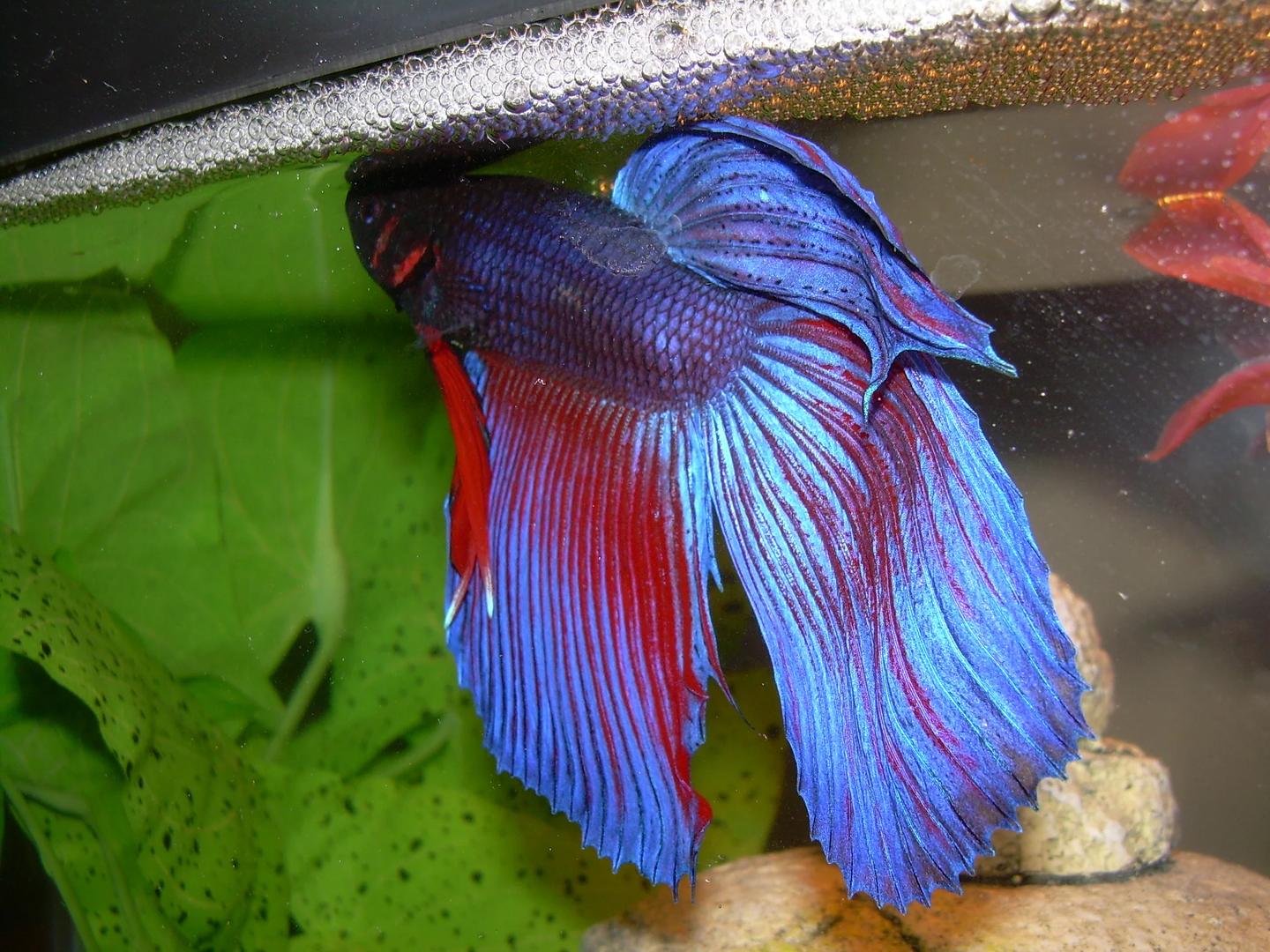
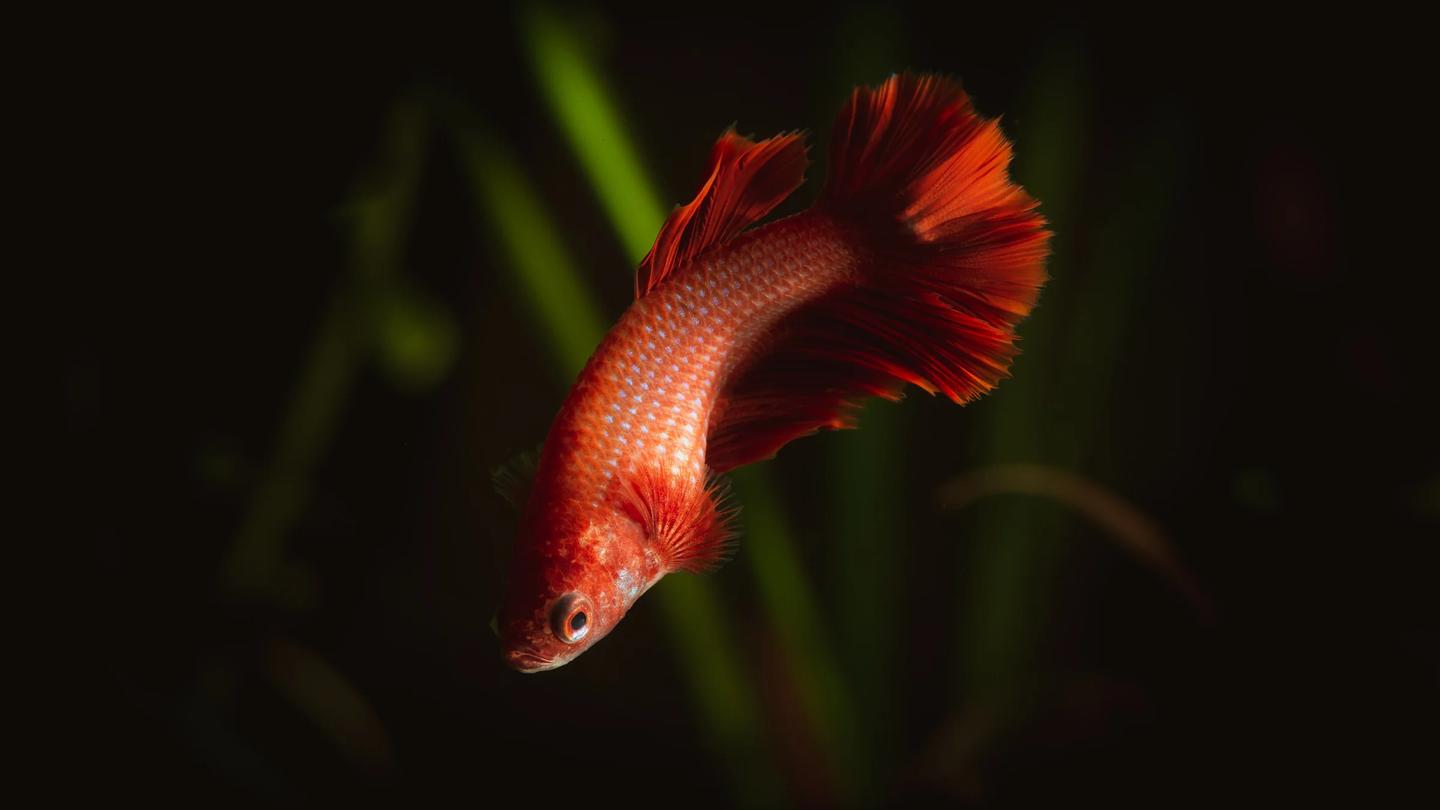
Betta surface behaviour and domestic forms
Frequently asked questions
Shop Betta Fish & related
From this care guide straight into our UK live-fish catalogue.
Sources & further reading
Material factual claims cite the sources below; store policy and cautious inference are labelled in the article. Sources are grouped by type so you can judge their weight at a glance.
Peer-reviewed study (3)
- [4]Clark-Shen, N.; Tariel-Adam, J.; Gajanur, A. & Brown, C. (2024). Life beyond a jar: Effects of tank size and furnishings on the behaviour and welfare of Siamese fighting fish (Betta splendens). Animal Welfare 33:e62. DOI: 10.1017/awf.2024.67. View source
Thirteen males rotated through 1.5, 3.3, 5.6 and 19.3 L conditions; behaviour supported larger, furnished housing. This small behavioural study does not prove one universal ideal tank.
- [5]Oldfield, R. G. & Murphy, E. K. (2024). Life in a fishbowl: Space and environmental enrichment affect behaviour of Betta splendens. Animal Welfare 33:e1. DOI: 10.1017/awf.2024.1. View source
Behavioural experiments comparing bowls and larger aquaria; supports space and physical enrichment but does not establish a universal home-aquarium optimum.
- [6]Kwon et al. (2022). The genetic architecture of phenotypic diversity in the Betta fish (Betta splendens). Science Advances 8(38). View source
Genome-wide study of domestic colour, fin, body-size and behavioural diversity; domestic appearance is not a reliable wild-origin or welfare marker.
Scientific database (2)
- [1]National Center for Biotechnology Information. Betta splendens Regan, 1910. NCBI Taxonomy. View source
Accepted scientific name and family check; not husbandry evidence.
- [2]Froese, R. & Pauly, D. (eds.). Betta splendens (Siamese fighting fish). FishBase. View source
Species profile, native-range and secondary aquarium compilation; published ranges are not controlled captive tolerance limits.
Veterinary reference (1)
- [11]MSD Veterinary Manual. Management of aquarium fish. MSD Veterinary Manual. View source
Veterinary reference for water-quality-led investigation, history, diagnosis and biosecurity; not a remote diagnosis for one photographed fish.
Animal-welfare charity (2)
- [8]Royal Society for the Prevention of Cruelty to Animals. Choosing an aquarium for pet fish. RSPCA. View source
UK welfare guidance on space, surface area, filtration, fishless cycling, heating, testing and stable water.
- [9]Royal Society for the Prevention of Cruelty to Animals. Keeping pet fish together. RSPCA. View source
UK welfare guidance recognising that male Bettas may fight their own kind and that compatibility requires species-specific research.
Trade-body guidance (2)
- [3]Ornamental Aquatic Trade Association. How to look after Siamese fighting fish (Bettas). OATA. View source
UK, vet-endorsed trade guidance for aquarium size, water, equipment, feeding, maintenance, compatibility and warning signs.
- [12]Ornamental Aquatic Trade Association. Find a fish vet. OATA. View source
UK route for locating fish-health help; it is not a diagnosis service.
Government / regulatory (2)
- [10]Drinking Water Inspectorate. Water hardness and hard water. UK Drinking Water Inspectorate. View source
UK supply hardness varies with geology and source; supplier information does not replace an aquarium test.
- [13]Department for Environment, Food & Rural Affairs. Animal welfare. GOV.UK. View source
Confirms that the Animal Welfare Act 2006 protects vertebrates and summarises the duty of care; the page's wider operational detail is farm-focused.
Reference source (1)
- [7]Vidthayanon, C. (2011). Betta splendens. The IUCN Red List of Threatened Species. DOI: 10.2305/IUCN.UK.2011-1.RLTS.T180889A7653828.en. View source
Vulnerable assessment for wild Betta splendens; it does not describe the provenance or status of a domestic retail fish.
Spotted something that needs a fix?
Fishkeeping moves fast and we want every guide spot-on. If you think something here is wrong, out of date, or could be clearer, tell us — our team reads every message and updates the page.
Suggest an edit
Tropical Fish Co Editorial Team
Evidence-led aquarium editorial team
The Tropical Fish Co editorial team compiles care guidance from the sources cited on each page, separates published evidence from practical husbandry policy, and checks retail links against the current catalogue. First-hand experience is included only when a named contributor and the observation have been verified.
Keep exploring
Care guides
- Honey Gourami Care Guide
Honey gourami care for UK aquariums: check 60 cm tank length, one fish or a group, adult-size evidence, water, tank mates and warning signs.
- Otocinclus Catfish Care: Tank Size, Food & Groups
Otocinclus catfish care for UK tanks: compare tank size, 22–25°C water, group planning, grazing foods, algae limits, tank mates and buying checks.
- Pleco Fish Guide: Types, Adult Size, Food & Tank Planning
Pleco fish guide for UK keepers: compare types, adult sizes, diets, tank planning, water and buying checks before choosing a suckermouth catfish.
Related care guides
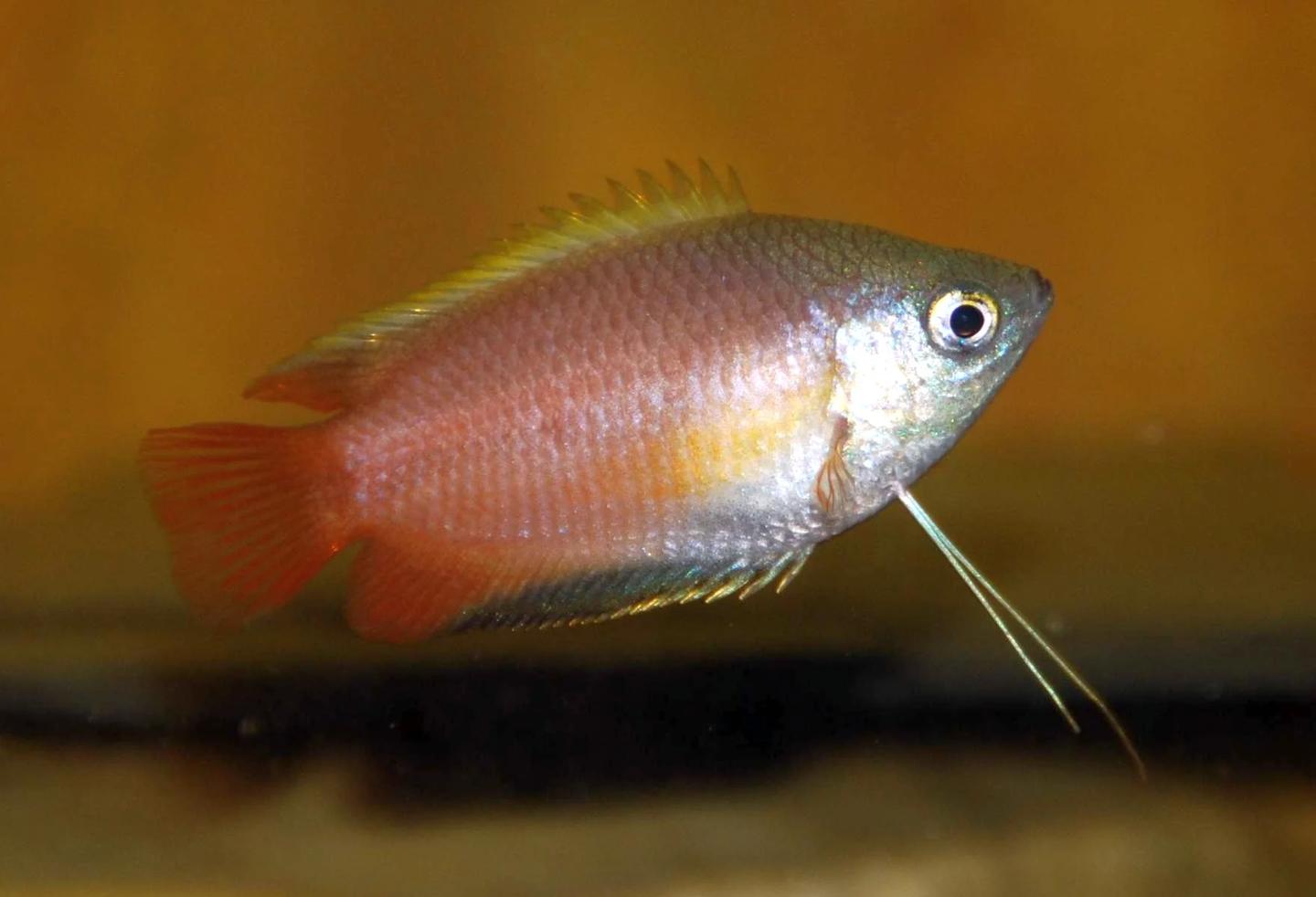
Honey Gourami Care Guide
Start with a mature, filtered aquarium at least 60 cm long. Published size records disagree, and broad group guidance is not Honey-Gourami-specific, so verify Trichogaster chuna, the seller's adult-size advice and any claimed sexes before choosing one fish or a group.
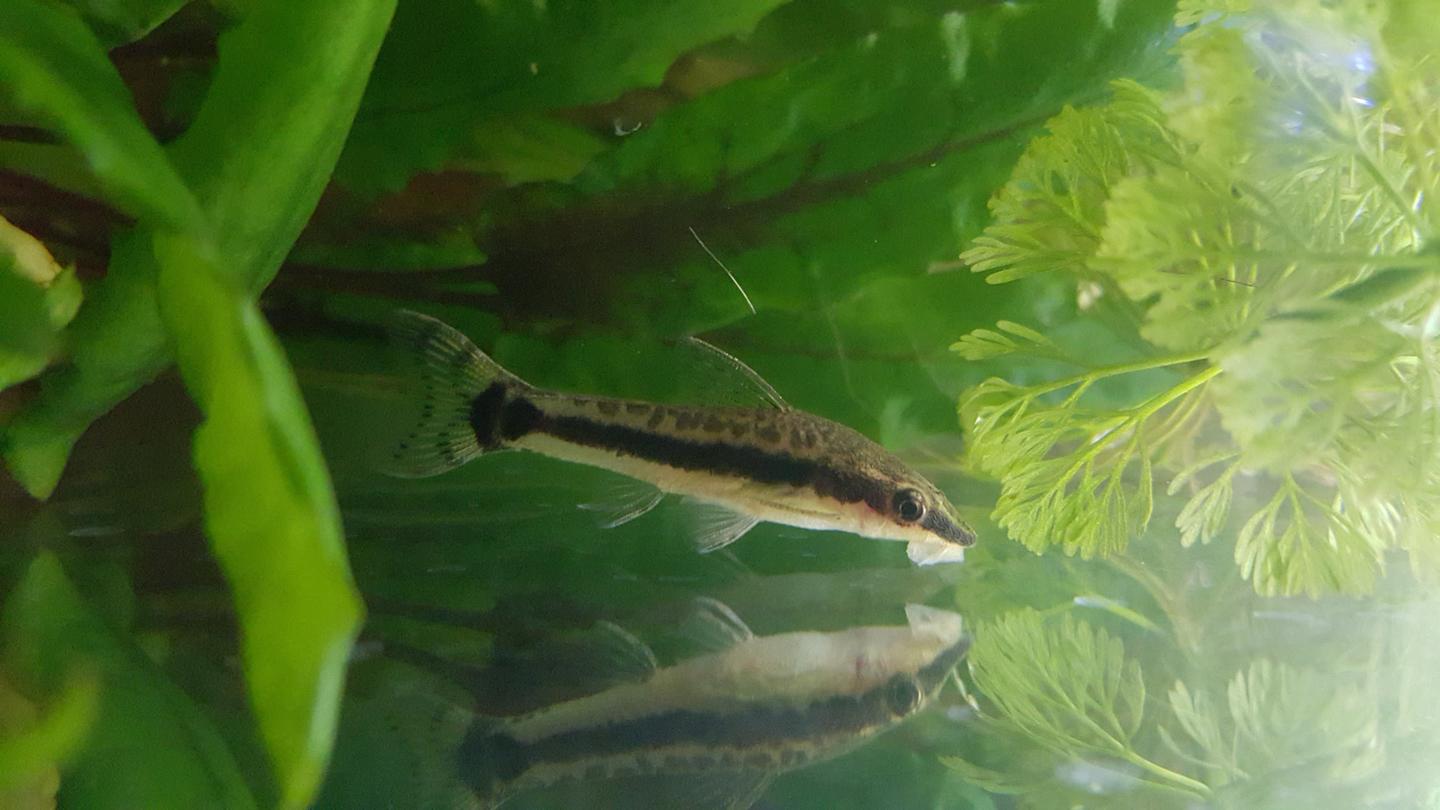
Otocinclus Catfish Care: Tank Size, Food & Groups
Otocinclus are small South American loricariid catfish, not disposable algae cleaners. Confirm the supplied species where possible; start with a mature, stable aquarium with ample grazing surfaces; plan a compatible social group; and provide suitable food even when algae is visible.
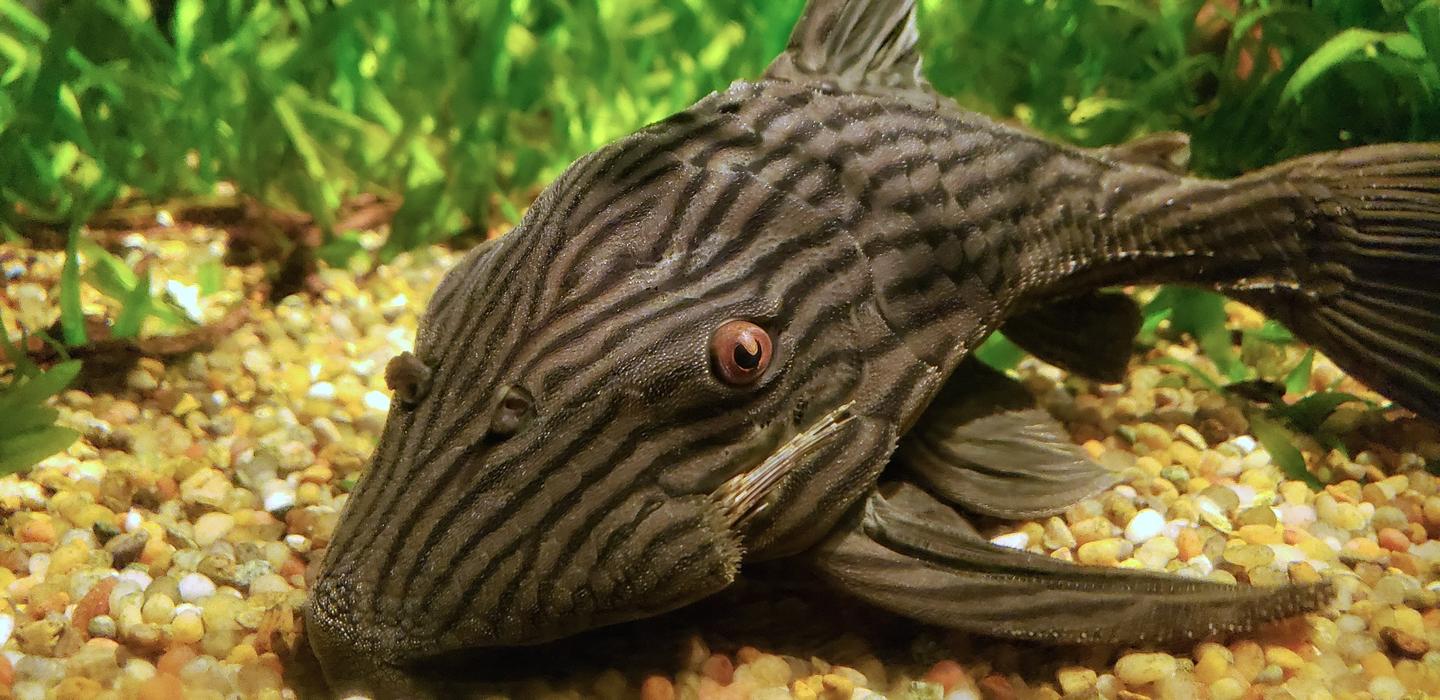
Pleco Fish Guide: Types, Adult Size, Food & Tank Planning
‘Pleco’ is a loose aquarium-trade label, not one species or one care sheet. Before buying, confirm the scientific name or defensible L-number, adult size and measurement method, required footprint, temperature and water, diet, social plan and source. No universal pleco tank size, menu or algae result is honest.