
Cherry Shrimp Care Guide

Use a mature, filtered aquarium and measured water—not a shrimp-per-litre rule. Tropical Fish Co uses 20 litres as a cautious starting policy for a small Cherry Shrimp group, above OATA's general 10-litre screen for small shrimp. Provide established grazing surfaces, cover and a protected filter inlet. No fish is guaranteed shrimplet-safe, and breeding should never be promised.
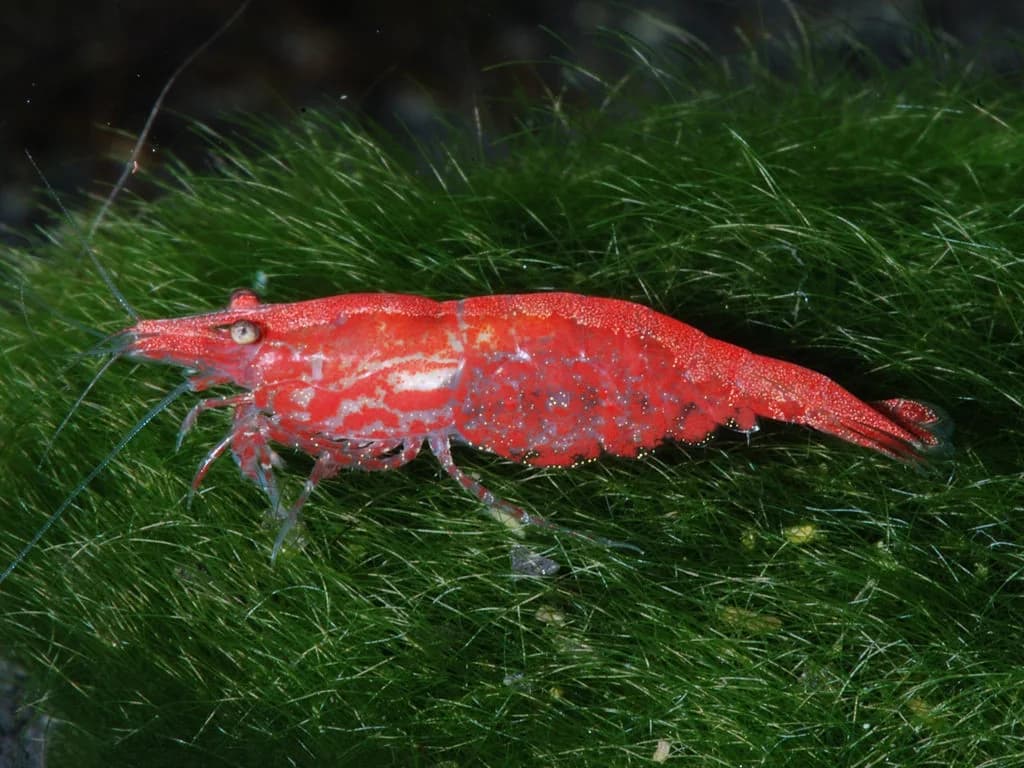
In a controlled study, female Cherry Shrimp spawned at 28°C but none carried eggs at 33°C—useful evidence that ‘hardy’ does not mean heat-proof.
Peer-reviewed temperature experimentThe 17–27°C, pH 6.5–8, 4–18 dGH and five-shrimp figures are OATA's broad group guidance, not controlled Neocaridina davidi limits. The 20-litre figure is our cautious planning policy, above OATA's 10-litre general screen for small shrimp; neither is a per-litre formula. Compare the seller's measured holding water and keep changes gradual.
Live stock
Cherry Shrimp for sale — see live stock & today’s prices
Start with a mature, filtered aquarium and measured water, not a claim that Cherry Shrimp tolerate anything. Tropical Fish Co uses 20 litres as a cautious starting policy for a small group. OATA's broader guide gives 10 litres for small shrimp and at least five for social shrimp[11]; neither figure is a biological minimum or a permanent shrimp-per-litre formula.
This page explains care for the red Cherry Shrimp aquarium form of Neocaridina davidi. For colours and grades, use the separate Cherry Shrimp UK comparison. For current prices and availability, use the Cherry Shrimp shop. A care photograph never proves which colour, size or pack is currently for sale.
- Confirm Neocaridina davidi and the seller's colour-line description.
- Use mature filtration with measured zero ammonia and nitrite before purchase.
- Start planning at 20 litres under our cautious policy, then account for every other animal and likely population growth.
- Provide established grazing surfaces, cover and a protected filter inlet.
- Compare the seller's measured holding water with your aquarium.
- Treat fish compatibility, medicines and breeding as risks—not guarantees.
Identity: Cherry Shrimp and Neocaridina davidi
The accepted catalogue name is Neocaridina davidi (Bouvier, 1904), in the family Atyidae[1]. Older sources and image labels may use N. heteropoda or N. denticulata sinensis. The synonym history helps reconcile old research; it does not turn every red dwarf shrimp into the same species or certify a retail animal from appearance alone.
“Cherry” describes a selectively bred red aquarium form. Red, blue, yellow and dark lines can share the species while differing in inherited colour. This care URL therefore owns exact-species welfare and lifecycle questions. It does not own grade pricing, current stock or a promise that mixed colours will breed true.
The 2026 ornamental-shrimp review found major species-specific evidence gaps and warned against treating environmental variables in isolation[2]. That is why this guide labels broad trade screens, controlled experiments and our cautious house policy separately.
Tank size and group: no shrimp-per-litre shortcut
OATA recommends at least 10 litres for a group of small freshwater shrimp and says social shrimp should generally be kept in groups of at least five[11]. We use a mature 20-litre aquarium as the safer starting policy because the extra water and footprint provide more headroom for feeding, equipment and change. With fish or other livestock, plan larger.
A controlled study placed newly hatched juveniles at 2.5, 5 and 10 individuals per litre for 90 days and found density affected growth[9]. It was a juvenile culture experiment, not evidence that a home aquarium can permanently hold a stated number of adults per litre.
Plan in this order:
- Confirm mature biological filtration and zero measured ammonia and nitrite.
- Use real water volume and footprint after substrate, wood and equipment.
- Reserve covered feeding and grazing areas for the starting group.
- Include every adult tank mate and the possibility of juvenile survival.
- Leave headroom for feeding errors, maintenance and summer heat.
Multiplying litres by a shrimp ratio hides the important limits: filtration, oxygen, mature grazing area, feeding competition, adult companions and population growth. There is no evidence-backed permanent one-shrimp-per-litre rule.
Water and temperature in a UK aquarium
OATA's group-level guide gives 17–27°C, pH 6.5–8 and 4–18 dGH, with ammonia and nitrite at zero[11]. These are broad trade screens, not controlled N. davidi tolerance limits. Ask for the seller's measured holding temperature, pH and hardness, test your aquarium, then avoid abrupt change.
| Evidence | Conditions studied or advised | What it can tell you |
|---|---|---|
| OATA broad shrimp guidance | 17–27°C, pH 6.5–8, 4–18 dGH | A first UK planning screen, not a species limit |
| Controlled culture study | 24°C, 28°C and 32°C | Temperature changed growth and reproduction under those study conditions[6] |
| High-temperature experiment | 28°C and 33°C | Females spawned at 28°C but not 33°C; 33°C is not a care target[5] |
| Your source and aquarium | Measured on both sides | The actual comparison needed before transfer |
UK tap water is not one chemistry. The Drinking Water Inspectorate explains that hardness varies with geology and supply and points customers to their water company for local figures[12]. Test the aquarium too: rock, substrate, top-ups and treatment can alter it. An ion-exchange softener replaces calcium and magnesium with sodium, so “softened” does not automatically mean shrimp-suitable[13].
Water Parameter Matcher
Enter your tap water readings to see if this species will thrive.
Open tool →Set up a mature shrimp aquarium
“Mature” is a biological state, not a fixed wait of two, six or eight weeks. The filter must process the planned load, and tests must show ammonia and nitrite remain at zero. OATA's general aquarium guidance recommends cycling, regular testing and gradual stocking[14].
Provide aquarium-safe wood, rock, plants or other structure with sheltered surfaces. Fit a fine guard or suitable sponge to any intake that could trap shrimplets. Keep enough open access to inspect and clean equipment. A lid or secure cover helps prevent escapes, but must not obstruct ventilation or cables.
Biofilm is more than a marketing word. In controlled culture, biofilm on particular substrates improved juvenile survival, biomass and biochemical reserves, and supported maturation and egg incubation[4]. That supports established grazing surfaces; it does not prove that an old-looking tank is safe or that biofilm alone is a complete household feeding plan.
Feeding: support grazing without fouling water
Use an appropriate complete sinking shrimp food as the nutritional base, then offer suitable variety according to the manufacturer and the rest of the community. Shrimp will graze biofilm and some soft growth, but they do not remove waste or guarantee control of a named algae.
Judge food by observation rather than a universal “three times a week” rule:
- can every shrimp reach food without being displaced;
- is food repeatedly left to decay;
- are algae or biofilm actually available between feeds;
- has the group grown, shrunk or begun producing juveniles;
- do water-test trends change after feeding?
Remove recurring excess and adjust the next portion. Do not solve pale colour by automatically adding colour food: lineage, lighting, substrate, stress, health and camera processing can all affect appearance.
Tank mates and shrimplet survival
No fish is guaranteed safe with adult Cherry Shrimp, and an adult-safe claim says even less about tiny shrimplets. OATA warns against fish able to fit shrimp in the mouth and known predators[11]. A population study also considered fish predation a plausible contributor to low field recruitment, without proving the outcome of any aquarium pairing[8].
Screen the complete adult community:
- adult mouth size, hunting and territorial behaviour;
- feeding speed and access for shrimp;
- shared temperature and water chemistry;
- cover that remains usable after plants are trimmed;
- risk immediately after moulting;
- whether the aim is display coexistence or maximum juvenile survival;
- a separation plan if behaviour changes.
A shrimp-only aquarium removes fish predation, not crowding, equipment, food, disease or water-quality risks. Related Betta, Neon Tetra, Corydoradinae and Amano Shrimp guides help compare requirements; none is an endorsement of the pairing.
Breeding: eggs are carried, not live-born
Cherry Shrimp are not livebearers. A mature female carries eggs on the pleopods beneath her abdomen. Peer-reviewed developmental work found direct or abbreviated development: young hatch as benthic juveniles rather than passing through the prolonged saline planktonic phase associated with Amano Shrimp[3].
That biological difference does not guarantee a colony. Provide mature surfaces, suitable food, protected intakes and dense cover, then limit sudden changes. Do not promise a sex mix from an unsexed purchase, a fixed maturity age, egg-count range, incubation period or monthly growth rate unless the actual batch and conditions justify it.
If preserving one named colour matters, plan a single-line aquarium and confirm the seller's lineage description. Colour inheritance and grade are covered on the separate comparison page, because a care guide should not imply that appearance or price changes the animal's basic welfare needs.
Moulting, health and medicines
Do not turn one published population estimate into a universal aquarium lifespan. A field study in one invasive Japanese population estimated roughly 10–15 months, while other field and laboratory observations differed[7][8]. Lineage, sex, temperature, food, predation and system conditions can all change what a keeper observes.
An empty exoskeleton can look like a dead shrimp. Hiding can accompany moulting, but neither a shell nor hiding alone diagnoses the animal. When behaviour or appearance changes:
- Measure temperature, ammonia and nitrite immediately; review nitrate, pH and hardness in context.
- Check filtration, aeration, heating and recent maintenance.
- Review new animals, plants, decor, aerosols, food and treatments.
- Compare the affected shrimp with the rest of the group.
- Record clear photographs and seek suitably qualified aquatic or veterinary help when signs persist or are severe.
A 2023 survey found epibionts in sampled commercially sourced N. davidi, with prevalence varying by source[10]. That supports careful inspection and biosecurity; it does not mean every white mark is the same organism or justify automatic medication.
Copper can be toxic to aquatic invertebrates, but this page gives no universal safe or lethal concentration. Read the exact current label and every invertebrate warning. The VMD database provides current particulars for authorised veterinary medicines[15]; it does not declare an unspecified aquarium product safe for Cherry Shrimp.
Arrival, acclimation and biosecurity
Ask the seller for measured holding-water values and their current animal-specific arrival instructions before delivery. Compare the bag and aquarium conditions. There is no universal drip time that is correct for every journey, bag condition and chemistry difference; acclimation must be gradual and condition-led.
Keep transport water out of the display where the seller's method advises, use dedicated wet equipment where practical and observe new arrivals closely. Cefas guidance uses isolation, health records and disinfection as aquatic-biosecurity controls[16]. Those principles are useful, but do not create one fixed home quarantine duration.
English licensing guidance requires appropriate aquatic conditions, monitoring and buyer care information in the retail setting[17]. Ask for current batch information rather than relying on a generic web promise.
Never release shrimp, aquarium water, plants or equipment contents into the wild or a drain that can reach it. Follow the GB Non-native Species Secretariat pet code for secure rehoming or suitable disposal[18].
Before you buy
Decide what success means before choosing stock. A display group in a mixed aquarium, a single-colour breeding line and a maximum-survival nursery create different predation, space and separation requirements. Write down the measured water values, intended companions and backup tank before ordering. That small record makes later troubleshooting more reliable than changing several things at once.
- Confirm Neocaridina davidi, the colour line and what the seller knows about the batch.
- Verify mature filtration and zero measured ammonia and nitrite.
- Start from our cautious 20-litre policy, then plan for all adult companions and possible juveniles.
- Compare measured source and aquarium water; do not rely on a UK postcode stereotype.
- Protect filter intakes and provide established grazing surfaces plus cover.
- Choose a complete food and monitor access, waste and water-test trends.
- Treat every fish pairing and medicine as a risk decision.
- Obtain current arrival instructions and keep a separation plan.
For prices and availability, continue to the Cherry Shrimp shop. For colour-line comparison, use Cherry Shrimp UK. For broader setup, see freshwater shrimp keeping, water chemistry, the nitrogen cycle and the tank volume calculator.
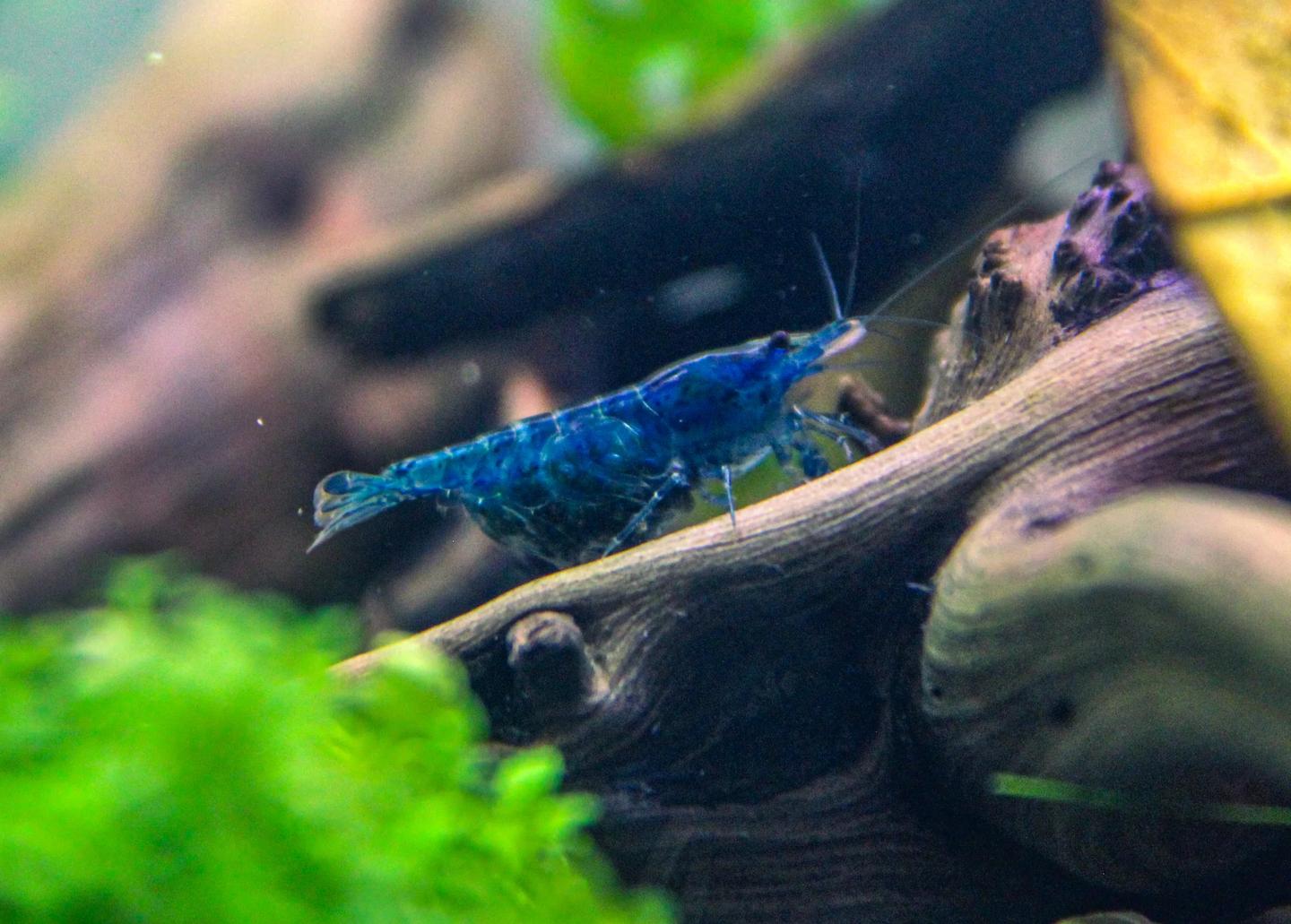
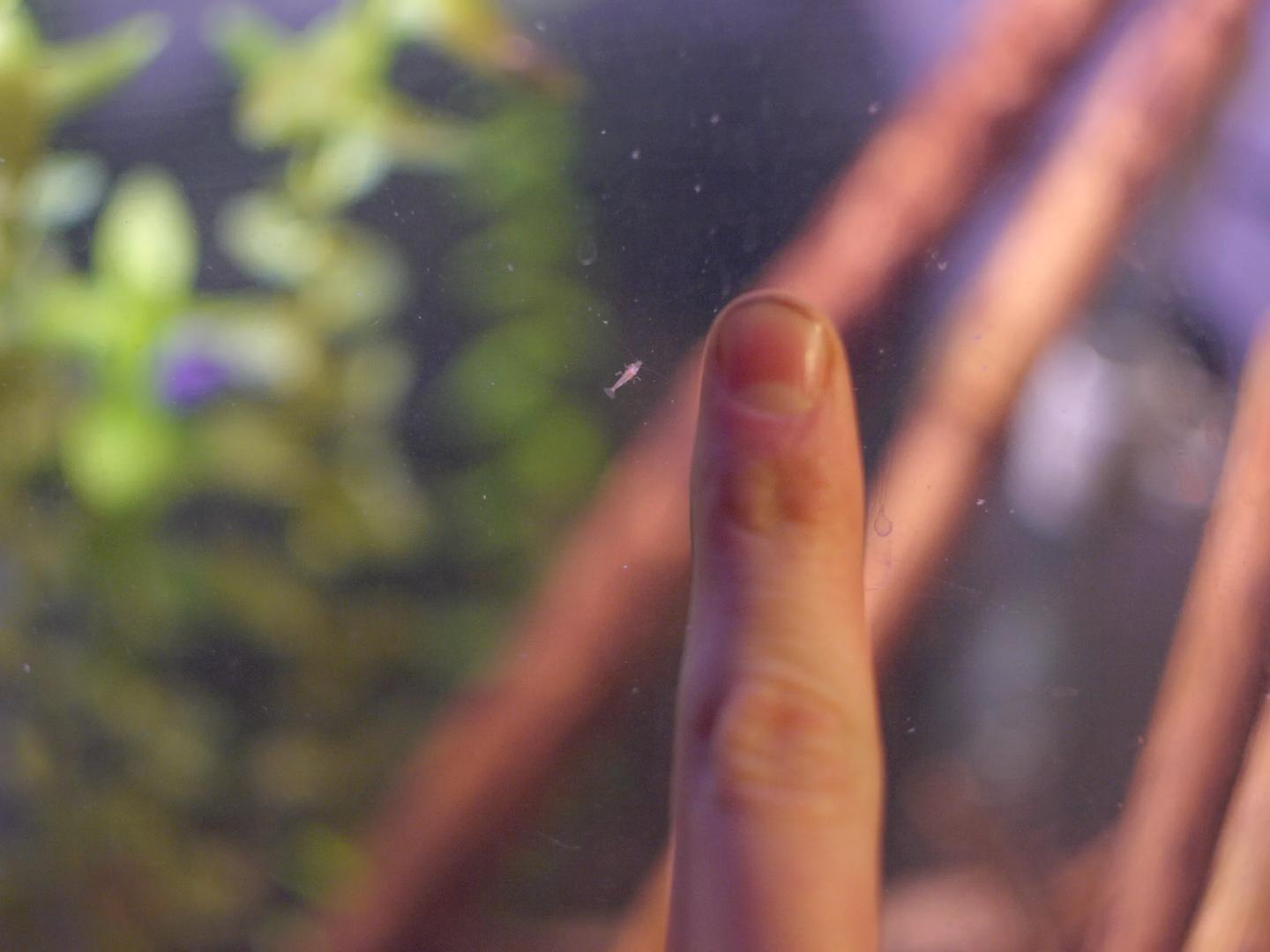
Cherry Shrimp colour, carried eggs and shrimplet scale
Frequently asked questions
Sources & further reading
Material factual claims cite the sources below; store policy and cautious inference are labelled in the article. Sources are grouped by type so you can judge their weight at a glance.
Peer-reviewed study (9)
- [2]Holroyd, S. C., Spicer, J. I., Ellis, R. P. & Turner, L. M. (2026). An ecophysiological approach to improving health outcomes of ornamental shrimp during aquarium trade and transportation. Conservation Physiology 14. DOI: 10.1093/conphys/coag046. View source
Review of evidence gaps and interacting stressors; not one universal aquarium recipe.
- [3]Pantaleão, J. A. F. et al. (2017). Post-hatching development of the ornamental ‘Red Cherry Shrimp’ Neocaridina davidi (Bouvier, 1904) (Crustacea, Caridea, Atyidae) under laboratorial conditions. Aquaculture Research 48(2). DOI: 10.1111/are.12903. View source
Supports direct or abbreviated post-hatching development in the study; not a universal incubation or maturity timetable.
- [4]Viau, V. E. et al. (2020). Breeding and life cycle of the ornamental freshwater shrimp Neocaridina davidi in a biofilm-based culture system. Aquaculture Research 51. DOI: 10.1111/are.14733. View source
Controlled biofilm culture affected growth and reproduction; not a household breeding guarantee or fixed feeding schedule.
- [5]Baliña, S., Temperoni, B., López Greco, L. S. & Tropea, C. (2018). Losing Reproduction: Effect of High Temperature on Female Biochemical Composition and Egg Quality in a Freshwater Crustacean with Direct Development, the Red Cherry Shrimp, Neocaridina davidi. The Biological Bulletin 234. DOI: 10.1086/698266. View source
Controlled 28°C and 33°C reproduction evidence; not a universal aquarium temperature range.
- [6]Tropea, C., Stumpf, L. & López Greco, L. S. (2015). Effect of temperature on biochemical composition, growth and reproduction of the ornamental red cherry shrimp Neocaridina heteropoda heteropoda. PLoS ONE 10(3). DOI: 10.1371/journal.pone.0119468. View source
Controlled 24°C, 28°C and 32°C culture comparison; not a full long-term welfare range for every lineage.
- [7]Mitsugi, M. & Suzuki, H. (2018). Life history of an invasive freshwater shrimp Neocaridina davidi in the Tomoe River, the Boso Peninsula, eastern Japan. Crustacean Research 47. DOI: 10.18353/crustacea.47.0_9. View source
Field life-history estimate from one invasive population; not a captive lifespan promise.
- [8]Schoolmann, G. & Arndt, H. (2018). Population dynamics of the invasive freshwater shrimp Neocaridina davidi in the thermally polluted Gillbach stream. Limnologica 71. DOI: 10.1016/j.limno.2018.05.001. View source
Field and laboratory longevity differed and predation was plausible; not a safe-fish list or aquarium lifespan.
- [9]Vazquez, N. D. et al. (2017). Density and gender segregation effects in the culture of the caridean ornamental red cherry shrimp Neocaridina davidi. Journal of Crustacean Biology 37. DOI: 10.1093/jcbiol/rux051. View source
Juvenile density affected growth in a controlled 90-day culture study; not an adult aquarium capacity formula.
- [10]Maciaszek, R. et al. (2023). Epibiont Cohabitation in Freshwater Shrimp Neocaridina davidi. Animals 13(10). DOI: 10.3390/ani13101616. View source
Epibionts were detected in sampled commercially sourced shrimp; not proof that every animal is affected or a medication protocol.
Scientific database (1)
- [1]Catalogue of Life. Neocaridina davidi (Bouvier, 1904). Catalogue of Life 2026-07-17 XR (accessed via GBIF). View source
Current catalogue treatment and synonym history; not proof of a retail colour line or husbandry range.
Trade-body guidance (2)
- [11]Ornamental Aquatic Trade Association. How to look after freshwater shrimp and snails. OATA. View source
Broad UK trade guidance; its old shrimp taxonomy is not used for identity and its figures are not treated as species experiments.
- [14]Ornamental Aquatic Trade Association (2025). How to set up and look after a freshwater tank or aquarium. OATA. View source
General cycling, water testing and gradual acclimation guidance; not a Cherry Shrimp-specific schedule.
Government / regulatory (6)
- [12]Drinking Water Inspectorate (2022). Water Hardness / Hard Water. Drinking Water Inspectorate. View source
UK source-water hardness varies; supplier data does not replace aquarium testing.
- [13]Drinking Water Inspectorate (2025). Domestic water filters and softeners. Drinking Water Inspectorate. View source
Ion-exchange softeners replace calcium and magnesium with sodium; not aquarium-suitability advice.
- [15]Veterinary Medicines Directorate. Product Information Database. Veterinary Medicines Directorate. View source
Current authorised medicine particulars; not evidence that an unspecified product is safe for shrimp.
- [16]Centre for Environment, Fisheries and Aquaculture Science (2023). Biosecurity Measure Plans: information and templates. GOV.UK. View source
Professional aquatic biosecurity principles; not a fixed household quarantine duration.
- [17]Department for Environment, Food & Rural Affairs (2022). Selling animals as pets licensing: statutory guidance for local authorities. GOV.UK. View source
Current English retail guidance on aquatic conditions and buyer information; not a home stocking formula.
- [18]Ornamental Aquatic Trade Association (2014). Helping to prevent the spread of invasive non-native species: Pet Code of Practice. GB Non-native Species Secretariat. View source
Government-backed prevention guidance; not species-specific husbandry evidence.
Spotted something that needs a fix?
Fishkeeping moves fast and we want every guide spot-on. If you think something here is wrong, out of date, or could be clearer, tell us — our team reads every message and updates the page.
Suggest an edit
Tropical Fish Co Editorial Team
Evidence-led aquarium editorial team
The Tropical Fish Co editorial team compiles care guidance from the sources cited on each page, separates published evidence from practical husbandry policy, and checks retail links against the current catalogue. First-hand experience is included only when a named contributor and the observation have been verified.
Keep exploring
Care guides
- Amano Shrimp Care Guide
Amano shrimp care for UK aquariums: plan a mature 20L-plus tank, group, stable water, feeding, algae limits, tank mates, moulting and breeding.
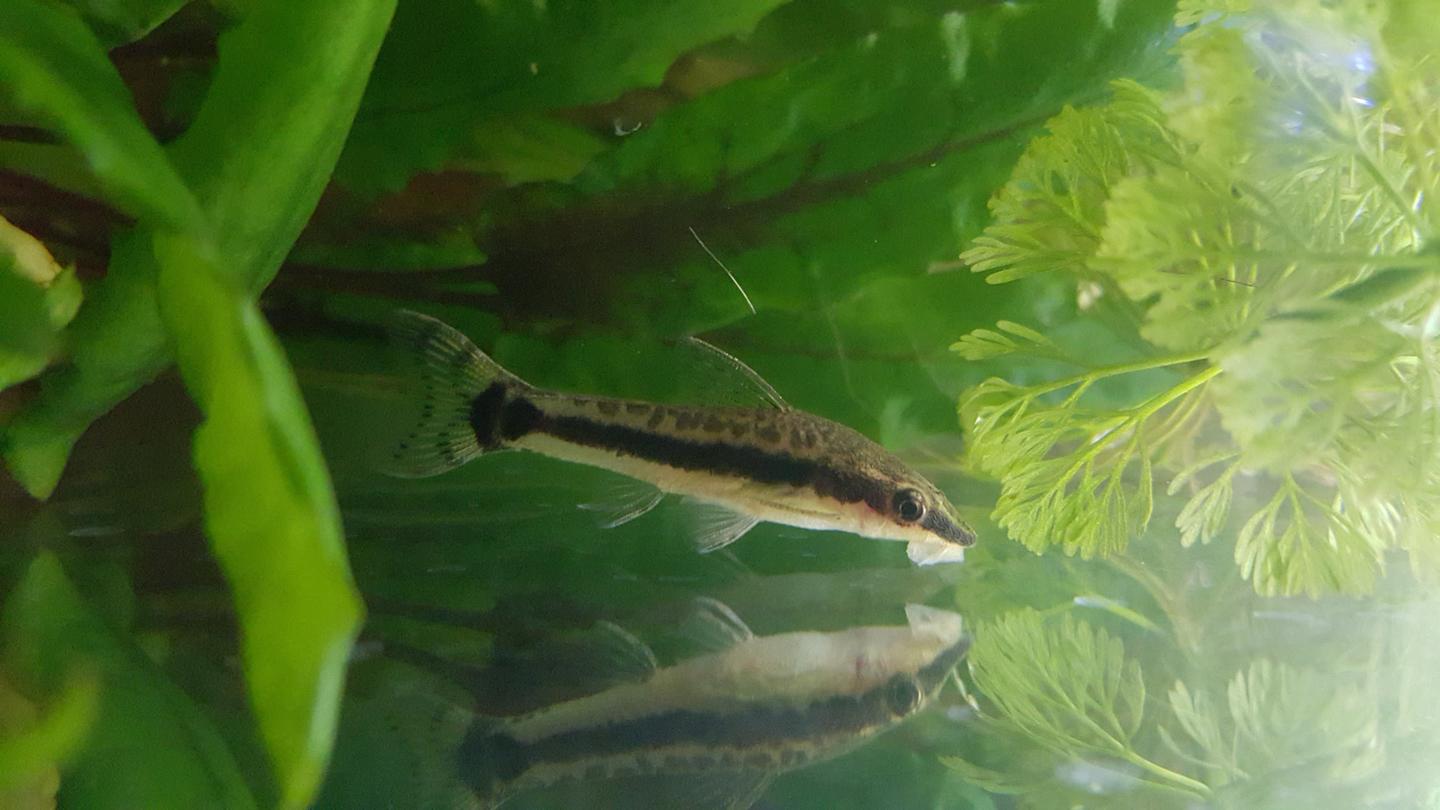
- Otocinclus Catfish Care: Tank Size, Food & Groups
Otocinclus catfish care for UK tanks: compare tank size, 22–25°C water, group planning, grazing foods, algae limits, tank mates and buying checks.
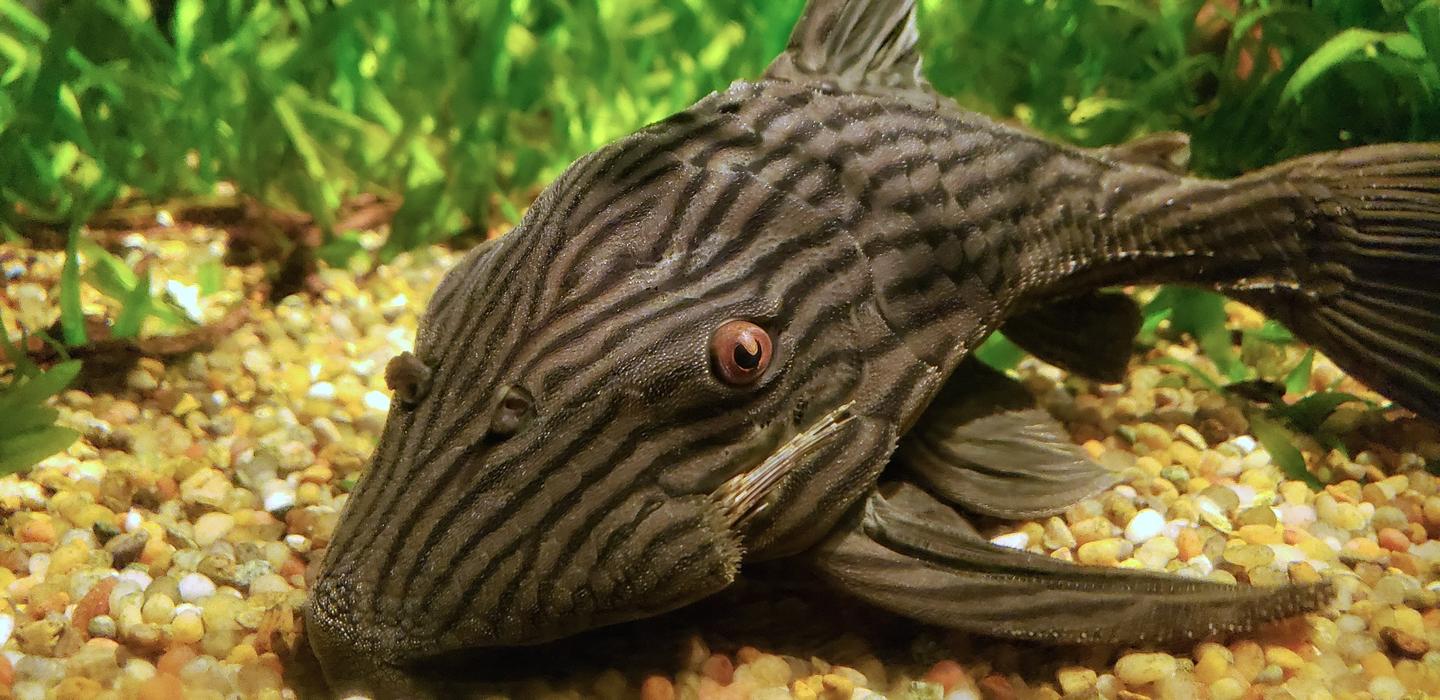
- Pleco Fish Guide: Types, Adult Size, Food & Tank Planning
Pleco fish guide for UK keepers: compare types, adult sizes, diets, tank planning, water and buying checks before choosing a suckermouth catfish.
Related care guides
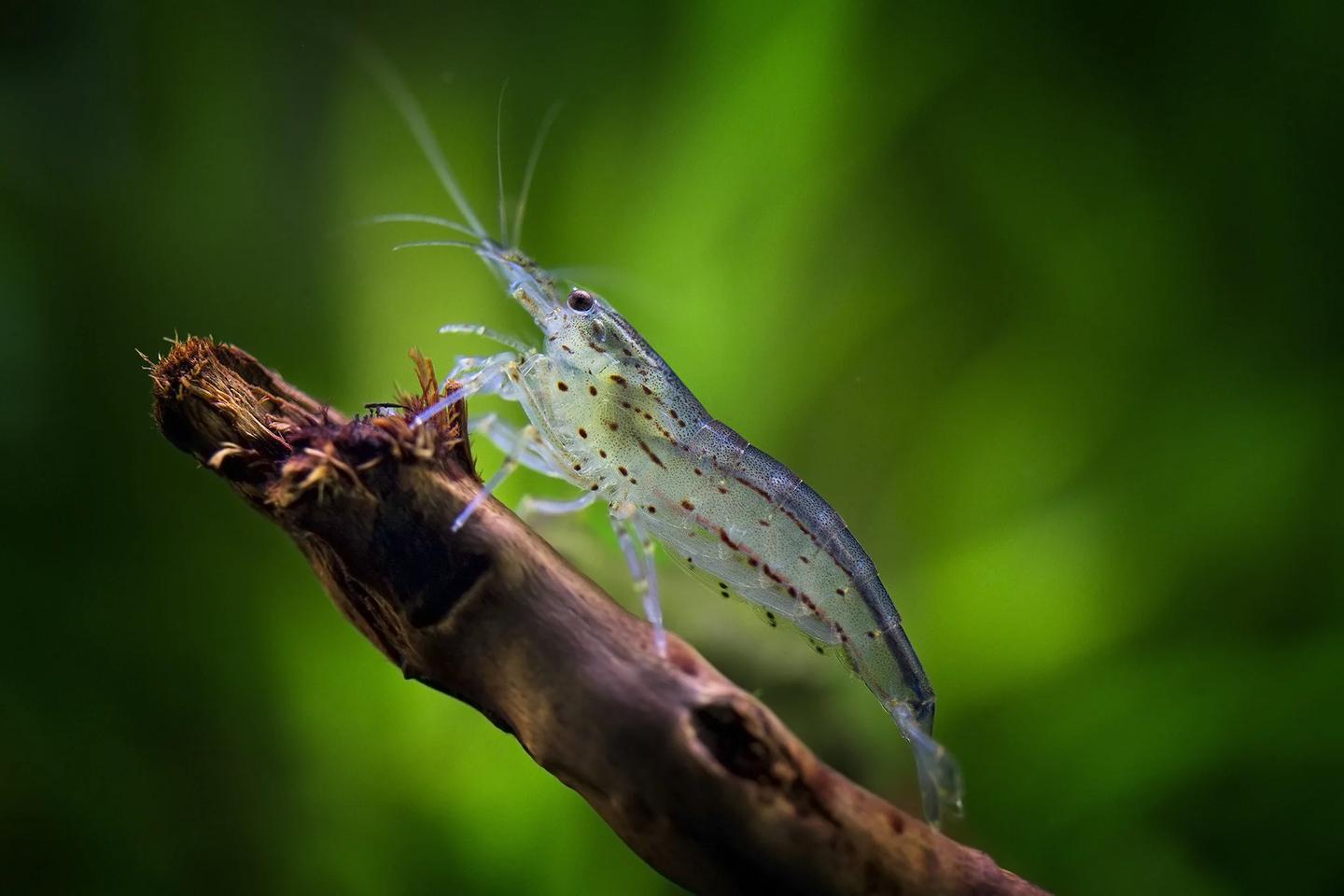
Amano Shrimp Care Guide
Start with a mature, filtered aquarium. OATA's broad UK guidance suggests approximately 20 litres for Amano Shrimp and at least five for social shrimp, with a larger aquarium when fish are present. Treat those as cautious planning screens—not biological minima or a per-litre formula. Match the complete adult community, test your water, protect the filter inlet and never buy them as a guaranteed algae cure.
Otocinclus Catfish Care: Tank Size, Food & Groups
Otocinclus are small South American loricariid catfish, not disposable algae cleaners. Confirm the supplied species where possible; start with a mature, stable aquarium with ample grazing surfaces; plan a compatible social group; and provide suitable food even when algae is visible.
Pleco Fish Guide: Types, Adult Size, Food & Tank Planning
‘Pleco’ is a loose aquarium-trade label, not one species or one care sheet. Before buying, confirm the scientific name or defensible L-number, adult size and measurement method, required footprint, temperature and water, diet, social plan and source. No universal pleco tank size, menu or algae result is honest.