Easy
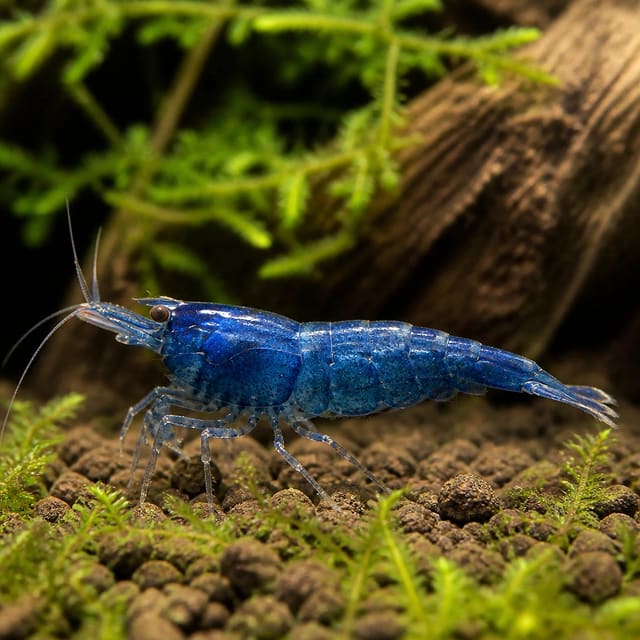
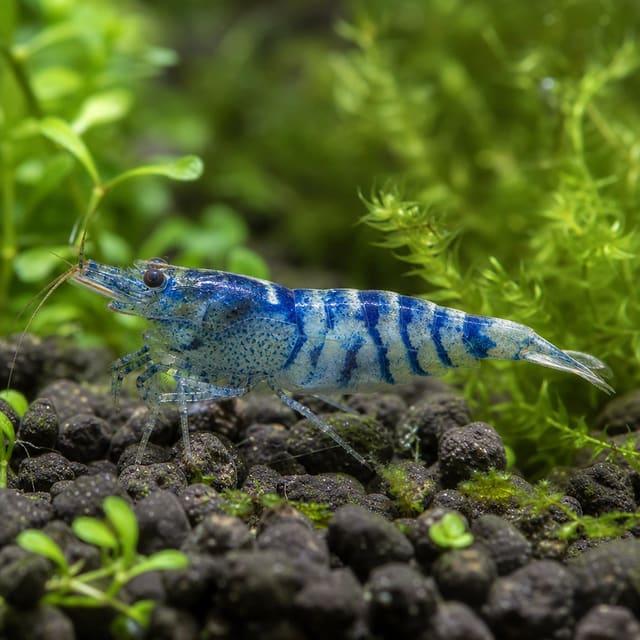
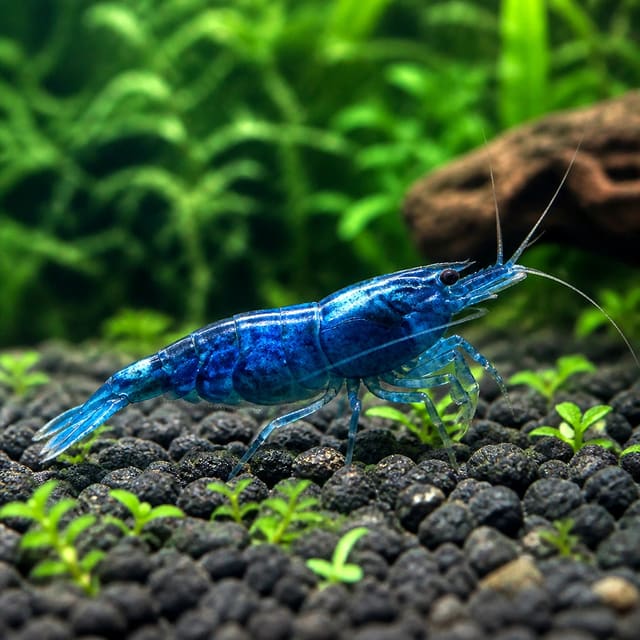
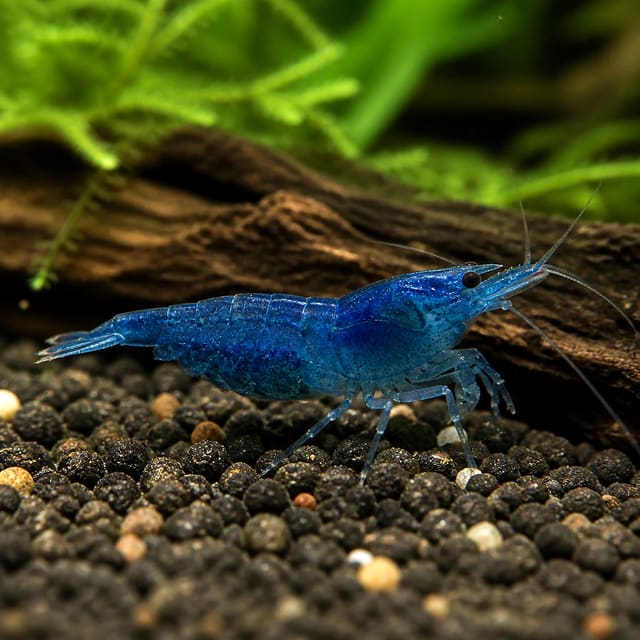
Blue Dream Shrimp (Neocaridina davidi)
18–28°C · pH 6.5–8 · 20L
£16.19

The Topaz Blue Shrimp (Neocaridina davidi) is an Atyidae freshwater shrimp from Taiwan, east of China, the Korean Peninsula and Vietnam that reaches approximately 4 cm. It suits intermediate keepers planning at least five shrimp in a mature, filtered aquarium; OATA’s group guidance gives 17–27°C, pH 6.5–8.0 and 4–18 dGH, while Tropical Fish Co uses 20 litres as a cautious starting point for a small group. Sold individually in 1–1.5 cm and 2–2.5 cm dispatch sizes.
Adult size is the maximum length this species reaches at full maturity (scientific sources). The livestock you receive will be younger and smaller — pick a size above for the actual shipping size. Product-photo provenance and any image-specific limitations are stated on the listing.
Neocaridina davidi
Lives in groups: kept together they stay settled, active and show their best colour.
The Topaz Blue Shrimp (Neocaridina davidi) is an Atyidae freshwater shrimp from Taiwan, east of China, the Korean Peninsula and Vietnam that reaches approximately 4 cm. It suits intermediate keepers planning at least five shrimp in a mature, filtered aquarium; OATA’s group guidance gives 17–27°C, pH 6.5–8.0 and 4–18 dGH, while Tropical Fish Co uses 20 litres as a cautious starting point for a small group. Sold individually in 1–1.5 cm and 2–2.5 cm dispatch sizes.
Adult size is the maximum length this species reaches at full maturity (scientific sources). The livestock you receive will be younger and smaller — pick a size above for the actual shipping size. Product-photo provenance and any image-specific limitations are stated on the listing.
Use a mature, filtered aquarium and measured water—not a shrimp-per-litre rule. Tropical Fish Co uses 20 litres as a cautious starting policy for a small Cherry Shrimp group, above OATA's general 10-litre screen for small shrimp. Provide established grazing surfaces, cover and a protected filter inlet. No fish is guaranteed shrimplet-safe, and breeding should never be promised.
Maintain these water conditions for optimal health and vibrant colors
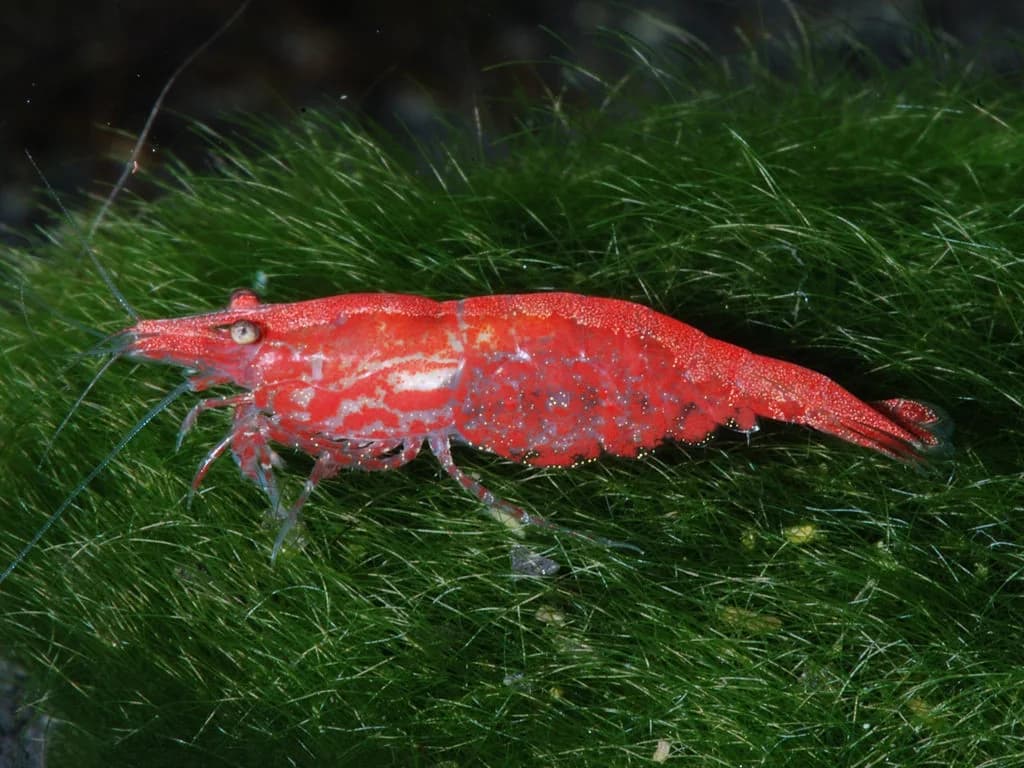
The Topaz Blue Shrimp (Neocaridina davidi) is a selectively bred blue freshwater shrimp in the family Atyidae, not a separate species. The World Register of Marine Species lists Neocaridina davidi in Atyidae. Wikipedia describes its native range as Taiwan, east of China, the Korean Peninsula and Vietnam, where it inhabits lakes, ponds, rivers and streams. It is omnivorous in nature and reaches approximately 4 cm.
This shrimp suits an intermediate keeper prepared to maintain measured water, mature biological filtration, restrained feeding and carefully screened companions. Plan for at least five shrimp under OATA’s social-group guidance, protect filter inlets and provide established grazing surfaces rather than relying on the animal as a simple algae eater.
The approximately 4 cm adult length is the planning figure for cover, feeding access, filter protection and companion screening. A smaller dispatch size describes the animal’s length when supplied and does not reduce its long-term care requirements.
| Suits | Not suited to |
|---|---|
| A mature, filtered freshwater aquarium | An immature or untested aquarium |
| A group of at least five under OATA guidance | A plan based on one shrimp per litre |
| Established grazing surfaces and cover | A setup relying on algae as the complete diet |
| Companions screened for mouth size and predation | Predatory fish or fish able to swallow shrimp |
| A keeper who tests water and makes gradual changes | Aquariums exposed to abrupt chemistry changes |
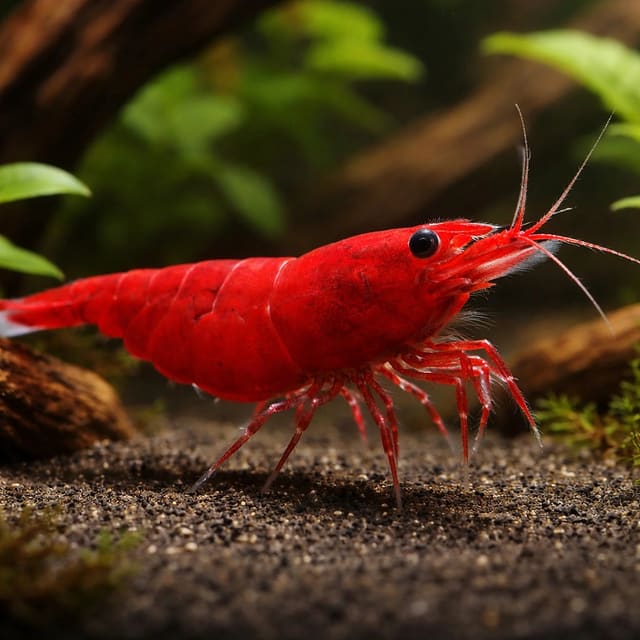
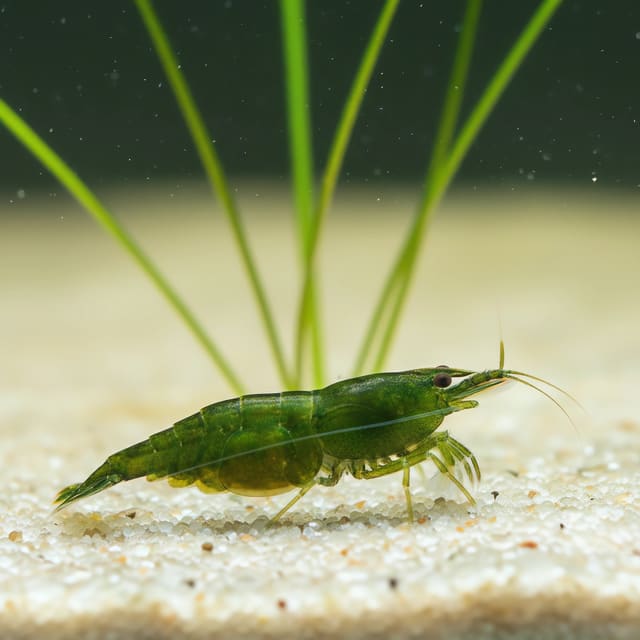
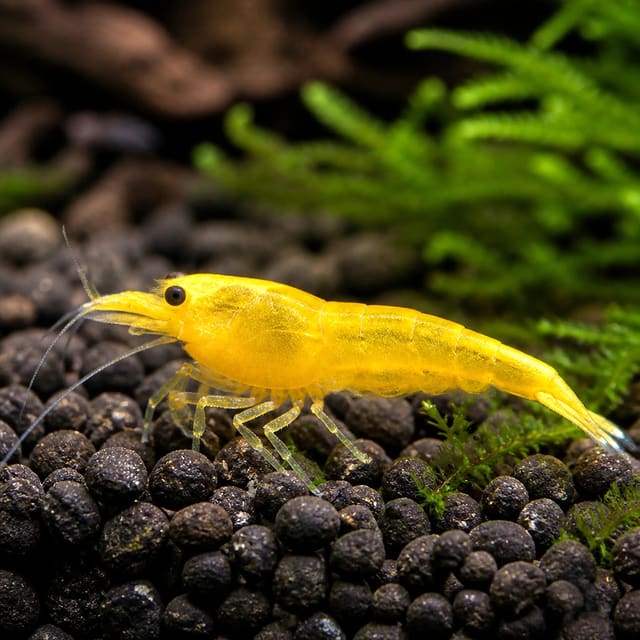
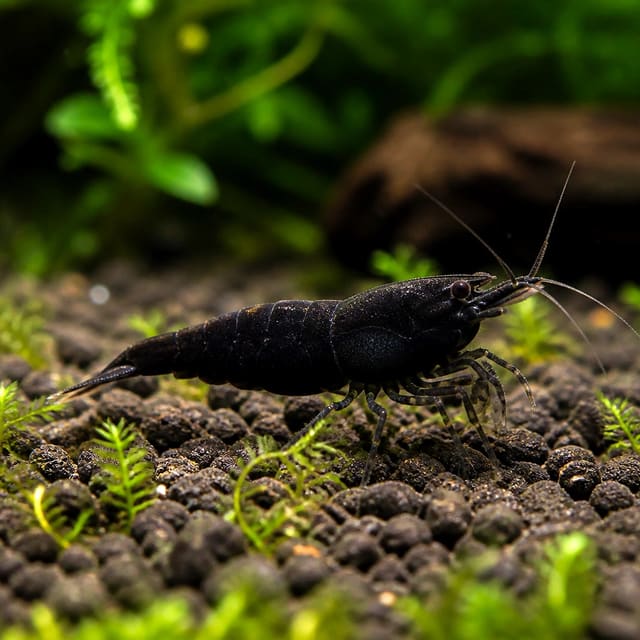
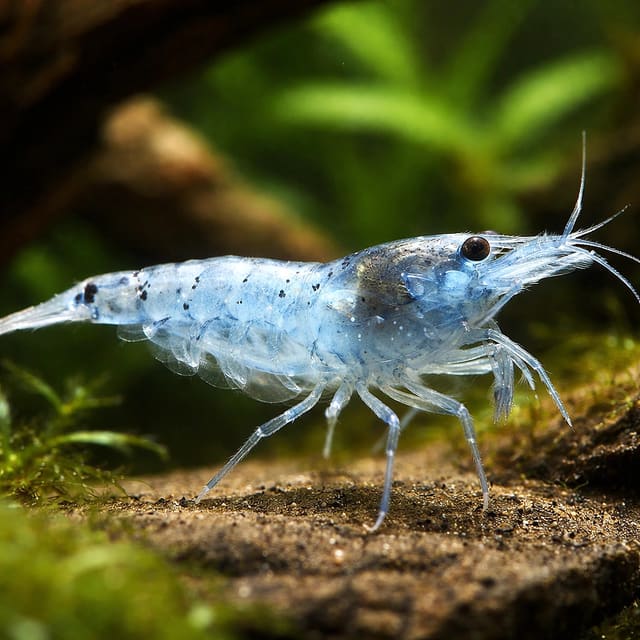
Wild-type animals are mottled brown, while selective breeding has produced blue and several other colour forms. Choose the colour line independently from the care decision: shade does not replace the need for stable water, suitable food and a community planned around adult shrimp.
If you are comparing colour forms within the species, use the cherry shrimp collection to compare their customer-facing names.
One purchase supplies one animal of the selected size. The live size selector presents 1–1.5 cm and 2–2.5 cm; use it to choose the dispatch size when ordering. The size you select is the size supplied, not the adult size.
Both sizes require the same long-term planning. A 1–1.5 cm shrimp needs particularly careful screening against filter openings and fish mouths, while a 2–2.5 cm shrimp still needs an aquarium designed around the approximately 4 cm adult length. Do not turn either dispatch size into a stocking ratio or an assumed life stage.
Sex is guaranteed only when the selected option explicitly states male or female. This Topaz Blue Shrimp listing has no sex-guaranteed option.
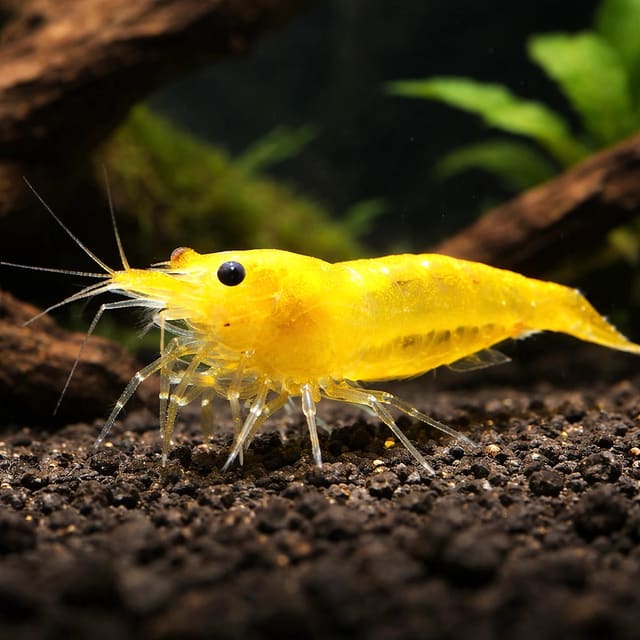
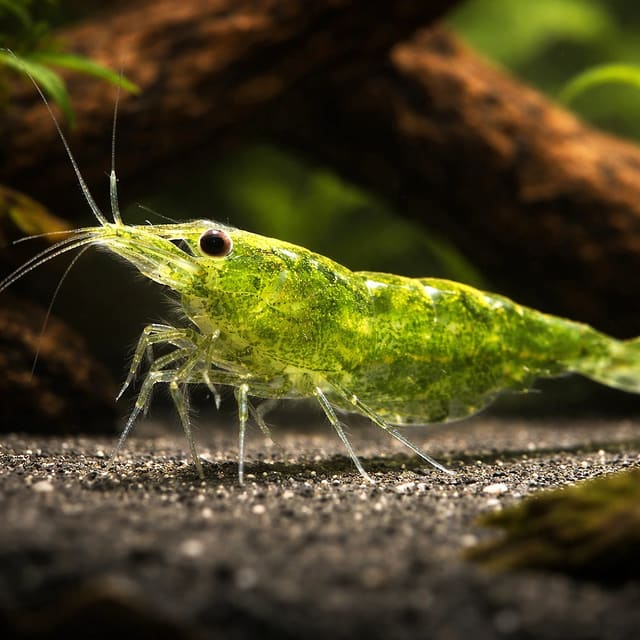
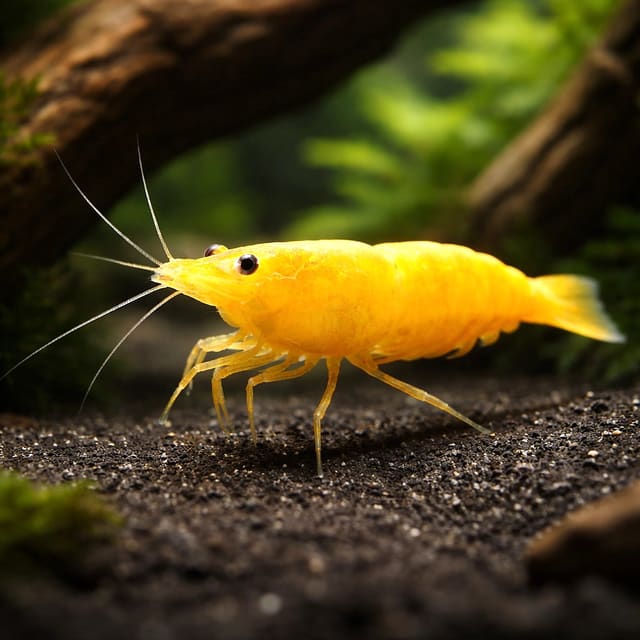
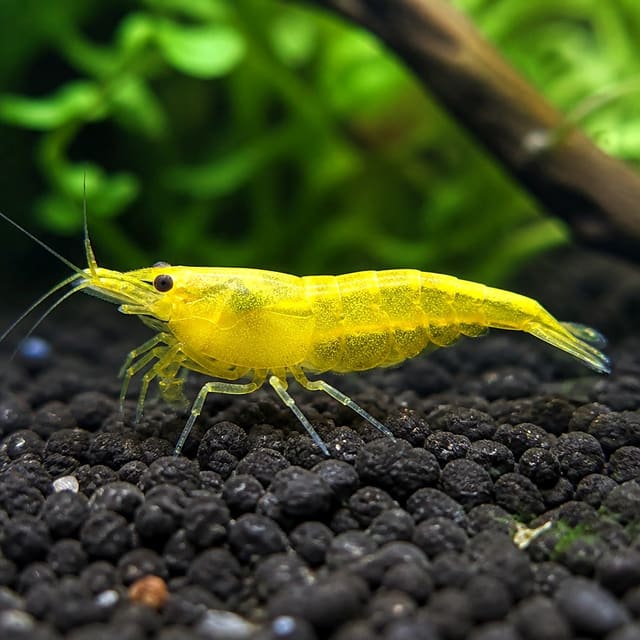
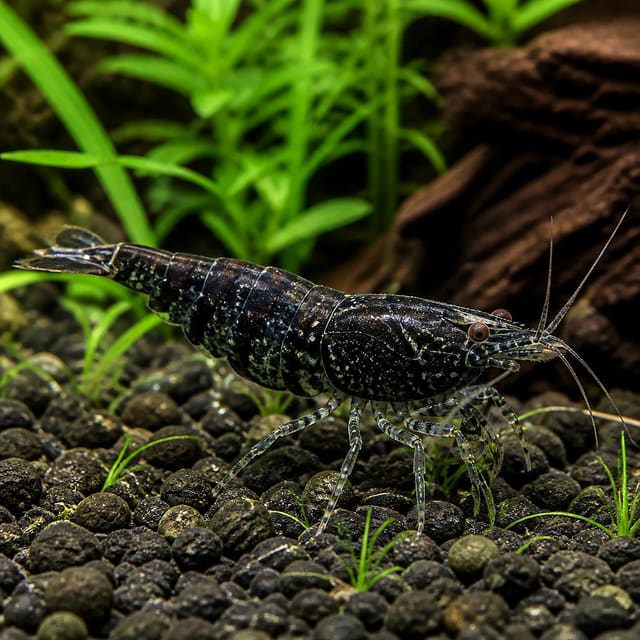
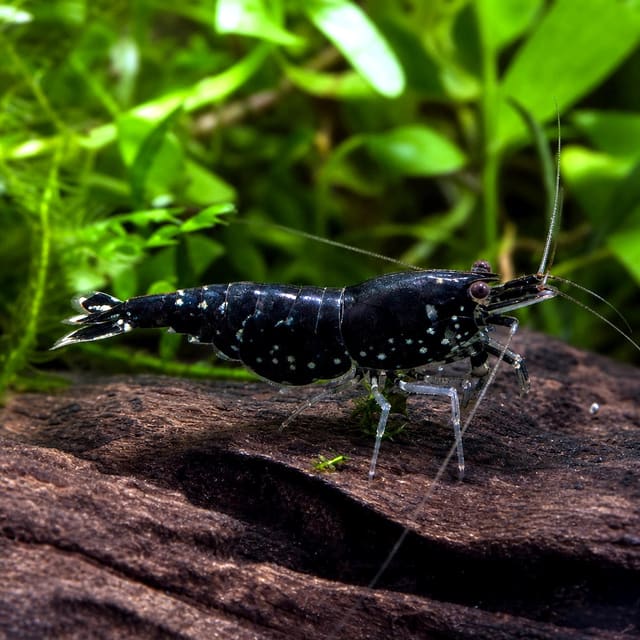
These representative gallery images have been digitally enhanced for presentation, so colours can look slightly different from the live animal.
OATA’s freshwater shrimp and snail sheet gives 17–27°C, pH 6.5–8.0 and 4–18°dH as broad group planning guidance, not a species-specific optimum. It also recommends at least 10 litres for a group of small shrimp and at least five animals for social shrimp. Our complete Cherry Shrimp Care Guide uses a mature, filtered 20-litre aquarium as a more cautious starting policy for a small group. Neither volume creates a shrimp-per-litre formula.
Read the delivery and Live Arrival Guarantee policy before ordering so you can prepare for the stated dispatch arrangements and claim procedure.
Begin with a mature aquarium of 20 litres or more for a small group under our cautious house policy. OATA’s lower 10-litre figure is an initial screen for a group of small freshwater shrimp, not permission to ignore the real water volume, footprint, filtration, feeding area or other animals. A larger aquarium generally gives more room for equipment and more headroom when feeding or temperature changes.
A permanent shrimp-per-litre calculation skips those decisions. For example, multiplying 20 litres by a fixed ratio says nothing about whether the filter is mature, the intake is protected or the feeding surface is accessible. Treat 20 litres as the starting point for designing a small-group aquarium, then increase the plan when companions, restricted floor area or expected population growth require more room.
| If the aquarium has | Plan this way |
|---|---|
| Shrimp only | Start at 20 litres and retain headroom for group growth |
| Fish companions | Plan larger and screen every adult fish |
| Heavy décor | Judge the remaining water volume and accessible surfaces |
| Limited cover | Add suitable structure before introducing shrimp |
| An exposed intake | Fit a fine guard or appropriate sponge first |
Place the aquarium where its temperature can remain within the chosen range and where routine testing, water changes and equipment inspection are practical. Stability comes from adequate volume, a functioning biological filter and consistent maintenance, not from leaving a small aquarium untouched.
A mature filter is essential because it supports bacteria that process animal waste. The RSPCA’s aquarium filtration guidance explains that biological filtration converts toxic ammonia to toxic nitrite and then to the safer nitrate form. For this shrimp aquarium, tests must show ammonia and nitrite at zero before introduction and continue to show zero after feeding and stocking increase.
Maturity is a measured biological state, not a fixed number of days. A newly installed aquarium can look clear while lacking enough nitrifying bacteria to process the planned load. Conversely, an established-looking aquarium still needs testing because equipment interruption, overfeeding or rapid stocking can exceed what the bacterial population can process.
Our freshwater shrimp keeping guide sets out the wider preparation sequence for a first aquarium. Complete the filtration and water-testing work before arranging livestock rather than expecting shrimp to cycle a new system.
If ammonia or nitrite is measurable, pause the introduction. Review filter operation, recent cleaning, feeding, stocking and any interruption to power or water flow. Correct the cause and wait until repeated tests return to zero. Adding more animals while either compound is detectable increases the load at the point when the system is already failing to process waste.
Stock slowly after the aquarium is ready. Beneficial bacteria need to increase as livestock numbers and feeding rise, so a large addition can create new tank syndrome even in an aquarium that previously supported a smaller load. The practical checkpoint is the measured response of the aquarium after each change, not the age printed in a setup diary.
Build the aquarium around established surfaces where shrimp can graze and shelter. Aquarium-safe plants, wood, rock and other structure increase usable surface area while creating routes away from exposed open water. Keep some areas accessible for inspection and cleaning so cover does not prevent you from checking the animals or equipment.
Biofilm supports natural grazing, but it is not a complete feeding plan and does not show that an aquarium is biologically ready. Pair established surfaces with a mature filter, measured zero ammonia and nitrite, and an appropriate complete shrimp food. This combination separates useful grazing habitat from the mistaken idea that visible growth can replace filtration or planned feeding.
Inspect the filter from the perspective of a 1–1.5 cm dispatch shrimp and a much smaller newly hatched juvenile. Any opening capable of trapping or drawing in shrimp needs a fine guard or suitable sponge. The protection must stay in place after maintenance and should not be allowed to clog to the point that water flow is impaired.
| Feature | What to check |
|---|---|
| Filter inlet | Openings are protected and the guard remains secure |
| Plants and structure | Cover is distributed rather than limited to one crowded corner |
| Feeding area | Shrimp can reach food and recurring excess can be removed |
| Equipment gaps | No narrow space traps an animal behind a heater or filter |
| Tank cover | Openings around cables and equipment remain secure |
Do not clean every established surface at the same time. Routine maintenance should preserve enough functioning biological media and grazing area while removing solid waste and recurring food excess. When plants are trimmed or décor is moved, reassess whether the remaining cover still works for moulting shrimp and juveniles.
Use aquarium-safe materials and check any product intended to enter the water. Treatments and additives require particular caution because shrimp are invertebrates and copper can be toxic to them. Equipment and habitat should simplify observation: you need to see whether shrimp are walking, grazing, hiding more than usual or being displaced at feeding time.
Use 17–27°C, pH 6.5–8.0 and 4–18°dH as the initial aquarium planning range. OATA also gives 3–15°dKH for freshwater shrimp and snails. Keep ammonia at zero mg per litre, nitrite at zero mg per litre and nitrate no more than 20 mg per litre above the normal tap-water level.
Choose a stable point within the shared range for every animal in the aquarium rather than moving between the endpoints. The figures are screens for planning and testing, not a reason to chase changing readings with repeated chemical adjustments. Measure the aquarium itself because substrate, rock, top-ups and treatments can alter the water after it leaves the tap.
| Measure | Decision it supports |
|---|---|
| Temperature | Whether heating, cooling or a slower transition is needed |
| pH | Whether the move involves a meaningful chemistry change |
| General hardness | Whether the aquarium sits within the 4–18°dH screen |
| Ammonia and nitrite | Whether the aquarium is ready for livestock |
| Nitrate trend | Whether feeding and maintenance remain controlled |
Use our water chemistry guide to understand what each measurement means, then enter actual readings in the water matcher when comparing the aquarium with the stated range. A postcode or a description such as hard, soft or softened is not a substitute for testing.
Install a heater only when measured room and aquarium temperatures cannot remain at the chosen stable point. A cool room may require a correctly sized, guarded and thermostatically controlled heater, while a warm room needs an overheating plan. Make the decision from measured temperatures rather than season alone.
If a test changes unexpectedly, check equipment, recent water changes, top-ups, décor, treatments and feeding before making several adjustments at once. Correcting one identified cause is easier to evaluate than changing temperature, pH and hardness together. Prepare replacement water with conditioner where needed to remove chlorine or chloramine, and match conditions closely enough to avoid abrupt change.
Neocaridina davidi is omnivorous in nature. In the aquarium, provide an appropriate complete sinking shrimp food as the nutritional base while allowing access to established biofilm and some soft growth. Do not rely on algae alone or expect the shrimp to remove waste and control every type of nuisance algae.
OATA suggests feeding freshwater shrimp two or three times a week. Pellets or algae wafers should remain accessible for at least 30 minutes so the group has time to feed. Treat that frequency as a starting rhythm and determine the portion by watching access, leftovers and water-test trends.
| If you see | Do this next |
|---|---|
| Food repeatedly left behind | Remove recurring excess and reduce the next portion |
| Some shrimp cannot reach food | Spread suitable portions across accessible feeding areas |
| Ammonia or nitrite above zero | Stop adding livestock, review feeding and correct filtration |
| Nitrate rising faster than usual | Review portion size, waste removal and maintenance |
| Little natural grazing material | Maintain complete food while allowing safe surfaces to establish |
| A growing group | Reassess total food access without assuming a fixed per-shrimp amount |
Overfeeding matters because uneaten food breaks down and adds waste that the filter must process. The goal is not a spotless feeding area immediately after food is offered; shrimp need time to reach sinking pellets or wafers. The useful distinction is between food being actively grazed and recurring excess beginning to decay.
Check whether faster companions prevent shrimp from feeding. A community can sit within the same water range yet still fail at mealtimes if fish consume every sinking item first. Use feeding locations that shrimp can reach and observe the whole group rather than judging success from the quickest animal.
Avoid using colour alone to decide whether diet is adequate. The colour line is selectively bred, and appearance can vary between animals and viewing conditions. Base feeding decisions on access, intake, waste, group condition and water measurements instead of automatically adding a colour-enhancing product.
Prepare and test the aquarium before the shrimp arrive. Temperature, ammonia and nitrite should already be known, and ammonia and nitrite must both read zero. Check that the filter intake is protected, cover is in place and the aquarium sits within the selected pH and hardness plan.
OATA’s freshwater aquarium setup guidance supports cycling, regular testing, gradual acclimation and gradual stocking. Compare measured aquarium conditions before transfer and continue testing as the biological load increases.
During the first week, test ammonia and nitrite and compare the results with the pre-arrival baseline. Any detectable reading calls for immediate attention to feeding, filtration and stocking. Do not add further livestock while the aquarium is showing that it cannot process the existing load.
Keep a short record of temperature, pH, hardness, ammonia, nitrite, feeding and visible behaviour. If a problem appears, this sequence helps distinguish a water change from an equipment problem or feeding increase. Change one identified factor at a time where immediate welfare does not require emergency action.
Increase the number of inhabitants slowly. Every addition and feeding increase requires the biological filter to process more waste. Gradual stocking gives you time to detect a change in ammonia, nitrite or feeding competition before it becomes a larger problem.
Carry out a 25% partial water change at least once every week under OATA’s maintenance guidance. Treat replacement tap water with an appropriate conditioner to remove harmful chlorine or chloramine before it enters the aquarium, and avoid abrupt differences in temperature or chemistry.
Test ammonia and nitrite at least weekly and whenever behaviour, feeding or appearance changes. Keep both at zero. Track nitrate against the guidance of no more than 20 mg per litre above normal tap-water levels, using trends to judge whether feeding, stocking and waste removal remain controlled.
Watch for increased inactivity, restlessness, unusual swimming, darker or paler colour, increased hiding, changed breathing effort, reduced feeding, abnormal swelling, damage to the exoskeleton, lesions, white spots, abnormal growths or missing appendages. One sign does not diagnose a cause. Measure temperature, ammonia and nitrite immediately, then review filtration, aeration, recent maintenance, new livestock, plants, décor, food, aerosols and treatments.
An empty exoskeleton can resemble a dead shrimp, so examine it before deciding what has happened. Hiding can occur around moulting, but hiding alone does not identify a health problem. Compare the affected animal with the rest of the group and record clear observations rather than treating on appearance alone.
Copper can be toxic to aquatic invertebrates. Read the exact current label and every invertebrate warning before adding any medicine, algaecide, conditioner or other treatment. Do not infer a safe dose from a different crustacean, an unrelated product or a general forum recommendation. If signs are persistent or severe, contact us or seek suitably qualified aquatic or veterinary help before medicating.
No fish is guaranteed safe with shrimp, especially newly hatched juveniles. Avoid fish able to fit shrimp in their mouth and species known to be predatory. A fish described as peaceful can still hunt a much smaller animal, so community temperament alone is not an adequate screen.
| Screen | Question to answer |
|---|---|
| Adult mouth size | Could the fish swallow an adult shrimp or a juvenile? |
| Hunting behaviour | Does it actively search plants, substrate or crevices for small animals? |
| Territorial behaviour | Will it exclude shrimp from shelter or feeding areas? |
| Feeding speed | Can every shrimp reach appropriate food? |
| Water overlap | Can all inhabitants share the chosen stable temperature and chemistry? |
| Cover | Will usable shelter remain after routine trimming and maintenance? |
| Moulting risk | Can a soft, recently moulted shrimp retreat from companions? |
| Separation plan | Can an animal be moved safely if behaviour changes? |
Decide whether the goal is an adult display group or maximum juvenile survival. An aquarium may retain visible adults while very few juveniles survive predation. If growing the group is the priority, a shrimp-only aquarium removes fish predation from the plan, although filtration, crowding, feeding and health risks still remain.
Do not rely on a short observation in a shop or during the first quiet hours after introduction. Hunting and territorial behaviour can change with feeding, growth, spawning activity, cover loss or a new aquarium layout. Continue to observe access to food and shelter after plants are trimmed or décor is moved.
When considering another invertebrate, apply the same water, food, space and behaviour checks rather than assuming all shrimp or snails are interchangeable. Shared freshwater requirements do not automatically settle feeding competition, adult size, population growth or treatment safety.
Keep social freshwater shrimp in a group of at least five under OATA’s guidance. Start with the group rather than a solitary display animal, then plan the aquarium around filtration, feeding access, cover and potential population growth. The five-shrimp figure is not a density formula and does not mean every five animals fit every aquarium.
| Your goal | Planning priority |
|---|---|
| Blue display group | Measured water, visible grazing areas and careful companion screening |
| Single-line project | A separate aquarium for the named colour line and no assumed sex mix |
| Maximum juvenile survival | Shrimp-only housing, protected intakes and dense usable cover |
| Mixed community | More space, feeding access and an immediate separation plan |
Blue, red, yellow and other selectively bred forms can share the species Neocaridina davidi. If maintaining one named colour line matters, keep that line separately and judge future animals according to the project’s stated goal. Do not treat a colour photograph, price or dispatch size as a guarantee about lineage, inherited colour or breeding outcome.
Females of the species carry eggs externally beneath the abdomen, and the young hatch as benthic juveniles rather than passing through the prolonged saline planktonic phase associated with Amano Shrimp. This biology does not promise that a purchased group will contain both sexes or establish a growing colony.
Support any future juveniles with mature grazing surfaces, appropriate food, cover and protected filter inlets. Leave headroom in the aquarium plan rather than waiting for feeding competition or water-test trends to show that the group has exceeded the system’s practical capacity.
A shrimp-only aquarium reduces fish predation but does not remove the need to test water, maintain the filter, control food waste or inspect new animals. A mixed aquarium adds predation and competition decisions to those core duties. Choose between the two designs according to the outcome you value, not from a universal tank-mate label.
A Topaz Blue Shrimp reaches approximately 4 cm. Plan its cover, feeding access, filter protection and companion screening around that adult length.
Start a small group in a mature, filtered aquarium of 20 litres or more under Tropical Fish Co’s cautious policy. OATA’s 10-litre figure is a general screen for small shrimp, not a shrimp-per-litre formula.
Keep at least five Topaz Blue Shrimp under OATA’s group guidance. Plan additional capacity for every companion, feeding access and possible population growth.
Topaz Blue Shrimp is rated intermediate because it needs mature filtration, measured zero ammonia and nitrite, gradual water changes, protected filter inlets and carefully screened companions.
Feed Topaz Blue Shrimp an appropriate complete sinking shrimp food while allowing it to graze established biofilm and some soft growth. OATA suggests feeding freshwater shrimp two or three times weekly and leaving pellets or wafers accessible for at least 30 minutes.
OATA’s group guidance gives 17–27°C, pH 6.5–8.0 and 4–18°dH. Keep ammonia and nitrite at zero, keep nitrate no more than 20 mg per litre above normal tap-water levels and avoid abrupt changes.
It is classed as peaceful in the Tropical Fish Co care guide. Compatibility still depends on feeding access, shared water conditions and whether other animals may hunt or displace the shrimp.
Avoid fish able to fit shrimp in their mouth and species known to be predatory. For every other companion, screen adult mouth size, hunting and territorial behaviour, feeding competition, shared water needs, cover and the goal for juvenile survival.
Start filming every delivery while the parcel is still sealed, then record it being opened continuously with the shrimp still inside the sealed bag before floating. Someone must be present to receive it; float the bag for 20–30 minutes and never pour the bag water into the aquarium.
No reviews for this item yet. Bought one? Honest reviews only, good or bad.
What customers say about ordering from us
I have a small group of long finned mountain minnows. So was delighted to be able to order ten of this variety to increase the genetics in my tank . The ones I recieved are healthy but it’s to early to give a verdict on wether they are of a long finned type since they are small currently.
Gordon Walker · 23 Sept 2026
100% success travel and "installation". Pleased with quality of purchase. The Siamese fighter a bit "shy" so have not yet seen him at his best yet but looking good. Happy customer. GG
George E Garratt · 21 Sept 2026
Reviews of our shop, collected by Judge.me, an independent third-party review collector. Newest first.