Yellow Spotted Rabbit Snail (Tylomelania sp.)
17–27°C · pH 6.5–8
£18.99

Peaceful, slow-moving Sulawesi rabbit snail for mature 60L+ warm, hard-water aquariums. Exact species, locality, sex and orange pattern are not guaranteed.
Tylomelania sp.
Lives in groups: kept together they stay settled, active and show their best colour.
Peaceful, slow-moving Sulawesi rabbit snail for mature 60L+ warm, hard-water aquariums. Exact species, locality, sex and orange pattern are not guaranteed.
Maintain these water conditions for optimal health and vibrant colors
Orange Rabbit Snail is the aquarium trade name used for a warm-water Tylomelania snail with orange-toned soft tissue. This stock is best identified as Tylomelania sp., because the supplier has not provided a collection locality, diagnostic photographs or other evidence that supports a more precise species name. That honest identification matters: several visually different Sulawesi snails are sold under similar common names, and their exact identity is frequently confused in the aquarium trade.
Rabbit snails are peaceful, slow-moving invertebrates for mature freshwater aquariums. They spend much of their time grazing surfaces and investigating the substrate with their long, mobile snout. They are interesting animals in their own right rather than a quick algae-control tool. A suitable home provides stable warm water, useful mineral hardness, a mature supply of biofilm, gentle open feeding areas and tank mates that will not nip their antennae or try to eat them.
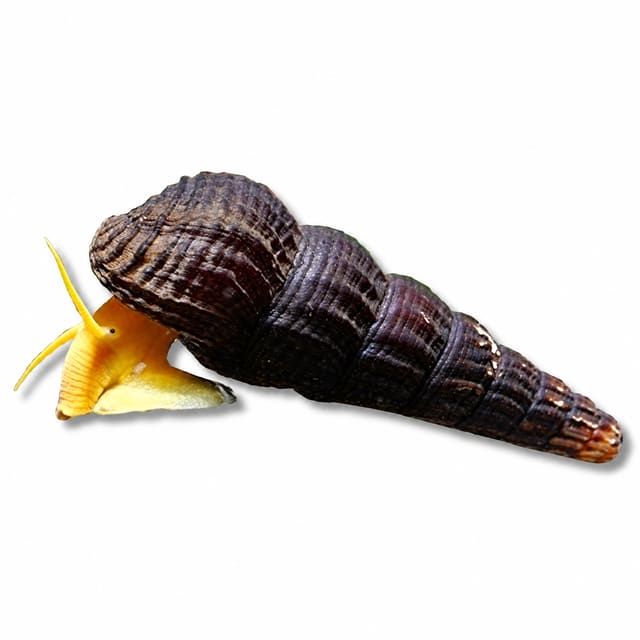
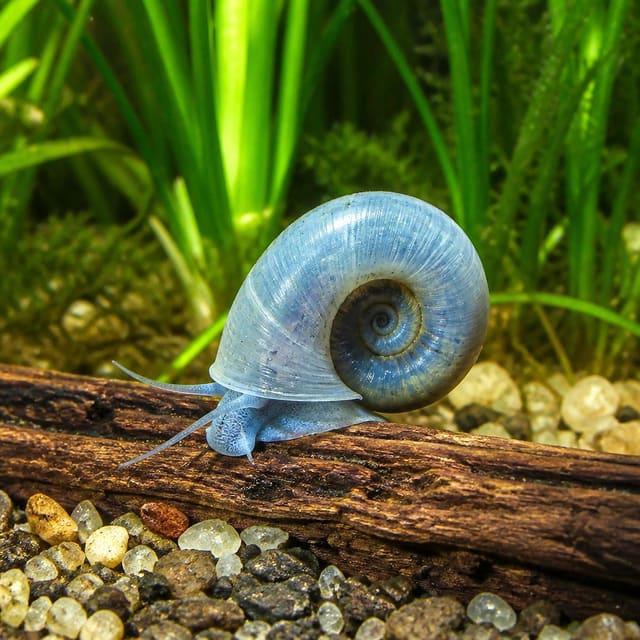
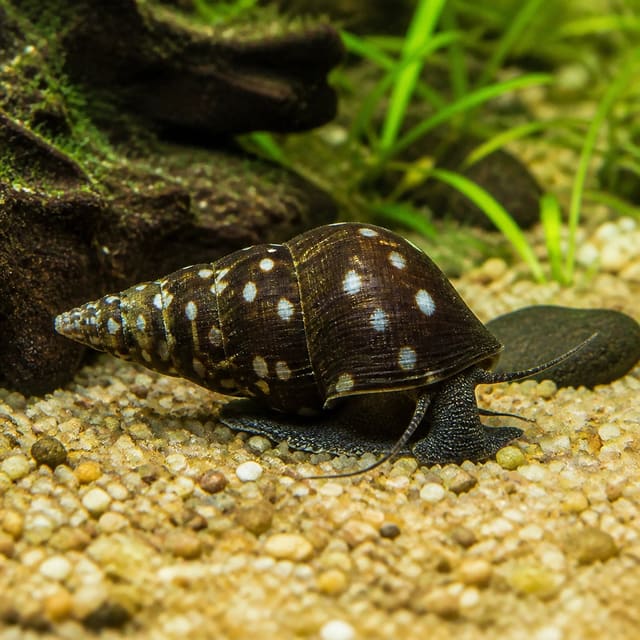
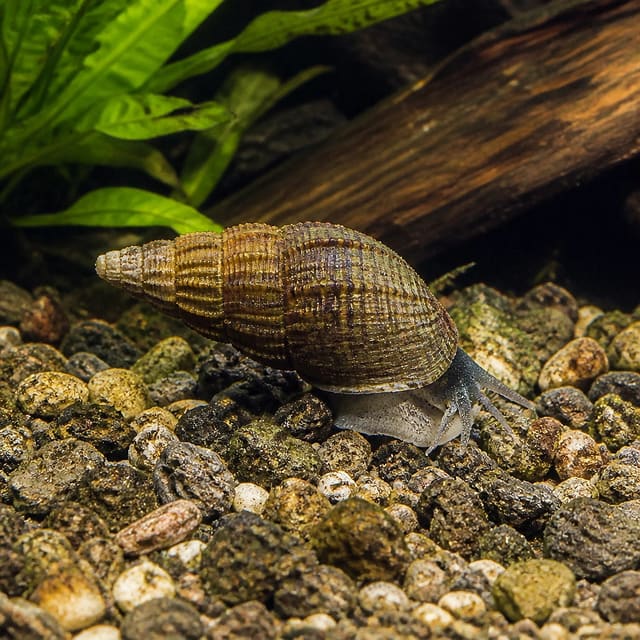
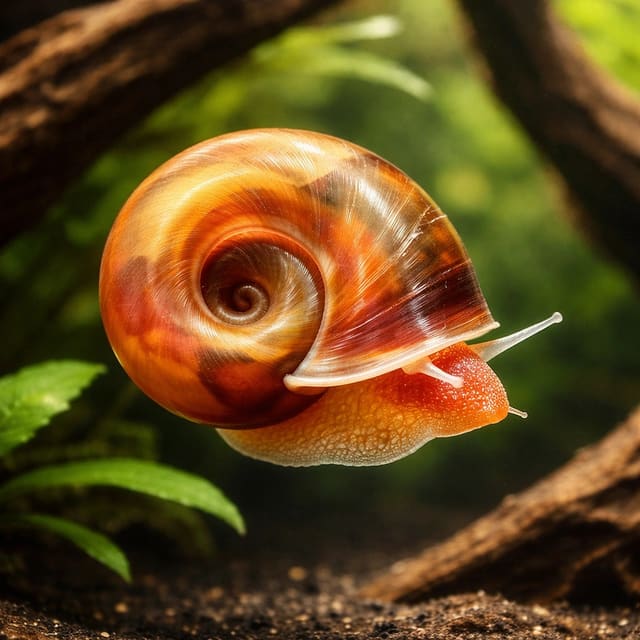
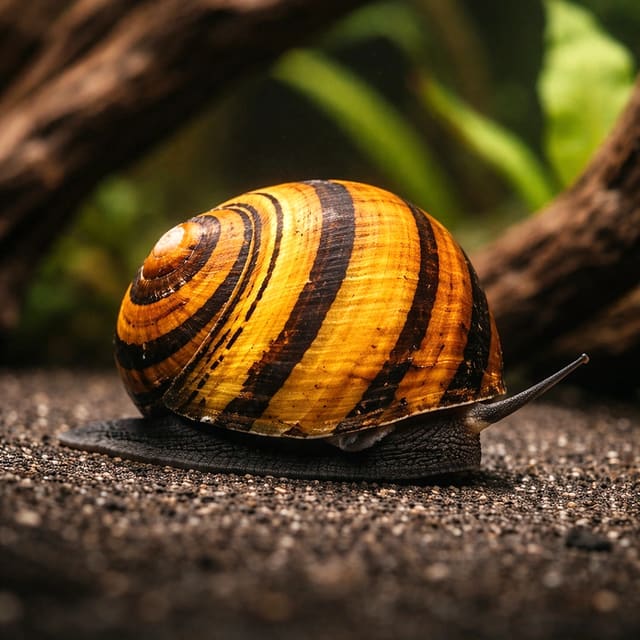
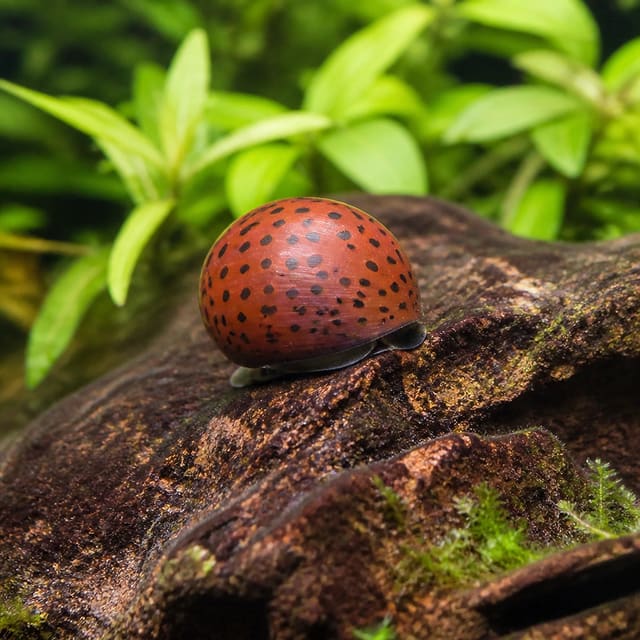
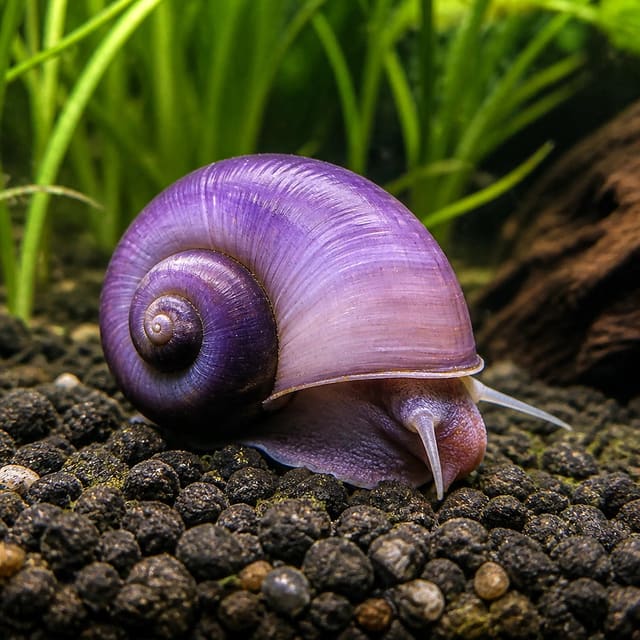
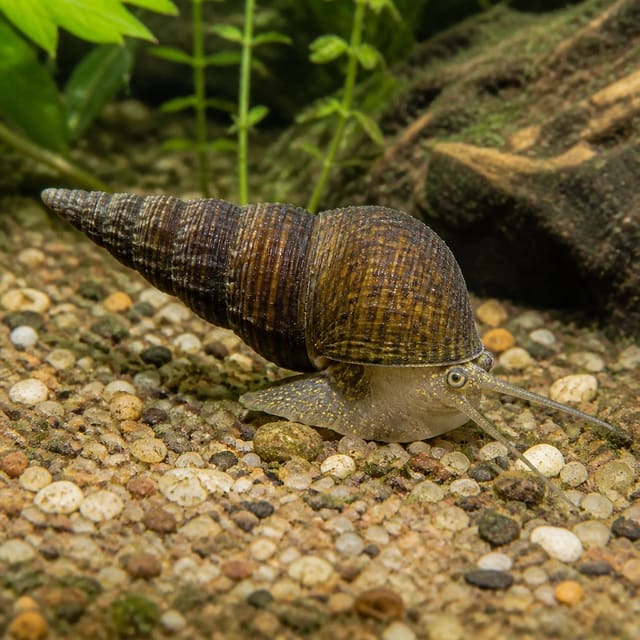
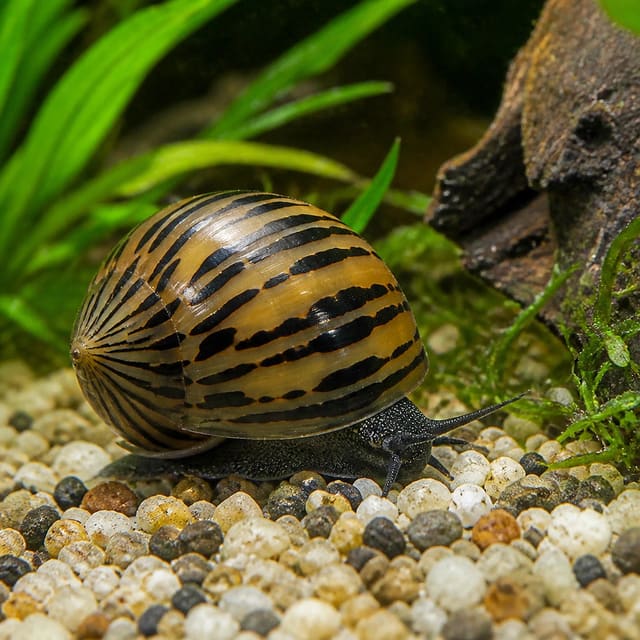
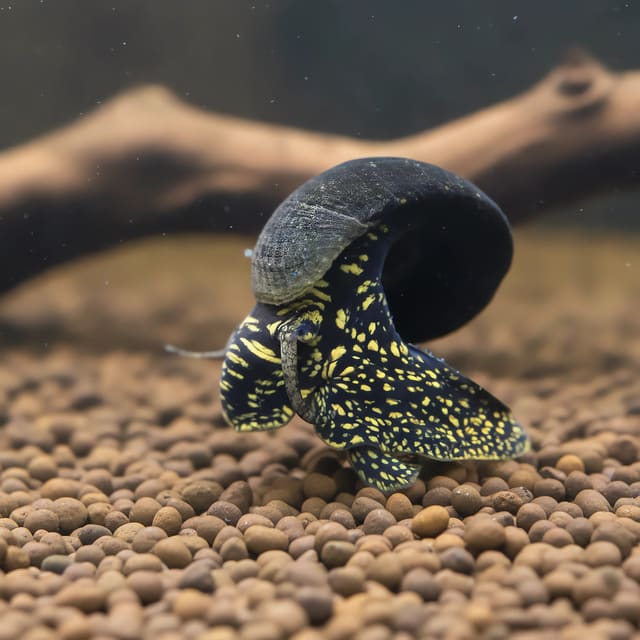
Important appearance note: the current gallery contains one representative, illustrative aquarium image. It is retained so no existing product media is removed, but it should not be treated as a photograph of the exact animal supplied. Shell colour, shell wear, body tone, spotting, size and the intensity of orange can vary. This listing does not guarantee a particular locality, sex, pattern or pure-orange body.
Before ordering: prepare a mature aquarium of at least 60 litres for one adult, keep the water warm and mineral-stable, and confirm that no resident is a snail predator. Avoid copper medication in the display. This is a slowly reproducing Sulawesi snail, not a disposable clean-up animal.
| Trade name | Orange Rabbit Snail |
|---|---|
| Safest identification | Tylomelania sp. Exact species and locality are not verified for this stock. |
| Family | Pachychilidae |
| Origin of the genus | Sulawesi, Indonesia; no exact collection locality is claimed for this product |
| Care level | Moderate |
| Temperament | Peaceful, slow-moving grazer |
| Expected adult scale | Plan space for a shell around 8cm; exact maximum varies by species and is not guaranteed |
| Recommended aquarium | 60L+ for one; 80L+ for several, with a useful floor area |
| Temperature | 25-28C as a stable working range |
| pH | Approximately 7.5-8.5 |
| General hardness | Approximately 8-20 dGH, with useful carbonate stability |
| Diet | Omnivorous grazer and detritus feeder; supplement deliberately |
| Breeding | Separate sexes; live-bearing reproductive strategy with few large young |
| Selection | Exact sex, pattern, locality and strength of orange colour are not guaranteed |
This is one live rabbit snail sold under the supplier's Orange Rabbit trade name. The product option does not offer sex, locality or colour-pattern selection. The shell may carry natural growth marks, old mineral wear or small cosmetic imperfections. Those marks are not automatically a health problem: the living mantle can add new shell at the opening, but old eroded shell does not become smooth again.
The animal may remain withdrawn after packing or during the first hours in a new aquarium. Snails do not perform on demand, and movement immediately after delivery is not the only sign that should be assessed. Follow the current live-arrival evidence instructions, keep the shipping container and contact us within the published window if there is a concern. Do not discard an apparently inactive snail without following the support process.
Tylomelania gemmifera is a real, accepted species in the family Pachychilidae. However, the existence of that name does not prove that every aquarium snail sold as Orange Rabbit Snail belongs to it. our stock records for this product say only "Tylomelania orange rabbit" and supplies no locality or diagnostic image. It would therefore be misleading to present T. gemmifera as confirmed.
This is not a minor wording choice. Scientific names connect an animal to published information about habitat, distribution and biology. When the identification is uncertain, attaching one exact name can make general care advice look more precise than the evidence allows. The IUCN SSC Mollusc Specialist Group has highlighted that aquarium-trade Tylomelania are frequently misidentified and that an imported form sold as Tylomelania sp. "Poso 1 - Orange" remains undescribed. We do not claim that this product is that form either; the example simply shows why colour-based trade names cannot establish species.
The page therefore uses genus-level identification and gives conservative care suitable for the warm, hard-water rabbit snails commonly traded from Sulawesi. If future supplier evidence provides a reliable locality and diagnostic identity, the listing can be reviewed again. Until then, Tylomelania sp. is the accurate answer rather than a guess dressed as certainty.
Tylomelania is a diverse radiation of freshwater snails from Sulawesi, Indonesia. Different species and populations occupy lakes, rivers and streams with different substrates, depths and ecological conditions. Scientific work on the group shows strong diversification across Sulawesi's ancient lake systems and surrounding waters. That diversity is one reason a common colour word cannot carry the whole identification.
For aquarium care, the useful lesson is not to imitate an invented locality. It is to provide stable warm water, good oxygenation, mineral availability, mature grazing surfaces and a substrate that does not damage the foot or trap decomposing food. Avoid dramatic chemical adjustments intended to chase a single lake value. A stable, biologically mature aquarium within a sensible hard-water range is safer than one repeatedly altered with buffers.
Wild collection and captive supply chains also deserve consideration. Rabbit snails have a low-fecundity reproductive strategy: they produce relatively few, well-developed young rather than hundreds of eggs. That makes careful long-term husbandry more important. Keepers should not release aquarium animals, water, plants or substrate into the environment. Rehome responsibly if circumstances change.
Plan for a substantial snail rather than judging the aquarium by the delivery size. An adult shell around 8cm is a sensible planning figure for this listing, while the exact maximum depends on the unidentified species, individual and measurement method. Some rabbit snails sold under adjacent trade names remain smaller and others become larger. The product title cannot settle that difference.
Shell length is only part of the space requirement. When active, the animal extends a broad muscular foot, long antennae and a mobile snout beyond the shell. It needs room to turn, graze and reach food without constantly climbing over sharp decor. A long floor area is more useful than a tall column of unused water. Growth is generally slow compared with many common aquarium snails.
| Planning point | What it means in practice |
|---|---|
| Delivery size | Not the final size; leave room for growth from the beginning |
| Adult shell | Allow for approximately 8cm while accepting species-level uncertainty |
| Floor space | Provide open grazing and feeding zones, not only vertical litres |
| Growth rate | Slow and dependent on food, temperature, water stability and mineral health |
| Old shell damage | Usually remains visible; judge improvement by healthy new growth at the opening |
We recommend at least 60 litres for one adult Orange Rabbit Snail. This gives a more forgiving water volume and feeding area than a very small aquarium. For several rabbit snails, start around 80 litres and increase space according to adult size, tank shape, food availability and the number of other bottom-dwelling animals. A larger mature aquarium is usually easier to keep stable.
Rabbit snails are not schooling animals and do not need to be purchased in pairs or groups for social welfare. Keeping one is acceptable. More animals may be kept together where the aquarium can support them, but each additional grazer increases demand for prepared food and clean floor space. Do not use a simple "snails per litre" formula: footprint, filtration, maturity and feeding competition matter more.
A secure cover is worthwhile. These snails usually remain underwater, but any aquarium animal can explore beyond expected boundaries. Close cable gaps, keep water conditions suitable and investigate persistent attempts to leave the water because they can indicate poor water quality, irritation, oxygen problems or unsuitable conditions.
A stable working range of 25-28C, pH about 7.5-8.5 and general hardness around 8-20 dGH is suitable for this unverified Tylomelania stock. Carbonate hardness should be sufficient to resist sudden pH falls. These are husbandry targets rather than proof of an exact wild locality. Test the source water and understand how the aquarium changes between water changes.
| Parameter | Recommended approach | Why it matters |
|---|---|---|
| Temperature | Keep 25-28C and avoid rapid swings | Supports warm-water activity without treating 30C as a routine target |
| pH | Approximately 7.5-8.5, stable | Acidic conditions can increase shell dissolution risk |
| GH | Approximately 8-20 dGH | Provides calcium and magnesium within the overall mineral environment |
| KH | Maintain useful buffering appropriate to the source water | Reduces sudden pH movement |
| Ammonia | 0 mg/L | Toxic; any detectable result needs immediate investigation |
| Nitrite | 0 mg/L | Toxic and evidence that biological processing is inadequate |
| Nitrate | Keep low through stocking, feeding and maintenance | Chronic accumulation signals declining water quality |
Do not add mineral powders blindly. First test GH, KH and pH, then choose a remineralising method designed for aquarium use if the source water is genuinely too soft. Large unmeasured additions can change osmotic conditions, push pH unexpectedly and harm every resident. Consistency between water changes is more useful than moving repeatedly across the whole acceptable range.
A cycled filter is essential, but a freshly cycled aquarium is not always a mature feeding environment. Rabbit snails browse biofilm, soft growth and edible material on hard surfaces. A tank that has processed ammonia for a few days may still contain very little natural grazing. Visible clean glass is not proof of suitability.
Allow surfaces to mature, establish plants where appropriate and begin a measured feeding routine. Watch whether the snail finds food and whether prepared food remains available after faster fish arrive. A mature aquarium does not remove the need to feed. It gives the keeper a more stable biological system and a background food reserve, not an unlimited buffet.
Use a properly sized filter with gentle-to-moderate circulation across the aquarium and good surface movement. Protect powerful intakes where necessary. High temperature reduces the amount of dissolved oxygen water can hold, so warm rabbit-snail aquariums benefit from reliable gas exchange. Do not confuse an air stone with biological filtration; each has a different role.
Fine sand or smooth, small gravel works well. The surface should allow the snail to travel and feed without sharp points cutting the foot. Keep some clear patches where sinking food can be seen and removed. Deep pockets of trapped food are a water-quality risk, especially in warm water.
Add smooth rock, wood and other stable hardscape to provide grazing surfaces. Test every structure before livestock enters the aquarium: a heavy rock must not shift when a snail moves underneath it. Avoid unstable piles and narrow traps. Leave routes wide enough for the whole shell to pass without becoming wedged.
Lighting can be chosen for the plants and display. A normal day-night cycle is appropriate. Very bright, bare aquariums may leave a slow-moving snail exposed, so include shaded areas without turning the floor into an inaccessible maze. Rabbit snails may be active by day or night, and activity can change after settling.
Feed this animal as an omnivorous grazer and detritus feeder, not as a strict herbivore. Biofilm and soft algae can contribute to the diet, but an aquarium rarely supplies every nutrient in the right amount. Offer a quality sinking invertebrate or community food, algae wafers with useful ingredients, softened vegetables and occasional protein-containing foods in rotation.
Good vegetable options include a small piece of blanched courgette, spinach or green bean. Remove uneaten fresh food before it breaks down. Prepared foods should contain a balanced mix rather than relying on a single wafer forever. Protein can come from a suitable complete food or a modest amount of trusted frozen food; it does not require live feeders.
| Food type | Role | How to use it |
|---|---|---|
| Quality sinking food | Reliable staple nutrition | Place where the snail can reach it before fish consume it |
| Algae or spirulina wafer | Plant-supported prepared food | Use as part of a rotation, not proof that the snail is herbivorous |
| Blanched vegetables | Variety, moisture and grazing opportunity | Offer a small portion and remove leftovers promptly |
| Biofilm | Natural continuous browsing | Maintain mature surfaces; do not scrub every surface sterile |
| Occasional protein | Supports an omnivorous diet | Use modest portions from a safe prepared or frozen source |
Begin with a small measured portion and observe. If the food disappears instantly because fish take it, feeding less will not solve the snail's problem; change the timing or location. If food remains soft and untouched for many hours, reduce the amount and reassess the animal and water. Night feeding can help where daytime fish dominate, but leftovers still require removal.
Orange Rabbit Snails graze some biofilm, soft algae and edible surface material, but they do not replace maintenance. They may ignore hard spot algae, filamentous algae or a large bloom caused by excess light and nutrients. Buying an animal solely to solve algae often leaves both the underlying problem and an underfed snail.
Control algae by balancing light duration, plant growth, feeding, stocking, water changes and nutrient export. Treat the snail's grazing as natural behaviour and a modest contribution. Continue to clean the glass and substrate as required. Never assume that a visibly clean tank means the animal has enough food.
Rabbit snails are often kept in planted aquariums, but no blanket promise of perfect plant safety is appropriate. A well-fed individual commonly spends most of its time on biofilm, prepared food and ageing organic matter. It may also rasp very soft, damaged or dying leaves, and an underfed snail may investigate delicate healthy plants.
Use robust rooted plants, attach epiphytes securely and protect newly planted stems until roots establish. Observe rather than assuming. If leaf damage appears, confirm the culprit, improve feeding and inspect the plant for decay or deficiency. A snail seen on a damaged leaf is not automatically the animal that caused the initial damage.
Plants and decor must be free from pesticide, copper and medication residues. Rinse and quarantine new additions according to their risk. "Shrimp safe" or "plant safe" on a general product label is not enough if the actual ingredients and dose are unknown.
Choose calm fish and invertebrates that share the same warm, hard-water conditions and do not regard snails as food. Suitable possibilities include selected peaceful livebearers, small rainbowfish or other gentle community fish where the aquarium is large enough and the individual species' requirements match. Compatibility must be checked at species level rather than from a broad family label.
Peaceful dwarf shrimp and other non-predatory snails can often coexist, but they may compete for food. The snail's long antennae and extended snout are vulnerable to curious nipping. Watch the tank after lights out as well as during feeding. A companion that repeatedly pecks the soft body is unsuitable even if no obvious wound appears on the first day.
| Potential companion | Assessment | Important condition |
|---|---|---|
| Peaceful community fish | Often suitable | Must tolerate 25-28C, harder alkaline water and leave the snail alone |
| Peaceful dwarf shrimp | Often suitable | Provide enough food and hiding structure for all grazers |
| Other rabbit snails | Suitable with space | No social group is required; increase floor area and food |
| Ramshorn or trumpet snails | Possible | Monitor food competition and population growth |
| Large or boisterous bottom fish | High caution | Avoid anything that shoves, nips or monopolises food |
Avoid pufferfish, snail-eating loaches and other specialised mollusc predators. Avoid assassin snails, which are predatory snails and are not a safe decorative companion. Crayfish and many large crabs can injure or consume exposed soft tissue. Large aggressive cichlids may pick at the foot or turn the shell repeatedly.
Also avoid fish that require substantially different water chemistry or temperature. A soft, acidic blackwater community is not made suitable merely because its residents are peaceful. Very active feeders can be a practical incompatibility even when they never attack: the snail may slowly lose condition because every sinking item is taken first.
Read the current Tropical Fish Co delivery and acclimation instructions before dispatch day and have the aquarium ready. Temperature equalisation and controlled introduction should avoid sudden changes, but a long, unattended drip is not automatically safer. Shipping water can change chemically after a bag is opened. Follow the supplied process and prioritise clean, matched aquarium water.
Place the snail upright on the substrate in a quiet area. Do not pull on the body or attempt to force the operculum open. Keep lights subdued and tank mates calm. It may explore promptly, or it may remain closed while it adjusts. Note the time, photograph any concern and retain delivery evidence required by the live-arrival terms.
A strong foul odour, obvious tissue breakdown or the body hanging loose can indicate death, but inactivity alone is not enough. Contact support within the stated evidence window rather than repeatedly handling the animal. Do not expose it to salt dips, copper, household chemicals or improvised medication.
| Period | Priority | What to record |
|---|---|---|
| Arrival day | Controlled acclimation, quiet placement, evidence if concerned | Temperature, visible condition and first movement |
| Days 2-7 | Confirm feeding access and stable water | Foods accepted, activity periods, ammonia and nitrite |
| Weeks 2-4 | Check compatibility and new shell edge | Nipping, competition, shell appearance and weight impression |
| Months 2-3 | Set a sustainable maintenance routine | Growth, feeding response, pH/GH/KH stability and plant impact |
Quarantine is the safest way to observe new livestock and prevent hitchhikers or disease moving between systems, but the quarantine tank must itself be cycled, warm, mineral-stable and capable of feeding a grazer. A bare, newly filled container is not useful quarantine. Use dedicated tools and never share water between systems.
Weigh changes in behaviour against the whole system. One quiet day may be normal; several days of withdrawal combined with poor water, shell recession, loss of body condition or repeated falls needs investigation. Test water before reaching for medication. Many apparent "snail illnesses" begin with environment or feeding.
Healthy new shell growth is built at the opening. It should not be confused with old scratches or pale erosion farther back. Shell quality depends on stable water chemistry, adequate minerals, a complete diet and overall health. Calcium matters, but adding calcium alone cannot correct ammonia, chronic acidity, starvation or rapid parameter swings.
If the new edge looks thin, pitted or dissolving, test pH, GH and KH with reliable kits and review the consistency of water-change water. Check that the snail actually receives balanced food. Avoid placing loose mineral blocks into already hard water without measurement. Correct the cause gradually and monitor the new growth.
Do not paint, glue or polish a living shell for appearance. Emergency shell repair is a specialised intervention where materials must not contact tissue or trap contamination. Seek experienced aquatic-veterinary guidance for major fractures. Cosmetic wear alone is not a reason to manipulate the shell.
Activity varies with time of day, temperature, recent transport and the individual. Do not expect constant movement. A snail can rest for extended periods. The most useful assessment combines water tests, smell where appropriate, attachment, feeding, tissue condition and change over time.
| Observation | Possible explanations | First response |
|---|---|---|
| Repeatedly leaving the water | Poor water, irritant, oxygen problem or exploration | Test water, inspect equipment and secure the cover |
| Closed for several days | Stress, unsuitable water, harassment, illness or normal rest | Test water, check smell and tissue without forcing it open |
| Thin or pitted new shell | Acidic or unstable water, mineral issue, poor diet | Measure pH/GH/KH and review food and water changes |
| Frequent falls | Weakness, unsuitable decor or poor condition | Provide easy surfaces and investigate water and feeding |
| Body nipped or antennae shortened | Incompatible tank mate | Separate the aggressor or snail immediately |
| No access to food | Fast fish or too many grazers | Target feed in a protected area and reassess stocking |
There is no universal over-the-counter "snail medicine" that safely treats every sign. Invertebrates respond differently to many fish medications. Diagnose the environment first and obtain specialist advice where the problem persists. Moving a stressed snail through several uncycled containers often creates more instability.
Copper is toxic to aquatic invertebrates at doses used in many fish treatments. Do not use a copper medication in a tank containing this snail. Read active ingredients rather than relying on a front-label promise. If fish require copper treatment, move the fish to an appropriate hospital system; do not improvise by exposing the snail and hoping a lower dose is safe.
Some plant treatments, algae controls, fertilisers and household plumbing can also introduce metals. Normal trace copper in a complete plant fertiliser used exactly as directed is not the same as a copper medication, but uncertainty should be resolved from the product specification and water testing. Never use household snail killer near aquarium equipment.
Salt is not a default tonic for this freshwater snail. Avoid routine salt additions and concentrated dips. Medication residues can remain in substrate and filter media, so a previously treated aquarium requires a considered risk assessment before invertebrates are added.
Rabbit snails move with a distinctive deliberate motion, sweeping the snout over surfaces and using paired antennae to explore. They may burrow partly into fine substrate, rest in shade or climb hardscape. Some become more active after feeding or when lights dim. Individual behaviour and acclimation time vary.
They do not need toys or a social group, but they benefit from environmental choice: open feeding ground, shaded retreats, mature hard surfaces and stable routes through the aquarium. Repeatedly lifting or repositioning the animal prevents normal settling. Intervene only if it is trapped, repeatedly overturned on an unsafe surface or being attacked.
Rabbit snails can usually right themselves on a suitable substrate, but a weak individual on smooth glass or in a tight gap may struggle. Place it upright if necessary and then investigate why the falls recur. Do not keep decorative objects with holes that admit the foot but trap the shell.
Tylomelania have separate sexes rather than being simultaneous hermaphrodites. That does not mean an ordinary customer can reliably sex an animal from shell shape or colour. External differences are subtle, vary by species and are not a dependable retail selection method for this unidentified stock.
This product is therefore sold unsexed. Buying two does not guarantee a pair, and buying a group does not guarantee breeding. Do not use unsupported shell-angle rules or body-colour claims to assign sex. If a true breeding project is the goal, begin with a suitably large group only where the aquarium can support every animal long term, and keep careful records.
Rabbit snails are famous among aquarists for producing a small number of relatively large, developed young. Scientific work describes specialised reproductive biology within Tylomelania, including separate sexes and brooding. This is very different from a ramshorn snail's gelatinous egg clutches or a Malaysian trumpet snail population boom.
Do not expect rapid production. Exact intervals and brood details vary by species, female condition, temperature and environment, and this product's species is not confirmed. A female may also have mated before purchase, so the later appearance of a juvenile does not prove that a newly purchased companion is male.
Breeding care is essentially excellent adult care: mature stable water, adequate minerals, consistent food, low stress and no predators. Protect filter intakes and avoid fish that eat newborn snails. Feed tiny young appropriately without leaving excess food to decay. Do not separate a mother or juvenile into an uncycled container.
| Listing | What the name tells you | What it does not guarantee |
|---|---|---|
| Orange Rabbit Snail | An orange-toned Tylomelania trade form | Exact species, locality, sex or identical orange pattern |
| Yellow Spot Rabbit Snail | A different spotted trade appearance | Automatic compatibility with every water range or identical adult size |
| Black Antenna Rabbit Snail | A rabbit-snail trade form selected under another appearance name | A verified scientific identity from the common name alone |
| White Spot Rabbit Snail | A contrasting spotted form in the same broad aquarium group | That spots remain identical through age and acclimation |
| Orange Rabbit Snail | This product, conservatively identified as Tylomelania sp. | T. gemmifera, Poso origin or any other exact locality |
Choose among rabbit-snail listings by the appearance you prefer, while planning for the care needs stated on the exact product page. Do not assume that colour names are formal taxa. If exact locality data is essential to a conservation breeding project, purchase only stock accompanied by reliable provenance.
These names describe different animals with different aquarium roles. A rabbit snail is a large, slow-growing display invertebrate. A Pagoda Snail has its own shell form and care considerations. A Blue Ramshorn Snail is smaller and can reproduce much more readily where food is abundant. A Malaysian Trumpet Snail is a burrowing species whose population reflects food availability.
| Type | Typical role | Reproduction pattern | Key buying consideration |
|---|---|---|---|
| Rabbit snail | Large display grazer | Few large live young | Warm hard water, space and deliberate feeding |
| Pagoda snail | Textured-shell display grazer | Species-specific | Check the exact page rather than copying rabbit-snail care |
| Ramshorn snail | Small grazer and scavenger | Egg clutches; can multiply quickly | Food control strongly affects population |
| Malaysian trumpet snail | Burrowing substrate worker | Can multiply readily | Often hidden by day and responsive to surplus food |
Sulawesi's freshwater fauna includes many geographically restricted species. Some traded rabbit snails remain poorly identified, and scientific names have sometimes been applied from colour resemblance alone. Responsible retail information should not turn that uncertainty into false precision. This page deliberately distinguishes an accepted species record from identification of the actual stock.
Keep the animal for its full life, prevent escape or release, and do not distribute young under a species name that has not been verified. Record the trade name, purchase source and date. If reliable locality or genetic evidence later becomes available, keep that evidence attached to the line rather than relying on memory or a social-media image comparison.
We also avoid claiming that the single illustrative gallery image proves body colour, sex or locality. The image helps customers understand the general rabbit-snail shape and aquarium context, but the written disclosure controls the promise. Natural variation is part of buying live aquatic animals.
| Frequency | Task | Purpose |
|---|---|---|
| Daily | Observe movement, feeding access, harassment and equipment | Find practical problems before they become chronic |
| Several times weekly | Offer a varied measured food rotation | Prevent dependence on incidental algae |
| Weekly | Test as needed, remove debris and change an appropriate amount of matched water | Control waste without causing parameter shock |
| Monthly | Compare new shell growth and review pH/GH/KH trends | Detect gradual mineral or chemistry problems |
| Whenever livestock changes | Reassess feeding, competition and compatibility | Adult behaviour and total demand can change |
There is no universal fixed water-change percentage for every aquarium. Base the routine on nitrate trend, stocking, feeding, source water and stability. Match replacement-water temperature and mineral profile closely enough to avoid abrupt change. Clean filter media in removed aquarium water when needed and preserve the biological colony; do not sterilise all filtration at once.
This listing is built around what can be supported rather than repeating an overconfident supplier label. It explains the identity limit, adult planning, mineral-stable water, deliberate feeding, copper risk, compatibility and live-bearing reproduction before you order. The gallery image is illustrative, and natural variation between individual animals is normal.
Live aquatic orders are prepared for tracked UK delivery and covered under the current Tropical Fish Co live-arrival terms when the published delivery, evidence and acclimation conditions are followed. Eligible first-time customers can use WELCOME10 for 10% off their first order. Review the latest delivery day, area restrictions and guarantee wording at checkout because operational terms can change.
Browse the freshwater molluscs collection to compare snails with different size, behaviour and reproductive patterns. Choose by the aquarium you can provide, not by expecting any snail to replace filtration or maintenance.
Not proven for this stock. Tylomelania gemmifera is a valid species, but the supplier supplied no locality or diagnostic evidence linking this product to it. The accurate listing identity is Tylomelania sp.
We recommend at least 60 litres for one adult, with a useful floor area and mature grazing surfaces. Use 80 litres or more for several and increase space for other bottom feeders.
Plan for a shell around 8cm. Exact adult size varies among Tylomelania species, and this stock is not identified precisely enough to promise a single biological maximum.
Keep this stock at a stable 25-28C. We do not present 30C as the routine target because warmer water holds less oxygen and leaves less margin during equipment or water-quality problems.
They graze some biofilm and soft algae, but they are not guaranteed algae removers. Feed a varied diet deliberately and correct excess algae through lighting, nutrient and maintenance management.
Many well-fed individuals coexist with robust plants, but they may rasp soft, damaged or dying leaves and can investigate delicate plants. No unconditional plant-safe guarantee is offered.
Yes. Rabbit snails are not schooling animals and do not require a pair. Keeping more is possible where space, food and water quality support every animal.
They have separate sexes and a live-bearing reproductive strategy that produces few, relatively large young. Buying two does not guarantee a male-female pair, and breeding is much slower than in ramshorn snails.
Peaceful dwarf shrimp are often compatible when their temperature and mineral needs overlap. Ensure there is enough prepared food and grazing area so the animals do not compete excessively.
No. Assassin snails are predators, and many loaches eat or injure snails. Pufferfish, crayfish and persistent nipping fish are also unsuitable.
It may be resting or recovering from transport, but prolonged closure can also reflect unsuitable water, harassment or illness. Follow the arrival instructions, test the water and contact support within the evidence window if concerned. Never force the operculum open.
Yes, under the current Tropical Fish Co terms when the published delivery, evidence and acclimation conditions are followed. Read those terms before dispatch and report a concern within the stated window.
The identity decision uses the accepted MolluscaBase record for Tylomelania gemmifera while separating that valid name from the unverified aquarium stock. The broader husbandry approach reflects published research on Sulawesi Tylomelania diversity and reproduction, together with the IUCN SSC Mollusc Specialist Group's warning that traded forms can be undescribed or misidentified.
Live animals vary naturally. The care ranges above are conservative retail guidance for this unverified Tylomelania stock, not a claim that every population in the genus occupies identical water. Observe the animal, test the aquarium and adjust gradually within a stable, compatible system.
No reviews for this item yet. Bought one? Honest reviews only, good or bad.
What customers say about ordering from us
I have a small group of long finned mountain minnows. So was delighted to be able to order ten of this variety to increase the genetics in my tank . The ones I recieved are healthy but it’s to early to give a verdict on wether they are of a long finned type since they are small currently.
Gordon Walker · 23 Sept 2026
100% success travel and "installation". Pleased with quality of purchase. The Siamese fighter a bit "shy" so have not yet seen him at his best yet but looking good. Happy customer. GG
George E Garratt · 21 Sept 2026
Reviews of our shop, collected by Judge.me, an independent third-party review collector. Newest first.