Spotted Nerite Snail (Neritina sp.)
17–27°C · pH 6.5–8
£2.59
One live Assassin Snail (Anentome helena) per purchase: a small predatory freshwater snail for a mature, filtered aquarium where wanted snails are kept out of reach.
Anentome helena
Lives in groups: kept together they stay settled, active and show their best colour.
One live Assassin Snail (Anentome helena) per purchase: a small predatory freshwater snail for a mature, filtered aquarium where wanted snails are kept out of reach.
Maintain these water conditions for optimal health and vibrant colors
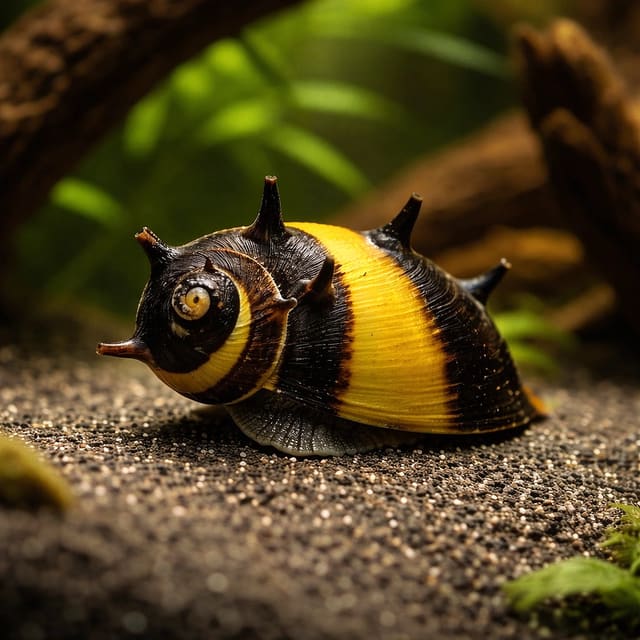
The Assassin Snail, Anentome helena, is a small freshwater gastropod best known for preying on other snails. It is also called the Snail-eating Snail, and some references use Bumblebee Snail for its dark-and-yellow banded shell. The accepted scientific name is Anentome helena, a member of the family Nassariidae. Although most members of that family are marine, this species lives in fresh water.
One purchase supplies one live snail. No exact length is promised for the individual sent. Sex is guaranteed only when the selected option explicitly states male or female. This Assassin Snail listing has no sex-guaranteed option.
A species summary records a typical length of about 18–32 mm, while noting that food affects size and aquarium specimens are often smaller. That is a useful guide, not a guarantee that every animal will reach the top of the range. OATA's broader freshwater shrimp-and-snail guidance says the popular aquarium snails it discusses, including assassin snails, are unlikely to exceed 5 cm. The narrower species record is the more useful planning reference here, while both figures retain their original scope.
This is a carnivorous snail, not an algae-cleaning substitute. It eats other gastropods and worms in nature, and OATA specifically notes its use in controlling excessive aquarium-snail populations. It can also take commercially manufactured foods. That makes it useful for a keeper who understands the food web in the tank, but unsuitable wherever every ornamental snail must remain safe.
Think of it as one part of a husbandry plan, not a cure for why nuisance snails multiplied. Snail numbers often rise when abundant uneaten food is available. Adding a predator while continuing to overfeed can leave the cause untouched and put more waste into the aquarium. The better approach combines sensible feeding, removal of excess food, regular maintenance and realistic expectations about how quickly a living predator works.
OATA's water figures for 17–27°C, pH 6.5–8.0, 4–18°dH and 3–15°dKH cover freshwater shrimp and snails as a broad group. They are not presented here as a laboratory-defined optimum for A. helena. The practical lesson is to use a mature, filtered aquarium, keep the chosen values stable, and avoid sudden changes. Ammonia and nitrite should both be 0 mg/l.
OATA describes snails as non-social animals, so this listing does not impose a made-up minimum group. One can be kept without claiming that it needs companions of its own species. If more than one is kept, the aquarium still needs enough food, floor space and biological filtration for the total livestock load.
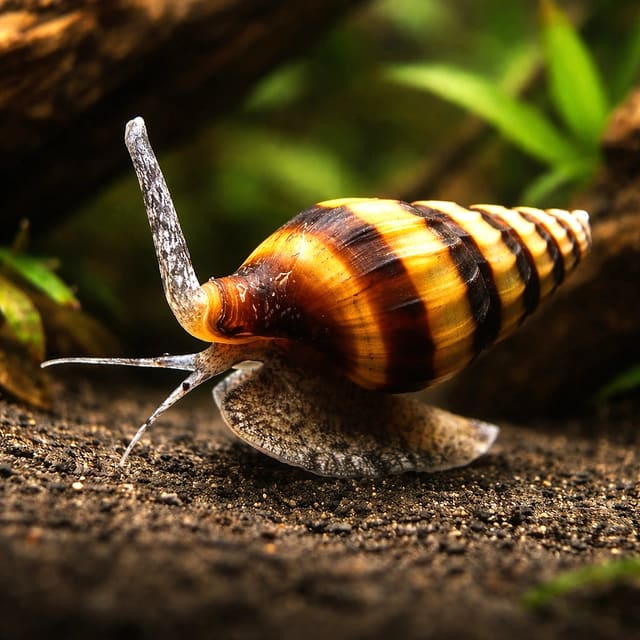
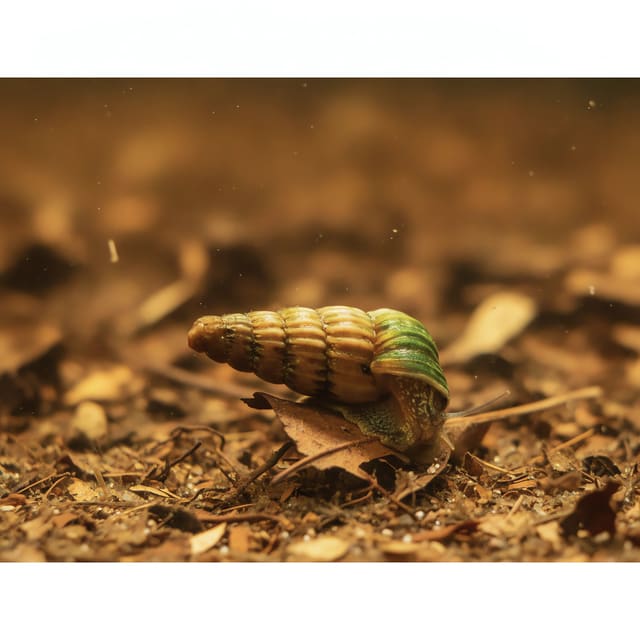
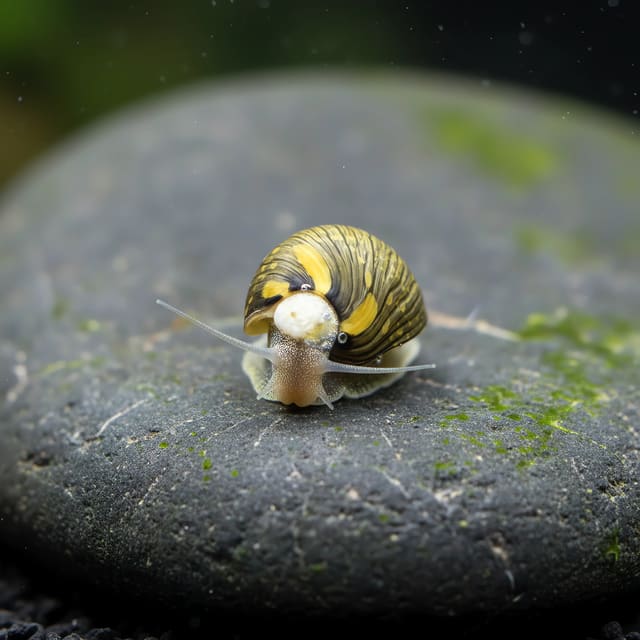
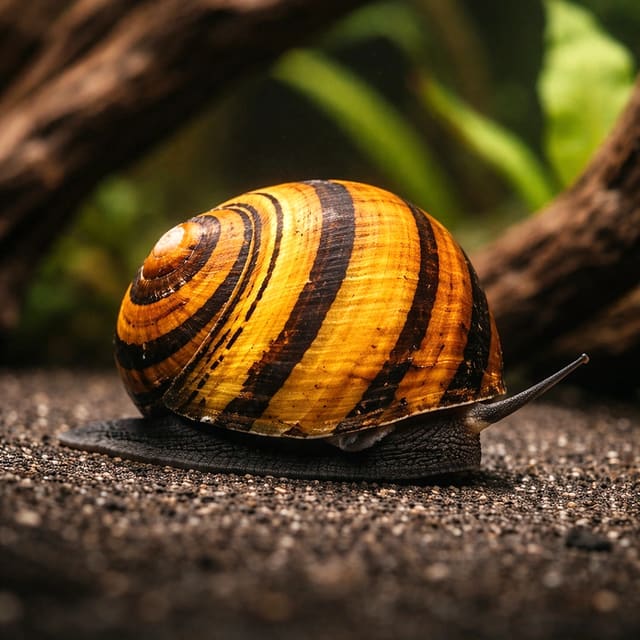
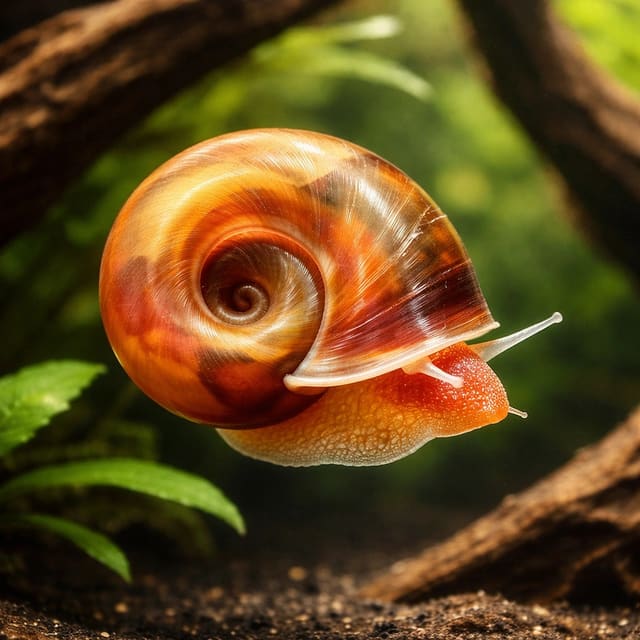
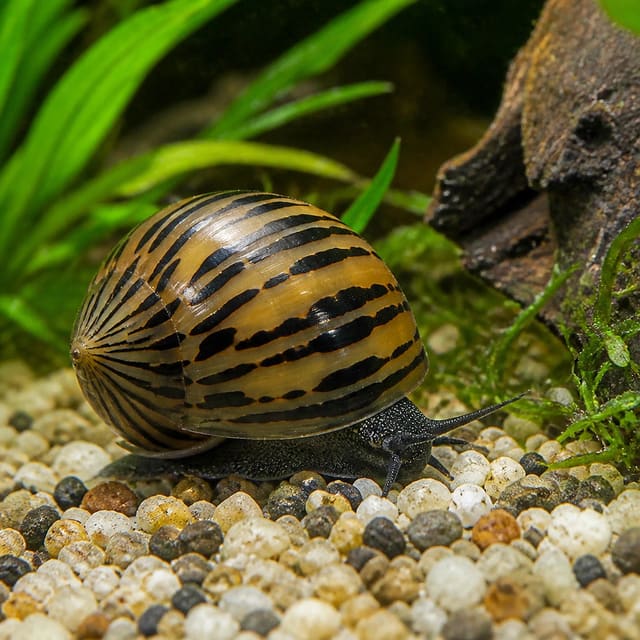
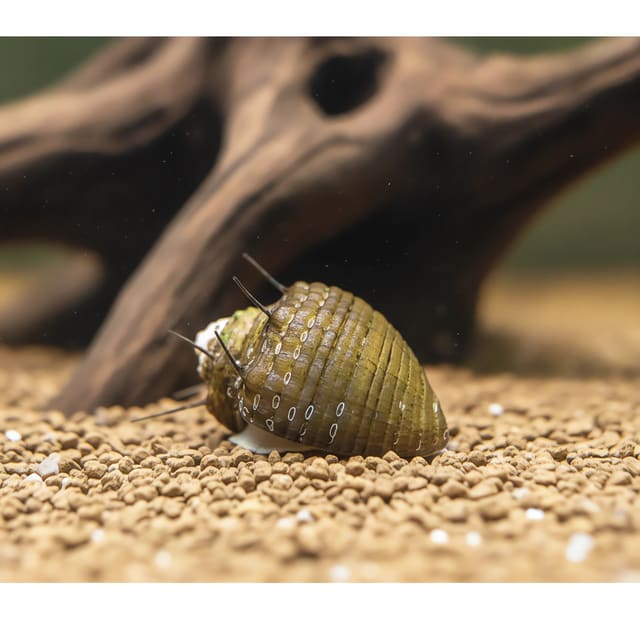
Gallery images have been digitally enhanced to improve image quality. Natural colour, pattern, size and maturity can vary between live animals. The four existing images show one or two banded snails in different aquarium-style scenes. They help show visible form and count, but they do not establish the sex, age, origin or exact appearance of the individual sent.
This listing suits a keeper prepared to protect wanted snails, use invertebrate-safe treatments and monitor water quality. Browse the current aquarium-snail collection if the deciding question is which kind of snail fits the job. The live product controls remain the place for current price and availability; permanent care copy does not hard-code either.
| Care point | Practical guidance |
|---|---|
| Identity | Anentome helena, family Nassariidae |
| Sold unit | One live snail per purchase |
| Recorded size | Typically about 18–32 mm in the species summary; food affects size and aquarium specimens are often smaller |
| Temperature | 17–27°C under OATA's broad freshwater shrimp-and-snail guidance |
| pH | 6.5–8.0 under the same broad group guidance |
| General hardness | 4–18°dH under the same broad group guidance |
| Carbonate hardness | 3–15°dKH under the same broad group guidance |
| Ammonia and nitrite | 0 mg/l |
| Diet | Other snails plus suitable commercially manufactured foods |
| Main caution | Use only treatments explicitly labelled as safe for freshwater invertebrates |
The numeric water ranges above are OATA's guide for freshwater shrimp and snails as a group. They offer a sensible screening range for the aquarium, but they do not turn every point inside the range into an equally suitable target for every species or every individual. Choose a stable point that also suits the rest of the aquarium, and compare the water the snail arrives in with the receiving tank before making an acclimation plan.
A working biological filter is essential. Livestock waste becomes ammonia, bacteria in the filter convert ammonia to nitrite, and another stage of the biological process converts nitrite to nitrate. Both ammonia and nitrite are toxic and should read 0 mg/l. Clear-looking water is not proof that the biological cycle is working, so test it rather than relying on appearance.
OATA recommends at least 10 litres for a group of small freshwater shrimp or snails and says the aquarium must be larger when fish are also present. That is broad group guidance, not a species-specific minimum for the Assassin Snail. Treat it as a floor for thinking, not a target to squeeze a mixed community into. More water gives greater dilution and usually slows rapid changes in temperature and chemistry.
Aquarium shape matters as well as the number printed on the box. A useful footprint provides substrate to explore and makes it easier to distribute food without creating one dirty patch. Leave room to reach the floor with a siphon, and avoid a layout that traps uneaten food behind fixed decoration. A larger aquarium can still fail if it is overstocked, poorly filtered or hard to maintain.
For a first setup, the freshwater invertebrate aquarium guide is a useful preparation route, even though this animal is a snail rather than a shrimp. The relevant principles are maturing the filter, checking water, providing cover and adding livestock gradually. Do not use the guide to assume that every shrimp food or social rule automatically applies to a predatory snail.
OATA recommends aquarium gravel or sand and says fine material matters for species that move through it to find food. Sand or fine, smooth gravel is therefore a practical choice for an Assassin Snail. It gives the animal an accessible floor while letting the keeper see and remove accumulating debris. Avoid sharp, unstable decoration that makes routine cleaning difficult.
Live plants can provide cover and a more varied environment. If live plants are not used, suitable artificial plants and ornaments can still create shelter. Keep passages open enough for the snail to move, and secure heavy rocks or wood before livestock is added. A snail should not be expected to shift an unstable ornament without risk.
A cover is sensible because OATA recommends one to prevent snails escaping. Check gaps around cables, filter pipes and feeding openings. If a snail repeatedly spends time at the waterline, first confirm that water quality, temperature and oxygen exchange are acceptable; the lid prevents escape but does not correct an environmental problem.
Place the aquarium away from direct sunlight, draughts, radiators, loud vibration and sudden temperature changes. Use lighting to provide a regular day-and-night cycle rather than keeping the tank illuminated around the clock. Direct sun can drive both temperature swings and unwanted algae growth, making the system harder to manage.
Temperature is only one part of the match. OATA's broad group range is 17–27°C, pH 6.5–8.0, general hardness 4–18°dH and carbonate hardness 3–15°dKH. General hardness describes dissolved calcium and magnesium salts, while carbonate hardness contributes to buffering. The numbers help compare waters; they are not an instruction to chase a central value with abrupt chemical additions.
Use the aquarium water-chemistry guide to understand what each test means, then record the aquarium's actual readings. The water parameter matcher can organise a comparison before arrival. A slow, planned response to a genuine mismatch is safer than repeatedly dosing the tank to make a test kit show a preferred number.
OATA's nitrate ceiling is no more than 20 mg/l above the normal tap-water level. Because tap water varies, test the source as well as the aquarium. A trend is often more useful than one isolated reading: a steady rise suggests that feeding, stocking, plant growth, filter performance or the maintenance routine needs attention.
Anentome helena is carnivorous. The natural-history summary reports worms and gastropods in its diet, and OATA says assassin snails prey on other snails while also eating commercially manufactured foods. Do not market or manage it as a plant-polishing algae grazer. If there are no prey snails, provide a suitable manufactured food rather than assuming the animal can live on algae.
OATA's broad invertebrate guidance is to feed freshwater shrimp and snails two or three times a week. Pellets or wafers should be left for at least 30 minutes so slower animals have time to feed. Use that as an observation-led starting point, not a reason to leave food decomposing indefinitely. Remove persistent leftovers and adjust the next portion downward.
Watch the snail rather than feeding by calendar alone. Food demand depends on the presence of prey, the number of animals, temperature and what other livestock reaches the same food. If fish take every sinking item first, change placement rather than simply adding more. A small dish or a consistent feeding area can make leftovers easier to check and remove.
Assassin Snails can help reduce an unwanted-snail population, but they cannot correct the food surplus that helped the population grow. Review how much fish food reaches the floor, remove decaying plant material, and keep up the maintenance routine. Biological control works best when the aquarium no longer supplies unlimited food to the pest population.
Do not add wanted ornamental snails as food unless that deliberate outcome is acceptable. Predation is the reason this species is sold for nuisance-snail control, so a decorative snail is not protected merely because it is larger, valuable or introduced first.
OATA warns that freshwater snails and shrimp are very sensitive to copper and will die if exposed even to low levels. Read the complete medicine label before treating a shared aquarium. A product used safely with fish may be unsafe for an invertebrate. If the label does not clearly cover snails, obtain product-specific professional advice rather than guessing from a forum dose.
Check more than the active ingredient on the front label. Some treatments, algaecides and plant products can affect invertebrates even when the marketing is aimed at another problem. Never improvise a reduced dose and call it safe. If treatment elsewhere is necessary, plan containment, filtration and cross-contamination precautions before moving equipment between tanks.
OATA strongly recommends a weekly partial water change of 25% for freshwater shrimp and snails. Treat replacement tap water with a suitable conditioner for chlorine or chloramine before it enters the aquarium. Match temperature carefully enough to avoid a sudden swing, and siphon solid waste from accessible areas of the substrate.
Test ammonia, nitrite, nitrate, pH and hardness at least weekly, especially during initial setup and after adding livestock. Keep a brief written record. A note of date, temperature and readings makes a slow drift visible and helps distinguish a persistent problem from one doubtful test.
Check the filter for blockages. When reusable media needs cleaning, OATA advises rinsing it lightly in aquarium water removed during maintenance rather than under the tap, because chlorine or chloramine can damage the beneficial bacteria. Do not clean every biological surface aggressively on the same day.
Add livestock gradually. The bacterial population in a mature filter still needs time to respond to a larger waste load. Adding many animals or increasing feeding sharply can outpace it and cause new-tank syndrome, with harmful ammonia or nitrite. Test after a change instead of assuming an old cycle result guarantees the new load.
Before delivery, confirm that the filter is operating, ammonia and nitrite are 0 mg/l, the receiving water is stable and someone can be present. Read the current delivery and Live Arrival Guarantee policy rather than relying on an old screenshot or remembered timetable.
Keep the transport bag out of bright light and extreme temperatures. Use the store's current acclimation direction: float the sealed bag for 20–30 minutes before releasing the snail, keep disturbance low and avoid adding transport water to the aquarium. Compare the source and receiving water before making any further adjustment.
Monitor the new snail carefully during the first week, with special attention to water quality and feeding. A new animal may not behave exactly like an established one immediately. Avoid making several major changes at once; stable conditions make it easier to understand what the animal is responding to.
Look for changes from the animal's normal pattern rather than relying on a single generic symptom. OATA highlights increased inactivity, restlessness, unusual behaviour, darker or paler colour, more hiding, visible lesions or abnormal growths, body-condition changes and reduced interest in food as reasons to investigate.
These observations do not diagnose a disease. Test the water first, check temperature and equipment, review recent additions and contact a competent aquatic professional when concern persists. Avoid starting an invertebrate treatment simply because a symptom resembles a photograph online.
The store's easy label assumes that the basic aquarium work is already in place. It does not mean the snail can be dropped into an uncycled jar, left without suitable food or exposed to any medicine used for fish. Easy care means the regular tasks are straightforward once the aquarium is mature: observe the animal, check equipment, feed a measured amount and respond to test results before waste becomes a crisis.
A new keeper should be able to explain where the food will come from after nuisance-snail numbers fall, which test kits are available, how replacement water is conditioned and what will happen if fish in the tank need treatment. Those questions turn a simple label into a practical plan. If any answer is missing, solve it before ordering rather than learning through an emergency.
Keep a small maintenance kit for the aquarium: a dedicated siphon, dechlorinator, test kits and a container used only for aquarium water. Avoid transferring wet equipment from a tank that has recently received medication. Label buckets and nets if several systems are maintained, because cross-contamination can carry chemicals and disease organisms into an invertebrate aquarium.
An Assassin Snail is a snail predator. Do not place it with a snail that you intend to keep safe. That includes decorative, breeding or clean-up snails regardless of their purchase price. No ornamental snail can be promised safe merely because it is large, valuable or already established.
OATA also advises against mixing snails with fish that can eat them, specifically naming pufferfish and loaches as examples. A predatory snail is still vulnerable to predatory fish. Check mouth size, feeding behaviour and the fish's normal use of the bottom before combining them.
OATA says freshwater shrimp and snails are generally compatible with many aquarium species, but that broad statement is not a universal tank-mate guarantee. Match temperature, pH, hardness, adult size, feeding style and temperament. A fish that is peaceful in open water may still investigate or harass a small invertebrate on the substrate.
Watch feeding competition. Fast fish can consume sinking food before the snail reaches it, while excessive extra food can damage water quality. Place suitable food where the snail can access it and check whether it is actually feeding. The goal is not to make the tank continually rich in leftovers.
Use more space when fish share the aquarium. OATA's at-least-10-litre group figure is for small freshwater shrimp or snails and explicitly says more space is needed with fish. The full mixed-community load, filtration and available floor area determine whether the arrangement is sensible.
Current OATA guidance supports using live plants for cover but does not prove that this species can never damage any plant under any circumstance. Its documented feeding is carnivorous rather than algae grazing, so choose plants for the aquarium's light and water rather than buying the snail as a plant cleaner.
Keep hardscape stable and leave enough accessible substrate to observe food and remove waste. Dense planting can offer cover, but it should not turn the floor into an area that cannot be inspected. Check new plants for hitchhiking snails before adding them if controlling unwanted populations is the purpose of the purchase.
OATA states that snails are not social creatures. That means companionship does not require a group purchase. One animal can be a reasonable choice where the tank, food and other inhabitants suit it. More than one may be kept only when the aquarium can support the extra animals and the keeper accepts their effect on other snails.
Do not infer a breeding pair from buying two. This product has no sex-guaranteed option, and appearance in the gallery does not establish sex. If breeding is a goal, obtain specialist information and accept that a fixed quantity is not a pair promise.
If the aim is an ornamental snail that grazes rather than a predator chosen for snail control, compare the Parallel Nerite Snail (Neritina sp.). This link is a shopping comparison, not a suggestion that the two should share an aquarium. Their feeding roles and the risk to wanted snails must be assessed separately.
A species summary records Anentome helena at about 18–32 mm, with size affected by food and aquarium specimens often smaller. OATA's broad freshwater-snail guidance says the popular aquarium snails it discusses are unlikely to exceed 5 cm. These are guides rather than an exact size promise for the animal supplied.
OATA's broad guide recommends at least 10 litres for a group of small freshwater shrimp or snails and more space when fish are included. Use a mature filtered aquarium with enough accessible floor area, stable water and capacity for the complete livestock load.
OATA describes snails as non-social animals, so one Assassin Snail can be kept without requiring companions. If several are kept, provide enough food, floor space and filtration, and do not assume that buying two guarantees a male and female pair.
The store's current assessment is easy, provided the keeper already has a mature filtered aquarium and can test the water. The important responsibilities are keeping ammonia and nitrite at 0 mg/l, checking every treatment for invertebrate safety, preventing escape, feeding appropriately and protecting any ornamental snails that must remain safe.
It is carnivorous and feeds on gastropods and worms; OATA specifically notes that assassin snails prey on other snail species. It can also eat commercially manufactured foods. It should not be bought as an algae cleaner, and persistent leftovers should be removed so feeding does not damage water quality.
OATA's broad guide for freshwater shrimp and snails gives 17–27°C and pH 6.5–8.0, with 4–18°dH general hardness and 3–15°dKH carbonate hardness. Keep that group-level scope in mind, choose stable values and avoid sudden chemical changes merely to chase the middle of a range.
Its known predatory behaviour is directed at prey such as other snails rather than routine fin nipping. That does not create a universal community guarantee: choose fish that will not eat or harass the snail, and make sure the snail can reach food without excessive competition.
Use conditions rather than a fixed tank-mate list. Do not mix it with snails you want to protect, and OATA advises avoiding snail-eating fish such as pufferfish and loaches. Any other animal must share the stable temperature and water range and must not prevent this bottom-dwelling invertebrate from feeding.
Tropical Fish Co hand-packs live animals in oxygenated bags, an insulated box and a heat pack when weather calls for one, then uses a tracked licensed live-animal courier. Someone must receive the parcel. For a Live Arrival Guarantee claim, contact the team the same day with the order number and a continuous video showing the sealed parcel being opened and the animal still in its sealed bag.
The identity used here follows the accepted-name record for Anentome helena. The World Register of Marine Species record supports the accepted name and family. The species summary provides the labelled size, distribution and feeding context.
Water, setup, maintenance, feeding frequency, treatment sensitivity, social scope and compatibility cautions come from OATA's freshwater shrimp and snail care sheet. Its numerical values are used as broad group guidance. General filtration context comes from the RSPCA aquarium guidance.
No reviews for this item yet. Bought one? Honest reviews only, good or bad.
What customers say about ordering from us
Easy website plenty of info on fish your buying great to pick a time slot
TRACEY DURRANT · 7 Oct 2026
Got some lovely fish thank you
Kevin Mackie · 7 Oct 2026
Reviews of our shop, collected by Judge.me, an independent third-party review collector. Newest first.