Easy
Harlequin (Rasbora heteromorpha)
21–28°C · pH 5–7.5 · 54L
£2.99

The Emerald Dwarf Danio (Danio erythromicron) is a freshwater danio endemic to Lake Inle, Myanmar, that reaches 3 cm. It suits keepers with a filtered aquarium of at least 45 litres for at least five fish; use the FishBase–OATA overlap of 21–25°C, pH 6.5–7.0 and 10–12°dGH. Sold individually in the sizes labelled 1 cm and 2.5.
Adult size is the maximum length this species reaches at full maturity (scientific sources). The livestock you receive will be younger and smaller — pick a size above for the actual shipping size. Product-photo provenance and any image-specific limitations are stated on the listing.
Shoaling fish: kept in a group they feel safer, stay calmer and show their best colour.
The Emerald Dwarf Danio (Danio erythromicron) is a freshwater danio endemic to Lake Inle, Myanmar, that reaches 3 cm. It suits keepers with a filtered aquarium of at least 45 litres for at least five fish; use the FishBase–OATA overlap of 21–25°C, pH 6.5–7.0 and 10–12°dGH. Sold individually in the sizes labelled 1 cm and 2.5.
Adult size is the maximum length this species reaches at full maturity (scientific sources). The livestock you receive will be younger and smaller — pick a size above for the actual shipping size. Product-photo provenance and any image-specific limitations are stated on the listing.
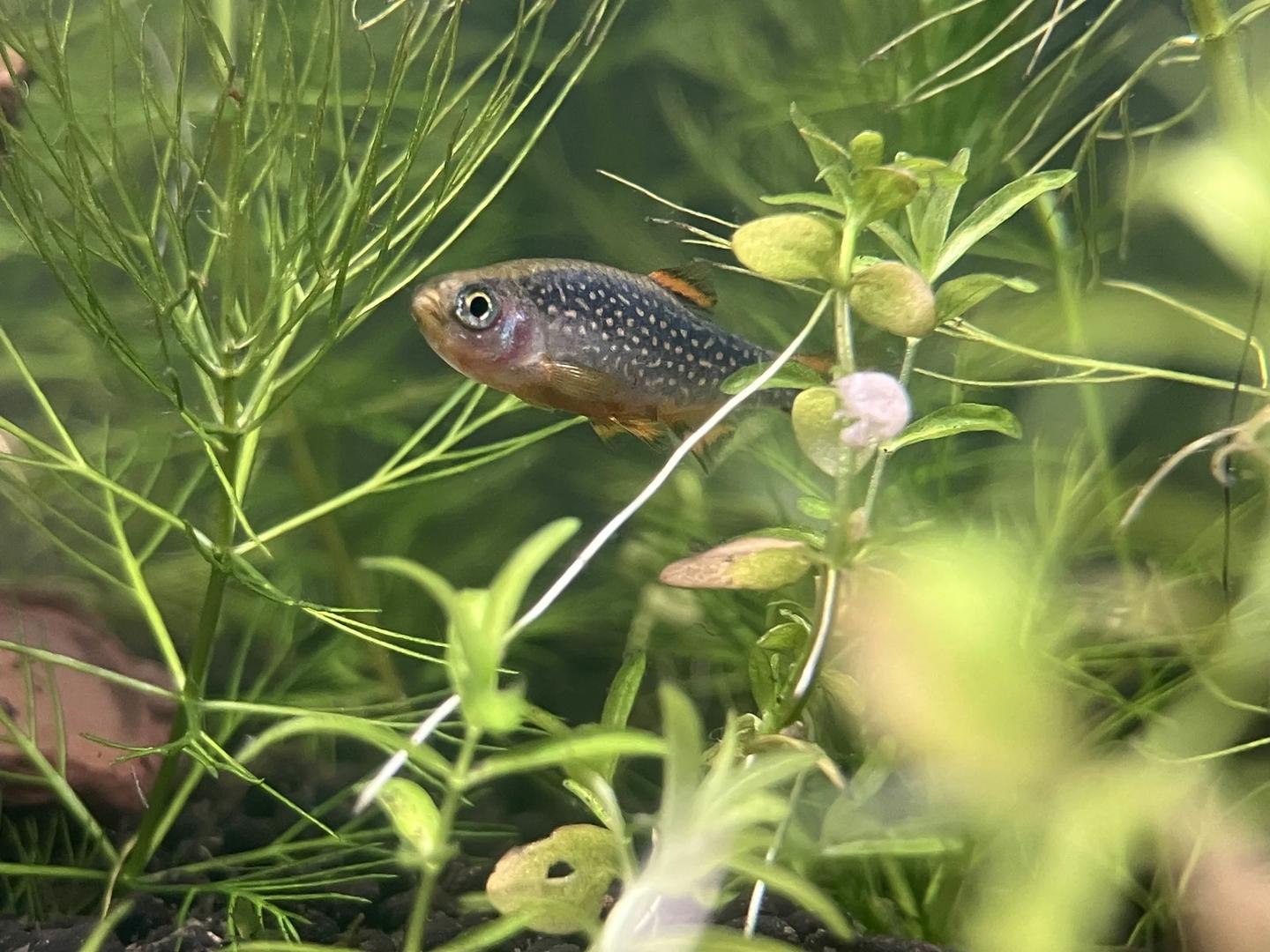
Plan a mature, densely planted aquarium with at least a 45 × 30 cm base for a social group. Use 20–26°C, pH 6.5–7.5 and 5–15 dGH as published screening ranges, then hold a stable value inside the overlap for every animal in the tank.
Maintain these water conditions for optimal health and vibrant colors
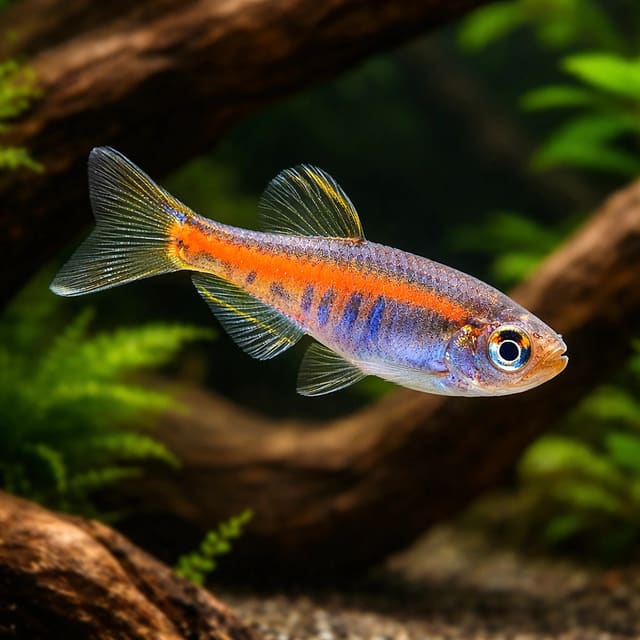
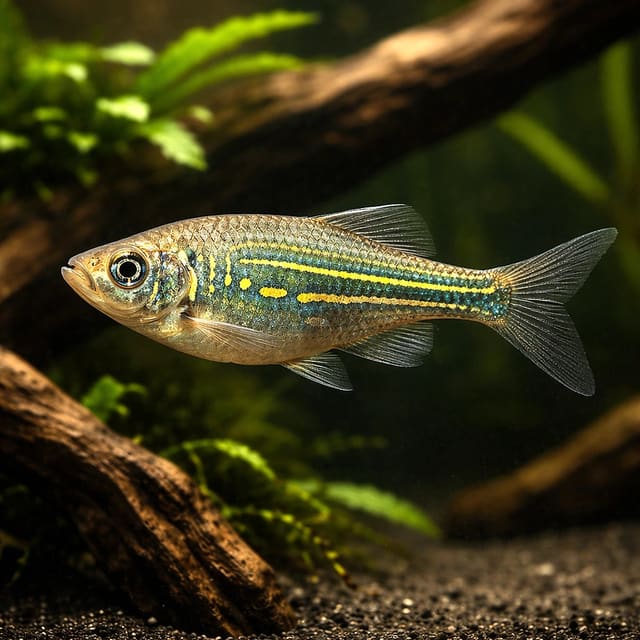
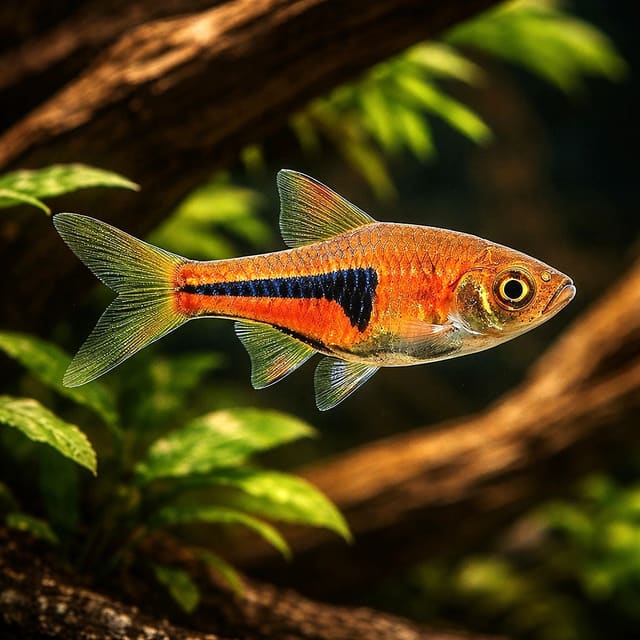
Emerald Dwarf Danio (Danio erythromicron) is a small freshwater, ray-finned fish in the danio family Danionidae. Emerald Dwarf Rasbora is another established common name for the same animal. It is endemic to Inle Lake in Myanmar and reaches a recorded maximum length of 3.0 cm. It suits keepers who can provide a filtered aquarium of at least 45 litres for a group of at least five, with stable water within the stated range. The vertical-barred appearance shown in the gallery helps distinguish the look of this fish, but use the scientific name when comparing care requirements or similarly named animals.
The natural history of Danio erythromicron describes it as endemic to Inle Lake in Myanmar. Endemic means its natural distribution is restricted to that place; it does not describe where an individual aquarium fish was bred or raised. FishBase also classifies the species as Endangered, so identity and responsible long-term care matter when planning a group.
FishBase records a maximum length of 3.0 cm. Treat that figure as the decisive adult-size reference rather than assuming the dispatch label represents full size. A small adult length does not remove the need for swimming room, a social group, filtration and stable water.
| Suits | Not suited to |
|---|---|
| A filtered aquarium of at least 45 litres for a small shoal | An aquarium below the smaller-danio volume benchmark |
| A group of at least five, with more being better | Single-fish or undersized-group plans that may cause stress |
| Stable water at 21–25°C, pH 6.5–7.0 and 10–12°dGH | Water outside the FishBase–OATA operating overlap |
| Community plans screened for activity and shared water needs | Very timid fish that may be stressed by constant danio swimming |
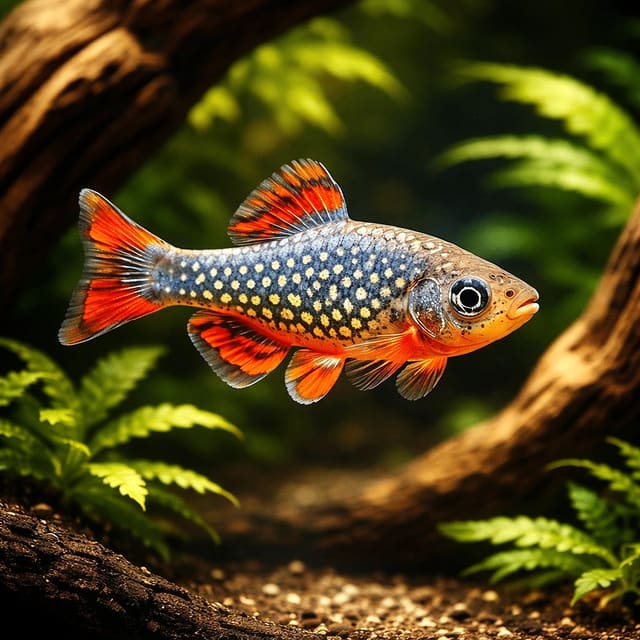
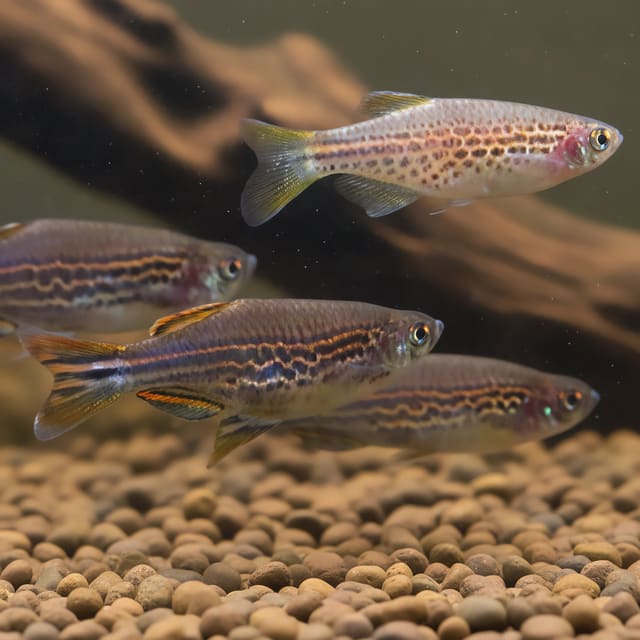
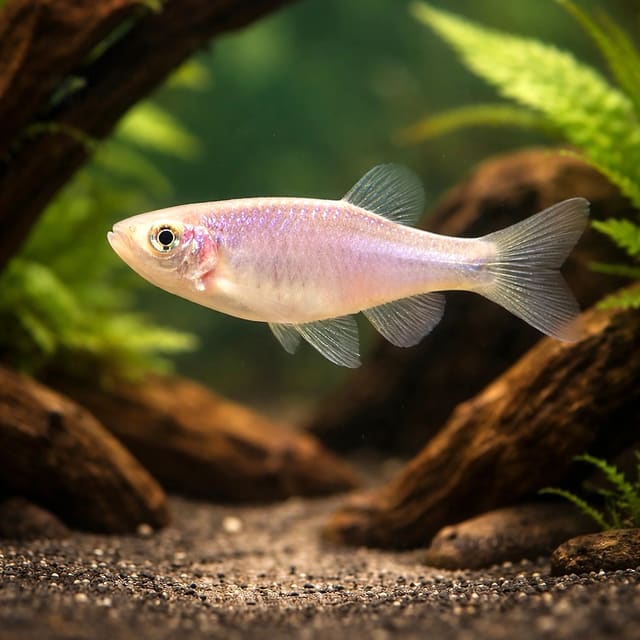
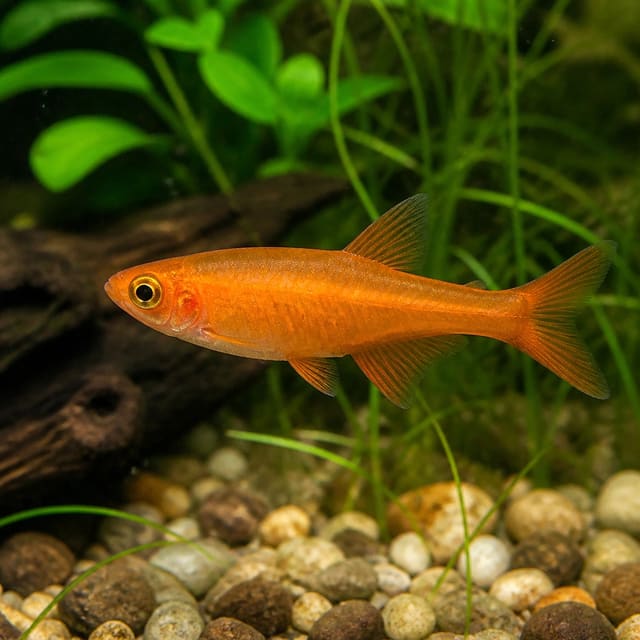
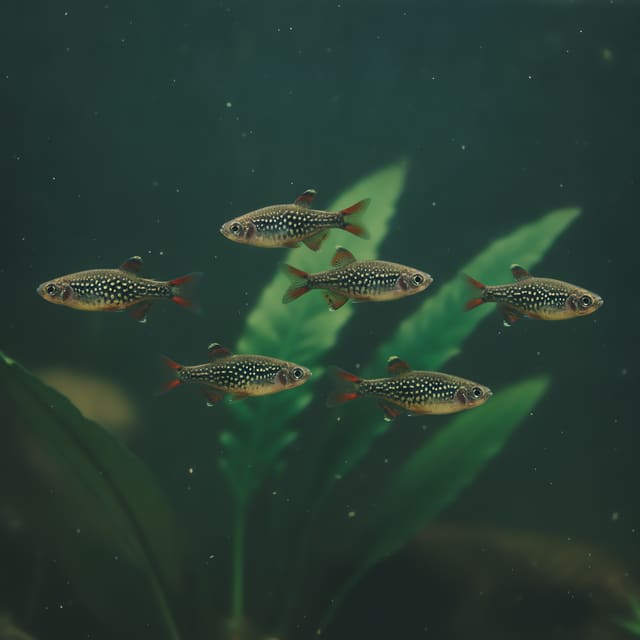
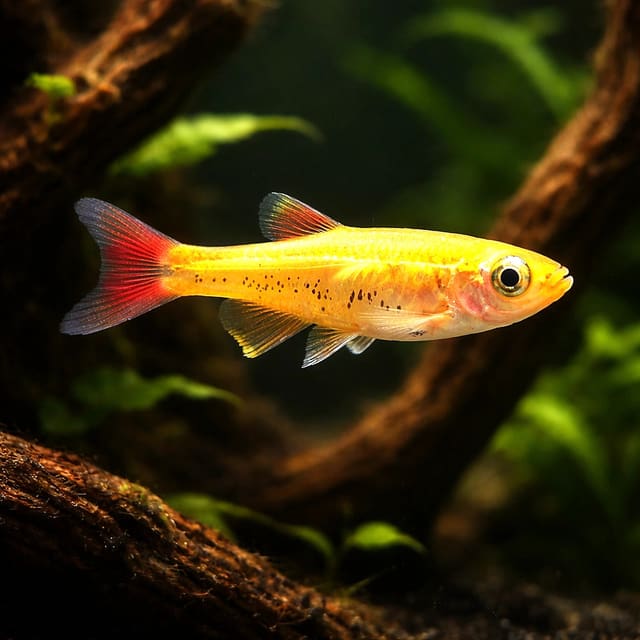
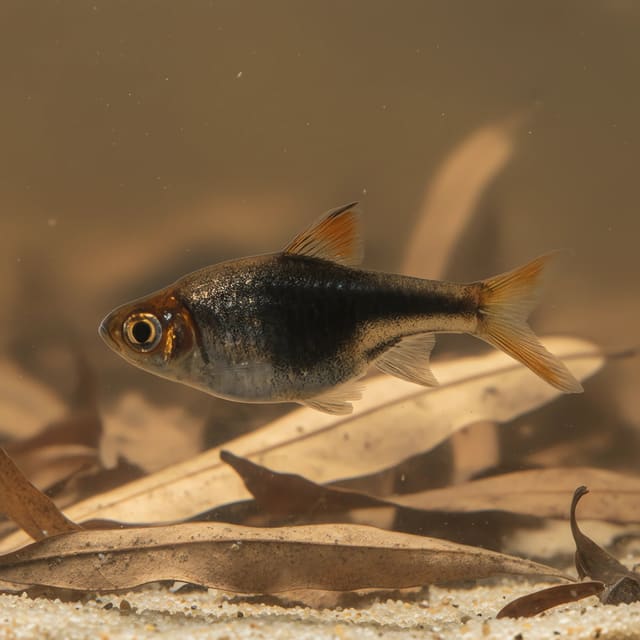
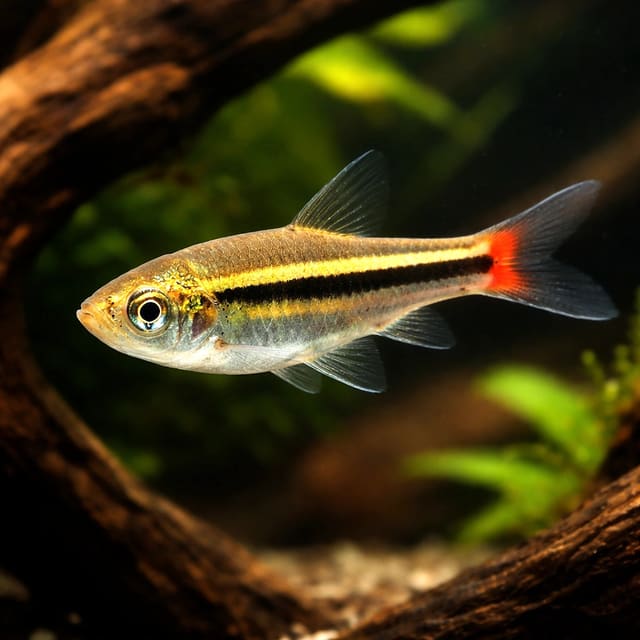
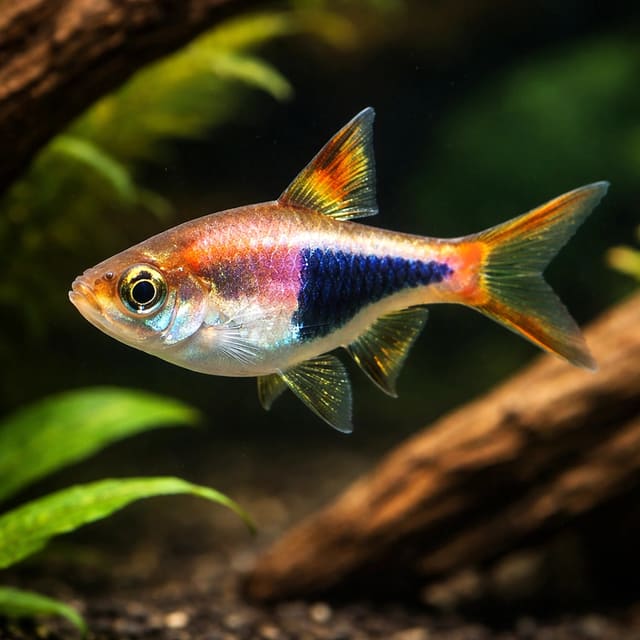
The gallery shows the barred colour pattern and aquarium setting as a visual guide. The gallery images are representative of this type of animal rather than photographs of the exact animal supplied, so colours can look slightly different from the live animal.
One purchase quantity supplies one animal at the selected size. Use the live size selector to choose between the dispatch labels “1 cm” and “2.5”; the selector is the place to check the exact choices before completing an order. The size you select is the size supplied, not the adult size. Plan each fish around the recorded maximum length of 3.0 cm even when choosing the smaller dispatch label.
Sex is guaranteed only when the selected option explicitly states male or female. This Emerald Dwarf Danio listing has no sex-guaranteed option.
OATA’s danio guidance gives 17–27°C, pH 6.5–8.0 and 4–12°dGH for the group, while FishBase records this species in 21–25°C, up to pH 7.0 and 10–25°dGH. Use the overlap of 21–25°C, pH 6.5–7.0 and 10–12°dGH as the routine aquarium range. OATA also recommends at least 45 litres for a small shoal of the smaller species and says danios should be kept in groups of at least five, with more being better.
| Decision | Planning value |
|---|---|
| Purchase unit | One animal at the selected size |
| Dispatch labels | “1 cm” and “2.5” |
| Recorded adult maximum | 3.0 cm |
| Social group | At least five; more is better |
| Smaller-danio aquarium benchmark | At least 45 litres for a small shoal |
| Routine temperature range | 21–25°C |
Before choosing a delivery date, prepare the filtered aquarium and read the current delivery and Live Arrival Guarantee policy. The policy page carries the current delivery and claim details, while the live selector controls the animal and dispatch label chosen here.
Start with a group of at least five Emerald Dwarf Danios. More is better because danios are shoaling fish, while keeping them singly or in groups that are too small may cause stress. Since each purchase quantity represents one animal, build the quantity around the whole social group rather than treating one fish as a complete stocking plan.
Use at least 45 litres as the starting benchmark for a small shoal of smaller danios. Choose a larger aquarium when the intended group, other occupants or total feeding load requires it. OATA notes that larger aquariums generally provide more stable environmental conditions, including temperature and water quality, so a compact adult length should not be used as a reason to reduce the aquarium below the group benchmark.
A worked decision is straightforward: an aquarium below 45 litres does not meet OATA’s starting benchmark for a small shoal of smaller danios. A 45-litre aquarium reaches that initial volume reference, but its filter, established water quality and total population still have to support at least five fish. A larger filtered aquarium creates more room for the group and generally improves environmental stability.
Do not replace the social group with extra ornaments. Plants and shelters are part of the physical setup, while the minimum shoal addresses the danio’s social requirement. Both decisions belong in the plan before the fish arrive.
Run the aquarium at 21–25°C, pH 6.5–7.0 and 10–12°dGH. These routine values are the overlap between FishBase’s recorded environment for the species and OATA’s broader danio guidance. Carbonate hardness can sit within OATA’s 3–10°dKH group range. Select stable values within those ranges rather than repeatedly altering the water in pursuit of one exact number.
| Test | Operating value |
|---|---|
| Temperature | 21–25°C |
| pH | 6.5–7.0 |
| General hardness | 10–12°dGH |
| Carbonate hardness | 3–10°dKH |
| Ammonia | 0 mg per litre |
| Nitrite | 0 mg per litre |
| Nitrate | Not more than 20 mg per litre above the normal tap-water level |
Measure the source water as well as the aquarium. The nitrate limit is relative to the normal tap-water reading, not a universal absolute ceiling. For example, if the usual tap-water result is 10 mg per litre, the stated limit is 30 mg per litre in the aquarium. If the tap-water result changes, recalculate from the new baseline rather than relying on the old total.
Use our water chemistry guide to understand what each test measures, then enter measured values in the water matcher to compare them with the operating range. Record the units with every result so that mg per litre, °dGH and °dKH are not accidentally treated as interchangeable measurements.
A working biological filter is the foundation of the aquarium. The RSPCA’s aquarium guidance explains that fish release toxic ammonia into the water. Beneficial bacteria in a properly established filter convert ammonia into nitrite, which is also toxic, and then into the safer compound nitrate.
Prepare and mature the filter before the fish arrive. Our first tropical aquarium guide sets out the preparation sequence for a new setup. The practical pass points for this animal are measurable: ammonia must be 0 mg per litre, nitrite must be 0 mg per litre, and the other water values must sit inside the planned range.
Stocking adds waste, and the established bacterial population has to respond when fish numbers and feeding increase. OATA warns that adding too many fish too quickly can cause new tank syndrome because the nitrifying bacteria cannot process the increased waste. The resulting ammonia and nitrite may make fish ill or cause death.
The group requirement and the filtration requirement must therefore be planned together. At least five fish form the starting social unit, but that does not justify placing the group into an immature filter. Mature the aquarium for the intended load, introduce livestock in a controlled way, and use repeated zero readings for ammonia and nitrite as the safety check before any further population increase.
Carry out a partial water change of 25% at least once every week. Use a siphon to remove solid waste from the gravel or sand while taking out the old water. Treat replacement tap water with an appropriate conditioner before it enters the aquarium so that chlorine or chloramine does not harm the fish or the filter bacteria.
If the filter needs cleaning, rinse it lightly in aquarium water removed during the partial water change. Do not run the filter media under the tap. Chlorine or chloramine in tap water may kill part of the beneficial bacterial population established in the media, reducing the filter’s ability to process waste.
A simple routine keeps the jobs connected. Test first, record the readings, siphon 25% of the water, rinse blocked filter material only when needed, condition the replacement water and refill. Testing before maintenance preserves a useful picture of how the aquarium performed over the previous week; testing regularly then shows whether the routine is keeping ammonia, nitrite and nitrate under control.
| If you find | Do this |
|---|---|
| Blocked filter flow | Check the filter and lightly rinse affected media in removed aquarium water |
| Ammonia or nitrite above zero | Treat it as a water-quality problem and pause further stocking |
| Rising solid waste | Use the siphon during the weekly 25% water change |
| Food collecting uneaten | Reduce the next portion and remove waste during maintenance |
Danio group guidance describes these fish as omnivorous. Offer a good-quality flake or granule food as the regular aquarium diet, with small live or frozen items such as daphnia, small bloodworm or tubifex for variety. Choose pieces that the fish can take readily rather than allowing larger food to remain untouched.
Feed once a day and give only what the group can eat within a few minutes. This timing is the portion control: observe the group from the start of the meal and stop adding food when the few-minute feeding window ends. A larger shoal may consume more pieces than a five-fish shoal, but the same time limit still applies.
| Decision | Instruction |
|---|---|
| Regular food | Good-quality flake or granules |
| Variety | Small live or frozen daphnia, small bloodworm or tubifex |
| Frequency | Once each day |
| Portion | Only what is eaten within a few minutes |
Overfeeding leaves uneaten food to break down and release toxic waste into the water. If food remains after the group has stopped eating, remove what you can and make the next portion smaller. Continue checking ammonia, nitrite and nitrate through the established maintenance routine because feeding and filtration are directly connected.
Use the fish’s response to refine the portion without increasing the schedule. If every suitable piece is eaten within the feeding window and no food settles uneaten, the portion is manageable. If food repeatedly reaches the substrate untouched, reduce the amount or choose a more suitable piece size. If interest in food drops compared with the group’s normal response, treat that change as a health or water-quality signal rather than compensating with extra meals.
Complete the aquarium checks before introducing the group. Temperature, pH and hardness should sit within the planned range, while ammonia and nitrite must each read 0 mg per litre. The filter should already be established for livestock rather than beginning its biological development after the fish enter.
Increase the aquarium population slowly. Every added fish and every increase in feeding raises the amount of waste that the filter bacteria must process. New tank syndrome occurs when there are too few nitrifying bacteria for that increased load, allowing ammonia and nitrite to rise to harmful levels.
The social requirement still applies during stocking: plan for at least five Emerald Dwarf Danios, with more being better. Reconcile that need with filtration by preparing the aquarium for the intended shoal in advance and by not combining its introduction with an uncontrolled increase in other livestock and food.
During the first observations, look for clear, bright eyes, intact scales and undamaged fins. Watch how the group swims, breathes, feeds and uses shelter. These checks create a baseline for the individual aquarium, making later changes easier to recognise. Continue the same comparison after the fish settle rather than judging health from colour alone.
A dispatch label describes the animal chosen, not a change to these introduction requirements. Fish selected under either size label need zero ammonia, zero nitrite, a mature filter, a suitable group plan and water inside the danio range.
Learn the group’s normal swimming, colour, breathing, temperament, body condition and feeding response. Individual fish vary slightly, so a change from the established pattern is often more useful than one isolated moment. Pair behavioural observation with water tests because poor water quality can place fish under stress.
| Change | Immediate response |
|---|---|
| Hanging at the surface, sitting on the bottom or erratic swimming | Test ammonia, nitrite and the routine water values |
| Unusually darker or paler colour | Compare with the normal group and check water quality |
| More aggression or hiding than normal | Review the group, shelter and community activity, then test the water |
| Faster or slower gill-cover movement | Test the aquarium promptly and continue close observation |
| White spots, fluffy growths, or loss of fins or scales | Record the appearance and seek health guidance |
| Weight gain, weight loss or reduced feeding | Check the feeding response and water results together |
Begin with ammonia and nitrite because both must remain at 0 mg per litre. Check nitrate against the tap-water baseline, then confirm temperature, pH and hardness remain in range. Correct maintenance problems without adding extra food or more fish to an unstable aquarium.
Do not choose a treatment from appearance alone. Similar signs can accompany different problems, while a water-quality fault still needs attention regardless of any later diagnosis. If you are concerned about a health change, test the water and contact us for further guidance.
Keep the weekly 25% partial water change and test schedule running after the immediate check. A normal result on one occasion does not replace continued observation; it gives you one point to compare with the fish’s next feeding, swimming and breathing response.
Danios are generally compatible with many community species, but that broad description is not a universal tank-mate guarantee. Their active, constant swimming may stress more timid fish. The safest community plan therefore screens each proposed companion for overlapping water requirements, adequate shared space and a temperament that is unlikely to be disturbed by persistent activity.
A proposed fish can pass the water check and still fail the activity check. Equally, a calm community animal may be a poor choice when its temperature, pH or hardness needs do not overlap. Use all the checks together rather than choosing companions from adult length or a “community fish” label alone.
Compatibility still depends on the individual animals, the aquarium layout and the complete stocking load. Where a proposed combination remains unclear after comparing water, space and temperament, ask us for a stocking and compatibility assessment.
Keep the main social decision simple: this fish needs others of its own kind. Start by reserving capacity for at least five, then assess possible community fish around that established requirement. More Emerald Dwarf Danios may be preferable to filling the remaining capacity with several unrelated species, provided the aquarium and filter can support the larger shoal.
Use measured aquarium conditions to turn the compatibility screen into a practical decision. A tank running at 24°C, pH 6.8 and 10°dGH sits within the danio operating range. A proposed companion that also suits those measured values passes the first check, but it must still be assessed for space and whether active danio swimming is likely to stress it.
A fish whose required water lies outside the operating range fails the water check even if it has a similar adult length. Do not split the difference between two incompatible sets of needs. Choose a stable aquarium range that properly suits every intended occupant.
| Proposed situation | Decision |
|---|---|
| Shared water range, sufficient space and no timid behaviour concern | Continue to the filtration and total-stock assessment |
| Shared water range but a very timid fish | Use caution because constant danio activity may cause stress |
| No overlap in temperature, pH or hardness | Rule out the combination for that aquarium |
| Fewer than five Emerald Dwarf Danios | Correct the shoal plan before adding another species |
Total population matters because beneficial filter bacteria need to increase when fish numbers and feeding rise. Add livestock slowly, test ammonia and nitrite, and require both to remain at 0 mg per litre before increasing the load again. A nominal aquarium volume does not override unsafe waste readings.
Review the plan whenever behaviour changes. If a previously normal group begins hiding more, changes its swimming pattern or feeds less readily, test the water first and reassess the level of community activity. The purpose of the screen is not to produce a permanent universal list; it is to keep water, social grouping, activity and filtration suitable in the aquarium that actually houses the fish.
FishBase records a maximum length of 3.0 cm for the Emerald Dwarf Danio. Plan the aquarium around that adult figure rather than its dispatch size.
Use a filtered aquarium with gravel or sand, plants and shelter. OATA recommends at least 45 litres for a small shoal of smaller danios, with a larger aquarium generally providing more stable conditions.
Keep at least five Emerald Dwarf Danios together, and choose more when the aquarium and filter can support them. OATA says danios are shoaling fish and may become stressed when kept singly or in groups that are too small.
OATA describes danios as popular starter fish. This fish suits a beginner who can provide at least five fish, a filtered aquarium of at least 45 litres, stable water and the stated weekly maintenance routine.
Feed the Emerald Dwarf Danio good-quality flake or granules, with small live or frozen daphnia, small bloodworm or tubifex for variety. Give only what the group eats within a few minutes, once each day.
Use the FishBase and OATA overlap of 21–25°C, pH 6.5–7.0 and 10–12°dGH; OATA’s carbonate-hardness range is 3–10°dKH. Keep ammonia and nitrite at 0 mg per litre, with nitrate no more than 20 mg per litre above the normal tap-water level.
Treat the Emerald Dwarf Danio as an active shoaling fish. OATA says danios are generally compatible with many community species, but their constant swimming may stress very timid fish; watch each individual for changes in aggression.
Consider community fish that share 21–25°C, pH 6.5–7.0 and 10–12°dGH, fit the available space and are not likely to be stressed by constant danio activity. Preserve a group of at least five of its own kind and assess the filter for the complete stocking load.
Start filming the sealed parcel before opening it, then continue without stopping as the parcel is opened and the Emerald Dwarf Danio remains inside the sealed bag. Someone must be present to receive the parcel; float the bag for 20–30 minutes before releasing the fish, and never pour the bag water into the aquarium.
Independently collected by Judge.me from customers who bought this item. All reviews are shown.
these fish have grown quickly and seam very happy
Reply from Tropical Fish Co
<p>Thanks George. Emerald Dwarf Danios are a cracking little fish and they get noticeably bolder in a decent group - more of that green comes out as the numbers go up. Good to hear they've grown on well for you. - Tropical Fish Co</p>