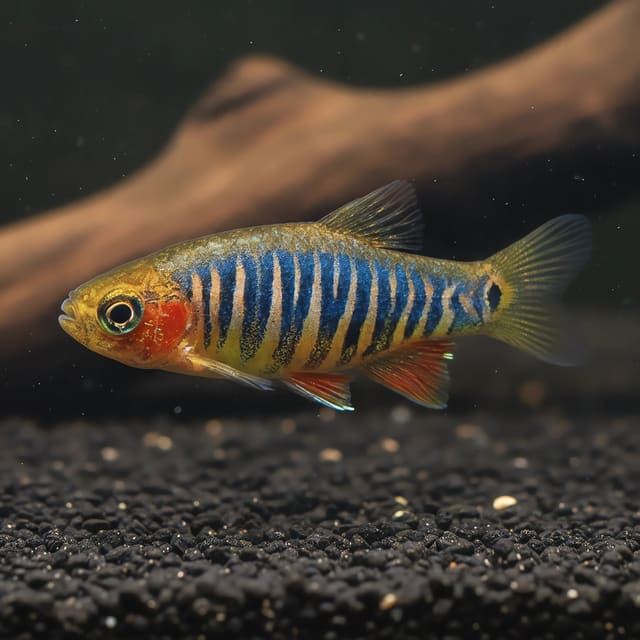
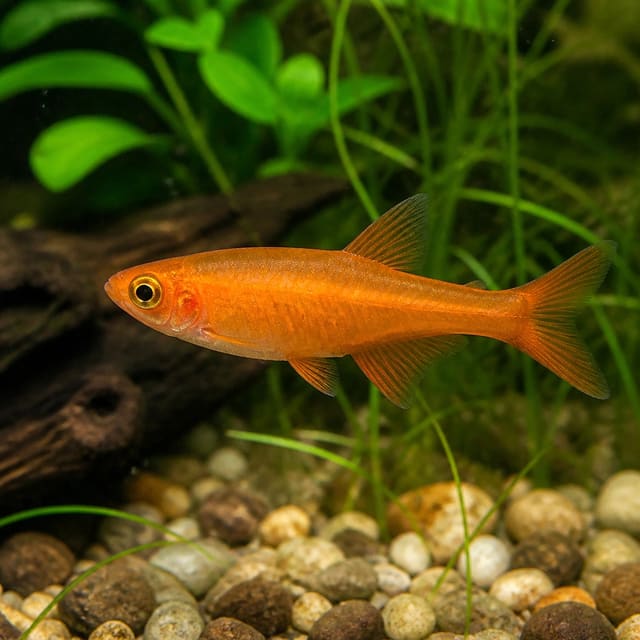
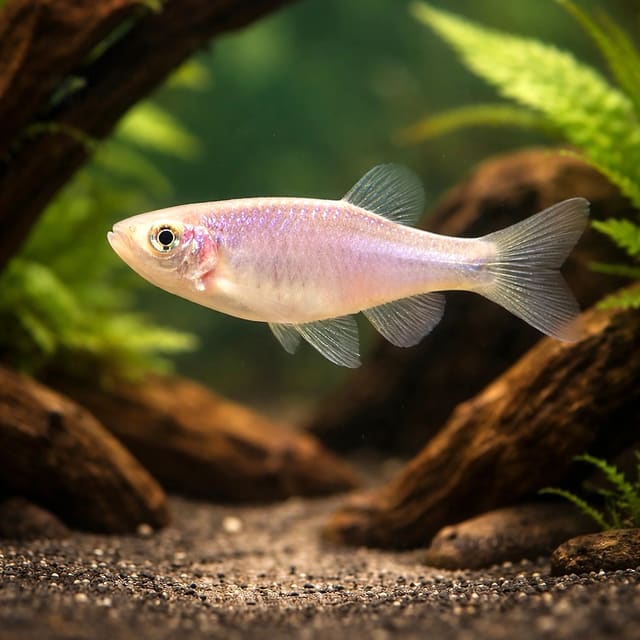
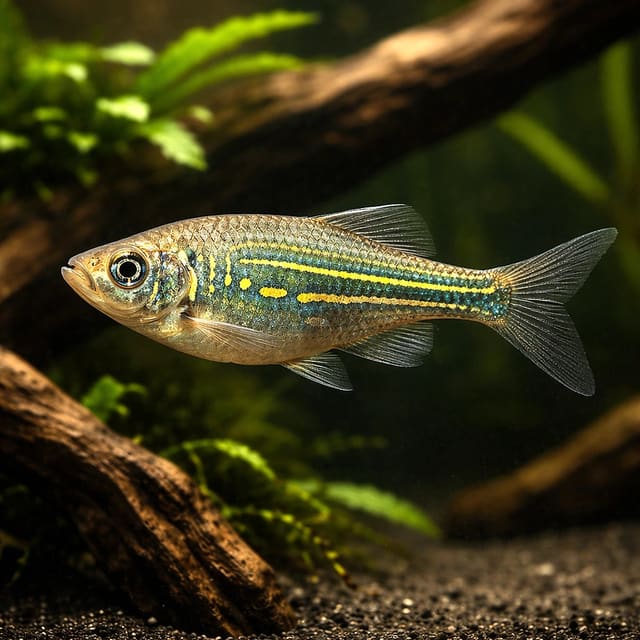
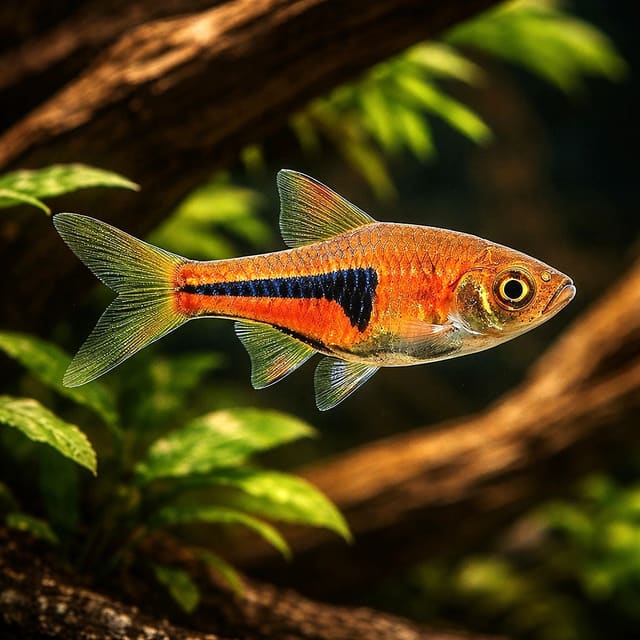
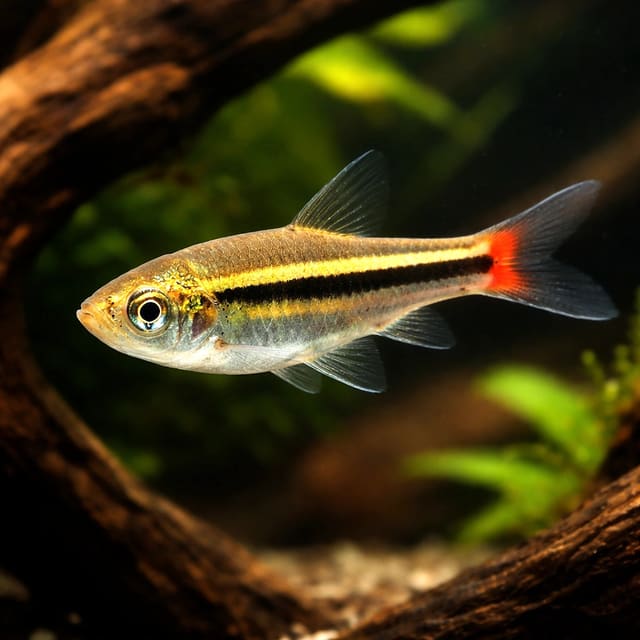
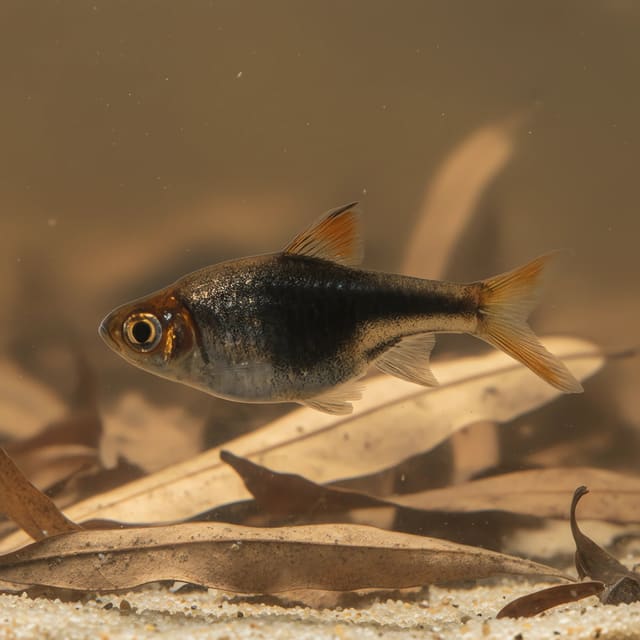
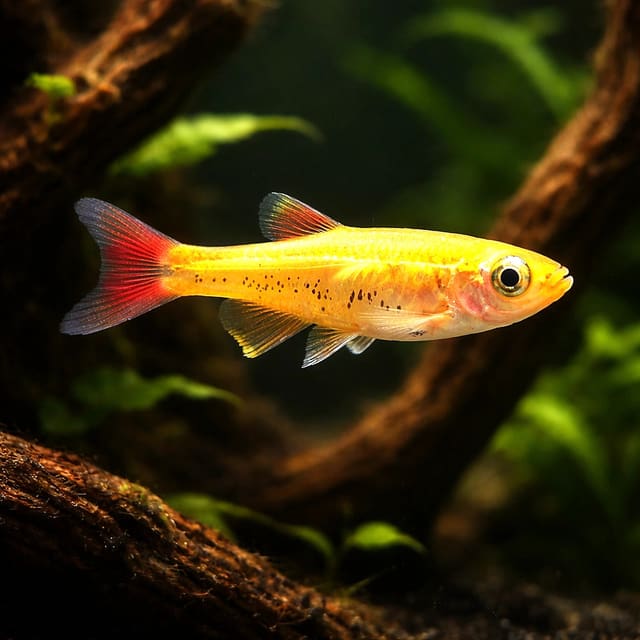
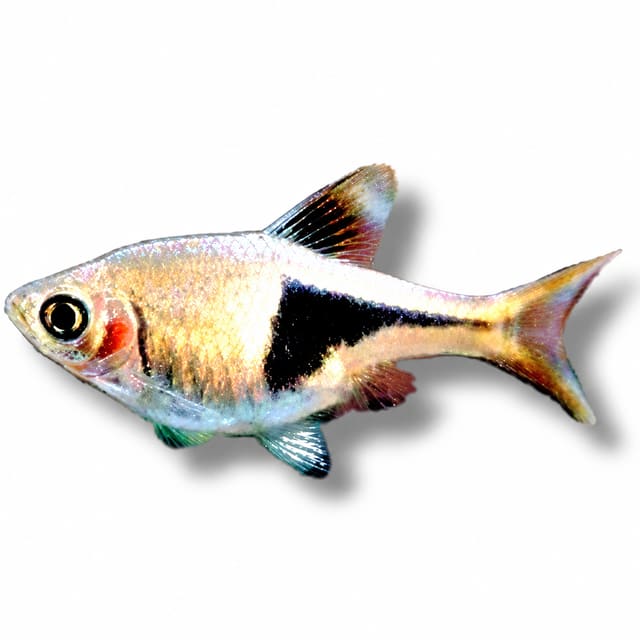
10 × Emerald Dwarf Danios (Danio erythromicron)
21–25°C · pH 6.5–7
£40.99

The Celestial Pearl Danio (Danio margaritatus) is a small danionid fish from Myanmar that reaches 2.1 cm standard length. This intermediate-care social fish suits mature, densely planted aquariums of at least 45 × 30 cm and groups of at least 10; the Seriously Fish profile and Tropical Fish Co care guide overlap at 20–26°C, pH 6.5–7.5 and 5–15 dGH. Sold as a pack of 10 live fish.
Danio margaritatus
The Celestial Pearl Danio (Danio margaritatus) is a small danionid fish from Myanmar that reaches 2.1 cm standard length. This intermediate-care social fish suits mature, densely planted aquariums of at least 45 × 30 cm and groups of at least 10; the Seriously Fish profile and Tropical Fish Co care guide overlap at 20–26°C, pH 6.5–7.5 and 5–15 dGH. Sold as a pack of 10 live fish.
Maintain these water conditions for optimal health and vibrant colors
The Celestial Pearl Danio (Danio margaritatus), also known as the Galaxy Rasbora or CPD, is a small freshwater fish in the danionid family from Myanmar. It reaches 2.1 cm maximum standard length, measured to the base of the tail. This social fish suits a keeper who can provide a mature, densely planted aquarium, suitably small food and daily checks on every member of the group.
FishBase records the species from shallow, clear ponds maintained by springs or seepage, with luxuriant submerged vegetation. That natural setting supports a planted layout with cover, broken sightlines and calm feeding areas, but aquarium stability must come from mature filtration and regular maintenance rather than from the fish's tiny body size.
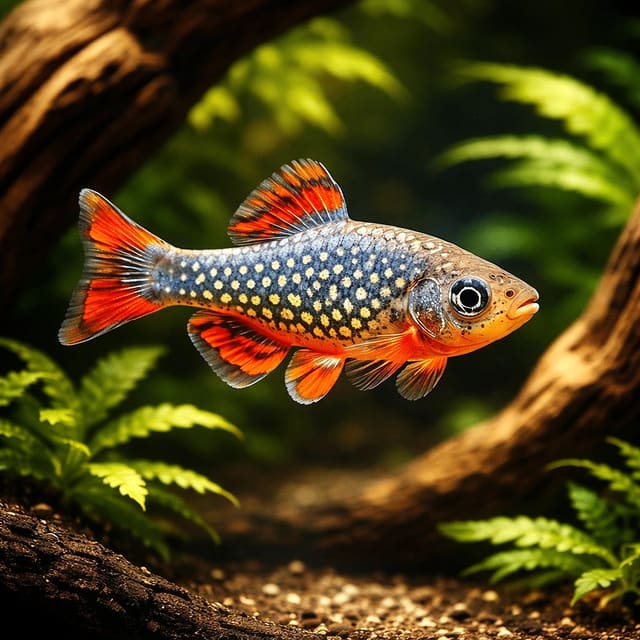
Blue to blue-green bodies, pearly white to golden spots and red- or orange-marked fins give the fish its familiar celestial appearance. Colour can vary with sex, condition, breeding state and lighting, so use appetite, breathing, swimming and fin condition alongside colour when assessing welfare. A newly settled fish may remain among plants while it becomes accustomed to the aquarium; persistent hiding combined with rapid breathing, damaged fins or refusal of food needs investigation.
The species is social but not simply placid. Rival males spar regularly during daylight hours, and nipped fins are not uncommon within the group. Dense planting and broken sightlines help divide the aquarium into small visual territories, while an open feeding area lets the keeper check that timid fish receive food. These competing needs make the care level intermediate: the water ranges are manageable, but group dynamics, feeding access and stability need active observation.
Galaxy Rasbora is an established aquarium-trade name for the same fish, although Danio margaritatus places it among the danios rather than the true rasboras. Use the complete scientific name when comparing care or compatibility so it is not confused with another fish carrying a similar trade name.
One purchase supplies one pack of 10 live Celestial Pearl Danios. Ten is Tropical Fish Co's cautious purchase floor for this social species, not a biological optimum or permission to crowd them into a small aquarium. The specialist profile recommends larger groups, ideally 20 or more, when the aquarium has enough footprint, retreat space, filtration and feeding access for the complete adult community.
Sex is guaranteed only when the selected option explicitly states male or female. This 10 × Celestial Pearl Danios listing has no sex-guaranteed option. Colour, body shape and fin markings can offer comparison clues in settled adults, but they do not make this pack a sexed offer.
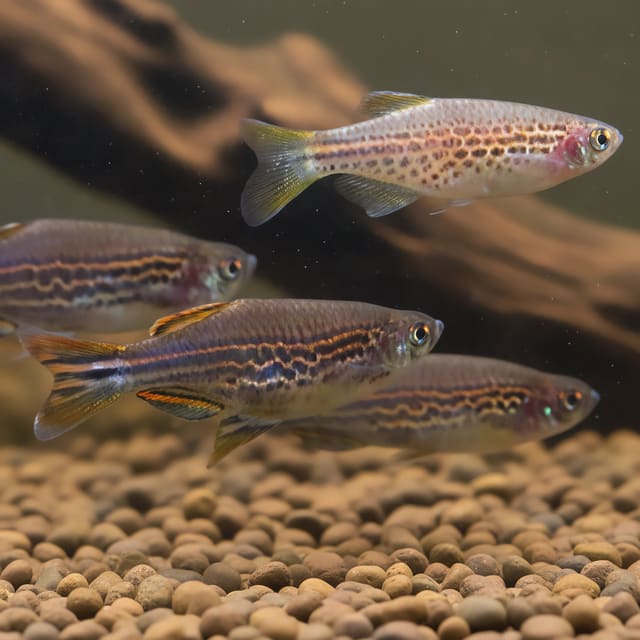
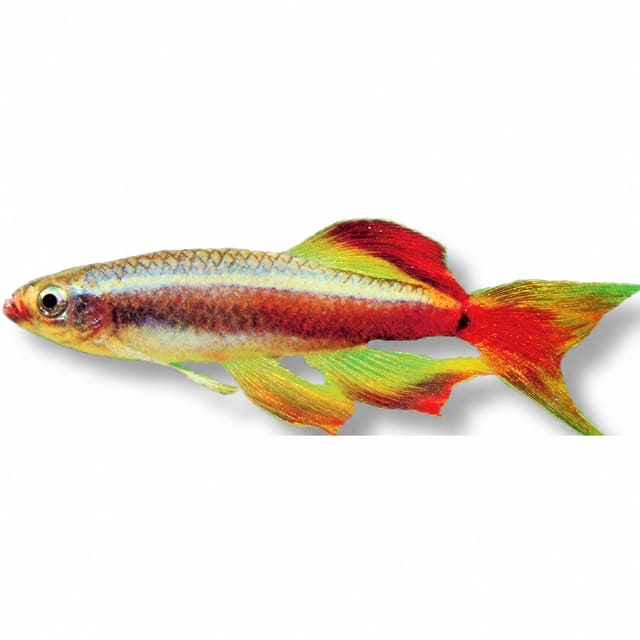
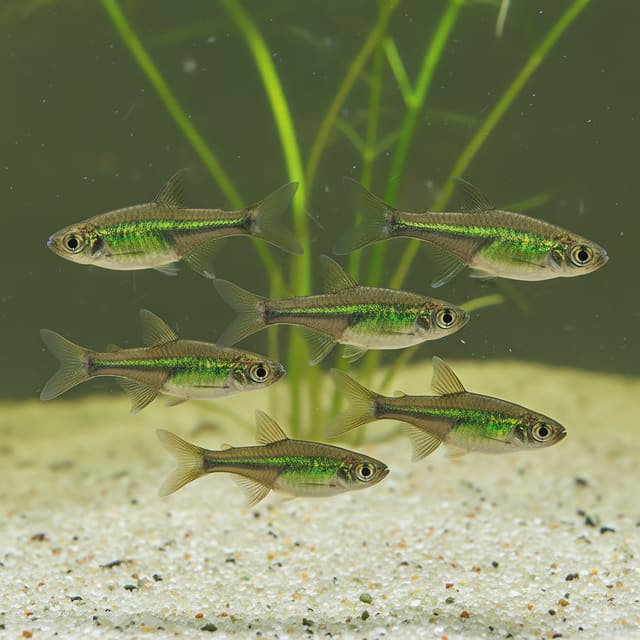
The gallery images are representative of this type of animal rather than photographs of the exact animal supplied, so colours can look slightly different from the live animal. The number of fish visible in a gallery scene does not change the pack quantity: this offer supplies 10 fish.
The Seriously Fish profile and Tropical Fish Co care guide overlap at 20–26°C, pH 6.5–7.5 and 5–15 dGH.
| Suits | Not suited to |
|---|---|
| A mature aquarium with at least a 45 × 30 cm base | A cramped pair, trio or immature unfiltered aquarium |
| Dense planting, broken sightlines and open feeding access | A bare layout with nowhere for pressured fish to withdraw |
| Stable water at 20–26°C, pH 6.5–7.5 and 5–15 dGH | Rapidly changing water or chemistry outside the shared range |
| A keeper who observes every fish eating | Boisterous feeders that consistently take the ration first |
| A social group with room for male rivalry | Fish able to swallow, chase or repeatedly outcompete CPDs |
Start with the 45 × 30 cm footprint, approximately 41 litres in the cited profile, and increase the aquarium's capacity when adding more CPDs or any tank mates. Our complete Celestial Pearl Danio care guide expands the tank, group and water decisions without replacing the need to assess the whole adult stocking plan.
Use an aquarium with a base measuring at least 45 × 30 cm for this group. The Seriously Fish species profile equates that footprint to approximately 41 litres and would not keep a group in anything smaller, because dominant males can be combative despite the fish's small size. Treat 41 litres as a useful starting volume attached to that footprint, not as permission to ignore shape, decor or other residents.
A worked planning example begins with the minimum 45 × 30 cm base and one pack of 10. If tank mates are added, do not treat the original footprint as an unlimited allowance. Reassess adult body size, swimming zone, feeding speed, territorial use and biological load. Increasing litres by choosing a longer aquarium is generally more useful for this decision than adding height alone.
Small aquariums can change quickly when food, waste or temperature fluctuates. The answer is not to reduce the social group until it fits a desktop container. Keep the group intact and choose an aquarium that supports stable filtration, planting, feeding access and routine maintenance.
Before introducing fish, confirm that the base dimensions remain suitable after decor is installed and ammonia and nitrite are zero. Every planned resident must also fit the shared water range for this fish. A mature filter and stable readings matter from the first day; clear-looking water alone is not a cycling test.
Plant densely enough to break long sightlines while leaving open pockets where food can be seen and eaten. Fine-leaved plants, taller background growth and broad planted areas give nervous fish cover and interrupt repeated pursuit. The layout should create several routes through the aquarium rather than one exposed central lane or a single retreat that a dominant fish can control.
| Layout job | Practical decision |
|---|---|
| Reduce skittishness | Use plants to create shaded, sheltered routes across the aquarium. |
| Spread rivalry | Break direct views from one end of the aquarium to the other. |
| Protect feeding access | Leave clear pockets where small food can descend within view. |
| Support maintenance | Keep enough access to siphon waste and inspect the filter. |
Floating plants can add overhead cover, but keep sufficient surface movement for gas exchange and leave room to feed and maintain the aquarium. Choose a dark substrate where you can: it is the preferred base for this timid species and makes the pale spots easier to see, although it is not a health treatment. Choose aquarium-safe materials that can be cleaned, and leave out driftwood and oak, beech or almond leaf litter, because the tannins they release are not a feature of this fish's natural waters.
Use gentle, distributed filtration rather than forcing these small fish to remain in a concentrated jet. Gentle does not mean stagnant: water still needs to reach the biological filter and circulate oxygen throughout the aquarium. Adjust the outlet or use a sponge-style unit so the group can choose calmer areas without debris accumulating in dead spots.
Judge a layout by behaviour after the fish have settled. Occasional withdrawal into plants is expected for a timid species. Repeated cornering, one fish being driven from every feeding area, torn fins or sustained refusal to emerge shows that the arrangement is not distributing social pressure effectively. Add or reposition sight breaks only when doing so preserves swimming room, circulation and maintenance access; otherwise use the prepared separation aquarium.
Keep Celestial Pearl Danios at 20–26°C, pH 6.5–7.5 and 5–15 dGH. This is the overlap between the Seriously Fish species profile and Tropical Fish Co's care guide. Choose a stable point within all three ranges that suits every animal in the aquarium; the edges are screening limits, not targets to move between.
One reading held steady inside all three ranges is more useful than letting temperature swing between 20°C and 26°C simply because both endpoints fall inside the range. Apply the same overlap test to every proposed tank mate before combining animals.
Measure temperature with an independent aquarium thermometer, including during the coldest overnight period and warm weather. A thermostatic heater may be needed to prevent drops, while a warm room may mean it runs rarely. Continue monitoring because room heating is not an aquarium thermostat and a heater cannot prevent summer overheating.
Do not chase pH with rapid chemical additions. First understand the source water, aquarium pH and hardness, then choose animals whose ranges genuinely overlap. Our water chemistry guide explains which readings to measure and why, while the water matcher helps compare measured aquarium values with these ranges.
Test again after maintenance, equipment changes or unexplained behavioural changes. Temperature, pH and hardness describe only part of water suitability; ammonia and nitrite must remain at zero, and the nitrate trend must be controlled through stocking, feeding, filtration and water changes.
Use a fully established biological filter and keep ammonia and nitrite at zero. The RSPCA explains that biological filtration supports bacteria that convert toxic ammonia into nitrite and then into the safer nitrate. Clear water is not enough: test results show whether the filter is processing waste.
Prepare and mature the aquarium before the pack arrives. If this is your first setup, follow our guide to preparing and maturing a first aquarium, then confirm stable readings before livestock is introduced. Adding ten fish at once increases feeding and waste together, so the filter must be ready for the pack rather than merely running for a few days.
For general danio maintenance, OATA's group guidance advises testing at least weekly, changing 25% of the water at least once a week, keeping ammonia and nitrite at zero, and preventing nitrate from rising more than 20 mg per litre above the normal tap-water level.
Clean only lightly so the established bacteria are not lost. Chlorine or chloramine can damage the bacterial population, while excessive cleaning can reduce biological capacity just when ten fish depend on it. After maintenance, check that normal flow has resumed and watch the group for unusual breathing or swimming.
Test outside the weekly schedule whenever feeding increases, a filter slows, fish are added or behaviour changes. If ammonia or nitrite appears, stop treating the result as routine variation: reduce avoidable waste, check filter operation and monitor closely while protecting the fish from further deterioration.
Offer suitably small prepared food together with small live or frozen foods such as Daphnia or Artemia. The species diet profile describes small invertebrates, algae and other zooplankton as likely natural foods and advises against an exclusively dry aquarium diet. Build the menu around appropriately sized foods.
As general danio guidance, feed once a day and offer only what the group can eat within a few minutes. Watch the fish rather than the clock alone: food entering the aquarium is not proof that every CPD has eaten. A useful check is to identify the shyest fish before feeding, follow it through the meal and confirm that it takes several suitable particles without being displaced.
If food remains after the group has stopped feeding, remove it and reduce the next ration. Uneaten material breaks down into waste, adding pressure to a small aquarium and its filter. If every particle disappears instantly but one fish remains thin or excluded, increasing the total ration may only reward the dominant feeders; distribute food more widely or reconsider the tank-mate mix.
Give newly imported fish small live foods such as Daphnia or Artemia as their first diet, and introduce dry and frozen foods once they have settled. Introduce other suitable foods gradually rather than allowing one item to become the entire diet. Biofilm and tiny organisms in a mature planted aquarium can add grazing opportunities, but they do not replace a planned, varied ration.
Check body condition over time. Reduced appetite, weight loss, spitting food, abnormal faeces or one fish consistently missing meals should trigger water tests and closer observation of social pressure and health.
Keep at least 10 Celestial Pearl Danios together as Tropical Fish Co's cautious purchase floor. The pack meets that floor, while the specialist profile recommends larger groups, ideally 20 or more, where the aquarium can support them. More fish can spread male rivalry and encourage bolder behaviour, but they also increase waste, food competition and demand for retreat space.
FishBase records a maximum standard length of 2.1 cm. Standard length stops at the base of the tail and is not the full tip-to-tip length. Use 2.1 cm consistently for adult-size planning, while remembering that ten small bodies still form a social group with spatial, feeding and filtration needs.
Do not treat one size difference as proof of age, sex or origin. The offer makes no sex guarantee, and visual differences can be affected by condition and breeding state. Manage the fish in front of you by tracking appetite, body condition, fin damage and social access rather than assigning a role from one colour or size difference.
| What you see | What to do |
|---|---|
| Brief display or sparring without injury | Continue observing individuals and preserve several sight breaks. |
| Repeated pursuit of one fish | Check space and layout, then use the separation plan if pressure continues. |
| Nipped fins within the group | Identify the fish involved and prevent the injured animal being repeatedly targeted. |
| One fish excluded from food | Spread food across separate pockets and reassess feeding competition. |
| Several fish hiding or breathing rapidly | Test temperature, ammonia, nitrite, nitrate trend and pH stability promptly. |
Increasing the group is not an automatic treatment for aggression. First confirm that the aquarium exceeds the base requirement, filtration can handle the added load and planting provides genuinely separate lines of sight. Likewise, reducing the group below ten to create more room can undermine the social plan. When the aquarium cannot support the group safely, move the whole group to a more suitable setup rather than forcing a compromise between space and social needs.
Arrange for someone to receive the parcel because live fish must not be left unattended. Tropical Fish Co hand-packs live fish in pure oxygen inside an insulated poly box, adding a heat pack when weather conditions call for it, and uses a licensed live-animal courier. Read the current delivery and Live Arrival Guarantee policy before the journey.
Once released, observe the group without treating one sign in isolation. Check breathing, balance, swimming, colour, fin position, skin, appetite and whether any fish is being excluded. Compare the whole group: one fish breathing faster, remaining on the bottom or failing to join feeding is more informative than a vague impression that the pack looks quiet.
If behaviour or appearance changes, test temperature, ammonia, nitrite, the nitrate trend and pH stability. Review recent maintenance, additions, feeding and social conflict. The MSD Veterinary Manual places water quality, history, quarantine and diagnosis at the centre of aquarium-fish investigation.
Do not automatically raise the temperature or add a random medicine. Similar signs can result from water deterioration, transport stress, injury, social pressure, parasites or infection, and treatment depends on the diagnosis, active ingredient, labelled dose, water volume and other animals present.
Seek fish-experienced veterinary help when signs persist, worsen or spread, especially with severe breathing difficulty, ulcers, loss of balance or repeated deaths. OATA's fish-vet finder provides a UK route to appropriate professional help. Keep a record of test results, dates, symptoms and affected fish so a clinician has a useful history.
Choose tank mates by adult size, water overlap, feeding speed, swimming behaviour and use of space. Celestial Pearl Danios are likely to be intimidated or outcompeted by larger or more boisterous fish, so avoid animals able to swallow them, repeatedly chase them or consistently take their food first. A species-focused CPD aquarium is a complete and appropriate choice.
The specialist profile names similarly sized, surface-dwelling fish as potentially helpful for reducing shyness and lists small Myanmar cyprinids such as Celestichthys choprae and members of Microdevario as suitable companions. Treat those examples as candidates that still need individual water, stocking and behaviour checks, not as an automatic shopping list.
Avoid the closely related C. erythromicron because the specialist profile warns that it is probably capable of hybridising with Danio margaritatus. Screen other danios individually; the hybridisation warning applies to this closely related species.
Compatibility remains conditional because individual behaviour and aquarium layout vary. Prepare a suitable, cycled separation space before trying a mixed community. Before trying a mixed community, note the aquarium dimensions, measured temperature, pH and hardness, current residents and their adult sizes, and check every candidate against them.
Do not treat Celestial Pearl Danios as guaranteed shrimp-safe. An adult cherry shrimp may be too large for a CPD to swallow, but shrimplets, eggs and newly moulted shrimp can be vulnerable. Dense plants and moss can reduce encounters; they do not create a fish-proof nursery.
| Your priority | Safer plan |
|---|---|
| Raising shrimp young | Keep the breeding nursery fish-free. |
| A mixed planted display | Accept predation risk, provide dense refuge and monitor both animals. |
| Preserving every shrimp | Use a separate aquarium rather than relying on plant cover. |
| Testing a new combination | Prepare a cycled separation space before mixing them. |
Within the CPD group, rival males spar regularly and nipped fins are not uncommon. The profile says this behaviour does not normally extend to tank mates. Distinguish brief display from sustained harassment by watching whether one fish is repeatedly pursued, prevented from feeding or held in a corner.
When nipping occurs, first identify who is chasing whom and where the conflict happens. Check that plants break sightlines, open feeding pockets are not controlled by one fish and the aquarium has enough usable footprint. If rearranging the layout would reduce swimming room or circulation, do not keep adding decor; separate the aggressor or injured fish instead.
Fin damage also needs clean, stable water and close observation. Test ammonia and nitrite immediately, maintain the weekly water-change routine and watch for worsening tissue, altered breathing or loss of appetite. Do not assume all damaged fins result from CPD rivalry when another resident, hard decor or health problem could be involved.
Combine only animals whose adult size, water needs, behaviour and feeding pace all fit, then keep a separation plan ready. Even a combination named in a profile can fail when the aquarium is too small, feeding is uneven or one individual behaves atypically.
They reach 2.1 cm maximum standard length, measured to the base of the tail rather than to its tip. Plan for the complete social group despite the small adult body size.
This fish needs a base measuring at least 45 × 30 cm, approximately 41 litres. Increase capacity for a larger group or tank mates and preserve usable horizontal space after decor is installed.
Keep at least 10 as Tropical Fish Co's cautious purchase floor. The specialist profile recommends larger groups, ideally 20 or more, when footprint, planting, filtration and feeding access can support them.
They suit keepers ready for intermediate care, because a mature planted aquarium, stable water, tiny varied food and close monitoring of sparring and feeding access are required. Keep ammonia and nitrite at zero.
Offer suitably small prepared food plus small live or frozen foods such as Daphnia or Artemia once daily. Feed only what is eaten within a few minutes and confirm that every fish receives food.
The Seriously Fish profile and Tropical Fish Co care guide overlap at 20–26°C, pH 6.5–7.5 and 5–15 dGH. Choose stable values inside all three ranges that also suit every tank mate.
Rival males spar regularly, and nipped fins are not uncommon within the group, although this does not normally extend to tank mates. Use dense planting, broken sightlines and a separation plan for repeated targeting.
Consider similarly sized, calm fish with matching water needs and feeding pace; small Myanmar cyprinids such as Celestichthys choprae and Microdevario are named candidates. Avoid fish that swallow, chase or outcompete it, keep Celestichthys erythromicron apart because of hybridisation risk, and treat shrimp young as vulnerable.
Start filming every delivery while the parcel is still sealed, then continue in one unbroken take as it is opened and the fish are shown still in the bag; this video is needed for any Live Arrival Guarantee claim. The fish are hand-bagged in pure oxygen, placed in an insulated poly box with a heat pack when weather calls for it, and carried by a licensed live-animal courier. Someone must receive the parcel; float the bag for 20–30 minutes before release and never pour bag water into the aquarium.
No reviews for this item yet. Bought one? Honest reviews only, good or bad.
What customers say about ordering from us
I have a small group of long finned mountain minnows. So was delighted to be able to order ten of this variety to increase the genetics in my tank . The ones I recieved are healthy but it’s to early to give a verdict on wether they are of a long finned type since they are small currently.
Gordon Walker · 23 Sept 2026
100% success travel and "installation". Pleased with quality of purchase. The Siamese fighter a bit "shy" so have not yet seen him at his best yet but looking good. Happy customer. GG
George E Garratt · 21 Sept 2026
Reviews of our shop, collected by Judge.me, an independent third-party review collector. Newest first.