Easy
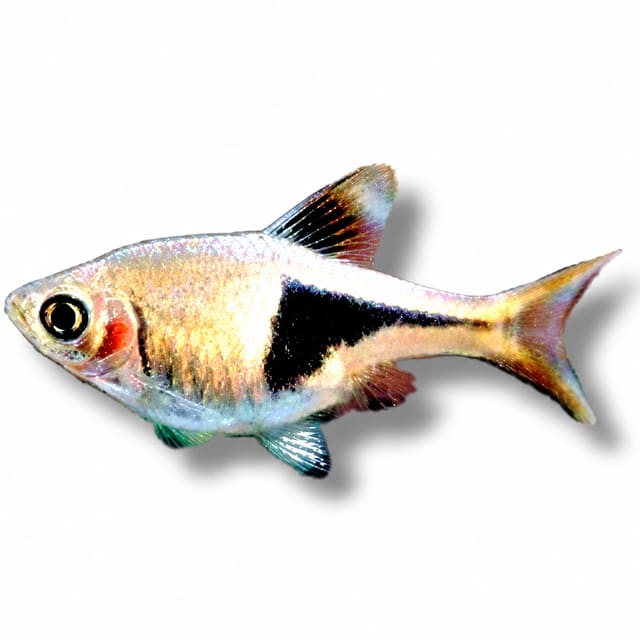
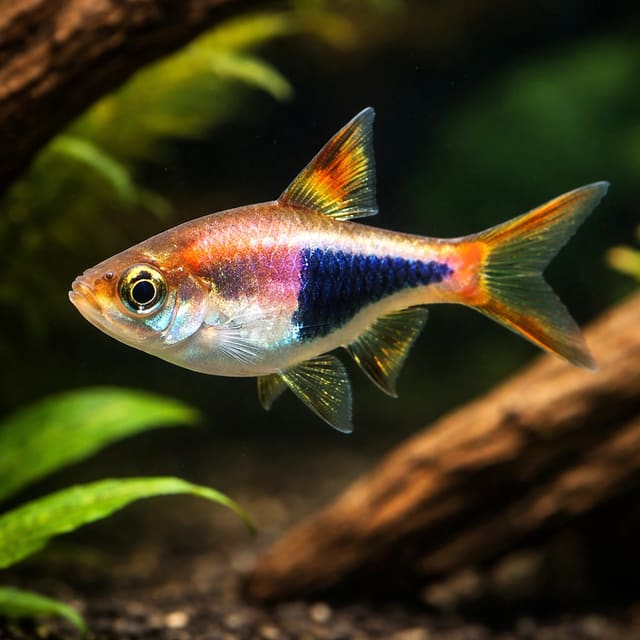
Harlequin (Rasbora heteromorpha)
21–28°C · pH 5–7.5 · 54L
£2.59
The Orange Finned Danio (Danio kyathit) is a freshwater danio from upper Ayeyarwaddy tributaries near Myitkyina, Myanmar, with a recorded maximum of 3.5 cm standard length. It suits keepers who can maintain at least 8–10 fish in a covered aquarium of at least 90 × 30 cm at 16–26°C, pH 6.5–7.5 and 1–5 dGH; Seriously Fish gives these species-level aquarium figures. Sold individually as one live fish.
Adult size is the maximum length this species reaches at full maturity (scientific sources). The livestock you receive will be younger and smaller. Product-photo provenance and any image-specific limitations are stated on the listing.
Danio kyathit
For a new group, plan at least 8 Orange Finned Danios. Aim for ten or more where the aquarium allows. Discount quantities do not set the care recommendation. Smaller quantities can top up an existing group.
The Orange Finned Danio (Danio kyathit) is a freshwater danio from upper Ayeyarwaddy tributaries near Myitkyina, Myanmar, with a recorded maximum of 3.5 cm standard length. It suits keepers who can maintain at least 8–10 fish in a covered aquarium of at least 90 × 30 cm at 16–26°C, pH 6.5–7.5 and 1–5 dGH; Seriously Fish gives these species-level aquarium figures. Sold individually as one live fish.
Adult size is the maximum length this species reaches at full maturity (scientific sources). The livestock you receive will be younger and smaller. Product-photo provenance and any image-specific limitations are stated on the listing.
Maintain these water conditions for optimal health and vibrant colors
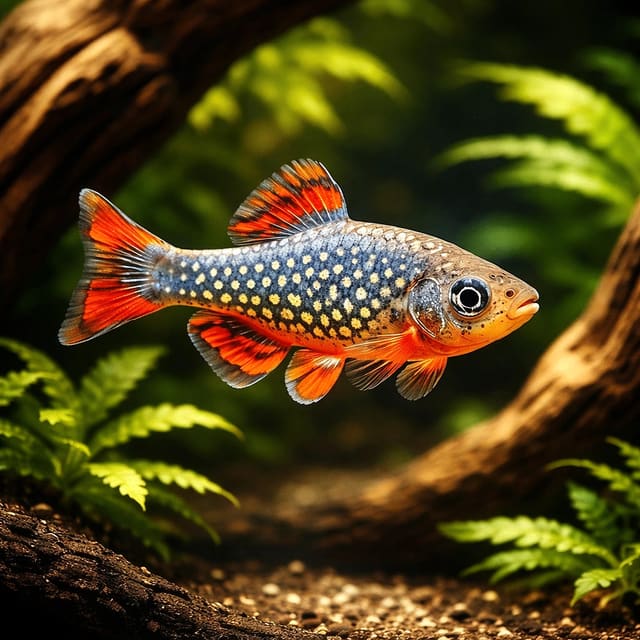
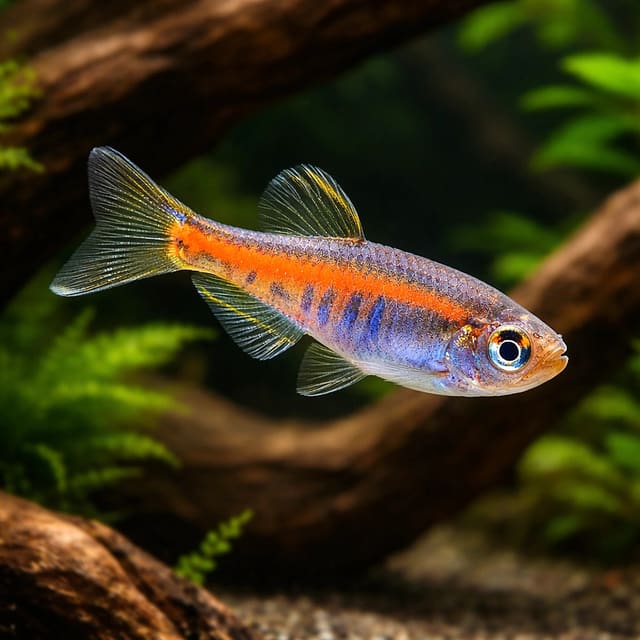
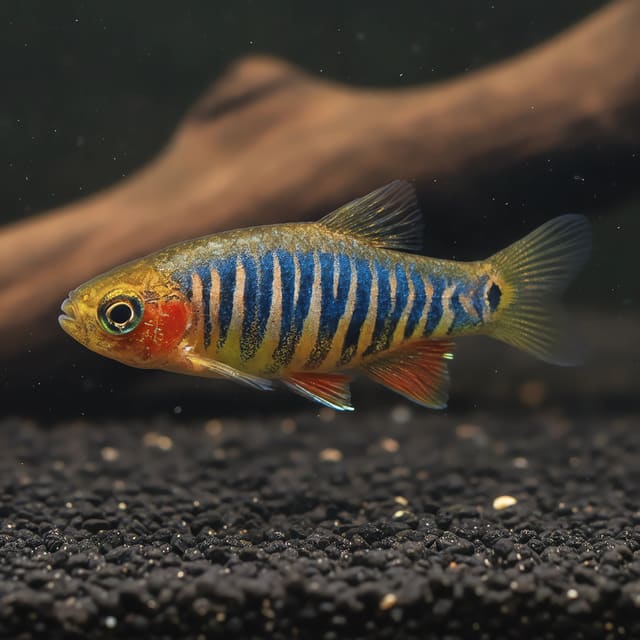
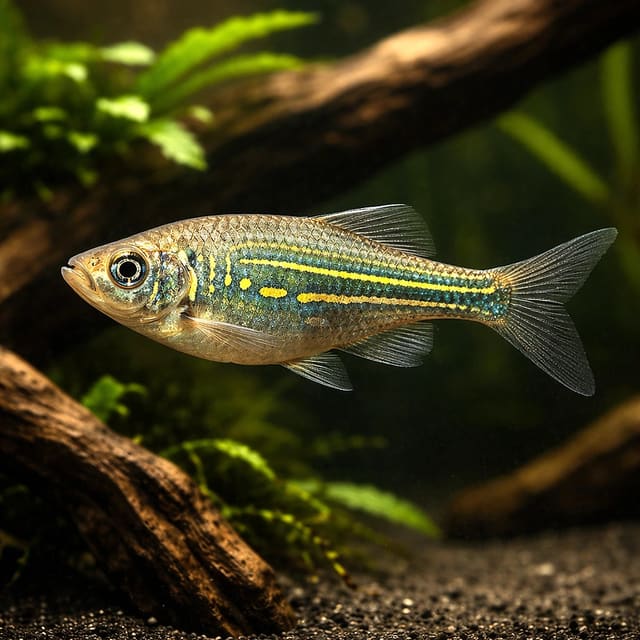
The Orange Finned Danio is Danio kyathit, a small freshwater member of the family Danionidae from upper Ayeyarwaddy tributaries near Myitkyina in Myanmar. FishBase records a maximum of 3.5 cm standard length for male or unsexed fish. Its slender body can carry dark spots, broken lines or wavy horizontal stripes, while red-to-orange colour appears in the fins.
It suits a keeper who can provide a covered aquarium with a base of at least 90 × 30 cm, approximately 81 litres, a group of at least 8–10 and peaceful companions that tolerate an active shoal. Keep it at 16–26°C, pH 6.5–7.5 and 1–5 dGH.
FishBase records Danio kyathit from upper tributaries of the Ayeyarwaddy system, including the Hpa-Lap Chaung, Mogaung and Chindwin rivers. One recorded habitat was a small, clear, brownish, fast-running stream shaded by deep bamboo forest, with mud and small stones on the bottom. That setting helps explain why a planted aquarium with cover, darker areas, stones and controlled flow suits its character.
Seriously Fish uses 4.5 cm standard length as an aquarium planning reference, compared with the FishBase maximum of 3.5 cm standard length. Allow the footprint recommended for this active species rather than designing the aquarium around a small fish.
This is a peaceful schooling fish, but it is also a constant and energetic swimmer. A compact aquarium chosen only because the fish is small will not provide the swimming length recommended for the species.
The best display combines open horizontal swimming room with planted or decorated margins. Darker substrate can make the fish’s pattern and orange fin accents appear more distinct, while sparse surroundings may leave it looking paler. The fish should still have sheltered areas where the group can move out of the brightest or fastest-flowing part of the aquarium.
One purchase supplies one Orange Finned Danio. Plan the aquarium around its adult needs, the recommended footprint and the space required by the complete group.
Sex is guaranteed only when the selected option explicitly states male or female. This Orange Finned Danio listing has no sex-guaranteed option.
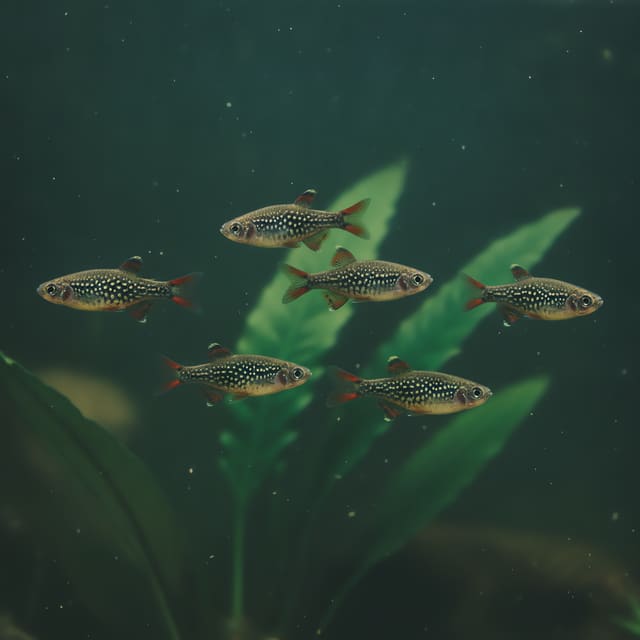
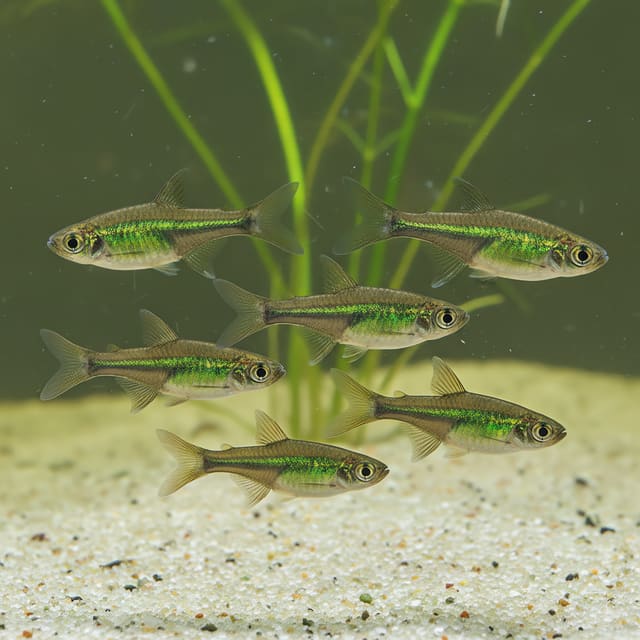
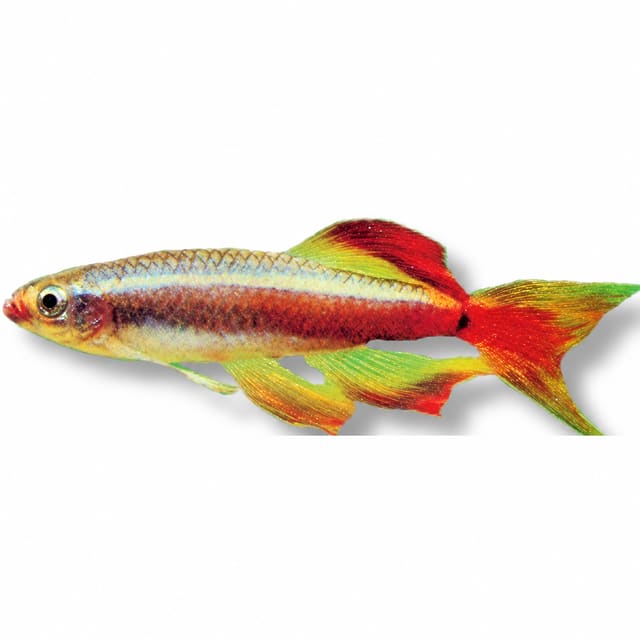
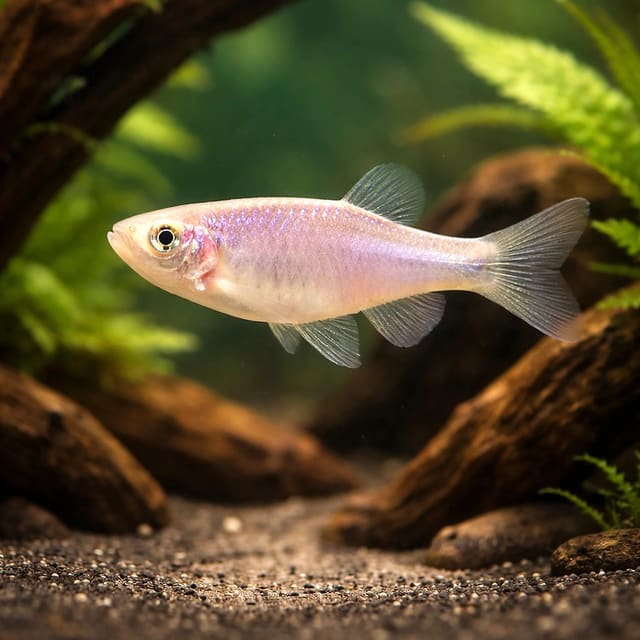
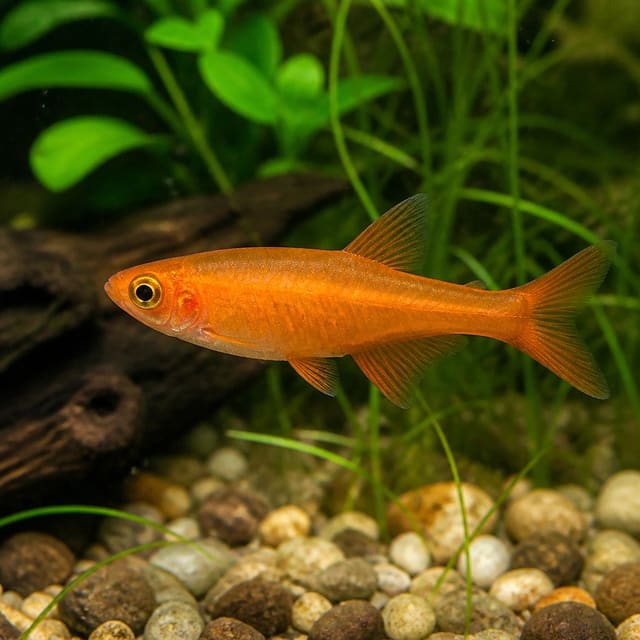
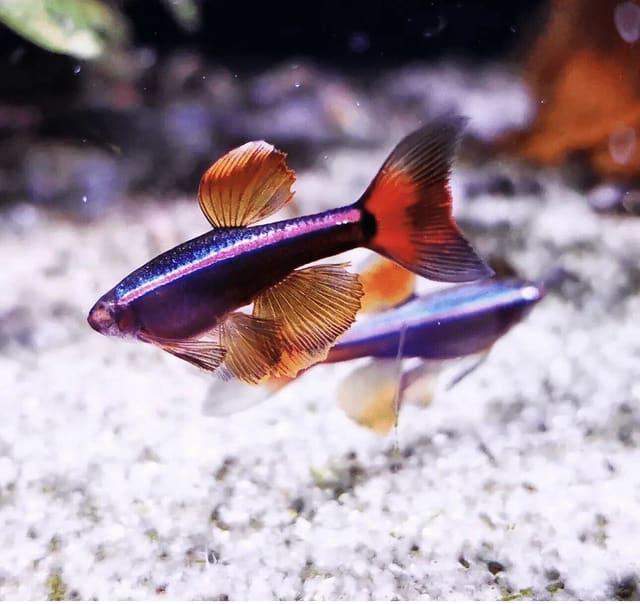
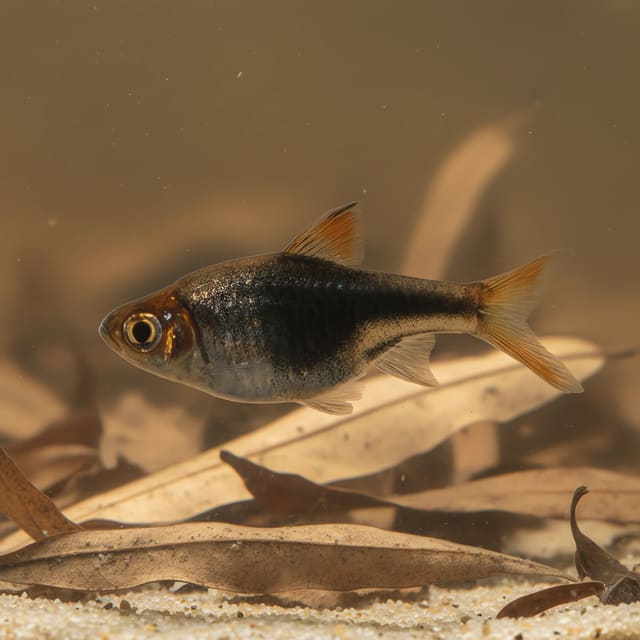
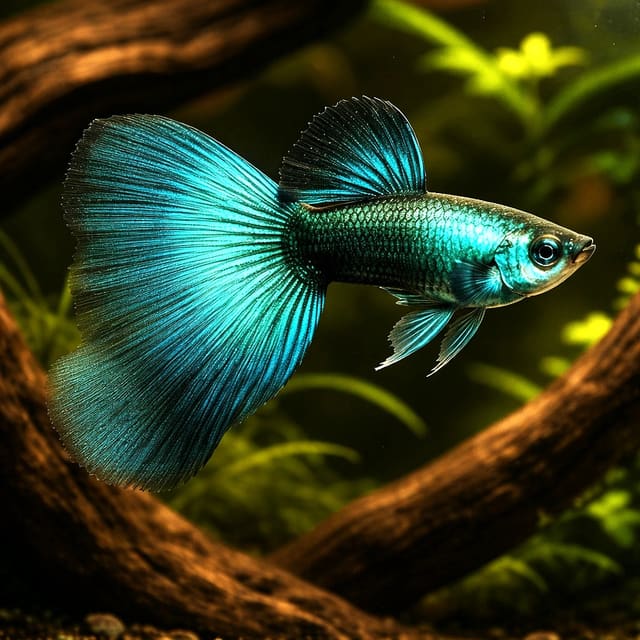
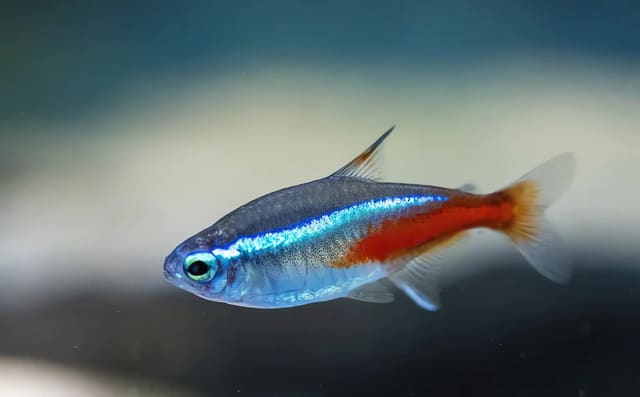
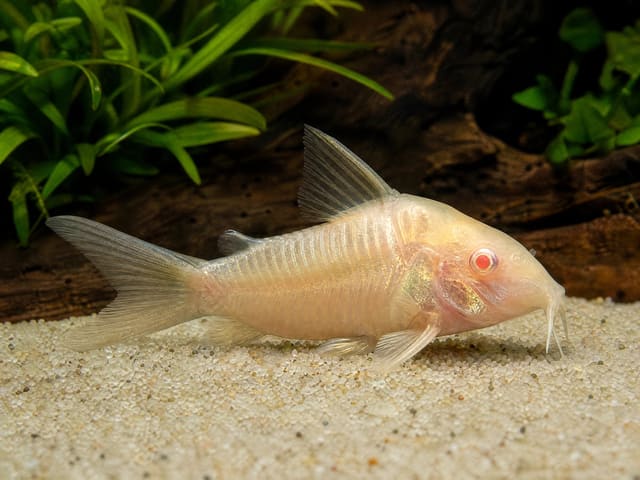
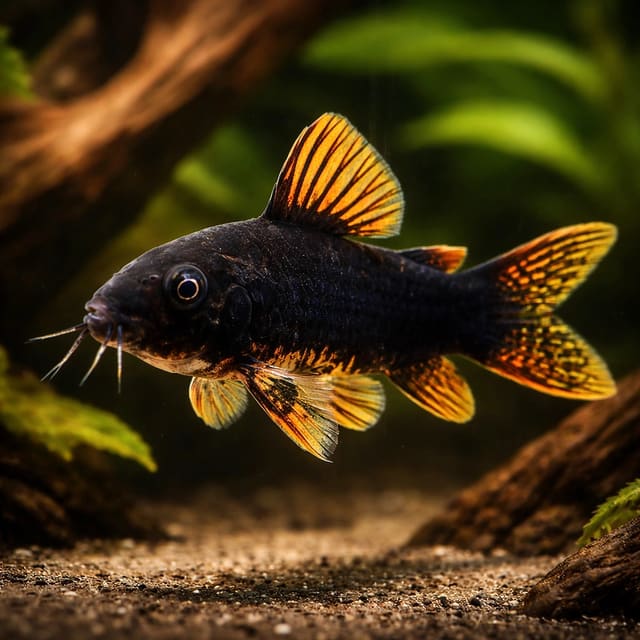
The gallery images are representative of this type of animal rather than photographs of the exact animal supplied, so colours can look slightly different from the live animal.
Seriously Fish gives species-level aquarium guidance of 16–26°C, pH 6.5–7.5 and 1–5 dGH. It recommends an aquarium base of at least 90 × 30 cm, approximately 81 litres, for this active fish, together with a group of at least 8–10.
| Decision | Figure to use |
|---|---|
| Recorded adult length | 3.5 cm standard length |
| Aquarium base | At least 90 × 30 cm |
| Approximate volume | About 81 litres |
| Group | At least 8–10 fish |
| Water | 16–26°C; pH 6.5–7.5; 1–5 dGH |
These figures work together. The 90 cm length provides a meaningful swimming run, the group size supports schooling behaviour, and the tightly fitting cover addresses the jumping ability associated with this genus. Do not reduce the footprint or group simply because an individual fish is small.
| Suits | Not suited to |
|---|---|
| A covered aquarium at least 90 × 30 cm | A compact aquarium without the recommended swimming length |
| A group of at least 8–10 | Solitary keeping or a group below eight |
| Peaceful companions tolerant of constant activity | Timid fish stressed by constant swimming |
| Soft water at 16–26°C and pH 6.5–7.5 | Water outside 1–5 dGH or the stated temperature and pH ranges |
If you are comparing related fish before planning the aquarium, browse our rasboras and danios collection. Compare each animal’s adult length, group requirement, water range and swimming behaviour rather than choosing by colour alone.
Start with a tank base of at least 90 × 30 cm and a volume of about 81 litres. Length matters because Orange Finned Danios spend much of their time swimming actively across the aquarium. A tank with the same nominal volume but a much shorter base should not be treated as an automatic substitute for the recommended footprint.
A 90 × 30 cm base covers 2,700 square centimetres, but the important feature is the 90 cm swimming run. For example, a 60 × 45 cm base has the same calculated area but is one-third shorter. The recommended 90 cm length remains the stronger choice for this active species. Volume also changes with tank height and displacement, so use both the footprint and the approximate 81-litre figure when comparing aquariums.
Use a darker substrate with planting or décor around the sides and back, leaving a clear horizontal swimming route through the middle or front. A river-style arrangement can use rocks and gravel of varied sizes, water-worn stones, driftwood roots and branches. Plants that can be attached to décor, including Microsorum, Bolbitis and Anubias, fit this approach.
Position plants and wood so they break up exposed areas without closing the swimming route. A heavily planted arrangement can bring out the darker markings and orange finnage, whereas a sparsely decorated aquarium may make the fish appear paler. The aim is not to fill every gap: retain open water for schooling and calmer edges where fish can move away from the main current.
Fit a very tight cover and inspect openings around cables, pipework and filter returns. Members of this genus are accomplished jumpers and can pass through surprisingly small gaps. A lid that merely rests over most of the top is not enough if cut-outs remain open.
Introduce the group only to an aquarium with a functioning biological filter and suitable water quality. A new tank containing clean-looking water is not automatically ready for fish. Beneficial bacteria in the filter must be established so they can process the waste produced after feeding and stocking.
The RSPCA explains the biological filtration process: fish release toxic ammonia, bacteria convert it to nitrite, which is also toxic, and further bacterial activity converts nitrite to the safer nitrate. This is why a well-set-up and maintained filter is essential rather than optional equipment.
Before adding Orange Finned Danios, test the aquarium and require ammonia and nitrite readings of zero. Prepare a mature first aquarium and biological filter before livestock arrives. The aquarium must also be large enough for the intended group and any existing residents after adult space, activity and filtration demand are considered.
| Check | Ready condition |
|---|---|
| Biological filter | Established and running continuously |
| Ammonia | Zero mg per litre |
| Nitrite | Zero mg per litre |
| Temperature | Stable within 16–26°C |
| pH | Within 6.5–7.5 |
| Hardness | Within 1–5 dGH |
| Cover | Tight, including equipment gaps |
Prepare the system for the intended Orange Finned Danio group rather than relying on a single small fish to test an immature aquarium. OATA warns that stocking too quickly can exceed the bacterial population’s ability to process added waste, leading to unhealthy ammonia and nitrite. Add any wider community population gradually so the filter can respond as waste and feeding increase.
Do not switch the filter off as part of the normal daily routine. Check that water continues to move through it and deal with blockages during maintenance. Protecting the filter bacteria is central to keeping ammonia and nitrite at zero.
Keep Orange Finned Danios at 16–26°C, pH 6.5–7.5 and 1–5 dGH. Choose a stable point inside all three ranges that also suits every other animal in the aquarium. Do not accept a match on temperature alone: pH and general hardness must also overlap.
Use our water chemistry guide to identify the values to test, then compare your measured results with the target using the aquarium water matcher. Test the actual aquarium rather than relying only on a regional tap-water description, because the decision concerns the water in which the fish will live.
| Value | Working range or limit |
|---|---|
| Temperature | 16–26°C |
| pH | 6.5–7.5 |
| General hardness | 1–5 dGH |
| Ammonia | Zero mg per litre |
| Nitrite | Zero mg per litre |
| Nitrate | Up to 20 mg per litre above tap-water level |
OATA’s danio guidance gives the nitrogen limits as group guidance: ammonia and nitrite should remain at zero, while nitrate should not exceed 20 mg per litre above the normal tap-water level. Apply the narrower 16–26°C, pH 6.5–7.5 and 1–5 dGH ranges for this species.
The nitrate instruction is relative to the normal tap-water reading. If conditioned tap water measures 10 mg per litre, the aquarium limit is 30 mg per litre because 10 plus 20 equals 30. If the baseline is 20 mg per litre, the corresponding limit is 40 mg per litre. Continue weekly testing and use the aquarium’s real baseline for the calculation.
A reading inside one range does not offset a failure elsewhere. For example, 22°C and pH 7.0 are suitable, but hardness of 10 dGH falls outside the 1–5 dGH range. Complete the full water check before deciding that the aquarium is a match.
For an aquarium of about 81 litres, use filtration planned around four to five times the tank volume per hour. That calculation gives 324–405 litres per hour; the practical filter-rating range stated for this setup is 325–405 litres per hour. Combine adequate turnover with a layout that prevents the whole aquarium becoming a torrent.
| Turnover | 81-litre calculation |
|---|---|
| Four times per hour | 81 × 4 = 324 litres per hour |
| Five times per hour | 81 × 5 = 405 litres per hour |
| Practical rating | About 325–405 litres per hour |
A filter outlet or additional powerhead can create the flowing-stream character associated with the species, but torrent-like conditions should be avoided. Small danios tend to use calmer stretches and marginal zones in nature. Direct the main flow along an open route and use plants, wood or stones to create lower-flow edges without blocking the filter intake.
A suitable arrangement gives the fish a choice between active open water and calmer cover. If the entire group is continually confined behind décor or to one sheltered corner, reassess the direction or strength of the current. The goal is movement through the aquarium, not a current so dominant that the fish cannot use the planned swimming space.
Check the filter for blockages during the weekly maintenance routine. When filter media needs cleaning, rinse it lightly in aquarium water removed during the water change rather than under the tap. Chlorine or chloramine in tap water may kill part of the beneficial bacterial population established in the media.
Keep the filter running as the aquarium’s core waste-processing system. Flow, biological filtration and the weekly water-change routine have different jobs: circulation moves water through the filter, bacteria process ammonia and nitrite, and partial water changes remove accumulated waste and nitrate.
Feed once daily and offer only what the group can finish within a few minutes. A good-quality dried flake or small granule can form the staple, supplemented regularly with small live or frozen foods such as daphnia, small bloodworm or Artemia. Match particle size to the fish’s small mouth and watch the group eat before adding more.
Seriously Fish describes this danio as likely to prey chiefly on insects and their larvae in nature. In the aquarium it accepts most foods, but regular small live or frozen fare alongside a quality dried staple supports colour and condition. Variety should come from alternating suitable foods, not from increasing the total amount beyond what the fish consume promptly.
| Part of the diet | Suitable choice |
|---|---|
| Staple | Quality flake or small granules |
| Live or frozen addition | Daphnia, small bloodworm or Artemia |
| Frequency | Once a day |
| Portion limit | Finished within a few minutes |
Begin with a small amount and observe whether it is eaten. Add no more once the few-minute feeding period has passed. This direct check is more useful than applying the same pinch to every aquarium because the number and size of fish affect how quickly a portion disappears.
Uneaten food breaks down and adds toxic waste to the water, so overfeeding works against the ammonia, nitrite and nitrate limits. If food remains after the group has stopped feeding, reduce the next portion rather than extending the feeding period. Keep the once-daily schedule consistent while varying the food type.
Feeding time is also a daily observation point. Look for a reduction in appetite, a fish that no longer joins the group, unusual swimming, rapid or slow gill movement, darker or paler colour, damaged fins, white spots, fluffy growths or a marked change in body condition. A change in food intake should trigger a water-quality test because ammonia, nitrite or other water problems can affect health.
At least once every week, change 25% of the aquarium water. Use a siphon to remove solid waste from the gravel, condition replacement tap water to remove chlorine or chloramine, and test ammonia, nitrite and nitrate. Check temperature, pH and hardness often enough to ensure the aquarium remains inside the working ranges.
This order connects what you see with the measured water conditions before maintenance changes them. Keep a simple dated record of readings if that helps you compare one week with the next. The useful decision is whether ammonia and nitrite remain at zero, nitrate stays within its relative limit, and the species ranges remain stable.
| Change seen | First action |
|---|---|
| Hanging at the surface | Test water quality |
| Sitting on the bottom | Test water quality |
| Erratic swimming | Test water quality and check flow |
| Rapid or slow gill movement | Test water quality |
| Loss of appetite | Test water quality and review feeding |
| White spots or fluffy growth | Check all readings and seek health guidance |
Also watch for darker or paler colour, increased hiding, damaged fins, missing scales, ulceration or a notable gain or loss of body condition. These changes do not all have one cause, so do not choose a treatment from appearance alone. Test the water first and contact us for health guidance if the change persists.
Arrange for someone to receive the parcel because live fish cannot be left unattended. Follow the current delivery and Live Arrival Guarantee policy for its packing, receipt and claim terms.
Prepare the covered aquarium and tested water before the parcel arrives. After release, secure the cover, including gaps around filter pipes and cables.
At the once-daily feed, check whether the fish join the group and eat within the normal few-minute period. Observe swimming position, breathing rate, colour, hiding and fin condition. A fish hanging at the surface, sitting on the bottom, swimming erratically, breathing unusually, hiding more than normal or refusing food requires an immediate water test.
Require ammonia and nitrite to remain at zero. Check that temperature stays within 16–26°C, pH within 6.5–7.5 and hardness within 1–5 dGH. Confirm that the group can use both the open swimming route and calmer margins rather than being held in one corner by excessive current.
Complete a 25% water change at least once every week rather than waiting for the aquarium to look dirty. Test at least weekly, condition replacement water and protect the filter bacteria during cleaning. Add any further community residents slowly because each increase in fish and feeding adds waste that the biological filter must process.
Review the cover after every maintenance task. A cable moved during cleaning can open a small escape gap. Also check that plants and décor have not shifted into the swimming lane or redirected the outlet so strongly that calm margins disappear. These first-month checks establish the same routine the fish needs long term.
Maintain Orange Finned Danios in a group of at least 8–10. This species schools by nature, and keeping a suitable number makes the fish less nervous while producing a more natural-looking display. Do not plan for one fish simply because each purchase represents one animal.
Calculate the group before adding other community fish. The aquarium must retain the recommended base of at least 90 × 30 cm and about 81 litres while accommodating the waste, activity and adult size of every resident. The minimum footprint belongs to the danio group itself rather than becoming spare capacity for unrestricted additions.
| Group decision | Action |
|---|---|
| Fewer than eight planned | Revise the plan towards at least 8–10 |
| At least 8–10 planned | Check the 90 × 30 cm footprint and filtration |
| Community residents planned | Recalculate total space and waste demand |
| Fish appear persistently nervous | Check group number, cover, flow and water |
Arrange décor so the group can move together across the long axis instead of splitting around a solid central barrier. Plants and wood are useful around the edges, but the horizontal route should remain open. Calmer margins allow fish to leave the strongest flow without losing contact with the rest of the school.
Use behaviour as a prompt to check the complete setup. Increased hiding, unusual swimming or a marked colour change can accompany stress, but the response should begin with measurable conditions: group number, water quality, temperature, pH, hardness and flow. Confirm each requirement rather than assuming that adding more décor alone will resolve the problem.
A larger group still needs disciplined feeding. Offer only the amount eaten within a few minutes once daily, and make sure the full school has access to appropriately small food. Extra group members do not justify leaving uneaten food to break down in the aquarium.
Orange Finned Danio is described as very peaceful and can fit a well-furnished community aquarium. Its constant swimming can nevertheless stress more timid fish, so peaceful behaviour alone is not a complete compatibility test. Screen every proposed companion for water overlap, activity tolerance, usable space and the effect of the total stocking level on filtration.
| Question | Required answer |
|---|---|
| Does its temperature overlap? | Yes, within 16–26°C |
| Does its pH overlap? | Yes, within 6.5–7.5 |
| Does its hardness overlap? | Yes, within 1–5 dGH |
| Can it live with constant activity? | Yes, without persistent stress |
| Does the aquarium retain the danio group? | Yes, at least 8–10 |
| Does the footprint remain suitable? | Yes, at least 90 × 30 cm |
A candidate fails the screen if its required water falls outside any of the three ranges or if its timid nature makes the danios’ activity unsuitable. A larger nominal tank does not repair a water mismatch, while matching water does not repair a layout that removes the long swimming route or calm margins.
Seriously Fish describes combinations with other small cyprinids, tetras, livebearers, rainbowfishes, anabantoids, catfish and loaches. These are broad starting categories, not automatic approval for every member. Each candidate still needs the complete screen because species within one category can have different water, space and behavioural requirements.
Compatibility also depends on the whole aquarium rather than a two-fish comparison. Count the established residents, preserve room for the full Orange Finned Danio school and consider whether the biological filter can process the resulting feeding and waste. Introduce additions gradually and continue checking ammonia and nitrite after the population changes.
For a stocking assessment, contact us with the aquarium dimensions, volume, temperature, pH, dGH, established species and the number of each fish. Those details allow a practical comparison against the 90 × 30 cm footprint, 8–10 group and water range without treating a community label as a universal match.
FishBase records a maximum of 3.5 cm standard length for male or unsexed Danio kyathit.
Use a covered aquarium with a base of at least 90 × 30 cm and a volume of about 81 litres, combining an open swimming route with planted or decorated margins.
Keep a group of at least 8–10 because this is a schooling fish and suitable numbers make the fish less nervous.
It can suit a new keeper who can provide a mature filtered aquarium, a group of at least 8–10, a tightly fitting cover and stable water at 16–26°C, pH 6.5–7.5 and 1–5 dGH.
Feed quality flake or small granules once daily in an amount eaten within a few minutes, supplemented regularly with small live or frozen daphnia, bloodworm or Artemia.
Keep it at 16–26°C and pH 6.5–7.5, with general hardness at 1–5 dGH; Seriously Fish gives these species-level aquarium ranges.
Seriously Fish describes it as very peaceful, while OATA notes that constant danio activity may stress more timid fish. Screen companions for temperament as well as water compatibility.
Seriously Fish names other small cyprinids, tetras, livebearers, rainbowfishes, anabantoids, catfish and loaches as possible community groups. Each species must share 16–26°C, pH 6.5–7.5 and 1–5 dGH, tolerate constant activity and leave room for at least 8–10 danios.
For a Live Arrival Guarantee claim, email hello@tropicalfishco.co.uk on the day of delivery with your order number, the affected animals and quantities, and clear photos of the problem and packaging. An unboxing video is optional. Do not delay necessary animal care to film or wait for our reply. Our team reviews the evidence under the current claim terms. Someone must be present to receive the parcel; float the bag for 20–30 minutes before releasing the fish, and never pour the bag water into the aquarium.
No reviews for this item yet. Bought one? Honest reviews only, good or bad.
What customers say about ordering from us
Easy website plenty of info on fish your buying great to pick a time slot
TRACEY DURRANT · 7 Oct 2026
Got some lovely fish thank you
Kevin Mackie · 7 Oct 2026
Reviews of our shop, collected by Judge.me, an independent third-party review collector. Newest first.