Moderate
10 × Celestial Pearl Danios (Danio margaritatus)
20–26°C · pH 6.5–7.5 · 41L
£57.99

The Emerald Dwarf Danio (Danio erythromicron) is a freshwater danionid endemic to Inle Lake, Myanmar, with a recorded maximum length of 3.0 cm. It suits keepers with a mature filtered aquarium; keep this ten-fish group at 21–25°C, pH 6.5–7.0 and 10–12°dGH, the overlap of FishBase’s species range and OATA’s danio guidance. Sold as one pack of ten fish.
Adult size is the maximum length this species reaches at full maturity (scientific sources). The livestock you receive will be younger and smaller. Product-photo provenance and any image-specific limitations are stated on the listing.
Danio erythromicron
The Emerald Dwarf Danio (Danio erythromicron) is a freshwater danionid endemic to Inle Lake, Myanmar, with a recorded maximum length of 3.0 cm. It suits keepers with a mature filtered aquarium; keep this ten-fish group at 21–25°C, pH 6.5–7.0 and 10–12°dGH, the overlap of FishBase’s species range and OATA’s danio guidance. Sold as one pack of ten fish.
Adult size is the maximum length this species reaches at full maturity (scientific sources). The livestock you receive will be younger and smaller. Product-photo provenance and any image-specific limitations are stated on the listing.
Plan a mature, densely planted aquarium with at least a 45 × 30 cm base for a social group. Use 20–26°C, pH 6.5–7.5 and 5–15 dGH as published screening ranges, then hold a stable value inside the overlap for every animal in the tank.
Maintain these water conditions for optimal health and vibrant colors
Danio erythromicron, commonly called the Emerald Dwarf Danio or Emerald Dwarf Rasbora, is a small freshwater ray-finned fish in the family Danionidae. The species overview for Danio erythromicron describes it as endemic to Inle Lake in Myanmar. Its compact adult size does not remove the need for a properly matured aquarium, dependable filtration or enough space for a complete group.
One purchase supplies ten Emerald Dwarf Danios. This pack already exceeds the general recommendation to keep danios in groups of at least five, but the aquarium must be assessed for all ten fish rather than for a single small animal.
Choose this fish when you can prepare a stable, filtered freshwater aquarium before arrival, keep the whole group together and complete a 25% partial water change at least once a week. The routine care plan also requires weekly water testing, one controlled feed per day and observation of swimming, breathing, colour, condition and appetite. A community aquarium needs an additional behaviour and water-parameter check because active danios may unsettle more timid fish.
| Suits | Not suited to |
|---|---|
| A mature, filtered freshwater aquarium | An immature aquarium or one without a filter |
| A group plan for all ten fish | Keeping a danio alone or in too small a group |
| Aquariums with plant or ornament cover | A setup without suitable shelter |
| Community fish that tolerate active swimming | Timid fish likely to be stressed by constant activity |
| Offer detail | What it means |
|---|---|
| Purchase unit | Ten fish in one pack |
| Adult planning size | Up to 3.0 cm recorded length |
| Social plan | Keep the ten as a group |
Sex is guaranteed only when the selected option explicitly states male or female. This 10 × Emerald Dwarf Danios listing has no sex-guaranteed option.
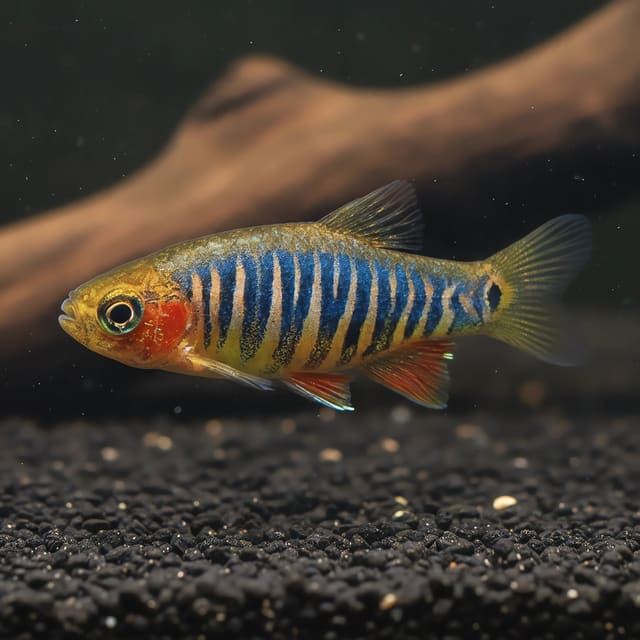
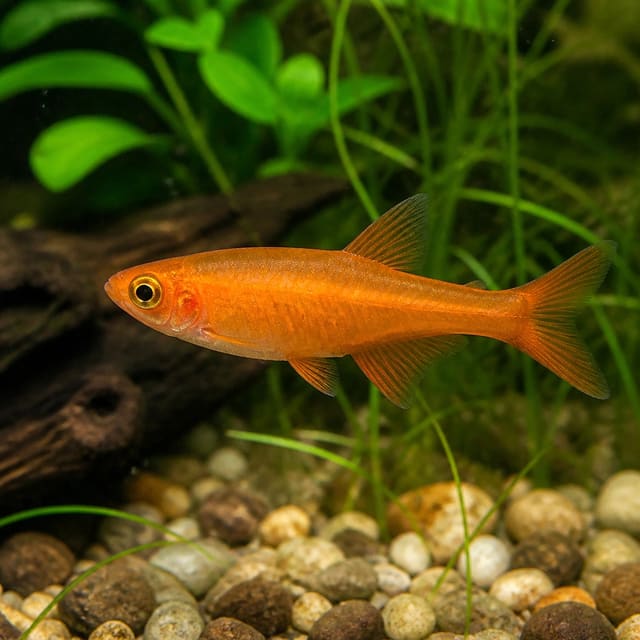
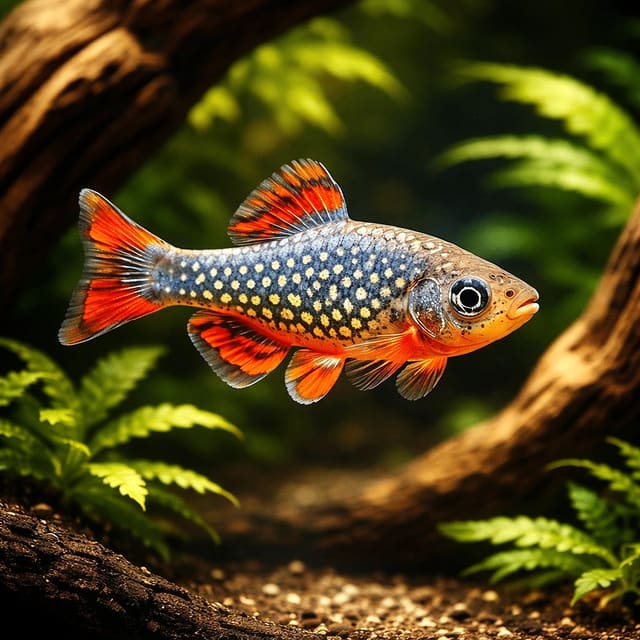
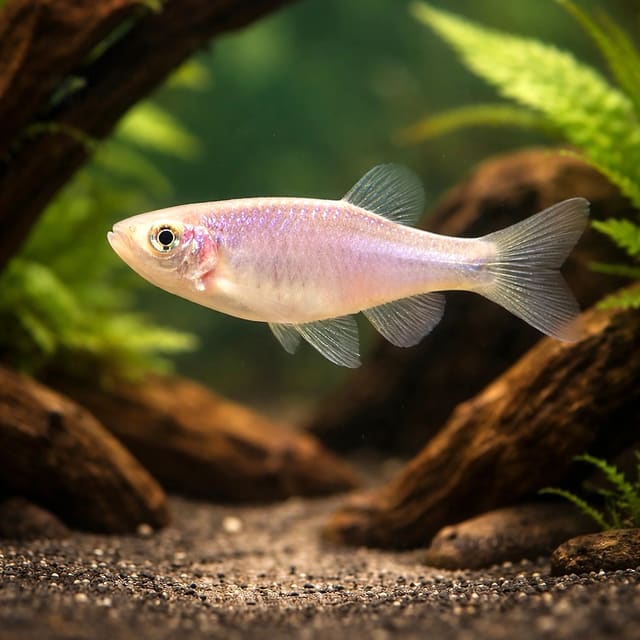
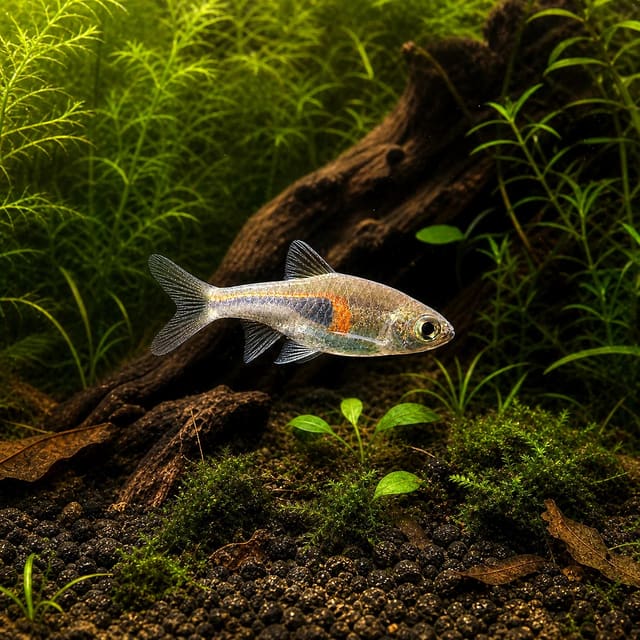
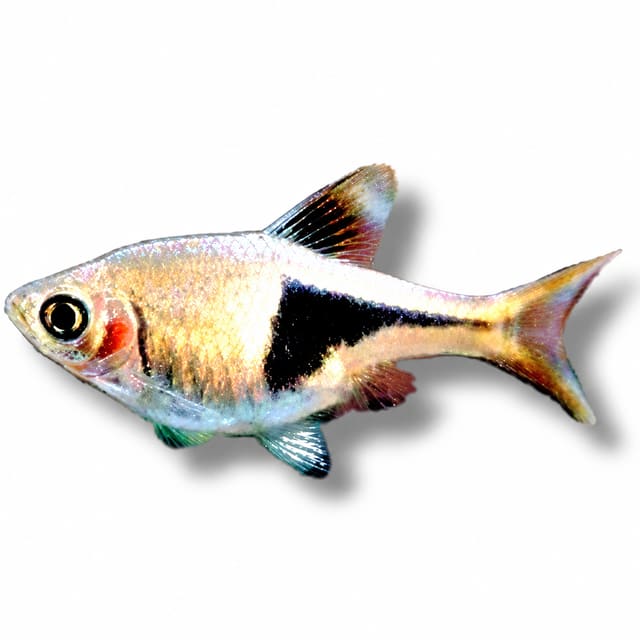
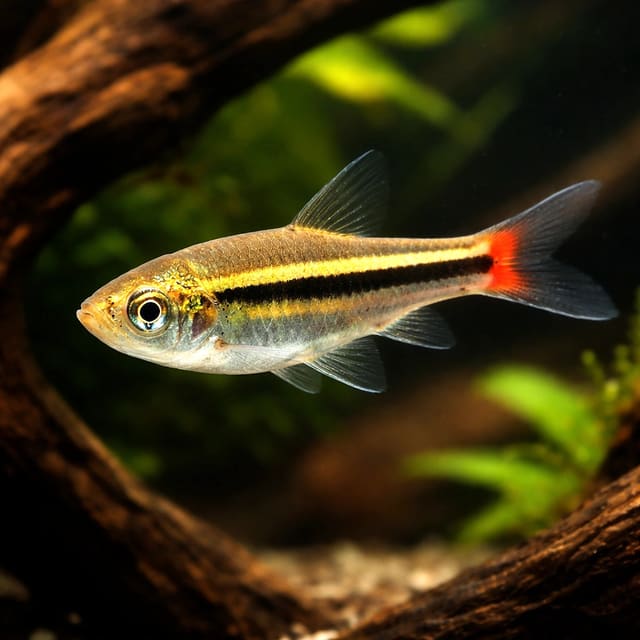
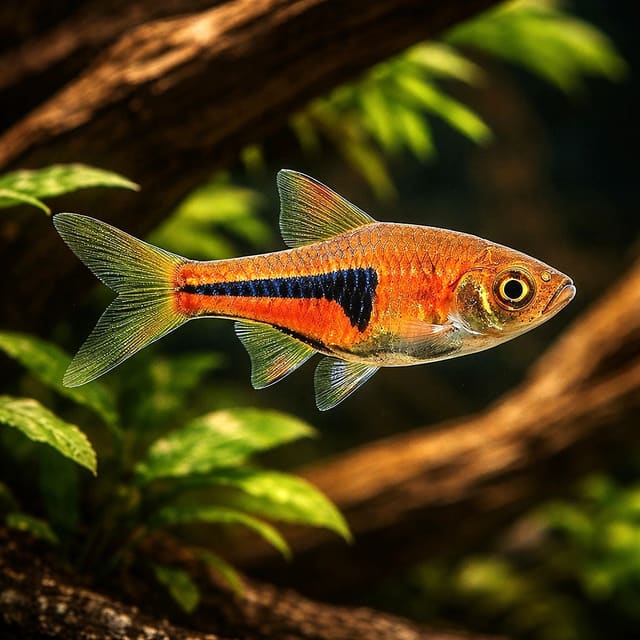
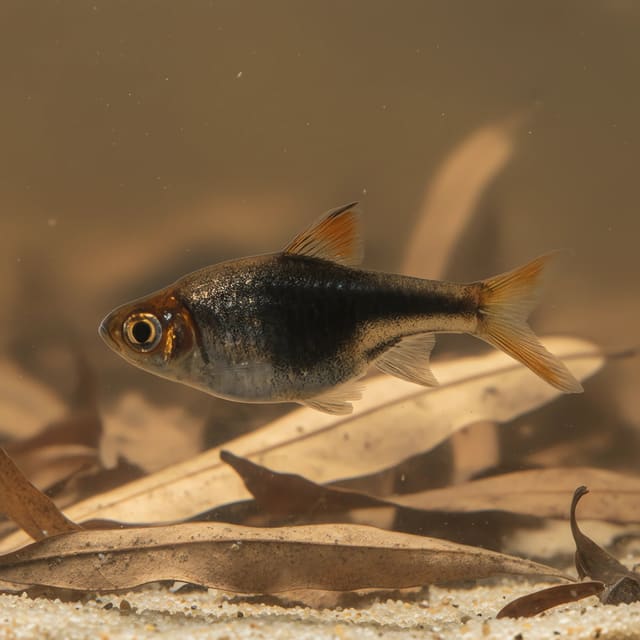
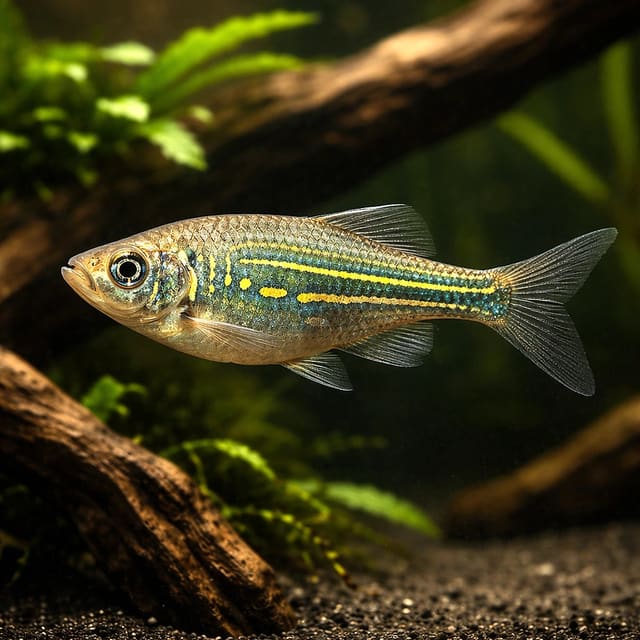
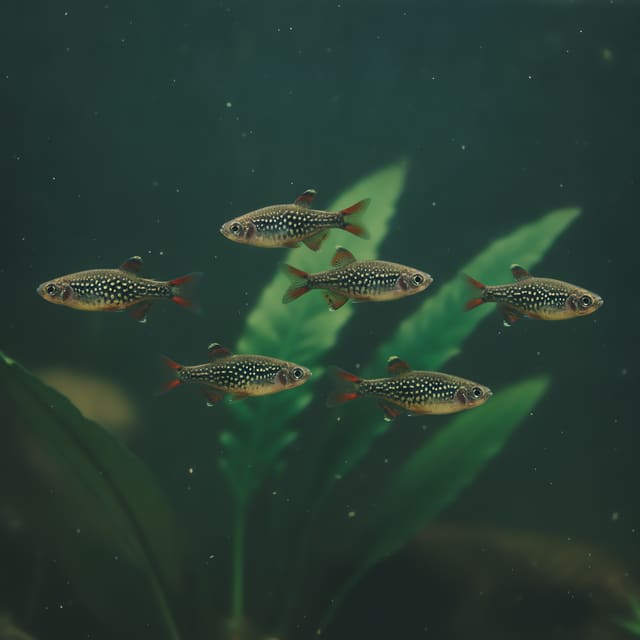
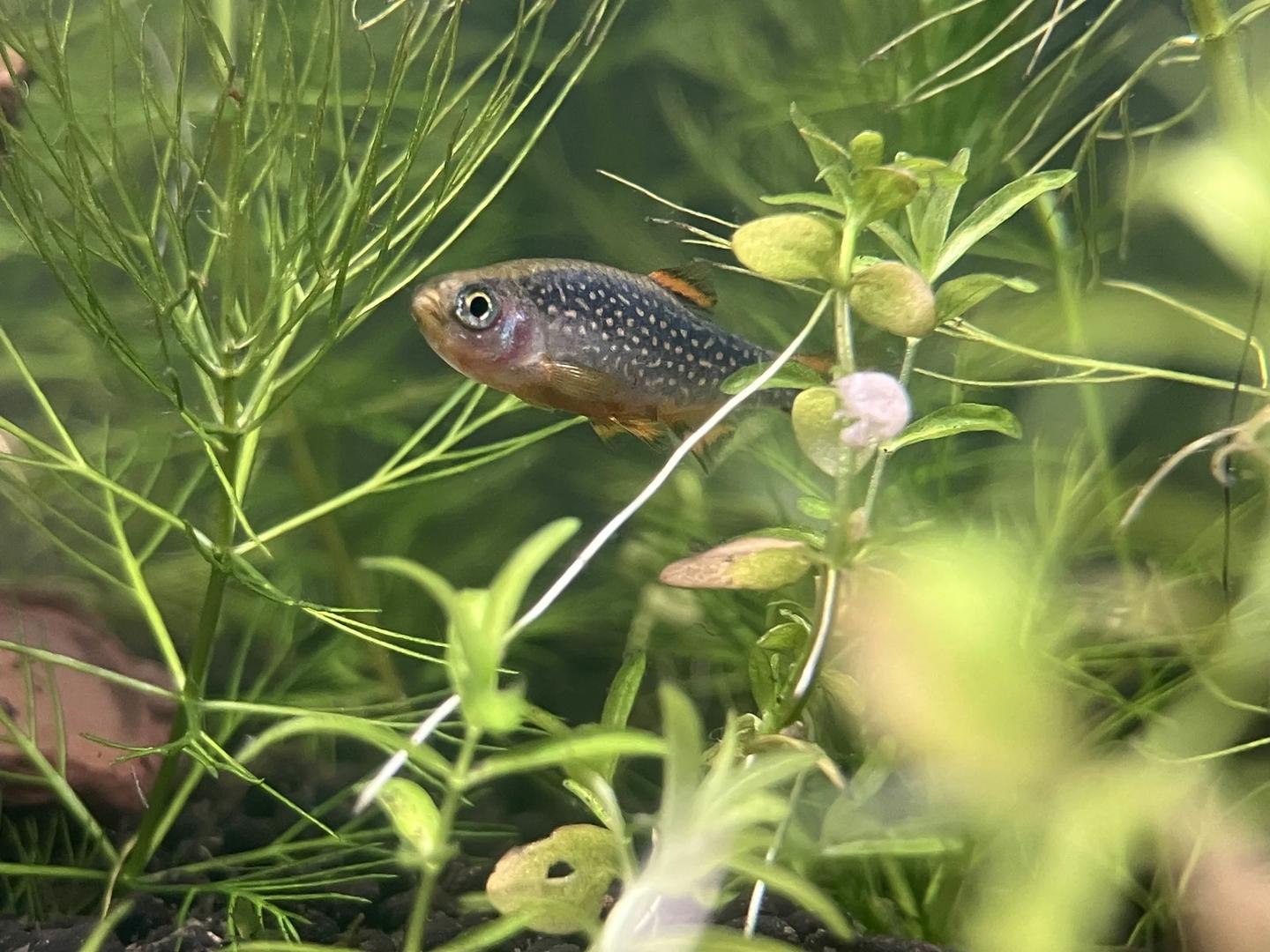
In the gallery, eight blue-green fish with dark vertical bars, red cheek patches and orange fins swim above black gravel and pale driftwood. The gallery images are representative of this type of animal rather than photographs of the exact animal supplied, so colours can look slightly different from the live animal.
FishBase records Danio erythromicron at a maximum of 3.0 cm, with a freshwater environmental temperature of 21–25°C, hardness of 10–25°dGH and pH up to 7.0. For aquarium planning, keep within 21–25°C and combine the pH and hardness limits with the narrower parts of the danio ranges below.
OATA’s danio care guidance recommends 17–27°C, pH 6.5–8.0 and 4–12°dGH for danios as a group. It also recommends at least five fish and an aquarium of at least 45 litres for a small shoal of the smaller species. Combining the two water ranges gives a routine target of 21–25°C, pH 6.5–7.0 and 10–12°dGH. These are planning values rather than a species-specific optimum.
| Decision | Planning value |
|---|---|
| Adult length | Up to 3.0 cm |
| Purchase unit | Ten fish |
| Group size | At least five; more is better |
| Aquarium volume | At least 45 litres for a small shoal of smaller danios |
| Temperature | 21–25°C |
| pH | 6.5–7.0 |
| General hardness | 10–12°dGH |
| Ammonia and nitrite | Zero mg per litre |
Treat 45 litres as the starting floor, not an automatic approval for every ten-fish community. Check the aquarium’s existing population, filtration and usable space before adding the pack. OATA notes that larger aquariums generally provide more stable temperature and water quality, so choosing more than the minimum gives the keeper a wider margin when feeding, maintaining the filter and managing the waste produced by all ten fish.
A small adult length can make the fish look suitable for any compact aquarium, but water stability and group space remain decisive. If the aquarium is below 45 litres, is not mature or cannot keep ammonia and nitrite at zero, prepare a more suitable setup before ordering. If it passes those checks, continue with the detailed space, water and compatibility screens below.
Start with an aquarium of at least 45 litres, the OATA planning minimum for a small shoal of smaller danios. This purchase contains ten fish, so assess the whole pack alongside every animal already living in the aquarium. A nominal 45-litre tank clears the broad volume floor, but it does not cancel the need to check total stocking, filtration and shelter.
Use an aquarium that has already been prepared and matured before livestock arrives. The filter’s beneficial bacteria must be capable of processing fish waste, and both ammonia and nitrite must test at zero before introduction. If this is your first setup, follow our guide to preparing and maturing a first tropical aquarium before making the final stocking decision.
| What you find | Decision |
|---|---|
| Less than 45 litres | Choose a larger prepared aquarium |
| Ammonia or nitrite above zero | Do not add the fish until both return to zero |
| New or immature filter | Mature the filter before introducing the pack |
| Existing livestock | Assess the total population, not just the ten new fish |
| No plants or shelter | Add live or artificial cover before arrival |
The ten-fish pack already forms more than the minimum danio group, so there is no need to reduce the social plan to make an undersized aquarium work. Instead, choose a setup that can hold the group together and maintain the required water quality. Continue any later livestock additions slowly because the filter’s bacterial population has to adjust whenever the aquarium population and feeding load increase.
Target 21–25°C, pH 6.5–7.0 and 10–12°dGH. These values sit within the recorded environmental limits for Danio erythromicron and the applicable danio aquarium guidance. Measure the aquarium rather than relying on a tap-water assumption, and confirm that the values remain suitable before introducing the fish.
Use our water chemistry guide to understand the role of temperature, pH, hardness, ammonia, nitrite and nitrate. Once you have measured values, the aquarium water matcher can help you compare those readings with the target range.
| Test | Action range |
|---|---|
| Temperature | Keep between 21°C and 25°C |
| pH | Keep between 6.5 and 7.0 |
| General hardness | Keep between 10 and 12°dGH |
| Ammonia | Keep at zero mg per litre |
| Nitrite | Keep at zero mg per litre |
| Nitrate | Do not exceed 20 mg per litre above the normal tap-water level |
The nitrate limit is relative to the incoming tap water. For example, if conditioned tap water tests at 15 mg per litre nitrate, the aquarium should not exceed 35 mg per litre under the OATA rule. This calculation does not change the requirement for a 25% partial water change at least once a week; it gives you a clear threshold for recognising when waste is accumulating beyond the recommended level.
Test at least once each week and test again when behaviour, breathing, colour, condition or appetite changes. Ammonia or nitrite above zero requires action before more livestock is added. A pH, hardness or temperature reading outside the target range also means the aquarium does not yet pass the water screen for this pack.
Consistency matters because larger aquariums generally hold temperature and water quality more steadily. Record the actual readings so that gradual movement is visible rather than relying on how clear the water looks. Clear water can still contain dissolved ammonia, nitrite or nitrate, which is why testing and filtration remain separate parts of the care routine.
The RSPCA’s aquarium filtration guidance explains why every fish aquarium needs a well-set-up and maintained filter. Fish release ammonia, which is toxic. Beneficial bacteria in a working biological filter convert ammonia into nitrite, which is also toxic, and then into the safer compound nitrate.
A filter must therefore be running as a biological system, not merely moving water. Before the pack arrives, test the aquarium and confirm that ammonia and nitrite are both zero mg per litre. Maturing the filter establishes the bacteria needed to handle waste. There is no useful shortcut based on the fish being only up to 3.0 cm long because this purchase adds ten waste-producing animals and their daily feed.
Adding more fish than the filter bacteria can support can cause new tank syndrome. OATA describes this as a shortage of nitrifying bacteria relative to the new waste load, allowing ammonia and nitrite to rise to unhealthy levels. The practical prevention is to mature the filter first, avoid rapid later stocking and continue testing after the aquarium population changes.
Check the filter regularly for blockages. If the media needs cleaning, do not rinse it under the tap because chlorine or chloramine may kill part of the beneficial bacterial population. During a partial water change, lightly rinse the media in the aquarium water you have removed. This method clears debris while reducing bacterial loss.
Filter maintenance and water changes solve different parts of the same waste problem. The biological filter processes ammonia and nitrite, while partial water changes help control nitrate and remove accumulated waste. Keep both routines in place. If ammonia or nitrite appears, test again, check the filter for a blockage and review recent stocking and feeding rather than adding further livestock.
Feed a good-quality flake or granule food once a day. Offer only the amount the fish can eat within a few minutes. The useful measure is what the group actually consumes in that period, not a fixed scoop, because uneaten food breaks down and releases toxic waste into the aquarium.
Danios are omnivorous under OATA’s feeding guidance. Alongside the staple flake or granules, they may benefit from small live or frozen foods such as daphnia, small bloodworm or tubifex. Keep these items appropriately small for fish with a recorded maximum length of 3.0 cm, and watch the whole group to confirm that food is being taken.
This routine prevents “small fish” from becoming a reason to feed repeatedly throughout the day. The guidance is one feed daily, with the portion restricted to what is eaten within a few minutes. The former routine of several small feeds would add more opportunities for surplus food and is not the schedule to use here.
| What you observe | What to do |
|---|---|
| Food remains after a few minutes | Make the next daily portion smaller |
| The group consumes the portion | Keep the same controlled routine |
| Some fish do not take food | Check the whole group’s behaviour and water quality |
| Interest in food suddenly falls | Test ammonia, nitrite and the other routine water values |
Reduced food intake is one of OATA’s warning signs of a possible health or water-quality problem. Do not answer a sudden loss of appetite by leaving more food in the aquarium. Test the water, check swimming and breathing, and seek retailer guidance if the change continues. This protects the fish while preventing uneaten food from worsening the water conditions.
Change 25% of the aquarium water at least once every week. Use a siphon to remove solid waste from the gravel while taking out the old water. Treat replacement tap water with a suitable conditioner before it enters the aquarium so harmful chlorine or chloramine is removed.
Test the water at least weekly, including ammonia, nitrite and nitrate. Ammonia and nitrite must remain at zero mg per litre, while nitrate must not rise more than 20 mg per litre above the normal tap-water level. Include temperature, pH and general hardness in the routine so the aquarium remains within 21–25°C, pH 6.5–7.0 and 10–12°dGH.
| Finding | Next decision |
|---|---|
| Ammonia above zero | Check filtration, feeding and recent stocking immediately |
| Nitrite above zero | Check the biological filter and postpone further stocking |
| Nitrate above its limit | Review waste removal, feeding and the water-change routine |
| Blocked filter | Lightly rinse media in removed aquarium water |
| Changed behaviour or appetite | Test the water and seek retailer guidance |
Keep the routine consistent even when the aquarium looks clear. Filtration processes dissolved waste, testing reveals the resulting water chemistry and siphoning removes solids. Skipping one element leaves a gap that visual inspection cannot fill. The weekly cycle also creates a regular point for comparing the group’s normal appearance and behaviour with any new change.
Prepare the aquarium before the fish arrive. Confirm that the filter is mature, the temperature is 21–25°C, pH is 6.5–7.0, general hardness is 10–12°dGH, and ammonia and nitrite are both zero mg per litre. The aquarium should already contain suitable substrate and plant or ornament cover, with capacity assessed for all ten fish.
These steps follow our current delivery, acclimatisation and Live Arrival Guarantee policy. Read that page before the delivery date for the current claim requirements and delivery arrangements.
Watch how the group swims, breathes and responds after release. OATA identifies hanging at the surface, sitting on the bottom, erratic swimming, unusual hiding, a marked change in colour, slower or faster gill movement, white spots, fluffy growths, damaged fins or scales, changing body condition and reduced food intake as signs that need attention.
| If you see | Do this |
|---|---|
| Surface hanging or bottom sitting | Test water quality and check the filter |
| Erratic swimming | Check temperature, ammonia and nitrite |
| Faster or slower breathing | Test the water and seek retailer guidance |
| Spots, growths or damaged tissue | Record the change and seek prompt guidance |
| Reduced feeding response | Check water quality before offering more food |
Observation is most useful when paired with measurements. If behaviour changes, test rather than assuming that the fish simply need more time or more food. Keep ammonia and nitrite at zero, confirm the routine water range and look for a filter blockage. These actions identify common environmental pressures without guessing at a disease or beginning a treatment that has not been selected for the actual problem.
OATA describes danios as generally compatible with most community species, while warning that their active, constant swimming may stress more timid fish. Use that as a conditional starting point rather than a universal approval. Every proposed tank mate must share the water range, fit the aquarium’s total capacity and tolerate an active group of ten danios.
A candidate should be suitable at 21–25°C, pH 6.5–7.0 and 10–12°dGH. A fish that needs conditions outside any part of that overlap does not pass the same-water test. Compare the complete ranges rather than choosing on appearance or adult length alone.
| Screen | Passing condition |
|---|---|
| Activity | The other fish is not likely to be stressed by constant danio swimming |
| Water | Its routine needs overlap 21–25°C, pH 6.5–7.0 and 10–12°dGH |
| Space | The aquarium can hold the existing population plus all ten danios |
| Filtration | The mature filter can keep ammonia and nitrite at zero after the addition |
| Cover | The setup includes plants or suitable artificial shelter |
Pay particular attention to timid community fish. Shared temperature and chemistry do not settle the behaviour question, because the danios’ movement may itself be the source of stress. Signs such as increased hiding, changed colour, altered breathing or reduced feeding after an introduction require a water test and a fresh assessment of the combination.
Individual compatibility depends on the aquarium’s dimensions, existing population and the behaviour of the animals involved. For a stocking assessment, contact us with the aquarium volume, current livestock, temperature, pH, hardness, ammonia, nitrite and nitrate readings. That information allows the proposed combination to be screened against the same decisions used for this ten-fish pack.
Danios should be kept in groups of at least five, and OATA says more is better because fish kept singly or in groups that are too small often become stressed. This offer supplies ten fish, so it meets the numerical group recommendation without requiring additional Emerald Dwarf Danios. Keep the aquarium plan centred on the complete ten-fish group.
The social number and the stocking limit answer different questions. Ten is an appropriate group count under the danio guidance, but it does not establish that every 45-litre aquarium can accept ten fish alongside an existing community. The 45-litre figure is the starting minimum for a small shoal of smaller danios; the filter, existing population, cover and measured water quality still determine whether a particular aquarium passes.
| Aquarium situation | Planning decision |
|---|---|
| Below 45 litres | Prepare a larger aquarium for the group |
| At least 45 litres and otherwise empty | Confirm maturity, filtration, cover and water values |
| At least 45 litres with existing fish | Assess the combined population and behaviour |
| Ammonia or nitrite detected | Resolve the filter and waste problem before stocking |
| Very timid existing fish | Treat the active danio group as a compatibility caution |
One purchase increases the population by ten fish at the same time. Prepare the biological filter for that added waste and feeding load before arrival. Once the pack has been introduced, increase any later livestock population slowly so the filter’s beneficial bacteria can adjust as waste production rises.
Do not divide the group merely to force part of the pack into a smaller setup. The group recommendation is at least five, and keeping more together is preferred. Choose enough aquarium capacity for all ten, or prepare the suitable aquarium before ordering. This approach preserves the social plan while preventing a valid group number from becoming an excuse for rapid or excessive stocking.
Sex does not change this compatibility calculation because the offer does not guarantee males or females. Plan around ten Emerald Dwarf Danios, their shared water requirements, their active swimming and the total biological load rather than assuming a particular sex ratio from colour, body shape or gallery appearance.
FishBase records a maximum length of 3.0 cm for the Emerald Dwarf Danio. Use that adult length for long-term aquarium planning.
Use a mature, filtered aquarium with gravel or sand and plant or ornament cover. OATA’s danio group guidance starts at 45 litres for a small shoal of smaller species.
OATA recommends keeping danios in groups of at least five and says more is better because single fish or undersized groups often become stressed; this pack supplies ten fish.
OATA describes danios as popular starter fish, but this fish still needs a mature filtered aquarium, weekly testing, a 25% water change at least once a week and stable water within its routine range.
Feed good-quality flake or granules once daily, offering only what is eaten within a few minutes. Small live or frozen daphnia, bloodworm or tubifex may also be included.
Keep it at 21–25°C, pH 6.5–7.0 and 10–12°dGH, the overlap between FishBase’s species range and OATA’s danio guidance; keep ammonia and nitrite at zero mg per litre.
OATA describes danios as generally compatible with most community species but warns that their active, constant swimming may stress more timid fish. Observe behaviour after introduction rather than assuming every community combination will work.
Screen community species for 21–25°C, pH 6.5–7.0 and 10–12°dGH, enough total aquarium space and tolerance of active danio swimming; timid fish may become stressed.
Start filming the sealed parcel before it is opened and keep recording continuously as it is opened, showing the fish still inside the sealed bag. Someone must be present to receive the parcel; float the bag for 20–30 minutes before release and never pour the bag water into the aquarium.
No reviews for this item yet. Bought one? Honest reviews only, good or bad.
What customers say about ordering from us
I have a small group of long finned mountain minnows. So was delighted to be able to order ten of this variety to increase the genetics in my tank . The ones I recieved are healthy but it’s to early to give a verdict on wether they are of a long finned type since they are small currently.
Gordon Walker · 23 Sept 2026
100% success travel and "installation". Pleased with quality of purchase. The Siamese fighter a bit "shy" so have not yet seen him at his best yet but looking good. Happy customer. GG
George E Garratt · 21 Sept 2026
Reviews of our shop, collected by Judge.me, an independent third-party review collector. Newest first.