Easy
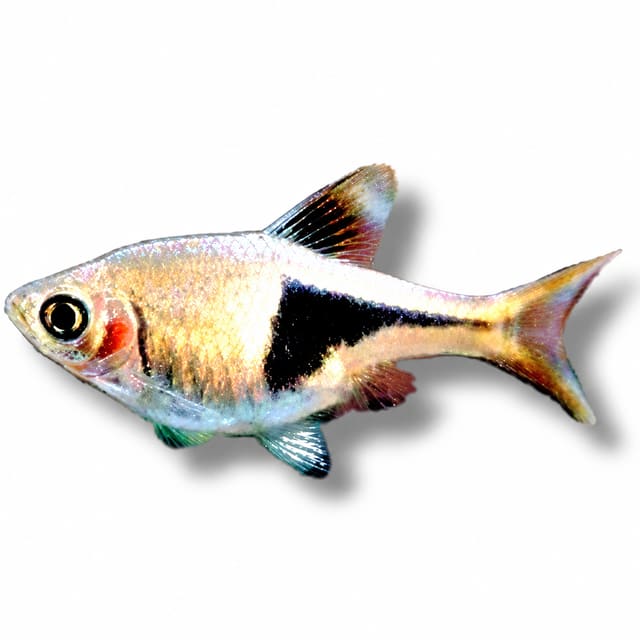
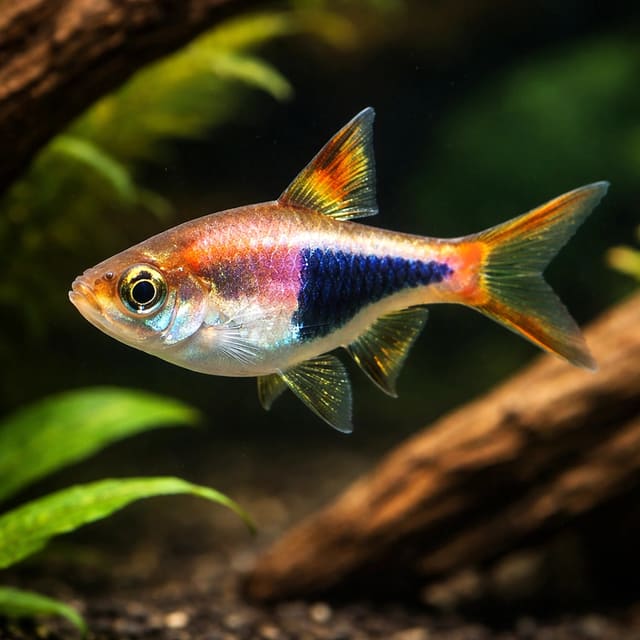
Harlequin (Rasbora heteromorpha)
21–28°C · pH 5–7.5 · 54L
£2.99
The Danio malabaricus orange (Danio malabaricus) is an active danio from western India and Sri Lanka that reaches 12 cm. It suits spacious, well-maintained communities in a group of at least 8–10; the overlap of Seriously Fish and OATA guidance is 18–25°C, pH 6.5–8.0 and 4–12 dGH. Sold individually in sizes from 3–4 cm to 4–5 cm.
Adult size is the maximum length this species reaches at full maturity (scientific sources). The livestock you receive will be younger and smaller — pick a size above for the actual shipping size. Product-photo provenance and any image-specific limitations are stated on the listing.
Danio malabaricus
Shoaling fish: kept in a group they feel safer, stay calmer and show their best colour.
The Danio malabaricus orange (Danio malabaricus) is an active danio from western India and Sri Lanka that reaches 12 cm. It suits spacious, well-maintained communities in a group of at least 8–10; the overlap of Seriously Fish and OATA guidance is 18–25°C, pH 6.5–8.0 and 4–12 dGH. Sold individually in sizes from 3–4 cm to 4–5 cm.
Adult size is the maximum length this species reaches at full maturity (scientific sources). The livestock you receive will be younger and smaller — pick a size above for the actual shipping size. Product-photo provenance and any image-specific limitations are stated on the listing.
Plan a mature, densely planted aquarium with at least a 45 × 30 cm base for a social group. Use 20–26°C, pH 6.5–7.5 and 5–15 dGH as published screening ranges, then hold a stable value inside the overlap for every animal in the tank.
Maintain these water conditions for optimal health and vibrant colors
Danio malabaricus orange (Danio malabaricus), often called an orange Giant Danio, is an active freshwater member of the Danionidae family from the west coast of India and Sri Lanka. It reaches 12 cm total length and suits a keeper who can provide a long aquarium, a substantial group and clean, well-oxygenated water. This is a larger danio whose swimming pace and vigorous feeding behaviour make aquarium length and companion choice more important than its straightforward diet.
FishBase records the species from habitats ranging from boulder-strewn mountain torrents to small pools in dry-zone streams. In the wild it is more common in flowing water than in reservoirs and irrigation tanks, and adults form medium-sized shoals and prefer flowing water. These traits point towards an aquarium with swimming length, moderate water movement and room for the whole group to move without repeatedly meeting the glass or slower companions.
FishBase now lists it as Devario malabaricus. The familiar Danio malabaricus name remains widely associated with this fish, and the orange wording identifies the colour sold here without implying a sex, life stage or geographical origin.
Choose this fish for movement and group behaviour rather than as a single display animal. Seriously Fish describes it as non-aggressive, but its constant activity may unsettle timid fish and its vigorous feeding can disadvantage slower companions. A suitable keeper can maintain stable water, perform substantial weekly water changes and check that every member of the community feeds normally.
Its 12 cm recorded maximum should guide the long-term plan. The aquarium should accommodate at least 8–10 of these active fish together, not merely one adult, so assess swimming room, filtration capacity and the needs of existing livestock as one combined decision.
Keep Danio malabaricus orange at 18–25°C, pH 6.5–8.0 and 4–12 dGH. Use an aquarium with a base of at least 120 × 45 cm or an equivalent footprint; Seriously Fish estimates that aquarium at about 243 litres. Maintain a group of at least 8–10 specimens and fit a very tightly fitting cover.
The Seriously Fish species profile gives 18–25°C, pH 6.0–8.0 and 2–15 dGH. OATA’s danio group guidance gives 17–27°C, pH 6.5–8.0 and 4–12 dGH. The complete routine range above is the overlap of the Seriously Fish species values and OATA’s danio guidance.
Seriously Fish calls the fish not difficult to keep in a well-maintained aquarium. That makes it a practical choice for a prepared beginner with the necessary space, but not a shortcut around aquarium maturation, group planning or weekly maintenance. Water quality matters because the profile links this fish with pristine habitats and warns against accumulated organic pollution.
Use all of these conditions together. A large volume without enough swimming length is not equivalent to the stated footprint, while a long aquarium still needs sufficient biological filtration and water volume for a sizeable shoal.
If this fish’s adult size, activity or group requirement does not fit the intended aquarium, browse the rasboras and danios collection and compare each animal’s own adult size, swimming behaviour and aquarium requirements before deciding.
The live size selector shows 3–4 cm and 4–5 cm. One purchase supplies one fish in the selected size. The size you select is the size supplied, not the adult size. Plan the aquarium around the recorded 12 cm adult maximum and the full group, even when starting with smaller fish.
Size labels describe the fish at dispatch and should not be treated as a promise about age, sex or maturity. If adding several fish, select the quantity needed for the group while checking the aquarium’s footprint, biological capacity and existing livestock before placing the order. A group should not be assembled merely by matching centimetres of fish to litres of water; this species also needs length, oxygenation and feeding access.
Sex is guaranteed only when the selected option explicitly states male or female. This Danio malabaricus orange listing has no sex-guaranteed option.
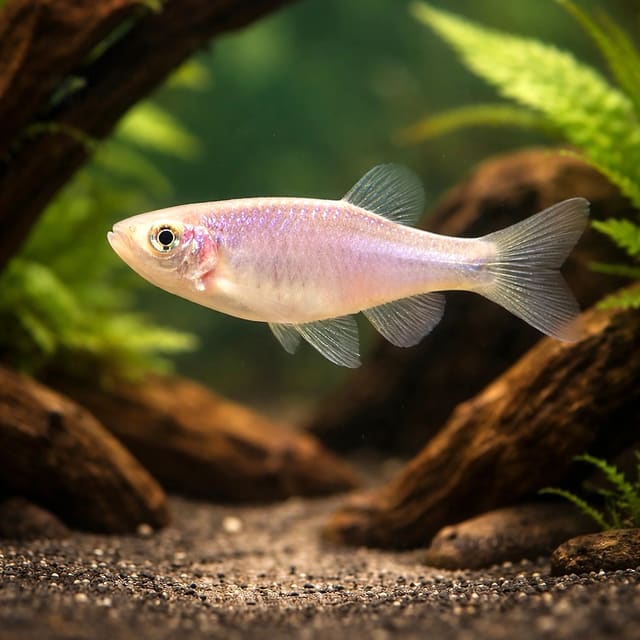
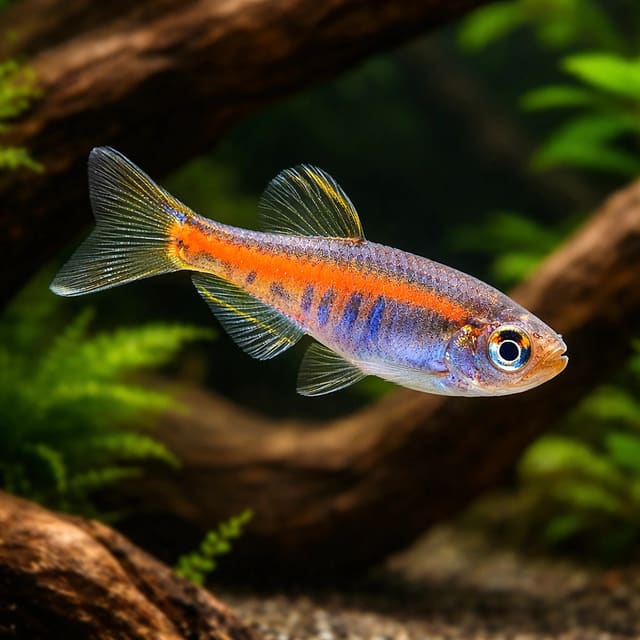
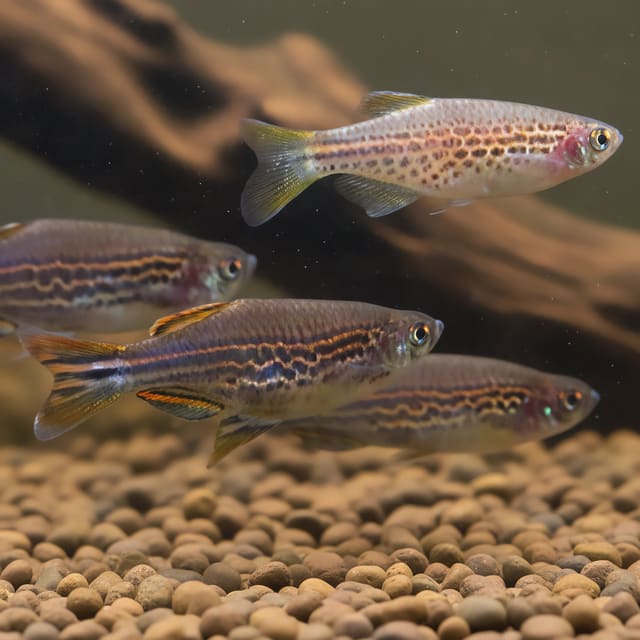
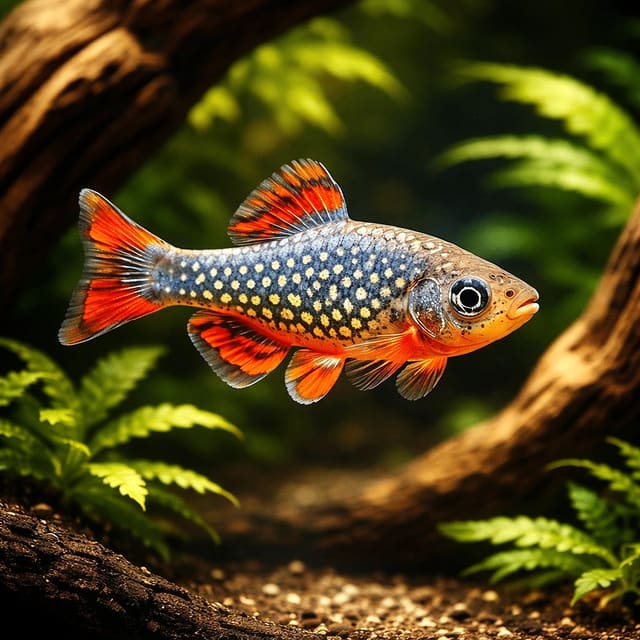
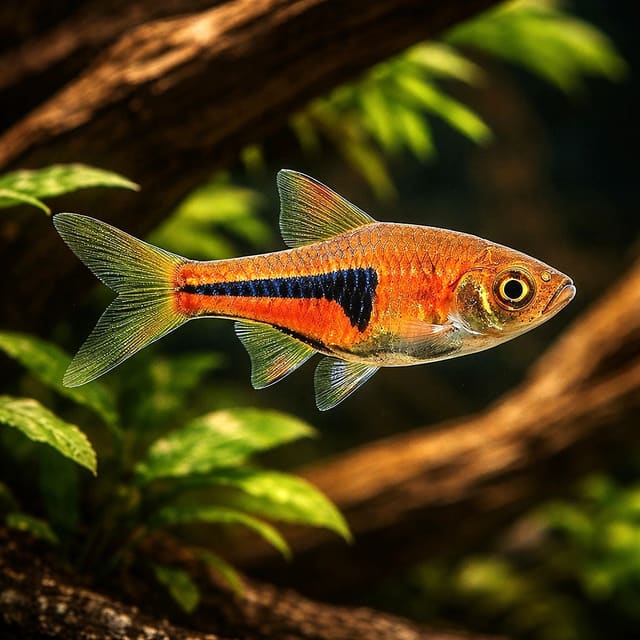
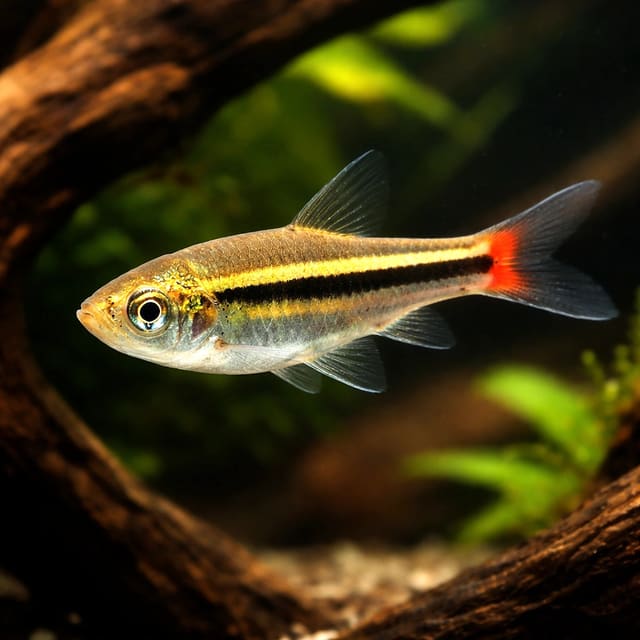
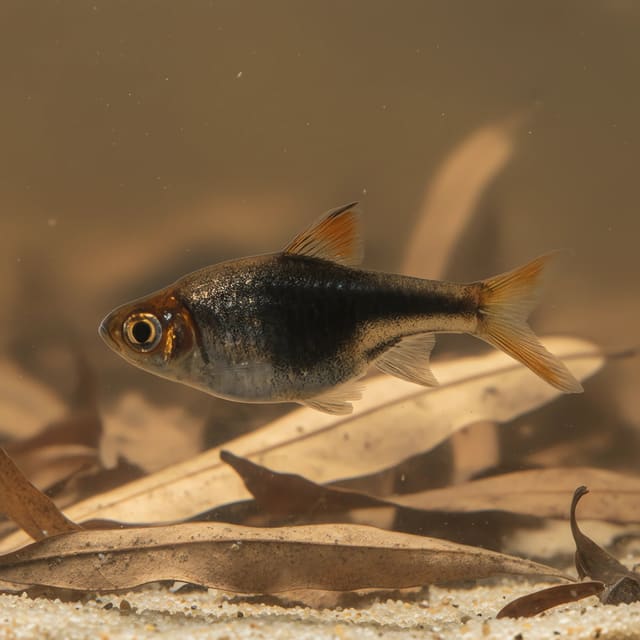
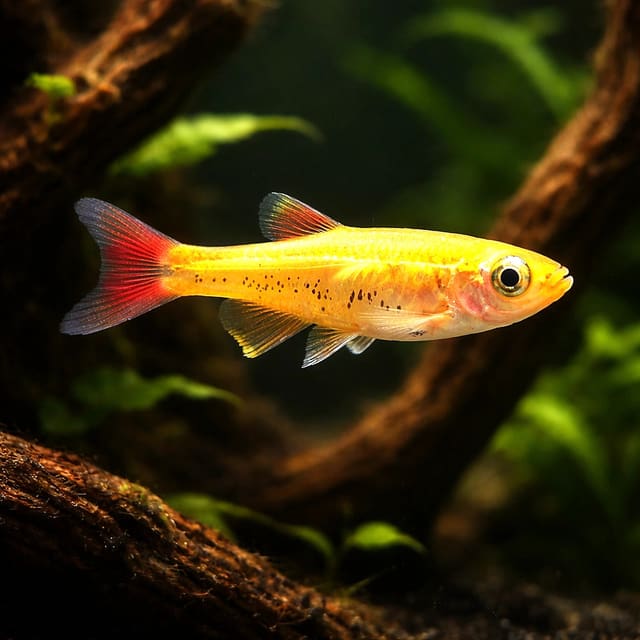
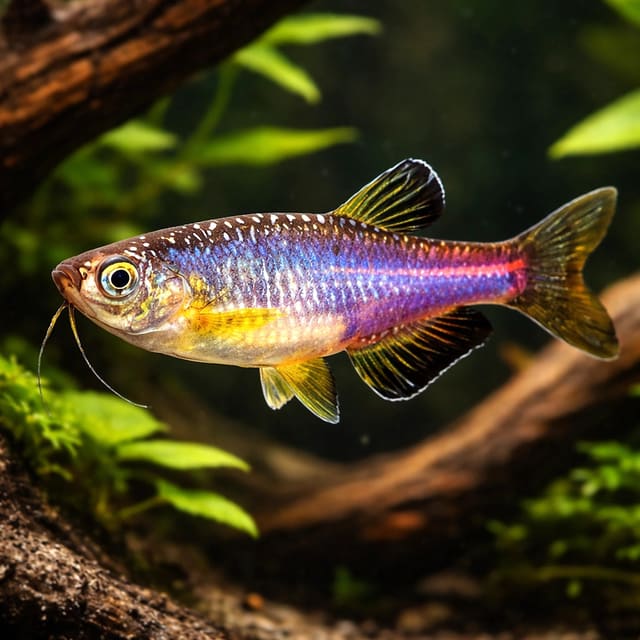
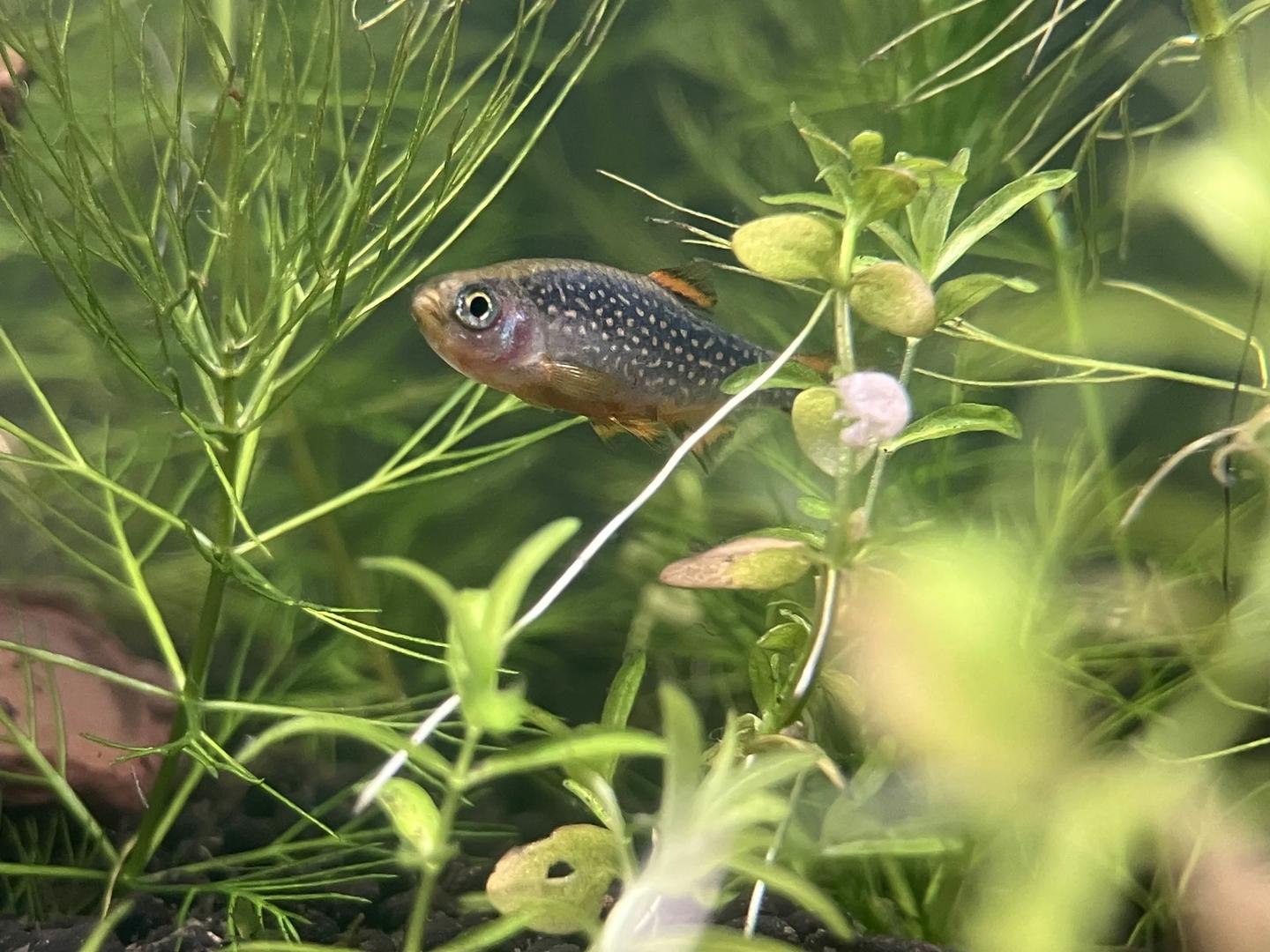
The gallery images are representative of this type of animal rather than photographs of the exact animal supplied, so colours can look slightly different from the live animal.
The orange fish pictured demonstrates the general body shape and colour associated with this offer, while the live animal may differ in shade or markings. Use the identity, selected dispatch size and care requirements—not apparent sex or maturity in a representative image—to plan the aquarium.
| Suits | Not suited to |
|---|---|
| A base of at least 120 × 45 cm | Short aquaria without sustained swimming room |
| A group of at least 8–10 | Solitary keeping or a group below the recommended range |
| Moderate movement and high dissolved oxygen | Stagnant or poorly maintained water |
| Robust, similarly sized community fish | Communities dominated by slow or timid fish |
| A keeper able to change 30–50% weekly | A low-maintenance or infrequently tested setup |
Plan for a 12 cm maximum total length and a group of at least 8–10. FishBase records 12 cm as the maximum length, so plan the aquarium and companions for a fish of that length rather than the size supplied.
Provide a base of at least 120 × 45 cm or an equivalent footprint. Seriously Fish estimates this setup at about 243 litres and says it should be the minimum considered. Prioritise the stated footprint as well as volume: a deeper but shorter aquarium may hold a similar number of litres without supplying the same continuous swimming run.
Use water-worn rocks, sand, fine gravel and small boulders to reflect the varied flowing habitats associated with the species. Driftwood roots or branches can add structure, but arrange them so the group retains a broad route through the aquarium. Keep hard edges, unstable piles and narrow traps away from that route.
Seriously Fish says the majority of aquatic plants will fail to thrive in a stream-style setup but names Microsorum, Bolbitis and Anubias as hardy types that can be grown attached to décor. These plants can provide cover without filling the main swimming lane. Check each plant’s placement as it grows so leaves and wood do not gradually divide the open route into cramped pockets.
Fit a very tightly fitting cover and check gaps around cables, pipework and filter returns. Recheck the fit after maintenance because a lid moved for feeding or water changes only protects the fish once it has been seated properly again.
Moderate water movement is appropriate; very fast flow is unnecessary. Arrange the outlet so it circulates water and supports oxygenation without forcing the fish to battle one concentrated jet continuously. The group should be able to enter moving water and move into calmer parts of the aquarium while retaining ample open space.
Keep the aquarium at 18–25°C, pH 6.5–8.0 and 4–12 dGH. Test the actual aquarium rather than relying on tap-water assumptions or heater settings. Temperature, pH and hardness describe different properties, so one value being suitable does not imply that the others are suitable.
Keep ammonia at 0 mg/l and nitrite at 0 mg/l. OATA recommends that nitrate should not exceed 20 mg/l above the normal tap-water level. Test your tap water as well as the aquarium so you know where that ceiling sits. Measure both sources with the same method rather than assuming a universal nitrate number.
Record results at least weekly and also test when swimming, breathing, appetite or colour changes. A written sequence makes trends easier to recognise than isolated readings. A suitable temperature, pH and hardness never replace zero-ammonia and zero-nitrite results.
Our water chemistry guide explains what the principal aquarium tests measure. Enter measured values into the water matcher to compare them with the stated range for this fish.
When a reading falls outside its target, check the test method and recent maintenance before acting. Review temperature, pH, hardness and nitrogen waste together because a fish experiences the aquarium as one environment, not as separate figures.
Use a mature biological filter before adding the fish. The RSPCA explains that aquarium filtration supports beneficial bacteria that convert toxic ammonia into nitrite and then into the safer nitrate. This process must be functioning well enough to keep both ammonia and nitrite at 0 mg/l under the waste load created by the complete community.
For an aquarium of about 243 litres, Seriously Fish uses a turnover of four to five times the aquarium volume per hour and points to a filter rating of roughly 970–1,215 litres per hour. Treat that rating as a planning figure alongside the filter’s media capacity, aquarium layout and actual circulation. Décor, accumulated debris and the position of outlets can all affect how water moves through the setup.
This danio prefers a relatively high proportion of dissolved oxygen and moderate water movement, but very fast flow is unnecessary. Direct the return to circulate the surface and length of the aquarium while retaining areas where the fish can swim without meeting the strongest current. Watch the whole group: normal use of both moving and calmer areas is more useful than assuming one outlet position suits every layout.
Prepare and mature the aquarium before livestock arrives; our first tropical aquarium guide sets out that preparation. Confirm ammonia and nitrite are both zero before introduction, then increase livestock numbers slowly so the beneficial bacterial population can adjust as waste and feeding rise.
Check the filter for blockages. When media needs cleaning, rinse it lightly in aquarium water removed during a water change rather than under the tap, because chlorine or chloramine may kill the beneficial bacterial population. Restore the filter promptly and confirm that normal flow has resumed before finishing maintenance.
Do not use clear-looking water as a substitute for testing. Dissolved ammonia and nitrite can be dangerous without making the aquarium appear dirty, while a working filter still needs regular observation, water testing and partial water changes.
Use a good-quality dried food as the staple, then supplement it regularly with small live or frozen foods such as bloodworm, Daphnia and Artemia. Seriously Fish describes the captive fish as easily fed and says it is almost certain to prey chiefly on insects and their larvae in nature. FishBase also records terrestrial insects and detritus in the wild diet.
OATA’s group routine is one feed per day, limited to what the fish consume within a few minutes. Begin with a modest amount, observe the whole group and reduce the next ration if food remains after that window. Uneaten food breaks down and adds waste, so portion control supports the clean-water conditions this fish requires.
Vigorous feeding is a normal compatibility consideration for this fish. Observe where food is taken and check that every danio and every companion reaches an appropriate share. A tankmate that repeatedly hangs back while the danios clear the food is showing a practical mismatch in feeding pace, even if no direct aggression occurs.
Do not respond to fast feeding by adding unrestricted food. Increase or redistribute a ration only after observing which fish are eating, how long the meal lasts and whether anything settles uneaten. A meal disappearing quickly can reflect speed at the front of the group rather than equal access for every fish.
Notice whether the group approaches food, whether an individual stops competing and whether interest declines from its normal pattern. Reduced intake can accompany water-quality or health problems. Test ammonia, nitrite, nitrate, temperature and pH when appetite changes rather than treating food refusal as a feeding issue alone.
Change 30–50% of the aquarium water every week. Seriously Fish treats this as routine because the species comes from pristine habitats, is probably intolerant of accumulated organic pollution and needs more-or-less spotless water to thrive. Choose a consistent day, test the water and inspect the fish before maintenance so changes in behaviour or condition are not overlooked.
Cleaning everything at once is not the goal. Preserve the filter’s bacterial population by rinsing media lightly in removed aquarium water only when it needs cleaning. Avoid tap-water rinsing, and do not replace established media merely because it looks discoloured.
During the first week, record where the group normally swims, how strongly it feeds and how quickly the filter clears suspended debris after routine activity. Continue weekly measurements through the first month so the aquarium develops a useful baseline for temperature, pH and nitrogen waste.
If ammonia or nitrite rises above 0 mg/l, treat it as a water-quality problem immediately. Review recent stocking, feeding and filter operation, and carry out the necessary water-quality response rather than waiting for visible illness. If nitrate rises towards more than 20 mg/l above tap-water level, review water-change volume, feeding and accumulated waste.
Look for surface hanging, bottom sitting, erratic swimming, darker or paler colour, increased hiding, altered aggression, faster or slower gill movement, white spots, fluffy growths, damaged fins or scales, changing body condition and reduced feeding. Test the water first when any of these appears, then contact us for health guidance. Early comparison with the group’s normal behaviour gives a clearer basis for action than waiting for several signs to develop.
Have the mature, covered aquarium ready before the parcel is opened. Following the Seriously Fish and OATA care guidance, confirm a temperature of 18–25°C, pH 6.5–8.0, hardness of 4–12 dGH and zero ammonia and nitrite. Ensure the filter is running normally and that the intended group and existing community fit the 120 × 45 cm minimum footprint.
The Tropical Fish Co delivery and Live Arrival Guarantee policy explains the packing and arrival procedure. Fish are hand-bagged in pure oxygen and placed in an insulated poly box, with a heat pack used when the weather calls for it. Transport is handled by a licensed live-animal courier, and tracking details are sent by email. Arrange for someone to receive the parcel so live fish are not left unattended.
Keep the arrival sequence simple. Float the bag for the full 20–30 minutes to acclimatise the fish, and keep the bag water out of the aquarium. Do not use the arrival period to rearrange décor, clean the filter or make an avoidable water change; complete routine preparation beforehand so the fish enters a stable setup.
After release, refit the very tightly fitting cover, which Seriously Fish says the aquarium must have, and check openings around cables, pipework and filter returns.
Watch swimming position, breathing, colour and interest in food against the normal signs described in the care guidance. Test water if behaviour changes, especially ammonia and nitrite. Add livestock slowly over time because the biological filter’s bacterial population must adjust when the number of fish and the amount of feeding increase.
Open and inspect the parcel on the day it arrives, and send any Live Arrival Guarantee claim the same day with your order number and the unboxing video. Keep the aquarium tested and ready before the delivery day.
Keep Danio malabaricus orange in a group of at least 8–10 specimens. Seriously Fish gives this species-specific recommendation because a group of this size makes the fish less nervous, gives a more natural-looking display and contains aggression as individuals concentrate on keeping their position within the hierarchy.
FishBase records adults forming medium-sized shoals in the wild and preferring flowing water. In the aquarium, plan the group and footprint together: the minimum is not a small tank containing eight fish tightly, but a base of at least 120 × 45 cm or equivalent with open swimming room, suitable filtration and moderate circulation.
| Plan | Decision |
|---|---|
| One fish | Increase the plan to a proper shoal |
| Five or six fish | Below the recommended 8–10 range |
| Eight fish | Lower edge of the species recommendation |
| Ten fish | Fits the recommended group where capacity allows |
Count the biological load of the whole group together with existing fish. A filter that keeps ammonia and nitrite at zero before an addition may still need time for its bacterial population to adjust after livestock and feeding increase. OATA advises increasing fish numbers slowly to reduce the risk of new tank syndrome.
Do not use a larger group to compensate for an aquarium that lacks length. Equally, do not use a long aquarium to justify keeping too few. Group size, swimming footprint, water quality and cover security are separate requirements that must all be met.
Normal behaviour can change with feeding, flow and activity elsewhere in the aquarium. Look for use of the available swimming run, participation at feeding and stable body condition. An individual that repeatedly withdraws, loses condition or changes swimming position warrants a water test and closer observation of group interactions.
Choose robust, similarly sized companions that can share a spacious aquarium without being overwhelmed by constant movement. Seriously Fish describes this danio as non-aggressive but warns that its activity and vigorous feeding may upset slow-moving or timid fish. Compatibility therefore depends on more than whether both animals are generally described as peaceful.
Seriously Fish names cyprinids, loaches, cichlids, catfishes and characins as groups containing potential companions. These are screening categories, not universal approvals. Each candidate still needs compatible adult size, water conditions, temperament, aquarium footprint and feeding behaviour.
| Positive screening sign | Caution sign |
|---|---|
| Robust and similarly sized | Slow-moving or easily displaced |
| Comfortable in 18–25°C and pH 6.5–8.0 | Needs water outside the danio’s range |
| Feeds confidently alongside active fish | Repeatedly misses food |
| Fits the same spacious aquarium plan | Depends on quiet, confined territory |
For invertebrates and animals outside the named fish groups, treat the match as a case-by-case decision. Compare adult dimensions, feeding biology, likely interactions and water values, then observe closely after introduction. Do not infer safety merely because the danio is non-aggressive.
List every intended species with its adult size, group requirement, water range and activity level. Then check that the aquarium can provide the Giant Danio’s 120 × 45 cm footprint, a group of at least 8–10 and enough feeding opportunities for all residents. If the result is unclear, leave out any candidate that fails one of the three screening points.
It reaches 12 cm total length. FishBase records 12 cm as the maximum length, so use that figure when planning the aquarium and its group rather than treating the 3–4 cm or 4–5 cm dispatch sizes as adult sizes.
Use a base of at least 120 × 45 cm or an equivalent footprint. Seriously Fish estimates that aquarium at about 243 litres and says it should be the minimum considered for this active schooling fish.
Keep a group of at least 8–10. Seriously Fish recommends this number to reduce nervousness, support natural group behaviour and contain aggression within the shoal’s hierarchy.
It can suit a prepared beginner because Seriously Fish calls it not difficult in a well-maintained aquarium. The keeper still needs a 120 × 45 cm minimum base, at least 8–10 fish, a mature filter and weekly 30–50% water changes.
Feed a good-quality dried product as the staple and add regular small live or frozen foods such as bloodworm, Daphnia and Artemia. Offer only what the group eats within a few minutes once a day.
Keep it at 18–25°C, pH 6.5–8.0 and 4–12 dGH. These routine values are the overlap of the Seriously Fish species profile and OATA’s danio guidance.
Seriously Fish describes it as non-aggressive and highlights constant activity and vigorous feeding as the main compatibility concerns. Choose robust companions and watch whether slower or timid fish become unsettled or miss food.
Potential fish companions include suitably robust, similarly sized cyprinids, loaches, cichlids, catfishes and characins. Screen every fish or invertebrate for adult size, activity, feeding pace and compatible water values rather than treating any group as universally safe.
Start filming while the parcel is still sealed and keep the short video continuous as you show the sealed parcel, open it and show the fish still in the bag. Tropical Fish Co hand-bags the fish in pure oxygen and uses an insulated poly box, adding a heat pack when weather calls for it. Be home to receive the parcel, float the bag for 20–30 minutes and never pour bag water into the aquarium.
No reviews for this item yet. Bought one? Honest reviews only, good or bad.
What customers say about ordering from us
Easy website plenty of info on fish your buying great to pick a time slot
TRACEY DURRANT · 7 Oct 2026
Got some lovely fish thank you
Kevin Mackie · 7 Oct 2026
Reviews of our shop, collected by Judge.me, an independent third-party review collector. Newest first.