
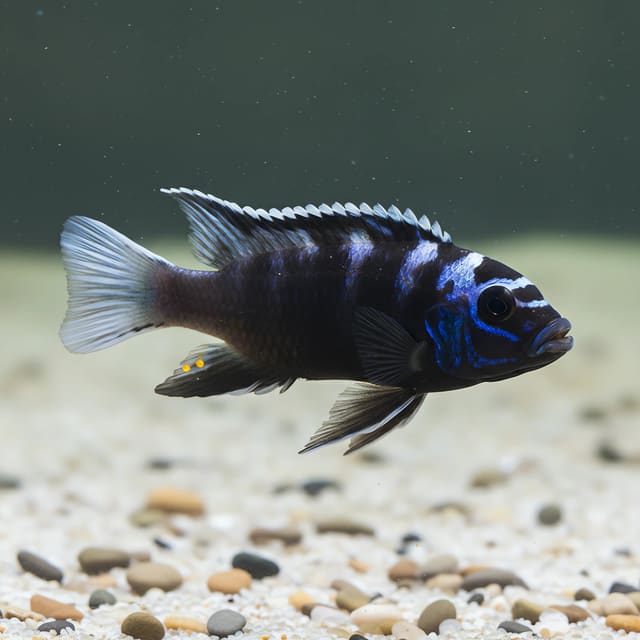
Moderate
Acei Cichlid (Pseudotropheus sp. “acei”)
24–26°C · pH 7.5–8.5 · 300L
£7.99

The Malawi Hawk Cichlid (Aristochromis christyi) is a predatory cichlid endemic to Lake Malawi that reaches 30 cm. It suits advanced keepers with a minimum 180 × 60 × 60 cm aquarium; Seriously Fish advises a single male or one male with several females, while 24–26°C, pH 7.5–8.4 and 10–30 dGH are the overlap of FishBase and Seriously Fish. Sold individually in 4 - 5 cm and 7 - 9 cm dispatch sizes.
Adult size is the maximum length this species reaches at full maturity (scientific sources). The livestock you receive will be younger and smaller — pick a size variant above for the actual shipping size. Product-photo provenance and any image-specific limitations are stated on the listing.
Aristochromis christyi
Save when buying multiple fish. Each quantity is one fish; sex and pair formation are not guaranteed unless the selected variant explicitly states them.
The Malawi Hawk Cichlid (Aristochromis christyi) is a predatory cichlid endemic to Lake Malawi that reaches 30 cm. It suits advanced keepers with a minimum 180 × 60 × 60 cm aquarium; Seriously Fish advises a single male or one male with several females, while 24–26°C, pH 7.5–8.4 and 10–30 dGH are the overlap of FishBase and Seriously Fish. Sold individually in 4 - 5 cm and 7 - 9 cm dispatch sizes.
Adult size is the maximum length this species reaches at full maturity (scientific sources). The livestock you receive will be younger and smaller — pick a size variant above for the actual shipping size. Product-photo provenance and any image-specific limitations are stated on the listing.
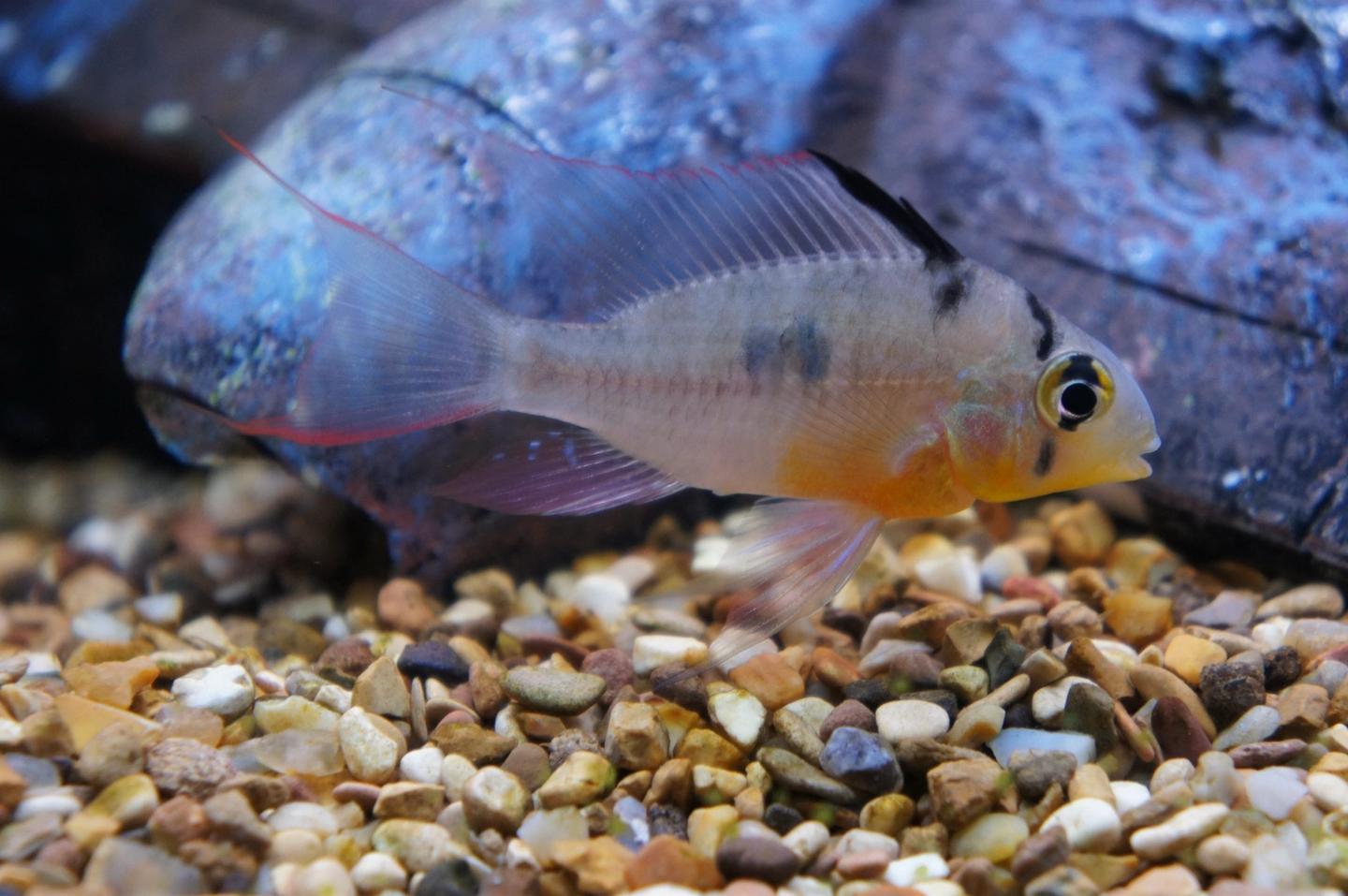
Cichlids are a family of roughly 1,800 accepted species, not one care type. Before buying, identify the exact species and source, then compare adult measurement, usable tank dimensions, social system, territory, tested water, diet and an exit plan. No family-wide minimum tank, water range or tank-mate list is safe.
Maintain these water conditions for optimal health and vibrant colors
The Malawi Hawk Cichlid (Aristochromis christyi) is a freshwater, predatory haplochromine cichlid in the family Cichlidae. It is endemic to Lake Malawi in Africa, where FishBase records a maximum length of 30 cm. This is an advanced choice for a keeper who can dedicate a large, hard-water aquarium to a solitary predator or a deliberately planned harem.
Adult housing is the decisive commitment. Seriously Fish treats minimum dimensions of 180 × 60 × 60 cm as mandatory for long-term care, corresponding to approximately 648 litres. The broad base gives this open-water fish swimming room, while sand and rock piles reproduce the combination of open space, shelter and rocky hunting areas described for the species.
Keep the aquarium at 24–26°C, pH 7.5–8.4 and 10–30 dGH. Those routine values are the overlap of FishBase’s recorded environment and the Seriously Fish aquarium range. They describe hard, alkaline Malawi conditions and should be established before the fish is introduced rather than pursued through repeated corrections after arrival.
Its mouth and feeding behaviour set the compatibility limit. Wild fish prey chiefly on small fish, including fish sheltering in rocky cracks, and the aquarium profile says never to combine it with anything that can fit into its capacious mouth. This rules out a general community aquarium even when a dispatch-size fish initially appears much smaller than its future companions.
Use the live size selector to choose between the labels 4 - 5 cm and 7 - 9 cm. One purchase supplies one animal of the selected size. The size you select is the size supplied, not the adult size. Both choices therefore require the same long-term plan for a fish that reaches 30 cm.
Dispatch size helps you assess the immediate introduction, feeding portion and mouth-size relationship with established fish. It does not reduce the minimum 180 × 60 × 60 cm adult aquarium, change the predatory diet or make small companions suitable. Build the permanent plan first, then use the selected size to decide whether the introduction can be managed safely in that established system.
Sex is guaranteed only when the selected option explicitly states male or female. This Malawi Hawk Cichlid listing has no sex-guaranteed option. Do not construct a one-male harem by assuming that colour, dispatch size or a gallery scene identifies the animals you will receive.
Some gallery images have been digitally enhanced to improve image quality. They show the listed type of animal rather than guaranteeing the exact markings of the individual supplied, so natural colour and pattern can vary. Use the gallery to understand the species’ long body, large head and dark lateral stripe, while treating the written identity and care requirements as the basis for aquarium planning.
Choose this cichlid for a planned Lake Malawi aquarium with enough floor area, filtration and compatible stocking. The care challenge comes from the combination of adult size, predation, waste production and restricted companion choices, not from an elaborate daily routine.
| Suits | Not suited to |
|---|---|
| Advanced keepers planning around a 30 cm predator | Small or general community aquariums |
| A minimum 180 × 60 × 60 cm aquarium | Aquariums below the long-term dimensions |
| Stable water at 24–26°C, pH 7.5–8.4 and 10–30 dGH | Soft or acidic aquarium plans outside that range |
| A single male or one male with several females | An unplanned small group |
| Carefully screened, similarly sized Malawi companions | Any tankmate that fits into its mouth |
You can compare the wider African cichlid collection when deciding whether this specialised predator or a different cichlid better matches your aquarium. A shared collection does not make two fish compatible; apply the screening rules to every proposed combination.
Use an aquarium with minimum dimensions of 180 × 60 × 60 cm for long-term care. Seriously Fish describes those dimensions as mandatory and places their volume at approximately 648 litres. Prioritise the 180 × 60 cm base because the species needs open swimming space and room to turn around rock structures.
| Area | What to provide |
|---|---|
| Open water | Long, unobstructed swimming lanes across the aquarium |
| Substrate | A sandy base |
| Rock zone | Rock piles that add variation and hiding places |
| Service space | Access for waste removal, filter checks and water changes |
The layout reflects how the wild fish uses places where rock and sand form an intermediate biotope. It hunts among crevices but is also described as an efficient ambush predator and an open-water species, so a tank packed from end to end with rock would remove the swimming area it needs.
Rock piles are especially important where compatible rock-dwelling Malawi fish form part of the plan, because those fish need places to shelter. They do not make a mouth-sized companion safe, and they should not be treated as a substitute for the required aquarium footprint.
An aquarium can hold approximately 648 litres before décor and still offer poor usable space if hardscape blocks the full length. Stand in front of the finished layout and trace a clear route along the long face, around the main rock piles and back into cover. If the route narrows into a confined gap, simplify the structure before introducing a large fish.
Plan the permanent aquarium around the adult fish from the beginning. A 4 - 5 cm or 7 - 9 cm dispatch size does not authorise a smaller long-term setup while the animal grows.
Keep the water at 24–26°C, pH 7.5–8.4 and 10–30 dGH. This is the overlap of FishBase’s recorded Lake Malawi environment and the Seriously Fish aquarium range, so every routine target sits within both sets of species figures.
Choose a normal point inside each range and test against it consistently. A practical reading such as 25°C, pH 8.0 and 15 dGH sits inside all three ranges. The purpose of choosing a central operating point is to make changes visible: a reading can still be inside the outer range while showing movement away from the aquarium’s normal condition.
Measure the source water and the aquarium before deciding that a Malawi setup is suitable. Our water chemistry guide explains what the main readings mean, while the water matcher helps compare measured values with this fish’s stated range.
A temperature of 25°C does not compensate for pH or hardness outside the range. Likewise, suitable mineral values do not make detectable ammonia acceptable. Read temperature, pH, hardness, ammonia and nitrite together because they answer different questions about suitability and biological stability.
Record results at the same point in the maintenance cycle where possible. Comparing a reading taken before a water change with previous pre-change results is more useful than comparing it with a reading taken immediately after replacement water was added. If the pattern moves away from normal, test the replacement water and check the aquarium routine before adding another fish.
Use large, efficient biological filtration and maintain a turnover of four to five times the aquarium volume per hour. At approximately 648 litres, the Seriously Fish calculation is 2,592–3,240 litres per hour in total and suggests two filters rated at 1,295–1,620 litres per hour each.
That two-filter example divides the target across the aquarium rather than relying on one unit. Confirm the actual operating flow after media, pipework and normal servicing are considered, then look for circulation across the open swimming area rather than one forceful stream beside a single outlet.
The RSPCA explains why a functioning biological filter is essential: fish release toxic ammonia, beneficial bacteria convert it to toxic nitrite and further bacteria convert nitrite to the safer nitrate. A filter therefore has to be established and maintained, not merely present.
OATA’s Malawi cichlid sheet is group guidance, not a species-specific optimum; it recommends oversized filtration and aggressive aeration for these crowded, oxygen-demanding aquariums. For this large predator, that advice complements the species profile’s warning that predatory fish of this size produce considerable waste.
For an aquarium around 648 litres in a room around 20°C, Seriously Fish estimates 150–225 W spread across three heaters to hold 24–26°C. Treat all parts of that example together: the wattage, three-heater arrangement, aquarium volume and room temperature belong to the same calculation.
Check the thermometer rather than assuming the heater setting equals the water temperature. A stable reading across the aquarium confirms the result that matters. Place routine temperature checks alongside filter-flow and aeration checks so a blocked filter or failed heater is found before fish behaviour changes.
Build the diet around suitable dead animal foods such as prawns, mussel, cockle and lancefish. The Malawi Hawk Cichlid is a piscivore: FishBase records fish fry as its wild food, while Seriously Fish says it preys chiefly on other cichlids and can be trained to accept dead foods in an aquarium.
Dried pellets may be accepted, but Seriously Fish says they should not form the basis of the diet. Use them as a supporting food rather than replacing the prawns, molluscs and fish-based choices identified for the species.
The short feeding window is a limit on each meal, not an instruction to continue adding food for the full period. Start with a measured portion, observe what is eaten and stop when the fish loses interest or food begins to remain. This approach connects feeding directly to water quality.
OATA lists reduced intake or loss of interest in food among the changes that can signal a health or environmental problem. If a fish that normally feeds stops doing so, test ammonia, nitrite, temperature and the other routine water values before changing the menu.
The hunting method explains the specialised head and mouth. In nature, the fish may turn on its side and place its large, laterally compressed jaws into a rocky crack to capture sheltering fish. Aquarium feeding should meet that predatory biology without requiring small companion fish to serve as prey.
At least once every week, change 25% of the water. OATA also advises testing at least weekly, maintaining ammonia and nitrite at zero mg per litre and keeping nitrate from exceeding 20 mg per litre above the normal tap-water level.
If filter media needs cleaning, do not run it under the tap. Rinse it lightly in aquarium water removed during the partial water change. This reduces the loss of the beneficial bacteria responsible for processing ammonia and nitrite.
The nitrate limit is measured relative to the normal tap-water level. If tap water contains nitrate, record that baseline and compare the aquarium result with it; the aquarium reading should not exceed the baseline by more than 20 mg per litre.
Watch for hanging at the surface, sitting on the bottom, erratic swimming, unusually dark or pale colour, increased aggression, increased hiding, changed gill movement, white spots, fluffy growths, damaged fins or scales, altered body condition and reduced feeding.
If one of these changes appears, test the water immediately and message our team for further guidance. The observation identifies a reason to investigate; it does not identify a disease or authorise a treatment by itself.
Keep the same weekly testing and water-change day through the first month. Compare pre-change readings week by week, check whether food is being cleared within a few minutes and confirm that filter flow remains consistent. A rising waste reading calls for a review of feeding, filtration and stocking before another animal is introduced.
Prepare and mature the aquarium before the fish arrives. The first tropical aquarium guide covers the maturation process, while the essential pre-arrival checks for this cichlid are an operating filter, suitable temperature, hard alkaline water and zero ammonia and nitrite.
Add livestock slowly because the beneficial bacterial population has to respond whenever fish numbers and feeding increase. OATA warns that stocking too quickly can cause new tank syndrome, where the biological filter cannot process the increased waste and ammonia or nitrite reaches harmful levels.
For an aquarium that already contains fish, compare the Malawi Hawk Cichlid’s selected dispatch size with every resident before introduction. This is an immediate safety check only. Repeat the same comparison using its 30 cm adult size so a combination is not built around a temporary size relationship.
Test ammonia and nitrite after introduction as part of the established routine, observe whether the fish swims and breathes normally, and check that it feeds without leaving food behind. Also watch whether residents continue to feed and use the aquarium normally. A change in aggression or persistent hiding is a reason to reassess the combination and the layout.
Receive the parcel in person and begin with the sealed outer box. The delivery and Live Arrival Guarantee policy requires continuous unboxing evidence for a claim and gives a 20–30 minute floating period before release.
Keep the order intact. Filming starts while the parcel is sealed, before opening, inspecting or floating the bag. If a Live Arrival Guarantee claim is needed, send the continuous video and order number to our team on the same day.
The fish is hand-bagged in pure oxygen and placed in an insulated box, with a heat pack when the weather calls for it. These packing measures do not replace the prepared-aquarium checks: complete the water, filtration and compatibility assessment before the delivery day.
Avoid any tankmate that the Malawi Hawk Cichlid can fit into its mouth. Seriously Fish makes this an unconditional rule for the species, whose large jaws are adapted to capture small fish from rocky cracks. Judge the proposed companion at its adult size as well as its present size.
Avoid freshwater fish outside the Lake Malawi community, except for the some species of Synodontis catfish covered by OATA’s rule. OATA advises keeping Malawi cichlids only with other Malawi cichlids or some Synodontis species that also naturally inhabit Lake Malawi.
| Check | Decision |
|---|---|
| Can it fit into the predator’s mouth? | Avoid the combination if it can |
| Does it appreciate comparable water? | Proceed only within the shared range |
| Is it similarly sized as an adult? | Consider it further, then observe behaviour |
Seriously Fish names Dimidiochromis compressiceps, Fossorochromis and Champsochromis species as examples of similarly sized fish that appreciate comparable water conditions. These are conditional examples, not automatic companions. The aquarium still needs the required footprint, suitable filtration and enough usable space for the complete stocking plan.
Do not move a fish from the avoid category into consideration because rockwork has been added or because the animals coexist at dispatch size. Shelter cannot change whether a growing tankmate will fit into the predator’s mouth.
Compatibility is a three-way match between the Malawi Hawk Cichlid, each companion and the aquarium. A fish may pass the mouth-size and water checks while the complete group still exceeds the space or filtration plan. Review adult sizes, social arrangements and total waste together, then speak to our team for a stocking assessment if the combination is complex.
Seriously Fish advises keeping a single male specimen or a harem containing one male and several females. The species is largely solitary in nature: FishBase records both males and females as solitary, with females entering a male’s rocky territory to spawn.
Use the single-male arrangement when the aim is to avoid managing breeding interactions. Build a harem only when the sexes are known independently and the aquarium can provide the required adult space and cover. Buying several unsexed fish does not create the stated one-male, several-female structure.
This species is a polygamous maternal mouthbrooder. Seriously Fish reports that a male may attack females that are not ready to spawn and recommends plenty of cover when breeding is attempted. Its breeding example uses one male with at least three females in a species aquarium, but reproduction has been achieved only infrequently in the hobby.
That information is most useful as a warning about social pressure. A harem is not simply a higher fish count: it requires known sexes, cover and enough room for females to move away from the male. Do not infer sex from dispatch size, a temporary colour or an image.
OATA advises adding more peaceful Malawi species before more aggressive ones and notes that rearranging décor can reduce aggression by changing territories. These measures help manage an otherwise suitable Malawi combination; they never make a mouth-sized fish acceptable.
FishBase records an adult maximum of 30 cm. Plan the aquarium, filtration and companions around that adult size rather than the 4 - 5 cm or 7 - 9 cm dispatch size.
Seriously Fish treats minimum dimensions of 180 × 60 × 60 cm as mandatory for long-term care, corresponding to approximately 648 litres. Keep the 180 × 60 cm base open enough for swimming and add sand with rock piles for variation and shelter.
Seriously Fish advises a single male specimen or one male with several females. Build a harem only when the sexes are known and the aquarium provides enough cover and space to manage male aggression.
Our care assessment is advanced because this 30 cm predator needs a minimum 180 × 60 × 60 cm aquarium, powerful filtration and carefully screened companions that cannot fit into its mouth.
Base the diet on dead animal foods such as prawns, mussel, cockle and lancefish; dried pellets may be accepted but should not form the basis of the diet. OATA’s Malawi guidance says to feed only what it can finish within a few minutes, twice a day.
Keep it at 24–26°C, pH 7.5–8.4 and 10–30 dGH. These routine values are the overlap of FishBase’s recorded environment and the Seriously Fish aquarium range.
Treat this fish as predatory and aggressive, not as a peaceful community fish. Its documented risk is swallowing smaller tankmates, so avoid anything that fits into its mouth and monitor every combination for damaged fins, altered feeding, hiding or increased aggression.
Seriously Fish names similarly sized fishes with comparable water needs, including Dimidiochromis compressiceps, Fossorochromis and Champsochromis species. OATA also permits some Synodontis catfish from Lake Malawi; avoid every fish it can swallow and other freshwater fish outside those groups.
Start filming the sealed parcel before opening it or floating the bag, continue through opening and show the fish inside the sealed bag. It is hand-bagged in pure oxygen and placed in an insulated box, with a heat pack when the weather calls for it; float the bag for 20–30 minutes before release and never pour bag water into the aquarium.
Max adult size is the length this species reaches at full maturity (from scientific sources). The livestock you receive will be younger and smaller — pick a size variant on the buy box for the actual shipping size. Product-photo provenance and any image-specific limitations are stated on the listing.
Always research specific species before adding them to your tank. Consider:
No reviews for this item yet. Bought one? Honest reviews only, good or bad.
What customers say about ordering from us
I have a small group of long finned mountain minnows. So was delighted to be able to order ten of this variety to increase the genetics in my tank . The ones I recieved are healthy but it’s to early to give a verdict on wether they are of a long finned type since they are small currently.
Gordon Walker · 23 Sept 2026
100% success travel and "installation". Pleased with quality of purchase. The Siamese fighter a bit "shy" so have not yet seen him at his best yet but looking good. Happy customer. GG
George E Garratt · 21 Sept 2026
Reviews of our shop, collected by Judge.me, an independent third-party review collector. Newest first.
24–26°C · pH 7.5–8.5 · 300L
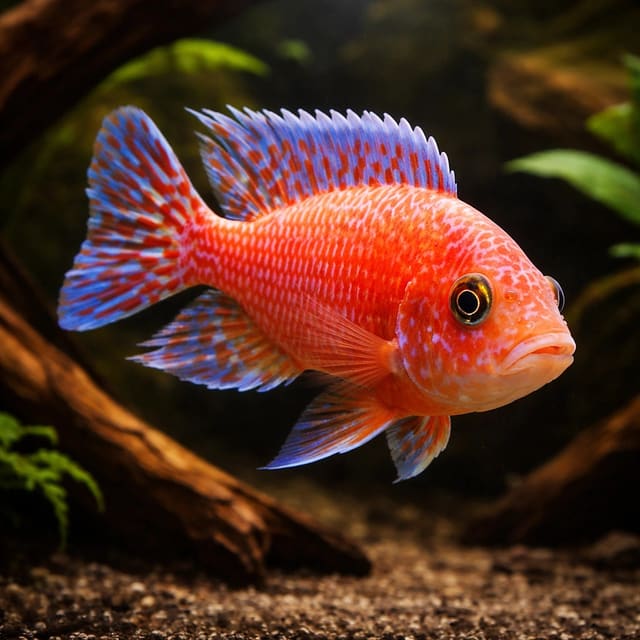
23–27°C · pH 8–8.6
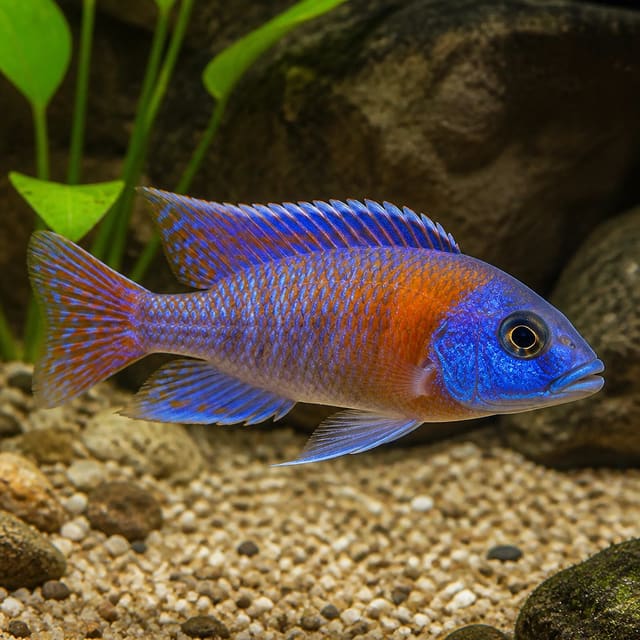
24–28°C · pH 7.5–8.5
24–26°C · pH 8–8.6
23–27°C · pH 8–8.6
23–27°C · pH 8–8.6

23–27°C · pH 8–8.6
23–27°C · pH 8–8.6
23–27°C · pH 8–8.4
24–26°C · pH 7.5–8.5 · 400L

25–26°C · pH 8–8.6 · 257L
23–27°C · pH 7.5–8.5 · 600L

23–27°C · pH 8–8.6

23–27°C · pH 8–8.6

23–27°C · pH 8–8.6
23–27°C · pH 8–8.6

22–28°C · pH 7–8 · 41L

21–25°C · pH 5–7
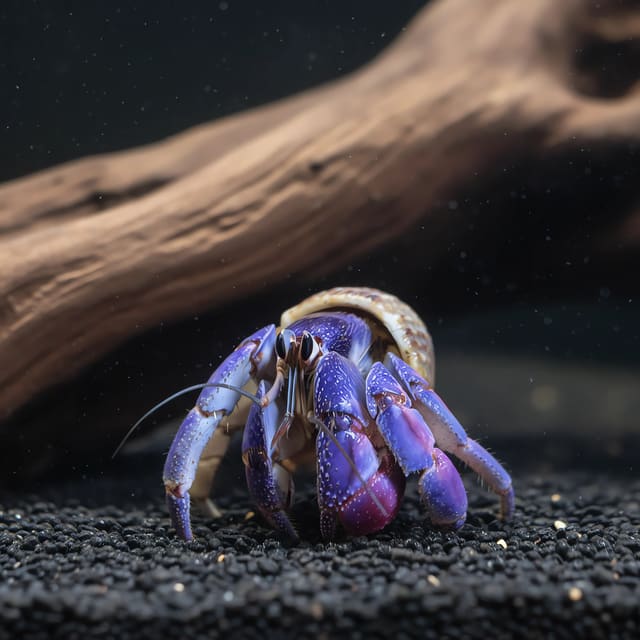
24–29°C

24–27°C · pH 6.5–6.5

22–27°C · pH 6–8 · 72L
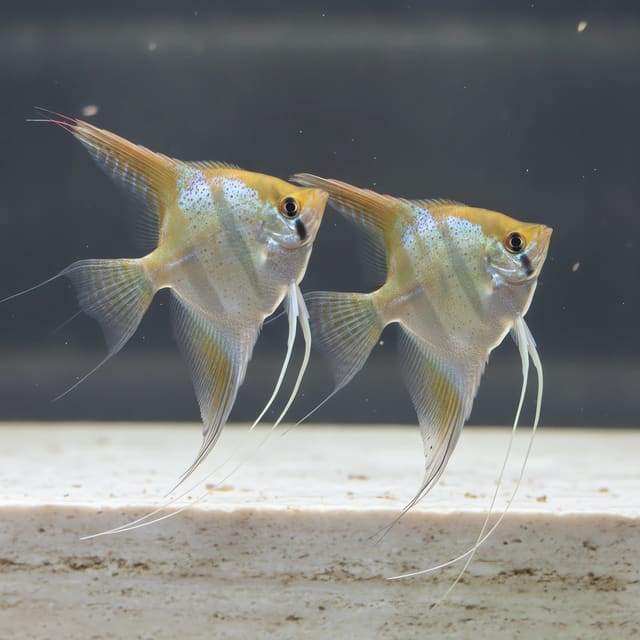
24–27°C · pH 6.5–8 · 200L

23–27°C · pH 5.5–7 · 60L

22–27°C · pH 6–8