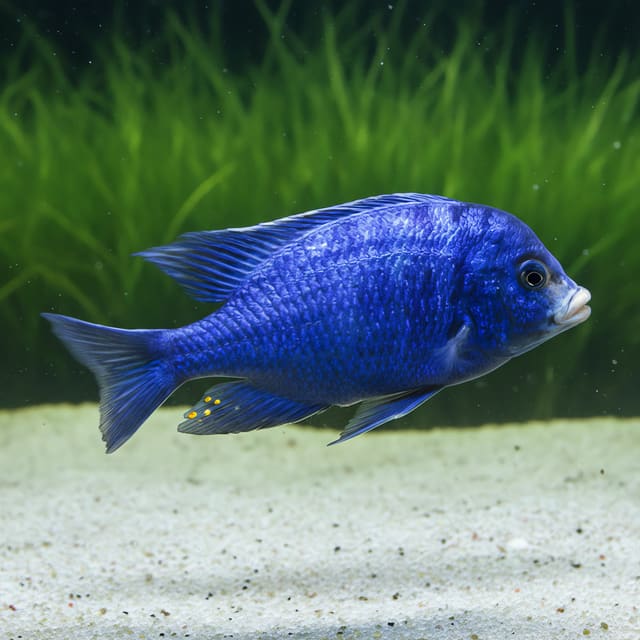
Spindle Hap Cichlid (Protomelas taeniolatus)
24–26°C · pH 8–8.6 · 205L
£13.99
One unsexed Hertae Hap in the selected 4-5 cm, 5-6 cm or 7-9 cm grade. Plan for a roughly 20 cm adult in a 600 L, 200 cm+ Malawi aquarium.
Adult size is the maximum length this species reaches at full maturity (scientific sources). The livestock you receive will be younger and smaller — pick a size above for the actual shipping size. Product-photo provenance and any image-specific limitations are stated on the listing.
Protomelas sp. 'hertae'
Save when buying multiple fish. Each quantity is one fish; sex and pair formation are not guaranteed unless the selected variant explicitly states them.
One unsexed Hertae Hap in the selected 4-5 cm, 5-6 cm or 7-9 cm grade. Plan for a roughly 20 cm adult in a 600 L, 200 cm+ Malawi aquarium.
Adult size is the maximum length this species reaches at full maturity (scientific sources). The livestock you receive will be younger and smaller — pick a size above for the actual shipping size. Product-photo provenance and any image-specific limitations are stated on the listing.
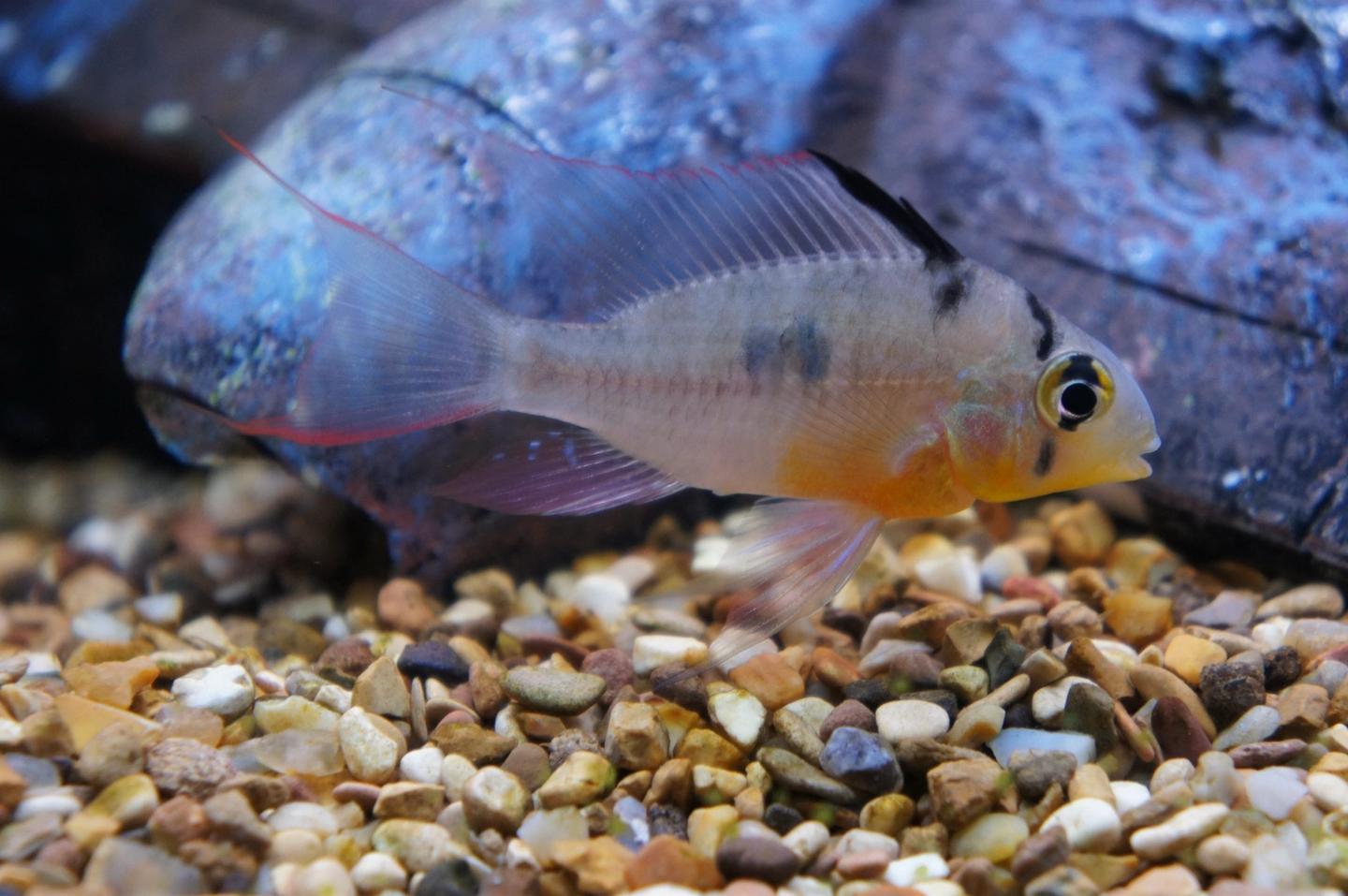
Cichlids are a family of roughly 1,800 accepted species, not one care type. Before buying, identify the exact species and source, then compare adult measurement, usable tank dimensions, social system, territory, tested water, diet and an exit plan. No family-wide minimum tank, water range or tank-mate list is safe.
Maintain these water conditions for optimal health and vibrant colors
Hertae Hap Cichlid is the aquarium trade name used here for Protomelas sp. 'hertae', an undescribed Lake Malawi haplochromine associated with rocky and rock/sand transition habitat. One unit buys one unsexed fish in the selected 4-5 cm, 5-6 cm or 7-9 cm grade. It is not a pair, sexed male or guaranteed future breeding fish.
This is a large specialist cichlid. Males are reported around 17-18 cm in nature and may approach 20 cm in aquaria; females generally remain smaller. Plan around 600 litres with a 200 cm footprint for an adult social setup, increasing space for a group or mixed Malawi community. Use stable hard alkaline water, fine sand, secure rock clusters, open swimming room and a measured carnivorous/invertivorous diet.
| Retail unit | One unsexed fish in the selected 4-5 cm, 5-6 cm or 7-9 cm grade |
|---|---|
| Working identity | Protomelas sp. 'hertae'; undescribed provisional form |
| Adult planning size | About 20 cm maximum in aquaria; females usually smaller |
| Long-term aquarium plan | About 600 L and 200 cm long; larger for complex groups |
| Practical water band | 23-27 C; pH 7.5-8.5; approximately 12-16 dGH |
| Natural feeding style | Carnivorous/invertivorous crevice feeder |
| Temperament | Relatively calm Malawi hap, but mature males can be persistently territorial |
| Breeding | Maternal mouthbrooder; no pair bond |
The size selector controls the order. Choose 4-5 cm, 5-6 cm or 7-9 cm and quantity one means one fish in that grade. The three grades are sale sizes, not separate colour strains. A smaller juvenile still requires an adult aquarium plan before purchase.
All grades are sold unsexed. Quantity two means two unsexed individuals, not one male and one female. Any quantity discount shown affects price only; ordering more than one fish does not guarantee a sexed pair, compatible pair or harem.
Protomelas sp. 'hertae' has not been formally described as a named species. The abbreviation sp. and quoted field name are therefore meaningful, not decorative. Cichlid Room Companion lists it among potentially undescribed members of the genus.
Older hobby records may use Hertae, Protomelas lobochilus Hertae or related historic labels. Those names help trace aquarium literature but do not make the fish a formally settled species. This page keeps the cautious provisional form.
Specialist records document this form around several Lake Malawi locations, including islands and reefs in different parts of the lake. The supplier identifies the current retail line only as Protomelas hertae and provides no collection site, captive generation or breeder lineage.
No dispatched fish is therefore promised as Nakantenga, Maingano, Maleri, Likoma, Chizumulu, Thumbi West, wild caught, F1 or another specific line. A precise locality claim belongs only on stock with traceable provenance.
Specialist accounts place wild males around 17-18 cm and aquarium males up to about 20 cm. Females can remain several centimetres shorter. Use 20 cm as the cautious adult planning figure, not as a guaranteed final measurement for every fish.
Growth depends on genetics, age, food, temperature, water quality and social stress. The sale grade does not reveal age or growth rate. Do not overfeed to force rapid size; steady condition and clean water are better welfare targets.
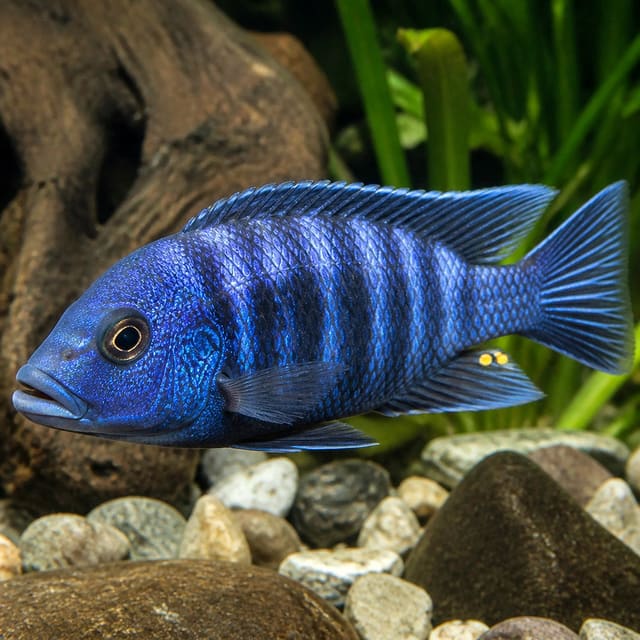
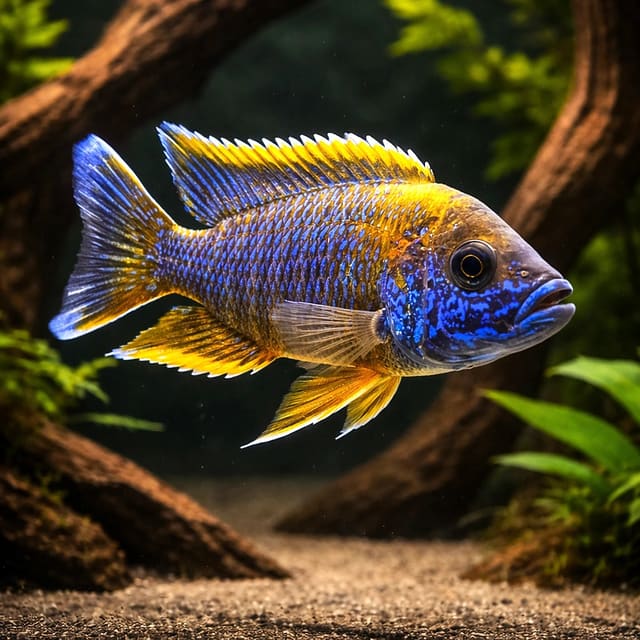
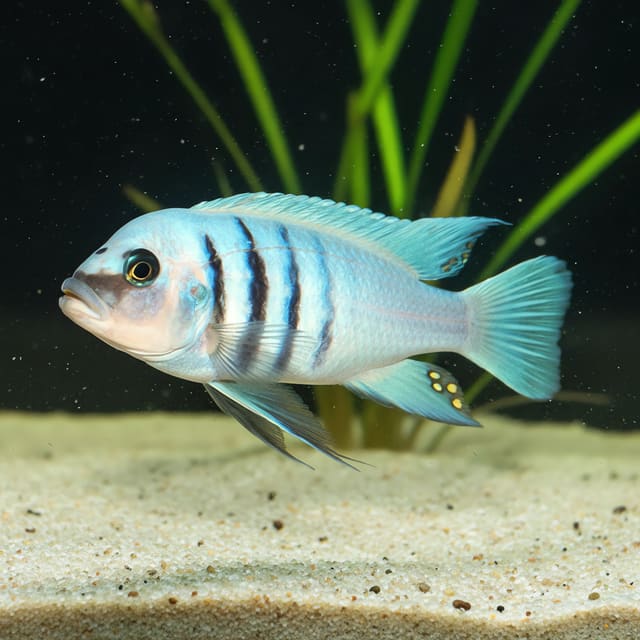
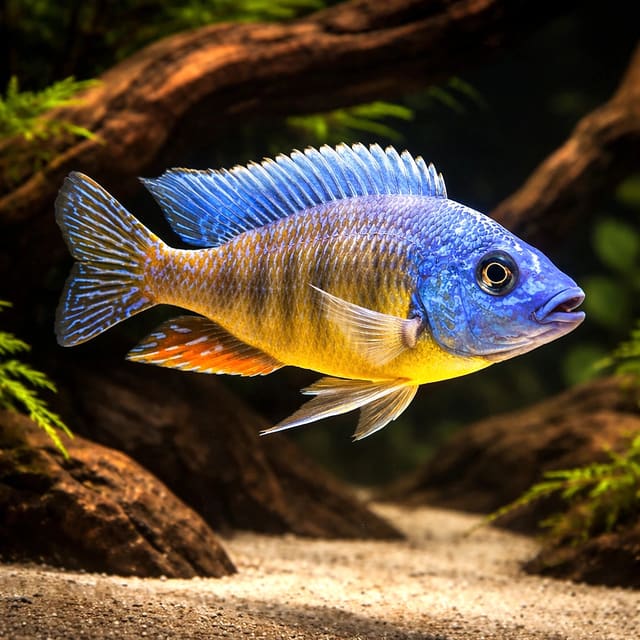
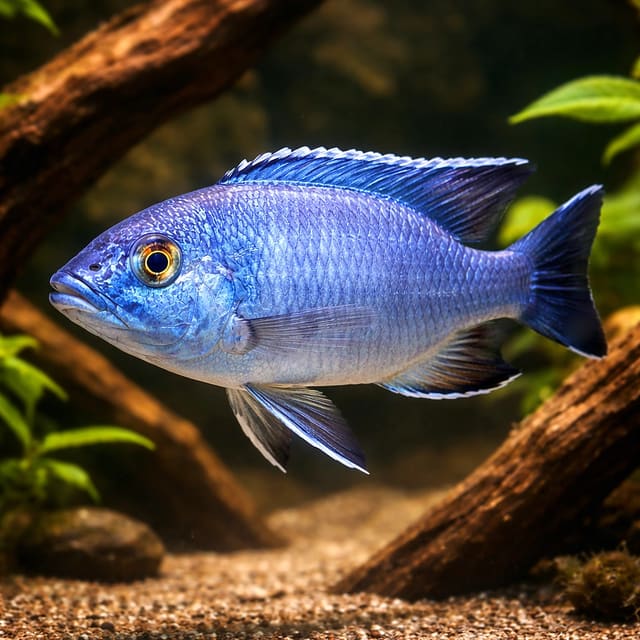
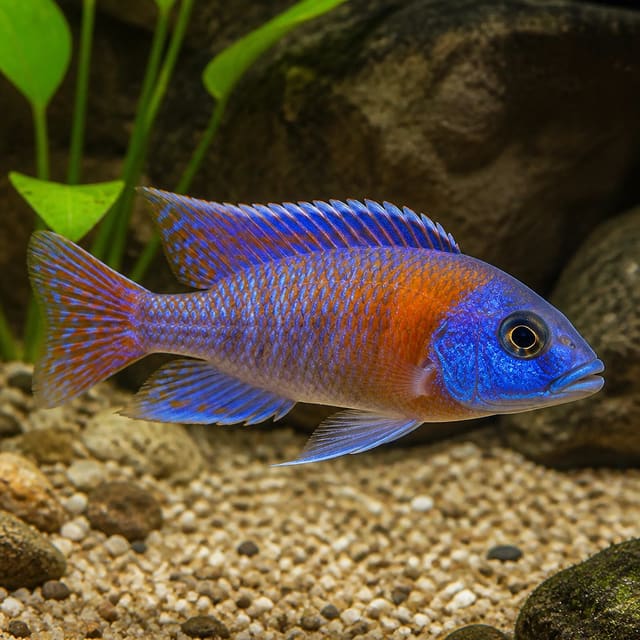
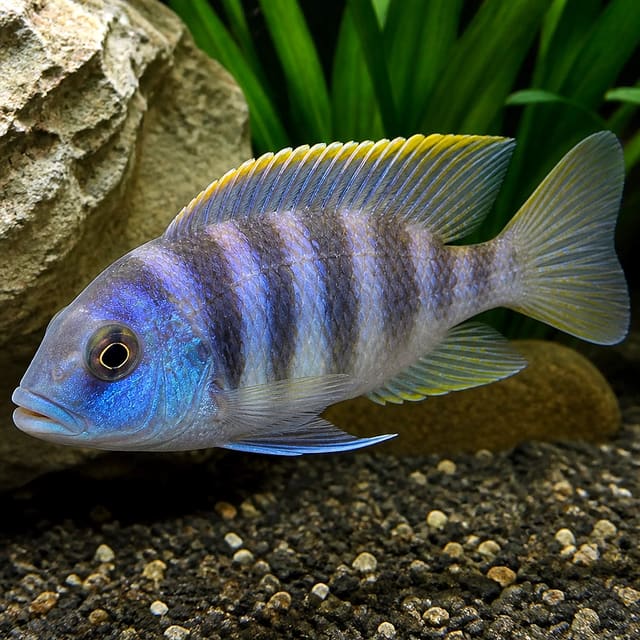
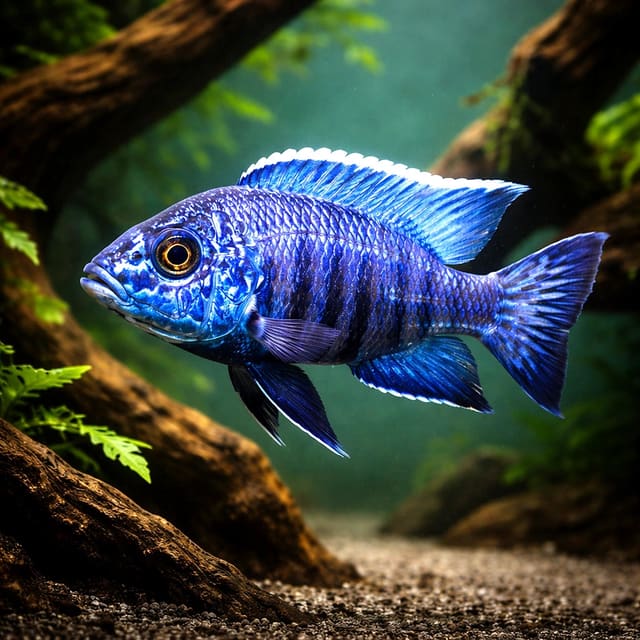
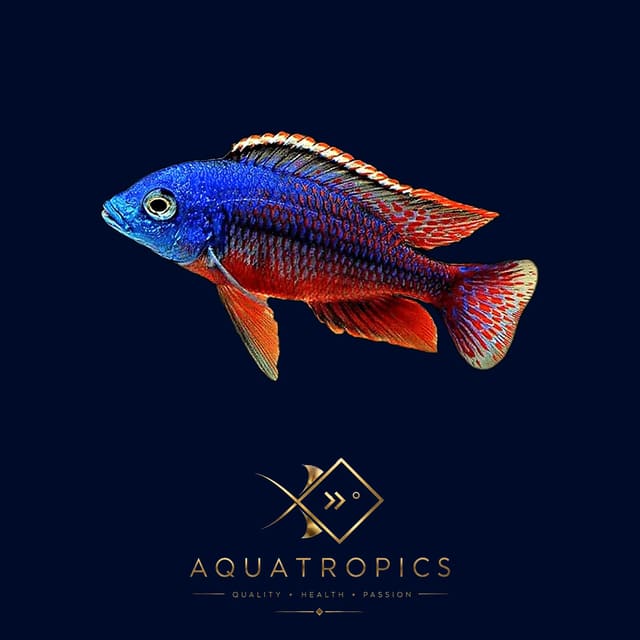
Juveniles and females are generally subdued silver-grey or sandy, with a typical Protomelas pattern. Mature dominant males may develop metallic blue over the upper body, yellow on the lower body and red or multicoloured fin detail. Colour can emerge late and varies with maturity, rank, lighting and condition.
A small fish is not guaranteed to become a fully coloured male. A temporarily blue juvenile is not a sex certificate, and a subordinate male may suppress display. Buy for identity and suitability, not for a promised shade copied from one image.
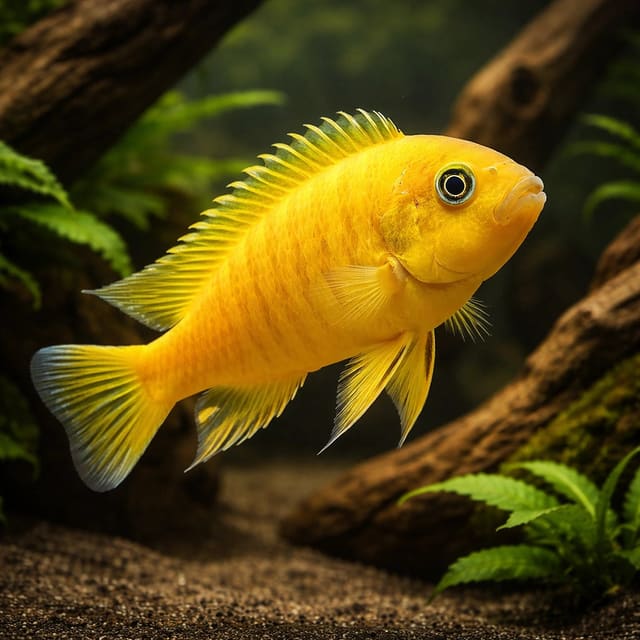
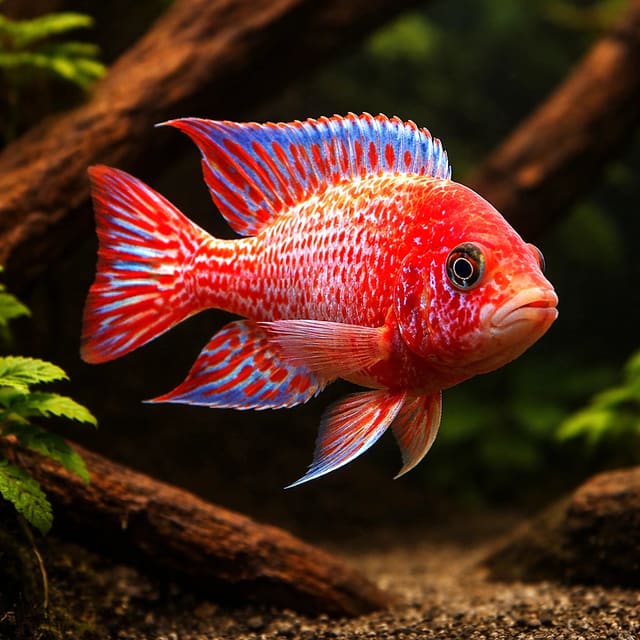
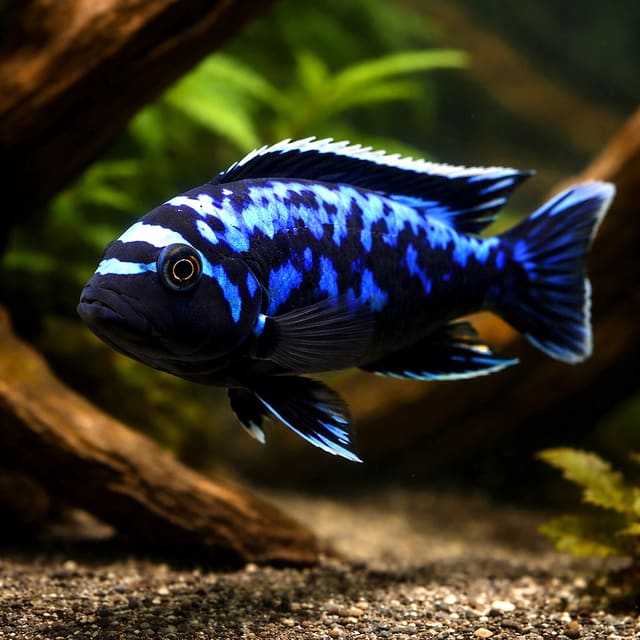
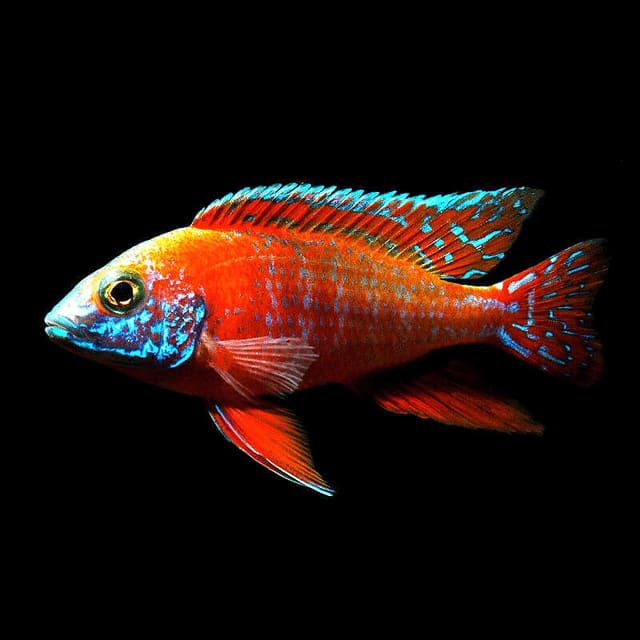
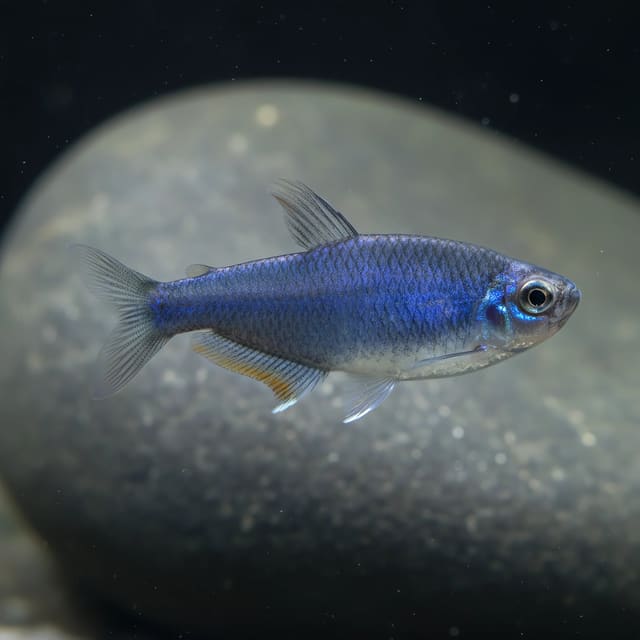
The gallery image is not a photograph of the fish dispatched and is not diagnostic evidence of exact body shape, locality, sex or adult colour.
Use the written size grade and unsexed retail contract as controlling information.
Specialist locality records place this fish in rocky habitat and rocky areas within the intermediate zone, often around 5-15 metres deep. Fine material, rock crevices and nearby sand are all relevant. The thickened lips are associated with taking prey from cracks and cavities.
An aquarium should therefore combine stable rocks and caves with open sand and swimming room. It should not be built as a solid wall of stone or an empty open tank. The layout needs both feeding/hiding structure and enough unobstructed length for a large hap.
Plan around 600 litres and a 200 cm footprint as a cautious long-term baseline. The length follows specialist adult guidance and gives a 20 cm fish room to swim while leaving separate rock territories. Use more space for multiple females, another large male hap or a busy mixed Malawi community.
The old 300 L recommendation is not retained. It gives too little margin for adult length, sustained male territoriality, open swimming space and female escape routes. A juvenile can be grown in an appropriately managed system, but the adult home must already be realistic.
Litres alone can conceal an unsuitable shape. A tall narrow aquarium may hold substantial water without creating distance between territories. Hertae uses the lower and middle water around rock/sand transition zones, so horizontal length and front-to-back depth are particularly valuable.
A 200 cm tank allows separated caves, broken sight lines and an open central route. Keep clear zones where a subordinate fish can move without passing directly through the dominant male's cave.
Place secure aquarium-safe rock on a stable base before loose sand is added around it. Build several clusters with offset entrances rather than one central fortress. Include caves large enough for an adult to turn without becoming wedged and check for sharp collision points.
Use fine sand suitable for normal sifting and easy waste removal. The cichlid care guide covers general construction, while this species needs more open swimming room than a dense mbuna rock pile.
| Parameter | Practical target | Evidence note |
|---|---|---|
| Temperature | 23-27 C | Conservative overlap across specialist profiles |
| pH | 7.5-8.5 | Consistent Lake Malawi specialist range |
| General hardness | About 12-16 dGH | Published specialist range; avoid sudden shifts |
| Ammonia | 0 | Toxic at detectable levels |
| Nitrite | 0 | Toxic at detectable levels |
| Nitrate | Kept low through stocking control and water changes | Track trend rather than waiting for visible distress |
The supplier provides no care parameters for this line, so these are specialist-derived operating targets rather than supplier guarantees. Stability matters more than repeatedly dosing to chase a decimal. See the water chemistry guide for pH, hardness and buffering context.
A large carnivorous cichlid and its companions create a meaningful waste load. Use mature biological filtration, effective mechanical capture and strong surface movement. Real flow falls as media accumulates debris, so maintenance and observation matter more than the pump's box rating.
Watch breathing, surface behaviour and dead zones behind rocks. Provide backup aeration for hot weather or power interruptions where practical. Never clean all biological media aggressively at the same time.
Add fish only to a fully cycled aquarium. Test after additions, medication, filter work or a missed maintenance period. Zero ammonia and nitrite are required even when the fish appear normal.
Use regular partial water changes matched reasonably for temperature and chemistry. Vacuum accessible waste around rocks and record results. A slow nitrate or pH trend is easier to correct than a sudden welfare emergency.
This form is described as a carnivorous crevice feeder. Thickened lips help it cover openings and draw insects, larvae, soft invertebrates and occasionally small fish from rocky cavities. That ecology is more specific than the generic omnivore label currently stored on the listing.
Captive feeding should provide a complete quality Malawi carnivore or insect/invertebrate-oriented staple in an appropriate pellet size, supported by measured aquatic invertebrate variety. Accepting mixed foods does not make every generic cichlid diet ideal.
| Food role | Suitable direction | Caution |
|---|---|---|
| Daily nutritional base | Complete reputable Malawi carnivore/invertivore pellet | Match pellet size to the fish |
| Variety | Measured frozen or live aquatic invertebrate foods | Use clean, trusted sources |
| Observation | Small portions spread so subordinates eat | Dominant feeding is not whole-group feeding |
| Avoid | Mammal/poultry meat and uncontrolled feeder fish | Unsuitable nutrition and disease risk |
| Water protection | Remove uneaten food | Rock crevices can trap waste |
Browse the fish-food category as a starting point, then check each label against this species' carnivorous/invertivorous direction. Do not hardcode a universal number of feeds without considering fish size, temperature and stock density.
Hertae is often described as relatively calm compared with rougher Malawi cichlids, but mature males can be almost continuously territorial around a cave and defend mainly against their own kind. Calm does not mean community-safe or suitable for a small aquarium.
Observe whether every fish can feed, rest and leave cover. Continuous chasing, torn fins, rapid breathing, weight loss or a fish trapped behind one object requires intervention.
One mature male per aquarium is the safer default. A harem-style group may use one male with several females once sexes are confirmed, but this listing cannot guarantee a ratio because all three grades are sold unsexed.
Do not buy two and assume a pair. There is no stable pair bond, and one female can receive concentrated courtship pressure. Keep a divider, mature spare aquarium or rehoming route available.
| Potential companion | Assessment | Reason |
|---|---|---|
| Similarly sized, calmer Malawi haps | Possible with care | Match adult size, diet and temperament in a very large tank |
| Suitable Aulonocara | Possible with care | Avoid colour/feeding mismatch and crowding |
| Aggressive mbuna | Usually poor | Can harass or outcompete a relatively calm hap |
| Small community fish or shrimp | Unsuitable | Predation, chemistry and competition mismatch |
| Protomelas ornatus | Avoid | Similarity and hybridisation/identity risk |
| Protomelas sp. 'mbenji thick-lip' | Avoid | Similarity and hybridisation/identity risk |
No chart guarantees behaviour. Use the African cichlids hub and Protomelas category for comparison, then assess the actual adult community.
Hertae resembles Protomelas ornatus and Protomelas sp. 'mbenji thick-lip'. Keeping similar undescribed forms together can create courtship confusion and offspring that cannot be identified responsibly. Visual similarity can also intensify male aggression.
Maintain acquisition records and do not distribute fry under a precise name if parentage is uncertain. Identity protection is part of good cichlid husbandry.
This fish is a maternal mouthbrooder. A territorial male courts around a cave; after spawning, the female carries eggs and developing fry in her mouth. Specialist accounts describe roughly three weeks of incubation and continued fry guarding after first release.
Breeding is not guaranteed. Female condition, space, male pressure and a plan for fry are more important than chasing a brood. Do not strip or handle a brooding female without specialist knowledge.
Prepare the aquarium before dispatch: verify the cycle, secure the lid, inspect rock stability and make several refuges available. Quarantine in a separate mature system is the safest way to protect an established collection when it can be done with appropriate space and water.
Rearranging selected territory before introduction can reduce established ownership, but it is not a guarantee. Dim lighting and observe closely once the fish becomes active.
Follow the current livestock instructions supplied with the order. Journey duration, bag condition and chemistry affect the correct process. Avoid prolonged handling, sudden temperature change and repeated chasing with a net.
Read the current delivery information and returns and problem-reporting policy before dispatch so evidence and reporting windows are understood.
| Check | Healthy direction | Concern |
|---|---|---|
| Breathing | Steady, not laboured | Gasping, rapid breathing or one-sided gill use |
| Feeding | Alert and able to obtain food | Repeated refusal or exclusion |
| Body | Stable weight and normal profile | Wasting, swelling, sores or damaged lips |
| Fins | Open and intact | Clamping or progressive tears |
| Social access | Can swim and rest away from the male | Continuously trapped or pursued |
| Water | Zero ammonia/nitrite and stable trend | Any ammonia/nitrite or abrupt chemistry shift |
Good prevention means stable water, correct food, low chronic stress and quarantine practice. A damaged thick lip, swelling, refusal to eat or abnormal faeces can have multiple causes and should not trigger random medication.
Test water immediately and seek advice from a fish-experienced veterinary professional or qualified aquatic specialist. Medication can affect filtration and may be unsafe when the diagnosis is wrong.
| Feature | Hertae Hap | Planning effect |
|---|---|---|
| Identity | Undescribed provisional form | Keep provenance and avoid unsupported locality claims |
| Adult profile | Large, thick-lipped crevice feeder | Needs long footprint and carnivorous/invertivorous diet |
| Male behaviour | Persistent cave territory possible | One male is the safer default |
| Female/juvenile colour | Subdued silver-grey | Sale fish are not guaranteed display males |
| Breeding | Maternal mouthbrooder | No pair bond or pair promise |
For a described relative with different evidence, compare the Chunky Hap Cichlid. Similar genus placement does not mean identical care.
| Question | Required answer |
|---|---|
| Is the aquarium mature? | Yes; ammonia and nitrite are zero |
| Is adult space ready? | About 600 L and 200 cm long or larger |
| Is water suitable? | Stable hard alkaline Malawi conditions |
| Is feeding appropriate? | Complete carnivore/invertivore base with measured aquatic variety |
| Are tank mates checked? | Adult size, diet, colour, sex and territory assessed |
| Can a bullied fish be separated? | Divider, spare mature tank or rehoming route available |
| Is the order understood? | One unsexed fish in the selected grade |
Several juveniles may appear compatible before sex and rank develop. That early calm is not proof that the adult group will work. Buying three or four fish does not guarantee one male with the remaining fish female, and a later surplus male can become the focus of sustained conflict.
Plan the adult volume before ordering, photograph individuals once settled and watch colour, cave use and chasing as they mature. Have enough alternative housing to remove a developing male or a female receiving concentrated pressure. Do not wait for serious injury before changing the group.
| Period | Priority | What to avoid |
|---|---|---|
| Arrival day | Correct acclimation, low light and calm observation | Repeated netting or immediate heavy feeding |
| First 24 hours | Breathing, balance, physical damage and refuge access | Assuming subdued colour means wrong identity |
| Days 2-3 | Small observed feeds and ammonia/nitrite tests | Adding food when the fish does not approach |
| Days 4-7 | Social access, appetite, waste and fin condition | Ignoring persistent pursuit or isolation |
| After week one | Continue records and adjust layout only from evidence | Changing food, chemistry and tank mates all at once |
Use a close-fitting lid because a chased or startled cichlid can jump. Cover cable and pipe openings without blocking necessary ventilation. Protect heaters from impact, keep electrical connections away from splashes and use appropriate residual-current protection.
Position filter intakes so a weakened fish cannot be trapped against them. Recheck rock stability after every maintenance session and keep a separate thermometer so a heater fault is noticed before behaviour changes become severe.
Keep the purchase date, provisional name, supplier line, sale size and photographs together. Record water tests, feeding changes, injuries, colour development and any separation. Good records help distinguish a slow trend from a sudden event and reduce unsupported sex or locality claims later.
If the fish breeds, document the parents and keep fry away from similar Protomelas forms. Never sell uncertain offspring as locality-pure or under a formal species name that does not exist. The restraint that protects this listing should continue with future fish.
The supplier controls the three sale sizes and confirms only the Hertae trade line. Specialist cichlid references control provisional identity, adult profile, habitat, feeding and breeding context. The 600 L/200 cm recommendation is a cautious retail welfare judgement based on the reported 20 cm aquarium maximum and persistent male territoriality.
This page does not promise lifespan, locality, generation, sex, adult colour, compatible harem or breeding success. Those facts are either not supplied for this stock line or vary by individual and environment.
One unit is one unsexed fish in the selected 4-5 cm, 5-6 cm or 7-9 cm grade.
No. The three grades are sold unsexed, and juvenile colour is not a dependable sex guarantee.
No. Protomelas sp. 'hertae' is an undescribed provisional form.
No. The supplier provides no collection site or generation for this retail line.
Specialist accounts report about 17-18 cm in nature and up to roughly 20 cm in aquaria, with females usually smaller.
Use around 600 litres with a 200 cm footprint as a cautious adult baseline, increasing space for a group.
Use stable hard alkaline water around 23-27 C, pH 7.5-8.5 and approximately 12-16 dGH.
Use a complete quality Malawi carnivore/invertivore staple with measured aquatic invertebrate variety.
Specialist evidence describes a carnivorous crevice feeder taking insects, larvae, soft invertebrates and occasionally small fish.
Aggressive mbuna are usually a poor match because they can harass or outcompete this relatively calm hap.
One mature male per aquarium is the safer default. More than one requires exceptional space and a separation plan.
No. Two unsexed fish are not a sexed or compatible pair, and this maternal mouthbrooder forms no stable pair bond.
Not necessarily. Mature dominant males show the strongest colour; females, juveniles and subordinate males remain more subdued.
No. Breeding depends on mature sex, condition, social structure and environment.
No. It is a preserved illustration, not an exact dispatch photograph or diagnostic identity reference.
No. The supplier gives no lifespan and individual longevity depends on many factors.
Choose Hertae Hap only for a mature, spacious Lake Malawi aquarium. Expect one unsexed fish in the selected grade, growing toward a cautious 20 cm adult plan. Provide roughly 600 litres and 200 cm of length, stable hard alkaline water, sand, separated rock clusters, open swimming room and specialist carnivorous/invertivorous feeding.
Plan around one mature male, do not mix with similar Protomelas forms, and keep a separation option ready. Treat the gallery as an illustration and the Hertae name as a provisional identity without a guaranteed locality or generation.
No reviews for this item yet. Bought one? Honest reviews only, good or bad.
What customers say about ordering from us
Easy website plenty of info on fish your buying great to pick a time slot
TRACEY DURRANT · 7 Oct 2026
Got some lovely fish thank you
Kevin Mackie · 7 Oct 2026
Reviews of our shop, collected by Judge.me, an independent third-party review collector. Newest first.