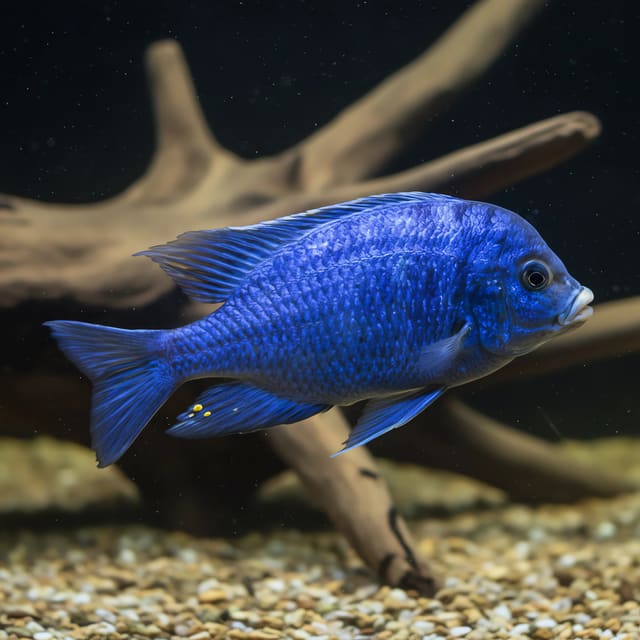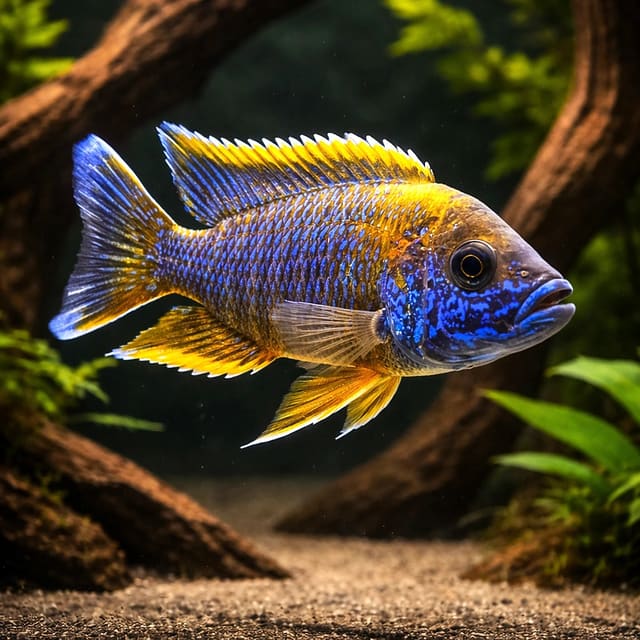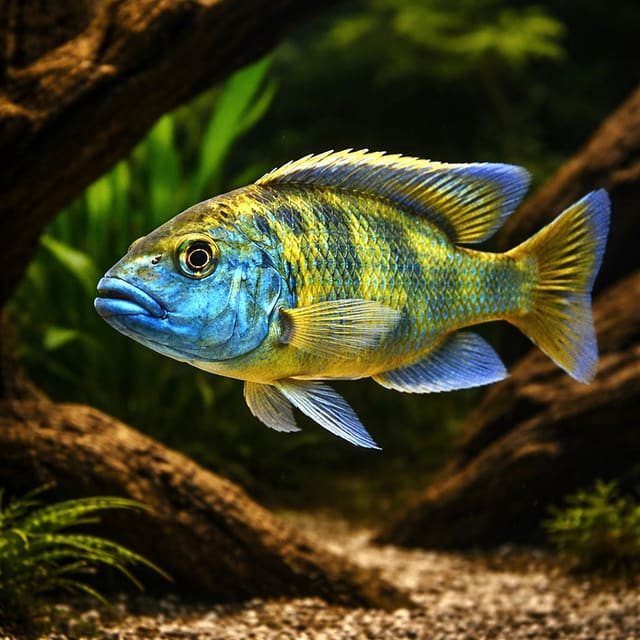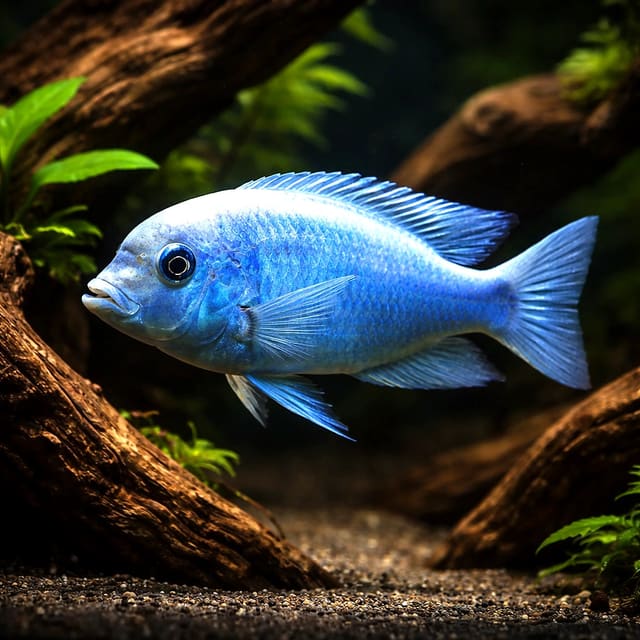
Moderate
Acei Cichlid (Pseudotropheus sp. “acei”)
24–26°C · pH 7.5–8.5 · 300L
£7.99

The Mdoka White Lips Cichlid (Placidochromis phenochilus) is a Lake Malawi cichlid reaching 15.7 cm total length. One purchase supplies one unsexed fish in a chosen 4–5 cm, 5–6 cm or 7–8 cm dispatch size. It needs a mature, strongly filtered hard-water Malawi aquarium and carefully planned companions.
Adult size is the maximum length this species reaches at full maturity (scientific sources). The livestock you receive will be younger and smaller — pick a size above for the actual shipping size. Product-photo provenance and any image-specific limitations are stated on the listing.
Placidochromis phenochilus
Save when buying multiple fish. Each quantity is one fish; sex and pair formation are not guaranteed unless the selected variant explicitly states them.
The Mdoka White Lips Cichlid (Placidochromis phenochilus) is a Lake Malawi cichlid reaching 15.7 cm total length. One purchase supplies one unsexed fish in a chosen 4–5 cm, 5–6 cm or 7–8 cm dispatch size. It needs a mature, strongly filtered hard-water Malawi aquarium and carefully planned companions.
Adult size is the maximum length this species reaches at full maturity (scientific sources). The livestock you receive will be younger and smaller — pick a size above for the actual shipping size. Product-photo provenance and any image-specific limitations are stated on the listing.
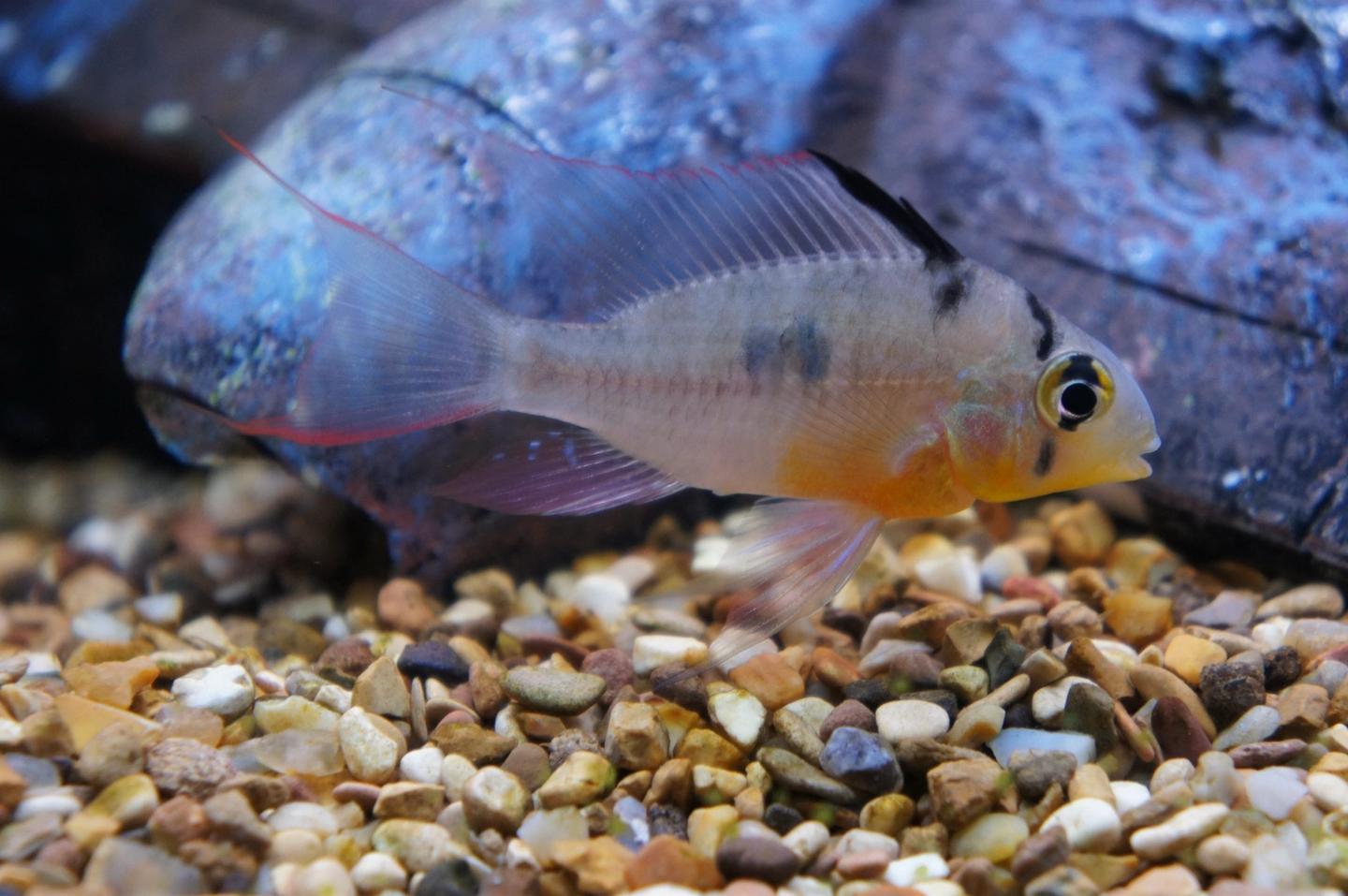
Cichlids are a family of roughly 1,800 accepted species, not one care type. Before buying, identify the exact species and source, then compare adult measurement, usable tank dimensions, social system, territory, tested water, diet and an exit plan. No family-wide minimum tank, water range or tank-mate list is safe.
Maintain these water conditions for optimal health and vibrant colors
The Mdoka White Lips Cichlid is Placidochromis phenochilus, a freshwater cichlid endemic to the northern part of Lake Malawi. FishBase records a maximum length of 15.7 cm total length for male or unsexed fish. Total length includes the tail fin, so it is a different measurement from standard length. This is a substantial adult cichlid rather than a small community fish, and the aquarium plan must allow for its full size, waste load and social interactions.
One purchase supplies one live fish. The size you select is the size supplied, not the adult size. The recurring dispatch choices are 4–5 cm, 5–6 cm and 7–8 cm. Those measurements help you choose the size arriving from the fishroom; they do not change the species' recorded adult length or create separate care requirements.
Sex is guaranteed only when the selected option explicitly states male or female. This Mdoka White Lips Cichlid listing has no sex-guaranteed option.
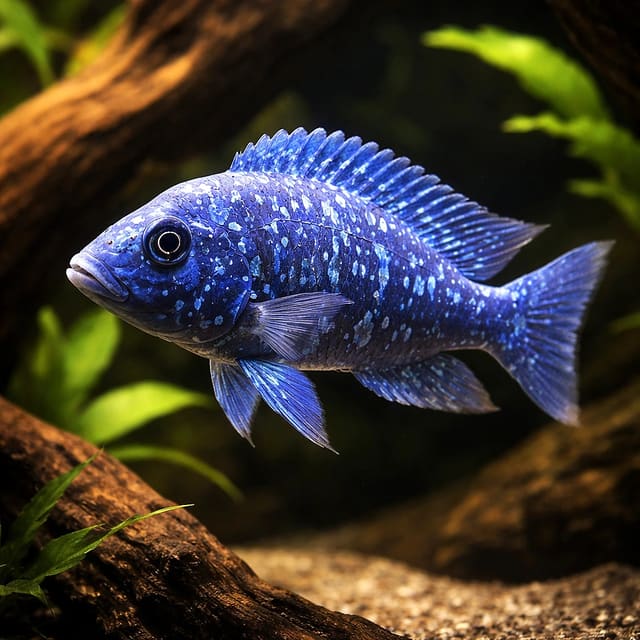
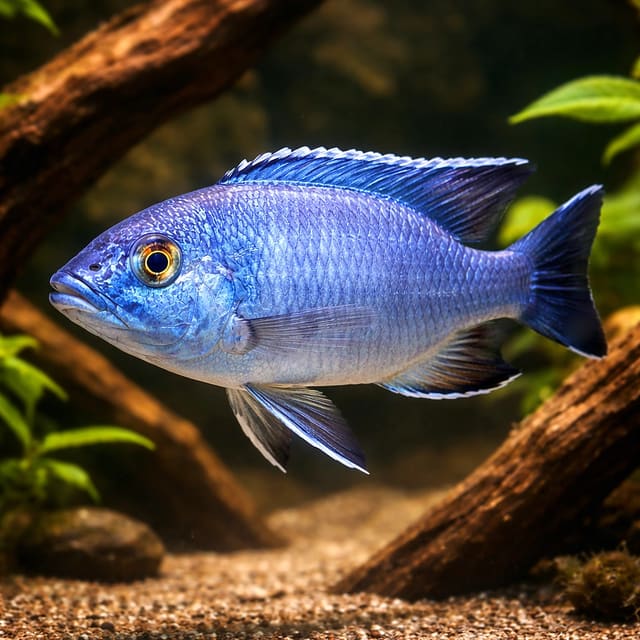
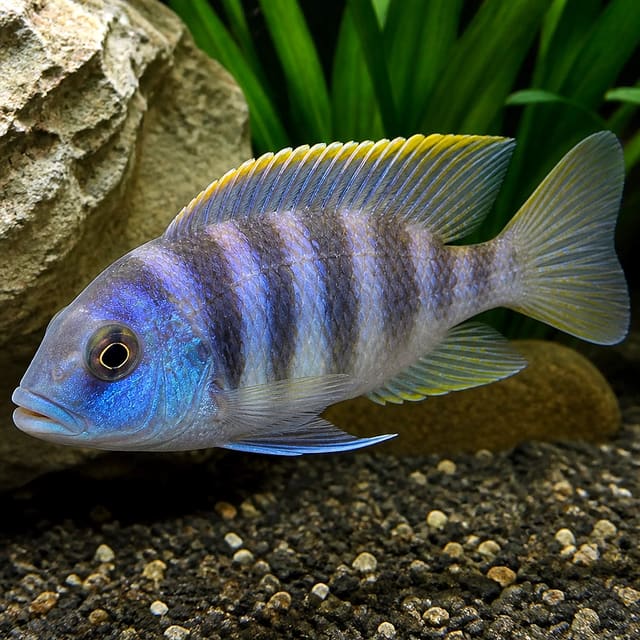
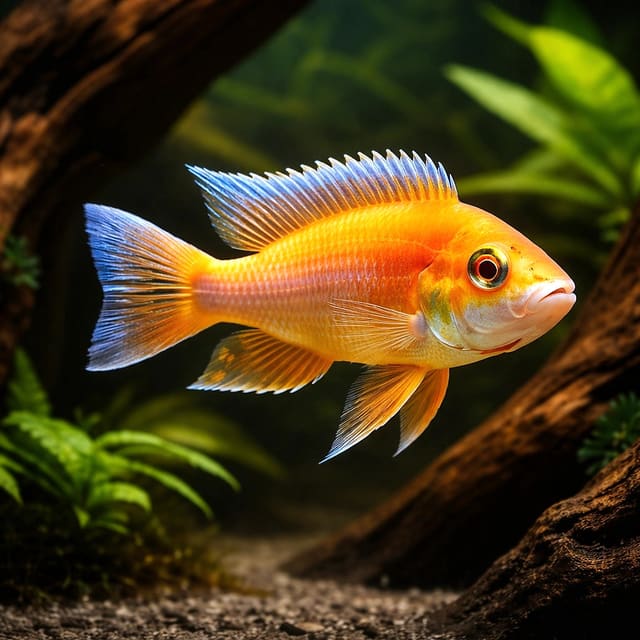
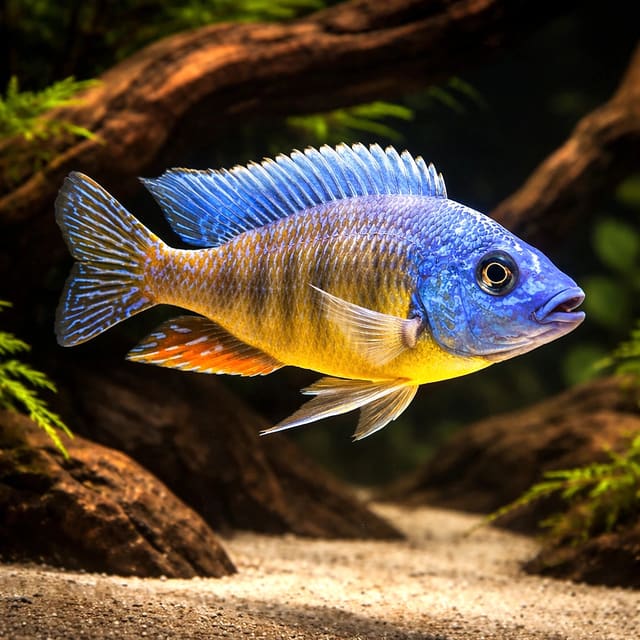
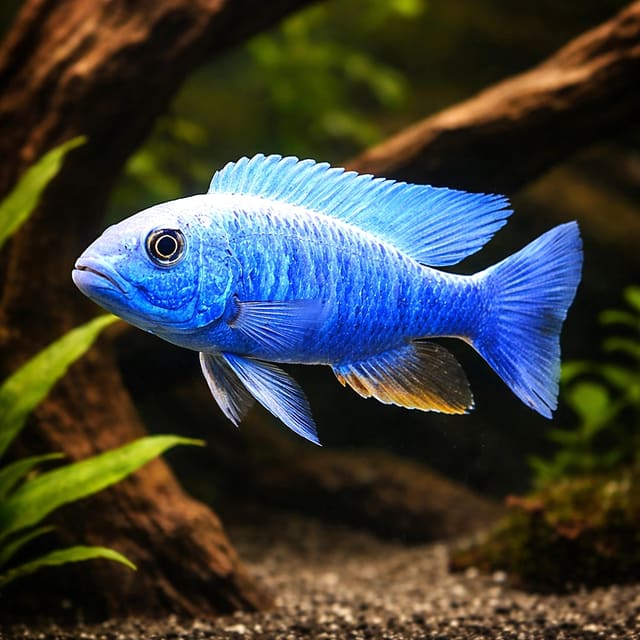
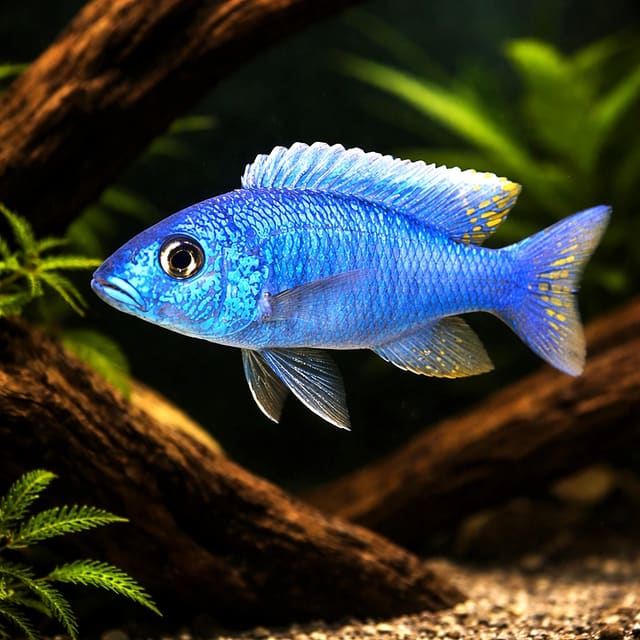
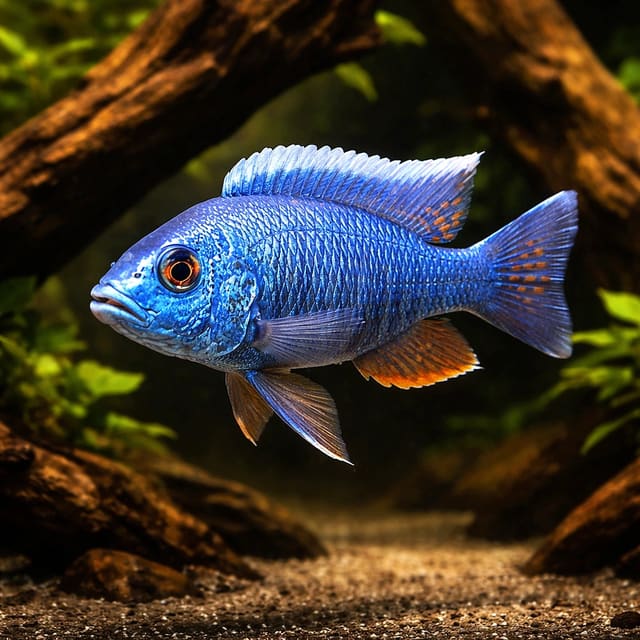
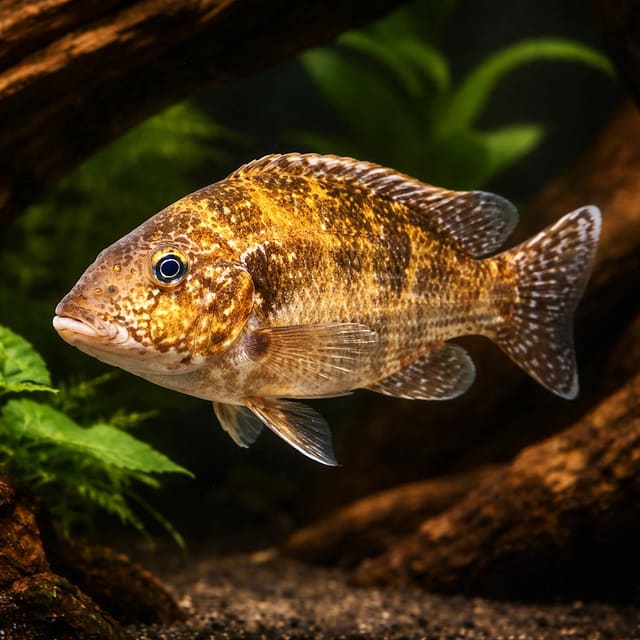
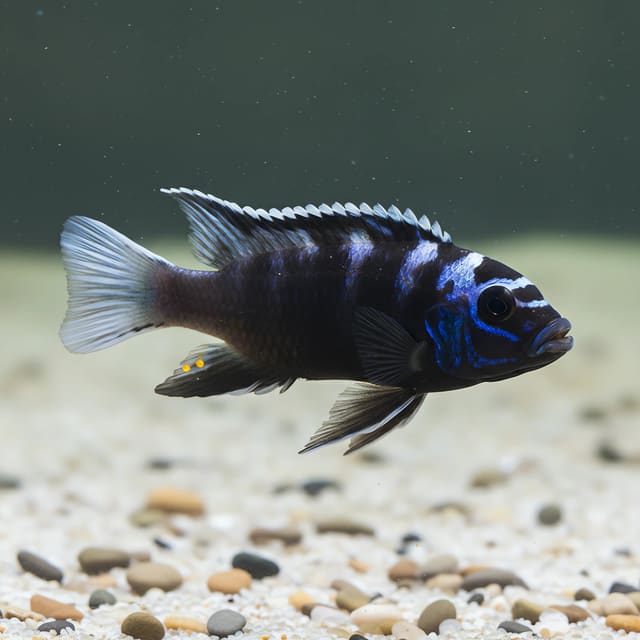
Choose this fish for its species identity and suitability for a planned Malawi aquarium, not for a promise that a juvenile will show a particular adult colour or lip pattern on arrival. Colour, markings, body depth and maturity vary among living fish. The gallery is useful for understanding the trade form, while the exact animal supplied may differ naturally.
Gallery images have been digitally enhanced to improve image quality. Natural colour, pattern, size and maturity can vary between live animals.
This listing best suits a keeper with experience of mature biological filtration, water testing and cichlid behaviour, or a well-prepared keeper receiving specialist help with a first Malawi setup. Tropical Fish Co assesses the care level as intermediate because hard alkaline water, a 15.7 cm adult, group-level aggression risk and the need for carefully matched companions all require more planning than an ordinary peaceful community aquarium.
For planning, OATA's broad Malawi-cichlid sheet recommends at least 200 litres for a reasonable community and discusses communities of at least 15 fish. It explicitly presents those figures as general guidance for the group. Use them as a starting screen, then plan the actual footprint, adult population, filtration, oxygenation and aggression management for P. phenochilus.
| Suits | An intermediate Malawi-cichlid keeper with a mature, hard-water aquarium and a complete stocking plan |
|---|---|
| Accepted name | Placidochromis phenochilus |
| Native range | Northern Lake Malawi, Africa |
| What one purchase supplies | One live fish; sex is not guaranteed |
| Dispatch sizes | 4–5 cm, 5–6 cm or 7–8 cm |
| Recorded adult length | 15.7 cm total length |
| Water planning | 23–27°C, pH 8.0–8.6 and 12–18 dGH from broad OATA Malawi-group guidance |
| Community planning | Other Malawi cichlids or some Lake Malawi Synodontis only after exact-species checks |
Compare the wider African cichlid collection for alternative display choices, but never assume that appearing in one collection makes two fish compatible.
The three dispatch sizes let you choose the size of fish entering the aquarium, but a smaller choice is not a shortcut to a smaller permanent home. Check that the adult community, filtration and territory plan are ready before ordering any of them. A larger arrival may be more physically imposing to existing fish, while a smaller arrival may be vulnerable around established adults; either situation needs a considered introduction and a safe separation option.
Do not use body size to infer sex. None of the choices on this listing promises male or female, and a gallery image cannot sex the animal supplied. If the rest of the stocking plan depends on a particular sex ratio, choose a product that explicitly guarantees sex or revise the plan around unsexed fish.
Compare the animal's current length with every established tank mate, intake guard, gap in rockwork and feeding method. The aim is a calm transition into a mature system, followed by room for growth to the 15.7 cm total-length record.
Begin with the 15.7 cm total-length record, not the chosen dispatch size. A 4–5 cm arrival still needs an adult plan from day one. The aquarium must provide enough horizontal room for turning, retreat and open swimming, plus stable water volume and filtration for the complete community. A tank that temporarily contains a juvenile is not necessarily an adult home.
OATA recommends at least 200 litres for a reasonable-sized Malawi-cichlid community. That is broad group-level guidance, not a species-specific minimum for P. phenochilus, and OATA notes that specialist species may differ. Treat 200 litres as a minimum screening point for the community described in that sheet, then assess tank length, footprint, rock placement, adult stocking, aggression and filtration with an experienced OATA retailer or Malawi specialist.
Do not size the aquarium from a fish-per-litre formula. Litres do not describe the longest swimming run, the number of territories, the height of secure rockwork or whether a pursued fish can leave another's line of sight. Two aquariums with the same nominal volume can offer very different usable space once substrate, rocks and equipment are installed.
If you are preparing your first aquarium, work through the first tropical aquarium guide before livestock is ordered. A biologically mature system, reliable heating, dechlorinated water and repeated test results are prerequisites. Malawi cichlids should not be used to cycle a new aquarium.
OATA's broad Malawi-cichlid guidance gives 23–27°C, pH 8.0–8.6, general hardness of 12–18 dGH and carbonate hardness of 10–15 dKH. It calls these figures a general guide for the group, not a species-specific optimum for P. phenochilus. Use them as the best supported customer range here while seeking exact-species advice before final stocking.
Stable chemistry matters more than repeatedly chasing a midpoint. Test the source water and aquarium water, because UK supplies differ between regions and may change when sources are blended. The water chemistry guide explains the core readings, and the water matcher helps compare measured values with the broad Malawi guidance on this page.
OATA advises zero ammonia and zero nitrite, with nitrate no more than 20 mg/l above the normal tap-water level. Any detectable ammonia or nitrite calls for investigation. Check the biological filter, recent additions, feeding, dead material and maintenance rather than treating a water conditioner as a substitute for capacity.
Hardness, alkalinity and pH are related but not interchangeable. A high pH reading alone does not prove that buffering capacity is adequate, and adding a generic pH product without testing can create unstable swings. Measure general and carbonate hardness where possible. If mineral support is needed, choose it for a measured reason and check its effect gradually.
RSPCA guidance explains why no fish should be kept without a properly set up and maintained filter: fish release toxic ammonia, and beneficial bacteria in biological filtration convert it through nitrite to safer nitrate. OATA recommends oversized filtration and strong aeration for the crowded Malawi communities described in its group sheet. This is broad community guidance, but the principle is useful: size filtration and oxygenation for the adult population and feeding load, not for one small arrival.
Provide strong surface movement without creating a flow pattern that pins fish in one corner or prevents normal swimming. Check oxygenation particularly when water is warm, the aquarium is heavily stocked or medication is being used under qualified direction. Keep a safe plan for power cuts and equipment failure; a biologically loaded cichlid aquarium can deteriorate quickly when circulation stops.
Inspect filters for blockages and reduced flow. If reusable media needs cleaning, OATA advises rinsing it lightly in removed aquarium water rather than under chlorinated tap water, which can damage the bacteria supporting the nitrogen cycle. Avoid replacing all mature biological media at once.
OATA's broad Malawi sheet recommends coral sand or a similar substrate that supports hard-water conditions, alongside rocks, caves and hiding places. Any large rock structure must be stable because Malawi cichlids often dig around it and rearrange substrate. Place heavy pieces so undermining substrate cannot cause a collapse, and leave clear routes through the aquarium rather than building one continuous wall.
Use structure to create sight breaks and more than one path away from a territorial fish. An ornament with a single entrance may become a trap rather than refuge. Observe where fish actually pause, feed and retreat, then adjust the layout if one animal controls every route.
OATA says Malawi cichlids often dig and rearrange the substrate, which will uproot plants. It recommends only the hardiest plants attached securely to rocks for the group. Plants are optional decoration here, not a replacement for open space, water quality or territory planning.
Malawi-cichlid diets vary substantially. OATA distinguishes smaller herbivorous mbuna from some larger, more predatory open-water fish, but that group contrast does not by itself establish the correct diet for P. phenochilus. Avoid choosing food solely from the words “Malawi cichlid”, “hap” or from the fish's colour.
Use a nutritionally complete aquarium food confirmed as appropriate for P. phenochilus. OATA's general portion rule is to offer only what the fish consume within a few minutes and to avoid overfeeding. Watch whether every fish can feed; cichlid competition can allow a dominant individual to take far more than the others.
Uneaten food increases waste and can undermine water quality. Remove residue, review particle size and distribution, and adjust the amount from observation and test results. Do not use a scavenger fish as a substitute for appropriate portions and maintenance.
OATA strongly recommends a partial water change of 25% at least once every week for its broad Malawi setup, with regular testing. The aquarium's stocking and nitrate trend may require a different schedule, but any adjustment should be based on measured water quality. Condition replacement tap water and match changes carefully enough to avoid abrupt temperature or chemistry shifts.
Observe normal swimming, breathing, appetite, fin position, body condition and interaction every day. OATA lists surface hanging, bottom sitting, erratic swimming, colour change, increased hiding or aggression, altered breathing, spots, fluffy growths, loss of fins or scales, body-condition change and reduced feeding as warning signs. These signs are not diagnoses. Test water first, review recent changes and seek qualified aquatic or veterinary advice rather than selecting treatment from one symptom.
A quarantine aquarium must be heated, filtered, mature and separately equipped. It is useful for observing a new fish without exposing the established community, but a small uncycled container creates its own risks. Match water gradually, monitor feeding and breathing and keep nets or siphons separate to reduce cross-contamination.
Prepare and test the aquarium before dispatch and make sure somebody is present to receive live fish. Tropical Fish Co packs fish in oxygenated bags, an insulated box and a heat pack when weather calls for it, then uses a licensed live-animal courier. Inspect the parcel and fish promptly on arrival.
For a Live Arrival Guarantee claim, the current policy requires a continuous short video starting with the parcel still sealed, showing the outer box being opened and the fish still inside the sealed bag before anything is disturbed. Contact the store the same day with the order number. The video protects the claim process; it is completed before opening or floating the bag.
Follow the current arrival directions. Float the sealed bag for 20–30 minutes to equalise temperature, then transfer the fish carefully without pouring transport water into the aquarium. Keep disturbance low and watch swimming, breathing and balance. The delivery and Live Arrival Guarantee page remains the current source for packing, arrival and claim terms.
Write down the internal aquarium dimensions, estimated water volume after substrate and rocks, every intended adult fish and the filtration equipment. This simple exercise exposes plans that look generous by litres but leave too little swimming length or too many competing territories. Include the adult size and social unit of every companion, not merely the number of individuals you hope to buy today.
Map the rock structure before filling the tank. Heavy pieces should be secure, with routes around rather than only into them. Check that a fish can retreat without entering a dead end and that the layout leaves an open water corridor. Look at the tank from both ends: if one structure blocks the only escape path, rearrange it while the aquarium is empty.
Record ammonia and nitrite results over time instead of relying on the age of the aquarium. A mature biological filter should maintain zero detectable ammonia and nitrite under the intended routine. Test nitrate and source water as well, because a change result is meaningful only when you know the reading entering the aquarium.
Check real filter flow after media and pipework are installed. Manufacturer figures are measured under conditions that may differ from a working aquarium. Reduced outlet movement, trapped debris or air can indicate a blockage. Clean and maintain equipment safely while preserving biological media, and keep replacement seals or an emergency aeration method available.
Position heaters where circulation distributes warmth and verify them with an independent thermometer. In a large aquarium, compare more than one location after the system has stabilised. A controller setting is not the same thing as measured water temperature.
Know the pH, general hardness and carbonate hardness of the water source before trying to alter it. If it already sits within the broad OATA Malawi range, stability may be more valuable than unnecessary adjustment. If it falls outside, calculate changes conservatively, measure the result and check that the method is repeatable at every water change.
Dechlorinate replacement tap water correctly and bring it close enough to the aquarium temperature and chemistry to avoid abrupt shifts. Never add powders or concentrated mineral products directly onto fish. Keep a written routine so another responsible person can perform an urgent water change without guessing.
Set aside a mature heated and filtered separation space before the main stocking is complete. It should be large enough for safe temporary care and should have dedicated equipment. Waiting until a fish is injured leaves only rushed choices, while a ready system allows a pursued or unwell animal to be moved without exposing it to an uncycled container.
Decide what signs will trigger action: repeated pursuit, exclusion from food, damaged fins, abnormal breathing, loss of condition or a fish confined to one corner. Observe after lights come on, during feeding and later in the day. A dominant fish can look calm when the keeper first approaches but control the aquarium at other times.
Keep a log of water tests, maintenance, feeding changes and new arrivals. If behaviour changes, the sequence often matters: a filter clean, new fish, unusual meal or temperature shift may point to different next checks. Dates and photographs also give a retailer or vet more useful context than a single description.
Confirm that somebody can receive the parcel and that the tested aquarium is already at the intended temperature. Have a clean transfer net or suitable container, towels, the order number and a phone ready for the continuous unboxing video. Record before disturbing the sealed parcel so the guarantee evidence is preserved if it is needed.
After temperature equalisation and careful transfer without bag water, keep the first assessment simple: swimming, breathing, balance and the condition of fins and body. Delay unnecessary rearrangement or crowding around the glass. Recheck the aquarium's temperature, ammonia and nitrite, then continue observation as the fish settles.
OATA describes Malawi cichlids as an aggressive group that should be mixed with caution. It recommends keeping them only with other Malawi cichlids or with some species of Synodontis catfish that also naturally inhabit Lake Malawi. That is broad group guidance rather than approval for every pairing, so identify the exact companion and compare its adult needs before purchase.
A useful match shares hard alkaline water, a compatible temperature range and a stocking style that the aquarium can support. It must also be large and confident enough to avoid predation or chronic intimidation without being so aggressive that it dominates P. phenochilus. Similar water requirements alone do not settle the question.
OATA discusses communities of at least 15 Malawi cichlids and slight overstocking to spread aggression. It also suggests adding Malawi fish in groups, placing more peaceful species first, adding more aggressive species later and rearranging decor to disrupt established territories. These are broad community-management ideas, not a species-specific prescription for P. phenochilus or permission to exceed filtration capacity.
Do not convert the number 15 into a shopping list without checking aquarium dimensions, adult biomass and the sex and social plan for each species. A crowded aquarium needs especially capable biological filtration, oxygenation, maintenance and observation. If the system cannot support that load, crowding is not a safe aggression remedy.
The listing has no sex guarantee, so do not construct a male-to-female ratio from the image or dispatch size. OATA notes that many Malawi cichlids show sex differences only as adults, but that group statement does not sex this individual. Build the stocking plan around unsexed fish unless a particular product choice explicitly guarantees sex.
This is not a general tropical-community fish. Small, delicate or soft-water animals are poor default choices because their chemistry, size and ability to withstand cichlid interactions may differ. Avoid any animal that can be swallowed, repeatedly chased away from food or trapped by the rock layout.
Some Lake Malawi Synodontis may be considered under the OATA sheet, but “catfish” is not a single care profile. Confirm the exact species, adult size, water requirements, diet, group needs and whether it truly originates from the lake context described. The same caution applies to other Malawi cichlids: a familiar trade group does not guarantee matching aggression or feeding style.
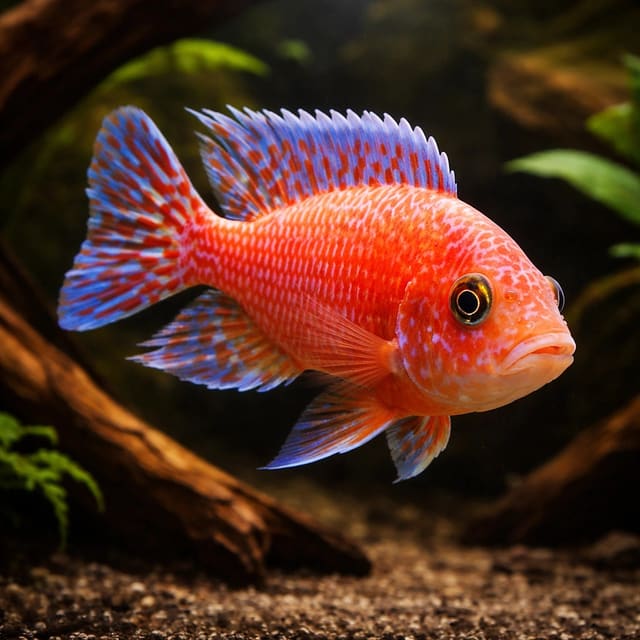
The two products in the related field are alternatives to compare, not tank-mate recommendations. An Acei cichlid and a Firefish Peacock have their own care, identity and social requirements. Use their individual pages and reliable species guidance before deciding whether either belongs in the same aquarium.
Successful compatibility is shown by sustained normal behaviour, not by a calm first hour. Watch for one fish controlling food, repeated chases, torn fins, clamped fins, hiding, surface hanging, colour loss or falling body condition. Check water because poor water quality can worsen stress and aggression, then review stocking and layout.
Rearranging secure decor can sometimes interrupt territories, as OATA suggests, but it is not a cure for an incompatible stocking plan. Separate fish promptly when one cannot feed or retreat safely. Reassess the community as juveniles grow; relationships that seemed quiet at dispatch size may change near adult size.
FishBase records Placidochromis phenochilus at 15.7 cm total length for male or unsexed fish. Total length includes the tail fin. Plan the adult aquarium around that figure rather than the 4–8 cm dispatch sizes.
OATA's broad Malawi-cichlid guidance recommends at least 200 litres for a reasonable community and notes that specialist species may differ. Treat that as a starting screen, then plan tank length, adult stocking, territories and filtration around Placidochromis phenochilus.
OATA's broad group guidance discusses Malawi communities of at least 15 fish and slight overstocking for aggression management. The final number for Placidochromis phenochilus depends on exact companions, adult sizes, sexes, aquarium dimensions, filtration and observed behaviour.
It is better treated as an intermediate fish. A prepared keeper needs a mature, strongly filtered hard-water aquarium, reliable testing, an adult-size plan and experience or specialist help with Malawi-cichlid aggression and compatibility.
Malawi-cichlid diets vary, and broad group labels do not establish this species' exact diet. Confirm a suitable complete food for Placidochromis phenochilus with a knowledgeable aquatic retailer or vet, then feed portions consumed within a few minutes and prevent leftovers from degrading water quality.
OATA's broad Malawi-group guidance gives 23–27°C, pH 8.0–8.6 and 12–18 dGH. These are general group values, not a species-specific optimum. Test the aquarium and source water, keep conditions stable and plan around the actual community.
OATA treats Malawi cichlids as an aggressive group that must be mixed cautiously. Fin-nipping is not confirmed for Placidochromis phenochilus, so plan territories, sight breaks and a separation option, then judge the actual fish's behaviour.
OATA limits broad Malawi guidance to other Malawi cichlids or some Synodontis species that naturally inhabit Lake Malawi. Every exact companion still needs matching water, adult size, social needs and behaviour; the category is not a universal approval.
Tropical Fish Co packs live fish in oxygenated bags, an insulated box and a heat pack when weather calls for it, then uses a licensed live-animal courier. Be present to receive the parcel; for a Live Arrival Guarantee claim, record continuously from the sealed parcel to the fish still in its sealed bag and contact the store the same day.
The exact retail offer establishes one fish per purchase, three dispatch sizes and no sex guarantee. Adult length comes from FishBase. Aquarium water, volume and community figures are deliberately labelled as broad OATA Malawi-group guidance. Use the species identity and adult length together with that scoped group guidance when planning the aquarium.
No reviews for this item yet. Bought one? Honest reviews only, good or bad.
What customers say about ordering from us
I have a small group of long finned mountain minnows. So was delighted to be able to order ten of this variety to increase the genetics in my tank . The ones I recieved are healthy but it’s to early to give a verdict on wether they are of a long finned type since they are small currently.
Gordon Walker · 23 Sept 2026
100% success travel and "installation". Pleased with quality of purchase. The Siamese fighter a bit "shy" so have not yet seen him at his best yet but looking good. Happy customer. GG
George E Garratt · 21 Sept 2026
Reviews of our shop, collected by Judge.me, an independent third-party review collector. Newest first.