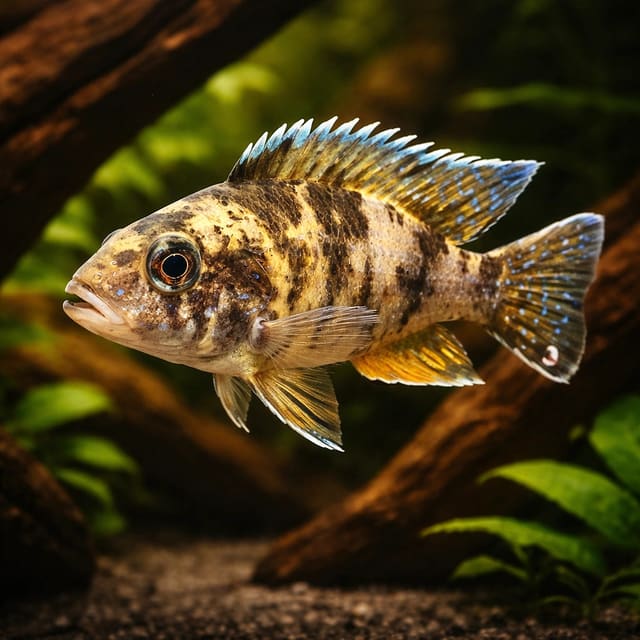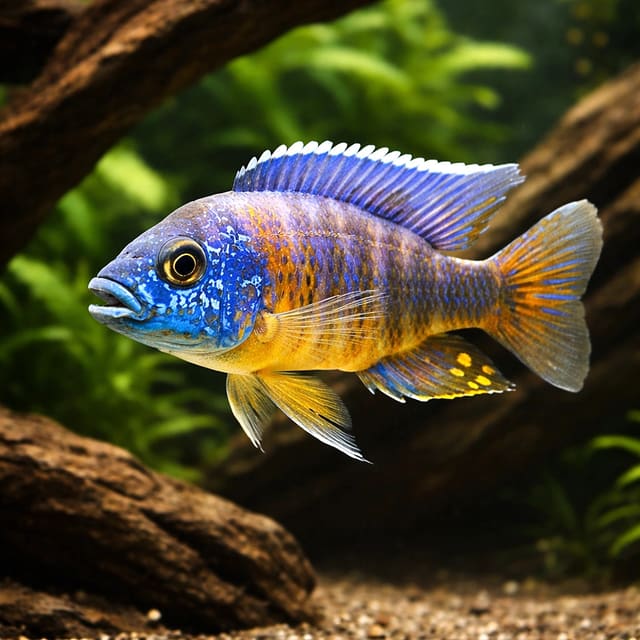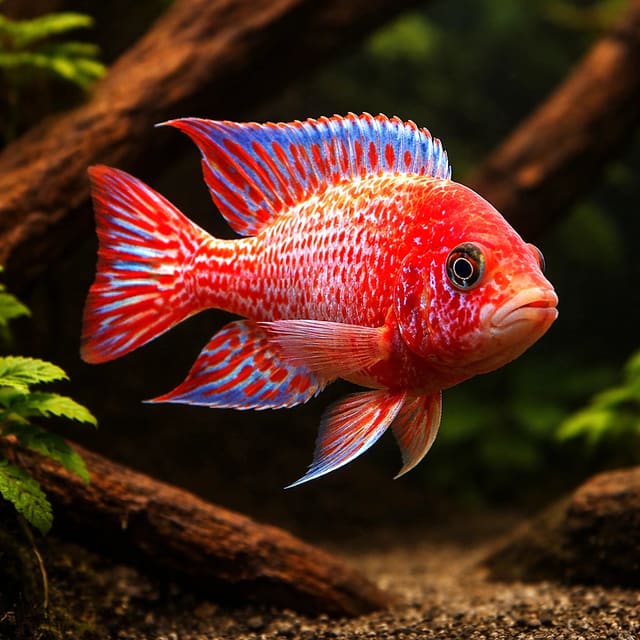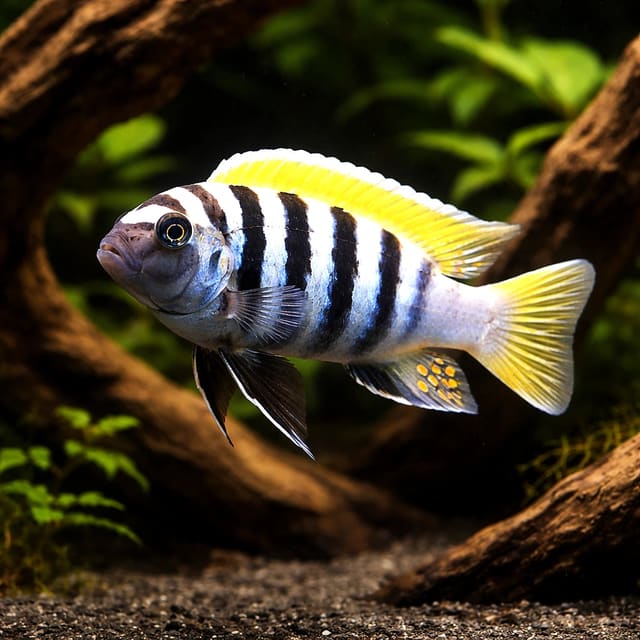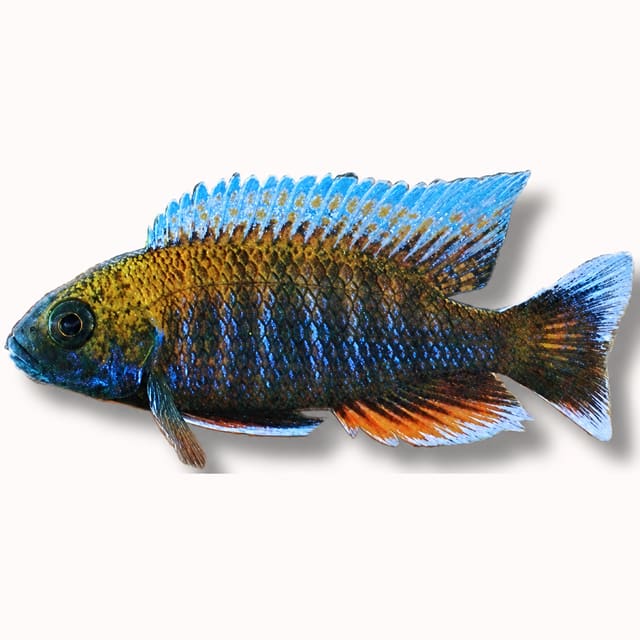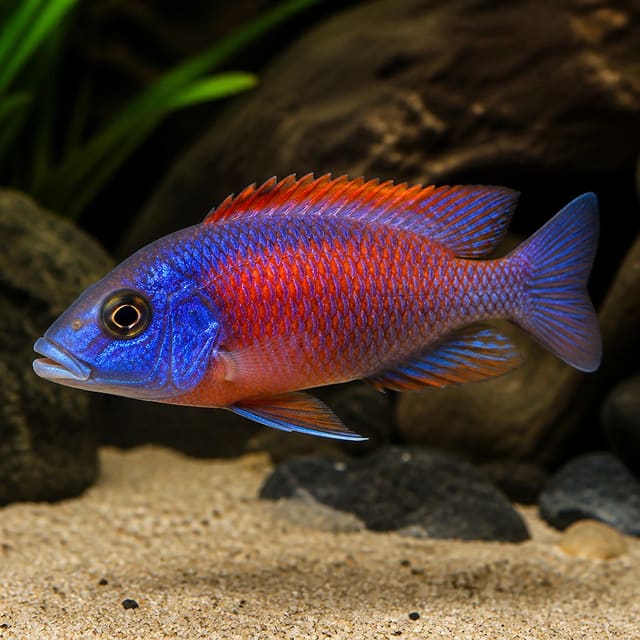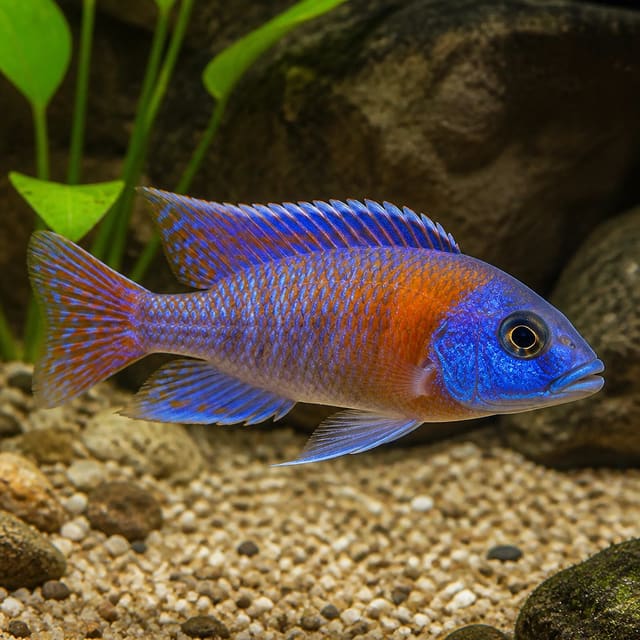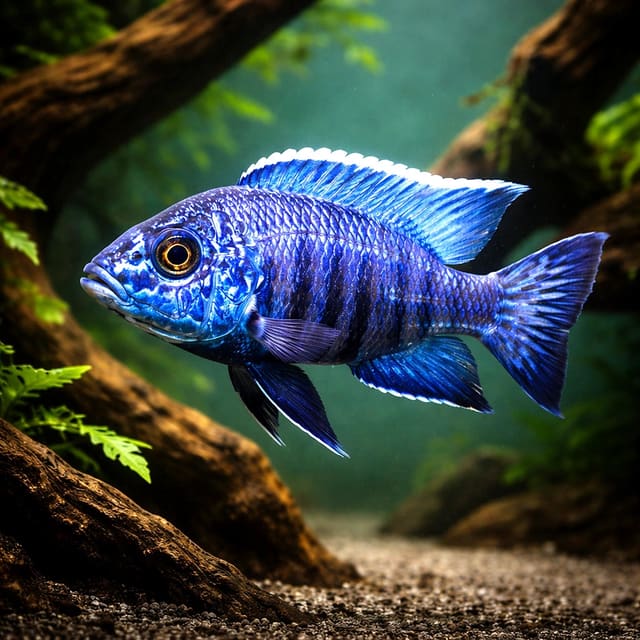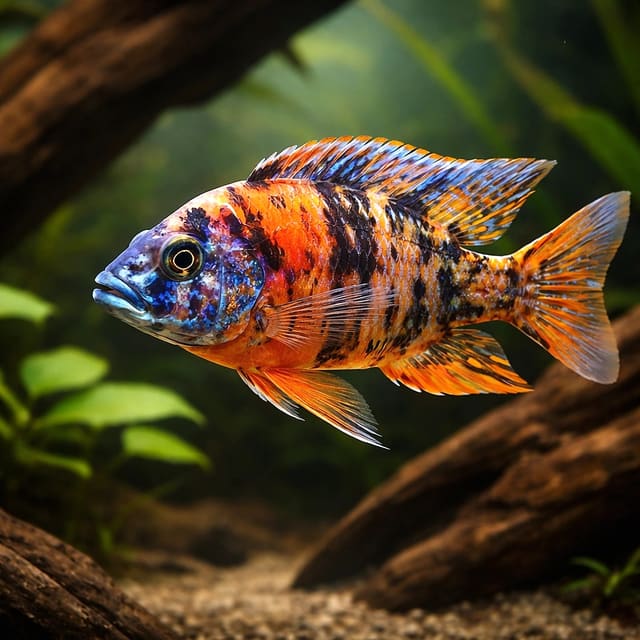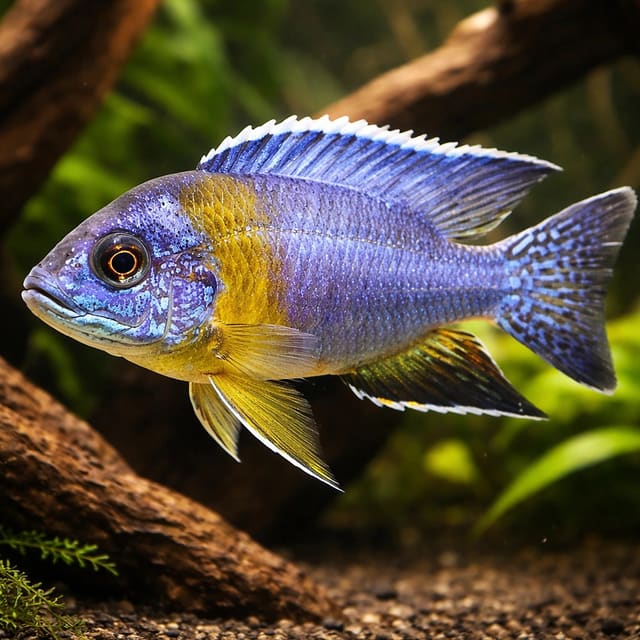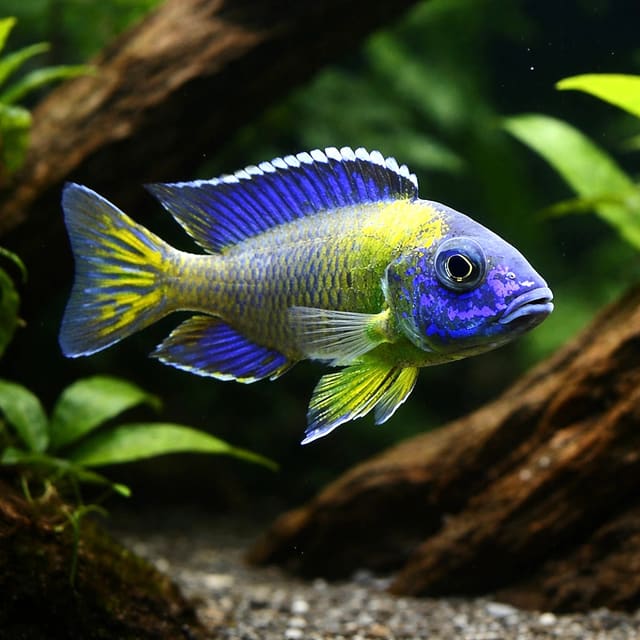
Steveni Blue Neon Peacock Cichlid (Aulonocara stuartgranti)
23–26°C · pH 8–8.6 · 243L
£18.99

Aulonocara jacobfreibergi is a stunning Malawi peacock cichlid with vivid colour and bold character. Order today for UK delivery.
Adult size is the maximum length this species reaches at full maturity (scientific sources). The livestock you receive will be younger and smaller. Product-photo provenance and any image-specific limitations are stated on the listing.
Aulonocara jacobfreibergi
Save when buying multiple fish. Each quantity is one fish; sex and pair formation are not guaranteed unless the selected variant explicitly states them.
Aulonocara jacobfreibergi is a stunning Malawi peacock cichlid with vivid colour and bold character. Order today for UK delivery.
Adult size is the maximum length this species reaches at full maturity (scientific sources). The livestock you receive will be younger and smaller. Product-photo provenance and any image-specific limitations are stated on the listing.
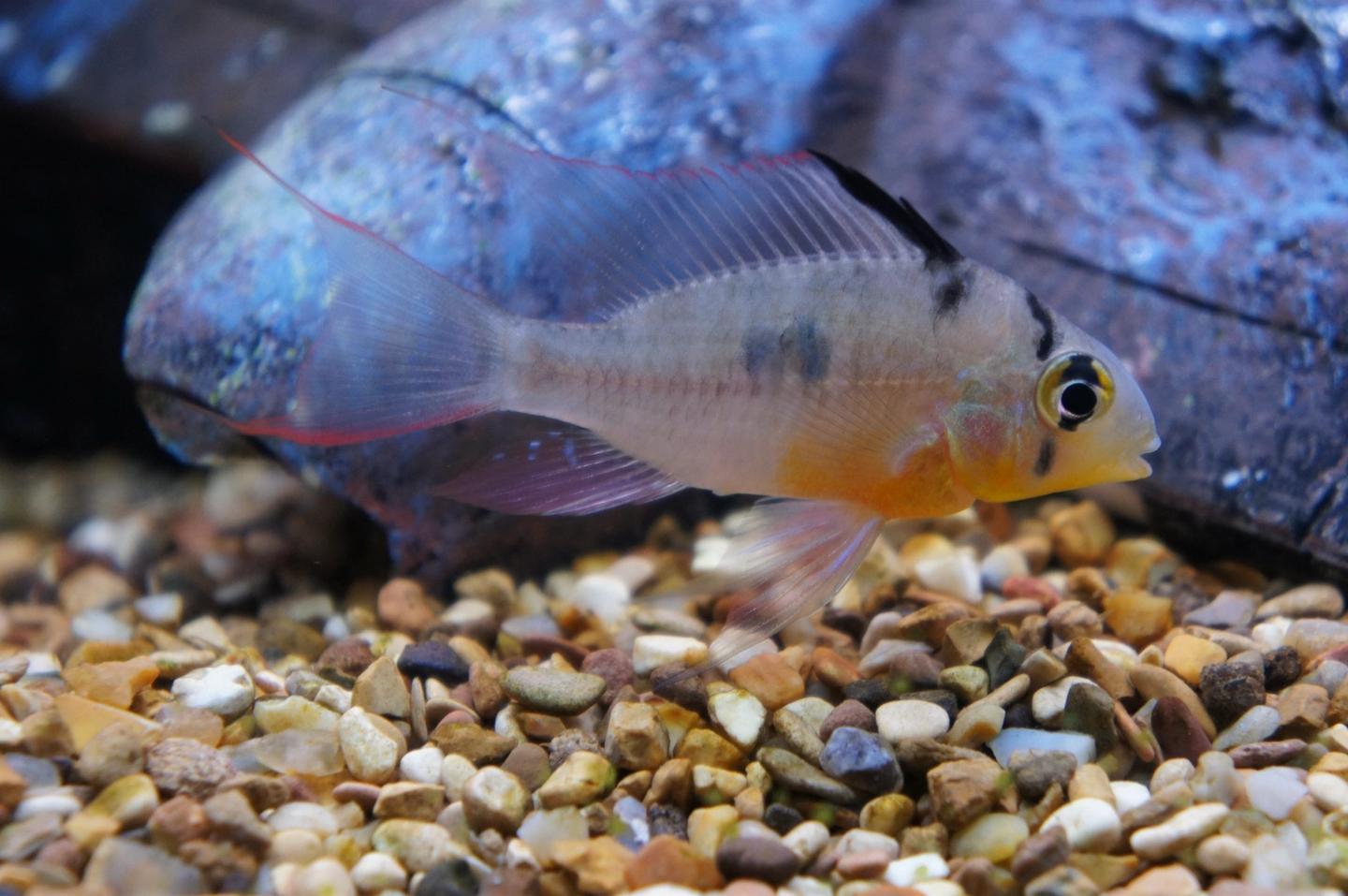
Cichlids are a family of roughly 1,800 accepted species, not one care type. Before buying, identify the exact species and source, then compare adult measurement, usable tank dimensions, social system, territory, tested water, diet and an exit plan. No family-wide minimum tank, water range or tank-mate list is safe.
Maintain these water conditions for optimal health and vibrant colors
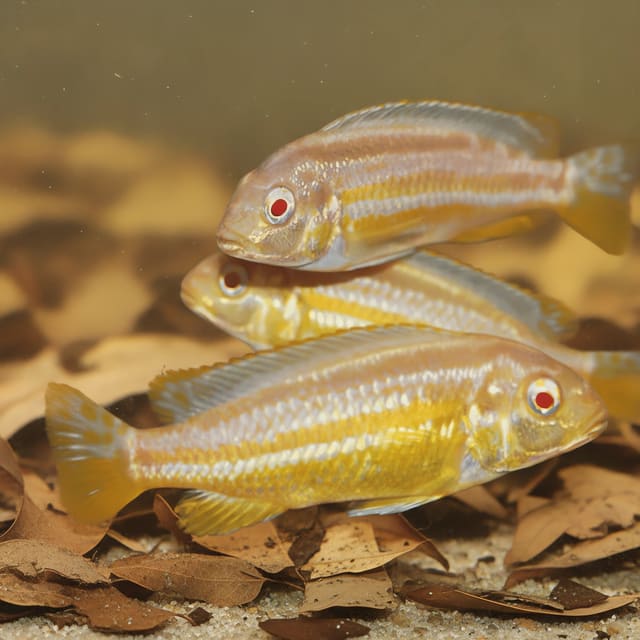
The Albino Eureka Peacock Cichlid is one of the most eye-catching Lake Malawi cichlids in the hobby. This is the pale, luminous albino line of the Eureka peacock, prized for its warm cream-to-orange body, metallic sheen and elegant trailing finnage. It brings the drama of an African rift-lake display without the relentless aggression of many mbuna, which makes it a popular choice for keepers searching for peacock cichlids for sale UK and Malawi cichlids for sale UK. Native to Lake Malawi in East Africa, it reaches around 15 cm, can live up to 10 years with good care, and suits aquarists who can provide a stable, hard, alkaline aquarium. In the right setup it becomes a confident centrepiece fish that colours up beautifully against dark rockwork. If you want to buy tropical fish online in the UK from a specialist rather than a general store, this peacock cichlid offers a strong balance of colour, character and manageable care.
The Eureka peacock belongs to Aulonocara, a group of Lake Malawi cichlids valued in the aquarium hobby for bright male colour and more moderate behaviour than rock-dwelling mbuna. This pale colour line is commonly sold as the Albino Eureka Peacock, Eureka Red Peacock or fairy cichlid depending on the strain. In UK fishkeeping it is a long-standing favourite for building a Lake Malawi display with strong colour contrast and open swimming space. For broader background on keeping rift-lake cichlids, see our cichlid care guide.
The Eureka peacock originates from Lake Malawi, one of the African Rift Lakes famous for clear water, mineral-rich conditions and exceptional cichlid diversity. Wild peacock populations are associated with the rocky margins of the lake, where rock shelves meet sandy patches. This is a classic Lake Malawi cichlid that UK keepers recognise immediately when planning a rift-lake aquarium.
In nature these fish use both habitats. Males establish territories near caves or rock shelves, while females and subdominant fish move through more open sandy areas. That is why a tank for this species should never be all bare rock or all open sand; the fish use both zones differently, and providing both improves their behaviour and confidence.
The water in Lake Malawi is alkaline, hard and stable. If you are wondering what pH and water chemistry suit an African peacock cichlid, the answer is a high, stable pH with good mineral content rather than the soft, acidic water used for many community fish. The water should stay clear, oxygen-rich and free from sudden swings in chemistry.
This is a tropical, warm-water aquarium fish, not a pond fish, so it must be kept indoors in a heated, controlled aquarium where temperature and water chemistry stay steady. To house it well you will need strong filtration, a reliable heater, fine sand, secure rockwork and enough open swimming room.
Mimic the natural habitat with open sand at the front and layered rockwork at the back. This improves confidence, reduces pointless chasing and helps males display more naturally. In our experience, Albino Eureka males colour up best when they can hold a visible territory without constant pressure from more aggressive mbuna.
A Lake Malawi aquarium needs more than a basic community layout. The minimum tank size for this species is 200 litres, but a larger tank is better for long-term stability and social management. For a breeding group of one male with three or more females, a 240-300 litre aquarium is a much safer starting point.
Floor area matters more than litres alone. A 100 cm tank is the practical minimum footprint for a small group, and a 120 cm tank is better still. Shorter aquariums simply do not give adult males the length they need to establish territory, so think in terms of swimming room and clear sight-lines rather than volume on its own. The tank should allow distinct rock territories plus open midwater swimming space.
The ideal temperature for this species is 24-28°C, with 25-26°C being a reliable day-to-day range. Stability matters more than the exact figure: conditions should stay steady rather than swinging between day and night. Keep the pH at 7.5-8.5 and hardness around 10-25 dGH. Sudden drops in pH or heater failures are far more dangerous than sitting at 25°C instead of 26°C, so always check water temperature with a reliable thermometer rather than guessing from room warmth.
A strong external canister filter is ideal because these fish are messy eaters and appreciate clean, oxygen-rich water. Size the filter and heater for a cichlid bioload, not for small community fish. Position the heater where there is good flow so the temperature stays even across the whole aquarium. A well-matched filter and heater combination is essential for keeping this species healthy.
Use fine sand or smooth, cichlid-safe sand 2-5 cm deep. These fish inspect and lightly sift the bottom, so sharp gravel is a poor choice. Build rock piles securely on the tank base before adding substrate, and use caves, arches and broken sight-lines to reduce stress. If you want some greenery, choose hardy plants attached to rock such as Anubias or Java fern; soft, heavily planted layouts are not ideal for a Malawi tank, and most peacock keepers use plants sparingly.
For similar display fish, many hobbyists pair this species conceptually with Aulonocara Sp Neon Red Calico Peacock, Rubin Red Peacock Cichlid - Aulonocara, or Aulonocara kandeense in larger peacock-focused setups.
Always cycle the tank for 4-6 weeks before adding cichlids. Rushing the setup is one of the fastest ways to lose expensive Malawi fish, because African cichlids need mature, established filtration from day one.
This species is an omnivore with a strong preference for meaty foods, but it should not be fed as a pure predator. In the wild, peacock cichlids use sensory pores along the head to locate small invertebrates in the substrate. In the aquarium, the best diet combines a quality cichlid pellet with controlled amounts of frozen foods and some vegetable matter.
Use a high-quality sinking or slow-sinking cichlid pellet as the staple. This keeps nutrition balanced and reduces digestive problems. Compared with herbivorous mbuna, peacocks need more protein and less constant algae grazing, so choose a pellet formulated for Aulonocara rather than a pure-vegetable mbuna food.
Frozen brine shrimp, krill, mysis and daphnia are excellent supplements. Spirulina-based foods help provide fibre and support colour. Avoid fatty mammal meat and low-grade feeder foods. This fish may peck at very small snails but should never be bought as a snail-control species.
Feed adults one or two small meals a day, offering only what they finish in 30-60 seconds. Overfeeding quickly leads to waste build-up, cloudy water and nuisance algae. If a cichlid tank develops persistent algae, review feeding and maintenance before reaching for algae-treatment products; good husbandry prevents most algae problems in the first place.
| Time | Food | Amount |
|---|---|---|
| Morning | High-quality cichlid pellet | Small portion eaten within 1 minute |
| Evening | Frozen brine shrimp or krill | Light supplement, 2-3 times weekly |
Because Malawi tanks are usually rocky and only lightly planted, you do not need much plant food. Be cautious about adding random algae eaters or bottom feeders too; many common community scavengers are unsuitable for an alkaline cichlid setup, and a hardy Synodontis catfish is a far better fit than a delicate community scavenger.
Overfeeding causes ammonia spikes, poor water clarity and digestive stress. Many cases of "mystery illness" in peacock cichlids are really the result of excess food, dirty substrate and unstable filtration. Feed lightly and keep the filter and heater working consistently.
The Albino Eureka Peacock has the classic peacock cichlid profile: a laterally compressed body, pointed head, long dorsal fin and elegant trailing finnage in mature males. Adult size is usually around 15 cm, though exceptional males in roomy tanks can appear larger because of fin extension and body depth.
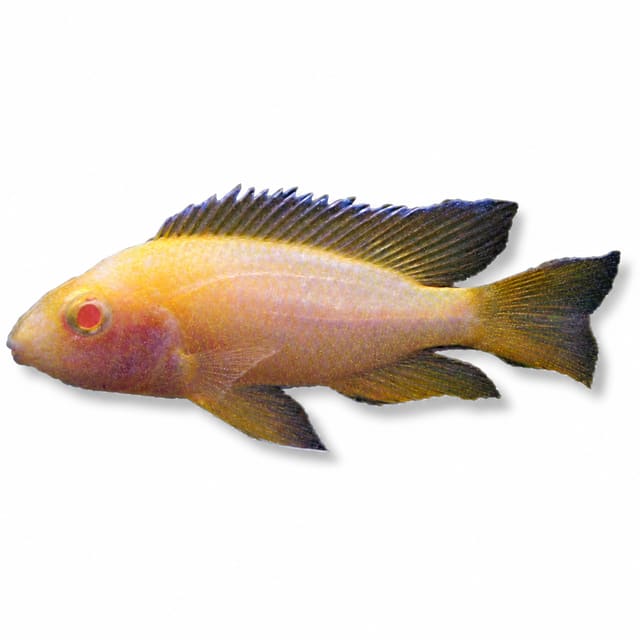
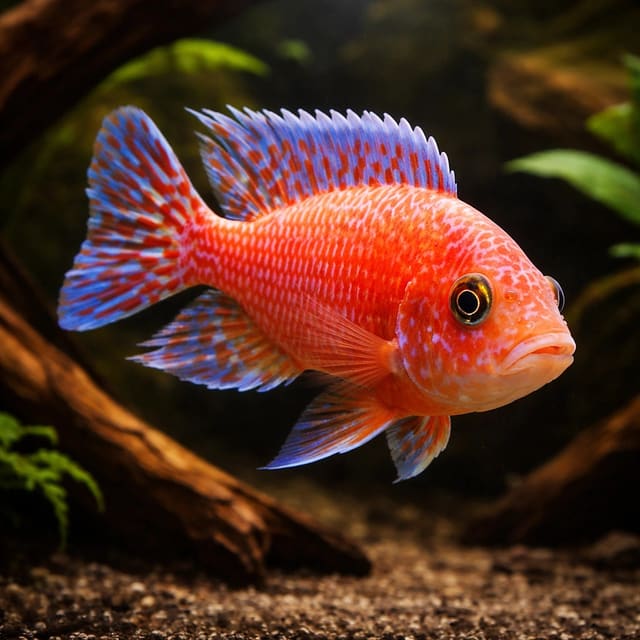
The albino form replaces darker pigment with pale cream, yellow, orange and pinkish tones, often with a metallic or opalescent sheen under aquarium lighting. Males show stronger colour and longer fins, while females stay plainer and more silver-beige. When comparing photos, remember that juvenile fish have not yet developed full adult colour.
Keepers who want to preserve that colour should focus on stable, hard water, low stress and a dark background, all of which help pale fish look their best. Heavy algae on the glass can wash out the visual impact of a pale fish like this, so keeping the viewing panes clean is part of presenting it well.
Our photos show the contrast between the pale body and brighter finnage that makes this fish stand out in a rocky Malawi layout. It is often chosen by keepers who want the look of a show fish without moving into very large predatory cichlids.
This species is semi-aggressive, not a peaceful community fish. That said, it is usually more manageable than many mbuna, especially when kept in the right sex ratio and tank size. When choosing tank mates, think in terms of robust Malawi fish with similar water needs and temperament.
Good tank mates include other moderate peacock cichlids, mild haps and suitable Synodontis catfish. In larger tanks, carefully chosen companions such as Aulonocara Sp Neon Red Calico Peacock, Rubin Red Peacock Cichlid - Aulonocara and Aulonocara kandeense can work very well. These are sensible options if you are researching compatible fish and the best tank mates for an Albino Eureka Peacock Cichlid.
Some aquarists also compare them with fish like Thorichthys Maculipinnis - Elliot'S Cichlid - or Guianacara Dacrya - South American Cichlid, but these prefer different water chemistry and are useful comparison fish rather than direct Malawi companions.
Avoid highly territorial rock-dwelling mbuna that will harass peacocks constantly. Delicate nano fish, shrimp and most snails are also poor choices. This is a cichlid-community fish, not a mixed peaceful tropical fish: it is not suitable with guppies, tetras or small barbs, which need completely different conditions and will be stressed or eaten.
For a 240 litre setup, try one male and three females with one or two other peacock species of similar size. For a 300 litre tank, a mixed peacock display with several species can work if each male has visual breaks and the females are not overcrowded. This is a cichlid-only community, very different from a peaceful general tropical tank.
| Species | Compatible? | Notes |
|---|---|---|
| Rubin Red Peacock Cichlid - Aulonocara | ✅ Yes | Similar water chemistry and temperament in larger tanks |
| Aulonocara Sp Neon Red Calico Peacock | ✅ Yes | Works in peacock-focused displays with careful stocking |
| Small tetras or shrimp | ❌ Avoid | Too small, different water needs, likely stressed or eaten |
Maintenance is a big part of compatibility. Knowing how to change the water, clean the tank, keep the water clear and test it regularly prevents many aggression and health problems, because dirty water makes cichlids more irritable.
If you are comparing other Malawi fish, note that Yellow Elongatus Cichlid - Chindongo Elongatus is much more aggressive and should be chosen carefully. Likewise, Kiriza Yellow Cichlid - Tropheus Moorii and Orange I Blunthead Cichlid - Tropheus are not straightforward companions, because Tropheus have different social and dietary demands.
Always quarantine new arrivals for 2-4 weeks before adding them to a Malawi display. A proper quarantine tank protects established fish from parasites and gives new cichlids time to settle, feed and recover from transport.
Breeding the Albino Eureka Peacock is very achievable for aquarists with a mature Malawi setup. This species is a maternal mouthbrooder: the male courts the female over a chosen spawning site, the eggs are laid, then collected into the female's mouth, where they are incubated until release.
A breeding group should be one male with at least three females, which spreads the male's attention and reduces pressure on any single female. The ideal setup is a spacious tank with sand, flat spawning stones and secure caves. A single pair often does worse than a group, because the male can become overly persistent with only one female to court.
Males intensify in colour, flare their fins and display over a cleaned patch of substrate or rock. The female lays eggs and immediately picks them up. New keepers sometimes worry when they see no eggs on the substrate, but with mouthbrooders that is completely normal — the brood is carried in the female's mouth.
The female typically holds the brood for around 18-25 days depending on temperature and stress level. Keep the temperature stable and avoid netting the female unless absolutely necessary. Water that is too warm speeds metabolism and increases stress, while cool water slows development; aiming for around 26°C during incubation works well in UK homes.
Once released, fry can be fed newly hatched brine shrimp, powdered fry food and finely crushed cichlid pellets. Clean water is critical. If the female was moved to a separate tank, return her carefully after release. This species does not provide extended parental care once the fry are free-swimming.
If a female is holding well and has stopped feeding completely, reduce disturbance and dim the lighting slightly around her territory. Experienced breeders often get better fry survival by leaving a calm, healthy female in the main tank until late in the holding period rather than stripping the brood too early.
Peacock cichlids are often compared with each other because they share a similar body shape and care needs, yet differ in colour, confidence and adult impact. If you are choosing between this fish and another showy Malawi cichlid, the key question is whether you want a pale, luminous albino display fish or a deeper red, blue or calico contrast fish.
| Feature | Albino Eureka Peacock | Rubin Red Peacock |
|---|---|---|
| Max Size | 15 cm | 13-15 cm |
| Care Level | Moderate | Moderate |
| Temperature | 24-28°C | 24-28°C |
| Best For | Bright albino focal fish | Deep red peacock displays |
| Feature | Albino Eureka Peacock | Yellow Elongatus |
|---|---|---|
| Temperament | Semi-aggressive | More aggressive |
| Habitat Style | Sand plus rocks | Rock-heavy mbuna setup |
| Diet | Omnivore | More herbivorous tendency |
| Best For | Peacock communities | Mbuna specialists |
| Visual Style | Pale gold/orange albino | Bold yellow with bars |
Choose this species if you want a fish that stands out under bright lighting and contrasts beautifully with dark rockwork. It is a strong pick when you want a peacock with a softer palette than intense reds or blues, and it rewards stable water and thoughtful stocking more than constant intervention.
For related options, compare Rubin Red Peacock Cichlid - Aulonocara, Aulonocara Sp Neon Red Calico Peacock and Yellow Elongatus Cichlid - Chindongo Elongatus before deciding on your final stock list.
A healthy Albino Eureka Peacock is alert, feeds eagerly, holds its fins open and shows clean eyes, intact finnage and steady breathing. Pale fish can make minor issues easier to spot, so watch for clamped fins, flashing, excess mucus, a hollow belly or darkened stress patches.
Like many Malawi cichlids, this species can suffer from Malawi bloat linked to poor diet, stress or water quality. External parasites, bacterial fin damage and white spot can also occur, especially after transport or poor acclimation. These problems spread fastest in overstocked tanks with inconsistent maintenance.
The best prevention is stable water, moderate feeding and proper quarantine. Strong filtration and regular water changes matter far more than chasing miracle cures, and the species does best in hard, mineral-rich, well-oxygenated water. Maintain a steady temperature and avoid sudden heater swings, because stress from unstable heat weakens immunity quickly. If a fish is unwell, move it to a quarantine tank for observation and treatment.
Never medicate the main display without identifying the problem first. Random treatment can damage beneficial bacteria and worsen stress. Copper-based medications should also be used with caution in mixed systems and never around sensitive invertebrates.
This fish is active, aware of its surroundings and often more observant than frantic. Males patrol a chosen area, display to females and posture toward rivals, while females spend more time moving through the mid and lower levels. In the right setup, the species is neither shy nor hyper-aggressive.
One of its most interesting behaviours is substrate inspection. Peacock cichlids are adapted to detect prey in or near the sand, so they often hover low and investigate the bottom. During courtship, males intensify in colour and use body angle, fin extension and short dashes to attract females.
Among Malawi cichlids, this is one of the better choices for a keeper willing to learn water chemistry and stocking discipline. It is not a true beginner fish for a tiny starter aquarium, but it is a very rewarding first peacock cichlid in a properly sized, well-filtered tank.
Keepers searching for healthy Malawi cichlids for sale usually want accurate species identification and fish that have been settled properly before sale. That matters even more with peacock cichlids, because stressed imports can lose colour and condition fast.
Our Albino Eureka Peacock Cichlids are selected for body shape, finnage and clean colour presentation rather than sold as generic assorted peacocks. Each fish is observed before listing, held in heated, filtered systems and assessed for feeding response and stability.
For customers who prefer to buy tropical fish in the UK rather than rely on a local store, we prepare fish for transport with insulated packaging, oxygenated bags and seasonal heat packs when needed. Tracked delivery reduces time in transit, and careful packing protects fins and reduces the risk of chilling. If you want to buy live fish online in the UK with confidence, species-specific handling makes a real difference.
We also provide practical support after purchase. Many customers come to us for realistic advice on setup, compatibility and acclimation, and we can help you judge whether this peacock cichlid suits your tank better than alternatives such as mbuna or South American cichlids, which need different conditions.
Building a Malawi display? Pair this fish thoughtfully with other robust cichlids and similarly managed species. Consider Aulonocara Sp Neon Red Calico Peacock for a brighter multi-colour peacock contrast, or Rubin Red Peacock Cichlid - Aulonocara if you want deeper red tones in the same style of setup. Aulonocara kandeense is another strong option for a peacock-led display. If you are comparing temperament, Yellow Elongatus Cichlid - Chindongo Elongatus shows how much more intense mbuna behaviour can be. For broader cichlid inspiration, Thorichthys Maculipinnis - Elliot'S Cichlid - and Guianacara Dacrya - South American Cichlid are excellent species to compare, though they belong in different water conditions.
No reviews for this item yet. Bought one? Honest reviews only, good or bad.
What customers say about ordering from us
I have a small group of long finned mountain minnows. So was delighted to be able to order ten of this variety to increase the genetics in my tank . The ones I recieved are healthy but it’s to early to give a verdict on wether they are of a long finned type since they are small currently.
Gordon Walker · 23 Sept 2026
100% success travel and "installation". Pleased with quality of purchase. The Siamese fighter a bit "shy" so have not yet seen him at his best yet but looking good. Happy customer. GG
George E Garratt · 21 Sept 2026
Reviews of our shop, collected by Judge.me, an independent third-party review collector. Newest first.