−15%
Moderate
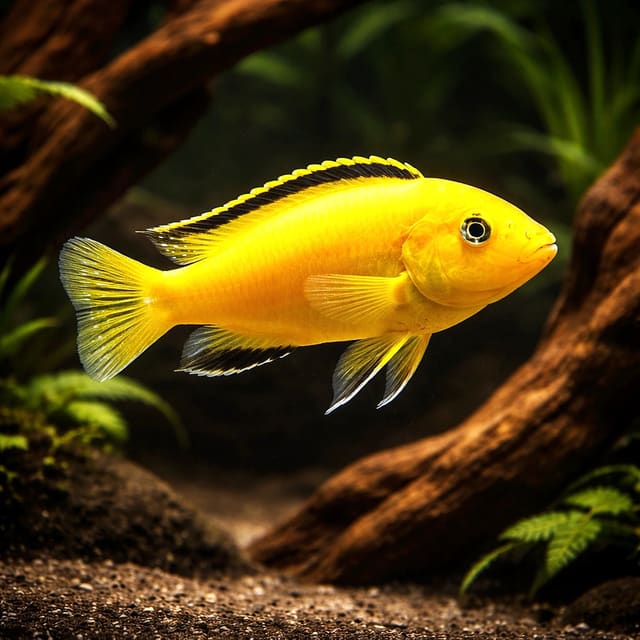
Yellow Lab Cichlid (Labidochromis caeruleus)
24–28°C · pH 7.7–8.6 · 154L
£8.39£10.99

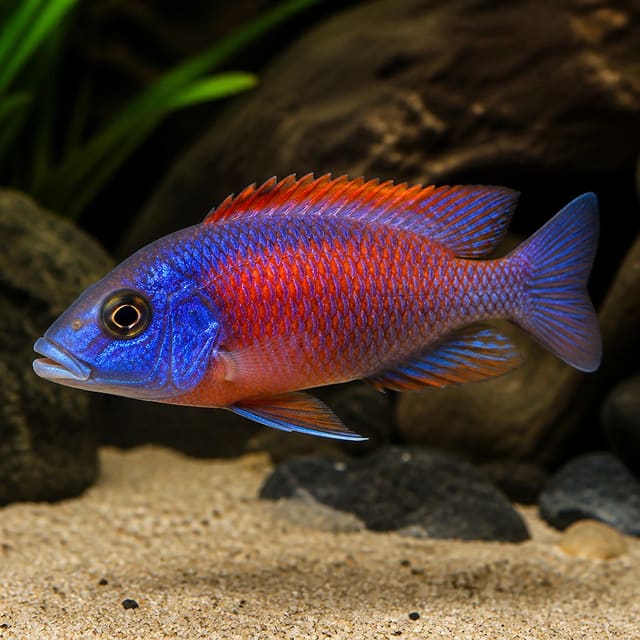
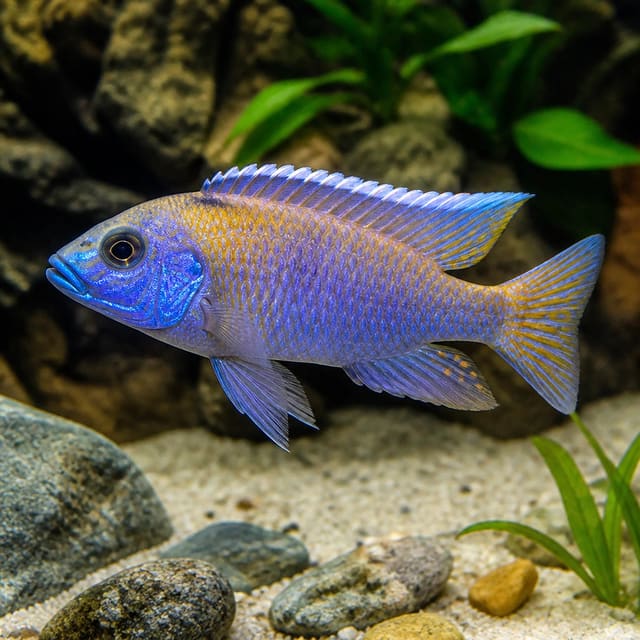
The Fort Maguire Peacock Cichlid (Aulonocara hansbaenschi) is a freshwater cichlid from southern Lake Malawi that reaches 8.4 cm standard length. It suits keepers able to provide at least a 90 × 45 cm base; the FishBase and Seriously Fish overlap is 24–27°C, pH 7.5–8.5 and 10–15 dGH. Sold individually in 3–4 cm, 4–5 cm, 6–7 cm and XL sizes.
Adult size is the maximum length this species reaches at full maturity (scientific sources). The livestock you receive will be younger and smaller — pick a size above for the actual shipping size. Product-photo provenance and any image-specific limitations are stated on the listing.
Aulonocara hansbaenschi
Save when buying multiple fish. Each quantity is one fish; sex and pair formation are not guaranteed unless the selected variant explicitly states them.
The Fort Maguire Peacock Cichlid (Aulonocara hansbaenschi) is a freshwater cichlid from southern Lake Malawi that reaches 8.4 cm standard length. It suits keepers able to provide at least a 90 × 45 cm base; the FishBase and Seriously Fish overlap is 24–27°C, pH 7.5–8.5 and 10–15 dGH. Sold individually in 3–4 cm, 4–5 cm, 6–7 cm and XL sizes.
Adult size is the maximum length this species reaches at full maturity (scientific sources). The livestock you receive will be younger and smaller — pick a size above for the actual shipping size. Product-photo provenance and any image-specific limitations are stated on the listing.
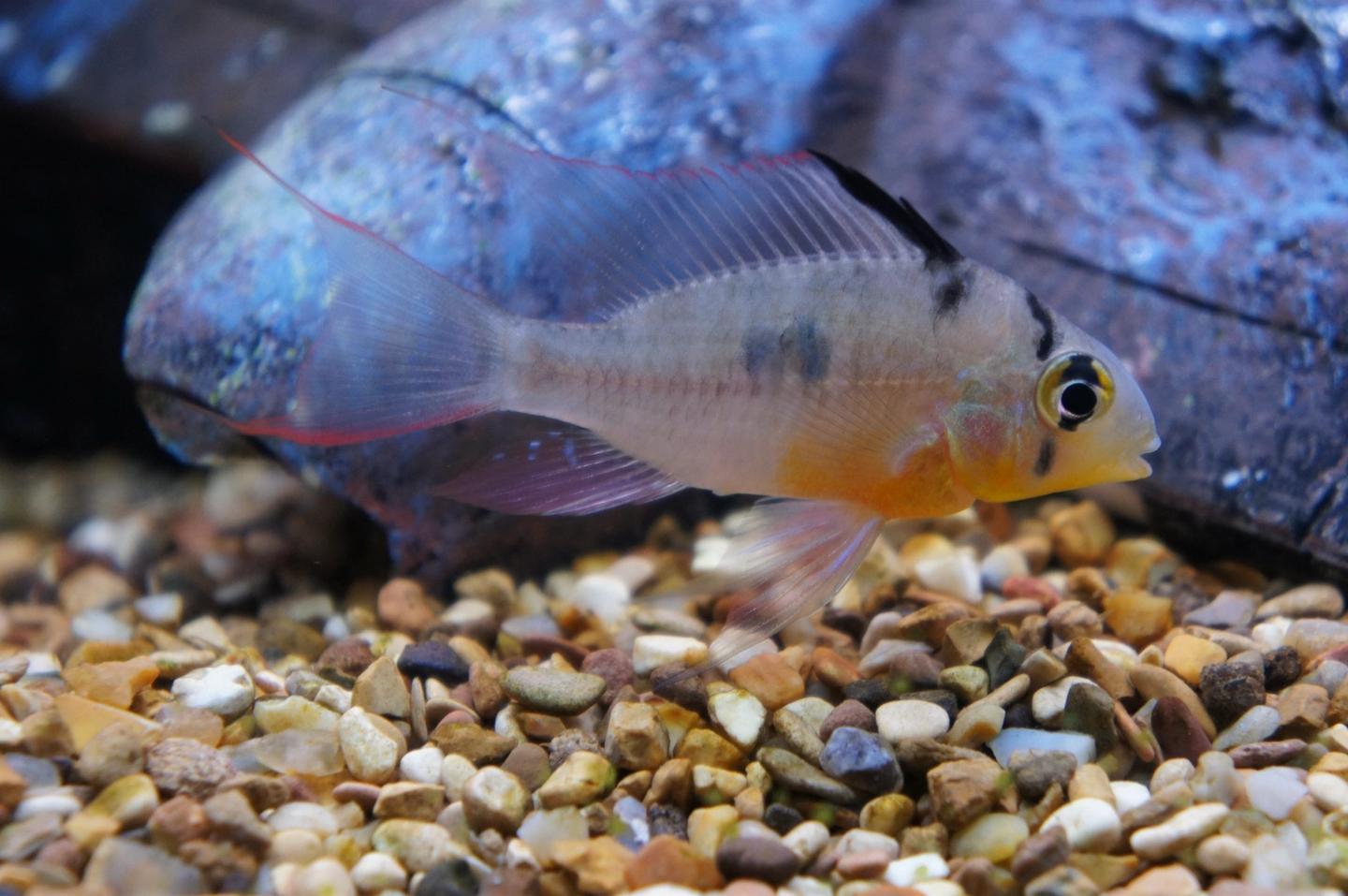
Cichlids are a family of roughly 1,800 accepted species, not one care type. Before buying, identify the exact species and source, then compare adult measurement, usable tank dimensions, social system, territory, tested water, diet and an exit plan. No family-wide minimum tank, water range or tank-mate list is safe.
Maintain these water conditions for optimal health and vibrant colors
The Fort Maguire Peacock Cichlid, Aulonocara hansbaenschi, is a freshwater cichlid from the southern part of Lake Malawi between Fort Maguire and Masinje. FishBase identifies it within the family Cichlidae and records a maximum of 8.4 cm standard length. It suits keepers able to provide hard, alkaline water, a mature filtered aquarium, fine sand, sheltered rockwork and carefully screened Malawi companions.
FishBase records it as benthopelagic, notes that it tends to hide in caves and describes wild fish feeding on small sand-dwelling invertebrates. Aquarium observations describe peacocks hovering above the substrate, detecting movement and sifting mouthfuls of sand for edible items. A fine substrate therefore supports both safe feeding and the behaviour for which the fish is adapted.
| Suits | Not suited to |
|---|---|
| A mature aquarium with at least a 90 × 45 cm base and around 182 litres | A biologically immature aquarium or one without an established filter |
| Stable water at 24–27°C, pH 7.5–8.5 and 10–15 dGH | Water outside the shared FishBase and Seriously Fish ranges |
| Fine sand, separated rock piles, caves and open feeding areas | Coarse gravel or small pebbles that can inhibit feeding or damage gills |
| Individually screened, differently patterned Malawi companions | Other Aulonocara or the majority of excessively boisterous mbuna |
| Keepers prepared to test water and perform substantial weekly maintenance | A low-maintenance setup where water quality and aggression are not monitored |
This peacock is described as relatively peaceful, but that does not make it a general community fish. Males may challenge fish with a similar colour pattern, most mbuna are too boisterous, and other Aulonocara are best avoided because hybridisation may occur. A successful aquarium depends on deliberate stocking rather than relying on the word “peaceful”.
Some authors regard A. hansbaenschi as a geographical form within the variable Aulonocara stuartgranti complex. Fort Maguire Peacock, African Peacock, firebird cichlid, red peacock and red flash are names associated with this aquarium fish; Aulonocara hansbaenschi remains the scientific name used here. Browse the wider African cichlid collection only after comparing each fish against the compatibility decisions below.
One purchase supplies one animal of the selected size. The live size selector may show 3–4 cm, 4–5 cm, 6–7 cm and XL. The size you select is the size supplied, not the adult size.
Numeric labels describe the dispatch measurement, while XL is a non-numeric size label. Do not use XL as an adult-size promise or assign it a centimetre measurement. Whichever label you choose, prepare the full aquarium around adult requirements before the fish arrives. A smaller dispatch fish still needs mature filtration, suitable companions and an aquarium planned for long-term care.
| Size label | How to use it |
|---|---|
| 3–4 cm | Treat this as the size of the individual selected, not its expected adult measurement. |
| 4–5 cm | Use the stated interval as the dispatch-size choice, not as a guide to the aquarium footprint. |
| 6–7 cm | Plan the same adult aquarium, water and compatibility requirements as for every other size. |
| XL | Read this only as the named size and use the live selector rather than assigning a number to it. |
Sex is guaranteed only when the selected option explicitly states male or female. This Fort Maguire Peacock Cichlid listing has no sex-guaranteed option. Colour, markings, body size and gallery appearance must not be used as promises about the animal’s sex.
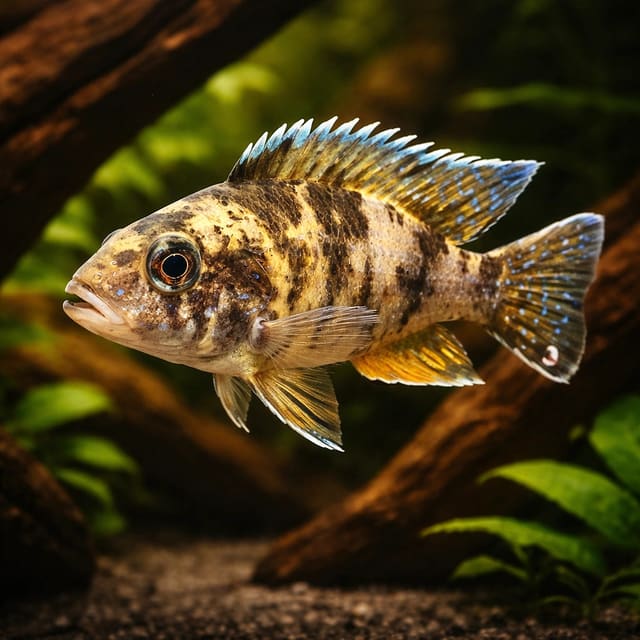
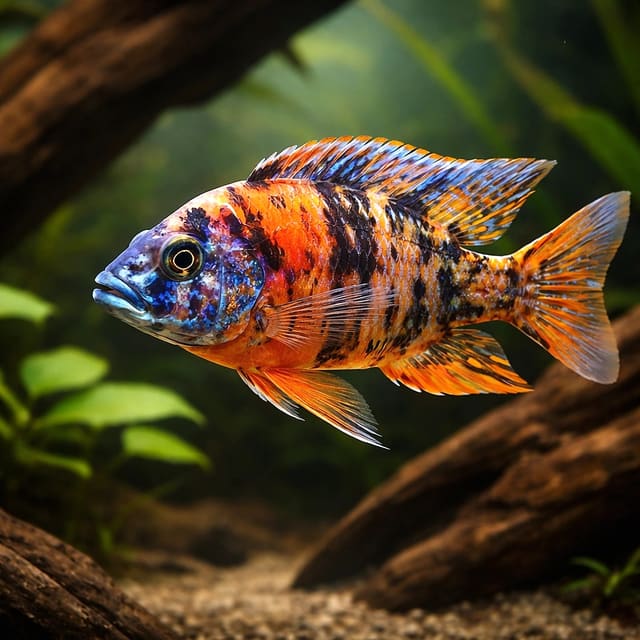
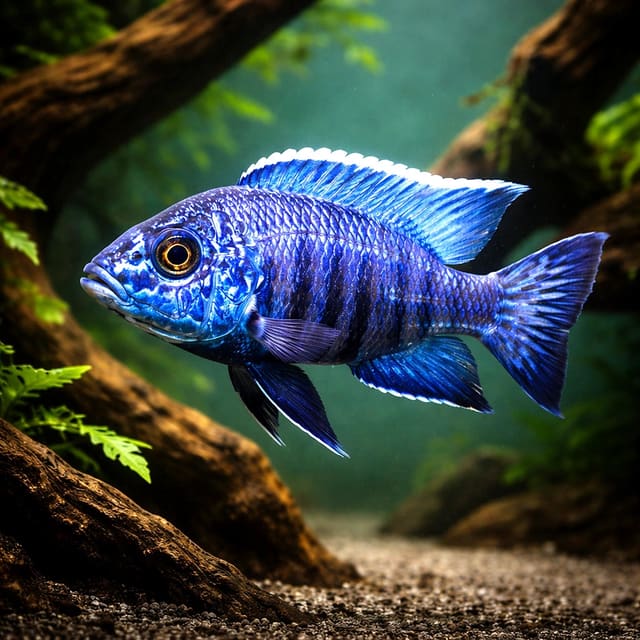
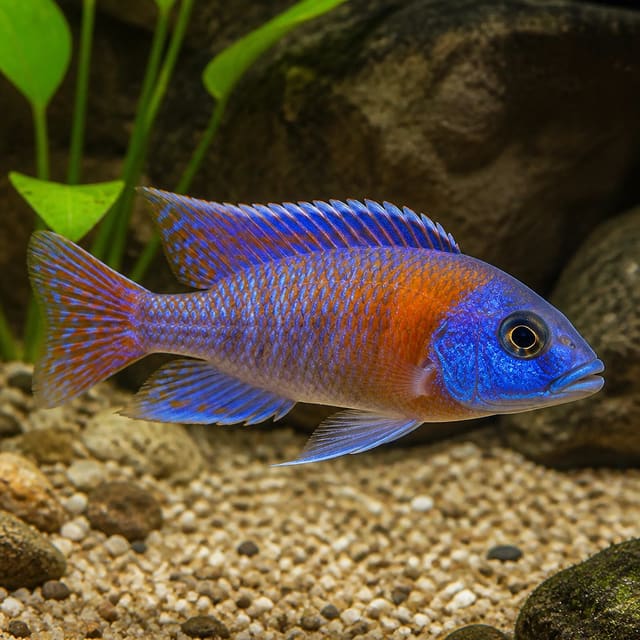
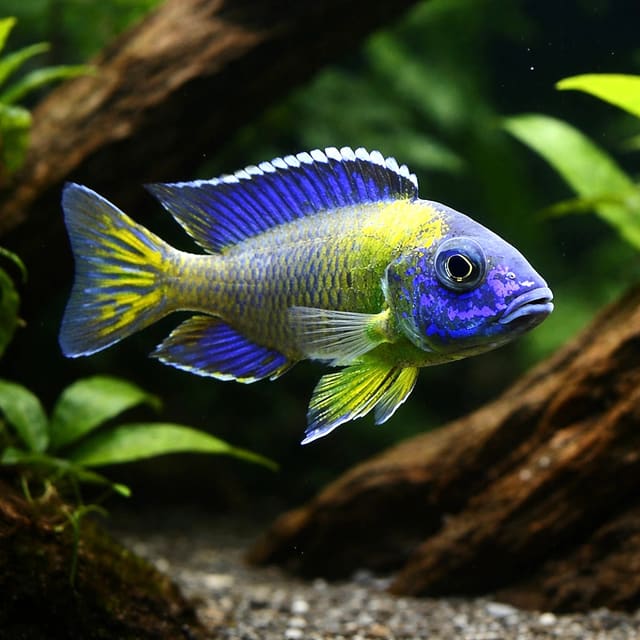
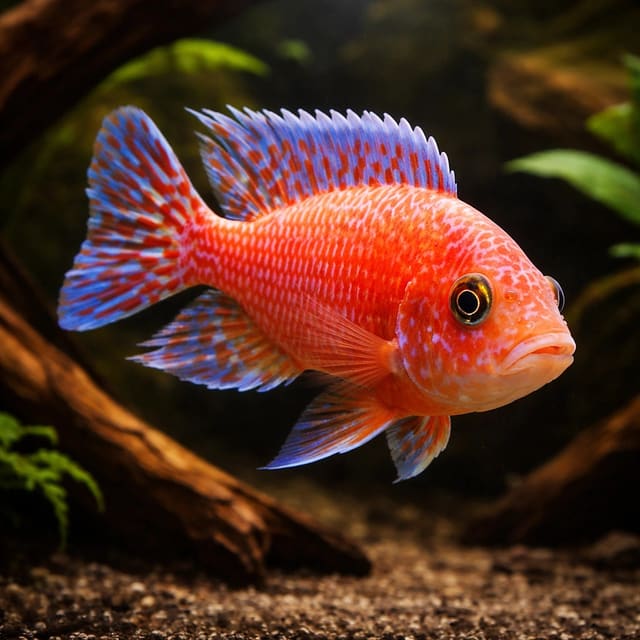
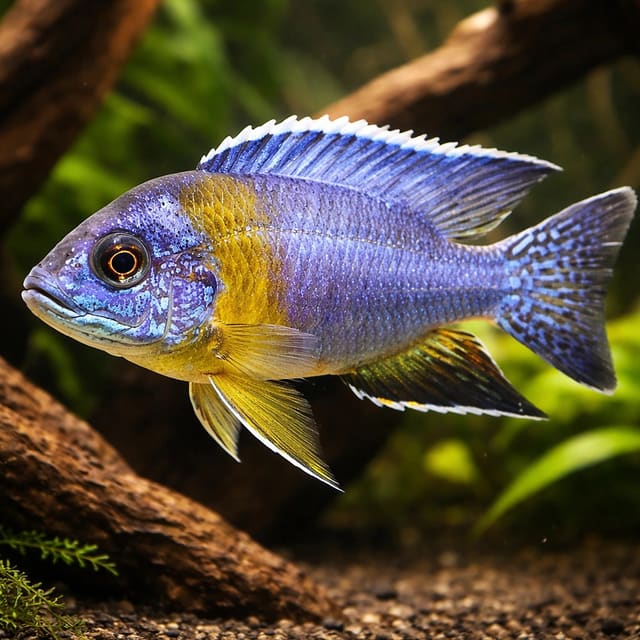
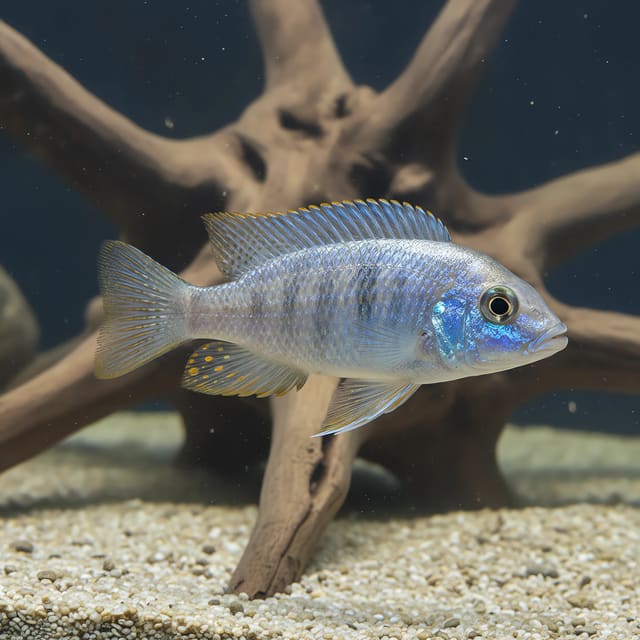
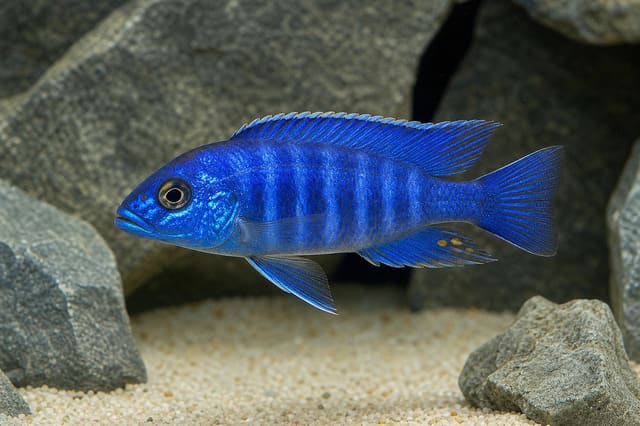
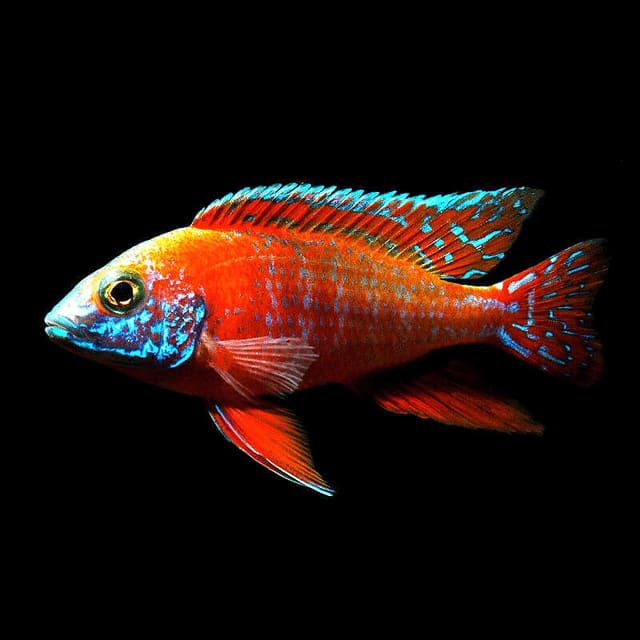
The gallery images are representative, based on reference photographs of this species, so colours can look slightly different from the live animal. Use the pictures to understand the general body shape and colour theme while expecting natural differences between individual animals.
Prepare the aquarium, measure its water and complete the compatibility screen before ordering. The current delivery and Live Arrival Guarantee policy explains packing, receipt, acclimatisation and claim requirements. Keep the buying decision separate from husbandry: a dispatch size tells you which animal size you selected, while the adult footprint, filtration and social plan determine whether the aquarium is suitable.
FishBase records a maximum of 8.4 cm standard length for male or unsexed Aulonocara hansbaenschi. The Seriously Fish aquarium profile uses a different planning reference of 12 cm standard length. Keep 8.4 cm as the recorded adult-size figure throughout the care record, while allowing conservatively for the larger husbandry reference when arranging space and companions.
The species profile recommends minimum base dimensions of 90 × 45 cm or an equivalent footprint, with a volume of approximately 182 litres. FishBase separately gives a minimum aquarium length of 100 cm. Meet both considerations by choosing an aquarium at least 100 cm long, with no less than the recommended 90 × 45 cm base and approximately 182 litres. Greater floor area creates more options for separated rock piles, open sand and escape routes.
OATA’s Malawi-cichlid sheet gives broad group guidance and recommends an aquarium of at least 200 litres for a reasonable-sized community. That community figure has a different purpose from the approximately 182-litre species minimum. Use around 182 litres as the lower species planning reference, then move to at least 200 litres when building a multi-fish Malawi community. Increase space further when the intended combination, adult population or territorial demands require it.
A 100 cm aquarium that is too narrow can have less useful territorial area than a deeper design, so length alone is not the complete test. Likewise, a nominal litre figure does not show how much floor area remains after rockwork. Compare all three dimensions, the usable footprint and the intended stocking plan before treating an aquarium as suitable.
Start with fine sand across the feeding area. Aulonocara take mouthfuls of substrate, sift out edible material and expel the remainder through the mouth and gills. Coarser gravel or small pebbles can inhibit this behaviour, damage gill filaments or be swallowed with a risk of blockage. The substrate is therefore a feeding decision as well as a visual choice.
Arrange piles of rockwork around the aquarium while leaving open spaces between them. FishBase notes a tendency to hide in caves, so include sheltered recesses rather than creating one continuous wall. Open gaps let fish move between areas, while exposed sand gives the peacock room to hover and search for food. Preserve enough open floor space that adding rocks does not remove the feature the fish uses for feeding.
| Layout feature | Purpose |
|---|---|
| Fine sand | Allows natural sifting and reduces the hazards associated with coarse particles. |
| Rock piles | Create structure and cave-like shelter without covering the whole base. |
| Open gaps | Keep movement routes between structured areas and help divide the aquascape. |
| Open sand | Provides a clear feeding zone where small foods can be detected and taken. |
| Hard-water plants | Add cover where desired without relying on delicate planting in a digging-cichlid aquarium. |
The husbandry profile says this species will not harm plants. Hard-water-tolerant Vallisneria, Anubias or Sagittaria may be used if they suit the rest of the setup. Malawi cichlids will often dig and rearrange substrate, however, so use planting as an optional structural feature rather than making the whole layout depend on delicate roots remaining undisturbed.
Review the finished base before adding livestock. You should be able to identify an open feeding area, separate structured areas and caves, and enough clear movement space for every planned adult. If the footprint has become crowded with décor, reduce the obstruction rather than sacrificing the recommended base dimensions in practice.
Décor can also help when social relationships change. OATA advises rearranging aquarium décor when aggression develops because fish then establish territories again. Make that change deliberately: retain fine-sand feeding space and shelter while altering the boundaries that one fish has begun to dominate.
Keep the aquarium at 24–27°C, pH 7.5–8.5 and 10–15 dGH. This is the overlap between FishBase’s recorded environmental range and the species aquarium range from Seriously Fish. Choose a stable point within that overlap that also suits every intended companion.
Measure the source water before choosing livestock. A pH number alone is not a complete match: check temperature, pH and general hardness together, then ensure the intended community shares that overlap. Our water chemistry guide explains the values to test, while the water matcher helps compare measured aquarium values with these stated ranges.
Stability matters because these cichlids are described as highly susceptible to deteriorating water quality and swings in chemical parameters. Avoid chasing a particular edge of the range with abrupt changes. Instead, choose a manageable point within the overlap, test consistently and use regular maintenance to hold it.
For a worked comparison, water at 25°C, pH 8.0 and 12 dGH sits within the shared ranges. That numerical match is only one part of the decision: ammonia and nitrite must still be zero, nitrate must be controlled, and the biological filter must be mature. Water at the right temperature but with detectable ammonia is not ready for the fish.
Test replacement water as well as the aquarium whenever its chemistry may differ. Treat tap water with conditioner before it enters the tank so chlorine or chloramine does not harm the fish or biological filter. Consistent preparation makes each partial water change a stabilising action rather than a sudden chemical disturbance.
Use a biologically mature aquarium with an efficient filter. The RSPCA explains that biological filtration supports bacteria which convert toxic ammonia into nitrite and then into the safer nitrate stage. Both ammonia and nitrite remain dangerous, so a running filter is not enough by itself; the bacterial population must be established and able to process the aquarium’s waste.
Prepare and mature the system before livestock arrives by following our first tropical aquarium guide. Confirm zero mg/l ammonia and zero mg/l nitrite with tests. Never introduce this peacock to a biologically immature aquarium, and do not assume clear-looking water demonstrates biological readiness.
The species profile recommends a turnover of four to five times the aquarium volume each hour. For its approximately 182-litre example, that produces a filter-flow planning figure of about 730–910 litres per hour. Use the actual operating volume when applying the calculation:
| Calculation | Result |
|---|---|
| 182 litres × 4 | Approximately 728 litres per hour, rounded to about 730 lph. |
| 182 litres × 5 | Approximately 910 litres per hour. |
| Practical planning range | About 730–910 lph for the 182-litre example. |
That figure is a starting point for filter selection, not a promise of performance after media, pipework and maintenance affect flow. Malawi-community guidance recommends oversized filtration because deliberately busy communities produce substantial waste. Strong aeration is also recommended to maintain dissolved oxygen. Arrange the outlet and aeration so water circulates through the aquarium without removing the calmer sand-feeding areas from the layout.
If an aquarium around 182 litres is kept in a room near 20°C, the species profile gives roughly 200–250 W as a heater-planning example for maintaining its wider aquarium range. Room temperature, aquarium shape and equipment differ, so use a thermostatically controlled arrangement that reliably holds 24–27°C and confirm it with a thermometer.
Add fish gradually so the bacterial population can adjust as feeding and waste increase. Stocking too quickly can create new tank syndrome, in which the filter cannot process the increased waste and ammonia or nitrite rises. After each addition, continue testing rather than assuming the previous filter capacity automatically covers the larger population.
Build the diet around the fish’s benthic feeding method. Wild Aulonocara hansbaenschi eat small sand-dwelling invertebrates, while peacocks in aquariums hover above the substrate and detect tiny movements before taking food. Offer appropriately small items over an open sand area so the fish can find and swallow them readily.
Use a varied combination of high-quality, fine-grade prepared food and small live or frozen foods. The species profile names chironomid larvae, Tubifex, Artemia and mosquito larvae as examples. At least some dried food should contain a high proportion of vegetable material such as spirulina. This mixture provides variety without reducing the diet to one food.
| Feeding decision | Instruction |
|---|---|
| Food size | Choose fine-grade pieces that the fish can take easily. |
| Prepared component | Use quality food, including some dried products rich in vegetable matter. |
| Live or frozen component | Rotate suitable small foods rather than making one item the whole diet. |
| Frequency | Feed twice a day. |
| Amount | Give only what the fish consume within a few minutes. |
Watch the whole group during each feed. A fish that reaches food first can make the portion appear correct while quieter individuals receive little. Distribute small food through the intended feeding area and confirm that each animal participates. Keep the total within the few-minutes rule rather than adding an extra-large portion to compensate for poor distribution.
Remove the cause of persistent leftovers by reducing the next portion or changing how it is presented. Uneaten food breaks down and adds waste, increasing the load on the filter and contributing to dangerous water-quality deterioration. Feeding control and filtration are therefore linked: a strong filter does not justify overfeeding.
Use body condition, interest in food and water-test results to adjust portion size. Reduced intake, a sudden lack of interest, or an increase or decrease in body condition calls for closer observation and immediate water testing. Do not respond by repeatedly adding different foods while uneaten material accumulates.
Home-made gel foods may also work when prepared as a mixture of dried fish food, puréed shellfish, fruit and vegetables and cut into bite-sized pieces. Treat this as one varied component rather than replacing the controlled feeding schedule or the need for fine, manageable portions.
Carry out a 30–50% water change every week. This is the minimum weekly routine recommended by the species husbandry profile. OATA’s group guidance separately recommends a 25% partial water change at least once every week. Use the species routine here rather than waiting for the aquarium to look dirty, and siphon settled solid waste from feeding areas and gaps where debris collects.
Test ammonia, nitrite and nitrate at least once each week. Ammonia and nitrite should remain at zero mg/l, while nitrate should not exceed 20 mg/l above the normal tap-water level. Record the values so a change can be recognised before it becomes a sustained decline.
Do not rinse biological filter media under the tap. Chlorine or chloramine may kill the bacterial population established on the media. When cleaning is needed, rinse the media lightly in aquarium water removed during the partial water change. This approach reduces bacterial loss while clearing material that restricts flow.
Watch for hanging at the surface, sitting on the bottom, erratic swimming, faster or slower gill movement, increased hiding, altered aggression, darker or paler colour, white spots, fluffy growths, damaged fins, missing scales, ulcers, bumps, changing body condition or reduced feeding. These are prompts to investigate rather than diagnoses.
If any of those changes appear, test the water immediately and compare the result with the fish’s usual conditions. Correct husbandry problems within the stated range and contact us for health guidance rather than selecting a treatment from appearance alone. No treatment should replace checking ammonia, nitrite, temperature and filter operation first.
A monthly review should look beyond one test result. Check whether flow has declined, waste is collecting in new places, territorial behaviour has shifted or feeding portions have crept upwards. Keep the successful weekly routine, then change only the part that the observations identify.
Before adding the peacock, confirm that the aquarium meets the adult footprint, the filter is mature, ammonia and nitrite are zero mg/l, and temperature, pH and hardness sit within the planned overlap. The compatibility review must include every existing resident at adult size. A correct water match cannot compensate for a poor territorial combination.
Increase the population slowly. Every new fish and every increase in feeding creates more waste, so the established bacterial population needs time to expand. Test after additions and pause further stocking if ammonia or nitrite rises above zero. Resume only when the aquarium has returned to stable biological conditions.
| Checkpoint | What to decide |
|---|---|
| Before introduction | Confirm mature filtration, zero ammonia and nitrite, the correct water range and a completed compatibility screen. |
| During settling | Watch whether the newcomer can move, shelter and reach food without one resident controlling the aquarium. |
| First week | Continue water tests and compare appetite, breathing, hiding and aggression with the fish’s initial behaviour. |
| First month | Review territory use, filter flow, waste control, body condition and participation at feeding time. |
| Before another addition | Proceed only when water quality and social behaviour are stable. |
OATA advises adding Malawi cichlids in groups so that one newcomer does not receive all the attention while settling. It also recommends introducing more peaceful species before more aggressive ones. Apply that guidance only within the aquarium’s space, filtration and compatibility limits; adding several fish is not a reason to exceed the biological capacity of the system.
If territorial pressure increases, rearranging décor may help by requiring fish to establish boundaries again. Preserve the caves, fine-sand feeding area and open spaces while altering the arrangement. Watch the result closely, because décor changes do not make an unsuitable combination compatible.
Healthy behaviour includes appropriate swimming and interest in food, along with clear bright eyes, intact scales and undamaged fins. Individual behaviour varies, so compare each fish with its own recent pattern. A marked shift in breathing, colour, appetite, hiding or aggression should trigger water testing and a review of recent stocking or maintenance changes.
Keep further additions on hold whenever the filter, water values or social balance is unsettled. Controlled pacing protects both the newcomer and established fish and makes the cause of any change easier to identify.
Aulonocara hansbaenschi is described as relatively peaceful, but males may act aggressively towards fish with a similar colour pattern. Start the compatibility screen with colour and body pattern, then compare adult size, activity, territorial behaviour, diet, water range and the aquarium footprint. A fish sharing the same water chemistry may still create an unsuitable social match.
Other Aulonocara species are best avoided because most can hybridise. The majority of mbuna should also be avoided because they are excessively boisterous for this peacock. These are stronger exclusions than a general warning: neither extra food nor similar water conditions removes the hybridisation or behavioural concern.
| Screening outcome | Decision |
|---|---|
| Other Aulonocara | Avoid because hybridisation may occur. |
| Most mbuna | Avoid because their boisterous behaviour may overwhelm this peacock. |
| Similar-coloured fish | Use caution because males may direct aggression towards matching patterns. |
| Differently patterned haps | Assess individually for adult size, temperament, water overlap and space. |
| Some Lake Malawi Synodontis | Consider only after checking the exact species and the complete stocking plan. |
The species profile identifies differently patterned Copadichromis, Placidochromis and Otopharynx lithobates as possibilities. It also mentions the peaceful mbuna Labidochromis caeruleus. These are candidates for assessment, not universal companions. Individual temperament, sex ratio, aquarium dimensions and the other residents can change the result.
Malawi group guidance recommends keeping these cichlids only with other Malawi cichlids or some Synodontis species associated with the lake. That rule narrows the pool but does not finish the assessment. Check the exact animal rather than using “Malawi cichlid” as a blanket compatibility label.
For a stocking assessment, contact us with the aquarium dimensions, volume, measured water values, filtration, décor and a list of every resident with its size. Include the number of each fish and any known sex selections. That detail allows colour conflicts, adult space and territorial pressure to be assessed together.
After any addition, observe access to shelter and food as well as visible chasing. A fish that hides continuously, stops feeding or remains excluded from open areas is showing that the social plan needs reassessment even if no injury is visible.
In all but the largest aquariums, the species profile recommends a single male with four to six females. This arrangement spreads male attention rather than placing it on one female. FishBase similarly advises many females for one male. Treat the ratio as a social-planning instruction, not a reason to place the group into the minimum aquarium without considering total adult space.
A Malawi community and a species-focused group are different projects. OATA notes that Malawi cichlids kept in small groups often fight and says they can be kept in groups of at least 15, with slight crowding used to spread aggression. Such a community requires at least 200 litres, oversized filtration, strong aeration and carefully matched inhabitants. The number does not override the species profile’s warnings about other peacocks, similar colours or boisterous mbuna.
| Planned aquarium | Key decision |
|---|---|
| Species-focused group | In all but the largest aquariums, plan one male with four to six females and enough floor area for every adult. |
| Mixed Malawi community | Use at least 200 litres, strong filtration and aeration, then screen every species and colour pattern. |
| Single peacock | Assess it against every resident; a solitary purchase does not remove territorial or colour-pattern risks. |
| Unknown sex composition | Build the stocking plan around what is known and avoid assuming colour or size establishes sex. |
More females than males can reduce pressure on one female, but the aquarium must have room for the resulting group. Count the adult population, not the number of dispatch-size fish that initially fit between the rocks. Make sure each fish can reach open sand, shelter and food without crossing a permanently controlled route.
When aggression appears after an addition, first test water quality and identify which fish controls which area. Rearranging décor can reset territories, while cancelling a proposed future addition prevents further pressure. Persistent exclusion, damaged fins, changed breathing, loss of condition or refusal to feed means the arrangement requires prompt action rather than more fish.
Do not combine this peacock with another Aulonocara merely to reach a desired community count. Hybridisation risk remains, and similar colour patterns can intensify male aggression. Reach an appropriate population only with individually screened fish that fit the aquarium’s adult space, water and behavioural limits.
The final plan should state the aquarium dimensions, target population, intended ratios, filter capacity and order of introduction. If those decisions cannot be written down clearly, pause before expanding the community.
FishBase records a maximum of 8.4 cm standard length for male or unsexed Aulonocara hansbaenschi; plan its aquarium and companions around the full adult fish rather than the dispatch size.
Use at least a 90 × 45 cm base and approximately 182 litres, while also meeting FishBase’s minimum aquarium length of 100 cm; provide fine sand, separated rock piles, caves and open spaces.
Seriously Fish recommends one male with four to six females in all but the largest aquariums; apply that ratio only where the aquarium has enough adult space, filtration and separated territories.
It suits a keeper who can maintain a mature filtered aquarium, stable hard alkaline water, substantial weekly water changes and a carefully screened Malawi stocking plan.
Offer varied fine-grade prepared food, including some vegetable-rich dried food, plus suitable small live or frozen foods twice daily in portions eaten within a few minutes.
Keep it at 24–27°C, pH 7.5–8.5 and 10–15 dGH; these values are the overlap between FishBase and Seriously Fish, with ammonia and nitrite held at zero mg/l.
It is described as relatively peaceful, but males may act aggressively towards fish with a similar colour pattern; watch for chasing, exclusion, damaged fins, hiding and reduced feeding after every addition.
Screen differently patterned Copadichromis, Placidochromis, Otopharynx lithobates, Labidochromis caeruleus and some Lake Malawi Synodontis individually. Avoid other Aulonocara because of hybridisation and most mbuna because they are excessively boisterous.
Have someone present to receive the parcel. Start filming every delivery before opening the sealed parcel, continue in one take as it is opened and show the fish still inside the sealed bag. Float the bag for 20–30 minutes before releasing the fish, and never pour the bag water into the aquarium.
No reviews for this item yet. Bought one? Honest reviews only, good or bad.
What customers say about ordering from us
I have a small group of long finned mountain minnows. So was delighted to be able to order ten of this variety to increase the genetics in my tank . The ones I recieved are healthy but it’s to early to give a verdict on wether they are of a long finned type since they are small currently.
Gordon Walker · 23 Sept 2026
100% success travel and "installation". Pleased with quality of purchase. The Siamese fighter a bit "shy" so have not yet seen him at his best yet but looking good. Happy customer. GG
George E Garratt · 21 Sept 2026
Reviews of our shop, collected by Judge.me, an independent third-party review collector. Newest first.