Moderate
Acei Cichlid (Pseudotropheus sp. “acei”)
24–26°C · pH 7.5–8.5 · 300L
£7.99

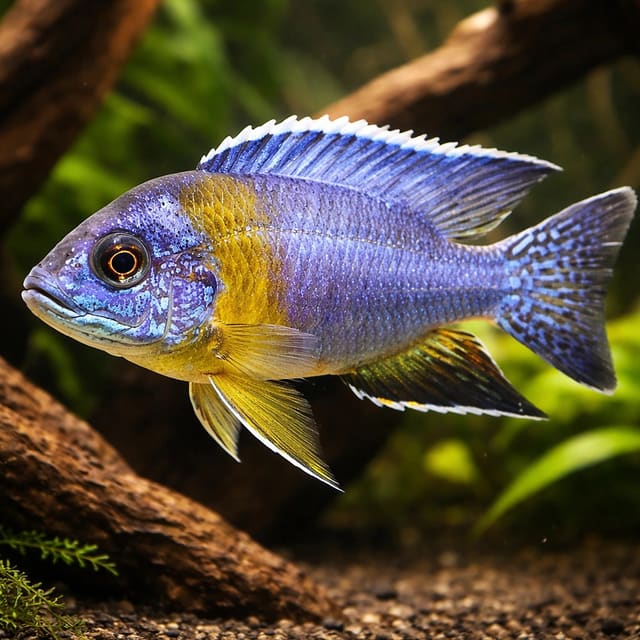
The Sulphurhead Peacock (Aulonocara maylandi) is a haplochromine cichlid endemic to Lake Malawi that reaches 15 cm. It suits intermediate Malawi keepers: OATA advises groups of at least 15 in at least 200 litres, while the FishBase and OATA overlap is 23–26°C and pH 8.0–8.5. Sold individually in sizes from 3–4 cm to over 9.5 cm.
Adult size is the maximum length this species reaches at full maturity (scientific sources). The livestock you receive will be younger and smaller — pick a size above for the actual shipping size. Product-photo provenance and any image-specific limitations are stated on the listing.
Aulonocara maylandi
Save when buying multiple fish. Each quantity is one fish; sex and pair formation are not guaranteed unless the selected variant explicitly states them.
The Sulphurhead Peacock (Aulonocara maylandi) is a haplochromine cichlid endemic to Lake Malawi that reaches 15 cm. It suits intermediate Malawi keepers: OATA advises groups of at least 15 in at least 200 litres, while the FishBase and OATA overlap is 23–26°C and pH 8.0–8.5. Sold individually in sizes from 3–4 cm to over 9.5 cm.
Adult size is the maximum length this species reaches at full maturity (scientific sources). The livestock you receive will be younger and smaller — pick a size above for the actual shipping size. Product-photo provenance and any image-specific limitations are stated on the listing.
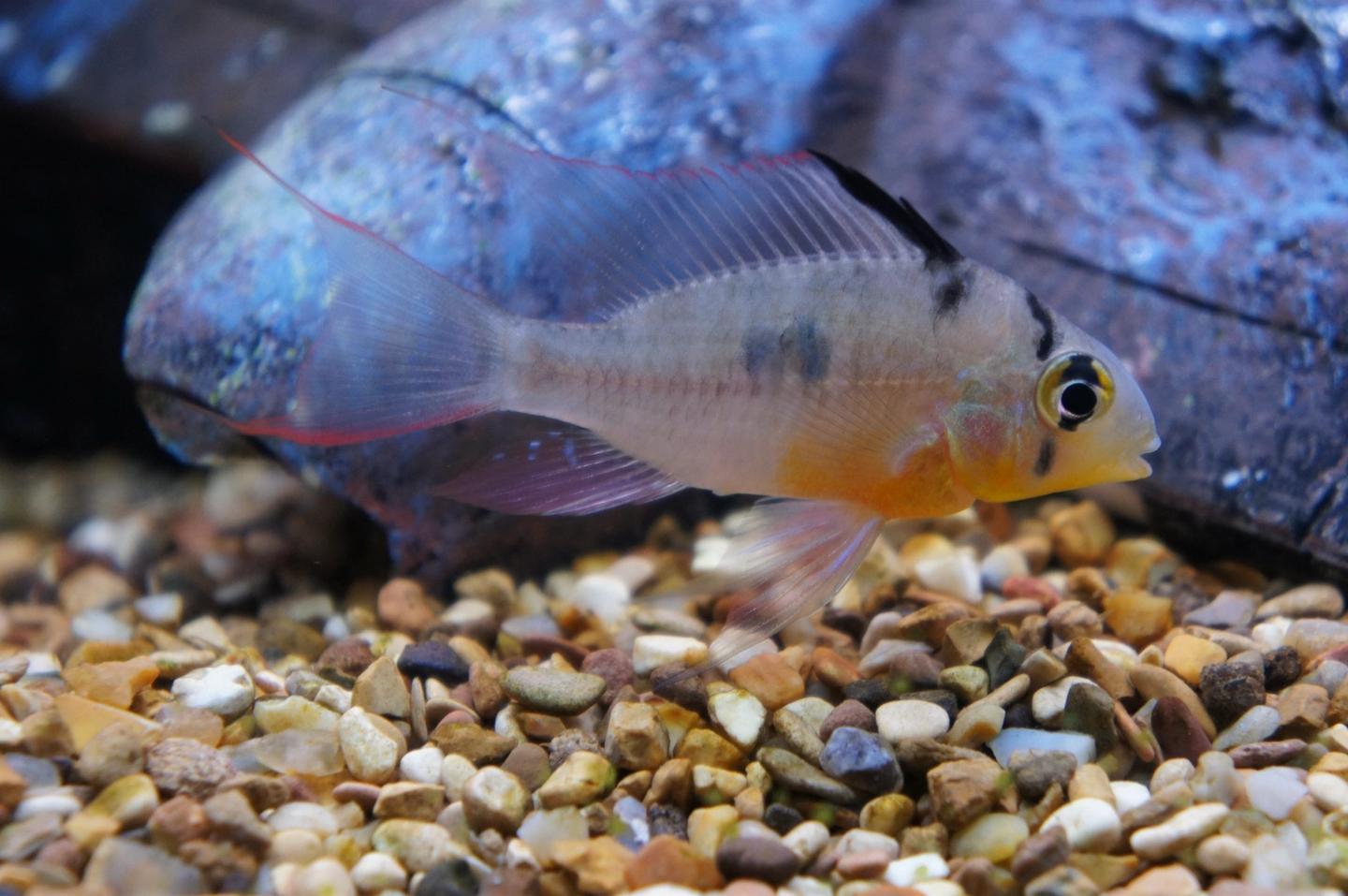
Cichlids are a family of roughly 1,800 accepted species, not one care type. Before buying, identify the exact species and source, then compare adult measurement, usable tank dimensions, social system, territory, tested water, diet and an exit plan. No family-wide minimum tank, water range or tank-mate list is safe.
Maintain these water conditions for optimal health and vibrant colors
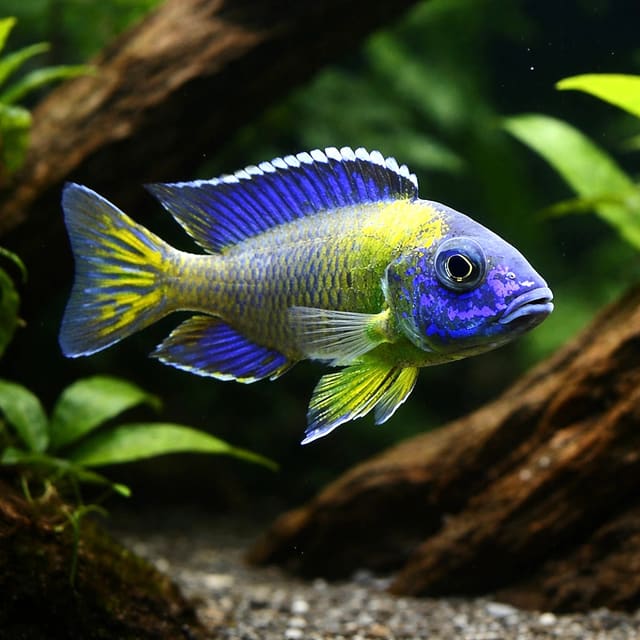
The Sulphurhead Peacock (Aulonocara maylandi) is a freshwater haplochromine cichlid from Lake Malawi in Africa. It is endemic to the lake, lives around sand and rocky reef, and reaches 15 cm total length. This fish suits an intermediate keeper who can maintain hard, alkaline water and plan a large Malawi community around territorial behaviour rather than treating it as an ordinary tropical community fish.
FishBase records the species in the family Cichlidae, with a maximum length of 15 cm and a wild distribution at Eccles Reef in Lake Malawi. The name Maylandii is also used in the aquarium trade for this fish, whose scientific name is Aulonocara maylandi.
Browse the African cichlid collection only after comparing adult sizes, water requirements and temperament across the intended community.
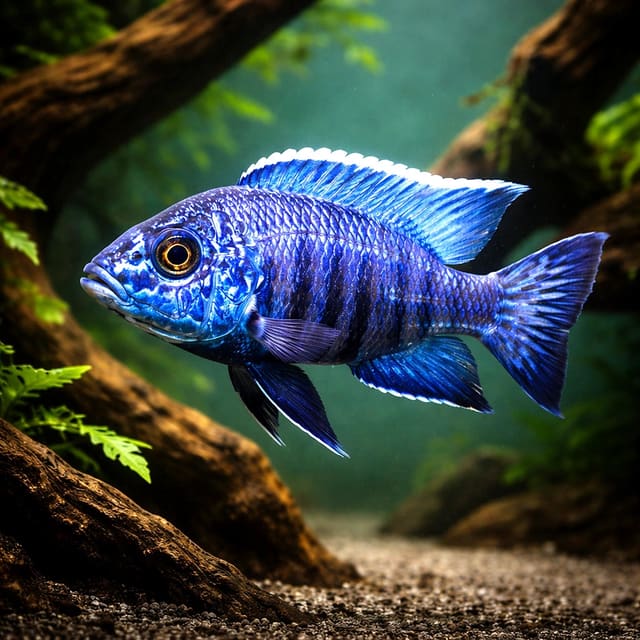
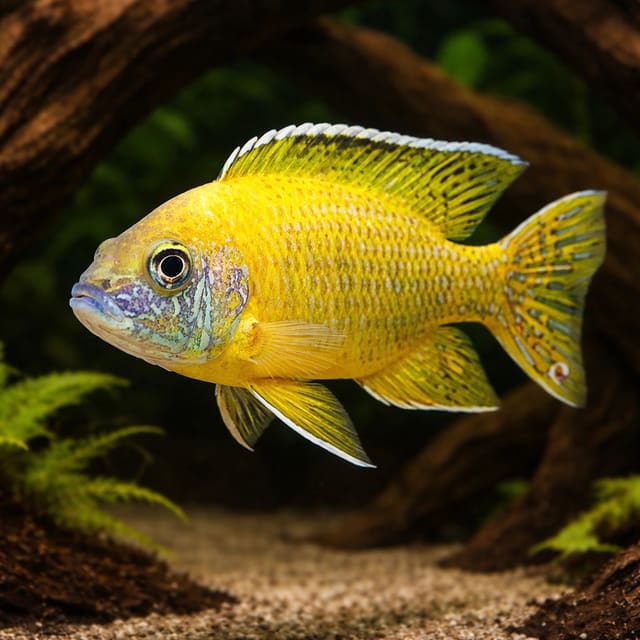
This peacock cichlid hunts small invertebrates in sand where rocky reef meets open substrate. Wikipedia describes it from mixed sandy and rocky areas at West Reef and Eccles Reef, where females care for the eggs by mouthbrooding. The account also notes that it develops a yellow blaze across its dorsal area, which distinguishes it from the similar blue orchid aulonocara.
Its restricted range deserves attention. FishBase lists the species’ IUCN status as Critically Endangered, while Wikipedia reports that collection for the aquarium trade has caused a 70% reduction in its numbers. Plan the purchase around responsible long-term care; dispatch size describes body length only.
| Suits | Not suited to |
|---|---|
| A keeper prepared for hard, alkaline Malawi water | A soft or acidic community aquarium |
| A community planned around at least 200 litres | A small aquarium chosen only for the dispatch size |
| A carefully screened Malawi cichlid group | Casual mixing with unrelated community fish |
| A mature, strongly filtered aquarium | An uncycled aquarium or one without a filter |
| A layout combining sand and rock | A layout that ignores digging and territorial pressure |
The decisive question is whether the whole aquarium can meet the adult fish’s needs. A suitable plan combines enough water volume for stability, a footprint that can be divided by décor, an established biological filter and companions selected for the same water chemistry.
One purchase supplies one Sulphurhead Peacock. Use the live size selector to choose among the dispatch labels 3–4 cm, 4–5 cm, 6–7 cm, 7–9 cm and over 9.5 cm. The size you select is the size supplied, not the adult size. Every size must therefore enter an aquarium planned around the same 15 cm maximum recorded length.
A larger dispatch grade does not change the water, filtration, community or space requirements. Equally, body size does not establish sex or origin. Sex is guaranteed only when the selected option explicitly states male or female. This Sulphurhead Peacock listing has no sex-guaranteed option.
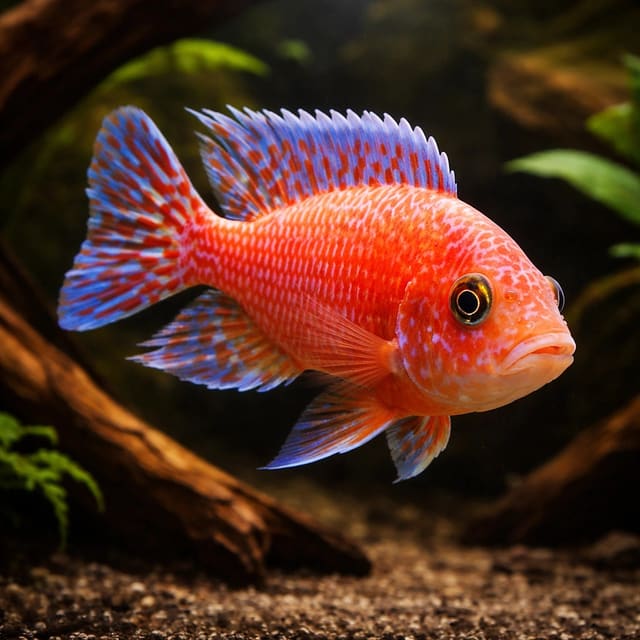
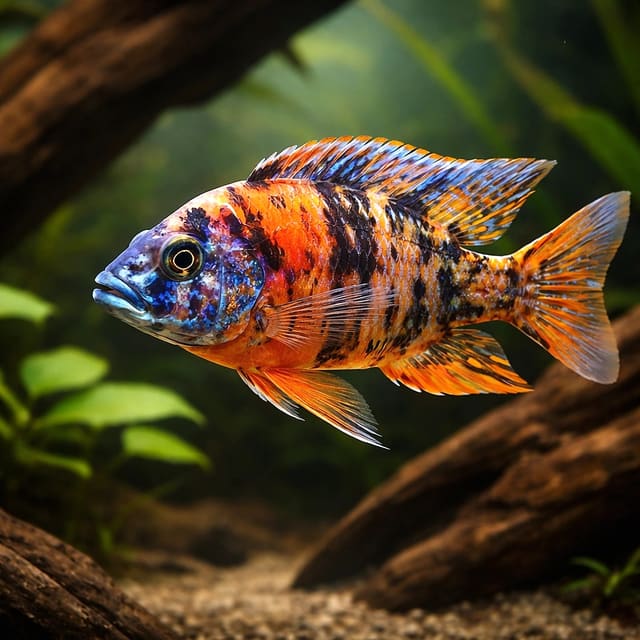
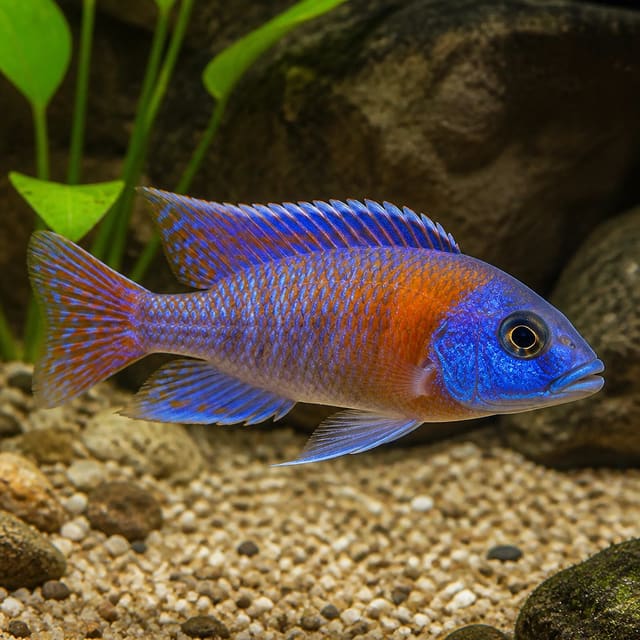
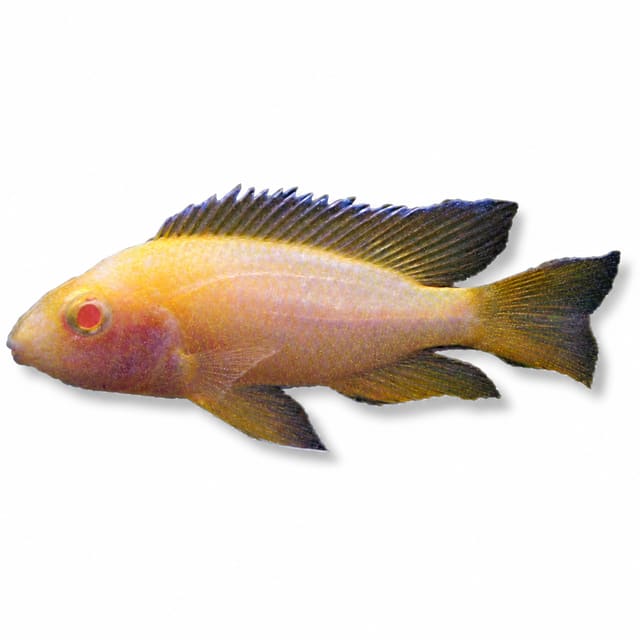
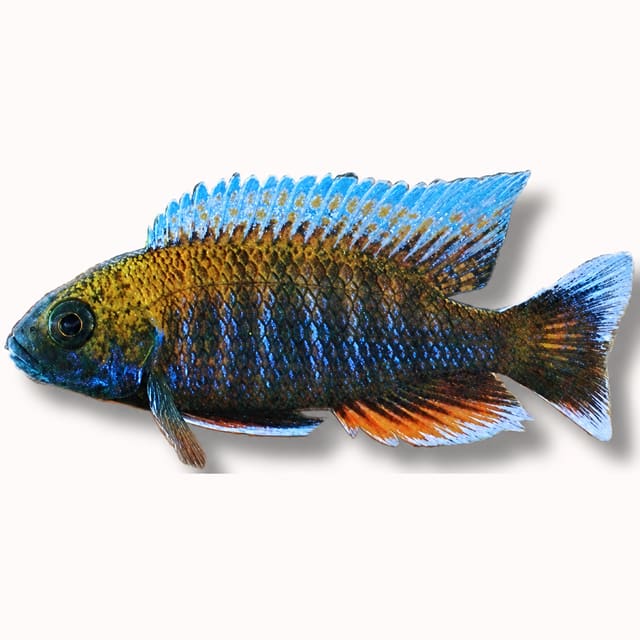
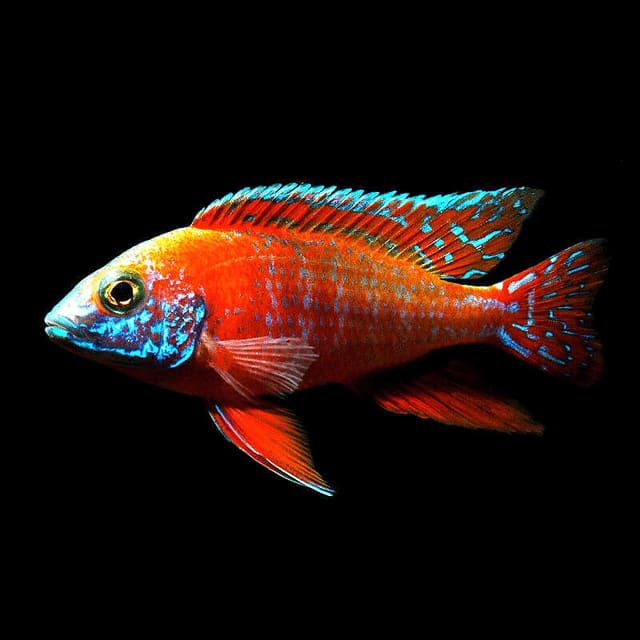
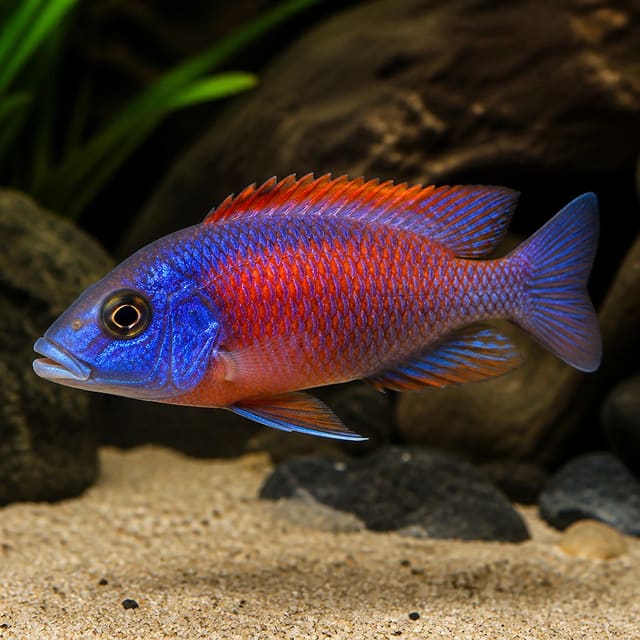
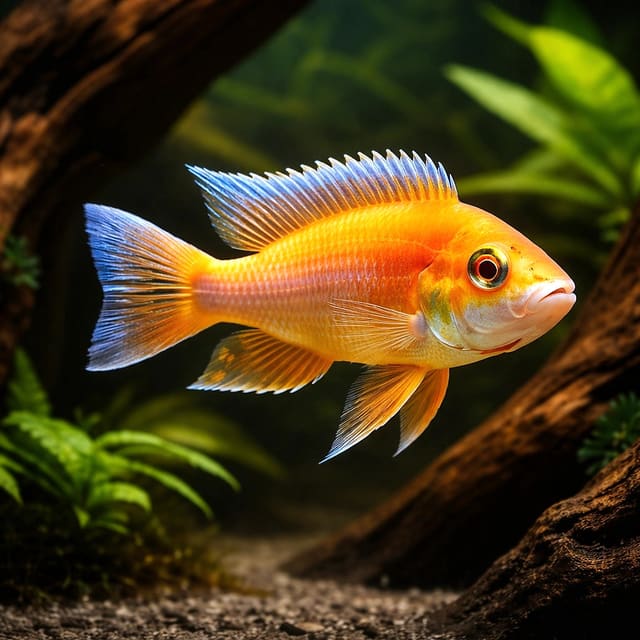
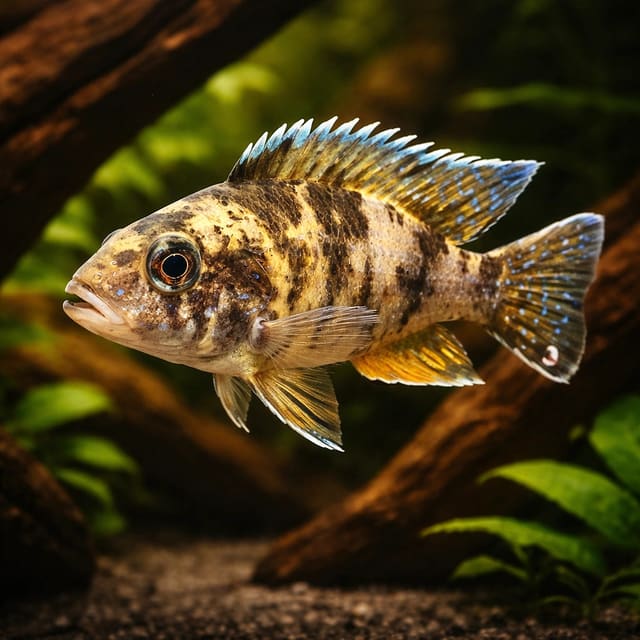
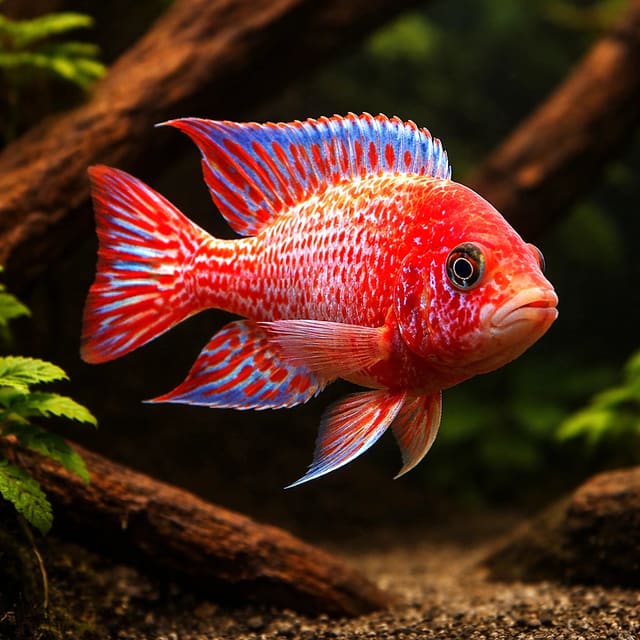
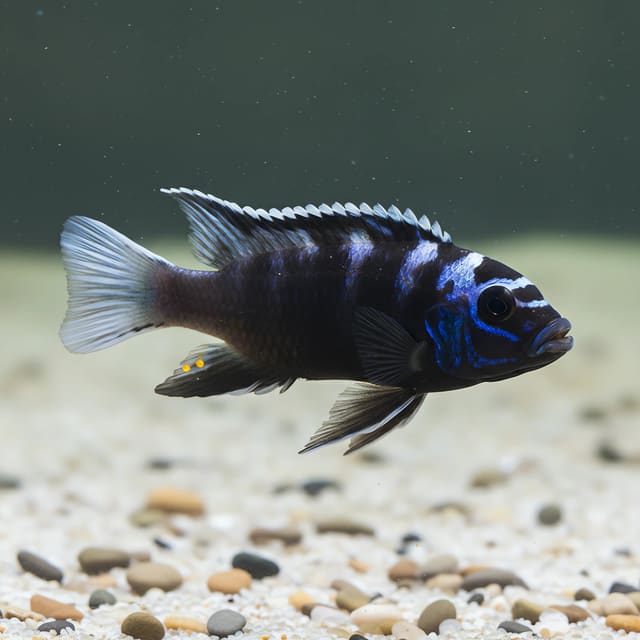
Use the gallery to recognise the overall form and visible markings, not to predict the exact colour of the individual supplied. The gallery images are representative of this type of animal rather than photographs of the exact animal supplied, so colours can look slightly different from the live animal.
Plan every aquarium decision around an adult length of 15 cm. FishBase gives this as the maximum total length for a male or unsexed fish, so it is the consistent planning figure for space, filtration and compatibility. A dispatch measurement describes the fish supplied on that occasion; it is not a reduced long-term requirement.
The wild feeding position explains why floor space matters. This cichlid is benthopelagic and is mainly found over sand beside rocky reef, where it searches for small sand-dwelling invertebrates. Give it usable sand as well as swimming room, rather than filling the entire footprint with dense rock piles. Rock can still create boundaries, but the layout should preserve clear routes across the substrate.
Growth should not be forced through excessive feeding. Offer measured portions twice daily and protect water quality through regular testing and weekly maintenance. That approach supports steady condition without allowing uneaten food to raise the waste load.
Appearance is not a reliable shortcut for sexing the animal supplied. OATA notes that many Malawi cichlids only show differences between the sexes once they become adults, not as juveniles, and this offer carries no sex guarantee. Build a stocking plan that remains workable regardless of the sex received, especially where territorial pressure or the ratio of males to females could become important.
Keep this fish at 23–26°C, pH 8.0–8.5 and 12–18°dH. These routine values sit inside both the FishBase environmental range for Aulonocara maylandi and OATA’s group guidance for Malawi cichlids. FishBase gives 22–26°C, pH 7.5–8.5 and 10–30°dH; OATA gives 23–27°C, pH 8.0–8.6 and 12–18°dH. The routine range is where the two sources overlap, and its upper values of 26°C and pH 8.5 are the top of the FishBase range for the species.
Keep ammonia at 0 mg/l and nitrite at 0 mg/l. OATA also advises keeping nitrate from rising more than 20 mg/l above the normal tap-water level. Test the aquarium at least weekly and test again whenever feeding, behaviour, breathing or appearance changes.
| Reading | Action |
|---|---|
| 23–26°C | Maintain the current stable temperature. |
| Below 23°C or above 26°C | Correct the cause gradually and check heater operation. |
| pH 8.0–8.5 | Keep water-change preparation consistent. |
| pH drifting outside the range | Check source water, substrate buffering and maintenance consistency. |
| Ammonia or nitrite above zero | Treat it as a water-quality problem and reduce further loading of the filter. |
| Rising nitrate | Review feeding, waste removal and the weekly water-change routine. |
Use our water chemistry guide to understand what each test measures, then compare the measured aquarium values with the target through the water matcher. Record results so that a slow drift is visible before it becomes a sudden correction.
Stability matters alongside the numbers. Prepare replacement water with conditioner before adding it, and avoid abrupt changes in temperature or mineral content. A repeatable weekly process is safer than allowing readings to move widely and then making a large correction.
Use a mature biological filter in every aquarium holding this fish. The RSPCA explains that fish release toxic ammonia, which filter bacteria convert first to nitrite and then to the safer nitrate. A filter must therefore be established and maintained before it is asked to process the waste from a Malawi community.
OATA recommends an oversized filter and strong aeration for crowded Malawi cichlid aquariums. The reason is practical: more fish and more feeding increase oxygen demand and waste production. A filter rated only around an empty tank’s volume leaves little margin once the community is stocked and feeding normally.
Do not clean biological media under the tap. OATA advises rinsing it lightly in aquarium water removed during a partial water change, because chlorine or chloramine in tap water may kill beneficial bacteria. Check the filter for blockages during routine maintenance.
If ammonia or nitrite rises after a new fish is introduced, pause further additions and check feeding, filter flow and water quality. OATA describes excessive or rapid stocking as a route to new tank syndrome, where the bacterial population cannot process the increased waste. The answer is not to conceal the reading with more fish or food; it is to bring the biological load back within the filter’s capacity.
Plan filtration around the final community rather than one Sulphurhead Peacock. The fish may be bought individually, but its welfare depends on the oxygen, waste processing and maintenance capacity of the aquarium as a whole.
Use an aquarium of at least 200 litres for a reasonable Malawi cichlid community. OATA gives that minimum for the group and advises choosing as large an aquarium as practical because greater water volume improves environmental stability. Treat 200 litres as the starting point for community planning, not a promise that every combination of fish will work within it.
Cover much of the base with coral sand or a similar substrate that helps buffer the water. This also reflects the species’ recorded habit of searching sand beside rocky reef. Malawi cichlids will often dig and rearrange the substrate, which will uproot any plants present. Position every rock securely rather than relying on loose sand to hold heavy structures upright.
A useful layout is not measured only by how much rock it contains. Watch how established fish use the aquarium: a boundary that looks attractive may still allow one dominant fish to control every route between shelter, feeding space and open sand. OATA notes that rearranging the décor can help to reduce aggression as fish find new territories.
Plants are not the basis of this setup. Prioritise stable substrate, secure rock and accessible floor space. Any decoration must support maintenance rather than trapping solid waste where a siphon cannot reach it.
Before adding the fish, view the aquarium from both ends as well as the front. Confirm that rockwork breaks sight lines while preserving open movement and that no narrow gap can become an inescapable territorial corner.
Use an animal-rich cichlid pellet as the staple food. FishBase records this species feeding on small sand-dwelling invertebrates, while Wikipedia describes it hunting those animals in the sand. OATA’s Malawi guidance says the more predatory Malawi cichlids will require pellets with a higher animal content with frozen feeds such as brine shrimp, prawns or cockles.
Feed only what the fish can finish within a few minutes, twice a day. Remove or account for uneaten food rather than adding another portion. Food left in the aquarium breaks down and increases the nitrogenous waste that the filter must process.
Observation at feeding time is valuable because OATA identifies reduced intake or loss of interest as a possible sign of a health or water-quality problem. Compare behaviour with the fish’s usual response. A single slower meal calls for observation; a continuing change should prompt immediate water tests and a wider check of breathing, colour, swimming and aggression.
Judge feeding by body condition and water results, not by a desire to accelerate growth or colour. OATA advises watching for both increases and decreases in body weight and condition. If the fish becomes heavy while nitrate rises, reduce portion size and review waste removal. If condition declines despite apparent feeding, check whether another fish controls access to the food and whether the chosen particle size is being eaten.
Make food changes gradually enough to observe acceptance, but keep the biological match clear: this is a hunter of small invertebrates. Its core feeding plan should therefore centre on appropriate animal-rich foods, measured portions and variety within that diet.
Before the fish travels, confirm that someone can receive the parcel and that the aquarium is mature, heated and testing within range. Our delivery and Live Arrival Guarantee policy explains that each fish is hand-bagged in pure oxygen inside an insulated box, with a heat pack used when the weather calls for it. Transport is handled by a carrier licensed to carry live animals.
OATA advises checking that aquarium ammonia and nitrite are at 0 mg/l before adding fish. Introducing the fish and increasing food both add to the filter’s workload, so increase livestock numbers slowly. Do not follow one new arrival immediately with several more additions before confirming that water quality remains stable.
Territorial context matters during introduction. OATA advises adding Malawi cichlids in groups to reduce the chance of one newcomer receiving all the aggression and recommends adding more peaceful species before more aggressive ones. Apply that community principle during the wider stocking plan rather than treating a single purchase as an isolated decision.
Do not add extra food simply because the fish is new. Offer the normal small portion and confirm that it eats without allowing waste to accumulate.
Change 25% of the water at least once every week. Use a siphon to remove solid waste from the substrate, treat replacement tap water with conditioner, and check temperature before adding it. This routine limits waste accumulation while keeping water chemistry more consistent than occasional large interventions.
Test ammonia, nitrite and nitrate at least weekly. Ammonia and nitrite must remain at 0 mg/l, while nitrate should not rise more than 20 mg/l above the normal tap-water level. Record pH, hardness and temperature alongside those readings so a gradual loss of buffering or heater problem can be recognised early.
Use behaviour as an early warning, but confirm it with tests. OATA highlights surface hanging, bottom sitting, erratic swimming, darker or paler colour, altered aggression, increased hiding, changed breathing, white spots, fluffy growths, fin or scale loss, body-condition changes and reduced feeding as signs requiring attention.
If any of those changes appears, test the water first. Correcting ammonia, nitrite, temperature or oxygen problems is an immediate husbandry priority. If you are concerned about the fish’s health, test the water and contact us for further guidance.
A stable test result does not make aggression harmless. Look for one fish controlling the feeding area, another being confined behind décor, or a change in normal hiding and swimming. Rearrange décor when territories need resetting, and reconsider the stocking plan before adding another fish.
Weekly maintenance should produce comparable results. If nitrate rises faster, filter flow declines or uneaten food appears, investigate the cause instead of waiting for the next scheduled change. Feeding load, community growth, trapped waste and blocked media can each increase the work required from the same aquarium.
Keep this fish only with carefully selected other Malawi cichlids or some species of Synodontis catfish. OATA gives those as the companion categories for Malawi cichlids and warns that every mix requires caution because the group can be highly aggressive. The category name alone is not a promise that two particular species or individuals will live together.
Do not place it into a conventional soft-water community. Companions must share the routine target of 23–26°C, pH 8.0–8.5 and 12–18°dH while also fitting the aquarium’s adult-size, feeding and territorial plan. Limit companion choices to the named categories rather than assuming unrelated fish or invertebrates are suitable.
| Question | Decision rule |
|---|---|
| Does it belong to a named companion group? | Continue only for a Malawi cichlid or a suitable Synodontis species. |
| Does it share the water range? | Reject a fish requiring soft, acidic or otherwise conflicting conditions. |
| Can the aquarium support both adult sizes? | Use mature dimensions, not dispatch measurements. |
| Will it alter aggression? | Consider territories, existing hierarchy and the order of introduction. |
| Can all fish feed? | Ensure food can be distributed without one fish controlling it. |
OATA advises adding more peaceful Malawi species before more aggressive ones and adding Malawi cichlids in groups so a lone newcomer does not receive all the pressure. Those principles must be reconciled with filter capacity: an aquarium cannot safely receive a large addition if its biological filtration is not ready for the extra waste.
Exact compatibility depends on the aquarium footprint, established territories, adult dimensions and the individual fish. Contact us with the aquarium volume, dimensions, water results and complete stock list for stocking advice before combining uncertain species.
Treat aggression as an expected Malawi community issue. OATA describes Malawi cichlids as aggressive and warns that fish kept in small groups will often fight. Its group guidance says Malawi cichlids can be kept in groups of at least 15 and that slight overstocking is required to spread aggression evenly, supported by an oversized filter and strong aeration.
Meet that requirement without adding fish beyond the aquarium’s biological or physical capacity. Start with at least 200 litres for a reasonable community, calculate the adult load, and make sure filtration can keep ammonia and nitrite at zero. More fish spread the aggression, but they also create more waste and use more oxygen.
Where possible, OATA says it is worth keeping more females than males of each species to prevent males from harassing one individual female. That instruction requires known sexes, and this offer does not guarantee sex. Do not build a sex-ratio-dependent group on the assumption that body size, colour or the gallery establishes the sex supplied.
Females mouthbrood the eggs, a behaviour recorded by FishBase and Wikipedia. If mouthbrooding occurs, observe whether the female can withdraw from pressure and maintain normal condition. Routine community care remains the priority; do not attempt a breeding project without a separate plan for aggression, space and the resulting fish.
A Sulphurhead Peacock is neither universally peaceful nor universally compatible. The reliable rule is narrower: select within the Malawi cichlid or suitable Synodontis categories, match the water chemistry, provide enough space and filtration, then keep monitoring the actual social outcome.
A Sulphurhead Peacock reaches a maximum recorded length of 15 cm total length according to FishBase. Plan its aquarium, filtration and companions around that adult figure rather than its dispatch size.
OATA recommends an aquarium of at least 200 litres for a reasonable Malawi cichlid community. Treat that as a group planning minimum and, within reason, choose as large an aquarium as possible.
OATA’s Malawi cichlid guidance recommends a community of at least 15 fish and warns that small groups will often fight. Stock slowly and keep ammonia and nitrite at 0 mg/l as the filter load increases.
It is an intermediate choice because it needs hard, alkaline water, at least a 200-litre community plan, strong filtration and active aggression management. It is not suited to an uncycled or ordinary soft-water community aquarium.
A Sulphurhead Peacock naturally hunts small sand-dwelling invertebrates. Use animal-rich cichlid pellets with frozen brine shrimp, prawns or cockles, and feed only what it finishes within a few minutes twice a day.
Keep it at 23–26°C, pH 8.0–8.5 and 12–18°dH. These routine aquarium values are the overlap between FishBase’s environmental range for the species and OATA’s Malawi cichlid guidance.
Treat it as aggressive. OATA describes Malawi cichlids as aggressive fish that should be mixed with caution, recommends groups of at least 15 and notes that rearranging décor can help to reduce aggression; inspect any damaged fins as part of that assessment.
Keep a Sulphurhead Peacock only with carefully selected other Malawi cichlids or some species of Synodontis catfish. Every combination still needs matching water, adequate adult space and individual aggression screening.
Before opening the parcel, start a short continuous unboxing video showing it still sealed, then opening it and the fish still in the bag. The fish is hand-bagged in pure oxygen, placed in an insulated box with a heat pack when weather calls for one, and carried by a licensed live-animal carrier. Someone must be at the address to receive it and open it the same day; float the bag for 20–30 minutes and never pour bag water into the aquarium.
No reviews for this item yet. Bought one? Honest reviews only, good or bad.
What customers say about ordering from us
I have a small group of long finned mountain minnows. So was delighted to be able to order ten of this variety to increase the genetics in my tank . The ones I recieved are healthy but it’s to early to give a verdict on wether they are of a long finned type since they are small currently.
Gordon Walker · 23 Sept 2026
100% success travel and "installation". Pleased with quality of purchase. The Siamese fighter a bit "shy" so have not yet seen him at his best yet but looking good. Happy customer. GG
George E Garratt · 21 Sept 2026
Reviews of our shop, collected by Judge.me, an independent third-party review collector. Newest first.