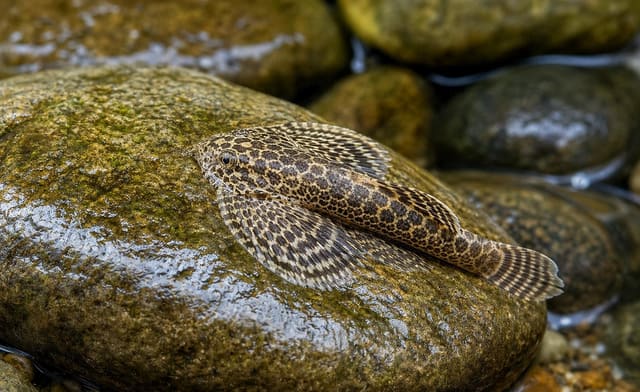
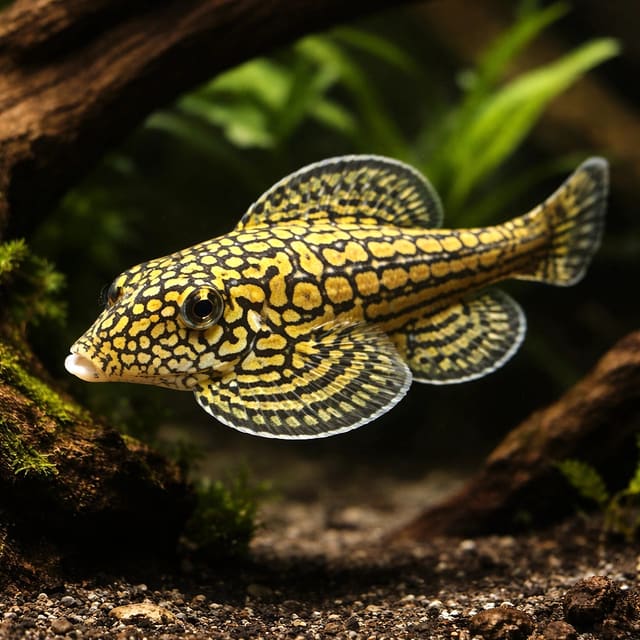
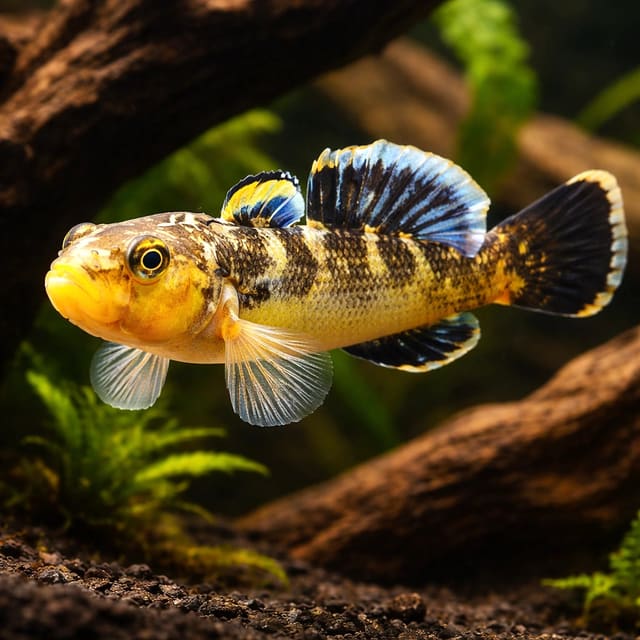
Reticulated Hillstream Loach (Sewellia lineolata)
20–24°C · pH 6–7.5 · 68L
£16.99

Photo coming soon
The size, price and care details on this page are for this listing.
The Senegal Bichir (Polypterus senegalus) is an African freshwater fish in the bichir family, Polypteridae, that reaches 70 cm standard length. It suits keepers prepared for exceptionally large filtered housing; FishBase records 25–28°C, pH 6.0–8.0 and 5–19 dH as wild environmental values, while OATA says very-large-fish aquaria are often over 500 litres. Sold individually in 6 cm, 8–10 cm and 12–15 cm dispatch sizes.
Polypterus senegalus
The Senegal Bichir (Polypterus senegalus) is an African freshwater fish in the bichir family, Polypteridae, that reaches 70 cm standard length. It suits keepers prepared for exceptionally large filtered housing; FishBase records 25–28°C, pH 6.0–8.0 and 5–19 dH as wild environmental values, while OATA says very-large-fish aquaria are often over 500 litres. Sold individually in 6 cm, 8–10 cm and 12–15 cm dispatch sizes.
Maintain these water conditions for optimal health and vibrant colors
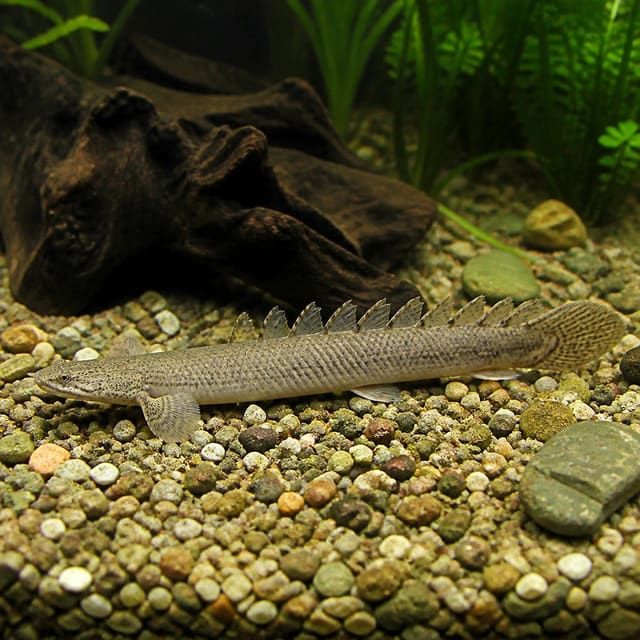
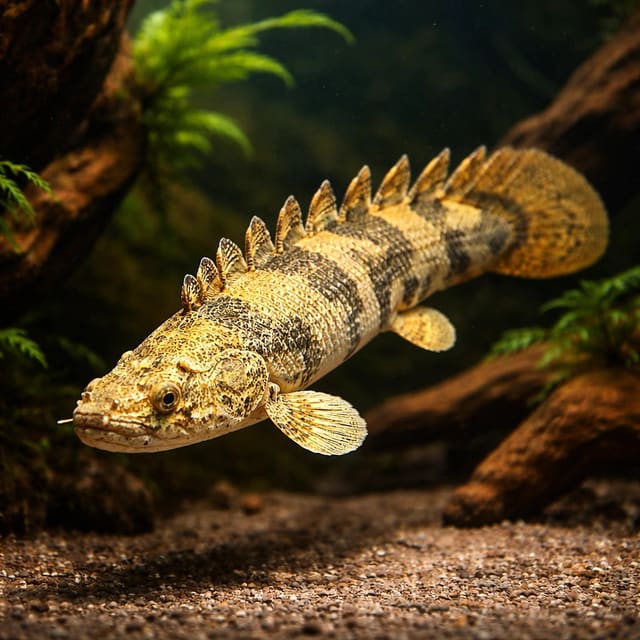
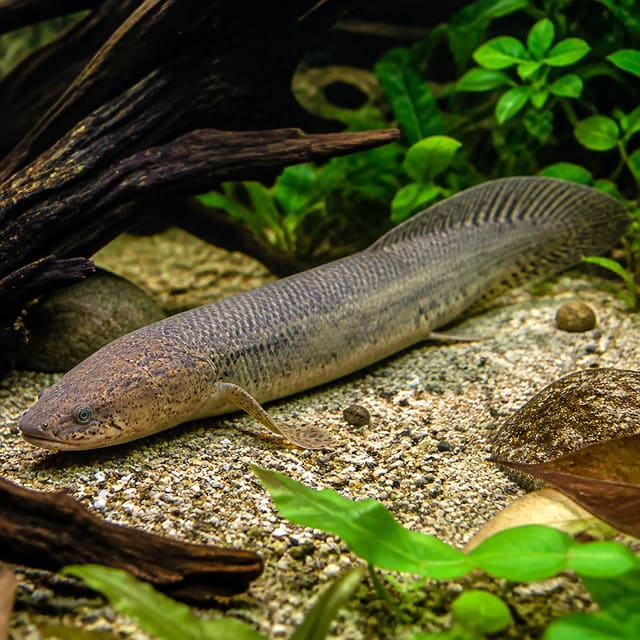
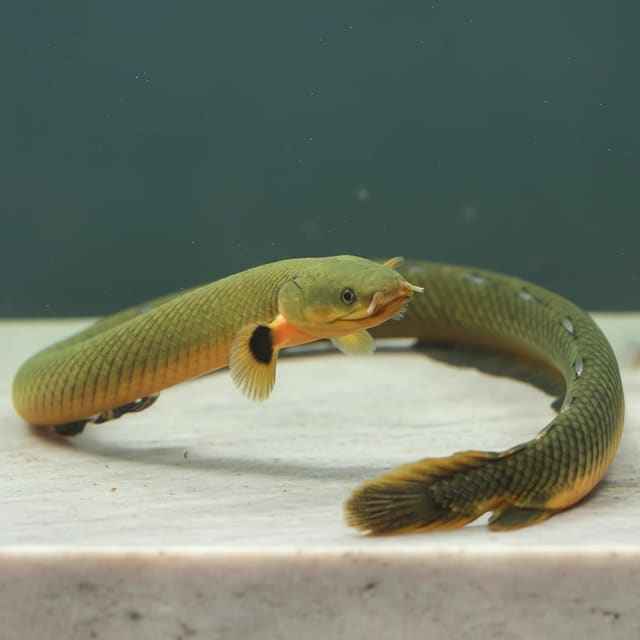
The Senegal Bichir (Polypterus senegalus) is an African freshwater ray-finned fish in the bichir family, Polypteridae. Its elongated body, armour-like scales and separate dorsal finlets give it the ancient-looking outline associated with bichirs. Wikipedia describes the Senegal Bichir as able to breathe atmospheric oxygen. Keep the route to the surface unobstructed so the fish can use that ability normally. It suits keepers able to provide adult-scale space, dependable biological filtration, measured water conditions and carefully screened companions.
This is a substantial fish rather than a small community-aquarium choice. FishBase records a maximum of 70 cm standard length. A maximum record is a planning reference, not a promise that every individual will reach that measurement, but it makes the central decision clear: choose the permanent aquarium around the adult-scale animal rather than its dispatch size.
| Suits | Not suited to |
|---|---|
| Keepers planning around a recorded maximum of 70 cm SL | Small community-aquarium plans |
| Exceptionally large systems with biological filtration | Housing chosen around the dispatch size |
| Freshwater within 25–28°C, pH 6.0–8.0 and 5–19 dH | Systems without measured water checks |
| Stocking plans that avoid much smaller fish | Mixed setups containing much smaller fish |
An aquarium for this animal needs dependable biological filtration and enough long-term capacity for a large fish. Access to atmospheric air does not replace filtration or protect the fish from toxic dissolved waste. Choose this bichir when you can commit to adult-scale space, weekly testing and maintenance, controlled feeding and careful stocking decisions.
For comparisons within the shop, browse the loaches and oddballs collection. Compare each animal by its own adult size, water range and compatibility needs rather than treating unusual body shape as a shared care requirement.
One purchase supplies one Senegal Bichir from the size selected in the live size selector. The dispatch sizes are 6 cm, 8–10 cm and 12–15 cm. The size you select is the size supplied, not the adult size. Read a range such as 8–10 cm as the dispatch band for that selection, not as a precise measurement, age, life stage or final length.
Use the selector to make the purchase decision, then use the 70 cm FishBase maximum to test the long-term plan. A 6 cm fish is less than one tenth of that recorded maximum, while the upper end of the 12–15 cm size is still less than one quarter. Those comparisons show why a fish that looks manageable at dispatch can require a fundamentally different aquarium as it grows.
Sex is guaranteed only when the selected option explicitly states male or female. This Senegal Bichir listing has no sex-guaranteed option.
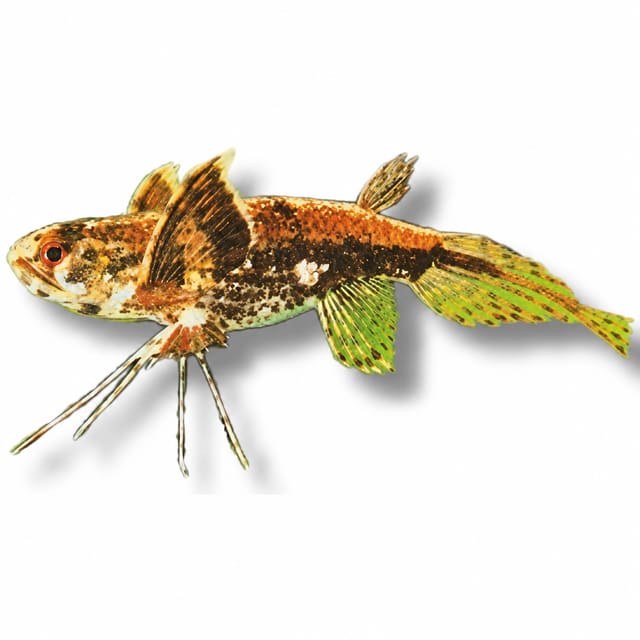
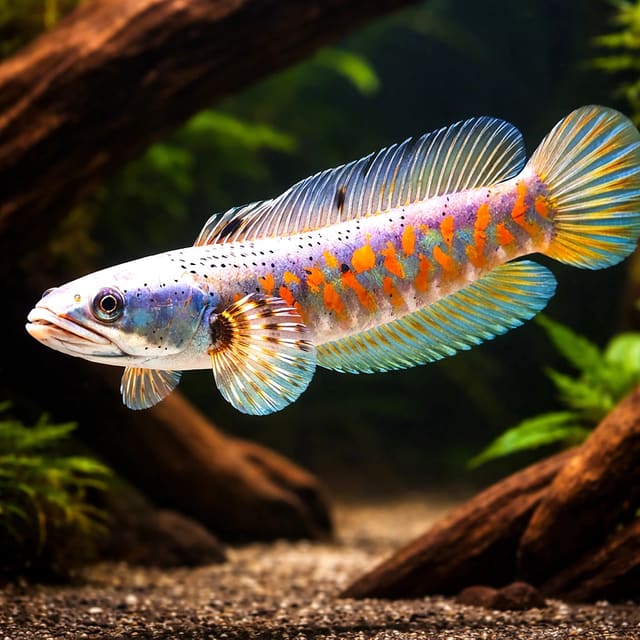
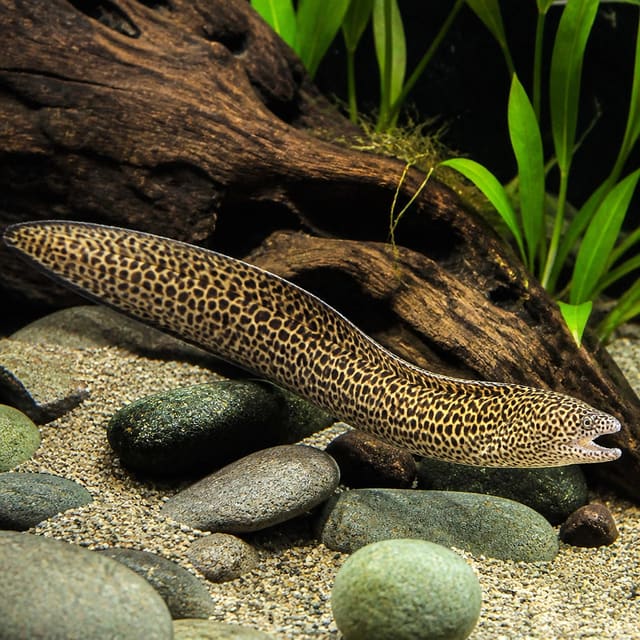
Some gallery images are representative, based on reference photographs of this species, and none shows the exact animal supplied, so colours can look slightly different from the live animal.
Do not use the number of animals visible in a gallery scene to calculate the purchase unit. One illustration shows two fish, but each purchase still supplies one animal. Colour and markings can also differ among live individuals, so make the husbandry decision from identity, adult size and care needs rather than from one pictured shade.
Before arranging receipt, read the shop’s delivery and Live Arrival Guarantee policy. It sets out the applicable arrival and claim instructions; the live size selector remains the place to choose the dispatch size.
A Senegal Bichir needs an adult-scale aquarium plan from the outset. OATA’s guidance for very large fish says these animals require exceptionally large aquaria, often in excess of 500 litres. That is broad group guidance rather than a species-specific minimum, so treat it as a warning about the scale of the commitment rather than as a guaranteed threshold for every setup.
Start with the FishBase maximum of 70 cm standard length, then judge the aquarium by usable space, water volume, activity and biological load together. OATA notes that activity affects how aquarium size should be assessed: a more sedentary animal still needs enough volume to maintain stable water quality, while an active swimmer may require still more usable space. A nominal litre figure cannot compensate for a layout that leaves a large fish without practical room.
A 500-litre aquarium should not be treated as an automatic pass. OATA says very large fish often need more than this, and FishBase’s 70 cm maximum demands a case-by-case assessment. Conversely, a juvenile fitting physically into a smaller aquarium does not make that aquarium a permanent solution. Set the upgrade route before purchase if the final installation is not already operating.
Indoor heated ponds are another housing approach mentioned by OATA for very large fish, but they still require filtration, water testing and a layout appropriate to the animal. Whether using an aquarium or purpose-built indoor system, preserve unobstructed surface access for atmospheric breathing and make long-term maintenance part of the initial design.
Use measured values rather than visual impressions of clear water. FishBase records this species in freshwater at 25–28°C, pH 6.0–8.0 and 5–19 dH. These are species-level wild environmental values for planning, not a guaranteed aquarium optimum. Keep the aquarium within a compatible, stable part of those ranges and compare it with the transport water before transfer.
Our water chemistry guide explains what temperature, pH, hardness, ammonia, nitrite and nitrate measurements mean. Enter actual readings into the water matcher to compare the intended aquarium with the stated planning ranges. Testing prevents a label such as “tropical” or “freshwater” from standing in for the measurements that affect the fish.
| Reading | Decision |
|---|---|
| 25–28°C | Compare the aquarium temperature with the FishBase environmental range before introduction. |
| pH 6.0–8.0 | Avoid transferring the fish between sharply different readings without a controlled introduction. |
| 5–19 dH | Measure hardness rather than assuming local tap water suits the fish. |
| Ammonia 0 mg/L | Delay introduction if any ammonia is detected. |
| Nitrite 0 mg/L | Delay introduction if any nitrite is detected. |
| Nitrate | Keep it no more than 20 mg/L above the normal tap-water level. |
The ammonia, nitrite and nitrate limits come from OATA’s large-fish routine. They are operational water-quality limits: ammonia and nitrite must remain at zero, while nitrate must not exceed 20 mg/L above the normal tap-water reading. Measure the tap water as well as the aquarium so the nitrate comparison has a real baseline.
Do not chase a preferred pH by making abrupt changes. First establish the aquarium’s repeatable readings, then determine whether they fit the recorded range. Recheck after maintenance and whenever fish behaviour, breathing, colour or appetite changes. A stable reading inside the planning range is more useful than an isolated test taken long before the fish arrives.
A large fish should enter an aquarium with a functioning biological filter, not a newly filled container. The RSPCA’s aquarium filtration guidance explains that fish release toxic ammonia. Beneficial bacteria in a working filter convert ammonia to nitrite, which is also toxic, and then to the safer nitrate. This cycle is why clear-looking water can still be unsafe.
OATA says a filter is always essential for very large fish and notes that several large aquarium filters, or even pond filtration, may be needed to manage water quality and solid waste. Choose filtration by the intended adult fish and total stocking load. A unit that appears adequate for a 6 cm dispatch fish may be inadequate as feeding, body mass and waste production increase.
If this is the first aquarium being prepared, follow our guide to preparing and maturing a tropical aquarium before choosing an arrival date. Maturation establishes the bacterial population that processes waste; adding a large fish before that population is ready risks ammonia and nitrite rising faster than the filter can convert them.
Increase the aquarium population slowly. OATA warns that every addition and every rise in feeding requires the beneficial bacterial population to handle more waste. Adding several fish rapidly can cause new tank syndrome, with unhealthy ammonia or nitrite that may make fish ill or cause death.
Atmospheric breathing is a specialised biological ability, not a substitute for clean water. Maintain filtration and preserve access to the surface at the same time; each serves a different need.
Complete the aquarium checks before opening the transport container. Confirm that the installation is large enough for the planned stage of growth, the biological filter is functioning, temperature and chemistry have been measured, and ammonia and nitrite both read 0 mg/L. Postpone the transfer if either toxic compound is detectable.
The first checkpoint is not whether the fish immediately explores or eats. Individuals can vary in behaviour, while water tests provide direct measurements of conditions. Keep the aquarium calm enough to observe the fish, preserve its route to the surface and verify that equipment continues to operate after the introduction.
During the first week, test at least once as part of the weekly routine and test sooner if behaviour or appearance changes. Ammonia and nitrite must remain at zero. Compare nitrate with the normal tap-water level and prevent it from exceeding that baseline by more than 20 mg/L. If waste readings rise, correct the water-quality problem rather than adding more livestock.
Use feeding as a measured load on the filter. Offer only an amount consumed within a few minutes once daily, then remove uneaten food before it breaks down. Do not increase portions simply because the fish was recently moved or because food disappears from view.
At the first-month checkpoint, review the system rather than only the fish: confirm weekly maintenance is sustainable, filter flow remains clear, nitrate stays controlled and the long-term space plan is still realistic. A successful introduction is the beginning of the care routine, not the end of it.
FishBase records the wild Senegal Bichir eating fishes, insects, crustaceans, molluscs and frogs, together with plant fragments and seeds. Build the main aquarium diet around appropriately sized foods that fit this recorded feeding biology. OATA’s large-fish routine supplies the practical schedule: offer only what the fish can consume within a few minutes, once a day.
OATA says carnivorous very large fish can receive larger frozen foods such as frozen mussel, shrimp or lance fish. Match every item to the fish’s current size so it can take the food readily, and vary suitable foods rather than relying on one item. Keep the portion controlled even when the fish responds quickly.
| What you see | What to do |
|---|---|
| Food eaten within a few minutes | End the feed rather than automatically adding another portion. |
| Food left after the feeding period | Remove it and reduce the next portion. |
| Repeated lack of interest | Test water quality and compare the behaviour with the fish’s normal pattern. |
| Body condition increasing or decreasing | Review portion size and continue monitoring condition. |
| Other fish take all the food | Reassess stocking and feeding access before increasing the total amount. |
Uneaten food breaks down and releases waste into the water. Overfeeding therefore creates two connected problems: the fish receives more than it needs, and the biological filter must process an unnecessary rise in pollution. Portion control is especially important in an adult-scale system where each feeding item may be large.
Keep the schedule simple enough to assess. One controlled daily feed lets you compare appetite from day to day and spot a meaningful change. Avoid scattering repeated portions through the aquarium merely to provoke feeding; if food is not being taken, remove it and check the fish and water.
Record reduced intake alongside swimming, breathing, colour and body condition. A single observation is less useful than a clear change from the animal’s usual response, but any appetite change combined with abnormal behaviour should prompt immediate water testing.
Carry out a partial water change of 25% at least once every week. OATA strongly recommends this routine for very large fish and advises using a siphon to remove solid waste from the substrate. Treat replacement tap water with conditioner to remove harmful chlorine or chloramine before it enters the aquarium.
Do not rinse biological filter media under the tap. Chlorine or chloramine can harm the beneficial bacterial population that converts ammonia and nitrite. Lightly rinsing media in water removed during the partial change clears debris while reducing bacterial loss.
Keep testing and maintenance linked. A water change without measurements can hide a developing problem until the next rise, while a test without action does not remove accumulated nitrate or solids. Recording the tap-water nitrate value also prevents misreading the OATA limit: the aquarium should stay within 20 mg/L above the normal tap level, not within 20 mg/L total regardless of the source water.
Inspect the system for workload changes as the fish grows. Larger food portions and greater body mass can place more demand on filtration. If filter blockages become frequent, nitrate climbs between weekly changes or solid waste accumulates rapidly, reassess filtration capacity, feeding quantity and total stocking rather than accepting poorer readings.
Maintain surface access while working in the aquarium, then confirm that all filtration equipment is running normally when the change is complete. Consistency matters: the care plan should be realistic every week for the full life of a very large fish.
Learn the individual fish’s usual swimming, breathing, colour, condition and feeding response. OATA advises watching for changes because they can reveal a developing health or water-quality problem before it becomes more serious. Judge change against the animal’s normal pattern rather than relying on one generic posture.
| Change | First action |
|---|---|
| Hanging at the surface, sitting on the bottom or erratic swimming | Test ammonia, nitrite, nitrate and temperature immediately. |
| Faster or slower gill-cover movement | Check water quality and filtration operation. |
| Darker or paler colour than usual | Review recent water, stocking and maintenance changes. |
| More aggression or hiding | Reassess interactions and usable space. |
| White spots, fluffy growths, ulcers, bumps or damaged fins and scales | Test water and document the visible change. |
| Reduced feeding or altered body condition | Remove leftovers, test water and track intake. |
Surface visits alone belong to the species’ atmospheric-breathing biology. The useful warning is a change in the frequency, urgency or accompanying breathing pattern. Preserve surface access, then check measured water values and equipment rather than assuming every trip upward has the same cause.
Begin with ammonia and nitrite because both must be 0 mg/L. Check nitrate against the tap-water baseline, inspect the filter for blockage and review whether feeding or stocking recently increased. A large fish can place growing demands on a system even when the aquarium previously maintained good readings.
Do not diagnose a condition from colour or appetite alone. Several warning signs can accompany water-quality stress, interaction problems or illness. Record when the change began, the test results and what altered in the aquarium. This gives a clearer basis for the next decision than a description such as “acting oddly”.
If the change persists, the fish has visible lesions or the measured correction does not restore normal behaviour, contact us for health guidance. Avoid adding an unspecified treatment before checking water quality, because the first task is to identify and correct the condition affecting the aquarium.
Avoid mixing the Senegal Bichir with much smaller fish. OATA gives this rule for very large fish because many have large mouths, and some can be aggressive or predatory. Apply it to both present size and expected growth: a companion that is not much smaller today may become the smaller fish as the bichir grows.
Do not turn that rule into a universal list of named companions. Compatibility depends on the individuals, their relative size, the aquarium’s usable space, water requirements, feeding access and behaviour. Some very large fish may not mix with other species at all, while others can share a carefully planned system. The outcome remains conditional even when a proposed companion passes the first size check.
Size alone is not a guarantee. A similarly sized fish may still compete for space or food, show aggression, or require different water. Conversely, a calm first week does not settle the long-term question because relative sizes and biological load change as fish grow.
Plan one Senegal Bichir as the baseline stocking decision. A proposal involving another bichir or any additional large fish needs more usable space, filtration capacity and individual observation; it does not create a guaranteed social benefit. Increase stocking slowly so the biological filter can adapt to the added waste.
For a stocking and compatibility assessment, ask us with the aquarium dimensions and volume, measured water values, filtration, existing species and the current and expected sizes of every fish. Those details support a specific decision more effectively than a list of names.
A mixed aquarium is an ongoing decision rather than a one-time introduction. Recheck relative size, feeding access, behaviour, water quality and usable space as the Senegal Bichir and every companion grow. A pairing that works at small dispatch sizes may fail the much-smaller-fish screen later.
| Trigger | Review |
|---|---|
| A fish enters a new size band | Compare body size again and confirm no occupant has become much smaller. |
| Feeding quantity rises | Check whether filtration and the weekly maintenance routine still control waste. |
| A new fish is proposed | Assess adult size, water needs, activity, behaviour and feeding before purchase. |
| A fish hides more or misses food | Observe interactions and separate the feeding-access problem from appetite loss. |
| Ammonia or nitrite appears | Stop increasing the population and restore both readings to 0 mg/L. |
| Nitrate climbs rapidly | Review total stocking, food input, filtration and maintenance capacity. |
Do not solve a compatibility problem merely by adding more food. OATA’s feeding limit remains what can be eaten within a few minutes once daily, and leftovers add toxic waste as they decay. If one animal consistently prevents another from eating, the stocking arrangement needs review.
Watch for changes in aggression, hiding, swimming, breathing, colour, body condition and damaged fins or scales. These signs do not identify one cause by themselves, but they require prompt water testing and observation of interactions. Record which animal approaches, displaces or blocks another so the pattern can be assessed.
Keep the adult-space plan central. FishBase’s maximum of 70 cm standard length means the bichir’s long-term scale can be very different from its 6 cm, 8–10 cm or 12–15 cm dispatch size. OATA also warns that aquaria for very large fish are often over 500 litres and that activity affects the space required.
A successful shared setup is one in which every fish passes the size screen, reaches food, uses the aquarium without persistent conflict and lives in water that remains within its limits. Continue testing those conditions rather than assuming the first peaceful introduction guarantees the future.
FishBase records a maximum of 70 cm standard length for the Senegal Bichir. Use 70 cm as the adult planning figure, although it is not a guaranteed final measurement for every individual.
Plan an exceptionally large, biologically filtered aquarium around the 70 cm adult figure and preserve access to surface air. OATA’s group guidance says aquaria for very large fish are often over 500 litres, with usable space, activity and water stability also shaping the final plan.
Plan one Senegal Bichir as the baseline. Any multi-fish system needs additional adult-scale space, filtration capacity, slow stocking and individual compatibility assessment rather than an assumed group requirement.
This fish has an intermediate store care rating because it requires adult-scale housing, established biological filtration, measured water, controlled feeding, surface access and careful compatibility screening.
FishBase records the Senegal Bichir eating fishes, insects, crustaceans, molluscs, frogs, plant fragments and seeds in nature. OATA’s large-fish guidance supports appropriately sized frozen mussel, shrimp or lance fish for carnivorous fish, fed once daily in a portion eaten within a few minutes.
Use FishBase’s species-level wild environmental range of 25–28°C, pH 6.0–8.0 and 5–19 dH as the planning range. Keep ammonia and nitrite at 0 mg/L and nitrate no more than 20 mg/L above the normal tap-water level.
Screen the individual rather than relying on a fin-nipping label. OATA warns that some very large fish can be aggressive or predatory, so avoid much smaller fish and reassess the setup if aggression, hiding, damaged fins or feeding interference appears.
Avoid much smaller fish. Screen every other fish by adult size, shared water needs, usable space, feeding access and individual behaviour; passing the size check does not guarantee compatibility.
Start filming the sealed parcel before it is opened; someone must be present to receive it. Continue filming as the parcel is opened, with the fish still inside the sealed bag, then float the bag for 20–30 minutes before releasing the fish and never pour the bag water into the aquarium.
No reviews for this item yet. Bought one? Honest reviews only, good or bad.
What customers say about ordering from us
I have a small group of long finned mountain minnows. So was delighted to be able to order ten of this variety to increase the genetics in my tank . The ones I recieved are healthy but it’s to early to give a verdict on wether they are of a long finned type since they are small currently.
Gordon Walker · 23 Sept 2026
100% success travel and "installation". Pleased with quality of purchase. The Siamese fighter a bit "shy" so have not yet seen him at his best yet but looking good. Happy customer. GG
George E Garratt · 21 Sept 2026
Reviews of our shop, collected by Judge.me, an independent third-party review collector. Newest first.