Reticulated Hillstream Loach (Sewellia lineolata)
20–24°C · pH 6–7.5 · 68L
£11.99
The Albino Senegal Bichir (Polypterus senegalus) is an African freshwater bichir recorded to 70 cm standard length. It suits advanced keepers planning an exceptionally large aquarium around FishBase environmental values of 25–28°C, pH 6.0–8.0 and 5–19 dH. Sold individually in sizes from 5–6 cm to 10–15 cm.
Adult size is the maximum length this species reaches at full maturity (scientific sources). The livestock you receive will be younger and smaller — pick a size above for the actual shipping size. Product-photo provenance and any image-specific limitations are stated on the listing.
Polypterus senegalus
The Albino Senegal Bichir (Polypterus senegalus) is an African freshwater bichir recorded to 70 cm standard length. It suits advanced keepers planning an exceptionally large aquarium around FishBase environmental values of 25–28°C, pH 6.0–8.0 and 5–19 dH. Sold individually in sizes from 5–6 cm to 10–15 cm.
Adult size is the maximum length this species reaches at full maturity (scientific sources). The livestock you receive will be younger and smaller — pick a size above for the actual shipping size. Product-photo provenance and any image-specific limitations are stated on the listing.
Maintain these water conditions for optimal health and vibrant colors
The Albino Senegal Bichir is the albino form of Polypterus senegalus, a freshwater member of the bichir family, Polypteridae. Senegal bichir, gray bichir and Cuvier’s bichir are established common names for the species. “Albino” identifies the form represented by this offer rather than a separate species.
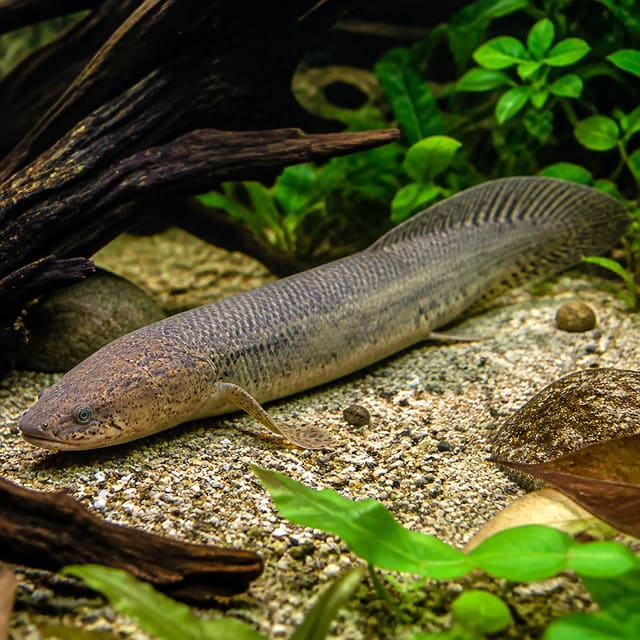
Wikipedia describes Polypterus senegalus as an African ray-finned fish with an ancient, lungfish- or arowana-like appearance, armour-like scales and the ability to breathe atmospheric oxygen. That breathing ability makes an unobstructed route to the water surface an important part of the aquarium plan. A visit to the surface can be part of its normal biology, although any change in breathing rate or usual behaviour still deserves attention.
We rate this fish advanced because its recorded maximum size changes every major husbandry decision. The keeper must plan permanent space, filtration, water testing, feeding and future stocking around a substantial adult rather than around the much smaller animal selected for dispatch. This is a suitability assessment from our shop, not a biological label attached to every individual.
| Suits | Not suited to |
|---|---|
| Advanced keepers able to plan around a 70 cm SL maximum reference | A permanent aquarium planned only around the dispatch size |
| An exceptionally large, established freshwater system with effective filtration | An unfiltered or biologically immature aquarium |
| A setup with an unobstructed route to atmospheric air | A setup that blocks access to the water surface |
| A stocking plan that avoids much smaller fish | Mixing with much smaller fish |
You can place this fish within the shop’s wider loaches and oddballs collection, but its own adult-size and water requirements should decide whether it belongs in your aquarium.
One purchase supplies one Albino Senegal Bichir from the size selected on the page. The dispatch bands are 5–6 cm, 6–10 cm and 10–15 cm; use the live size selector to see which choices can be selected when ordering. The size you select is the size supplied, not the adult size.
Sex is guaranteed only when the selected option explicitly states male or female. This Albino Senegal Bichir listing has no sex-guaranteed option.
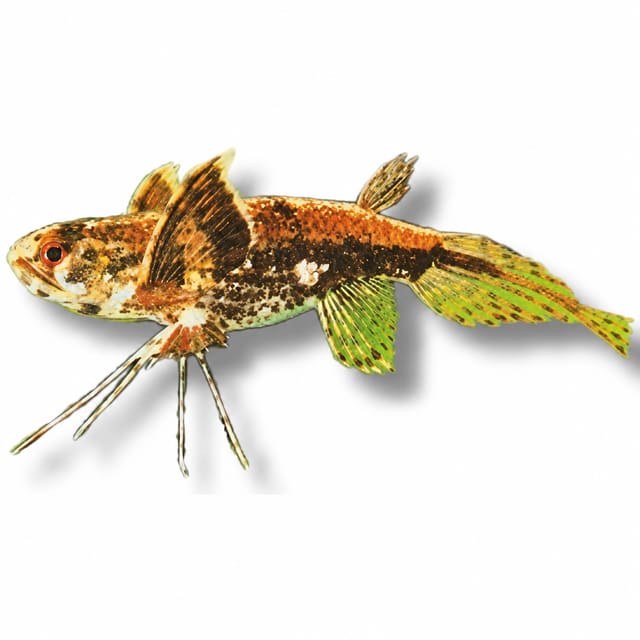
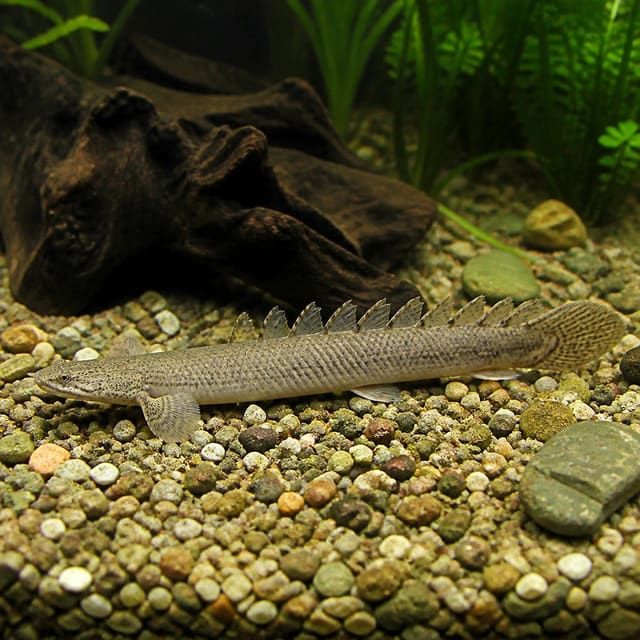
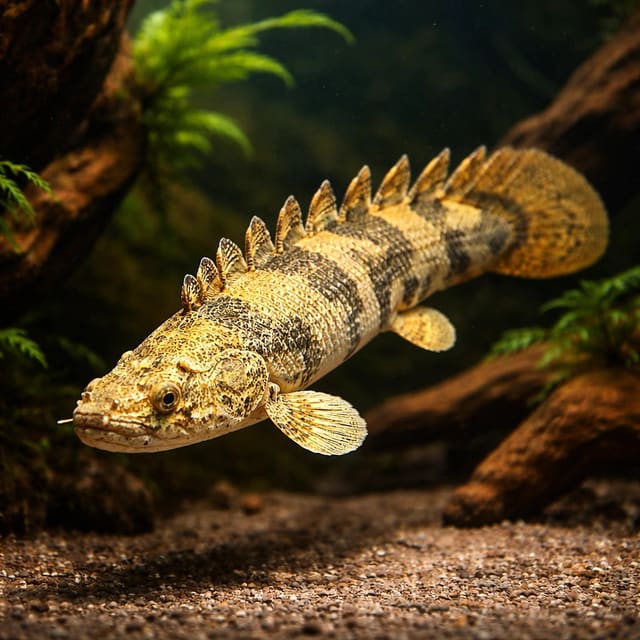
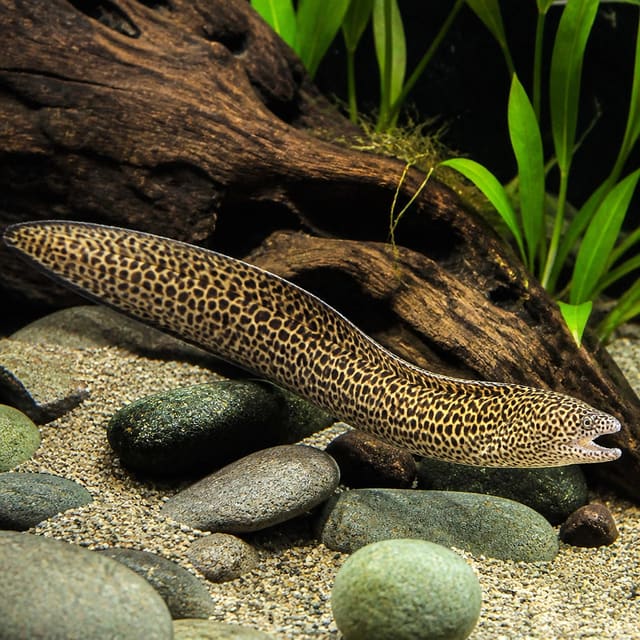
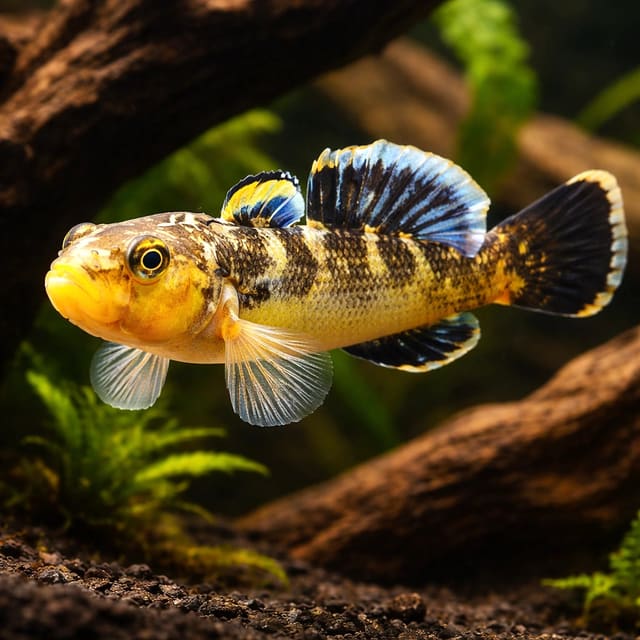
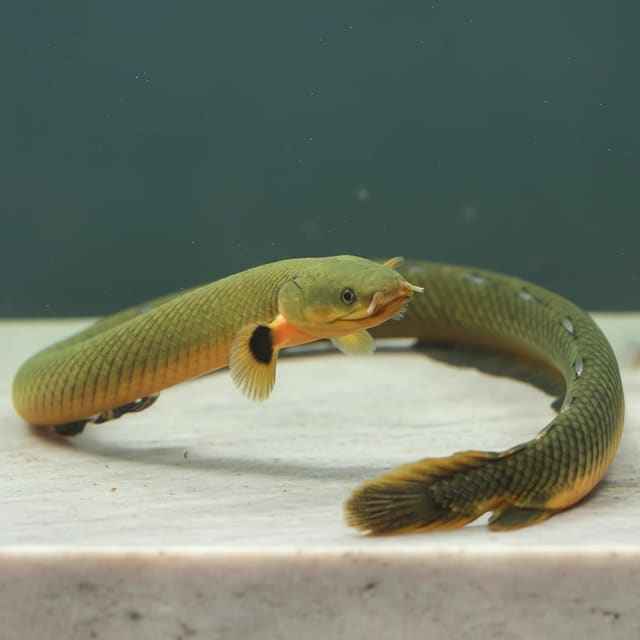
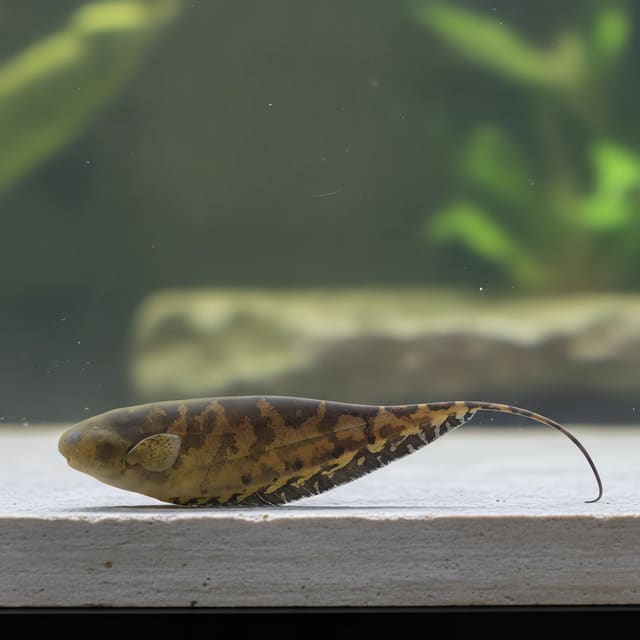
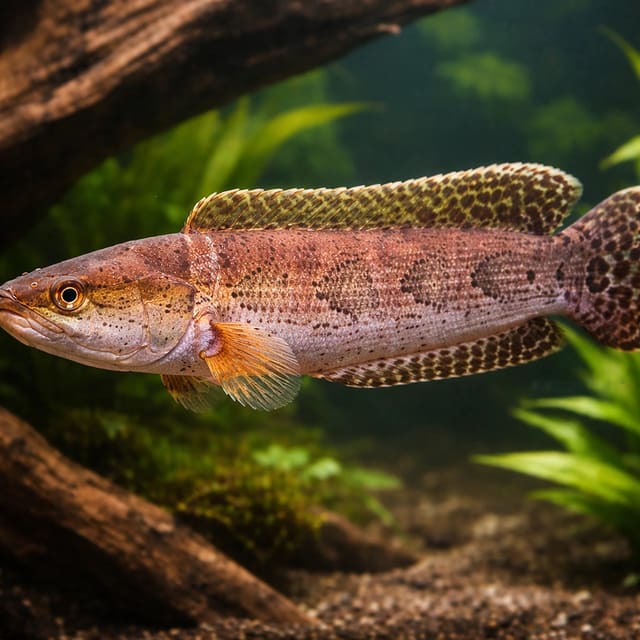
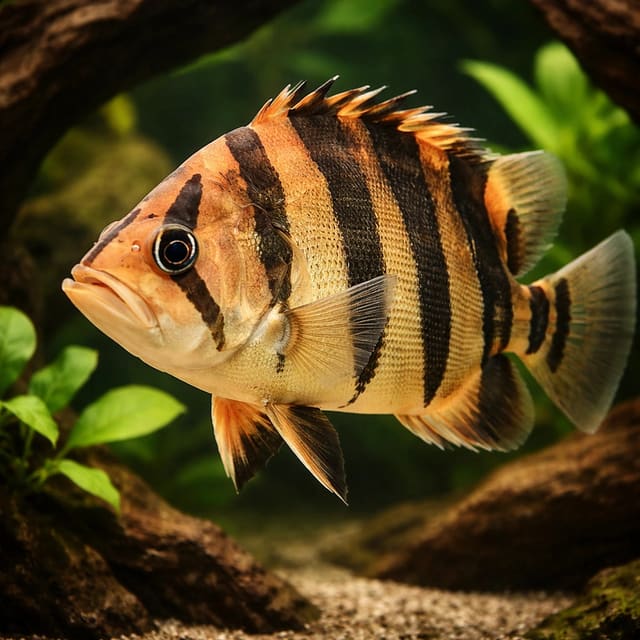
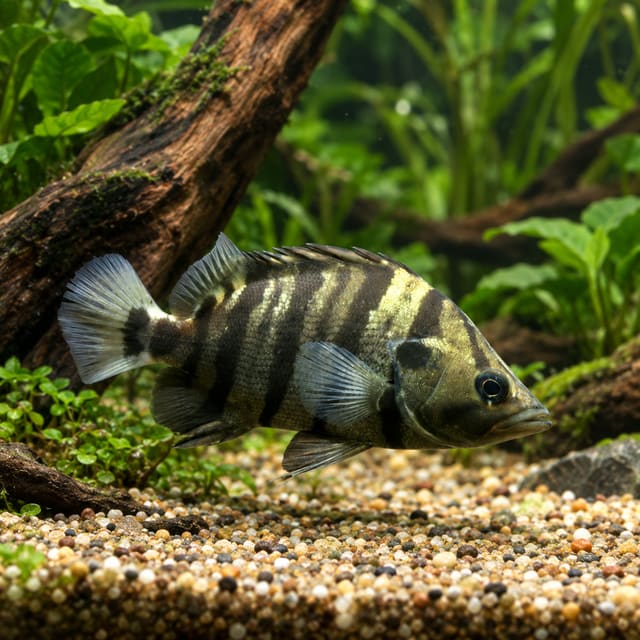
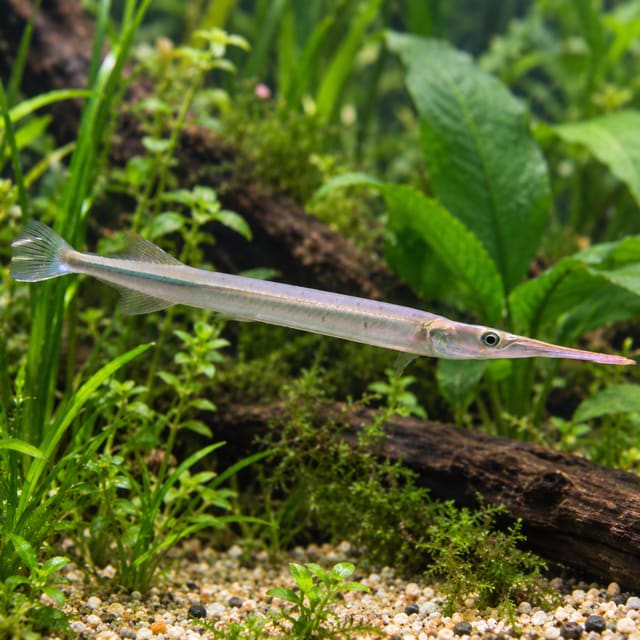
The gallery images are representative, based on reference photographs of this species, so colours can look slightly different from the live animal.
| Figure | How to use it |
|---|---|
| 5–6 cm | A dispatch-size band for the animal selected. |
| 6–10 cm | A dispatch-size band, not a final-size forecast. |
| 10–15 cm | A dispatch-size band shown through the live selector. |
| Up to 70 cm SL | The maximum recorded standard length used for conservative adult planning. |
FishBase records a maximum of 70 cm standard length for Polypterus senegalus. It also records freshwater environmental values of 25–28°C, pH 6.0–8.0 and 5–19 dH. These figures describe the species record rather than guaranteeing the eventual size of an individual or one perfect aquarium setting.
For space, OATA’s very-large-fish guidance says aquariums for the group are often in excess of 500 litres and may need several large filters or a pond filter. This is broad planning guidance rather than a minimum volume calculated for this particular bichir. Use it as a warning against treating a small dispatch animal as a permanent fit for an ordinary aquarium.
A worked comparison shows why the distinction matters. A fish dispatched at 5 cm is 65 cm below the recorded maximum, while one dispatched at 15 cm is still 55 cm below it. Neither calculation predicts how large an individual will become; both show how much adult planning would be missed if the dispatch band were treated as the permanent scale.
Start with the 70 cm standard-length record, then judge whether the permanent aquarium can support a very large fish throughout its life. The recorded maximum is a planning reference, not a promised final length. It is still the safer figure for avoiding a setup based only on the dimensions of a juvenile.
The large-fish guidance links aquarium size to both body size and activity. Some less active animals still need a substantial volume for stable water quality, while active swimmers may need additional room. For this bichir, evaluate adult space alongside the filter capacity and the route to atmospheric air rather than treating one volume figure as a complete answer.
| Planning question | Decision |
|---|---|
| Is the plan based on dispatch size? | Replace it with a plan based on the 70 cm SL reference. |
| Is 500 litres being treated as an exact minimum? | Use “often in excess of 500 litres” as a group warning, then assess the complete adult system. |
| Can the filter handle a large fish? | Choose biological and mechanical capacity for the expected waste load. |
| Is the surface route obstructed? | Rearrange the setup so atmospheric air remains reachable. |
Small temporary accommodation does not remove the need for a permanent plan. Very large fish can be kept in smaller aquaria when first purchased, but OATA warns that many grow quickly. Before selecting a dispatch band, decide where the animal will live as it becomes much larger and how the larger system will be filtered and maintained.
An indoor heated pond is another option mentioned for very large fish. Treat that as a complete aquatic system: it still needs appropriate water conditions, filtration, testing and maintenance. Moving from an aquarium to a pond later should therefore be a prepared route, not a response made after the fish has already exceeded its accommodation.
When comparing proposed systems, favour the one that makes adult care practical every week. Space that is difficult to test, siphon or filter will make the maintenance targets harder to hold, regardless of its nominal capacity.
A well set up and maintained aquarium filter is essential because fish release toxic ammonia into the water. Beneficial bacteria in a working biological filter convert ammonia to nitrite and then to the safer nitrate. The aquarium must complete that biological process before this fish is introduced.
| Measure | Target or action |
|---|---|
| Ammonia | Maintain 0 mg per litre. |
| Nitrite | Maintain 0 mg per litre. |
| Nitrate | Keep it no more than 20 mg per litre above the normal tap-water level. |
| Filter condition | Check for blockages and preserve the beneficial bacteria during cleaning. |
Filter capacity must match the eventual waste load, not just the animal’s dispatch size. Very large fish may require several large aquarium filters or a pond filter to manage both water quality and solid waste. A small filter that appears adequate beside a juvenile can become the limiting part of the system as feeding and waste increase.
Use test results to judge biological performance. Clear water can still contain ammonia or nitrite, so visual clarity is not a substitute for measurement. If either toxic compound appears, stop treating the aquarium as ready for additional stocking and address the biological load before adding another animal.
Population changes must be gradual because the beneficial-bacteria population needs time to increase as fish numbers and feeding rise. Adding livestock too quickly can produce new tank syndrome: the filter bacteria cannot process the extra waste, ammonia and nitrite rise, and fish may become ill or die.
This filter-first approach supports every later decision. Adult space without adequate biological filtration is incomplete, while powerful equipment without regular tests gives no direct measure of whether ammonia and nitrite are being controlled.
Keep the aquarium at 25–28°C, pH 6.0–8.0 and 5–19 dH. FishBase records these as freshwater environmental values for Polypterus senegalus, so use them as a measured reference rather than one exact aquarium optimum. Measure all three values in the intended aquarium before choosing the fish.
Our water-chemistry guide explains what the main measurements represent, while the water matcher provides a practical way to compare your readings with the stated range.
| Example reading | What it means for planning |
|---|---|
| 26°C, pH 7.0, 10 dH | All three figures sit within the recorded environmental range. |
| 24°C, pH 7.0, 10 dH | The temperature is outside the recorded range; adjust the aquarium plan before introduction. |
| 26°C, pH 8.2, 10 dH | The pH is outside the recorded range and needs assessment before the fish is added. |
| 26°C, pH 7.0, 20 dH | The hardness is outside the recorded range; do not judge suitability from temperature and pH alone. |
Ammonia, nitrite and nitrate answer a different question. Temperature, pH and hardness describe the intended physical and chemical setting, while the nitrogen-compound tests show whether filtration and maintenance are controlling waste. A tank can match the pH and hardness range yet still be unsafe if ammonia or nitrite is detectable.
Record the tap-water nitrate level as the baseline for the large-fish target. For example, if normal tap water contains 15 mg per litre nitrate, the “no more than 20 mg per litre above tap water” instruction places the upper maintenance target at 35 mg per litre. If the tap reading is 5 mg per litre, the equivalent figure is 25 mg per litre.
Use repeated measurements rather than assuming the aquarium remains unchanged. Weekly ammonia and nitrite testing is the minimum large-fish routine, and the other readings should be checked whenever suitability or a water change is being assessed.
Complete the aquarium, establish its filter and test the water before the fish arrives. If this is your first setup, follow our guide to preparing and maturing a tropical aquarium before choosing livestock. The introduction decision begins with measured readiness, not with the appearance of clear water.
Read the current delivery and Live Arrival Guarantee policy for the full claim conditions and current arrangements.
Observe swimming, colour, breathing, appearance, body condition and feeding. Healthy large fish are described as having clear bright eyes, undamaged fins, intact scales, no ulcerations or bumps, appropriate swimming behaviour and a normal feeding response. Individual behaviour varies, so note what is normal for this animal while continuing to compare it with those welfare signs.
| Checkpoint | Action |
|---|---|
| Before introduction | Confirm 0 mg per litre ammonia and 0 mg per litre nitrite. |
| After feeding begins | Watch whether the offered amount is eaten within a few minutes. |
| During the first week | Look for changes in breathing, swimming, colour, condition and interest in food. |
| Before adding more fish | Recheck water and allow the biological filter time to adjust. |
Do not rush additional stocking simply because the first fish appears settled. Every increase in animal numbers and feeding adds waste, while the filter’s bacterial population needs time to respond.
Base the main food on this fish’s recorded diet of fishes, insects, crustaceans, molluscs and frogs, with plant fragments and seeds also recorded. Offer appropriately sized carnivorous foods once a day and limit the portion to what the fish can eat within a few minutes. This ties the portion to observed consumption and reduces uneaten food that would otherwise break down and release toxic waste.
OATA’s very-large-fish guidance names larger pellets for large fish and frozen mussel, shrimp or lance fish for carnivorous species. Choose pieces that the individual can take safely. A larger dispatch animal may need a different piece size from a 5–6 cm fish even though both belong to the same species.
Use variety within the recorded diet rather than relying on one item. Frozen mussel, shrimp or lance fish fit the carnivorous large-fish guidance, while an appropriately formulated larger pellet can add another format when the fish accepts it.
| What you observe | What to do next |
|---|---|
| Food is finished within a few minutes | Keep observing body condition and water quality before changing the portion. |
| Food remains after a few minutes | Remove the excess and reduce the next portion. |
| The fish shows reduced interest | Test water quality and compare the behaviour with its normal feeding response. |
| More fish are added | Increase feeding and stocking only gradually so filtration can adjust. |
A fixed number of pellets would ignore differences in food size, dispatch size and individual consumption. The once-daily, few-minutes rule provides a repeatable method without encouraging overfeeding. Observe the whole meal rather than dropping food into the aquarium and leaving it to decay unnoticed.
Body weight and condition are also useful welfare observations. A clear increase or decrease from the animal’s normal condition belongs in the health check alongside feeding response, swimming and breathing.
Carry out a partial water change of 25% at least once every week. Use a siphon where appropriate to remove solid waste from the aquarium, and treat replacement tap water with conditioner to remove chlorine or chloramine before it enters the system.
| Weekly task | Required decision |
|---|---|
| Test ammonia | Maintain 0 mg per litre. |
| Test nitrite | Maintain 0 mg per litre. |
| Compare nitrate | Keep it no more than 20 mg per litre above normal tap water. |
| Change water | Replace 25% at least once every week with conditioned water. |
| Check filters | Look for blockages and loss of effective operation. |
| Inspect the fish | Compare behaviour, appearance, breathing, condition and feeding with its normal pattern. |
If filter media needs cleaning, rinse it lightly in aquarium water removed during the partial water change. Do not run it under the tap, because chlorine or chloramine may kill part of the beneficial bacterial population established in the media. The aim is to clear enough debris for the filter to work while retaining the bacteria that process ammonia and nitrite.
Separate mechanical cleanliness from biological safety. Removing visible solid waste helps control the amount of material breaking down, but the weekly tests are what show whether toxic nitrogen compounds are being held at their targets. A visually clean aquarium still needs ammonia, nitrite and nitrate measurements.
Large fish can produce substantial solid waste, so maintenance access should be part of aquarium selection. A system that allows straightforward siphoning, testing and filter checks makes the weekly welfare targets easier to sustain.
Keep a simple written record of test figures, water changes and feeding observations. The values make a developing change easier to recognise than memory alone, especially after growth, a filter adjustment or an increase in stocking.
Learn the individual fish’s normal swimming, colour, breathing, body condition and feeding response. Changes in those areas can signal a developing health or water-quality problem even when the aquarium still looks clear.
| Change observed | First response |
|---|---|
| Hanging at the surface, sitting on the bottom or erratic swimming | Test water quality and compare the behaviour with the established baseline. |
| Darker or paler colour than normal | Check the other welfare signs and measure the water. |
| Faster or slower gill-cover movement | Test ammonia and nitrite promptly and assess the wider condition. |
| White spots, fluffy growths, lost fins or scales | Check water quality and seek individual health guidance. |
| Increase or decrease in body condition | Review observed feeding, portion size and the other health signs. |
| Reduced intake or no interest in food | Remove leftovers, test the water and compare with the fish’s usual response. |
Atmospheric breathing is part of this species’ natural history, so a surface visit should be read in context. A clear change in the frequency of surface activity, gill movement or swimming pattern matters more than assuming every trip to the surface has the same meaning.
Water testing is the first practical check because ammonia and nitrite are toxic and should remain at 0 mg per litre. Nitrate should remain within 20 mg per litre of the normal tap-water level. Record the readings so any health discussion begins with current measurements rather than a visual guess.
If you are concerned about a health change, test the water and contact us for guidance. Do not select a treatment solely from one visible sign: combine the appearance, behaviour, feeding response and measured water quality when describing the problem.
Early observation is most useful when a normal baseline already exists. The first-week notes and weekly routine therefore form part of health care, not merely record keeping.
Very large fish often have correspondingly large mouths, so mixing them with much smaller fish should be avoided. Apply that rule to the bichir’s adult planning scale rather than only to the animal’s dispatch size. A companion that appears substantial beside a 5–6 cm arrival may still be much smaller in the long-term aquarium plan.
Some very large fish can be aggressive or predatory and may not mix with any other species. That broad warning does not make every individual bichir behave identically, and it does not create a universal list of safe companions. Compatibility remains an individual stocking decision based on adult scale, water, total space, filtration and observed behaviour.
| Screening result | Decision |
|---|---|
| The proposed animal is much smaller | Avoid the combination. |
| Water requirements do not overlap | Do not combine them in the same aquarium. |
| Adult space or filtration is marginal | Reduce the stocking plan rather than relying on juvenile sizes. |
| Behavioural interaction is uncertain | Treat compatibility as unresolved and prepare a different stocking plan. |
| All screens appear suitable | Add slowly and continue observing; the assessment is not a guaranteed outcome. |
Do not use common-name similarity, shared African origin or the fact that two animals are both labelled “large fish” as a shortcut. Those labels do not answer whether their water, adult scale, behaviour and combined waste load fit one system.
For a stocking and compatibility assessment, contact us with the aquarium volume, measured water values, established occupants and their approximate sizes. Those details allow the proposed combination to be screened against the actual aquarium rather than an abstract tank-mate list.
One purchase supplies one animal, not a pair or group. Begin the aquarium calculation with that single-fish retail unit and do not infer a social group, pair bond or sex from the dispatch size, gallery or common name.
| Plan | Required assessment |
|---|---|
| One bichir | Provide the adult space, water conditions, filtration and surface route planned for that animal. |
| More than one bichir | Recalculate adult space and combined waste load for every animal and assess individual interactions. |
| Bichir with other fish | Apply the adult-scale, water and behaviour screen before adding anything. |
| Adding another fish later | Increase stocking slowly and confirm ammonia and nitrite remain at 0 mg per litre. |
Do not select two animals merely because two are visible together in an image. The gallery explains the type of animal, while the purchase unit remains one animal from the selected size. A second purchase creates a larger stocking decision with additional adult space and biological load.
The safest starting point is a plan that works fully for one fish without relying on another animal for a presumed social need. Consider additional animals only after the larger system has been assessed for adult accommodation, filtration and compatibility. Some very large fish may not mix with other species, so every addition needs its own decision.
Dispatch bands are particularly poor group-planning tools because they describe the animals at the point of supply. Use the adult reference for each bichir in the proposed group and calculate filtration around the combined load. This prevents several small arrivals from being mistaken for a permanently light stocking level.
FishBase records a maximum of 70 cm standard length. Use 70 cm SL for conservative adult planning rather than as a promise that every individual will reach exactly that length.
Plan an exceptionally large, established aquarium around the 70 cm SL reference. OATA’s very-large-fish guidance says systems are often in excess of 500 litres and may require several large filters or a pond filter.
Plan fully for one fish first. Every additional bichir needs a fresh assessment of adult space, combined waste load, water requirements and individual behaviour; increase stocking slowly and keep ammonia and nitrite at 0 mg per litre.
We rate it advanced because FishBase records a maximum of 70 cm SL and OATA’s very-large-fish guidance calls for an exceptionally large, established and heavily filtered system.
FishBase records fishes, insects, crustaceans, molluscs and frogs, as well as plant fragments and seeds. Offer appropriately sized carnivorous foods once daily, limiting the portion to what is eaten within a few minutes; OATA names larger pellets and frozen mussel, shrimp or lance fish for large carnivorous fish.
Keep it at 25–28°C, pH 6.0–8.0 and 5–19 dH, the freshwater environmental range recorded by FishBase. Maintain ammonia and nitrite at 0 mg per litre and nitrate no more than 20 mg per litre above normal tap water.
Do not assume a universal temperament. OATA warns that some very large fish can be aggressive or predatory and may not mix with other species, so avoid much smaller fish and assess every interaction individually.
Avoid much smaller fish. Screen every other fish or invertebrate by adult scale, water requirements, total aquarium capacity and individual behaviour, and prepare a different stocking plan when the outcome is uncertain.
Film every delivery continuously from the sealed parcel as it is opened, with the fish still visible inside the sealed bag. Have someone present to receive it; it is hand-bagged in pure oxygen, packed in an insulated box with a heat pack when needed and carried by a licensed live-animal courier. Float the bag for 20–30 minutes before releasing the fish, and never pour the bag water into the aquarium.
No reviews for this item yet. Bought one? Honest reviews only, good or bad.
What customers say about ordering from us
Easy website plenty of info on fish your buying great to pick a time slot
TRACEY DURRANT · 7 Oct 2026
Got some lovely fish thank you
Kevin Mackie · 7 Oct 2026
Reviews of our shop, collected by Judge.me, an independent third-party review collector. Newest first.