Advanced
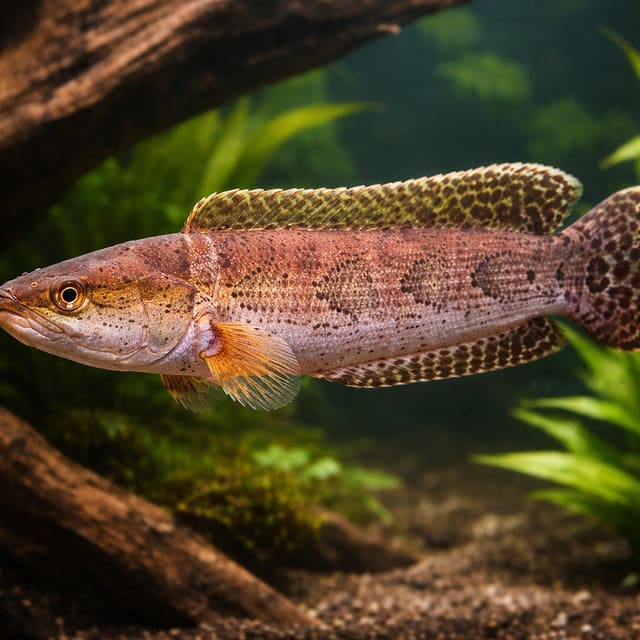
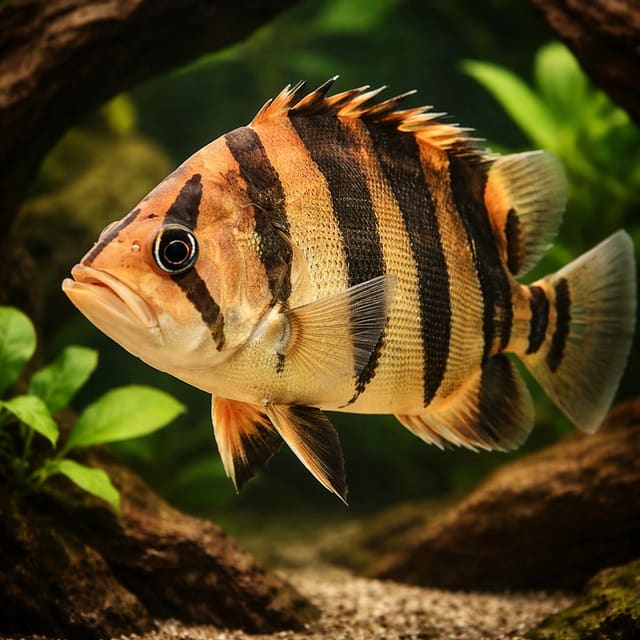
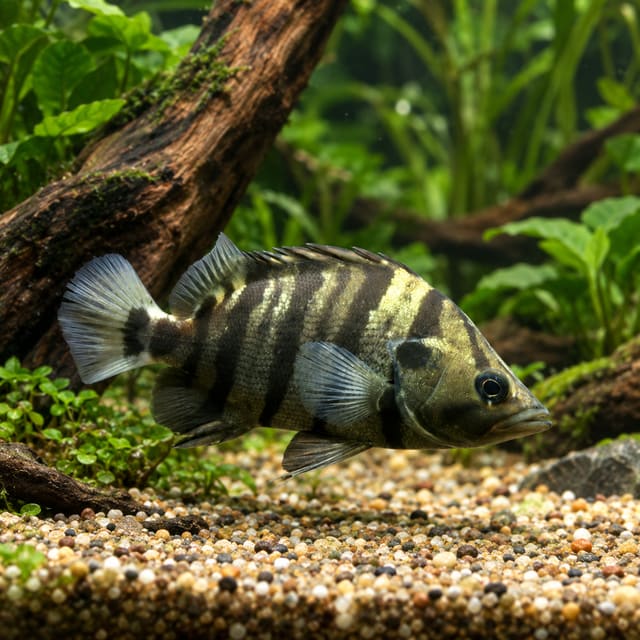
Barred tigerfish (Datnioides polota)
22–26°C · pH 7.5–9
£48.99
Steatogenys duidae is a well-camouflaged sand knifefish from small forest streams in Venezuela and Brazil, with a maximum recorded length of 20.9 cm total length. Each purchase is one live fish for a mature, heated tropical aquarium with plenty of cover and a diet of small invertebrate foods.
Adult size is the maximum length this species reaches at full maturity (scientific sources). The livestock you receive will be younger and smaller. Product-photo provenance and any image-specific limitations are stated on the listing.
Steatogenys duidae
Steatogenys duidae is a well-camouflaged sand knifefish from small forest streams in Venezuela and Brazil, with a maximum recorded length of 20.9 cm total length. Each purchase is one live fish for a mature, heated tropical aquarium with plenty of cover and a diet of small invertebrate foods.
Adult size is the maximum length this species reaches at full maturity (scientific sources). The livestock you receive will be younger and smaller. Product-photo provenance and any image-specific limitations are stated on the listing.
Steatogenys duidae is a sand knifefish from South America: a long, well-camouflaged fish of the family Rhamphichthyidae, recorded from small streams in Venezuela and Brazil. Its maximum recorded length is 20.9 cm total length. Each purchase is one live fish, and it needs a mature, heated tropical aquarium with plenty of cover and a regular supply of small invertebrate foods.
| Suits | Keepers with a mature, stable tropical aquarium who can provide cover and small invertebrate foods |
|---|---|
| Family | Rhamphichthyidae, the sand knifefishes |
| Wild home | Small forest streams in Venezuela and Brazil |
| Maximum recorded length | 20.9 cm total length |
| Natural diet of the genus | Aquatic insect larvae and small shrimp |
| What you receive | One live fish |
This is not a fish that patrols the front glass looking for attention. FishBase describes it as benthopelagic, the term for fish that live and feed near the bottom as well as in open midwater, and its genus is known for brown, barred colouring that blends into roots and vegetation. Plan for a fish that wants cover close at hand, and build the aquarium around that need rather than adding it to an existing mix as an afterthought.
Look for the long fin running along the underside. FishBase counts between 112 and 165 soft rays in the anal fin of this species, and describes the body shape as elongated. It is a fish for someone who enjoys an unusual, understated animal and is happy to watch for it among the planting.
One purchase supplies one live Steatogenys duidae. There is a single version of this listing, with no size or colour to pick. Plan the aquarium around the 20.9 cm adult maximum rather than the length of the fish when it arrives, because the tank has to suit the fish at full size, not only on the day it is introduced.
Sex is guaranteed only when the selected option explicitly states male or female. This Steatogenys duidae listing has no sex-guaranteed option. We do not select fish by sex for this listing.
Gallery images have been digitally enhanced to improve image quality. Natural colour, pattern, size and maturity can vary between live animals.
Run through these points first. If any answer is no, prepare the aquarium before ordering:
The species was described by La Monte in 1929. Its name is a toponym: according to the FishBase species summary, duidae refers to Mount Duida in Venezuela, where the holotype (the specimen on which the name is based) was acquired. The genus name combines the Greek words for hard fat and jaw.
Steatogenys contains three recognised species. Steatogenys elegans, the barred knifefish, is widespread and common. Steatogenys ocellatus lives among submerged roots and branches in still or slow-flowing blackwater. Steatogenys duidae is found mainly in small streams running through terra firme forest. The genus was long placed in the family Hypopomidae, but a comprehensive molecular study published in 2015 showed that it belongs in Rhamphichthyidae, the placement that FishBase and recent authorities now follow.
Above family level it belongs to the Gymnotiformes, the knifefishes. The main reference FishBase cites for this species is Mago-Leccia's 1994 monograph on the electric fishes of the continental waters of America, which reflects how scientists group these South American knifefishes. On the IUCN Red List the species is assessed as Least Concern.
Steatogenys duidae lives mainly in small streams running through terra firme forest. Terra firme is forest on ground that does not flood, in contrast with the seasonally flooded várzea forest found along the big rivers, so this species belongs to small forest channels rather than wide floodplain lakes. The genus as a whole occurs in the Amazon, Orinoco and Essequibo river basins of tropical South America, and FishBase lists this species from Venezuela and Brazil. Wikipedia's article on the genus Steatogenys summarises how the three species divide these habitats between them.
FishBase gives its ecology in two words, small streams, and classes it as a tropical freshwater fish. That is the practical starting point for the aquarium: freshwater, heated, clean and stable, with a layout that feels like a sheltered stream margin rather than an open show tank.
All three Steatogenys species are regularly found among the vegetation of floating meadows, the mats of plants that grow out over the water surface. That habitat often holds little oxygen, and these fishes are well adapted to it.
Treat this as a note about wild resilience, not as an aquarium target. In the home aquarium the priority is clean, well-filtered water, and the RSPCA's welfare advice that no fish should be kept without a well set-up and maintained filter applies to this knifefish as much as to any other species. Use floating plants and dense planting as cover, not as a reason to let water quality slide.
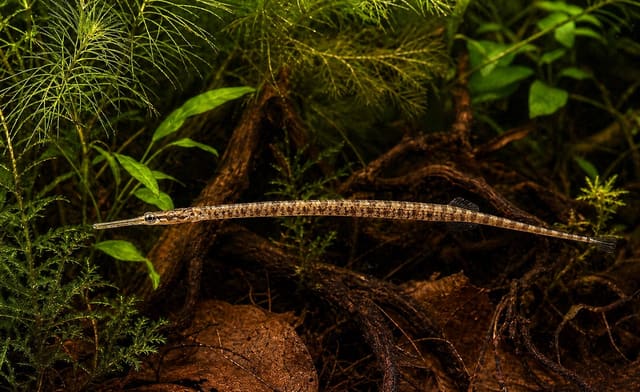
Steatogenys fishes are well camouflaged, brown with a barred pattern. They resemble the knifefishes of the genus Hypopygus but grow larger. Camouflage works best when there is something to blend into, so give the fish roots, branches, dense planting and shaded areas under floating plants. These features echo the vegetation and submerged wood where members of the genus are found.
OATA's general aquarium advice points the same way: decoration and plants are recommended as enrichment, ornaments give less boisterous and reclusive fish a safe retreat, and live plants help to remove nitrate. For a fish that relies on blending in, those retreats are part of its basic equipment rather than decoration.
The UK trade body OATA gives a simple rule for any freshwater aquarium: within reason, buy as big an aquarium as possible, ideally one that can accommodate your chosen fish once they are fully grown, or be prepared to buy a bigger set-up as the fish grows. For Steatogenys duidae the figure to plan around is its maximum recorded length of 20.9 cm total length. A long, slender fish of that size needs room to turn and to travel along the tank, as well as space around its cover.
Larger aquariums also hold more water, which makes them more stable and less susceptible to swings in temperature and pH than small ones. Stability matters more than any single gadget for a fish that depends on cover and specialised foods, so treat a larger tank as an investment in steady conditions.
OATA's freshwater aquarium care sheet recommends placing the tank:
That last point deserves extra thought for a camouflaged fish that relies on cover. A quiet corner of the room, away from doors and household traffic, gives it the best chance of settling and of eventually spending time in view.
A working biological filter is the foundation. As the RSPCA's guidance on the fish environment explains, fish release ammonia into the water, which is toxic. A biological filter lets beneficial bacteria grow, and those bacteria convert ammonia to nitrite, which is also toxic, and then to nitrate, which is safer.
OATA's sequence for a new set-up is to fill the tank, dechlorinate the water (either by letting it stand for 24 hours or with a commercial dechlorinator), switch on the equipment and leave it for 24 to 48 hours to settle, so that the correct temperature is reached and the equipment is working. The filter then needs to mature while nitrifying bacteria build up. Our step-by-step guide to setting up a first tropical tank takes you through that process in order.
Only introduce this fish once ammonia and nitrite read zero. OATA warns that overstocking or stocking an aquarium too quickly can cause new tank syndrome, when there are not enough nitrifying bacteria to cope with the extra waste.
OATA also reminds keepers that decoration and plants take up space, so allow for them when you choose the aquarium size.
A practical layout gives the fish a choice of places to be. Build a tangle of roots and branches along the back and one end, with gaps underneath wide enough for a fish close to its full length to lie in. Plant densely around and in front of the wood, leaving a clear lane along the front and through the middle of the tank.
Let floating plants cover part of the surface above the root tangle, so that end stays shaded while the rest of the aquarium is open. Choose one feeding spot at the edge of the cover, where you can see whether food is taken and lift out any that is not. As the fish grows, check that the gaps still fit it, and thin the planting if the lanes start to close up.
Steatogenys duidae is a tropical freshwater fish, so it needs a heated aquarium held at a steady tropical temperature. The firm water targets here come from OATA and apply to every tropical freshwater home aquarium: ammonia at zero mg per litre and nitrite at zero mg per litre. For nitrate, OATA directs keepers to species care sheets and notes that nitrate in tap water can vary widely between areas, so test your own supply before relying on it for water changes.
| Measure | What to aim for |
|---|---|
| Temperature | A steady tropical temperature, checked regularly |
| Ammonia | Zero mg per litre |
| Nitrite | Zero mg per litre |
| Nitrate | Kept low by regular partial water changes; check your tap water too |
| pH | Measured regularly and kept free of sudden swings |
If the chemistry is new to you, our guide to aquarium water parameters explains what each test measures and why it matters. Once you have readings from your own aquarium, the water parameter matcher lets you compare them with stated guidance before you order.
OATA adds that the frequency and size of water changes can vary with the species kept, the aquarium size, the number of fish and other factors. Keep a simple log of your readings: a slow upward drift in nitrate or a change in pH is far easier to spot on paper than by eye.
Large, sudden changes are what to avoid. Match new water to the aquarium's temperature, change moderate volumes regularly rather than large volumes occasionally, and make any adjustment to pH gradually. This fish eats meaty invertebrate foods, so remove leftovers promptly rather than leaving them to decay in the cover where they are hard to see.
Good maintenance also protects the fish's appetite and colour, both of which are useful early warnings. A knifefish that is feeding well and holding its condition is telling you the routine is working.
Steatogenys knifefishes feed on invertebrates such as aquatic insect larvae and small shrimp. That is the clearest guide to the aquarium diet: base it on foods of the same kind, offered in pieces small enough to swallow easily.
Place food where the fish can reach it close to its cover, rather than only at the front of the tank. OATA points out that diet and feeding habits vary between species: some feed at the surface, others throughout the water column and others at the bottom, and some have specific dietary needs. A specialist invertebrate eater can lose out to faster, bolder fish that reach the food first, so watch feeding times closely in a mixed aquarium.
Feed small amounts and remove anything left uneaten. Leftover food contributes to ammonia, and meaty foods foul the water quickly when they are hidden among roots and plants.
Thaw frozen portions in a little aquarium water rather than dropping a solid block into the tank, and feed only what the fish will take. Do not refreeze thawed food; use it or throw it away. Small, regular portions are easier to monitor than one large meal, and they keep uneaten food from accumulating out of sight in the cover.
A settled, well-fed fish holds its body condition and shows interest when food arrives. OATA lists reduced intake, lack of interest in food, and an increase or decrease in body weight and condition among the changes to watch for. If you notice them, test the water first and then review the diet and the competition at feeding time.
Everything is hand-packed by our team. Your fish is hand-bagged in pure oxygen and packed in an insulated poly box, with a heat pack when the weather calls for it. We email you the tracking number and your confirmed Thursday or Friday delivery date, and a licensed live-animal courier carries the parcel to your door. The full terms are on our delivery and Live Arrival Guarantee page.
Have the aquarium running before you order: filter matured, ammonia and nitrite at zero, heater holding a steady tropical temperature, and the roots, planting and floating cover already in place. OATA advises checking that any new fish is compatible with those you already keep and that the water quality is suitable before it arrives.
OATA's own advice on bringing fish home adds that fish are easily stressed by bright lights, extreme temperatures, noise and movement, and suggests taking the bag out of its outer wrapping carefully while avoiding exposure to bright light.
Give the fish time to settle into its cover before judging its behaviour or appetite. Offer small amounts of food near its retreat, remove anything uneaten, and keep testing ammonia and nitrite, because a new fish adds to the load on the filter's bacteria.
If you plan further additions, OATA's advice to increase the number of fish only slowly applies. Each new arrival increases feeding and waste, and the filter's bacteria need time to catch up.
All fish vary slightly in behaviour and appearance, but OATA lists the changes worth noticing early:
For a camouflaged fish that relies on cover, time spent in its retreat is part of normal life. What matters is change: the fish hiding more than it usually does, breathing faster, or losing interest in food it previously took. Watch it for a short while at the same time each day so you learn its routine.
If something worries you, test the water quality first, because many problems start there. Then get in touch with our team for further guidance, with your latest readings to hand.
When you alter the aquarium, whether with a new food, new décor or a new companion, change one thing at a time and watch closely for several days afterwards. If the fish reacts, you will know why, and you can reverse the change before it becomes a lasting problem.
Good companions share the same tropical freshwater set-up, stay calm, and do not take every scrap of food before it reaches the knifefish. Check each candidate's own adult size, diet and temperament before you buy: there is no fixed list of companions that suits every aquarium, and the right choice depends on the size of your tank and how much cover it offers.
Fish that feed and rest low in the tank deserve particular thought. Our bottom dwellers collection gathers fish that share that lower zone, so treat anything chosen from it as a direct competitor for food and cover, and add extra retreats so every fish has a place of its own.
The simplest way to meet its needs is an aquarium planned around this knifefish from the start. With fewer competitors at feeding time, cover arranged for its size and a lighter stocking level, water quality is easier to keep stable and you can see clearly whether the fish is feeding. Companions can still be added later, one careful choice at a time.
Start with a single fish and learn how it behaves in your aquarium. If you later add another of its kind, do it in a larger tank with a separate retreat for each fish, add it slowly, and watch closely for chasing or for one fish hiding more than normal.
Add fish gradually and in small numbers so the filter can keep pace, and plan the order so the knifefish is not the newcomer in a tank already claimed by bolder fish. After each introduction, watch feeding times and the cover for the first weeks: a fish that stops appearing to feed, or is chased from its retreat, needs a change to the stocking plan.
FishBase records a maximum length of 20.9 cm total length. Plan the aquarium around that adult size rather than the size of the fish when it arrives.
Choose as large an aquarium as you reasonably can, sized for a fish of 20.9 cm total length, with room for roots, dense planting and open lanes between them. OATA advises buying an aquarium that can accommodate your fish once fully grown.
Start with one and learn how it behaves in your aquarium. If you later add another, do it in a larger tank with a separate retreat for each fish, add it slowly and watch closely for chasing or hiding more than normal.
It is better suited to a keeper who already runs a mature, stable tropical aquarium. It grows to 20.9 cm, feeds on small invertebrate foods and relies on cover, so a first-time keeper should mature a tank and learn routine testing before taking one on.
Its genus feeds on invertebrates such as aquatic insect larvae and small shrimp. In the aquarium, base the diet on foods of the same kind, such as frozen bloodworm and small frozen crustaceans, and remove anything left uneaten.
It is a tropical freshwater fish, so keep it in a heated aquarium at a steady tropical temperature and keep pH stable, avoiding sudden swings. OATA sets zero mg per litre of ammonia and nitrite as the target for every tropical freshwater aquarium; test at least once a week.
The main risk to plan for is to ornamental shrimp, which match the small shrimp its genus eats. Keep it away from aggressive or territorial fish, give it a retreat of its own, and watch interactions closely for the first weeks.
Choose calm fish that suit the same tropical freshwater aquarium and will not beat it to food near the bottom. Avoid ornamental shrimp and aggressive or territorial species, and check every companion's own needs before buying.
It is hand-bagged in pure oxygen, packed in an insulated box with a heat pack when the weather calls for it, and delivered on a confirmed Thursday or Friday by a licensed live-animal courier. Someone must be at the address to receive it. Start a continuous unboxing video before opening the parcel, inspect the fish the same day, then float the sealed bag for 20–30 minutes before releasing it. Under our Live Arrival Guarantee, contact us the same day with your order number and the video if anything has gone wrong.
No reviews for this item yet. Bought one? Honest reviews only, good or bad.
What customers say about ordering from us
Easy website plenty of info on fish your buying great to pick a time slot
TRACEY DURRANT · 7 Oct 2026
Got some lovely fish thank you
Kevin Mackie · 7 Oct 2026
Reviews of our shop, collected by Judge.me, an independent third-party review collector. Newest first.