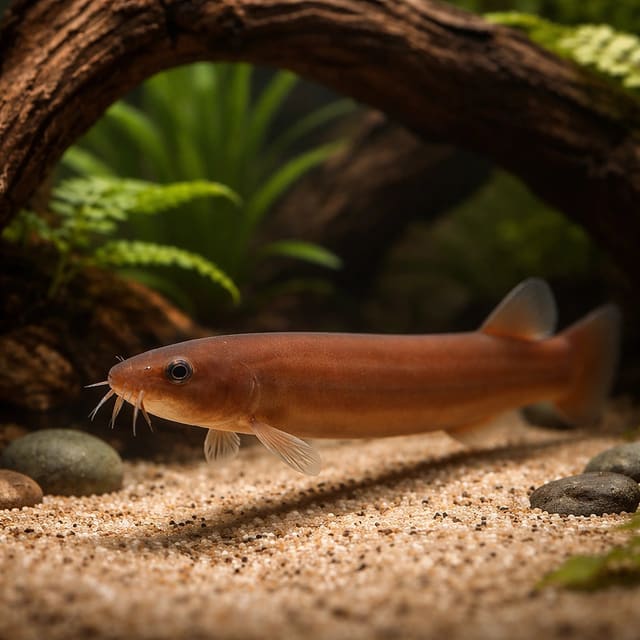
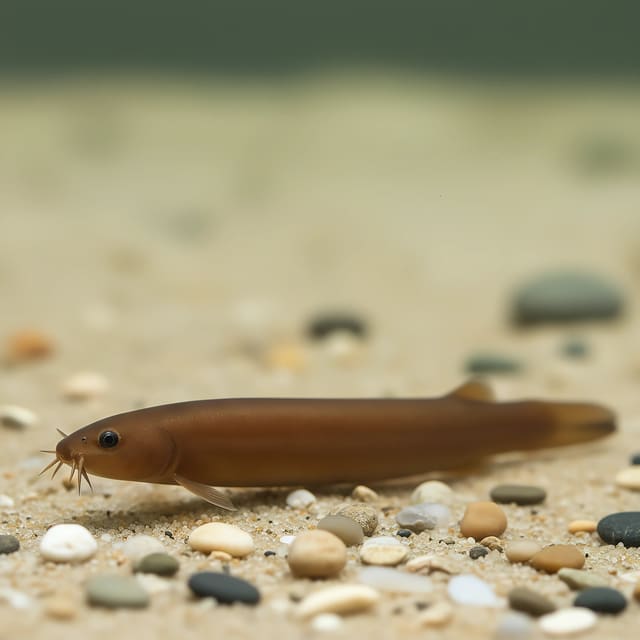
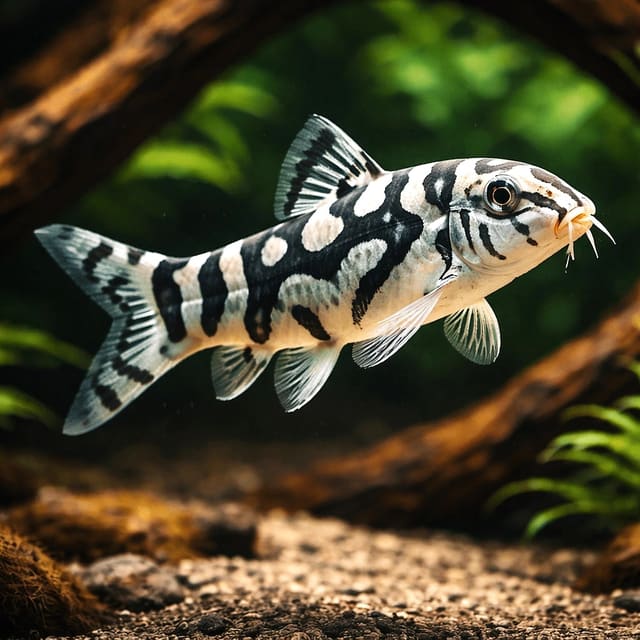
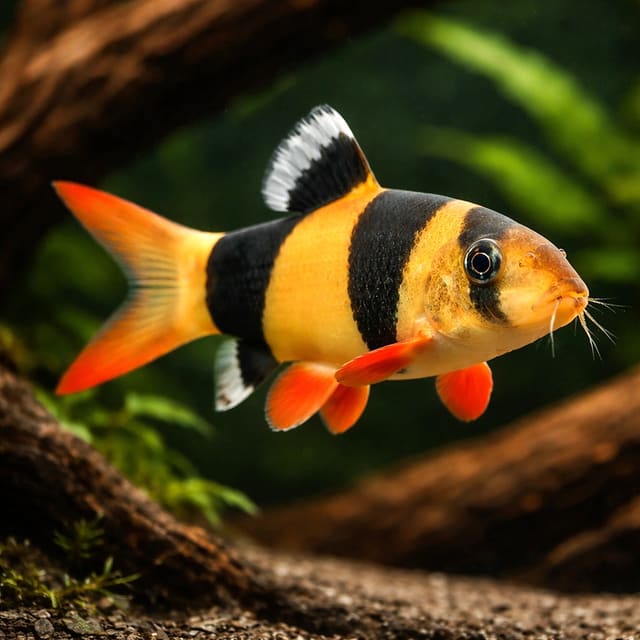
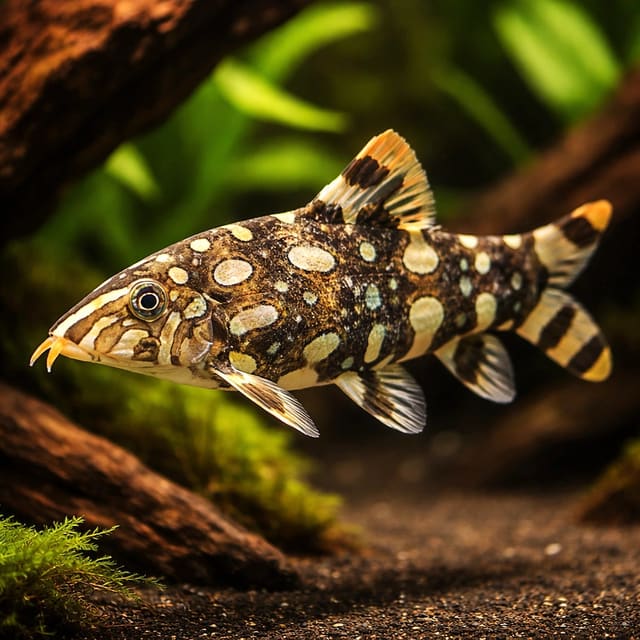
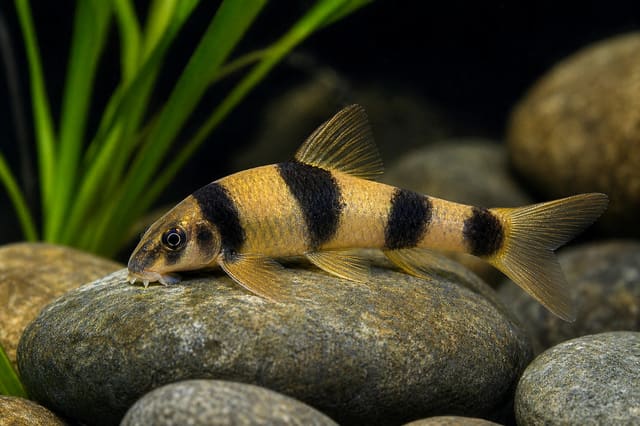
Kuhli Loach (Acanthophthalmus kuhli)
24–27°C · pH 6.5–6.5
£2.99

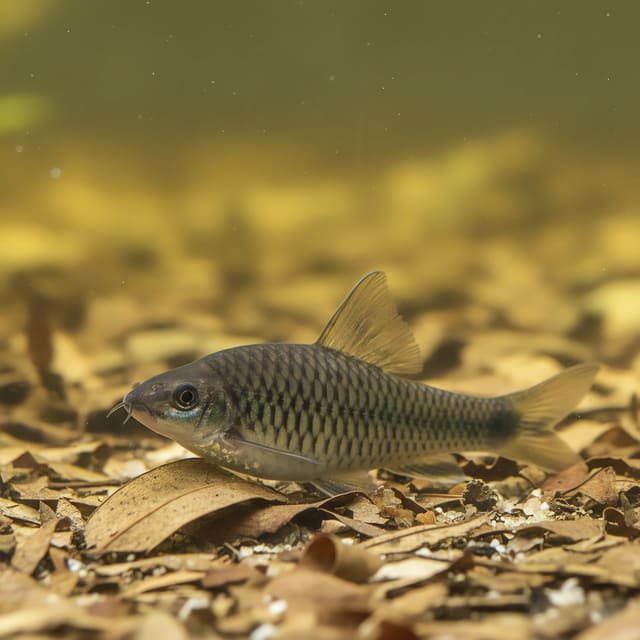
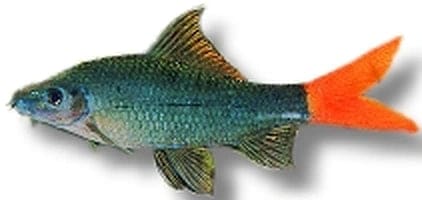
The Siamese Algae Eater (Crossocheilus cf. langei) is a Crossocheilus cyprinid from China, India, Indonesia, Malaysia and Thailand. It suits a long, filtered, highly oxygenated aquarium; OATA's group guidance advises at least 120 cm length, 22–27°C, pH 6.0–8.0, and either one fish or five or more. Sold individually in 2.5 cm, 3–3.5 cm, 4–5 cm, 6 cm, 7 cm and XL sizes.
Crossocheilus cf. langei
Shoaling fish: kept in a group they feel safer, stay calmer and show their best colour.
Minimum of 2 per order.
The Siamese Algae Eater (Crossocheilus cf. langei) is a Crossocheilus cyprinid from China, India, Indonesia, Malaysia and Thailand. It suits a long, filtered, highly oxygenated aquarium; OATA's group guidance advises at least 120 cm length, 22–27°C, pH 6.0–8.0, and either one fish or five or more. Sold individually in 2.5 cm, 3–3.5 cm, 4–5 cm, 6 cm, 7 cm and XL sizes.
Maintain these water conditions for optimal health and vibrant colors
The Siamese Algae Eater carries the scientific label Crossocheilus cf. langei and belongs to the cyprinid genus Crossocheilus. This genus occurs across China, India, Indonesia, Malaysia and Thailand, often in fast-flowing rivers with rocky bottoms. It suits a keeper who can provide a long, filtered and highly oxygenated aquarium, supplemented food and either one fish or a properly planned group.
WoRMS places Crossocheilus as an accepted genus in the carp and minnow family Cyprinidae. That genus identity is the firm taxonomic level for planning this fish. The label retains the comparison with C. langei without turning that comparison into a species guarantee.
Wikipedia describes Crossocheilus across parts of China, India, Indonesia, Malaysia and Thailand. Members of the genus occur in several habitats, often fast-flowing rivers with rocky bottoms. This background helps explain why aquarium planning should prioritise oxygenation, swimming length and surfaces that can support grazing.
Its algae-grazing role is useful, but it remains a fish with complete welfare needs. Choose it because the aquarium can support its adult planning size, water range, food and keeping arrangement—not solely because algae are present.
One purchase quantity supplies one animal in the size option you select. Size labels used for this offer are 2.5 cm, 3–3.5 cm, 4–5 cm, 6 cm, 7 cm and XL; use the live selector to see which choices can be selected when you order. XL is a grade label, so do not convert it into a centimetre measurement.
The size you select is the size supplied, not the adult size. A 3–3.5 cm or 4–5 cm fish still needs an aquarium planned around the adult guidance. The smaller label changes the dispatch size, not the eventual space, oxygenation, filtration or social decision.
The exact species has not been identified, so the care advice here follows the genus Crossocheilus and its care group.
Sex is guaranteed only when the selected option explicitly states male or female. This Siamese Algae Eater listing has no sex-guaranteed option.
These representative gallery images have been digitally enhanced for presentation, so colours can look slightly different from the live animal.
Before checkout, read the current delivery and Live Arrival Guarantee policy and make sure someone can receive the order during the delivery window shown at checkout. For other bottom-oriented and unusual freshwater fish, you can also browse the loaches and oddballs collection.
OATA's tropical algae-eater guidance gives the following broad planning figures for Siamese algae eaters: growth up to 16 cm, an aquarium at least 120 cm long, 22–27°C, pH 6.0–8.0 and soft-to-medium water at 4–12°dH. Use these as care-group guidance rather than a species-specific optimum.
| Decision | Planning figure |
|---|---|
| Growth planning | Up to 16 cm |
| Aquarium length | At least 120 cm |
| Keeping arrangement | One fish or five or more |
| Temperature | 22–27°C |
| pH | 6.0–8.0 |
| General hardness | 4–12°dH |
| Carbonate hardness | 3–10°dKH |
| Ammonia and nitrite | Zero mg per litre |
| Nitrate | Up to 20 mg per litre above normal tap-water level |
The 16 cm figure is a planning ceiling, not a promise that every individual will reach exactly that length. It still makes the space decision clear: a small dispatch fish is not a small-aquarium fish.
| Suits | Not suited to |
|---|---|
| Aquariums at least 120 cm long | Aquariums shorter than 120 cm |
| Highly oxygenated, filtered water | Systems without established filtration |
| One fish or a group of five or more | Plans that cannot support either arrangement |
| Supplemented grazing diets | Plans relying on aquarium algae alone |
Length is the first space test. A short but deep aquarium does not satisfy the instruction for at least 120 cm of length. Filtration must be established, the water must remain highly oxygenated and the lid must fit securely. Decide between one fish and a proper group before ordering, because an intermediate group is not the recommended arrangement.
Start with an aquarium measuring at least 120 cm from end to end. This dimension gives the streamlined fish a continuous footprint and must be met independently of height. For example, a 100 cm aquarium does not meet the length instruction simply because it is unusually deep or tall. A 120 cm aquarium passes the first gate, but filtration, oxygenation, water chemistry and total adult stocking must still be assessed.
Use aquarium gravel or sand, then provide plants or suitable ornaments that create shelter. Live plants are suitable cover; where they are not used, artificial plants and aquarium-safe ornaments such as caves can provide sheltered areas. Keep the arrangement practical for a fish planned around substantial adult length rather than filling the whole footprint with a solid barrier of décor.
Rocky surfaces fit the river habitats associated with the genus and create additional places over which a grazer can move. Arrange every item securely and preserve usable routes along the aquarium. The aim is not to reproduce an extreme river current, but to combine shelter, grazing surfaces and the long aquarium required by the care guidance.
Look along the aquarium from one end before livestock is introduced. A continuous route should remain between the principal pieces of wood, rock, plants and equipment. If the fish would have to stop at a wall of décor and turn repeatedly in a narrow pocket, move the obstruction or simplify the arrangement. Shelter should sit beside the swimming route rather than replace it.
Apply the same test after plants establish or equipment is changed. A layout that passed when newly arranged may lose usable length as plants fill the central corridor. Trim or reposition cover while retaining sheltered areas, and make sure all ornaments remain stable on the chosen gravel or sand.
Fit a well-fitting aquarium lid and check the openings around equipment. Include this in the setup inspection before the fish is introduced and after maintenance. A lid that rests in place but leaves a large equipment gap does not meet the same practical standard as a cover that closes the aquarium properly.
A filter is essential for every aquarium housing this fish. The RSPCA explains the biological sequence: fish release toxic ammonia, beneficial bacteria in a working filter convert it to nitrite, and further bacteria convert nitrite to the safer nitrate. A filter therefore needs to be set up, maintained and biologically established before livestock relies on it.
If this is a new system, follow our first tropical aquarium guide to prepare and mature the aquarium before the animal arrives. Running equipment alone is not the complete test; use water tests to confirm zero ammonia and zero nitrite.
Siamese algae-eater guidance calls for highly oxygenated water. Choose and maintain the aquarium system so filtration and oxygenation continue across the full setup. Check that equipment remains operating after feeding, maintenance and any interruption. Do not treat a visually clear aquarium as proof that toxic nitrogen waste is absent or that the water is sufficiently oxygenated.
These gates also apply after the fish has settled. A mature-looking aquascape does not cancel a failed test, and a new filter should not be judged only by how long it has been running. Let the measured ammonia and nitrite results determine whether biological waste is being processed to the required targets.
Keep nitrate no more than 20 mg per litre above the normal tap-water level. This is a relative ceiling. If tap water tests at 10 mg per litre, the corresponding aquarium ceiling is 30 mg per litre; if the tap-water baseline is 20 mg per litre, the ceiling is 40 mg per litre. Test both with the same method so the comparison is meaningful.
Test at least weekly and record the result. Any detectable ammonia or nitrite fails the stated target. Rising nitrate calls for a review of feeding, stocking and maintenance before more animals are added.
Maintain 22–27°C and pH 6.0–8.0. General hardness should remain within 4–12°dH, with carbonate hardness within 3–10°dKH. These are working boundaries for selecting and monitoring the aquarium, not a reason to force frequent adjustments within a range the fish already occupies.
| Test result | Decision |
|---|---|
| 21°C | Outside the 22–27°C range |
| 25°C | Inside the range |
| 28°C | Outside the range |
| pH 7.2 | Inside the 6.0–8.0 range |
| 3°dH | Below the 4–12°dH range |
| 8°dH | Inside the range |
| 11°dKH | Above the 3–10°dKH range |
Use our water chemistry guide to organise the temperature, pH, ammonia, nitrite, nitrate and hardness tests. Record the aquarium and tap-water readings rather than relying on a description such as “tropical” or “soft”.
The water matcher can then compare those measured values with the stated range. A proposed setup should fit all the principal boundaries: a suitable pH does not compensate for a temperature or hardness result outside the range.
Write each result together as one aquarium snapshot rather than checking values in isolation. A reading of 25°C and pH 7.2 passes those two boundaries, but the setup still requires general hardness within 4–12°dH, carbonate hardness within 3–10°dKH, zero ammonia, zero nitrite and nitrate within its relative ceiling. This prevents one reassuring number from obscuring another value that needs action.
Use the same complete comparison when assessing a proposed community. If the aquarium is 25°C but a companion requires conditions outside one of the other stated boundaries, temperature overlap alone does not make the shared water suitable. Record the measurements first, then compare the entire set with the needs of every animal in the plan.
Larger aquariums tend to provide more stable environmental conditions. Once the system sits within the working range, maintain a regular testing and maintenance routine. Recheck after any significant change to stocking or equipment, while continuing the weekly schedule even when the aquarium looks clear.
Siamese algae eaters graze on algae, but algae in the aquarium must not be their complete diet. Offer prepared algae-based foods such as wafers or flakes, with suitable fresh vegetables such as cucumber. This supplementation makes the feeding plan independent of how much visible algae happens to grow.
Offer a controlled portion and observe whether the fish reaches it. Grazing fish may need additional time with algal foods placed for browsing, so distinguish purposeful grazing from food that has simply accumulated uneaten. Overfeeding allows leftover food to break down and release toxic waste into the water.
| Situation | Action |
|---|---|
| Plenty of visible algae | Continue the supplemented diet |
| Little visible algae | Provide algae-based prepared food and vegetable matter |
| Food remains uneaten | Reduce the next portion and review the routine |
| Several fish share the aquarium | Watch that the intended food is reached |
Wash vegetables thoroughly before use because pesticide residues may harm fish and invertebrates. Organic produce is another suitable way to reduce that concern. Cucumber is a supported example rather than a requirement to invent a complicated rotating menu.
A wafer, flake or piece of cucumber placed for the fish should remain part of an observed feeding decision. Check whether the animal approaches it and whether other occupants prevent access. If food repeatedly remains untouched, do not keep increasing the amount simply because this is described as an algae-eating fish. Review the portion and placement while continuing to watch water quality.
In a community, place the supported food where the intended fish can reach it without assuming that visible algae will compensate for competition. The practical test is access: each Siamese Algae Eater should be able to use the food offered for it. Persistent exclusion belongs in the stocking and compatibility review, not in a larger portion that creates more waste.
The fish's role as a grazer does not remove the need for prepared food. Base portions on what is consumed and use the weekly water results to catch the waste associated with excess feeding. The goal is a fed fish that can express grazing behaviour, not a hungry fish expected to solve aquarium maintenance.
An algae-eating fish is not a substitute for regular aquarium maintenance or appropriate stocking. Persistent algae can indicate an underlying water-chemistry problem linked with maintenance. Add this fish only when its own adult space, oxygen, water and diet can be supported, even if its grazing has little visible effect on the algae that prompted the purchase.
This process separates two decisions that are often confused. The first is whether the aquarium's algae problem has a maintenance or chemistry cause. The second is whether a fish with a planning figure of up to 16 cm can be housed for its own sake. Passing one decision does not automatically pass the other.
Judge success through fish welfare and controlled aquarium conditions: zero ammonia, zero nitrite, nitrate within its ceiling, food consumed appropriately and equipment operating. Do not make the purchase dependent on removal of one named type of algae. Individual grazing results are not a replacement for measured water quality.
If algae persists, keep working through water chemistry, stocking, feeding and routine maintenance. Adding more animals increases the biological load and should follow a complete adult stocking assessment rather than frustration with the aquarium's appearance.
Complete these checks before delivery rather than trying to adapt the aquarium around a fish already in transit. The dispatch size does not reduce any of the setup requirements.
Introduce the fish only to the prepared aquarium. Keep the lid correctly fitted once the fish is inside and confirm that the filter remains operational.
Offer the supplemented food in a controlled portion while allowing suitable algal food time for grazing. Record feeding observations and water-test results so a change is visible rather than left to memory. Continue to require zero ammonia and zero nitrite.
For a group, watch whether bullying is being reduced by the intended group of five or more. For one fish, keep the setup as a deliberate individual arrangement rather than gradually creating a pair or trio.
Confirm that weekly testing has continued, nitrate remains no more than 20 mg per litre above the tap-water baseline, food is not accumulating and the lid and filter remain properly maintained. Use the results to adjust feeding, maintenance and the wider stocking plan without relaxing the aquarium-length requirement.
Plan either one Siamese Algae Eater or a group of five or more. OATA gives these as the two keeping arrangements and notes that a group of five or more can reduce bullying. Do not begin with two, three or four as though that were the stated group plan.
For a single fish, test the aquarium against the growth-planning figure of up to 16 cm and the minimum aquarium length of 120 cm. For five fish, the simple planning arithmetic is five multiplied by 16 cm, or up to 80 cm of combined individual length. That calculation is a capacity prompt, not a prediction that every fish will finish at exactly 16 cm or a formula for aquarium volume.
A group still needs at least 120 cm of aquarium length, and the complete stocking load must fit the filter, oxygenation and usable footprint. General care guidance favours a larger aquarium where practical because larger systems tend to provide more stable temperature and water quality.
| Your plan | Decision |
|---|---|
| Room for one fish at the planning size | Choose one fish |
| Room for five or more at the planning size | Assess a proper group |
| Room for only two to four | Return to the individual plan |
| Shorter than 120 cm | Choose a different aquarium plan |
Include every other fish at its adult size in the same space and filtration assessment. A 120 cm footprint is a minimum length instruction, not a promise that every group and community will fit. If the full group cannot be accommodated, one intentionally planned individual follows the guidance more closely than an undersized group.
Use a conditional compatibility screen rather than a universal list of “good” companions. The proposed fish must share 22–27°C, pH 6.0–8.0, general hardness of 4–12°dH, carbonate hardness of 3–10°dKH and highly oxygenated conditions. It must also fit the same adult-space and filtration plan.
| Screening question | Passing decision |
|---|---|
| Do the water ranges overlap? | All principal values overlap, not only temperature |
| Can both use highly oxygenated water? | The shared setup supports that requirement |
| Will the complete adult stock fit? | The 120 cm minimum and biological load are assessed together |
| Can each animal reach its food? | The feeding plan works for the whole community |
| Is the SAE plan one or five-plus? | The selected arrangement remains intact |
Research the adult size and care needs of every proposed companion. A fish that looks small at purchase can still make the adult plan fail, just as a matching temperature alone can conceal incompatible hardness or oxygen needs.
Suppose a proposed companion shares 25°C and pH 7.0 with this fish. Those two values pass, but the decision remains open until its general hardness, carbonate hardness and oxygen needs also overlap. Next add its adult size and number to the aquarium plan, then check whether every animal can reach suitable food without displacing the intended one-or-five-plus Siamese Algae Eater arrangement.
If any step fails, change the proposed combination rather than averaging incompatible needs. A community cannot be made suitable by choosing a midpoint when one animal's required boundary sits outside the other's range. The passing plan must work at one shared set of measured conditions and within the same usable footprint.
Compatibility depends on the complete combination of animals, adult sizes, water, oxygenation, feeding and usable space. If you want a stocking assessment, ask us with the aquarium dimensions, measured water values, current species and numbers, and the intended Siamese Algae Eater group size. That gives enough detail to assess the actual plan rather than matching common names.
Bullying is the clearest behaviour addressed by the care guidance: keeping Siamese algae eaters in groups of five or more may reduce it. If repeated pressure appears within a smaller group, first check whether the aquarium has drifted into the two-to-four arrangement that the care plan does not recommend.
| What you find | What to review |
|---|---|
| Repeated bullying within the SAE group | Whether the plan is one fish or five or more |
| One fish does not reach the offered food | Food access across the full stocking mix |
| Ammonia or nitrite above zero | Filtration, feeding, maintenance and total load |
| Nitrate above its relative ceiling | Stocking, feeding and the maintenance routine |
| Water outside the stated range | The suitability of the shared aquarium |
Pause further livestock additions while any of these conditions is being corrected. Water-quality failures are not merely temperament problems: ammonia and nitrite are toxic, and excess uneaten food adds waste. Restore the aquarium plan to its required water and filtration targets before extending the community.
Begin with the measured environment because a failed water target requires action regardless of which animal appears affected first. Confirm temperature, pH, hardness, ammonia, nitrite and nitrate alongside filter operation and oxygenation. Then review the keeping arrangement and food access. This order prevents a water-quality problem from being treated only as a disagreement between fish.
Where measurements pass but pressure continues, compare the actual number of Siamese Algae Eaters with the recommended choices of one or five or more. Also check whether décor has narrowed the usable footprint or whether another occupant controls access to the offered food. Each finding points to a stocking or layout decision rather than a universal judgement about a named companion.
Recheck the adult stocking calculation as fish grow and whenever another animal is proposed. The dispatch size is not the correct comparison for long-term compatibility. Use the up-to-16 cm planning figure for this fish and the adult guidance for every companion.
No named companion is automatically suitable in every aquarium. A combination passes when its water ranges, oxygen needs, adult dimensions, feeding access, filtration load and keeping arrangements work together in the actual system.
Use OATA's tropical algae-eater group guidance of growth up to 16 cm as a planning ceiling for this genus-level fish. Plan the aquarium around that figure rather than its dispatch size.
OATA's Siamese algae-eater guidance requires an aquarium at least 120 cm long, with highly oxygenated water, an established filter and a well-fitting lid. A shorter but taller aquarium does not meet the length instruction.
OATA advises either one fish or a group of five or more; a group of five or more may reduce bullying. Plan the complete aquarium around the chosen arrangement before adding the fish.
It suits a keeper prepared to meet OATA's requirements for at least 120 cm of aquarium length, highly oxygenated filtered water, weekly testing, supplemented feeding and either one fish or five or more.
OATA advises supplementing its algae grazing with prepared algae-based wafers or flakes and suitable fresh vegetables such as thoroughly washed cucumber. Offer a controlled portion and reduce the next portion if food accumulates uneaten.
OATA's tropical algae-eater guidance gives 22–27°C and pH 6.0–8.0, with general hardness of 4–12°dH and carbonate hardness of 3–10°dKH. Keep ammonia and nitrite at zero.
Plan either one fish or five or more because OATA notes that a group of five or more may reduce bullying. If repeated pressure or blocked food access appears, review the group arrangement, aquarium layout and complete stocking plan.
Choose companions only after screening their full water range, oxygen needs, adult size, feeding access and filtration load against this aquarium plan. Every animal must fit one shared set of measured conditions and the same usable footprint.
Start filming every delivery from the sealed parcel before opening it or floating the bag. Have someone present to receive it, open the parcel in one continuous take with the fish still inside the sealed bag, float the bag for 20–30 minutes, and never pour the bag water into the aquarium.
No reviews for this item yet. Bought one? Honest reviews only, good or bad.
What customers say about ordering from us
I have a small group of long finned mountain minnows. So was delighted to be able to order ten of this variety to increase the genetics in my tank . The ones I recieved are healthy but it’s to early to give a verdict on wether they are of a long finned type since they are small currently.
Gordon Walker · 23 Sept 2026
100% success travel and "installation". Pleased with quality of purchase. The Siamese fighter a bit "shy" so have not yet seen him at his best yet but looking good. Happy customer. GG
George E Garratt · 21 Sept 2026
Reviews of our shop, collected by Judge.me, an independent third-party review collector. Newest first.