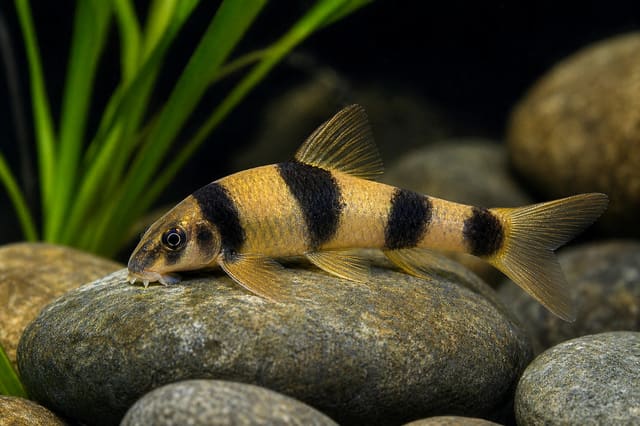
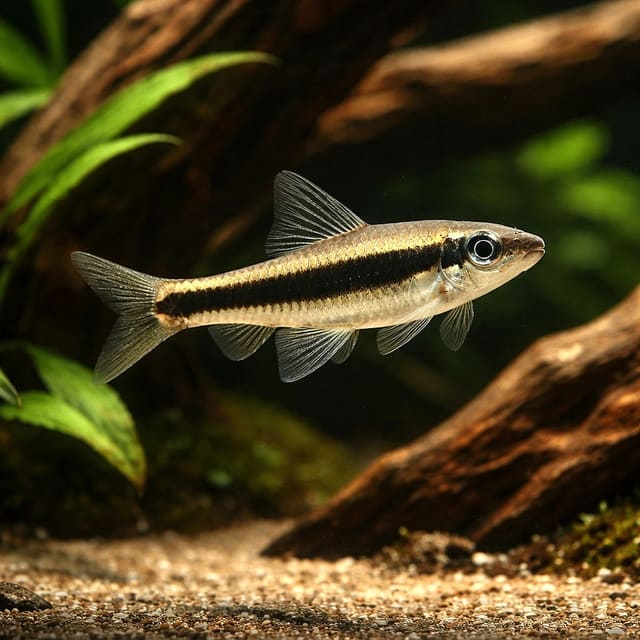
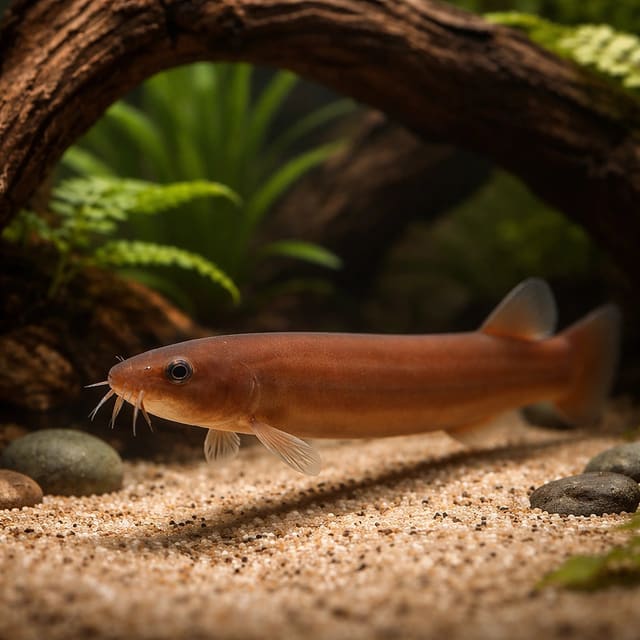
Kuhli Loach (Acanthophthalmus kuhli)
24–27°C · pH 6.5–6.5
£2.99

The YoYo Loach (Botia lohachata) is a freshwater botiid from Pakistan, India, Nepal and Bangladesh that reaches 15.4 cm. It suits keepers with a mature, filtered aquarium; OATA advises at least five, and the FishBase/OATA overlap is 24–27°C, pH 6.5–8.0 and 5–12°dH. Sold individually in 3 - 4 cm, 5 - 6 cm and XL sizes.
Adult size is the maximum length this species reaches at full maturity (scientific sources). The livestock you receive will be younger and smaller — pick a size above for the actual shipping size. Product-photo provenance and any image-specific limitations are stated on the listing.
Botia lohachata
Lives in groups: kept together they stay settled, active and show their best colour.
The YoYo Loach (Botia lohachata) is a freshwater botiid from Pakistan, India, Nepal and Bangladesh that reaches 15.4 cm. It suits keepers with a mature, filtered aquarium; OATA advises at least five, and the FishBase/OATA overlap is 24–27°C, pH 6.5–8.0 and 5–12°dH. Sold individually in 3 - 4 cm, 5 - 6 cm and XL sizes.
Adult size is the maximum length this species reaches at full maturity (scientific sources). The livestock you receive will be younger and smaller — pick a size above for the actual shipping size. Product-photo provenance and any image-specific limitations are stated on the listing.
Maintain these water conditions for optimal health and vibrant colors
The YoYo Loach, Botia lohachata, is a freshwater, bottom-dwelling member of the Botiidae family from rocky and gravel-bottomed streams in Pakistan, India, Nepal and Bangladesh. FishBase records a maximum of 15.4 cm total length, so plan for a substantial adult loach rather than treating a smaller dispatch fish as a permanent miniature.
This fish suits a keeper who can maintain a mature, filtered tropical aquarium, provide a proper social group and leave enough room for every member at adult size. It is an active community candidate rather than a solitary ornament or a substitute for routine aquarium maintenance.
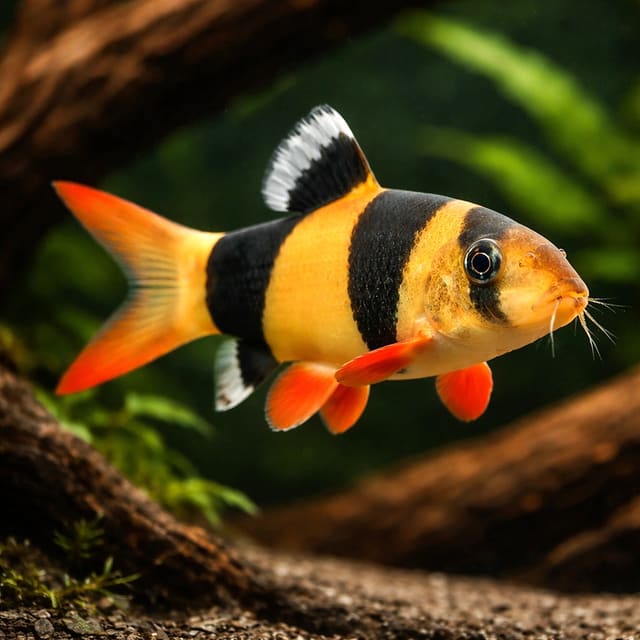
Wikipedia describes three Y-shaped bands on Botia lohachata, positioned in front of, below and behind the dorsal fin, with a circular dot between the bands on the middle of the flank. These shapes led to the familiar YoYo name. Other established common names include Reticulate Loach, Pakistani Loach and Painted Loach.
Aquarium-trade use of the name has historically overlapped with the closely related Botia almorhae. This animal is identified as Botia lohachata, while the historical naming overlap explains why photographs and older articles may show differences in the exact arrangement of the dark pattern.
| Suits | Not suited to |
|---|---|
| A mature, biologically filtered aquarium | An immature or unfiltered aquarium |
| A social plan for at least five loaches | Permanent solitary keeping |
| Space planned around adults reaching 15.4 cm | Space planned only around dispatch size |
| Confident community fish with matching water needs | Shy fish unsettled by active loaches |
One purchase supplies one animal of the option selected through the live size selector. The size labels are 3 - 4 cm, 5 - 6 cm and XL. The size you select is the size supplied, not the adult size. Use the FishBase maximum of 15.4 cm total length when planning the permanent aquarium, irrespective of the dispatch option chosen.
The numeric labels describe dispatch length ranges. XL is a named selector option, so base the long-term stocking decision on the adult maximum rather than interpreting XL as a final adult measurement. Check the live selector for the choices presented when ordering; static text cannot replace that live control.
Sex is guaranteed only when the selected option explicitly states male or female. This YoYo Loach listing has no sex-guaranteed option.
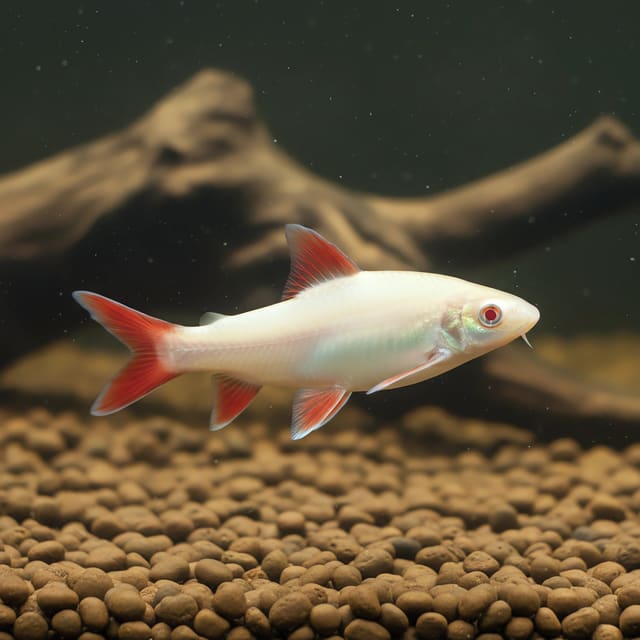
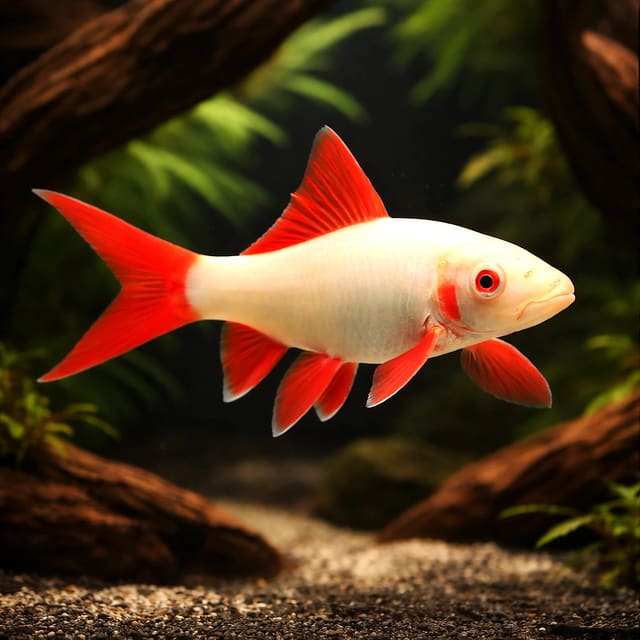
The gallery images are representative, based on reference photographs of this species, so colours can look slightly different from the live animal.
The illustrations show the characteristic black-and-cream pattern, forked tail and mouth barbels in several scenes. Use them to understand the overall form and markings, while allowing for normal visual differences between an illustration and a living fish.
OATA's loach care sheet gives 22–27°C, pH 6.5–8.0, 4–12°dH and a group of at least five for loaches; FishBase places Botia lohachata in 24–30°C, pH 6.0–8.0 and 5–12°dH environments. For routine aquarium planning, use the overlap of 24–27°C, pH 6.5–8.0 and 5–12°dH.
Keep at least five, with more being better when aquarium capacity permits. Build the aquarium around five adult fish of up to 15.4 cm each, plus every other planned occupant. A dispatch group may look small at first, but its permanent space, filtration and shelter must match the adult plan.
OATA's 80-litre benchmark applies to a shoal of the smallest loach species. This species exceeds the sheet's general statement that most loaches stay below 10 cm, so use adult length, group size and the complete community to choose the aquarium. Prioritise enough usable bottom area for the group, several shelters, a filter that can support the final stocking level and stable water conditions.
| Planning value | Decision |
|---|---|
| Adult length | Allow for up to 15.4 cm total length per fish |
| Group | At least five; more is better |
| Routine temperature | Use 24–27°C |
| Routine pH | Use 6.5–8.0 |
| General hardness | Use 5–12°dH |
| Aquarium volume | Calculate for the adult group and full community |
For a stocking and compatibility assessment, contact us with the aquarium's dimensions, measured water values, filtration, established livestock and the number of loaches planned. Those details allow the whole system to be assessed rather than relying on litres alone.
Set the heater and maintenance routine around 24–27°C. This range is the overlap between the recorded species environment and OATA's aquarium guidance for loaches. Stability within that range is a better planning choice than using the warmer part of the environmental record as a routine target.
Use pH 6.5–8.0 and general hardness of 5–12°dH. OATA also gives carbonate hardness of 3–10°dKH for loaches. Test the aquarium and tap water rather than estimating these values from appearance or location.
| Water check | Routine target |
|---|---|
| Temperature | 24–27°C |
| pH | 6.5–8.0 |
| General hardness | 5–12°dH |
| Carbonate hardness | 3–10°dKH |
| Ammonia | Zero mg per litre |
| Nitrite | Zero mg per litre |
| Nitrate | Not more than 20 mg per litre above the normal tap-water level |
Start by recording the aquarium temperature, pH, general hardness, carbonate hardness, ammonia, nitrite and nitrate. Our water chemistry guide explains what the measurements represent. Enter the measured values into the water matcher to compare them with the target range.
If ammonia or nitrite is detectable, pause the introduction because both targets are zero. If temperature, pH or hardness falls outside the planned range, establish a stable suitable aquarium before adding the fish. Make changes through a controlled aquarium routine rather than chasing individual readings with abrupt adjustments.
Use fine aquarium gravel or, ideally, sand across the main bottom area. OATA recommends these surfaces because loaches have sensitive skin and barbels that can be injured while they bury or search around the substrate. Inspect decorative material for coarse or damaging contact points before it enters the aquarium.
Provide shelter with live plants. Where live planting does not suit the aquarium, plastic plants and suitable ornaments such as plant pots or model caves can provide cover. Arrange several usable retreats so the group can occupy the bottom without every fish depending on one shelter.
Plan the layout at adult scale. A narrow opening that suits a 3 - 4 cm dispatch fish may not remain usable as it grows towards the recorded maximum of 15.4 cm. Choose structures with accessible entrances and place them securely on the aquarium base or substrate.
| Layout element | Purpose |
|---|---|
| Fine gravel or sand | Protects sensitive skin and barbels during bottom activity |
| Live or artificial plants | Creates cover within the aquarium |
| Plant pots or model caves | Provides defined shelters |
| Open bottom area | Leaves usable room for an adult group |
| Secure placement | Keeps structures dependable as fish move around them |
The aim is a structured aquarium with safe substrate, cover and enough room for the whole group. Decorative complexity only helps when each feature remains safe and usable as the loaches grow.
A well set up and maintained filter is essential. The RSPCA explains that biological filtration supports beneficial bacteria which process toxic ammonia into nitrite and then into the safer end product nitrate. The aquarium must therefore be biologically prepared before the loaches are introduced.
Use our first tropical aquarium guide to prepare and mature the system. Confirm zero mg per litre ammonia and zero mg per litre nitrite with tests before adding fish; clear-looking water alone cannot demonstrate that the biological filter is ready.
Calculate stocking around at least five loaches at up to 15.4 cm each, not around the initial dispatch lengths. Include every other fish in the same aquarium when judging the biological load. A filter that manages a lightly stocked juvenile aquarium must continue to support the community as the fish grow and feeding increases.
OATA advises increasing fish numbers slowly because the beneficial bacterial population must expand whenever more fish and food are added. Adding too many fish too quickly can leave the filter unable to process the extra waste, causing unhealthy ammonia or nitrite.
| Checkpoint | Required result |
|---|---|
| Before the loaches | A mature, working biological filter |
| Ammonia test | Zero mg per litre |
| Nitrite test | Zero mg per litre |
| Stocking pace | Increase livestock slowly |
| Long-term capacity | Allow for adult fish and the full community |
Keep the filter running as the central part of the aquarium's waste-processing system. Shelter, plants and clean-looking substrate complement filtration, but they do not replace a mature biological filter.
Before adding the fish, test temperature, pH, hardness, ammonia, nitrite and nitrate. The decisive results are stable water within the planned range, zero mg per litre ammonia and zero mg per litre nitrite. Confirm that the filter is operating and that the adult group has appropriate substrate, shelter and usable bottom space.
Increase the aquarium population slowly. Every added fish and every increase in feeding raises the waste load, while the filter bacteria need time to expand in response. A measured stocking sequence protects the biological stability already established.
Watch swimming, colour, breathing, body condition, feeding response, fins, skin and eyes. Compare each fish with the rest of the group and with its own usual pattern. A change is more useful as a warning when it is noticed early and checked against measured water quality.
| What you see | First action |
|---|---|
| Hanging at the surface | Test water quality promptly |
| Erratic swimming | Check temperature, ammonia and nitrite |
| Faster or slower gill movement | Test the aquarium and inspect the fish |
| Reduced interest in food | Review water results and continued behaviour |
| More hiding than usual | Check water, shelter access and the wider pattern of change |
Observation complements testing. It should trigger a measured check rather than an assumption about the cause.
Loaches are omnivorous. Feed good-quality sinking pellets or granules as the routine aquarium food so the meal reaches the bottom where the fish can take it. Offer only the amount the group can eat within a few minutes, once a day.
Small live or frozen foods can add variety. OATA names daphnia, small bloodworm and tubifex as suitable examples for loaches. Use these as part of a controlled diet rather than increasing the total meal beyond what the fish finish promptly.
| Food decision | Practical use |
|---|---|
| Sinking pellets | Routine staple that reaches the bottom |
| Sinking granules | Alternative routine staple |
| Daphnia | Small live or frozen addition |
| Small bloodworm | Live or frozen variety |
| Tubifex | Live or frozen variety |
Overfeeding leaves uneaten material to break down and release waste into the water. If food remains after a few minutes, reduce the next serving rather than adding another meal. Continue the weekly ammonia, nitrite and nitrate checks so feeding remains within the capacity of the biological filter.
Some loach species may eat aquarium snails, but the daily diet still needs a measured, nutritionally appropriate sinking food. Do not base routine feeding on the presence of snails or assume that any snail population will provide a controlled meal.
Change 25% of the aquarium water at least once every week. A siphon can remove solid waste from the substrate during the change. Treat replacement tap water with a suitable conditioner to remove harmful chlorine or chloramine before it enters the aquarium.
Test ammonia and nitrite at least weekly and keep both at zero mg per litre. Check nitrate against the limit of not more than 20 mg per litre above the normal tap-water level. Record temperature, pH and hardness alongside these waste readings so changes can be recognised rather than guessed.
Check the filter for blockages. When the media needs cleaning, rinse it lightly in aquarium water removed during the partial change. Do not run it under the tap because chlorine or chloramine may kill part of the established beneficial bacterial population.
| Weekly task | Method |
|---|---|
| Partial water change | 25%, at least once a week |
| Substrate cleaning | Siphon accessible solid waste |
| Replacement water | Treat for chlorine or chloramine |
| Water testing | At least once per week |
| Filter check | Inspect for blockages |
| Media cleaning | Rinse lightly in removed aquarium water |
A rising nitrate result, detectable ammonia or detectable nitrite shows that the aquarium routine and biological load need attention. Check feeding, stocking changes and filter operation together because each affects waste production or processing.
The larger the aquarium, the more stable environmental conditions such as temperature and water quality tend to be. That advantage still depends on regular testing, partial changes and filter care; aquarium volume does not replace maintenance.
A healthy fish should have clear, bright eyes, undamaged fins, intact skin and appropriate swimming behaviour. Use daily observation to learn the group's normal activity and feeding response. Changes become easier to recognise when the aquarium routine and water results are also recorded.
If any of these changes appears, test temperature, ammonia, nitrite, nitrate, pH and hardness promptly. Correct husbandry decisions must begin with measured conditions rather than a guessed diagnosis. Contact us for further guidance when a health change continues or the fish's condition causes concern.
Loaches have a spine just beneath each eye and should be handled carefully. They also have reduced or absent scales and may be intolerant of some medications. Keep these physical traits in mind whenever the fish must be moved or a treatment is being considered.
| Situation | Safe first step |
|---|---|
| Behaviour changes | Test water and compare the whole group |
| Breathing changes | Check temperature, ammonia and nitrite promptly |
| Reduced feeding | Review water results and body condition |
| Handling is necessary | Account for the spine beneath each eye |
| Medication is considered | Account for reduced or absent scales and possible intolerance |
OATA describes many loaches as active, peaceful fish that can mix with most community fish, while warning that their activity may be too much for shy species. Begin with confident fish that share the 24–27°C routine range and can live within the same pH and hardness values.
Danios, larger tetras and barbs are OATA's examples of more confident companions for active loaches. Treat them as screening examples rather than automatic approvals: the exact species, adult size, group requirements, swimming space and total biological load still need to fit the aquarium.
| Compatibility screen | Question to answer |
|---|---|
| Temperature | Can every species be kept routinely at 24–27°C? |
| Water chemistry | Do pH and hardness requirements overlap? |
| Confidence | Can the proposed fish live with an active loach group? |
| Adult space | Is there room after five loaches reach up to 15.4 cm? |
| Shelter | Can the complete community use the aquarium without depending on one retreat? |
| Filter capacity | Can the mature filter support every adult fish? |
A shy fish may be unsettled by the activity of loaches even when its temperature range matches. Confidence and behaviour therefore matter alongside chemistry. Assess the proposed companion's normal activity and shelter needs before including it in the stocking plan.
Individual communities can still differ, so every match is conditional. Check the exact companion species rather than relying only on a broad label such as tetra, barb or danio. Then calculate adult stocking, social groups, water overlap and filtration together.
Introduce livestock slowly after the biological filter is mature. Compatibility is not only whether fish attack one another; it also depends on whether the aquarium can meet every occupant's water, space and social needs at the same time.
Keep at least five YoYo Loaches, with more being better where aquarium capacity permits. This is social guidance from OATA for loaches, so one fish is not the appropriate permanent plan. Count the group before allocating the remaining adult capacity to other livestock.
Use the recorded maximum of 15.4 cm total length for every member in the planning calculation. Five small dispatch fish represent five future adult fish; their first-day footprint should not determine the permanent stocking level.
| Resource | Group decision |
|---|---|
| Bottom area | Leave usable room for at least five adults |
| Shelters | Provide several accessible retreats |
| Food | Observe that each fish reaches the sinking meal |
| Water quality | Keep ammonia and nitrite at zero mg per litre |
| Filter capacity | Calculate for the group and all companions |
| Stocking pace | Increase the population slowly |
OATA notes that some loach species may eat aquarium snails and are sometimes used for pest control. Treat that as a possibility across the group rather than a guaranteed behaviour for this animal. A regular diet of sinking pellets or granules remains necessary.
If preserving ornamental snails is essential, keep them in another aquarium because the feeding outcome may place them at risk. Equally, choose this loach for its identity, adult size and social behaviour rather than expecting reliable removal of a pest-snail population.
FishBase records a maximum adult length of 15.4 cm total length. Plan the permanent aquarium around that figure rather than the smaller dispatch size.
Plan a mature, filtered aquarium around at least five adults reaching up to 15.4 cm each, with usable bottom area, fine gravel or ideally sand, and several shelters. OATA's 80-litre benchmark is for shoals of the smallest loach species, so choose this aquarium around the full adult group and community.
OATA's loach guidance advises at least five, with more being better where aquarium capacity permits. Calculate space and filtration for every fish at up to 15.4 cm total length.
It suits a keeper who can provide a mature biological filter, zero mg per litre ammonia and nitrite, stable water and a group of at least five. It is not a suitable choice for an immature or unfiltered aquarium.
Feed good-quality sinking pellets or granules once a day, giving only what the group can finish within a few minutes. OATA also recommends small live or frozen foods such as daphnia, small bloodworm or tubifex for variety.
Use 24–27°C, pH 6.5–8.0 and 5–12°dH, the overlap between FishBase's species environment and OATA's loach aquarium guidance. Keep ammonia and nitrite at zero mg per litre.
Plan around an active community fish rather than assuming aggression. OATA describes many loaches as active and peaceful but warns that their activity may be too much for shy species, so screen every companion for confidence, matching water and adult space.
OATA gives danios, larger tetras and barbs as examples of confident companions for active loaches. Every match remains conditional on compatible water values, adult size, social requirements, shelter and filter capacity; treat shy species cautiously.
Someone must be present to receive the parcel. Film every delivery continuously from the sealed parcel as it is opened, showing the fish still inside the sealed bag; float the bag for 20–30 minutes before releasing the fish, and never pour the bag water into the aquarium.
No reviews for this item yet. Bought one? Honest reviews only, good or bad.
What customers say about ordering from us
I have a small group of long finned mountain minnows. So was delighted to be able to order ten of this variety to increase the genetics in my tank . The ones I recieved are healthy but it’s to early to give a verdict on wether they are of a long finned type since they are small currently.
Gordon Walker · 23 Sept 2026
100% success travel and "installation". Pleased with quality of purchase. The Siamese fighter a bit "shy" so have not yet seen him at his best yet but looking good. Happy customer. GG
George E Garratt · 21 Sept 2026
Reviews of our shop, collected by Judge.me, an independent third-party review collector. Newest first.