Kuhli Loach (Acanthophthalmus kuhli)
24–27°C · pH 6.5–6.5
£2.99

Blue Botia (Botia modesta; accepted as Yasuhikotakia modesta) is a large, social and sometimes boisterous loach for experienced keepers with a spacious, mature aquarium. One purchase supplies one fish in the selected size.
Botia modesta
Shoaling fish: kept in a group they feel safer, stay calmer and show their best colour.
Blue Botia (Botia modesta; accepted as Yasuhikotakia modesta) is a large, social and sometimes boisterous loach for experienced keepers with a spacious, mature aquarium. One purchase supplies one fish in the selected size.
Maintain these water conditions for optimal health and vibrant colors
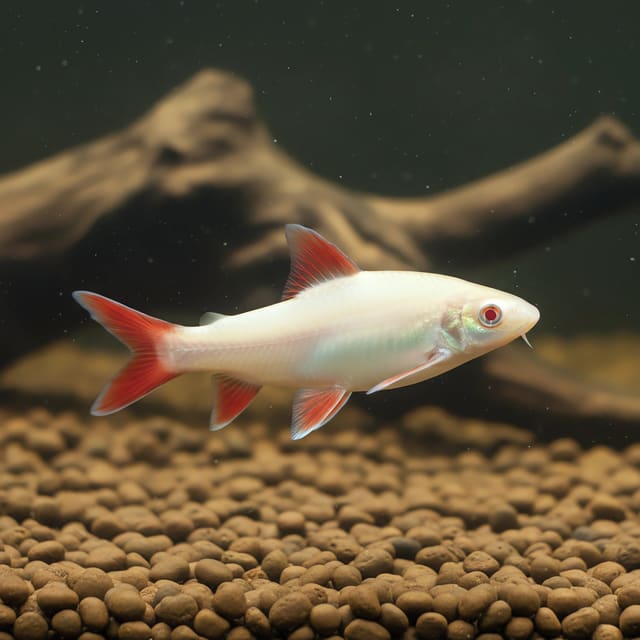
The Blue Botia is the sort of loach that rewards planning. It is active, inquisitive and strongly social, with a blue-grey body and orange to red-orange fins that make it conspicuous even in a large display. It is also a substantial fish: the species record is 25 cm standard length, and the specialist aquarium profile recommends a long-term footprint of at least 150 × 45 cm, about 304 litres or an equivalent floor area. This is therefore a fish to choose for a spacious, mature aquarium rather than as a small bottom-dweller for a new community tank.
The trade name is Botia modesta. Current scientific references accept Yasuhikotakia modesta, and you may also see redtail botia, orange-finned botia or blue botia used for the same species. Keeping that bridge visible matters: the listing remains tied to the animal supplied while the care advice follows the accepted species identity. FishBase records it from the Mekong and Chao Phraya basins and the Mae Khlong basin, where it is associated with freshwater river systems rather than still, ornamental ponds.
A good prospective keeper has room for a proper group, a generous bottom area, strong biological filtration and plenty of cover. This fish can show occasional aggression and may nip trailing fins, so it is not a neutral clean-up fish and should not be bought simply to remove snails. Its best home is an intentionally planned loach aquarium or robust community with active mid-water fishes, compatible water requirements and enough structure for the group to spread out.
If that sounds like the project you have in mind, you can browse the wider loaches and oddball fish collection for context. Treat those other listings as comparisons, not an automatic compatibility list.
One purchase supplies one live Blue Botia in the size chosen. The listing carries three genuine size choices: 3–4 cm, 4.5–6 cm and over 6 cm. The size you select is the size supplied, not the adult size. These are dispatch measurements, so use the adult record and long-term footprint when deciding whether the aquarium will still be suitable as the fish matures.
Sex is guaranteed only when the selected option explicitly states male or female. This Blue Botia, Orange-Finned L listing has no sex-guaranteed option. Mature females are described by the specialist profile as normally fuller-bodied and a little larger than males, but that general dimorphism is not a promise that a young fish can be sexed reliably or that a particular purchase will be male or female.
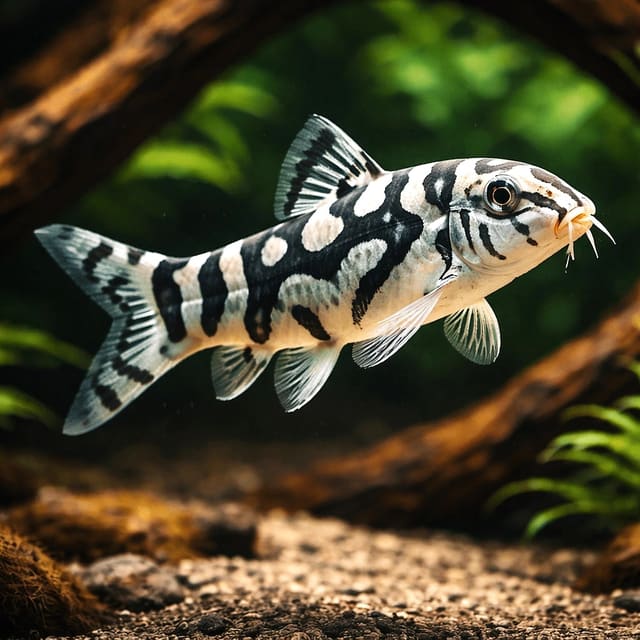
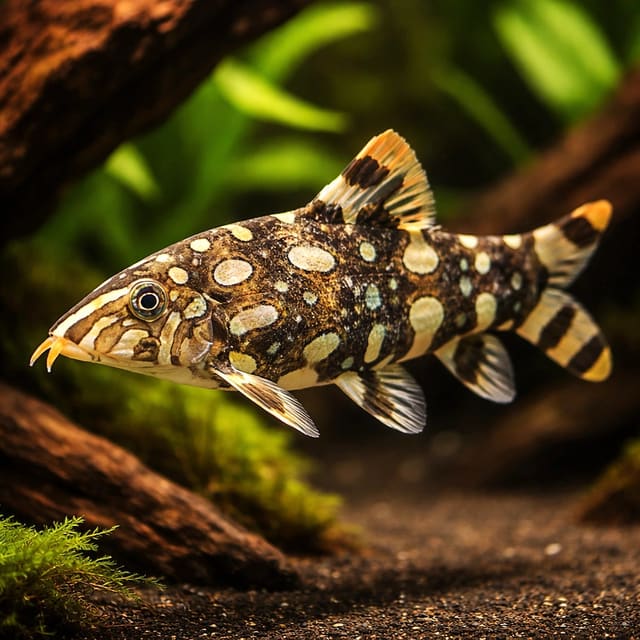
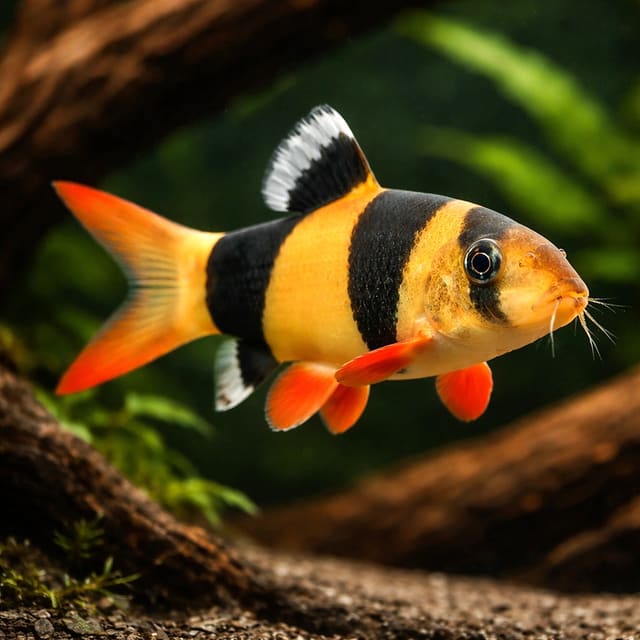
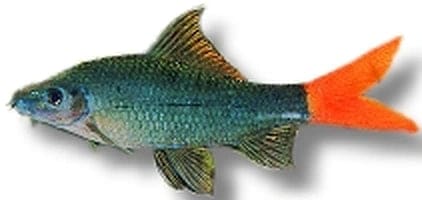
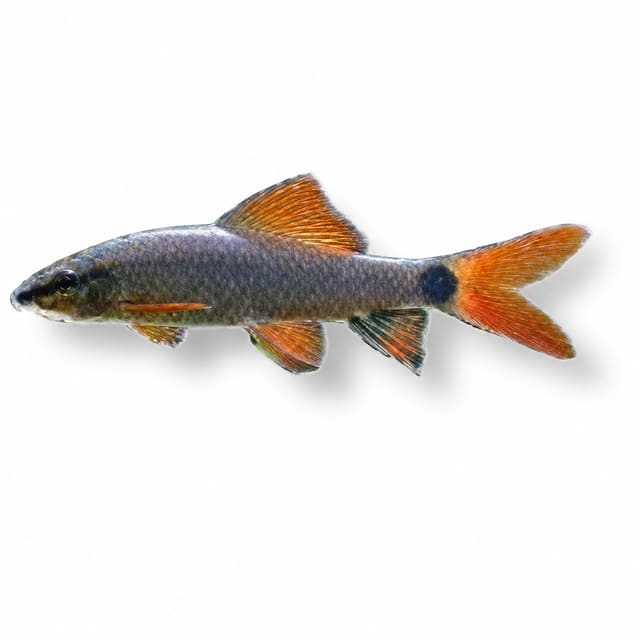
Gallery images have been digitally enhanced to improve image quality. Natural colour, pattern, size and maturity can vary between live animals. The four existing images show one or two blue-grey, orange-finned fish in planted, driftwood and plain-background scenes. They help illustrate the general look and body profile, but exact colour intensity, fin tone and individual markings can vary. Gallery provenance and exact-specimen status remain unconfirmed, so the images should not be used to infer sex, exact size or the appearance of the particular fish received.
For a new system, work through the first tropical aquarium guide before ordering livestock. A mature filter and stable water are prerequisites, not jobs to complete after a large social loach group arrives.
FishBase accepts this species as Yasuhikotakia modesta and treats Botia modesta as a synonym. Its Redtail botia entry records a maximum of 25.0 cm SL for male or unsexed fish. SL means the published record is a standard-length measurement; it should stay labelled that way rather than being turned into a bare whole-animal maximum. The same 250 mm SL planning length appears in the specialist aquarium profile, so the practical message is straightforward even though not every aquarium fish will reach the record: plan for a large-bodied loach from the outset.
The recorded native distribution covers the Mekong and Chao Phraya basins and the Mae Khlong basin. Wild records describe large rivers with muddy substrate, seasonal use of flooded fields and long-distance movement linked to changing water levels. Those observations explain why a cramped decorative aquarium is a poor match, but they do not mean an aquarium keeper should imitate floods or migration. The useful translation is to provide room to move, an unobstructed bottom route, well-oxygenated water and a choice of secure retreats.
Wild diet records include worms, crustaceans and insects, with feeding noted at night. In aquaria the fish may become bolder and feed readily, but a new arrival can still spend time under wood or in a cave. Hiding does not mean the fish should be kept alone. The species forms social hierarchies, and secure cover lets individuals take a pause without being excluded from the group.
The species profile also warns that unnaturally bright blue or purple individuals have historically been sold under names such as blueberry or raspberry loach after artificial colouring. Nothing in this offer claims an artificially coloured form. Choose the fish for its natural species traits and welfare needs rather than expecting a saturated studio-blue appearance.
The specialist species profile says a base measuring 150 × 45 cm, or an equivalent footprint, should be the smallest considered for long-term maintenance. It associates that footprint with about 304 litres. Treat both figures together: litres alone can disguise a tall tank with too little usable bottom area, while floor dimensions alone say nothing about water stability or the biological load of a group. A longer, wider aquarium gives these active loaches space to travel, feed and negotiate their hierarchy without forcing every encounter into the same narrow corridor.
Use sand or fine, smooth gravel over the main foraging area. Loaches investigate the substrate with the mouth and barbels, so rough, sharp material adds avoidable abrasion risk. Smooth water-worn rocks, driftwood roots and branches can divide the bottom into recognisable areas. The source profile also suggests shaded planting such as Java fern, Java moss or Anubias attached to décor. These plants are useful because they tolerate subdued light and create cover without relying on tender rooted leaves in the main digging route.
Provide more shelters than one dominant cave. Loaches enjoy squeezing into tight gaps, but every opening must be safe: avoid holes that narrow internally, unstable rock piles and ornaments with abrasive edges. Test wood and stones before the fish goes in, and make sure pieces cannot shift when a group pushes underneath. Cover should be distributed across the aquarium so a subordinate fish can retreat without crossing the entire territory of a bolder individual.
A natural-looking display is optional; safe structure is not. PVC pipe or suitably smooth aquarium ornaments can provide excellent shelter when arranged securely. The aim is a tank the fish can explore repeatedly without becoming trapped, not a showcase so densely decorated that the keeper cannot observe the group or remove waste.
Lighting can be subdued. Shade helps the fish use more of the aquarium, particularly while settling in. If strong plant lighting is needed, use floating shade, tall planting or overhead wood to maintain darker routes. That gives the keeper a better chance of seeing natural movement instead of having the whole group retreat whenever the lights are on.
The species aquarium profile recommends 23–28 °C, pH 6.0–8.0 and 2–12 dGH. These are practical aquarium values. FishBase separately records a wild environmental range of 26–30 °C, pH 6.0–8.0 and 5–12 dH; that is useful biological context, not a reason to run the home aquarium at the hottest recorded condition. Choose a stable point within the species-aquarium range that also suits every companion, then avoid rapid swings.
| Care point | Working guidance and scope |
|---|---|
| Temperature | 23–28 °C from the species aquarium profile |
| pH | 6.0–8.0 from the species aquarium profile |
| General hardness | 2–12 dGH from the species aquarium profile |
| Ammonia and nitrite | Zero mg/l in broad OATA aquarium guidance |
| Long-term footprint | At least 150 × 45 cm and about 304 litres or equivalent |
| Filtration turnover | About four to five times aquarium volume per hour in the cited species setup |
Use the aquarium water-parameter guide to understand what each test means, then compare measured source water with the species range using the water matcher. Test actual aquarium water rather than relying on a regional average. If the tap supply is near an edge of the range, prioritise consistency and seek a controlled, aquarium-safe approach instead of chasing a number with sudden chemical adjustments.
Strong biological filtration matters because a group of large, well-fed loaches produces a meaningful waste load. The species profile's four-to-five-times turnover gives a planning target, but filter placement and media condition decide whether that flow actually moves oxygenated water around the whole tank. Watch for quiet pockets behind large wood or rockwork. Surface movement should be clear, and every fish should be able to rest away from the strongest jet.
The RSPCA aquarium guidance explains the biological filter's role: toxic ammonia is converted to nitrite and then to safer nitrate by established bacteria. That cycle must already be functioning before livestock is added. A clear-looking new tank is not necessarily biologically ready. Confirm zero ammonia and nitrite with appropriate tests, and continue checking after a larger group is introduced because feeding and waste have increased.
Although the species is often placed beside algae eaters in trade catalogues, it is not an algae-control tool. FishBase records worms, crustaceans and insects in the natural diet. The aquarium profile describes Yasuhikotakia as chiefly carnivorous while still taking vegetative matter, sometimes including soft-leaved plants. Build the aquarium diet around variety and delivery to the bottom rather than assuming scraps from surface-feeding fish will be enough.
Offer a reputable sinking dried food as a dependable base, then rotate suitable live or frozen foods such as bloodworm, Tubifex or Artemia. Chopped earthworm can be useful but the source advises using it sparingly. Fresh foods such as cucumber, courgette, melon or blanched spinach can contribute plant matter. Remove leftovers before they decay and adjust the amount to the whole group, not to the appetite of the boldest fish.
Distribute food across more than one place. A social hierarchy is easier to manage when a subordinate fish can reach food without pushing through the same tight cave entrance as a dominant individual. Observe each animal at feeding time: a group that looks energetic overall can still contain one fish losing condition. The useful signs are whether every fish emerges, feeds and maintains body condition, not whether the food disappears quickly.
Many botiid loaches will prey on aquatic snails, but the species profile explicitly cautions that they are not obligate molluscivores and should never be treated as the answer to an infestation. Snail numbers are better addressed by finding the excess-food or husbandry cause. Buying a large social fish solely for pest control creates a much bigger long-term stocking commitment than the original snail problem.
The broad OATA loach care sheet also recommends sinking pellets or granules and suitable small live or frozen foods. Its once-daily feeding suggestion is group-level advice, so use it as a starting framework while judging portions by water quality, body condition and the behaviour of this particular group.
OATA's broad loach guidance recommends a 25% partial water change at least weekly, regular testing, dechlorinated replacement water and filter checks. A heavily stocked adult group may need a different schedule, so use nitrate trend, feeding and waste accumulation to decide whether maintenance needs to be more frequent. Siphon exposed areas of substrate while leaving the fish's shelters stable and predictable.
If the filter needs cleaning, do not run it under the tap. Instead, rinse it lightly in water removed from the aquarium so chlorine or chloramine does not damage the bacterial population. Check intakes for blockage and confirm normal flow after reassembly. Never assume a running motor means the intended circulation and oxygenation have returned.
On arrival, have the mature aquarium ready and the lights calm. Follow the current delivery and Live Arrival Guarantee policy: someone must be present, the parcel should be opened and inspected on the day it arrives, and the sealed bag is floated for 20–30 minutes before release. Do not pour transport water into the aquarium. Give the group access to cover and observe without repeatedly disturbing the décor.
If anything has gone wrong in transit, the Live Arrival Guarantee claim process requires a short continuous unboxing video showing the parcel still sealed, the outer box, the opening and the fish still in the sealed bag before anything is disturbed. Contact Tropical Fish Co the same day with the order number and evidence. That video is claim evidence; it is not a biological care ritual for a healthy fish.
Loaches have a spine beneath each eye and reduced or absent scales are common in the group, so handling and medication need care. Do not turn a group-level warning into a treatment recipe: if health or medication is a concern, first test the water and obtain advice that accounts for this species and the exact product being considered.
Yasuhikotakia loaches are gregarious and form complex social hierarchies. The species profile says they should be maintained in groups of at least five or six, preferably more. For this listing, plan for at least five and prefer six where the aquarium's footprint, filtration and total stocking allow. A pair or trio does not reproduce the recommended social setting and can concentrate disputes on too few individuals.
Group behaviour can look dramatic. Chasing, close following and jostling may be part of hierarchy, but the keeper should still intervene in the plan when one fish cannot feed, is pinned to a corner, shows repeated damage or has no secure retreat. The first response is not to isolate every confident fish; check group size, floor space, shelter distribution, feeding access and the condition of the whole community.
The species is described as milder than some close relatives, yet it still has occasional aggressive phases. That combination is why the label “semi-aggressive” can be too blunt on its own. The real decision is whether the aquarium gives a full group enough room and whether companions can cope with fast, assertive loach behaviour without being nipped, outcompeted or kept from resting.
Slow-moving and long-finned fish are the clearest poor match because Blue Botia may nip trailing finnage and can overwhelm placid feeders. The species profile points instead to active pelagic cyprinids, including suitable Devario, Rasbora, Barilius, barb and Danio species. OATA's group guidance similarly favours confident fishes such as danios, larger tetras or barbs for the more assertive red-tailed botia. Those examples are categories for further checking, not a universal safe list.
For every proposed companion, compare adult size, temperature, pH, hardness, activity, feeding level and required swimming space. A fish being robust does not make incompatible water acceptable, and overlapping water does not make a slow long-finned fish safe. The aquarium must also remain large enough after the full loach group and the companions are counted.
Other bottom dwellers need extra care because they share shelter and food space. The specialist profile says some Botia, Syncrossus, cobitid and nemacheilid loaches, Epalzeorhynchos, Crossocheilus, Garra and catfishes may be possibilities in appropriately large setups. That wording is conditional. Research the exact species and provide separate feeding and retreat opportunities rather than relying on a family name.
| Situation | Decision |
|---|---|
| Active, robust mid-water fish with overlapping water needs | Potentially suitable after species-by-species checks |
| Slow, timid or long-finned fish | Avoid because activity and fin-nipping risk create a poor match |
| Other substantial loaches or bottom dwellers | Possible only with generous space, compatible behaviour and enough shelters |
| Small snails or invertebrates | Do not assume they are safe; aquatic molluscs form part of the natural feeding ecology |
| A lone Blue Botia among other species | Not a substitute for the recommended same-species group |
Review the community as the fish mature. A juvenile group can share space that becomes inadequate at adult body depth and activity. Early planning is kinder and cheaper than trying to redesign an overstocked aquarium after aggression appears.
FishBase records Yasuhikotakia modesta at up to 25 cm standard length for male or unsexed fish, and the specialist profile also uses 250 mm SL. Treat that as an adult planning record, not the dispatch size or a promise that every fish reaches it.
For long-term maintenance, the specialist profile says a base of at least 150 × 45 cm or equivalent, associated with about 304 litres. Plan the floor area, filtration and final community together rather than choosing by litres alone.
Keep at least five and preferably six where space and filtration allow. They are gregarious, form a complex social hierarchy and should not be planned as a lone feature fish.
It is better suited to an experienced keeper. The challenge is its large adult scale, full-group requirement, substantial footprint and sometimes boisterous compatibility, even though its species aquarium water range is not unusually narrow.
Use a varied diet that reaches the bottom: quality sinking dried food, suitable live or frozen invertebrate foods and some source-supported plant matter. Aquatic snails may be eaten, but this fish is not an appropriate one-step answer to a snail infestation.
The species aquarium profile gives 23–28 °C, pH 6.0–8.0 and 2–12 dGH. Keep the chosen values stable, confirm they suit every tank mate and maintain zero ammonia and nitrite.
It is milder than some related loaches but can have occasional aggressive phases and may nip trailing fins. Avoid slow or long-finned fish and give a proper group several secure retreats and feeding areas.
Active, robust mid-water fishes such as suitable danios, rasboras or barbs may work when their adult size and water needs overlap. Other bottom dwellers require a much more careful space and species check, and small snails should not be assumed safe.
Tropical Fish Co hand-packs live fish in oxygen in an insulated poly box, adding a heat pack when weather calls for it, and uses a licensed live-animal courier. Someone must be present on the confirmed day; for a Live Arrival Guarantee claim, record one short continuous video from the sealed parcel through opening to the fish still in the sealed bag, then contact the team the same day with the order number.
Species-level facts and broad group advice are deliberately kept separate. Exact prices, inventory and delivery dates remain live commerce information rather than permanent care copy.
No reviews for this item yet. Bought one? Honest reviews only, good or bad.
What customers say about ordering from us
I have a small group of long finned mountain minnows. So was delighted to be able to order ten of this variety to increase the genetics in my tank . The ones I recieved are healthy but it’s to early to give a verdict on wether they are of a long finned type since they are small currently.
Gordon Walker · 23 Sept 2026
100% success travel and "installation". Pleased with quality of purchase. The Siamese fighter a bit "shy" so have not yet seen him at his best yet but looking good. Happy customer. GG
George E Garratt · 21 Sept 2026
Reviews of our shop, collected by Judge.me, an independent third-party review collector. Newest first.