Advanced
Clown Loach (Chromobotia macracanthus)
24–30°C · pH 5–7 · 648L
From £10.99Some sizes on sale

The Horseface loach is a long-snouted, sand-burrowing loach for a mature aquarium. Two size choices are offered; each purchase supplies one fish with no sex guarantee. Plan a soft-sand 120 x 45 cm base, oxygen-rich water, shaded cover and food that reaches the substrate.
Acanthopsis choirorhynchos
Shoaling fish: kept in a group they feel safer, stay calmer and show their best colour.
The Horseface loach is a long-snouted, sand-burrowing loach for a mature aquarium. Two size choices are offered; each purchase supplies one fish with no sex guarantee. Plan a soft-sand 120 x 45 cm base, oxygen-rich water, shaded cover and food that reaches the substrate.
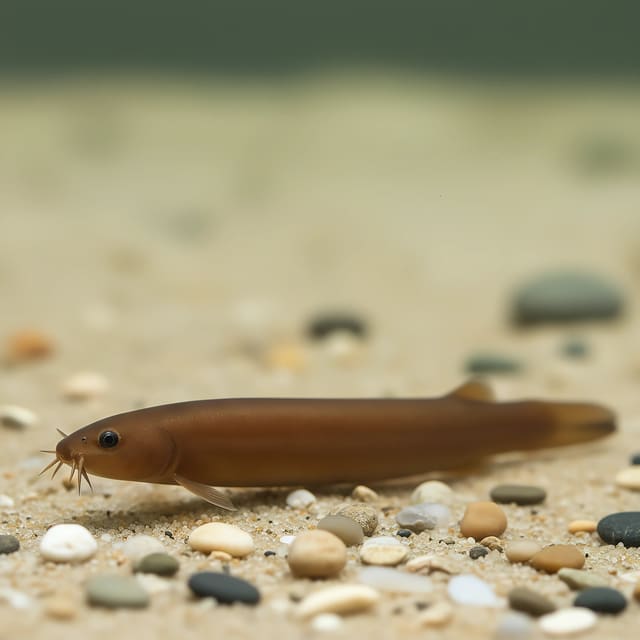
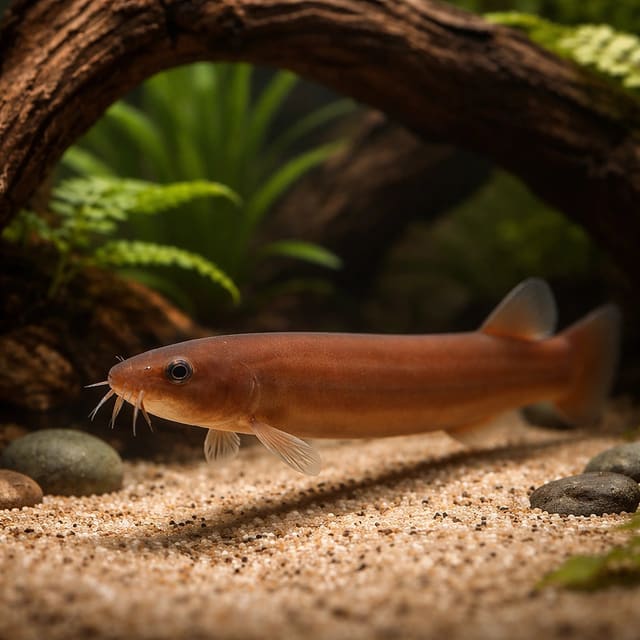
The Horseface loach is a long-bodied, long-snouted true loach built to search through soft substrate. It may spend part of the day buried with little more than its eyes visible, then emerge to sift and forage. That behaviour is the centre of the care plan: this is not an algae-cleaning tool or a decorative fish for sharp gravel. It needs a mature aquarium designed around sand, bottom area, oxygen and dependable feeding.
The sold identity is Acanthopsis choirorhynchos. Current references commonly treat that name as a synonym of Acantopsis dialuzona, and the trade identity of horseface loaches can be complicated by poorly resolved populations. The sold name remains unchanged while accepted-name context is explained separately. The accepted name is useful context for research, not a claim that appearance alone can resolve every traded fish.
One purchase supplies one live fish in the size you choose. The two genuine size choices are 7.5 cm and 10–12 cm. The size you select is the size supplied, not the adult size. The two choices describe starting size, not different species.
Sex is guaranteed only when the selected option explicitly states male or female. This Horseface loach listing has no sex-guaranteed option. The dedicated husbandry profile describes females as typically growing larger and males as having modified pectoral rays, but those biological differences cannot guarantee the sex of the fish supplied.
Adult records require their labels. Seriously Fish uses 20 cm standard length for aquarium planning, while FishBase records a maximum of 25 cm standard length for a male or unsexed fish. Standard length excludes the tail. Plan around the larger record when judging long-term floor area, while recognising that the 120 x 45 cm minimum footprint in the husbandry profile was calculated around the 20 cm SL planning figure.
The species profile recommends a base of 120 x 45 cm or equivalent, about 243 litres, as the minimum considered. Soft sand is essential because the fish naturally digs and may bury itself. Coarser material can cause stress or injury and can inhibit feeding. Add smooth wood, rounded stones and shaded retreats without consuming the open sand bed or creating structures that can be undermined.
This is rated Moderate in the species profile because it needs a mature tank and steady water. The fish is not inherently difficult when those foundations are present, but it is a poor choice for an immature aquarium, a narrow footprint or a keeper who cannot provide clean sand and food at the bottom. If you want to compare a much smaller sand-burrowing form, the Kuhli Loach is a useful alternative to research; the comparison is about size and setup, not a claim that the two should be housed together.
You can browse the broader loaches and oddballs collection, but assess each species separately. Loach is a broad label, and body size, social behaviour, temperature, aggression and substrate needs vary sharply across the group.
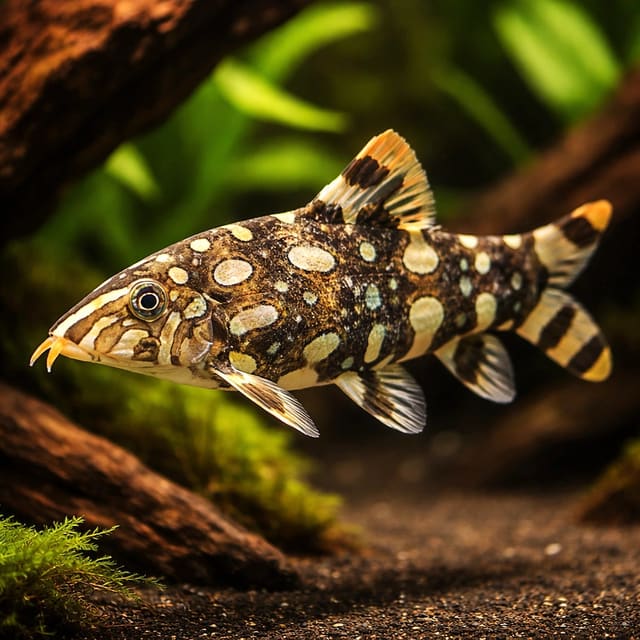
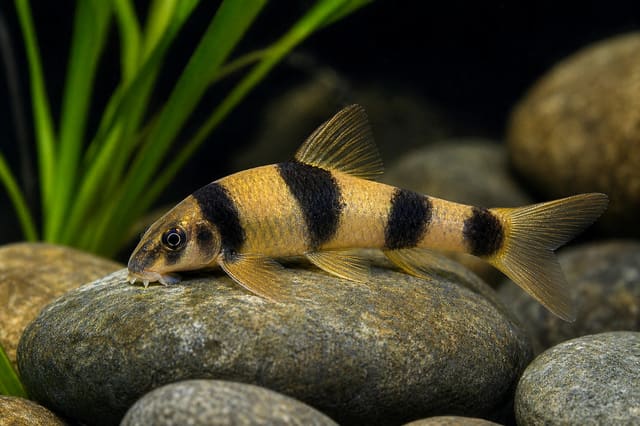
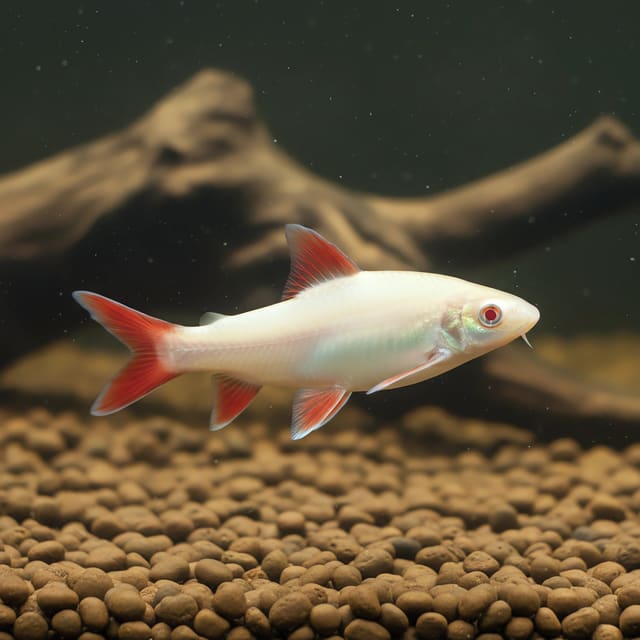
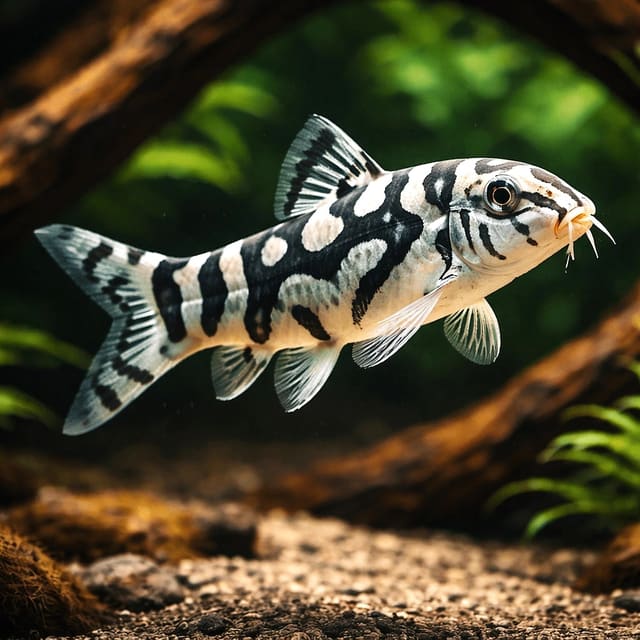
Gallery images have been digitally enhanced to improve image quality. Natural colour, pattern, size and maturity can vary between live animals. Pattern, body depth and shade can vary among individuals and with age, lighting and condition.
Choose this loach if you can give a potentially 25 cm SL fish a mature 120 x 45 cm base, a deep enough area of clean soft sand for natural digging, strong oxygenation and a feeding routine that reaches the bottom after faster fish have eaten. Do not choose it for sharp gravel, a newly cycled aquarium, a cramped community or as a solution to algae.
The selected size only changes the starting scale. The long-term plan still needs adult floor area and a decision between a single specimen or a properly spaced group. If the aquarium cannot remain suitable when the loach is fully grown, select a genuinely smaller species instead of hoping growth will stop at the supplied size.
| Sold name | Horseface loach sold as Acanthopsis choirorhynchos; current references commonly treat it as Acantopsis dialuzona |
|---|---|
| Adult planning | 20 cm SL in the aquarium profile; FishBase maximum 25 cm SL male/unsexed. SL excludes the tail. |
| Suggested minimum footprint | 120 x 45 cm or equivalent, about 243 litres |
| Species-profile aquarium water | 16–24 °C; pH 6.0–8.0; 1–12 dGH |
| Substrate | Soft sand that permits digging without abrasion |
| Social planning | Single specimen or three or more; the profile says six is the ideal minimum for a group |
| Feeding | Quality sinking foods plus varied small live or frozen invertebrate foods |
The 120 x 45 cm base is important because this fish lives and feeds on the bottom. A tall aquarium can hold the same volume while offering much less usable sand. Measure the clear base after wood, rocks and equipment are installed. A long open strip of sand is more valuable than a crowded arrangement of caves that leaves nowhere to sift.
About 243 litres accompanies the profile's footprint, but the base dimensions should lead the decision. If you intend to keep several, the same minimum does not automatically become adequate for every group size. Each additional adult needs access to sand, cover and food without being forced into a single narrow patch. Use the adult records, not the starting sizes, when drawing the layout.
Start with a genuinely mature biological filter. The RSPCA explains that fish waste produces toxic ammonia, which filter bacteria convert first to nitrite and then nitrate. Both ammonia and nitrite must remain at zero. A clear-looking new tank is not necessarily biologically ready, so cycle and test it before livestock arrives. The first tropical tank guide sets out the preparation sequence.
Seriously Fish describes soft sand as essential. The loach pushes its snout into the substrate, sifts mouthfuls and may bury most of its body. Coarse gravel can block that behaviour, abrade the fish or make feeding less effective. Check the full substrate layer rather than sprinkling a thin sand cap over sharp material that digging can expose.
Choose inert, aquarium-safe sand with grains that do not feel sharp when rubbed between wet fingers. Rinse it as the product instructions require, then create open areas large enough for the fish to enter and turn. Avoid compacted pockets of trapped waste. During maintenance, siphon debris from the surface and gently disturb small accessible areas in rotation without collapsing the entire environment at once.
Place heavy wood and rocks on a stable base before surrounding them with sand. A digging fish can remove support from beneath an ornament. Smooth roots and rounded stones create shade and visual breaks, but they must not topple or form a narrow trap. Leave several exits from every retreat. Plants can be attached to wood or rocks, and rooted plants need protection from normal digging.
The natural-history sources place horseface loaches in flowing river channels with sand, fine gravel or mud. In the aquarium, torrent conditions are unnecessary, but the species profile calls for high dissolved oxygen and some water movement. Use filtration, an airstone or a powerhead as needed to move water through the tank and disturb the surface while leaving quieter resting zones near the bottom.
Seriously Fish also warns against accumulated organic pollutants and suggests weekly water changes of 30–50% as routine for this profile. The exact amount can depend on measured waste and stocking, but the purpose is consistent: keep water exceptionally clean without causing abrupt shifts. Match replacement water for temperature and treat it appropriately for chlorine or chloramine.
Check flow at the substrate, not only at the surface. Wood and plants can create dead areas where uneaten food and waste collect. Adjust outlets so debris can reach the filter without blasting every centimetre of sand. A fish should be able to forage without fighting a jet, and there should still be enough movement to keep oxygen distributed.
The dedicated aquarium profile gives 16–24 °C, pH 6.0–8.0 and 1–12 dGH. FishBase separately reports 25–28 °C, pH 6.0–6.5 and hardness up to 10 dH as a wild environmental record. OATA's broad loach sheet gives 22–27 °C, pH 6.5–8.0 and 4–12 dGH. These are different contexts, not three votes to average into a new optimum.
For home care, use the dedicated aquarium profile. Record the values in your own tank, choose companions whose ranges overlap and avoid sudden corrections. The water chemistry guide explains the measurements, and the water parameter matcher helps compare actual readings with a care range.
Temperature needs special thought because the wild record is warmer than the aquarium profile. Keep that discrepancy visible rather than calculating a midpoint. Use a reliable thermometer, ask for advice if your established tank sits outside the dedicated profile and judge the whole community together. At warmer temperatures, strong surface movement becomes even more important because warm water holds less oxygen.
FishBase records this loach eating small animals in bottom sediments. Seriously Fish describes the genus sifting substrate to extract insect larvae, small crustaceans and similar foods. In the aquarium, offer varied quality sinking pellets or granules with live or frozen Artemia, Tubifex, Daphnia or bloodworm. Food must reach the sand while the loach is able to feed.
Fast midwater fish can consume a meal before sinking food arrives. Distribute food across more than one area, feed when the loach is active and watch it take food rather than assuming an empty dish means success. In a group, check each individual's body condition. One confident fish can learn a feeding station while another loses condition out of sight.
A horseface loach is not a substitute for aquarium cleaning. Natural sifting may turn the sand and uncover food, but it does not remove waste, and the fish still needs a complete diet. Do not expect it to live on scraps or algae. Avoid overfeeding as a response to shyness; excess food in the sand raises the organic load the species is reported to tolerate poorly.
The dedicated profile says a single specimen can be kept, or a group of three or more, with six ideally the fewest considered for a group because the fish occurs in loose aggregations. It also notes occasional skirmishes, with physical injury rare. This is more nuanced than calling the species strictly solitary or simply assigning a shoal number.
Choose one plan before ordering. A single specimen still needs the full adult footprint and enrichment. A group needs substantially more usable floor, multiple shaded areas and feeding access for every member. Do not buy three into the minimum footprint and assume the social number overrides space. Observe whether each fish emerges, feeds and can leave another's immediate area.
The broad OATA loach sheet recommends groups of at least five, but it covers a diverse group of fishes. For this exact horseface-loach context, use the dedicated profile's single-or-group guidance and state the number honestly. If you cannot provide enough floor area for three or ideally six adults, keeping one is more defensible than an undersized token group.
Cobitid loaches possess movable spines near the eyes. Seriously Fish warns that these can catch in nets and, in larger fish, can break skin. Plan transfers calmly, use an appropriately sized smooth container where practical and avoid chasing the fish through décor. Never handle a struggling loach casually with bare hands.
Burial is expected behaviour, so absence from view is not automatically a crisis. Learn where the fish rests and look for fresh sand trails, normal feeding and stable body condition. At the same time, do not dismiss prolonged hiding when it begins after a change in water, flow, lighting or tank mates. Test first and consider what changed.
A healthy baseline includes steady breathing, intact barbels and skin, a filled but not bloated body, and purposeful sifting when active. Reduced feeding, rapid breathing, repeated attempts to leave the water or visible abrasions deserve prompt investigation. Start with ammonia, nitrite, temperature, oxygenation, substrate and social pressure rather than guessing a treatment.
Use the weekly water change to inspect the sand surface, filter intake, shaded retreats and every fish you can see. Remove trapped food and waste without sterilising the whole substrate. Check that the filter outlet still creates surface movement and that plant growth has not blocked circulation.
If filter media needs cleaning, do not run it under the tap; rinse it gently in aquarium water removed during the water change. Do not replace all mature media at once. Test after large stocking changes and after any event that could reduce bacterial capacity. A loach that lives close to the substrate is exposed directly to waste accumulating there, so bottom cleanliness and filter stability work together.
Prepare a dim, quiet aquarium before opening the parcel. Confirm the lid, flow, temperature and water tests, and make sure no existing fish will attack the selected grade. Use a calm acclimation method and do not pour transport water into the aquarium. Let the loach find sand and shade without immediately rearranging the tank around it.
A new horseface loach may bury quickly. Resist the urge to dig it out for reassurance. Keep the environment stable, offer an appropriate sinking food when the aquarium is quiet and check for evidence of feeding. If there is an arrival problem, preserve the evidence required by the store policy before releasing the fish.
The 7.5 cm choice has more growth ahead and may be easier for large, fast tank mates to intimidate. The 10–12 cm choice has more immediate presence but also contributes more waste from its first day. Neither changes the adult care requirement. Compare the selected grade with existing mouths, feeding speed and bottom territory, then plan forward to the 25 cm SL maximum record.
Do not use a larger grade to compensate for an unsuitable community. Size will not prevent abrasion on coarse substrate, oxygen shortage, feeding competition or aggression from a territorial bottom fish. Do not use the smaller grade to justify a temporary narrow aquarium unless a complete, timely and low-risk upgrade is already in place. The permanent footprint should be ready before purchase.
A juvenile can disappear into a small patch of sand and make the aquarium feel empty. That visual impression is misleading. Adult body length, turning room and feeding area arrive gradually, while filtration load grows along the way. Leave unused capacity rather than stocking every corner around the fish's current outline.
Review the setup as the loach grows. Check whether it can turn without brushing hard décor, whether shaded retreats remain large enough and whether food reaches it before tank mates. A larger body may also expose weak circulation behind ornaments. Make adjustments early and one at a time so you can see whether they help.
Burrowing can be normal rest and security behaviour. Look for subtle evidence: new tracks, shifted sand, food disappearing at the usual time and a stable body condition when the fish emerges. Avoid repeatedly uncovering it, which removes the very security the sand is meant to provide.
If burial increases suddenly, check for a cause. Bright new lighting, aggressive additions, rising temperature, reduced flow, detectable ammonia or a damaged barbel can all change behaviour. Test measurable conditions and watch interactions. A useful response corrects the environment rather than punishing the fish for hiding.
This loach rewards a keeper who enjoys natural behaviour more than constant visibility. It may be hidden when visitors look at the aquarium and active when the room is quieter. The payoff is seeing a specialised fish use the substrate as it was built to do. If you want a permanently exposed centrepiece or a fish that cleans the tank for you, choose another plan.
If any foundation is missing, postpone the purchase. Sand, space, mature filtration and oxygen are not accessories to add after arrival. Preparing them first gives the loach the best chance to feed, settle and behave naturally from the start.
Seriously Fish recommends upper-water companions such as Rasbora, Devario, Laubuca and Barilius species in an appropriately arranged aquarium. Those examples describe the kind of spatial separation that can work; they are not a guarantee for every species or every tank. Confirm adult size, temperature, pH, hardness, activity and feeding behaviour before combining anything.
OATA's broad loach guidance suggests confident fish such as danios, larger tetras or barbs because some loaches can be too active for shy species. Again, that is group-level advice. The practical principle is to avoid companions that either harass a buried fish or retreat permanently because of movement in the aquarium.
The species profile says some sand-dwelling loaches can be suitable, but warns that proper research is essential because others may be excessively territorial or aggressive. Shared preference for sand does not make two bottom fish compatible. They may compete for the same shaded patch, the same sinking food and the same route around wood.
Map the bottom as a finite resource. Count open feeding areas and retreats, then consider adult bodies rather than current juveniles. If every sinking pellet falls into one territory, conflict or unequal feeding is likely even in a large volume. Create several accessible feeding zones and confirm each resident uses one.
Do not combine the loach with a fish large enough to swallow the selected grade or with an aggressive species that controls the substrate. Persistent digging near a cichlid territory, for example, can trigger conflict even if both species have broad overlapping water ranges. Fin-nipping at midwater is not the only form of incompatibility.
Very fast feeders can also be a problem without direct aggression. Watch whether the loach actually eats. Use sinking food, distribute it after the initial rush and observe body condition over time. Adding excess food to beat competition can pollute the sand while the intended fish still misses out.
A single specimen is an accepted option in the dedicated profile. If keeping a group, use at least three and ideally six, with enough additional floor area and cover for all. Occasional skirmishes may occur. The goal is not to prevent every brief interaction but to ensure no fish is persistently excluded, injured or unable to feed.
No compatibility list can replace observation. A combination that works in one long, lightly stocked aquarium may fail in a crowded layout with the same species names. Space, individual behaviour and access to food decide the result.
Seriously Fish uses 20 cm standard length for aquarium planning, while FishBase records a 25 cm standard-length maximum for a male or unsexed fish. Standard length excludes the tail, so plan floor area around the larger labelled record.
The dedicated profile says a 120 x 45 cm base or equivalent, about 243 litres, should be the minimum considered. Bottom area matters more than choosing a tall tank with the same volume, and a group needs additional usable floor.
The species profile allows a single specimen or a group of three or more, and says six is ideally the fewest for a group. Choose one plan deliberately and provide enough sand, cover and feeding access for every adult.
Seriously Fish rates it Moderate because it needs a mature tank and steady water. It is manageable when the large footprint, soft sand, oxygen, cleanliness and bottom-feeding plan are ready before purchase.
Offer quality sinking foods with varied live or frozen Artemia, Tubifex, Daphnia or bloodworm. Make sure food reaches the sand and watch the loach eat; it should not be expected to live on scraps or algae.
The dedicated aquarium profile gives 16–24 °C, pH 6.0–8.0 and 1–12 dGH. FishBase's warmer 25–28 °C figures are a wild environmental record, so keep the two contexts separate rather than averaging them.
The profile describes occasional skirmishes within loose groups, with physical injury rare, rather than a universal aggression guarantee. Provide enough floor and cover, and avoid excessively territorial or aggressive bottom fish.
Appropriately sized, non-aggressive upper-water fish can work; the species profile names Rasbora, Devario, Laubuca and Barilius as examples. Research each exact species and protect the loach's access to sand and sinking food.
Tropical Fish Co hand-packs live fish with oxygen in an insulated box, using a heat pack when conditions call for it, and sends them with a licensed live-animal courier. For a Live Arrival Guarantee claim, contact the team the same day with your order number and a continuous video showing the sealed parcel being opened and the fish still in the bag; read the current delivery policy for the full conditions.
Sources checked on 20 September 2026. The store's delivery policy is linked in the arrival answer where it is directly useful.
No reviews for this item yet. Bought one? Honest reviews only, good or bad.
What customers say about ordering from us
I have a small group of long finned mountain minnows. So was delighted to be able to order ten of this variety to increase the genetics in my tank . The ones I recieved are healthy but it’s to early to give a verdict on wether they are of a long finned type since they are small currently.
Gordon Walker · 23 Sept 2026
100% success travel and "installation". Pleased with quality of purchase. The Siamese fighter a bit "shy" so have not yet seen him at his best yet but looking good. Happy customer. GG
George E Garratt · 21 Sept 2026
Reviews of our shop, collected by Judge.me, an independent third-party review collector. Newest first.