Advanced
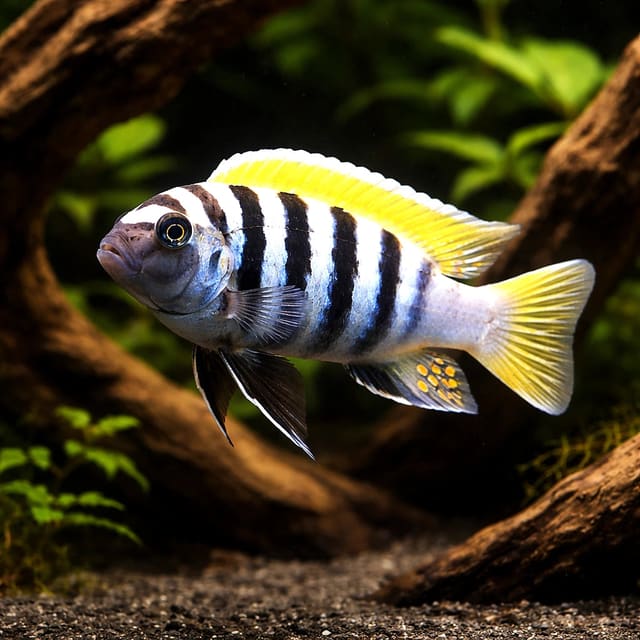
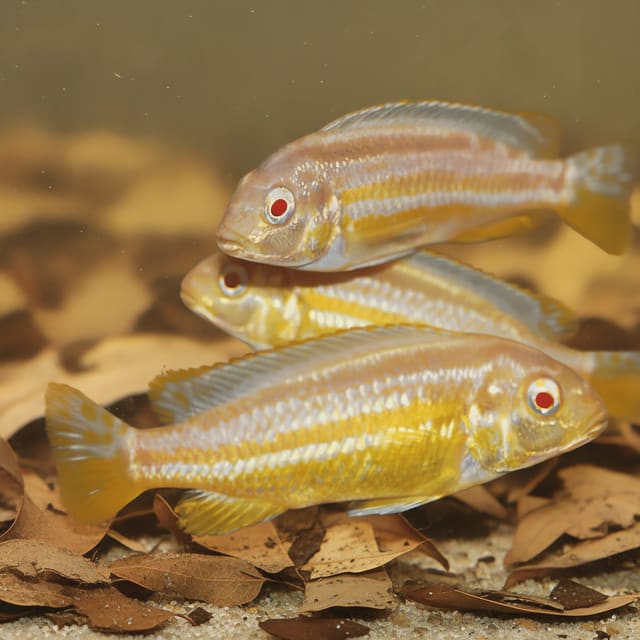
Albino Golden Mbuna (Melanochromis auratus albino)
24–28°C · pH 7.6–8.8 · 205L
£9.99

Territorial Johanni Mbuna for a mature rocky, hard-water aquarium. One unsexed fish in the selected approximate grade; colour and social compatibility vary.
Adult size is the maximum length this species reaches at full maturity (scientific sources). The livestock you receive will be younger and smaller — pick a size above for the actual shipping size. Product-photo provenance and any image-specific limitations are stated on the listing.
Pseudotropheus johannii
Shoaling fish: kept in a group they feel safer, stay calmer and show their best colour.
Territorial Johanni Mbuna for a mature rocky, hard-water aquarium. One unsexed fish in the selected approximate grade; colour and social compatibility vary.
Adult size is the maximum length this species reaches at full maturity (scientific sources). The livestock you receive will be younger and smaller — pick a size above for the actual shipping size. Product-photo provenance and any image-specific limitations are stated on the listing.
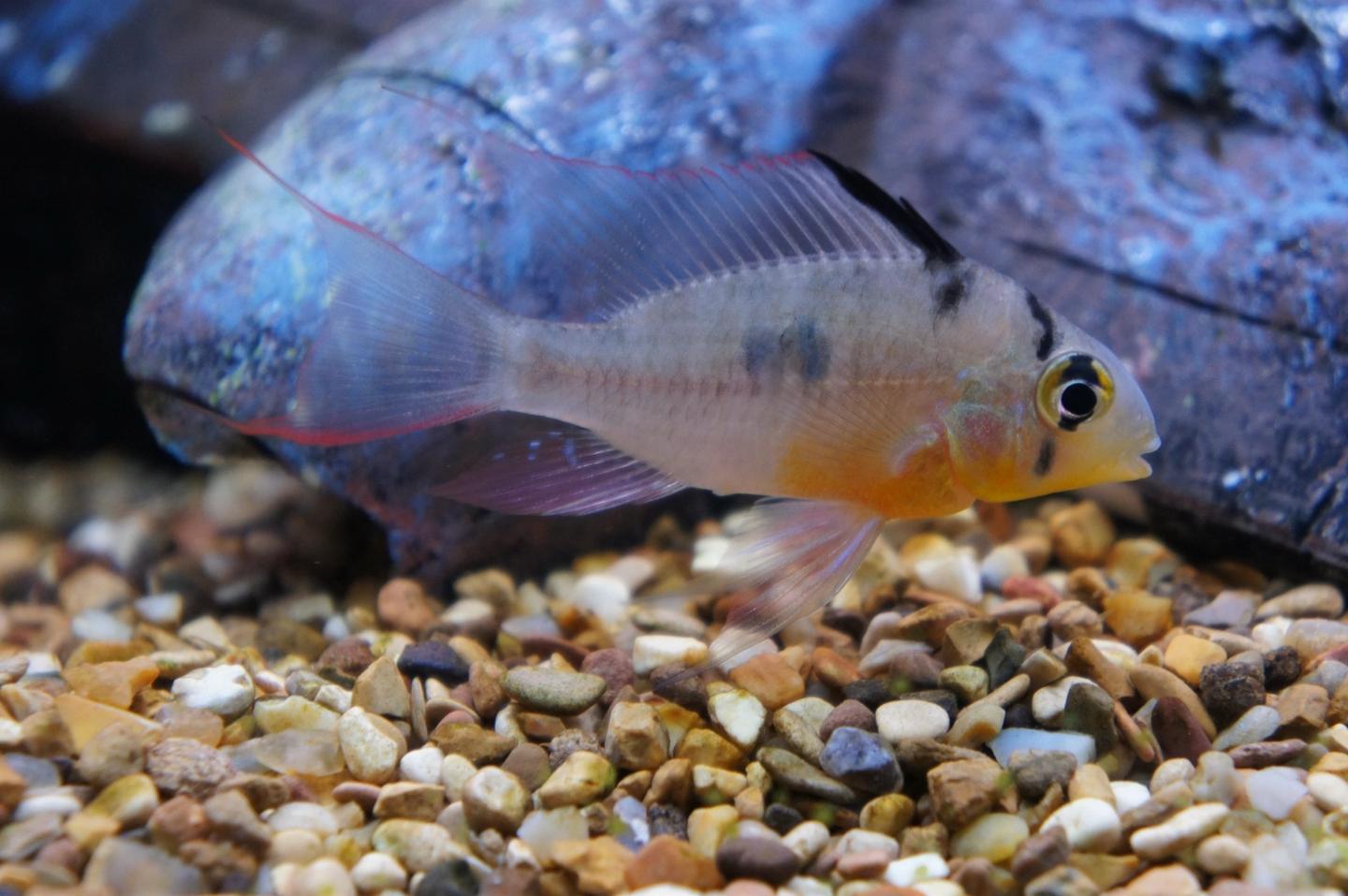
Cichlids are a family of roughly 1,800 accepted species, not one care type. Before buying, identify the exact species and source, then compare adult measurement, usable tank dimensions, social system, territory, tested water, diet and an exit plan. No family-wide minimum tank, water range or tank-mate list is safe.
Maintain these water conditions for optimal health and vibrant colors
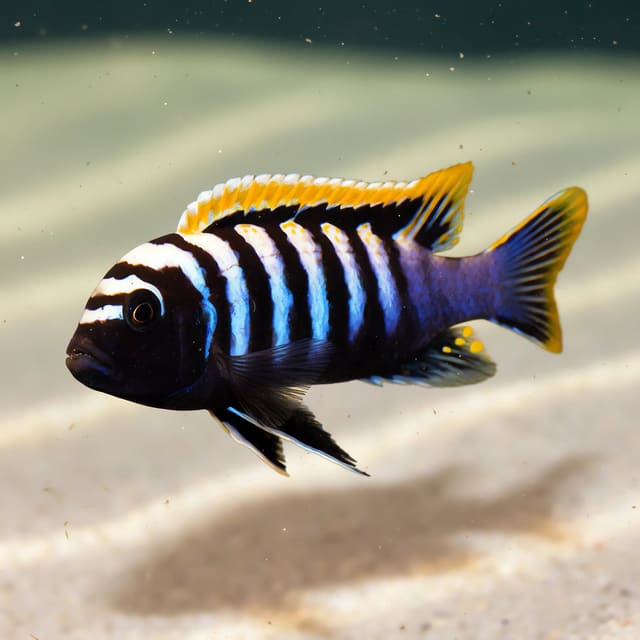
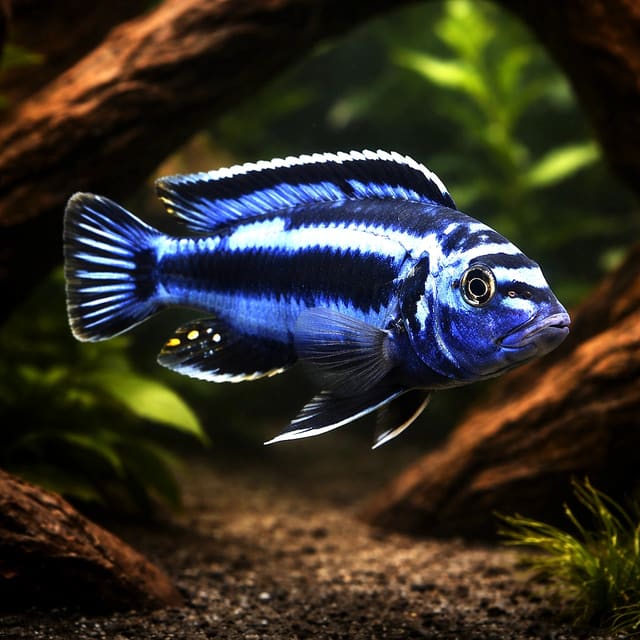
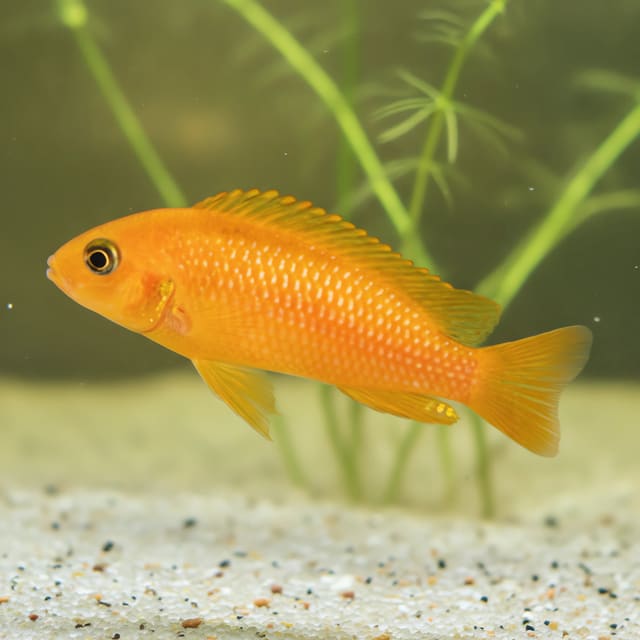
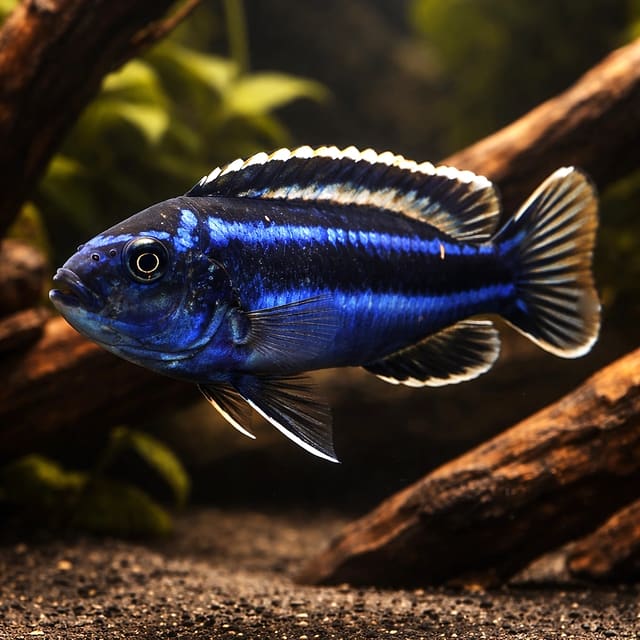
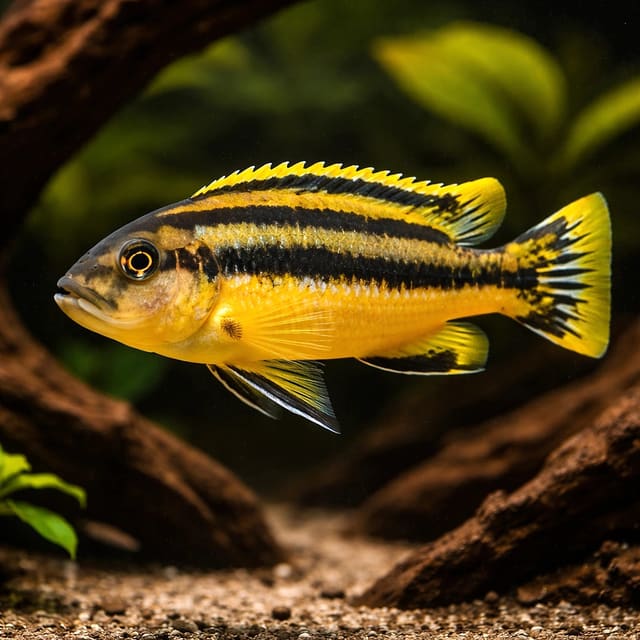
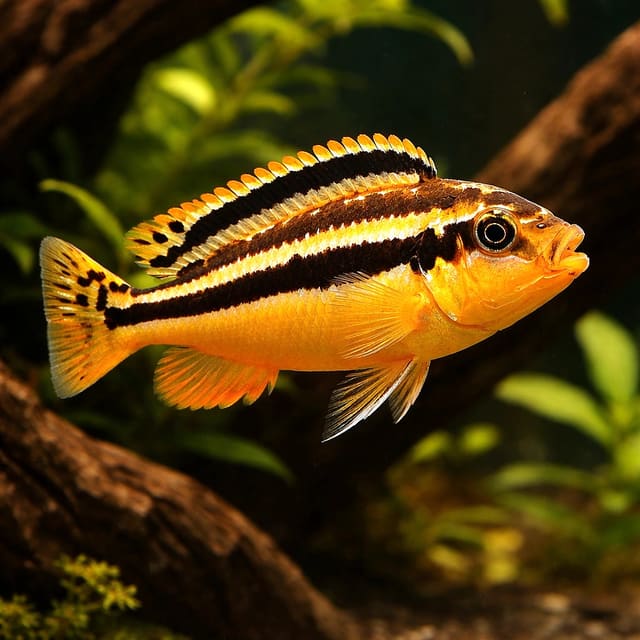
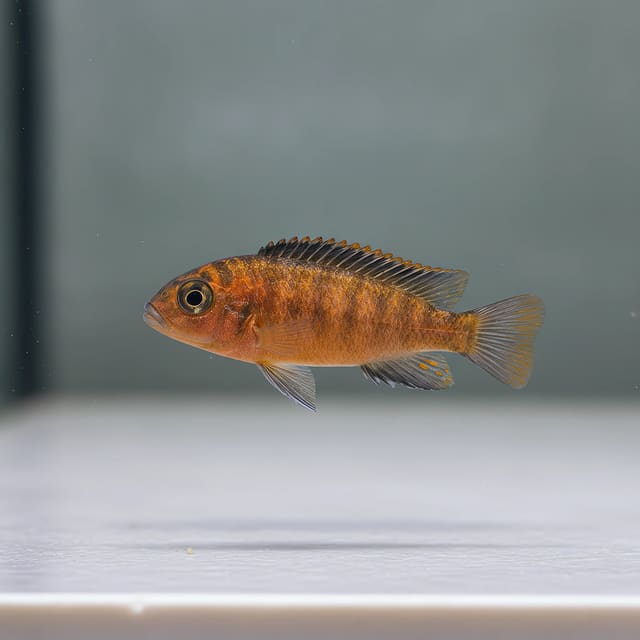
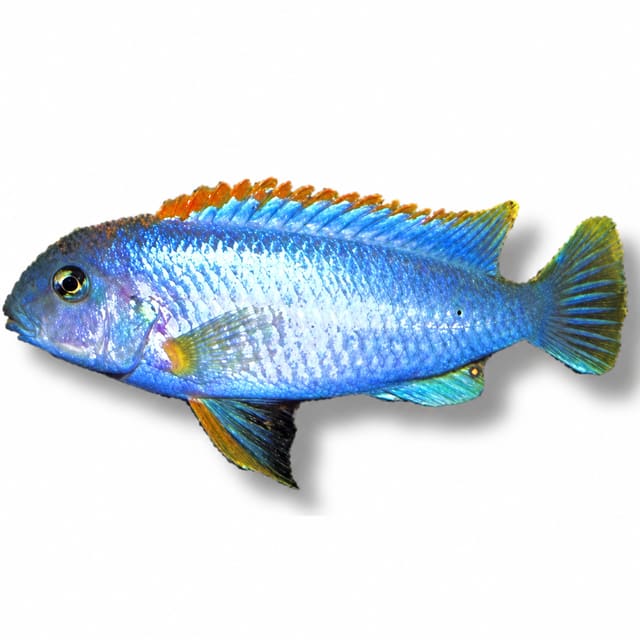
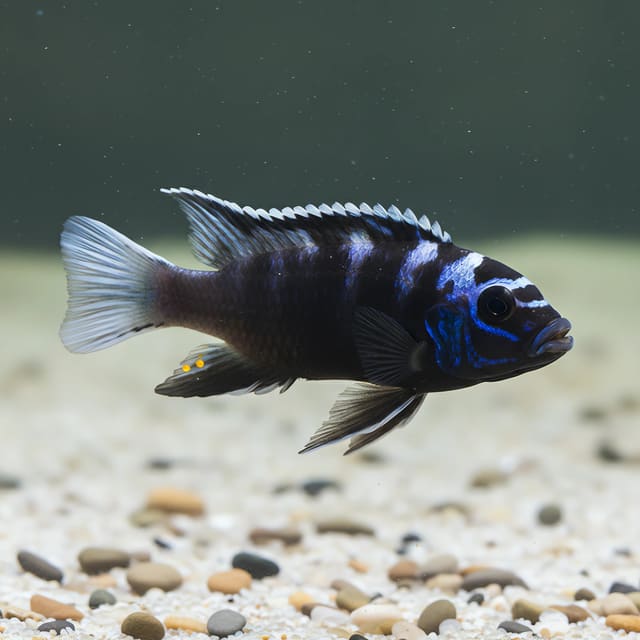
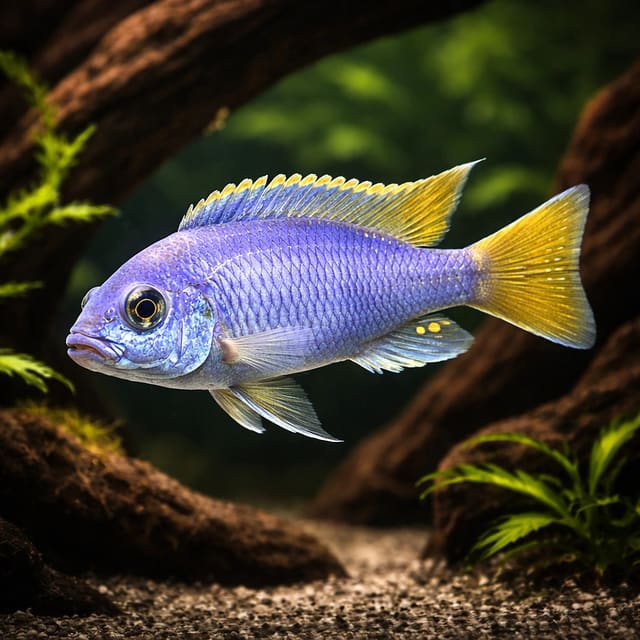
Johanni Mbuna (Pseudotropheus johannii, familiar synonym Melanochromis johannii) is a territorial Lake Malawi cichlid for a specialist rocky, hard-water aquarium. Males develop blue-and-dark patterning, while females and juveniles are yellow-orange; colour depends on age, condition and social status. Each selected quantity is one unsexed fish in the approximate 2–3 cm, 4–5 cm, 6–7 cm or 7–9 cm grade shown in the selector, not a sexed pair or guaranteed breeding group. Plan around a published 10 cm total-length record rather than treating the supplier’s 7–9 cm adult guidance as a guaranteed maximum. The current representative image does not establish the sex or appearance of the dispatched individual.
Pseudotropheus johannii belongs to the mbuna group of Lake Malawi cichlids, a famous collection of rock-dwelling African cichlids valued for intense colour, bold behaviour, and fascinating social structure. In the aquarium hobby, johannii types are especially popular because males and females look so different, giving one species the visual effect of two. Among cichlid keepers in the UK, this fish is often chosen by aquarists moving on from peaceful community fish into more specialised hard-water setups.
Johanni Mbuna is a Lake Malawi rock-dweller rather than an open-sand or planted-river cichlid. Cracks, caves, ledges and algae-covered stone surfaces provide feeding areas and territories. The Catalog of Fishes accepts Pseudotropheus johannii; the supplier’s familiar Melanochromis johanni wording is an older trade combination/spelling, not a different retail species promise.
In nature, these fish spend much of their time weaving through rocks, defending small territories, and grazing on biofilm, filamentous growth, and tiny invertebrates found on hard surfaces. That is why a proper tropical fish tank ecosystem for this species should focus on rock piles, broken lines of sight, and alkaline mineral-rich water rather than soft, acidic, heavily planted conditions. If you have ever asked what is tropical fish tank planning for an African cichlid, the answer is simple: it is not just a glass box with water, but a controlled habitat that matches the fish’s biology.
Prepare strong biological filtration, oxygen-rich circulation, secure rockwork and hard alkaline water. Use the supplier practical guidance of 24–26°C, pH 7.5–8.5 and 10–30 dGH, while checking current holding conditions and avoiding abrupt chemical adjustments. Keep ammonia and nitrite at zero and control nitrate through regular maintenance.
Keep Johanni Mbuna indoors in a heated aquarium. An unheated outdoor pond in the UK is not an appropriate substitute for a stable, rocky hard-water Malawi setup.
As for décor, people often ask what plants for tropical fish tank setups work here. The honest answer is that plants are optional. Most mbuna tanks look and function better with rockwork as the main structure. Tough species such as Anubias attached to stone may survive, but this is not a lush planted display. If you are considering Johanni Mbuna or alternative species, choose this fish when you want classic mbuna behaviour and stronger contrast between males and females.
Mimicking the natural rocky habitat does more than make the tank look right. It reduces direct chasing, creates retreat zones for females, and helps dominant fish establish territories without constantly seeing rivals. In practice, that means calmer behaviour and better colour.
A successful Johanni Mbuna Malawi tank setup starts with understanding that this is an active, territorial mbuna, not a peaceful nano fish. The stated Johanni Mbuna minimum tank size is 150 litres, but that is a practical floor rather than an ideal long-term goal. In real-world fishkeeping, a 180-240 litre aquarium gives you more rock volume, more swimming lanes, and better dilution of waste. If you are asking what size tank for tropical fish like this, bigger is almost always easier. The realistic Johanni Mbuna tank size for a breeding group is around 180 litres or more, especially if you plan one male with 3-4 females.
The correct tropical fish tank requirements include a secure lid, a strong filter, a reliable heater, and stable mineral content. A tropical fish tank complete setup for this species should include a robust external or high-capacity internal filter, aragonite sand or fine gravel, stacked inert rock, a thermometer, and a heater matched to the tank volume. If you are planning a tropical fish tank quick setup, resist the urge to rush. Mbuna are hardy in some ways, but they do not forgive immature filtration.
The existing 150-litre retailer figure is a starting recommendation, not a guarantee that every tank of that volume can house a group safely. Prioritise length, floor space, territories and effective sight breaks; 180 litres or larger gives more planning room. A published 10 cm total-length record (including the tail) is useful adult-space context, not the measured size of this stock or a guaranteed final maximum.
Use 24–26°C as the supplier practical temperature guidance, with stable day-to-day conditions. Check the heater with a separate thermometer and avoid abrupt changes during acclimation or maintenance. A single number is not a guarantee of spawning success, stock tolerance or improved colour.
Use a heater with enough wattage for the tank size and check the tropical fish tank heater setting with a separate thermometer rather than trusting the dial alone. A good tropical fish tank heater position is near filter outflow so warm water circulates evenly. The right tropical fish tank heater temperature should not fluctuate wildly. Common questions about tropical fish tank temperature stability — whether it matters, whether it has drifted overnight, and how often it should be checked — all have the same practical answer: check it daily, especially in winter or after maintenance. If tropical fish tank temperature too hot becomes an issue, increase aeration and cool the room gradually rather than making sudden changes.
pH should remain alkaline, ideally 7.8-8.4, and hardness should stay between 10 and 30 dGH. This species needs suitable hard alkaline water. If you keep chasing numbers with chemicals, you often create instability. Stable hard water is better than swinging pH.
This species produces a fair amount of waste for its size, so a tropical fish tank filter and heater combination is essential, with turnover around 6-10 times tank volume per hour. A dependable tropical fish tank heater and filter setup keeps oxygen high and waste low. Fine sand or smooth gravel works well, but the main visual and behavioural feature should be rockwork. Build caves and sight breaks with stable piles placed directly on the tank base before adding substrate.
Lighting can be moderate. Very bright light may encourage more tropical fish tank algae, but in a Malawi tank a little controlled algae growth is not always a problem because the fish will graze surfaces. If you are asking why is my tropical fish tank going green, the answer is usually excess light, excess nutrients, or both. Reduce the photoperiod to 7-9 hours and improve maintenance. If you want to browse other African cichlids for a mixed display, species such as Yellow Elongatus Cichlid - Chindongo Elongatus, Rubin Red Peacock Cichlid - Aulonocara, and Aulonocara kandeense are often considered by keepers building a larger hard-water collection.
Complete the aquarium’s biological cycle before adding mbuna; do not rely on a fixed number of weeks alone. Confirm the filter can process the intended bioload and maintain it carefully. Mature filtration is more important than decorative equipment.
The correct Johanni Mbuna diet is omnivorous, but with a strong leaning toward plant matter and algae-based foods. In the wild they graze on surface growth and pick at tiny invertebrates. In captivity, the safest staple is a spirulina-rich cichlid pellet or flake supported by quality algae wafers. This is not a species to push heavily onto fatty meaty foods every day, as that can contribute to digestive stress and poor long-term condition.
Use spirulina flakes, quality mbuna pellets, and algae wafers as the main diet. Hobbyists sometimes search pet fish food shop near me when trying to source suitable food quickly, but the key is not where you buy it, it is whether the formula is right for mbuna. Feed small portions 1-2 times daily, only what the fish clear in under a minute.
Blanched spinach, shelled peas in tiny amounts, and occasional vegetable-based gel foods can add variety. Some keepers ask what tropical aquarium fish eat snails; Johanni Bluegra may peck at very small snails or snail eggs, but they are not a reliable snail-control species. They are also not ideal tropical fish tank bottom feeders or dedicated cleanup fish. If you are wondering which tropical fish clean the tank, the truth is that no fish replaces maintenance.
Occasional frozen daphnia or brine shrimp can be used sparingly, especially when conditioning adults, but avoid making bloodworm the main diet. In a cichlid tank, some surface growth is natural, so not every patch of tropical fish tank green algae is a crisis. However, heavy tropical fish tank brown algae, tropical fish tank hair algae, or tropical fish tank black hair algae usually points to imbalance in lighting, nutrients, or maintenance. Good feeding habits help prevent excess waste that fuels these issues.
Do not rely on so-called tropical fish tank algae eaters in a mbuna aquarium. Many common algae-eating species either need softer water or become stressed by cichlid aggression. Likewise, a random tropical fish tank plant food routine is rarely relevant unless you are keeping a few attached hardy plants. For algae control, focus on reduced overfeeding, strong filtration, and regular water changes rather than constant tropical fish tank algae treatment products.
| Time | Food | Amount |
|---|---|---|
| Morning | Spirulina cichlid pellets | Small pinch, eaten within 30-60 seconds |
| Evening | Algae wafer or vegetable-based flake | Light feeding, no leftovers after 1 minute |
If you are planning a larger African cichlid collection, compare feeding response and colour development alongside other Malawi species like Rubin Red Peacock.
A useful companion comparison if you want another hard-water cichlid with strong colour but a different body shape and display style.
Overfeeding causes ammonia spikes, poor water clarity, and digestive trouble. If leftovers are accumulating, reduce portions and check water quality. Mbuna should look alert and well-filled, not bloated.
The standout feature of this fish is its dramatic sex-based colour difference. Adult males are deep blue to blue-black with lighter horizontal striping, while females are bright orange to yellow-orange. That means one group creates built-in contrast without needing multiple species. The body is elongated and streamlined, with a typical mbuna profile suited to darting among rocks and defending crevices.
Plan adult swimming and territory space using the published 10 cm total-length record, including the tail. The supplier’s adult guidance is 7–9 cm, so records and trade estimates differ. Colour can change with maturity, social position and condition; assess appetite, breathing, fins and behaviour as well as colour rather than using brightness alone as a health test.
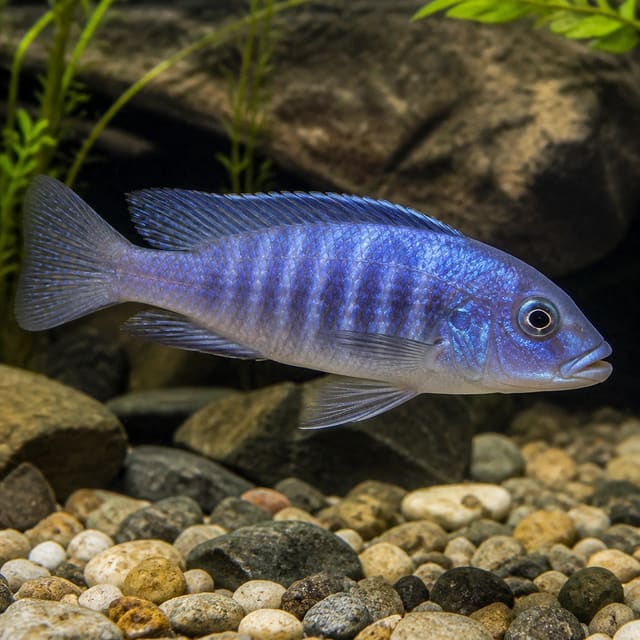
Johanni Mbuna is normally planned for a rocky display rather than a soft-water planted aquascape. Pale sand, darker rock and open swimming lanes can create contrast without sacrificing retreats. The representative photograph is not proof of collection locality, lineage, husbandry at capture or a guaranteed male/female presentation.
Because many people search what size tank for tropical fish based on looks alone, it is worth repeating that this species may be small, but it behaves like a much larger fish. Its visual appeal comes with territorial confidence, making the Johanni Mbuna for large tank search intent more accurate than many beginners realise.
The most important thing to understand is that this is not a standard community tropical fish uk species. A Johanni Mbuna community tank only works if “community” means other robust African cichlids with similar water needs and enough space. It is not suitable for community-tank stocking with guppies, tetras, angelfish, or other peaceful fish. Searches like tropical fish tank temperature for tetras and tropical fish tank temperature guppies may overlap in broad tropical terms, but the compatibility does not.
The best Johanni Mbuna compatible fish are other carefully selected mbuna or hardy African species that can handle hard alkaline water and assertive behaviour. Good tropical fish tank mates should be similar in size, not too timid, and not too visually similar to male johannii, as that can trigger extra aggression. The best tank mates for Johanni Mbuna often include other mbuna with different body patterning, plus some bottom-dwelling Synodontis catfish in larger tanks.
Possible companions include Yellow Elongatus Cichlid - Chindongo Elongatus in larger rock-heavy setups, Aulonocara kandeense with caution in spacious tanks, Rubin Red Peacock Cichlid - Aulonocara in carefully planned mixed Malawi systems, and Aulonocara Sp Neon Red Calico Peacock where aggression is monitored closely. For hobbyists interested in broader cichlid comparisons, Thorichthys Maculipinnis - Elliot'S Cichlid - and Guianacara Dacrya - South American Cichlid are attractive cichlids, but they belong in different water chemistry and temperament plans rather than the same tank.
Avoid peaceful tetras, rasboras, guppies, shrimp, and slow-moving fish. Avoid similar-looking blue-striped mbuna males unless the aquarium is very large and stocked by an experienced keeper. Also avoid delicate algae eaters and most snails. If you are asking whether this species works with invertebrates, the answer is usually no. Shrimp become food or stress targets, and snails may be harassed.
One established male with several females is a common deliberate keeping plan, not the unit supplied by this unsexed offer. Do not use extra fish as an automatic solution to aggression: filtration, territories, observation and a separation plan remain necessary. Test weekly, change 25–40% of the water as required by the bioload, vacuum open substrate and rinse filter media in removed tank water when flow drops.
| Species | Compatible? | Notes |
|---|---|---|
| Yellow Elongatus Cichlid - Chindongo Elongatus | ✅ Yes | Works in larger rocky Malawi tanks with careful stocking and sight breaks. |
| Rubin Red Peacock Cichlid - Aulonocara | ⚠️ Caution | Possible in spacious mixed Malawi setups, but watch aggression and feeding style. |
| Tetras, guppies, shrimp | ❌ Avoid | Too peaceful, wrong water chemistry, and likely to be chased or eaten. |
Consider a separate observation/quarantine period of 2-4 weeks, adjusted to risk and veterinary advice in a tropical fish quarantine tank. This protects established cichlids from parasites and gives you time to confirm feeding response before adding a new fish to a territorial setup.
Johanni Mbuna breeding is very achievable for aquarists with some cichlid experience. This is a maternal mouthbrooder, which means the female carries fertilised eggs and developing fry in her mouth rather than laying them unguarded on a surface. A deliberate breeding group is not normally planned as a lone pair; the better setup is one mature male with several females to spread attention and reduce stress.
For a deliberate breeding group, allow at least the existing 180-litre planning recommendation with secure rockwork and excellent filtration, and assess floor space and aggression. Keep stable water within the practical 24–26°C guidance; do not force spawning through abrupt temperature or chemistry changes.
Condition adults on a varied vegetable-rich diet with occasional higher-protein treats. The male will intensify in colour, claim a spawning site, and display to females with quivering motions and circling behaviour. The female lays eggs, picks them up, and is then guided to take in sperm, fertilising the brood. If you are searching about tropical fish tank eggs or yellow eggs in tropical fish tank, remember that with mouthbrooders you may not see many exposed eggs at all because the female collects them quickly.
The female may hold the brood for roughly 2-3 weeks depending on temperature and stress levels. During this time she often eats very little. Some breeders move holding females to a separate tank near the end of the term, while others leave them in the main aquarium if there is enough cover. Fry can be started on finely crushed spirulina flake, powdered cichlid fry food, and newly hatched brine shrimp in moderation.
Common breeding issues include male over-aggression, females swallowing or spitting broods early, and fry losses in busy community-style Malawi tanks. If you are asking what chemicals do i need for a tropical fish tank or what chemicals do you need for a tropical fish tank for breeding, the answer is fewer than many people think. Dechlorinator, stable mineral content, and clean water matter more than bottles of additives. Breeding success usually comes from consistency, not constant intervention.
For stronger fry survival, many breeders keep one dominant male with 3-4 females in a species-focused tank and remove heavily harassed females after spawning. This reduces stress during mouthbrooding and often leads to larger, better-developed broods.
Choosing between Malawi cichlids can be tricky because many are colourful, active, and sold under the broad banner of tropical fish for sale. The real differences are in aggression, colour pattern, adult behaviour, and tank planning. If you are considering Johanni Mbuna or alternative species, the Johanni Bluegra is best for fishkeepers who want strong male-female colour contrast and classic mbuna activity in a rocky tank.
| Feature | Johanni Bluegra | Yellow Elongatus |
|---|---|---|
| Max Size | Published 10 cm TL record; planning context | 8-10 cm |
| Care Level | Moderate | Moderate |
| Temperature | 24-26°C | 24-27°C |
| Price | See the current selected variant price | Varies |
| Best For | Keepers wanting strong sex-based colour contrast | Keepers wanting a bold yellow mbuna display |
| Feature | Johanni Bluegra | Rubin Red Peacock |
|---|---|---|
| Body Type | Compact, rock-dwelling mbuna | More open-water peacock profile |
| Aggression | Higher | Moderate |
| Décor Style | Heavy rockwork | Rock and open sand mix |
| Feeding Style | Vegetable-leaning omnivore | More varied omnivore/insectivore approach |
| Best For | Classic mbuna behaviour | Display colour in a mixed Malawi tank |
Choose Johanni Bluegra if you want a fish that shows obvious social structure, fast movement through rocks, and a vivid male-female contrast. Choose Yellow Elongatus Cichlid - Chindongo Elongatus if you prefer a brighter yellow-heavy mbuna look, or Rubin Red Peacock Cichlid - Aulonocara if you want a somewhat different Malawi display style. For Tanganyika enthusiasts, Kiriza Yellow Cichlid - Tropheus Moorii and Orange I Blunthead Cichlid - Tropheus offer another route entirely, with different feeding and social demands.
A healthy Malawi cichlid like the Johanni Bluegra (Pseudotropheus johannii) should be alert, brightly coloured, quick to feed, and confident in the middle region of the tank. Fins should be open, the belly should be neither pinched nor bloated, and breathing should be steady. Because this species is territorial, stress often shows first as faded colour, clamped fins, or persistent hiding.
The most common issues are stress-related aggression damage, digestive trouble from an unsuitable diet, external parasites introduced by new stock, and general tropical fish tank diseases linked to poor water quality. Malawi bloat is the classic concern when mbuna are overfed rich foods or kept in unstable conditions. Early signs include loss of appetite, stringy white waste, hiding, and rapid breathing, so a vegetable-led Johanni Mbuna diet, sensible portions, and clean hard alkaline water are the best day-to-day prevention. That is why the correct Johanni Mbuna diet and stable water temperature are so important.
Prevention starts with maintenance. Use regular water changes, test kits, and sensible feeding. If you are learning how to test tropical fish tank water, focus on ammonia, nitrite, nitrate, pH, and temperature. A good tropical fish tank water treatment routine means dechlorinating new water and matching temperature closely during changes. Sudden swings can trigger stress even when the chemistry looks acceptable on paper.
Quarantine is one of the best protections you can use. New fish should spend 2-4 weeks in a separate observation tank before entering the display. This matters even if you have searched tropical fish shops near me and found plenty of general advice online; location-based search results do not replace proper quarantine practice. Good fishkeeping is about process, not postcode.
Never medicate a display tank casually just because one fish looks off. Diagnose first, improve water quality immediately, and isolate if needed. Also, never use copper-based medications in mixed systems that contain sensitive invertebrates.
Johanni Mbuna is active and territorial, not a schooling fish. Rockwork creates shelter and visual barriers. A deliberate male-to-female ratio can be a keeping plan after sex is established; the current retail grades do not guarantee sex, compatible group composition or breeding success.
Territorial displays are normal. Males patrol, flare fins, and chase rivals away from chosen caves or spawning sites. Females are usually less intense but still capable of defending space. Much of the fish’s appeal comes from this behaviour: quick dashes between rocks, grazing, sparring, and colour changes linked to dominance and breeding condition. A subordinate male will often dull down toward female colouring to avoid conflict, then brighten again if he gains his own territory, so the same fish can look noticeably different from week to week as the social order shifts.
If you want to encourage natural behaviour, provide layered rockwork, maintain the correct Johanni Mbuna temperature, and avoid mixing them with fish that are too passive. This is why they are not usually recommended as tropical fish for beginners, although committed beginners with a species-specific plan can succeed. They are better described as manageable for prepared keepers rather than beginner-proof.
Choose Johanni Mbuna only after planning for hard alkaline water, mature filtration and territorial behaviour. Check the size selector and quantity; each quantity is one fish. The cichlid care guide can help with tank and stocking preparation.
The retailer cannot infer a guaranteed sexed pair from colour or size alone. For a deliberate breeding group, establish sex and social compatibility separately and have a safe way to separate a bullied fish.
Read the current delivery and live-arrival terms for dispatch, receipt and eligibility requirements. Prepare the mature tank and suitable food before arrival; an unconditional delivery or packing promise is not a substitute for the published policy.
Order only when the intended aquarium and social plan are ready. Review selected grade and current availability rather than assuming a photograph or species description guarantees a particular individual.
Building a Malawi display often works best when you choose species and décor together rather than one fish at a time. For a bold companion mbuna, consider Yellow Elongatus Cichlid - Chindongo Elongatus. If you want a contrasting peacock look, explore Aulonocara Sp Neon Red Calico Peacock or Rubin Red Peacock Cichlid - Aulonocara. For a different African cichlid route, Kiriza Yellow Cichlid - Tropheus Moorii and Orange I Blunthead Cichlid - Tropheus are worth comparing. If you are still deciding between regions and water types, browse our wider freshwater fish range to compare Malawi, Tanganyika, and other cichlid options before stocking your tank.
For region-appropriate comparisons, browse the Malawi and Victoria cichlid range. Reference: FishBase Johanni Mbuna record distinguishes published size and biology from a particular retail batch. No precise lifespan, sexed pair or stock-provenance guarantee is made here.
No reviews for this item yet. Bought one? Honest reviews only, good or bad.
What customers say about ordering from us
I have a small group of long finned mountain minnows. So was delighted to be able to order ten of this variety to increase the genetics in my tank . The ones I recieved are healthy but it’s to early to give a verdict on wether they are of a long finned type since they are small currently.
Gordon Walker · 23 Sept 2026
100% success travel and "installation". Pleased with quality of purchase. The Siamese fighter a bit "shy" so have not yet seen him at his best yet but looking good. Happy customer. GG
George E Garratt · 21 Sept 2026
Reviews of our shop, collected by Judge.me, an independent third-party review collector. Newest first.