Moderate
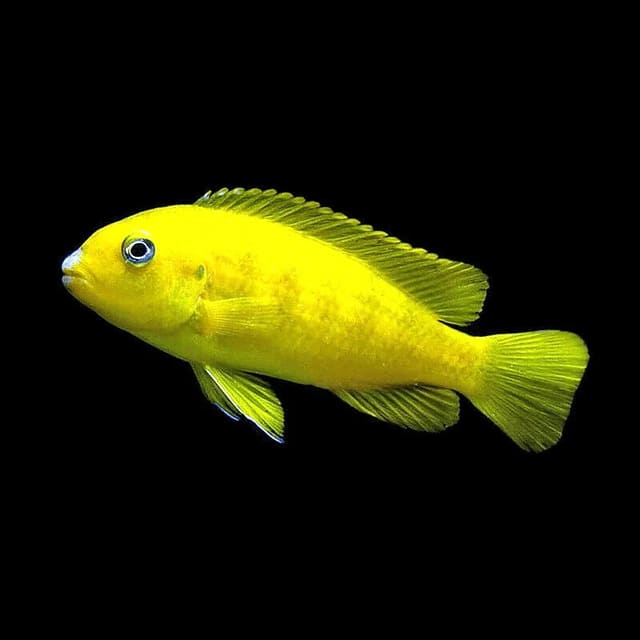
Acei Cichlid (Pseudotropheus sp. “acei”)
24–26°C · pH 7.5–8.5 · 300L
£7.99

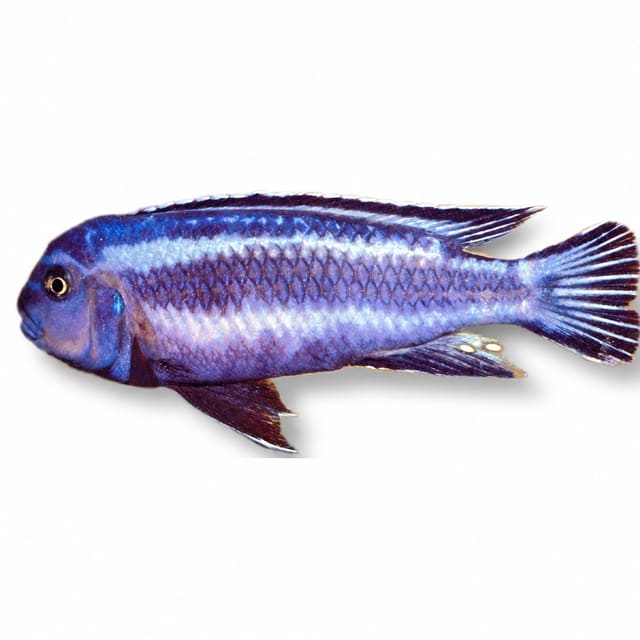
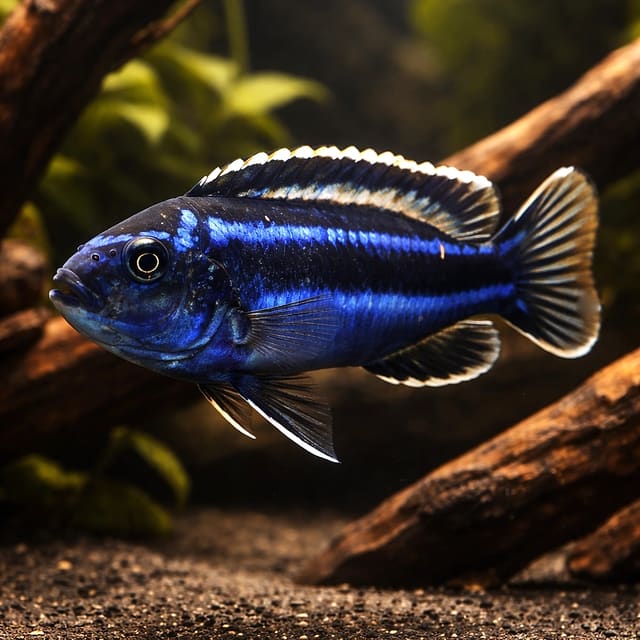
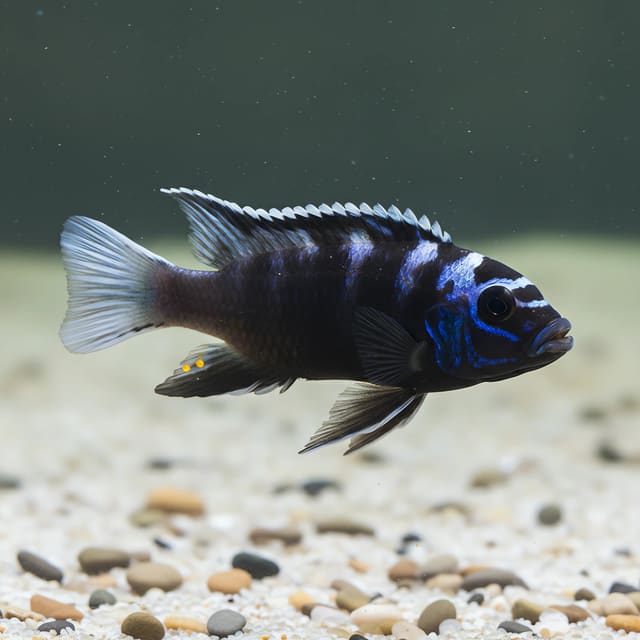
The Maingano Cichlid (Pseudotropheus cyaneorhabdos) is a blue-striped, rock-dwelling Lake Malawi mbuna recorded at up to 7.5 cm standard length. One purchase quantity means one animal in the selected dispatch size. Plan a mature, hard alkaline Malawi aquarium with rock cover and carefully screened companions.
Adult size is the maximum length this species reaches at full maturity (scientific sources). The livestock you receive will be younger and smaller — pick a size above for the actual shipping size. Product-photo provenance and any image-specific limitations are stated on the listing.
Pseudotropheus cyaneorhabdos
Save when buying multiple fish. Each quantity is one fish; sex and pair formation are not guaranteed unless the selected variant explicitly states them.
The Maingano Cichlid (Pseudotropheus cyaneorhabdos) is a blue-striped, rock-dwelling Lake Malawi mbuna recorded at up to 7.5 cm standard length. One purchase quantity means one animal in the selected dispatch size. Plan a mature, hard alkaline Malawi aquarium with rock cover and carefully screened companions.
Adult size is the maximum length this species reaches at full maturity (scientific sources). The livestock you receive will be younger and smaller — pick a size above for the actual shipping size. Product-photo provenance and any image-specific limitations are stated on the listing.
Cichlids are a family of roughly 1,800 accepted species, not one care type. Before buying, identify the exact species and source, then compare adult measurement, usable tank dimensions, social system, territory, tested water, diet and an exit plan. No family-wide minimum tank, water range or tank-mate list is safe.
Maintain these water conditions for optimal health and vibrant colors
The Maingano Cichlid, Pseudotropheus cyaneorhabdos, is a freshwater member of the cichlid family. FishBase records a maximum of 7.5 cm standard length and places the wild fish in Lake Malawi, where it lives in association with rocks. Standard length excludes the tail fin, so retain that measurement convention whenever you compare the scientific figure with a fish in front of you.
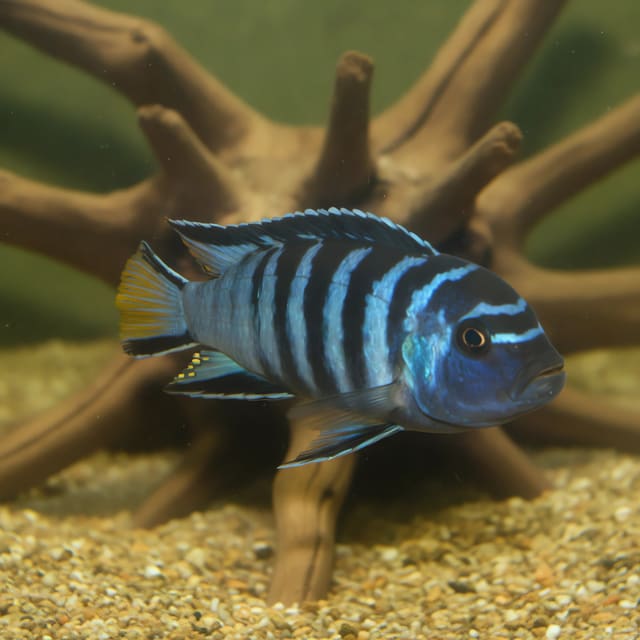
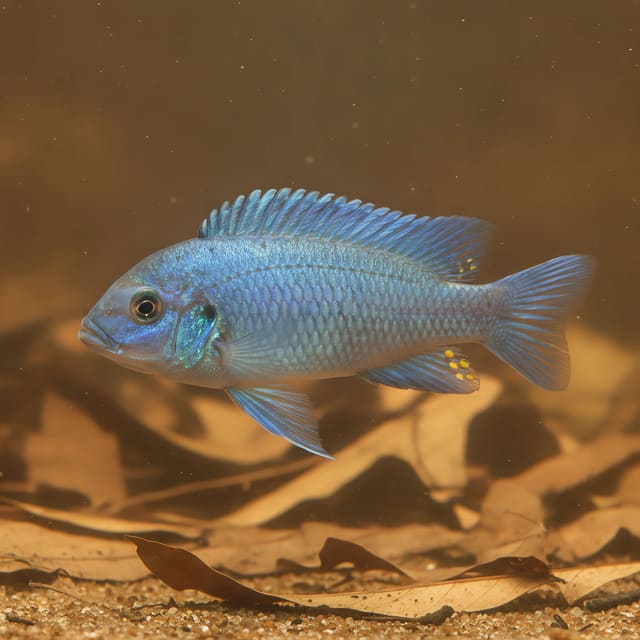
A natural-history summary of the species describes it as a mbuna endemic to the area around Likoma Island. It favours rocky substrates at depths of 5–10 metres. Both sexes have the characteristic blue horizontal pattern, females are not orange, and dominant or sexually active males may show more intense colouring. The absence of vertical stripes also helps distinguish this fish from similarly named Lake Malawi cichlids.
Its compact body does not remove the need to plan around territorial Malawi-cichlid behaviour. Choose it for a purpose-built rocky aquarium whose water chemistry, filtration and social plan are already settled.
One purchase quantity means one animal of the size option you select. Use the live size selector to choose between 4 - 5 cm, 6 - 7 cm, 7 - 9 cm and 9 - 13 cm, then set the quantity to the number of individual fish required.
The size you select is the size supplied, not the adult size. These labels are dispatch grades, whereas FishBase’s 7.5 cm figure is a maximum recorded standard length. Keep the two contexts separate: the selector answers which size grade is sent, while the scientific measurement provides the supported adult-size reference. Do not use a dispatch band to infer age, maturity or sex.
| Decision | How to make it |
|---|---|
| Choosing a size | Read the exact label on the live selector and prepare the full aquarium before ordering. |
| Choosing quantity | Count one animal for every purchase quantity; the options are not packs. |
| Planning adult space | Use 7.5 cm standard length as the recorded species figure, then plan the whole Malawi community around aggression and territory. |
| Assessing sex | Do not infer it from size, colour intensity, egg-like anal-fin spots or a gallery scene. |
Sex is guaranteed only when the selected option explicitly states male or female. This Maingano Cichlid listing has no sex-guaranteed option.
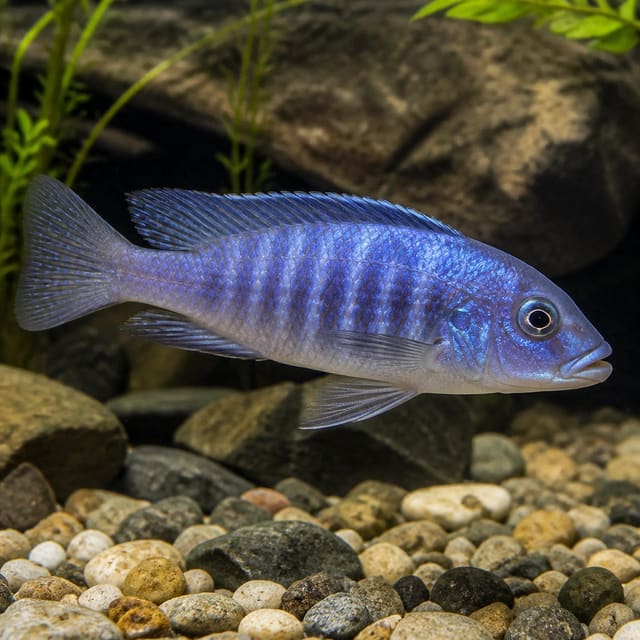
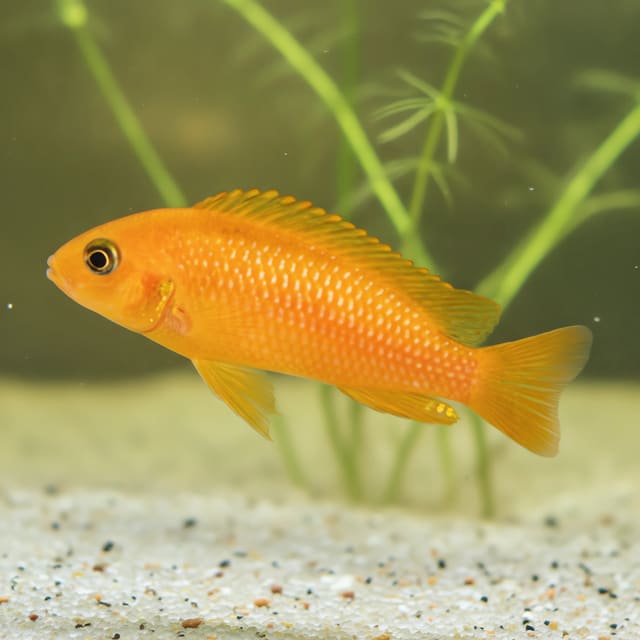
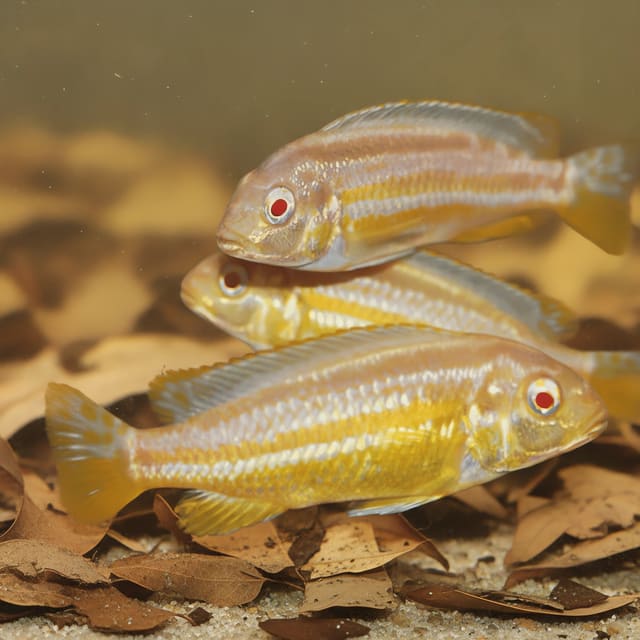
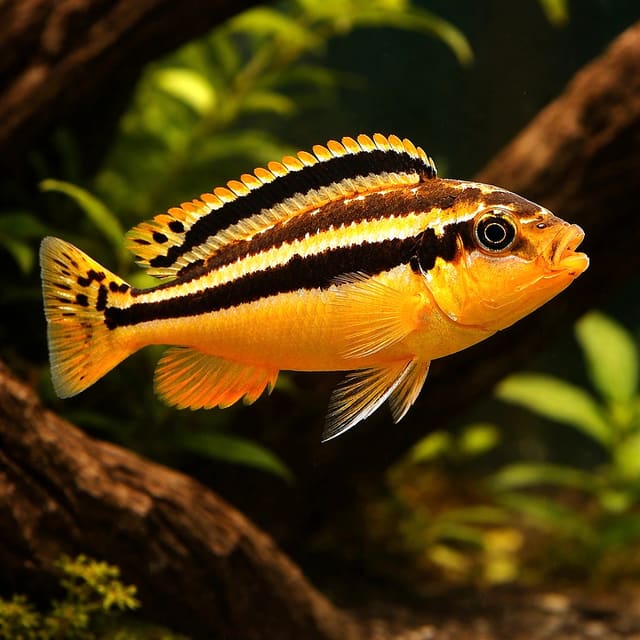
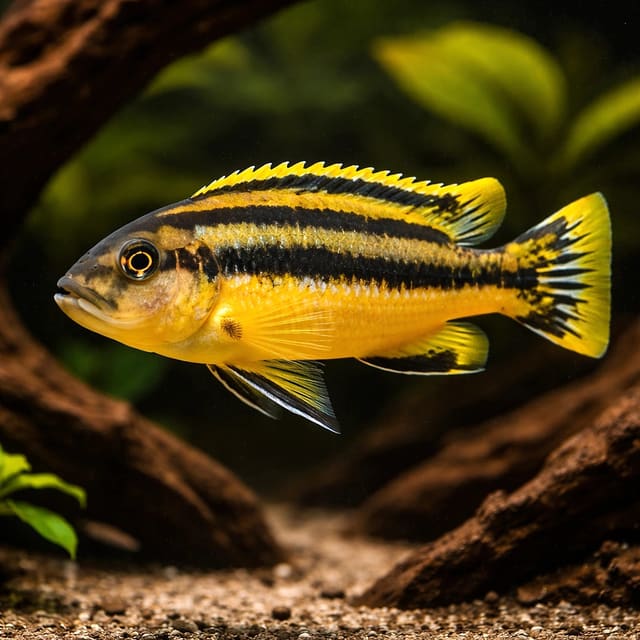
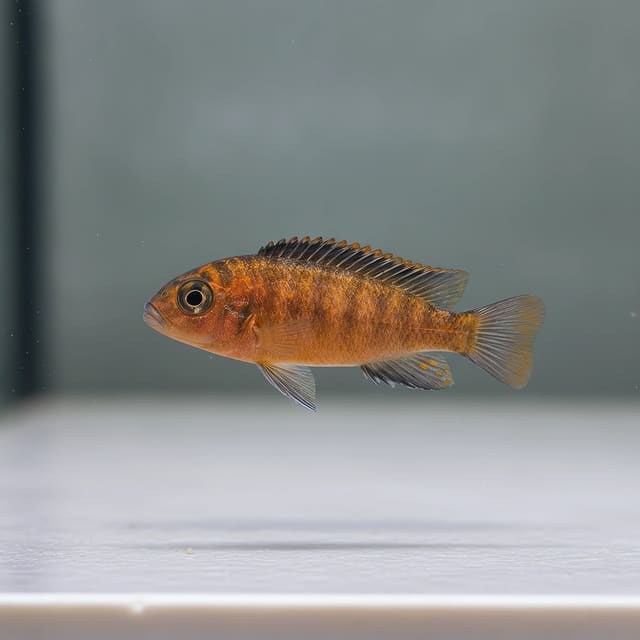
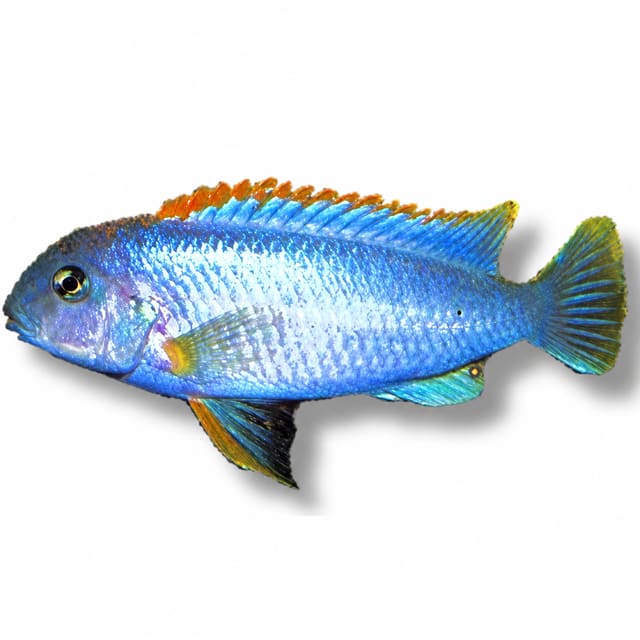
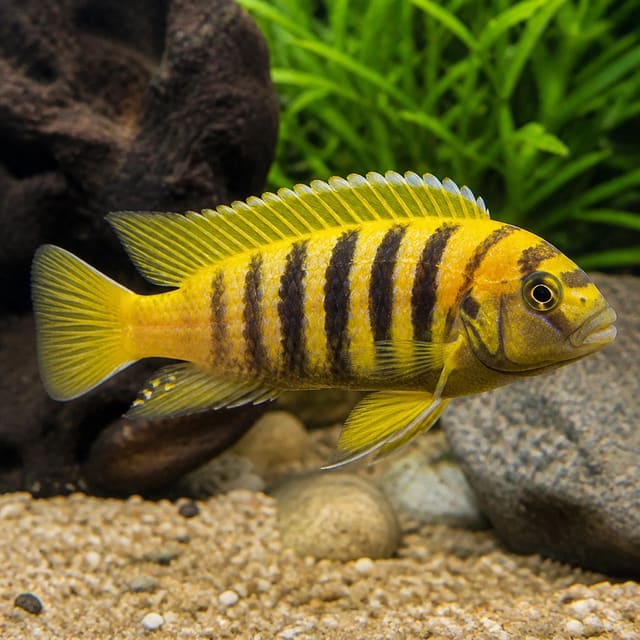
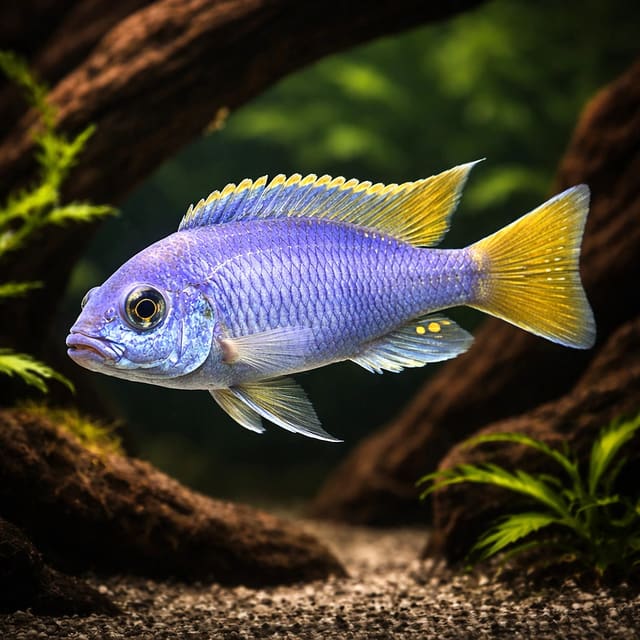
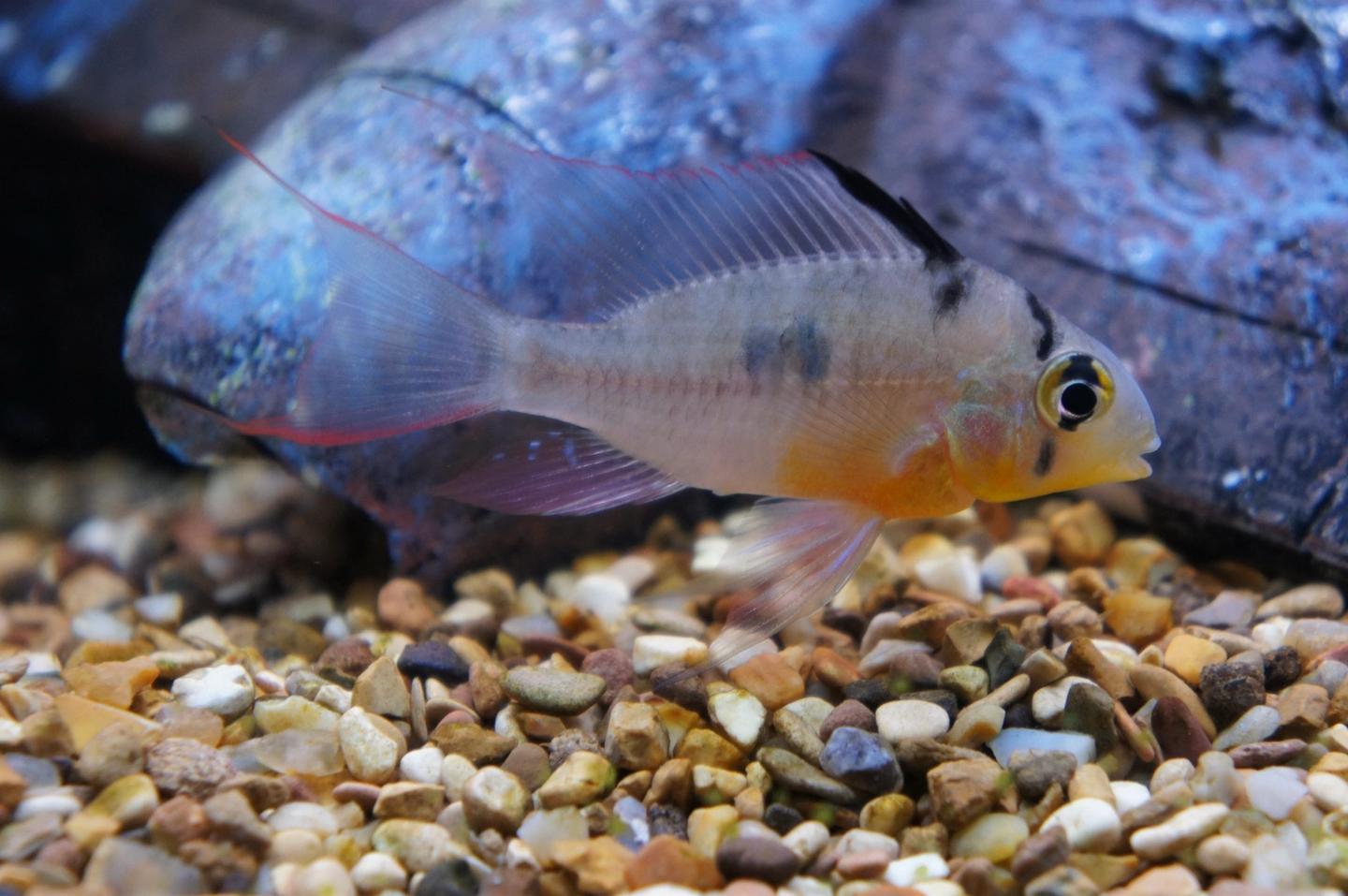
Some gallery images have been digitally enhanced to improve image quality. They show the listed type of animal rather than guaranteeing the exact markings of the individual supplied, so natural colour and pattern can vary. Use them to understand the blue-and-dark horizontal pattern and general cichlid form, not to predict the markings, sex or exact appearance of an individual fish.
OATA’s African Malawi cichlid advice gives 23–27°C, pH 8.0–8.6, general hardness of 12–18°dH and at least 200 litres for a reasonable community as broad group guidance. Use these as Malawi-community planning values rather than as a species optimum.
| Requirement | Decision before purchase |
|---|---|
| Water | Confirm that you can maintain 23–27°C, pH 8.0–8.6 and hard water consistently. |
| Space | Start with at least 200 litres when planning a reasonable Malawi community, allowing for rock displacement and the complete stocking plan. |
| Filtration | Use a mature biological filter with enough capacity for a deliberately populated cichlid aquarium. |
| Oxygen | Provide strong aeration or surface movement because OATA recommends aggressive aeration for crowded Malawi communities. |
| Social management | Expect aggression, build several territories and keep a workable separation plan. |
Our care assessment is advanced. The routine feeding and water-change schedule is straightforward, but specialist water values and aggression management leave little room for an improvised setup. A keeper must be able to test the water, recognise exclusion from food or territory, and change the social arrangement before injury follows.
This fish suits an aquarist building a dedicated Lake Malawi system. It is a poor match for a soft-water community or for an aquarium chosen only because the fish itself is small. Browse the African cichlid collection only after fixing the aquarium’s water range, filtration capacity and total community plan.
| Suits | Not suited to |
|---|---|
| Stable aquarium water maintained at 23–27°C and pH 8.0–8.6 | Water outside 23–27°C and pH 8.0–8.6 |
| A carefully planned Malawi-cichlid community meeting the same water requirements, with adequate rock territories and a separation plan | General freshwater-community mixes outside OATA’s stated Malawi-cichlid and suitable Lake Malawi Synodontis categories |
Use an aquarium of at least 200 litres for a reasonable Malawi-cichlid community. That figure applies to the community rather than acting as a species-specific minimum for one Maingano. Rock, substrate and internal equipment reduce the working water volume, so begin with the complete stocking and aquascaping plan instead of fitting this fish into spare nominal litres.
A Malawi aquarium needs both shelter and routes between shelters. Arrange several rock areas so a fish can leave a confrontation and move towards food without remaining in view of the same dominant resident. Retain open water between structures rather than filling every gap with stone. OATA describes mbuna as rock-dwelling fish and warns that Malawi cichlids are aggressive, so the layout must help fish disengage.
| Planning question | Practical test |
|---|---|
| Is the aquarium mature? | Confirm that its biological filter can process the normal feeding load while ammonia and nitrite remain at zero. |
| Does the layout divide space? | Look from each end and check whether rocks interrupt long, uninterrupted views. |
| Can every fish reach resources? | Make sure cover does not block all routes to food, oxygenated water or open swimming space. |
| Can aggression be managed? | Prepare a safe way to separate a fish that is persistently attacked or attacking others. |
Malawi cichlids will often dig and rearrange substrate. Set rockwork securely so excavation cannot undermine it, and keep filter intakes and maintenance routes accessible. OATA recommends coral sand or a similar substrate for buffering; test the resulting chemistry rather than assuming a substrate alone will hold the required pH and hardness.
Plants are secondary to the rock structure. OATA says Malawi cichlids will uproot any plants present, so do not rely on planted substrate as permanent cover. Do not alter suitable Malawi water merely to preserve a plant.
Keep the aquarium between 23 and 27°C, maintain pH 8.0–8.6, and hold general hardness within 12–18°dH. OATA also gives carbonate hardness of 10–15°dKH for Malawi cichlids. Test your tap water and aquarium before choosing any buffering or remineralising method, then prepare replacement water consistently.
The target is repeatable chemistry, not movement towards the upper edge of every range. For example, an aquarium holding steadily at pH 8.2 does not benefit from an abrupt adjustment towards 8.6. A measured value inside the range, paired with stable hardness and regular maintenance, gives the fish a more predictable environment.
| Water check | Required response |
|---|---|
| Ammonia | Keep at 0 mg per litre; any reading calls for an immediate check of feeding, filtration and stocking load. |
| Nitrite | Keep at 0 mg per litre because it is toxic to fish. |
| Nitrate | Keep it from exceeding 20 mg per litre above the normal tap-water level. |
| Temperature | Keep within 23–27°C and avoid abrupt changes during maintenance or introduction. |
| pH, GH and KH | Record results so gradual movement is noticed before it becomes a large swing. |
Read our water chemistry guide to understand what each test measures. Enter actual results into the aquarium water matcher rather than judging suitability from regional reputation or one old test.
If source water falls outside the working range, select one controlled preparation method and test each new batch before it enters the aquarium. Avoid large unmeasured additions intended to change pH quickly. Check the aquarium again after water changes because rocks, substrate, feeding and biological activity can all affect the result over time.
A filter is essential. The RSPCA’s aquarium guidance explains that fish release toxic ammonia and that a working biological filter supports bacteria which convert ammonia to nitrite and then to the safer nitrate. For a Malawi community, OATA recommends an oversized filter because the stocking approach can create a substantial waste load.
Mature the aquarium before the Maingano arrives. Follow our first tropical aquarium guide while establishing the filter, then confirm zero ammonia and zero nitrite with tests. Add fish gradually so the beneficial bacterial population can respond to rising waste and feeding. Adding too many animals quickly can overwhelm that capacity and cause new tank syndrome.
Strong aeration is also part of the Malawi plan. Use vigorous surface movement or suitable aeration so the community has dependable dissolved oxygen, particularly where the aquarium is heavily stocked. Position flow so waste moves towards the filter without preventing a subordinate fish from resting behind rock cover.
Keep a simple dated log of water results, water changes and filter work. A trend in nitrate, a slower filter return or repeated debris accumulation gives you an early maintenance decision before fish behaviour changes.
Maingano is a rock-associated mbuna, and the aquarium should make that biology useful. Build several stable structures rather than one isolated ornament. Each structure should create cover, shaded recesses and changes in the direction of travel. The purpose is to give a challenged fish a route away from a dominant resident, not simply to decorate the background.
Observe how the structure works after introduction. A brief chase that ends when a fish crosses a rock boundary is different from persistent pursuit through every refuge. If one fish remains pinned near the surface, behind equipment or in a single corner, the layout is not providing usable escape space for that social combination.
| What you see | What to do |
|---|---|
| Several fish use different rock areas | Keep watching feeding access and maintain the existing sight-line breaks. |
| One entrance is guarded constantly | Create another route around the wider structure without making the stack unstable. |
| Waste gathers behind rocks | Adjust accessible flow and remove the debris during the weekly water change. |
| Plants are repeatedly uprooted | Move or remove them rather than reducing the rock cover needed by the fish. |
Complete major structural work before arrival. Small adjustments can help interrupt a territory, but repeated full rearrangements disturb every resident. Make each change to solve an observed access or aggression problem.
In the wild, this species typically feeds on zooplankton and epibenthic invertebrates. Build routine aquarium feeding around a complete cichlid food whose main ingredients fit that recorded animal-based diet. OATA’s Malawi-cichlid guidance supplies the portion and frequency: two controlled meals each day, with only as much food as the fish consume within a few minutes.
Feed twice a day and offer only what the fish can consume within a few minutes. Begin with a small measured amount, watch whether every resident reaches it, and stop once active feeding declines. Uneaten food breaks down and increases the toxic waste that filtration and water changes must handle.
| Feeding decision | Practical rule |
|---|---|
| Main food | Choose a complete cichlid food whose main ingredients suit a fish recorded as eating zooplankton and epibenthic invertebrates. |
| Diet variety | Keep additional foods consistent with the recorded invertebrate-based diet and include them within the same controlled portion. |
| Meal frequency | Give two controlled meals each day. |
| Portion size | Limit each meal to what is eaten within a few minutes. |
| Competition | Distribute food so one territorial fish cannot control the whole meal. |
Watch the fish rather than the food alone. One resident may eat rapidly while another remains behind rockwork. A portion can look fully consumed even when a subordinate animal received none. Use more than one feeding point, then confirm that each fish emerges, takes food and returns to cover without being pursued continuously.
If appetite falls, test ammonia and nitrite first and observe breathing, swimming, colour, body condition and social access. OATA identifies reduced food intake as a health warning alongside abnormal swimming, altered breathing, unusual hiding and changes in appearance. Correct an environmental or aggression problem promptly; contact us for health guidance when the change persists or the fish develops visible lesions, white spots, fluffy growths or continuing loss of condition.
Prepare the aquarium, filter and rock territories before delivery day. Arrange for someone to receive the parcel because live fish must not be left unattended. Keep the room calm, inspect the animal promptly and follow the delivery and Live Arrival Guarantee policy for the applicable arrival steps.
Introduction increases both biological and social load. Add livestock slowly so the filter’s beneficial bacteria can respond to additional waste and food. In an established Malawi community, OATA recommends adding fish in groups rather than leaving one newcomer to receive all the attention. It also advises adding more peaceful species before more aggressive species and rearranging décor when a territorial reset is needed.
| Checkpoint | Action |
|---|---|
| First hours | Check upright swimming, breathing rate, access to rock cover and whether pursuit stops at territory boundaries. |
| First feeding | Offer a small controlled meal and confirm the newcomer can reach food without continuous attack. |
| First week | Test ammonia and nitrite, keep the weekly maintenance schedule and watch for persistent hiding or colour change. |
| After each addition | Review filter capacity, nitrate trend and the space used by every resident before adding more fish. |
Normal appearance and behaviour vary between individuals, so look for change rather than expecting every fish to behave identically. OATA highlights surface hanging, bottom sitting, erratic swimming, altered aggression, unusual hiding, faster or slower gill movement, damaged fins, white spots, fluffy growths and reduced feeding as signs requiring attention. Test the water immediately and separate a fish if persistent aggression prevents feeding or causes injury.
Malawi cichlids are aggressive and are not social fish in the ordinary community-fish sense. OATA says they can be kept in groups of at least 15 and slightly overcrowded to spread aggression, while small groups often fight. Treat that as a plan for the complete Malawi community, not as a promise that a particular number of Mainganos will form a stable species group.
A deliberate stocking density only works when the aquarium is at least 200 litres for a reasonable community, the filter has enough biological capacity, aeration is strong and maintenance prevents waste from accumulating. Adding fish to solve conflict can make both aggression and water quality worse when those foundations are missing.
Do not order two animals and treat them as a pair. A purchase quantity determines how many fish arrive, not their sex or social compatibility. Even a larger planned group can contain an individual that repeatedly excludes another from food and cover.
| Behaviour | Decision |
|---|---|
| Brief pursuit ending at a boundary | Continue observing and confirm both fish feed and use other areas. |
| One fish permanently confined | Intervene before injury or loss of condition develops. |
| Repeated torn fins or scales | Separate the fish and reassess the community and rock layout. |
| Several fish suddenly hide | Test water and oxygen, then assess whether aggression has changed. |
OATA advises keeping Malawi cichlids only with other Malawi cichlids or with some species of Synodontis catfish that naturally inhabit Lake Malawi. Avoid a general freshwater-community mix. The shared lake label is only the first screen: aggression, adult space, feeding access and the behaviour of each resident still determine whether a combination works.
| Companion category | How to assess it |
|---|---|
| Other Malawi cichlids | Use only after checking shared water needs, adult space, relative aggression and the order of introduction. |
| Some Lake Malawi Synodontis | Check the exact catfish identity and its space requirements before treating it as suitable. |
| Non-Malawi community fish | Avoid because OATA limits Malawi-cichlid companions to the groups above. |
| A small improvised cichlid group | Avoid relying on it; OATA warns that small Malawi groups often fight. |
Watch whether every fish can feed, rest and move between cover and open water. Colourful display, chasing and territory defence are not automatically harmless. Persistent exclusion, damaged fins, lost scales, rapid breathing or declining body condition means the arrangement needs intervention.
When a carefully screened community is introduced, OATA recommends adding the more peaceful species first and more aggressive species later. Adding Malawi cichlids in groups can reduce the chance that one newcomer receives all the aggression. Rearranging décor may interrupt established territories, but filtration and water chemistry must remain stable while the social layout changes.
Ask us for a stocking and compatibility assessment with the aquarium volume, measured water values, existing fish and planned species. The honest limit is that individual behaviour can still change as fish settle and social pressure develops, so keep the separation plan ready.
It is a freshwater, rock-associated mbuna endemic to Lake Malawi around Likoma Island. FishBase records a maximum of 7.5 cm standard length and lists it in the cichlid family.
Yes. Each purchase quantity means one animal of the selected size option; it is not a pair or pack.
Use the live selector to choose 4 - 5 cm, 6 - 7 cm, 7 - 9 cm or 9 - 13 cm. These are dispatch sizes and do not establish age, sex or adult size.
OATA’s Malawi-cichlid group guidance recommends an aquarium of at least 200 litres for a reasonable community, with mature filtration, strong aeration, secure rock cover and routes that let fish leave a confrontation.
OATA’s Malawi-cichlid group guidance says they can be kept in groups of at least 15 and warns that small groups often fight. Apply that figure to the whole community and plan filtration, territory and separation before choosing numbers.
OATA’s Malawi-cichlid group guidance gives 23–27°C, pH 8.0–8.6 and general hardness of 12–18°dH, with ammonia and nitrite at 0 mg per litre.
Use a complete cichlid food whose main ingredients suit its FishBase-recorded diet of zooplankton and epibenthic invertebrates. OATA’s Malawi-cichlid group guidance says to feed only what it can eat within a few minutes, twice a day.
Start filming before opening the sealed parcel, keep filming as it is opened and show the fish inside the sealed bag. Then float the bag for 20–30 minutes before releasing the fish, and do not pour the bag water into the aquarium.
OATA advises screening other Malawi cichlids or some Lake Malawi Synodontis for shared water, space and aggression needs. Avoid general freshwater-community mixes and monitor every combination closely.
No reviews for this item yet. Bought one? Honest reviews only, good or bad.
What customers say about ordering from us
I have a small group of long finned mountain minnows. So was delighted to be able to order ten of this variety to increase the genetics in my tank . The ones I recieved are healthy but it’s to early to give a verdict on wether they are of a long finned type since they are small currently.
Gordon Walker · 23 Sept 2026
100% success travel and "installation". Pleased with quality of purchase. The Siamese fighter a bit "shy" so have not yet seen him at his best yet but looking good. Happy customer. GG
George E Garratt · 21 Sept 2026
Reviews of our shop, collected by Judge.me, an independent third-party review collector. Newest first.