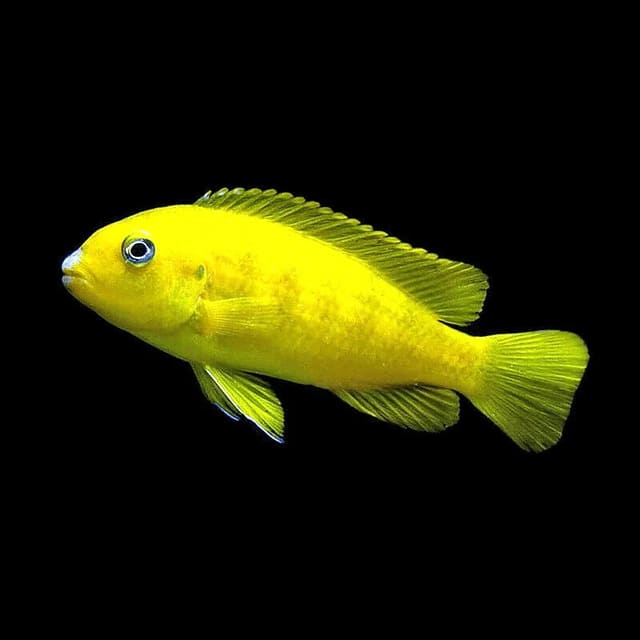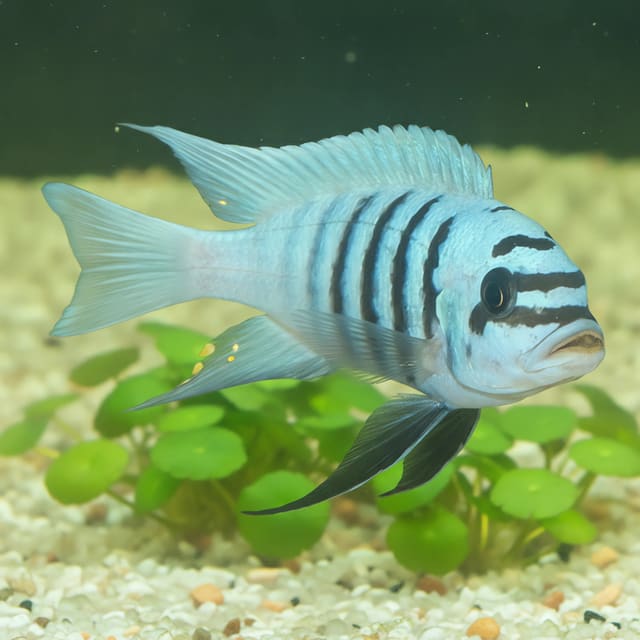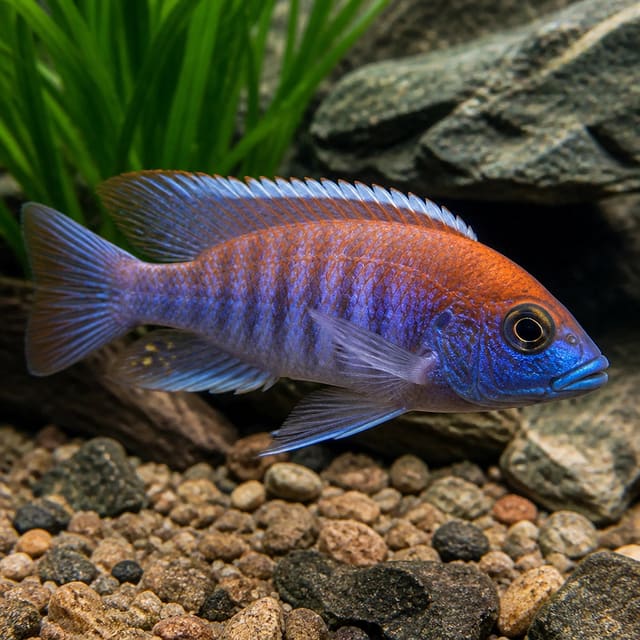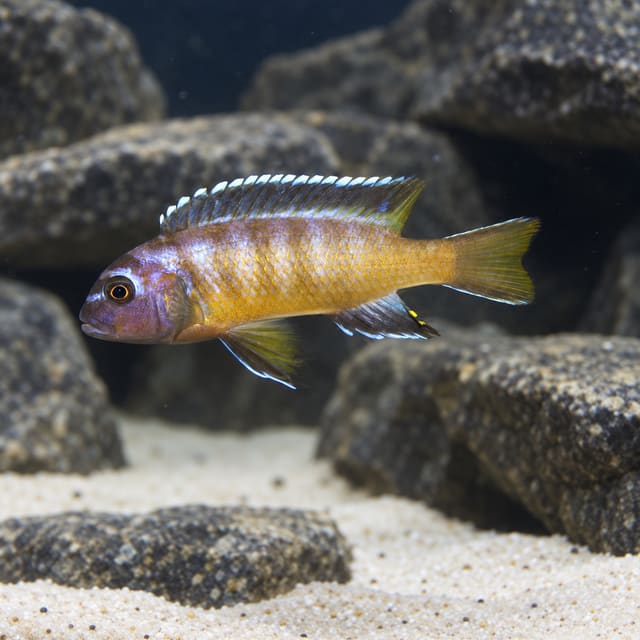
Moderate
Acei Cichlid (Pseudotropheus sp. “acei”)
24–26°C · pH 7.5–8.5 · 300L
£7.99

Red and Blue Zebra Mbuna Mix is a bold Lake Malawi rock cichlid for experienced keepers who can provide hard alkaline water, abundant rockwork, a planned group and robust filtration.
Adult size is the maximum length this species reaches at full maturity (scientific sources). The livestock you receive will be younger and smaller — pick a size above for the actual shipping size. Product-photo provenance and any image-specific limitations are stated on the listing.
Pseudotropheus zebra
Shoaling fish: kept in a group they feel safer, stay calmer and show their best colour.
Red and Blue Zebra Mbuna Mix is a bold Lake Malawi rock cichlid for experienced keepers who can provide hard alkaline water, abundant rockwork, a planned group and robust filtration.
Adult size is the maximum length this species reaches at full maturity (scientific sources). The livestock you receive will be younger and smaller — pick a size above for the actual shipping size. Product-photo provenance and any image-specific limitations are stated on the listing.
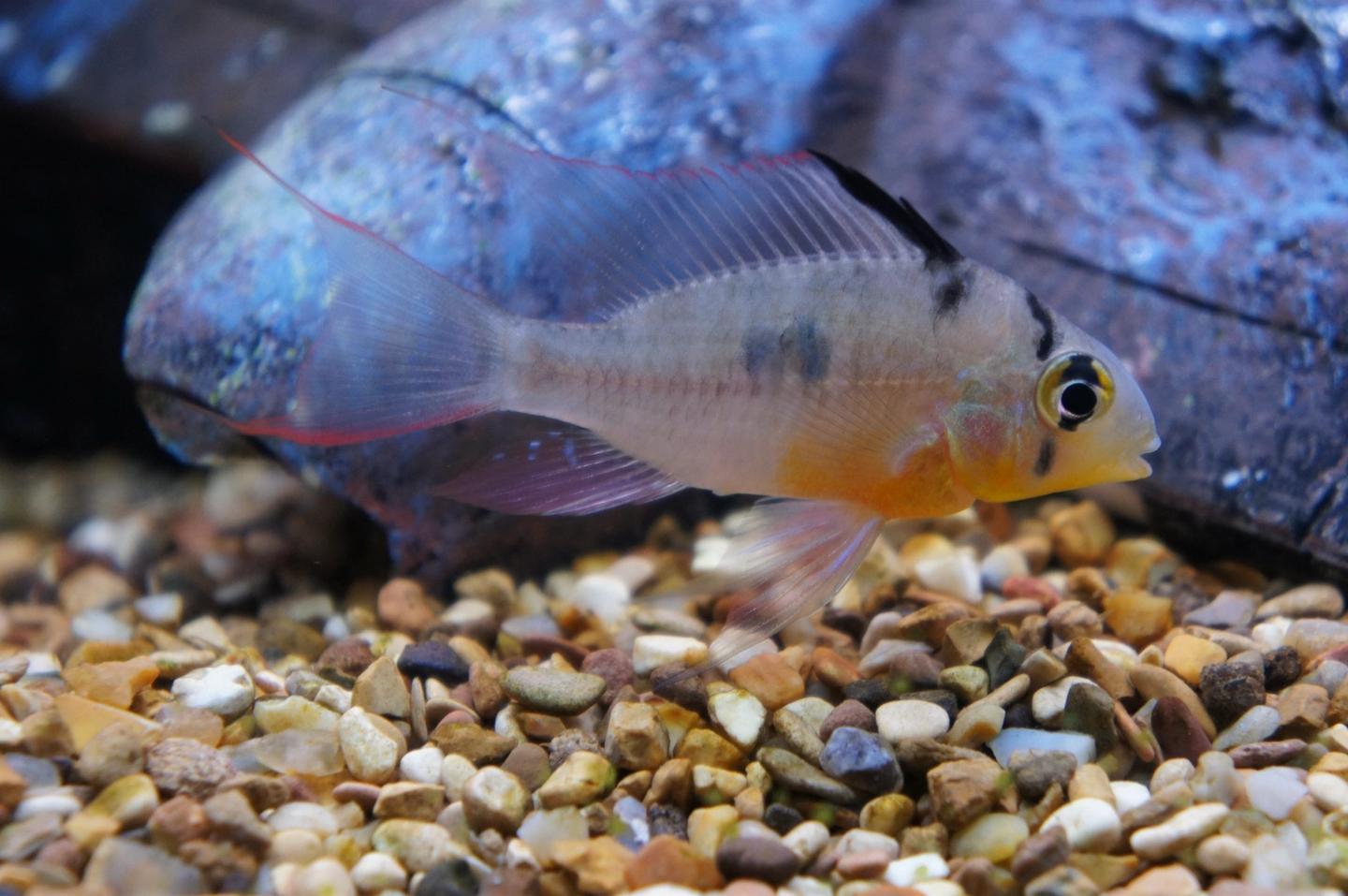
Cichlids are a family of roughly 1,800 accepted species, not one care type. Before buying, identify the exact species and source, then compare adult measurement, usable tank dimensions, social system, territory, tested water, diet and an exit plan. No family-wide minimum tank, water range or tank-mate list is safe.
Maintain these water conditions for optimal health and vibrant colors
The Red and Blue Zebra Mbuna Mix is the trade offer sold here under the familiar name Pseudotropheus zebra. Current FishBase taxonomy accepts Maylandia zebra and treats Pseudotropheus zebra as a synonym. That name bridge matters when researching the fish: the product title retains the established supplier identity, while current scientific references may file the same zebra mbuna under Maylandia.
This is a rock-dwelling Lake Malawi cichlid, not a general tropical community fish. It is active, assertive and among the more aggressive mbuna in aquarium care. A successful home combines a broad aquarium, hard alkaline water, extensive rock structure, excellent filtration and a social plan that does not leave one weaker fish absorbing all the pressure. Its manageable body length should never be mistaken for an easy temperament.
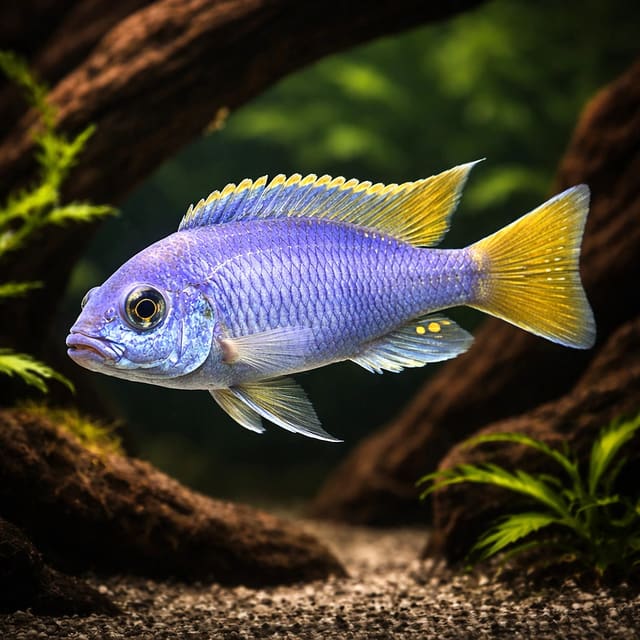
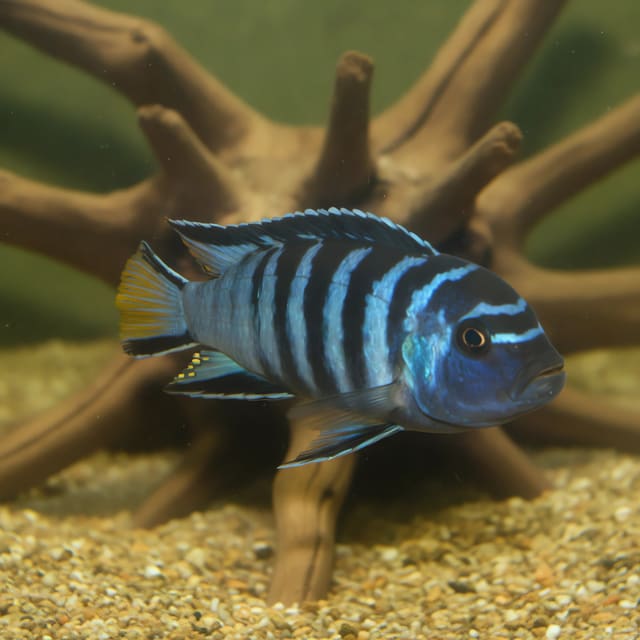
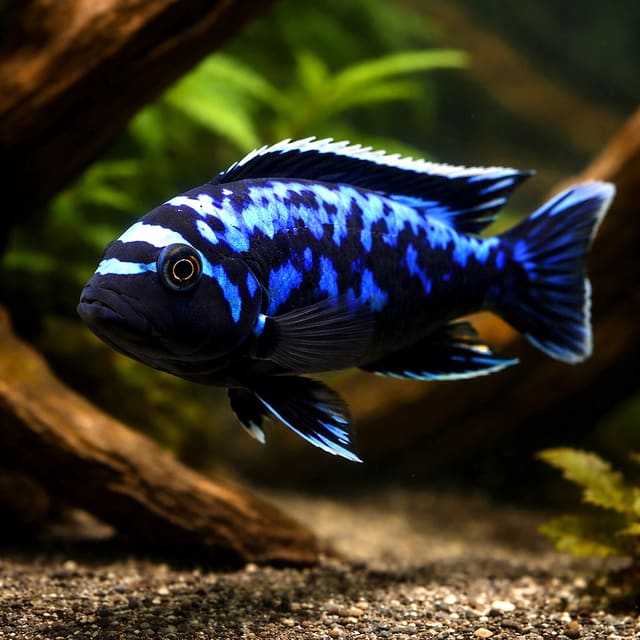
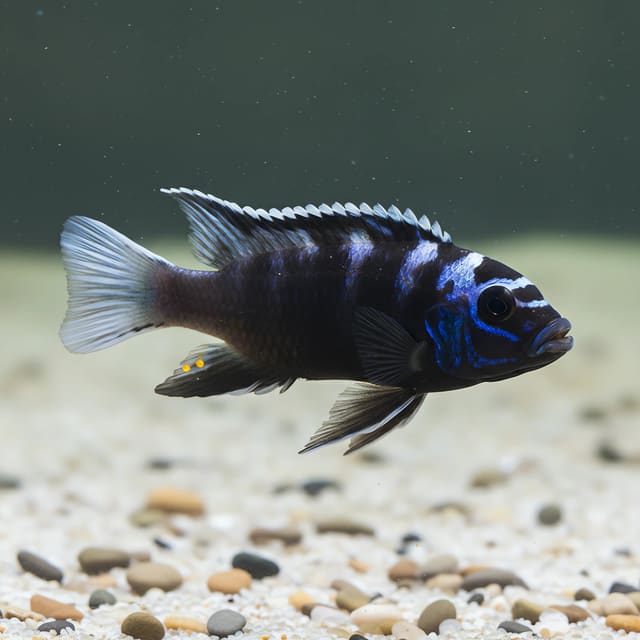
One purchase supplies one live fish in the size chosen. The listing covers 2–3 cm, 4–5 cm, 6–7 cm, 7–9 cm and XL size choices. Use the live selector for the sizes offered when ordering. The size you select is the size supplied, not the adult size. The words red, blue and mix describe the trade offer; they do not promise a chosen sex or an exact individual colour pattern.
FishBase records 11.3 cm standard length for the accepted species, while the specialist aquarium profile gives 15.2 cm standard length. Both figures exclude the tail fin, yet they are not identical. Treat this as a reason to plan conservatively around the larger husbandry profile rather than promising one exact final length for every fish. The animal also needs room for territories, rock piles and companions, so aquarium footprint is more useful than a simple centimetre-per-fish calculation.
| Trade identity | Red and Blue Zebra Mbuna Mix, sold as Pseudotropheus zebra |
|---|---|
| Accepted scientific name | Maylandia zebra; FishBase treats Pseudotropheus zebra as a synonym |
| Native range | Rocky areas of Lake Malawi, including records around Likoma and Chizumulu islands |
| Recorded length | 11.3 cm standard length in FishBase; specialist aquarium profile gives 15.2 cm standard length |
| Long-term aquarium | Specialist minimum base 120 × 38 cm and about 205 litres; group and community plans may need more |
| Routine aquarium water | 22–28°C, pH 7.6–8.6 and 10–25 dGH |
| Feeding emphasis | Vegetable matter as the basis, with protein-rich treats used sparingly |
| Keeper fit | Advanced social and compatibility planning despite otherwise straightforward daily maintenance |
The species profile recommends a 120 × 38 cm base and roughly 205 litres as its minimum aquarium. It also advises one male with three females and no more than one male in a tank below 200 litres. Those ratios apply where adult sex is genuinely known. This listing has no sex-guaranteed option, and juvenile sex cannot be assumed from a label, small fish or photograph, so build flexibility into the plan rather than buying an unsexed mix as if it were a confirmed harem.
The taxonomic name difference does not create two care profiles or two products. Whether a reference uses Maylandia zebra or the synonym Pseudotropheus zebra, confirm that it describes the Lake Malawi zebra mbuna before applying it. Do not assume that every fish carrying “zebra” in a common name is the same species or can share the same social arrangement.
| Well suited to | An experienced Malawi keeper with a mature hard-water aquarium, securely built rockwork, strong biological filtration and a credible separation plan. |
|---|---|
| Poor fit for | A peaceful community, small aquarium, soft acidic water, delicate peacocks, tiny fish, shrimps, or a buyer expecting colour or sex selection. |
Before ordering, confirm five practical points: the aquarium has at least the specialist 120 cm footprint; its filter is biologically mature; the measured water fits the hard alkaline species range; the rockwork cannot be undermined by digging; and every resident is a defensible Malawi companion. Then identify where a newcomer can retreat and where it can be separated if the introduction fails. This short check is more useful than relying on the fish's small dispatch size or hoping that extra caves can cure an unsuitable community later.
Choose this fish because you want the behaviour of a robust zebra mbuna as well as its colour. It grazes surfaces, investigates crevices and defends access to space. If you mainly want a calm display fish for a mixed community, a different species is the kinder choice. The first aquarium guide is a useful starting point for maturation and equipment, but a Malawi setup requires additional attention to hard water, rock security and aggression.
Sex is guaranteed only when the selected option explicitly states male or female. This Red and Blue Zebra Mbuna Mix listing has no sex-guaranteed option.
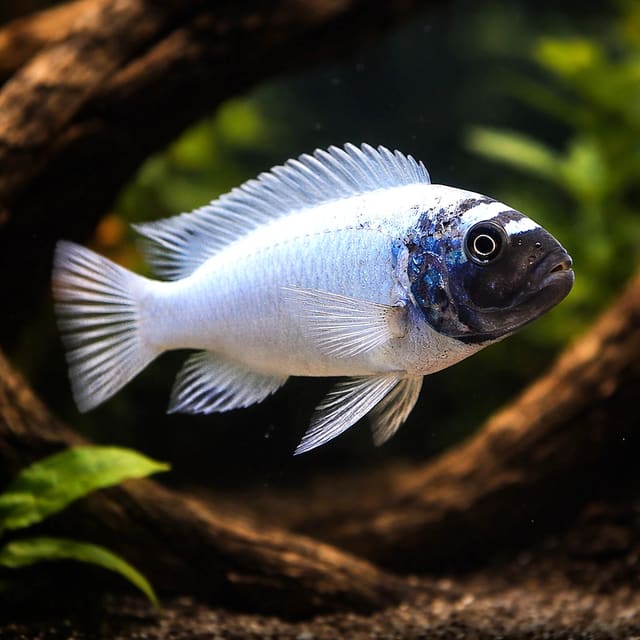
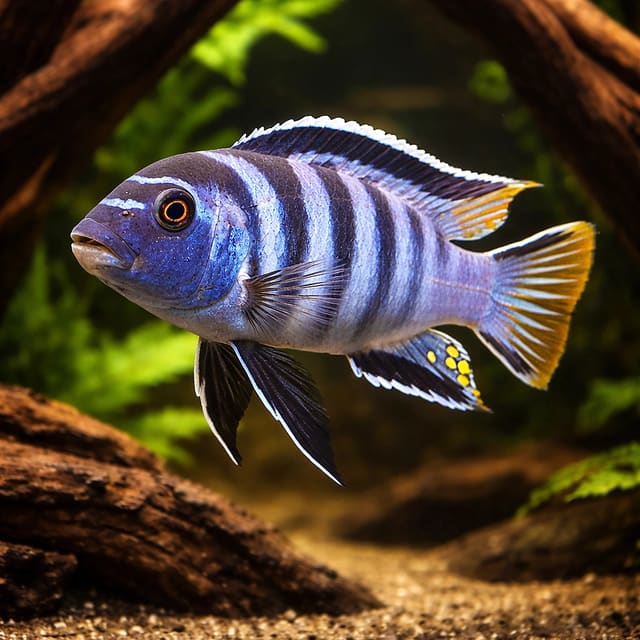
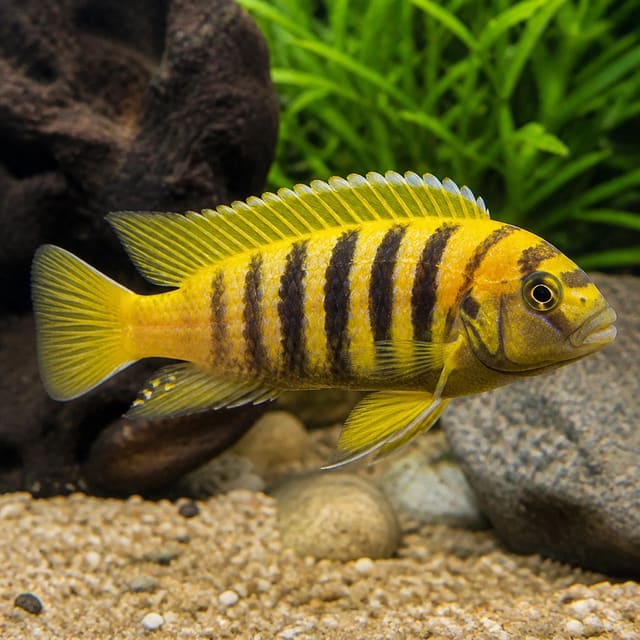
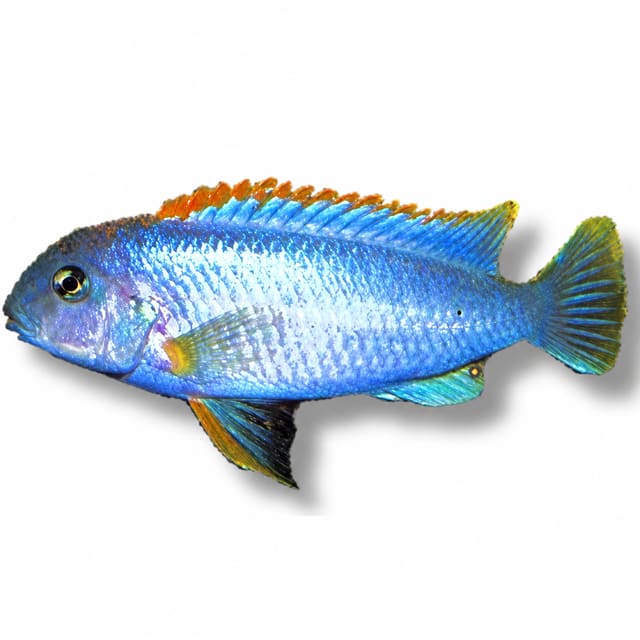
Gallery images have been digitally enhanced to improve image quality. Natural colour, pattern, size and maturity can vary between live animals.
The species-level aquarium profile gives a base of 120 × 38 cm and about 205 litres, also presenting 120 × 45 × 37.5 cm at approximately 213 litres. Use the 120 cm length and adequate front-to-back room as the essential planning point rather than treating nominal volume alone as permission. Rockwork removes usable water and floor area, and a group or Malawi community may need substantially more room than the minimum example.
Aquarium length lets fish move between territories, while width allows caves and sight breaks without reducing the entire foreground to a narrow corridor. A tall, short tank does not provide the same function. Position the aquarium where the floor, stand, electrical supply and maintenance access can safely support a heavy rock-and-water system.
Plan the finished adult stock before buying juveniles. The smallest dispatch size still grows into the same territorial species, and a future upgrade is not a present habitat. Choosing a larger dispatch fish changes the introduction dynamics but does not reduce the final care requirement. Compare the newcomer's size with established residents so it is neither easy prey nor an overwhelming new dominant.
Zebra mbuna come from rocky Lake Malawi habitat. The specialist profile recommends a typical Malawi layout with much of the aquarium filled by rock piles that form caves and crevices, ideally over sand. Place heavy base rocks securely on the tank base or a suitable load-spreading support before loose sand is added, so digging cannot undermine them. Test every structure by hand before filling the aquarium.
Create several routes through and around the rocks, not one prized cave that every fish must contest. Broken sight lines allow a chased fish to leave the aggressor's view. Retain open sand and swimming lanes so the aquarium does not become a solid wall. Smooth, stable surfaces reduce injury risk when fish dart through gaps.
Bright lighting can encourage algae and its associated microorganisms on the rocks, providing natural grazing opportunities. Light still needs a regular day-and-night rhythm and shelter must remain available. Algae on suitable rock surfaces is part of the habitat; it does not replace a balanced diet or normal maintenance.
Plants are optional and may be disturbed by digging. If plants are used, choose robust specimens whose water requirements match the hard alkaline aquarium and protect their attachment points. Do not compromise the rock layout, swimming room or water chemistry to preserve a planted-aquarium style that conflicts with the fish's needs.
The specialist profile recommends 22–28°C, pH 7.6–8.6 and 10–25 dGH for aquarium care. FishBase reports wild environmental values of 22–28°C, pH 8.0 and 9–19 dH. OATA's broader Malawi guidance gives 23–27°C, pH 8.0–8.6 and hard water. These ranges have different scopes; for day-to-day care, choose a stable point within the species-level aquarium range that also suits every other animal rather than repeatedly moving between the extremes.
Measure the source water and the aquarium before purchase. The water chemistry guide explains what pH, hardness and nitrogen-cycle readings mean, while the water matcher helps compare actual readings with the stated range. If water needs adjustment, use a consistent, measured method. Sudden swings created in pursuit of a perfect number are more dangerous than a stable, suitable value.
Temperature should be confirmed with a separate thermometer. Heater dials and display readings can drift. Position heating and water movement so the aquarium does not contain a hot, stagnant corner, and protect equipment from direct contact with shifting rocks. Check that the system can remain safely oxygenated during warm weather, when water naturally holds less oxygen.
The RSPCA describes the biological filter's central job: toxic ammonia from fish waste is converted to nitrite, which is also toxic, and then to safer nitrate. A mature filter is therefore essential before livestock is added. Clear water is not proof of biological maturity. Test ammonia and nitrite and require both to remain at zero.
The specialist profile illustrates a turnover of four to five times aquarium volume per hour for its example aquarium. OATA's broad Malawi advice recommends oversized filtration and vigorous aeration where a busy cichlid community creates a high load. Treat quoted pump rates as a starting point, because media, pipework and head height reduce real flow. Observe circulation, surface movement and debris collection throughout the built aquascape.
OATA gives weekly 25% partial water changes as broad guidance. Adjust the schedule to the actual nitrate trend, stocking and feeding while keeping replacement water close in temperature and chemistry. Treat tap water for chlorine or chloramine before it enters the aquarium. Siphon accessible debris without destabilising the rocks or stripping every grazed surface clean.
Do not run filter media under the tap because chlorine or chloramine may kill beneficial bacteria. Rinse reusable media lightly in removed aquarium water when flow falls. Avoid aggressively cleaning all biological media, the substrate and the entire décor on the same day. Staggered maintenance preserves stability and makes it easier to identify the cause if water quality changes.
Before livestock arrives, run the complete system and establish the biological filter. Use repeatable tests to confirm zero ammonia and zero nitrite, a stable temperature and water chemistry within the intended range. Water conditioner removes or neutralises disinfectants as directed; it does not by itself create a mature colony of filter bacteria.
OATA warns that increasing stock too quickly can cause new tank syndrome because the filter's bacterial population has not expanded to meet the added waste. It also advises adding Malawi cichlids in groups to avoid one newcomer becoming the sole focus of aggression. These biological and social needs must be balanced. Do not crowd an immature filter to solve aggression, and do not insert a lone small fish into a hostile established group simply to protect the filter.
Plan additions with the real sizes, sexes where genuinely known, temperament and aquarium capacity in view. After a change, monitor water results and behaviour more closely than usual. Observe feeding, access to caves, breathing and whether any one fish is persistently trapped away from the group. Keep a mature, suitably sized separation option available.
FishBase describes the species combing loose material from the biocover on rocks and also feeding on plankton in open water. The aquarium profile says it accepts many foods but vegetable matter should form the basis of the diet. Suitable staples include quality Spirulina flakes or pellets and other algae-based foods, with blanched spinach, nori and comparable green foods used appropriately.
Live or frozen bloodworm, Artemia and similar items may be offered as limited treats rather than the daily base. The species profile specifically advises against excessive protein and warns never to feed beef heart or other animal meat because it interferes with digestion. This is not a general-purpose predator diet; rich food offered for colour can work against the animal's digestive needs.
Feed portions the group can finish without leaving food to decay. OATA's broad Malawi sheet suggests only what the fish can consume within a few minutes, twice a day; use that as an observation principle rather than an automatic ration for every aquarium. The specialist profile notes a tendency towards obesity, so assess body condition and reduce excess rather than interpreting eager feeding as proof that more is needed.
Spread food across more than one area when a dominant fish blocks access. Watch each individual, particularly after an introduction. If one fish remains thin while others gain weight, review social pressure and feeding distribution before increasing the total amount. Uneaten food increases the filter burden and can hide among rocks.
Use each water change to inspect the aquarium from several angles. Check whether caves remain open, sand has been excavated from beneath a supporting rock, debris is collecting in a low-flow pocket or a fish is spending more time out of sight. Mbuna continually interact with the hardscape, so a layout that was secure and functional on day one still needs periodic inspection.
Record temperature, pH, hardness where it can vary, ammonia, nitrite and nitrate alongside the date and amount of water changed. Trends reveal more than isolated readings. A gradual rise in nitrate may reflect increased feeding, growing fish, reduced plant uptake or declining filter flow. A sudden ammonia or nitrite reading needs immediate attention because it indicates the biological system is not processing waste safely.
Watch the fish before maintenance, when the tank is quiet, and again after feeding. This helps separate a normal response to a siphon or hand in the aquarium from a persistent behavioural change. Note which fish controls each cave and whether all individuals emerge to eat. Photographs taken for private husbandry records can help compare body condition and fin damage over time; appearance alone is not reliable evidence of a dispatched fish's sex.
Keep replacement water preparation consistent. If the tap supply changes seasonally or after local work, test it before a large water change. Match temperature closely and avoid large, unexplained chemistry shifts. The objective is a repeatable routine that the keeper can sustain for years, not an elaborate correction performed only when something looks wrong.
Read the current delivery and Live Arrival Guarantee policy before dispatch. Someone must be present to receive live fish. Prepare the mature aquarium, testing equipment and a calm working area in advance rather than opening the box while still adjusting the habitat.
These steps are introduction guidance, not a treatment method. If the fish appears unwell after arrival, check water quality and seek appropriate advice. Do not dose the display aquarium speculatively or use a small uncycled container as a substitute for a properly prepared observation system.
Healthy mbuna should be alert, able to hold position, interested in suitable food and able to move between rock areas without constant panic. OATA's broad warning signs include surface hanging, bottom sitting, erratic swimming, unusually rapid or slow breathing, persistent darkening or paling, damaged fins or scales, spots, growths, changing body condition and reduced appetite.
These signs do not identify a single disease. Test temperature, ammonia, nitrite, nitrate and pH, review recent additions and maintenance, and look for social exclusion. Seek qualified advice before medication. Treating blindly can stress the fish and obscure a water-quality or aggression problem that medicine cannot solve.
A large rock-filled cichlid tank is difficult to move at short notice. Keep spare essentials appropriate to the system, know how to maintain aeration during a power interruption and make sure another responsible person can find the test kits, conditioner and feeding instructions. Any contingency should preserve oxygenation and stable temperature without adding unmeasured chemicals.
Do not compensate for missed maintenance with a sudden complete clean. Resume with measured tests, a suitable partial water change and inspection of filter flow. If equipment has stopped for long enough that filter media may have lost oxygen, assess it carefully before circulating stagnant water back through the display. When uncertain, obtain qualified aquarium advice rather than guessing.
The aquarium profile calls zebra mbuna one of the more aggressive mbuna and explicitly says it is unsuitable for the general tropical aquarium. Build the community around robust Lake Malawi fish with comparable hard-water needs and enough confidence to feed, while recognising that matching chemistry alone does not prove compatibility.
OATA's broader Malawi guidance recommends keeping Malawi cichlids with other Malawi cichlids or certain Synodontis catfish that naturally occur in the lake. The species profile is more specific about avoiding gentle mbuna and Aulonocara peacock cichlids. Use the narrower warning for this fish: do not place a peaceful peacock or timid cichlid into the display merely because both come from Malawi.
The African cichlid collection is a place to browse possibilities, not a compatibility chart. Research the adult size, temperament, diet, feeding speed and precise habitat of every proposed fish. Similar colour can also provoke conflict between closely shaped cichlids, so appearance should be considered alongside behaviour rather than used as the only selection rule.
For a genuinely sexed group, the species profile recommends three females for each male and no more than one male below 200 litres. The breeding section similarly describes a male with at least three females. This can spread a male's attention, but it does not guarantee peace and it does not mean four fish are automatically suitable for the smallest possible aquarium.
This retail offer does not promise sex, and juveniles may not show dependable adult differences. Dominant adult males can become more vividly coloured, with stronger egg spots and a developing forehead hump, but those traits are not a method for guaranteeing the sex of a dispatched juvenile. If the group develops an unsafe ratio, the keeper needs space and a humane plan to separate or rehome fish.
OATA gives a broad Malawi-community example of at least 15 fish and controlled overstocking to spread aggression. That is not a species-specific instruction to add fifteen zebra mbuna, nor permission to exceed a filter or aquarium's capacity. Overstocking changes where aggression lands but increases waste, oxygen demand and feeding competition. It is an advanced whole-system decision, never a substitute for space and observation.
Use multiple caves and visual barriers so a subordinate fish can leave direct view. Avoid dead-end holes where a fish can be trapped. At feeding time, distribute the plant-based food over enough area that one dominant fish cannot take everything. Look for repeated patterns, not only dramatic fights: loss of feeding access, torn fins, rapid breathing and permanent hiding all indicate a failed arrangement.
Rearranging some décor can disrupt established territory when suitable fish are introduced, as OATA notes. Preserve rock stability while doing so. A layout change cannot make a gentle or chemically mismatched species compatible, and it cannot create extra biological capacity. Retest water and inspect the structure after any major rearrangement.
Have a divider or a sufficiently large, mature spare system ready before an introduction. A bucket or tiny hospital tank is not a long-term aggression plan. If the same fish is repeatedly targeted, separate safely and reassess stocking rather than waiting for severe injury.
Chasing, colour change and fin display are part of mbuna communication, but normal behaviour still allows fish to rest, feed and move around the aquarium. A subordinate animal should not spend the whole day pressed behind a heater, at the surface or inside one dead-end cave. Repeated torn fins, rapid breathing after pursuit, weight loss and refusal to emerge are practical signs that pressure has become harmful.
Observe at different times. A community can look calm when people approach because every fish expects food, then become hostile once feeding ends. Watch after lights-on, around favourite caves and as fish settle for the night. Look at the whole group rather than following only the most colourful dominant animal.
When intervention is needed, reduce immediate danger first and then review the cause. More caves can help only if they are usable and the aquarium still has enough space. A different stocking balance can help only if filtration and adult capacity remain adequate. Removing the target without changing anything may simply cause the aggressor to choose the next fish.
A fish can share the same water yet still be a poor companion if it needs a richer diet or feeds too timidly. Zebra mbuna should receive vegetable-centred food, while repeated high-protein feeding intended for another species conflicts with its care. Conversely, a gentle fish that waits for food may lose every meal in a fast mbuna group.
Choose companions whose normal feeding can be supported without forcing either species into the wrong diet. Deliver food in a way that reaches all intended animals and monitor body condition. If two species can coexist only by chronic overfeeding, they are not a sound match for that aquarium.
The species is a maternal mouthbrooder. A dominant male may intensify display and court females around selected rock or sand areas, and a holding female may withdraw from normal feeding. This behaviour can increase social pressure. Give females retreat space and avoid unnecessary disturbance.
Breeding is not required for good welfare, and this listing does not supply a confirmed breeding ratio. Anyone deliberately breeding the species should consult detailed specialist guidance, provide for fry before spawning and avoid improvising interventions from a brief product page. Stable water, appropriate vegetable-based feeding and safe group structure remain the first priorities.
Resolve these practical questions before adding this territorial Malawi fish.
FishBase records Maylandia zebra, the accepted name for Pseudotropheus zebra, at 11.3 cm standard length. The specialist aquarium profile gives 15.2 cm standard length, so plan conservatively for a robust fish in that broader size range.
The species profile gives a minimum base of 120 × 38 cm and about 205 litres. A mixed Malawi community, uncertain sex ratio or additional territorial fish can require a larger footprint and greater filtration capacity.
Where adult sex is confirmed, specialist guidance recommends one male with at least three females and no more than one male below 200 litres. This unsexed offer cannot guarantee that ratio, so keep a flexible separation plan.
It is better for an experienced keeper. Daily maintenance is straightforward in a mature tank, but its aggression, sex-ratio uncertainty, hard-water needs, rock security and community planning make it an advanced social setup.
Make vegetable matter the basis of the diet, using quality Spirulina or algae-based foods with suitable greens. Live or frozen foods can be occasional treats; avoid excessive protein, beef heart and other animal meat.
Species-level aquarium guidance is 22–28°C, pH 7.6–8.6 and 10–25 dGH. Keep the water stable and hard alkaline, with zero ammonia and zero nitrite in a mature filtered aquarium.
Yes, zebra mbuna is among the more aggressive mbuna and should not be treated as a peaceful community fish. Rockwork, sight breaks and a planned group help manage pressure, but unsuitable companions can still be chased or injured.
Consider robust Malawi mbuna with comparable size and temperament, or an individually researched Lake Malawi Synodontis. Avoid gentle mbuna, Aulonocara peacocks, small peaceful fish, shrimps and soft-water species.
Tropical Fish Co hand-packs live fish in oxygenated bags inside an insulated box, with a heat pack when conditions call for it, and uses a tracked licensed live-animal courier. Be present, inspect the parcel the same day and record the sealed continuous unboxing required for any Live Arrival Guarantee claim.
The product title retains the supplied Pseudotropheus zebra identity, while current FishBase taxonomy accepts Maylandia zebra. Care numbers keep their original scope so wild environmental records are not presented as the only aquarium target.
One purchase supplies one live fish in the chosen dispatch size. No size is a promise of adult length, sex or exact colour. Packing, delivery attendance and claim evidence follow the current store policy linked in the care section.
No reviews for this item yet. Bought one? Honest reviews only, good or bad.
What customers say about ordering from us
I have a small group of long finned mountain minnows. So was delighted to be able to order ten of this variety to increase the genetics in my tank . The ones I recieved are healthy but it’s to early to give a verdict on wether they are of a long finned type since they are small currently.
Gordon Walker · 23 Sept 2026
100% success travel and "installation". Pleased with quality of purchase. The Siamese fighter a bit "shy" so have not yet seen him at his best yet but looking good. Happy customer. GG
George E Garratt · 21 Sept 2026
Reviews of our shop, collected by Judge.me, an independent third-party review collector. Newest first.