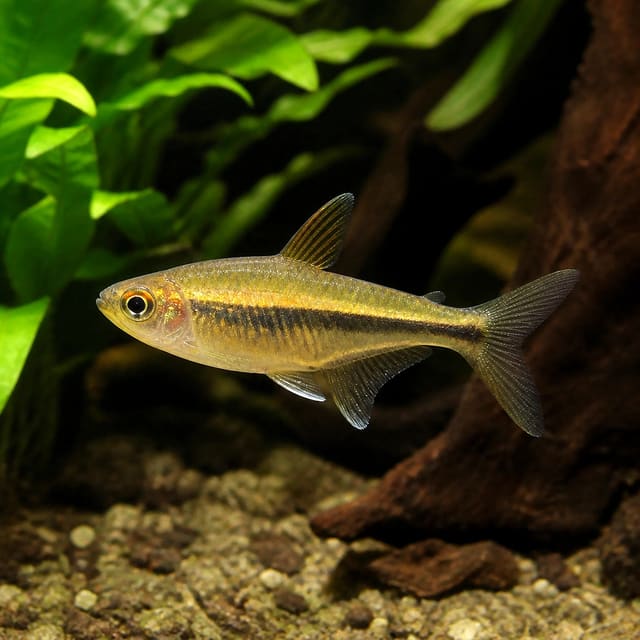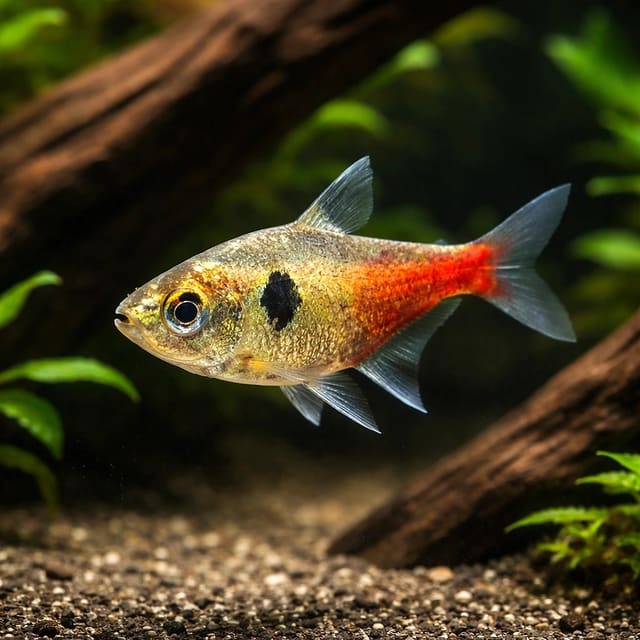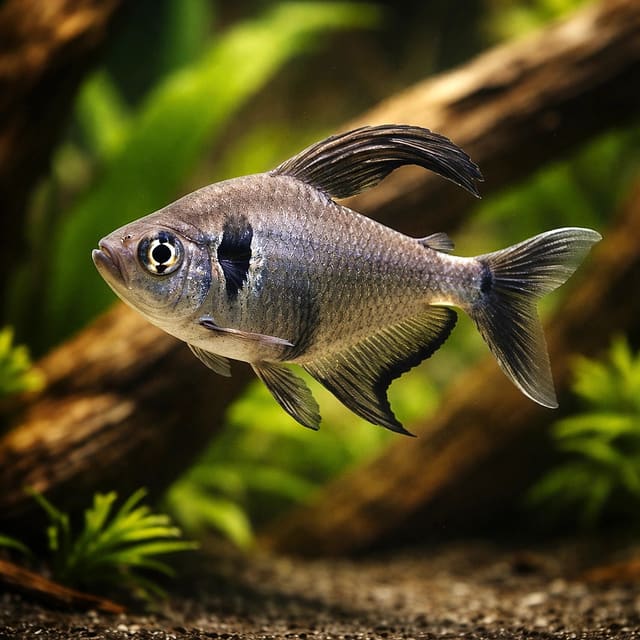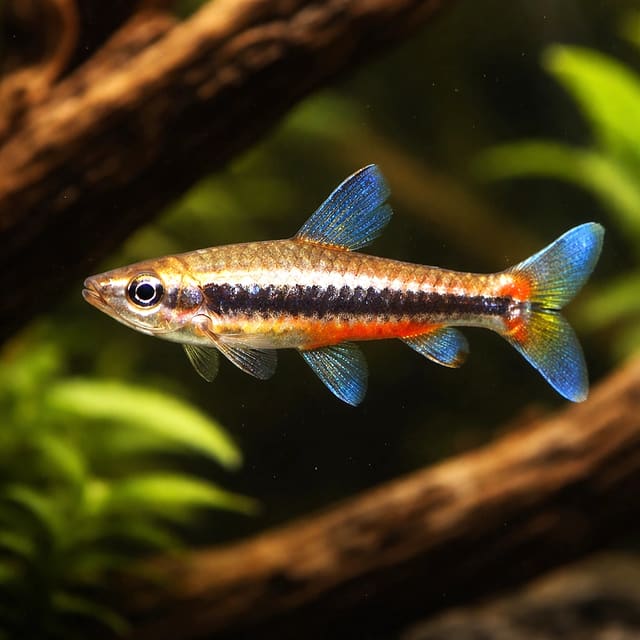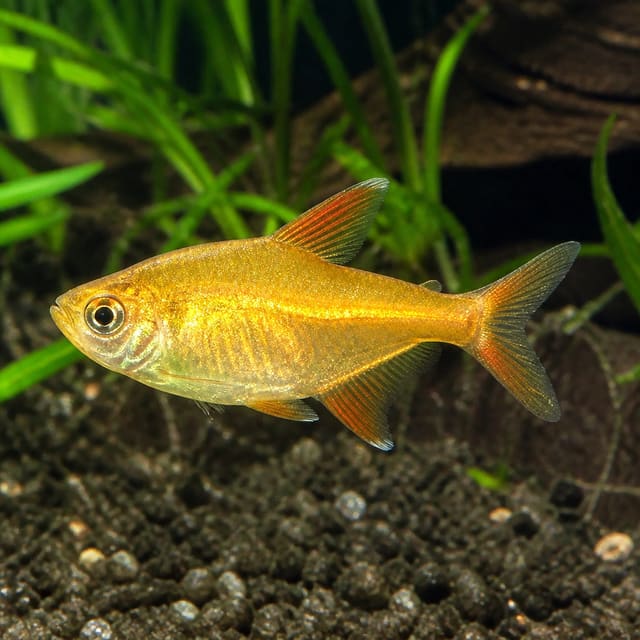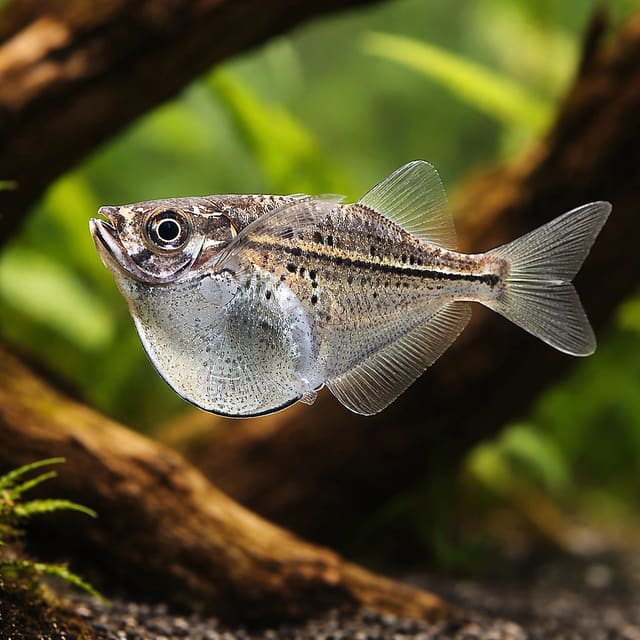
Blackwing hatchetfish (Carnegiella marthae)
23–27°C · pH 5.5–6.5 · 54L
£5.99

Add X Royal Tetras to your community aquarium for elegant colour and calm behaviour. Moderate care tropical fish with live arrival guarantee and UK delivery.
Adult size is the maximum length this species reaches at full maturity (scientific sources). The livestock you receive will be younger and smaller — pick a size above for the actual shipping size. Product-photo provenance and any image-specific limitations are stated on the listing.
Shoaling fish: kept in a group they feel safer, stay calmer and show their best colour.
Minimum of 2 per order.
Add X Royal Tetras to your community aquarium for elegant colour and calm behaviour. Moderate care tropical fish with live arrival guarantee and UK delivery.
Adult size is the maximum length this species reaches at full maturity (scientific sources). The livestock you receive will be younger and smaller — pick a size above for the actual shipping size. Product-photo provenance and any image-specific limitations are stated on the listing.
Maintain these water conditions for optimal health and vibrant colors
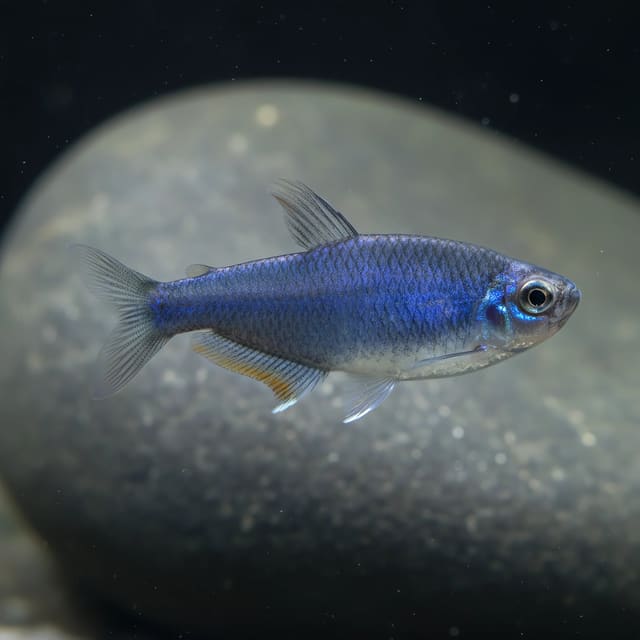
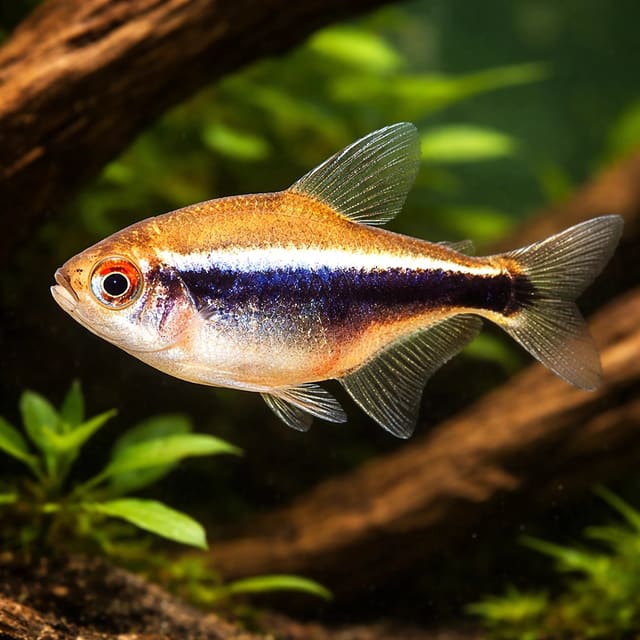
Royal Tetra (Inpaichthys kerri) is a small, peaceful South American tetra with a blue-violet sheen that becomes especially attractive in a mature planted aquarium. In the UK hobby it may also be sold as the Purple Emperor Tetra, Blue Emperor Tetra or Regal Tetra. These names should not be confused with the true Emperor Tetra, Nematobrycon palmeri, which is a different species.
Use the size selector on this page for the current supplied size, price and availability. The fish should be planned as a social group rather than as a single decorative specimen.
Common names for Inpaichthys kerri vary between shops and countries. “Royal Tetra”, “Purple Emperor Tetra” and “Blue Emperor Tetra” are all used for this fish. We use Royal Tetra as the main product name while including the familiar UK trade synonyms so customers can identify the correct species.
The scientific name is the most reliable reference. The true Emperor Tetra is Nematobrycon palmeri; it is not the same fish as Inpaichthys kerri.
This species is much more confident when kept with its own kind. A group of six or more is a sensible minimum, with eight to ten giving a more natural display where space allows. Rival males may posture and show stronger colour, but serious aggression is unusual in a suitably sized, well-structured aquarium.
For a small group, an aquarium around 60–80 litres or larger with good horizontal swimming space is a practical starting point. Larger communities need more room, particularly if several shoaling species share the middle of the tank.
A practical care range is around 24–27°C, pH 5.5–7.0 and soft to moderately hard water. The species is better suited to mildly acidic or near-neutral conditions than strongly alkaline water. Stability and clean water are more important than chasing one exact pH figure.
Ammonia and nitrite must remain at zero. Keep nitrate controlled and avoid sudden changes in temperature or chemistry during water changes.
Royal Tetras show their best colour in a mature aquarium with a darker substrate, wood, plants and some shaded areas. They can be kept in a natural blackwater-style layout or a well-maintained planted aquarium. Leave open midwater space so the group can swim and display normally.
Very bright, bare aquariums can make the fish appear washed out and more nervous. Floating plants or tall planting around the sides are useful for creating shade without blocking the swimming area.
Offer a varied diet of good-quality small flakes or micro-pellets together with suitably sized frozen or live foods such as daphnia, Artemia and cyclops. Smaller, regular meals suit the species better than large portions.
A varied diet supports body condition and colour. Remove uneaten food promptly so feeding does not undermine water quality.
Royal Tetras suit peaceful community aquariums with small tetras, pencilfish, hatchetfish, rasboras, peaceful dwarf cichlids and calm bottom dwellers such as Corydoras and Otocinclus. Choose companions that will not dominate food or repeatedly chase the shoal.
Avoid large predatory fish and highly boisterous species. Fin nipping can become more noticeable when this tetra is kept in too small a group, so social stocking is part of compatibility.
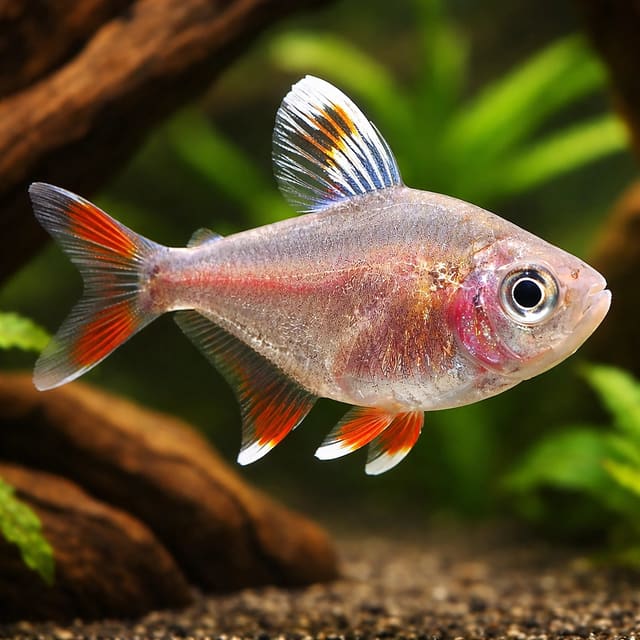
Mature males are generally more intensely coloured and slimmer, while females are fuller-bodied. Males may show blue tones in the adipose fin, whereas females can show more red in that area.
Royal Tetras are egg scatterers. Breeding is best attempted in a separate dimly lit aquarium with soft, acidic water and fine-leaved plants, spawning mops or a mesh that allows eggs to fall out of reach. Adults may eat eggs, so they are normally removed once spawning is complete.
Match temperature carefully and introduce new fish to a mature aquarium with stable chemistry. A quarantine period is strongly recommended before adding a new group to an established community, particularly where other valuable tetras are already present.
Watch for normal shoaling, feeding response, respiration and body condition during the first days. Faded colour immediately after transport is common and should improve as the fish settles.
Choose Royal Tetras if you want a peaceful blue-toned shoaling fish for a mature planted or naturalistic community aquarium. Reconsider if the tank is strongly alkaline, very small, or only has space for one or two fish.
The live size options on this page show current supplied size, price and stock. The care description stays focused on long-term husbandry rather than repeating temporary commercial details.
Independently collected by Judge.me from customers who bought this item. All reviews are shown.
Thanks