−14%
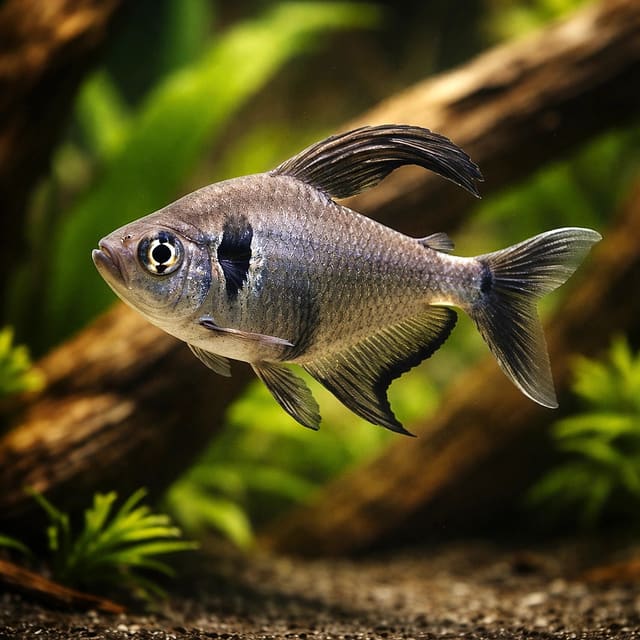
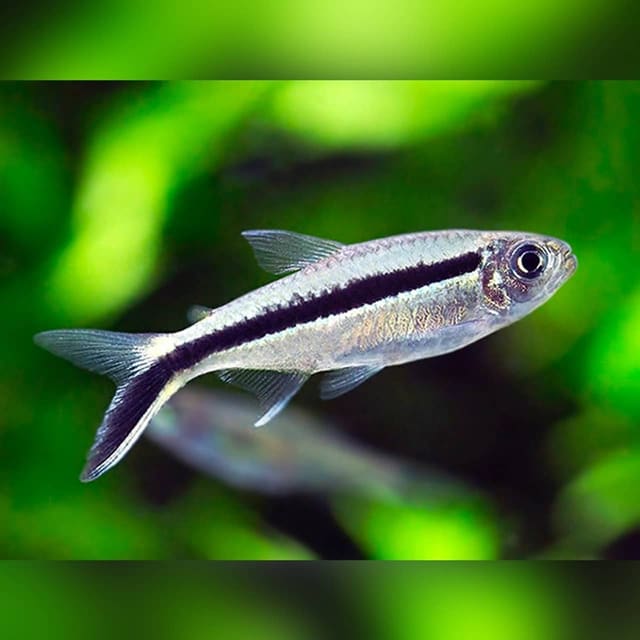
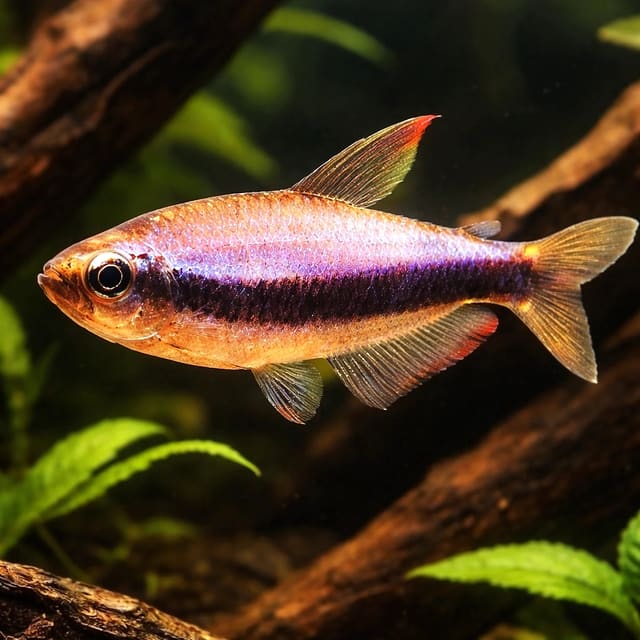
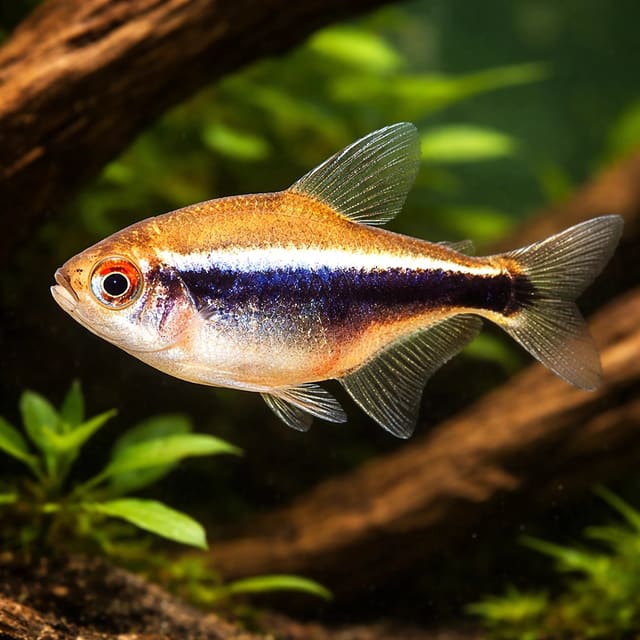
Black Neon Tetra (Hyphessobrycon herbertaxelrodi)
20–28°C · pH 5–7.5 · 72L
£2.57£2.99
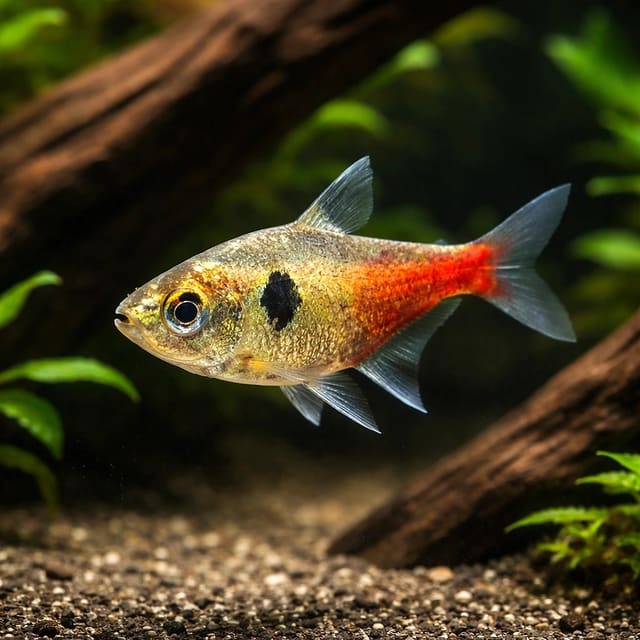
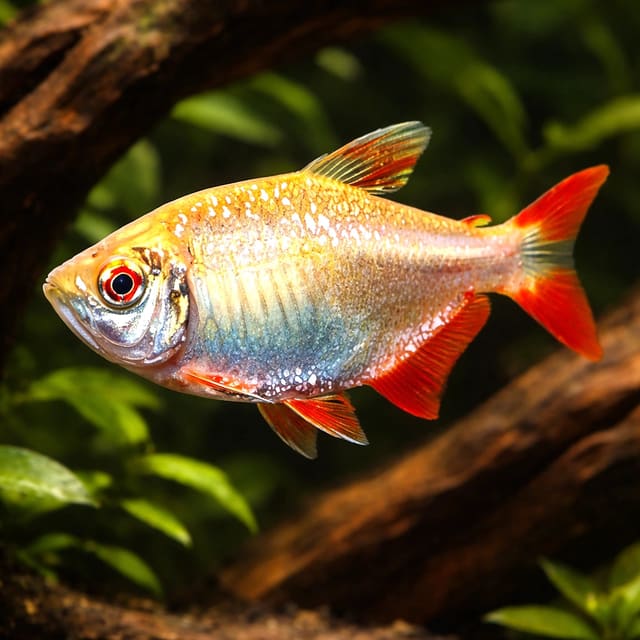
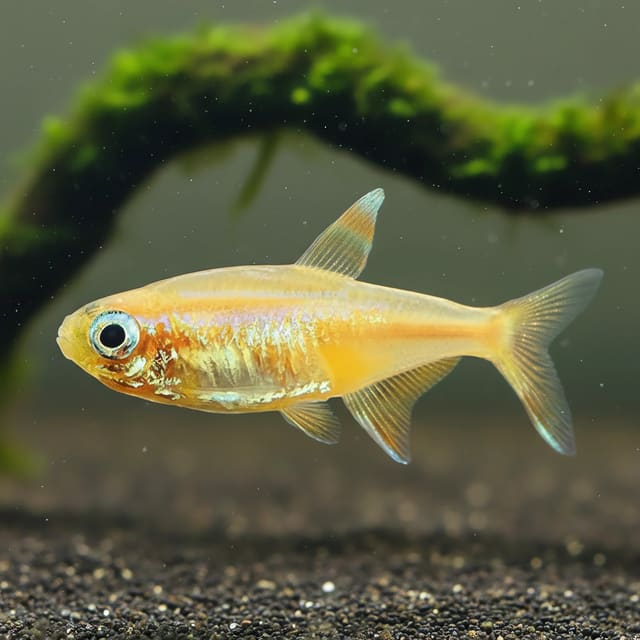
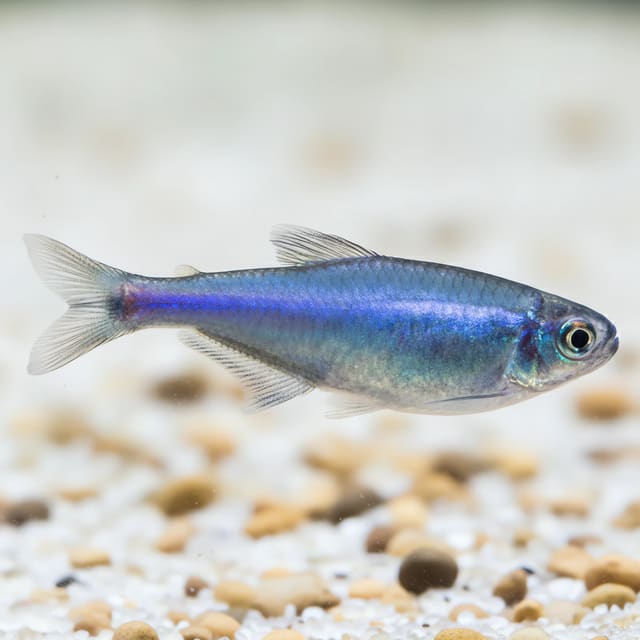
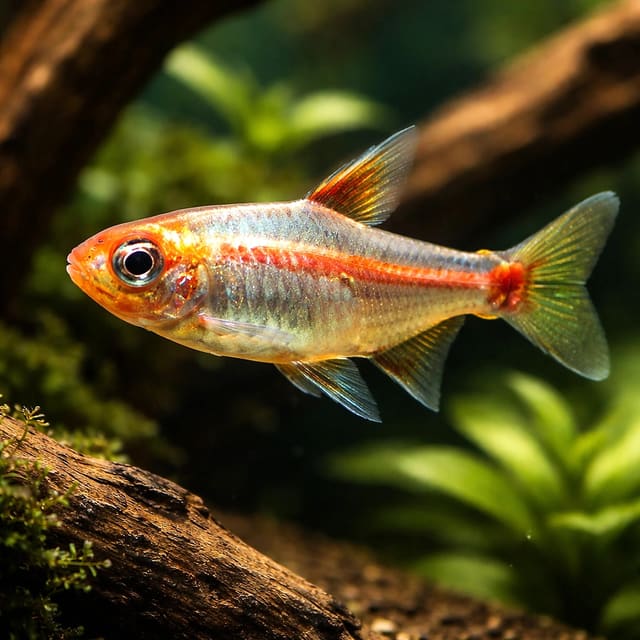
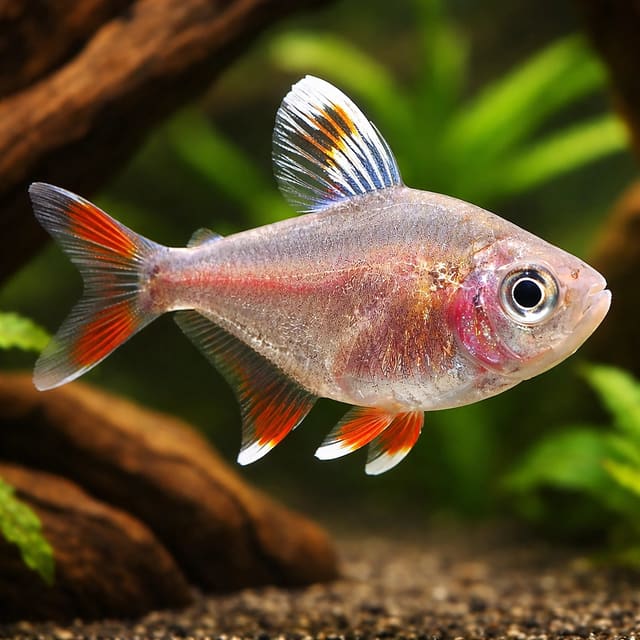
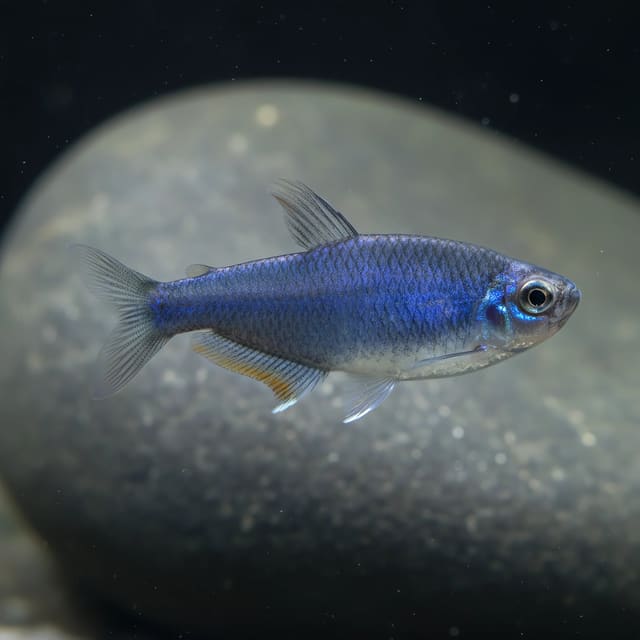
The Silver Tip Tetra (Hasemania nana) is an active South American tetra from Brazil's São Francisco River basin that reaches 5 cm standard length. Keep at least six, preferably ten or more where capacity allows, in about 68 litres or more at 23–27°C, pH 6.5–8.0 and 5–12 dGH. Sold individually in dispatch sizes from 2 cm to over 3 cm XL.
Adult size is the maximum length this species reaches at full maturity (scientific sources). The livestock you receive will be younger and smaller — pick a size above for the actual shipping size. Product-photo provenance and any image-specific limitations are stated on the listing.
Hasemania nana
Shoaling fish: kept in a group they feel safer, stay calmer and show their best colour.
Minimum of 2 per order.
The Silver Tip Tetra (Hasemania nana) is an active South American tetra from Brazil's São Francisco River basin that reaches 5 cm standard length. Keep at least six, preferably ten or more where capacity allows, in about 68 litres or more at 23–27°C, pH 6.5–8.0 and 5–12 dGH. Sold individually in dispatch sizes from 2 cm to over 3 cm XL.
Adult size is the maximum length this species reaches at full maturity (scientific sources). The livestock you receive will be younger and smaller — pick a size above for the actual shipping size. Product-photo provenance and any image-specific limitations are stated on the listing.
Maintain these water conditions for optimal health and vibrant colors
The Silver Tip Tetra (Hasemania nana) is a small, active member of the American tetra family from the São Francisco River basin in Minas Gerais, Brazil. One purchase supplies one fish in the selected size; plan the purchase as part of a shoal. It suits a keeper who can provide a mature, filtered aquarium, a proper shoal and enough horizontal swimming room. Plan for an adult maximum of 5 cm standard length: Seriously Fish records 50 mm standard length, while FishBase records 3.8 cm standard length. Using the larger figure gives the safer space and stocking calculation.
This is not a fish to add singly as a decorative accent. Its movement, social behaviour and occasional fin-nipping tendency make the group and tank footprint decisive. A base around 60 × 38 cm and approximately 68 litres is the species-level starting point, with more room needed when other active fish share the aquarium. Keep at least six, and prefer ten or more where the footprint, filtration and total stocking allow. The fuller shoal gives individuals more choice of companions and helps spread social attention.
| Suits | Not suited to |
|---|---|
| Mature, filtered freshwater aquariums | New or biologically unstable aquariums |
| Groups of six, preferably ten or more | Keeping one fish on its own |
| Active community fish of suitable size | Large fish that may treat it as food |
| Keepers able to test and stabilise water | Unplanned mixtures with slow, long-finned fish |
One purchase supplies one Silver Tip Tetra in the selected dispatch grade. The size grades are 2 cm, 2.5–3 cm and over 3 cm XL. The size you select is the size supplied, not the adult size. Build the aquarium and calculate stocking around the 5 cm planning maximum rather than the length at dispatch.
Sex is guaranteed only when the selected option explicitly states male or female. This Silver Tip Tetra listing has no sex-guaranteed option. Do not use colour intensity, body depth or the gallery to decide the sex of the animal that will arrive. Those features can vary with condition, maturity, lighting and individual appearance.
The three dispatch grades let you choose the size of fish you introduce, while the adult requirements stay the same. The 2 cm grade is a small fish that still needs suitably sized food and a full social group. The 2.5–3 cm grade sits between it and the over 3 cm XL grade; XL describes the dispatch grade, not a separate species or a promise that growth has finished. Choose the grade that fits the aquarium's existing fish and feeding arrangements, then reserve space for the adults.
Standard length measures the fish from the front of the snout to the base of the tail, excluding the tail fin. The adult records quoted here use that measurement. Dispatch size labels do not state the measuring method, so avoid treating them as a precise comparison with published adult standard lengths. Size alone does not establish age, sex or readiness to breed.
If you are comparing this fish with other small characins, browse the current tetra collection. The Neon Tetra (Paracheirodon innesi) is another small tetra to compare for a different appearance and care profile. Compare adult size, behaviour, water range, shoal requirements and footprint before combining species; a comparison link does not establish compatibility.
Decide how many fish the aquarium can support before choosing a dispatch grade. A smaller fish is not a way to fit the species temporarily into an undersized tank because its adult requirements remain the same. If you already keep a partial shoal, count the existing fish, confirm their identity and review the total adult load before adding more. Complete a sustainable social plan rather than simply filling spare visual space.
Use a mature aquarium with a base of about 60 × 38 cm and a volume near 68 litres as the starting point for a small shoal. The footprint matters because this tetra is active: open mid-water swimming room is more useful than a tall but narrow vessel. Increase the plan when the shoal is larger, when other quick swimmers share the same level, or when hardscape substantially reduces open water.
Keep a clear swimming lane through the middle and upper water while using plants and wood around the sides and rear to create visual breaks. The aim is not to crowd the fish into cover; it is to let an individual move out of another fish's line of sight without losing the open space the shoal needs. Secure décor before filling the aquarium and leave access for cleaning around it.
Start with a properly matured system. The first tropical aquarium guide explains the preparation sequence before livestock is introduced. Maturation is about establishing the biological filter that processes waste, not merely letting tap water stand. The RSPCA explains that fish release toxic ammonia, which a working biological filter converts first to nitrite and then to the safer nitrate.
A larger aquarium does not remove the need for testing or compatible stocking, but it generally gives more dilution and more freedom to separate activity zones. When choosing between two tanks of similar volume, favour the one with the more useful base dimensions.
Keep routine aquarium water at 23–27°C, pH 6.5–8.0 and 5–12 dGH. These values are the overlap between the species guidance from Seriously Fish and the broader OATA tetra guidance, while remaining inside FishBase's recorded environmental range. Aim for stability within the range instead of repeatedly adjusting the aquarium to chase one exact number.
Test the source water and the aquarium before choosing livestock. The water chemistry guide explains what pH, hardness and nitrogen readings mean, while the water matcher helps compare measured values with the range. Test with actual numbers; words such as soft, medium or hard can conceal large local differences.
| Reading | Action |
|---|---|
| Ammonia above zero | Stop adding fish, check filtration and take corrective water-quality action. |
| Nitrite above zero | Treat it as a toxic-water warning and correct the cause. |
| Nitrate rising unusually | Review stocking, feeding, maintenance and source-water readings. |
| Temperature drifting | Check heater operation and measure away from the heater. |
OATA's tetra guidance sets ammonia and nitrite at zero and advises nitrate no more than 20 mg per litre above the normal tap-water level. The comparison with tap water matters: test both so a source-water contribution is not mistaken for an aquarium-only problem.
Change water often enough to hold these readings stable, using conditioned replacement water close to the aquarium's temperature and chemistry. Avoid sudden, large shifts. Record results so gradual change can be noticed before behaviour or appetite deteriorates.
Choose filtration for the final livestock plan, not only the fish bought first. Seriously Fish gives a turnover of four to five times aquarium volume per hour for this species profile; for a 68-litre aquarium that corresponds to roughly 270–340 litres per hour. Treat the stated flow as a planning reference and assess the actual current after media, pipework and décor reduce output.
Biological media needs oxygenated water and time to establish. Do not replace all media at once, and do not clean it in a way that removes the bacterial population the aquarium depends on. The filter must keep working continuously unless the manufacturer gives a specific safe service procedure. If flow drops, inspect the intake, impeller and clogged mechanical media before assuming the unit is too small.
A turnover number alone cannot show where the current travels. Watch the entire shoal. Fish should be able to occupy the tank rather than being pushed into one sheltered corner, and waste should not settle throughout dead areas. Redirect the outlet or hardscape when circulation is uneven, while retaining the open lane used for social swimming.
More fish create more waste, so increasing the shoal or adding community species changes the filtration and maintenance requirement. A filter label cannot compensate for overstocking. Use observed behaviour, measured water quality and accumulated waste to judge whether the system is coping.
Offer a varied diet appropriate for a small tetra. Seriously Fish describes this species as readily accepting prepared foods, with small live or frozen foods such as bloodworm, Daphnia and Artemia helping support condition and colour. Choose particles the fish can take easily in mid-water; a food that is nutritionally suitable but too large is not useful.
OATA's tetra guidance recommends feeding only what the fish can eat within a few minutes, once a day. Start with a modest portion and watch whether every fish can feed. Remove or reduce food when particles pass through the group and settle. The correct portion is the amount the shoal consumes without leaving a residue that decomposes in the aquarium.
Do not use extra food to solve competition caused by an unsuitable group or cramped layout. Distribute the same sensible ration more effectively. A second feeding point can help when one area is dominated, provided the total amount remains controlled.
Changes in appetite can signal stress, water-quality trouble or illness. Check temperature, ammonia, nitrite and recent changes before adding richer foods. If one fish cannot feed, observe its breathing, posture, swimming and interactions with the group, and contact us if the change persists or is accompanied by visible deterioration.
Keep at least six Silver Tip Tetras, and prefer ten or more where the aquarium can support them. Seriously Fish says to buy no fewer than six and preferably ten or more. FishBase records aquarium keeping in groups of five or more, while OATA gives five as the broader tetra-group floor; the species profile's higher minimum is the safer product-specific instruction. Seriously Fish also notes that isolated individuals can be nippy and that this behaviour is reduced markedly in a group.
The minimum is a floor, not a promise that every group of six behaves identically. Use ten or more only where the aquarium footprint, filtration and total stocking allow. A fuller shoal can spread social attention, but crowding creates a different welfare problem. Count all adults at their 5 cm planning length when judging space.
| What you see | What to check |
|---|---|
| Repeated chasing of one fish | Group size, cover, swimming room and the target fish's condition. |
| Fin attention towards tank mates | Shoal size and whether slow or long-finned companions are a poor match. |
| Whole group hiding | Recent disturbance, water readings and larger intimidating tank mates. |
| One fish apart at feeding | Access to food, injury, breathing and water quality. |
Do not respond to persistent chasing by immediately adding unrelated species. Correct the shoal, space and layout first. If the aquarium cannot support a fuller group, the answer may be a different stocking plan rather than pushing the filter and space beyond their limits.
Observe at calm times as well as during feeding. Short displays and movement within the shoal are different from sustained exclusion, damage or inability to rest. Any torn fins or repeated cornering require prompt reassessment.
Be present to receive the parcel. Start filming before opening: show the sealed parcel and outer box, then open it in one continuous take and show the fish inside the sealed bag. Float the bag for 20–30 minutes before releasing the fish, and never pour the transport water into the aquarium. The current delivery and Live Arrival Guarantee policy gives the complete claim conditions and arrival instructions.
After release, observe breathing, balance and the ability to join the group. Keep the first feeding small. Check ammonia and nitrite after introducing livestock because the biological load has changed, even when the filter was mature beforehand.
During the first day, check posture, respiration and whether any fish is being persistently excluded. During the first week, record appetite, shoal interaction and nitrogen readings. By the first month, confirm that maintenance keeps nitrate controlled and that no companion repeatedly provokes or targets the tetras.
Do not make several major changes at once when a problem appears. Test water first, identify the immediate welfare risk, then adjust the relevant cause. This makes it easier to learn whether a change helped and avoids adding instability to an already stressed aquarium.
Use a repeatable maintenance routine built around test results and observation. OATA's tetra guidance strongly recommends this routine: at least once every week, carry out a partial water change of 25%. Test the water at least weekly.
Treat tap water with a conditioner that removes chlorine or chloramine before it enters the aquarium. Bring it close to the aquarium's temperature and avoid a sudden change in pH or hardness. Siphon solid waste from accessible substrate while leaving enough undisturbed habitat for the fish to settle quickly after maintenance.
Check the filter for blockage. When media needs cleaning, OATA says not to run it under the tap; rinse it lightly in water removed from the aquarium so less of the established bacterial population is lost. Never clean every biological component aggressively at the same time. Restore the equipment, confirm flow and re-check temperature before finishing.
If ammonia or nitrite is detectable, respond to the water-quality problem before adding livestock. The RSPCA aquarium guidance explains why a mature biological filter is essential for processing toxic waste. A maintenance checklist should reveal trends before the shoal becomes distressed.
Seriously Fish notes that the species adapts to several aquarium styles and can do particularly well in a heavily planted setup, even though aquatic plants are not a feature of its natural environment. A biotope-style layout can instead use sand, driftwood branches, twisted roots and thoroughly dried oak or beech leaves, with slightly dimmer lighting helping the fish show colour. Choose one coherent layout that still preserves the 60 × 38 cm swimming footprint.
Leaves and wood are functional décor only when they are aquarium-safe and placed where waste can still be removed. Do not let a natural-looking floor become an excuse to ignore trapped food or blocked flow. Plants can provide shelter around the margins while the shoal retains an open mid-water lane.
This species scatters adhesive eggs. Seriously Fish describes a separate, dimly lit breeding aquarium with fine-leaved plants or spawning mops, or a mesh that allows eggs to fall beyond the adults' reach. It also describes either group spawning with six specimens of each sex or pair spawning after conditioning males and females separately.
These details are useful for an intentional breeding project, but the ordinary product offer does not guarantee sex and colour cannot establish what sex will be supplied. Do not buy a non-sexed dispatch group on the assumption that it will contain a particular breeding ratio. A keeper pursuing breeding should first be ready with a separate setup and a plan for eggs and fry rather than trying to improvise inside the main community aquarium.
For most keepers, the priority is the adult shoal: stable water, sufficient swimming space, suitable companions and varied food. Breeding behaviour never overrides the need to protect the community from overcrowding or repeated disturbance.
Seriously Fish describes Silver Tip Tetras as suitable with most livebearers, danios, rasboras, other tetras, peaceful bottom dwellers such as Corydoras and smaller loricariids, and many commonly available gouramis and dwarf cichlids. These are candidate groups, not a universal permission. Each proposed companion still needs compatible water, sufficient adult space and a temperament suitable for an active shoal.
Seriously Fish specifically says not to combine the species with larger fish that may see it as food, giving angelfish as the example. Keep that exclusion unconditional. Do not assume a larger aquarium makes predation safe.
Bottom-dwelling fish still add to the total biological load even when they use another level. Likewise, two shoaling species each need their own adequate group; combining one or two of each does not create one correct shoal. Plan every adult group before purchase and check filtration against the total.
Silver Tip Tetras are lively community fish, but individuals kept alone may nip fins. Maintaining the proper shoal reduces that tendency; it does not make every possible companion suitable. Slow fish with long or trailing fins need particularly cautious screening because their movement and fins can make them poor partners for an active tetra group.
If fin attention appears, identify which fish initiates it, when it happens and whether one target is repeatedly cornered. Check the tetra group size, swimming room and cover before blaming feeding alone. Inspect the target for torn tissue, reduced feeding or inability to rest.
Do not add another species as a distraction. That increases stocking and can spread the problem. Compatibility is successful when every fish can feed, swim and rest without chronic pursuit, not merely when no immediate injury is visible.
Other fish linked from this page are choices to compare, not a ready-made tank-mate list. Assess each fish’s adult size, group needs, water requirements and behaviour independently.
Plan for 5 cm standard length. Seriously Fish records 50 mm standard length, while FishBase records 3.8 cm standard length; the larger figure is the conservative aquarium-planning maximum.
Use a base around 60 × 38 cm and approximately 68 litres or more for a small shoal, then increase space for a larger shoal or additional community fish.
Keep at least six Silver Tip Tetras, and prefer ten or more where capacity allows. Seriously Fish gives this species-level recommendation; FishBase and OATA give five as a lower floor.
It can suit a prepared beginner who has a mature filtered aquarium, tests water, keeps the full shoal and screens tank mates; it is not suitable for an uncycled tank or solitary keeping.
Offer varied small prepared foods plus suitably sized live or frozen foods such as Daphnia, Artemia and bloodworm; OATA advises feeding only what the fish eat within a few minutes, once a day.
Keep it at 23–27°C and pH 6.5–8.0, with hardness of 5–12 dGH; this is the overlap between the species profile and OATA's tetra guidance.
It is generally a lively community tetra, but isolated individuals may nip; keep a proper shoal and avoid arrangements with larger predators or vulnerable slow, long-finned fish.
Seriously Fish names most livebearers, danios, rasboras, other tetras, peaceful Corydoras or smaller loricariids, and many gouramis and dwarf cichlids as candidates, provided adult size, water and behaviour all match.
Start filming the sealed parcel before opening, show the outer box, open it in one continuous take and show the fish inside the sealed bag; then float the bag for 20–30 minutes before release and follow Tropical Fish Co's current delivery policy.
No reviews for this item yet. Bought one? Honest reviews only, good or bad.
What customers say about ordering from us
Easy website plenty of info on fish your buying great to pick a time slot
TRACEY DURRANT · 7 Oct 2026
Got some lovely fish thank you
Kevin Mackie · 7 Oct 2026
Reviews of our shop, collected by Judge.me, an independent third-party review collector. Newest first.