Moderate
Neon Tetra (Paracheirodon innesi)
21–25°C · pH 5–7
£2.99

The Diamond Neon Tetra (Paracheirodon innesi) is an American tetra from Solimões River tributaries in South America that reaches 2.5 cm standard length. It suits careful keepers with a mature aquarium at least 60 cm long and a group of eight or more; Seriously Fish gives 21–25°C, while FishBase gives pH 5.0–7.0 and 1–2 dGH. Sold individually in 2.5–3 cm and XL dispatch sizes.
Adult size is the maximum length this species reaches at full maturity (scientific sources). The livestock you receive will be younger and smaller — pick a size above for the actual shipping size. Product-photo provenance and any image-specific limitations are stated on the listing.
Paracheirodon innesi
Shoaling fish: kept in a group they feel safer, stay calmer and show their best colour.
Minimum of 2 per order.
The Diamond Neon Tetra (Paracheirodon innesi) is an American tetra from Solimões River tributaries in South America that reaches 2.5 cm standard length. It suits careful keepers with a mature aquarium at least 60 cm long and a group of eight or more; Seriously Fish gives 21–25°C, while FishBase gives pH 5.0–7.0 and 1–2 dGH. Sold individually in 2.5–3 cm and XL dispatch sizes.
Adult size is the maximum length this species reaches at full maturity (scientific sources). The livestock you receive will be younger and smaller — pick a size above for the actual shipping size. Product-photo provenance and any image-specific limitations are stated on the listing.
Start here: use a mature, filtered aquarium at least 60 cm long. FishBase and OATA compile groups of five or more; our conservative planning screen starts at eight, then checks usable volume, water, filtration and every adult tank mate.
Maintain these water conditions for optimal health and vibrant colors
The Diamond Neon Tetra is a selectively bred strain of Paracheirodon innesi, an American tetra from blackwater or clearwater tributaries of the Solimões River in South America. FishBase places the species in Acestrorhamphidae and records a maximum of 2.5 cm standard length; standard length excludes the tail fin. The word “diamond” describes the ornamental form rather than a separate species.
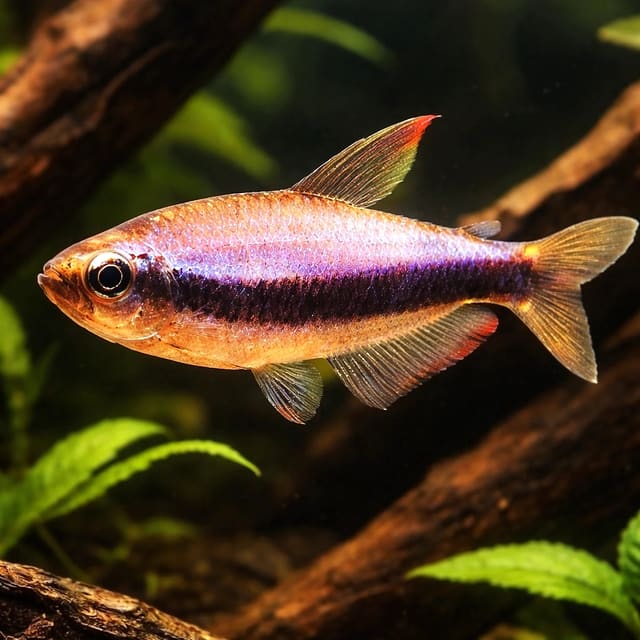
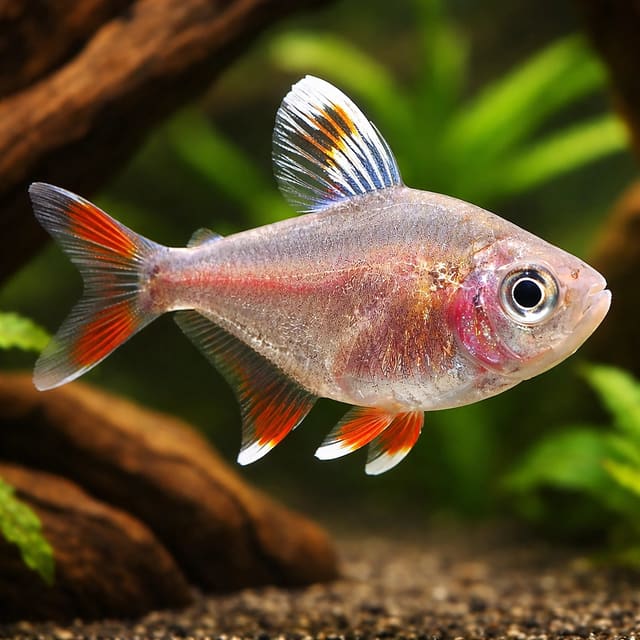
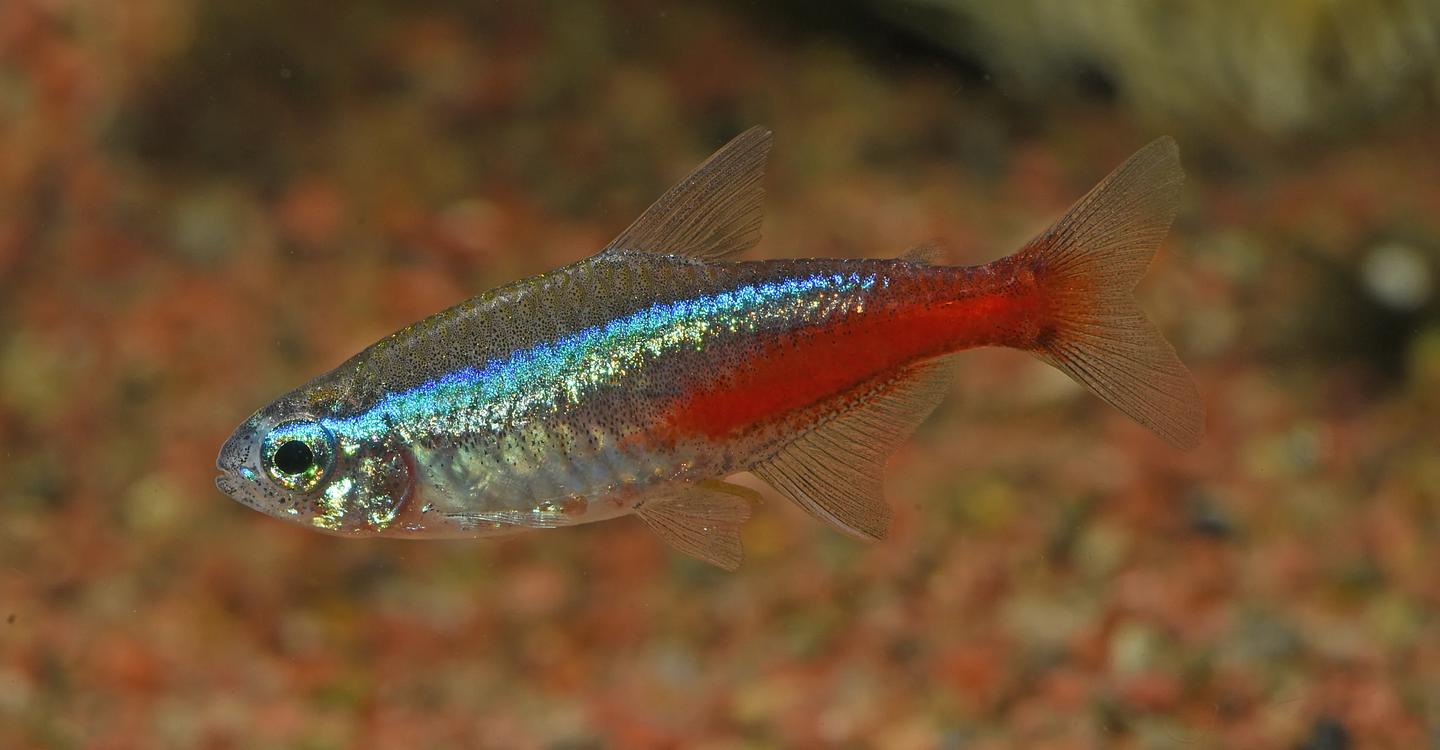
This small, peaceful shoaling fish suits a careful keeper with a biologically mature, stable aquarium, enough horizontal swimming room and a properly planned group. It is not a suitable first occupant for an uncycled aquarium. Seriously Fish describes the diamond strain as having reflective scales over the dorsal surface.
Eschmeyer’s Catalog of Fishes retains Paracheirodon innesi as the accepted name. That binomial distinguishes this fish from other small tetras sold under similar colour-based names.
Wild adults feed on worms, small insects, crustaceans and plant matter. In the aquarium, their peaceful shoaling behaviour, small mouth and compact build guide the main decisions: keep a proper group, offer suitably small food and exclude anything capable of swallowing them.
Reflective colour changes with lighting, viewing angle and surroundings, so assess health through breathing, posture, appetite, swimming and changes across the group rather than brightness alone. Plants, wood and shaded areas can provide cover while leaving an open swimming lane.
For other forms within the same retail group, browse the current neon tetra collection.
One purchase supplies one animal of the selected option. Use the live size selector to choose between 2.5–3 cm and XL. The size you select is the size supplied, not the adult size. XL remains a dispatch label, so do not translate it into a fixed adult measurement or use it to infer age, sex or origin.
FishBase records 2.5 cm as the maximum standard length for male or unsexed Paracheirodon innesi. Seriously Fish gives 30 mm standard length as an aquarium planning figure. Plan group space from the aquarium footprint rather than multiplying either body length by a simple fish-per-litre rule.
| Suits | Not suited to |
|---|---|
| A mature, filtered aquarium at least 60 cm long | An uncycled or unstable aquarium |
| A group of eight or more under our conservative screen | Solitary keeping or an undersized group |
| A peaceful, carefully screened community | Fish large enough to swallow a small tetra |
| Stable water within the planned range | Tank mates requiring incompatible water |
The species aquarium recommendation starts at a 60 × 30 cm footprint, with about 54 litres associated with that footprint before displacement. The aquarium still needs enough usable water and mature filtration for the complete adult community. Substrate, wood, rocks and internal equipment reduce open water, while every additional species brings its own space and group requirements.
A 40-litre label does not settle the question. If the aquarium is shorter than 60 cm, choose a longer long-term setup. If it reaches 60 cm but holds less usable water after decor, review the complete stocking plan carefully instead of assuming the length alone creates spare capacity.
Likewise, a nominal 54-litre aquarium is not automatically suitable when it is crowded with decor, heavily stocked or filtered for a much lighter biological load. A longer, lightly stocked mature aquarium and a short, busy aquarium with the same litre label present different choices.
Sex is guaranteed only when the selected option explicitly states male or female. This Diamond Neon Tetra listing has no sex-guaranteed option.
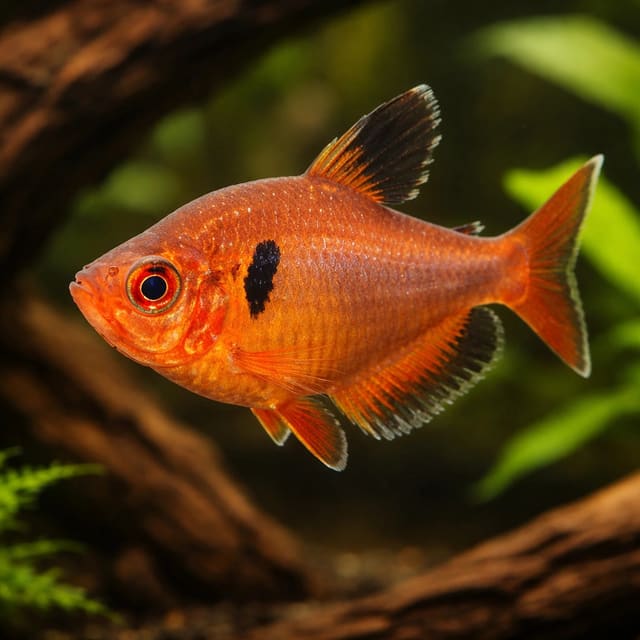
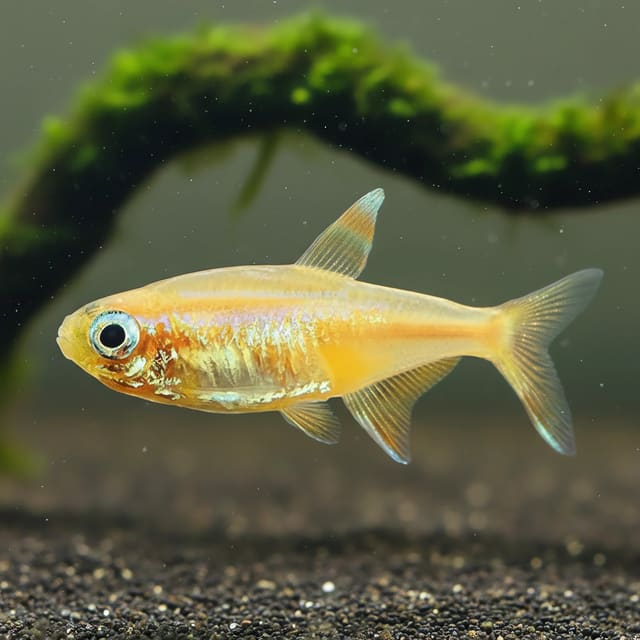
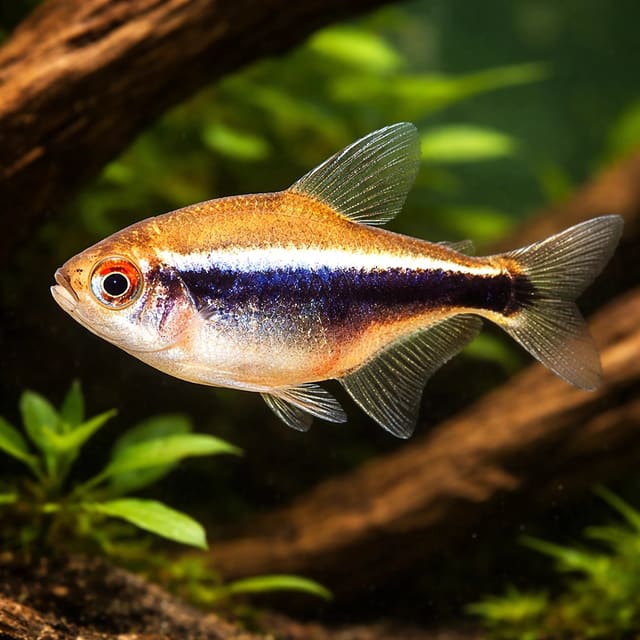
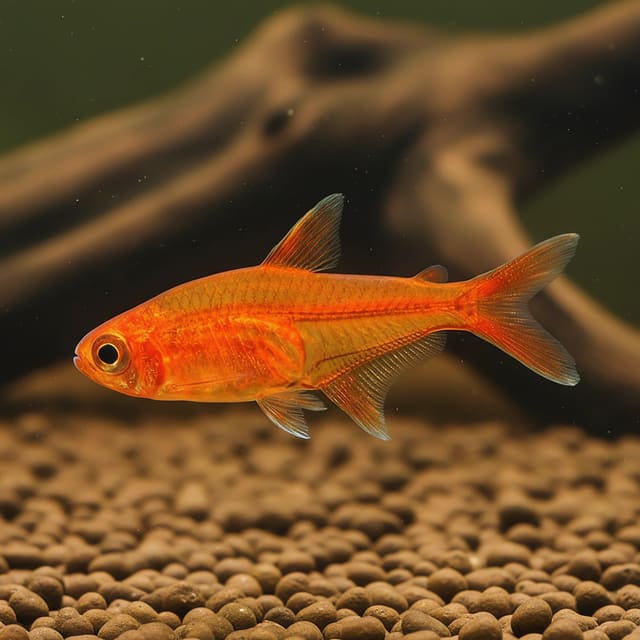
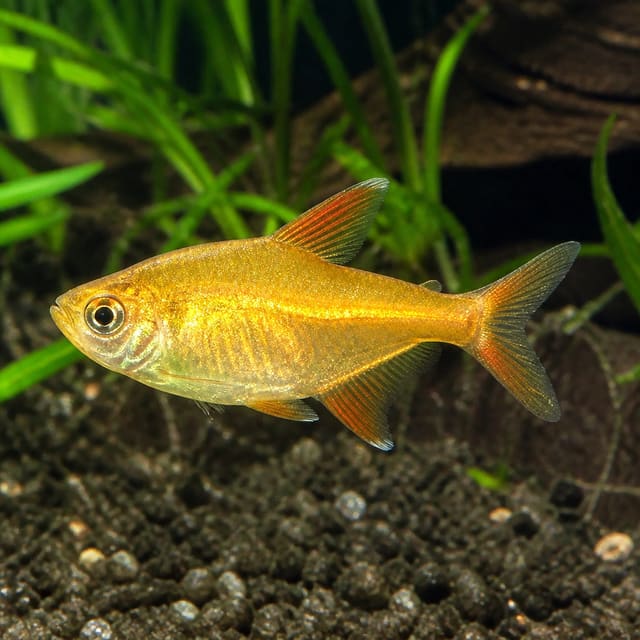
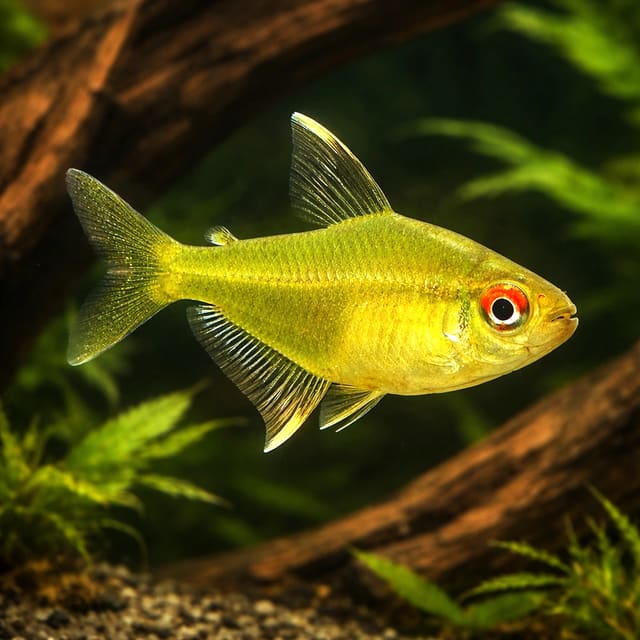
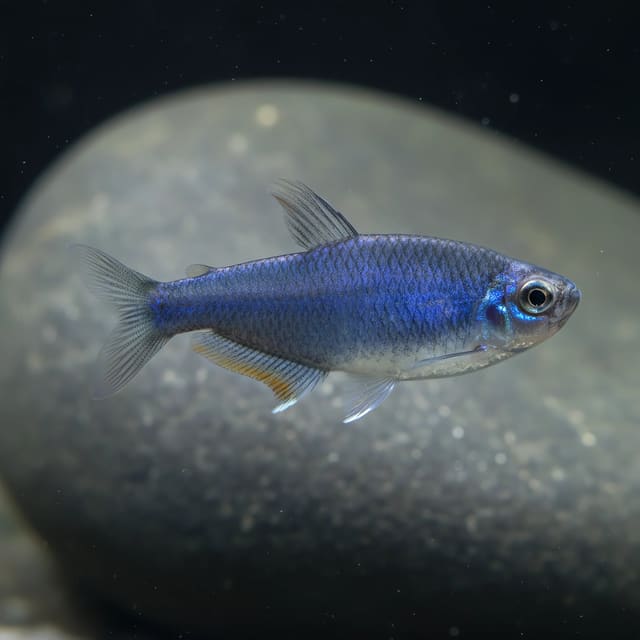
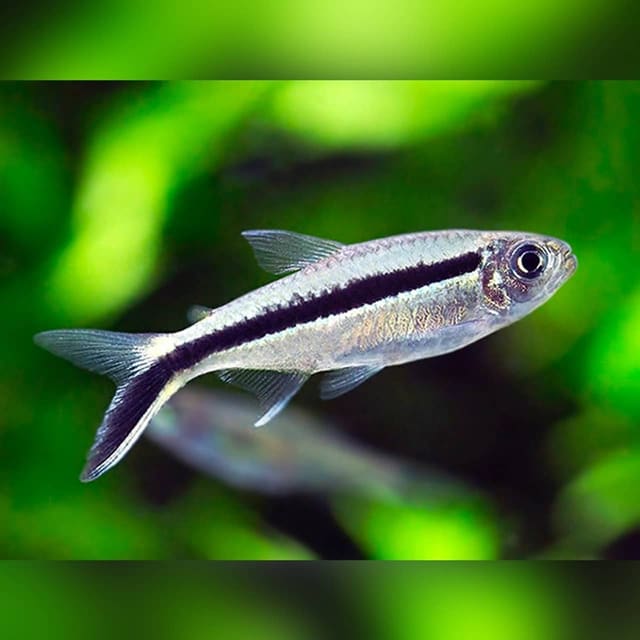
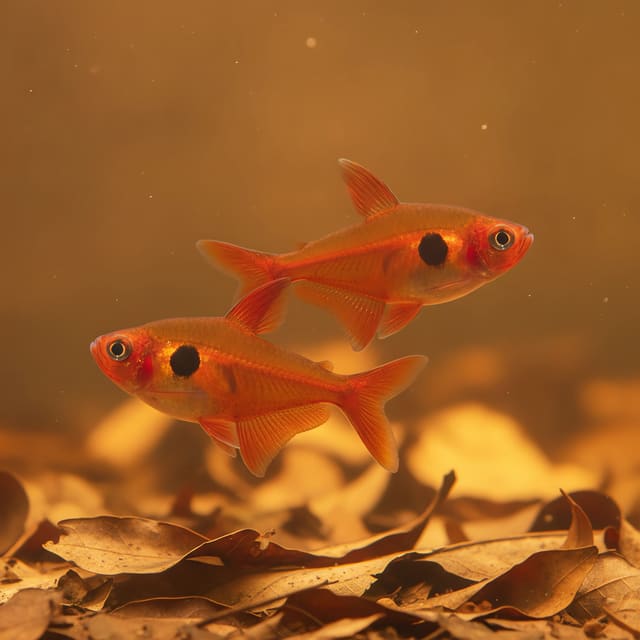
Some gallery images are representative, based on reference photographs of this species, and none shows the exact animal supplied, so colours can look slightly different from the live animal.
Choose the dispatch size that fits your stocking plan, but assess the final group by aquarium length, usable volume, filtration and every tank mate at adult size. Do not reduce the group merely to make a short or crowded aquarium appear workable.
The species aquarium recommendation is a base of 60 × 30 cm or larger, corresponding to about 54 litres before substrate, decor and equipment displace water. FishBase separately gives a minimum aquarium length of 60 cm. Treat length and footprint as the first checks because this shoaling fish needs horizontal swimming room as well as cover.
Use a biologically mature filter and confirm ammonia and nitrite at zero before introducing fish. If this is your first setup, follow our guide to prepare and mature a tropical aquarium before choosing livestock. The calendar alone does not establish readiness; water tests and the filter’s ability to process the intended load do.
For a fuller species plan, read the complete Neon Tetra Care Guide. Use its 60 cm starting length and eight-fish screen together, then reduce or revise the wider community if usable space or filtration becomes marginal.
Use 21–25°C as the routine aquarium temperature range. Keep pH between 5.0 and 7.0 and general hardness between 1 and 2 dGH. This combines Seriously Fish’s 21–25°C aquarium range with the narrower pH and hardness values compiled for Paracheirodon innesi by FishBase. Stability matters more than repeatedly moving the aquarium towards an endpoint.
OATA’s tetra guidance gives 22–27°C, pH 6.5–8.0 and 4–12 dGH for the broader group. Those figures overlap the species plan in temperature and pH but differ on hardness, so they do not widen the values used here.
| If you find | What to do |
|---|---|
| Temperature within 21–25°C | Keep it steady and confirm it with a separate thermometer. |
| Temperature outside the range | Correct the cause gradually; avoid a sudden hot or cold adjustment. |
| pH near an endpoint | Prioritise stability and check whether all tank mates share that value. |
| Hardness above 2 dGH | Plan any change cautiously and avoid abrupt mineral shifts. |
| Unknown values | Test the aquarium before adding the group. |
A thermostatic aquarium heater is normally the dependable choice where a UK room cannot keep the aquarium within range throughout the day and year. Select equipment according to the maker’s instructions for aquarium volume and room conditions, then check the water itself rather than relying on the thermostat dial or room temperature.
Read our aquarium water chemistry guide for the role of temperature, pH, hardness, ammonia, nitrite and nitrate. After measuring the aquarium, use the water matcher to compare its values with this plan.
Do not chase a number with repeated additives. Check the tap water, aquarium water and replacement water, identify why a value changes, and make gradual adjustments only when the whole community can share the result. Sudden chemistry changes can be more disruptive than a stable reading near one end of the planned range.
The RSPCA explains why biological filtration is vital: fish release toxic ammonia, filter bacteria convert it to toxic nitrite, and further bacteria convert nitrite to the safer nitrate. The aquarium is ready for the group only when the filter is established for the intended load and ammonia and nitrite test at zero.
When the filter media needs attention, rinse it lightly in water removed from the aquarium during the water change. Do not run it under the tap because chlorine or chloramine may damage the bacterial population.
Add fish gradually when a community is being developed. Every added fish and every increase in feeding raises the waste entering the system, and the bacterial colony needs enough capacity to process it. Stocking too quickly can lead to new tank syndrome even when the aquarium looked clear beforehand.
If ammonia or nitrite appears, pause further additions, reduce avoidable feeding excess, check that the filter is running correctly and make an appropriate conditioned water change. Continue testing to follow the trend. Clear water is not proof of safe chemistry, and a working motor does not by itself show that biological filtration is coping.
Keep a simple log of test results, water changes, filter work and new additions. A trend is more useful than one isolated number: gradually rising nitrate can prompt a maintenance review, while ammonia appearing after filter cleaning points towards lost bacterial capacity or a sudden load increase.
Arrange shelter around the group without filling the entire footprint. Plants, aquarium-safe wood and other structure can form shaded edges and retreat areas, while a clear horizontal lane lets the fish move together, reach food and remain easy to observe. OATA recommends cover, swimming space and a gentle current for smaller tetras.
| Area | Purpose |
|---|---|
| Back and side edges | Use plants or safe structure to create cover. |
| Middle lane | Leave uninterrupted room for group movement. |
| Surface | Keep feeding access clear and maintain normal gas exchange. |
| Filter outlet | Aim for circulation without forcing the fish to struggle constantly. |
| Observation point | Leave a clear view for checking every fish during feeding. |
Seriously Fish describes a sandy substrate with driftwood roots, branches and dried leaf litter as an attractive arrangement for the species. Leaf litter can also support microbe growth as it decomposes, creating a secondary food opportunity for fry. Use only aquarium-safe materials, replace decaying additions deliberately, and remove anything that traps excessive waste or blocks the swimming lane.
Subdued lighting can suit the display, with plants such as Microsorum, Taxiphyllum or Cryptocoryne suggested for dimmer conditions. Balance shade with the needs of the chosen plants and maintain a regular light-dark cycle. Reflective scaling can look different under each lamp and from each angle, so do not use apparent sparkle as a health test.
Natural peat is unnecessary, and its collection is environmentally damaging. Do not add peat merely to imitate a habitat label. Water chemistry should be measured and managed directly rather than altered unpredictably through decorative additions.
Watch the group at rest and during feeding. If every fish remains pressed into one corner, struggles against the current or cannot approach food without leaving cover abruptly, adjust flow or redistribute shelter. If waste repeatedly collects behind dense decor, open that area enough for circulation and routine siphoning.
A planted aquarium can work well, but live plants are not the only route to shelter. Suitable inert plants and ornaments can provide cover where their surfaces are smooth, stable and intended for aquarium use. The welfare decision is whether the layout offers both security and usable movement.
Wild adult Paracheirodon innesi eat worms, small insects, crustaceans and plant matter. Seriously Fish also describes natural feeding on small invertebrates, crustacea, filamentous algae and fallen fruit. Use that varied biology to inform the menu, but make a suitably small complete aquarium food the nutritional base.
Break or crush larger dry food where appropriate rather than expecting a small fish to manage a piece it repeatedly mouths and drops. Follow the food maker’s directions, but let the group’s feeding response determine whether the portion and particle size are practical. There is no need to impose one universal particle measurement.
Variety should complement a complete base rather than replace it. A single frozen or live food may add behavioural interest and nutritional variety, but it should not become the whole routine. Rotate suitable items in modest amounts while keeping the daily total controlled.
A settled group should be able to approach food without one fish controlling every feeding position. Check whether any individual hangs back, spits out food, loses body condition or stops responding. Also notice whether fast tank mates consume the portion before the tetras can reach it; that can require a compatibility or feeding-position change rather than simply adding more food.
Uneaten food decomposes and contributes waste to the aquarium. Do not rely on snails or bottom-dwelling fish to correct overfeeding, because those animals also add to the biological load. If food remains after a few minutes, remove it where practical, reduce the next feed and confirm ammonia and nitrite remain at zero.
When appetite changes suddenly, check temperature, water chemistry, recent maintenance and social pressure before changing several foods at the same time. A consistent measured routine makes unusual behaviour easier to recognise and prevents repeated feeding from obscuring the underlying problem.
Prepare the mature aquarium before delivery day and arrange for someone to receive the parcel. Have the aquarium stable and ready before opening the box so the fish can move through the arrival procedure without avoidable delay.
These steps come from our current delivery and Live Arrival Guarantee policy. Read that page before the delivery date for its reception, documentation and guarantee terms.
After release, observe breathing, posture, swimming and whether the group can reach sheltered areas. OATA advises keeping disturbance low while newly introduced fish settle. Do not add further livestock at the same time merely because the water appears clear, and test temperature, ammonia and nitrite if behaviour causes concern.
During the first week, compare the group at the same points each day: before feeding, during feeding and after the lights have been on for a while. Look for changes in appetite, breathing rate, colour, fin position, swimming height and interaction with tank mates. A single subdued moment after disturbance is less informative than a repeated pattern.
Maintain the normal once-daily feeding limit and remove excess rather than trying to tempt the fish with repeated meals. Avoid major aquascaping, filter replacement or rapid chemistry adjustment during the settling period unless a water-quality problem requires action.
Keep weekly water changes and testing consistent. Record any change to food, flow, lighting or tank mates so that a later behavioural change has context. The useful checkpoint is not whether the fish school tightly all day; it is whether all members feed, breathe normally, maintain condition and move through the aquarium without persistent pursuit or exclusion.
Changes in colour, breathing, posture, appetite or swimming can have many causes. RSPCA fish-health guidance recommends watching for altered swimming, darker or paler colour, unusual hiding, changed breathing, white spots or fluffy growths, fin or scale loss, body-condition changes and reduced feeding.
The MSD Veterinary Manual’s aquarium-fish guidance treats water quality and biosecure separation as central parts of investigation. If separation is appropriate, use a safe, prepared system that maintains stable temperature and water quality rather than moving a fish into an unfiltered container.
| If you see | First response |
|---|---|
| Surface hanging or rapid gill movement | Test water and check circulation immediately. |
| One fish repeatedly isolated | Compare breathing, condition and social pressure. |
| Food refusal | Check the environment before offering repeated alternatives. |
| White spots or growths | Separate safely where appropriate and obtain diagnosis-led help. |
| Clamped or damaged fins | Check water quality and observe tank-mate interactions. |
Do not diagnose neon tetra disease from colour loss, isolation or one photograph. Do not apply blanket salt, heat or medicine recipes from a symptom list. The wrong treatment can add stress, change water chemistry or delay attention to filtration and compatibility.
When signs persist, become severe or affect several fish, contact us for immediate husbandry guidance and seek a fish vet where needed. OATA maintains a UK fish-vet directory for locating veterinary help.
Continue documenting test results, timing and visible changes. A short video of swimming and breathing, clear photographs, the aquarium dimensions, stocking list and recent maintenance history can help a retailer or vet understand the pattern without relying on one symptom.
FishBase gives five or more as the aquarium minimum for Paracheirodon innesi, and OATA says tetras should be kept in groups of at least five, with more being better. Seriously Fish recommends 8–10. Our conservative planning screen therefore starts at eight, provided the mature aquarium has the usable volume and filtration to support the whole community.
A lone fish or undersized group will often become stressed. Begin with the intended shoal rather than buying one as a test fish, but do not force eight into an aquarium that fails the 60 cm length or complete-community checks. The right response to inadequate space is a larger suitable aquarium or a different stocking plan.
Shoaling does not mean the group will form one tight line throughout the day. Settled fish may spread through the open lane, gather around feeding and draw closer after disturbance. Judge the arrangement by whether every fish can feed, maintain condition, use cover and move without persistent exclusion.
| Planning question | Decision |
|---|---|
| Fewer than eight planned? | Increase the shoal if the aquarium passes every other check. |
| Tank under 60 cm? | Choose another long-term setup. |
| Ammonia or nitrite detected? | Delay additions and restore biological stability. |
| Heavy existing stock? | Calculate every adult group before adding tetras. |
| Very fast feeders present? | Confirm the tetras can receive a complete measured portion. |
For example, an aquarium may have room for eight small tetras in isolation but become unsuitable once a second shoaling species, territorial fish and bottom group are counted at adult size. Each group requires usable space even when the species occupy different swimming levels.
Additions should be paced so the filter can adapt to increased waste and feeding. A larger shoal should not arrive alongside several unrelated additions unless the mature filtration and full stocking assessment support that load.
If you want a stocking and compatibility assessment, ask us with the aquarium’s internal dimensions, measured water values, filter, existing livestock and planned adult groups. Those details allow a useful decision instead of a generic yes or no.
OATA advises that small tetras such as Neons should not be kept with fish large enough to eat them. Avoid any fish whose adult mouth and body size make a Diamond Neon Tetra potential prey. Also screen out combinations involving persistent intimidation, incompatible water or insufficient room for each species’ complete group.
Seriously Fish describes similarly sized characins, hatchetfishes, pencilfishes, smaller callichthyid or loricariid catfishes and non-predatory small-to-medium cichlids as possible companions. Treat these as candidates for screening, not universal matches. No named species is a guaranteed combination because aquarium dimensions, individual behaviour, group size and water vary.
Wild adults eat small crustaceans, so very small shrimp, shrimplets, fry and other bite-sized animals may be eaten. Do not describe the fish as shrimp-safe. Larger animals still require the same adult-size, water, temperament and feeding checks; size alone does not guarantee peaceful coexistence.
Persistent chasing, hiding, damaged fins, missed feeds or one fish being excluded from cover are reasons to intervene. Rearranging decor may help only when territory layout is the cause; it does not make a predator, incompatible water range or overcrowded aquarium suitable.
FishBase compiles Cardinal Tetra values of 23–29°C and a 3 cm maximum standard length, compared with 20–26°C and 2.5 cm for the Neon Tetra. The routine Diamond Neon range used here is 21–25°C, leaving only a narrower shared temperature band with Cardinals.
| Fish | Planning distinction |
|---|---|
| Diamond Neon Tetra | P. innesi; routine plan 21–25°C |
| Cardinal Tetra | P. axelrodi; FishBase range 23–29°C |
Confirm the scientific name rather than identifying either fish from colour alone. If combining them, plan around a stable shared value, adequate space for both shoals and the complete biological load.
FishBase records a maximum of 2.5 cm standard length for male or unsexed Paracheirodon innesi; standard length excludes the tail fin.
Use a mature, filtered aquarium at least 60 cm long; Seriously Fish recommends a 60 × 30 cm or larger base, associated with about 54 litres before displacement.
Start with at least eight under Tropical Fish Co’s conservative planning screen, provided the aquarium has enough usable water, mature filtration and adult community space for the complete group.
It can suit a careful beginner, but it needs a biologically mature, stable aquarium with ammonia and nitrite at zero; it is not suitable as the first occupant of an uncycled setup.
Feed a suitably small complete flake, granule or micro-pellet once daily in an amount consumed within a few minutes, with small live or frozen daphnia, bloodworm or tubifex as measured variety.
Keep it at 21–25°C, pH 5.0–7.0 and 1–2 dGH; the temperature follows Seriously Fish’s aquarium range, while the pH and hardness remain within FishBase values for Paracheirodon innesi.
Seriously Fish describes it as generally peaceful. Screen out persistent chasing or fin-nipping behaviour, and make sure every fish can feed, use cover and move without exclusion.
Seriously Fish names similarly sized characins, hatchetfishes, pencilfishes, smaller callichthyid or loricariid catfishes and non-predatory small-to-medium cichlids as candidates; avoid fish large enough to eat it, and screen every combination for shared water, temperament, feeding and space.
The fish is hand-bagged in pure oxygen inside an insulated box, with a heat pack when the weather calls for it. Someone must be present to receive it. Start filming every delivery from the sealed parcel, open it in one continuous take with the fish still in the sealed bag, float the bag for 20–30 minutes, then release the fish without pouring bag water into the aquarium.
No reviews for this item yet. Bought one? Honest reviews only, good or bad.
What customers say about ordering from us
I have a small group of long finned mountain minnows. So was delighted to be able to order ten of this variety to increase the genetics in my tank . The ones I recieved are healthy but it’s to early to give a verdict on wether they are of a long finned type since they are small currently.
Gordon Walker · 23 Sept 2026
100% success travel and "installation". Pleased with quality of purchase. The Siamese fighter a bit "shy" so have not yet seen him at his best yet but looking good. Happy customer. GG
George E Garratt · 21 Sept 2026
Reviews of our shop, collected by Judge.me, an independent third-party review collector. Newest first.