
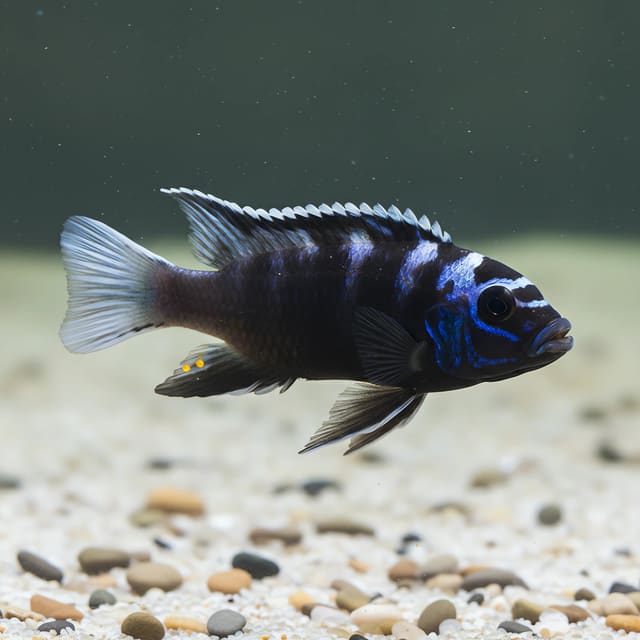
Moderate
Acei Cichlid (Pseudotropheus sp. “acei”)
24–26°C · pH 7.5–8.5 · 300L
£7.99

The Yellow Lepturus Cichlid (Buccochromis rhoadesii) is a haplochromine cichlid endemic to Lake Malawi, Lake Malombe and the upper Shire River that reaches 34.1 cm. It suits advanced Malawi keepers who can provide mature filtration and the FishBase–OATA overlap of 23–27°C, pH 8.0–8.4 and 12–18°dH. Sold individually in 4–5 cm, 5–6 cm and 7–8 cm dispatch sizes.
Adult size is the maximum length this species reaches at full maturity (scientific sources). The livestock you receive will be younger and smaller — pick a size variant above for the actual shipping size. Product-photo provenance and any image-specific limitations are stated on the listing.
Buccochromis rhoadesii
Save when buying multiple fish. Each quantity is one fish; sex and pair formation are not guaranteed unless the selected variant explicitly states them.
The Yellow Lepturus Cichlid (Buccochromis rhoadesii) is a haplochromine cichlid endemic to Lake Malawi, Lake Malombe and the upper Shire River that reaches 34.1 cm. It suits advanced Malawi keepers who can provide mature filtration and the FishBase–OATA overlap of 23–27°C, pH 8.0–8.4 and 12–18°dH. Sold individually in 4–5 cm, 5–6 cm and 7–8 cm dispatch sizes.
Adult size is the maximum length this species reaches at full maturity (scientific sources). The livestock you receive will be younger and smaller — pick a size variant above for the actual shipping size. Product-photo provenance and any image-specific limitations are stated on the listing.
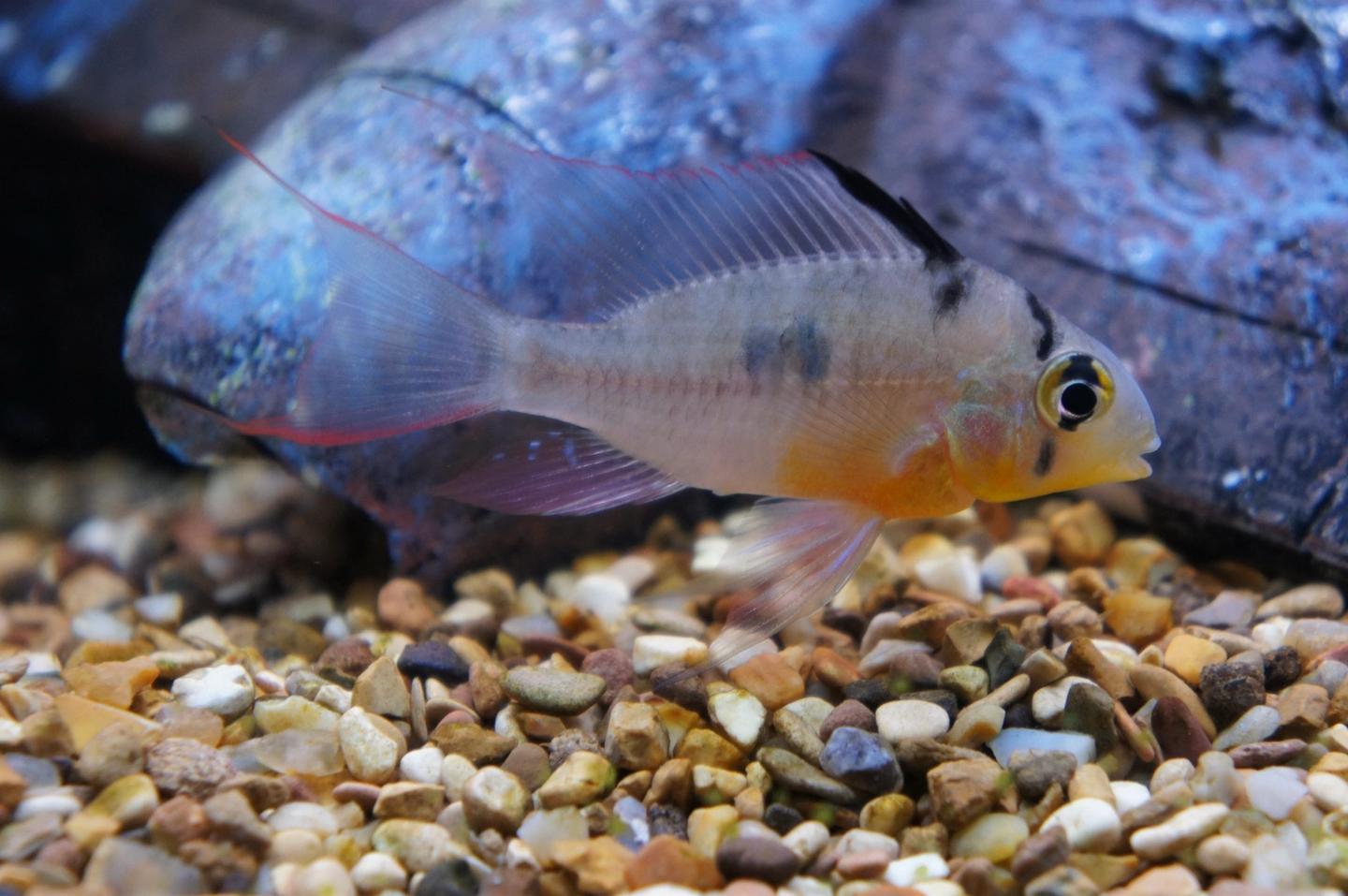
Cichlids are a family of roughly 1,800 accepted species, not one care type. Before buying, identify the exact species and source, then compare adult measurement, usable tank dimensions, social system, territory, tested water, diet and an exit plan. No family-wide minimum tank, water range or tank-mate list is safe.
Maintain these water conditions for optimal health and vibrant colors
Yellow Lepturus Cichlid is the trade name used here for Buccochromis rhoadesii, a freshwater, benthopelagic member of the cichlid family Cichlidae. It is a haplochromine cichlid endemic to Lake Malawi, Lake Malombe and the upper Shire River in Malawi, Mozambique and Tanzania. It suits advanced Malawi keepers who can manage adult-scale space, hard alkaline water, mature filtration and cautious cichlid stocking.
FishBase records a maximum of 34.1 cm total length for male or unsexed Buccochromis rhoadesii. That is a planning reference rather than a promise that every individual reaches the same length, but it makes the adult scale decisive. Allow for the fish to turn, feed and move without being crowded by décor or unsuitable companions.
We rate this an advanced choice because its recorded size must be combined with hard, alkaline water, mature filtration and careful Malawi cichlid stocking. The rating is a shop suitability assessment: it identifies the decisions the keeper must manage rather than predicting how any individual fish will behave.
| Suits | Not suited to |
|---|---|
| Advanced keepers planning around a 34.1 cm adult record | A plan based only on the smaller dispatch size |
| Mature, filtered Malawi aquariums | Unfiltered or biologically immature aquariums |
| Hard, alkaline water within the stated ranges | A general mixed tropical community |
| Carefully screened Malawi stocking plans | Adding fish without checking adult capacity and aggression |
OATA's African Malawi cichlid guidance overlaps FishBase at 23–27°C, pH 8.0–8.4 and 12–18°dH. OATA also gives at least 200 litres for a reasonable-sized Malawi community. These are broad group-level benchmarks rather than a species-specific optimum. For this fish, use 200 litres only as a starting reference and make the final plan around the 34.1 cm adult record, the complete stocking list and the capacity of the filter.
Treat it as a managed Malawi system rather than a routine addition to a mixed tropical aquarium. Malawi cichlids are described by OATA as aggressive and requiring cautious mixing, so plan the complete adult community instead of assembling it one fish at a time.
One purchase quantity supplies one Yellow Lepturus Cichlid in the size selected on the live selector. The dispatch sizes are 4–5 cm, 5–6 cm and 7–8 cm. Use the selector for the size attached to the order rather than relying on a size mentioned elsewhere on the page.
The size you select is the size supplied, not the adult size. A 4–5 cm, 5–6 cm or 7–8 cm fish still needs a long-term aquarium plan based on the 34.1 cm maximum recorded total length. Choosing a larger dispatch size changes the size sent; it does not create a different adult form, care standard or purchase unit.
Sex is guaranteed only when the selected option explicitly states male or female. This Yellow Lepturus Cichlid listing has no sex-guaranteed option.
The gallery images are representative of this type of animal rather than photographs of the exact animal supplied, so colours can look slightly different from the live animal.
Before arranging receipt, read our current delivery and Live Arrival Guarantee policy for the applicable delivery details and claim process. Keep the aquarium prepared independently of the delivery date: its biological filter should already be mature, and measured ammonia and nitrite should both be zero before the fish is introduced.
Keep the aquarium at 23–27°C, pH 8.0–8.4 and general hardness of 12–18°dH. These values are the overlap between FishBase's species-level environmental range and OATA's Malawi aquarium guidance. OATA also gives carbonate hardness of 10–15°dKH for the group, not a species-specific optimum.
FishBase lists the wider recorded environment at pH 7.4–8.4 and 7–30°dH for Buccochromis rhoadesii. Use the overlap as the day-to-day operating range rather than chasing readings from one end of the wider environmental record to the other.
Ammonia must remain at zero milligrams per litre and nitrite must remain at zero milligrams per litre. Nitrate should not exceed 20 milligrams per litre above the normal tap-water level. This wording matters because the nitrate comparison begins with the measured source water rather than assuming that every household starts with the same figure.
Our water chemistry guide explains what the principal measurements mean, while the water matcher helps compare measured aquarium values with the stated range. Use both as decision aids, then continue testing the actual aquarium because feeding, stocking and maintenance can change its readings.
Prioritise consistency inside the chosen range. A stable reading that fits the Malawi target is more useful than repeated adjustments made without fresh measurements. Treat replacement tap water with a suitable conditioner before it enters the aquarium so chlorine or chloramine does not harm the fish or the biological filter.
| If the test shows | Action |
|---|---|
| Ammonia or nitrite above zero | Pause livestock additions and address water quality |
| Nitrate rising past the limit | Carry out the scheduled partial change and review feeding |
| pH or hardness drifting | Compare tank and tap readings before adjusting |
| Values within range | Maintain the same measured routine |
Every aquarium for this fish needs a well set up and maintained filter. The RSPCA's aquarium filtration guidance explains that fish release toxic ammonia, which a working biological filter converts first to nitrite and then to the safer nitrate through its beneficial bacteria. The filter therefore needs time to mature before livestock is introduced.
Prepare the aquarium and establish its biological filtration before choosing an introduction date. Our guide to preparing and maturing an aquarium provides the setup sequence. Completion is judged by water tests: ammonia and nitrite must both read zero before this fish is added.
OATA recommends an oversized filter for crowded Malawi communities because waste production and feeding place extra demand on the system. Strong aeration is also recommended so the fish have sufficient dissolved oxygen. Select filtration and aeration for the complete adult stocking plan rather than for the dispatch size of one new arrival.
| Change | Filter decision |
|---|---|
| Adding one fish | Confirm zero ammonia and nitrite before and after introduction |
| Increasing feeding | Watch for uneaten food and rising waste readings |
| Adding a group | Increase stock slowly so beneficial bacteria can respond |
| Reduced filter flow | Check for blockages during maintenance |
Do not clean filter media under the tap. Chlorine or chloramine may kill the beneficial bacterial population established in the media. When cleaning is needed, rinse the media lightly in aquarium water removed during a partial water change; this reduces the number of bacteria lost while clearing loose waste.
Keep filtration running as the central waste-control system, but do not use filter size as a substitute for maintenance or measured stocking decisions. A larger filter still needs weekly checks, unobstructed flow and suitable aeration. Likewise, clear water alone is not a test result: ammonia and nitrite are invisible and must be measured.
When stocking changes, beneficial bacteria need to increase as waste and feeding increase. Adding fish too quickly can produce new tank syndrome, with ammonia or nitrite rising because the biological population cannot yet process the additional load. Slow additions and repeated testing protect both the new fish and the established community.
Plan the physical layout around a fish recorded up to 34.1 cm total length. Preserve clear routes for turning and swimming, and avoid using so much décor that the adult plan works only while the fish remains at dispatch size. The complete community also needs room to move without being forced continually into another fish's territory.
OATA recommends coral sand or a similar substrate for a Malawi aquarium because it helps buffer the water. Malawi cichlids often dig and rearrange the substrate, so build the layout with that behaviour in mind. Check the substrate profile during maintenance and restore access around filter intakes if digging moves material towards them.
Plants need careful selection because Malawi cichlids will uproot any plants present. OATA recommends only the hardiest plants for this type of aquarium. Treat plants as optional components of the layout, and do not let a planted design prevent access for waste removal or reduce the movement space required by the fish.
Décor can also be used when managing introductions. Rearranging it before adding Malawi cichlids may reduce aggression because established fish must find new territories. Make that change before the newcomers enter, then watch how routes and territories are used rather than repeatedly moving objects while the fish are settling.
The at-least-200-litre Malawi community benchmark should be combined with the adult-size record, not used alone. A nominal volume says little about whether décor consumes the usable interior or whether the complete stocking plan can turn and separate. Compare the fish's adult scale with the aquarium's internal layout, filtration and intended companions as one decision.
Review the arrangement as the fish grows. A route that is clear for a 4–5 cm fish may become restrictive later, while a territory that seems spacious with one occupant may become contested after another addition. Adult planning means leaving room before it is urgently needed.
Feed twice a day, offering only what the fish can eat within a few minutes. This schedule follows OATA's Malawi cichlid guidance and gives a clear portion limit: food remaining after the feeding period is excess, not a reserve for later.
FishBase records that Buccochromis rhoadesii feeds on fish in nature. Use an animal-rich food suitable for a larger predatory Malawi cichlid as the staple. OATA's guidance for some larger utaka includes pellets with a higher animal content and frozen foods such as brine shrimp, prawns or cockles.
Choose the staple by its animal content and suitability for a larger predatory Malawi cichlid rather than by package size or a generic cichlid label. Use the listed frozen foods as variety while keeping the twice-daily schedule and few-minute portion limit consistent enough to judge appetite, condition and waste.
Overfeeding creates two connected problems. Uneaten food breaks down and releases waste into the water, while increased feeding adds to the demand placed on the biological filter. If nitrate rises faster between weekly changes, ammonia or nitrite appears, or food remains after a few minutes, reduce the portion and test again.
| Observation | Next feeding decision |
|---|---|
| Food eaten promptly | Keep the measured portion consistent |
| Food left after a few minutes | Reduce the next portion |
| Reduced interest in food | Test water and check other health signs |
| Waste readings rising | Review portions and maintenance together |
Make changes one at a time. Altering the food, portion and schedule simultaneously makes it difficult to identify what affected appetite or water quality. Keep the twice-daily schedule and few-minute limit as the fixed framework, then adjust the measured amount according to the fish's response.
Carry out a partial water change of 25% at least once every week. Use a siphon to remove solid waste from the substrate while taking out water, especially around feeding areas and places where digging has collected debris.
Test the aquarium at least weekly for ammonia and nitrite, and include nitrate in the same routine so it remains no more than 20 milligrams per litre above the normal tap-water level. Record the result before the water change when you want to see how far waste accumulates during a typical week.
A weekly change is the baseline rather than permission to ignore readings between maintenance days. Test whenever behaviour, breathing or feeding changes, and test after a meaningful stocking or feeding increase. Ammonia and nitrite must remain at zero throughout the week.
Replacement water should be prepared with tap-water conditioner before it enters the aquarium. Chlorine and chloramine can harm fish and the beneficial bacteria in the filter, so the same protection applies both to water changes and filter cleaning.
| Weekly result | Decision |
|---|---|
| Zero ammonia and nitrite | Continue the established routine |
| Either reading above zero | Pause additions, test again and address water quality |
| Nitrate above the stated limit | Review feeding, waste removal and stocking pressure |
| Reduced filter flow | Check for a blockage and clean media correctly if needed |
Use the same testing method and a consistent point in the weekly cycle so results are comparable. A sequence of readings reveals whether the aquarium is stable, whether nitrate is gradually increasing or whether a recent addition has increased the load on the filter.
Do not postpone maintenance because the aquarium looks clear. Biological waste can be present without cloudiness, and filter flow can decline while the water still appears visually clean. Measured results, steady flow and completed maintenance are the useful checkpoints.
Introduce this fish only after the aquarium has a mature biological filter and tests show zero ammonia and zero nitrite. Confirm that temperature, pH and hardness are within the selected Malawi range before the planned arrival rather than trying to reshape the aquarium while the fish is settling.
Increase the number of fish slowly. Every addition and every increase in feeding asks the established beneficial bacteria to process more waste. Moving too quickly can cause new tank syndrome, with unhealthy ammonia or nitrite levels that may make fish ill or lead to death.
Healthy fish should have clear, bright eyes, undamaged fins, intact scales, no ulcerations or bumps and appropriate swimming and feeding behaviour. Use these signs as a baseline once the new fish has settled, then look for changes from that individual's normal behaviour and appearance.
Malawi cichlids are best added in groups when following OATA's aggression-management approach, because a lone newcomer may receive concentrated pressure. Add more peaceful planned species before more aggressive ones, and rearrange décor before an introduction so established territories are disrupted. These decisions must still fit the adult capacity of the aquarium.
| Checkpoint | What to confirm |
|---|---|
| First feeding responses | Food is eaten within a few minutes |
| First weekly test | Ammonia and nitrite remain at zero |
| First water change | 25% is replaced with conditioned water |
| Before further stocking | Water quality and aggression remain controlled |
Delay further additions when the filter is responding to a recent increase, when aggression is concentrated on one fish or when feeding produces persistent leftovers. Slow stocking is a practical control: it gives the biological system time to adjust and gives the keeper time to assess the social response before making the next decision.
Learn the normal appearance and behaviour of the individual fish so changes are easier to recognise. Useful observations include where it swims, how it approaches food, its usual breathing rate, colour, body condition and level of hiding or aggression.
When any of these changes appears, test the water first. Ammonia and nitrite should both be zero, nitrate should remain within the stated limit, and temperature, pH and hardness should remain stable inside the selected Malawi range. A water test turns a general concern into a measurable first decision.
| If you see | Do this first |
|---|---|
| Fast breathing or surface hanging | Check water quality, aeration and filter flow |
| Reduced feeding | Test water and compare other behaviour |
| Sudden hiding or aggression | Check water and review social pressure |
| Spots, growths or damaged tissue | Record the signs and seek health guidance |
Do not make several unrelated changes before recording the readings and visible signs. Note when the change began, what the fish is doing, whether other livestock is affected and what the water tests show. That sequence helps separate a water-quality event from a social or health concern.
If you are concerned about a health change, test the water and contact us with the readings and observed signs. Keep treatment decisions outside routine care instructions until the condition and aquarium circumstances have been assessed.
Avoid building a general mixed tropical community around this fish. OATA advises that Malawi cichlids should only be kept with other Malawi cichlids or some species of Synodontis catfish that also naturally inhabit Lake Malawi. Even within those categories, a name alone is not a compatibility guarantee.
Screen each proposed companion for adult size, aggression, water requirements and the capacity of the aquarium. The intended fish must share the hard, alkaline Malawi conditions, while the complete community must fit the mature filter and adult-scale space plan.
| Candidate | Decision rule |
|---|---|
| Another Malawi cichlid | Consider only after adult-size, aggression and capacity screening |
| A Synodontis species | Consider only after checking that individual species and the aquarium plan |
| A general community fish | Avoid because it falls outside OATA's Malawi stocking guidance |
| An unidentified fish | Identify it before making the stocking decision |
Use the 34.1 cm maximum record in this assessment. A companion that appears suitably proportioned beside a dispatch-sized fish may create a different spacing problem as the cichlid grows. Compare planned adult dimensions rather than today's visual balance.
Compatibility also changes when the number, order or arrangement of fish changes. A combination that works with ample space and controlled territories may fail after another addition or after one fish begins controlling a route. Observe the whole community after each stocking change and pause further additions if pressure concentrates on one individual.
For a stocking and compatibility assessment, ask us with the aquarium volume, dimensions, current fish, measured water values and intended additions. Those details allow the proposed combination to be screened as one adult plan rather than as isolated species names.
You can also browse the African cichlid collection when building a shortlist, but apply this screening process to every candidate before treating it as part of the same aquarium.
Malawi cichlids are not social fish in the sense of requiring close companionship, and OATA describes them as highly aggressive. Its group approach says they can be kept in groups of at least 15 and slightly overcrowded to spread aggression, while small groups will often fight. Treat both “at least” and “slightly” as important limits rather than an instruction to add fish without a capacity check.
The group recommendation was written for Malawi communities generally. This animal's 34.1 cm maximum recorded length means the final count must be reconciled with adult dimensions, filtration and territory management. Do not choose a fixed number merely to reach 15 if the aquarium cannot support the resulting adult community.
Where possible, OATA recommends keeping more females than males of each species so males do not harass one individual female. Apply that approach only when sex has been explicitly identified. Many Malawi cichlids show clearer differences only as adults, so colour or egg spots in a photograph should not be converted into an assumption about a smaller fish.
| What you observe | Management decision |
|---|---|
| One newcomer is targeted | Pause additions and reassess territories and stocking |
| Small group repeatedly fights | Review the full community plan rather than adding one fish impulsively |
| Pressure focuses on one female | Review the identified sex ratio and available space |
| Aggression rises after an addition | Test water, review introduction order and reassess décor |
Slight overstocking is an aggression-management technique, not permission to accept poor water quality. The filter must still keep ammonia and nitrite at zero, nitrate must remain within the stated limit, and strong aeration must provide sufficient dissolved oxygen. If those controls cannot be maintained, the stocking plan is too demanding for the system.
Continue observing after the first settling period. Territory use and aggression can change as fish grow or as another individual is introduced. The useful plan is one that remains workable at adult scale and leaves the keeper able to pause, test and revise before pressure becomes concentrated.
FishBase records a maximum of 34.1 cm total length, so plan the aquarium around that adult scale rather than the smaller dispatch size.
OATA gives at least 200 litres for a reasonable-sized Malawi community, but this 34.1 cm fish needs a final plan based on adult dimensions, usable swimming space, the complete stocking list and filter capacity.
Assess the complete adult community before deciding; OATA says Malawi cichlids can be kept in groups of at least 15 to spread aggression and that small groups will often fight, but the aquarium must support the resulting adult stock.
We rate it advanced because its 34.1 cm adult record, hard alkaline water, mature filtration and aggressive Malawi stocking method require several connected decisions.
FishBase records that it feeds on fish in nature; use an animal-rich larger Malawi cichlid food as the staple and follow OATA's twice-daily schedule, offering only what it eats within a few minutes.
Keep it at the FishBase–OATA overlap of 23–27°C, pH 8.0–8.4 and 12–18°dH; OATA also gives 10–15°dKH for Malawi cichlids as group guidance, not a species-specific optimum.
Treat it as an aggressive Malawi cichlid, screen companions cautiously and watch for damaged fins, concentrated chasing, hiding or a marked change in aggression after each introduction.
OATA says Malawi cichlids should only be kept with other Malawi cichlids or some Synodontis catfish from Lake Malawi; screen every candidate for adult size, aggression, water needs and aquarium capacity.
Start filming every delivery continuously while the parcel is still sealed, then record it being opened with the fish still inside the sealed bag. Have someone present to receive the parcel, float the bag for 20–30 minutes before releasing the fish, and never pour the bag water into the aquarium.
Max adult size is the length this species reaches at full maturity (from scientific sources). The livestock you receive will be younger and smaller — pick a size variant on the buy box for the actual shipping size. Product-photo provenance and any image-specific limitations are stated on the listing.
Always research specific species before adding them to your tank. Consider:
No reviews for this item yet. Bought one? Honest reviews only, good or bad.
What customers say about ordering from us
I have a small group of long finned mountain minnows. So was delighted to be able to order ten of this variety to increase the genetics in my tank . The ones I recieved are healthy but it’s to early to give a verdict on wether they are of a long finned type since they are small currently.
Gordon Walker · 23 Sept 2026
100% success travel and "installation". Pleased with quality of purchase. The Siamese fighter a bit "shy" so have not yet seen him at his best yet but looking good. Happy customer. GG
George E Garratt · 21 Sept 2026
Reviews of our shop, collected by Judge.me, an independent third-party review collector. Newest first.
24–26°C · pH 7.5–8.5 · 300L
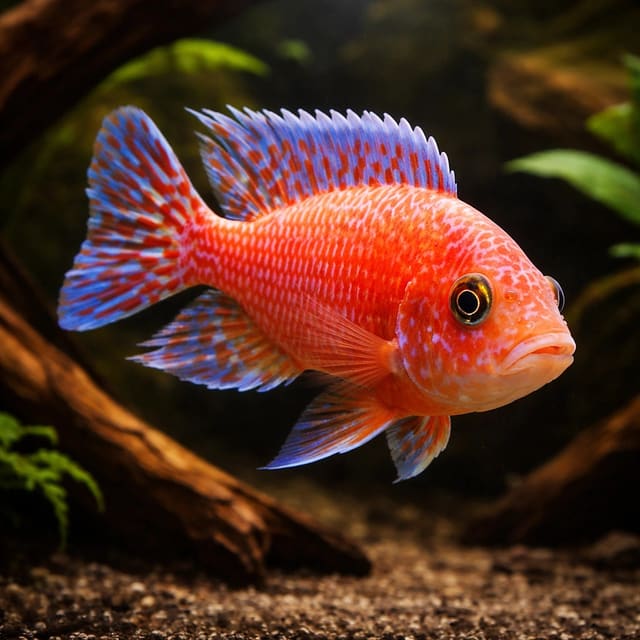
23–27°C · pH 8–8.6
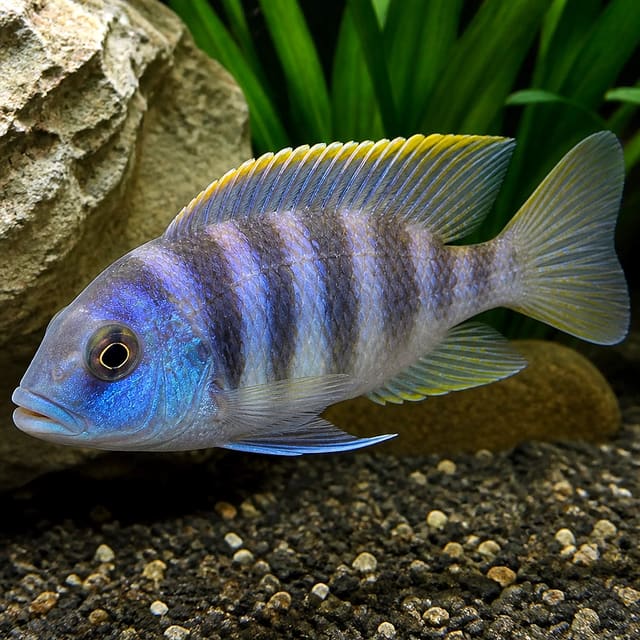
24–26°C · pH 8–8.6

23–27°C · pH 8–8.6
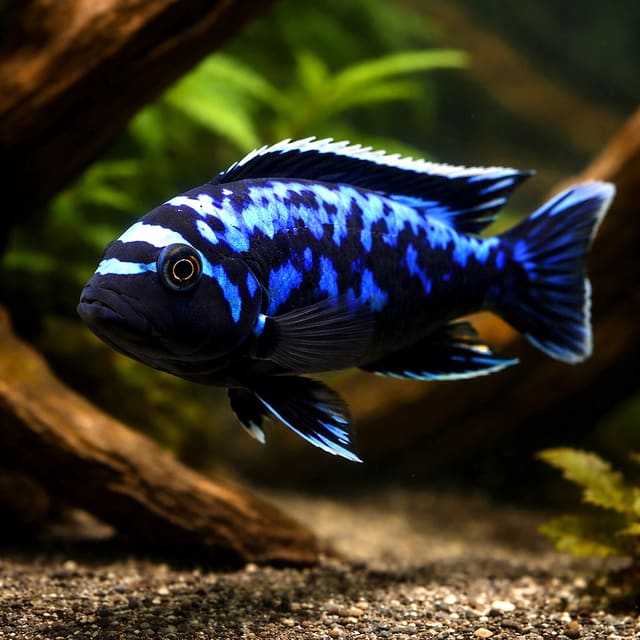
23–27°C · pH 8–8.6
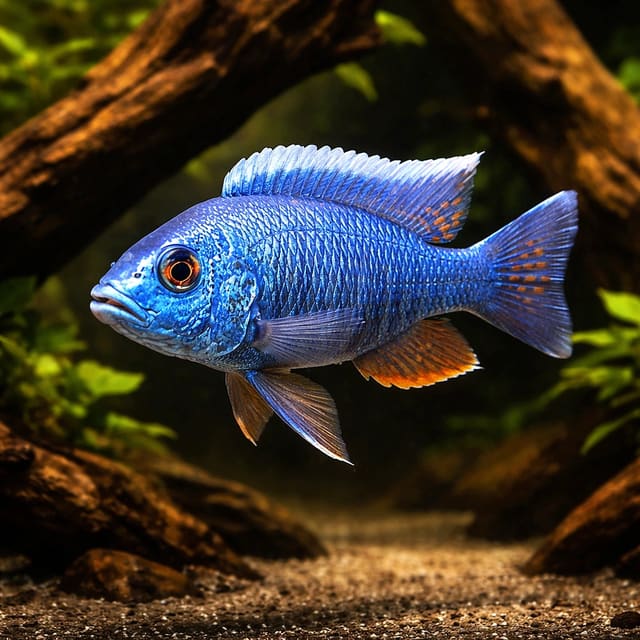
23–27°C · pH 8–8.4
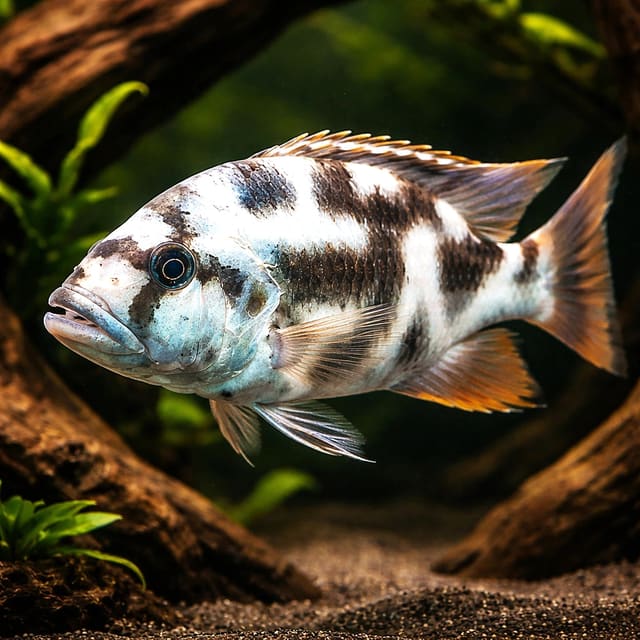
25–27°C · pH 8–8 · 205L
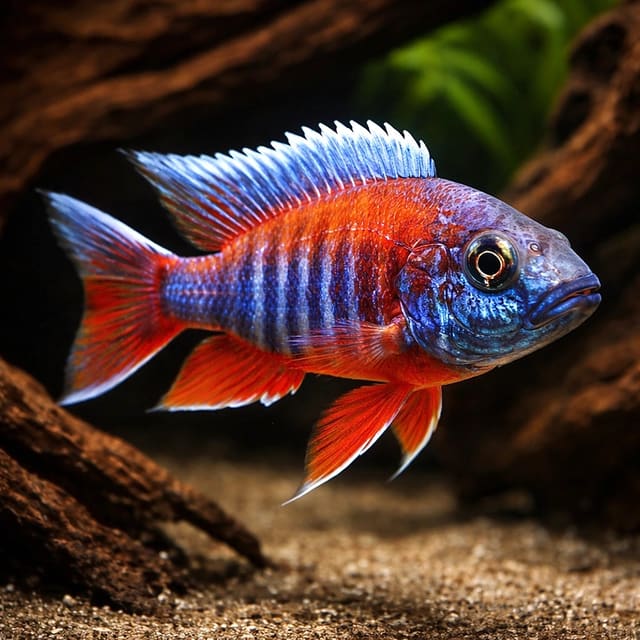
25–26°C · pH 7.5–8 · 432L
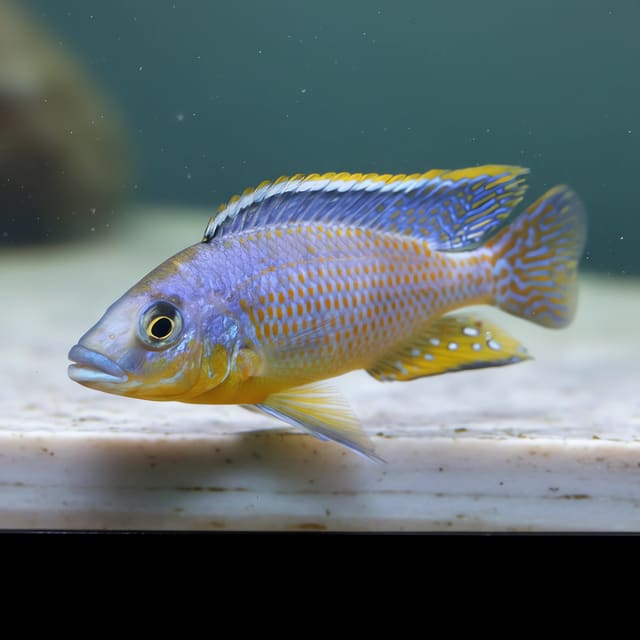
23–27°C · pH 7.5–8.5 · 600L
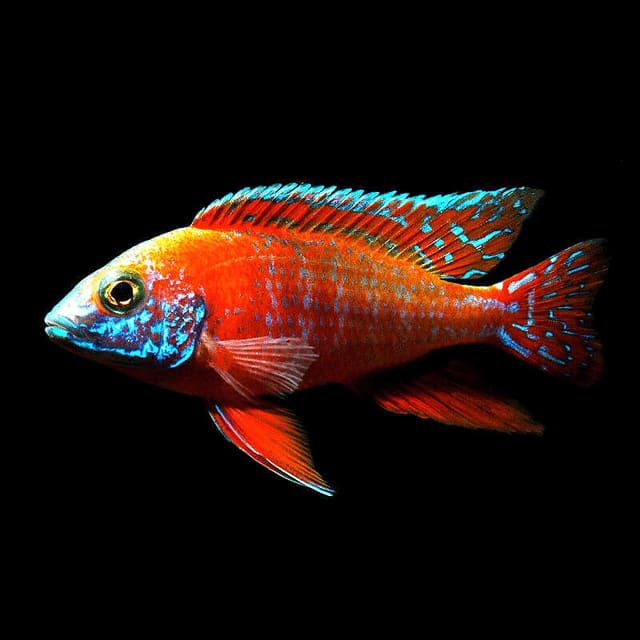
23–27°C · pH 8–8.6

24–26°C · pH 7.5–8.2

24–26°C · pH 8–8.5 · 300L

23–26°C · pH 8–8.5
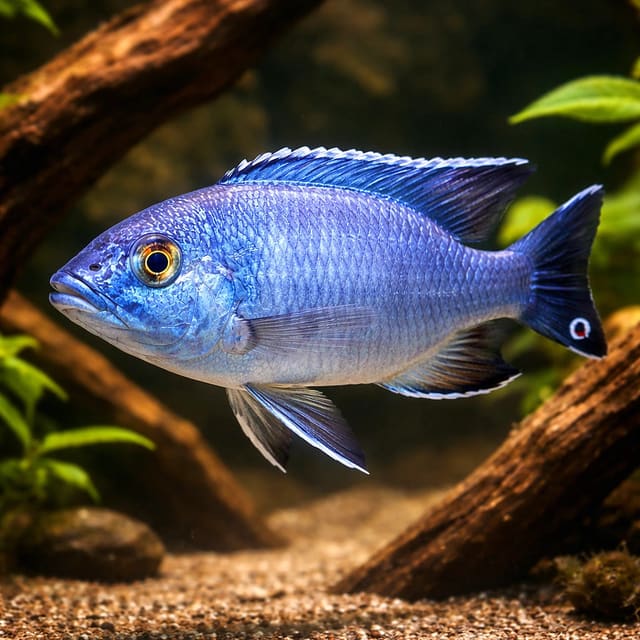
24–26°C · pH 7.5–8.5 · 400L

24–27°C · pH 8–8.6 · 304L
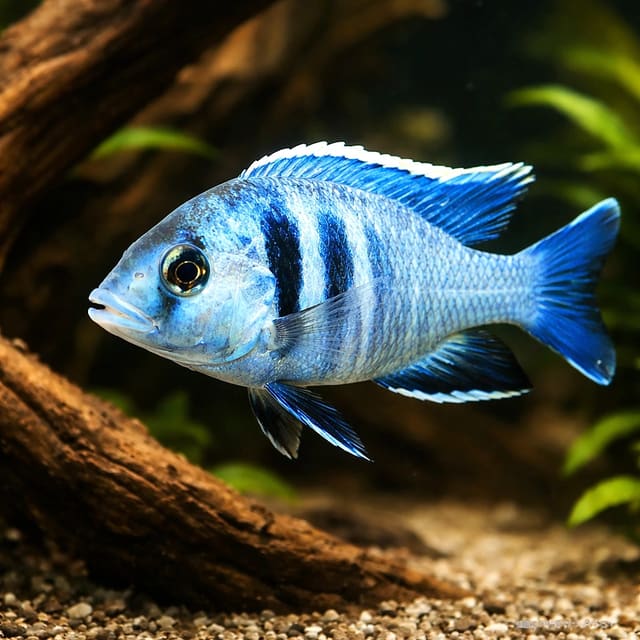
24–26°C · pH 8–8

22–28°C · pH 7–8 · 41L

21–25°C · pH 5–7
24–29°C

24–27°C · pH 6.5–6.5

22–27°C · pH 6–8 · 72L
24–27°C · pH 6.5–8 · 200L

23–27°C · pH 5.5–7 · 60L

22–27°C · pH 6–8