Astronotus ocellatus mix
22–27°C · pH 6.5–7.5 · 540L
£215.99
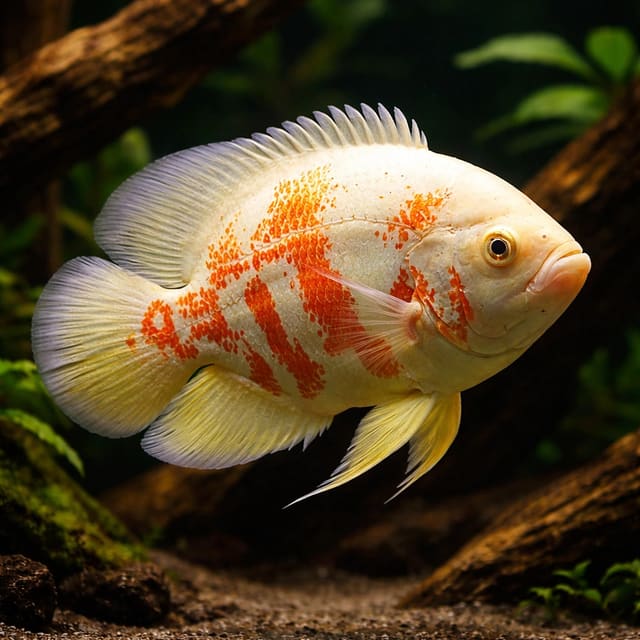
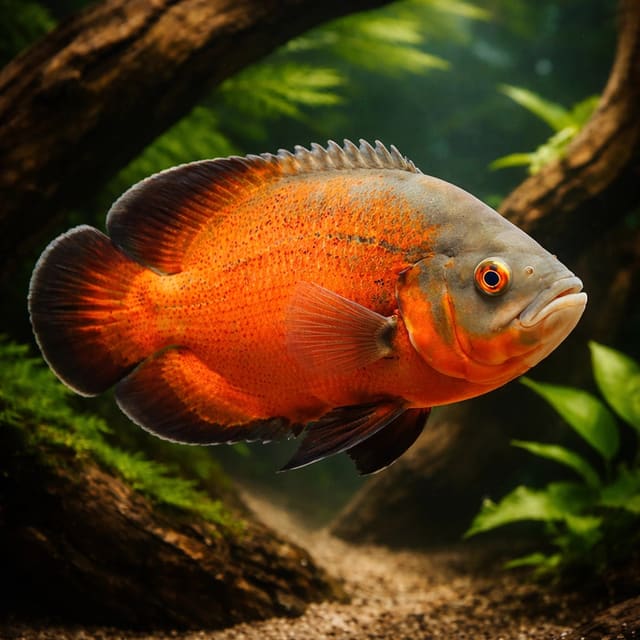
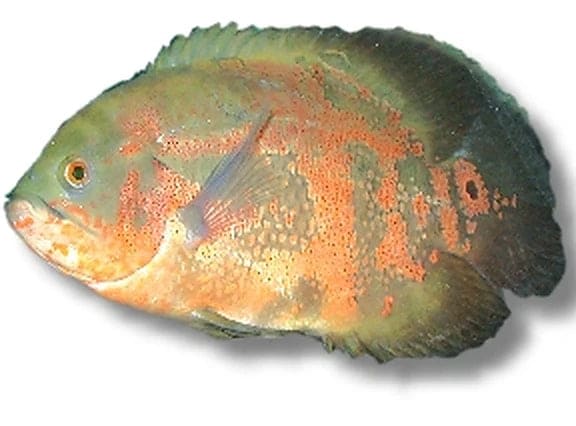
Tiger Oscar Cichlid (Astronotus ocellatus) is supplied as one fish in the selected 4–9 cm grade. Its large adult size needs a mature, efficiently filtered aquarium with a 150 × 60 cm base for one adult.
Adult size is the maximum length this species reaches at full maturity (scientific sources). The livestock you receive will be younger and smaller — pick a size above for the actual shipping size. Product-photo provenance and any image-specific limitations are stated on the listing.
Astronotus ocellatus
Tiger Oscar Cichlid (Astronotus ocellatus) is supplied as one fish in the selected 4–9 cm grade. Its large adult size needs a mature, efficiently filtered aquarium with a 150 × 60 cm base for one adult.
Adult size is the maximum length this species reaches at full maturity (scientific sources). The livestock you receive will be younger and smaller — pick a size above for the actual shipping size. Product-photo provenance and any image-specific limitations are stated on the listing.

Cichlids are a family of roughly 1,800 accepted species, not one care type. Before buying, identify the exact species and source, then compare adult measurement, usable tank dimensions, social system, territory, tested water, diet and an exit plan. No family-wide minimum tank, water range or tank-mate list is safe.
Maintain these water conditions for optimal health and vibrant colors
The Tiger Oscar Cichlid (Astronotus ocellatus) is a large South American cichlid whose curiosity and feeding response can make it a compelling aquarium fish. One purchase supplies one live Oscar in the selected size. This listing offers 4 - 5 cm, 6 - 7 cm and 7 - 9 cm grades. The size you select is the size supplied, not the adult size. Choose among those young-fish grades only after deciding where a fully grown Oscar will live and how you will maintain that aquarium.
An Oscar's sale size can make it look suitable for a modest community tank. That impression does not last. Seriously Fish describes a 150 × 60 cm base, approximately 540 litres, as just about sufficient for one adult; a pair or group requires more. A person without the long-term space, strong filtration and reliable water-change capacity should choose another fish rather than planning to solve the problem after growth. The aquarium is part of the purchase decision today.
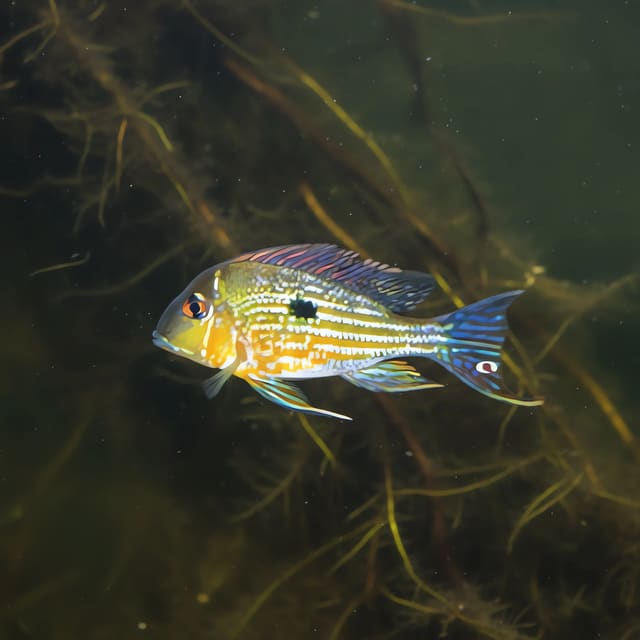
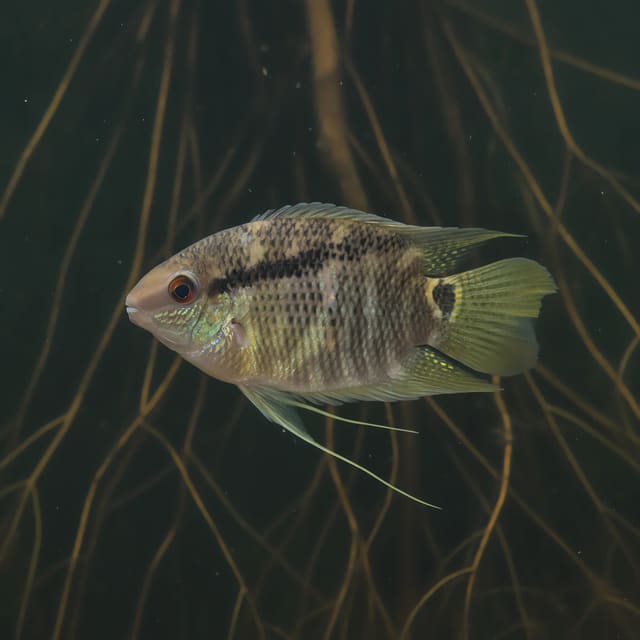
The fish's patterned body and prominent eye spot can vary among individuals. A Tiger Oscar is a colour-pattern form of Astronotus ocellatus, not a different scientific species with a small-adult exception. Colour or pattern does not determine a sex guarantee: this product offers no male or female selection. A young Oscar that appears to share a shelter with another fish is not thereby a bonded pair. Behaviour must be assessed as the animals mature.
FishBase records a maximum of 45.7 cm total length for the species; Seriously Fish gives 35 cm standard length. Total length includes the tail, while standard length excludes it. Both are adult records, using different measurement conventions and sources. The old 35 cm figure should not be interpreted as a fixed end point for this exact fish. Use the larger recorded total length and the species-level aquarium footprint when you assess turning room, equipment and maintenance access.
FishBase places the species in the western Amazon and Orinoco basins. It describes quiet shallow waters, sandy or muddy canals and ponds, and a diet that can include small fish, crustaceans, worms and insect larvae. Those records explain why sand, large pieces of wood and a varied diet can be useful in captivity. A muddy wild bottom is not permission to let an aquarium accumulate waste.
Oscars investigate and move objects. Seriously Fish warns that an elaborate planted layout can be difficult to maintain because the fish may dig. The keeper's aim is a secure, maintainable environment with a suitable feeding area and robust shelter. A few stable large features are more useful than a dense collection of small ornaments that a large fish can push into equipment or glass.
| Suits | An experienced or prepared keeper with a mature, spacious single-Oscar aquarium and reliable filtration and maintenance time. |
|---|---|
| Not suitable for | A small community, an uncycled aquarium, or a plan that depends on the Oscar staying near its dispatch size. |
| Food | Good-quality cichlid pellets as the main food, with suitable varied live or frozen foods. |
| Other animals | Any companion needs exceptional adult space and careful species-level assessment; much smaller fish may be eaten. |
An Oscar may be less confrontational than some similarly large cichlids, but predatory size and heavy feeding still restrict compatibility. Do not select a companion simply because it also belongs to a cichlid category. The South American cichlid collection is useful for comparing available species, while each animal's adult demands must be assessed on its own terms.
Sex is guaranteed only when the selected option explicitly states male or female. This Tiger Oscar Cichlid listing has no sex-guaranteed option.
The 150 × 60 cm aquarium base in Seriously Fish's Oscar profile is its example for a single adult. It equates to approximately 540 litres in the stated aquarium example. The source describes that as just about large enough, not a generous shared-community standard. A pair or group requires larger quarters. The length and width matter because an adult fish needs room to turn, investigate, feed and move past structure without scraping against it.
Consider the interior dimensions before reading the litre label. Wood, substrate and equipment displace water. A taller aquarium with the same advertised capacity may have less useful horizontal room than a longer one. Choose the adult aquarium first and verify that its stand, floor location and access for maintenance are suitable. There should be space around the tank for water-changing equipment, filter service and safe handling of large furnishings.
The aquarium should work for the fully grown animal, not merely look comfortable for the youngest listed grade. Raising an Oscar temporarily in smaller accommodation creates a later transfer obligation. If the larger system is planned for the future, confirm that the space, equipment and budget are already real. A vague intention to upgrade after growth does not secure the fish's welfare. Adult size also changes how much waste and food the aquarium must handle.
Keep the design straightforward. A soft sandy substrate allows natural foraging and reduces abrasion risk. Seriously Fish describes relatively dim lighting and substantial wood roots and branches as possible features. Arrange structure so the fish can move freely and so you can remove waste. Delicate planted arrangements may be disturbed by digging or object-moving. This does not make the aquarium bare: secure structure and calmer areas can still give the Oscar places to explore and withdraw.
Test the stability of large rocks or wood before filling the tank. A fish that pushes against an object should not be able to knock it into glass or a heater. Leave equipment protected and accessible. Seriously Fish notes that Oscars have been known to break heaterstats and suggests external placement where possible. Follow the manufacturer's safe installation guidance, provide guards or external arrangements where appropriate, and inspect equipment after any conspicuous digging or rearrangement.
Efficient filtration is central to this species' care. A large fish eating a high-protein diet can place substantial demand on the system, and food fragments can collect beneath wood. Choose a filter arrangement that maintains biological capacity and allows waste to be removed from the actual layout. The RSPCA's aquarium-environment guidance explains how beneficial bacteria in a functioning filter process toxic ammonia and nitrite.
The filter must mature before the Oscar arrives. A new tank can look clear while failing to process waste. Use the tropical-tank setup guide to plan the nitrogen cycle and test the aquarium. Ammonia and nitrite should be zero for a planned introduction. In a large system, equipment choice and maintenance access should be considered early rather than left until the fish has already been purchased.
Seriously Fish recommends a dedicated maintenance routine including weekly changes of 30–50% for the species. The exact practical volume depends on the aquarium and measured waste, but the recommendation conveys the scale of commitment. Replacing that much water in a very large aquarium requires safe preparation, temperature awareness and time. The keeper should be able to carry out the routine consistently rather than relying on an occasional emergency clean.
Test ammonia, nitrite and nitrate routinely and after changes in feeding or stock. OATA's broad American-cichlid sheet also recommends weekly partial changes and regular tests, but its group guidance should not replace the Oscar-specific intensive-maintenance advice. Compare tank nitrate with the supply water and observe the fish alongside the numbers. Water clarity is useful, but it is not an ammonia test.
Remove food waste and solid debris as part of each maintenance session. Do not let a large piece of décor permanently hide an accumulation you cannot reach. Check intakes and outlets for blockage, and see whether water circulates around the aquarium rather than only near the filter. A high rated flow on a box does not reveal what happens after media become loaded or objects shift. Make adjustments based on actual conditions.
Protect biological media when cleaning. OATA advises rinsing filter media lightly in removed aquarium water, not under tap water, so that the established bacterial population is not damaged by chlorine or chloramine. Follow equipment instructions as well. Replacing all media at once or washing it aggressively can reduce the system's capacity just when a large fish depends on it most.
Seriously Fish gives species-level aquarium guidance of 20–28°C, pH 6.0–7.5 and 5–20 dGH. Its pH comments distinguish relatively adaptable captive-bred fish from wild-caught fish that may need origin-specific care. FishBase's 22–25°C, pH 6.0–8.0 and 5–19 dH are environmental records. These are different kinds of information. They should not be blended into a single ideal number or treated as permission for repeated temperature shifts.
OATA's general American-cichlid sheet offers 22–27°C, pH 6.5–8.0 and 4–12 dGH for a broad group. That group range can provide context, but it is not an Oscar-specific optimum. Choose stable water appropriate to this fish's established conditions, then check that any proposed other animal can share it. Prefer gradual changes to abrupt attempts to force the aquarium to one midpoint.
Use a thermometer separate from the heater control, and test the actual water. The water-parameters guide explains what to measure. The Water Parameter Matcher can compare your readings with care guidance. A comparison is a starting point for planning; adult space, feeding and maintenance still determine whether the whole aquarium is suitable.
Prepare replacement water appropriately, including conditioner where chlorine or chloramine is present. Consider the supply water's pH and hardness before choosing to alter the aquarium. A quick chemical correction may create a larger fluctuation than leaving a suitable stable value alone. Record readings over time, so a gradual trend can be distinguished from one faulty test or a change after maintenance.
FishBase records small fish, crayfish, worms and insect larvae among wild foods. Seriously Fish describes the species as a generalised omnivore that may also take plant material, while a protein-rich aquarium menu is preferable. A good-quality cichlid pellet can form the staple. Add appropriate live or frozen foods for variety, choosing pieces that suit the fish's current mouth size and the aquarium's cleanliness.
Young Oscars and adults do not need identical pieces of food. Select the grade for the animal you have, then adjust as it grows. Observe chewing, swallowing and the amount that reaches the bottom uneaten. A fish that approaches vigorously is not proof it needs an unlimited portion. Feed deliberately rather than using repeated handouts to prompt interaction; surplus food breaks down into waste.
Seriously Fish mentions earthworms and other suitable live or frozen foods. Check food quality and source, and avoid using feeder fish as a routine shortcut. Feeder animals can introduce disease and create avoidable welfare issues, while a balanced prepared staple is simpler to manage. Do not rely on one frozen item as the entire diet. Variety is useful when it remains controlled and hygienic.
In a community large enough to hold an adult Oscar, feeding becomes a fairness issue as well as a quantity issue. The bold fish may intercept food intended for another animal, while excess placed for timid fish can settle unseen. Observe each individual, choose appropriate feeding locations and remove leftovers. If another fish is repeatedly excluded, revisit the stocking plan rather than merely increasing the overall amount.
Prepare the mature aquarium before delivery. Confirm stable measured water, effective filtration and a safe route into the tank. The current Tropical Fish Co delivery policy describes oxygen-filled bags, insulation, weather-conscious packing and licensed live-animal courier carriage. Arrange to be present to receive the parcel; a live fish should not be left unattended at the door.
Inspect the parcel when it arrives. For a Live Arrival Guarantee claim, the policy asks for an order number and a continuous video beginning with the sealed parcel, showing it being opened and the fish still in its sealed bag. Contact the store the same day if there is a problem. This evidence step is separate from fish care: make the recording promptly and continue with a calm introduction into the ready aquarium.
The store advises floating the sealed bag for 20–30 minutes to bring temperature closer, then acclimatising slowly before release. Transfer the fish without pouring transport water into the aquarium. Avoid prolonged handling or chasing the Oscar around a small container. Have the receiving space clear and secure before opening the bag. Watch its initial movement and provide a quieter environment while it settles.
If the aquarium has existing inhabitants, do not assume that the smaller sale grade will be safe merely because the adult plan seems plausible. A large existing fish may intimidate a newcomer; a young Oscar may later grow to eat a small companion. Observe the actual interactions and keep a functioning separation option ready. A backup tank must itself provide appropriate filtered, heated space, not simply a temporary bucket waiting for a decision.
An Oscar may investigate the keeper and react to feeding routines. Enjoy that behaviour while watching the quieter signs too: appetite, posture, breathing, surface use, colour and condition. A change may relate to water, social pressure, injury or disease. Check water quality and recent maintenance first, then seek experienced advice where signs persist or appear severe. Do not choose medication from a single photographed mark.
Plan care during holidays and busy weeks. A large Oscar's filter, feeding and water changes cannot be put on hold simply because one keeper is away. Give a competent carer measured food instructions and clear equipment checks, and schedule any water maintenance realistically. This is a long-term animal-care commitment; the appealing juvenile stage should be only the beginning of a suitable home.
A weekly 30–50% change in a large Oscar aquarium is a sizeable task, so decide how water will be prepared and moved before choosing the fish. Check that replacement water can be treated appropriately and brought close to the aquarium's temperature. Know where hoses or containers can be used safely and how spills will be managed. A routine that is possible only when one person has an entire free day is harder to sustain than one designed around the household's ordinary week.
Keep a record of maintenance dates and test results. That simple history helps identify whether a change in appetite followed a blocked intake, missed water change or unusual feeding. It also shows whether nitrate rises quickly enough to justify adjusting the routine. The goal is not a neat diary for its own sake; it is a way to understand a heavily fed system before a trend becomes a welfare problem.
Check the tank arrangement periodically as the Oscar increases in size. A shelter that gave a small fish confidence may later be too narrow or may interrupt its turning path. Plant roots and wood can shift as the fish digs. Reassess equipment protection and floor space, keeping the largest stable structures in place where they are safe. Avoid constant rearrangement, but do not leave a trap simply because it was harmless at the dispatch size.
The fish's feeding response can change its interaction with maintenance. Keep hands, tools and electrical equipment safe, and avoid training the Oscar to rush the same point where you need to work. During cleaning, make movements deliberate and watch the fish's location. A responsive animal still needs predictable husbandry rather than entertainment through repeated feeding or tapping on the glass.
Seriously Fish's 150 × 60 cm, approximately 540-litre example is for one adult. That makes a single-fish setup the clearest use of the stated minimum. A pair or group needs larger quarters and an active plan for changing relationships. Two young Oscars do not constitute a bonded pair merely because they are bought together or swim near each other at the shop. This listing offers no sex guarantee.
Oscars can form extended pair bonds and defend a spawning area. Seriously Fish describes forming pairs from groups of juveniles as one breeding approach, with other fish then removed. That is a specialised plan requiring accommodation for each remaining individual. It is not a recommendation to buy several juveniles for an ordinary tank and hope the group regulates itself. The adult space needed for temporary pairing and the separation capacity need to exist in advance.
Seriously Fish describes Oscars as not especially aggressive for cichlids of their size, yet predatory. Much smaller fish can become food. Compatibility therefore cannot be judged by temperament alone. An Oscar may coexist with some similarly substantial species in a very large aquarium, but a small community fish remains vulnerable even if no chasing appears on the first day.
Its species guidance names some characids, anostomids, other cichlids, and larger loricariid or doradid catfishes as potential companions. These are broad groups rather than a list of guaranteed tank mates. Choose a particular species only after checking adult size, water needs, feeding and the whole aquarium footprint. A catfish label does not tell you whether the animal will compete for the same retreat or become injured by the Oscar's feeding response.
Other large cichlids introduce territorial concerns of their own. A companion should not be selected simply because it can avoid being swallowed; it also needs to be able to feed, rest and occupy space without persistent conflict. More filtration cannot replace usable territory. An Oscar that appears untroubled by another fish at one stage may behave differently after growth or breeding, so compatibility should be monitored as a continuing condition.
Watch the animals during feeding and at quiet times. Can every fish reach food? Does one remain hidden continuously or show fresh damage? Is a territorial animal blocking movement through the tank? The absence of visible fighting while you stand in front of the glass is incomplete evidence. Consider the layout and changes across the day, then act on persistent exclusion or injury.
A separation plan is meaningful when it includes another functioning aquarium, equipment and an identified responsible person. It should not depend on a rushed last-minute sale or indefinite confinement in unsuitable temporary housing. If the available space cannot support that plan, keeping the Oscar by itself is more responsible than attempting a combination whose failure has nowhere safe to go.
Product comparisons are useful for choosing between animals, but they do not create compatibility. A different cichlid offered elsewhere can be an alternative purchase while having very different size, water and behaviour. Decide which adult aquarium you can provide, then decide whether the Oscar is the right fish for it. The juvenile sale size should never be allowed to obscure the adult decision.
FishBase records a maximum of 45.7 cm total length for Astronotus ocellatus; Seriously Fish gives 35 cm standard length. Total length includes the tail and standard length excludes it. These adult records are different from the 4 - 5, 6 - 7 and 7 - 9 cm dispatch grades.
Seriously Fish describes a 150 × 60 cm base, approximately 540 litres, as just about enough for one adult. A pair or group needs larger accommodation. Plan filtration, turning room and weekly water changes before buying a juvenile.
For a Tiger Oscar Cichlid, one adult is the clearest plan for the species-level single-fish minimum. A pair or group needs more space and separation capacity. Two young purchases are not a guaranteed bonded pair or sexed combination.
A Tiger Oscar Cichlid suits only a keeper prepared for the large adult footprint, efficient filtration and substantial regular water changes. A small dispatch grade does not make it a small-tank community fish.
Feed a Tiger Oscar Cichlid a good-quality cichlid pellet as the main food and offer appropriate varied live or frozen foods. Choose piece size for the individual, control portions and remove leftovers so the large aquarium remains clean.
For the Tiger Oscar Cichlid, Seriously Fish gives 20–28°C, pH 6.0–7.5 and 5–20 dGH as species aquarium guidance. Keep the aquarium stable, check the fish's established conditions and treat FishBase environmental values as a different context.
An Oscar may eat much smaller fish. Some larger fish from groups named in the species guidance can be considered only in very large, carefully planned aquaria. Check the exact species and have suitable separation ready.
Tropical Fish Co uses oxygen-filled bags, insulation and a licensed live-animal courier. Be present for delivery and inspect the parcel that day. A Live Arrival Guarantee claim needs the order number and continuous video showing the sealed parcel being opened with the fish still in its sealed bag; contact the store the same day.
FishBase supplies the species identity, native basins and maximum total-length record. Seriously Fish provides the adult aquarium base, maintenance, diet and cautious compatibility guidance. The OATA American-cichlid care sheet contributes broad UK group-level maintenance and water context, while the RSPCA explains biological filtration. The sources have distinct scopes, and a wide environmental record is not an individual aquarium target.
OATA's cichlid care sheet helps with ordinary test and water-change routines. Compare its group guidance with Oscar-specific advice rather than averaging unlike numbers. The adult footprint and water-change workload are the decisive parts of this purchase, and current delivery terms are available through the linked store policy.
No reviews for this item yet. Bought one? Honest reviews only, good or bad.
What customers say about ordering from us
Easy website plenty of info on fish your buying great to pick a time slot
TRACEY DURRANT · 7 Oct 2026
Got some lovely fish thank you
Kevin Mackie · 7 Oct 2026
Reviews of our shop, collected by Judge.me, an independent third-party review collector. Newest first.