Easy
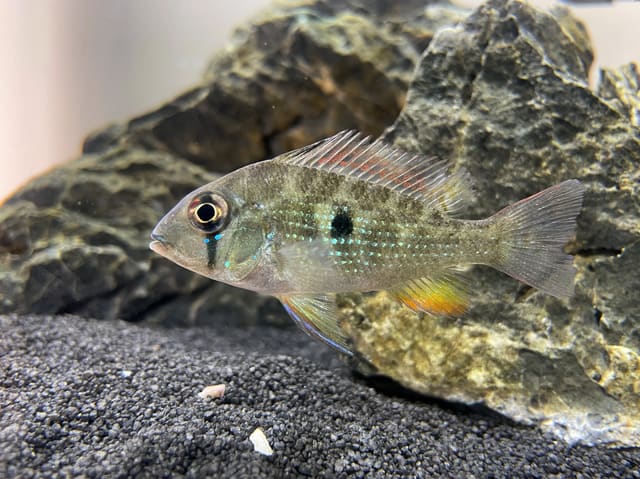
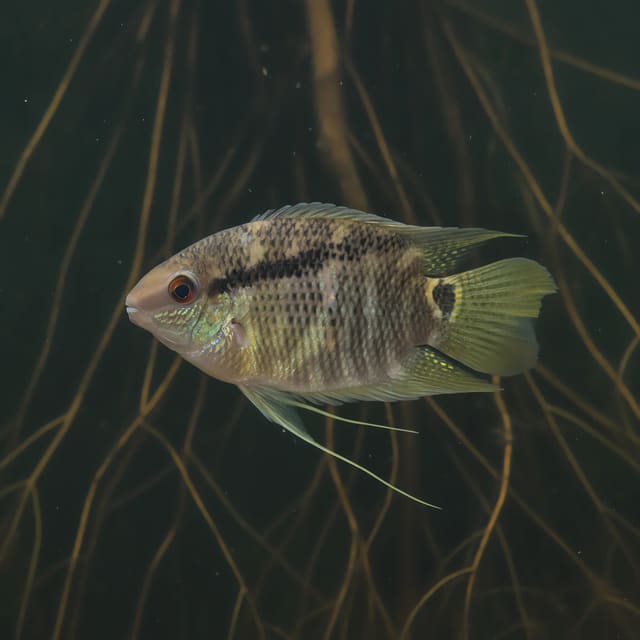
Electric Blue Acara (Andinoacara pulcher) – Neon Blue, 2–7cm Sizes
22–23°C · pH 6.5–8
£6.19
Albino Oscar Cichlid (Astronotus ocellatus), offered as one live fish with four genuine size choices from 3–4 cm to 10–15 cm. Plan around an adult-sized aquarium, strong filtration, a predatory feeding response and carefully selected companions.
Adult size is the maximum length this species reaches at full maturity (scientific sources). The livestock you receive will be younger and smaller — pick a size above for the actual shipping size. Product-photo provenance and any image-specific limitations are stated on the listing.
Astronotus ocellatus
Albino Oscar Cichlid (Astronotus ocellatus), offered as one live fish with four genuine size choices from 3–4 cm to 10–15 cm. Plan around an adult-sized aquarium, strong filtration, a predatory feeding response and carefully selected companions.
Adult size is the maximum length this species reaches at full maturity (scientific sources). The livestock you receive will be younger and smaller — pick a size above for the actual shipping size. Product-photo provenance and any image-specific limitations are stated on the listing.

Cichlids are a family of roughly 1,800 accepted species, not one care type. Before buying, identify the exact species and source, then compare adult measurement, usable tank dimensions, social system, territory, tested water, diet and an exit plan. No family-wide minimum tank, water range or tank-mate list is safe.
Maintain these water conditions for optimal health and vibrant colors
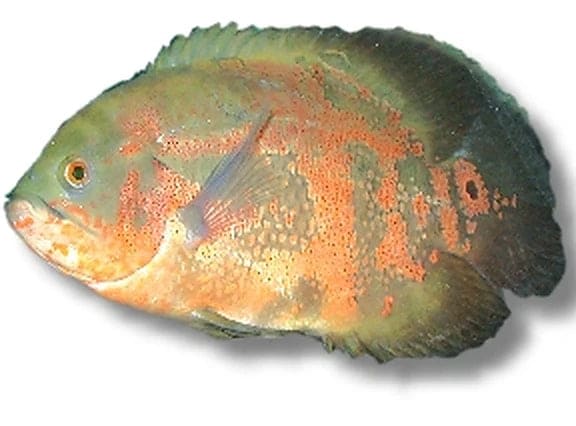
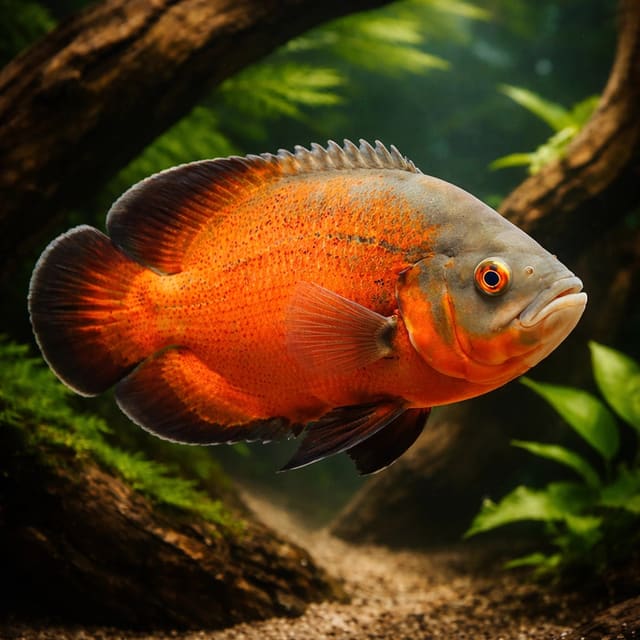
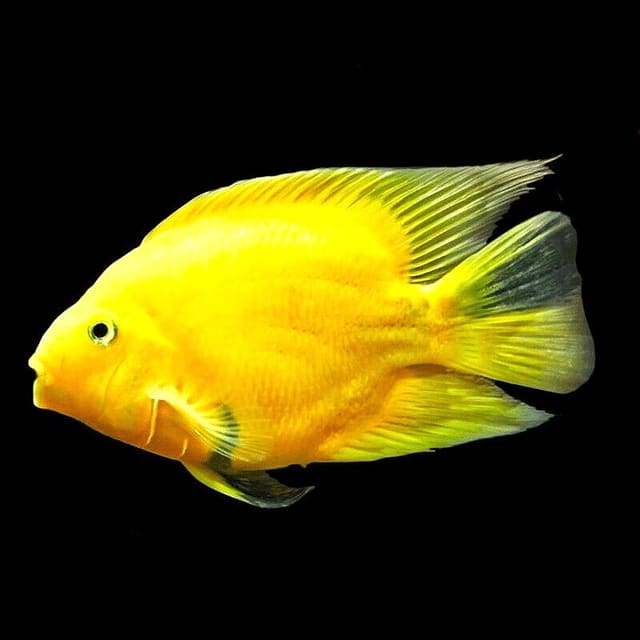
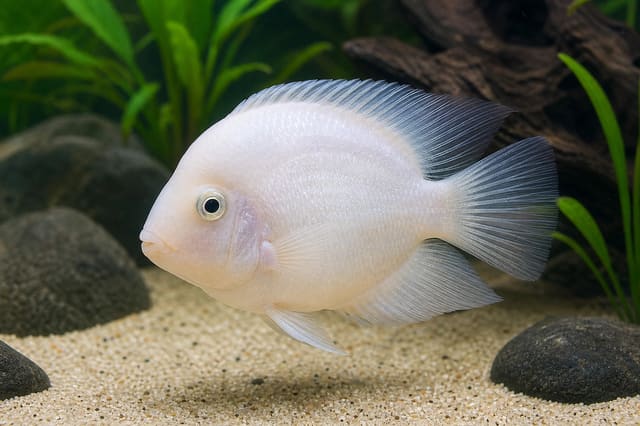
The Albino Oscar Cichlid is the albino ornamental form of Astronotus ocellatus, a large South American cichlid. Its pale body and orange-red markings make it immediately distinctive, but colour is the least demanding part of the decision. The adult fish needs a very large aquarium, powerful filtration, regular substantial water changes and carefully chosen companions.
FishBase records the species to 45.7 cm total length for a male or unsexed fish. Seriously Fish uses 35 cm standard length for aquarium planning. These figures are not contradictory: total length includes the tail, while standard length stops at the base of the tail. Both show why a juvenile Oscar must be purchased with the adult footprint already planned.
One purchase supplies one live fish of the chosen size. This listing has four genuine size choices, spanning 3–4 cm, 5–6 cm, 7–9 cm and 10–15 cm. The size you select is the size supplied, not the adult size. Check the live selector for current size availability at the time of purchase.
A smaller option gives you more of the growth journey, but it does not reduce the final housing requirement. A larger juvenile shortens the grow-out period, but it is still not an adult and still needs careful acclimation. Choose by the receiving aquarium and your ability to maintain it, not by the smallest fish that can temporarily fit into spare space.
Sex is guaranteed only when the selected option explicitly states male or female. This Albino Oscar Cichlid listing has no sex-guaranteed option. Astronotus ocellatus does not usually show dependable external sex differences outside breeding context, so photographs, colour and juvenile body shape should not be used to promise sex.
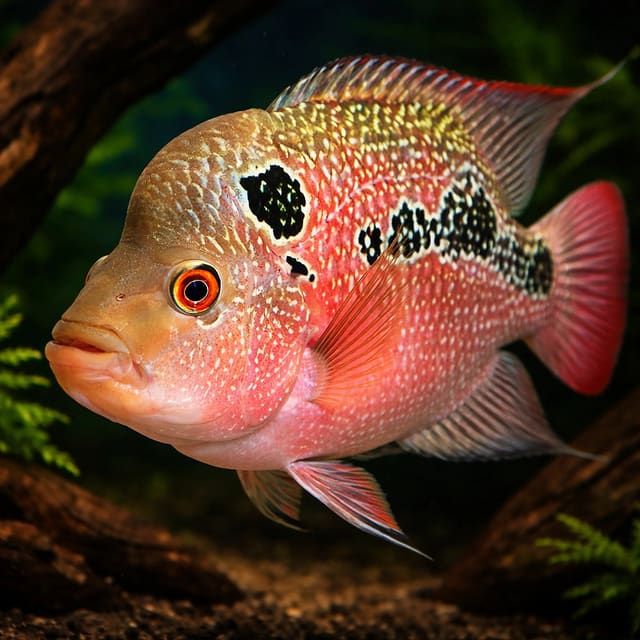
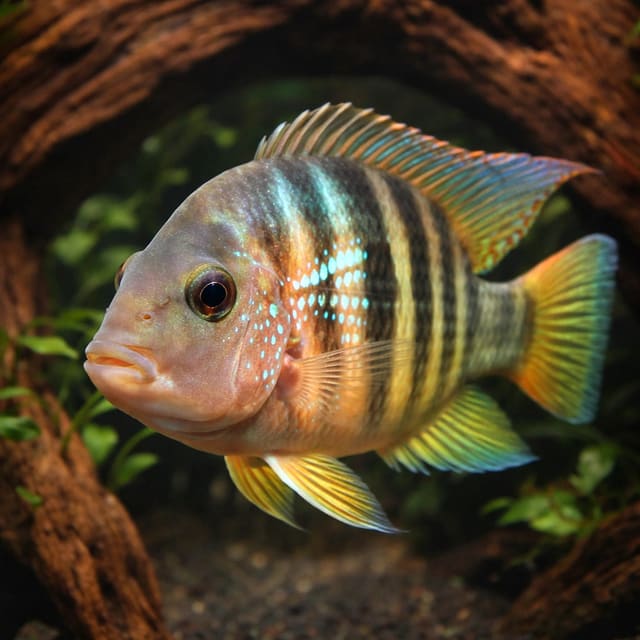
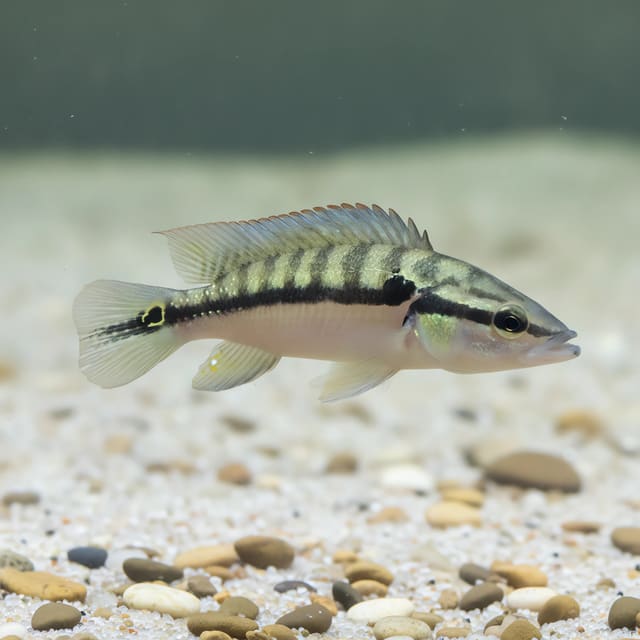
Gallery images have been digitally enhanced to improve image quality. Natural colour, pattern, size and maturity can vary between live animals. They show the pale albino ground colour and orange-red patterning in single-fish and two-fish scenes, but the pair image is not a two-fish sale and does not promise a bonded pair.
This is a compelling fish for an experienced keeper who wants to build a large aquarium around one substantial cichlid and enjoys close observation, feeding and maintenance. The practical challenge is not an obscure water requirement. It is providing enough floor space, processing a heavy food and waste load, protecting equipment and managing predatory behaviour for the fish's full adult life.
| Suits keepers who | Choose another plan when |
|---|---|
| The adult 150 × 60 cm, roughly 540-litre system for one fish is realistic | Only a temporary juvenile aquarium is available |
| Large weekly water changes and strong filtration are practical | Maintenance access or drainage makes that routine unreliable |
| Companions can be assessed by adult size and predatory risk | A conventional small-fish community is the goal |
Seriously Fish says the adult size rules out ordinary community keeping except in the largest private aquaria. Much smaller fish are at direct risk of predation.
Before choosing, sketch the adult setup, confirm the load-bearing location, filtration, heating redundancy and water-change route, and decide what you will do if tankmates prove incompatible. Browse the South American cichlid collection for context, but treat related product links as comparisons rather than automatic companions.
| Measurement | Meaning |
|---|---|
| 45.7 cm TL | FishBase maximum recorded total length, male or unsexed; the tail is included |
| 40 cm TL | A second maximum-length record reported by FishBase |
| 35 cm SL | Seriously Fish aquarium-planning length; standard length excludes the tail |
| 3–15 cm | The range covered by this listing's four supplied size choices, not an adult range |
Use the 35 cm standard-length figure when visualising the body occupying the aquarium and the 45.7 cm total-length record when understanding the largest published whole-fish measurement. Do not turn either into a promise that every individual reaches exactly that size.
The distinction prevents two common mistakes: treating a dispatch size as an adult maximum, and converting a sex-scoped total-length record into an unqualified care card. The fish you receive is a juvenile or subadult chosen from the selector; the permanent setup is for a large adult cichlid.
Seriously Fish gives a base of 150 × 60 cm and about 540 litres as just large enough for one adult. Larger quarters are required for a pair or group. The footprint is as important as nominal litres because a long, deep base gives a large-bodied fish room to turn, move and establish distance from equipment or companions.
Treat that figure as the adult starting point, not a target to postpone until the fish looks cramped. Moving a large cichlid is stressful and arranging a bigger aquarium at short notice can be difficult. The sensible purchase plan includes the mature adult tank, stand, floor position, filter capacity, heaters, cover and water-change method from the beginning.
If a juvenile is temporarily grown on elsewhere, set a clear, conservative transfer point and make sure the adult aquarium is already cycled. Temporary accommodation must still offer stable water, suitable filtration and enough swimming room. A smaller fish does not make ammonia, equipment hazards or unsuitable tankmates harmless.
In the wild, FishBase describes Astronotus ocellatus in quiet, shallow water over mud or sand. Seriously Fish recommends a natural-style aquarium with soft sand, relatively dim lighting and large driftwood roots or branches. These features make sense for the fish while leaving room for maintenance.
Oscars dig and rearrange substrate, so a carefully planted display may not stay as designed. Secure every heavy object independently on the aquarium base rather than balancing it on loose substrate. Leave a wide route for turning and do not create narrow gaps that can trap a growing fish.
Protect heaters and intakes. Seriously Fish notes that the species can break heaterstats and suggests external placement where possible. If equipment remains inside, use robust guards and inspect them. A secure cover also helps contain splashes and prevents accidental escape during startled movement or maintenance.
Decor should be simple enough to remove and clean around. A visually dense aquascape is less valuable than clear access to waste, stable hardscape and a safe swimming footprint.
Seriously Fish calls efficient filtration and a dedicated maintenance regime essential. Its equipment example for an approximately 540-litre aquarium uses total turnover of four to five times the aquarium volume per hour, with two filters rated 1080–1350 litres per hour each. That is a planning example for the cited system, not a promise that flow rate alone guarantees water quality.
Filter performance depends on media, actual flow after head height and clogging, oxygen, stocking, feeding and maintenance. Two filters can provide useful redundancy and distribute flow, but both still need inspection. Position returns so the aquarium is oxygenated without forcing the fish to fight a harsh current everywhere.
The RSPCA explains why biological filtration matters: fish waste produces toxic ammonia, which bacteria convert to nitrite and then nitrate. Clear water can still contain ammonia or nitrite. Cycle the complete system before livestock arrives and verify zero readings with tests rather than relying on appearance or elapsed time.
If a filter needs cleaning, preserve the biological media. Rinse it gently in removed aquarium water and avoid replacing all mature media at once. Stagger work between filters so the entire biological capacity is not disrupted together.
Seriously Fish recommends weekly water changes of 30–50% for this species. That volume is substantial in a 540-litre aquarium, so the method should be designed before the tank is stocked. Plan safe drainage, conditioned replacement water and a way to match temperature without carrying unstable buckets across the room.
Use the lower or higher end according to measured nitrate, feeding, stocking and the system's actual performance. A percentage is not a substitute for testing. OATA's group guidance also calls for weekly ammonia and nitrite tests and warns that nitrate should not rise more than 20 mg/l above the normal tap-water level.
Siphon solid waste from open areas and around wood. Inspect intakes, hoses and seals while the water level is down. Refill in a way that does not undermine hardscape or shock the fish. Record results and maintenance so changes in water quality can be connected to feeding, equipment or stocking decisions.
A routine that is easy to perform is more valuable than an elaborate plan that is repeatedly delayed. Adult Oscar husbandry is won by consistency.
| Parameter | Species-level aquarium guidance |
|---|---|
| Temperature | 20–28 °C |
| pH | 6.0–7.5 for captive-bred examples |
| General hardness | 5–20 dGH |
These values come from Seriously Fish's aquarium profile. FishBase separately reports a wild environmental range of 22–25 °C, pH 6.0–8.0 and 5–19 dH. Do not combine the widest endpoints into a new recommendation. For routine care, keep the aquarium range together with its aquarium context.
Test the source water and receiving aquarium before the fish arrives. If adjustment is needed, make it gradually and understand the buffering capacity of the water. The water-chemistry guide explains the common measurements, and the water matcher can help compare recorded values.
Temperature, pH and hardness do not replace ammonia, nitrite, nitrate and oxygen management. A fish kept within the printed range can still be harmed by an immature filter, accumulated waste or a sudden correction.
Seriously Fish's example suggests roughly 150–225 W spread across two heaters for a 540-litre aquarium in a room around 20 °C. Heater demand changes with room temperature, aquarium shape, lid, insulation and equipment, so calculate for the actual installation rather than copying the wattage blindly.
Two appropriately controlled heaters can reduce dependence on one unit and distribute heat, but redundancy only helps when the equipment is correctly sized, guarded and monitored. Use a reliable thermometer that is independent of the heater dial. Position heaters where filtered flow carries warmed water through the aquarium.
Because Oscars may damage heaterstats, external or protected placement is worth planning. Check cables, guards and suction fittings during maintenance. A heater that is exposed during a large water change must be switched off in time and allowed to cool according to its instructions before the water level falls.
FishBase records a wild diet including small fish, crayfish, worms and insect larvae. Seriously Fish describes the species as a generalised omnivore that favours meatier items and recommends a good-quality cichlid pellet as the aquarium staple, supplemented with appropriate live or frozen foods.
A complete pellet provides a more consistent nutritional base than random pieces of meat. Choose a size the fish can take cleanly, offer a measured portion and observe what is swallowed. Remove leftovers before they disperse into the substrate or filter. OATA's broader American-cichlid guidance advises only what can be eaten within a few minutes and warns that overfeeding adds faeces and decomposing food to the water.
Do not rely on live feeder fish. They can introduce parasites or disease and make nutrition difficult to control. Avoid mammalian or avian meat as a routine food. Variety should come from suitable aquatic or invertebrate foods matched to the fish's size, not from turning the aquarium into a hunt.
Growth should not be forced by excessive feeding. Judge the ration by body condition, activity, waste production and water tests, then adjust gradually.
Have the cycled receiving aquarium, secure cover, protected equipment and testing kit ready before the confirmed delivery day. Be present to receive the parcel. Inspect the outer box before opening and keep the process calm, away from bright light and sudden temperature changes.
The store policy says to float the sealed bag for 20–30 minutes and not to pour transport water into the aquarium. For a Live Arrival Guarantee claim, make a continuous video showing the still-sealed parcel, the opening and the fish still in its sealed bag, then contact the team the same day with the order number.
Read the current delivery and Live Arrival Guarantee policy before the parcel is due. The video is claim evidence, not a biological care step. After release, give the fish time to settle and avoid turning the first evening into a heavy feeding session.
OATA's American-cichlid guidance recommends watching for changes in swimming, colour, temperament, breathing, skin or fin condition, weight and feeding. An Oscar resting briefly is not automatically ill; a persistent change combined with rapid breathing, damaged fins, appetite loss or abnormal water results needs attention.
Test ammonia and nitrite first, then check temperature, filter flow and recent maintenance. Review any new food, decoration or tankmate. Do not start a treatment merely because a symptom has a familiar name, and never add a medicine without confirming aquarium volume and compatibility with the system.
Keep a simple log. Date, measured parameters, feeding and observed behaviour give a retailer or aquatic professional something concrete to assess. They also reveal gradual trends that are easy to miss when the fish is seen every day.
Seriously Fish says Astronotus ocellatus is not especially aggressive for a cichlid of its size, but its predatory nature means it should not be combined with much smaller fish. That distinction is important. A fish does not need to chase constantly or defend a territory to eat a companion that fits into its mouth.
Compare adult sizes, not the sizes on purchase day. A small companion may be safe beside a juvenile Oscar and become prey as the Oscar grows. Conversely, a large but delicate fish may be stressed or injured by cichlid behaviour even if it cannot be swallowed.
Compatibility depends on feeding response, body shape, swimming speed, territorial use, water needs and the ability of every animal to reach food. Have a separate, cycled solution available if the combination fails.
Seriously Fish lists characids, anostomids, other cichlids and larger loricariid or doradid catfish as potential tankmate categories. The word potential does the work: these are not blanket approvals for every species in those families, and the adult Oscar's size means any community requires one of the largest private aquaria.
Research the exact companion's adult length, body depth, temperament, feeding style and water needs. Avoid fish small enough to be eaten and fish so delicate that they cannot cope with a large cichlid's movement or feeding. For bottom-dwelling catfish, check that the aquarium footprint and hiding structure prevent constant crowding.
OATA notes that mixing American cichlids can be difficult and recommends consulting the retailer about the exact combination. Add animals only when the tank is already sized for all adults, and introduce with close observation rather than assuming a species list guarantees success.
Seriously Fish says a single adult can use the cited 150 × 60 cm, approximately 540-litre setup, while a pair or group needs larger quarters. It also describes extended pair bonds in breeding fish. None of that means two unsexed juveniles bought together will become a compatible pair.
This product has no sex-guaranteed option, and external sex differences are generally unreliable. Do not buy two on the assumption that photographs, colour or body shape prove one male and one female. If keeping more than one, provide substantially more space and be ready to separate them if persistent aggression develops.
The gallery's two-fish image is representative only. One purchase supplies one fish. The selector controls size, not sex or pair status.
This sequence is deliberately stricter than choosing from a generic “good tankmates” list. It recognises that the same combination can behave differently as fish mature, the aquarium changes or a pair forms.
A single well-kept Oscar can be a complete display. Adding companions is optional; adequate adult space, clean water and safe equipment are not.
Confirm that a 150 × 60 cm base and roughly 540 litres for one adult can be installed safely. Include the stand, floor loading, secure cover and room to reach filters and hoses. If a pair or group is planned, the cited single-adult system is too small; larger quarters and a separation option are part of the plan.
Run the complete filtration and heating arrangement before the fish arrives. Test for zero ammonia and nitrite under a realistic biological load. Protect internal heaters, secure heavy wood and leave a clear turning area. The general cycling sequence in the tropical aquarium setup guide is useful preparation even though an Oscar is not a first-tank recommendation.
Work out how a 30–50% weekly water change will be drained, conditioned, temperature-matched and returned. Store test kits and spare equipment where they are easy to use. A maintenance plan that requires moving furniture or carrying many unstable buckets is likely to fail when the fish is large.
Check every proposed companion at adult size and remove much smaller fish from the plan. Decide where an incompatible fish could be moved. Then choose the supplied size that fits the already prepared system; the size choice changes the starting point, not the adult obligation.
FishBase records Astronotus ocellatus to 45.7 cm total length for a male or unsexed fish, while Seriously Fish uses 35 cm standard length for aquarium planning. Those measurements use different methods: total length includes the tail, whereas standard length does not.
Seriously Fish gives a 150 × 60 cm base and about 540 litres as just large enough for one adult, with larger quarters required for a pair or group. Plan the adult aquarium and filtration before buying a juvenile; a temporary grow-out tank is not the lifetime home.
A single adult can be housed in the cited 150 × 60 cm, roughly 540-litre setup. A pair or group needs more room, and two randomly selected juveniles are not guaranteed to form a compatible pair. This offer has no sex-guaranteed option.
The care routine is understandable, but the adult space, powerful filtration, large water changes and predatory compatibility decisions make this an intermediate store assessment. It best suits a keeper who can provide the adult system from the outset and maintain it consistently.
Astronotus ocellatus is a generalised omnivore with a preference for meatier food. Seriously Fish recommends a good-quality cichlid pellet as the staple, supplemented with appropriate live or frozen foods. Avoid relying on feeder fish and remove uneaten food before it burdens the filter.
Seriously Fish gives 20–28 °C, pH 6.0–7.5 and hardness of 5–20 dGH for aquarium care. Stable, clean water matters alongside those figures. Test the source and receiving water and make changes gradually.
Seriously Fish describes the species as not especially aggressive for a cichlid of its size, but clearly predatory. It should not be combined with much smaller fish, and individual territorial behaviour still needs space, observation and a separation plan.
In a very large aquarium, the cited possibilities include suitably sized characids, anostomids, other cichlids and larger loricariid or doradid catfish. These are conditional categories, not universal tankmates; compare adult size, temperament, feeding and water needs for every individual.
Tropical Fish Co hand-bags live fish in oxygen, uses an insulated poly box and adds a heat pack when conditions call for it. A licensed live-animal courier carries the parcel. For a Live Arrival Guarantee claim, contact the team on the day of arrival with the order number and a continuous video showing the sealed parcel being opened and the fish still in its bag.
Identity, measurement scope, aquarium planning, water, feeding and compatibility use the following public references.
Values stay with their measurement and source scope. Price, current stock, delivery dates, sex and pair status remain live sale decisions rather than permanent care claims.
No reviews for this item yet. Bought one? Honest reviews only, good or bad.
What customers say about ordering from us
Easy website plenty of info on fish your buying great to pick a time slot
TRACEY DURRANT · 7 Oct 2026
Got some lovely fish thank you
Kevin Mackie · 7 Oct 2026
Reviews of our shop, collected by Judge.me, an independent third-party review collector. Newest first.