Moderate
Diamond Neon Tetra (Paracheirodon innesi)
21–25°C · pH 5–7
£4.99

The Neon Tetra (Paracheirodon innesi) is a small freshwater member of Acestrorhamphidae from the Solimões River drainage in South America that reaches 2.5 cm standard length. It suits mature, filtered aquariums at least 60 cm long in groups of eight or more; the FishBase and Seriously Fish overlap is 21–25°C, pH 5.0–7.0 and 1–2 dGH. Sold individually in 1 cm, 1,5 cm, 2 cm, 2,5 cm, > 3 cm and XL sizes.
Adult size is the maximum length this species reaches at full maturity (scientific sources). The livestock you receive will be younger and smaller — pick a size above for the actual shipping size. Product-photo provenance and any image-specific limitations are stated on the listing.
Paracheirodon innesi
Shoaling fish: kept in a group they feel safer, stay calmer and show their best colour.
Minimum of 2 per order.
The Neon Tetra (Paracheirodon innesi) is a small freshwater member of Acestrorhamphidae from the Solimões River drainage in South America that reaches 2.5 cm standard length. It suits mature, filtered aquariums at least 60 cm long in groups of eight or more; the FishBase and Seriously Fish overlap is 21–25°C, pH 5.0–7.0 and 1–2 dGH. Sold individually in 1 cm, 1,5 cm, 2 cm, 2,5 cm, > 3 cm and XL sizes.
Adult size is the maximum length this species reaches at full maturity (scientific sources). The livestock you receive will be younger and smaller — pick a size above for the actual shipping size. Product-photo provenance and any image-specific limitations are stated on the listing.
Start here: use a mature, filtered aquarium at least 60 cm long. FishBase and OATA compile groups of five or more; our conservative planning screen starts at eight, then checks usable volume, water, filtration and every adult tank mate.
Maintain these water conditions for optimal health and vibrant colors
The Neon Tetra, Paracheirodon innesi, is a small freshwater member of Acestrorhamphidae from the Solimões River drainage in South America. FishBase records a maximum of 2.5 cm standard length. It suits a keeper prepared to maintain a mature, filtered aquarium at least 60 cm long, keep eight or more together and screen every tank mate for peaceful behaviour, shared water needs and predation risk.
| Suits | Not suited to |
|---|---|
| A mature, filtered aquarium at least 60 cm long | An immature or unfiltered aquarium |
| A group of eight or more | Single-fish or undersized-group keeping |
| Peaceful companions too small to swallow them | Fish large enough to eat them |
| Stable water shared by the complete community | Rapid temperature or chemistry changes |
One purchase supplies one Neon Tetra in the size chosen through the live selector. This is a single-fish purchase unit rather than a pair, trio or pre-set shoal, so enter the quantity needed for your planned group. The complete group must fit alongside every other adult resident without overloading the aquarium.
| Size label | What it means |
|---|---|
| 1 cm | One fish in the 1 cm dispatch size |
| 1,5 cm | One fish in the 1,5 cm dispatch size |
| 2 cm | One fish in the 2 cm dispatch size |
| 2,5 cm | One fish in the 2,5 cm dispatch size |
| > 3 cm | One fish with a dispatch size above 3 cm |
| XL | One fish in the non-numeric XL size |
The size you select is the size supplied, not the adult size. The > 3 cm label does not set an upper measurement, while XL is a size name rather than a centimetre promise. Use the selected fish’s dispatch size when checking whether an established tank mate could swallow it, then use the adult planning references below when judging the long-term community.
Sex is guaranteed only when the selected option explicitly states male or female. This Neon Tetra listing has no sex-guaranteed option.
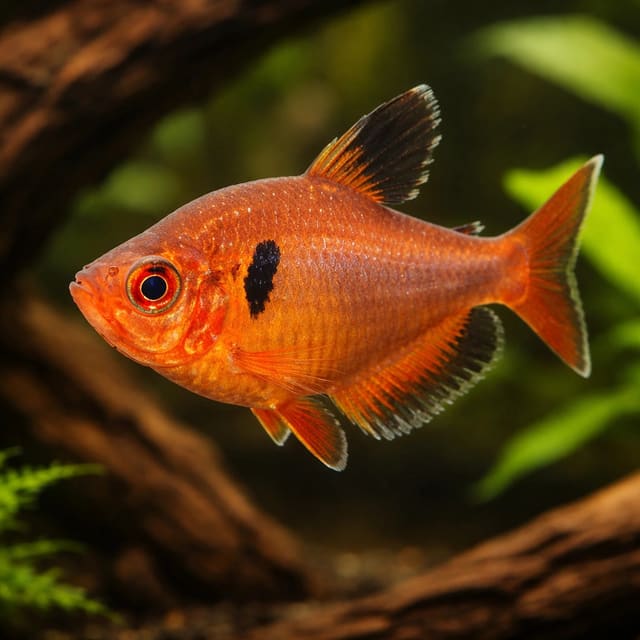
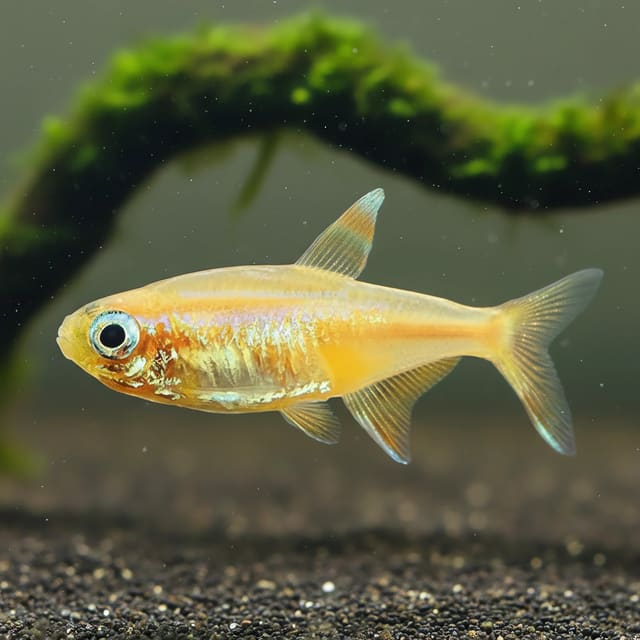
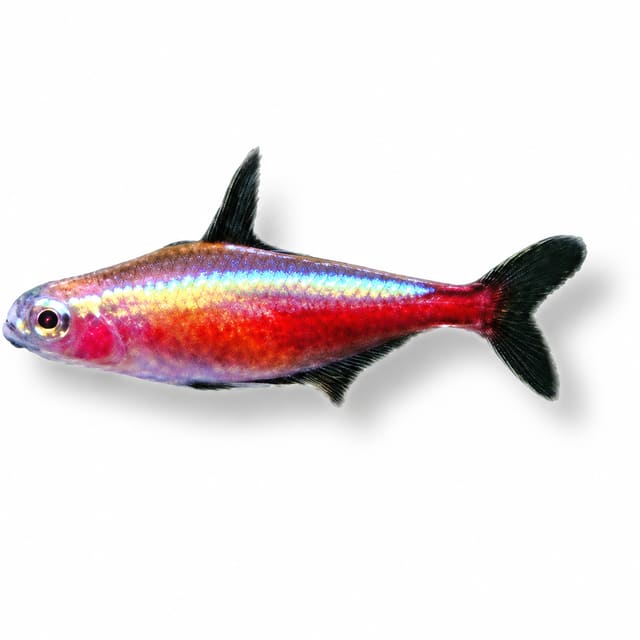
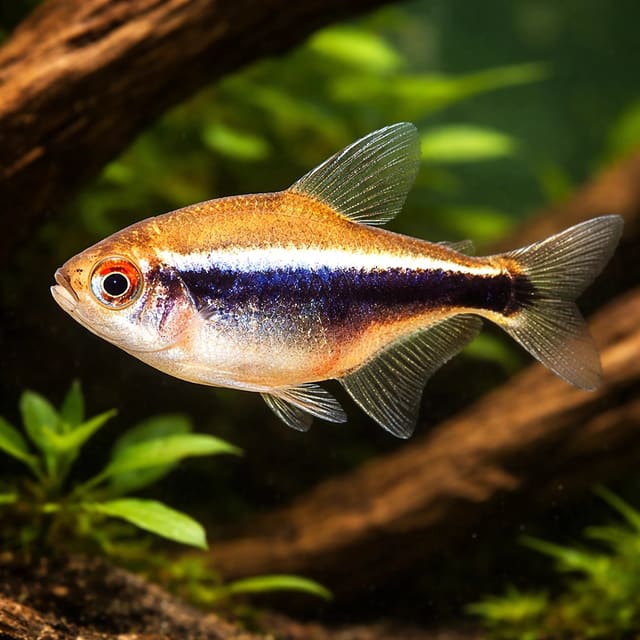
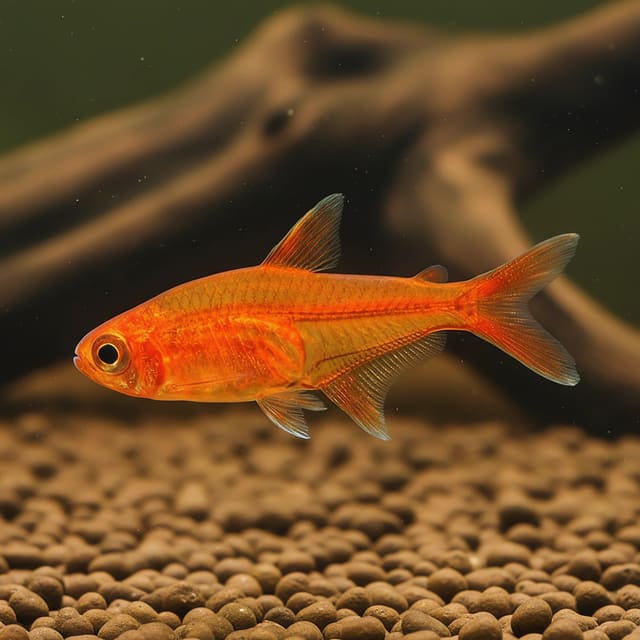
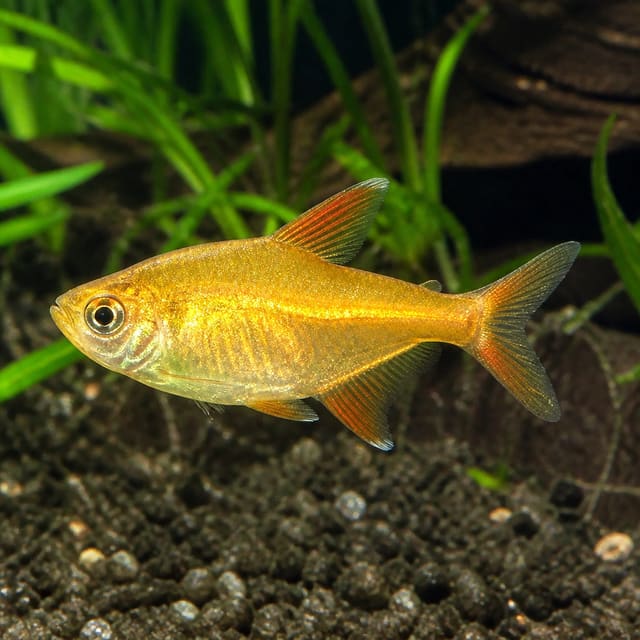
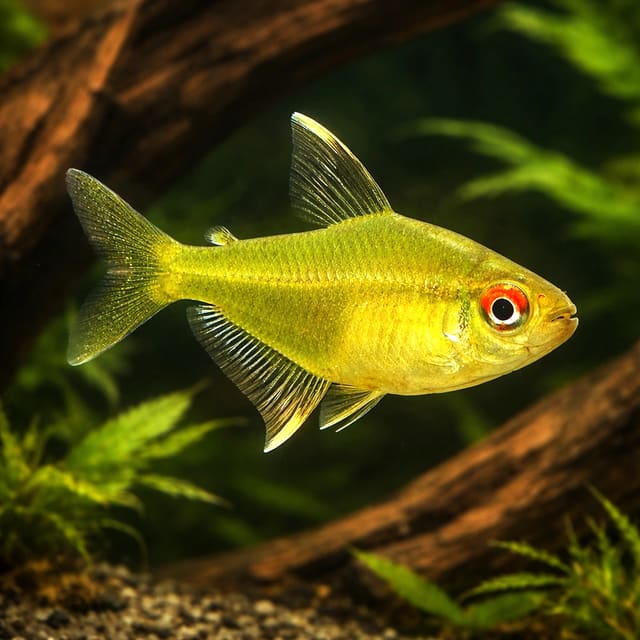
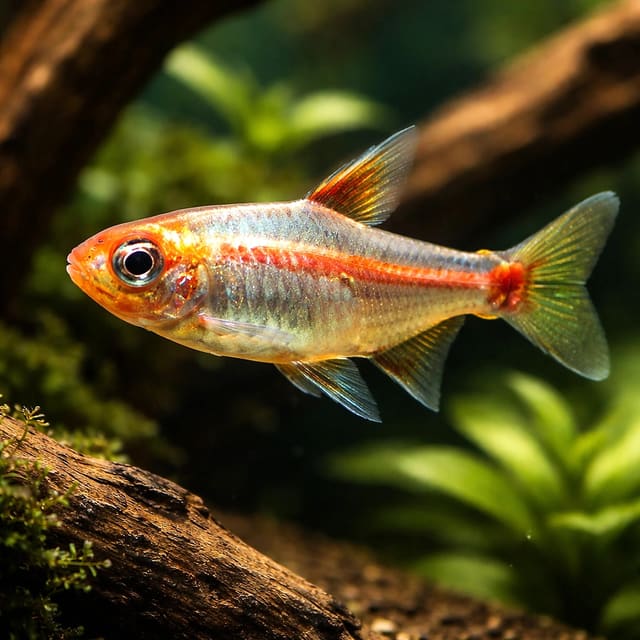
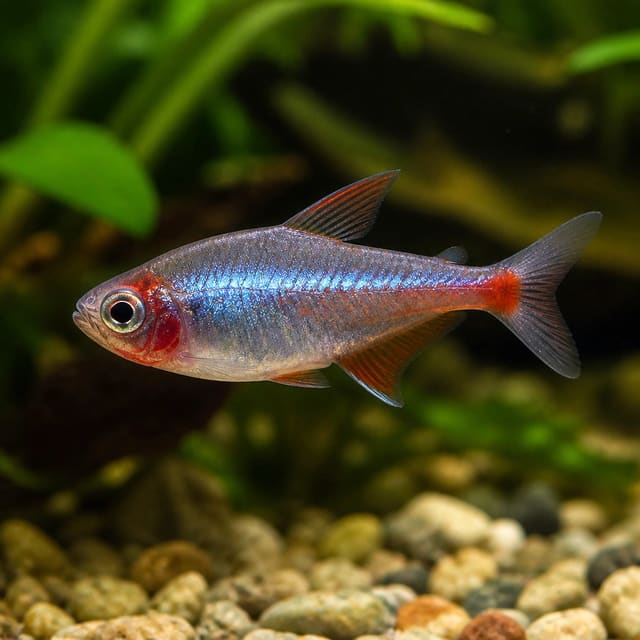
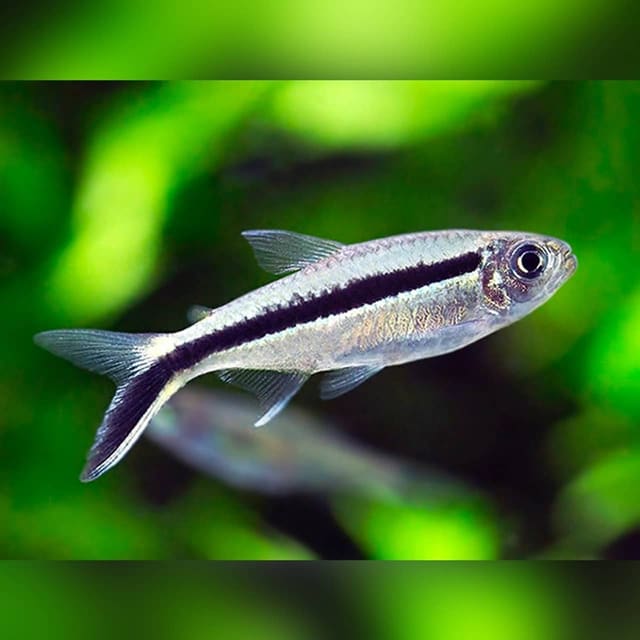
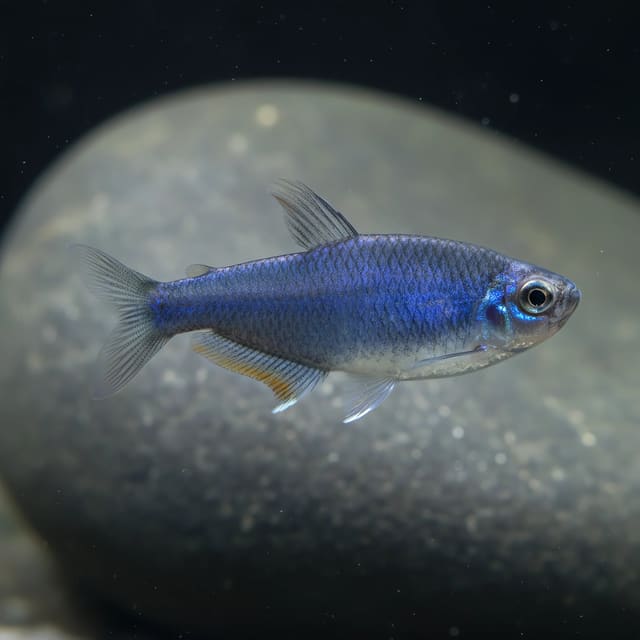
Some gallery images are representative, based on reference photographs of this species, and none shows the exact animal supplied, so colours can look slightly different from the live animal.
Use the live selector to choose among the listed dispatch sizes. The Neon Tetra collection provides a separate route for comparing related shop entries, while the delivery and Live Arrival Guarantee policy carries the current dispatch terms and reporting steps.
The accepted identity is Paracheirodon innesi, the Neon Tetra. The Catalog of Fishes account places it in Acestrorhamphidae, while its South American distribution includes the Solimões River drainage. The offer identifies these fish as captive-bred; that does not mean they were collected from the native range.
FishBase records a maximum of 2.5 cm standard length. Standard length ends at the base of the tail fin, so it is not interchangeable with a dispatch label or an informal total-length measurement. Seriously Fish gives 30 mm standard length as its aquarium planning reference. Where a few millimetres affect a compatibility decision, plan around the larger 30 mm reference and the actual mouth size of every adult tank mate.
| Decision | Starting point |
|---|---|
| Aquarium base | At least 60 × 30 cm |
| Approximate nominal volume | About 54 litres for that reference base |
| Social group | At least eight, with 8–10 given as the species recommendation |
| Filter | Biologically mature before the group arrives |
| Community | Planned around all residents at adult size |
A litre label cannot replace the footprint check. Substrate, wood, internal equipment and other decor reduce usable water, while a short, deep aquarium can carry a similar nominal volume without giving the same horizontal swimming room. Measure the actual base, account for the occupied space and assess the complete adult community rather than converting 60 cm into a universal stocking formula.
Tropical Fish Co uses eight as its conservative starting screen, provided the aquarium can support the whole group. Our retailer assessment is intermediate: routine feeding is manageable, but success depends on mature biological filtration, stable water, appropriate group planning and careful tank-mate selection. Read the complete Neon Tetra care guide when planning the aquarium beyond this product-focused decision page.
Prepare a biologically mature aquarium before introducing Neon Tetras. The RSPCA explains why a working biological filter is essential: fish waste releases toxic ammonia, bacteria convert it to toxic nitrite and further bacteria convert nitrite to the safer nitrate. Clear-looking water can still contain ammonia or nitrite, so visual clarity never replaces testing.
A fixed number of elapsed weeks does not demonstrate that a filter can process waste. Base the decision on measured water and a filter matured for the intended community. If this is your first setup, follow the first tropical aquarium preparation guide before choosing livestock.
For an aquarium of about 54 litres, Seriously Fish uses a turnover reference of four to five times the aquarium volume each hour, corresponding to a filter rating around 215–270 litres per hour. Treat that as an equipment-planning reference for the stated tank size. Filter ratings are nominal, and media, pipework, head height and maintenance condition can affect working flow.
Arrange the outlet so the aquarium receives circulation without forcing the fish to remain in a high-velocity stream. Smaller tetras benefit from a gentle current, while waste still needs to reach the filter. Observe whether the group can hold position, feed and use the swimming area normally; change the outlet direction or distribution if one forceful jet makes a section unusable.
Do not solve marginal filtration by reducing the shoal below the social plan. Choose an aquarium and filter that can support at least eight fish plus the rest of the adult community. When the existing aquarium is already near its practical limit, revise the whole stocking plan before adding another group.
Keep Neon Tetras at 21–25°C, pH 5.0–7.0 and 1–2 dGH. These routine values are the overlap of the species-level ranges from Seriously Fish and FishBase: Seriously Fish gives 21–25°C, pH 4.0–7.5 and 1–12 dGH, while FishBase records 20–26°C, pH 5.0–7.0 and 1–2 dH. Favour a stable point shared by every resident rather than moving fish rapidly towards an extreme.
OATA’s tetra and pencilfish sheet gives 22–27°C, pH 6.5–8.0, 4–12 dGH and 3–10 dKH as broad group guidance. Its measurable welfare limits are ammonia at zero, nitrite at zero and nitrate no more than 20 mg per litre above the normal tap-water level. The Neon Tetra values above remain bounded by the two species ranges.
| Check | Action |
|---|---|
| Temperature | Hold a stable point within 21–25°C |
| Ammonia | Require zero before introduction |
| Nitrite | Require zero before introduction |
| pH and hardness | Measure both aquarium and source water before gradual changes |
| Nitrate | Track the result against the tap-water baseline |
Learn how the measurements interact through the aquarium water chemistry guide, then enter actual test results in the water matcher. A value printed on a regional water report is useful context, but the aquarium result is the number affecting the fish.
Many UK rooms will not hold 21–25°C consistently throughout the year. Seriously Fish estimates roughly 50 W of heating for an aquarium around 54 litres when the room is near 20°C. Follow the heater maker’s instructions for the actual aquarium volume and room conditions, use a thermostatic aquarium heater where needed and confirm the result with a separate thermometer.
Avoid rapid pH, hardness or temperature correction. First establish the holding conditions, test the destination aquarium and choose a gradual transition that preserves temperature and oxygen. Stability at a suitable shared value is safer than repeatedly chasing a target with large chemical changes.
Use the 60 × 30 cm base as a starting footprint, then preserve a clear horizontal route through the aquarium. Place cover around part of the layout instead of filling every part of the swimming area. This gives the group structure to move around while retaining open water for feeding, observation and normal movement.
| Area | Practical role |
|---|---|
| Back and sides | Plants, roots or branches can create cover |
| Open route | Retains uninterrupted group swimming space |
| Substrate | Sand can support the natural-style arrangement described for the species |
| Surface and outlet | Keep circulation gentle and well distributed |
| Viewing area | Leave enough access to check every fish during feeding |
Seriously Fish describes a sandy substrate with driftwood roots and branches as a suitable natural-style arrangement. Dried leaf litter may add cover, and its decomposition supports microbial growth. Replace or remove material as it breaks down in accordance with the aquarium’s maintenance needs; do not let decaying material accumulate beyond the filter and water-change routine.
Aquatic plants suited to dimmer conditions include Microsorum, Taxiphyllum and Cryptocoryne species. Choose plants that also fit the lighting, substrate and maintenance regime of the aquarium. Dimmer areas can be created by the layout without making the entire tank inaccessible for inspection.
Natural peat is unnecessary for this setup, and Seriously Fish advises against it because collecting peat is environmentally damaging and unsustainable. If a natural visual style is wanted, use aquarium-safe wood, leaves or alder cones within a measured maintenance plan rather than relying on peat to force the water towards a number.
Decor must not turn a nominal 54-litre aquarium into a cramped swimming space. After arranging the hardscape, view the tank from above and from the front. If roots, plants or equipment divide the remaining route into short pockets, simplify the layout before calculating the community. A visually full aquascape is not automatically a functionally spacious one.
Use a suitably small complete flake, granule or micro-pellet as the nutritional base. FishBase records wild adults eating worms, small insects, crustaceans and plant matter, while Seriously Fish describes small invertebrates, crustaceans, filamentous algae and fallen fruit. That varied natural diet does not make one frozen item a complete aquarium food.
Add measured variety with appropriately small live or frozen foods. Seriously Fish names chironomid larvae, mosquito larvae, Daphnia and Moina, while OATA also includes small bloodworm and tubifex within its group feeding advice. Match every item to the fish’s mouth and feeding response.
| Decision | Action |
|---|---|
| Frequency | Feed once a day |
| Amount | Offer only what the group eats within a few minutes |
| Staple | Use a suitably small complete prepared food |
| Variety | Add small live or frozen foods in measured portions |
| Excess | Remove recurring uneaten food and reduce the next portion |
Watch the whole group rather than the quickest fish. Spread a small portion across the feeding area so less assertive individuals have an opportunity to eat. If food repeatedly reaches the substrate untouched, reduce the amount or choose a smaller particle; adding bottom-dwelling fish is not a substitute for portion control.
Uneaten food decomposes and adds waste, increasing the burden on the biological filter. A useful portion is therefore defined by consumption, not by how much the fish initially rush towards. Keep the daily method consistent long enough to judge appetite, then adjust in small steps when group size, food type or feeding behaviour changes.
If one fish stops feeding while the rest continue normally, check its breathing, posture, colour and position in the group, then test the aquarium. Do not hide a persistent appetite change by repeatedly adding richer food. The health section below gives the water-first response for a change that continues.
Prepare and test the mature aquarium before the fish arrive. Confirm a stable 21–25°C temperature, require ammonia and nitrite to read zero, check the filter and make sure the intended swimming space is clear. Arrival is not the moment to make major changes to decor, filtration or water chemistry.
Keep the continuous video and order number if a Live Arrival Guarantee claim is needed, and contact us on the day the fish arrive if anything has gone wrong. The policy uses the sealed parcel, continuous opening and fish in the sealed bag to show their condition before release.
After release, observe breathing, posture and swimming. Check that every fish can maintain position and that none is repeatedly driven away from cover or the normal swimming area. Compare individuals with the group instead of treating one brief movement as a diagnosis.
Additions increase both feeding and waste, so the bacterial population must adapt to the changed load. Avoid combining the Neon Tetra group with several unrelated stocking changes on the same day. A controlled introduction makes later water-test or behaviour changes easier to interpret.
At least once every week, carry out a partial water change of 25%, following OATA’s tetra-group maintenance guidance. Use a siphon to remove settled waste where the layout allows, and treat replacement tap water with a suitable conditioner before it enters the aquarium so chlorine or chloramine does not damage fish or filter bacteria.
| Task | Decision standard |
|---|---|
| Water change | Once each week or more often; change 25% |
| Ammonia | Zero mg per litre |
| Nitrite | Zero mg per litre |
| Nitrate | No more than 20 mg per litre above tap water |
| Filter | Check for restricted flow or blockages |
| Replacement water | Condition before adding it |
Test at least weekly and also after a change in stocking, feeding, equipment performance or fish behaviour. Record the results so a gradual rise is visible before it becomes a crisis. A single acceptable reading does not replace an ongoing pattern of stable results.
When filter media needs cleaning, rinse it lightly in water removed from the aquarium during the partial change. Do not run established biological media under the tap because chlorine or chloramine may damage the bacterial population. Clean only as much as needed to restore normal flow rather than stripping every component at once.
Coordinate maintenance with the feeding routine. If uneaten food is repeatedly present, correct the portion instead of relying on a larger water change to compensate. If nitrate rises faster than the established schedule controls it, reassess feeding, stocking, usable volume and maintenance rather than treating the result as an isolated number.
This baseline makes later changes easier to recognise. The aim is not constant adjustment; it is a stable routine that reveals when testing, equipment or stocking needs attention.
Watch for changes in swimming, colour, breathing, temperament, body condition, skin, fins and appetite. Relevant signs include hanging at the surface, sitting on the bottom, erratic swimming, unusual hiding, faster or slower gill movement, white spots, fluffy growths, fin or scale loss and reduced interest in food. A change is a prompt to investigate rather than a diagnosis by itself.
The RSPCA’s pet-fish health guidance treats altered behaviour and appearance as reasons to check water quality and seek appropriate help. Do not diagnose a named disease from colour loss, isolation or one white mark alone, and do not apply blanket heat, salt or medicine recipes to the whole aquarium from a symptom list.
The MSD Veterinary Manual’s aquarium-fish management reference places water quality and biosecurity at the centre of investigation. Keep test results, the timeline of changes, feeding details and photographs where practical; this gives a professional more useful context than a single symptom.
Contact us for husbandry help when a change follows an introduction, maintenance event or equipment problem. For persistent, severe or rapidly worsening signs, use OATA’s UK fish-vet directory to find suitable veterinary support.
Continue essential filtration and oxygenation while seeking help unless a qualified professional directs otherwise. Avoid making several simultaneous changes, because altering temperature, chemistry, decor and medication together can add stress and make the cause harder to identify.
Neon Tetras are generally peaceful community fish, but that temperament does not make every combination suitable. OATA advises that small tetras must not be kept with fish large enough to eat them. Apply that rule to the selected dispatch size on arrival and to the adult Neon Tetra over the life of the aquarium.
Seriously Fish describes similarly sized characids, gasteropelecids, lebiasinids, smaller callichthyid or loricariid catfishes and non-predatory small-to-medium cichlids as possible community companions. These are screening categories, not universal approvals. Each candidate still needs compatible water, enough adult space and behaviour suited to a small peaceful shoal.
| Check | Question to answer |
|---|---|
| Adult mouth size | Could it swallow the selected fish now or at any later stage? |
| Temperament | Could territorial, nipping or boisterous behaviour intimidate the group? |
| Water overlap | Can every species share one stable temperature, pH and hardness range? |
| Feeding speed | Can the Neon Tetras reach suitably small food? |
| Swimming zone | Does the layout give each group usable space? |
| Social needs | Can every shoaling species be kept in its own proper group? |
Avoid fish large enough to swallow a Neon Tetra. Treat persistent chasing, fin-nipping, territorial exclusion and overwhelming food competition as caution signs that require a different plan or separation. Similar body length alone is not enough: body depth, mouth shape, speed and individual behaviour can change the result.
A worked community check starts with the Neon Tetra group of at least eight, then adds the full adult number required by each proposed companion. Allocate footprint, cover, filter capacity and feeding access to all those adults. If the plan only works by keeping several social species in token numbers, simplify it to fewer species with appropriate groups.
Compatibility remains conditional because individual behaviour and aquarium layout vary. Contact us with the aquarium dimensions, usable volume, measured water, filter details, Neon Tetra group size and exact adult identity of every proposed tank mate for a practical stocking and compatibility assessment.
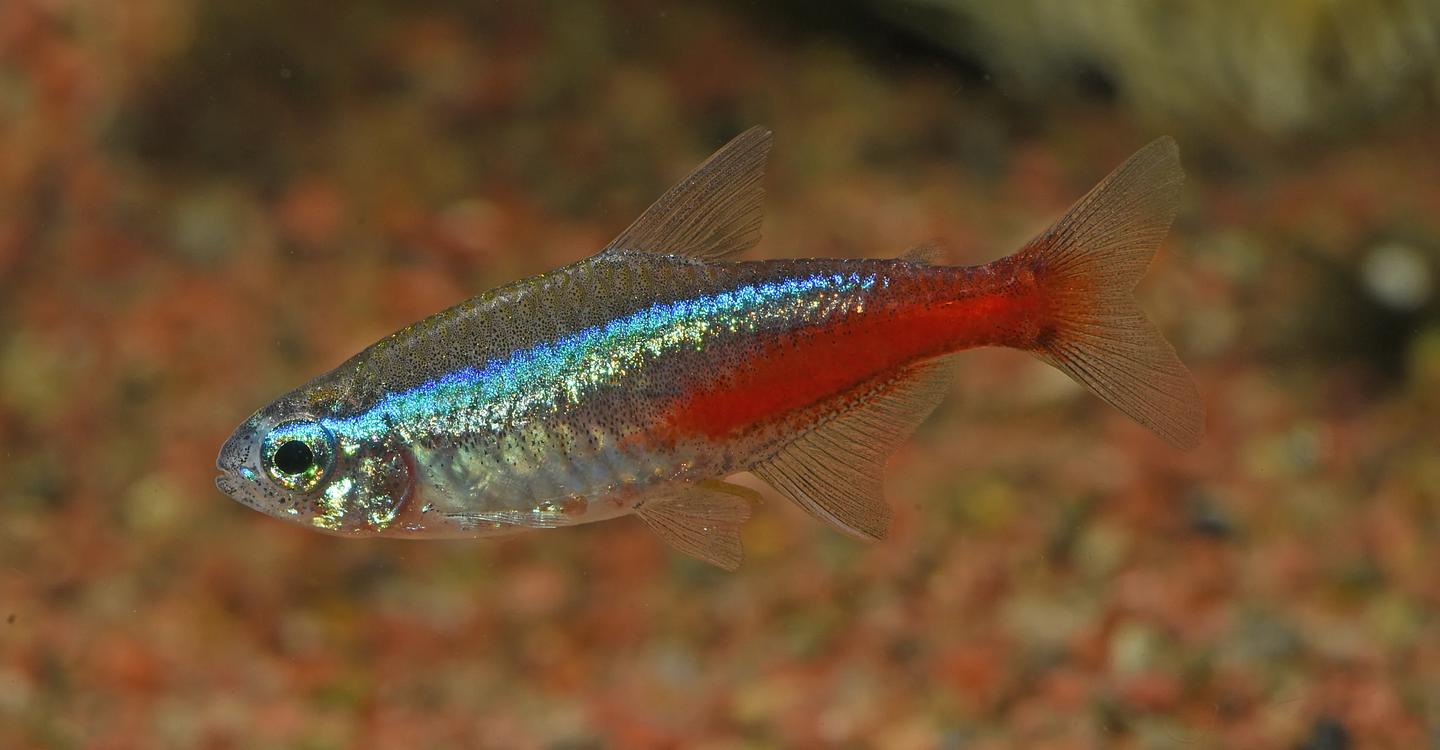
Similar trade names and colours do not make two fish interchangeable. Confirm the scientific name before comparing adult size, temperature and group requirements. A visual cue can help narrow an identification, but the final stocking decision must use the named species and its adult needs.
| Check | Comparison |
|---|---|
| Scientific identity | Neon is Paracheirodon innesi; Cardinal is Paracheirodon axelrodi |
| Red-band cue | The Cardinal’s red band extends farther along the body |
| FishBase temperature | Neon 20–26°C; Cardinal 23–29°C |
| FishBase maximum | Neon 2.5 cm SL; Cardinal 3 cm SL |
The FishBase Cardinal Tetra account gives the warmer 23–29°C environmental range and 3 cm maximum standard length used in this comparison. Temperature ranges overlap, but overlap alone does not decide whether the aquarium has enough space, suitable chemistry and proper group sizes for both species.
Very small shrimp, shrimplets, fry and other bite-sized animals require caution. Small crustaceans form part of the Neon Tetra’s natural diet, so do not promise that these animals will be safe in the same aquarium. Dense structure may change encounters, but it does not remove the feeding risk.
No category guarantees the behaviour of every individual. Keep a practical separation plan when introducing any combination whose success depends on temperament, and base the decision on the aquarium’s real dimensions rather than a broad community-fish label.
FishBase records a maximum of 2.5 cm standard length for the Neon Tetra; standard length ends at the base of the tail fin. Seriously Fish gives a separate 30 mm standard-length planning reference.
Start with a mature, filtered aquarium having a base of at least 60 × 30 cm, approximately 54 litres for that reference footprint. Measure usable space after decor and plan filtration and every tank mate at adult size.
Plan at least eight Neon Tetras, with 8–10 given as the species recommendation by Seriously Fish. Do not reduce the group to compensate for a crowded aquarium; choose a setup that supports the complete shoal.
A Neon Tetra can suit a careful beginner, but our care assessment is intermediate because the aquarium must be biologically mature, ammonia and nitrite must be zero, water must remain stable and the social group and tank mates need planning.
Feed a suitably small complete flake, granule or micro-pellet once daily in an amount eaten within a few minutes. Small live or frozen foods such as daphnia, bloodworm or mosquito larvae can provide measured variety.
Keep it at 21–25°C and pH 5.0–7.0, with hardness of 1–2 dGH; these values are the overlap of the species-level ranges from FishBase and Seriously Fish. Keep ammonia and nitrite at zero and avoid rapid changes.
Seriously Fish describes Neon Tetras as generally peaceful. Screen out combinations involving persistent chasing, fin-nipping, territorial exclusion or food competition, and keep the tetras in a group of at least eight with enough usable space.
Screen similarly sized characids, gasteropelecids, lebiasinids, smaller callichthyid or loricariid catfishes and non-predatory small-to-medium cichlids for shared water, space and temperament. Avoid fish large enough to swallow it, and treat shrimp, shrimplets, fry and other bite-sized animals as potential prey.
Someone must be present to receive the parcel. Start filming every delivery before opening it, showing the sealed parcel continuously as it is opened and the fish still in the sealed bag; inspect it that day, float the bag for 20–30 minutes and never pour the bag water into the aquarium.
No reviews for this item yet. Bought one? Honest reviews only, good or bad.
What customers say about ordering from us
I have a small group of long finned mountain minnows. So was delighted to be able to order ten of this variety to increase the genetics in my tank . The ones I recieved are healthy but it’s to early to give a verdict on wether they are of a long finned type since they are small currently.
Gordon Walker · 23 Sept 2026
100% success travel and "installation". Pleased with quality of purchase. The Siamese fighter a bit "shy" so have not yet seen him at his best yet but looking good. Happy customer. GG
George E Garratt · 21 Sept 2026
Reviews of our shop, collected by Judge.me, an independent third-party review collector. Newest first.