Moderate
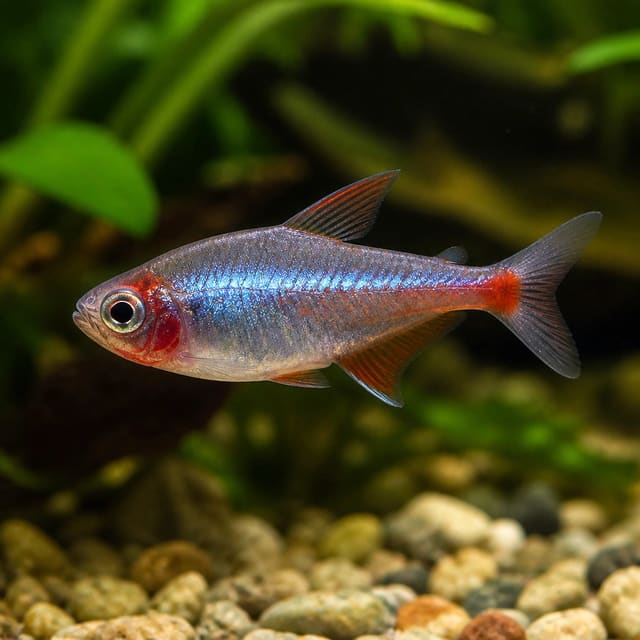
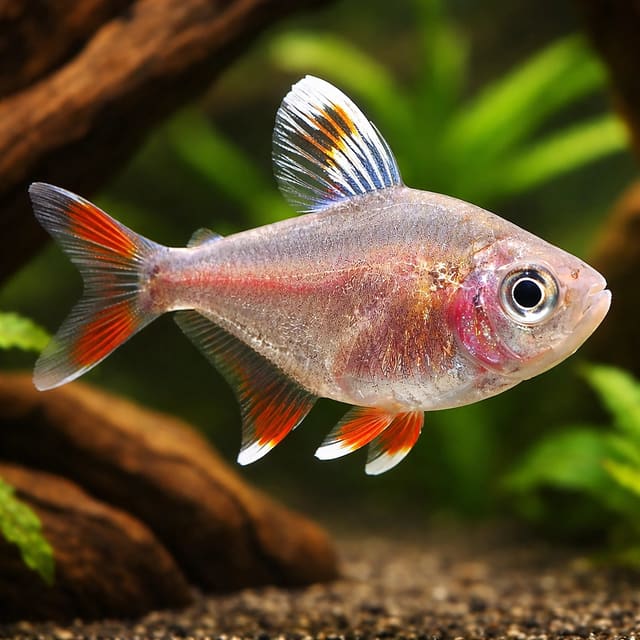
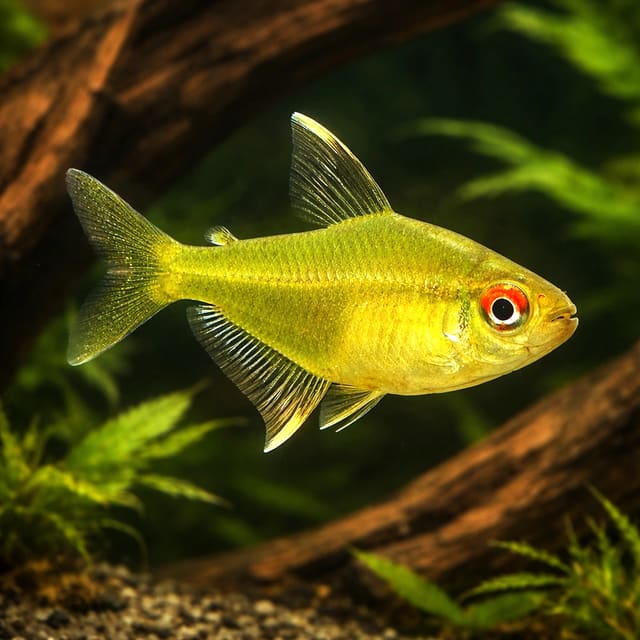
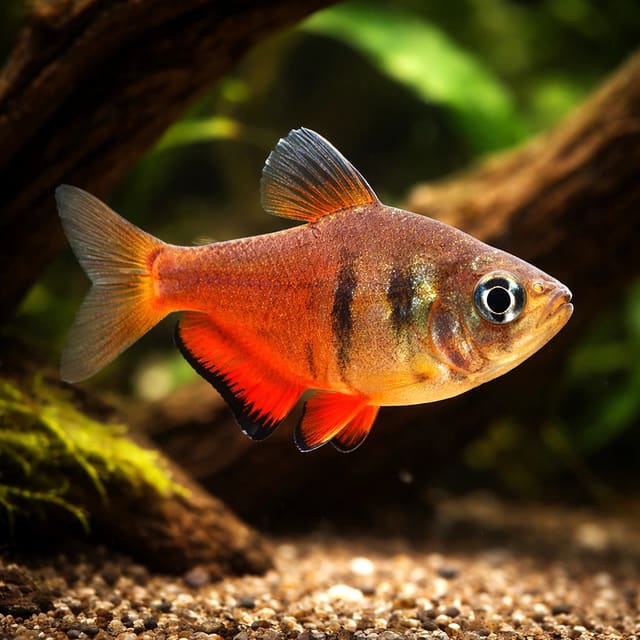
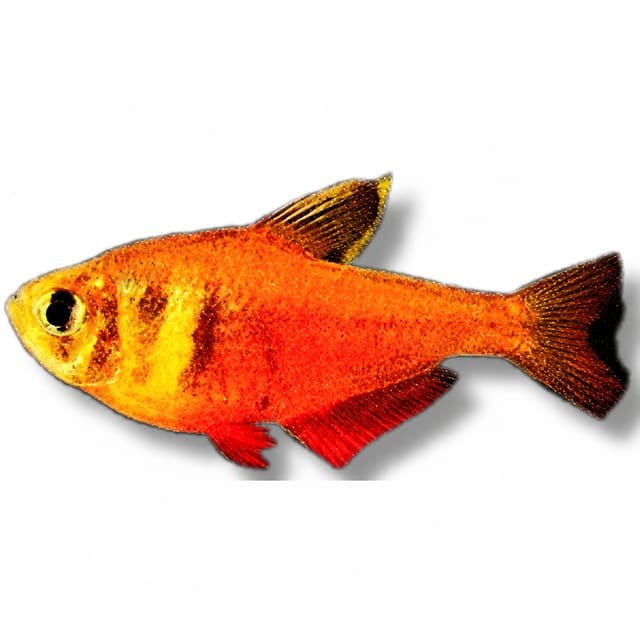
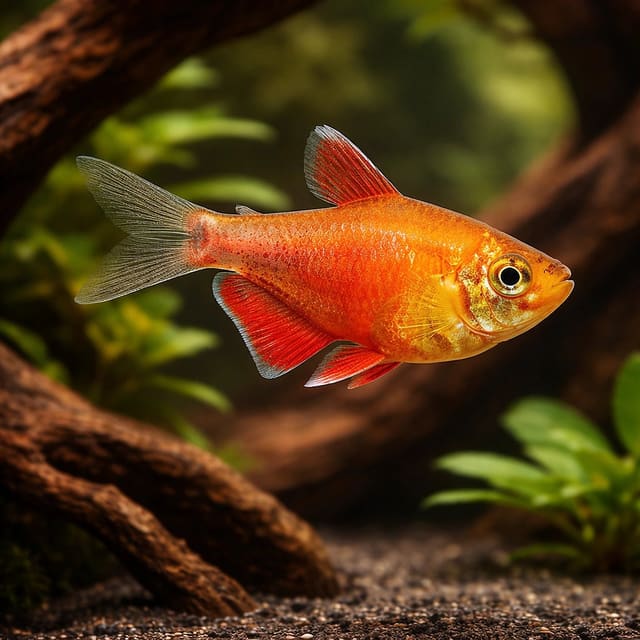
Ember Tetra (Hyphessobrycon amandae)
£3.99

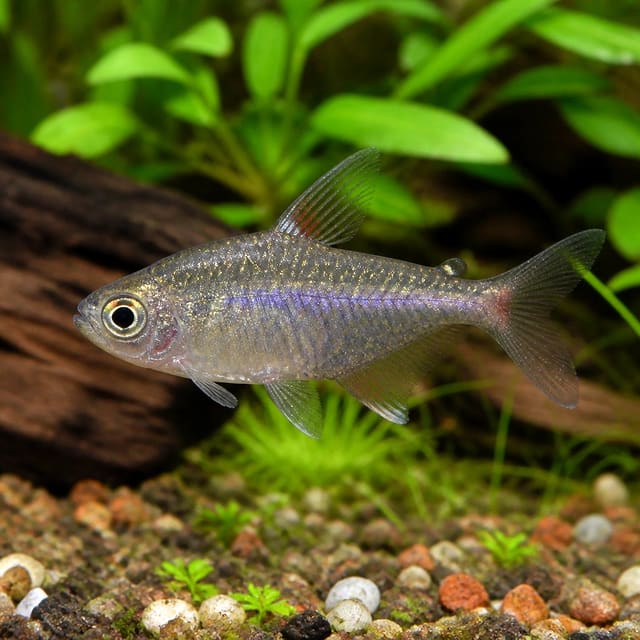
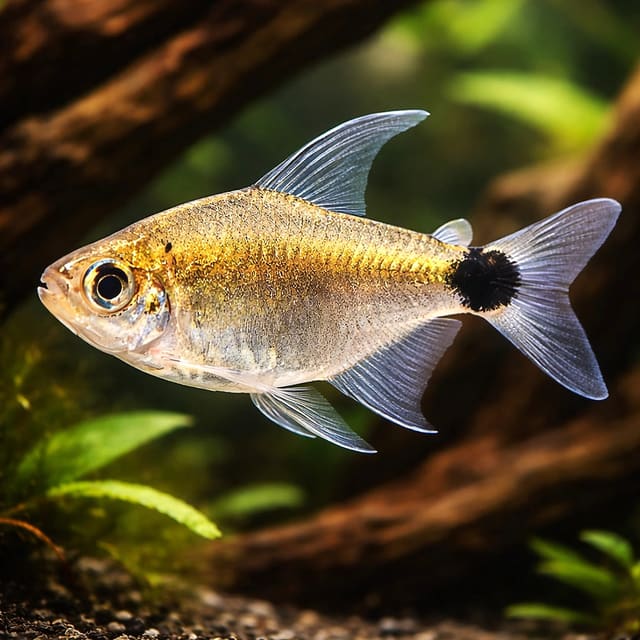
The Black Neon Tetra (Hyphessobrycon herbertaxelrodi) is a peaceful shoaling fish from the Paraguay River basin. Plan at least 8–10 in a mature planted aquarium with an 80 × 30 cm base. One purchase supplies one live fish in your selected size; sex is not guaranteed.
Adult size is the maximum length this species reaches at full maturity (scientific sources). The livestock you receive will be younger and smaller — pick a size above for the actual shipping size. Product-photo provenance and any image-specific limitations are stated on the listing.
Hyphessobrycon herbertaxelrodi
Shoaling fish: kept in a group they feel safer, stay calmer and show their best colour.
Minimum of 2 per order.
The Black Neon Tetra (Hyphessobrycon herbertaxelrodi) is a peaceful shoaling fish from the Paraguay River basin. Plan at least 8–10 in a mature planted aquarium with an 80 × 30 cm base. One purchase supplies one live fish in your selected size; sex is not guaranteed.
Adult size is the maximum length this species reaches at full maturity (scientific sources). The livestock you receive will be younger and smaller — pick a size above for the actual shipping size. Product-photo provenance and any image-specific limitations are stated on the listing.
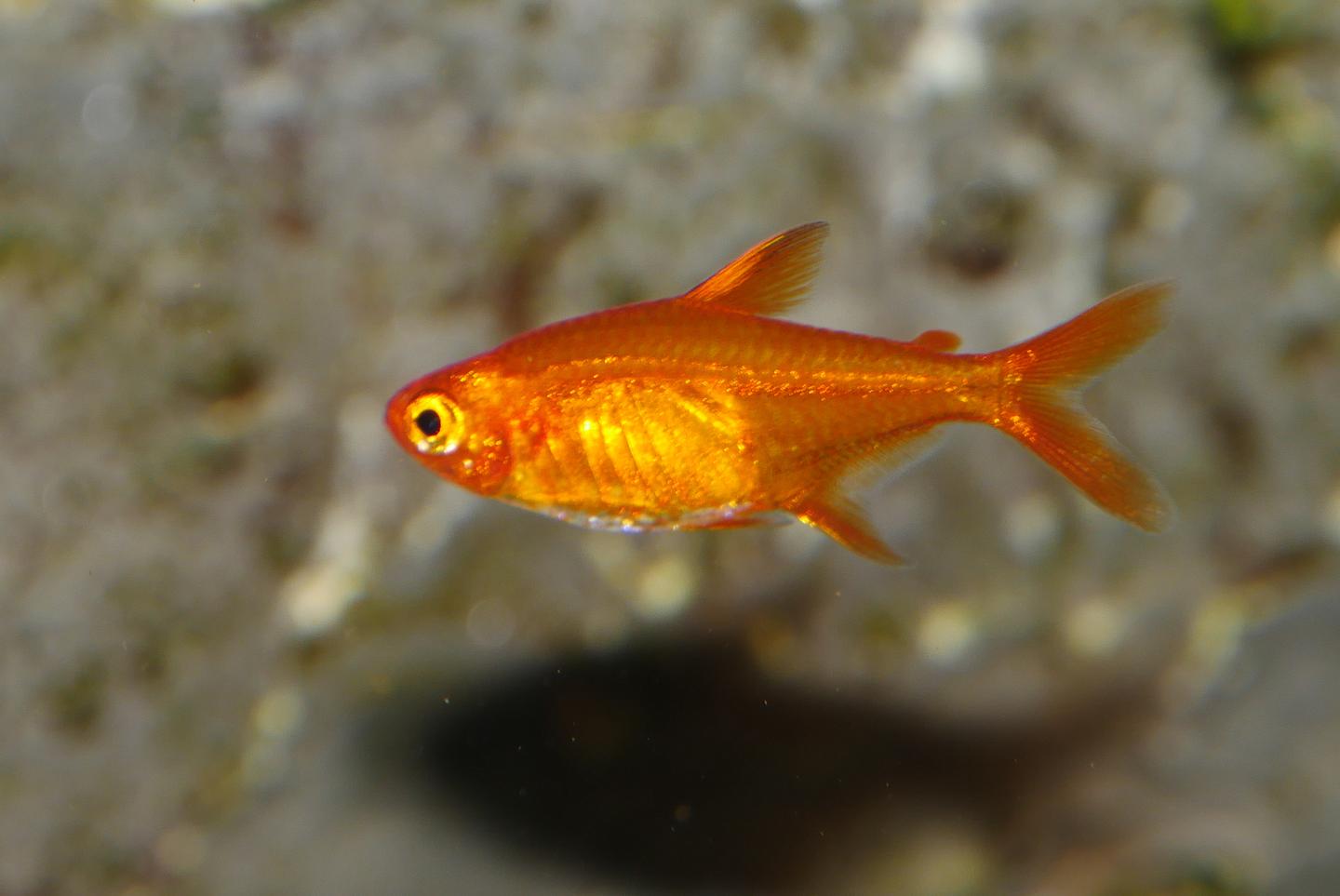
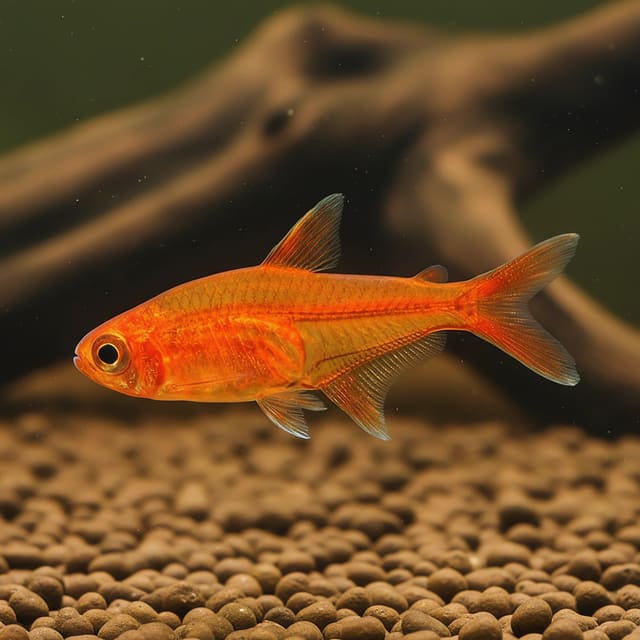
Ember tetras are very small Brazilian social fish, with a maximum recorded length of 2.0 cm excluding the tail. Keep them only in a fully cycled, stable aquarium. We recommend a group of at least 10 and about 45 litres with a 45 × 30 cm footprint rather than using a litres-per-fish formula.
Maintain these water conditions for optimal health and vibrant colors
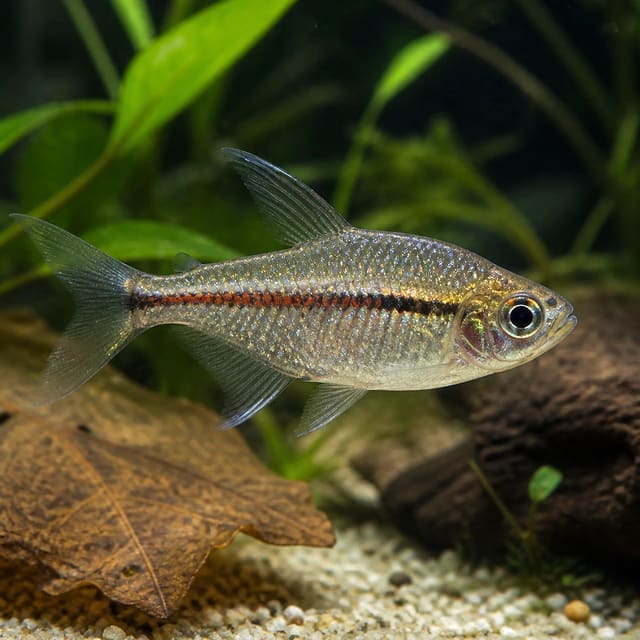
The Black Neon Tetra, Hyphessobrycon herbertaxelrodi, is a small South American freshwater tetra associated with the Paraguay River basin. It is recognised by a bright silver-white horizontal line above a broad black stripe and an orange-red eye accent. One purchase supplies one live fish in the selected dispatch grade; the grade is not a promise that the fish has reached its adult length.
FishBase records 3.2 cm standard length and the species' environmental data. Seriously Fish gives 3.5 cm standard length, an 80 × 30 cm minimum base and a group of at least 8–10. These figures use standard length, while the open-ended >3.5 cm dispatch option does not define whether it uses standard or total length; the retail grade and biological record are therefore not treated as equivalent.
This is a social animal, not a solitary decorative accent. The buying decision must allow for the completed group, stable tested water and open midwater room. Its peaceful label does not remove the need to screen every other species for adult size, group requirement, feeding pace and water overlap.
One purchase supplies one live fish in the selected dispatch grade. The size you select is the size supplied, not the adult size. The available numeric grades run from 2–2.5 cm to more than 3.5 cm.
Sex is guaranteed only when the selected option explicitly states male or female. This Black Neon Tetra listing has no sex-guaranteed option. Do not use colour, body depth, fin shape or the gallery to infer the sex of the animal dispatched. Those features can vary with condition, maturity, lighting and individual appearance.
If you are comparing this fish with other small characins, browse the current tetra collection. The Neon Tetra (Paracheirodon innesi) offers a different appearance to compare. Read its adult size, water requirements and group needs before deciding between species; this comparison does not establish compatibility.
Decide how many fish the aquarium can support before choosing a dispatch grade. A smaller fish is not a way to fit the species temporarily into an undersized tank because its adult requirements remain the same. If you already keep a partial shoal, count the existing fish, confirm their identity and review the total adult load before adding more. Complete a sustainable social plan rather than simply filling spare visual space.
| Suits | Needs reconsidering |
|---|---|
| A mature, filtered aquarium planned for 8–10 Black Neon Tetras | A new aquarium or a plan for one fish |
| A keeper who tests water and provides open midwater room | A crowded community without room for completed groups |
Size choices describe the animal supplied, so read the size label rather than assuming all fish in a group will arrive at the same stage of growth. A small fish still needs food it can swallow and an intake it cannot enter. An established group can contain different-sized individuals, but watch the smaller fish at feeding and make sure they are not displaced from food or cover.
The contrasting stripes suit a planted display where movement matters as much as colour. Its Paraguay River basin origin helps explain the appeal of wood, sand and planting, although a home aquarium need not imitate a particular stretch of river. Choose a layout that supports the fish and remains practical to maintain. A heavily decorated aquarium can look spacious from outside while offering little uninterrupted swimming room.
For a first shoaling species, the commitment is to the whole group and its mature aquarium. Think through space, water testing and maintenance before selecting a size. An established aquarist adding to a group should review the other residents too: a community suitable when all fish were juveniles may need more room as they mature.
Use a mature aquarium with a base of about 80 × 30 cm and a volume near 72 litres as the starting point for a small shoal. The footprint matters because this tetra is active: open mid-water swimming room is more useful than a tall but narrow vessel. Increase the plan when the shoal is larger, when other quick swimmers share the same level, or when hardscape substantially reduces open water.
Keep a clear swimming lane through the middle and upper water while using plants and wood around the sides and rear to create visual breaks. The aim is not to crowd the fish into cover; it is to let an individual move out of another fish's line of sight without losing the open space the shoal needs. Secure décor before filling the aquarium and leave access for cleaning around it.
Start with a properly matured system. The first tropical aquarium guide covers filter maturation and water testing. Maturation is about establishing the biological filter that processes waste, not merely letting tap water stand. The RSPCA aquarium guidance explains that fish release toxic ammonia, which a working biological filter converts first to nitrite and then to the safer nitrate.
A larger aquarium does not remove the need for testing or compatible stocking, but it generally gives more dilution and more freedom to separate activity zones. When choosing between two tanks of similar volume, favour the one with the more useful base dimensions.
Seriously Fish gives species aquarium guidance of 20–28°C, pH 5.0–7.5 and 1–12 dGH. FishBase separately records environmental values of 23–27°C and pH 5.5–7.5, with hardness up to 15 dH and no lower bound. An environmental record is not an instruction to recreate every recorded condition.
OATA's broad captive-bred tetra and pencilfish guidance is 22–27°C, pH 6.5–8.0 and 4–12 dH. It is not a species-specific optimum and its pH upper limit should not override this species profile. The shared interval of 23–27°C, pH 6.5–7.5 and 4–12 dGH is a practical comparison, not a newly established requirement. Assess suitability using species guidance; avoid abruptly changing an established healthy aquarium to chase a narrower figure.
Test the source water and the aquarium before choosing livestock. The water chemistry guide explains what pH, hardness and nitrogen readings mean, while the water matcher helps compare measured values with the range. Test with actual numbers; words such as soft, medium or hard can conceal large local differences.
| Reading | Action |
|---|---|
| Ammonia above zero | Stop adding fish, check filtration and take corrective water-quality action. |
| Nitrite above zero | Treat it as a toxic-water warning and correct the cause. |
| Nitrate rising unusually | Review stocking, feeding, maintenance and source-water readings. |
| Temperature drifting | Check heater operation and measure away from the heater. |
OATA's tetra guidance sets ammonia and nitrite at zero and advises nitrate no more than 20 mg per litre above the normal tap-water level. The comparison with tap water matters: test both so a source-water contribution is not mistaken for an aquarium-only problem.
Change water often enough to hold these readings stable, using conditioned replacement water close to the aquarium's temperature and chemistry. Avoid sudden, large shifts. Record results so gradual change can be noticed before behaviour or appetite deteriorates.
General hardness describes dissolved calcium and magnesium, while carbonate hardness helps indicate resistance to pH change. OATA's 3–10 dKH guidance applies broadly to the group, rather than establishing an individual requirement for this species. A pH reading alone does not tell you either kind of hardness. Keep test units with your notes so results remain comparable when you change a test kit or discuss the aquarium with a retailer.
If source water is unsuitable, work out a repeatable preparation method before acquiring fish. Each water change needs a consistent supply that you can test and prepare reliably. Altering pH without understanding the underlying water can create a cycle of adjustments. Ask for advice with source-water and aquarium readings rather than describing water only as hard or soft.
Choose filtration for the final livestock plan, not only the fish bought first. Seriously Fish gives a turnover of four to five times aquarium volume per hour for this species profile; for a 72-litre aquarium that corresponds to roughly 290–360 litres per hour. Treat the stated flow as a planning reference and assess the actual current after media, pipework and décor reduce output.
Biological media needs oxygenated water and time to establish. Preserve mature biological media during service and rinse it gently in removed aquarium water when cleaning is necessary. Keep the filter operating continuously outside brief routine maintenance. If flow drops, inspect the intake, impeller and clogged mechanical media before assuming the unit is too small.
A turnover number alone cannot show where the current travels. Watch the entire shoal. Fish should be able to occupy the tank rather than being pushed into one sheltered corner, and waste should not settle throughout dead areas. Redirect the outlet or hardscape when circulation is uneven, while retaining the open lane used for social swimming.
More fish create more waste, so increasing the shoal or adding community species changes the filtration and maintenance requirement. A filter label cannot compensate for overstocking. Use observed behaviour, measured water quality and accumulated waste to judge whether the system is coping.
Recheck circulation after plants grow, filter media is serviced or the livestock plan changes. A flow figure describes pump capacity, while the fish reveal whether the resulting current is usable. Record the filter service date beside the water results so a gradual fall in flow can be distinguished from an abrupt equipment fault.
Offer a varied diet appropriate for a small tetra. Seriously Fish recommends varied dried foods and small live or frozen foods such as bloodworm, mosquito larvae, Daphnia and Moina. Choose particles the fish can take easily in mid-water; a food that is nutritionally suitable but too large is not useful.
OATA's tetra guidance recommends feeding only what the fish can eat within a few minutes, once a day. Start with a modest portion and watch whether every fish can feed. Remove or reduce food when particles pass through the group and settle. The correct portion is the amount the shoal consumes without leaving a residue that decomposes in the aquarium.
Do not use extra food to solve competition caused by an unsuitable group or cramped layout. Distribute the same sensible ration more effectively. A second feeding point can help when one area is dominated, provided the total amount remains controlled.
Changes in appetite can signal stress, water-quality trouble or illness. Check temperature, ammonia, nitrite and recent changes before adding richer foods. If one fish cannot feed, observe its breathing, posture, swimming and interactions with the group, and contact us if the change persists or is accompanied by visible deterioration.
Keep at least 8–10 Black Neon Tetras, and prefer ten or more where the aquarium can support them. Seriously Fish recommends at least 8–10 specimens; its mixed-sex suggestion gives guidance on group composition, while this offer provides no sex guarantee. FishBase records five or more and OATA gives five as a broad group minimum. Use the fuller species recommendation when planning this shoal.
The recommendation is a floor, not a promise that every group behaves identically. Use ten or more only where the aquarium footprint, filtration and total stocking allow. A fuller shoal can spread social attention, but crowding creates a different welfare problem. Count all adults at their 3.5 cm planning length when judging space.
| What you see | What to check |
|---|---|
| Repeated chasing of one fish | Group size, cover, swimming room and the target fish's condition. |
| Fin attention towards tank mates | Shoal size and whether slow or long-finned companions are a poor match. |
| Whole group hiding | Recent disturbance, water readings and larger intimidating tank mates. |
| One fish apart at feeding | Access to food, injury, breathing and water quality. |
Do not respond to persistent chasing by immediately adding unrelated species. Correct the shoal, space and layout first. If the aquarium cannot support a fuller group, the answer may be a different stocking plan rather than pushing the filter and space beyond their limits.
Observe at calm times as well as during feeding. Short displays and movement within the shoal are different from sustained exclusion, damage or inability to rest. Any torn fins or repeated cornering require prompt reassessment.
A healthy Black Neon Tetra should be alert, balanced in the water and able to feed with the group. Use several observations together rather than treating one visual detail as a diagnosis. Colour can change with lighting, background, transport, social display and stress, so compare the fish with its normal appearance under ordinary aquarium conditions.
Begin with measured water and recent events. Check temperature, ammonia, nitrite and equipment, then review new livestock, missed maintenance, feeding and group interactions. OATA recommends watching swimming behaviour, colour, temperament, breathing, skin and fins, body condition and appetite because changes can provide an early warning that something needs attention.
When several fish change together, test the shared environment promptly. When one fish is affected, check its feeding access and interactions as well as the water. Provide cover and distribute food so the fish can rest and feed while the cause is assessed.
OATA advises testing water and contacting the retailer when livestock health causes concern. Share the measured values and observed changes, and seek appropriate veterinary help for persistent or worsening signs. This sequence gives the retailer or clinician useful information without turning a colour change or single missed meal into a diagnosis.
Be present to receive the parcel. Start filming before opening: show the sealed parcel and outer box, then open it in one continuous take and show the fish inside the sealed bag. Float the bag for 20–30 minutes before releasing the fish, and never pour the transport water into the aquarium. The current delivery and Live Arrival Guarantee policy sets out the claim conditions.
After release, observe breathing, balance and the ability to join the group. Keep the first feeding small. Check ammonia and nitrite after introducing livestock because the biological load has changed, even when the filter was mature beforehand.
During the first day, check posture, respiration and whether any fish is being persistently excluded. During the first week, record appetite, shoal interaction and nitrogen readings. By the first month, confirm that maintenance keeps nitrate controlled and that no companion repeatedly provokes or targets the tetras.
Do not make several major changes at once when a problem appears. Test water first, identify the immediate welfare risk, then adjust the relevant cause. This makes it easier to learn whether a change helped and avoids adding instability to an already stressed aquarium.
Use a repeatable maintenance routine built around test results and observation. OATA's tetra guidance strongly recommends this routine: at least once every week, carry out a partial water change of 25%. Test the water at least weekly.
Treat tap water with a conditioner that removes chlorine or chloramine before it enters the aquarium. Bring it close to the aquarium's temperature and avoid a sudden change in pH or hardness. Siphon solid waste from accessible substrate while leaving enough undisturbed habitat for the fish to settle quickly after maintenance.
Check the filter for blockage. When media needs cleaning, OATA says not to run it under the tap; rinse it lightly in water removed from the aquarium so less of the established bacterial population is lost. Restore the equipment, confirm flow and re-check temperature before finishing.
If ammonia or nitrite is detectable, respond to the water-quality problem before adding livestock. The RSPCA aquarium guidance explains why a mature biological filter is essential for processing toxic waste. A maintenance checklist should reveal trends before the shoal becomes distressed.
The species profile offers two practical aquarium styles: a sandy substrate with driftwood roots and branches, or a heavily planted layout. Either can work when the centre and front retain an open route for the group. The objective is not to copy a photograph, but to combine security at the margins with enough clear water for normal movement.
Dried leaf litter can add cover and a natural tone. As it decomposes it supports microbial growth that may be grazed by fish and fry, but it also becomes part of the maintenance load. Use only aquarium-safe leaves, add them gradually and remove excessive material before it blocks flow or traps large amounts of food. Wood should be stable, smooth enough not to injure fish and positioned so waste can still be siphoned.
The Black Neon Tetra is an egg-scattering free spawner with no parental care. That fact explains why occasional fry are possible in a mature, densely structured aquarium, but the product is not sold as a breeding group and no sex ratio is guaranteed. For a controlled spawning attempt, Seriously Fish describes a smaller, very dimly lit aquarium containing mature water, with mesh that lets eggs fall through while excluding adults. Fine-leaved plants or spawning mops offer another approach. Egg protection matters because this free-spawning species provides no parental care.
Prioritise the established group, stable water and easy maintenance. A beautiful natural-looking layout is successful only when the keeper can still inspect every fish, distribute food and reach the substrate and filter for routine care.
Black Neon Tetras are described as very peaceful, but that is only the start of compatibility screening. Complete the 8–10 fish group first, then assess each proposed companion for adult size, its own social number, feeding pace, swimming level and overlap with stable water. The aquarium must have room for all completed groups rather than the juveniles present today.
Seriously Fish names similarly sized characids, hatchetfishes, pencilfishes, smaller callichthyid or loricariid catfishes and non-predatory small-to-medium cichlids as possible categories. These are prompts for species-level research, not universal guarantees.
Related products are choices to compare rather than a compatibility promise.
Another tetra shoal cannot replace companions of this species. Reserve sufficient numbers and space for every social species. A collection of isolated individuals may look varied but does not meet their different needs. Research each proposed fish's eventual size rather than only the size seen in a shop.
Sharing a swimming level is not automatically a problem, but several active groups may need a larger footprint and feeding area. Bottom-dwelling catfishes still contribute to waste and have their own feeding requirements. They should not be selected as cleaners or expected to live on leftovers. A non-predatory cichlid still needs assessment for adult behaviour and territorial space.
After introduction, observe existing residents and newcomers. Repeated cornering, damaged fins or inability to feed are reasons to reassess the arrangement. Provide observations and water readings when asking for help. More species or food cannot solve a lack of safe resting space.
Seriously Fish gives about 3.5 cm standard length; FishBase records 3.2 cm SL. Standard length excludes the tail fin and is distinct from a retail size grade.
Seriously Fish recommends a base of at least 80 × 30 cm or equivalent, associated with about 72 litres. Allow more space for a larger shoal or additional residents.
Plan at least 8–10 using the species-specific Seriously Fish advice. The aquarium must support the full shoal and any other residents.
They can suit a beginner with a mature filtered aquarium, regular water testing and a proper shoal. Their peaceful behaviour does not remove those responsibilities.
Offer suitably sized quality flakes or granules with varied small live or frozen foods such as Daphnia, Moina or bloodworm. OATA's broad tetra advice is a modest daily portion eaten within a few minutes.
Seriously Fish gives species aquarium guidance of 20–28°C, pH 5.0–7.5 and 1–12 dGH. OATA's tetra and pencilfish advice is broad group guidance, not a species optimum. Keep suitable conditions steady.
Seriously Fish describes them as very peaceful. Persistent chasing, damaged fins or exclusion from food still need attention to space, group size and companions.
The species profile suggests similarly sized characids, hatchetfishes, pencilfishes, smaller callichthyid or loricariid catfishes and non-predatory small-to-medium cichlids. Check each exact species' adult space, social needs and water.
Tropical Fish Co uses oxygen-filled bags and insulated packing, with a heat pack when weather calls for it, and a licensed live-animal courier. Be present, inspect the fish the same day and film continuously from the sealed parcel through opening to the fish in the sealed bag. Float the bag for 20–30 minutes before release and never pour transport water into the aquarium.
FishBase: Hyphessobrycon herbertaxelrodi identity, distribution, environment, diet and maximum standard length.
Seriously Fish: Hyphessobrycon herbertaxelrodi species profile for aquarium footprint, water, feeding, behaviour and group care.
OATA: broad UK tetra guidance, explicitly not a species optimum.
RSPCA: general filter and aquarium-welfare guidance.
Tropical Fish Co: current delivery and Live Arrival Guarantee instructions.
No reviews for this item yet. Bought one? Honest reviews only, good or bad.
What customers say about ordering from us
I have a small group of long finned mountain minnows. So was delighted to be able to order ten of this variety to increase the genetics in my tank . The ones I recieved are healthy but it’s to early to give a verdict on wether they are of a long finned type since they are small currently.
Gordon Walker · 23 Sept 2026
100% success travel and "installation". Pleased with quality of purchase. The Siamese fighter a bit "shy" so have not yet seen him at his best yet but looking good. Happy customer. GG
George E Garratt · 21 Sept 2026
Reviews of our shop, collected by Judge.me, an independent third-party review collector. Newest first.