

Moderate
Neon Tetra (Paracheirodon innesi)
21–25°C · pH 5–7
£2.99

The Red-Line Tetra (Hyphessobrycon amapaensis) is a peaceful American tetra from Amapá, Brazil, reaching 3 cm standard length. It suits keepers with a mature, filtered community; Seriously Fish gives a group of at least 8–10, 23–28°C and pH 5.0–7.0 for Hyphessobrycon amapaensis. Sold individually in 2–2.5 cm and 2.5–3 cm sizes.
Adult size is the maximum length this species reaches at full maturity (scientific sources). The livestock you receive will be younger and smaller — pick a size variant above for the actual shipping size. Product-photo provenance and any image-specific limitations are stated on the listing.
Hyphessobrycon amapaensis
Red-Line Tetra are a shoaling species — they need 6+ to feel safe and show their full colour.
The Red-Line Tetra (Hyphessobrycon amapaensis) is a peaceful American tetra from Amapá, Brazil, reaching 3 cm standard length. It suits keepers with a mature, filtered community; Seriously Fish gives a group of at least 8–10, 23–28°C and pH 5.0–7.0 for Hyphessobrycon amapaensis. Sold individually in 2–2.5 cm and 2.5–3 cm sizes.
Adult size is the maximum length this species reaches at full maturity (scientific sources). The livestock you receive will be younger and smaller — pick a size variant above for the actual shipping size. Product-photo provenance and any image-specific limitations are stated on the listing.
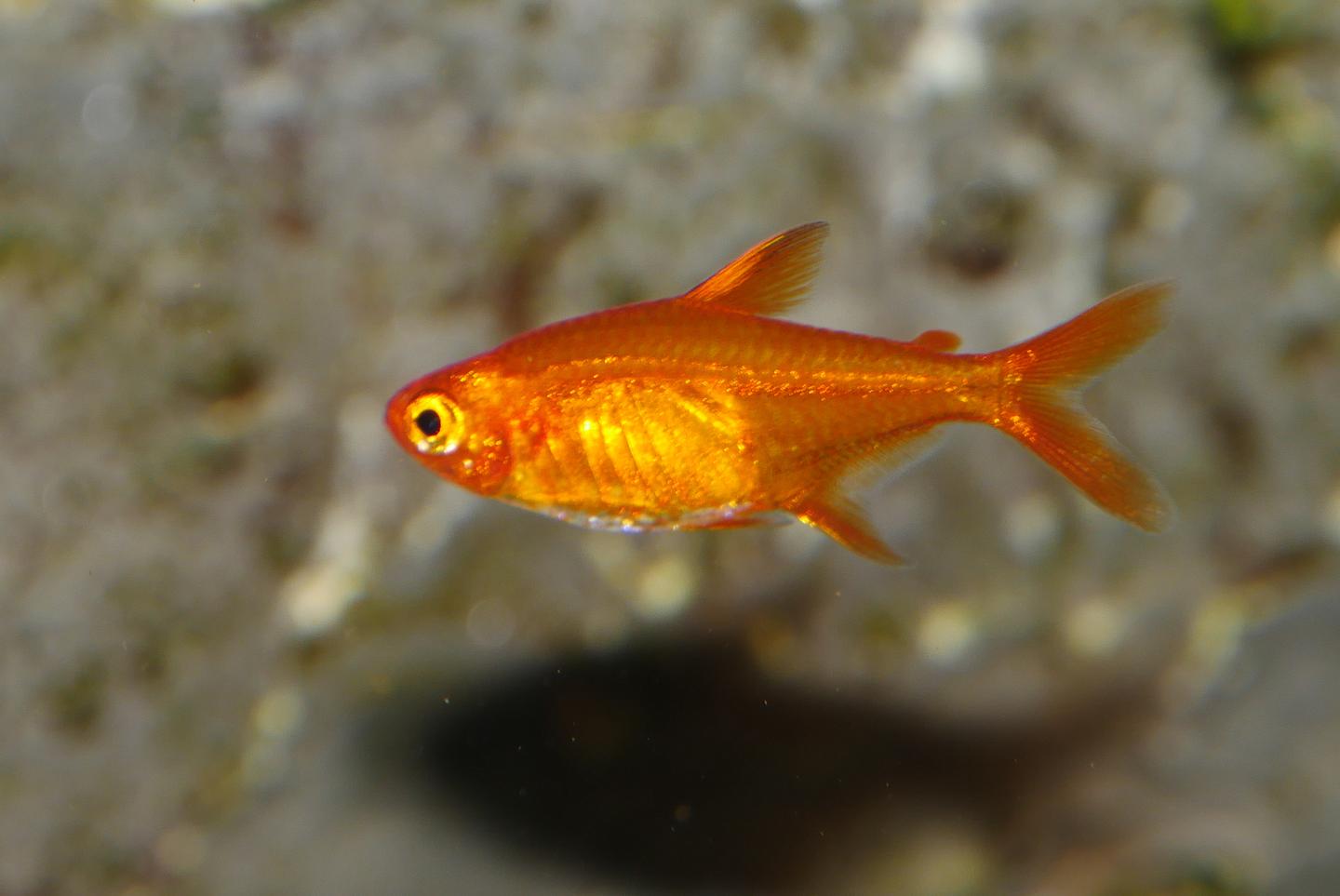
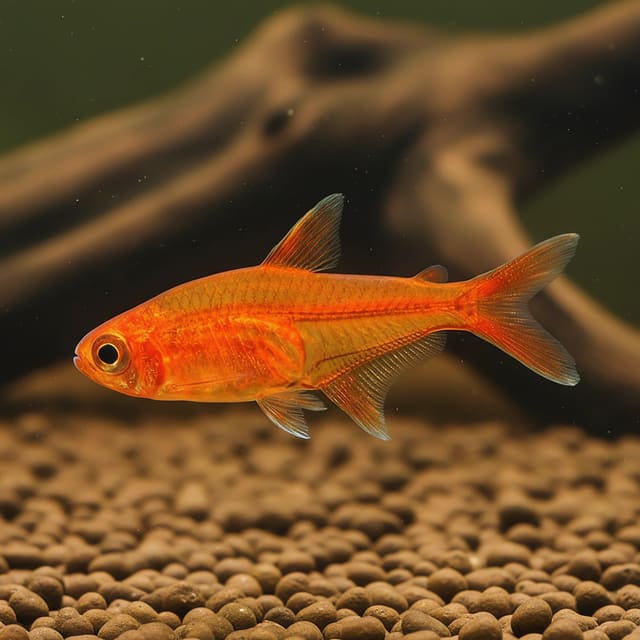
Ember tetras are very small Brazilian social fish, with a maximum recorded length of 2.0 cm excluding the tail. Keep them only in a fully cycled, stable aquarium. We recommend a group of at least 10 and about 45 litres with a 45 × 30 cm footprint rather than using a litres-per-fish formula.
Maintain these water conditions for optimal health and vibrant colors
Red-Line Tetra, Hyphessobrycon amapaensis, is a small, peaceful freshwater tetra for a carefully planned community aquarium. FishBase records a maximum length of 3 cm standard length, places it in the American-tetra family Acestrorhamphidae and records it from the type locality in Amapá, Brazil. It is benthopelagic in nature and inhabits small savanna creeks over sand and gravel.
This fish suits a keeper prepared to maintain a mature biological filter, test the water every week and build a proper shoal. Its peaceful temperament, small size and ability to thrive in a planted arrangement make it a candidate for a researched community, but its soft, acidic water range must overlap with every proposed companion. Browse our current tetra collection when comparing identities and group requirements.
One purchase supplies one animal in the selected size. The dispatch sizes are 2–2.5 cm and 2.5–3 cm; use the live size selector to see which size can be selected when you place the order. The size you select is the size supplied, not the adult size. Plan the aquarium and shoal around the maximum recorded length of 3 cm standard length rather than assuming that a smaller dispatch size changes the long-term care requirement.
Sex is guaranteed only when the selected option explicitly states male or female. This Red-Line Tetra listing has no sex-guaranteed option.
Some gallery images have been digitally enhanced to improve image quality. They show the listed type of animal rather than guaranteeing the exact markings of the individual supplied, so natural colour and pattern can vary.
Before choosing a delivery date, read the current delivery and Live Arrival Guarantee policy for the applicable dispatch, delivery and claim steps.
The decisive planning figures are the shoal size, aquarium footprint and water range. Seriously Fish recommends at least 8–10 specimens and says an aquarium with base dimensions of at least 60 × 30 cm, or an equivalent footprint, should be the smallest considered. Its reference volume for that footprint is approximately 54 litres. Treat the base dimensions as the first space test because a differently shaped aquarium can hold a similar volume without providing the same swimming length.
| Suits | Not suited to |
|---|---|
| A mature, filtered aquarium with room for at least 8–10 fish | An aquarium below the 60 × 30 cm minimum base |
| Peaceful communities sharing 23–28°C, pH 5.0–7.0 and 1–8 dGH | Fish large enough to eat a 3 cm tetra |
| Planted or wood-based layouts with cover and swimming room | Plans that keep this shoaling fish alone or in a pair |
| Decision | Planning figure |
|---|---|
| Recorded length | Up to 3 cm standard length |
| Group | At least 8–10 fish |
| Smallest base | At least 60 × 30 cm or equivalent |
| Reference volume | Approximately 54 litres |
| Temperature | 23–28°C |
| pH | 5.0–7.0 |
| General hardness | 1–8 dGH |
A plan that fails any one of these tests needs revision before the fish is introduced. A long aquarium with compatible water but only two tetras does not meet the social requirement; a ten-fish group in water above pH 7.0 does not meet the stated water range. Use all the figures together.
Start with a base of at least 60 × 30 cm or an equivalent footprint and a reference volume of approximately 54 litres. This minimum is for planning the Red-Line Tetra group in a properly arranged aquarium, not permission to fill every part of that volume with livestock. Existing fish, decorations, plants, filtration equipment and the activity of other shoals all affect how much usable space remains.
Measure the internal swimming length and front-to-back width rather than relying only on the volume printed on the aquarium. A tall, narrow aquarium may approach 54 litres while failing to match a 60 × 30 cm base. A layout with the required footprint still needs clear swimming room alongside cover, so avoid filling the entire base with solid ornaments.
| What you find | What to do |
|---|---|
| Base is below 60 × 30 cm | Choose a larger aquarium before planning this shoal. |
| Base meets 60 × 30 cm | Check total stocking, water and filtration next. |
| Volume is near 54 litres but the tank is tall | Compare the actual base with the stated minimum. |
| Other active groups already use the tank | Assess whether open swimming space remains for at least 8–10 tetras. |
Provide plants or suitable ornaments for shelter while preserving open space where the group can move together. OATA advises swimming space and a gentle current for smaller tetras, while the species profile supports both planted and wood-based arrangements. Position cover around parts of the rear, sides or base instead of creating a solid barrier across the full length.
Larger aquariums are useful when the extra footprint supports a bigger social group or reduces crowding from compatible companions. OATA also notes that larger aquariums tend to have more stable temperature and water quality. Extra litres do not replace weekly testing, maintenance or a mature filter, but they provide more room for a deliberate layout and reduce the pressure to fit several groups into the minimum footprint.
Maintain 23–28°C, pH 5.0–7.0 and general hardness of 1–8 dGH. Seriously Fish also gives conductivity of 5–15 µS/cm for this tetra, but conductivity should not replace direct checks of temperature, pH and hardness. Test the established aquarium rather than relying on a regional tap-water description or a single old result.
Our aquarium water chemistry guide explains what the measurements represent. Once you have current readings, use the water matcher to compare them with the complete range.
| Measured result | Decision |
|---|---|
| 24°C, pH 6.5, 4 dGH | All three readings fall within the stated range. |
| 28°C, pH 7.0, 8 dGH | Each reading is at the upper end; stability and compatible companions still matter. |
| 25°C, pH 7.4, 6 dGH | The pH is outside the 5.0–7.0 range even though temperature and hardness fit. |
| 26°C, pH 6.6, 10 dGH | The hardness is outside the 1–8 dGH range even though the other readings fit. |
A single matching number is not enough. If temperature fits but pH or hardness falls outside the range, revise the plan rather than describing the aquarium as suitable. Check prospective tank mates against the same readings so one fish is not kept at an unsuitable edge simply to accommodate another.
OATA's tetra and pencilfish sheet gives group guidance of 22–27°C, pH 6.5–8.0 and 4–12 dGH. Use the narrower Red-Line Tetra values above for this aquarium because they address this animal directly. OATA's water-quality targets remain useful for the wider group: ammonia and nitrite should both be zero, while nitrate should not exceed 20 mg per litre above the normal tap-water level.
Re-test after changes to stocking or maintenance because the aquarium is a working biological system. Record readings taken at the same stage of the weekly routine so trends are easier to recognise than they would be from occasional, unrelated tests.
Use a well set up and maintained biological filter before any Red-Line Tetra enters the aquarium. The RSPCA explains that fish release toxic ammonia; beneficial bacteria in the filter convert it first to toxic nitrite and then to safer nitrate. A filter therefore needs time to establish its bacterial population, and clear-looking water is not a substitute for zero ammonia and zero nitrite test results.
If this is your first aquarium, follow our first tropical tank guide to prepare and mature the system before livestock is introduced. Testing establishes whether the filter is processing waste; the age of the aquarium by itself does not answer that question.
For an aquarium of approximately 54 litres, Seriously Fish recommends turnover of four to five times the aquarium volume per hour and gives a filter rating of about 215–270 litres per hour. The arithmetic provides a useful check: 54 multiplied by four is 216, while 54 multiplied by five is 270. Position the return so the aquarium retains swimming room and the gentle current advised for smaller tetras.
| Filter checkpoint | Required action |
|---|---|
| Before fish are added | Confirm ammonia and nitrite both test at zero. |
| Reference flow | Use four to five aquarium volumes per hour. |
| 54-litre example | Look around the stated 215–270 litres per hour rating. |
| Weekly check | Look for blockages and confirm normal operation. |
| Media needs cleaning | Rinse it lightly in removed aquarium water, not under the tap. |
For the same approximately 54-litre aquarium, Seriously Fish suggests roughly 75–100 W of heating to hold 23–28°C when the room is around 20°C. Preserve that room-temperature assumption when using the figure. Select and control the heater for the actual aquarium, then verify the result with a temperature reading rather than relying on wattage alone.
Build the routine around weekly testing and a 25% partial water change at least once a week. OATA strongly recommends changing 25% at least once each week, testing at least weekly, treating replacement tap water for chlorine or chloramine and checking the filter for blockages. These actions protect the biological filter and limit the waste created by the whole aquarium.
OATA's nitrate figure is relative to the normal tap-water level: aquarium nitrate should not exceed that baseline by more than 20 mg per litre. If the tap water measures 10 mg per litre, the corresponding ceiling is 30 mg per litre. If the tap result is 25 mg per litre, the corresponding ceiling is 45 mg per litre. Measure the baseline rather than assuming it is zero.
Do not add more fish while ammonia or nitrite is above zero. Both indicate that waste processing is not keeping pace with the aquarium. Re-test after maintenance and review recent increases in livestock or feeding because OATA warns that stocking too quickly can leave too few nitrifying bacteria to process the additional waste.
Watch for hanging at the surface, sitting on the bottom, erratic swimming, unusually fast or slow gill movement, changed colour, increased hiding, white spots, fluffy growths, damaged fins or scales, altered body condition and reduced feeding. Test the water first when these changes appear, then contact us for health guidance rather than starting an unplanned treatment.
Feed a varied omnivorous diet in particles small enough for a 3 cm tetra. Seriously Fish describes the natural diet as likely to include small invertebrates, crustaceans, filamentous algae and fallen fruit. In the aquarium, dried food alone may sustain the fish, but a varied menu should also contain suitably small live or frozen foods.
OATA recommends a good-quality flake or granule as the regular aquarium food for tetras and pencilfish, supplemented with small live or frozen items such as daphnia, small bloodworm or tubifex. Seriously Fish also names mosquito larvae, Daphnia, Moina and chironomid larvae, together with freeze-dried bloodworm and freeze-dried Daphnia.
| Food role | Suitable choices |
|---|---|
| Regular dried food | Good-quality flake or appropriately sized granule |
| Live or frozen variety | Daphnia, Moina, small bloodworm, tubifex or mosquito larvae |
| Freeze-dried variety | Freeze-dried bloodworm or Daphnia |
| Portion limit | Only what the group eats within a few minutes |
| Schedule | Once a day |
Judge the portion by what disappears within a few minutes rather than by a fixed pinch or spoonful. If food remains after that period, offer less at the next feed. Overfeeding allows uneaten food to break down and release toxic waste, so portion control supports the zero-ammonia and zero-nitrite targets as directly as filter maintenance does.
Watch the group while it eats. Reduced intake or a sudden lack of interest is one of OATA's warning signs and should prompt a water test alongside checks of swimming, breathing, colour and body condition. The aim is not to force extra food into a reluctant fish; it is to recognise a change early while protecting water quality.
Match particle size to the mouth of the fish. The dispatch size can be as small as 2 cm, so inspect the food rather than assuming every granule marketed for community fish is suitably sized. Variety concerns food type, not larger portions: keep the whole daily offering within the few-minute limit.
Prepare the aquarium before arranging the introduction. Confirm a base of at least 60 × 30 cm or equivalent, establish 23–28°C, pH 5.0–7.0 and 1–8 dGH, and test ammonia and nitrite at zero. Check that the filter is operating normally and that the planned total group contains at least 8–10 Red-Line Tetras.
OATA advises increasing an aquarium's fish population slowly because the beneficial bacteria in a mature filter need to grow as livestock and feeding increase. Apply that principle to the whole stocking plan: do not combine the tetra introduction with several unrelated increases in livestock. The Red-Line Tetras still need their proper social group; gradual stocking refers to the aquarium's total biological load, not keeping one tetra alone.
| Checkpoint | What to confirm |
|---|---|
| Before introduction | Footprint, temperature, pH, hardness, group count and compatible residents all fit. |
| First observations | Swimming, breathing, colour, hiding and feeding are watched across the group. |
| After feeding starts | The daily portion is eaten within a few minutes without excess food accumulating. |
| End of the first week | Ammonia and nitrite remain zero and the 25% water change due at least once a week is completed. |
| Across the first month | Weekly tests, water changes and filter checks continue on the same schedule. |
Respond to a change with measurements. If a fish hangs at the surface, sits on the bottom, swims erratically, breathes differently, hides more, changes colour or stops feeding, test ammonia, nitrite and the other water values promptly. These signs identify the need to investigate; they do not identify one disease or justify a treatment by themselves.
Keep a short record of test results, maintenance and feeding observations through the first month. A sequence of comparable weekly readings shows whether the biological filter is keeping pace more clearly than one isolated result. Delay further stocking if ammonia or nitrite rises above zero.
Plan at least 8–10 Red-Line Tetras together. Seriously Fish gives that recommendation for this animal, while OATA's wider advice says tetras should be kept in groups of at least five and that more is better. Follow the higher 8–10 figure when planning this shoal rather than treating five as the target.
A community plan containing four Red-Line Tetras and four unrelated tetras does not create an eight-fish Red-Line Tetra group. Reserve room for at least 8–10 of the same animal first, then assess whether the aquarium can also support another group. Seriously Fish notes that other schooling fish may provide security, but they should be screened as separate residents with their own space, water and social needs.
| Proposed group | Planning decision |
|---|---|
| One or two fish | Increase the plan to at least 8–10 before introduction. |
| Five fish | This meets OATA's broad tetra minimum but not the 8–10 recommendation for this fish. |
| Eight fish | Meets the lower end of the stated range if space and water also fit. |
| Ten fish | Meets the stated range; complete the filtration and stocking assessment. |
| More than ten | Use the aquarium's footprint, filtration and total stocking to judge whether the larger group fits. |
Observe the group as a whole rather than using stripe intensity as the only measure of welfare. OATA's practical warning signs include changed swimming, darker or paler colour, increased hiding, altered breathing, damaged fins or scales, changing body condition and reduced feeding. Compare behaviour with that group's normal pattern and test the water when a change appears.
Plan the count without assuming a particular sex ratio. The offer does not guarantee male or female fish, and sex should not be inferred from dispatch size, colour or gallery appearance. The dependable customer decision is therefore the total number of fish, supported by enough space and compatible water.
Red-Line Tetra is described as very peaceful and can suit a well-researched community. Compatibility is conditional rather than universal: every candidate must pass checks for predation risk, temperament, adult size, water overlap, social requirements and total use of the aquarium.
Seriously Fish recommends similarly sized characids, gasteropelecids and lebiasinids, smaller callichthyid or loricariid catfishes, and non-predatory small-to-medium-sized cichlids. These groups remain candidates only when the particular animal is peaceful, cannot eat a 3 cm tetra, shares the complete water range and fits the aquarium's footprint and filtration capacity.
OATA says small tetras should not be kept with fish large enough to eat them and that tetras mix best with animals of similar size and temperament. It also warns that larger or more boisterous fish can be unsuitable for timid or long-finned companions. Use those principles to assess the exact combination rather than treating a family name as a guarantee.
| Screen result | Action |
|---|---|
| Large enough to swallow the tetra | Avoid the combination. |
| Peaceful and similarly sized | Continue to water, space and social checks. |
| Boisterous or highly competitive | Treat the combination cautiously. |
| No full water-range overlap | Choose a different combination. |
Write down the proposed residents before deciding that a community is suitable. Record each animal's adult size, temperament, predation risk, temperature, pH, hardness, minimum group and space requirement. Compare the rows rather than relying on a general label such as peaceful or tropical.
| Proposed situation | Decision |
|---|---|
| Peaceful fish of a similar size with matching water | Continue to the footprint, group and filtration checks. |
| Peaceful fish requiring pH above 7.0 | The full water ranges do not overlap, so revise the combination. |
| Fish large enough to eat a 3 cm tetra | Avoid the combination regardless of shared temperature. |
| Boisterous fish that dominates feeding or swimming space | Treat it as a caution rather than assuming peaceful tetras will adapt. |
| Six Red-Line Tetras in the plan | Revise the count to at least 8–10 before assessing extra species. |
A matching temperature is only one part of the water decision. For example, two animals may both tolerate 25°C while one requires pH above 7.0 or hardness above 8 dGH. That combination would not share the full Red-Line Tetra range. Compare all three principal values before moving to temperament and space.
Next, consider the aquarium as a finite footprint. The approximately 54-litre reference and 60 × 30 cm minimum base address the starting point for this tetra; they do not guarantee room for every proposed community. Count the tetra shoal, the full group needs of other social fish and the adult size of each resident. Then check whether the mature filter can maintain zero ammonia and zero nitrite under the planned load.
For a stocking and compatibility assessment, contact us with the aquarium's base dimensions and volume, current temperature, pH, hardness, ammonia, nitrite and nitrate readings, plus the identity, number and adult size of every resident. Those details allow the proposed combination to be screened against the same rules.
FishBase records a maximum length of 3 cm standard length for this peaceful American tetra from Amapá, Brazil.
Use an aquarium with a base of at least 60 × 30 cm or equivalent; Seriously Fish gives approximately 54 litres as the reference volume for that footprint.
Seriously Fish recommends at least 8–10 together, so one or two fish do not meet the stated group recommendation for this shoaling tetra.
It suits a keeper who can provide a mature biological filter, weekly testing, a group of at least 8–10 and water within 23–28°C, pH 5.0–7.0 and 1–8 dGH.
Feed good-quality flake or suitably small granules once daily, add small live, frozen or freeze-dried foods for variety, and limit the portion to what the group eats within a few minutes.
Seriously Fish gives 23–28°C, pH 5.0–7.0 and 1–8 dGH for this fish; OATA's broader tetra guidance also requires zero ammonia, zero nitrite and nitrate no more than 20 mg per litre above the tap-water baseline.
Seriously Fish describes it as very peaceful, but every proposed companion still needs screening for temperament, predation risk, water requirements and space.
Consider similarly sized characids, gasteropelecids or lebiasinids, smaller callichthyid or loricariid catfishes, and non-predatory small-to-medium-sized cichlids only when their water, temperament, space and social needs align; avoid fish large enough to eat it.
Tropical Fish Co's policy requires someone to receive the parcel. Film every delivery continuously from the sealed parcel as it is opened, with the fish still visible inside the sealed bag; float the bag for 20–30 minutes, release the fish and never pour the bag water into the aquarium.
Max adult size is the length this species reaches at full maturity (from scientific sources). The livestock you receive will be younger and smaller — pick a size variant on the buy box for the actual shipping size. Product-photo provenance and any image-specific limitations are stated on the listing.
Always research specific species before adding them to your tank. Consider:
No reviews for this item yet. Bought one? Honest reviews only, good or bad.
What customers say about ordering from us
I have a small group of long finned mountain minnows. So was delighted to be able to order ten of this variety to increase the genetics in my tank . The ones I recieved are healthy but it’s to early to give a verdict on wether they are of a long finned type since they are small currently.
Gordon Walker · 23 Sept 2026
100% success travel and "installation". Pleased with quality of purchase. The Siamese fighter a bit "shy" so have not yet seen him at his best yet but looking good. Happy customer. GG
George E Garratt · 21 Sept 2026
Reviews of our shop, collected by Judge.me, an independent third-party review collector. Newest first.
21–25°C · pH 5–7
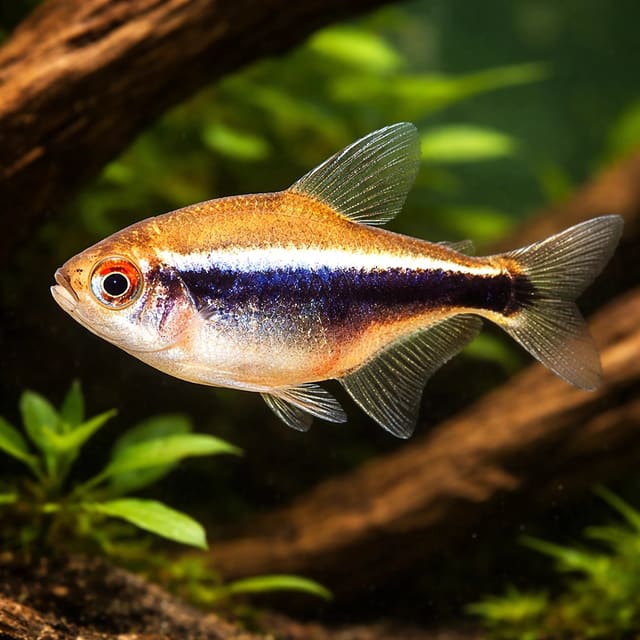
23–27°C · pH 5.5–7.5 · 40L
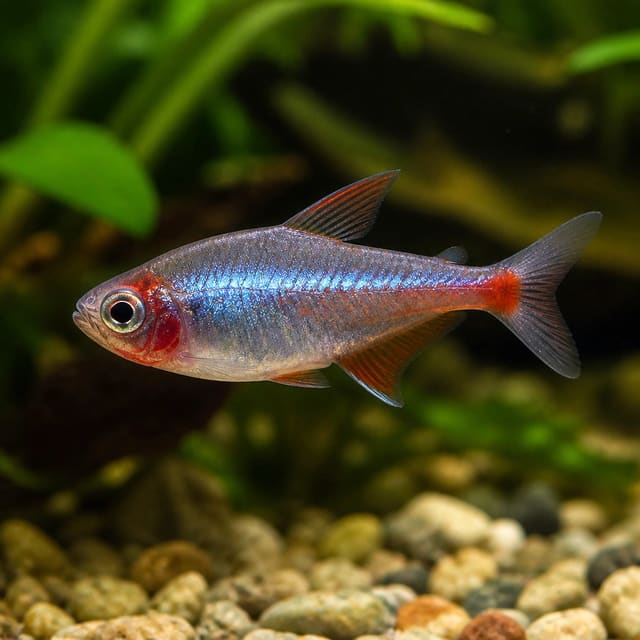
22–27°C · pH 6.5–8
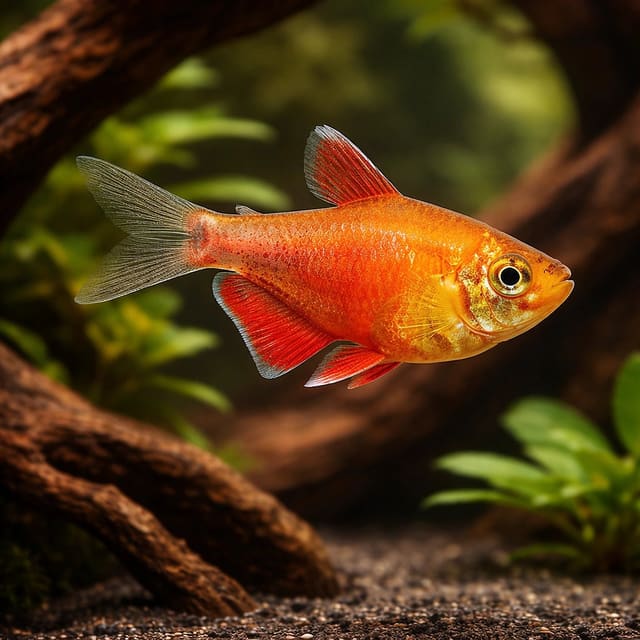
22–26°C · pH 6.5–7.5 · 60L
22–27°C · pH 6.5–7.5 · 72L
23–28°C · pH 5.5–7.5 · 60L
22–26°C · pH 6.5–7.5 · 54L
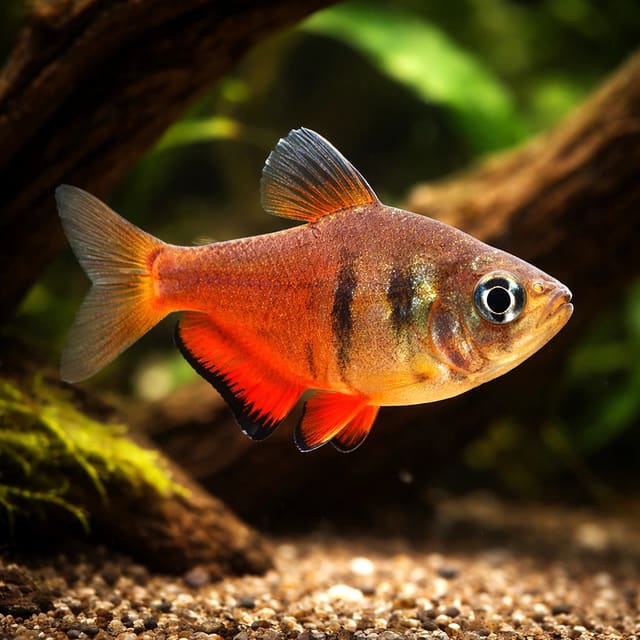
22–26°C · pH 6.5–7.5 · 54L

22–27°C · pH 6.5–8
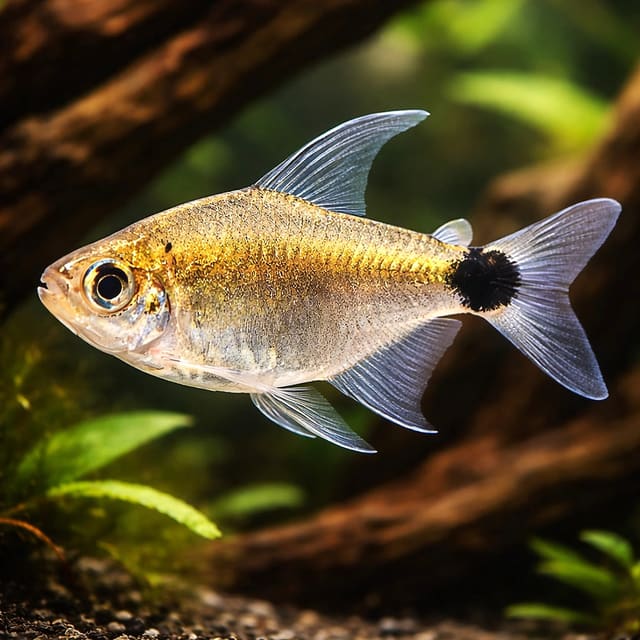
24–27°C · pH 6.5–7.2

22–27°C · pH 6.5–8
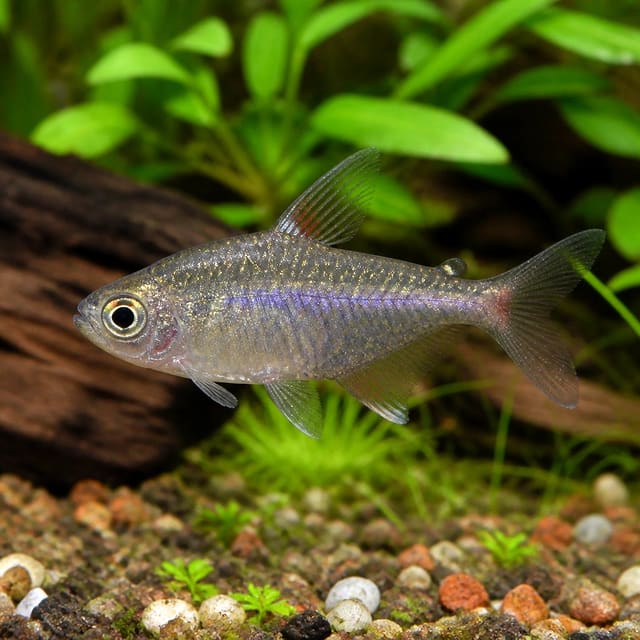
22–27°C · pH 6.5–8
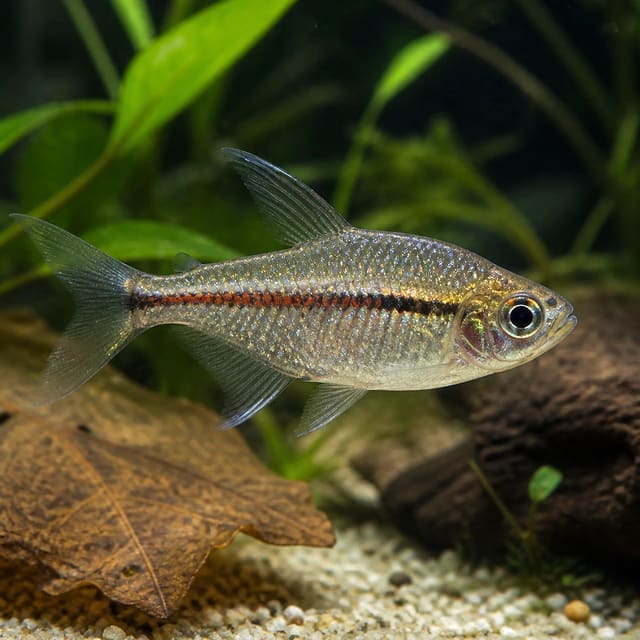
22–27°C · pH 6.5–8

23–27°C · pH 6.5–7.2 · 81L
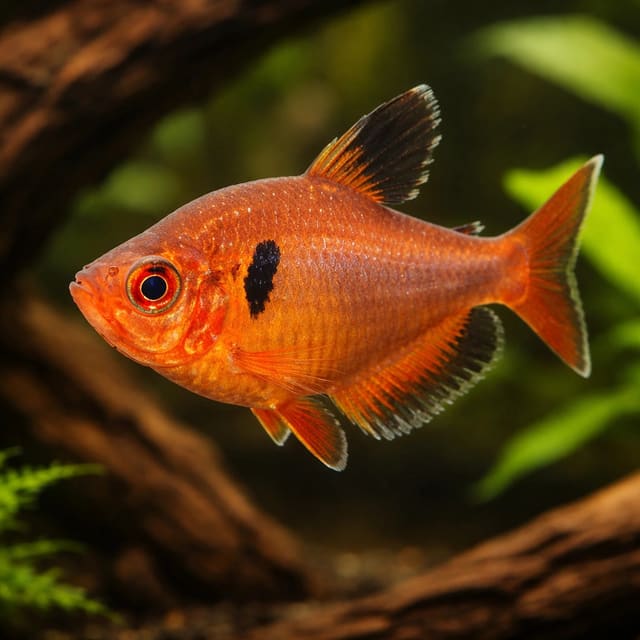
20–28°C · pH 5–7.5 · 72L

22–28°C · pH 7–8 · 41L
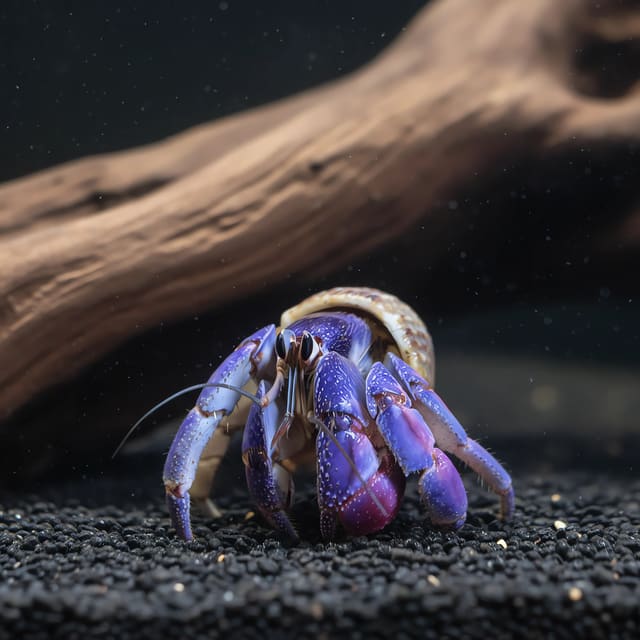
24–29°C

24–27°C · pH 6.5–6.5

22–27°C · pH 6–8 · 72L
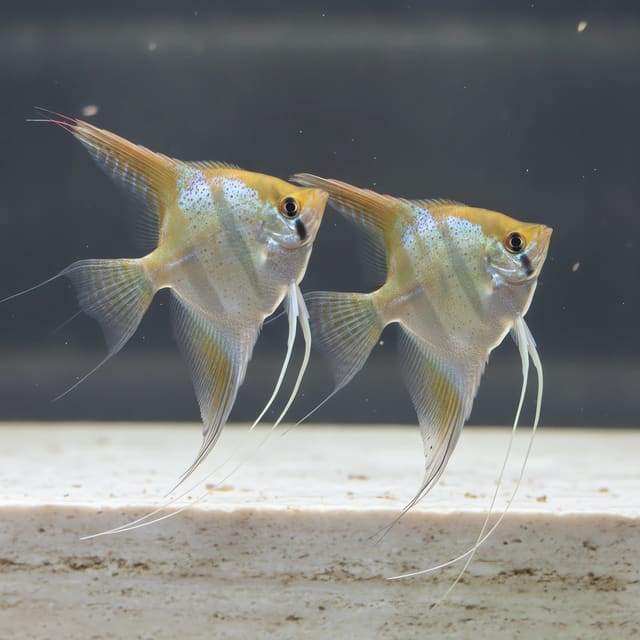
24–27°C · pH 6.5–8 · 200L

23–27°C · pH 5.5–7 · 60L

22–27°C · pH 6–8

22–26°C · pH 6–7.8 · 75L